

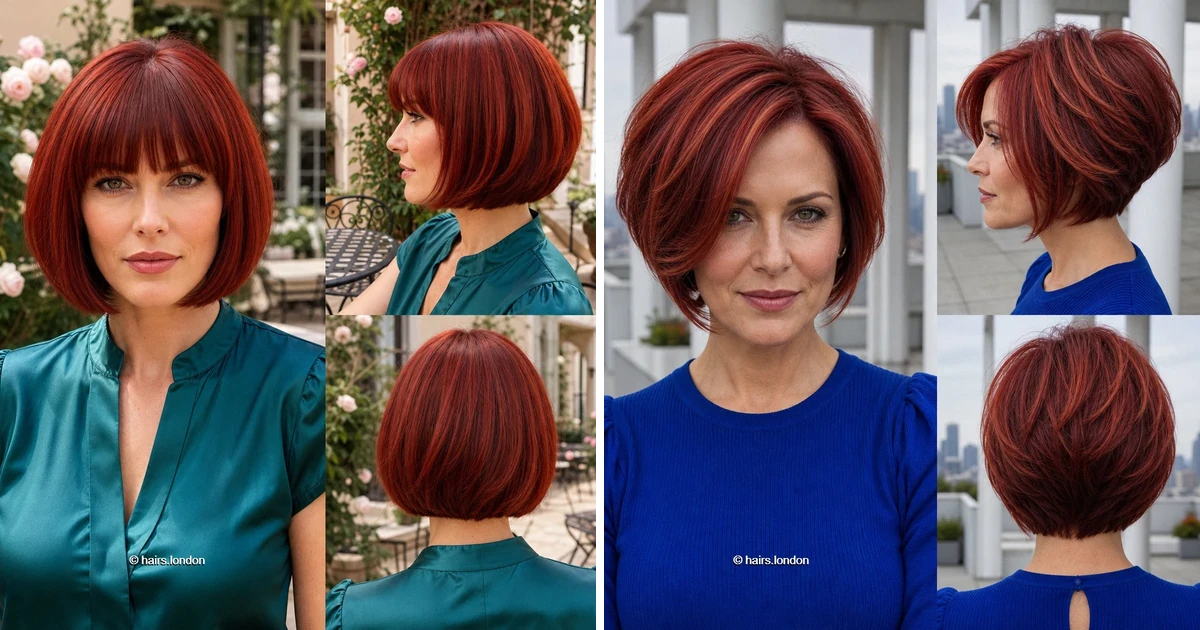
11. Layered Auburn Bob with Soft Volume
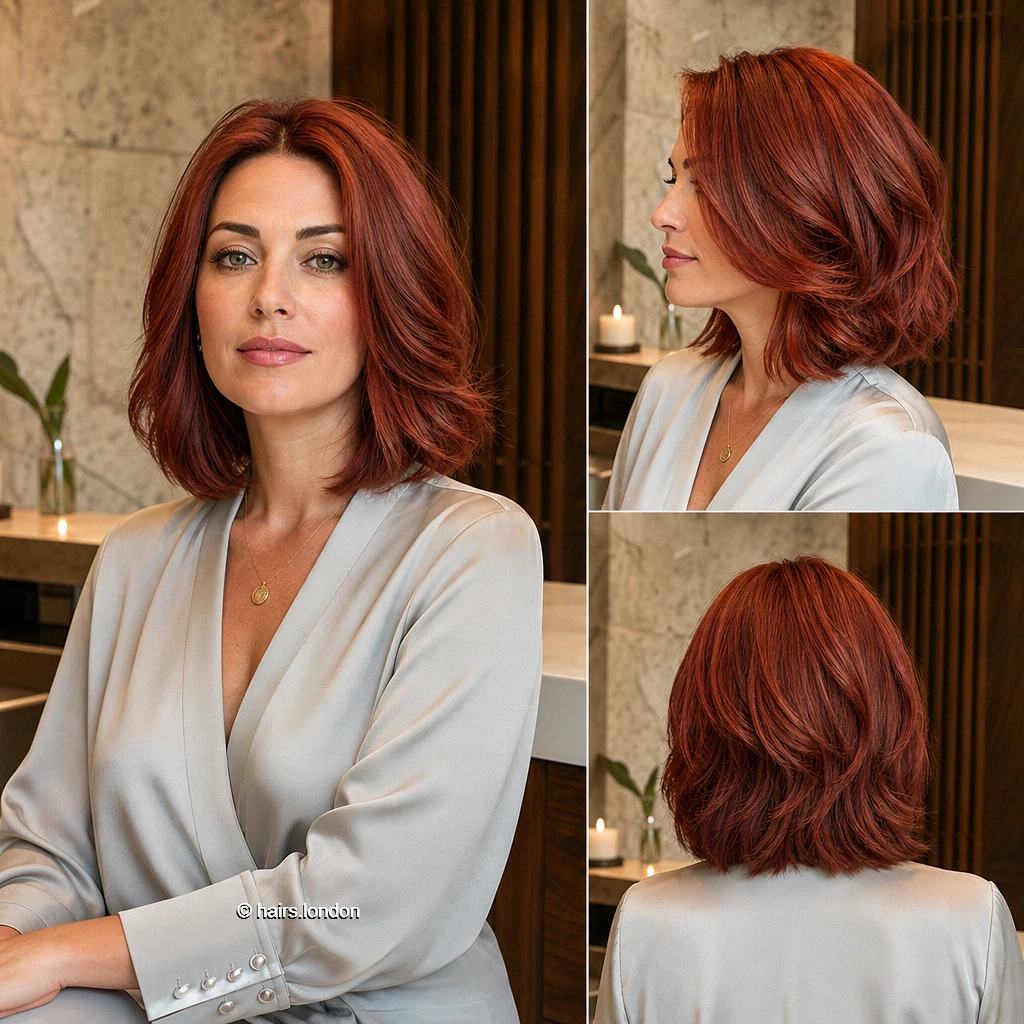
Warm auburn color complements the soft volume of this layered bob, whose ends fall between the jaw and shoulders. The side part creates a broad sweep, while visible layering through the sides and back gives the outline movement. Try a light root product and a loose blow dry, turning the ends only where you want extra shape. Discuss whether your density can carry this amount of layering without making the lower perimeter look too sparse or uneven. Trim when the ends lose their flow, and choose color care that helps the auburn shade retain its warmth between your regular appointments.
12. Soft Auburn Bob with Face-Framing Sides
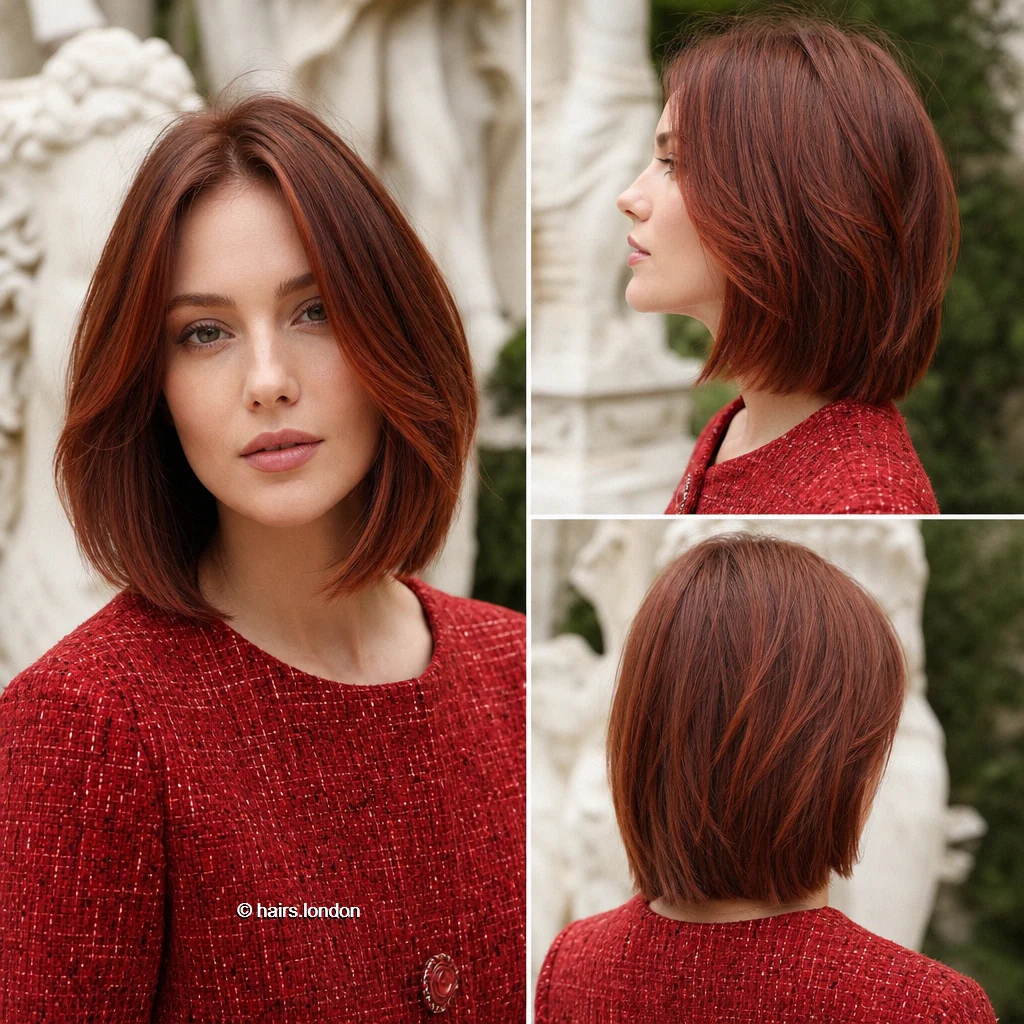
This auburn bob has a soft center part, face framing front sections and a curved perimeter close to the neck. The back view shows gentle layering and a tidy lower edge, but not the pronounced graduation of a stacked bob. Smooth the surface with a brush while allowing the ends to bend naturally, rather than forcing a rigid finish. Ask your stylist to adjust the front pieces to your density and preferred part, especially if your hair shifts position. Schedule trims as the edge loses definition, and use gentle washing to preserve the warm red tone between scheduled color appointments.
13. Copper Layered Lob with Flipped Ends
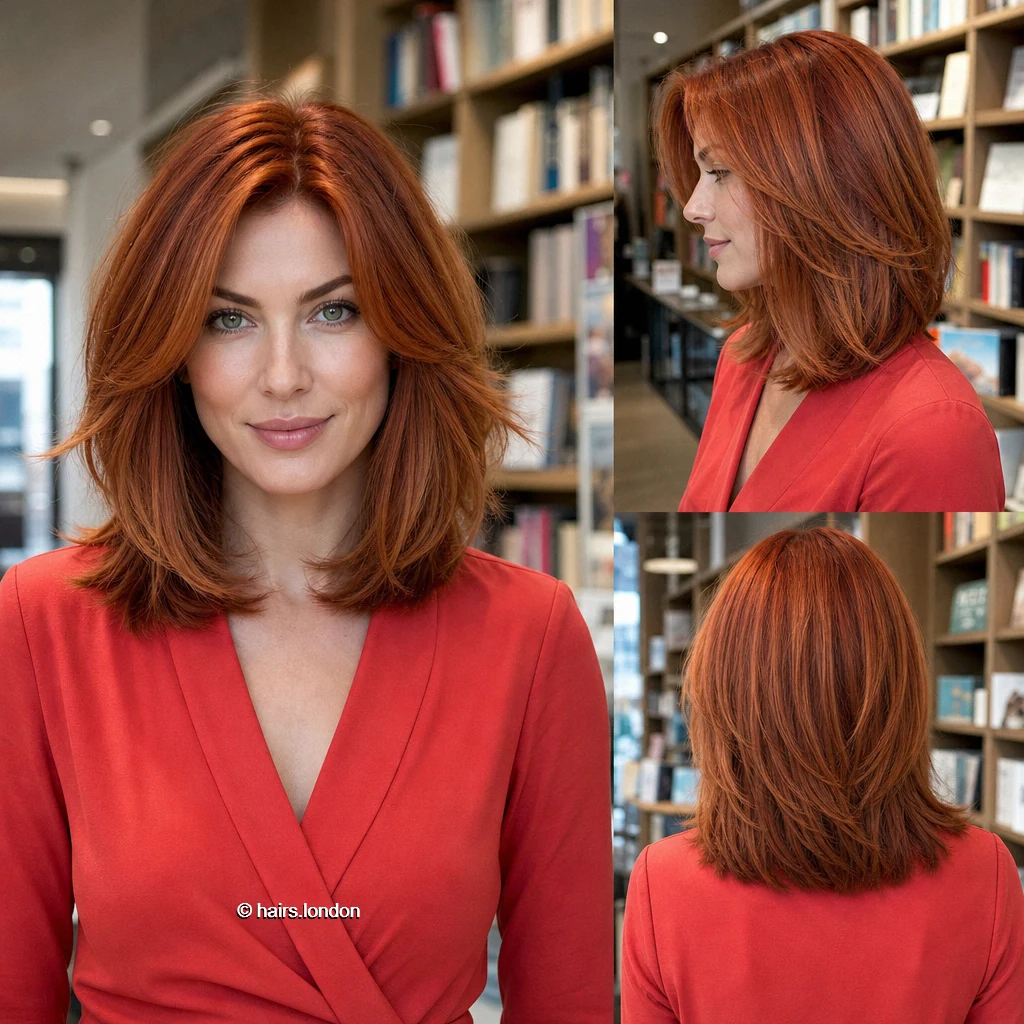
The longer length makes this copper cut a lob: its layered ends reach the shoulders and flick outward around them. A center part opens the face, while sweeping layers create fullness through the sides without forming a blunt bottom edge. Blow dry with a round brush for lift, or encourage a softer bend using lightweight product on naturally wavy hair. Ask for layers that suit your density; excessive removal could leave the shoulder length perimeter looking thin or wispy. Trim when the flips become uneven, and discuss a color care routine appropriate for the visible copper shade between color appointments.
14. Plum Bob with Curved Face-Framing Layers
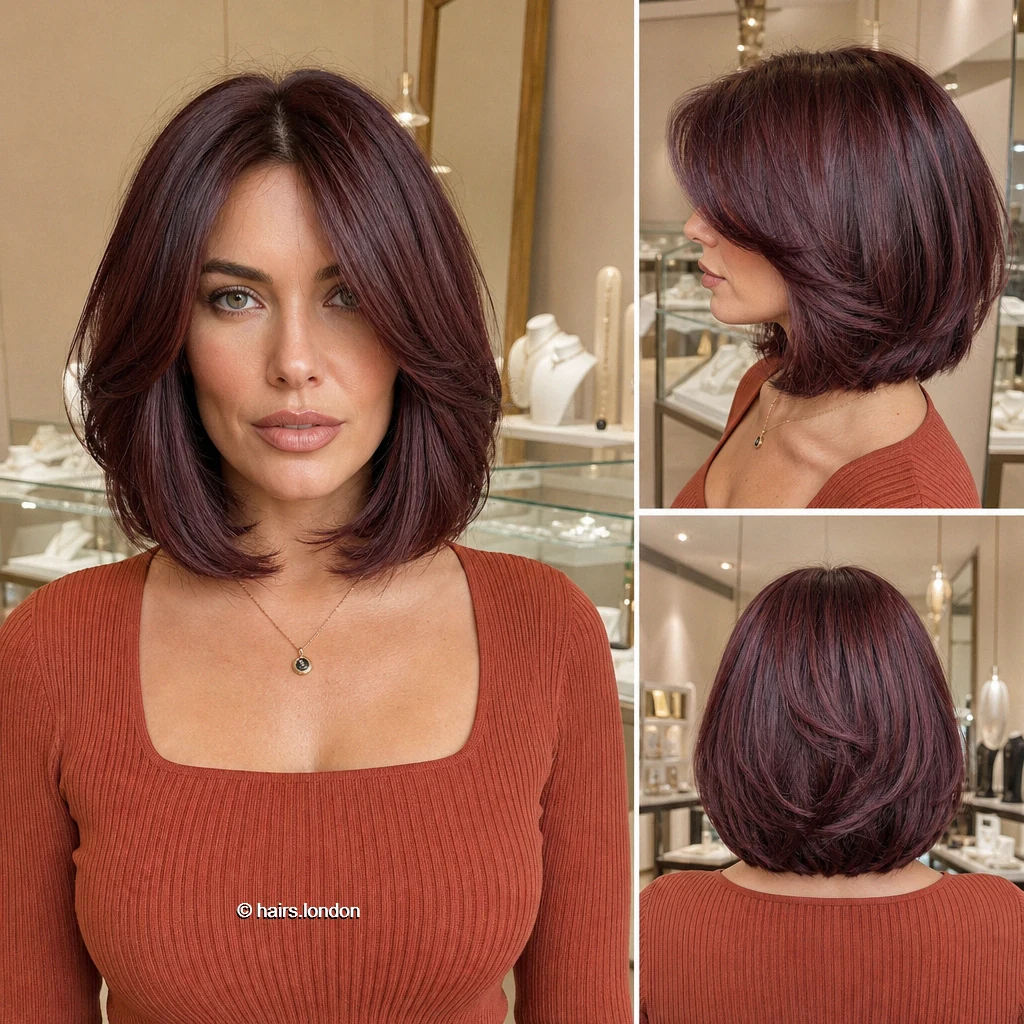
Rich plum brown gives this bob a deeper finish, with a center part and curved layers framing the jaw. The rounded back ends near the neck, and its overlapping layers create movement without a visibly exposed graduated nape. A smooth blow dry highlights the shape; use a light finishing cream to keep the ends separated but controlled. If your hair is dense, discuss reducing interior bulk while retaining enough weight to hold that rounded lower line. Refresh the shape as the sides grow past your preferred point, and protect the color with gentle hair care between your regular salon appointments.
15. Burgundy Long Bob with Swept Layers
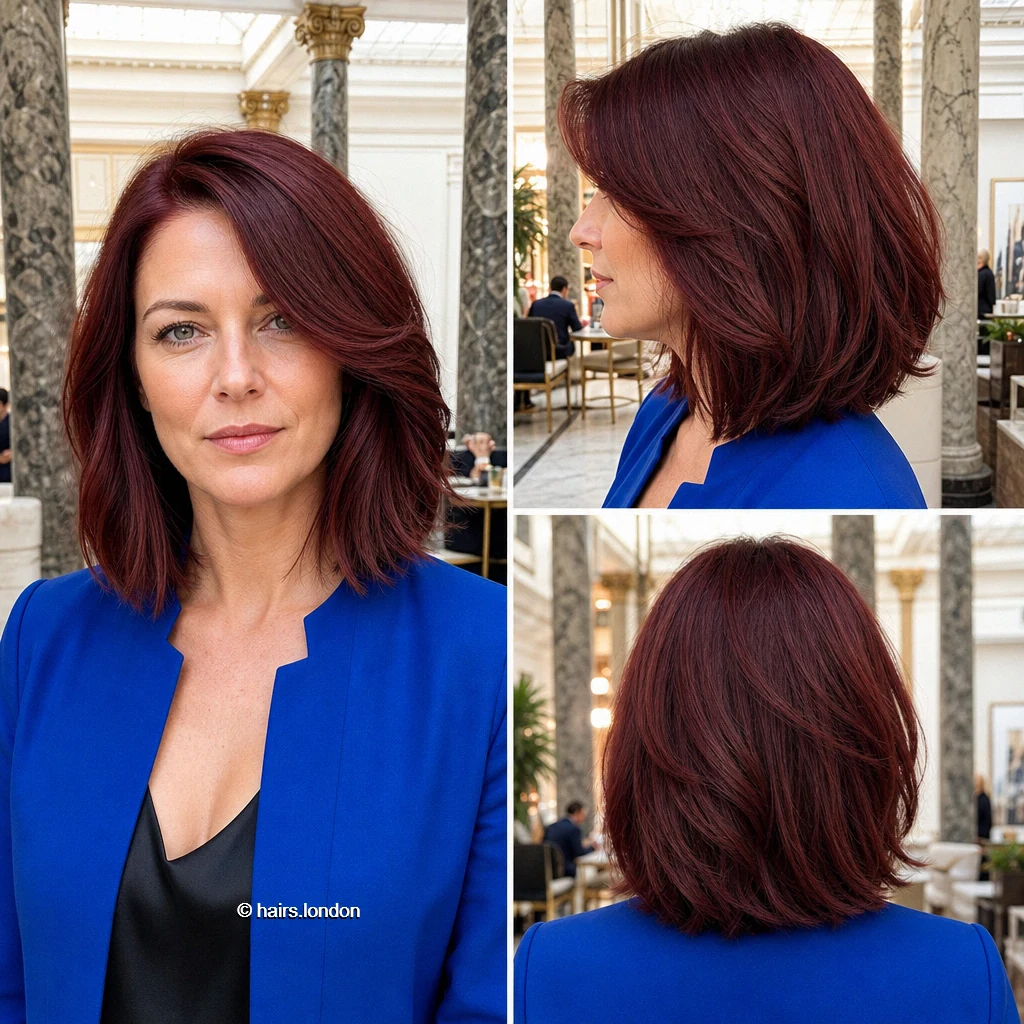
This longer burgundy bob skims the shoulders, with a deep side sweep and loose layering through the lower lengths. The back has a soft, uneven finish rather than the close nape or firm weight line of shorter bobs. A lightweight blow dry lotion can smooth flyaways while preserving the visible movement, especially around the face framing side. Ask whether your density needs fewer layers to keep the ends full, or selective removal to reduce unwanted bulk. Trim when the shoulder grazing edge becomes ragged, and check color maintenance with your stylist if the burgundy fades between appointments with gentle washing.
16. Red Graduated Bob with Side Sweep
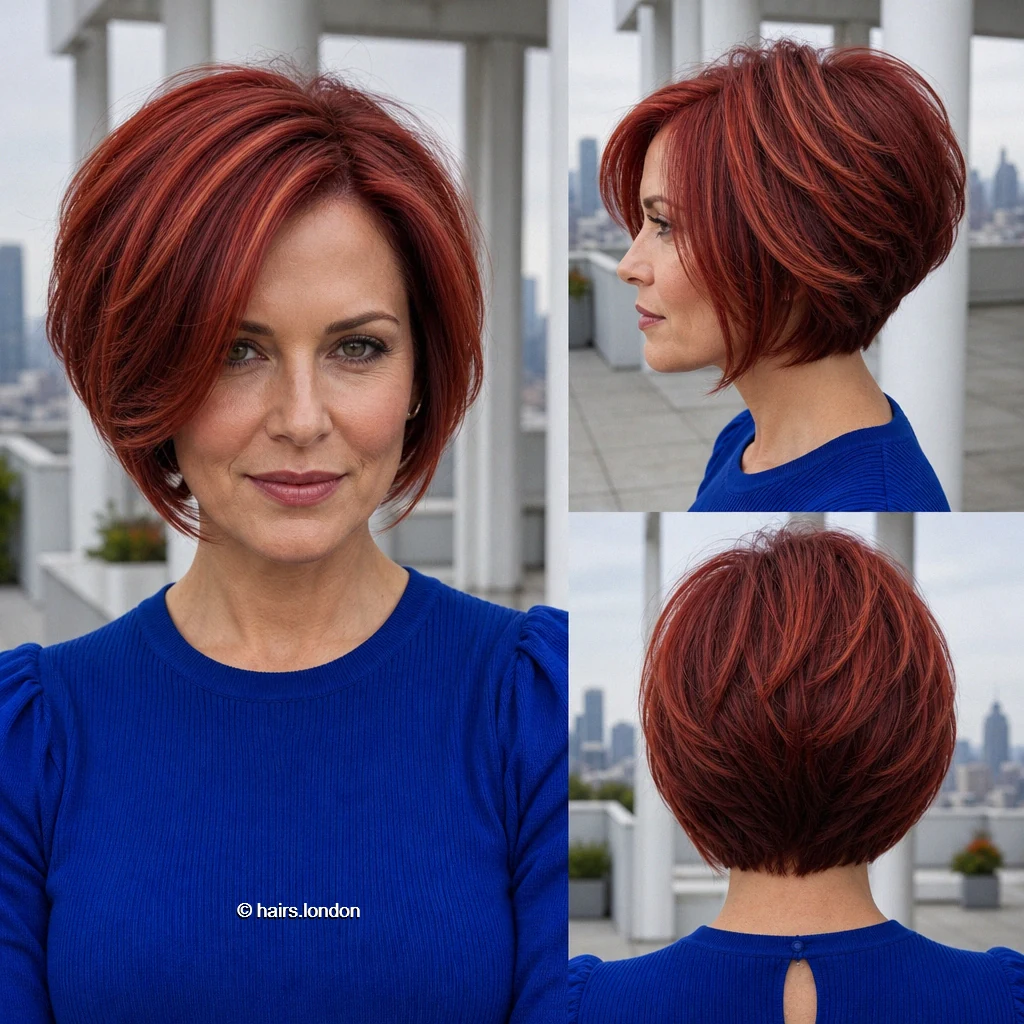
A bold side sweep leads this red bob, whose longer front tapers toward a visibly shorter, graduated back. The side and rear views show rounded fullness above the nape, with layered strands adding texture through the crown. Blow dry the front in its preferred direction, then lift the back lightly without building a stiff, oversized shape. Ask your stylist to adapt the graduation to your density and nape growth pattern so the outline sits comfortably. Arrange regular trims to maintain the short back, and use heat protection to limit fading in the red lengths, especially if you style it daily.
17. Copper Stacked Bob with Rounded Volume
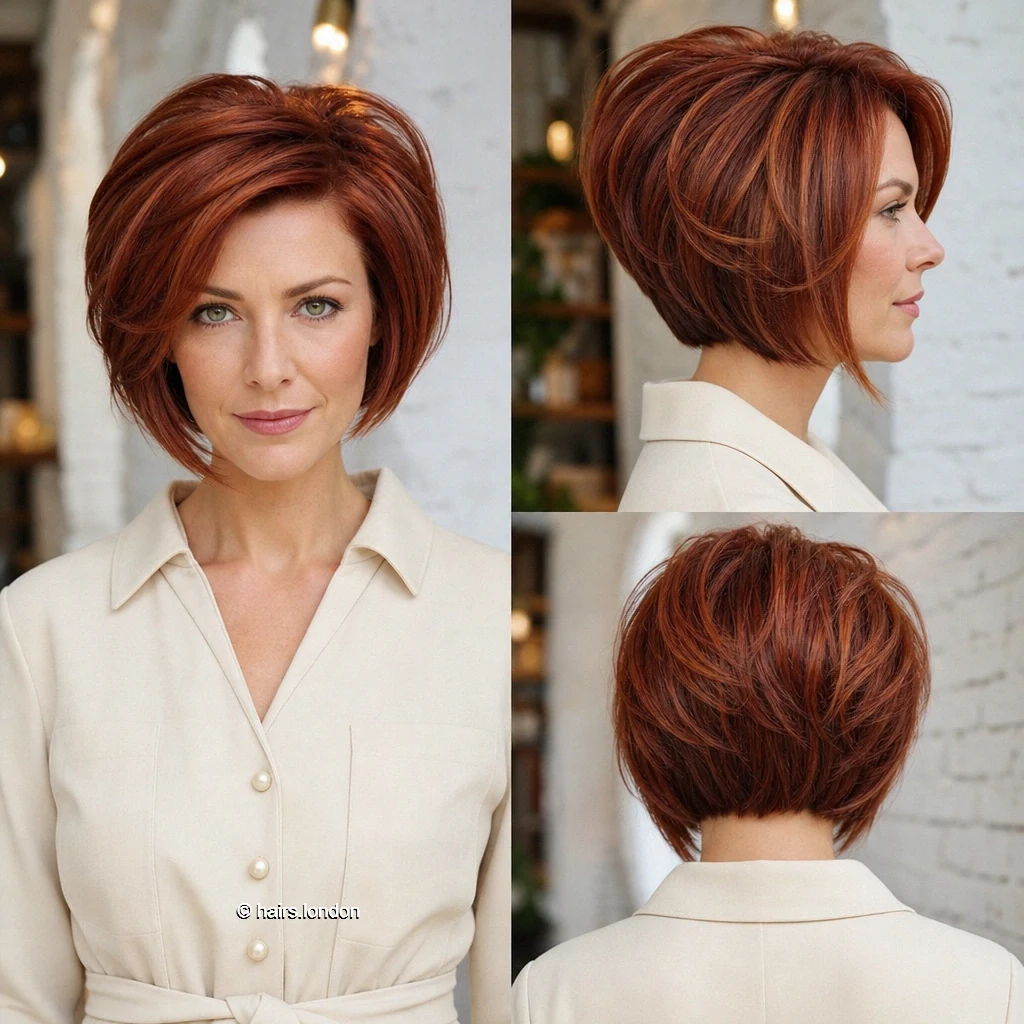
Copper and auburn tones emphasize the rounded volume of this bob, with a longer swept front and shorter nape. Its side and back views clearly show layered graduation building fullness above the close lower edge, supporting a stacked description. Direct warm air under the upper layers while smoothing the front, using only enough product to keep movement intact. Discuss whether your natural density can support the volume without excessive teasing, and flag any growth patterns around the neckline. Short back trims are important here; ask your colorist how to preserve the copper between visits, particularly if you regularly use heat.
18. Copper Graduated Bob with a Sculpted Back
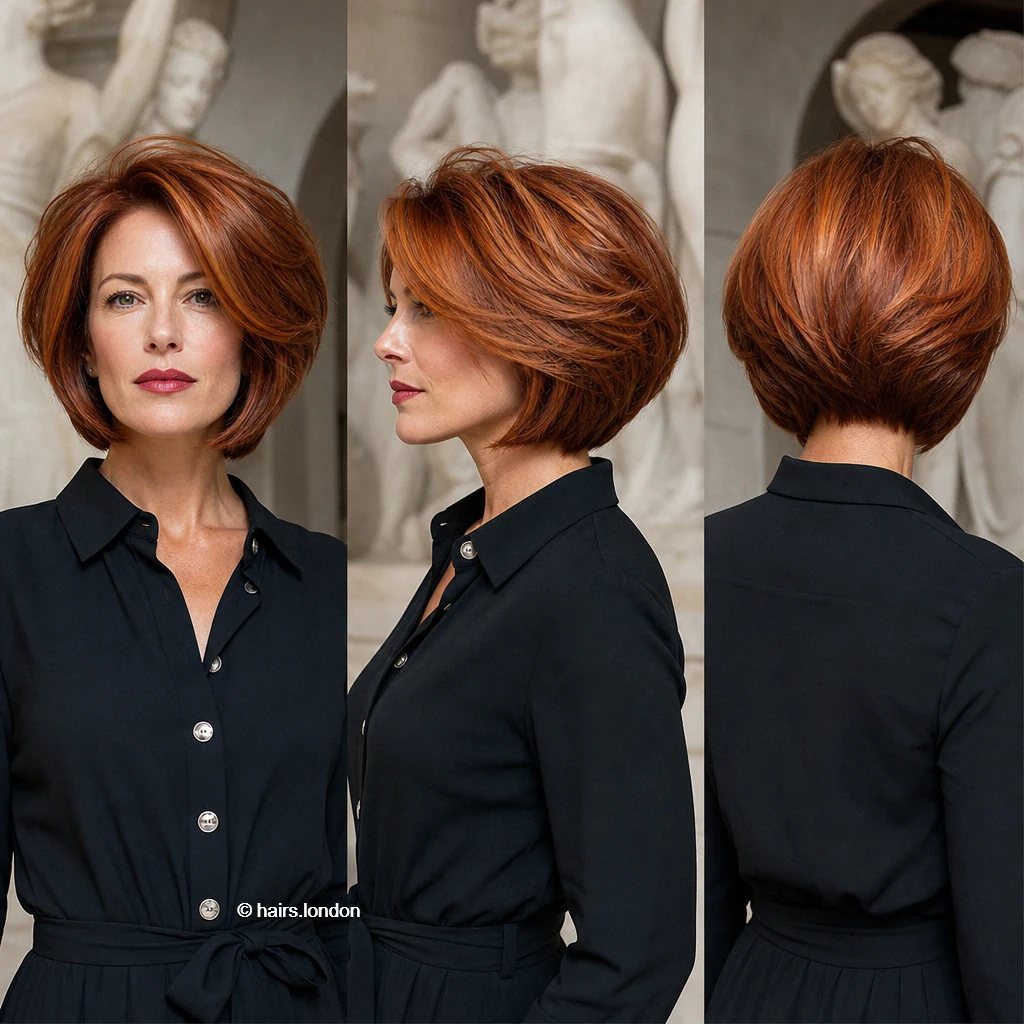
A sweeping copper front meets a shorter, visibly graduated back in this sculpted bob, with warm highlights accentuating its layers. The nape sits close to the neck while fullness builds higher up, making the rounded profile especially clear. Use a brush to guide the front across the forehead and gently lift the back as it dries. Ask your stylist to balance that lift with your density; too much internal removal could weaken the structured lower shape. Keep the nape neat with regular trims, and protect the highlighted copper strands when using heated styling tools, particularly when restyling the swept front.
19. Plum Graduated Bob with a Swept Front
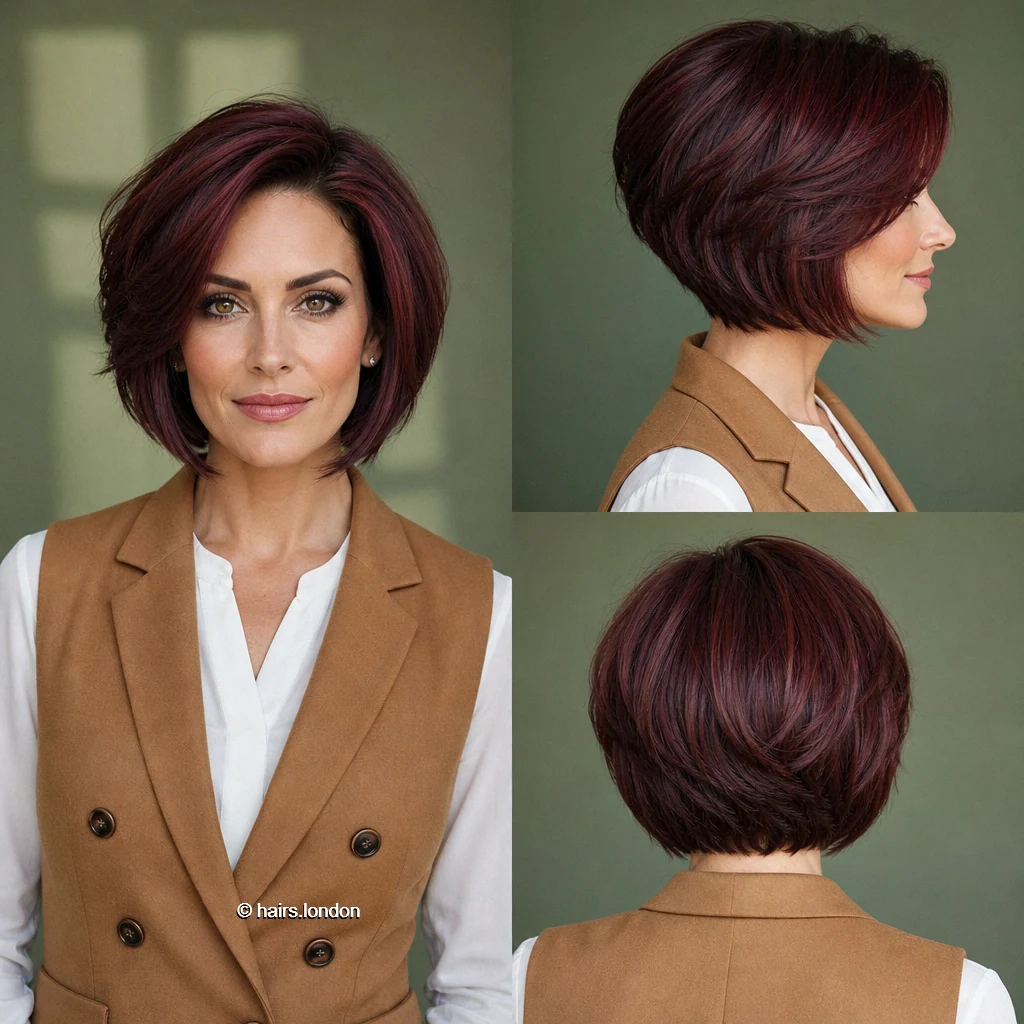
Deep plum red shapes this bob, with a dramatic side sweep and front pieces reaching toward the jaw. The profile reveals a shorter back and visible graduation around the nape, while upper layers create a rounded silhouette. Blow dry the fringe away from its part, then smooth the sides without compressing all the back volume. Talk through your hair density and neckline growth patterns before deciding how closely the graduated area should be maintained. Refresh the nape as it grows, and use gentle color care to keep the plum finish looking rich, particularly with frequent washing or heated daily styling.
20. Burgundy Stacked Bob with an Airy Crown
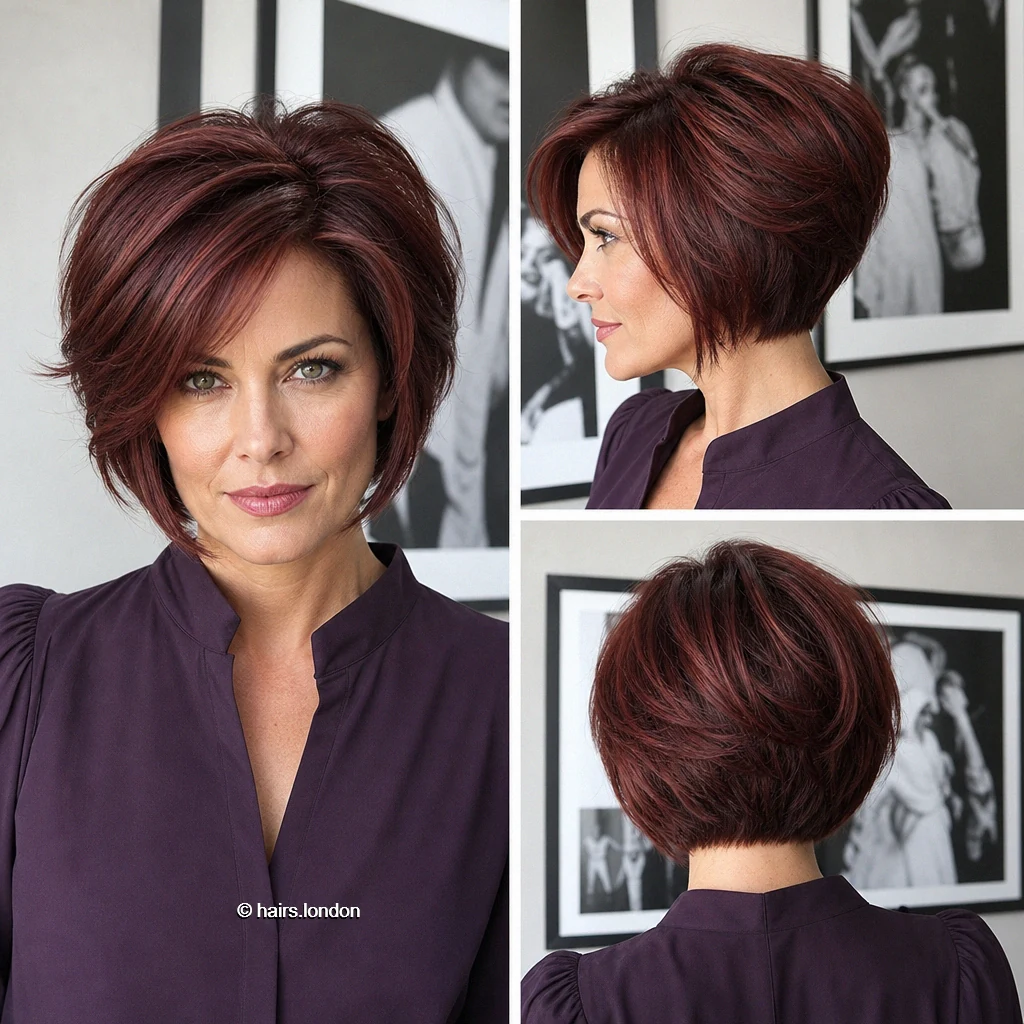
This burgundy bob combines an airy side swept front with a rounded back that narrows into a short nape. The side and rear views show visible graduation beneath the fuller crown, giving the cut its stacked shape. Lift the upper layers gently while blow drying, then smooth the perimeter so the back retains definition without looking stiff. Ask how your density will affect the crown volume, especially if you prefer minimal daily styling or have strong growth patterns. Regular nape trims maintain the silhouette, while heat protection helps reduce wear on the dark red color, especially with frequent heated styling.
How to Choose Your Bob Length and Shape
Start with the point where you want the front to fall: at the jaw, below the chin or near the shoulders. Then compare the back. An A-line bob has visibly longer front pieces; a stacked or graduated bob also shows shorter layers building weight at the back. These details affect how often you will want trims and how the cut behaves when tucked behind an ear. Bring photos showing the front, profile and nape, and choose a length your natural texture can reach without more styling than you want to do.
Styling Fine, Thick, Wavy and Curly Textures
Fine hair often benefits from a substantial lower edge and restrained layering; light mousse can add lift without separating the ends too much. Thick hair may need selective interior weight removal so a rounded bob moves without becoming bulky. For waves, scrunch product into damp hair and diffuse gently rather than brushing out the finished pattern. With curls, discuss the shape at their natural resting length and allow for shrinkage. Smooth a precise perimeter with a brush when desired, but avoid heavy products that obscure the cut’s movement.
Keeping Red Bob Color Fresh
The images show copper, auburn, berry and deeper burgundy tones, each with a different visible intensity. Ask your colorist how often your chosen shade is likely to need refreshing. Gentle cleansing, cooler water where comfortable and heat protection can help limit avoidable fading. A vividly colored fringe or exposed part may also make new growth noticeable sooner than a softer, deeper shade. Follow your colorist’s product advice rather than assuming every red needs the same upkeep.
Maintaining the Bob Perimeter and Graduation
A smooth bob announces itself through its lower edge, so trim it when the outline starts looking uneven or the front no longer falls where you intended. Short graduated backs tend to lose their close neckline and rounded weight distribution sooner than shoulder-grazing layered bobs. Fringe adjustments may be needed on a separate schedule. At each appointment, explain whether you want to keep a crisp perimeter, retain piecey texture or let the shape grow longer.
What to Discuss with Your Stylist
Show the views that matter most to you, not just the front portrait. Point out your preferred part, fringe length, front-to-back contrast and whether you want to expose the nape. Describe your density, natural waves or curls, growth patterns and realistic styling time. Ask where weight would be removed, how the cut will sit without a blow dry and what happens as it grows. If you also want red color, discuss its upkeep alongside your haircut schedule.
Frequently Asked Questions
What is the difference between a bob and a lob?
A bob generally finishes around the jaw or neck; a lob is a longer bob that approaches or reaches the shoulders. The distinction is about length, not color or whether the ends are layered.
How is an A-line bob different from a stacked bob?
A-line describes a perimeter that is longer in front than at the back. Stacked describes visible graduation that builds fullness above a shorter back or nape. One cut can show both features.
Does a rounded back always mean a bob is stacked?
No. Styling, density and a curved perimeter can create a rounded back without clearly visible graduation. Compare the side and back views before choosing that label.
Which bob shape might help fine hair look fuller?
A defined perimeter with restrained layering can preserve the appearance of weight. The best length still depends on density, growth patterns and how the hair behaves when dry.
How can a bob avoid looking bulky on thick hair?
Ask about selective interior weight removal while keeping enough hair at the edge to support the intended shape. Removing bulk everywhere can make the perimeter uneven.
Can natural curls work in a bob?
Yes, provided the length and layering are planned around the curls’ resting shape and shrinkage. Discuss how you normally dry and part your hair before the cut.
Should I choose a fringe with my bob?
A fringe can change the balance of a bob, but it also needs styling and occasional adjustments. Consider your forehead growth patterns and whether you prefer full bangs or a longer side sweep.
How much daily styling does a bob require?
It varies. A textured bob may work with product and gentle diffusing, while a smooth perimeter or sculpted graduated back may take more blow drying. Choose a finish that fits your routine.
How often should I trim a graduated bob?
Book a trim when its short neckline or back weight line starts losing definition. That may be sooner than for a longer layered lob; your stylist can suggest a schedule based on growth.
What helps red bob color last between appointments?
Use gentle color care, avoid unnecessary heat and ask your colorist about shade-specific refreshing. Bright copper and berry tones may call for different upkeep than deeper auburn or burgundy.
Can I grow a stacked bob into a longer bob?
Yes. You may need occasional shaping while the shorter back catches up with the front. Tell your stylist you are growing it out so trims support that goal.
What should I bring to a bob haircut consultation?
Bring front, side and back references, then identify the length, fringe, perimeter and amount of back graduation you actually want. Mention your natural texture, styling time and color maintenance preferences.
Conclusion
The most useful inspiration is the bob whose shape works with your hair and your routine, not simply the red shade you notice first. Compare how each front length meets its back, decide how much texture you want to keep, and use those details to plan a cut and color you can maintain comfortably.