


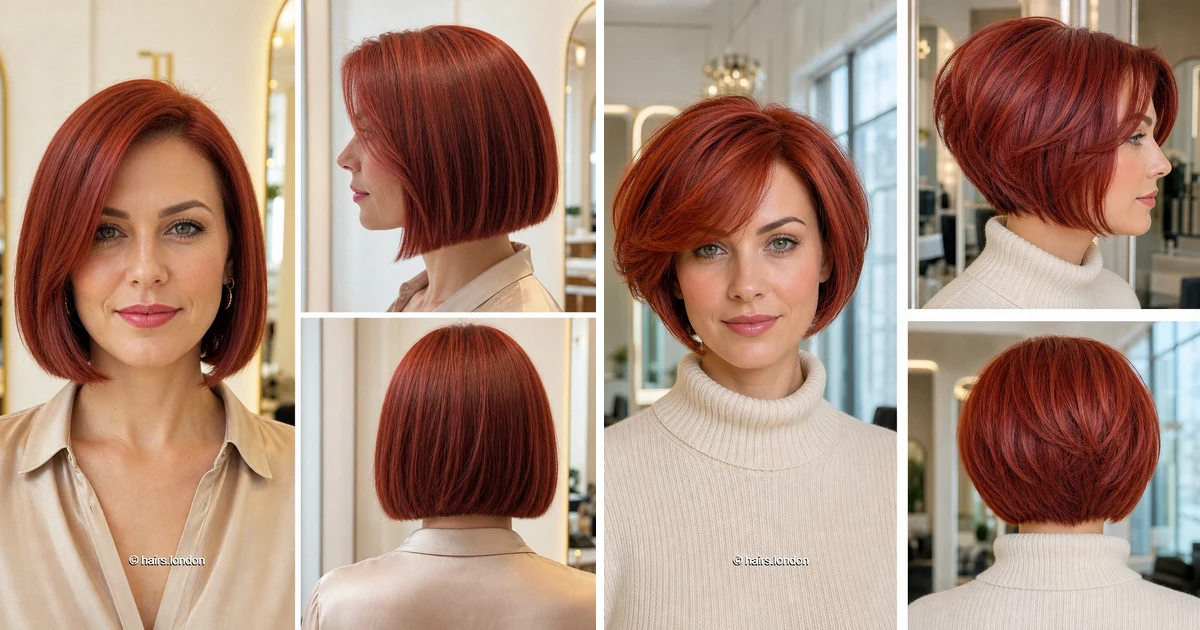
11. Auburn Layered Lob With Sweeping Front
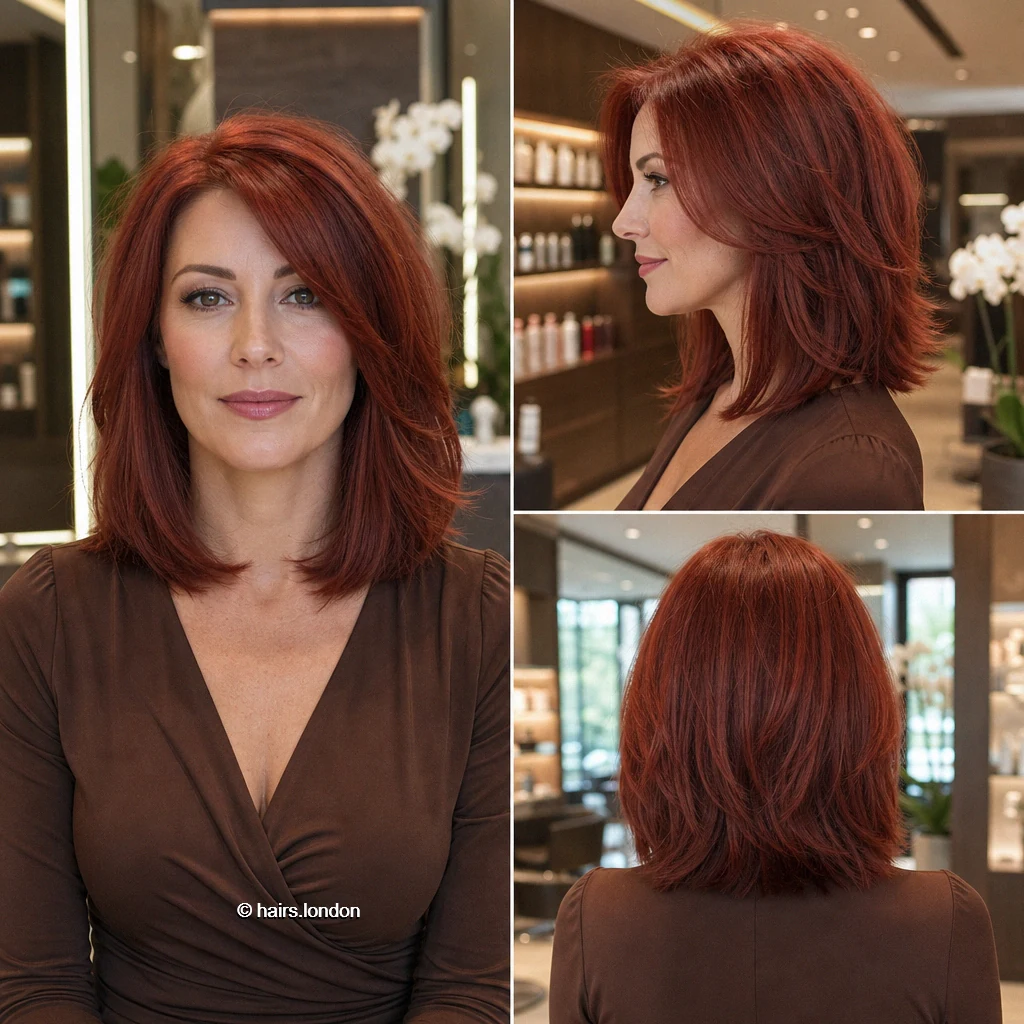
This auburn lob reaches the shoulders, giving its side-swept front and softly flipped ends more room to move. The back view shows layered separation through the lower lengths, rather than a compact or precisely blunt bob perimeter. Blow-dry the front away from the face, then use a brush to encourage loose movement through the tips. It can offer thick hair flexibility if the layers control bulk, though fine hair may need fewer short pieces. Trim the lower ends when they start catching on the shoulders, particularly where repeated heat styling weakens them, and refresh the auburn tone according to fading.
12. Cinnamon-Copper Lob With Loose Layers
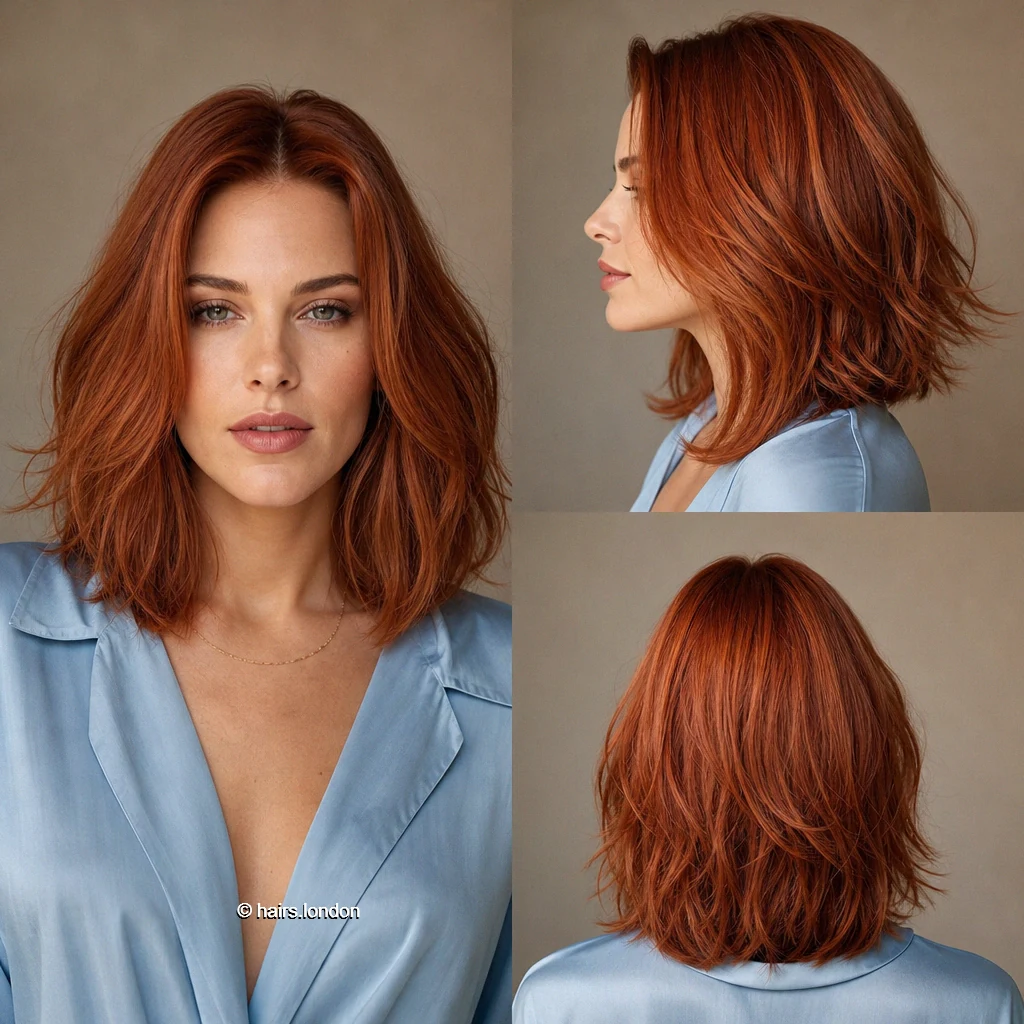
Cinnamon-copper lengths skim the shoulders in this layered lob, with a center part and face-framing movement. The side and back views show feathery ends and a soft perimeter, not the compact weight line of a blunt bob. Enhance natural waves with a light cream, or bend a few sections away from the face for similar movement. If your hair is dense, ask for layering that releases weight without leaving the ends thin. This longer shape may tolerate some growth, but trim dry or split tips before they make the outline look uneven, and maintain the front layers as they grow.
13. Ginger-Copper Bob With Soft Volume
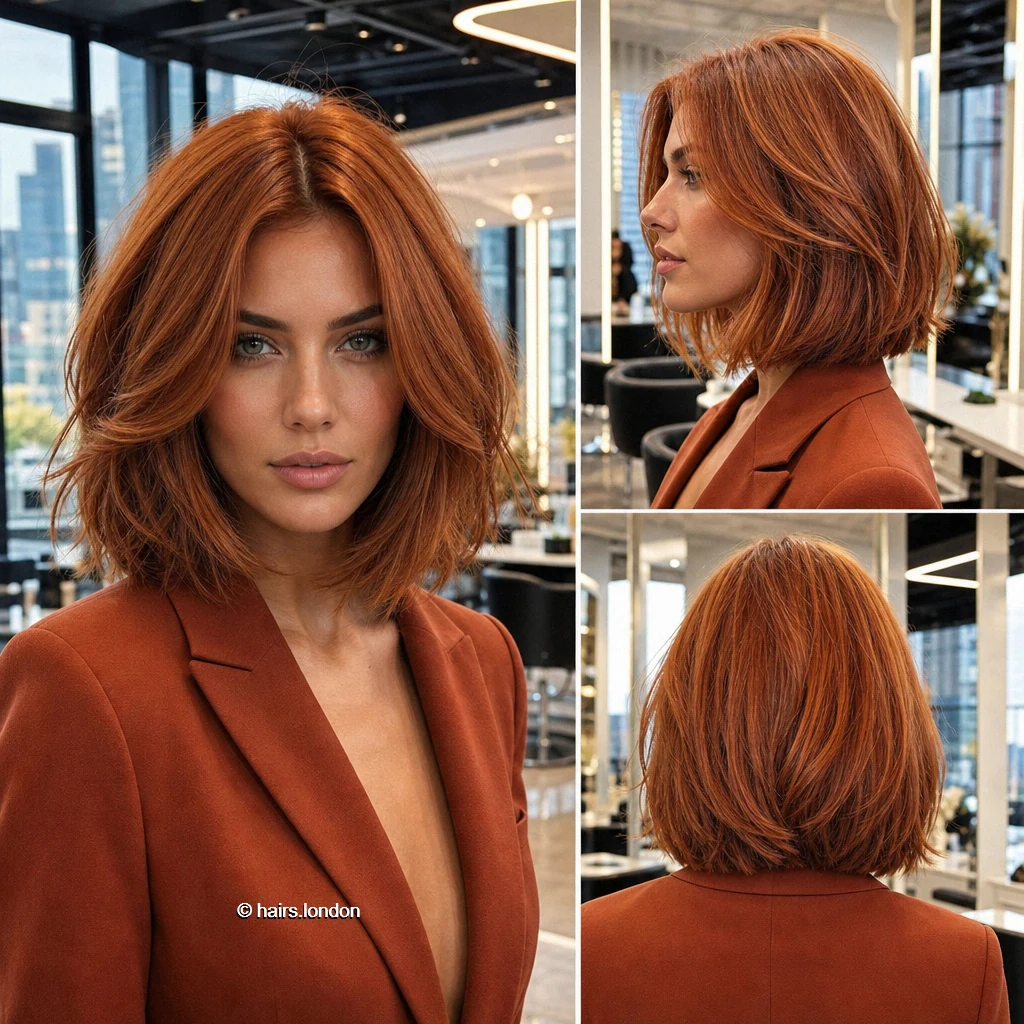
Ginger-copper color highlights the broad, airy shape of this bob, which rests between the jaw and shoulders. Its center-parted front opens around the face, while the back retains a substantial, softly textured lower edge. Lift the roots as you dry, then add a few loose bends rather than curling every section uniformly. Thick hair might need careful internal weight removal; finer hair may benefit from keeping the bottom relatively full. Ask for layers that move without creating a wide, heavy triangle, and trim when the back begins losing its balanced outline. Also consider how it looks tucked behind the ears.
14. Violet-Burgundy Layered Lob
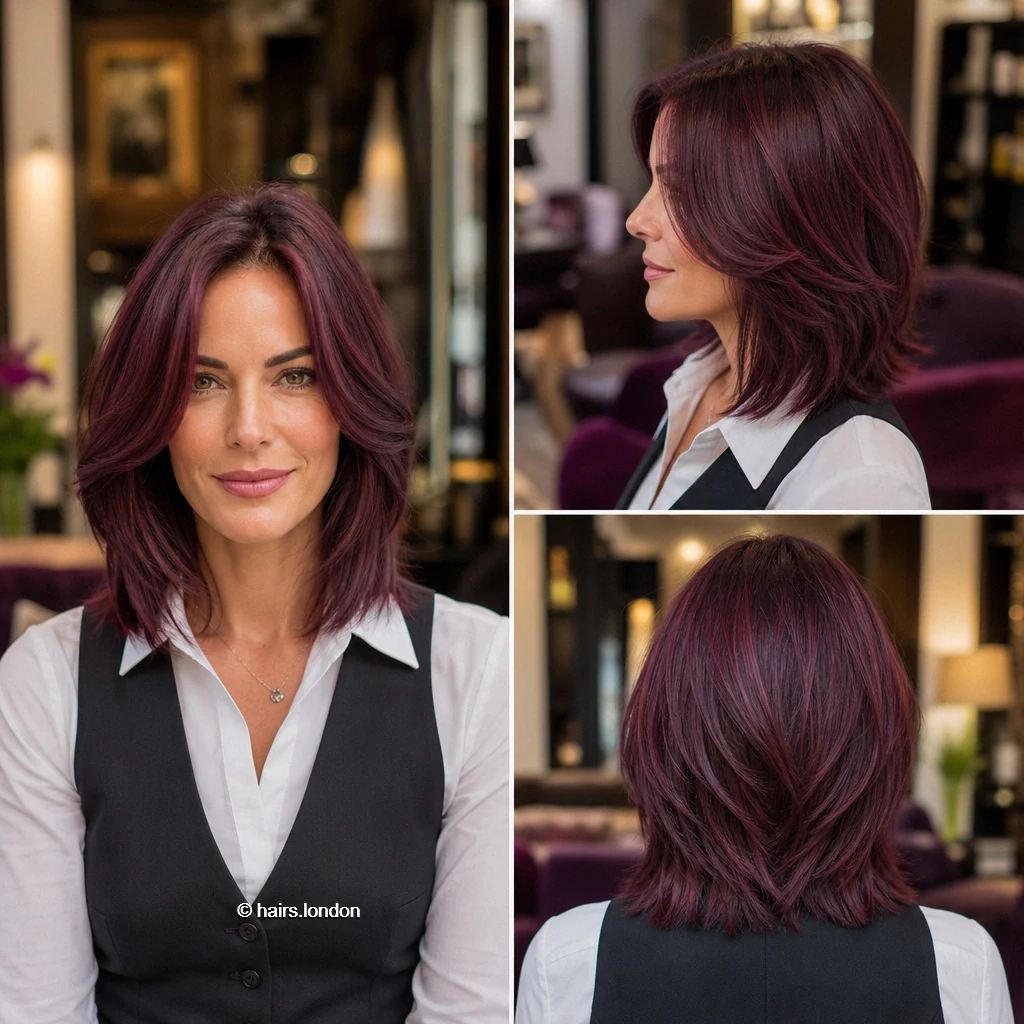
This violet-burgundy lob sits around the shoulders, with a center part and front layers that sweep away from the face. From behind, the lengths look softly layered, and the ends appear feathered rather than cut into a strict line. Style the front with a brush or wide rollers, letting the lower sections keep their relaxed movement. Dense hair can carry the layered shape, but fine hair may need a more conservative version to protect fullness. A gloss or suitable color refresh can maintain the violet cast, while periodic trims prevent the feathered tips looking worn, especially after frequent heat styling.
15. Burgundy Bob With Face-Framing Layers
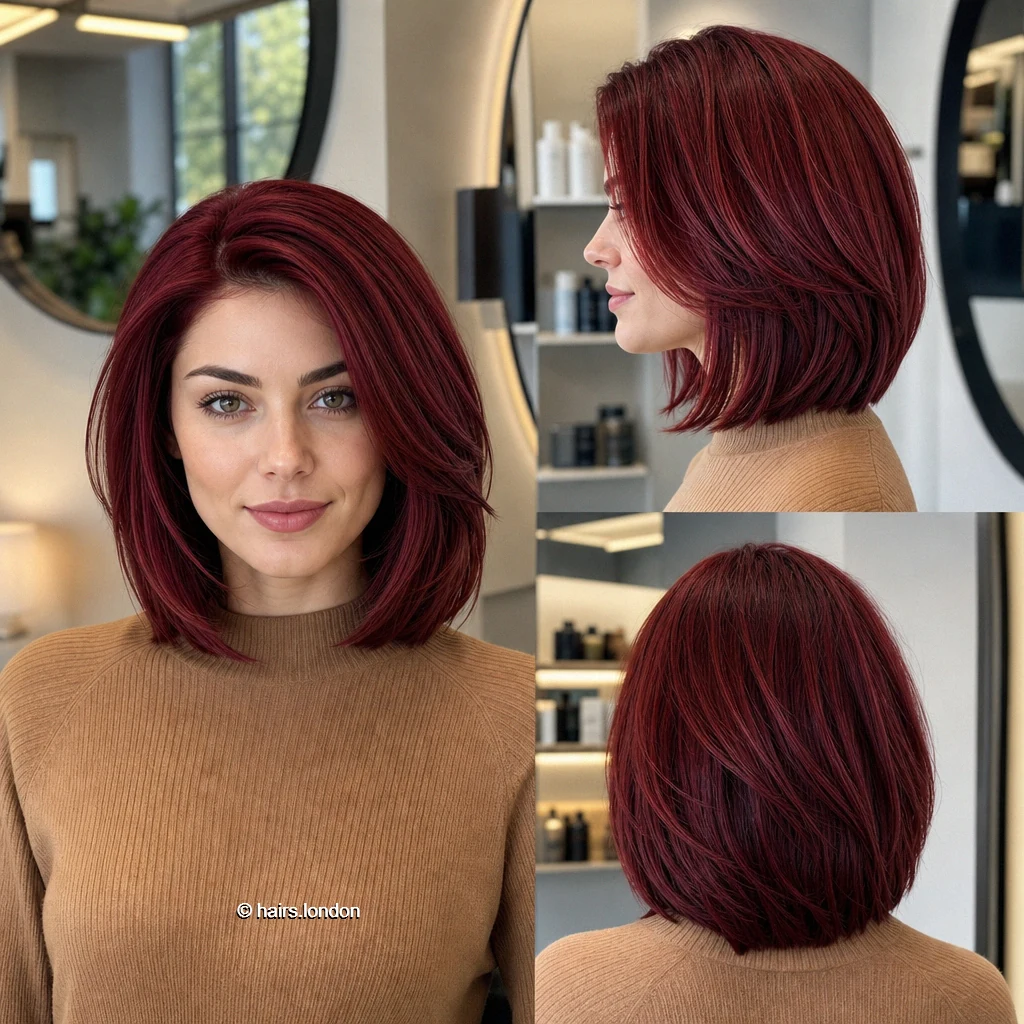
A side part and smooth, face-framing layers soften this burgundy bob, which falls near the base of the neck. The profile shows ends turning gently outward, while the back retains a rounded shape with visible layered pieces. Direct the front across with a brush, then use a small amount of serum on the ends only. This shape may suit someone who wants movement without pronounced waves, provided their density supports the layered perimeter. Ask for the lower edge to remain substantial, and book a trim when grown layers begin crowding the shoulders, especially if the ends start to feel heavy.
16. Scarlet-Red Graduated Bob
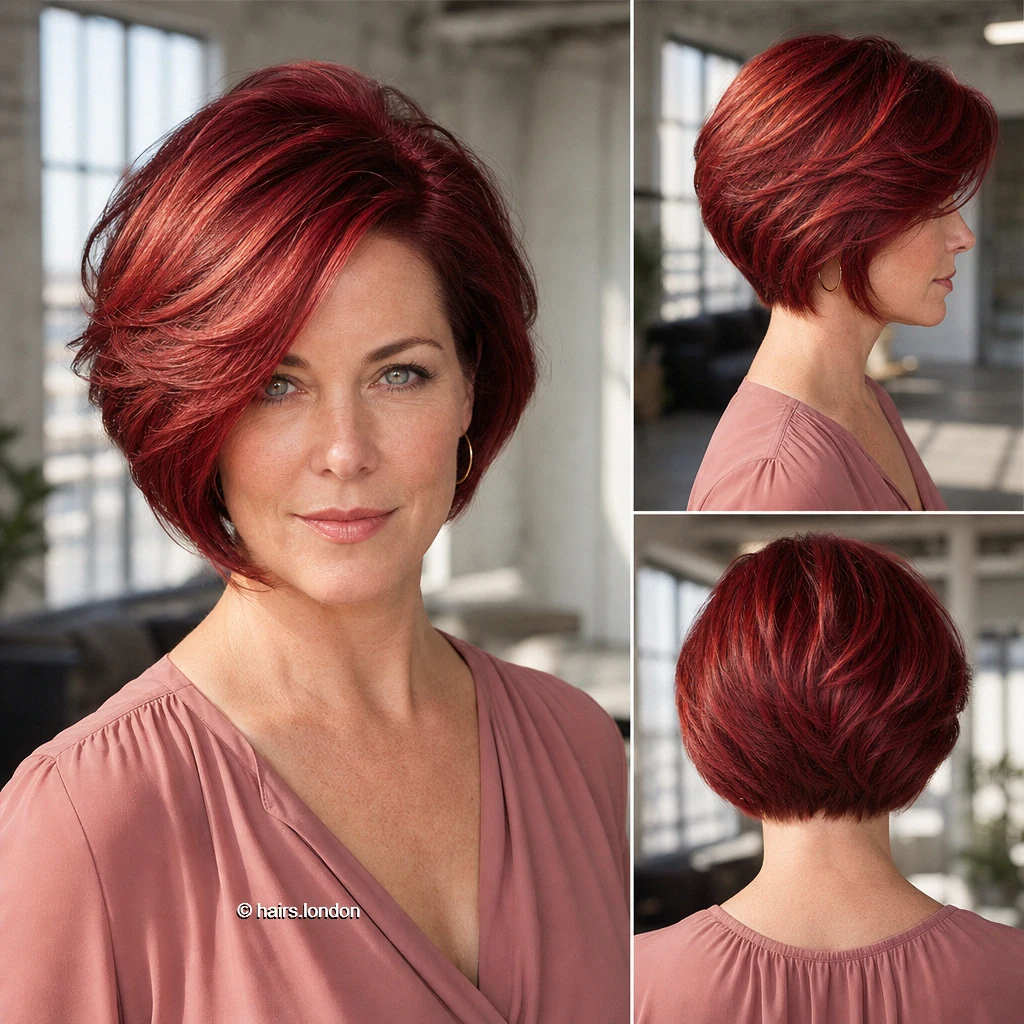
A long, sweeping front contrasts with the short nape in this scarlet-red bob, whose profile shows visible back graduation. Layered sections build a rounded shape above the neck, making this distinct from a simple A-line perimeter. Dry the back with a small brush to support its lift, then smooth the longer front across the face. Dense hair may need thoughtful weight control beneath the rounded section; finer hair may require less graduation for fullness. Maintain the nape and graduated weight line with timely trims, especially where the shorter back grows out fastest, and protect the vivid color from unnecessary heat.
17. Copper-Red Stacked Bob With Sweeping Fringe
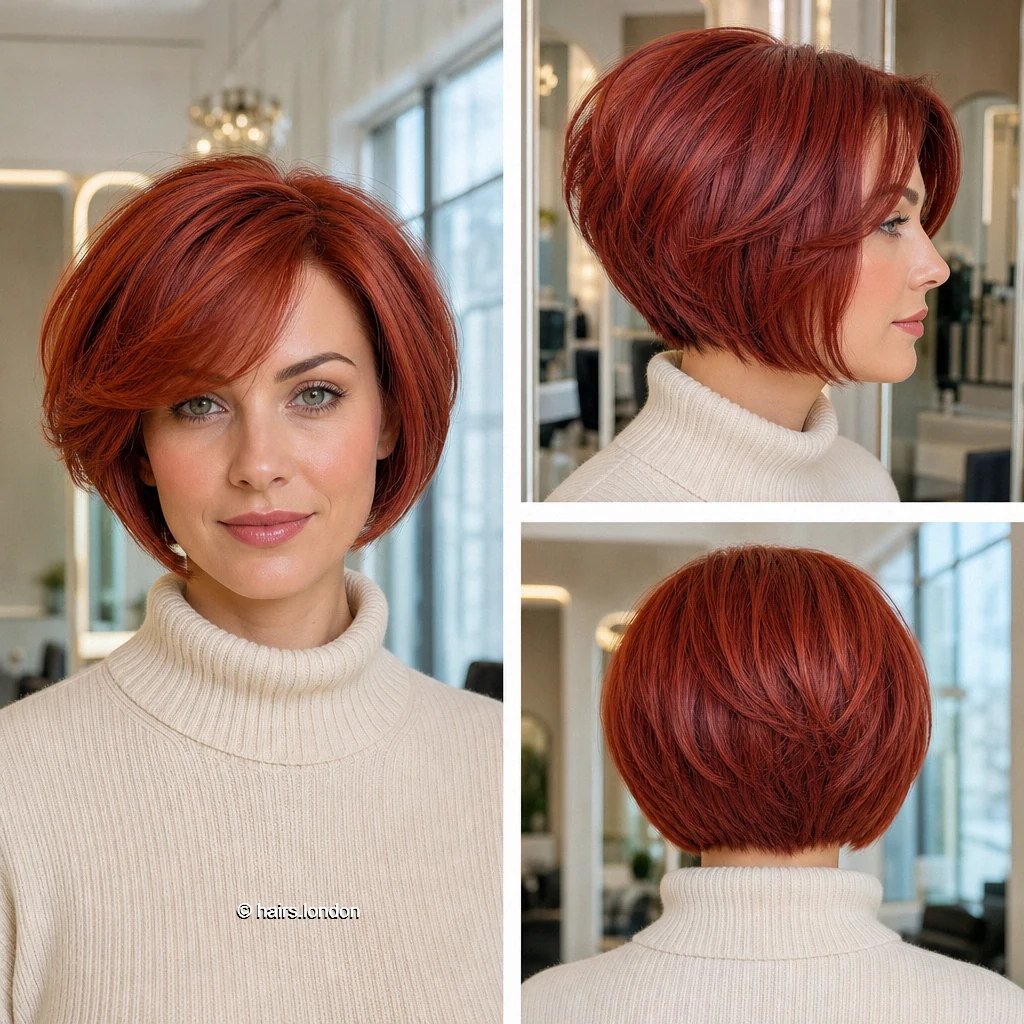
The sweeping fringe leads into a copper-red bob with longer front pieces and a visibly rounded, graduated back. Side and rear views show shorter layers building volume above a closely cut neck edge, supporting a stacked description. Guide the fringe sideways while drying, then smooth the lower perimeter without flattening the fuller back. This compact shape may need frequent cutting if your nape grows quickly; suitability also depends on density and growth patterns. Ask how much graduation your hair can support, and refresh the red when its warm brightness fades. Check that the fringe sits comfortably with your natural part.
18. Amber-Copper Bob With Rounded Graduation
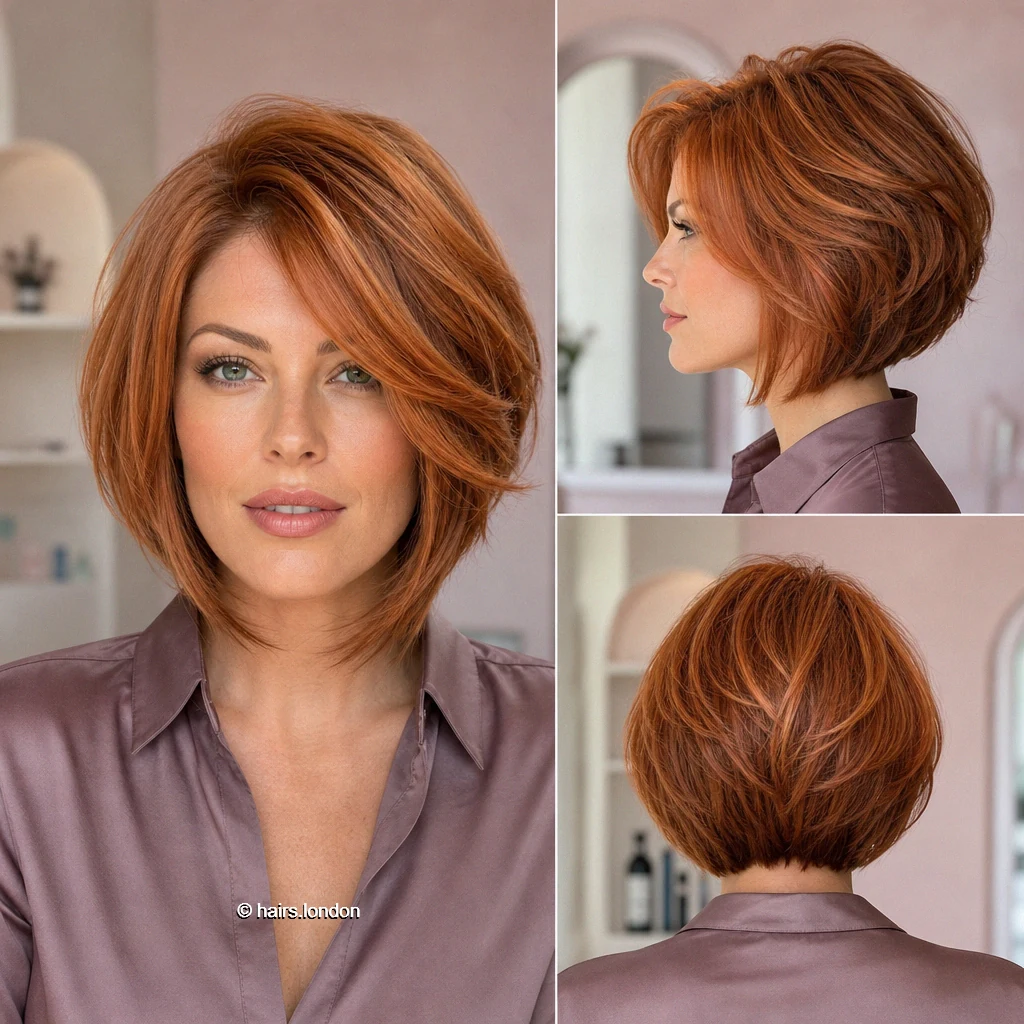
Amber-copper tones emphasize the layered sweep of this short bob, with a long side front resting near the jaw. Its side and back views show a rounded build of shorter layers above a tidy nape, indicating visible graduation. Dry the crown for lift and direct the front across, using lightweight styling cream to define its curved ends. Thick hair may need internal weight control, while fine hair benefits from discussing how much layering preserves coverage. Keep the nape tidy as it grows, especially along the shortest sections, and maintain the copper tone with a color routine suited to your hair.
How to Choose Your Bob Length and Shape
Start with where you want the ends to fall: at the jaw, along the neck or near the shoulders. A shorter bob puts more emphasis on its perimeter and nape; a lob generally leaves more room for loose layers and growth. Compare side and back views before asking for an angle. An A-line bob has visibly longer front lengths, whereas a stacked or graduated bob builds shape with shorter layers at the back. Your density, natural texture, growth patterns and willingness to style should guide how pronounced either feature becomes.
Styling Fine, Thick, Wavy and Curly Textures
For fine hair, keep enough weight in the baseline and use lightweight root lift instead of coating the ends. With thick hair, discuss discreet internal weight removal that preserves the outer shape. Wavy hair can be scrunched with mousse or cream and diffused gently; smooth only the perimeter if you want definition without losing movement. For natural curls, have your stylist account for shrinkage and the way curls sit when dry. Apply curl product to damp hair and avoid brushing out the finished shape. Keep a fringe manageable by styling it first, in its usual direction.
Keeping Red Bob Color Fresh
Copper, auburn and burgundy can fade differently, so agree on a refresh plan for the particular red you choose. Use color-safe products, wash at a comfortable lukewarm temperature and protect hair before heat styling. Ask whether an occasional gloss is appropriate and how your starting color affects visible regrowth. Smooth bobs display changes in tone prominently across their surface; layered cuts may show them most clearly on the lighter-looking ends.
Maintaining the Bob Perimeter and Graduation
Check your bob in the mirror from the front and side, and ask your stylist to assess the back. A blunt or angled perimeter needs trimming when its clean line becomes uneven. Textured bobs can allow a softer grow-out, but their ends still need attention when they look sparse. Graduated cuts need particular care at the nape and weight line: as those sections grow, the rounded shape can drop and become bulky. The right interval depends on your growth rate and how exact you want the silhouette to remain.
What to Discuss with Your Stylist
Bring the front, profile and back views of the cut you like. Point to the desired length, part, fringe, lower edge and amount of volume at the back rather than relying on a subtype name alone. Explain how your hair behaves when air-dried, how much time you spend styling and whether you want to keep or change your current red. Ask where weight would be removed, how the cut will look as it grows, and what maintenance its shape and color will realistically require.
Frequently Asked Questions
What is the difference between a bob and a lob?
A lob is a longer bob, typically falling nearer the shoulders. The shorter examples here end around the jaw or neck, while the lobs leave more length through the lower sides and back.
How is an A-line bob different from a stacked bob?
A-line describes a perimeter that is longer at the front than the back. Stacked describes visible short layers building volume at the back. A cut can show both features, but one does not automatically imply the other.
Will a layered bob make fine hair look thinner?
It can if too much weight is removed from the ends. Ask your stylist whether subtle layering and a stronger perimeter would better support your density.
Can thick hair wear a short, rounded bob?
Yes, depending on its texture and growth patterns. Discuss internal weight removal that controls bulk without making the visible edge look thin.
Can I wear a bob with natural curls?
Yes. Choose the length with curl shrinkage in mind and discuss how the shape should sit when dry. A stylist can adjust layering to help prevent excess bulk at the sides.
Should I add a fringe to my red bob?
A fringe changes both the look and the daily routine. Consider your part, growth patterns and willingness to style or trim it between full haircut appointments.
Which bob is quickest to style each day?
That depends on your natural texture. A softly textured bob may be quick if your hair already waves; a precise smooth bob may take longer if it needs regular blow-drying.
How do I keep a blunt bob perimeter smooth?
Direct dryer airflow down the hair shaft, use heat protectant and guide the ends with a brush. Avoid excessive inward curling if you want the clean lower line to remain visible.
How often does a graduated bob need trimming?
Watch the nape and back weight line rather than following one fixed schedule. Book a trim when growth makes the back feel heavy or changes its rounded outline.
Do copper and burgundy bobs need the same color upkeep?
Not necessarily. Their fading and regrowth can look different depending on your starting color and the color service used. Ask your colorist for a plan specific to your shade.
Can I grow a short bob into a lob?
Yes. Small shape-maintenance trims can keep the perimeter balanced as it passes the neck and approaches the shoulders; a graduated back may need particular adjustment.
What should I bring to a bob haircut consultation?
Bring views that show the front, side and back of your preferred cut. Explain the length you want, your natural texture, daily styling habits and how often you can maintain the shape and red color.
Conclusion
The most useful red bob inspiration is a shape you can picture from every angle. Decide whether you prefer a crisp edge, loose layers, a longer front or visible back graduation, then discuss how that detail will behave in your own hair. The right shade and maintenance plan can follow the cut.


