


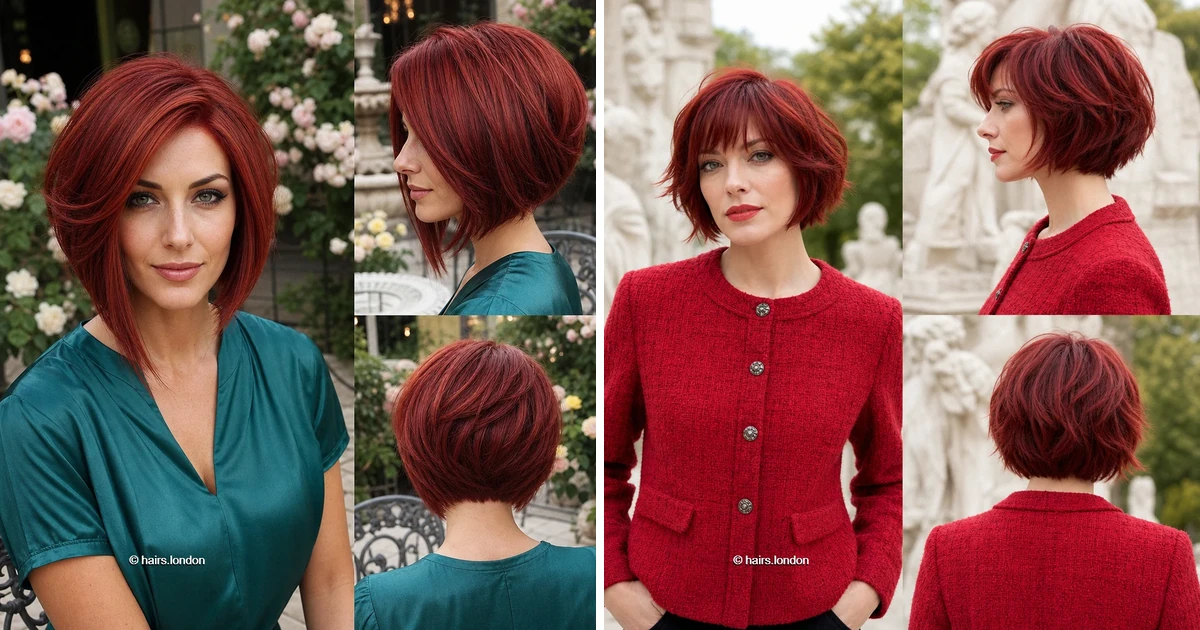
11. Scarlet Graduated Bob with a Dramatic Sweep
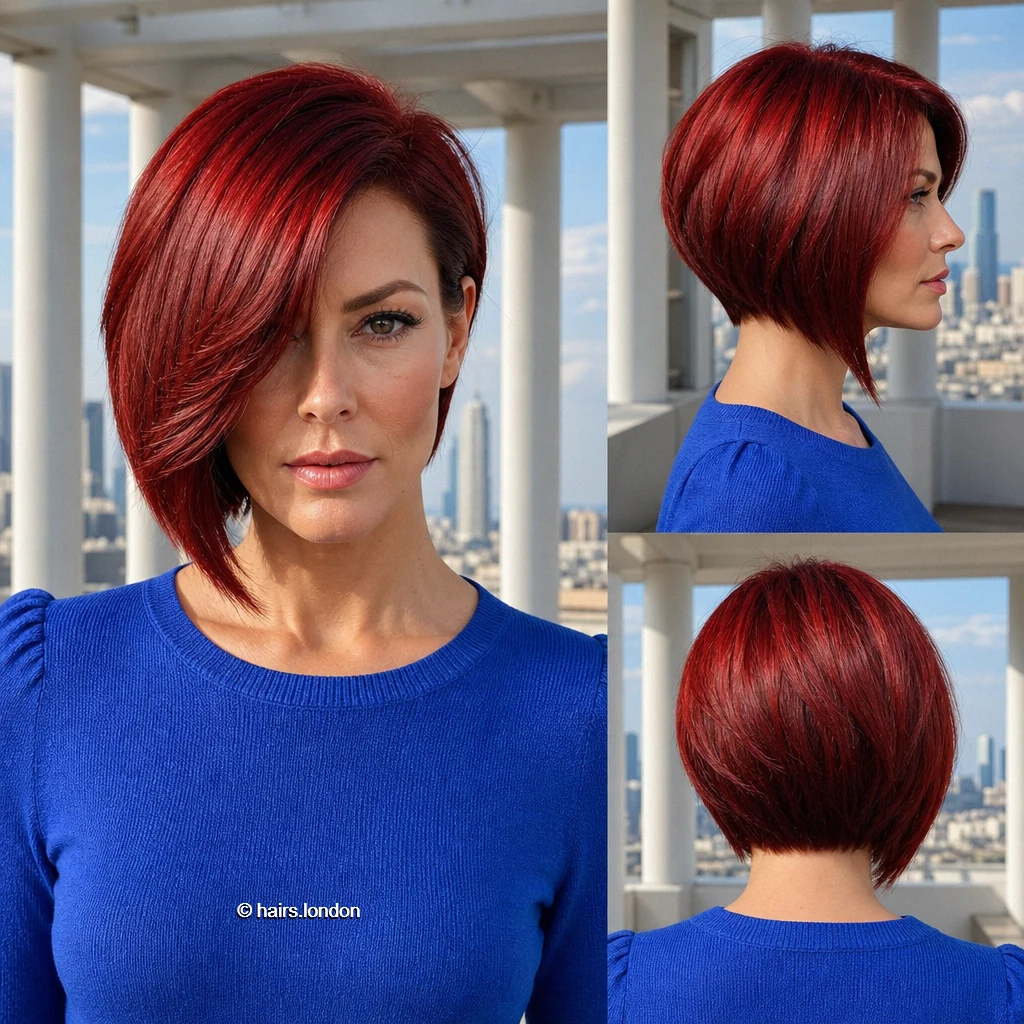
Brilliant scarlet red emphasizes this smooth, sculpted graduated bob shape. A deep part sends substantial hair across one eye slightly. The longest front extends below chin, versus a cropped nape. Rounded rear fullness clearly rises above the short neckline edge. Ask for enough front weight to maintain that dramatic sweep. Blow-dry along the hair shaft for smoothness and controlled volume. Tuck the shorter side back if your growth pattern allows. Keep heat moderate to preserve the glossy crimson color finish. Book nape maintenance when the short edge begins losing definition. This demands careful cutting and regular styling for lasting contrast.
12. Copper Bob with a Strong Front-to-Back Slope
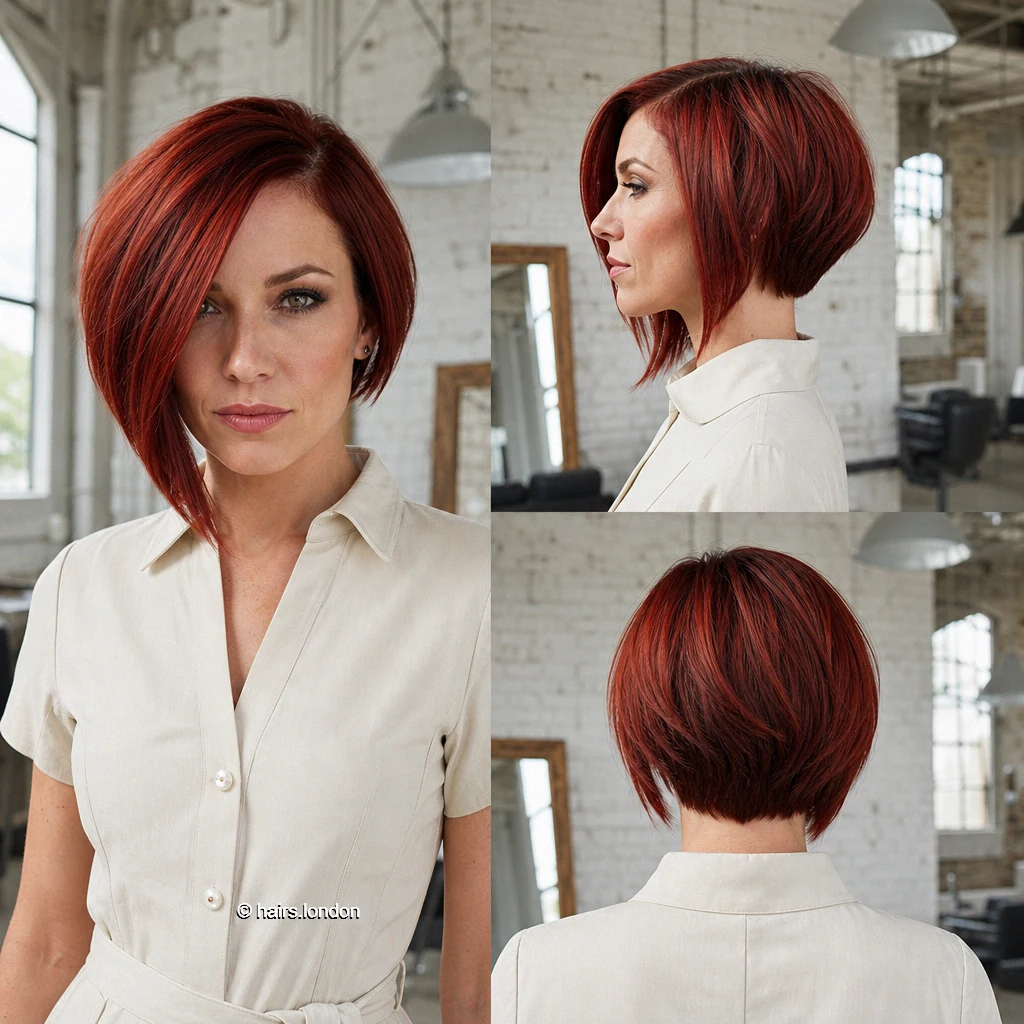
Rich copper red sharpens this distinctly sloping graduated bob shape. The heavy side sweep extends below chin on one side. Behind, a clean nape supports rounded fullness toward crown height. The shorter side tucks near jaw, emphasizing visible asymmetry here. Ask your stylist where each front point should fall naturally. Preserve lower density rather than thinning the long side excessively. Round brush the back gently; smooth forward sections separately afterward. Frequent nape checks help retain the crisp front contrast visually. Color safe shampoo helps slow fading of vivid copper tones. Consider whether your part and growth patterns support this slope.
13. Ginger Graduated Bob with a Long Side Sweep
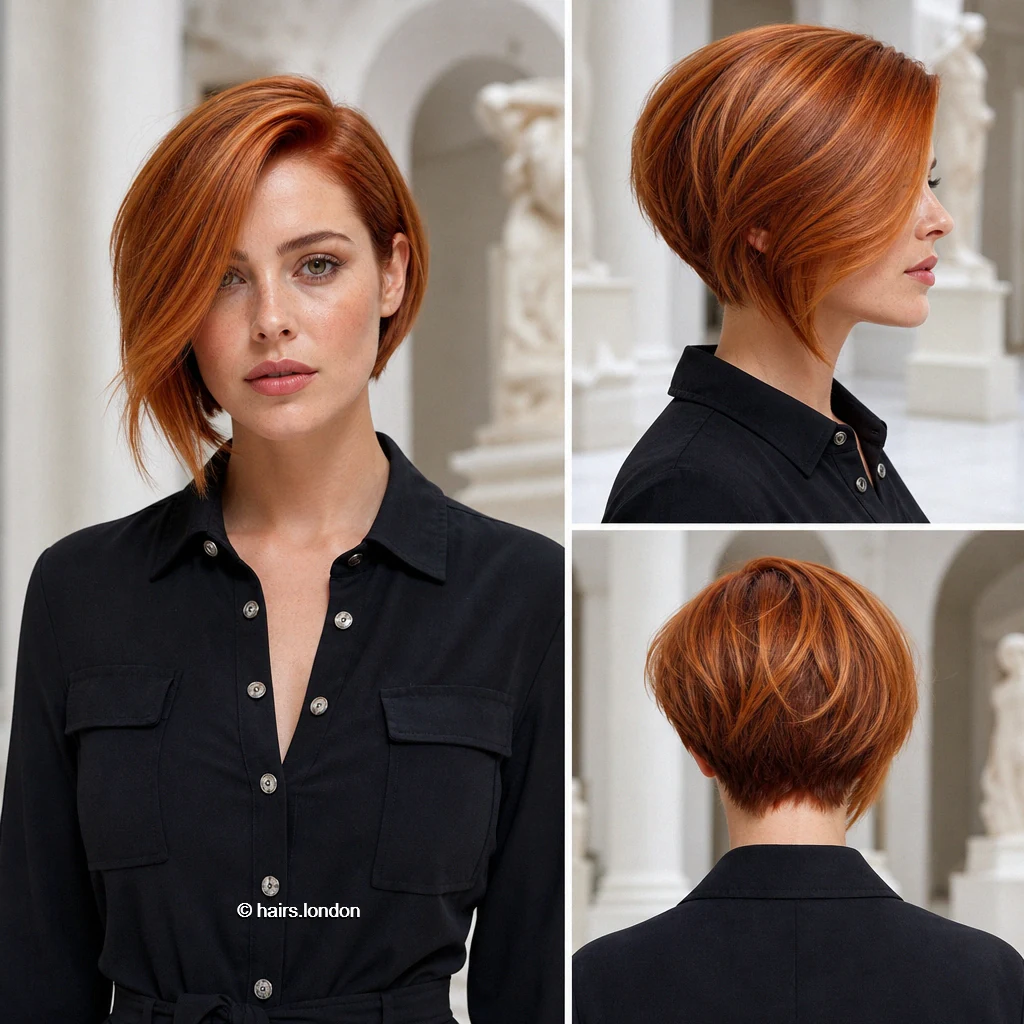
Warm ginger copper brightens this side swept, graduated bob shape. A generous front section falls beneath chin on one side. The shorter opposite side curves toward jaw, opening the face. Back views show rounded layering tapering neatly into nape hair. Ask to retain fullness where the longer front narrows downward. Brush the sweep forward while drying for a polished surface. A touch of cream controls flyaways without flattening crown movement. Short nape trims preserve the silhouette as front lengths grow. Protect the warm tone with gentle washing and heat protection. This shape favors density that holds fullness through graduation well.
How to Choose Your Bob Length and Shape
Start with where you want the front to end: around the jaw for a compact bob or below the chin for more face-framing length. Then consider how much neck you want exposed. A longer front alone creates an A-line effect; visible shortening and weight built above the nape indicate graduation. If you want an extended front without a bulky back, show your stylist both the side and rear views. Check how your usual part and growth patterns affect the shape before committing to a dramatic sweep.
Styling Fine, Thick, Wavy and Curly Textures
Fine hair often benefits from a substantial lower edge and lighter products, especially when layers could make the ends look sparse. Thick hair may need carefully placed internal weight removal while keeping the perimeter intact. For waves, scrunch in a small amount of foam and diffuse gently to preserve separation. Natural curls need a length plan that accounts for spring and different curl patterns; ask to see how the proposed outline will sit when dry. Smooth a precise bob with downward airflow, but avoid brushing textured layers into unnecessary bulk.
Keeping Copper, Auburn and Burgundy Color Fresh
The images show several red tones rather than one shared shade. To help preserve your chosen copper, auburn or burgundy, wash with comfortably cool water and a color-safe cleanser, limit unnecessary heat, and use heat protection when styling. Ask your colorist whether a gloss or other refresh makes sense for your hair and existing color. Notice fading at the ends as well as new growth before deciding when to return.
Maintaining the Bob Perimeter and Graduation
A sleek, sloping perimeter shows changes in length quickly, while a choppy outline can accommodate a little more growth. On the graduated bobs, watch the nape: when its short edge grows out, the rounded back and long front lose contrast. Fringe may need attention before the rest of a layered bob does. Agree on a trim schedule based on your growth rate and how precisely you want to preserve the original silhouette.
What to Discuss with Your Stylist
Bring the image that best matches your preferred front length, back fullness and texture, then point out which details you do not want copied. Discuss your natural part, nape growth patterns, density, waves or curls, and realistic morning styling time. Ask where the weight line will sit, whether any back graduation is planned, and how the cut should look as it grows. If you want red color too, discuss upkeep separately from the haircut.
Frequently Asked Questions
What is the difference between a bob and a lob?
A bob generally finishes around the jaw or neck, while a lob extends farther toward the shoulders. Some long front pieces can dip below the chin without making the shorter back a lob.
Is an A-line bob the same as a stacked bob?
No. A-line describes a perimeter that gets longer toward the front. Stacked or graduated describes visible layering that builds weight above a shorter back; one cut can have both features.
How do I choose between a sleek and textured bob?
Consider your natural texture and how much styling you want to do. A precise, smooth outline calls for more perimeter control, while a layered bob is designed to show separation and movement.
Can fine hair hold a graduated bob?
It can, depending on density and growth patterns. Ask your stylist to keep enough weight at the front and lower edge so graduation does not leave the ends looking thin.
How can thick hair avoid too much bulk in a bob?
Discuss selective internal weight removal and the placement of the weight line. Removing too much from the perimeter can weaken the intended shape, especially on a long-front bob.
Can naturally curly hair wear these bob shapes?
Yes, but the pictured smooth and tousled finishes will not translate identically to every curl pattern. Plan the length around curl spring and discuss how the back and front will sit when dry.
Should I add bangs or a side-swept fringe?
Choose fringe if you like styling it and can accommodate its growth. A side sweep can blend into the bob, while shorter bangs need more frequent checks to stay clear of your eyes.
How much daily styling does a graduated bob need?
That depends on your texture, part and desired finish. The sleek examples may need smoothing at the perimeter; textured versions can often be refreshed by dampening and reshaping selected pieces.
How often should I trim a bob?
Trim when its key feature begins to change: a blurred nape on a graduated bob, uneven front points on an angled bob, or a fringe that has grown too long. Your stylist can set an interval for your growth rate.
Will red color change how I maintain the haircut?
The cut and color have separate needs. Preserve the shape with trims, and discuss color-safe washing, heat use and possible refreshes with your colorist.
Can I change the part on a long-front bob?
Sometimes, but a strong side part may be central to the pictured balance. Tell your stylist if you switch parts regularly so the front lengths can be planned accordingly.
What happens when a short bob grows out?
The nape may lose definition before the front needs shortening. You can maintain the original contrast with back cleanups or ask your stylist to reshape it gradually into a more even bob.
Conclusion
The strongest choice is the red bob whose outline works with your hair as well as your preferred color. Compare the nape, front length and amount of layering in these images, then use those visible details to plan a cut you can comfortably style and maintain.


