

How to Choose Your Bob Length and Shape
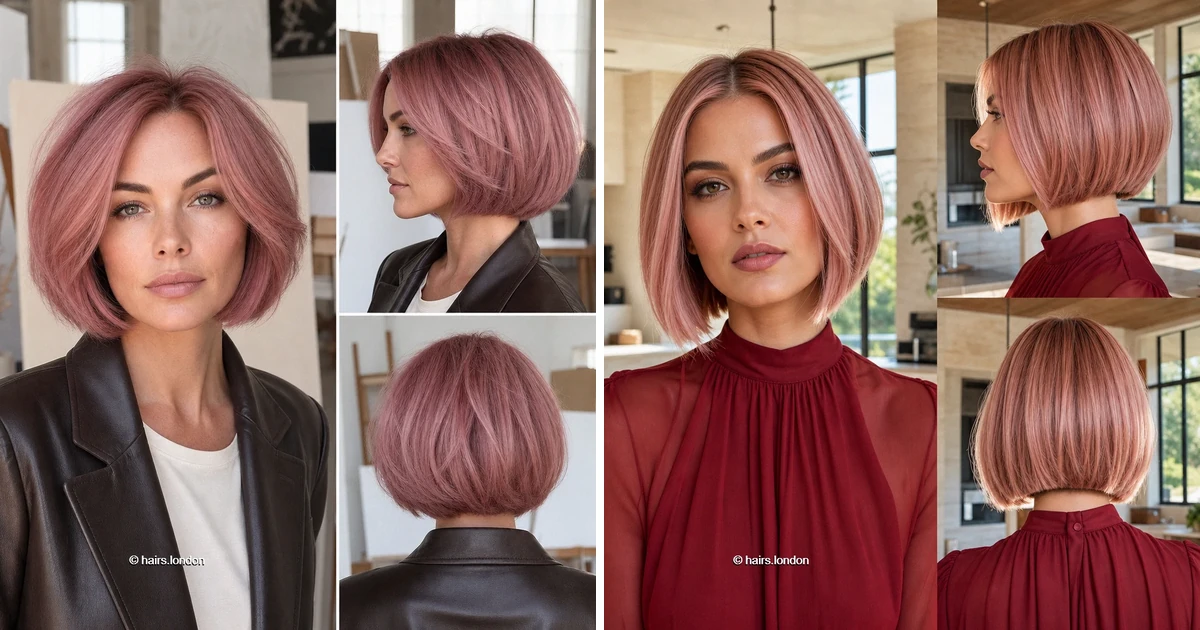
Start with where you want the perimeter to sit: at the jaw, against the neck, or near the shoulders. A rounded bob keeps visual weight around the head, while a shaggy bob breaks up that outline with layers. An A-line shape has a longer front; a stacked or graduated bob also shows a shorter, built-up back. The two details can appear together, but they are not interchangeable. Consider how much length you need for tucking or tying hair back, and allow for any wave or curl shrinkage.
Styling Fine, Thick, Wavy, and Curly Textures
Fine hair often benefits from keeping enough weight at the bottom and using a light mousse rather than heavy cream. Thick hair may need carefully placed internal weight removal so a rounded bob does not become bulky at the sides. For waves, scrunch product into damp hair and diffuse or air-dry before separating the ends. For curls, discuss the shape at the hair’s natural spring and avoid judging its finished length while wet. Smooth a precise perimeter with a brush when desired, but leave layered ends free to move.
Keeping Rose Pink Color Fresh
The images show both lighter pink lengths and deeper roots, so decide whether you want visible root contrast or a more uniform result. Ask your colorist how your starting color and hair condition affect the upkeep required. Gentle washing, conditioner suited to color-treated hair, and restrained heat can help limit fading and dryness. Arrange a color refresh when the tone no longer looks the way you want, rather than assuming every pink bob needs the same schedule.
Maintaining the Bob Perimeter and Graduation
A smooth, curved hemline looks different once uneven growth interrupts it; book a trim when the edge stops sitting where you intended. Textured bobs can tolerate a softer outline, though their layers still need reshaping when movement turns into bulk. Short graduated napes and strongly asymmetrical fronts make growth especially noticeable. Bangs may need attention before the rest of the cut. At each visit, say which part you want preserved: the jawline edge, the airy ends, or the contrast between front and back.
What to Discuss with Your Stylist
Bring front, side, and back references for the bob you prefer. Point out the perimeter, fringe, part, and amount of back graduation instead of relying on a subtype name alone. Discuss density, natural texture, cowlicks, nape growth, and whether you normally style with a dryer or wear your hair as it dries. If you want an angled front or a close nape, confirm how it will look between trims. Review the color process and maintenance commitment separately from the haircut.
Frequently Asked Questions
What is the difference between a bob and a lob?
A lob is a longer bob that typically approaches the shoulders. Image 7 has that longer, wavy outline; the jaw- and neck-length cuts read as shorter bobs.
Is an A-line bob the same as a stacked bob?
No. A-line describes a front that is longer than the back. Stacked or graduated describes visible shaping and built-up weight at the back. A cut can have both features.
Which pictured bobs show clear back graduation?
Images 8 and 10 show shorter napes beneath fuller, graduated backs. A rounded outline alone is not enough to identify a stacked cut.
Can fine hair wear a layered bob?
Potentially. Ask your stylist to preserve enough weight at the perimeter and use only the layering your density can support; extensive thinning can make fine ends look sparse.
How can thick hair avoid a bulky bob shape?
Discuss where weight collects, particularly at the sides and back. Selective internal shaping can reduce bulk without removing the perimeter that gives the bob its outline.
Can naturally curly hair be cut into one of these bob shapes?
Yes, if the length and layers account for your curl pattern and shrinkage. Have your stylist assess how the curls sit naturally rather than copying a smooth bob’s wet length.
Are bangs necessary for a shaggy bob?
No. Images 3 and 9 pair textured layers with fringe, but a stylist can discuss a fringe-free shape if bangs do not fit your growth pattern or routine.
How much daily styling does a smooth bob need?
That depends on natural texture and growth patterns. A smooth perimeter may need brush drying or light heat, while hair that already dries close to the intended shape may need less work.
How should I style a wavy bob without losing movement?
Apply a lightweight product to damp hair, scrunch, and diffuse or air-dry. Once dry, separate pieces gently instead of brushing the waves into a wide, undefined shape.
How often should I trim a bob?
Trim it when the defining shape starts to change. A precise edge, short graduated nape, or asymmetrical front usually shows growth sooner than a loose, textured perimeter.
Can I grow out an asymmetrical bob gracefully?
Yes. At each appointment, decide whether to retain the uneven front or gradually balance both sides. The shorter nape may still need tidying while the rest gains length.
Do rose pink bobs require frequent color appointments?
Upkeep depends on your starting color, the pink tone, and how much root contrast you are comfortable showing. Ask your colorist for a realistic refresh plan before committing.
Conclusion
The best choice among these rose pink bobs depends as much on your hair’s density and natural movement as it does on the photograph you prefer. Choose the perimeter and front-to-back shape first, then decide how much fringe, layering, and color maintenance you want to manage.