


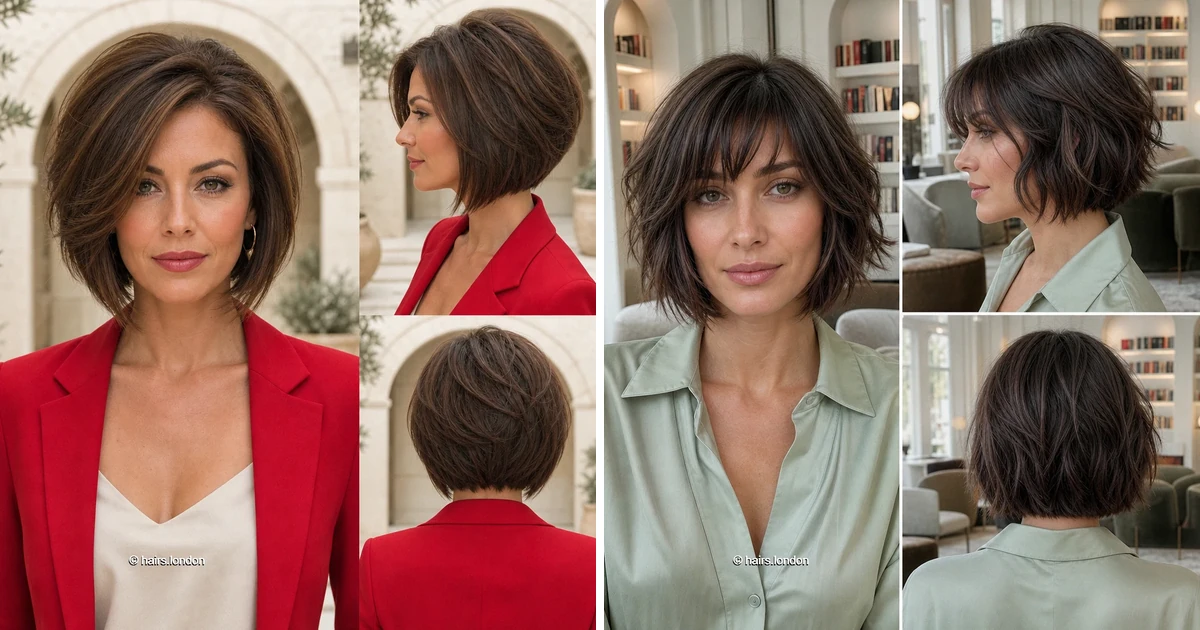
11. Highlighted Bob with a Long Side Piece
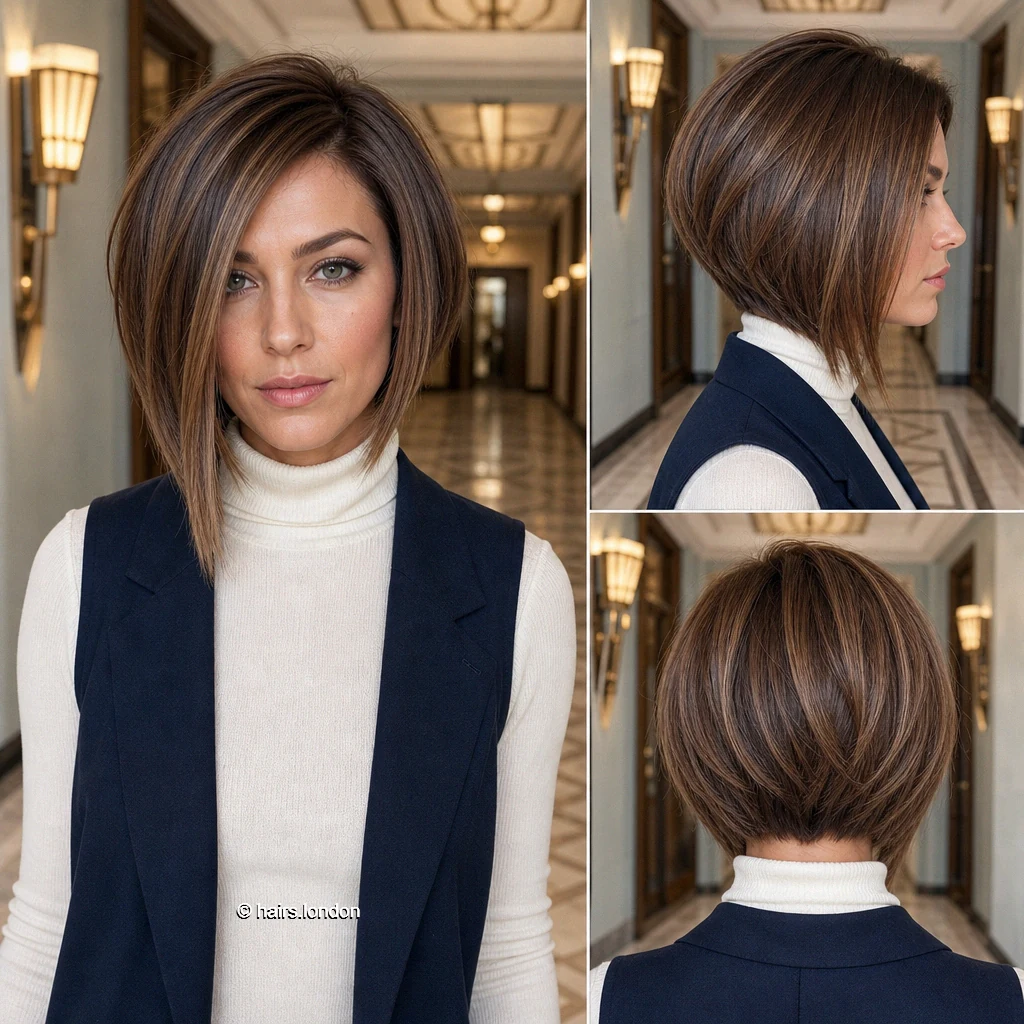
Fine caramel highlights follow the curved layers of this brunette bob. A long side piece falls below the chin from an off-center part. Shorter hair behind builds visible fullness above the nape. The contrasting lengths create a strong, graduated front-to-back silhouette. Ask your stylist how to keep the extended section substantial. Smooth its edge while directing the back upward for lift. Lightweight shine spray can reveal the highlights without adding bulk. Fine hair may need less layering around that long section. Thick hair may need discreet interior thinning behind the ear. Recheck the back shape as the nape grows noticeably.
12. Tousled Brunette Bob with Curtain Pieces
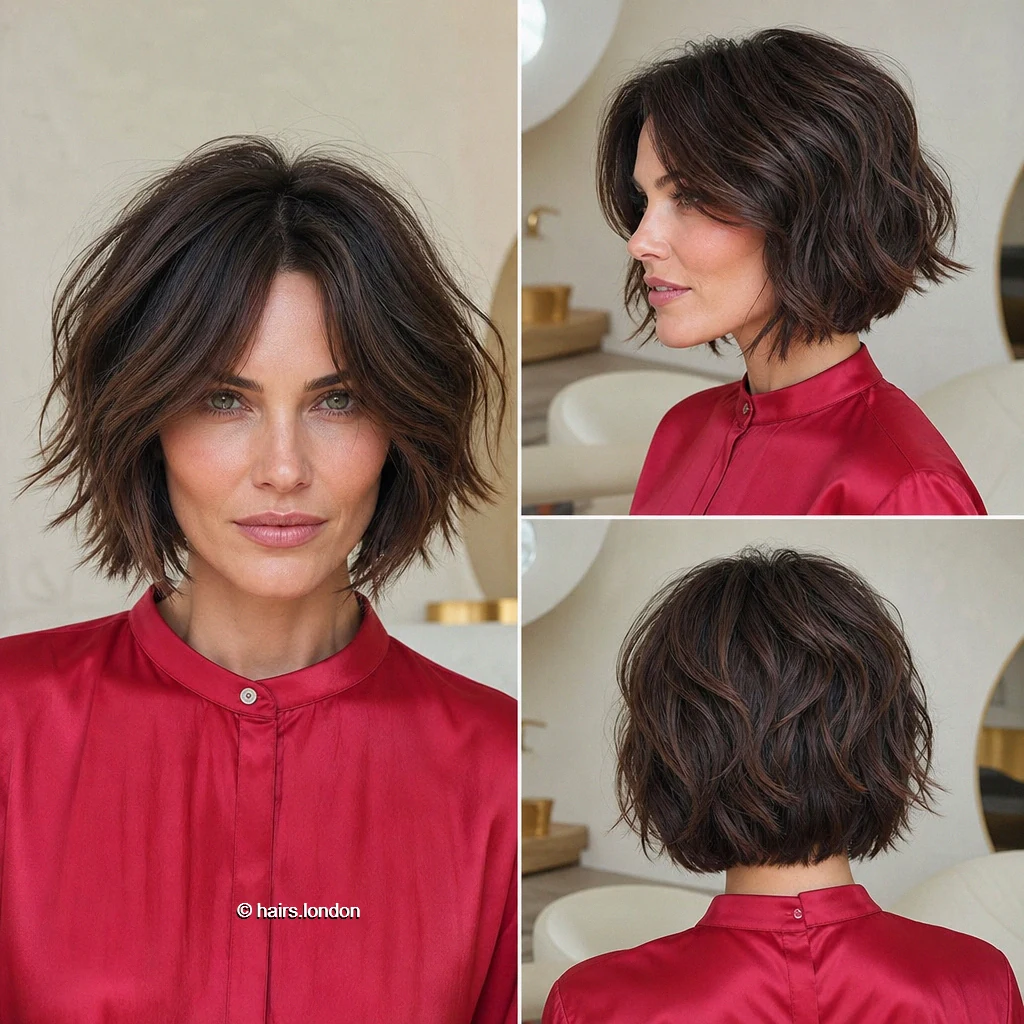
Dark brunette hair appears loosely waved through this chin-length bob. Longer curtain pieces part near the center and frame the face. Uneven-looking, textured ends give the perimeter a relaxed finish. The back remains around neck length without an obvious stack. Ask for layers that release movement while preserving enough weight. Scrunch damp hair with a light mousse or wave cream. Diffuse gently, or let natural texture settle without repeated brushing. Very fine hair may need fewer layers for fuller ends. Strong curls require a length allowance when the hair dries. Trim the fringe pieces separately if they obscure your eyes.
13. Side-Fringed Wavy Bob
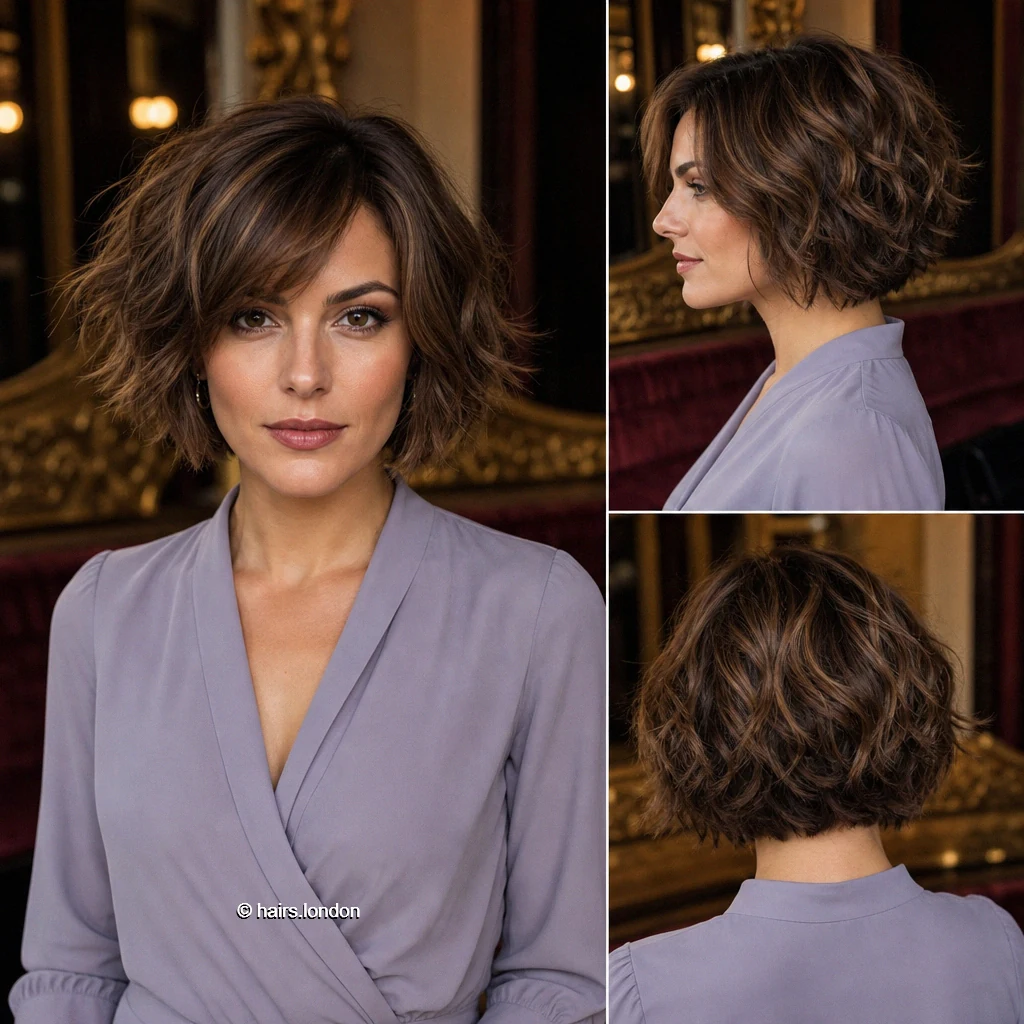
Warm brunette highlights break up the waves in this short bob. A soft side fringe crosses the forehead and meets layered sides. The back finishes near the neck with textured, separated ends. Its loose perimeter favors movement over a sharply polished line. Ask for enough length to accommodate your natural wave pattern. Work a small amount of mousse through damp mids and ends. Diffuse without overhandling to preserve the visible piecey texture. Dense hair might need weight removed without thinning the perimeter excessively. Straighter hair would require styling to reproduce these waves. Schedule fringe adjustments when its sweep becomes difficult.
14. Chin-Length Shaggy Bob with Wispy Bangs
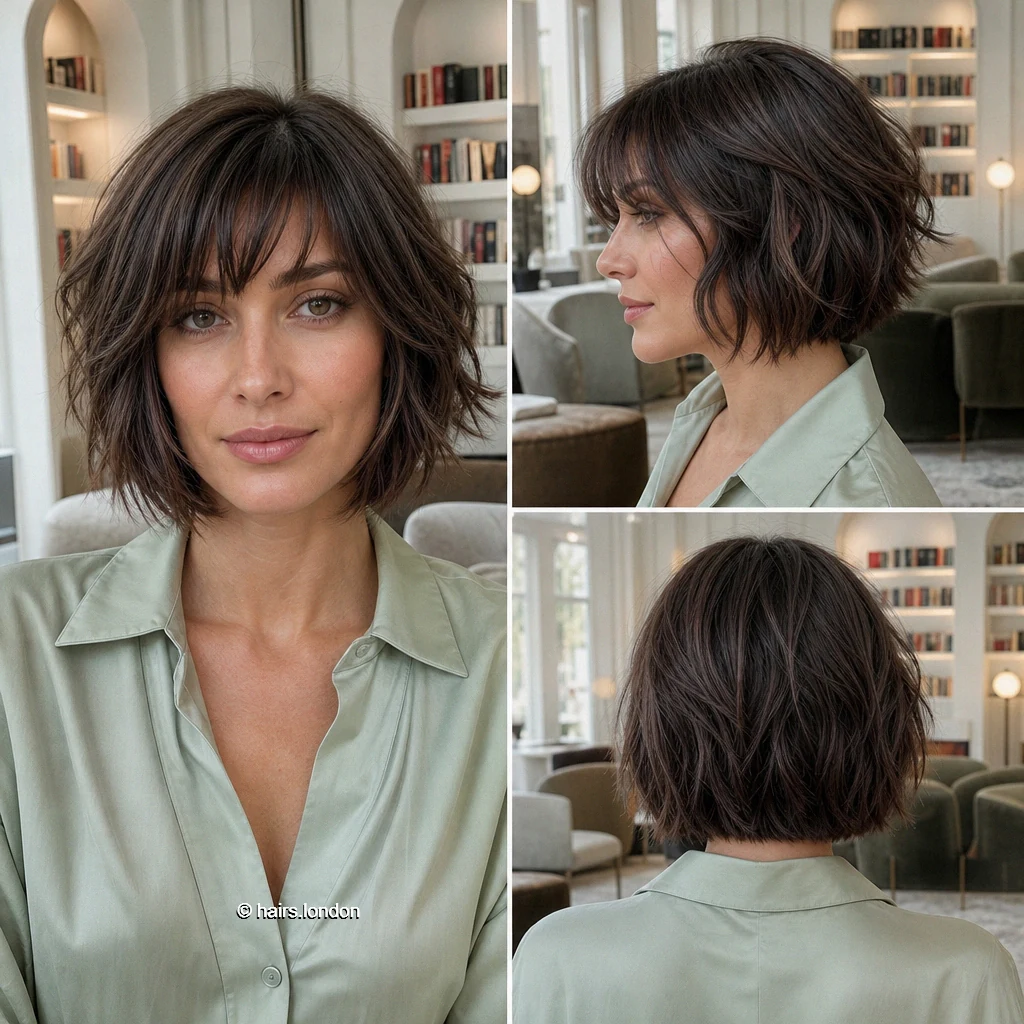
Wispy bangs soften this dark, tousled chin-length bob. Choppy-looking layers create separation around the cheeks and through the back. The perimeter stays relatively short and relaxed rather than sharply angled. Subtle brown variation becomes visible where the strands separate. Ask your stylist to tailor layering to your density. Scrunch in a lightweight texture product and diffuse gently. Avoid heavy wax across the bangs, which can make them clump. Fine hair may need a more solid lower edge. Wavy hair can support this finish with less heat styling. Trim the fringe as needed while allowing flexibility elsewhere between scheduled full trims.
15. Piecey Short Bob with Soft Fringe
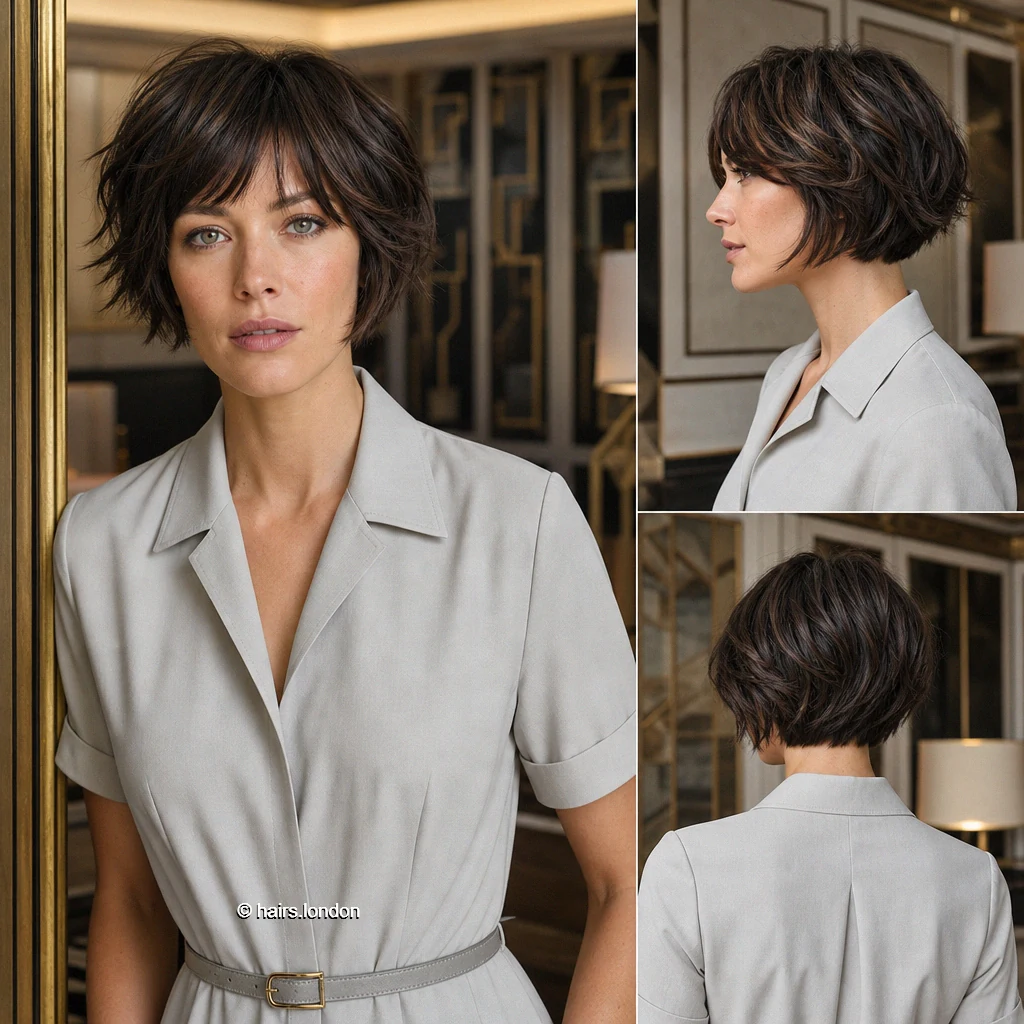
This short dark brunette bob has airy layers and separated ends. A soft fringe skims the forehead, blending into textured sides. Side views show a compact back with no pronounced angle. Subtle warm strands catch light through the tousled surface. Ask for softness without removing too much lower-edge weight. Style the fringe first, directing it where it naturally falls. Then encourage movement with your fingers and a flexible product. Dense hair may benefit from internal weight control near the sides. Fine hair may look fuller with less aggressive layering. Maintain the fringe and neckline according to their individual growth patterns.
16. Chestnut Bob with Swept Bangs and Flicked Ends
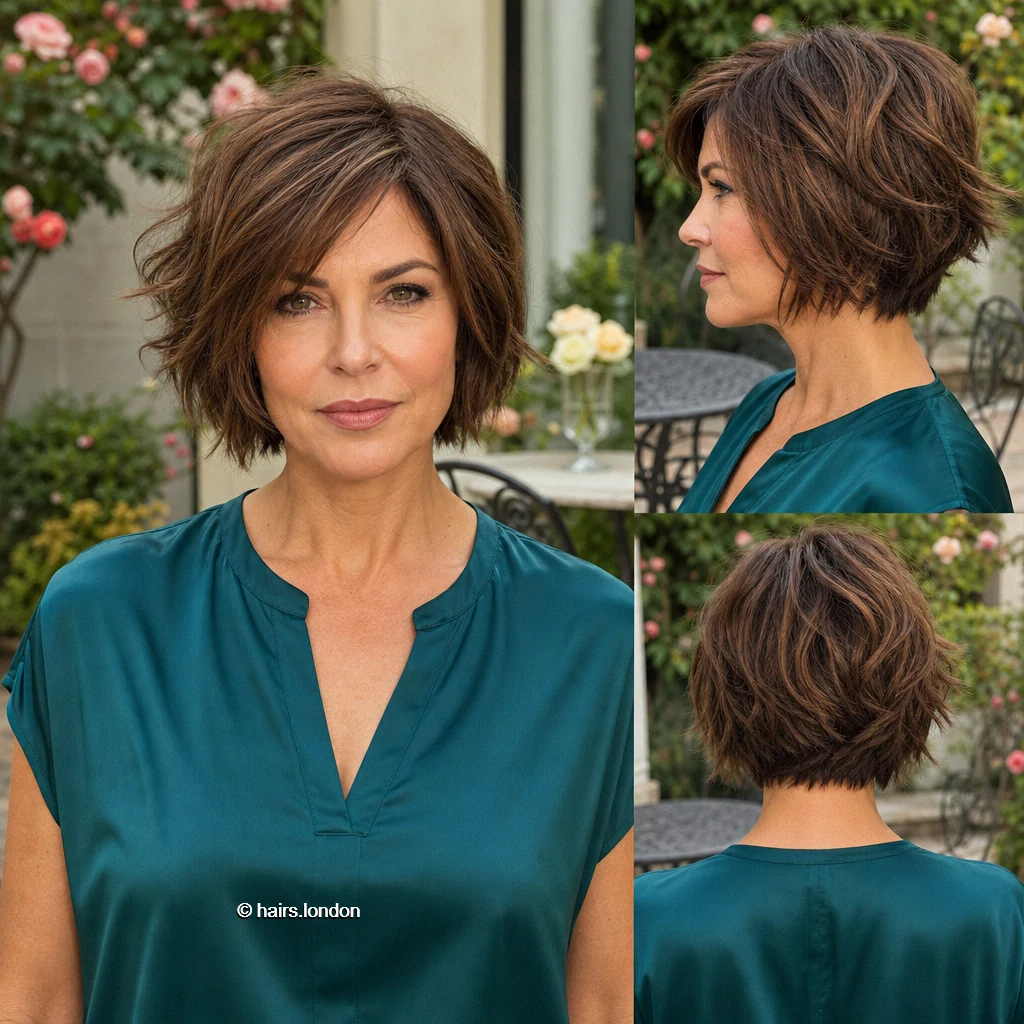
Chestnut-brown color brings warmth to this breezy, short bob. Side-swept bangs blend into layers around the cheek and jaw. Flicked ends give the back a light, unsettled outline. The rear view shows texture rather than a distinct graduated stack. Ask for layers that move without leaving thin ends. Rough-dry lightly, then define selected pieces with a small brush. A flexible cream can control flyaways while preserving separation. Naturally wavy hair may achieve this finish with minimal heat. Very thick hair might need weight adjusted beneath the surface. Refresh the bangs when they stop sweeping comfortably aside between your regular appointments.
17. Coppery Shaggy Bob with Light Bangs
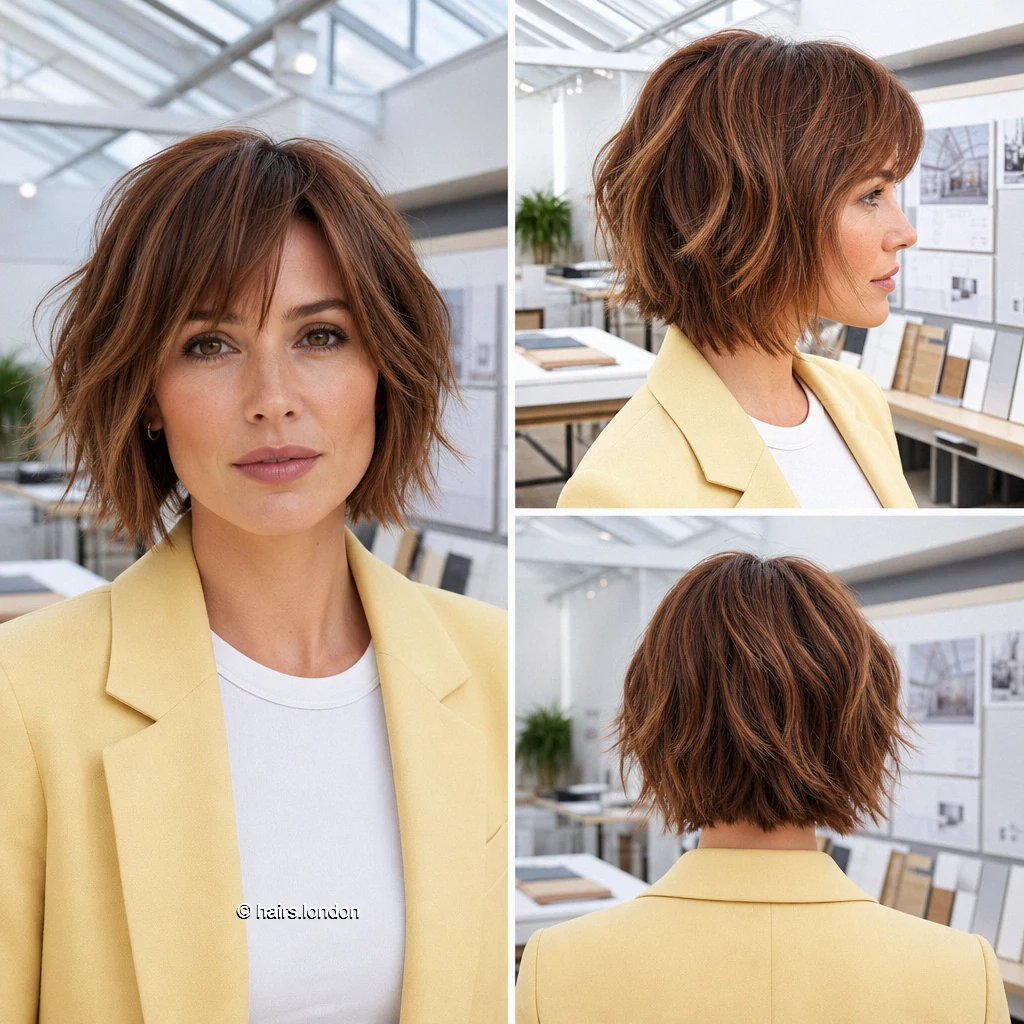
Coppery brown hair forms a loose, shaggy bob near chin length. Light bangs cross the forehead, while irregular waves frame the jaw. The back appears softly layered with a relaxed lower edge. There is no strong long-front angle in the side view. Ask for movement that respects your natural wave and shrinkage. Scrunch damp strands with mousse, then diffuse at gentle airflow. Keep styling product light so the fringe stays airy. Straight hair may need a few bends to recreate this texture. Dense hair may benefit from strategic bulk removal. Trim the bangs separately from the deliberately loose perimeter regularly.
18. Asymmetrically Styled Bob with Side-Swept Volume
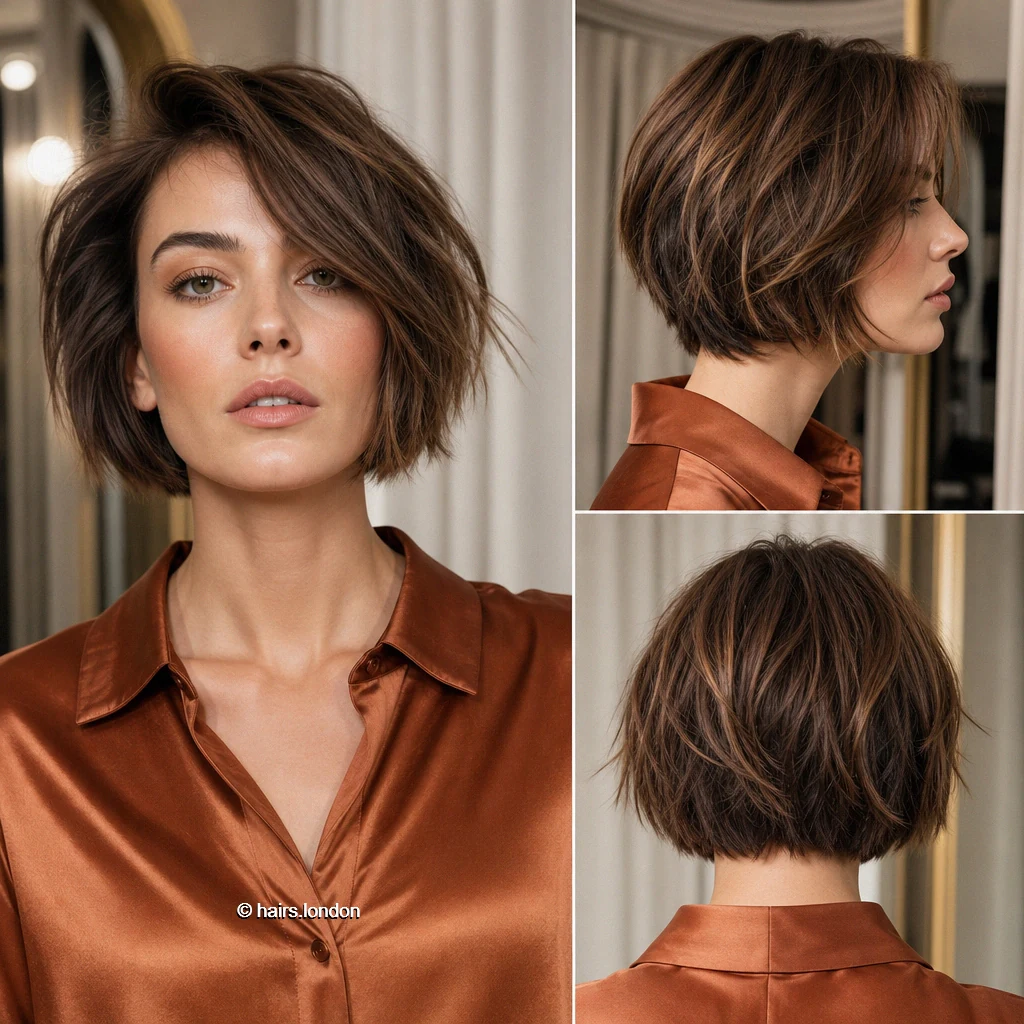
Warm brunette hair is swept deeply across this short bob. One side appears fuller, while the opposite side sits closer. Soft layers and loose bends keep the jaw-length outline mobile. The back has a textured finish rather than precise stacking. Ask whether your natural part will hold a similar sweep. Lift the roots while drying and bend selected surface pieces. A flexible spray can maintain shape without making ends stiff. Fine hair may need fewer layers to retain fullness below. Thick hair may need weight managed beneath the rounded crown. Reassess the outline once the side sweep loses balance visibly.
19. Short Graduated Bob with Caramel Highlights
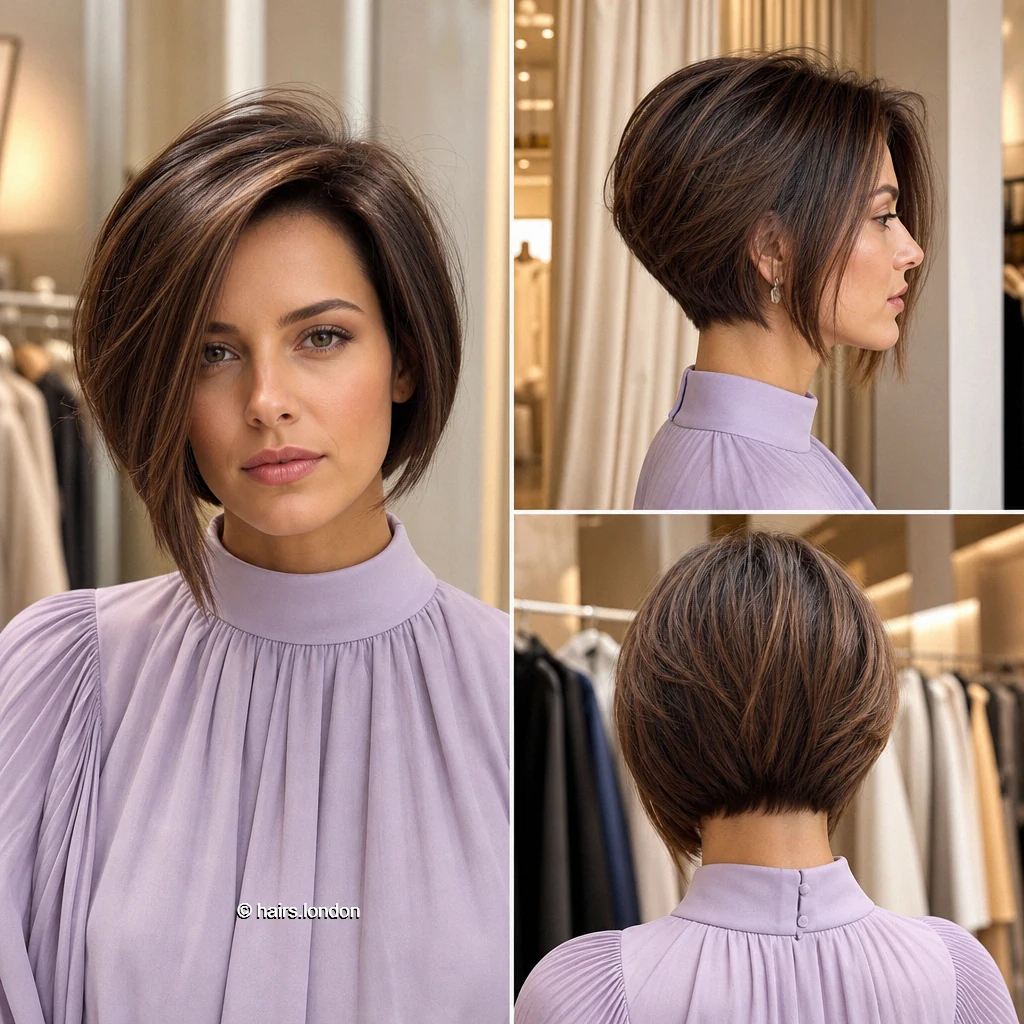
Caramel highlights define the curved surface of this short bob. A heavy side sweep meets longer hair near the jaw. The back narrows visibly into a short, exposed nape. Rounded fullness above it supports a softly graduated shape. Ask your stylist to keep the sweeping front easy to reposition. Lift the back while drying, then smooth the lower edge. Use heat protection if a brush is part of your routine. Dense hair may need discreet weight removal within the crown. Fine hair may benefit from preserving its strongest perimeter. Trim the nape when the rounded profile begins dropping in profile.
20. Textured Angled Bob with a Long Fringe
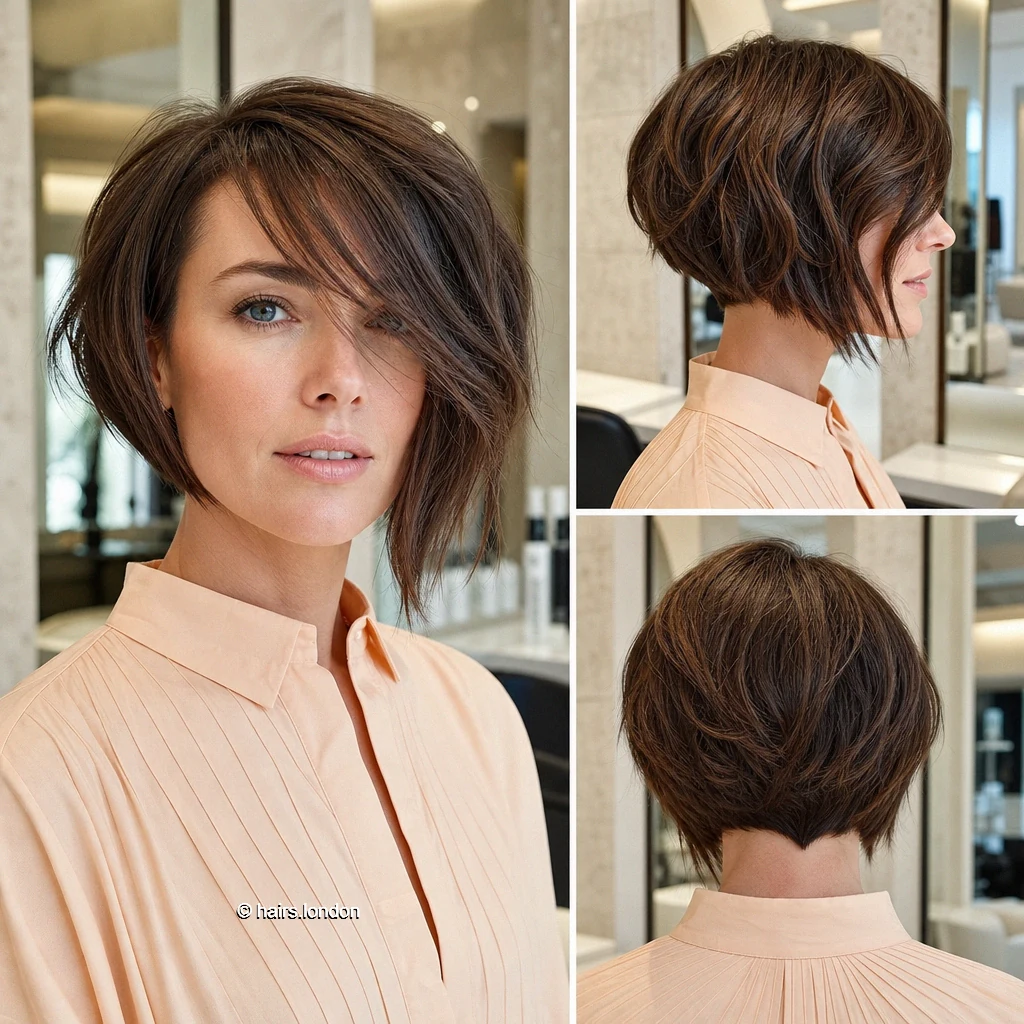
Brown hair falls into a long fringe across one eye. A pointed front section contrasts with the shorter, rounded back. Side and rear views reveal layers above a narrow neckline. This is an angled, graduated bob with textured surface movement. Discuss whether the fringe length works with your daily routine. Dry it across the forehead before shaping the remaining hair. Separate the ends with a little lightweight styling cream. Fine hair may need extra perimeter weight around the long point. Thick hair may need controlled internal shaping behind it. Schedule fringe and neckline upkeep before either clearly obscures the silhouette.
21. Soft Graduated Bob with an Off-Center Part
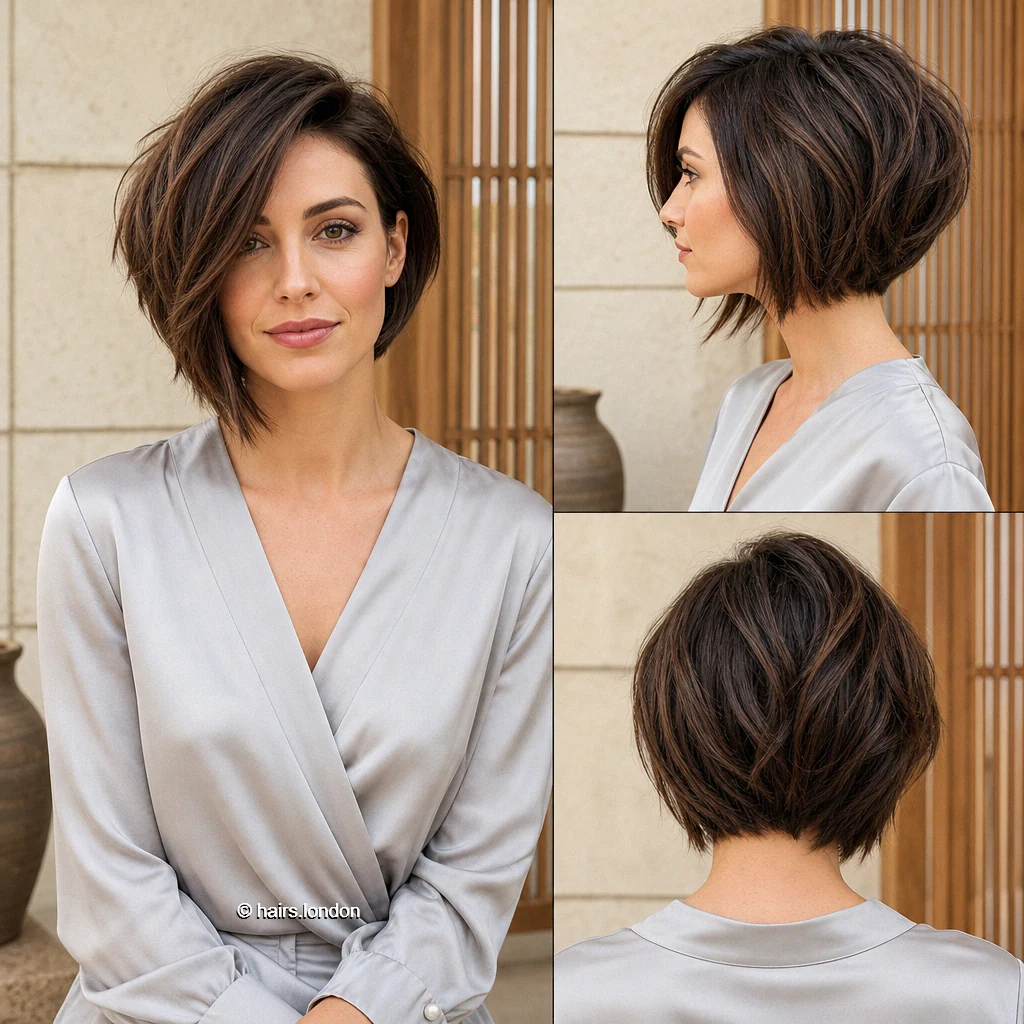
Deep brunette hair creates a rounded bob with understated movement. An off-center part sends one front section toward the jaw. The back view shows a short nape beneath fuller layers. That visible graduation provides shape without a severe front angle. Ask for a weight line that complements your density. Blow-dry the crown gently, keeping the ends smooth but flexible. A small amount of cream can tame the longer front. Natural waves may soften the outline and reduce polishing time. Very dense hair may need interior weight removal. Refresh the nape before its close finish becomes heavy between your usual appointments.
22. Compact Bob with a Sculpted Back
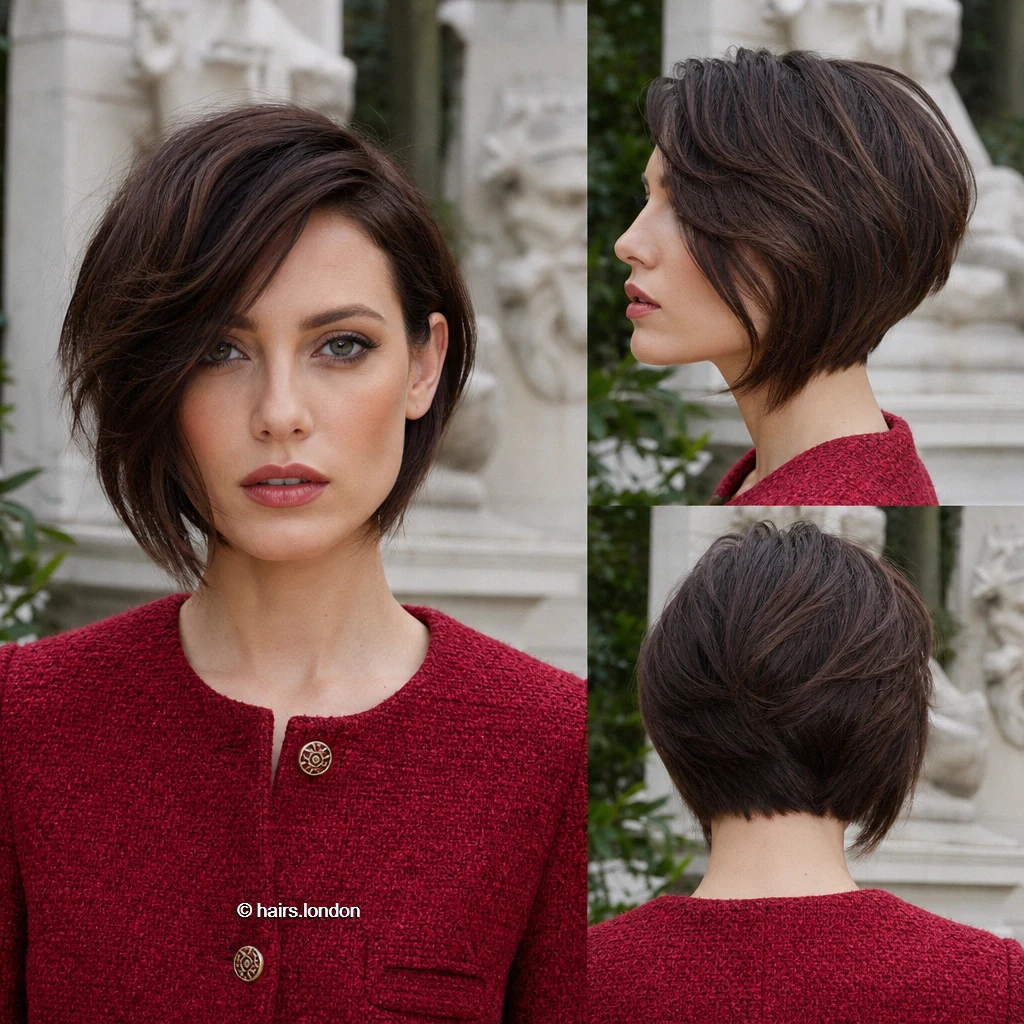
Dark brunette hair forms a compact, rounded shape around the jaw. A deep side sweep adds height without separate bangs. The back visibly narrows beneath a fuller upper section. This graduation gives the short neckline a clean finish. Ask whether your hair growth will support that close nape. Dry the top for lift, then smooth the edge below. Avoid heavy products that could flatten the sweeping front. Fine hair may need the back layers kept relatively restrained. Thick hair may require internal shaping to prevent widening. Plan trims when the neckline starts interrupting the rounded profile from the side view.
23. Chestnut Bob with a Long Angled Front
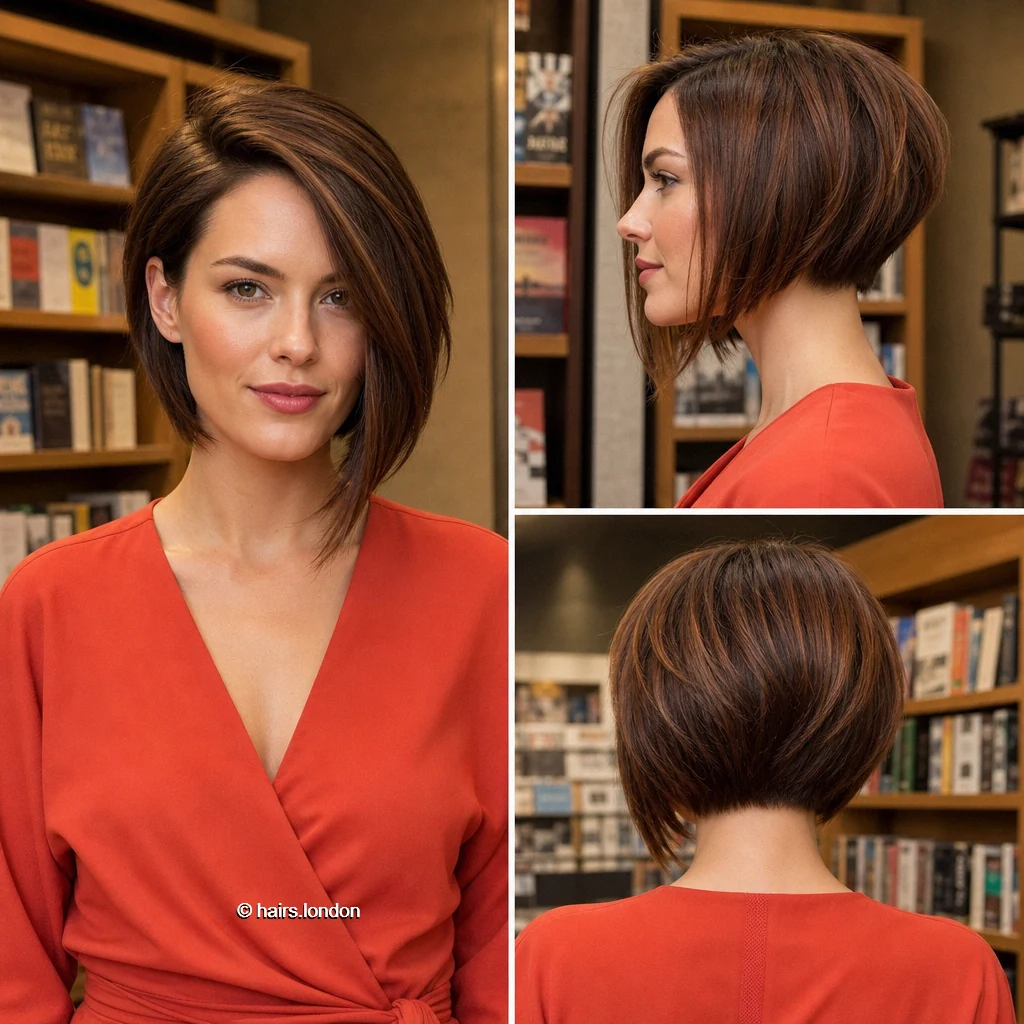
Warm chestnut tones enhance the smooth surface of this bob. Its prominent front section reaches below the jaw beside shorter hair. The back sits high on the neck with rounded fullness. Visible graduation adds volume behind the strongly angled front. Ask for a front length you can manage when styling. Direct airflow downward along the long section to preserve definition. Lift roots behind it without rolling the perimeter too far. Fine hair may need a less pronounced contrast between lengths. Dense hair may need weight removed inside the rounded back. Maintain the front point and neckline together for visual balance.
24. Side-Swept Bob with an Exposed Nape
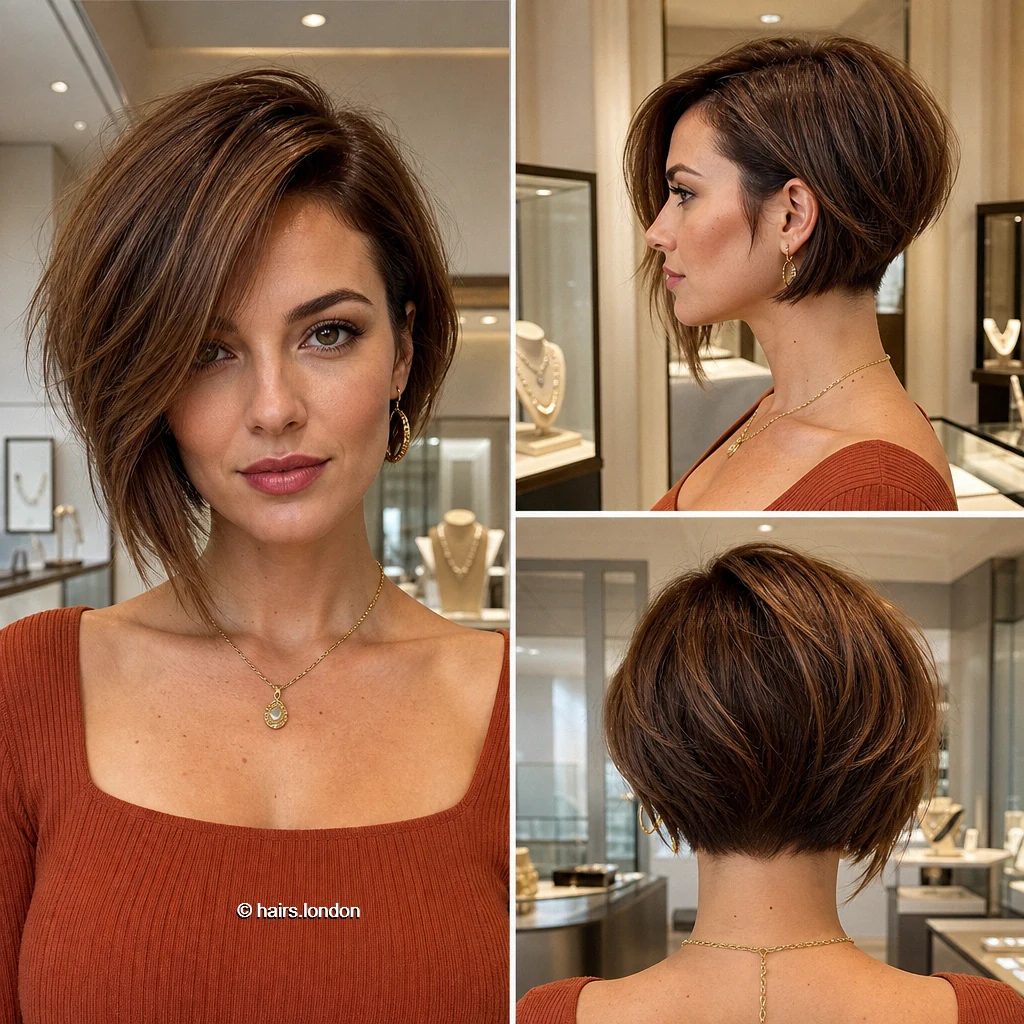
Warm brown highlights thread through this strongly side-swept bob. The front falls toward the jaw, while the nape is exposed. Side and rear views show rounded layers narrowing underneath. The shorter back supports a softly graduated, angled profile. Ask your stylist to place the sweep around your usual part. Dry the fringe area first, then polish the lower perimeter. Use a light finishing spray rather than a heavy paste. Thick hair may need interior weight adjusted around the crown. Fine hair may need a firmer edge through the sides. Check the neckline as soon as it loses definition between visits.
25. Highlighted Brunette Bob with Subtle Graduation
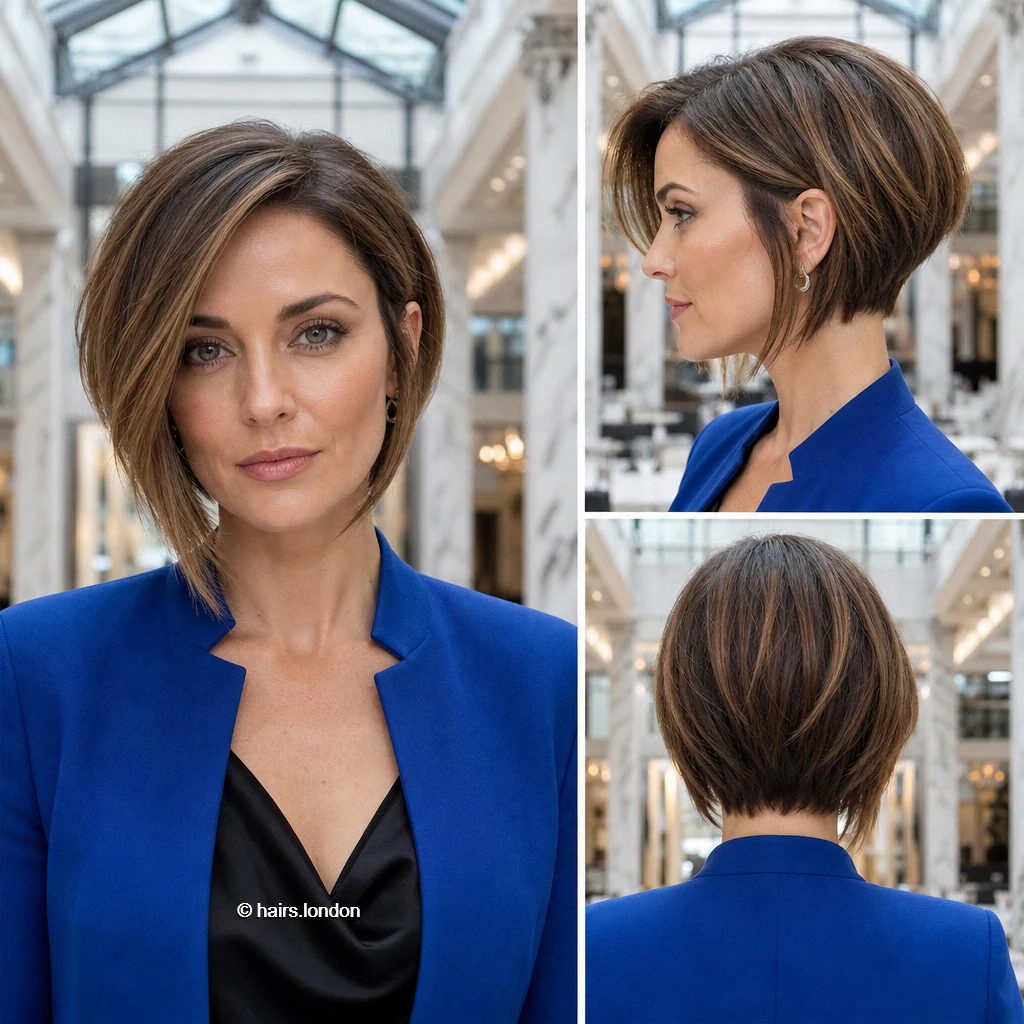
Fine caramel ribbons illuminate this neatly shaped brunette bob. A side part sends soft front pieces toward the jaw. The back finishes shorter, with visible fullness above the neckline. Its gentle graduation creates shape without an exaggerated long point. Ask for enough layering to move while retaining side density. Smooth the perimeter with a brush and downward dryer airflow. Add only a small amount of shine product afterward. Fine hair may look fuller with a slightly stronger edge. Natural waves can be encouraged instead of fully straightened. Trim the nape and sides when their proportions begin shifting from every angle.
How to Choose Your Bob Length and Shape
Start with the shortest point you are comfortable wearing at the neck and the longest point you want around the face. A jaw-level front gives a different feel from a piece that extends below the chin. If you like a rounded profile, discuss where the weight should sit; if you prefer a dramatic angle, check how the front will behave when tucked behind an ear. Bring side and back references as well as a front view, especially for graduated cuts.
Styling Different Hair Textures
Fine hair often looks fuller when the lower edge keeps some weight; use a light root product rather than loading the ends. Thick hair may need carefully placed internal weight removal so a rounded back moves without expanding. For waves, scrunch in mousse or cream and diffuse gently, leaving the perimeter softly defined. For curls, agree on the finished dry length before cutting and allow for shrinkage. Style bangs or a long side sweep first, while the hair is damp, then finish the rest.
Keeping Bob Hair Color Fresh
The brunette, chestnut and copper-brown tones shown here range from subtle ribbons to more visible warm pieces. Ask how often your chosen placement will need refreshing, since lighter strands near the part or face can become noticeable as they grow. Color-safe cleansing, heat protection and moderate heat help preserve shine. If you prefer lower-maintenance color, discuss placement that blends with your natural base rather than assuming every highlighted bob needs the same schedule.
Maintaining the Bob Perimeter and Graduation
A smooth angled front depends on distinct ends, while a shaggy bob can tolerate a looser perimeter. Short, graduated backs need particular attention as nape hair grows and the weight line drops. Check your shape from the side and behind, not just in a mirror straight on. Book trims according to how quickly your own hair changes shape; fringe adjustments may be needed sooner than a full haircut.
What to Discuss with Your Stylist
Show the views that capture your preferred front length, side profile and back shape. Explain whether you usually air-dry, diffuse or blow-dry, and demonstrate your natural part and any stubborn growth patterns. Ask how proposed layers will affect your density and whether the neckline can be kept comfortable as it grows. For an angled bob, specify whether you want longer fronts alone, visible back graduation, or both.
Frequently Asked Questions
What is the difference between a bob and a lob?
A bob generally finishes around the jaw, chin or neck; a lob is a longer bob that tends to approach or reach the shoulders. The front of an angled short bob can extend below the chin without making the entire cut a lob.
Is an A-line bob the same as a stacked bob?
No. A-line describes a perimeter that gets longer toward the front. Stacked or graduated describes shorter back sections building visible weight above the nape. One cut can show both features.
How can I tell whether the back is graduated?
Look for a shorter neckline with fuller hair building above it in a side or back view. A front-only photograph cannot reliably show how the nape is cut.
Can fine hair wear a layered short bob?
Often, but the amount and placement of layering matter. Keeping sufficient weight at the perimeter may make fine ends appear fuller than heavily texturing them.
How can thick hair avoid looking bulky in a rounded bob?
Discuss selective internal weight removal and the position of the weight line. Removing too much from the visible edge can make the shape thin or uneven instead of controlled.
Can natural curls work with a short bob?
Yes, provided the length and shape are planned around curl pattern, shrinkage and density. Agree on the intended dry result rather than judging length only while the hair is wet.
Should I choose bangs with a bob?
Choose them if you enjoy the look and their styling upkeep. A wispy fringe, curtain pieces and a long side sweep behave differently, particularly around cowlicks and natural partings.
Which bob is easiest to style each day?
The easiest version usually works with your natural texture and part. A loose textured bob may need less polishing than a sharply angled front or close graduated nape, but individual growth patterns matter.
How often does a short bob need trimming?
Trim timing depends on growth and precision. A close nape, defined angle or fringe usually shows changes sooner than a loose, textured perimeter.
Can I air-dry an angled bob?
You can, although waves or curls may soften the visible angle. If a crisp line is important to you, expect to smooth at least the front and lower perimeter.
How do I grow out a graduated bob?
Ask your stylist to reduce the contrast between back and front over successive trims. Keeping the nape tidy while the upper layers catch up can make the transition feel more deliberate.
What photos should I bring to a bob consultation?
Bring front, side and back views of the shape you like. Point out the desired front length, part or fringe, neckline and amount of texture rather than relying on a haircut name alone.
Conclusion
The most useful short bob inspiration is a shape you can describe from every angle. Decide where you want the front to fall, how close you want the neckline, and whether you prefer a polished edge or natural movement. Your stylist can then adapt those visible details to your hair’s density, texture and growth patterns.


