Side and crown braids
A braid along the hairline is one of the easiest ways to change how a bob looks without touching the cut. These nine run from a lace-headband braid to cornrows that fake an undercut; for step-by-step versions, see our Dutch and crown braids for short hair.
21. The lace headband braid
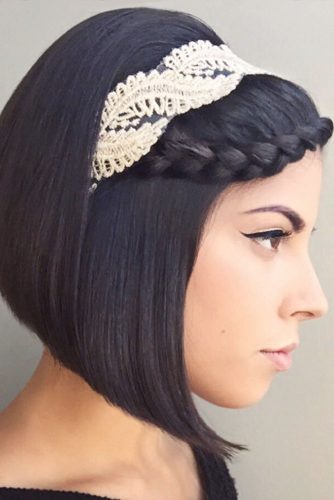
Romantic and sharp at the same time. A glossy black A-line bob keeps its crisp line at the chin, while a braid runs across the head just behind a cream lace headband. The braid holds everything off the face and adds texture beside the smooth lengths. Because the bob is longer at the front, the profile still has that clean, angled edge. Very graceful, very easy.
- Best for: Straight hair; A-line or angled bobs.
- Ask your stylist for: An A-line bob that is longer at the front than the back.
- How to style it: Braid a section from one ear to the other along the hairline, pin it, then slide on a headband just behind it.
- Upkeep: Trim every 6 weeks to keep the angle sharp.
22. The pancaked blonde crown
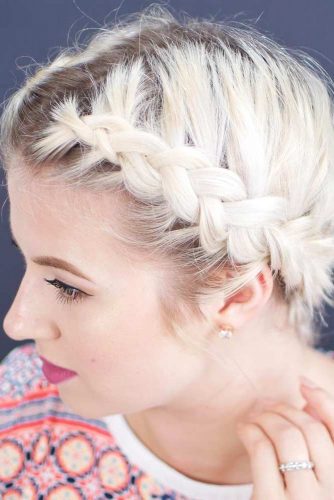
Wedding guest, bridesmaid or just a good Saturday, this crown braid works for all of them. A thick Dutch braid crosses the front of the head from temple to temple, and it has been gently pulled apart so it looks twice its real size. The remaining blonde hair is tucked neatly behind. Raised Dutch braids sit on top of the hair, which is why this one stands out so clearly.
- Best for: Bobs and lobs with medium to thick density.
- Ask your stylist for: A bob or lob with enough length to braid across the front.
- How to style it: Dutch braid from one temple to the other, pancake the braid to widen it and pin the ends.
- Upkeep: Trim every 6 to 8 weeks.
23. The faux-undercut cornrows
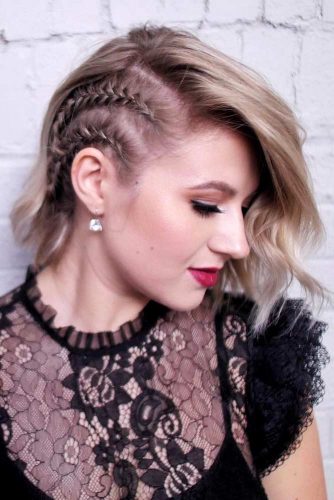
All the edge of an undercut, none of the clippers. Two small cornrows run tight along one side of the head, holding that side flat, while the rest of the wavy blonde bob falls over to the other. From the front it reads as a shaved side. At the end of the day you take the braids out and the illusion is gone. It is the safest way to test-drive a bolder cut.
- Best for: Bobs and lobs; anyone who wants an undercut look without cutting.
- Ask your stylist for: A wavy bob with a deep side part.
- How to style it: Create two small cornrows on one side from the hairline toward the back and pin the ends.
- Upkeep: Trim every 6 to 8 weeks.
24. The double-braid angle
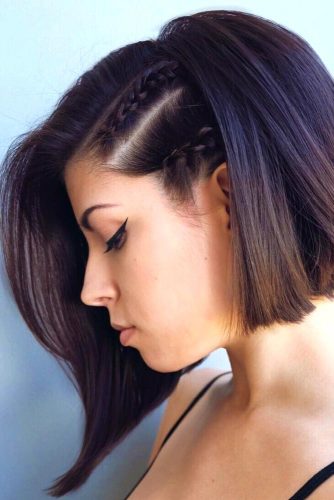
Sleek bobs can look a little strict. Two slim braids fix that. They run back along one side of this dark A-line bob, pulling the hair off the face, while the rest swings in a smooth angle toward the chin. The braids add detail without disturbing the cut’s clean lines. Seen in profile, the long front and the braided side make a very modern combination.
- Best for: Straight hair; A-line and angled bobs.
- Ask your stylist for: An A-line bob, longer at the front.
- How to style it: Braid two small sections from the hairline back and secure with clear elastics or pins.
- Upkeep: Trim every 6 weeks.
25. The fishtail-edged undercut
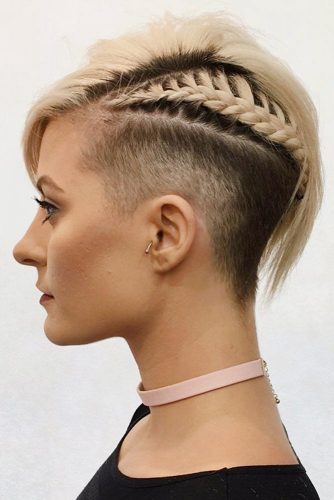
Already have an undercut? Frame it. A blonde braid runs along the edge of the clippered section, drawing a neat line between shaved and long. The rest of the hair sweeps over to the opposite side in a short, soft shape. Flipping the top the other way hides the undercut and the braid completely, so one cut gives you several looks depending on your plans.
- Best for: Undercuts with enough length on top to braid.
- Ask your stylist for: An undercut on one side with length left on top.
- How to style it: Braid along the edge of the undercut toward the back and secure with pins.
- Upkeep: Clipper the undercut every 2 to 3 weeks.
26. The braided platinum headband
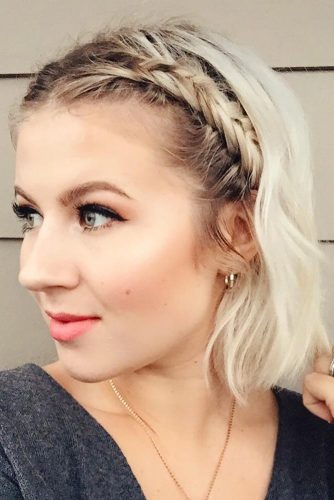
Lost your hairband? Braid one. A thin braid crosses the front of the head on this platinum wavy bob, sitting exactly where a headband would. The rest of the hair falls in loose waves around the shoulders. It keeps your face clear and looks far softer than plastic. Because the braid uses just a slim section from behind the ear, it barely takes any length from the waves.
- Best for: Bobs and lobs; all textures.
- Ask your stylist for: A wavy bob with soft layers.
- How to style it: Braid a thin section from behind one ear, lay it across the head and pin behind the opposite ear.
- Upkeep: Trim every 6 to 8 weeks.
27. The rooted twist-back
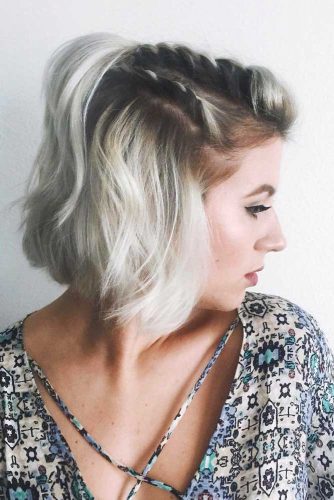
Never braided in your life? Start with a twist. One section at the side of this rooted platinum bob is twisted back and pinned, and the rest falls in loose, uneven waves. The darker root gives the blonde depth and lets it grow out kindly. The twist adds a little shape at the temple and keeps hair out of your eyes. Two crossed bobby pins are all it needs.
- Best for: Bobs; anyone new to styling short hair.
- Ask your stylist for: A shoulder-length bob with soft layers and a rooted platinum color.
- How to style it: Twist a section from the side back toward the crown and pin it with two crossed bobby pins.
- Upkeep: Trim every 6 to 8 weeks; tone every 6 weeks.
28. The tucked Dutch braid bob
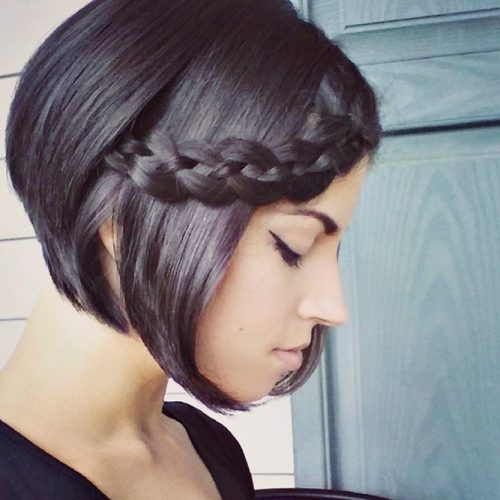
Office in the morning, dinner at night: this is the braid that handles both. A Dutch braid runs from the part back across the head of a dark angled bob, holding the front neatly away from the face. Behind it, the lengths drop in a smooth line toward the chin. The braid finishes tucked behind the ear, so there is no visible end. Raised texture against glossy lengths does the rest.
- Best for: Straight hair; angled bobs.
- Ask your stylist for: An angled bob with a blunt edge.
- How to style it: Dutch braid a section from the part toward the back and pin it out of sight behind the ear.
- Upkeep: Trim every 6 weeks.
29. The rope-twist profile
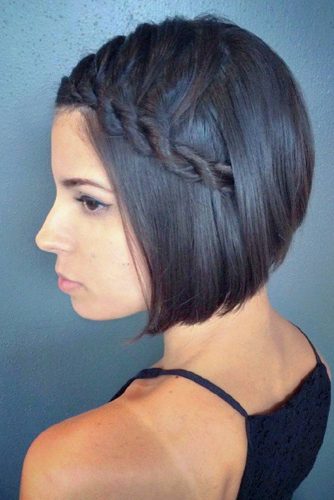
Look at the profile first. A dark, chin-length bob is worn sleek and straight, with a slim rope twist running from the part back toward the ear. The twist holds the front away from your face without touching the clean outline of the cut. The ends are very slightly beveled, so they curve under neatly at the jaw. It is a small detail that makes a plain bob look finished.
- Best for: Straight hair; blunt or slightly beveled bobs.
- Ask your stylist for: A chin-length bob with a smooth, slightly beveled edge.
- How to style it: Take a two-inch section at the part, split it in two, twist each strand and wrap them around each other toward the ear, then pin.
- Upkeep: Trim every 6 weeks.
Statement braids and color
Braids show off color placement better than almost anything, because each cross of the plait exposes a different strand. These five pair pastel and vivid shades with fishtail, waterfall and twisted braids.
30. The pastel fishtail part
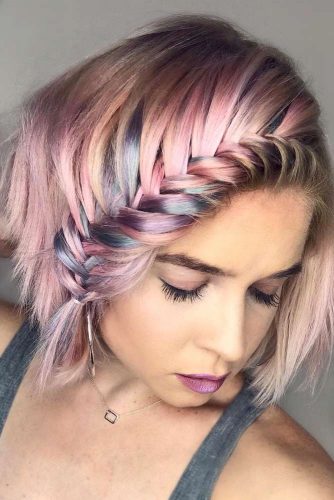
Three pastels, one braid, every shade on show. Pink, lilac and soft blue are blended through this bob, and a fishtail runs from the part down one side toward the ear. The tight weave of a fishtail breaks the color into small flecks, so all three tones appear side by side. The rest of the hair hangs straight and smooth, which keeps your eye on the braid. Soft, but not sugary.
- Best for: Lightened hair with medium density; bobs at chin to shoulder length.
- Ask your stylist for: A one-length or softly layered bob with pastel pink, lilac and blue placed in sections so they show when braided.
- How to style it: Take a section from the part, fishtail braid it along the hairline toward the ear and pin the end under the lengths.
- Upkeep: Trim every 6 to 8 weeks; refresh pastels every 2 to 3 weeks.