


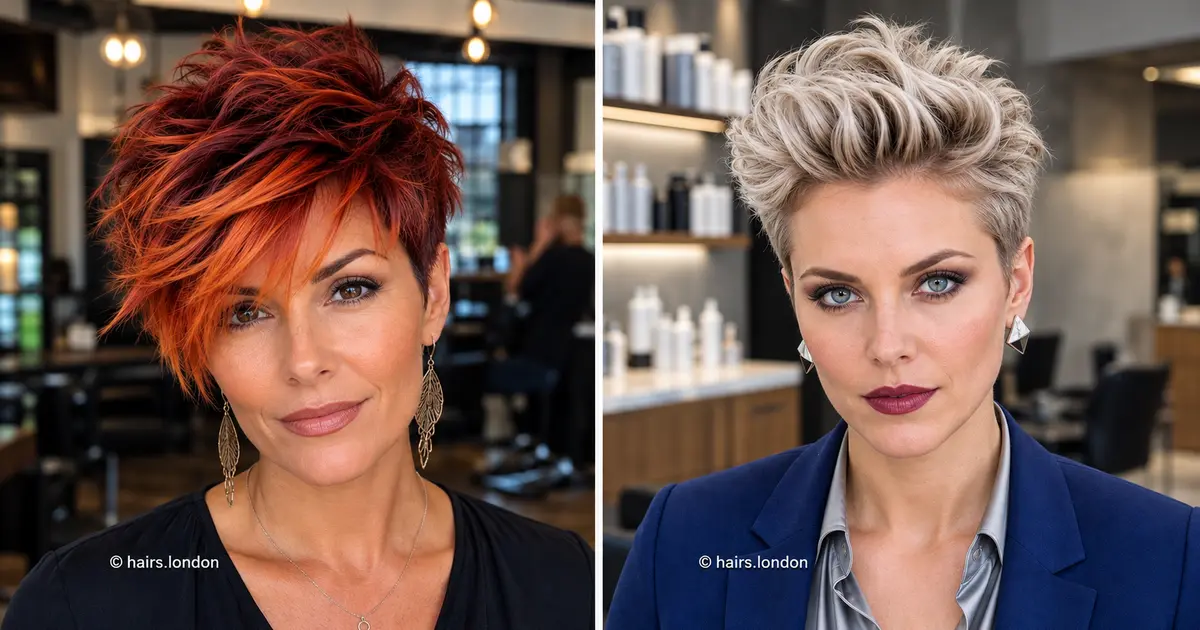
11. Mocha Tousled Pixie with an Airy Backward Sweep
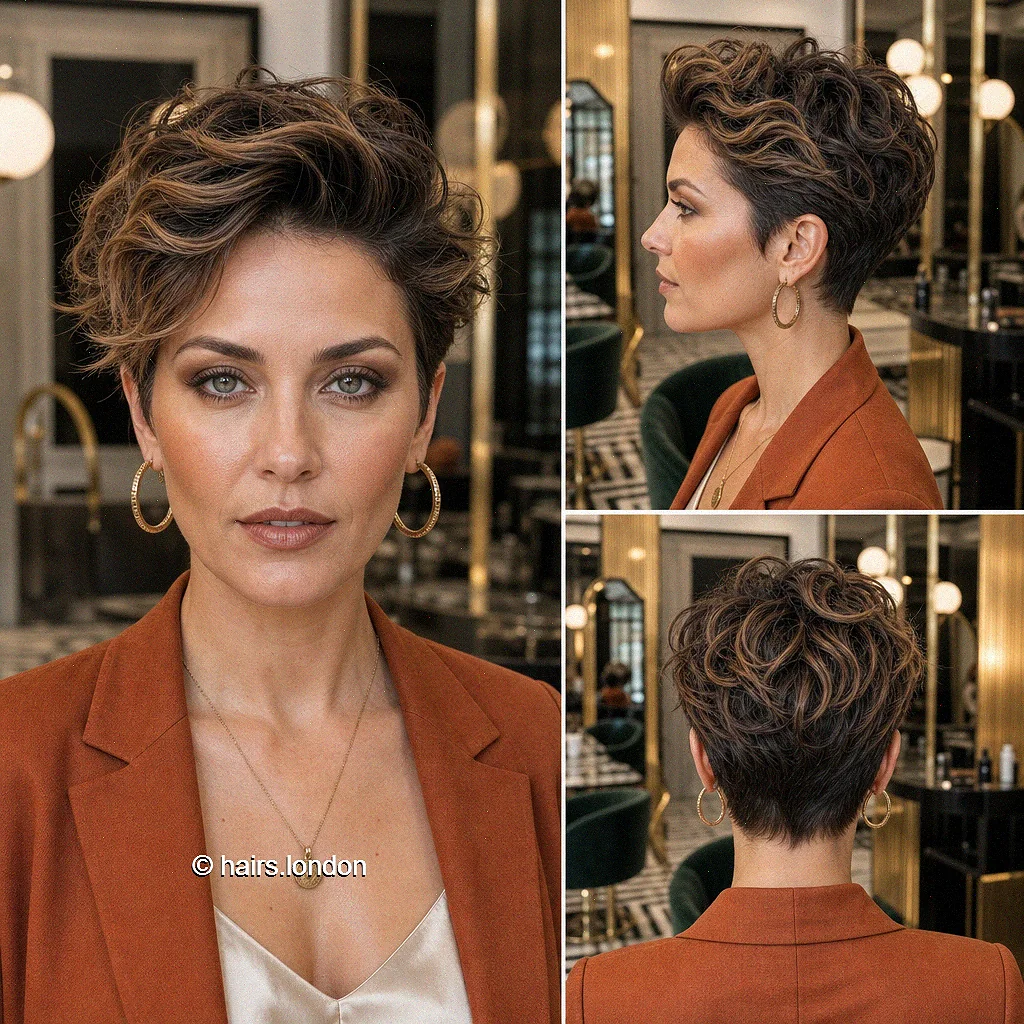
Mocha brown lengths with lighter accents give this airy pixie movement without a strong color contrast. The front lifts away from the forehead, while the upper layers bend backward and sideways. Ask your stylist to keep enough length for those bends rather than shortening everything into spikes. During drying, redirect the front roots first, then use your fingers to guide the ends loosely backward. Finish sparingly so the surface retains movement. If your hair falls forward naturally, request a demonstration of the drying direction. The softer sweep offers an alternative to a rigid quiff while keeping a similar open forehead.
12. Berry Pixie with a Pointed Quiff
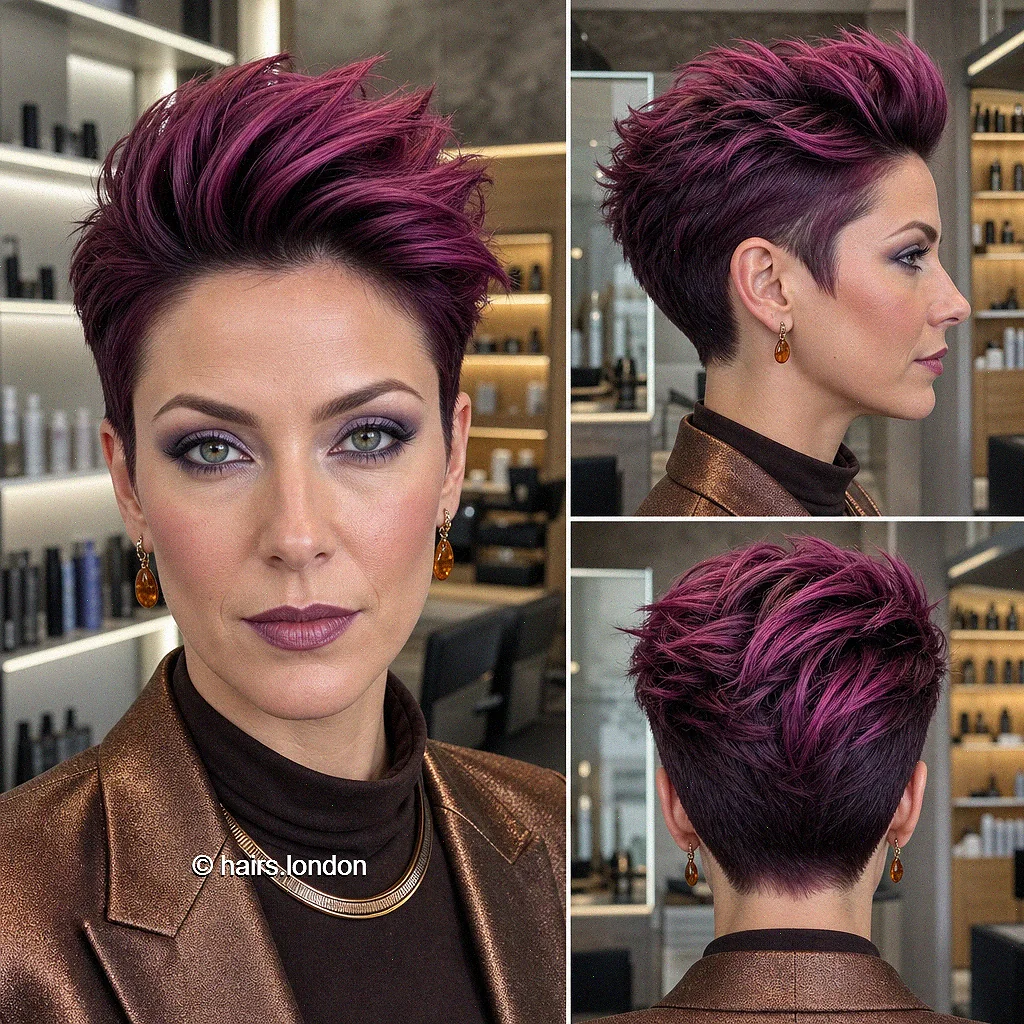
Deep berry lengths over shorter dark sides give this pointed quiff a striking outline. The front stands high, and the crown carries the texture backward rather than rounding into a soft cap. Ask your stylist which upper sections need length and how closely the sides should be shaped. Establish lift while drying damp roots; finishing paste alone may struggle to raise a front that has already dried flat. Discuss a lower styling option for days when you prefer less height. For the color, agree on brightness and fading expectations. The vivid surface and short perimeter may require different maintenance appointments.
13. Silver Feathered Pixie with Wispy Bangs
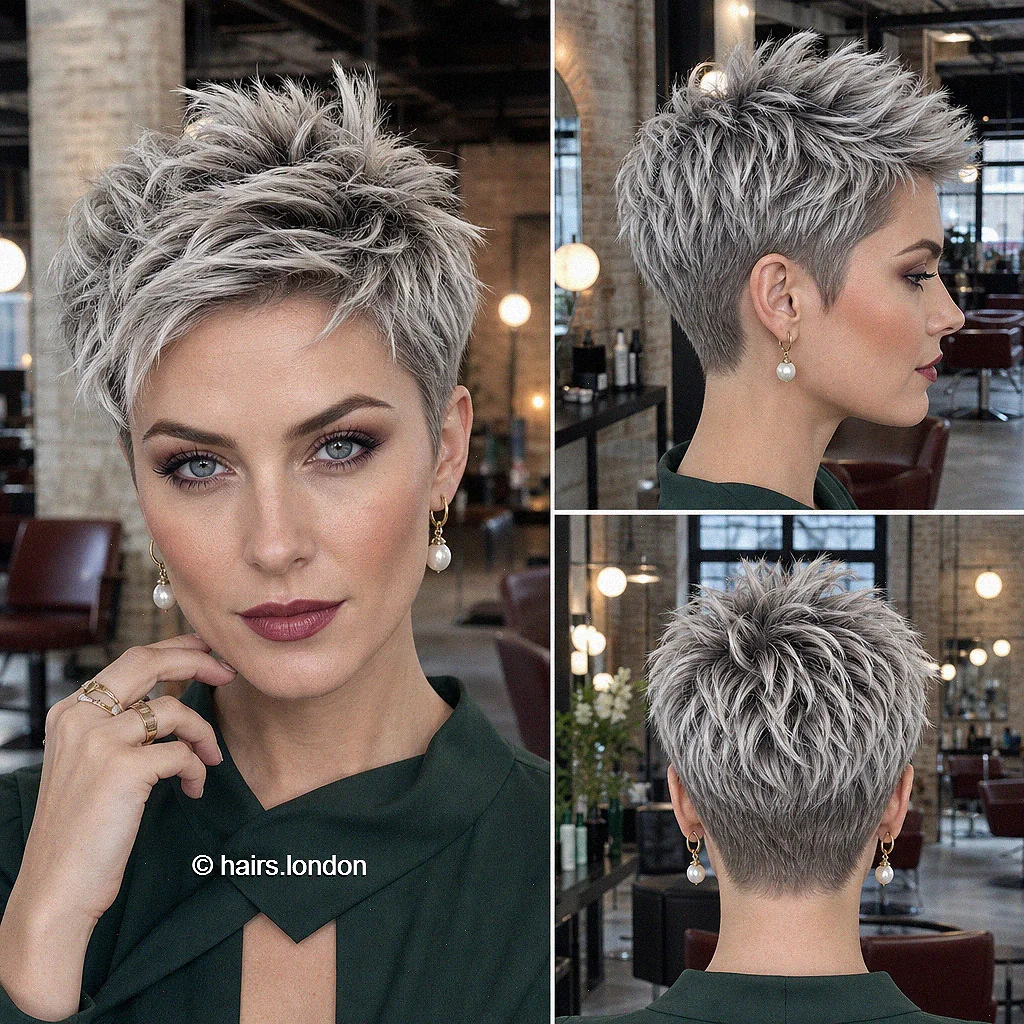
Silver tones emphasize the fine, feathered ends of this compact pixie. Wispy bangs soften the forehead while short sides keep the profile close. Ask your stylist to distinguish useful movement from excessive thinning, especially if your ends already look delicate. The fringe should have enough substance to sit comfortably rather than split into sparse strands. Dry it with your fingers in the direction you prefer, then use only a trace of finishing product. If you have natural gray, discuss whether its existing variation can supply similar dimension. The photograph does not mean coloring is necessary to enjoy this haircut shape.
14. Champagne Blonde Pixie with a Sculpted Quiff
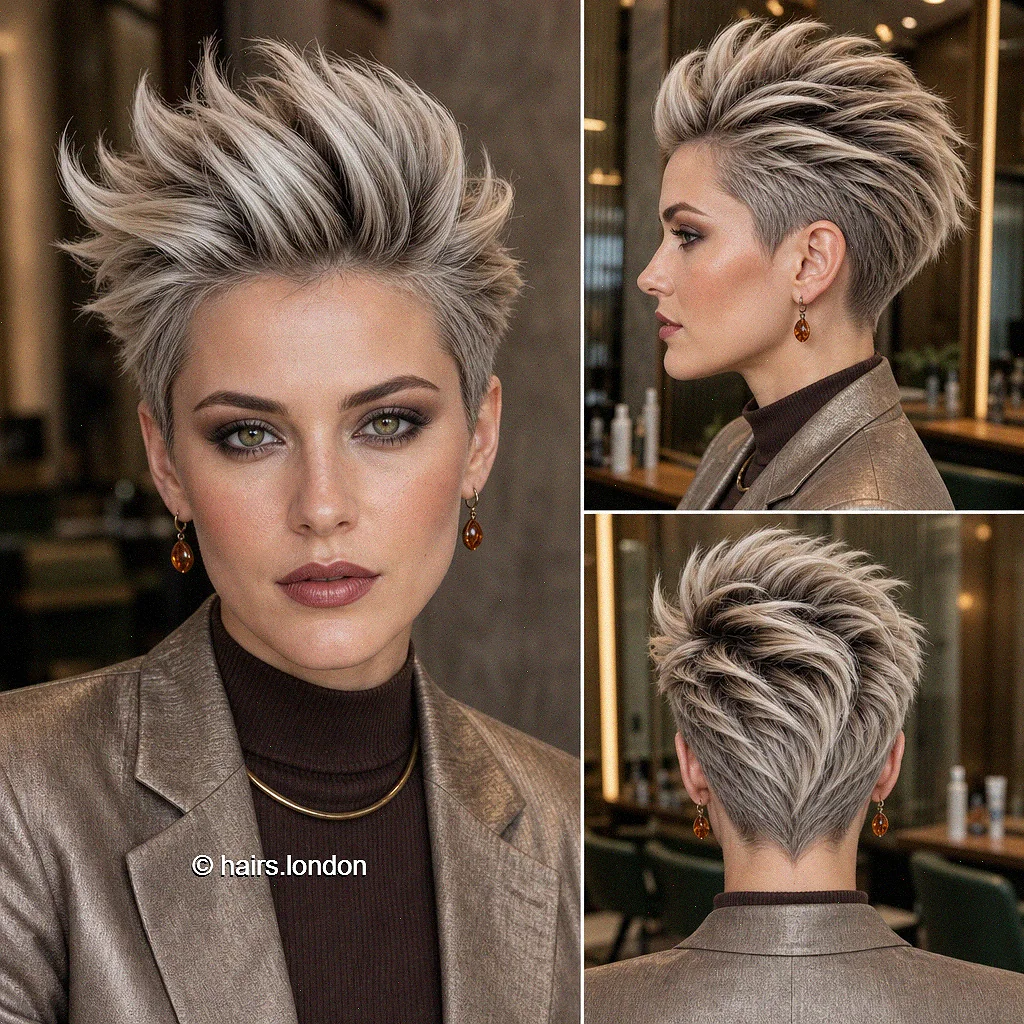
Champagne blonde lengths and darker roots make this sculpted quiff especially defined. The longest front pieces curve upward and backward above closely shaped sides, creating height with a clear direction. Ask your stylist how much top length your hair needs to hold that bend and whether the sides should taper gradually. During drying, lift the front roots before guiding the ends back. A light hold product can support the finished shape without flattening its strands together. Discuss a softer sweep as an everyday alternative. The pale upper color also needs a separate consultation about starting shade, regrowth, and any lightening.
15. Magenta Tousled Pixie with Short Sweeping Bangs
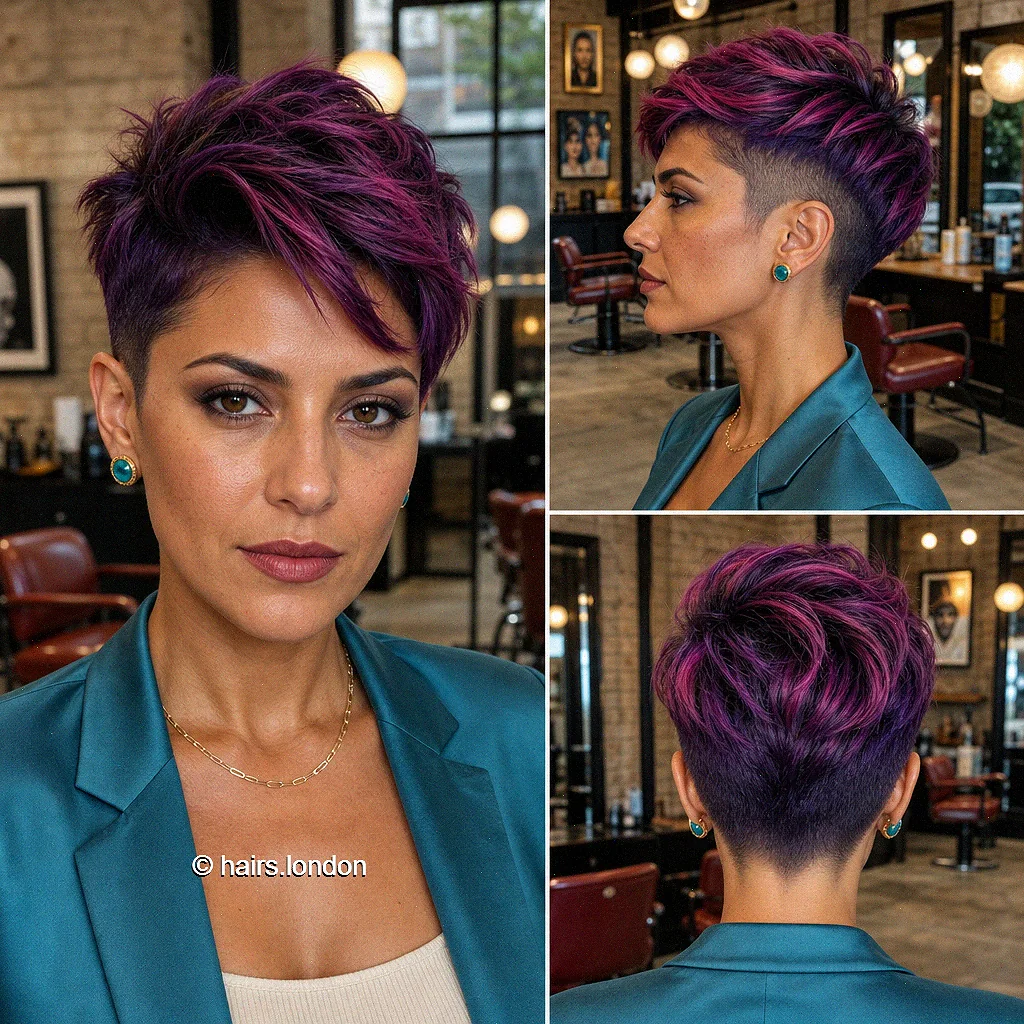
Magenta and deeper purple tones bring dimension to the irregular layers of this pixie. Its short sweeping bangs frame the forehead, while the pointed crown creates movement above a compact back. Ask your stylist to keep the fringe comfortable and adjust the side length to your preferred ear coverage. Finger styling can bring out the separation: guide the front across and lift a few crown ends after drying. Avoid coating every strand, which can make the texture look heavy. Discuss how vibrant you want the color and what preparation your current shade needs. Keep the haircut decision separate from brightness.
16. Copper Pixie with a High Textured Quiff
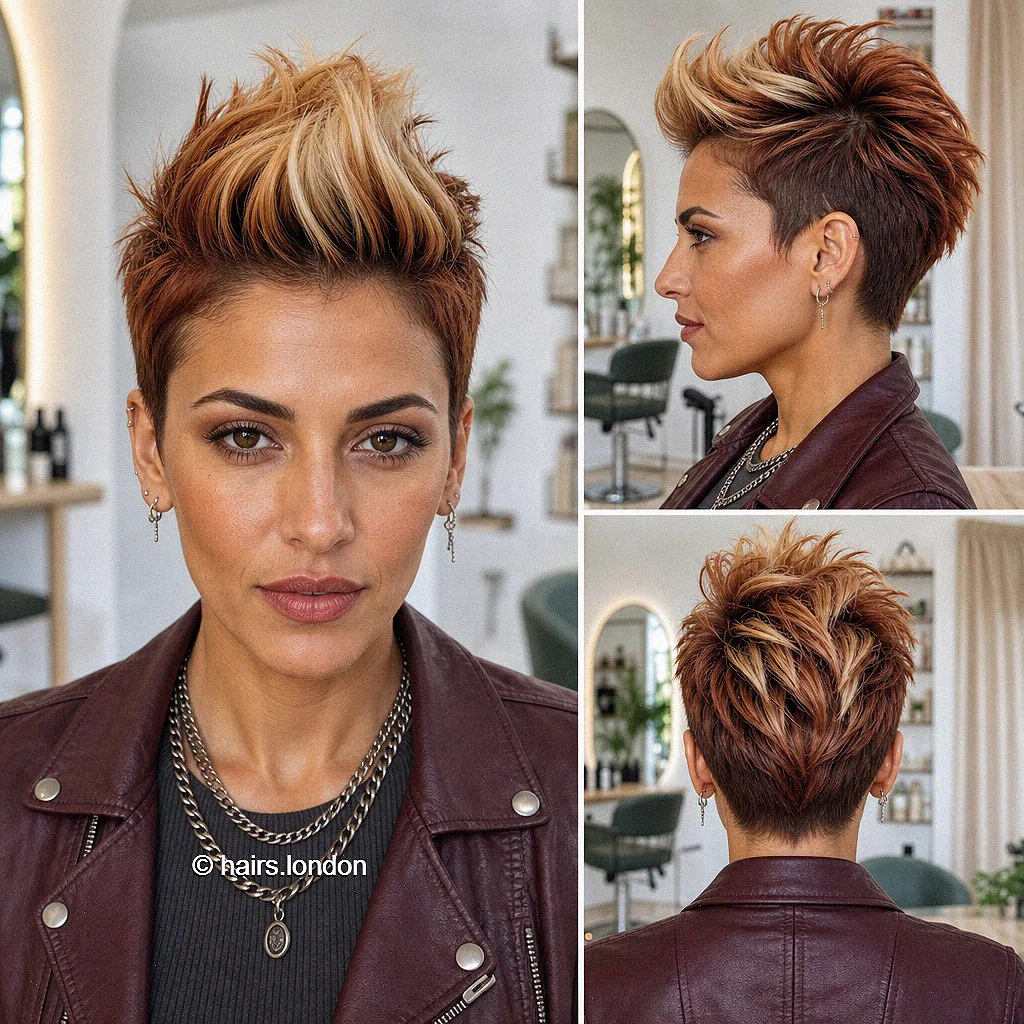
Warm copper highlights outline the high front of this pixie, contrasting with shorter, deeper sides. The crown continues the movement backward, so the silhouette looks intentional from every angle. Ask your stylist where length must remain to support the quiff and how your front growth pattern affects the result. Dry the roots upward, then direct the longer pieces back with your fingers or a brush. Use finishing product sparingly to preserve visible strands. This is a useful reference if you enjoy a styled front with exposed temples. Discuss a lower finish too, so the cut offers flexibility between salon visits.
17. Espresso Pixie with a Full Lifted Front
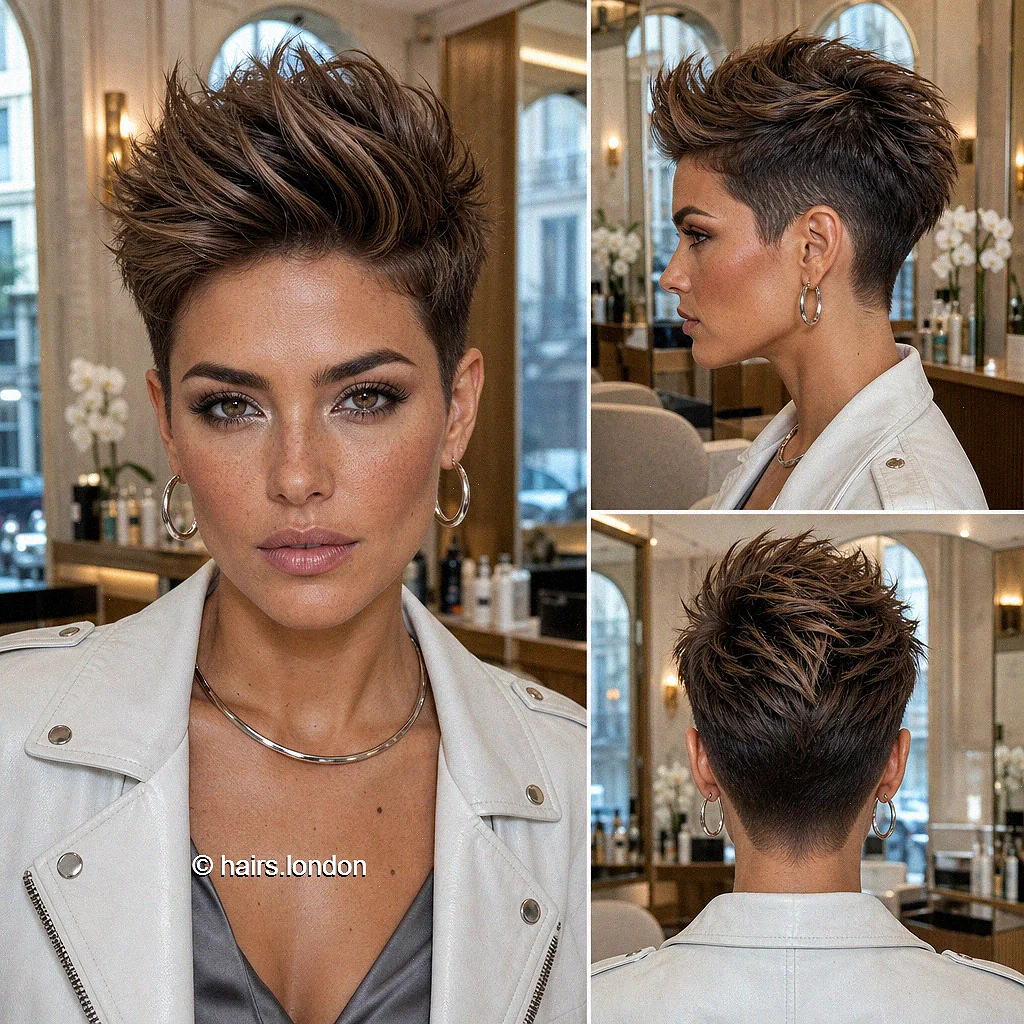
Espresso brown depth and lighter caramel accents give this full quiff a clearly layered surface. The front lifts high above short sides, while the upper back retains enough length to continue the sweep. Ask your stylist to control unwanted bulk around the temples without removing the support needed through the top. Establish direction at damp roots before shaping the longer ends backward. If your hair is fine, discuss a less dense version of the same silhouette rather than expecting identical fullness. The highlights can be placed along the pieces you expose most. Choose the proportions according to your own density.
18. Hazelnut Layered Pixie with a Soft Rounded Shape
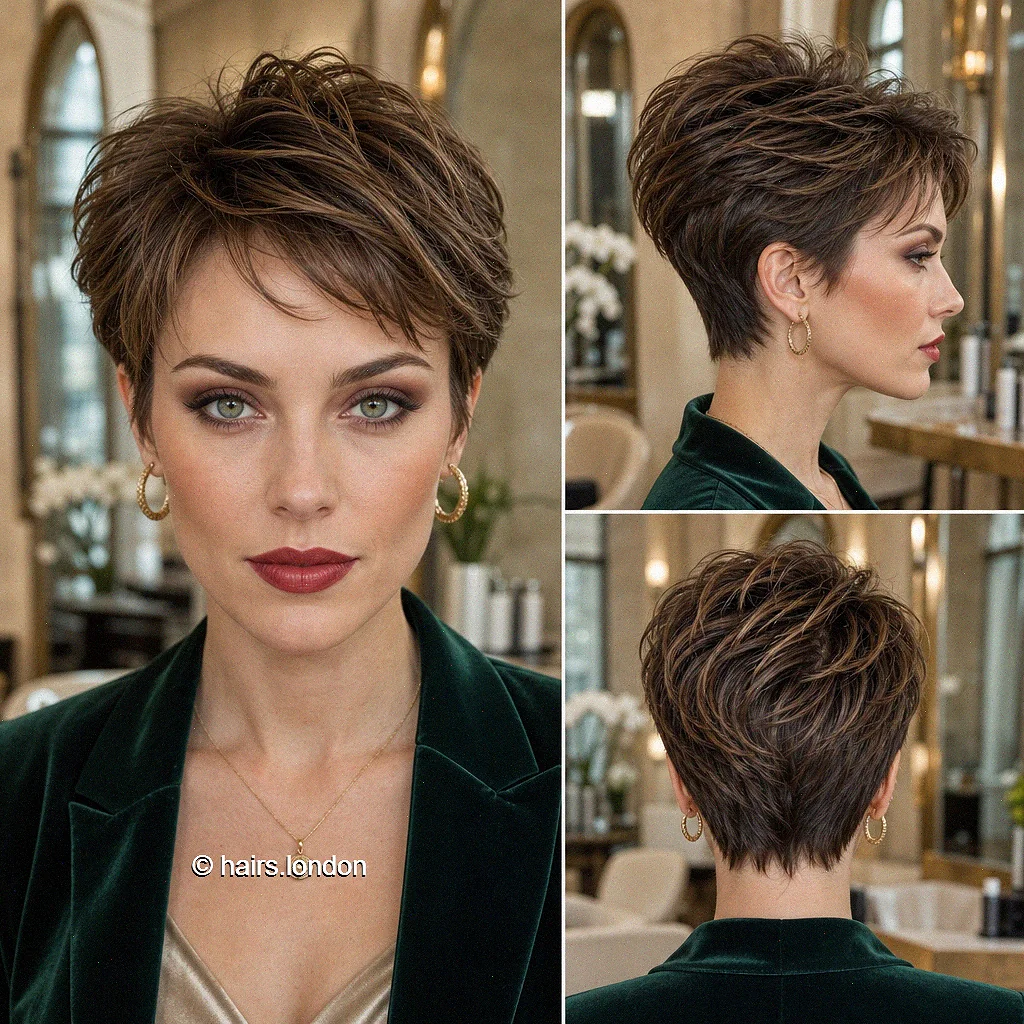
Hazelnut brown tones and layered lengths give this pixie a rounded outline. The short fringe stays light across the forehead, and longer upper sections keep the crown from looking closely cropped. Ask your stylist to balance fullness at the back with your preferred temple coverage. This is a useful reference if you want movement without a high quiff or pronounced spikes. Dry with gentle finger direction, then adjust only the pieces that need separation. Fine hair may need density preserved through the ends. Check the back view when choosing your length, because its rounded shape is central to the look.
19. Lavender Curly Pixie with Cropped Sides
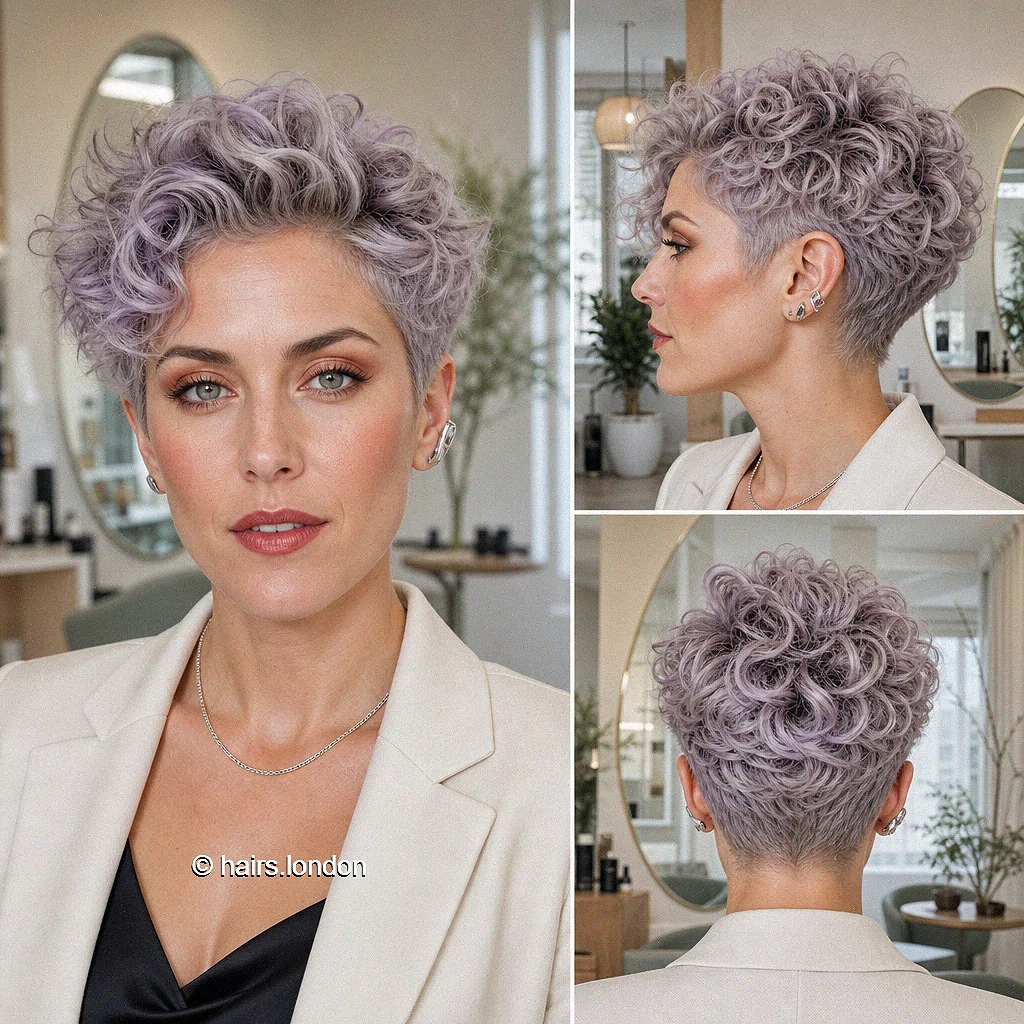
Pale lavender tones give this curly pixie a soft surface, while its cropped sides keep the overall shape compact. The top retains enough length for small curl groups and a lifted front. Ask your stylist to plan the dry length around your own curl pattern and shrinkage. If you usually air dry, make that routine part of the consultation. Arrange damp curls with a little styling product and allow them to settle before adjusting the front. Discuss lightening separately from the cut, since a pale shade may involve substantial preparation. The pictured texture does not reveal whether curls are natural.
20. Silver Wavy Pixie with a Swept Back Front
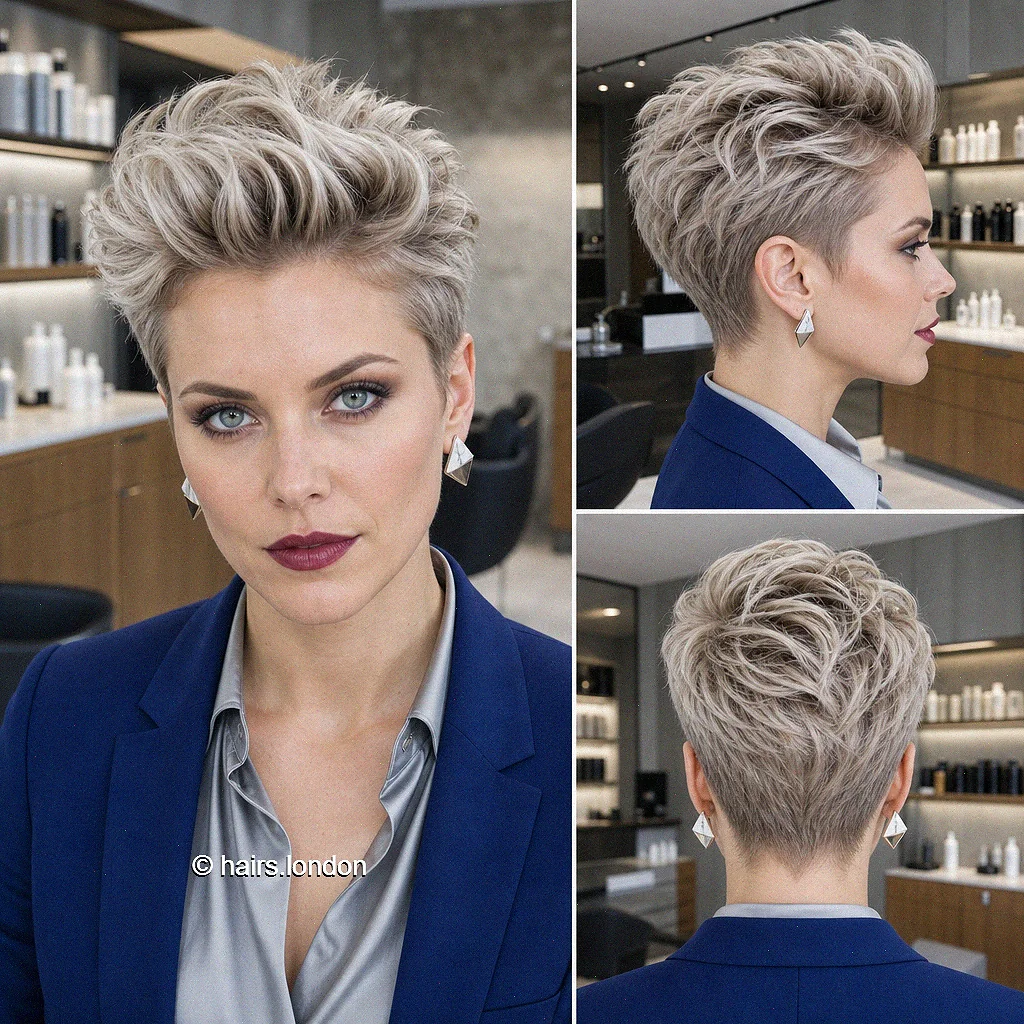
Silver lengths over deeper roots highlight the bends in this swept back pixie. The lifted front flows into a wavy crown, while short sides sharpen the outline around the ears. Ask your stylist to retain enough upper length for the curves you like and assess how your natural texture behaves. Direct damp front roots away from your forehead, then encourage the longer pieces backward without flattening the crown. A flexible finish suits the movement better than a heavy coating. If your hair is naturally gray, discuss its existing depth before coloring. This shape can also be adapted with less height.
Match short pixie haircuts to your styling routine
For minimal styling choose a shape that follows your texture
The softer ivory and hazelnut pixies are useful references if you prefer gentle movement to a carefully raised front. Ask your stylist how a similar outline would sit after your normal drying routine. A short haircut is not automatically effortless: cowlicks, flat roots, and an uncomfortable fringe can still need attention. Choose lengths that behave well without relying on constant product correction.
For a defined quiff plan for root direction
The berry, copper, espresso, and champagne looks use length at the front for height. That finish depends on directing the roots during drying as well as shaping the ends afterward. Ask your stylist to demonstrate the technique and a lower version of the same cut. If you enjoy occasional height but want an easier daily option, that second finish matters as much as the photograph.
For a diagonal fringe agree on comfortable dry length
The copper, toffee, mauve, and merlot fringes carry the shape sideways. Check where the ends land around your eyes, and explain if you dislike pushing hair away during the day. A slight change in length or weight can make a strong visual reference easier to live with. Your natural parting should be assessed before committing to the pictured direction.
What fine thick and curly hair need from a pixie
Fine hair benefits from carefully preserved density
Separation should not come at the expense of substance. Ask where the ends need to remain fuller before choosing feathering or extensive thinning. A softly swept front may offer more usable coverage than widely spaced points. Start with small amounts of styling product, because coating delicate strands can make them collect together and expose gaps.
Thick hair needs bulk controlled in the right places
Tell your stylist where your hair expands most, whether that is above the ears, at the upper back, or through the fringe. Selective weight removal can help the outline sit closer while retaining useful length on top. The espresso quiff shows a full upper shape; a less dense interpretation may work better for your hair. The reference should guide placement rather than dictate identical volume.
Curly hair needs room for its own pattern
The plum, caramel, and lavender curly pixies keep curl groups above shorter sides. Your shrinkage and curl size affect how much upper length is needed. Show your hair in its usual dry state, and explain whether you air dry or diffuse. The images do not establish whether the texture is natural, styled, or chemically created, so discuss the result your own hair can support.
A practical approach to styling each finish
Lift the front while it is still damp
For a quiff, direct the roots upward and away from the forehead before guiding the ends back. Follow the direction you want the hair to hold. Once dry, add a little finishing product to selected strands. If heat is part of your routine, use an appropriate heat protectant and follow the product and tool instructions.
Keep a swept fringe flexible
Guide damp roots diagonally with your fingers or a brush. Once dry, loosen the front so it does not sit as a single stiff section. Apply finishing product mainly where you need control. If the fringe repeatedly falls into your eyes, revisit its length and weight with your stylist rather than keep increasing the hold.
Separate spikes without coating every strand
Work a small amount of paste between your hands, then pick out the ends you want to emphasize. The garnet, golden blonde, and magenta looks rely on visible separation. Start lightly and add only where needed. A heavy layer can flatten the top and make the points look wet rather than textured.
Let curl groups settle before adjusting them
Arrange damp curls with a modest amount of curl product and avoid repeated touching as they dry. When the hair is set, adjust the front selectively rather than pulling apart the whole crown. Ask your stylist how to refresh your own texture between washes, including which sections need water and which can simply be left alone.
Choose color placement that follows your hairstyle
Lighter pieces reveal the direction of the toffee fringe, caramel curls, and copper quiff. Placement works best when it follows the sections you actually show in your preferred parting and finish. Tell your colorist whether you sweep the top forward, backward, or sideways most days. That conversation can help you choose focused accents instead of automatically changing the whole head.
Pale cream, silver, and lavender shades need a separate discussion about your starting color and any previous treatments. Naturally gray hair may already provide the variation you like. For garnet, berry, and magenta tones, agree on intensity and how you would handle fading. The photograph cannot predict the formula or preparation required for your hair.
Keep the fringe and perimeter in balance as hair grows
Notice which area becomes inconvenient first. A diagonal fringe may start obscuring your eye, close sides may lose their neat outline, or a rounded crown may collect extra bulk. Ask your stylist whether selective tidying would help between fuller reshaping appointments. Timing depends on your growth rate, the precision you prefer, and which parts of the haircut you want to retain.
If you plan to grow the pixie longer, identify the sections that need to gain length. The nape may still benefit from small adjustments while the sides and front catch up. Ask for a growth plan that preserves the length you need rather than repeatedly returning the whole haircut to its starting shape.
Details to agree on during your salon consultation
- Show the front, side, and back of your favorite haircut
- Explain where you want coverage and where you prefer a close outline
- Check fringe length when dry and account for curls or waves
- Mention your natural parting, cowlicks, and any glasses you wear
- Describe your usual drying routine and available styling time
- Agree on a second styling option for a high quiff or longer fringe
- Discuss color tone, placement, preparation, and upkeep separately
Frequently asked questions about short pixie haircuts
What makes a pixie different from other short haircuts?
A pixie usually has a compact outline around the sides and nape, with the upper length shaped for movement, a fringe, or lift. The balance can vary widely. Photographs and agreed measurements are more helpful than relying on the haircut name alone.
Which styles here are useful references for a longer fringe?
Compare the copper tousled, toffee highlighted, mauve choppy, and merlot layered pixies. Each uses a diagonal front with more length than the sides. Ask your stylist to adapt the finish point to your comfort around the eyes rather than simply copy the photograph.
Can I have a pixie without showing my whole forehead?
Yes. Short wispy bangs and longer sweeping fringes offer different amounts of coverage. The silver feathered, hazelnut layered, and ivory feathered looks provide useful comparisons. Discuss how much forehead you want visible when your hair is dry and naturally settled.
Which pixie is best for fine hair?
There is no single best version for every person with fine hair. Density, growth direction, and the coverage you want matter. Ask your stylist to preserve substance through the sections that need it and avoid excessive thinning. A fuller fringe may be useful if the front otherwise looks sparse.
Will cutting my hair into a pixie create curls?
The cut changes length and weight distribution; it does not establish a new curl pattern. If you want the plum, caramel, or lavender curly finish, discuss what your natural texture can do and what extra styling would be involved. The photographs do not reveal how the curls were produced.
Can naturally wavy hair suit a swept back pixie?
Waves can contribute to the curved surface of a longer top, but the result depends on their direction and strength. The silver wavy pixie is a useful reference. Ask your stylist how much length to keep and whether your front roots need redirection during drying.
Why does my quiff fall flat after styling?
Possible causes include roots dried in the wrong direction, too much finishing product, or lengths that do not support the intended shape. Ask your stylist to assess the cut and demonstrate root lift. Trying to raise already flat dry hair with a heavy coating can make the front harder to manage.
Can I wear a high quiff lower on other days?
Often you can, depending on the upper length and your growth pattern. Ask for a lower backward sweep or diagonal finish during the consultation. The cream blonde and mocha tousled looks show softer directions to compare with the more sculpted quiffs.
How do I choose the right side length?
Decide how much ear and temple coverage you like, then check the profile photographs. Wear your glasses during the consultation if you use them regularly. A close taper emphasizes the top, while longer side pieces soften the outline. Your density and growth pattern also affect how the sides sit.
Do silver pixie haircuts always require coloring?
No. Natural gray may already provide the light and dark variation you admire. Discuss your own gray distribution and the shape first. If you want a different tone, ask what preparation would be needed. A silver reference is not proof that coloring is necessary.
How much upkeep do vivid pixie colors need?
Upkeep depends on the shade, coloring process, starting hair, and washing routine. Ask your colorist how the selected garnet, berry, magenta, or mauve tone may fade and how you would maintain it. Color refreshes and haircut appointments may be needed at different times.
How often should a short pixie be trimmed?
Use the behavior of your fringe, sides, nape, and crown as a guide rather than assume one schedule suits every pixie. Ask which area will lose balance first and whether a small cleanup is appropriate. A soft rounded shape may tolerate growth differently from a precise close perimeter.
Choose the shape you want to wear every day
The strongest reference is the one whose fringe, side coverage, and upper texture fit your routine. Choose a sweeping front, a sculpted quiff, or rounded curls, then adapt the proportions to your own hair. These 20 short pixie haircuts offer plenty of color inspiration, but comfortable lengths and a realistic styling plan are what make the finished look yours.