


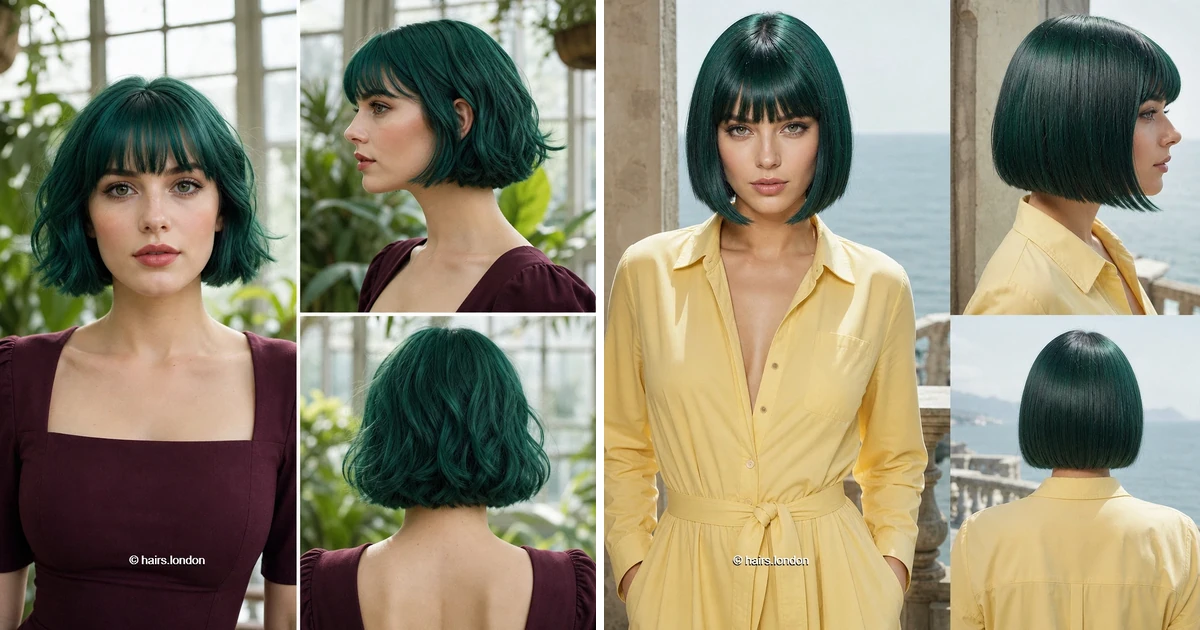
11. Rounded Petrol-Blue Bob with a Clean Neckline
Petrol blue gives this smooth rounded bob a reflective finish. The longer front touches below the jaw near the chin. Its back sits higher with a clean softly curved neckline. The visible transition is gentle rather than a dramatic diagonal. Smooth the top while directing the ends toward the face. Use modest heat protection before any brush or iron work. Fine hair may appreciate the substantial looking lower weight line. For dense hair discuss discreet interior shaping to reduce bulk. Refresh the back outline when it starts covering the neckline. Ask how often your particular blue teal shade needs refreshing.
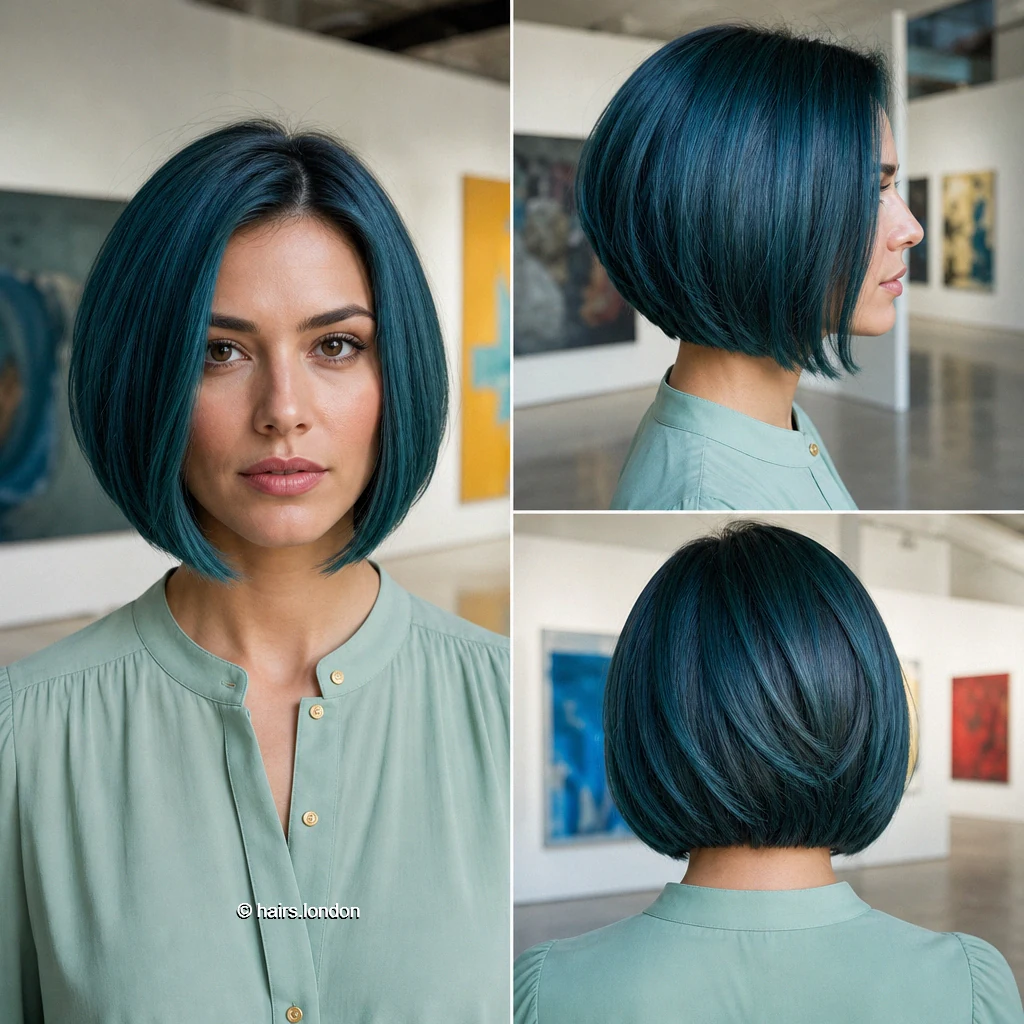
12. Precision Teal Bob with a Full Fringe
A full straight fringe defines this polished dark teal bob. Smooth sides curve toward the chin while the back sits higher. The lower edge looks even and compact from behind. Front pieces appear slightly longer without dramatic visible back graduation. Dry the fringe first to control splits or unwanted lift. Follow with a downward brush pass along the smooth perimeter. Discuss fringe density carefully if your hair is naturally fine. Strong waves may require extra work for this sleek finish. Trim bangs when they touch your eyes and reshape ends. Use heat protection and color safe products to limit fading.
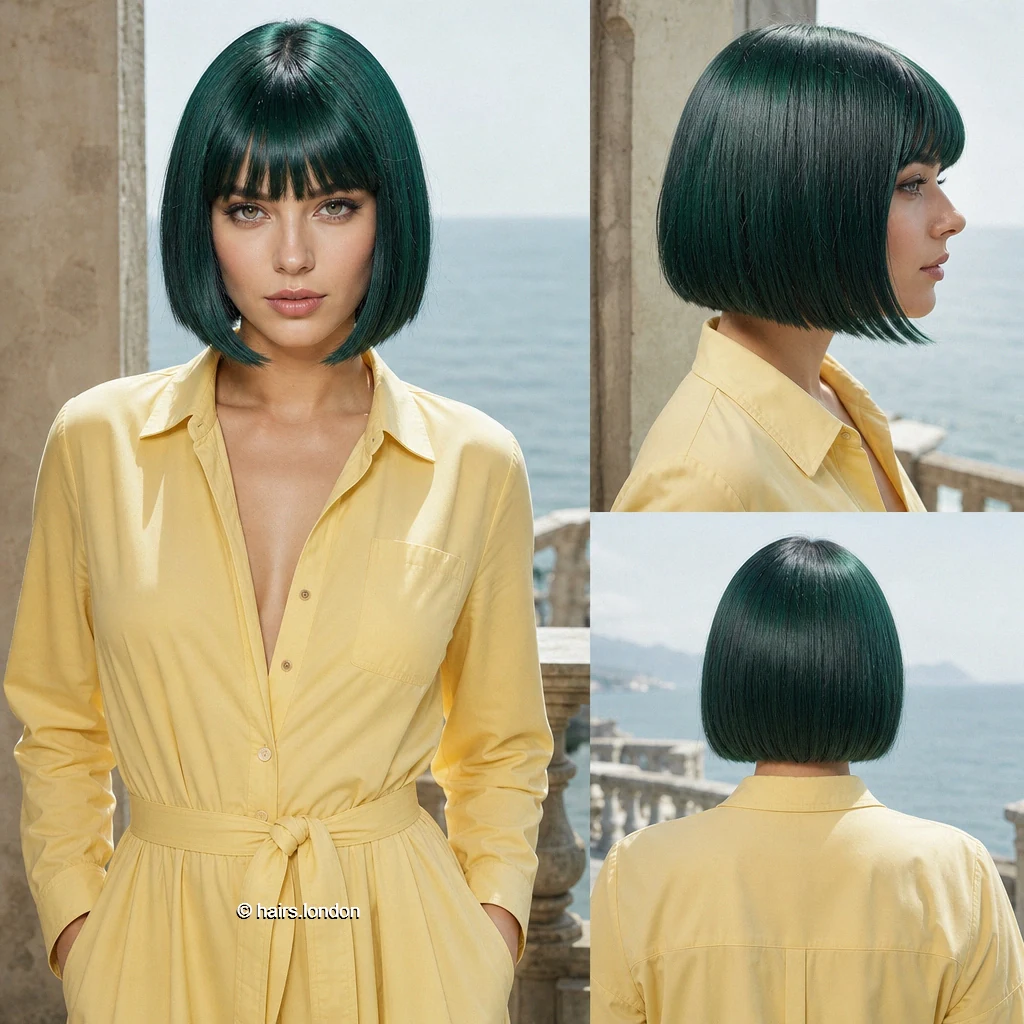
13. Blue-Teal Graduated Bob with Extended Front Pieces
Extended blue teal front pieces distinguish this short graduated bob. The back rounds into a visibly narrower section near the neck. Side views show substantial length dropping forward past the chin. Layered surface movement softens what could otherwise look severe. Blow dry the rear upward for lift before smoothing fronts. Keep the longer points lightly conditioned so they remain defined. Ask whether your density supports fullness above a shorter nape. Cowlicks at the neckline may change how graduation settles. Trim the rear regularly while monitoring the longer front ends. Discuss blue color upkeep wherever repeated styling causes extra unwanted dryness.
14. Relaxed Dark-Teal Bob with Loose Texture
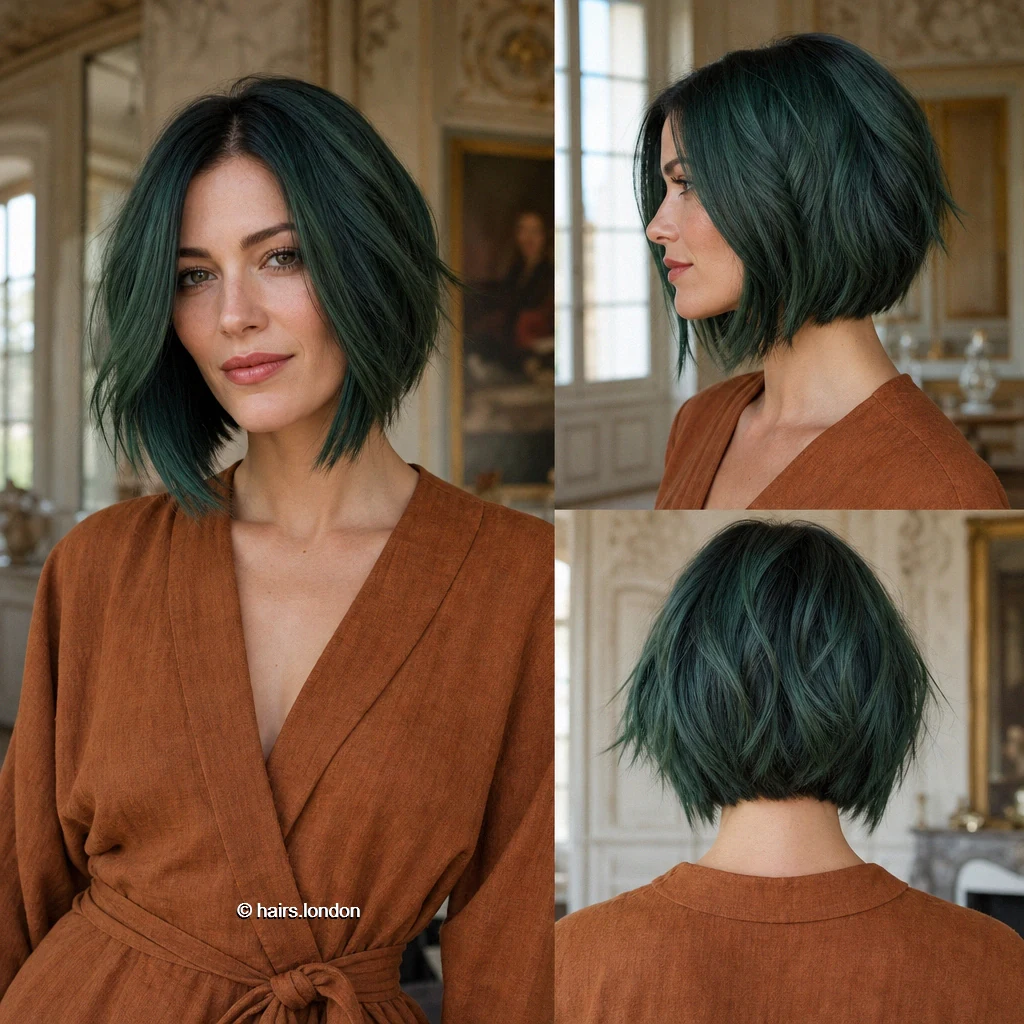
This dark teal bob has a relaxed softly angled outline. Longer front strands graze below the jaw near the neck. The back appears shorter with irregular ends and airy layers. Its texture softens the angle rather than emphasizing sharp precision. Encourage existing waves by scrunching light product through damp midlengths. Let the front dry forward to preserve its face framing. Ask for conservative layering if your ends become wispy easily. Dense hair can carry more separation without losing the perimeter. Tidy the neckline when the shorter pieces begin looking uneven. Check color condition before adding more heat to faded ends.
15. Choppy Blue-Teal Bob with Loose Waves
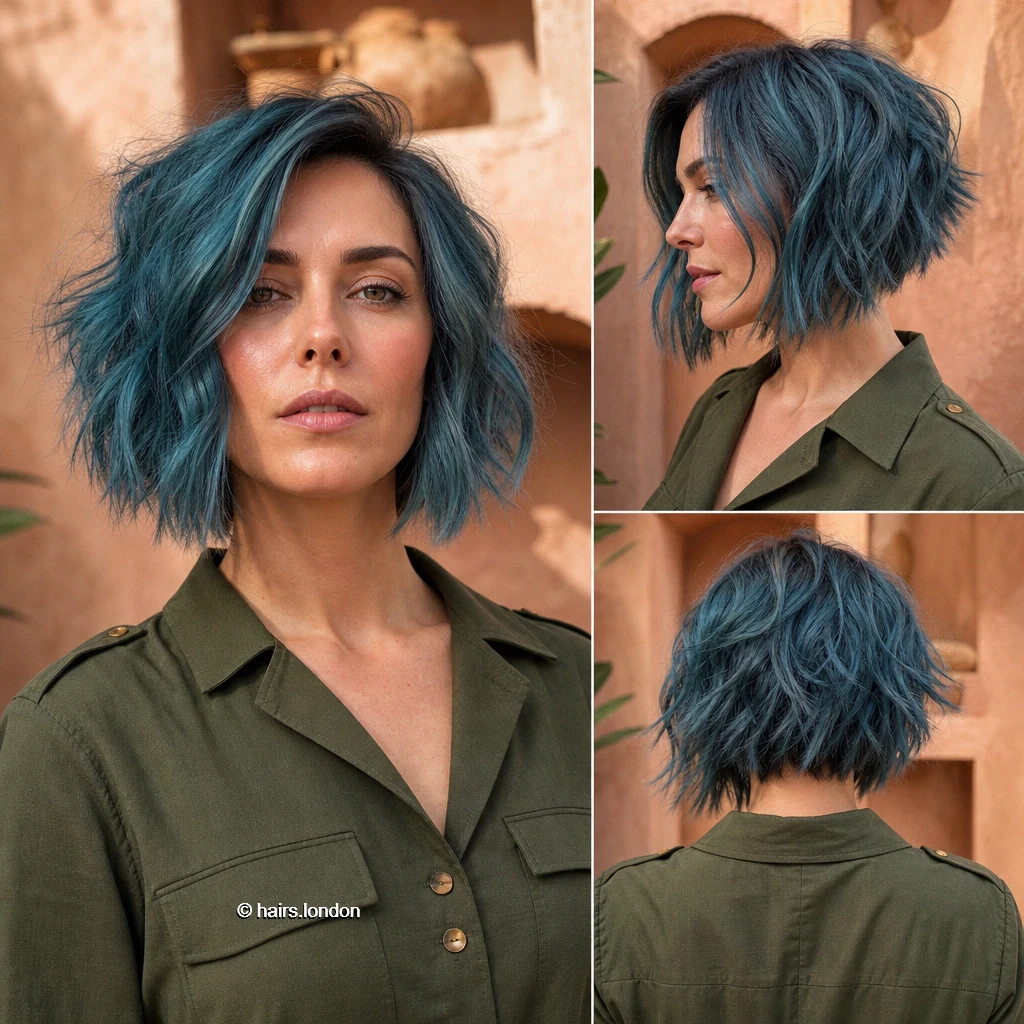
Loose waves give this blue teal bob its choppy outline. The front sits around the jaw beneath a deep side part. Side and back views show separated layers and wispy ends. The rear remains short but lacks a precise stacked finish. Work a little mousse through damp hair before diffusing. Avoid brushing dry waves if you prefer their piecey definition. Discuss where layers should fall according to your natural bend. Fine hair may require fewer cuts into the lower edge. Trim when the outline becomes thin rather than simply longer. Maintain bright blue areas with gentle washing and minimal heat.
16. Rounded Blue Bob with Soft Side Fringe
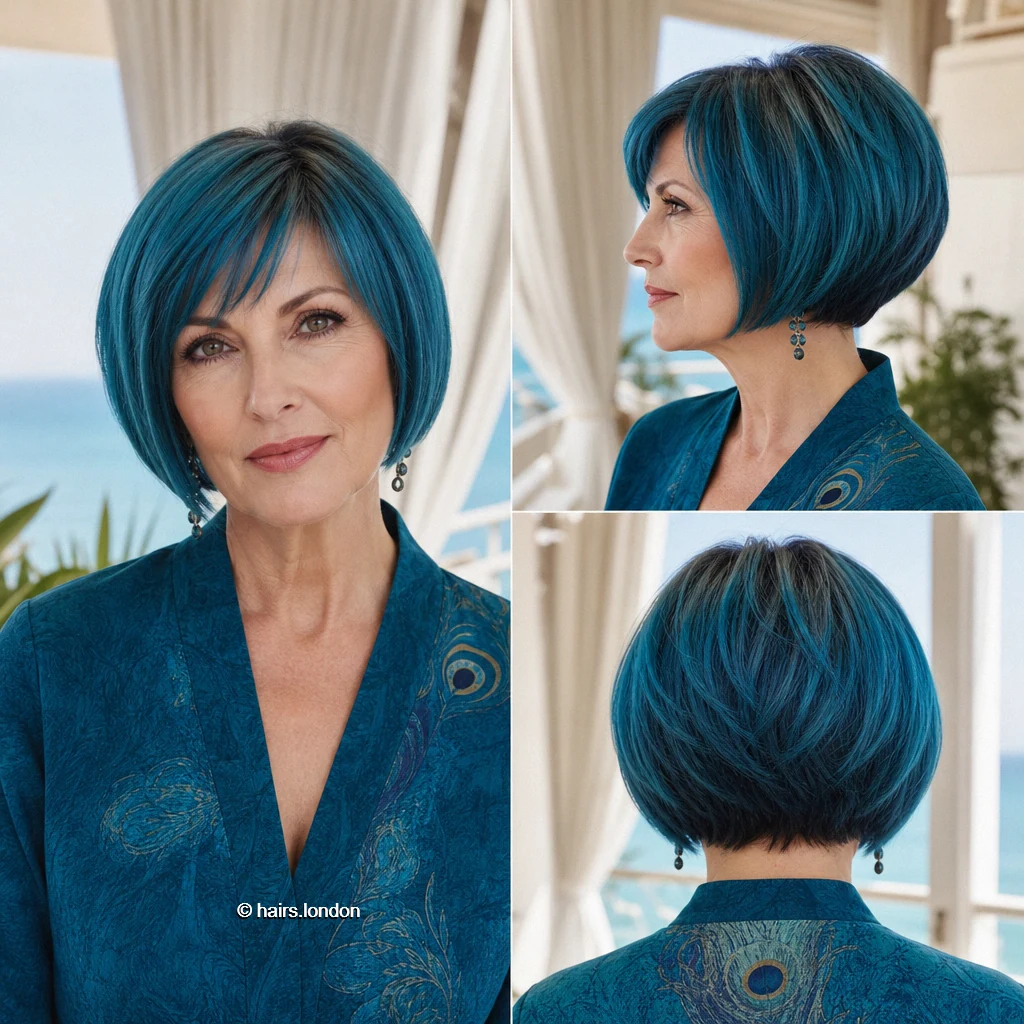
A soft sweeping side fringe accompanies this compact blue bob. The jaw length front curves inward beside the face. Side and back views show rounded fullness above shorter ends. Visible shaping at the back creates a gently graduated effect. Dry the fringe in its chosen direction before shaping sides. Use a brush underneath to support the curved weight line. Ask whether shorter back layers suit your density and neckline. Fine strands may need controlled graduation rather than excessive thinning. Refresh the shorter rear when its rounded silhouette begins dropping. Discuss blue color refreshes alongside trims to simplify regular salon appointments.
17. Even Dark-Teal Bob with a Center Part
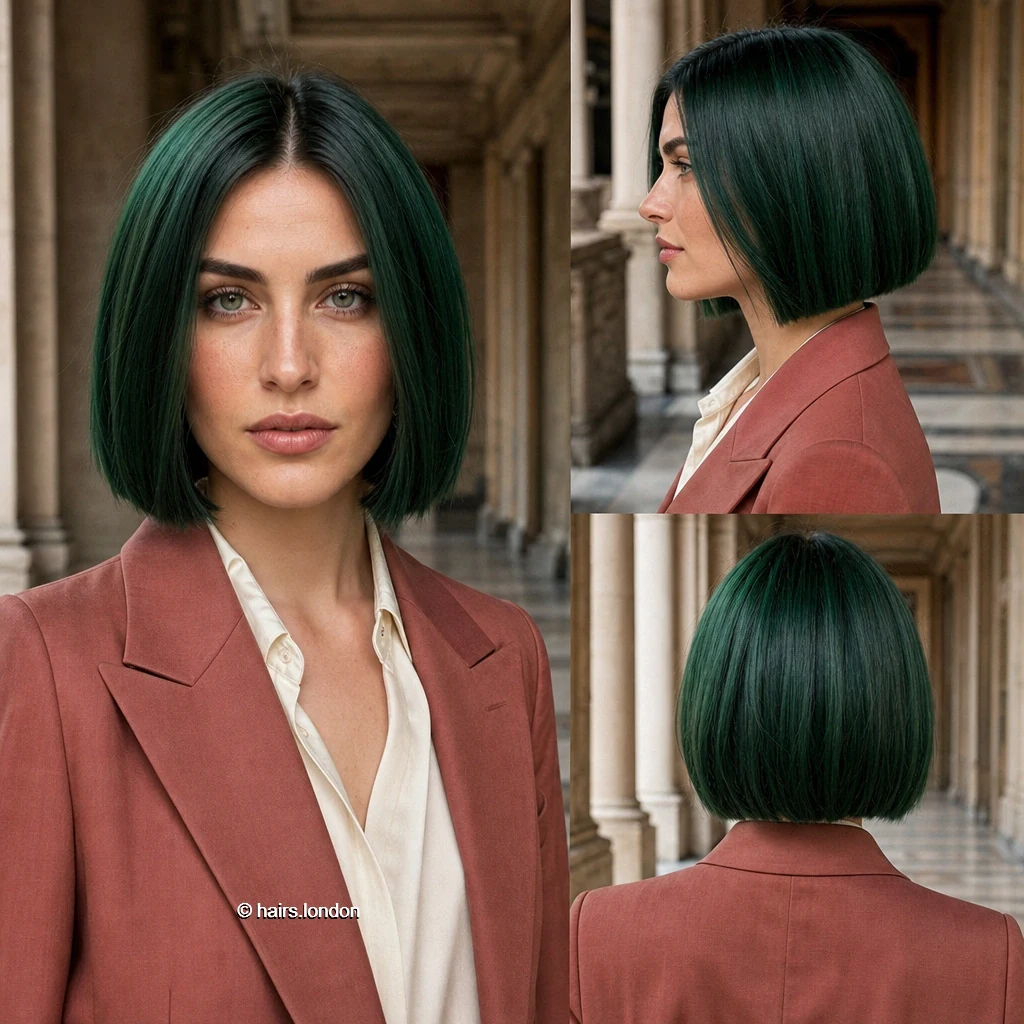
A center part balances this smooth dark teal bob. Both front sections meet around the jaw with minimal tapering. The back shows a compact and nearly even lower perimeter. Its smooth, controlled outline reads more blunt than visibly layered overall. Smooth the roots downward and finish ends with minimal movement. A small amount of serum can reduce surface flyaways. Discuss where the hemline should sit against your natural texture. Fine hair may benefit from keeping this weight line intact. Trim it promptly when the even edge begins looking uneven behind. Maintain teal depth with color safe cleansing and limited overheating.
18. Blue-Teal Graduated Bob with Crown Volume
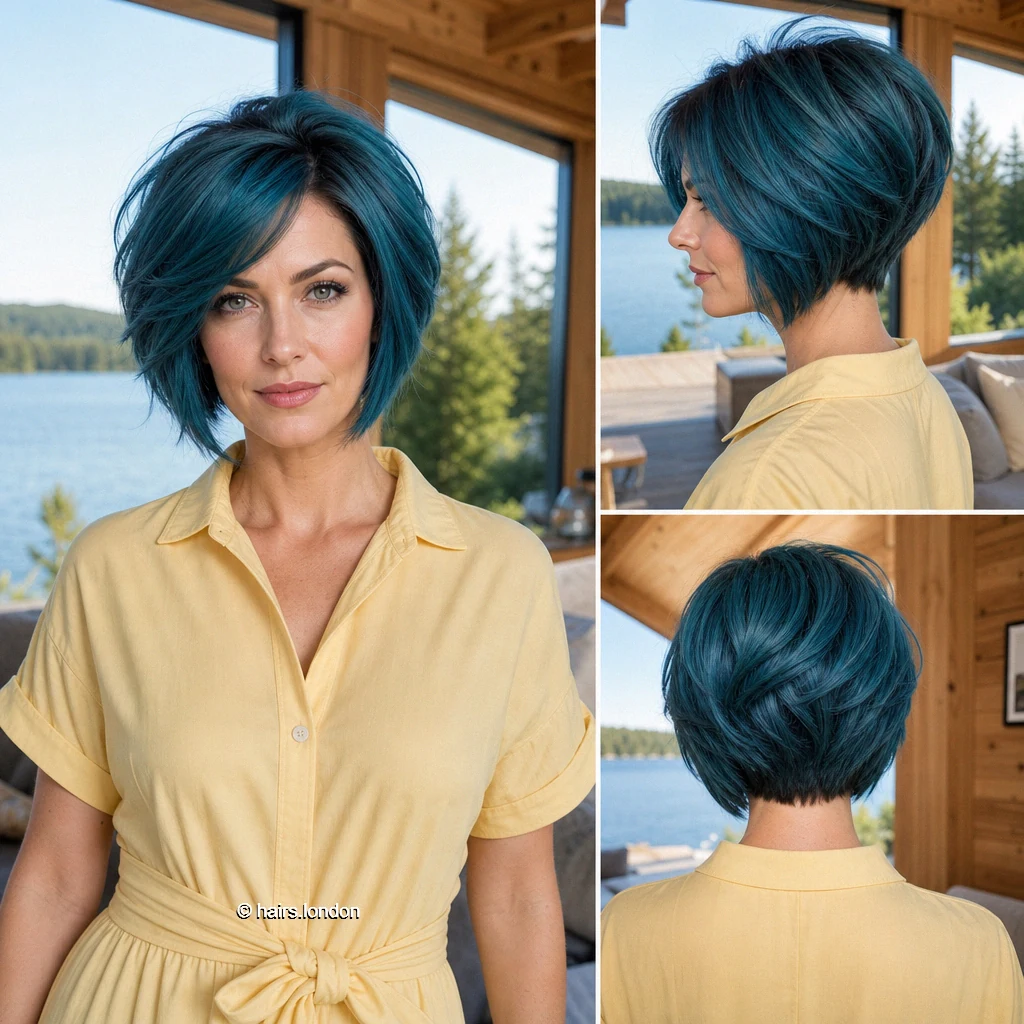
Blue teal color traces the movement of this graduated bob. A sweeping front falls below the shorter back near the jaw. From behind layered fullness narrows toward the exposed neckline. The side view confirms graduation rather than longer front pieces. Lift roots at the crown while drying the rear forward. Smooth the perimeter without pressing its rounded upper shape flat. Ask about nape growth patterns before choosing this shorter finish. Dense hair may need careful internal removal to avoid heaviness. Book trims when the tapered back starts losing its contour. Protect colored ends from heat when styling the sweeping front.
19. Rounded Green-Teal Bob with Gentle Movement
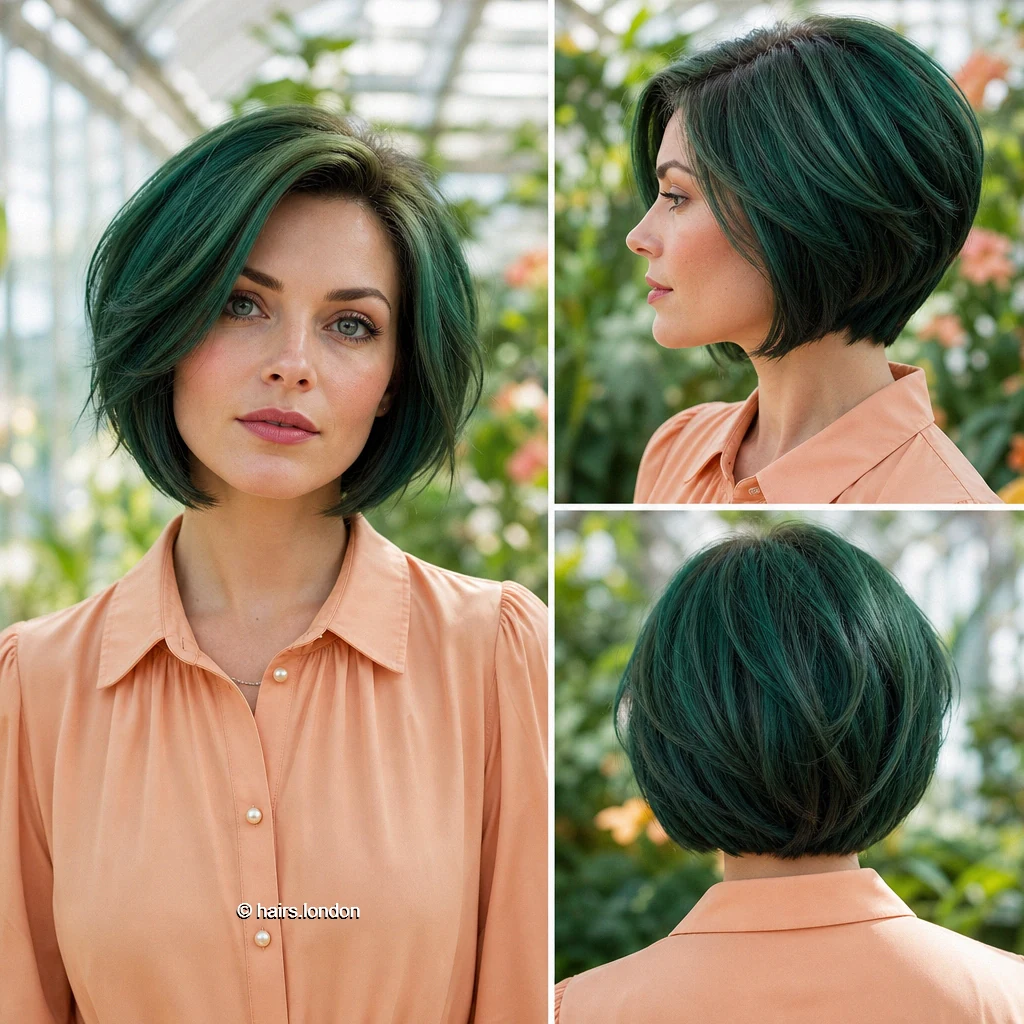
Green teal highlights show movement through this rounded short bob. Its side swept front falls around the jawline without bangs. Back and side views reveal a full softly layered silhouette. The neckline tapers gently but retains a rounded overall shape. Dry the top across its part to encourage lift. Smooth only the lower ends to preserve their light movement. Ask for layering that responds to your actual hair density. Coarser strands may need more control than naturally fine strands. Reshape the neckline once its short outline begins losing definition. Use gentle color care when distinct green tones fade between appointments.
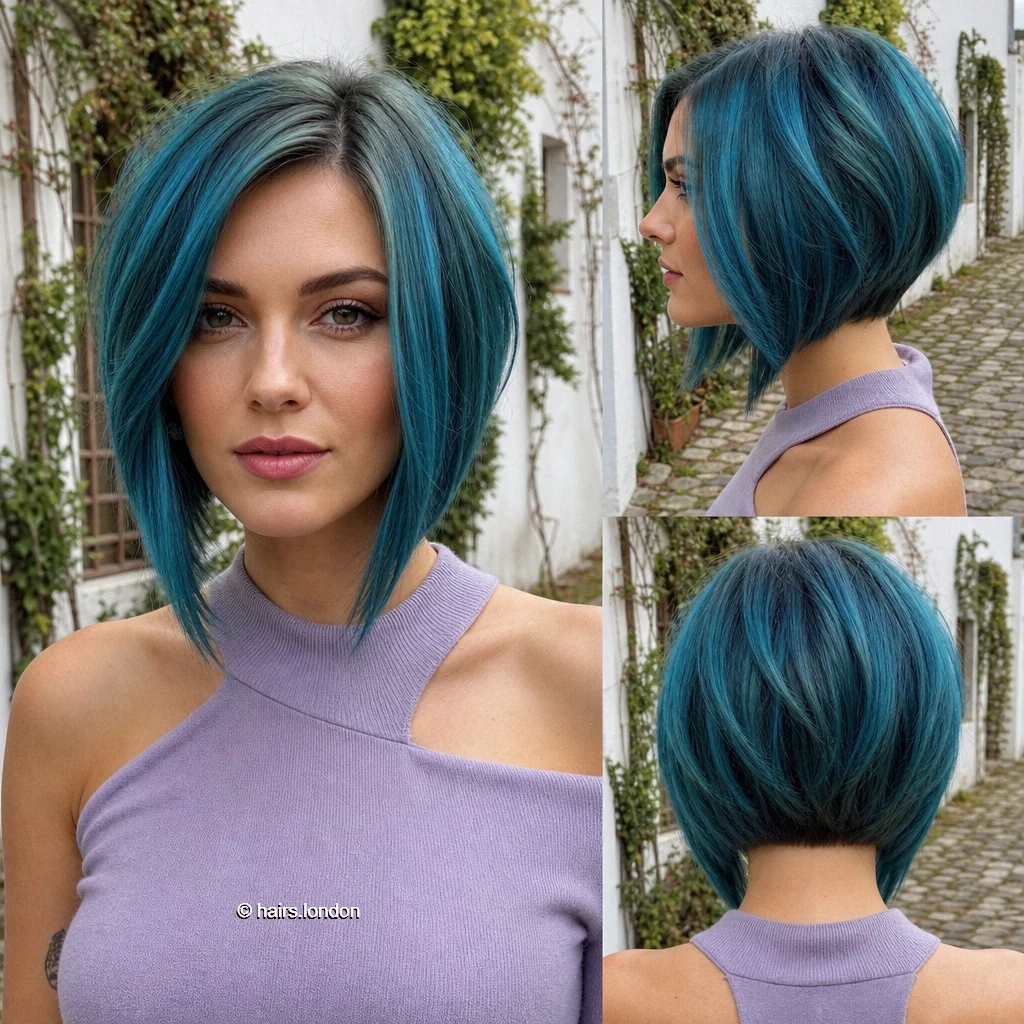
20. Dramatic A-Line Teal Bob with a Graduated Back
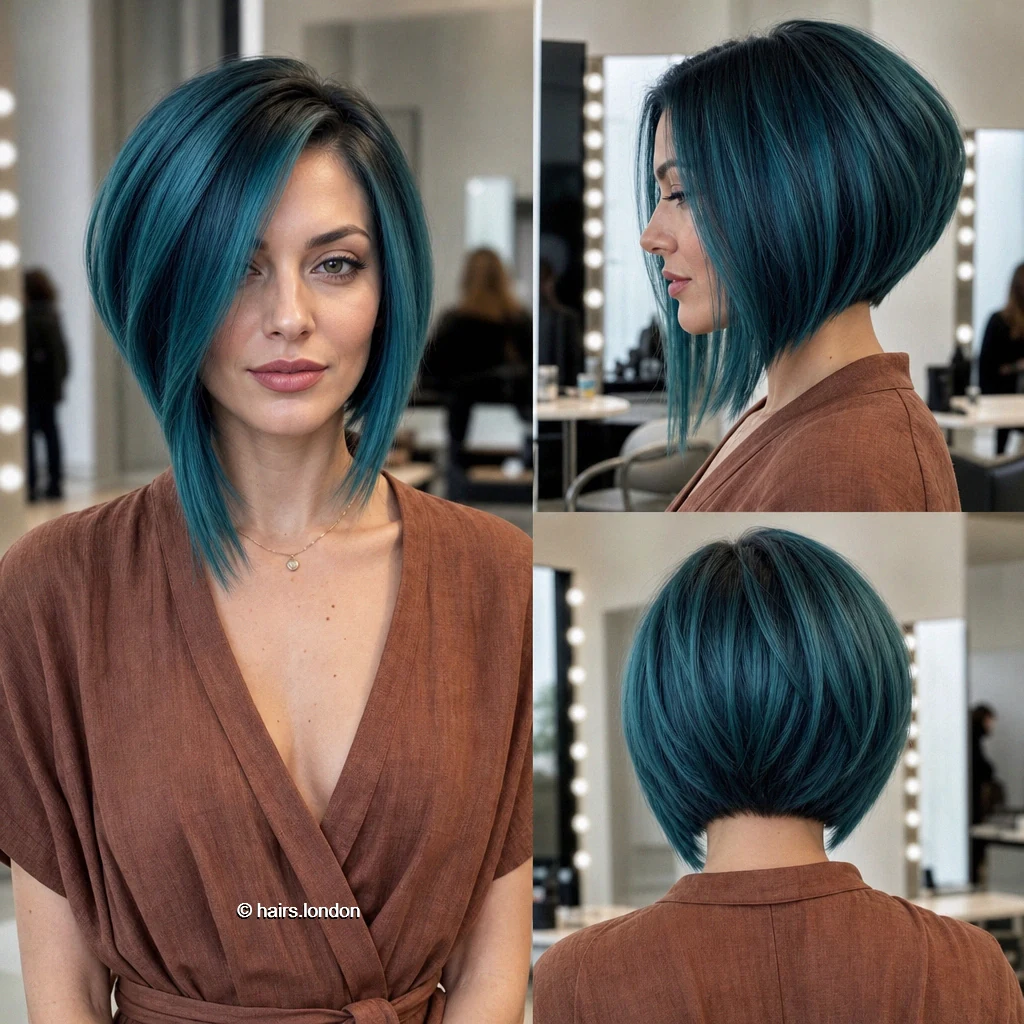
Long blue teal front sections create a dramatic A-line silhouette. They fall below the chin while the back exposes the neck. Back views also reveal layered fullness above the narrow nape. This combines a pronounced forward angle with visible rear graduation. Dry the back for lift then smooth the extended fronts. Keep those longer tips conditioned without coating them heavily. Discuss styling time if your natural texture bends or curls. Thick hair may need strategic shaping beneath the rounded crown. Maintain the nape and front points before their contrast disappears. Ask about refreshing blue tones without overprocessing the longer ends.
How to Choose Your Teal Bob Length and Shape
Compare the front and back lengths before choosing a reference. A jaw-length, nearly even bob keeps a clear weight line; an A-line bob leaves the front longer than the back. Choose visible back graduation only if you want the shorter neckline and fuller upper shape that come with it. Hair density, natural bends, cowlicks and your willingness to style the front should guide where the perimeter lands.
Styling Fine, Thick, Wavy and Curly Textures
On fine hair, use light root lift and keep enough weight at the ends to make the bob look substantial. On thick hair, ask about discreet interior shaping rather than thinning the entire perimeter. For natural waves, apply a small amount of mousse and diffuse or air-dry while preserving separation. With curls, choose the length according to how far they spring up when dry, and have the shape checked in its natural state. Dry any fringe first if its growth pattern makes it split.
Keeping Teal Bob Color Fresh
The images range from blue-leaning teal to deeper green teal, so discuss the shade you actually want rather than relying on the word teal alone. Use color-safe cleansing, avoid unnecessarily hot water and protect hair before heat styling. Ask your colorist how fading, your starting color and the condition of the ends will affect the refresh schedule; longer front pieces may need particular care.
Maintaining the Bob Perimeter and Graduation
A smooth blunt or A-line edge shows uneven growth sooner than a loose, textured outline. Check the front points and back hemline together rather than trimming only what you see in the mirror. Short graduated backs also lose their taper as the nape grows. Fringe may need a separate tidy-up, while wavy bobs can often be reshaped according to how their ends fall when dry.
What to Discuss with Your Stylist
Bring the front, side and back views of your preferred bob. Point out the desired jaw or chin length, whether you want a blunt weight line, and whether the back should be rounded, softly layered or visibly graduated. Show where you normally part your hair and explain your everyday styling routine. Ask your stylist to assess density, curl or wave pattern, neckline growth and color maintenance before settling on the final shape.
Frequently Asked Questions
What is the difference between a bob and a lob?
A bob usually finishes around the jaw or neck; a lob is longer and typically approaches or reaches the shoulders. The visible haircuts here are predominantly short, neck-length bobs.
How is an A-line bob different from a stacked bob?
A-line describes a perimeter that is longer in front than in back. Stacked describes closely graduated layers that build fullness at the back. A cut can show both features, but one does not automatically imply the other.
Does a bob need layers?
No. A blunt-looking bob retains a strong lower edge, while layers can add movement or shape a rounded back. The useful amount depends on density, texture and the outline you want.
Can fine hair support a rounded bob?
It can, provided the shape retains enough weight through the ends. Discuss restrained layering and lightweight styling products if your hair flattens easily.
How can thick hair avoid looking bulky in a bob?
Ask about controlled internal shaping while keeping the visible perimeter deliberate. Removing too much from the ends can exchange bulk for an unwanted wispy outline.
Can natural curls work with a short bob?
Yes, but assess the length and shape with curl shrinkage in mind. Ask your stylist to check how the perimeter sits when your curls are dry and naturally arranged.
Which bob is easiest to style with natural waves?
A softly layered or textured bob can make use of existing movement. The easiest version depends on where your waves begin and whether the shorter back settles neatly without blow-drying.
Should I choose a full fringe or a side-swept front?
A full fringe puts more emphasis on regular fringe styling and trims. A side-swept front offers more length to redirect, although its success still depends on your part and growth pattern.
How can I style a smooth bob each morning?
Reset the part, dry the roots and fringe if needed, then direct airflow down the hair while smoothing the perimeter. Use only enough finishing product to control flyaways without flattening the shape.
How often should a precise bob be trimmed?
Trim it when the perimeter or front-to-back balance starts changing visibly. A short graduated nape and a sharp A-line generally reveal growth sooner than a loose, textured outline.
What happens when a graduated bob grows out?
The shorter back begins to drop and its built-up shape becomes less distinct. Your stylist can maintain the graduation or gradually even the lengths if you want to grow toward a longer bob.
Will teal look the same on every starting hair color?
No. The starting color and hair condition affect how bright the teal appears and how it fades. Discuss the desired blue or green balance and realistic upkeep with your colorist.
Conclusion
The most useful reference is the bob whose outline you like from every angle, not just the front. Decide whether you prefer a clean jaw-length edge, a longer A-line front or a visibly shaped back, then adapt its layers and teal shade to your hair and maintenance preferences.


