


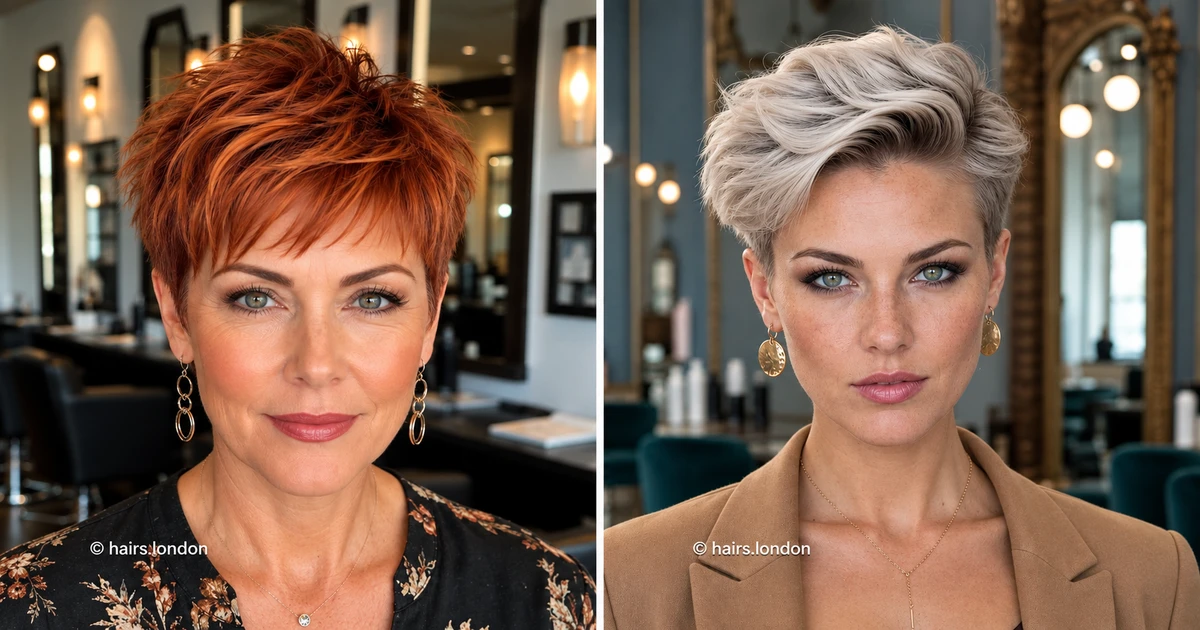
11. Espresso Pixie with a High Textured Quiff
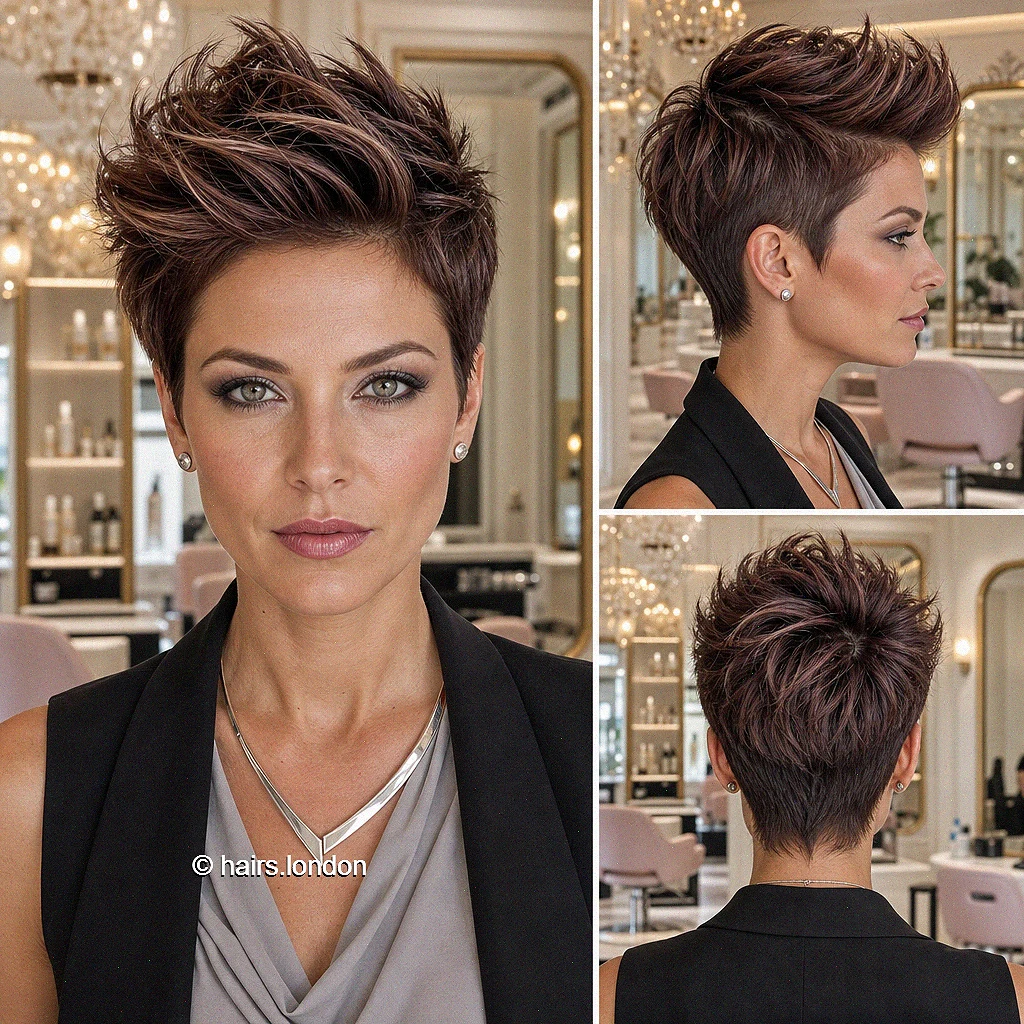
A high quiff gives this espresso pixie a strong profile. Warm highlights pick out the curved strands, while the shorter sides keep the shape controlled. Ask for a longer front section that blends into a textured crown. Hair growth direction matters here, so have your stylist assess the front hairline. Blow dry upward and back before adding a little product to the ends.
12. Silver Curly Pixie with Longer Crown Curls
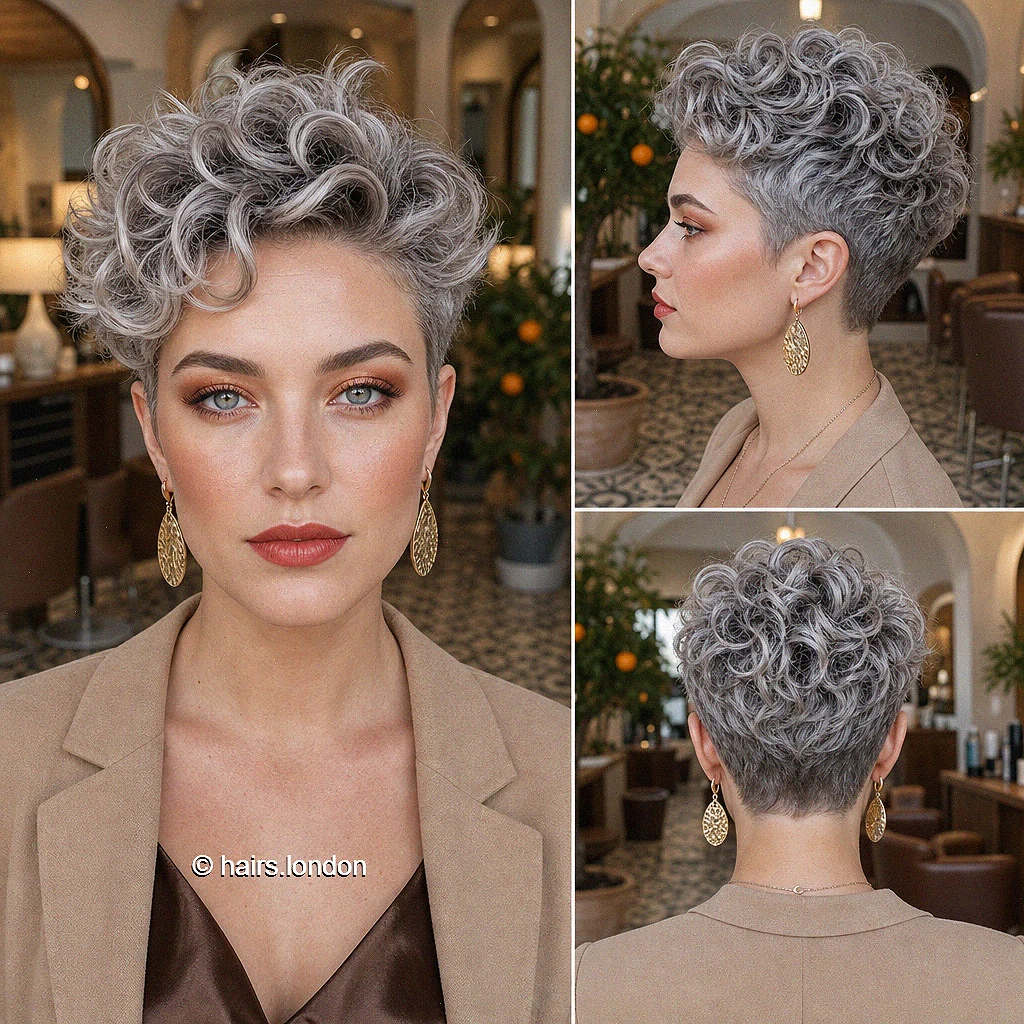
Loose silver curls create a rounded crown above the shorter sides. The curl pattern supplies much of the volume, and the soft front pieces keep the hairline relaxed. Ask for the shape to be assessed with your natural curls visible so the length allowance is realistic. Apply a little curl cream to damp hair and dry gently, avoiding unnecessary handling while the curls set.
13. Magenta Pixie with a Swept Back Top
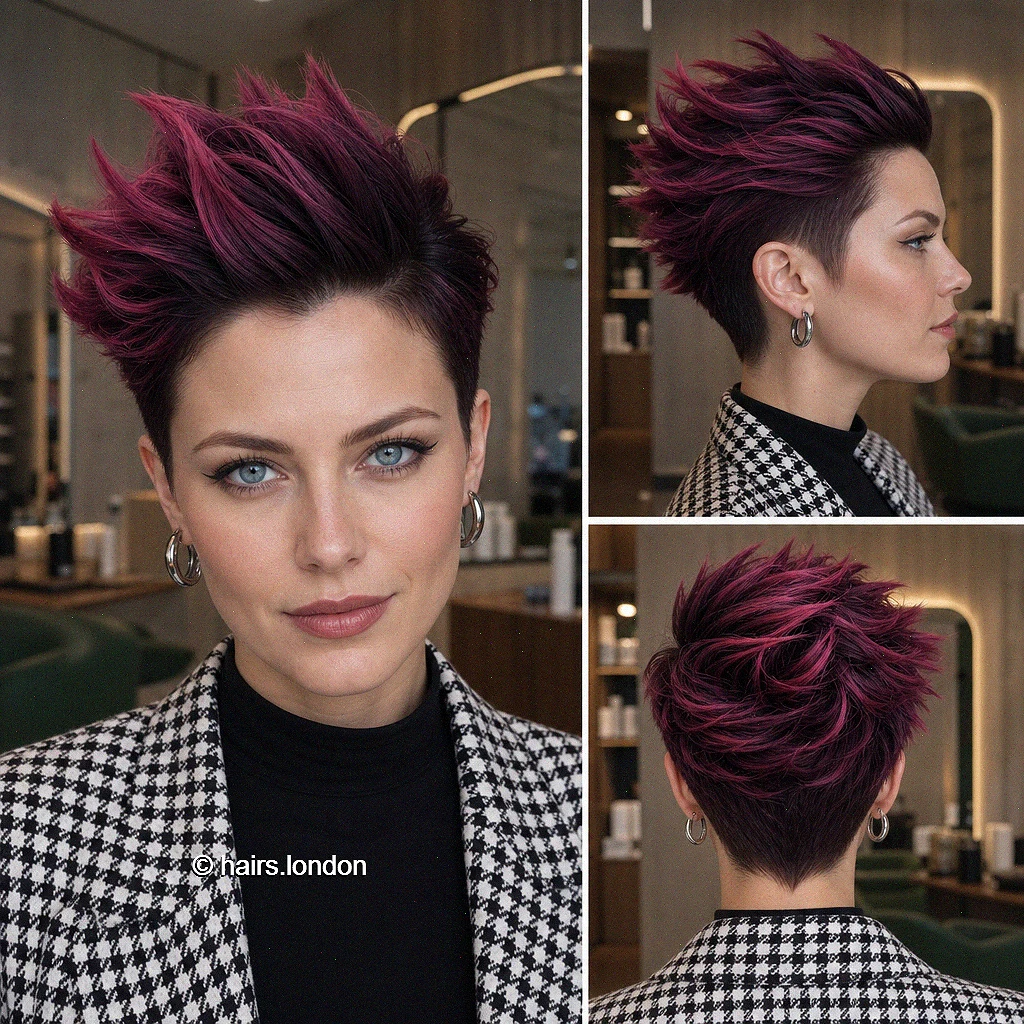
A rich magenta top sweeps upward and back, creating a clean forehead and a bold side profile. The darker base adds dimension between the separated layers. Bring this photo if you want a pixie with height and a more open front. Your stylist can adjust the side length to your comfort level. Direct the roots back while drying and shape the ends with your fingertips.
14. Pearl Silver Pixie with a Soft Quiff
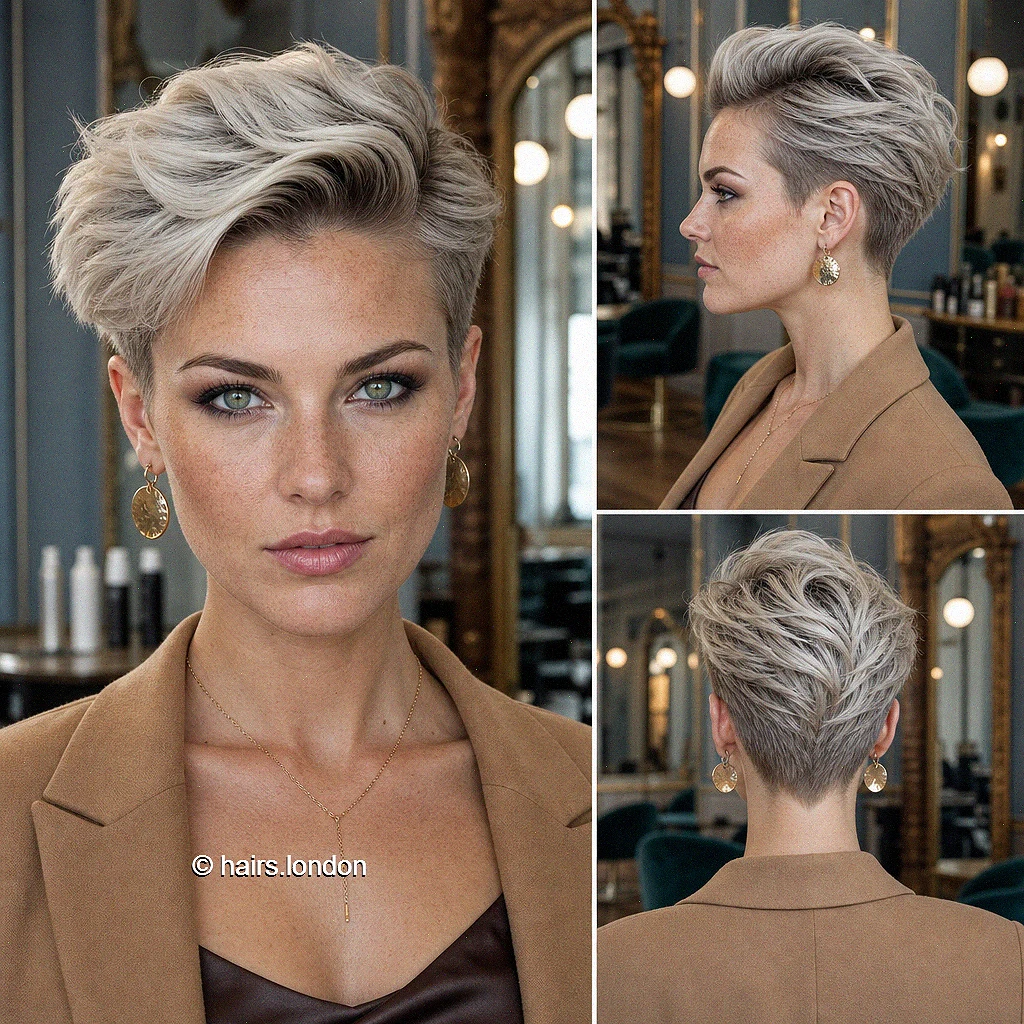
Pearl silver layers form a broad, softly curved quiff. The close sides and nape keep the silhouette compact, while the longer front gives the look its elegance. Ask for gentle layering through the top so it can sweep across without losing its shape. Use controlled airflow when drying and lift the front at the root. Keep the finishing product light to preserve the airy surface.
15. Short Silver Curly Pixie with Tapered Sides
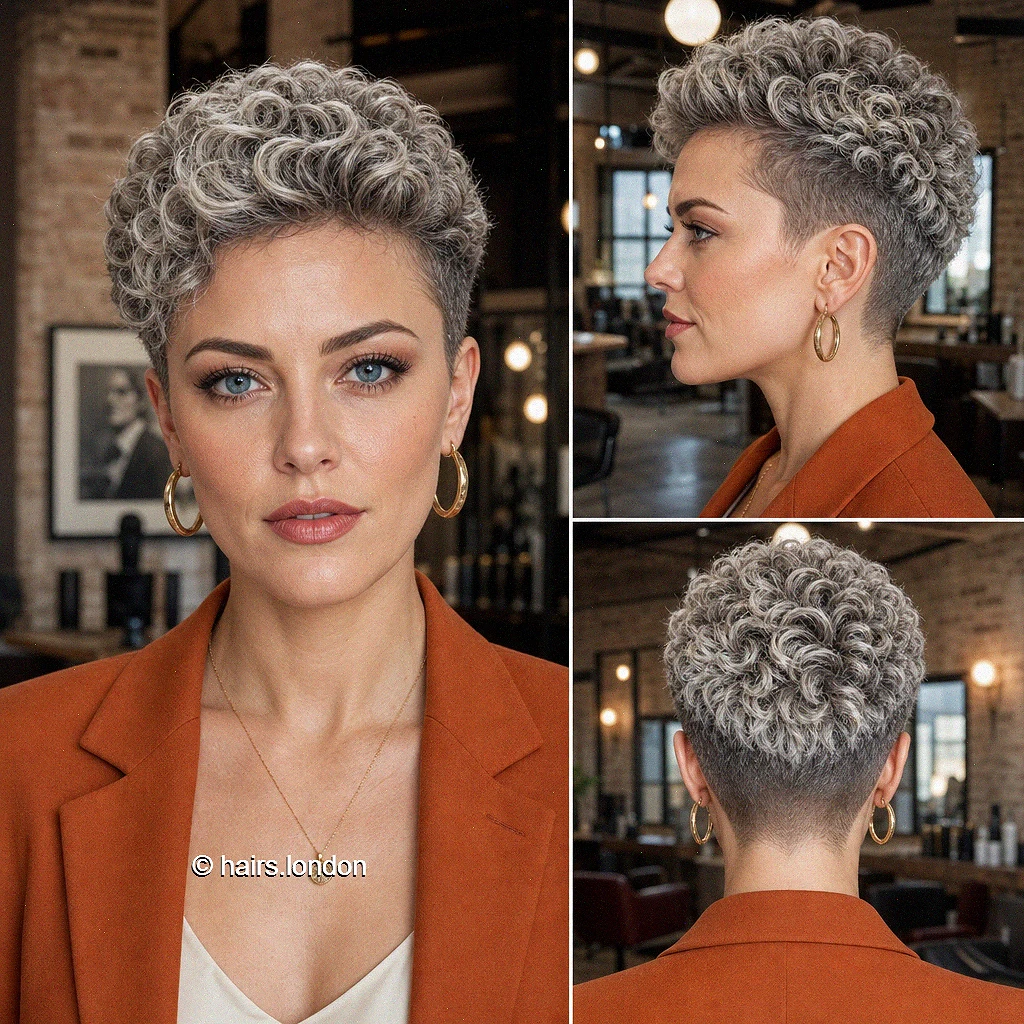
Small silver curls cover the crown in a compact, rounded shape. The sides are shorter than those in the longer curly example, creating a clearer contrast between curl texture and the perimeter. Ask your stylist how short the sides can go without exposing areas you prefer to cover. Let the curls dry in their natural clusters, then gently lift them at the roots once fully dry.
16. Rose Burgundy Pixie with Brushed Back Layers
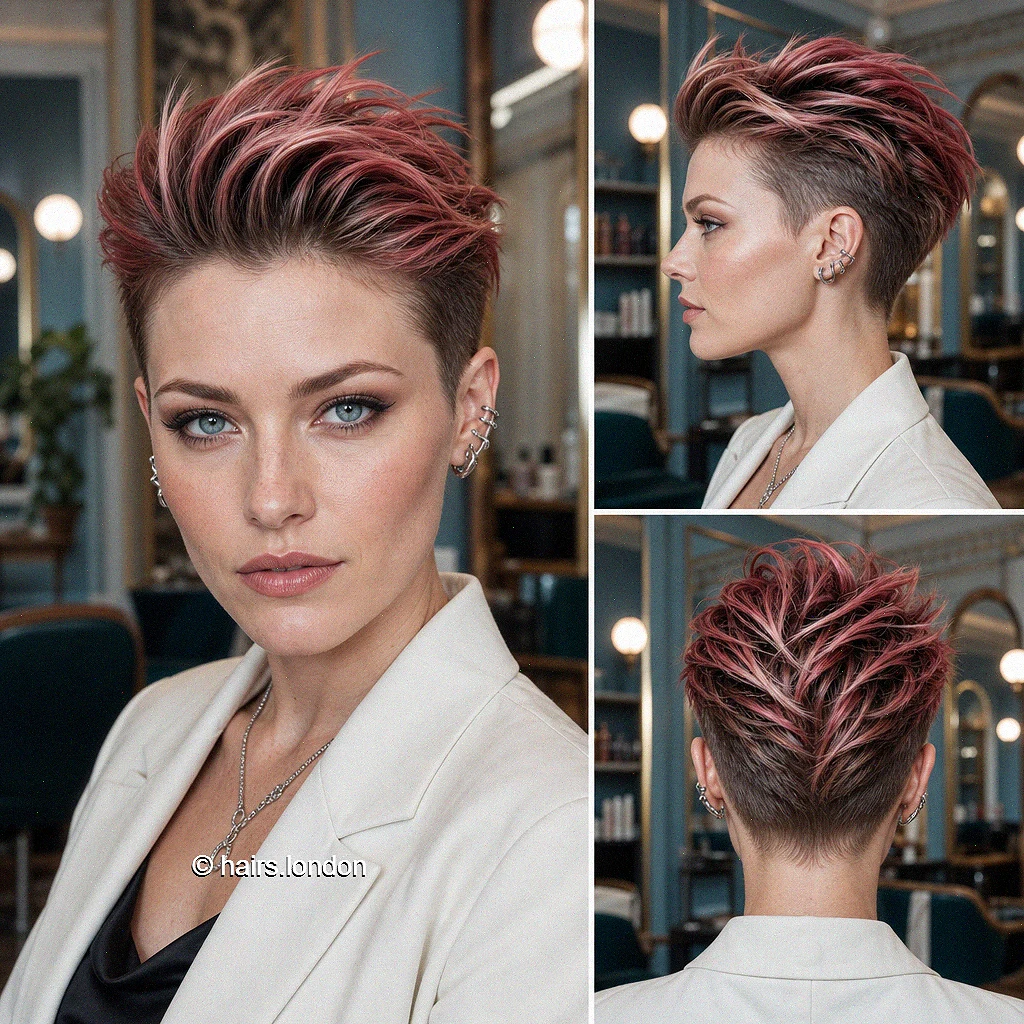
Rose burgundy highlights trace the brushed back layers through the top of this pixie. The exposed forehead and close sides give the style a tidy outline, while the lifted crown adds movement. Ask for a front length that can sweep backward comfortably. Dry the roots away from the face, then separate the highlighted pieces. The color is best discussed as a visual reference rather than an exact dye formula.
17. Plum Purple Pixie with a Rounded Quiff
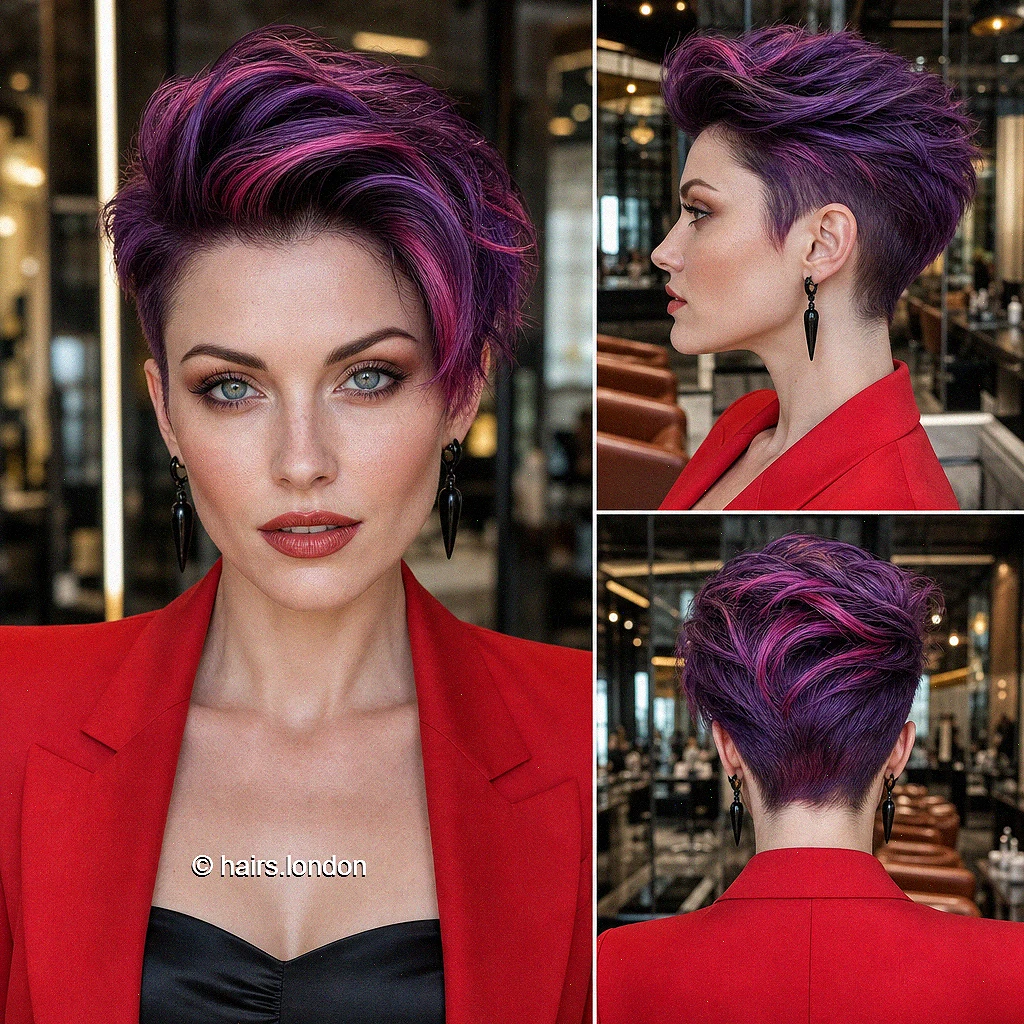
Plum purple color and a broad quiff give this pixie a striking finish. The longer top forms a rounded sweep, with a compact back that supports the overall shape. Ask your stylist to show how the front section should sit when you are styling it yourself. Lift the roots with a brush, guide the length backward, and allow the curved ends to settle before applying finishing product.
18. Dark Brunette Pixie with Defined Spikes
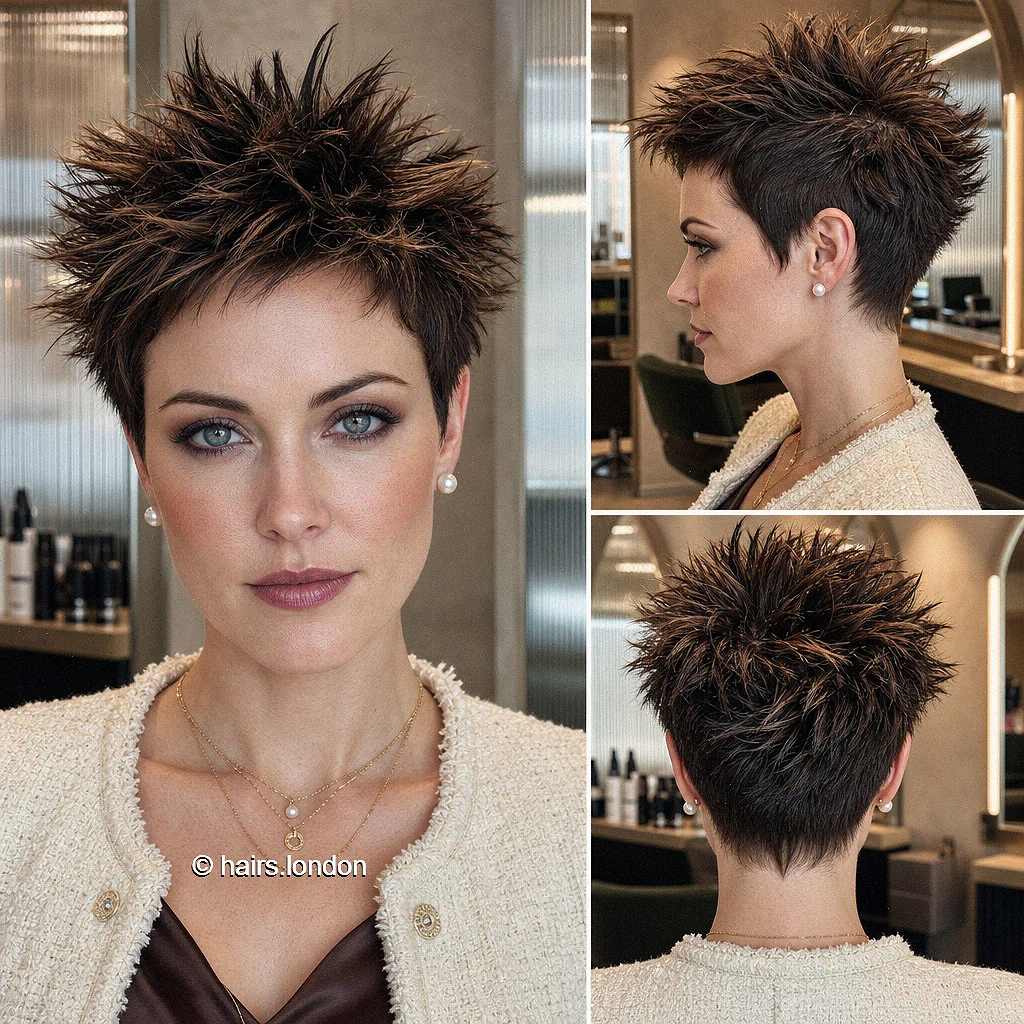
Dark brunette layers create a pronounced spiky crown above short, neat sides. A few front pieces fall toward the forehead, which breaks up the otherwise upright texture. Ask for a crown length that matches how much time you want to spend styling. Work with dry hair when defining the spikes, adding product gradually. Separate a few key pieces instead of coating every strand heavily.
19. Dusty Rose Curly Pixie with Soft Layers
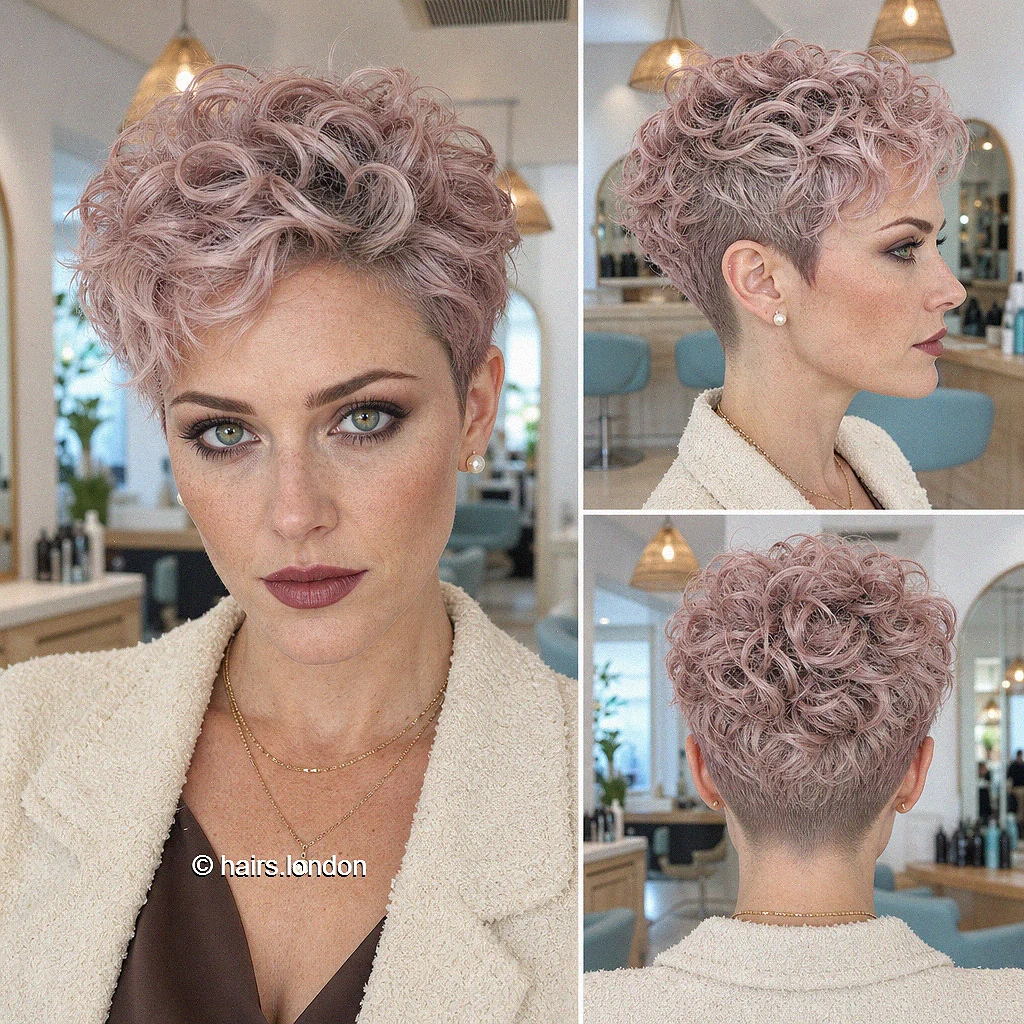
Dusty rose color softens the tousled curls in this pixie. The top retains enough length for loose bends, and the sides blend into a gentle taper. Ask your stylist to keep the curl shape balanced around your forehead and ears. Style damp hair in small natural sections, then let it dry with minimal disturbance. Once dry, loosen only the curls that need more movement.
20. Smoky Lavender Curly Pixie with a Side Sweep
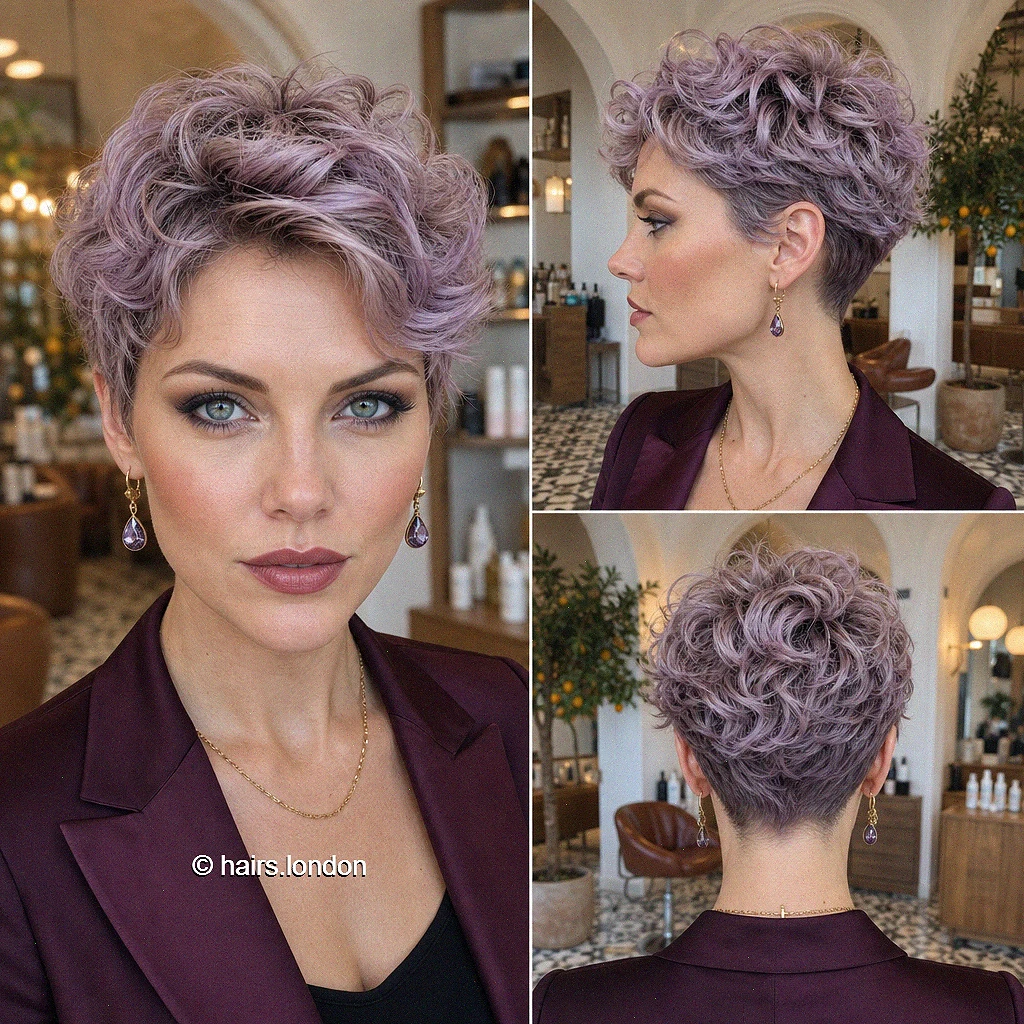
Smoky lavender gives this curled pixie a cool, muted finish. Longer front curls sweep to one side, while the shorter back keeps the shape close to the neck. Bring the full collage to your appointment so the stylist can compare the front sweep with the back length. Define the curls while damp, then adjust the part gently once dry to retain the soft volume.
Choosing Your Pixie Shape
Start by deciding how you want the front to sit. A short, broken fringe leaves less length to sweep, while a longer diagonal fringe offers more movement around the face. A quiff needs enough front length to lift and bend. Curly versions depend on how your curls spring up, so compare the overall outline rather than expecting an identical curl pattern.
Bring the front, side, and back views together to the salon. Discuss the nape, the area around the ears, and how much crown height you want. If your hair is fine, preserving density may matter more than removing bulk. If it is thick, your stylist can adjust the internal weight while keeping the surface shape. Ask for a styling demonstration before you leave.
Styling Textured Pixie Haircuts
For a swept finish, direct the roots toward your chosen side while drying, then smooth the ends with a small brush. For spikes, establish root lift first and use a little product on dry hair to define selected pieces. Add more only if necessary; too much can flatten the shape. Curly pixies benefit from gentle handling while drying so the curl groups remain defined.
Consider how much styling you want to do each morning. The most lifted looks in this collection have a deliberate finish that may need daily reshaping. A softer fringe or a natural curly outline may suit a different routine. Ask your stylist how the chosen cut will look when air dried as well as when fully styled.
Frequently Asked Questions
What should I ask for at the salon
Show your chosen photograph and ask for a textured pixie with the specific fringe, crown height, and nape outline you prefer. The images communicate the cut more clearly than a color or style nickname alone.
Can textured pixie haircuts work with fine hair
The shape can be adapted to fine hair. Discuss keeping enough density through the top and avoiding excessive thinning. Crown length and styling direction can help create the appearance of lift.
Can I keep my natural curls
Yes, a pixie can be shaped around natural curls. Ask your stylist to account for shrinkage and the way your curls sit at the forehead, ears, and crown.
How do I recreate the color in a photograph
Use the image as a visual reference with your colorist. Your starting color and hair condition affect what is achievable. Exact dye brands, shade numbers, and formulas cannot be confirmed from these photographs.
How often should the cut be refreshed
Arrange your next appointment around how quickly the sides, nape, and fringe lose the shape you like. A closely tapered pixie usually shows growth sooner than a longer, softer version, so ask your stylist for a schedule suited to your cut.