

11. Petrol Teal Long-Front Bob
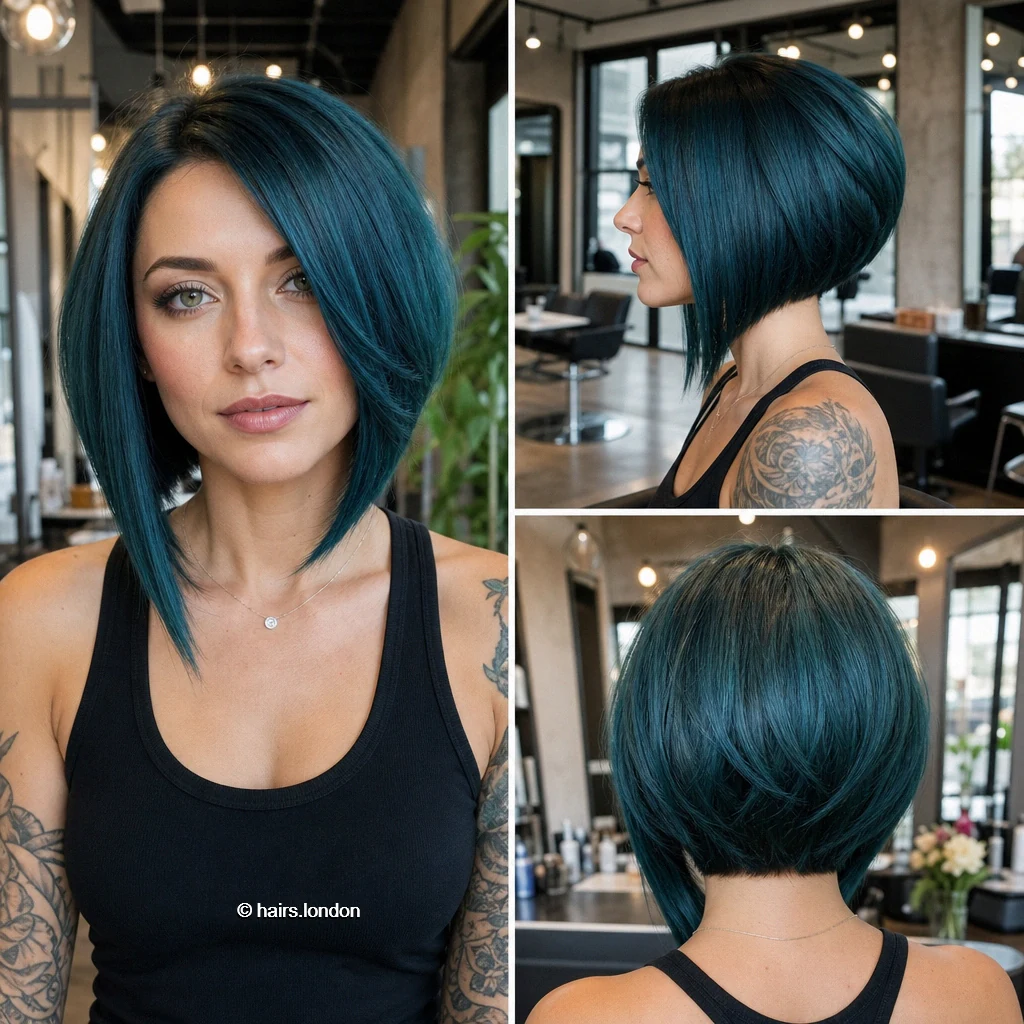
Petrol teal adds depth to this pronounced long-front bob. Both face-framing points extend below the shorter side sections. The profile shows rounded back volume above a compact nape. That visible graduation supports the distinctly angled overall silhouette. Request an angle that works with your natural part. Smooth the front lengths without pressing the rounded back flat. A small amount of serum helps emphasize the sleek surface. Thick hair may require thoughtful weight control beneath the curve. Check nape regrowth often to retain the short-to-long difference. Protect the teal tone with gentle, color-safe washing habits, especially with frequent exposure to heat.
12. Jewel Green Graduated Bob With Extended Front
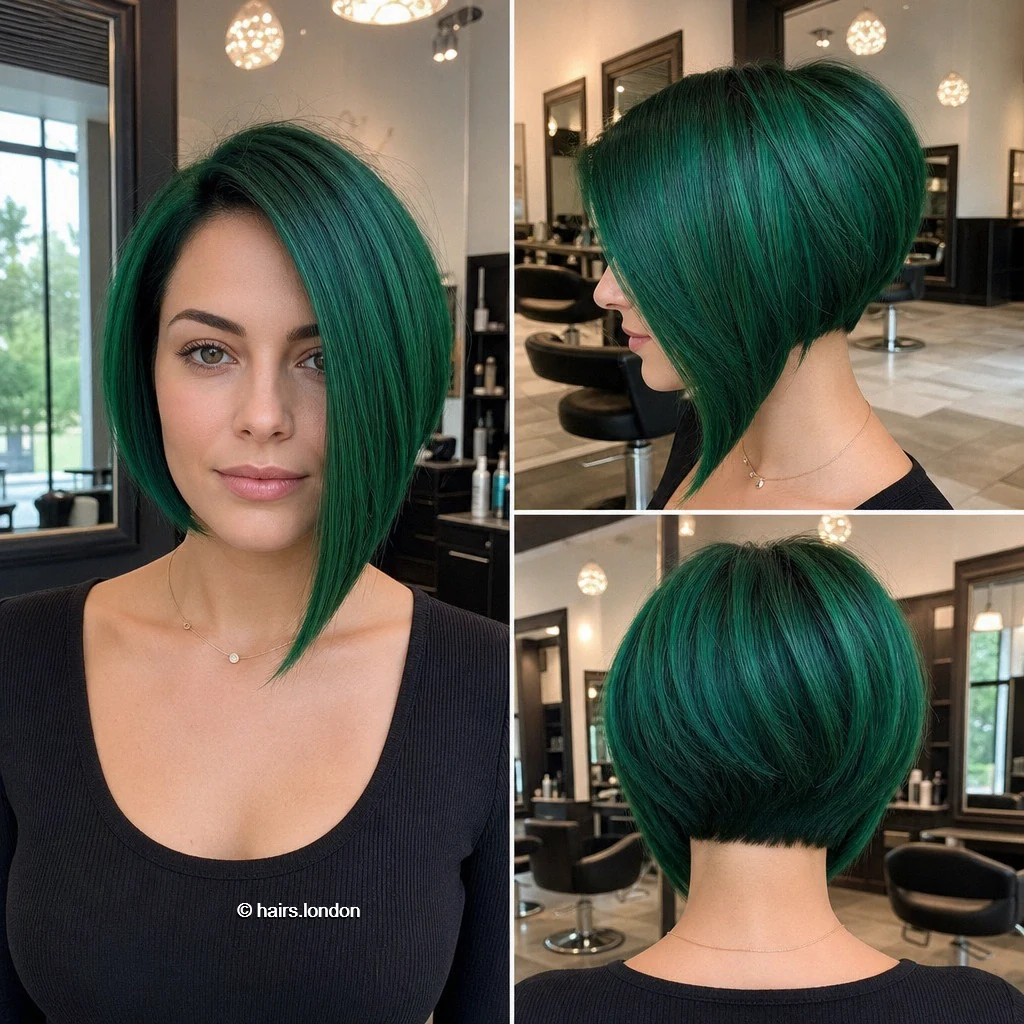
Jewel green defines this smooth bob’s extended front section. One prominent point reaches below the jaw toward the neck. From the side, the back rises into rounded fullness. The rear view confirms a short neckline beneath that weight. Ask your stylist to balance the point against your parting. Direct a dryer downward along the front for smoothness. Lift roots at the back without roughening the polished surface. This defined outline rewards regular trims, particularly around the nape. Fine density may need less layering to maintain fullness. Discuss pigment refreshes before the green loses its rich finish between full cutting appointments.
13. Cobalt Tousled Jaw-Length Bob
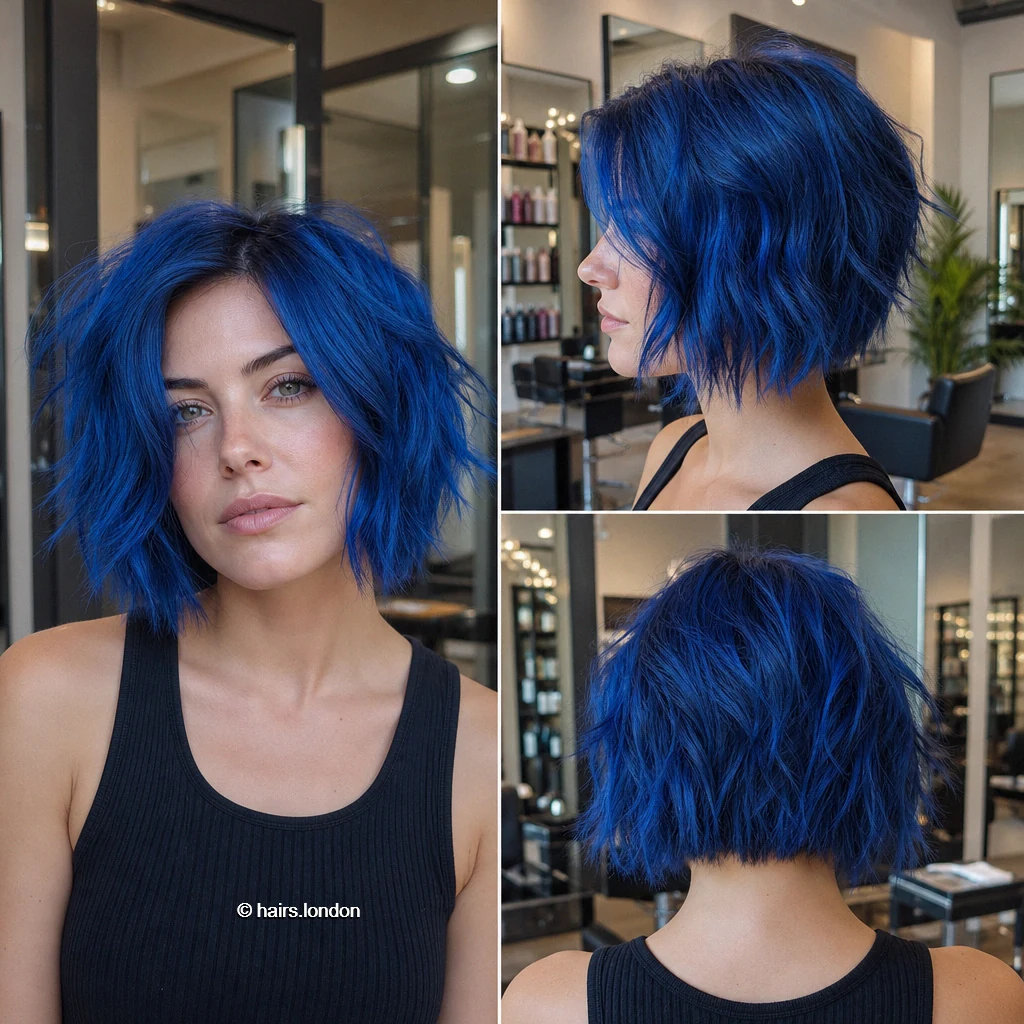
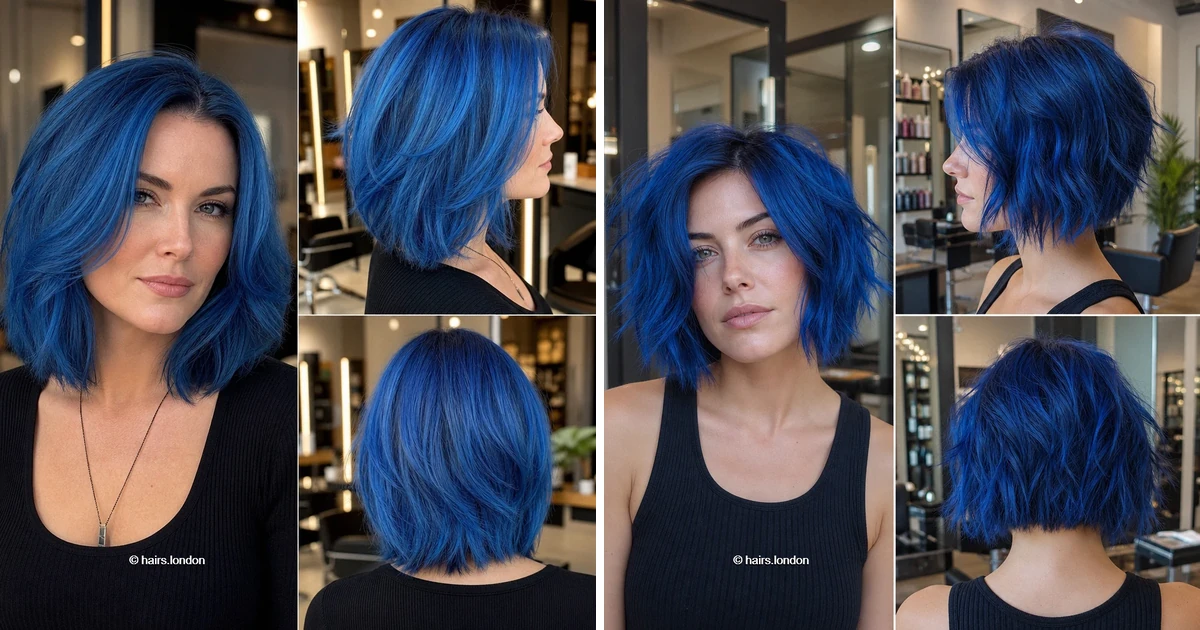
Cobalt blue energizes this jaw-length bob’s choppy, tousled outline. A loose middle part separates longer pieces around the cheeks. Visible bends and broken ends give the shape airy width. The back finishes near the neck without obvious stacked graduation. Ask for texture that moves without creating sparse-looking ends. Scrunch damp hair with lightweight foam to encourage natural bends. If needed, add a few loose waves around the face. Fine hair may favor fewer cuts through the perimeter. Refresh blue gently rather than relying on repeated high heat. Trim when the choppy outline loses its intended balance while preserving soft movement.
14. Black-Navy Shaggy Bob With Wispy Fringe
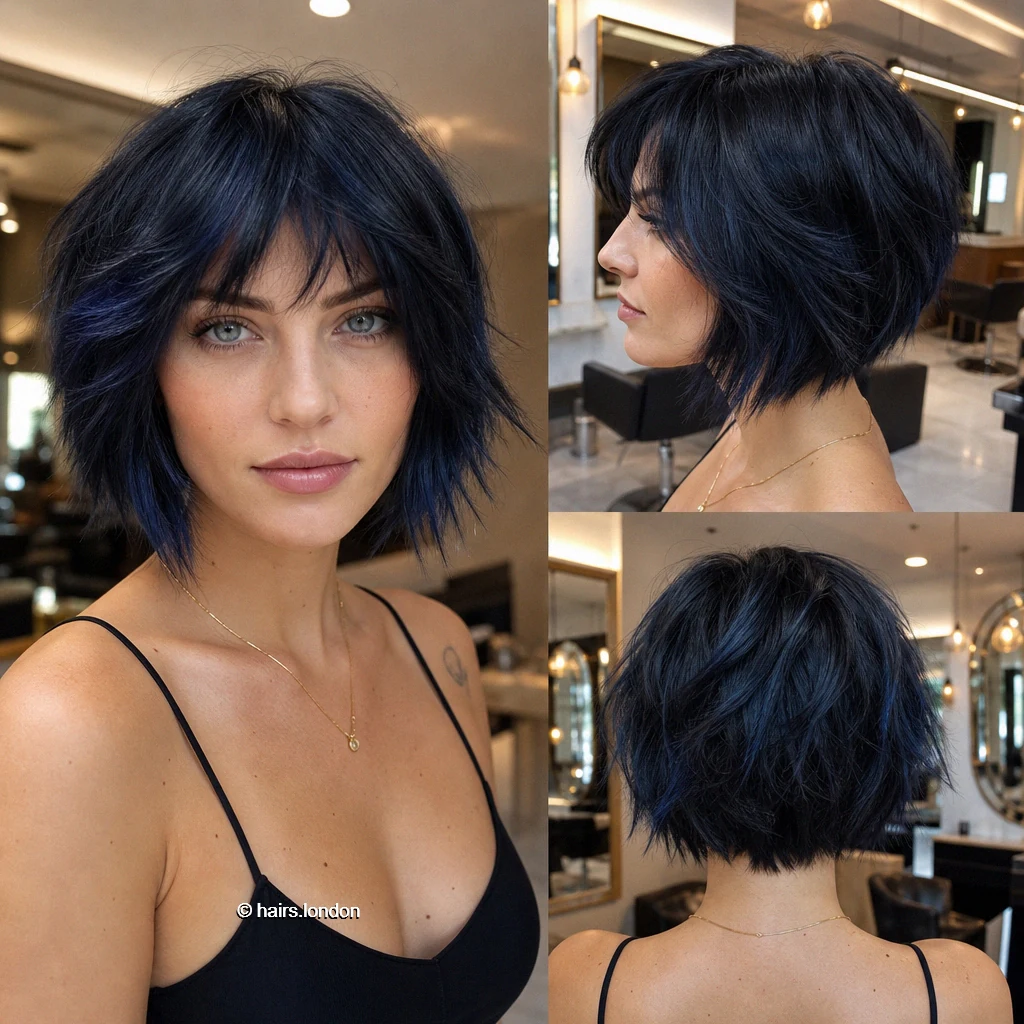
Black-navy color grounds this jaw-length bob’s shaggy, airy layers. A wispy fringe rests across the forehead above the eyes. Feathery sides and a textured back soften the perimeter. The shape looks full without a sharply defined weight line. Ask for fringe length that suits your natural growth patterns. Dry the fringe first, moving it gently from side to side. Scrunch the remaining layers to encourage separation without extra bulk. Dense hair may need controlled internal shaping for easy movement. The dark blue may require less frequent visible color correction. Refresh fringe and ends whenever their proportions start changing over time.
15. Teal Shaggy Bob With Soft Fringe
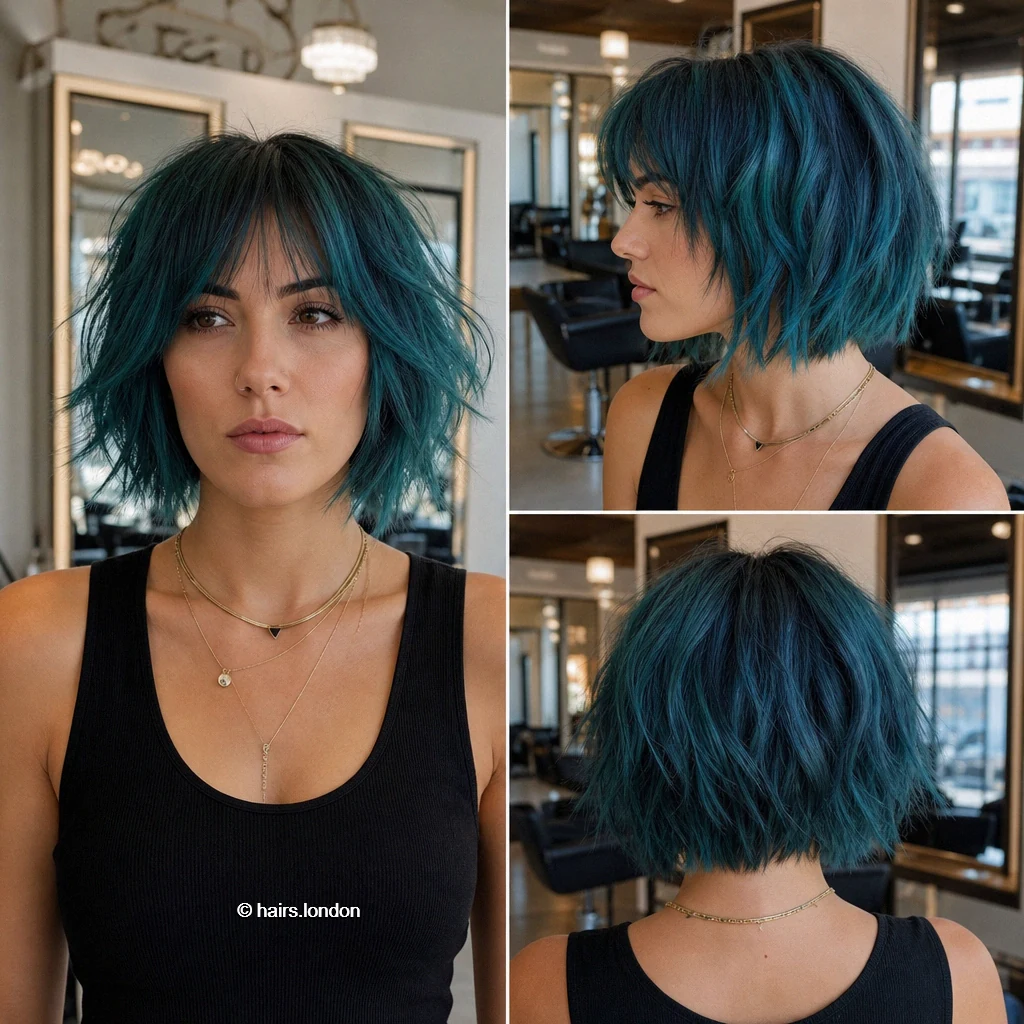
Blue-green teal brings contrast to this textured, neck-length bob. A fine fringe skims the forehead beneath a darker crown. Piecey sides expand outward around the jaw and cheeks. The back stays softly irregular rather than forming tight graduation. Ask for fringe and side layers tailored to your density. Diffuse waves or scrunch damp lengths with flexible styling foam. Keep products off the fringe if it separates too heavily. Natural texture can help create movement without daily hot tools. Protect the teal from hot washing and excessive sun exposure. Trim the fringe separately if it obscures your eyes for consistent definition.
16. Dark Green Textured Jaw-Length Bob
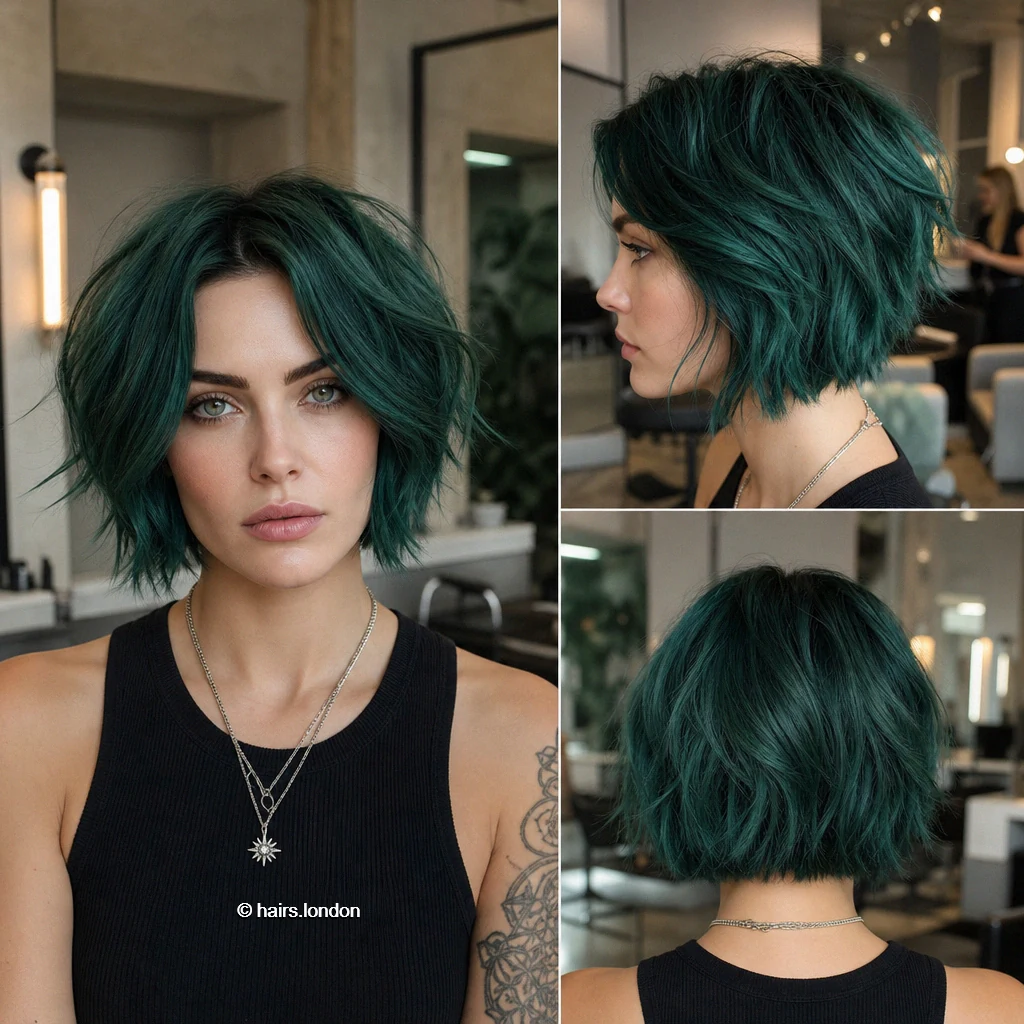
Dark green gives this jaw-length bob a subdued jewel tone. A loose center part opens into softly sweeping front sections. Tousled layers create width while the back remains neck length. Its uneven tips look intentionally airy, not blunt or stacked. Request selective texture if your ends tend to become bulky. Air-dry natural waves with cream, then separate only dry pieces. Fine hair may need a stronger outline beneath those layers. Thick hair can benefit from movement without excessive crown thinning. Discuss when green needs refreshing as its depth gradually changes. Shape trims should still restore balance without erasing the softness.
17. Royal Blue Polished Graduated Bob
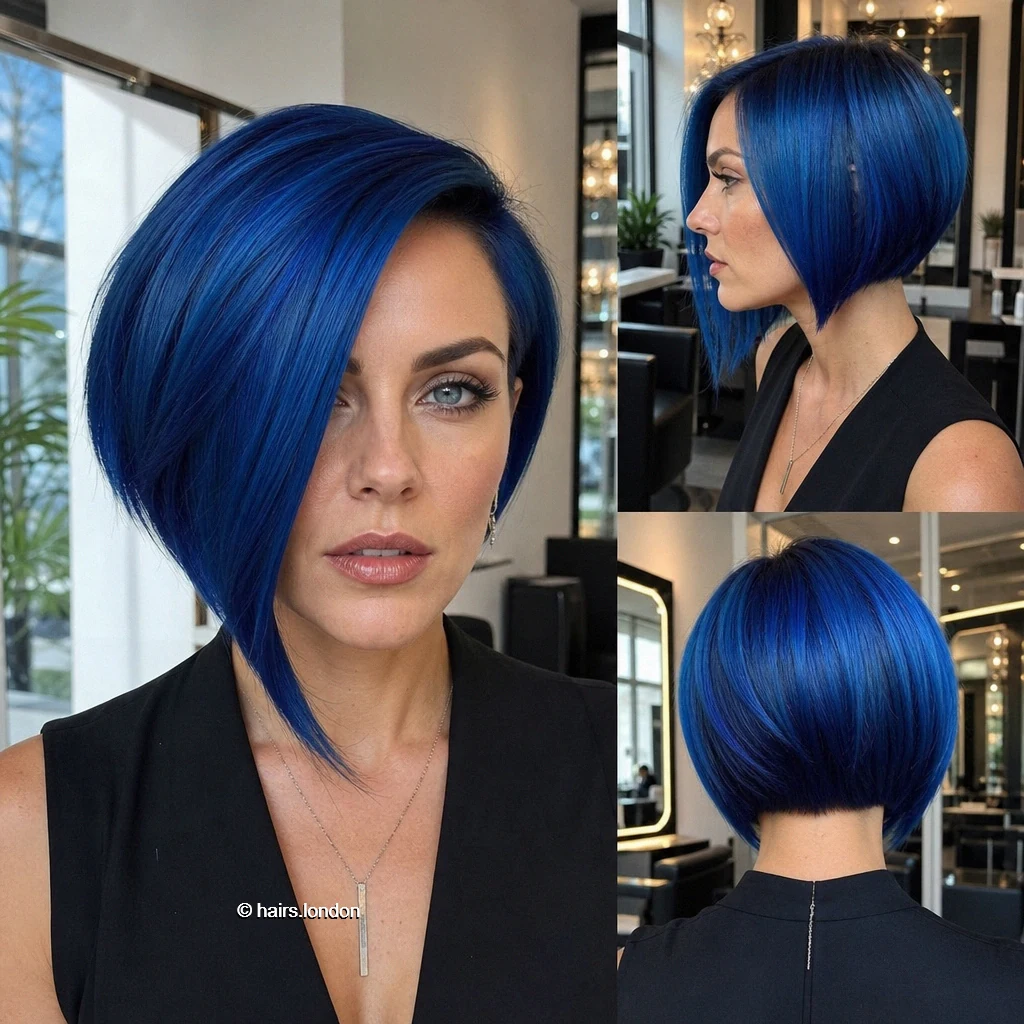
Royal blue sharpens this bob’s sleek, sculpted side profile. A long side-swept front tapers below the jaw. The back forms a rounded dome above a short nape. Visible graduation makes the front-to-back difference especially pronounced here. Ask whether your hair supports volume without extensive daily styling. Blow-dry the crown with lift and smooth the front downward. Use heat protection before refining the surface with hot tools. Watch for nape growth that distorts the balanced rear curve. Blue pigment may need refreshing between regular shape appointments. Keep trims precise while preserving the deliberately longer front, especially around the closely shaped neckline.
18. Blue-Black Angled Bob With a Long Front
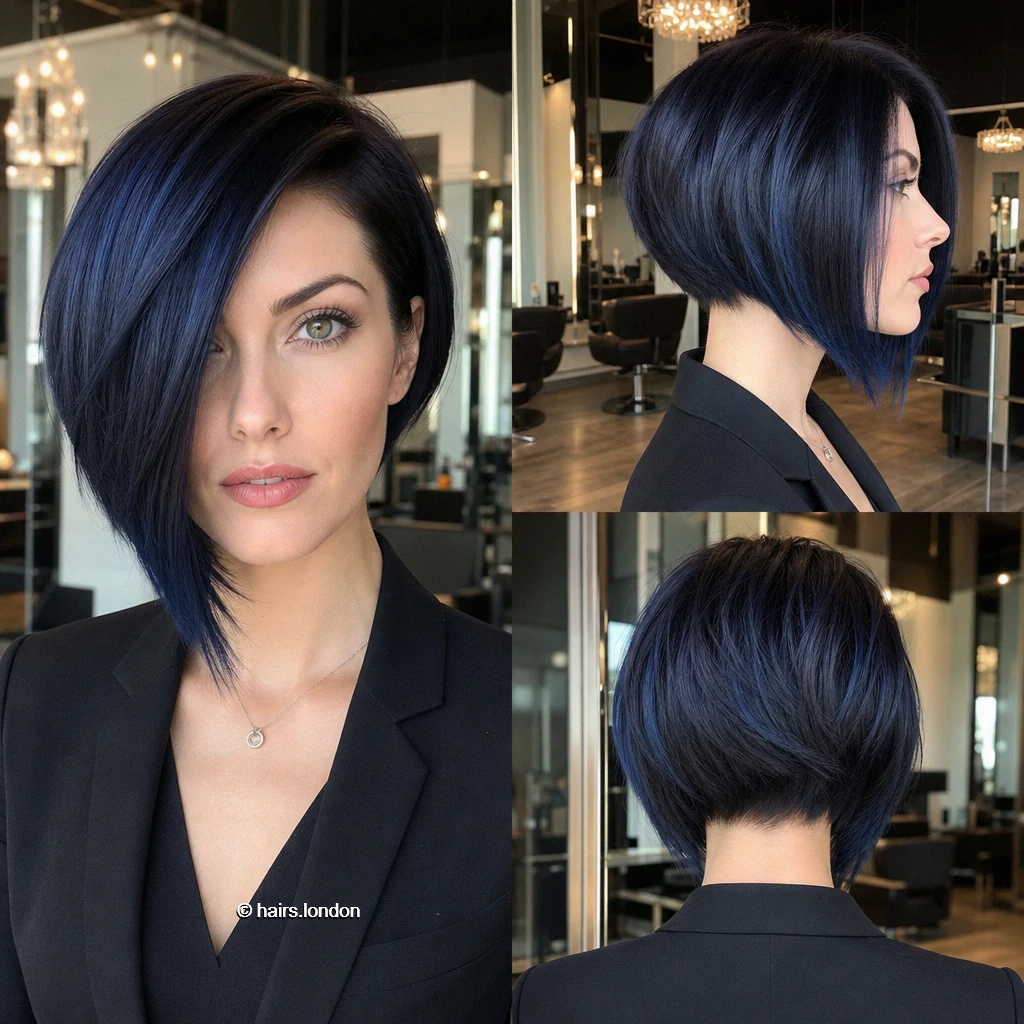
Blue-black color lends this angled bob a glossy finish. The side-swept front falls below the jaw in one point. A rounded back curves inward above its short neckline. Profile and rear views reveal graduation rather than length alone. Discuss how the deep part will affect everyday balance. Dry the front smooth, keeping its tip neatly defined. Lift the back lightly to maintain shape without stiffness. Density and nape growth patterns influence how easily it settles. Trim both the short back and longer point consistently if the front starts losing its point. Use color-safe products to retain the visible blue sheen.
19. Ocean Teal Rounded Angled Bob
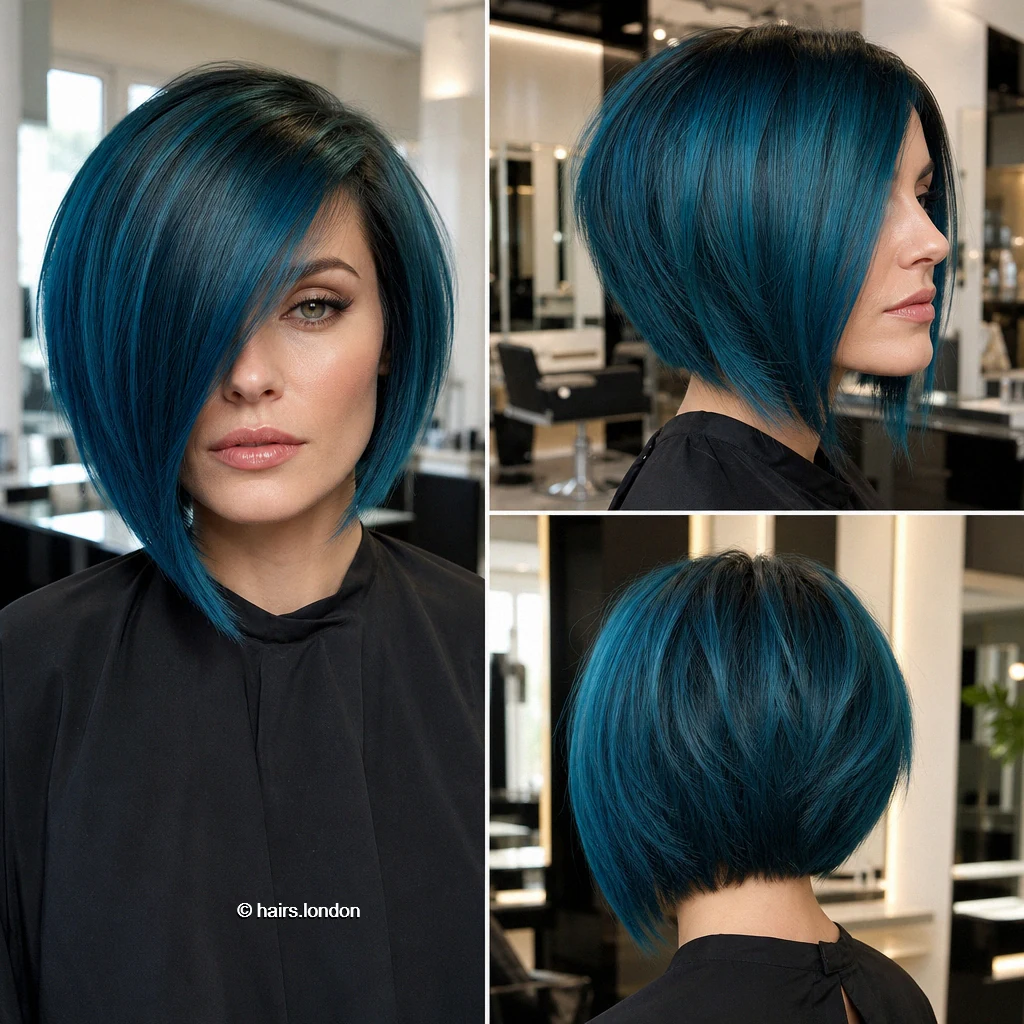
Ocean teal colors this bob’s smooth, rounded angled outline. A heavy side sweep partly covers one eye from the front. Side views show longer pieces near the jaw than behind. The back closes into a short, neatly shaped neckline. Ask for enough front weight to maintain that sweeping panel. Brush hair downward, lifting only where the back needs fullness. Avoid oily products that could divide the broad front section. Thicker density may require discreet shaping beneath the rounded surface. Plan trims when nape growth weakens the visible angle between your regular appointments. Gentle cleansing helps preserve the saturated blue-green color.
20. Deep Teal Side-Swept Graduated Bob
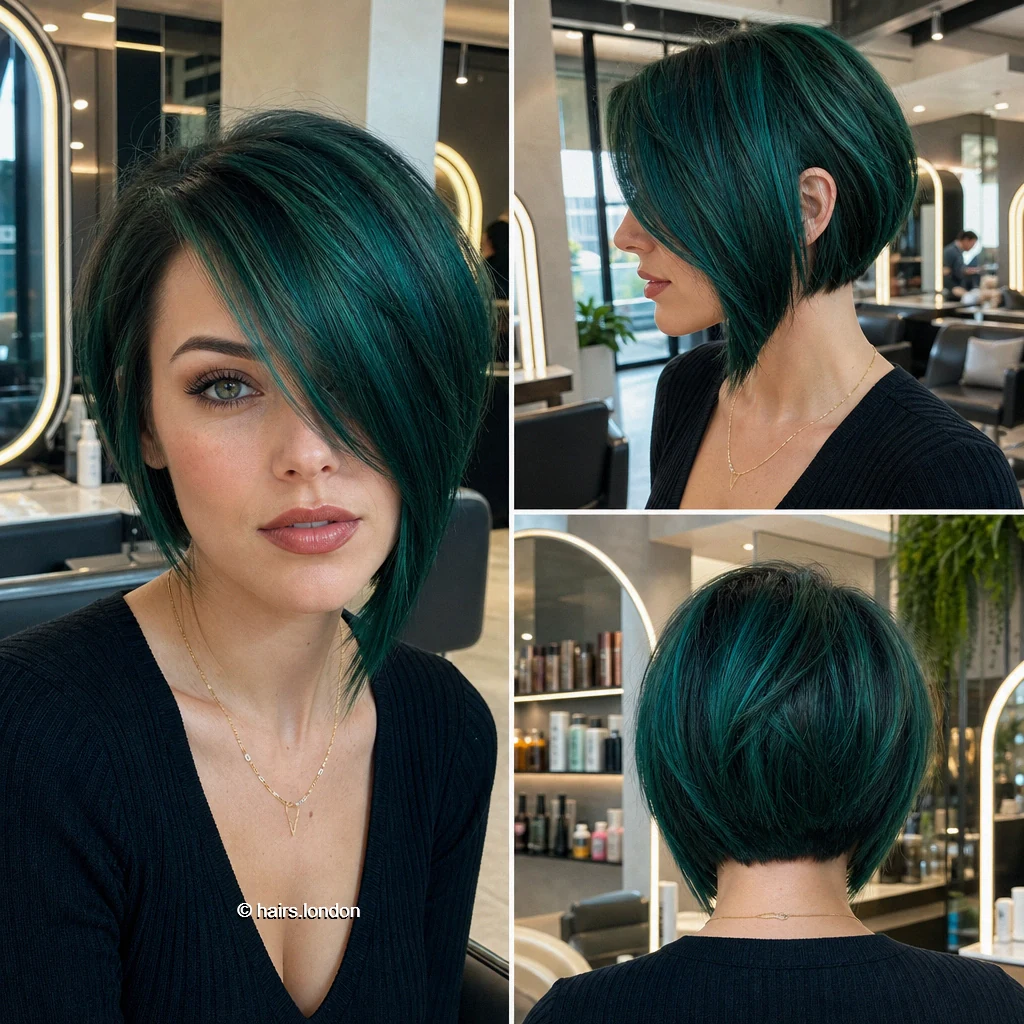
Deep teal adds subtle shine to this compact graduated bob. A long, diagonal fringe sweeps across one eye. Front pieces taper toward the jaw below rounded sides. The profile and back reveal a short, fitted nape. Discuss how your growth patterns affect that sweeping fringe. Dry it toward the side before smoothing the front point. Keep product light to avoid flattening the fuller upper back. Regular nape trims preserve contrast as the shorter hair grows. Fine density may require a less layered version for support. Refresh teal according to how quickly its visible tone fades as needed between regular appointments.
How to Choose Bob Length and Shape
Start with the length you want around your face, then compare it with the side and back views. A shoulder-skimming lob leaves more room for waves and tying hair back; a jaw-length bob puts greater emphasis on the perimeter. Choose a longer-front A-line outline if you want an angle without necessarily exposing the nape. If you want the rounded back and short neckline seen in several images, discuss graduation and how your density and growth patterns will support it.
Styling Fine, Thick, Wavy, and Curly Textures
Fine hair generally benefits from keeping enough weight at the ends; use light foam for lift rather than heavy creams. With thick hair, ask for controlled interior shaping so a bob moves without becoming hollow at the perimeter. For natural waves, scrunch or diffuse before deciding whether individual pieces need heat styling. If your hair curls, have the shape assessed in its natural state: shrinkage changes the finished length, fringe position, and balance of a graduated back.
Keeping Blue and Green Bob Color Fresh
Ask your colorist how the particular blue, teal, or green will fade on your starting hair color. Wash only as often as your scalp needs, use color-safe products, and avoid unnecessarily hot water and repeated high-heat styling. Darker roots and deeper shades may make visible regrowth less stark, but vivid lengths can still need pigment refreshes. Schedule color and cutting separately if one needs attention sooner than the other.
Maintaining the Bob Perimeter and Graduation
A broken, layered perimeter can tolerate some growth before it looks uneven; a smooth front point or close nape makes changes apparent sooner. Check a graduated bob from the side as well as the back: growth can lower its rounded weight and blur the longer-front contrast. Fringe may need attention between full cuts. Agree on a trim schedule based on the shortest section, not just the longest front piece.
What to Discuss with Your Stylist
Bring the front, side, and back views of the shape you like. Point out whether your priority is a long front, rounded back, airy layers, fringe, or a precise neckline. Discuss density, natural bends or curls, cowlicks, preferred parting, and how much daily blow-drying you will do. For vivid color, ask about the achievable shade on your hair, upkeep, and a plan for refreshing it without compromising its condition.
Frequently Asked Questions
What distinguishes a bob from a lob?
A lob is a longer bob that generally approaches or reaches the shoulders. The shoulder-skimming layered cuts here read as lobs, while the jaw- and neck-length shapes read as bobs.
Is an A-line bob the same as a stacked bob?
No. A-line describes a perimeter that is longer toward the front. Stacked describes visible graduation that builds fullness above a shorter back; a cut can show both features.
Do I need thick hair for a rounded graduated bob?
Not necessarily, but density affects how much fullness the back can support. Ask your stylist whether lighter graduation or a stronger perimeter would work better for your hair.
Can naturally curly hair wear these bob shapes?
Yes, with a shape planned around curl shrinkage and volume. A stylist should assess your curls in their natural state before setting the front length, fringe, or short nape.
Which fringe is easier to manage: wispy or side-swept?
It depends on your growth patterns and preferred part. A wispy fringe can need frequent length checks; a longer side sweep needs enough length and weight to stay directed.
How much daily styling does a stacked bob need?
That depends on your natural texture and how closely you want to maintain its rounded silhouette. Some hair settles with a brief blow-dry, while other hair needs deliberate root lift and smoothing.
Will layers make a fine-haired bob look thinner?
They can if too much weight is removed from the ends. Ask for restrained, well-placed layers and check how substantial the dry perimeter looks.
How can thick hair avoid a bulky bob shape?
Discuss interior weight control while keeping the outer line intact. The placement should account for whether you wear your hair smooth, wavy, or naturally curly.
How often should I trim a precise nape?
A close, graduated neckline usually shows growth sooner than a textured lob. Book a check when the nape starts losing its intended fit rather than waiting for the front to feel long.
How do I keep vivid blue or green from fading quickly?
Follow your colorist’s washing and refresh advice, use color-safe products, and limit hot water and unnecessary heat. The fading pattern will depend on your starting hair and the color used.
Can I grow out a graduated bob into a lob?
Yes. As the back grows, your stylist can gradually rebalance the perimeter while preserving enough length through the sides and front.
Should I bring multiple views to my salon appointment?
Yes. Front, profile, and back views clarify whether you want a longer-front angle, visible graduation, a particular fringe, or a softer layered outline.
Conclusion
The most useful detail in these blue and green bobs is not color alone: it is how each front length, perimeter, and back shape works together. Choose the outline you can comfortably style and maintain, then plan the vivid shade with your colorist around your hair’s condition and refresh schedule.