


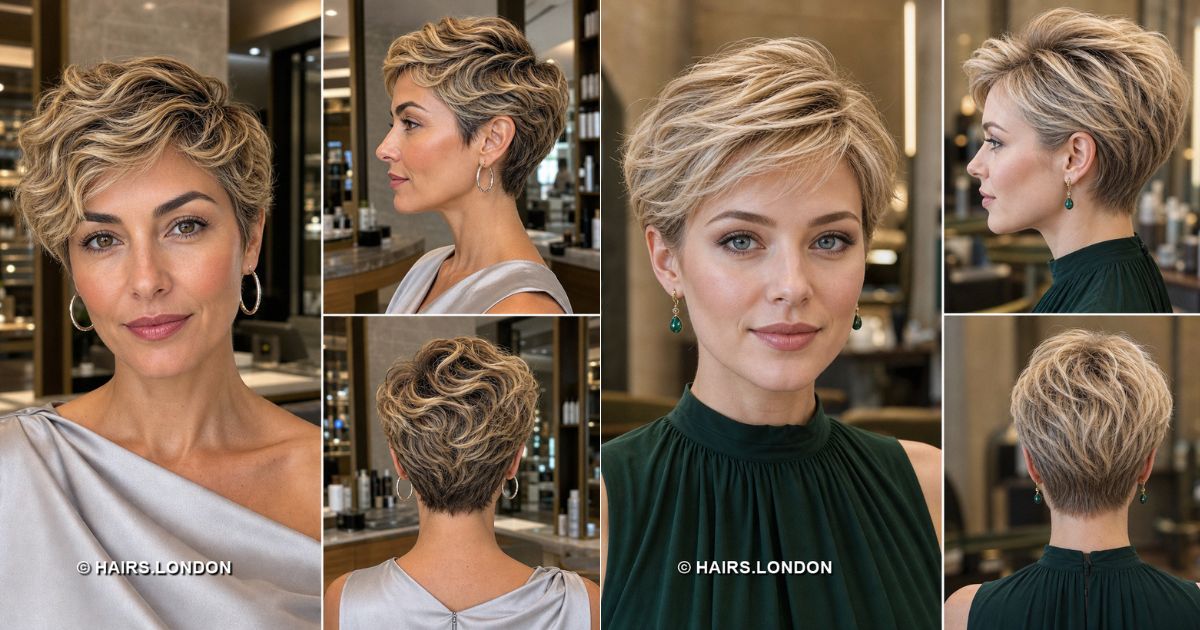
11. Blonde Asymmetrical Pixie with a Draped Side Fringe
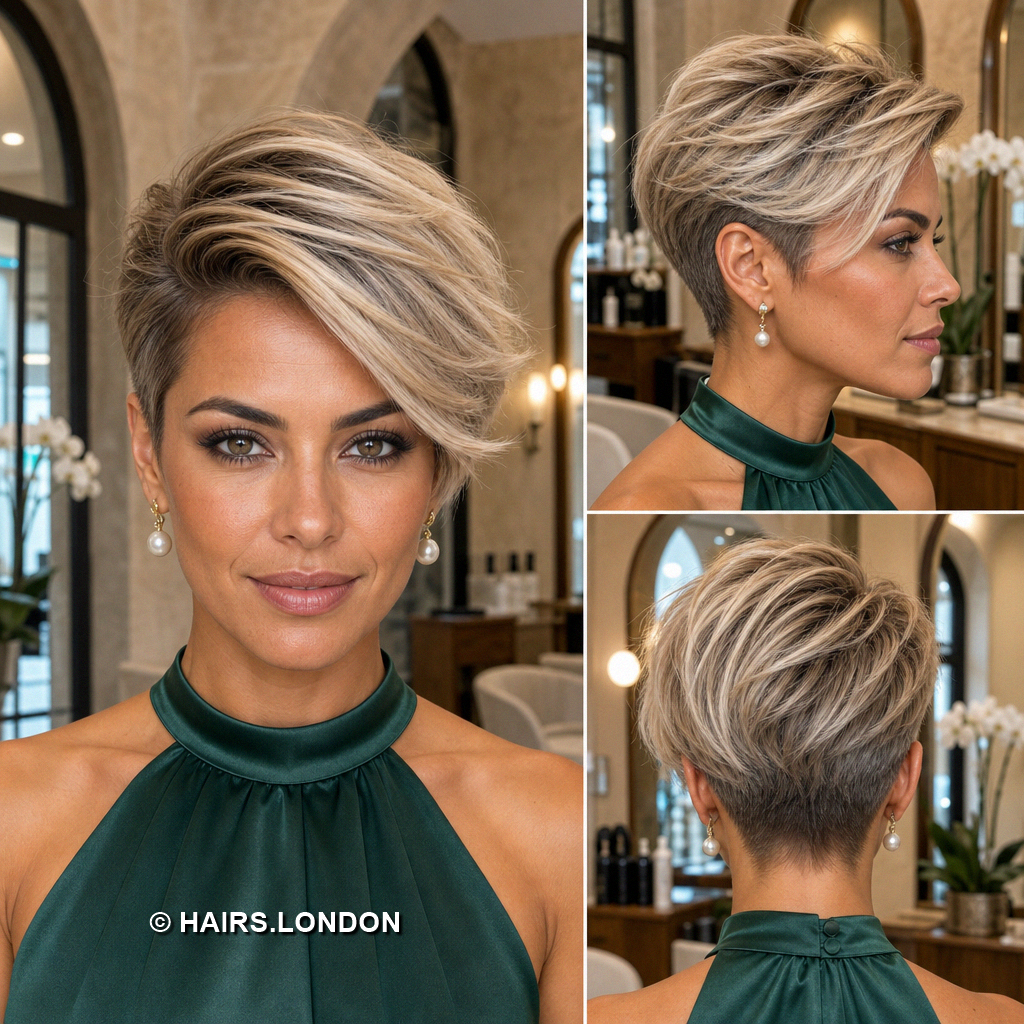
Blonde ribbons run through a substantial side fringe that drapes across the forehead above darker underlayers. The opposite side is swept back, exposing more of the temple and creating an asymmetrical appearance. Ask for extra front length and a compact nape, with careful blending through the crown. Straight or mildly wavy hair can follow this curve using a small round brush. Apply heat protectant, lift the roots, and direct the fringe toward its longer side. Use light smoothing cream on the ends. Discuss whether you want asymmetry built into the cut or prefer achieving most of it through daily styling.
12. Wheat Blonde Textured Pixie with Wispy Front Pieces
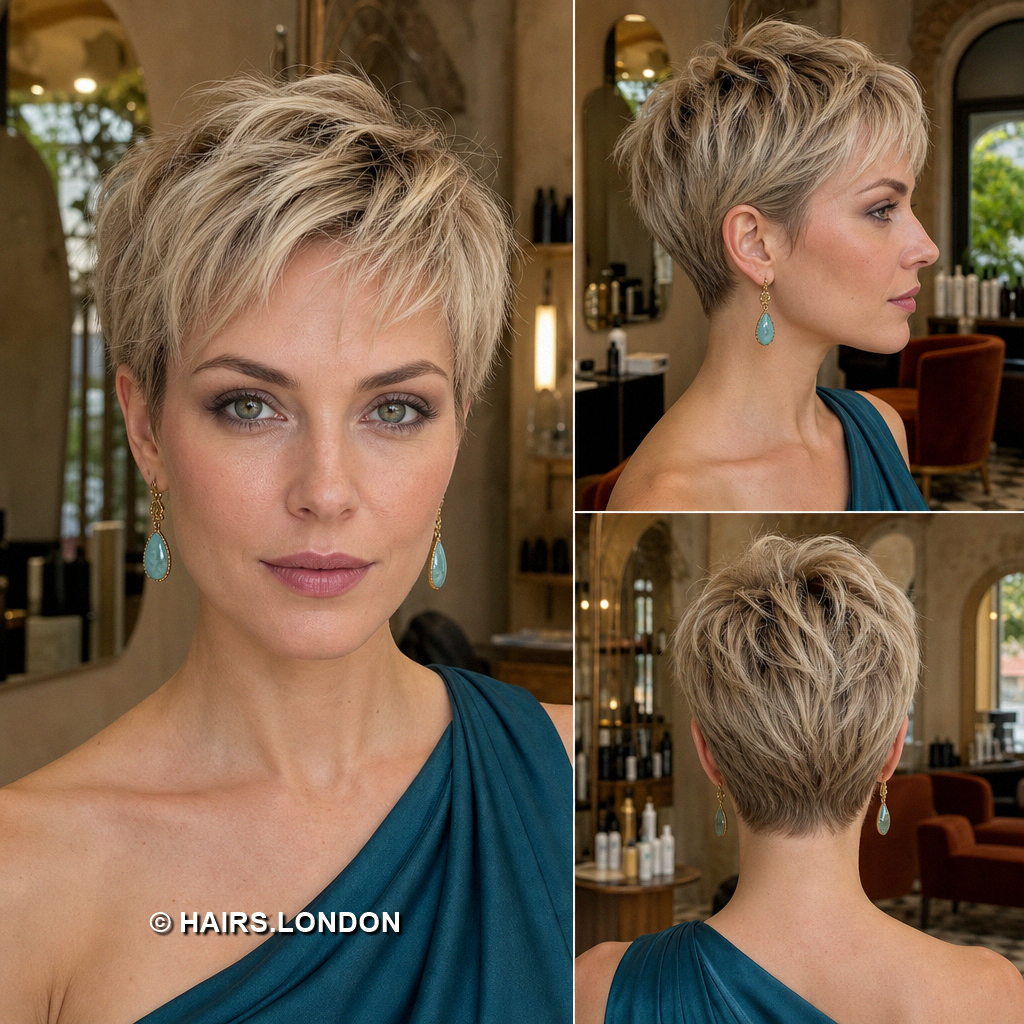
Wheat blonde lengths break into wispy front pieces and slightly lifted crown layers over deeper roots. The side view shows a short ear outline, while the back remains textured above a narrow neckline. Request soft graduation and enough fringe length for separated strands to cross the forehead. Fine straight hair may benefit from preserved surface density; thicker hair can tolerate selective internal weight removal. Finger dry forward with volumizing foam, then pinch the ends with flexible cream. Discuss the balance between crown height and fringe coverage. Keep conditioning lightweight near the scalp so the short layers retain their airy movement.
13. Champagne Blonde Layered Pixie with a Long Sweep
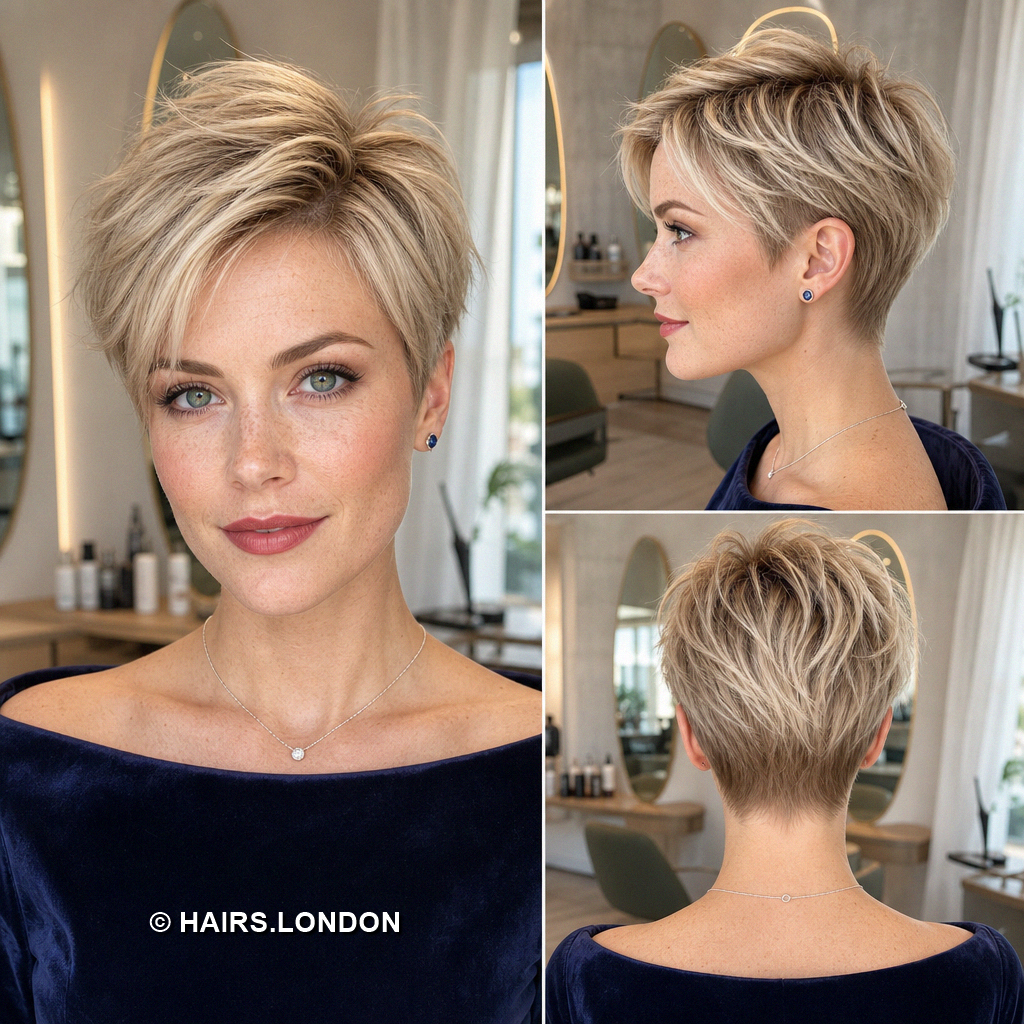
Champagne blonde highlights brighten a long, soft fringe that sweeps from a darker root area. The upper layers overlap smoothly, while the ear area and tapered back stay noticeably shorter. Ask for connected layering and enough weight through the front to maintain the draped shape. Fine or medium straight hair can suit this finish when the part follows its natural growth. Dry the roots first, then guide the fringe across the forehead with a small brush. A little smoothing lotion helps control flyaways. Discuss how often fringe adjustments may be needed and protect the pale ends during regular heat styling.
14. Caramel Highlighted Tapered Pixie with Broken Bangs
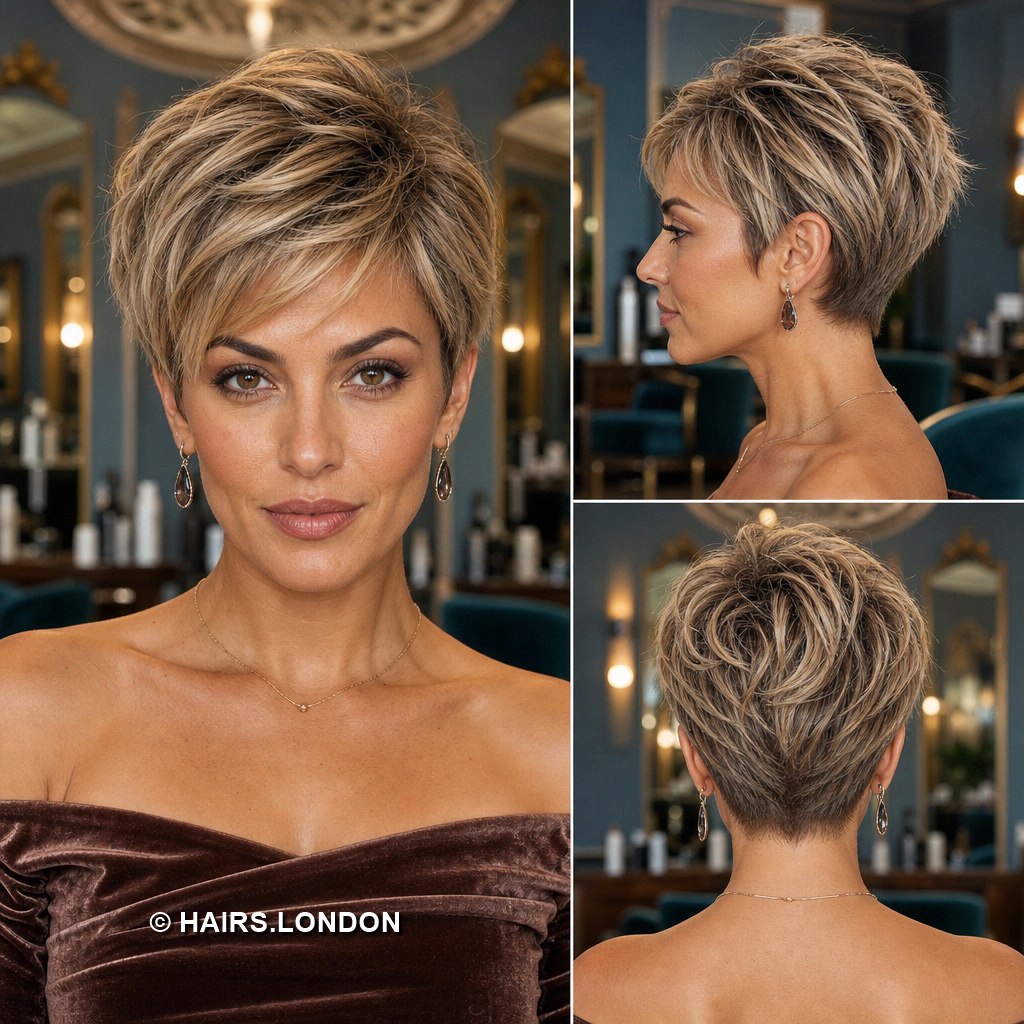
Caramel highlights weave through a brown pixie with short broken bangs and a softly lifted crown. The side layers sit close around the ear, and the back narrows into a tidy neckline. Request graduated shaping that follows the head and point cutting to separate the fringe ends. Straight or gently wavy hair can recreate the casual finish without a rigid styling routine. Apply a small amount of light cream, finger dry, and lift the crown as it cools. Discuss the shortest acceptable temple length before cutting. Refresh selected caramel pieces when needed while retaining the darker foundation for visible contrast.
15. Golden Blonde Quiff Pixie with Smooth Swept Sides
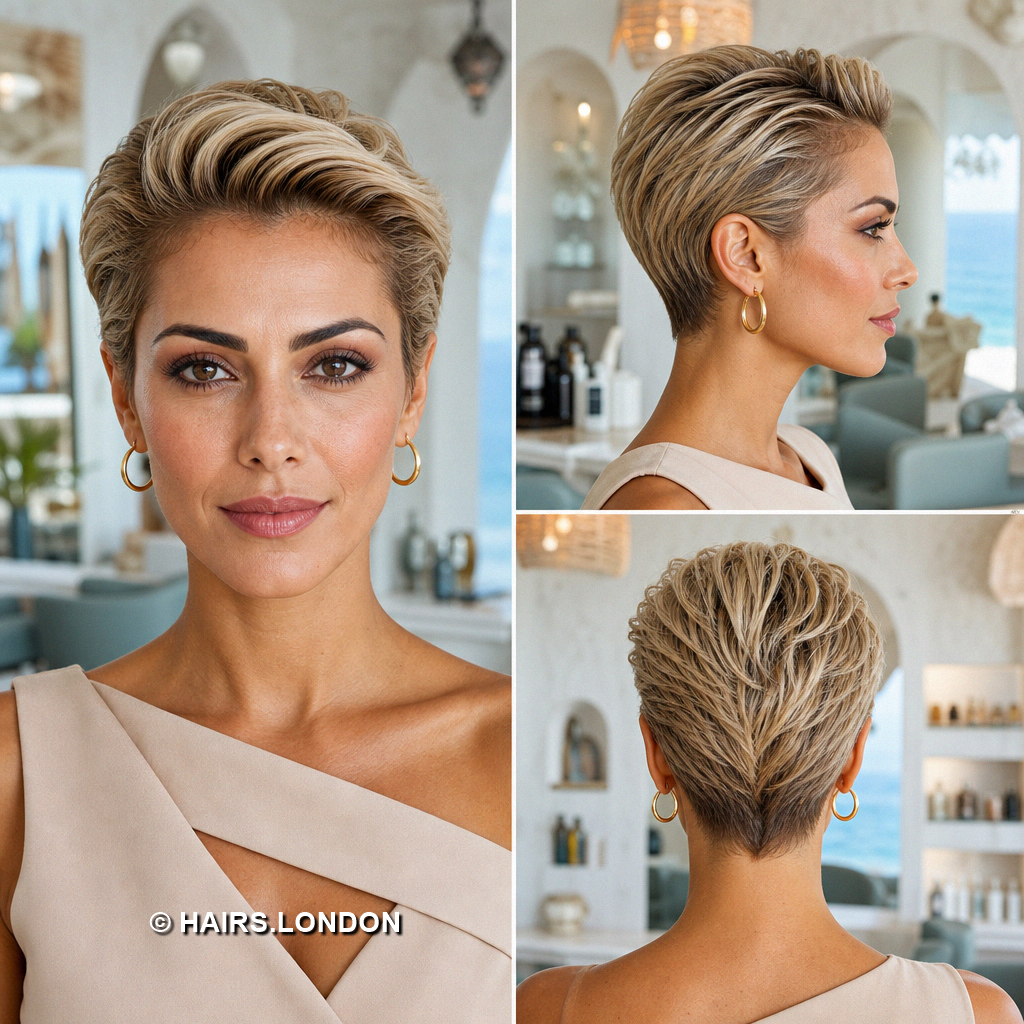
Golden blonde hair sweeps upward and backward from an open hairline, forming a smooth quiff over deeper roots. The sides lie close to the head, and the tapered back supports the longer top. Ask for sufficient front length to create a rounded bend instead of short spikes. Medium density straight hair can provide structure, although a natural wave may add softness. Apply root mousse, blow dry upward with a vent brush, and allow the front to cool in position. Finish with flexible hold spray. Discuss the lightness you want along the exposed hairline and your preferred level of root contrast.
16. Caramel Blonde Wavy Pixie with a Full Crown
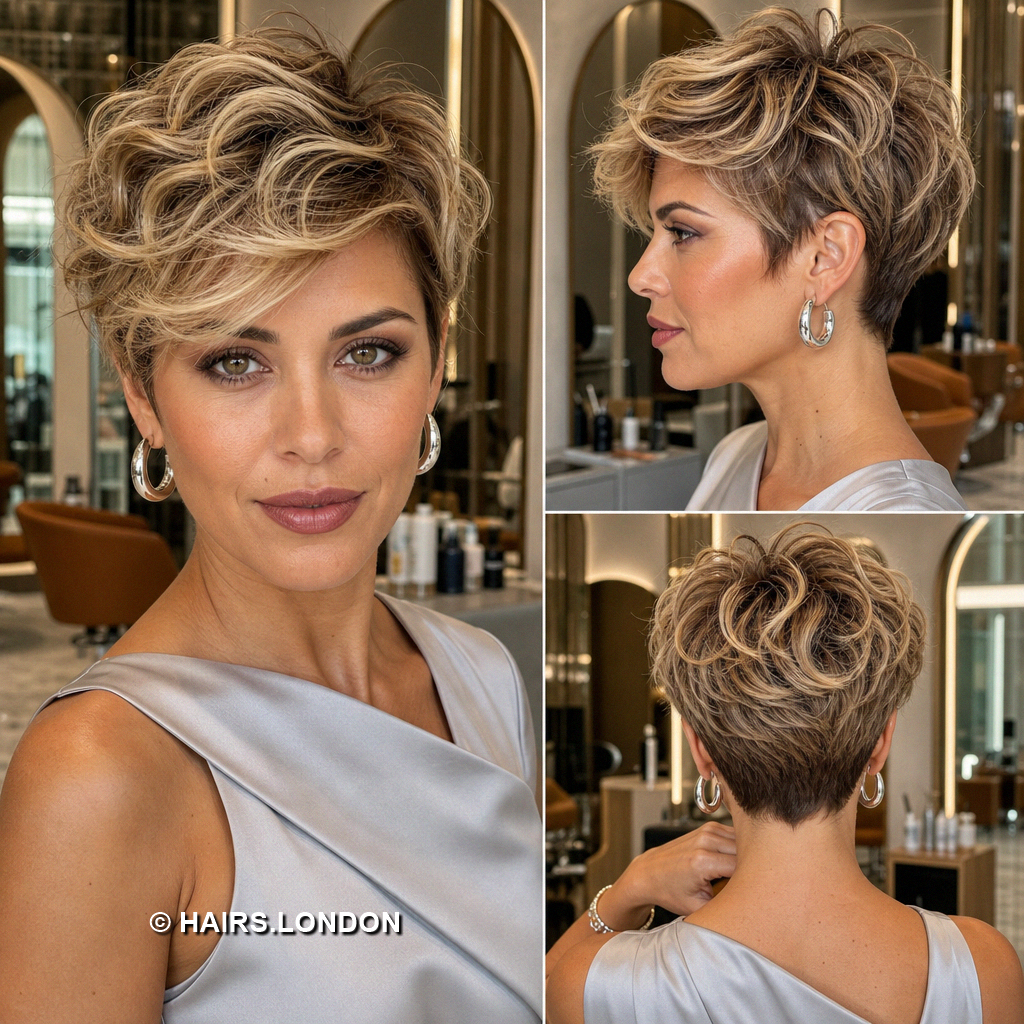
Caramel blonde ribbons follow loose waves through a full crown, while darker roots define the bends. The front curls softly to one side, and shorter hair around the ears balances the generous upper volume. Request enough length for broad waves and a tapered nape that keeps the back compact. Naturally wavy hair can be styled with a light cream and careful scrunching. If your hair is straight, discuss whether occasional brush styling can create a similar bend. Avoid repeatedly separating the waves while drying. Ask your stylist to control bulk beneath the crown without removing the surface movement you want.
17. Bronde Swept Pixie with a Neat Tapered Back
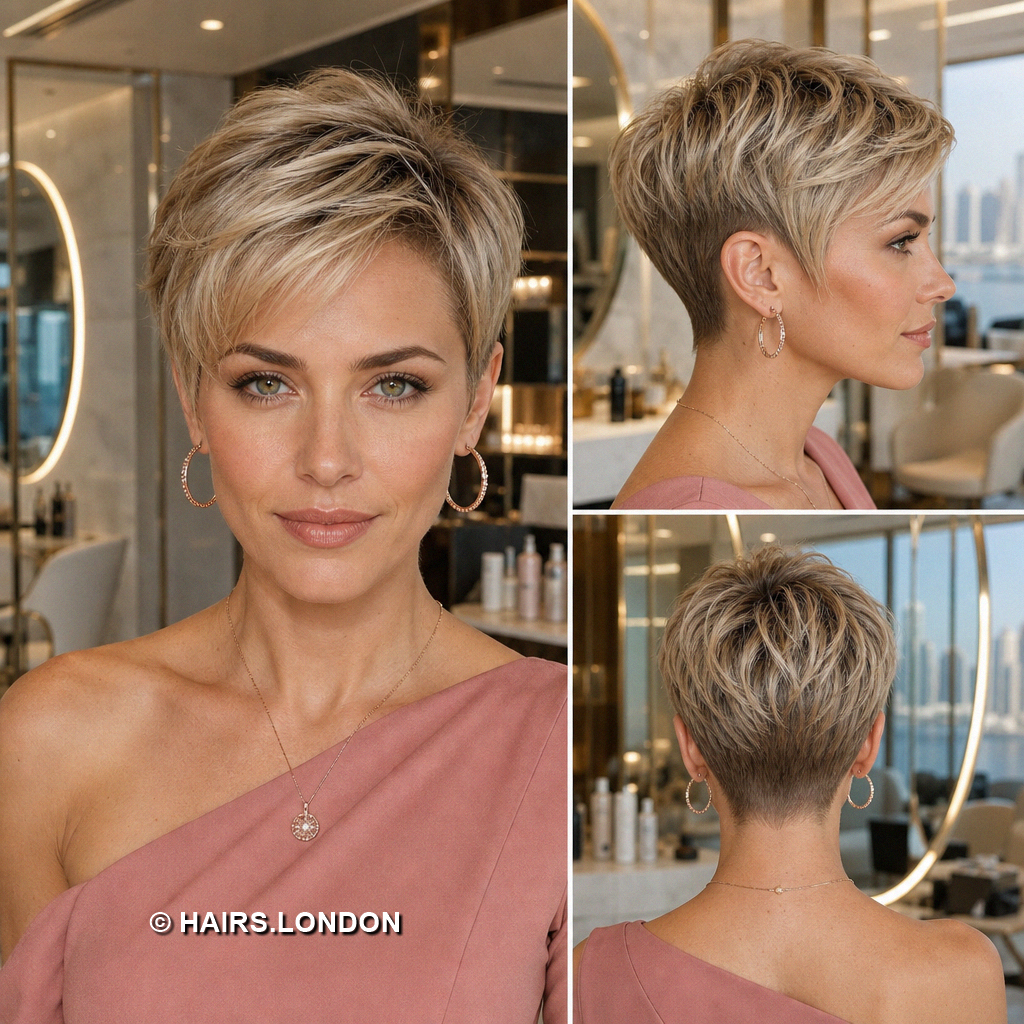
Bronde highlights sweep diagonally across a softly textured fringe, blending with brown roots and a neatly tapered back. The crown has gentle lift, and the ear area stays compact without a visibly shaved section. Ask for gradual layering that connects the longer front to the shorter perimeter. Fine to medium hair can keep this outline balanced with restrained texturizing. Use light foam and dry the fringe toward its preferred side, then loosen the ends with fingers. Discuss the natural part and any crown cowlick before setting the lengths. Keep the brown foundation visible when refreshing the brighter blonde surface pieces.
18. Honey Blonde Cropped Pixie with a Short Fringe
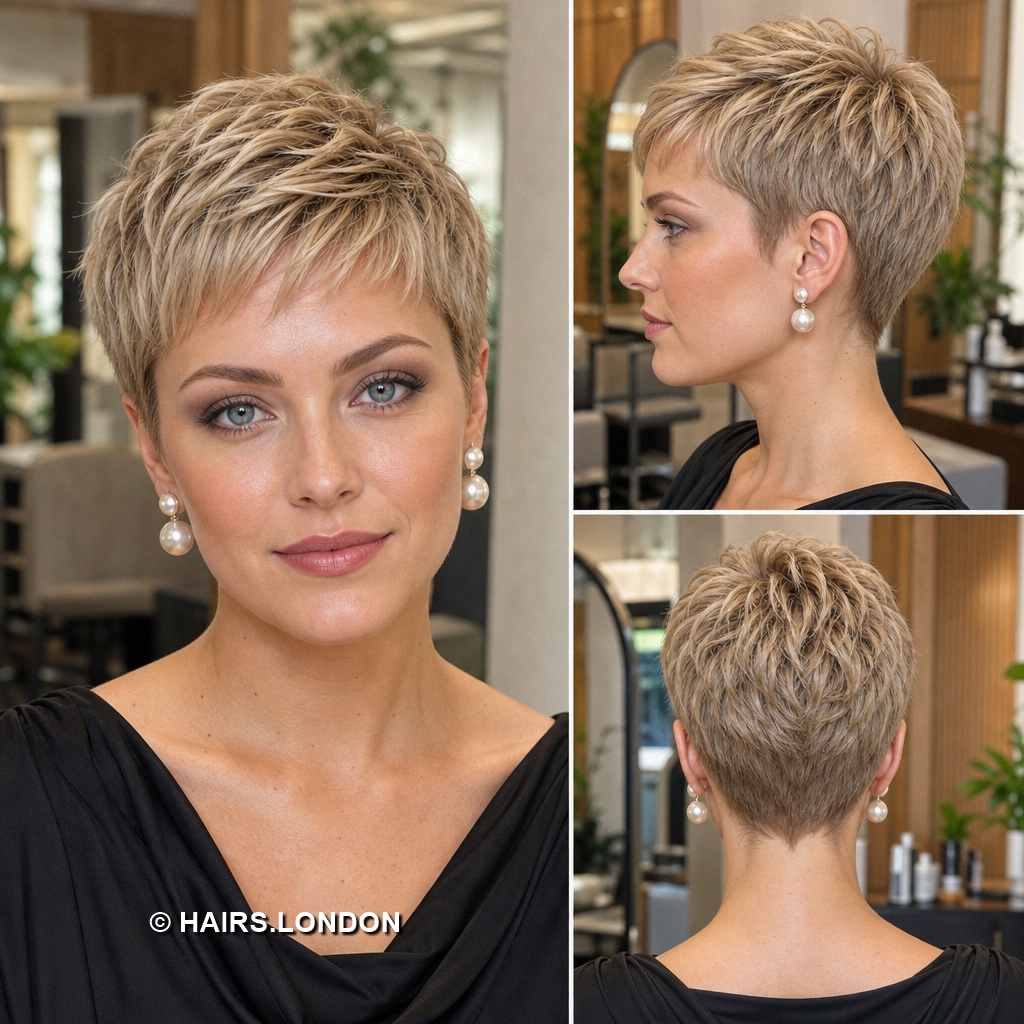
Honey blonde strands form a short, broken fringe above a compact pixie shape. The top has modest lift, with close sides and a graduated back that narrows toward the neckline. Ask for short layers that retain enough density around the hairline and avoid cutting bangs too high before checking their dry fall. Straight hair can wear this finish with a light matte cream. Finger dry forward, then arrange individual front pieces without flattening the crown. Discuss how often you want to maintain the ear outline. A gentle color refresh can brighten the honey tone while preserving depth near the roots.
19. Wheat Blonde Swept Pixie with an Airy Crown
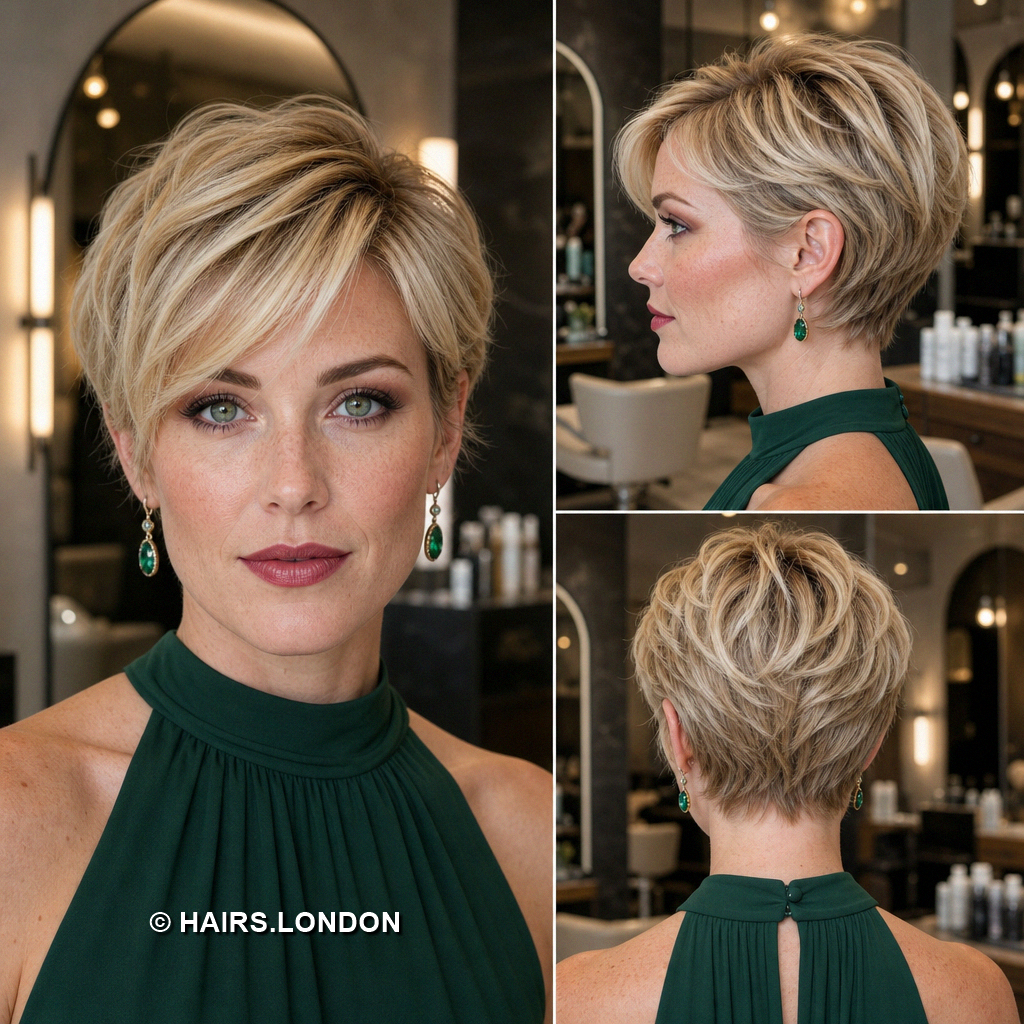
Wheat blonde highlights cross a longer side fringe, with darker strands adding definition beneath the airy crown. The side and back views show short ear coverage and a tapered nape under softly overlapping layers. Request front length that moves diagonally without blocking your vision and a crown shaped around its natural growth. Straight or gently wavy hair can create this finish using a lightweight styling lotion. Dry the fringe sideways first, then lift the crown with fingers. Discuss the contrast between the pale ribbons and deeper base. Plan selective highlight maintenance so the ends remain soft enough for regular styling.
How to Choose Blonde Pixie Haircuts
Compare fringe coverage, crown height, and the amount of hair around the ears. A close crop offers a compact shape but can reveal cowlicks; a longer sweep provides more styling flexibility and usually needs more directional drying. Rounded wavy tops preserve movement, while lifted fronts rely on sufficient root support. Fine hair may need more surface weight than the photograph suggests. Dense hair often needs selective weight removal underneath. Show your stylist which details you want to keep and which lengths you are willing to adjust for your own growth pattern.
Styling Straight Wavy and Curly Hair
Straight hair shows separated tips and smooth fringes clearly. Begin with a light styling lotion or mousse, establish the root direction, and add paste only where definition is needed. For waves, scrunch damp lengths and avoid pulling every section straight with a brush. Curly pixies need enough length for the curl pattern and shrinkage. Use a defining product on wet hair, diffuse gently, and separate curls only after drying. Apply heat protectant when blow drying or using hot tools, and start with small product amounts to prevent a coated, flat crown.
Maintaining Blonde Highlights and Root Depth
A darker foundation can make pale ribbons easier to see, but it does not remove the need for highlight upkeep. Discuss whether your color plan involves a root shadow, selected highlights, or broader lightening. Cleanse according to your scalp needs, condition the lighter lengths, and protect them during heat styling. Ask your colorist whether a toning product is needed and how often to use it. Purple shampoo can cool unwanted yellow, but excessive use may shift a warm honey shade away from the intended result. Avoid repeatedly lightening already fragile ends.
Keeping the Pixie Outline Balanced
Many closely tapered pixies need trims about every four to six weeks, although a softer fringe or fuller crown may allow a longer interval. Watch for an expanding neckline, heavy ear coverage, or front pieces that interfere with your vision. Ask whether a brief fringe or perimeter adjustment could help between complete cuts. Keep conditioning part of your routine, particularly on highlighted lengths. If styling products build up, cleanse gently and reassess how much you apply. A maintenance schedule should match both your growth rate and the sharpness you want.
Planning Your Salon Consultation
Bring the complete collage so your stylist can see the crown, fringe, temples, and nape together. Describe how you normally dry your hair and whether you want to wear the fringe forward, sideways, or lifted. Share your color history and any areas that feel fragile. Ask about strand testing before lightening, the likely highlight result on your starting shade, and the upkeep cost. Agree on the shortest lengths around the ears before cutting. For waves and curls, discuss how the shape will look when air dried as well as styled.
Frequently Asked Questions
Which blonde pixie shape works for fine hair?
A shape that preserves density through the fringe and crown is often a useful starting point. Ask for restrained layering and avoid excessive thinning. Lightweight root foam can add support without coating the hair.
Can thick hair wear a closely cropped pixie?
Yes. Your stylist can control bulk through graduation and selective internal weight removal. The amount removed should reflect your texture and growth pattern so the top stays balanced with the shorter sides.
Do blonde highlights require bleaching?
The process depends on the starting shade, previous color, and desired lightness. Some highlights require lightener. Ask for a professional assessment and strand test rather than assuming the photograph can be matched in one visit.
What does a darker root area add to this color?
Deeper roots create visible contrast beneath blonde ribbons and can soften the appearance of new growth. Your colorist can explain whether the effect comes from retained natural color or an applied root formula.
How often should I trim the haircut?
A four to six week interval is common for a crisp perimeter. Longer, softer pixies may stay balanced for longer. Fringe coverage and the shape around the ears are useful indicators of when to book.
Can naturally curly hair wear blonde pixies?
Yes. Preserve enough length for the curls to form and allow for shrinkage. Discuss how highlighting could affect the condition of your hair, then choose styling products that define curls without flattening them.
How do I keep a side fringe in place?
Dry it in the intended direction while the roots are still damp, following your natural part where possible. Use a small amount of flexible styling cream and ask for a length that stays clear of your eyes.
What product helps create a spiky finish?
Matte paste or flexible wax can separate the ends after the roots have been dried upward. Apply a little at a time. Heavy product at the scalp can flatten the shape you are trying to lift.
Should honey blonde hair use purple shampoo?
Only if your colorist recommends it for the specific tone. Honey blonde intentionally contains warmth. A strong violet product used too frequently can cool that warmth more than you intended.
Can I style the haircut without blow drying?
Soft crops, natural waves, and curls may work with air drying and a light styling product. Smooth side sweeps and raised quiffs may need directional blow drying to closely resemble these references.
Are highlights easier to maintain than full lightening?
They can leave more of your base color intact and reduce the area requiring refreshes. Maintenance still depends on contrast, placement, porosity, and how closely you want to reproduce the original blonde tone.
What should I ask if the ends feel dry?
Ask your stylist to assess previous lightening, product buildup, and heat exposure before planning another color service. A gentler refresh, targeted conditioning, or a small trim may be more suitable than additional lightening.
Conclusion
These blonde pixie haircuts show how small changes in fringe length, wave pattern, crown lift, and tapering create different short silhouettes. The most useful reference is the one that fits your texture and the amount of styling you want to do. Once the shape is settled, work with your colorist on the placement and warmth of the highlights. Keeping the complete reference views, realistic trim intervals, and a suitable conditioning routine in mind will help you maintain the result between salon appointments.