


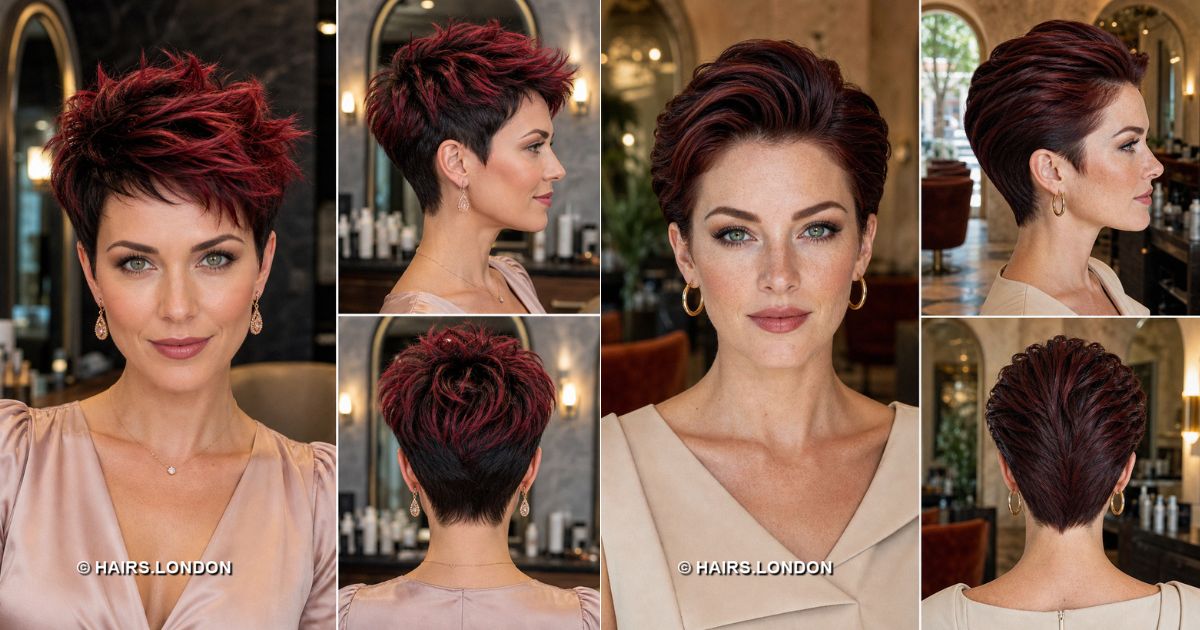
Burgundy pixie haircuts bring red, wine, and plum tones into short shapes with very different personalities. These 19 references range from bright magenta spikes and cherry ribbons to quieter mahogany sweeps, rounded curls, and raised quiffs. Their front, side, and back views show how the color works with the whole cut, including the darker ear and nape areas. Choose the silhouette that fits your natural texture before deciding how vivid the shade should be. A useful salon plan balances the length you need for movement, the time you spend styling, and the color upkeep you can comfortably maintain.
1. Magenta Spiky Pixie with Dark Roots and a Short Fringe
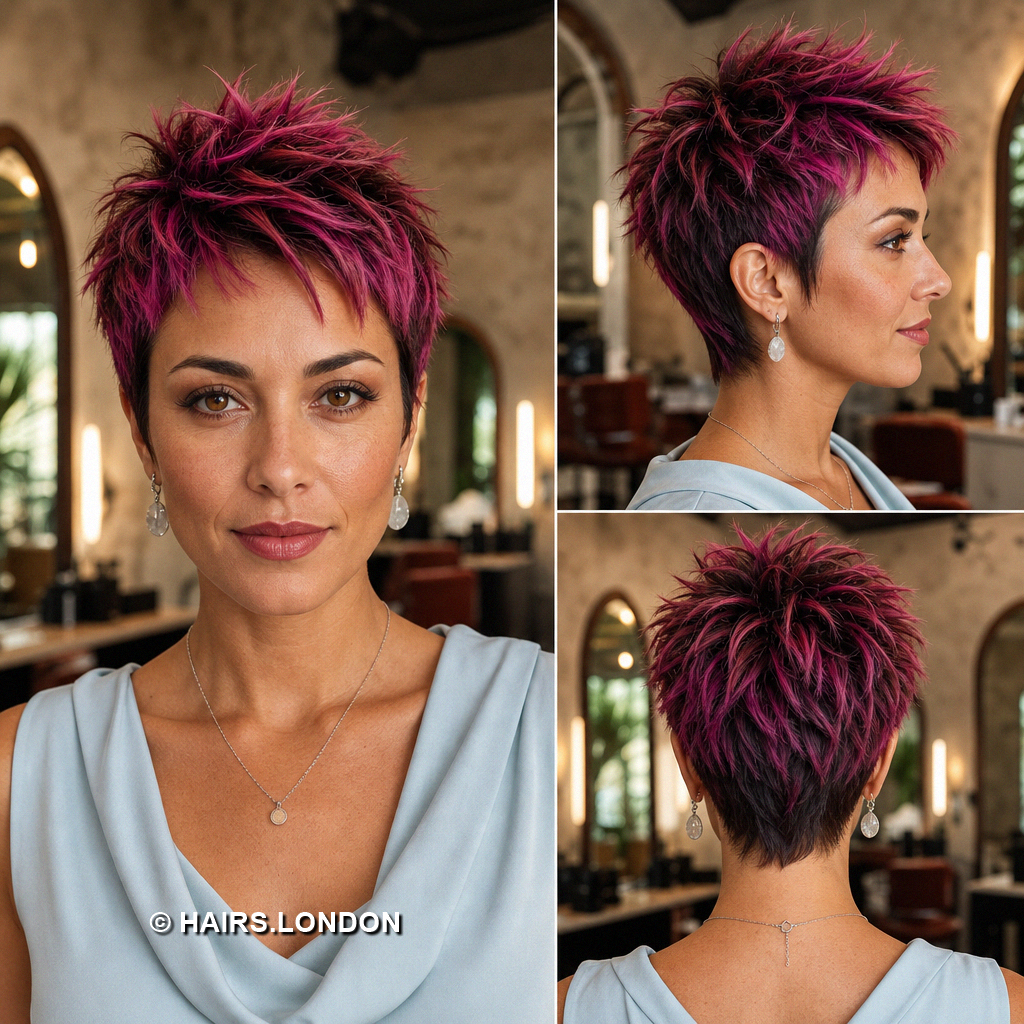
Bright magenta tips stand out against a nearly black base, with narrow spikes rising through the crown. Short front pieces break across the forehead, while the sides and nape remain closely shaped. Ask for enough top length to separate the points without losing the compact outline around the ears. Straight hair can emphasize this texture with a small amount of matte paste, worked between fingertips before application. Lift selected sections rather than coating the entire head. Discuss how the vivid pieces will be placed around the darker roots and what refresh routine the colorist recommends for maintaining this particular contrast.
2. Cherry Textured Pixie with a Lifted Crown
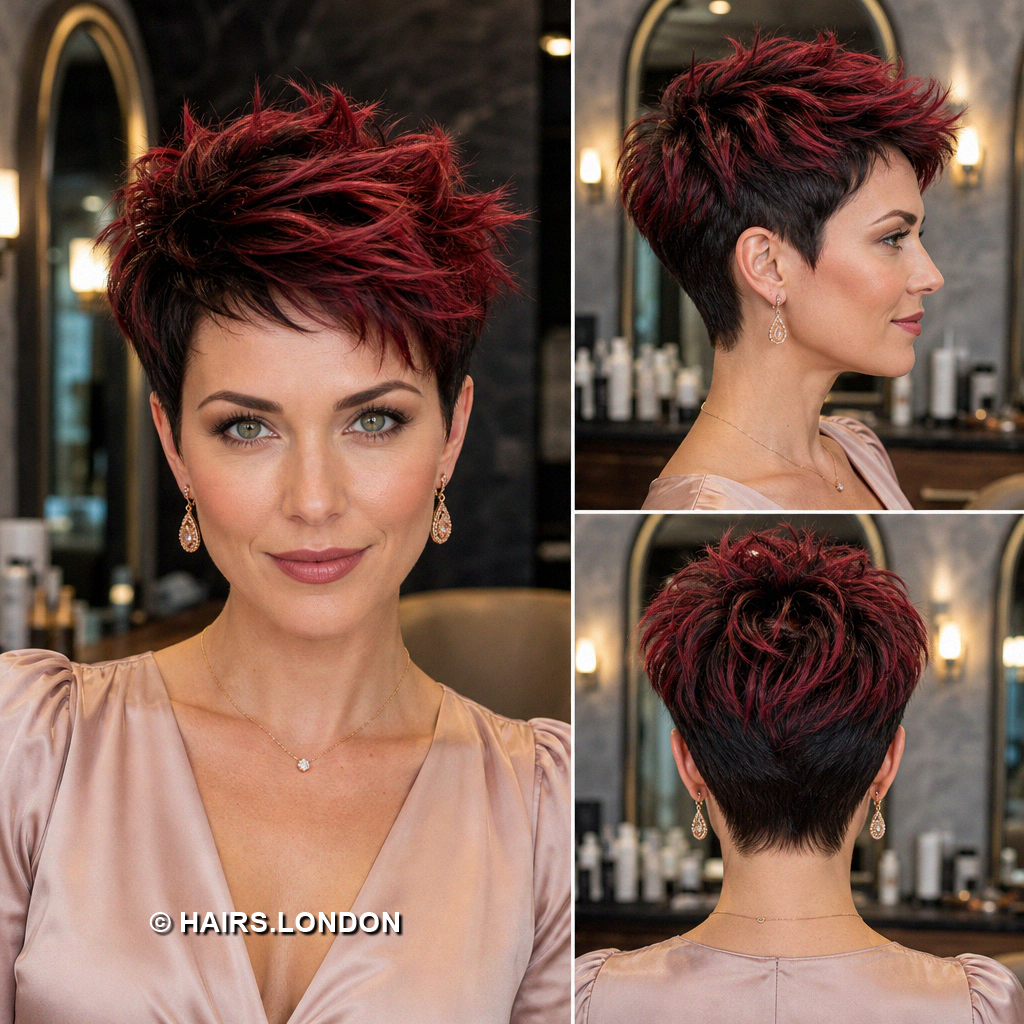
Cherry red ribbons brighten a dark cropped base, especially through the lifted, irregular crown. The fringe angles gently across the forehead, and the side views show a shorter perimeter beneath the longer top. Request selective point cutting that creates definition while retaining enough density for airy lift through the crown. Fine straight hair may benefit from light mousse before drying, followed by a little paste on the ends. Keep the darker neckline neat so the brighter crown remains the visual focus. Ask whether the red accents require lightening and how to refresh them without repeatedly processing the same delicate sections.
3. Auburn Swept Pixie with a Long Diagonal Fringe
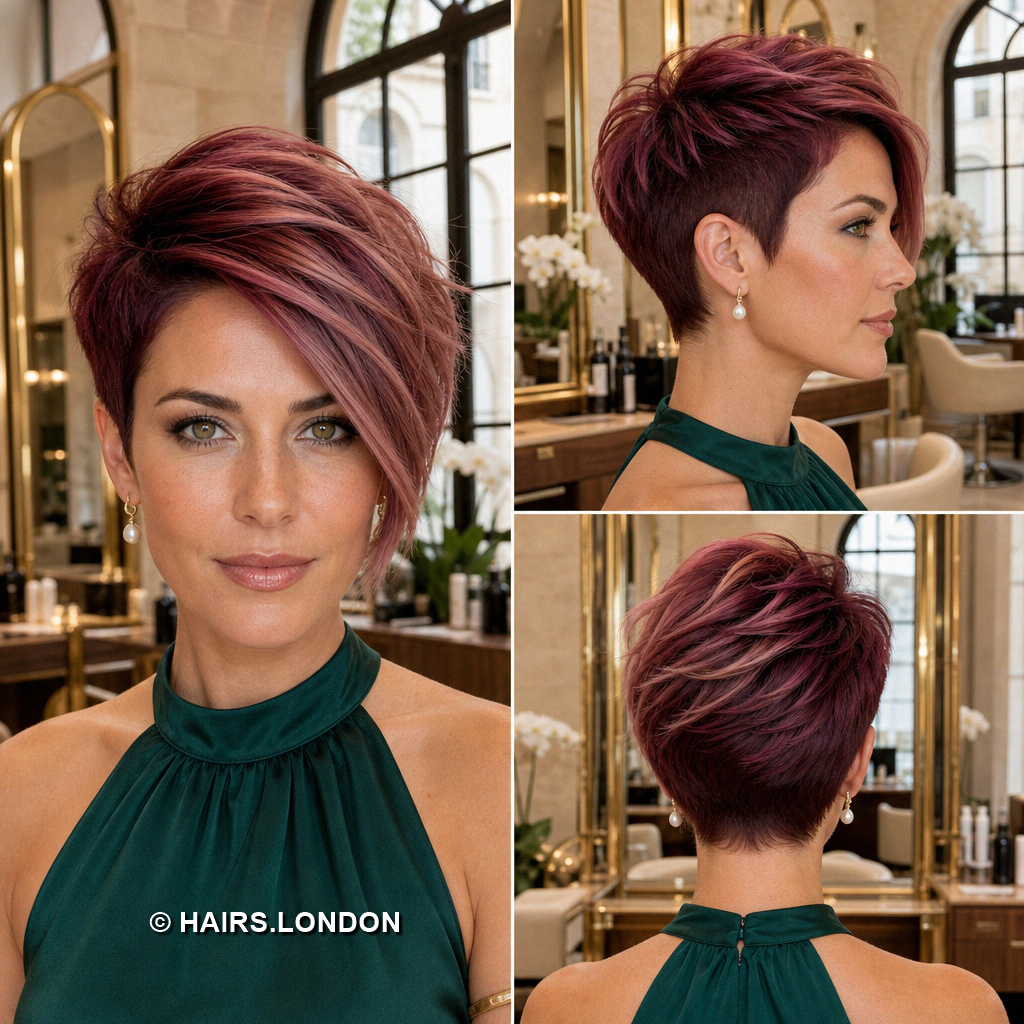
Muted auburn and rose toned ribbons cross a deeper reddish brown base in a long diagonal fringe. The top falls smoothly toward one eye, while the sides sit shorter around the ears. A softly rounded and layered back connects the crown to a tapered nape. Ask for a sweep that clears your vision comfortably and follows your natural part. Use a light styling lotion and directional drying to guide straight or gently wavy hair across the front. Avoid removing too much density from the fringe. Discuss whether the lighter ribbons should remain warm and how their placement will grow out.
4. Burgundy Layered Pixie with Plum Highlight Ribbons
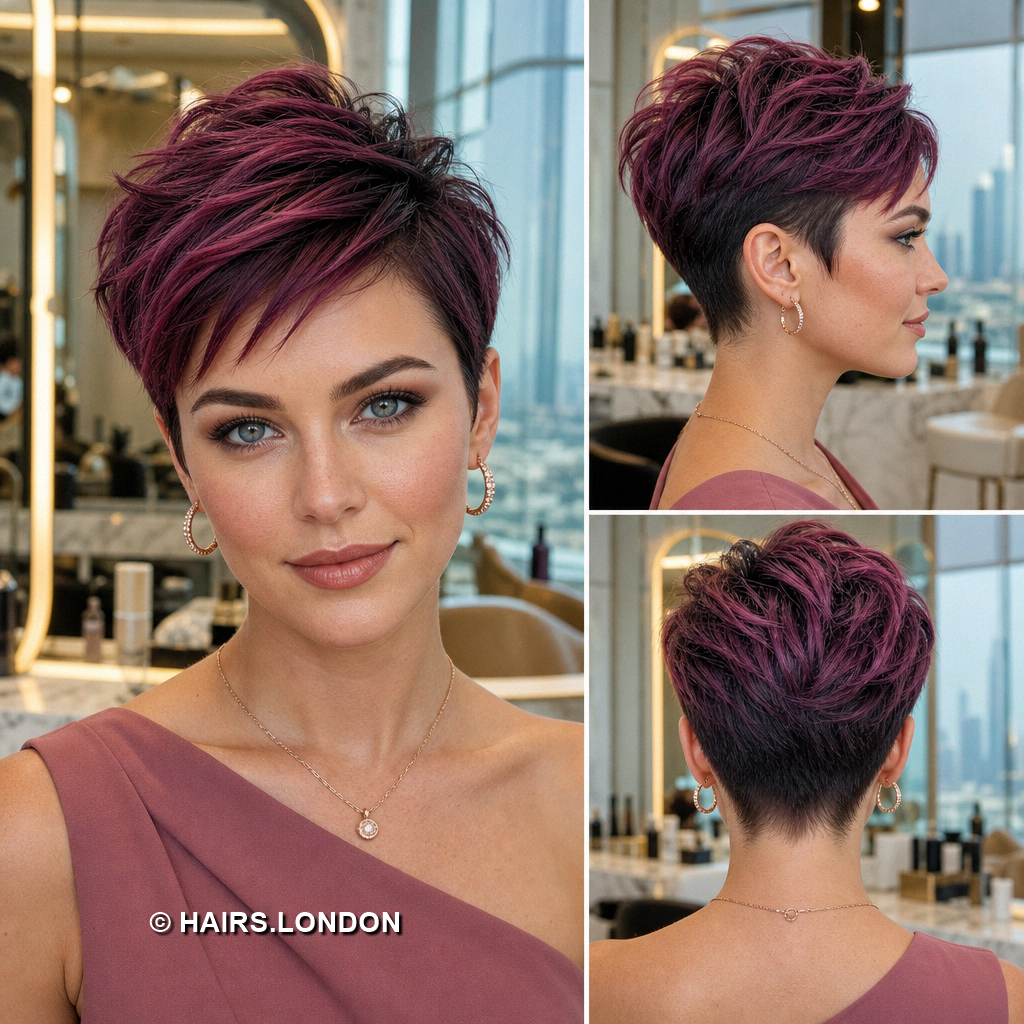
Plum burgundy strands create visible separation through the longer top, with dark roots giving the swept layers depth. A short diagonal fringe leaves most of the forehead open, and the sides taper closely around the ears and temple area. The back looks compact beneath an overlapping crown. Request connected layers that allow the top to move without creating thin gaps at the temples. Blow dry across your chosen part, then pinch a few ends with a lightweight cream. Naturally wavy hair can retain a softer finish. Ask your colorist how to preserve the purple red tone without excessive depositing products.
5. Cherry Layered Pixie with a Deep Side Part
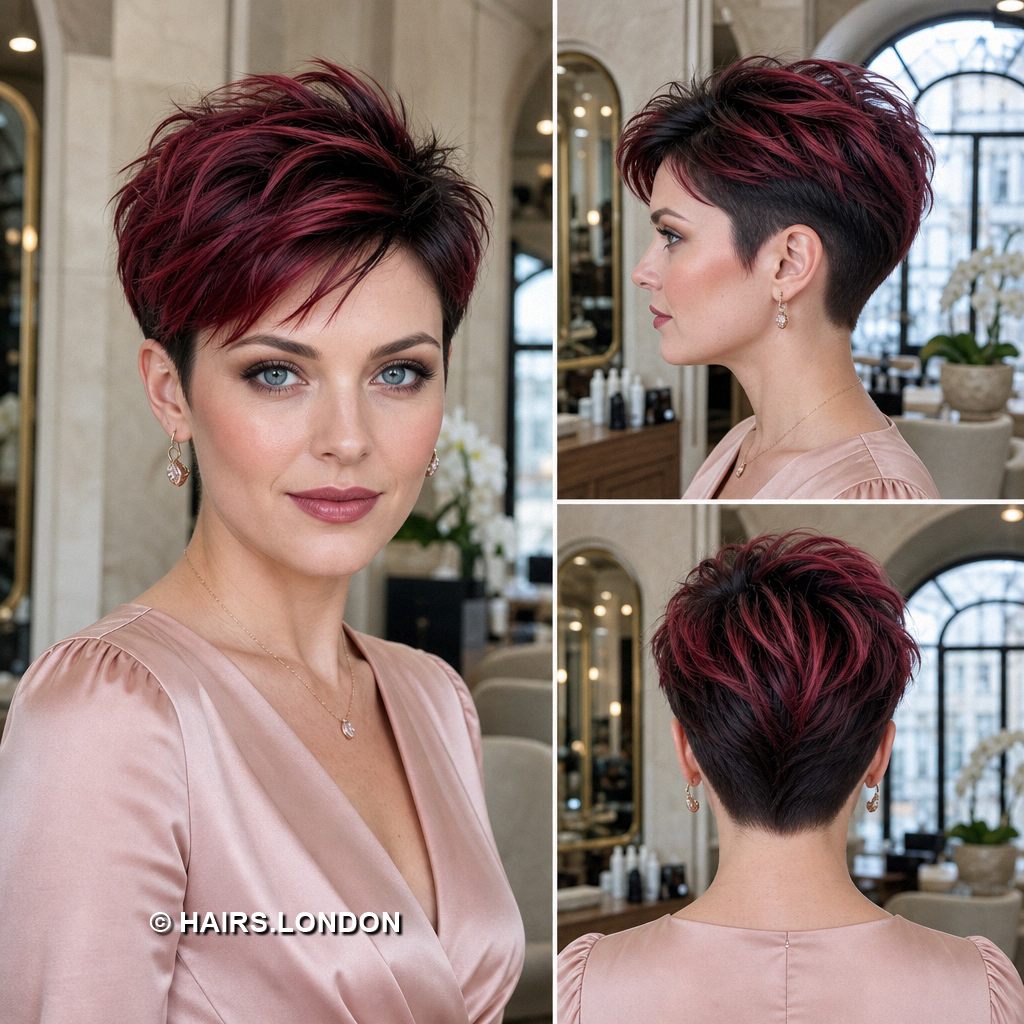
Deep cherry highlights thread through a dark base, adding contrast to a side parted top. The fringe has a pointed diagonal edge, while the shorter side and back keep the silhouette close to the head. Ask for controlled layering that preserves the front sweep and separates the crown gently. Straight hair can be dried with a small brush with gentle tension, directing roots across the part before smoothing the ends. Use a little flexible paste for definition without making the lighter strands look stiff. Discuss how much cherry contrast you want in daylight and where the darkest sections should remain.
6. Rosewood Asymmetrical Pixie with a Long Sweeping Front
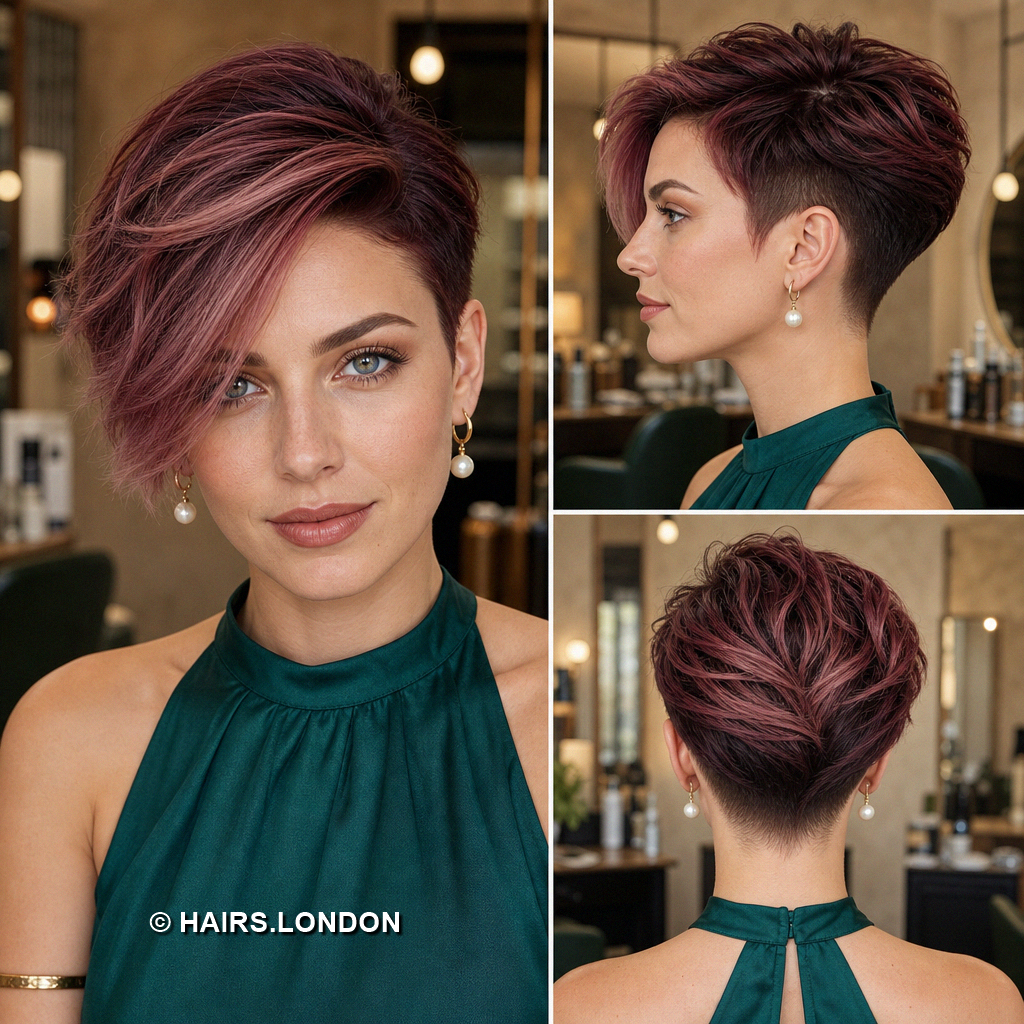
Rosewood highlights soften a dark reddish base, concentrating through a long fringe that falls toward one eye. The opposite side exposes the ear, and the nape is neatly tapered under a rounded crown. This asymmetry depends on retaining connected front lengths rather than simply cutting one side short. Ask your stylist to check the sweep against your part and eye line. Smooth the front with gentle brush tension and heat protectant, allowing the ends to curve naturally. Use minimal finishing serum on drier ends. Discuss highlight placement through the fringe and the upkeep needed to retain this muted rosy warmth.
7. Magenta Curly Pixie with a Soft Short Fringe
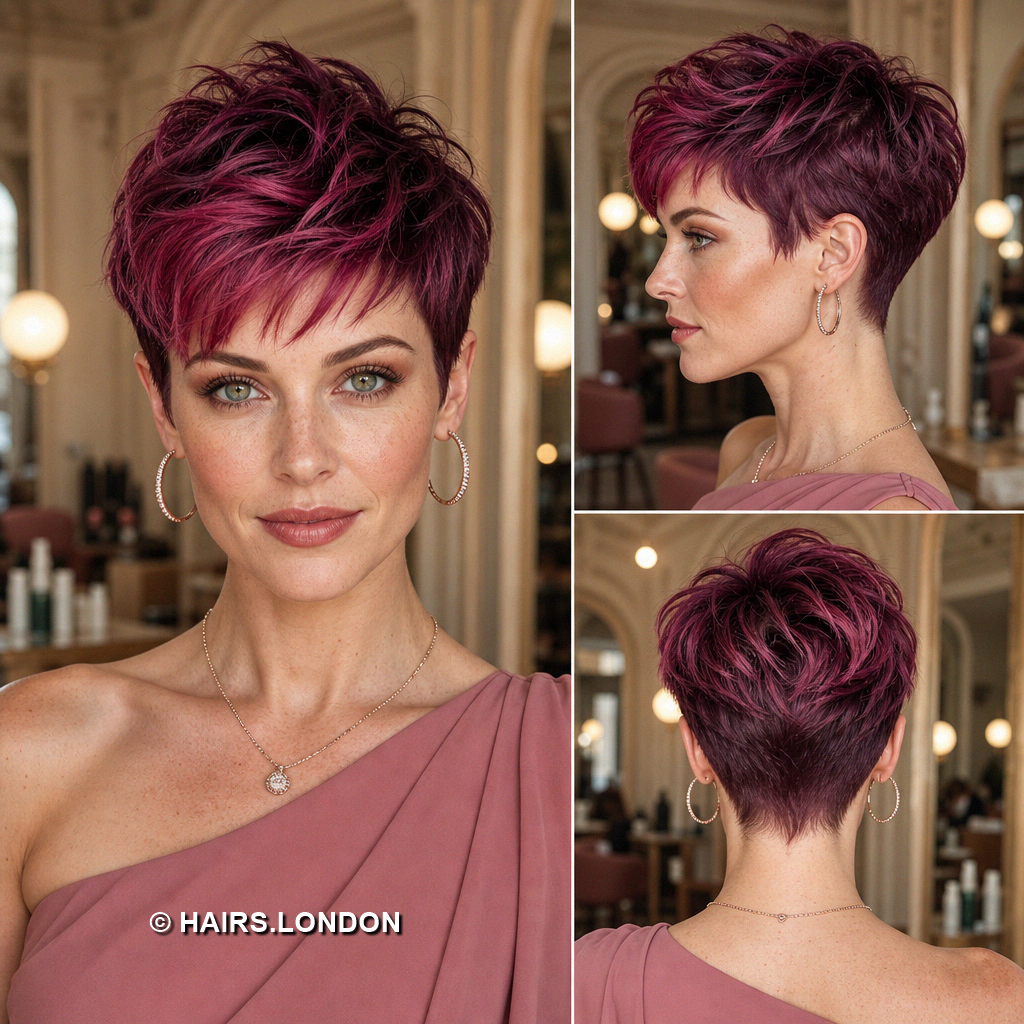
Magenta burgundy color follows loose curls across the crown, with a few short pieces resting near the forehead without covering it. The sides are shorter, and the back narrows beneath overlapping waves. Ask for enough upper length to preserve your natural bend and account for shrinkage before shortening the fringe. Apply a light curl cream through damp hair, scrunch gently, and diffuse with low airflow. Separate only selected sections after drying to keep the shape defined. Straight hair would need additional styling to recreate these curves. Discuss where the brighter color should sit and how the curls affect its visibility.
8. Copper Swept Pixie with a Rounded Auburn Crown
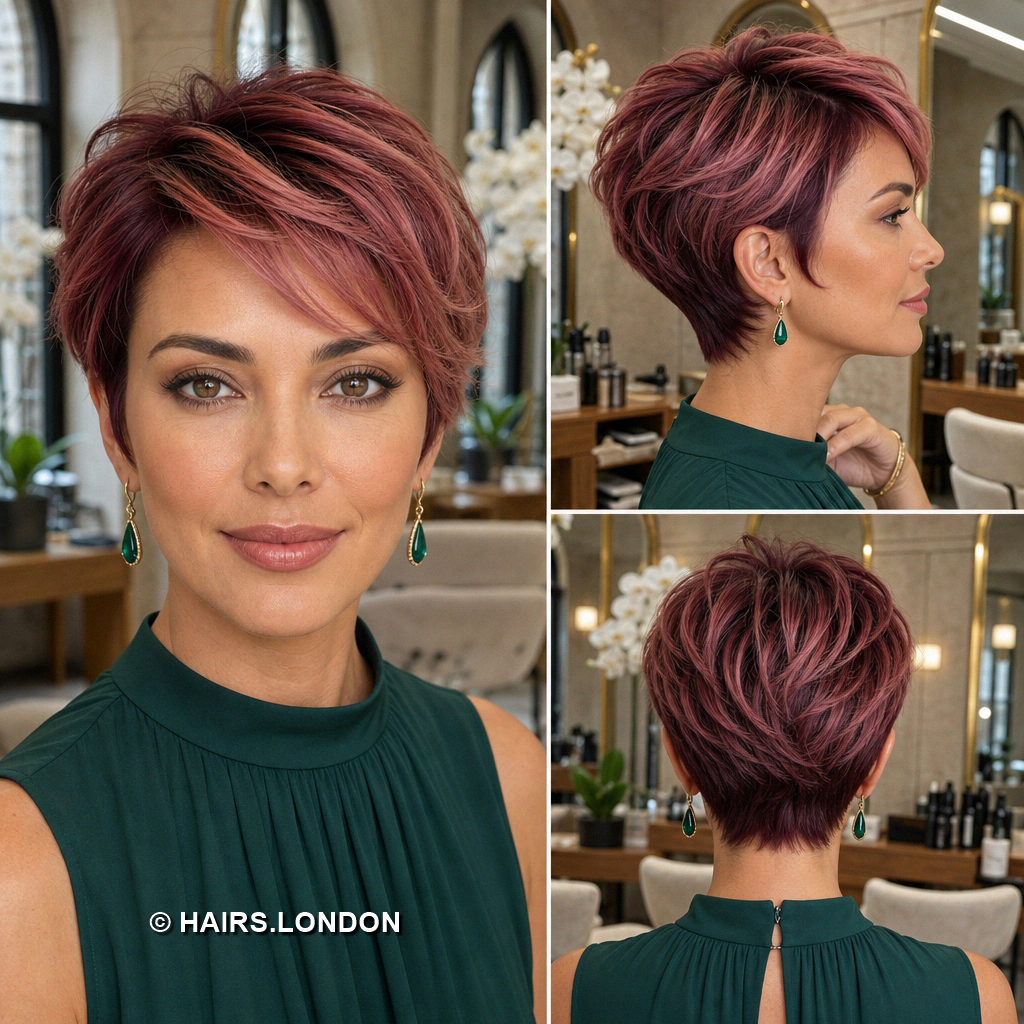
Copper rose highlights cross an auburn brown foundation, particularly along the softly swept fringe. The front is longer than the ear area, and the rounded back shows overlapping layers above a tapered neckline. Request a connected sweep with enough weight to lie smoothly rather than flick outward at the temple during everyday home styling. Fine straight hair can use a small amount of styling lotion and gentle directional drying. Lift the crown slightly, then smooth the front without flattening everything. Ask whether the warm highlights should be concentrated around the face and how future trims will change their visible placement.
9. Burgundy Curly Pixie with a Full Rounded Top
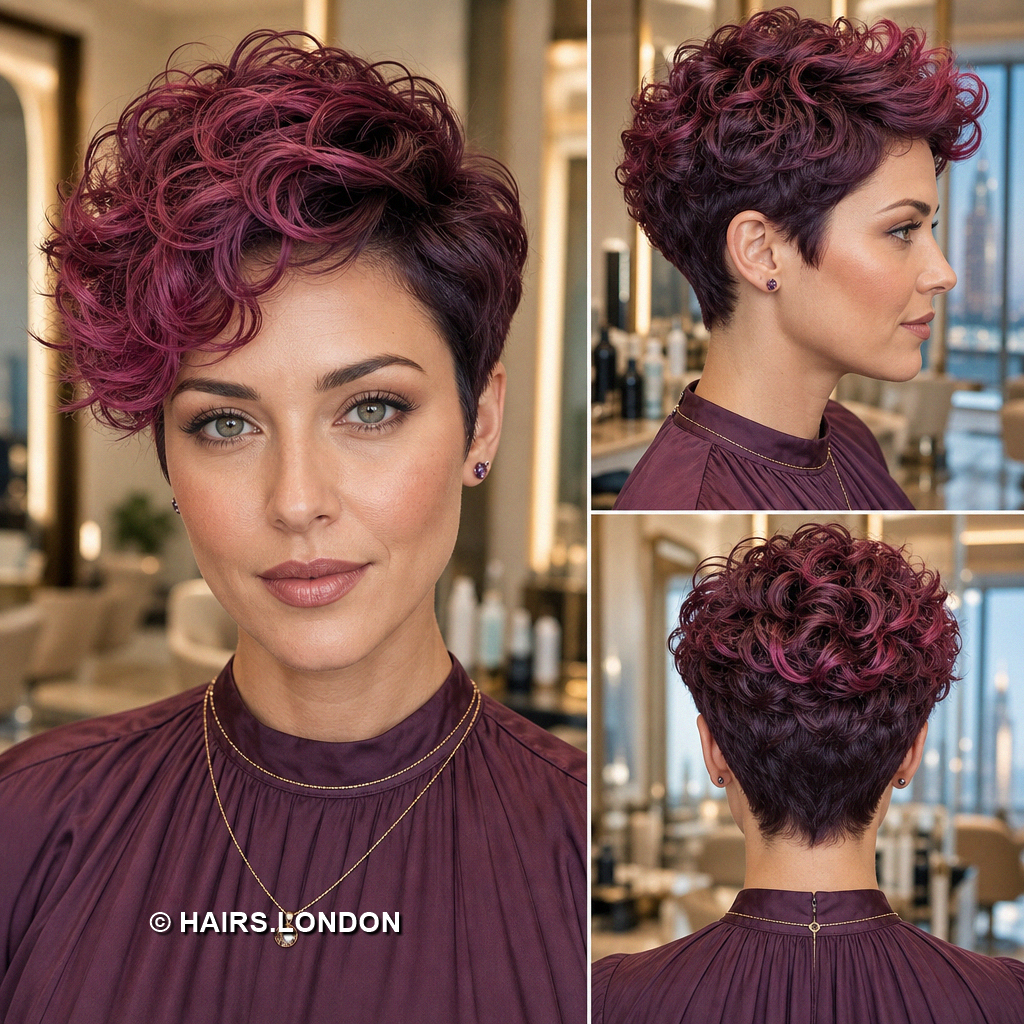
Burgundy curls form a full rounded crown, with brighter wine colored strands outlining the loops against dark roots. The front rises away from much of the forehead, and shorter sides balance the upper volume. Ask for curl aware shaping that retains room for your curl pattern while controlling weight underneath. Apply defining product through wet hair and diffuse gently, keeping hands away until the curls set. Avoid excessive thinning through the surface. Discuss whether the color will be natural depth with selected highlights or a broader burgundy result, and how to protect the condition and natural flexibility of processed curls.
10. Rosewood Draped Pixie with a Long Face Framing Fringe
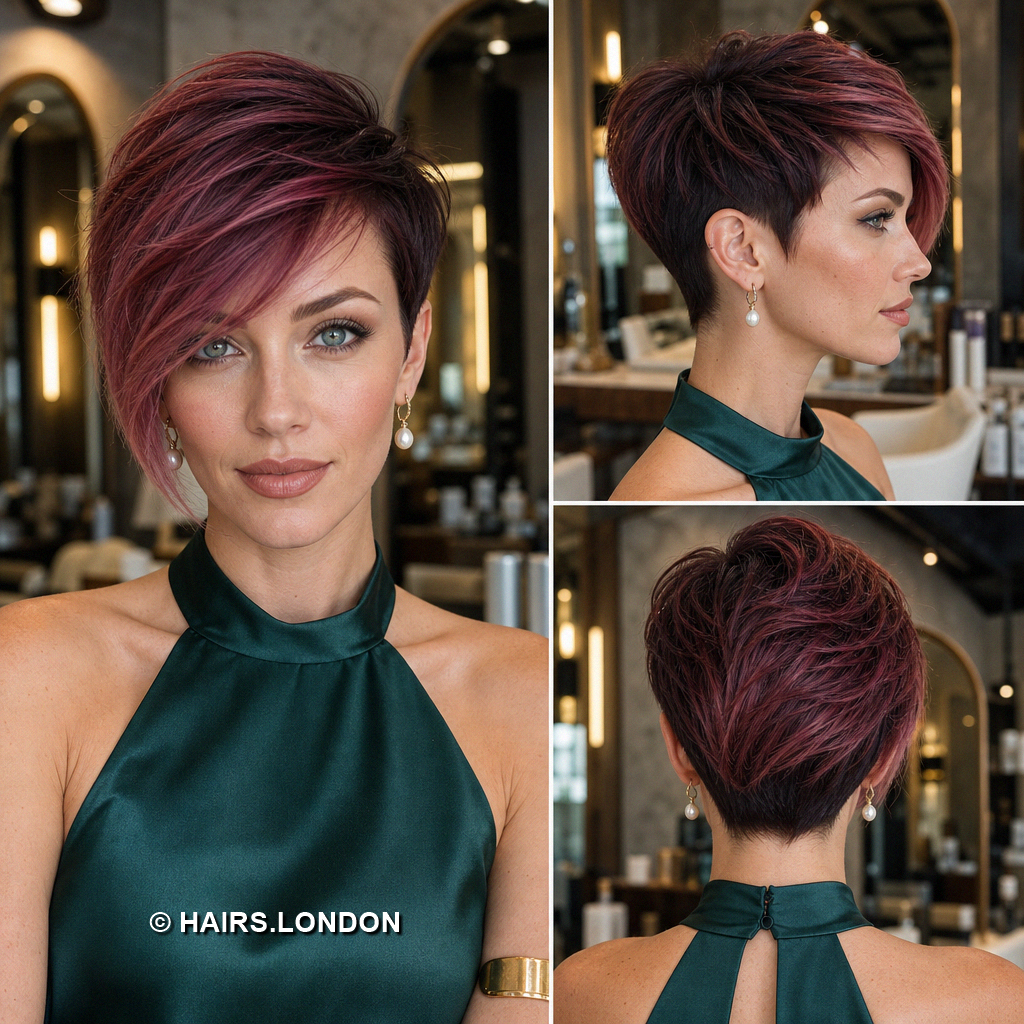
Rosewood ribbons brighten a dark base through a long fringe that drapes diagonally across the forehead. Short sides expose the ears, while the back retains a rounded shape above a neatly fitted nape. Ask for front layers that remain connected enough to fall together, especially if your hair is fine. Establish the part while damp and dry the fringe in its intended direction with light brush tension. Add finishing cream only where the ends need control during damp weather. Discuss which darker areas should remain untouched and how to keep the reddish highlights soft as the longer front grows out.
11. Auburn Coiled Pixie with a Rounded Curly Crown
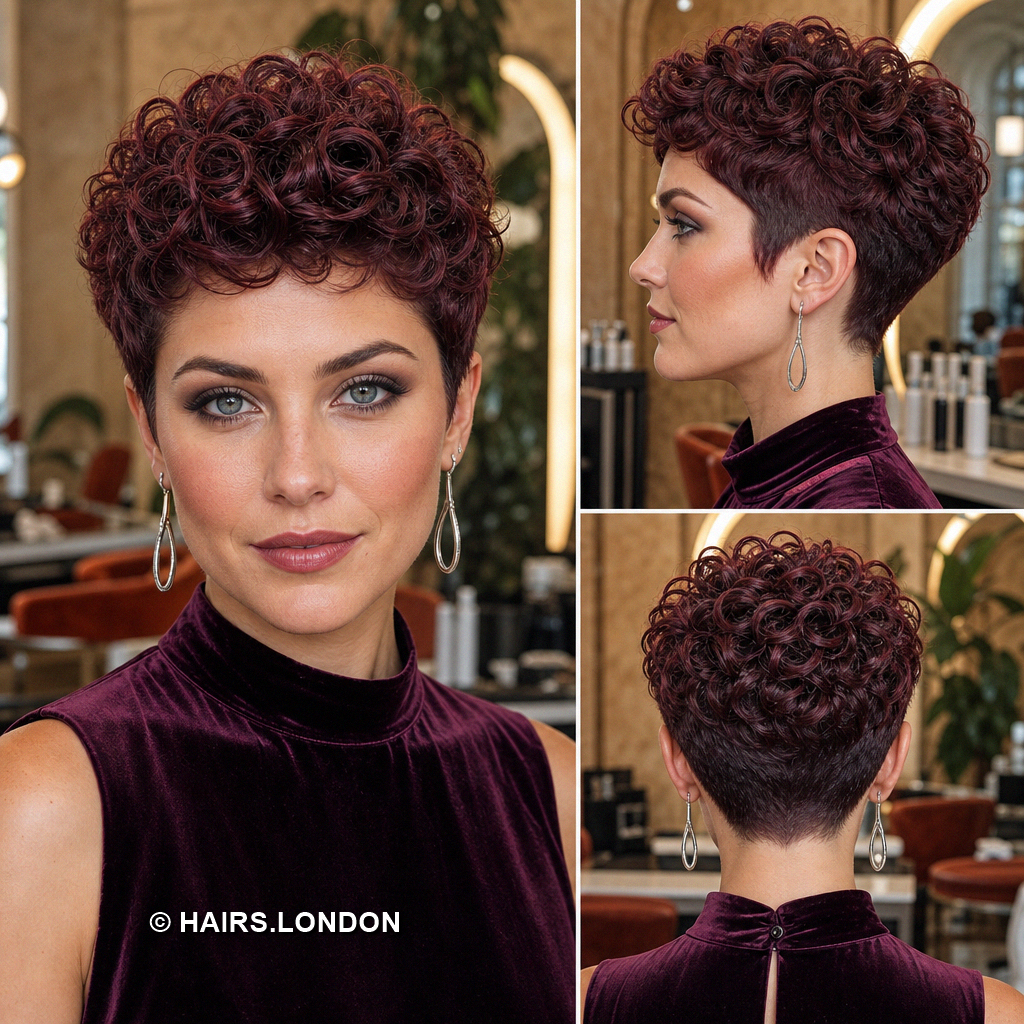
Auburn highlights trace compact coils over a deep brown burgundy base. The curls create a rounded top, leaving the forehead mostly open, with closely shaped sides and a short nape underneath. Ask your stylist to evaluate curl diameter and shrinkage before deciding the crown length. Dense curls may need selective internal weight removal rather than surface thinning. Distribute curl cream through wet strands, then diffuse gently and separate only when fully dry and set. Discuss whether the auburn should appear throughout the curls or mainly along the outer surface. Maintain conditioning where lighter strands need extra softness after color services.
12. Mahogany Swept Pixie with a Soft Side Part
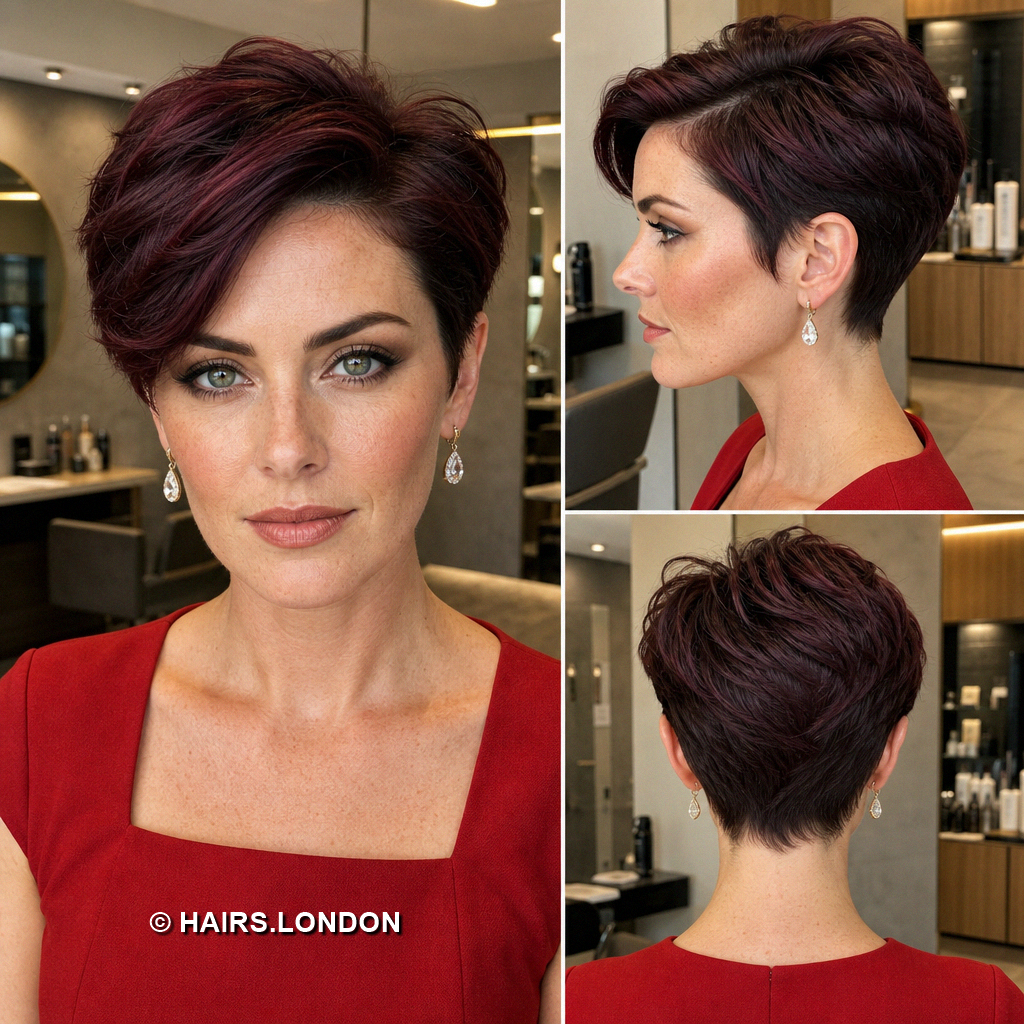
Subtle mahogany red strands warm a deep brown base, with the longer front swept across a soft side part that feels comfortable. The side views show close ear coverage and a rounded crown tapering into the neckline. Ask for sufficient front length to follow the part without collapsing into the face. Straight or lightly wavy hair can be guided with a small brush and a little root mousse. Finish with restrained cream rather than a heavy oil that reduces volume. Discuss whether the reddish effect should remain understated indoors and how to maintain the shine without overloading the shorter roots.
13. Burgundy Wavy Pixie with an Open Lifted Front
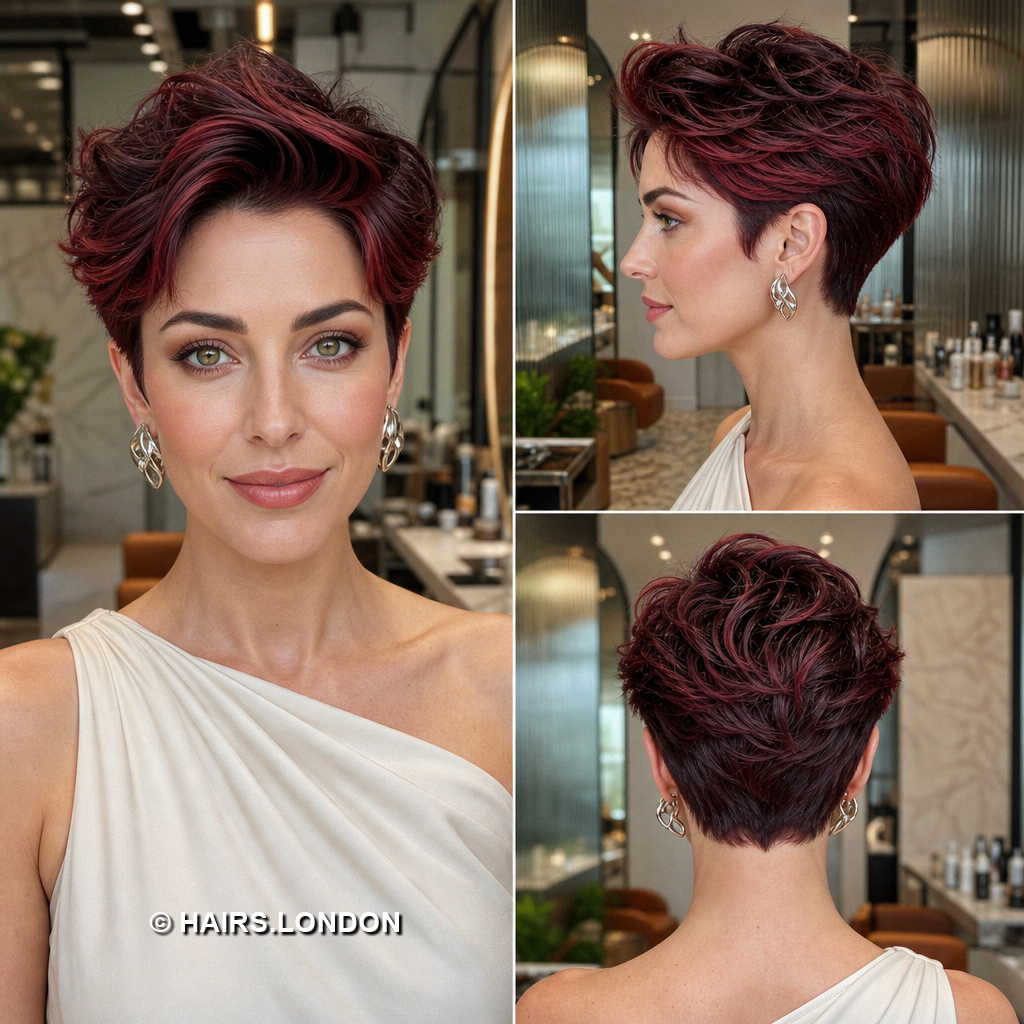
Dark burgundy strands curve through a lifted front, leaving the forehead open above shorter sides. Loose waves create movement across the crown, and the back remains compact beneath overlapping sections. Request enough upper length for the wave to bend while keeping the neckline clean. Naturally wavy hair can use light mousse and gentle scrunching before diffusing. For straighter strands, directional brush drying can create a broader curve without matching every wave. Avoid heavy product at the roots. Ask your colorist how much red should show through the darker base and what maintenance and conditioning routine best suits the starting color.
14. Mahogany Piecey Pixie with a Short Diagonal Fringe
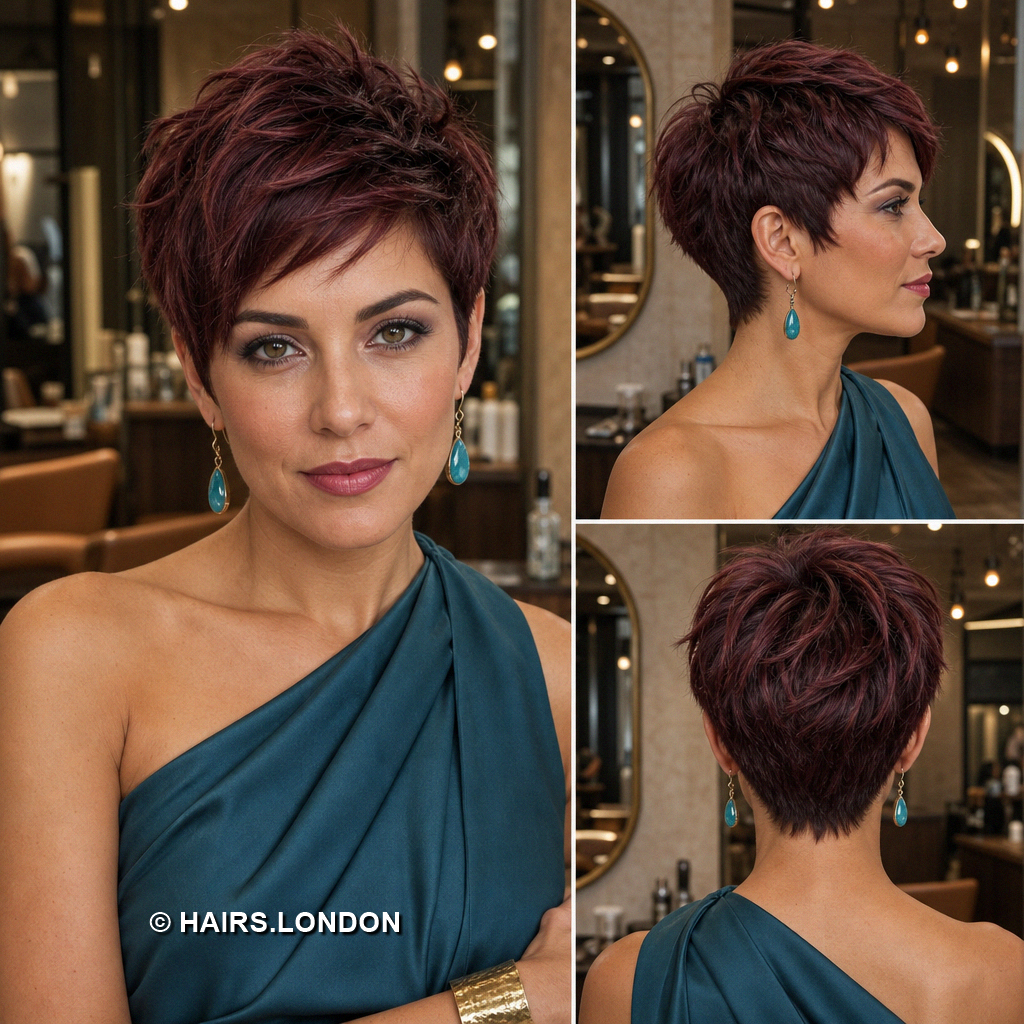
Mahogany accents appear through a dark, piecey crown, with a short diagonal fringe that exposes much of the forehead. The side silhouette stays close around the ears, and the back narrows into a tapered nape. Ask for controlled point cutting that separates the ends while retaining useful density through the top and fringe. Fine straight hair can be dried forward first, then lifted selectively across the crown with a little matte paste. Keep the fringe flexible rather than forming hard spikes. Discuss the desired warmth of the red brown highlights and whether future trims will remove their brightest sections quickly.
15. Burgundy Quiff Pixie with a Smooth Raised Front
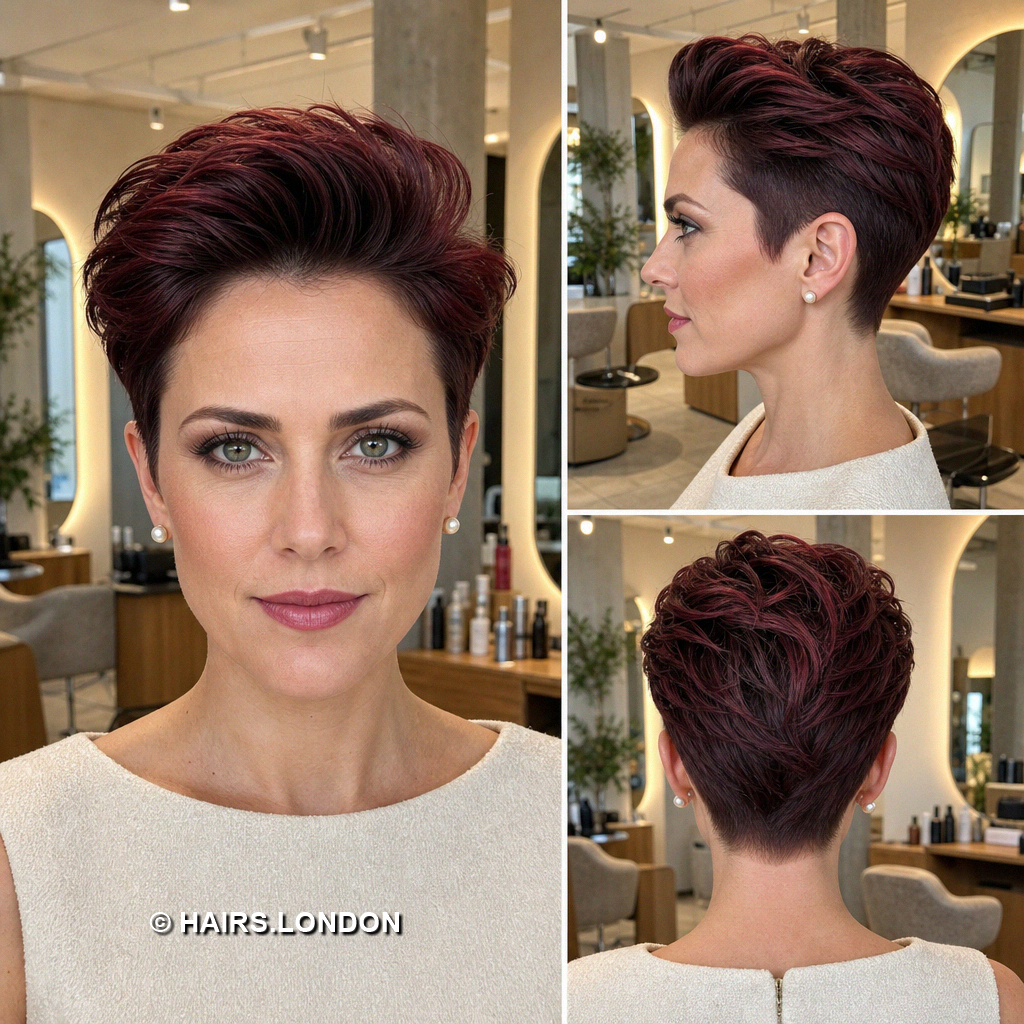
A deep burgundy quiff curves upward and backward from the forehead, with darker roots supporting the raised front without excessive stiffness. Shorter sides and a fitted nape keep the silhouette compact below the fuller crown. Ask for enough front length to form this curve and connected layers that blend into the shorter sides. Apply root mousse, dry upward with a brush, and allow the section to cool before releasing it. Fine hair may need flexible spray rather than heavy wax. Discuss whether the burgundy will be subtle or brighter in daylight and how the color plan affects regular trim appointments.
16. Cherry Feathered Pixie with a Soft Broken Fringe
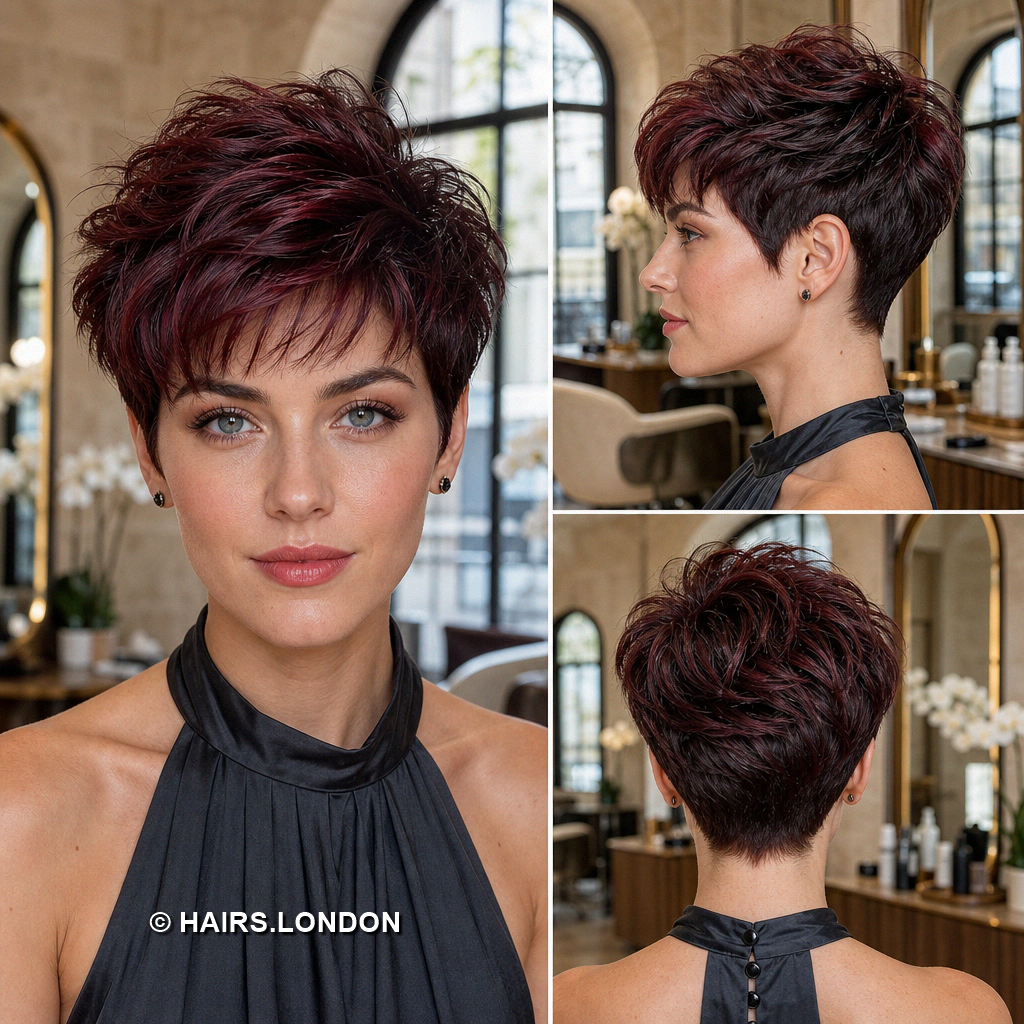
Muted cherry highlights run through a dark feathered top, with short broken pieces falling across the forehead. The crown has airy separation rather than a solid sweep, and the ears and neckline remain closely shaped. Ask for light point cutting that follows the growth pattern without removing excessive weight from fine hair. Dry the front loosely forward, then direct selected crown pieces sideways for movement. Use a small amount of cream or paste on the ends for selective definition. Discuss where the warmer strands should remain visible after trimming and how to maintain definition without repeatedly adding product over buildup.
17. Mahogany Quiff Pixie with a Swept Back Crown
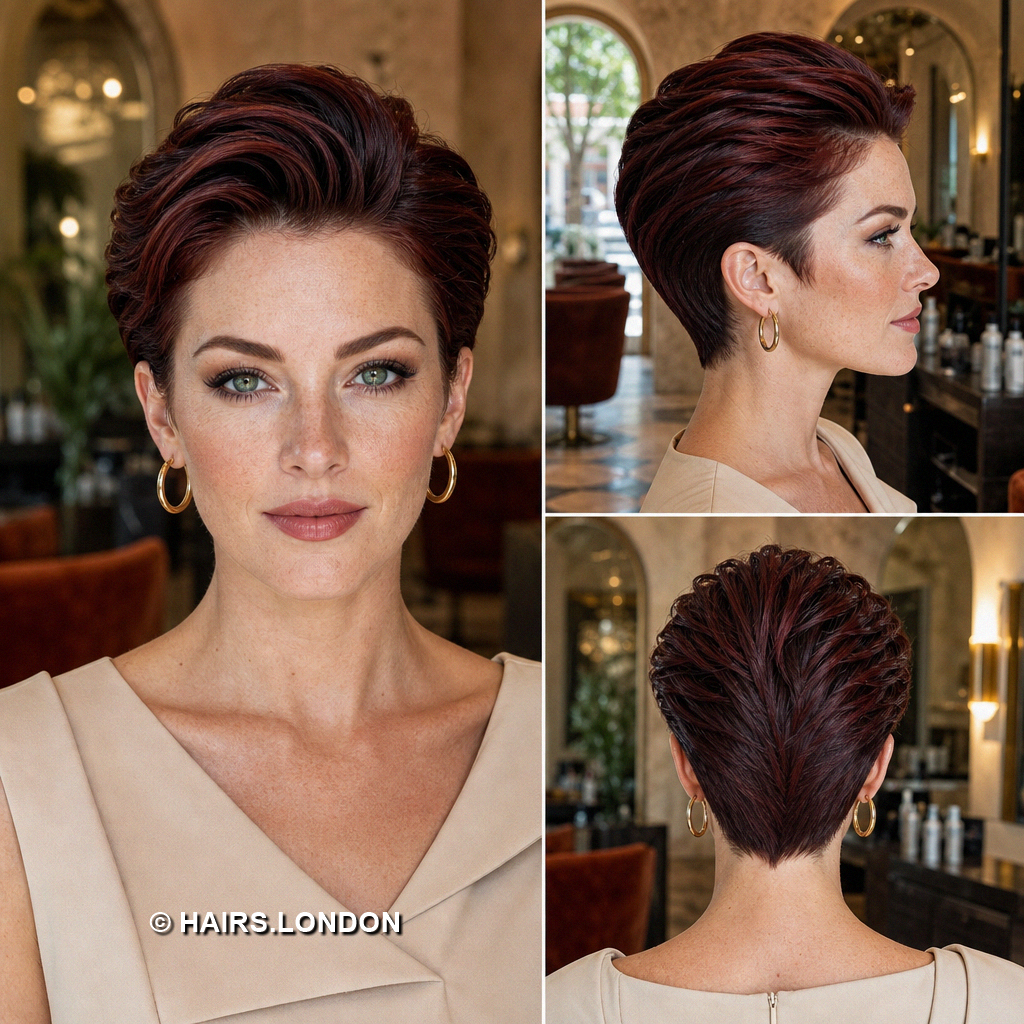
Mahogany red highlights brighten a dark swept back crown, with a smooth front lift and exposed forehead. The sides lie close to the head, and the back tapers neatly beneath longer upper layers. Request a front section long enough to curve backward without creating a disconnected shelf above the temples. Work a little mousse into damp roots and brush dry upward, then backward. Let the style cool before using flexible spray. Naturally wavy hair may show a softer finish with visible movement. Discuss which darker sections should remain for depth and how the red tone will change between color visits.
18. Burgundy Fingerwave Pixie with a Sculpted Front
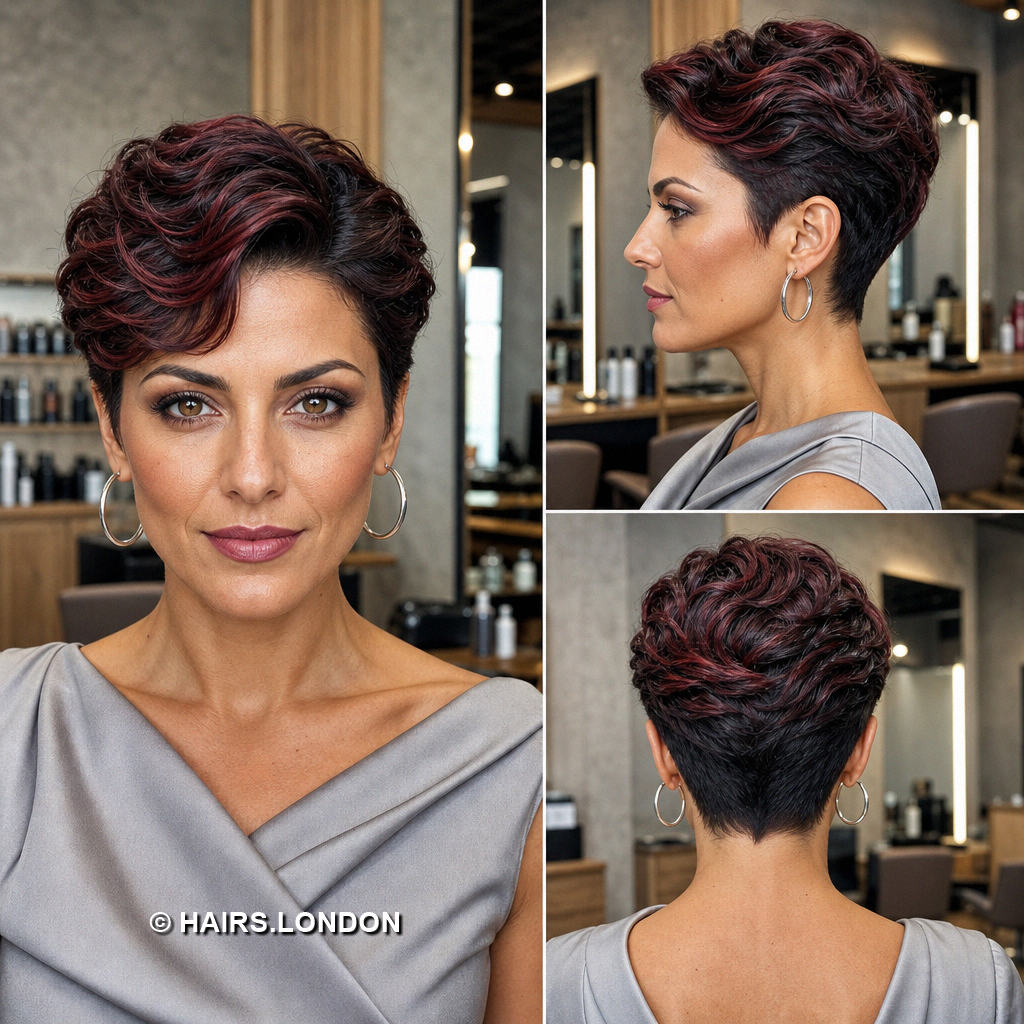
Burgundy ribbons follow broad curved waves across the front, with darker sections creating depth between the bends. The sides and nape are shorter, while the crown retains enough length for a sculpted wave pattern. Ask for connected upper layers that support this movement rather than very short surface pieces. Naturally wavy hair may respond to careful shaping and light mousse distributed through strands; straighter hair could need brush or tool styling. Use heat protectant and avoid repeatedly heating the same section. Discuss whether the color should emphasize the wave ridges and how regular trims will preserve the longer front shape.
19. Mahogany Tousled Pixie with a Lifted Textured Crown
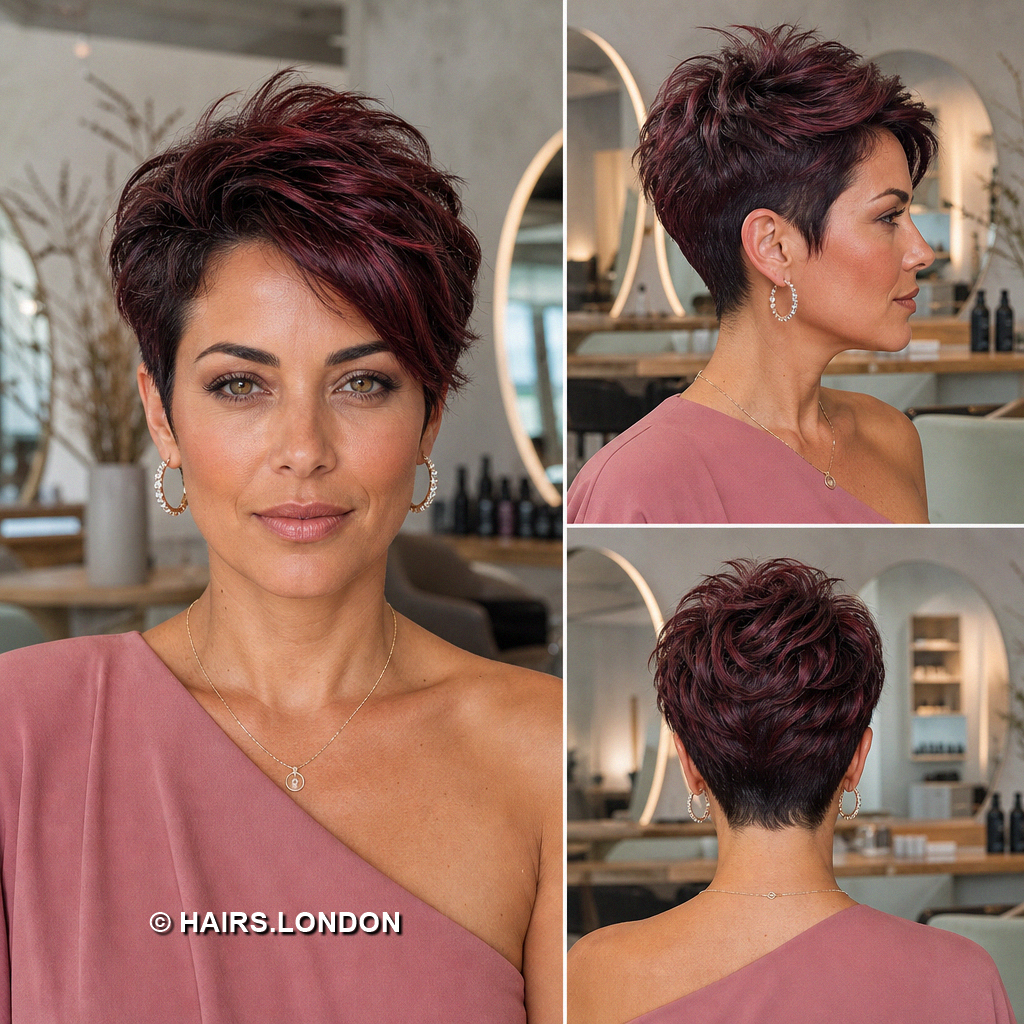
Mahogany red accents thread through a dark tousled crown, with irregular front pieces angled upward and slightly across the forehead. The sides stay close around the ears, and a neatly shaped tapered back supports the fuller top. Ask for selective texturizing that keeps enough density to lift without leaving sparse ends. Dry the crown against its natural direction, then let it cool before separating a few pieces with paste. Slightly wavy hair can retain a softer, less pointed finish. Discuss how the warm accents should distribute across the moving layers and what outline needs attention first as the cut grows.
Choosing Burgundy Pixie Haircuts for Your Daily Routine
Compare the front lengths first. Short spikes need separation, a sweeping fringe needs room to cross the forehead, and a quiff needs enough length to rise and curve backward. Curls require space for their natural pattern and shrinkage. Consider whether you usually air dry or use a brush, and show the stylist how your hair falls without styling. Fine hair often benefits from retaining density, while thicker hair may need selective weight removal. Ask for a neckline and ear length that still feels comfortable as the haircut grows.
Styling Spikes, Sweeps, and Natural Curls
Start with a small amount of product and add only where needed. For spikes, use fingertip application on dry ends rather than coating the scalp. For a diagonal fringe, establish the part while damp and guide the roots with gentle brush tension. A quiff benefits from light mousse and cooling in position after drying. Curly shapes respond better to products distributed through wet hair and gentle diffusing. Use heat protectant with heated tools, and choose the routine that works with your own texture rather than forcing every reference into the same finish.
Keeping Burgundy, Cherry, and Magenta Color Balanced
These colors differ in depth and undertone. Burgundy can lean wine red or plum, cherry accents may appear brighter, and mahogany brings a quieter red brown effect. The photographs cannot establish which formula or lightening process your hair needs. Share previous dye and lightening history with your colorist and ask which sections can stay darker. Follow the recommended cleansing and conditioning routine for the actual formula. Color depositing products should match the intended tone; an unrelated red or violet product may shift a subtle shade. Discuss refresh timing before committing to vivid accents.
Maintaining a Short Perimeter and Longer Top
Short sides may lose their outline before a long fringe needs much shortening. Many compact pixies benefit from trims around every four to six weeks, although softer shapes can remain comfortable longer. Ask whether a perimeter adjustment can preserve the silhouette between full reshaping appointments. Observe how the crown lifts, whether the fringe affects your vision, and how the neckline sits. Keep product buildup under control with cleansing suited to your scalp. Condition drier or processed lengths without weighing down the short roots, and coordinate color placement with future trimming.
Preparing for a Useful Salon Consultation
Bring the complete reference collage and identify the exact front, side, and back details you like. Explain your natural texture, growth patterns, usual styling time, and preferred shortest length. Ask how much length is needed for curls or a raised front and whether the shape will work without daily heat styling. For color, discuss achievable brightness, darker sections, strand assessment, maintenance cost, and likely changes as the shade fades. Agree on which features matter most before cutting, particularly when a long fringe and closely shaped sides need to balance each other.
Frequently Asked Questions
What is the difference between burgundy and mahogany hair color?
Burgundy commonly has a wine red or plum appearance, while mahogany combines red warmth with brown depth. The exact result depends on the formula, starting shade, and lighting, so compare color swatches with your colorist.
Will burgundy show on dark hair without lightening?
A subtle reddish reflection may be possible, but brighter ribbons or magenta pieces can require a lighter base. Your colorist should assess existing dye and hair condition before planning the process.
Which pixie shape suits naturally curly hair?
Look for a crown that retains enough length for your curl pattern. Discuss shrinkage and selective shaping underneath, rather than assuming a smooth swept reference will settle the same way on curls.
How can I keep a diagonal fringe out of my eyes?
Ask for a length and angle that follow your part while clearing your eye line. Establish the root direction when damp and dry gently across the forehead before smoothing the ends.
What product helps define a spiky pixie?
A small amount of paste can separate dry ends. Start lightly and add only to selected points; too much product can flatten the crown or leave short strands feeling stiff.
Can fine hair hold a raised quiff?
It may hold a soft quiff with sufficient front length, light root mousse, and brush drying. Let the front cool in position and choose flexible spray rather than heavy wax.
How often should burgundy color be refreshed?
The interval depends on the formula, brightness, washing routine, and starting hair condition. Ask for a plan that distinguishes a tone refresh from any lightening service, especially on previously processed pieces.
Should I use a red depositing conditioner?
Only if its tone suits the intended result and your colorist recommends it. A strong red product can change a muted plum or mahogany appearance, so follow directions and avoid assuming all red shades need the same treatment.
How often does a tapered nape need trimming?
Closely fitted napes often need attention around every four to six weeks. Your growth rate and preferred outline determine the interval; a perimeter appointment may help while the top still sits well.
Can a long swept pixie be air dried?
It may settle well when your natural texture and root direction already support the sweep. A precise fringe or smoother finish may need directional drying, so discuss how the cut behaves without a brush.
How can I protect highlighted pixie ends?
Condition the affected lengths, limit unnecessary heat, and use heat protectant when styling. Share your processing history so color refreshes can avoid repeatedly lightening the same fragile sections.
What should I bring to my haircut appointment?
Bring all views of your favorite reference and explain your daily styling routine. Identify the fringe length, ear coverage, crown volume, and color contrast you want, then ask what adjustments suit your hair.
Conclusion
These burgundy pixie haircuts show how color placement can emphasize spikes, soft sweeps, curls, or a raised front. A brighter magenta accent creates a different effect from quiet mahogany ribbons, even when both sit over a dark base. Choose the shape that works with your texture and preferred routine, then agree on a color plan that protects the condition of your hair. Clear reference views, realistic styling expectations, and coordinated trim and color appointments will help the finished pixie remain balanced as it grows.