


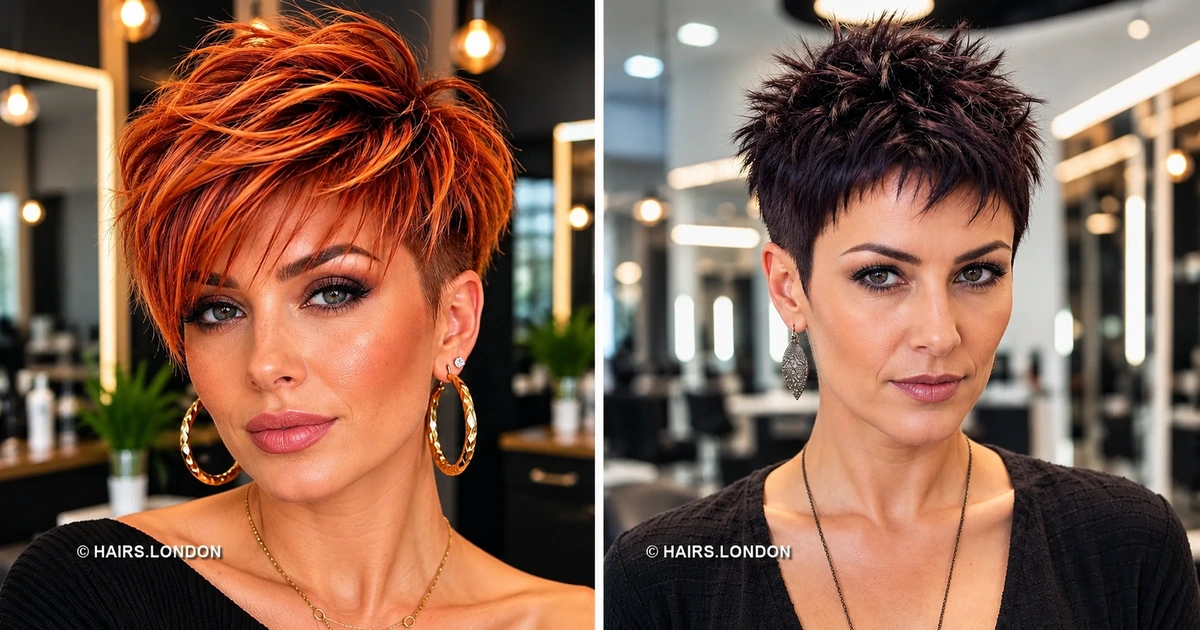
Textured pixie haircuts can look dramatically different depending on where the length is kept, how tightly the sides are tapered, and whether the crown is styled smooth, curly, swept or spiky. This collection moves from deep crimson and electric violet to copper, platinum, burgundy, bronde, silver and magenta, showing how color can emphasize separation, curl definition and directional layering without changing the underlying haircut shape.
Before choosing a reference, compare the fringe, crown, sides and nape separately. A long swept fringe requires different daily handling from a short broken fringe, while a high, spiky crown usually needs more root direction than a rounded layered top. Also notice whether the side area is softly blended, closely tapered or clearly undercut. Those choices affect both the silhouette and how quickly the cut changes between appointments.
Hair density, natural wave, cowlicks and parting patterns can influence the result, so use photographs as references rather than guarantees. Decide which features you want to preserve, such as a pointed nape, close ear area, curly crown or lifted quiff, and which can be adapted. That approach makes it easier to discuss a realistic version of the style with a stylist while keeping maintenance and styling time in view.
How to Read These Textured Pixie Haircuts
Focus first on structure, then on finish. Compare how much hair remains above the ears, whether the crown is rounded or lifted, how the fringe is directed, and whether the nape is soft or sharply tapered. Color can make texture appear stronger, but the cut determines the basic silhouette and grow-out pattern.
1. Crimson Layered Pixie with Swept Fringe
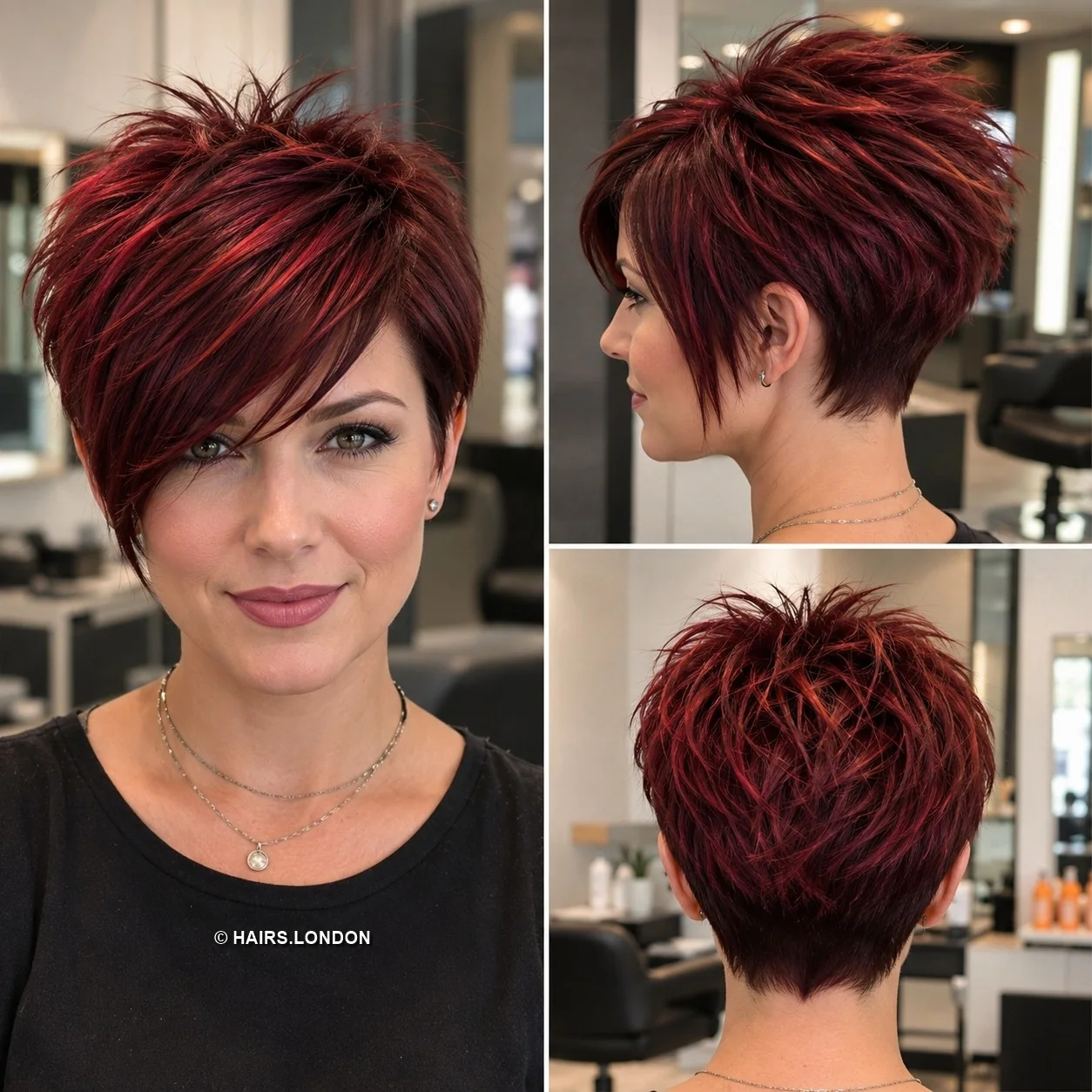
Deep crimson and cherry-red ribbons emphasize the long, sliced layers in this asymmetric pixie. The fringe sweeps diagonally across the forehead, while the crown is lifted into loose separated points rather than stiff spikes. Sides are shorter around the ears, and the back narrows into a tidy tapered nape. The contrast between dark roots and brighter red pieces adds depth to the movement. Straight or gently wavy hair can show this directional layering clearly. Use a light texture paste on dry ends and keep the fringe flexible. Regular perimeter shaping helps preserve the intended balance as the short layers grow.
2. Electric Violet Spiky Pixie with Undercut
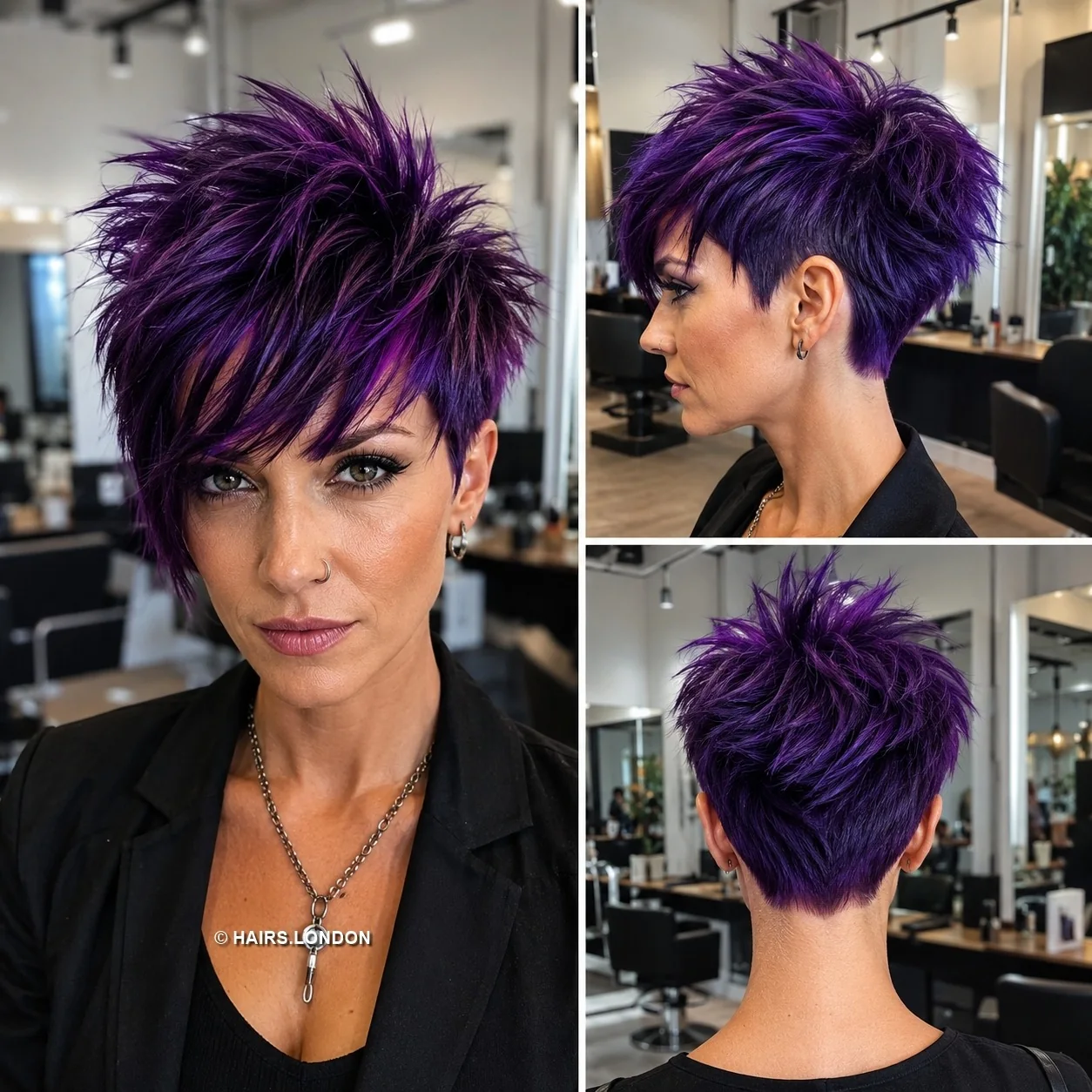
Saturated violet gives this sharply textured pixie a dramatic finish. The top and crown are left long enough to form pointed, irregular spikes, while a heavy side fringe falls forward in separated pieces. Around the ear and lower side, the hair is clipped much closer, creating visible undercut contrast. The back remains compact and tapered beneath the fuller crown. Dense hair may need controlled internal weight removal so the top lifts without becoming bulky. Blow-dry in alternating directions, then define selected strands with a pliable clay. Ask your stylist to adapt the reference to your density and natural growth pattern.
3. Burgundy Curly Pixie with Full Crown
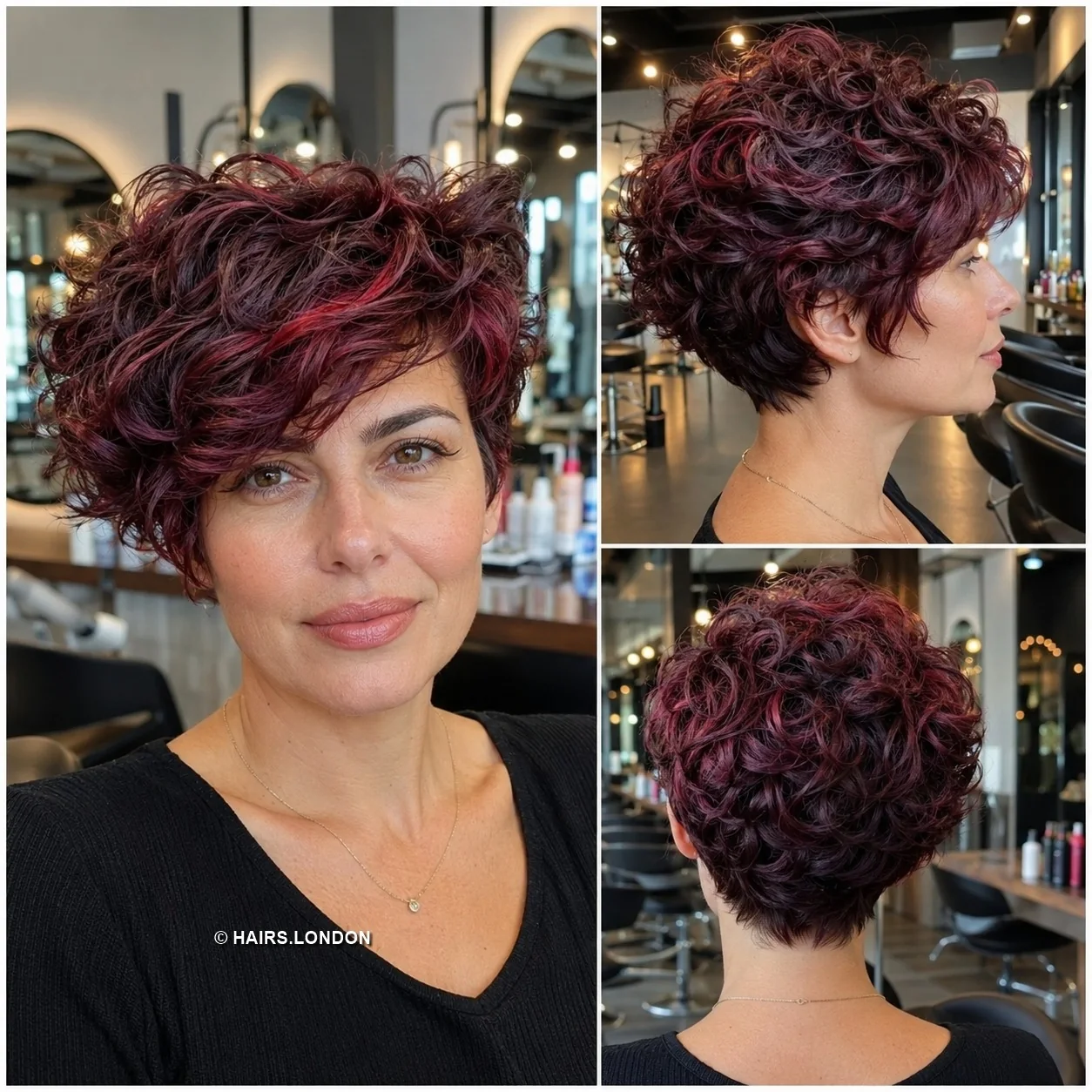
This burgundy pixie is built around curls and soft, rounded volume rather than a spiky finish. The top and crown carry generous length, allowing ringlets and bends to stack over shorter sides and a gently tapered nape. A curly side fringe sweeps across the forehead and blends into the fuller crown. Red-violet highlights make individual curls easier to see against the deeper base. Naturally wavy or curly hair can use its existing pattern here; the haircut alone will not create curls. Apply lightweight curl cream and diffuse with minimal disturbance. Ask your stylist how the shape will grow between appointments.
4. Copper Razored Pixie with Close Sides
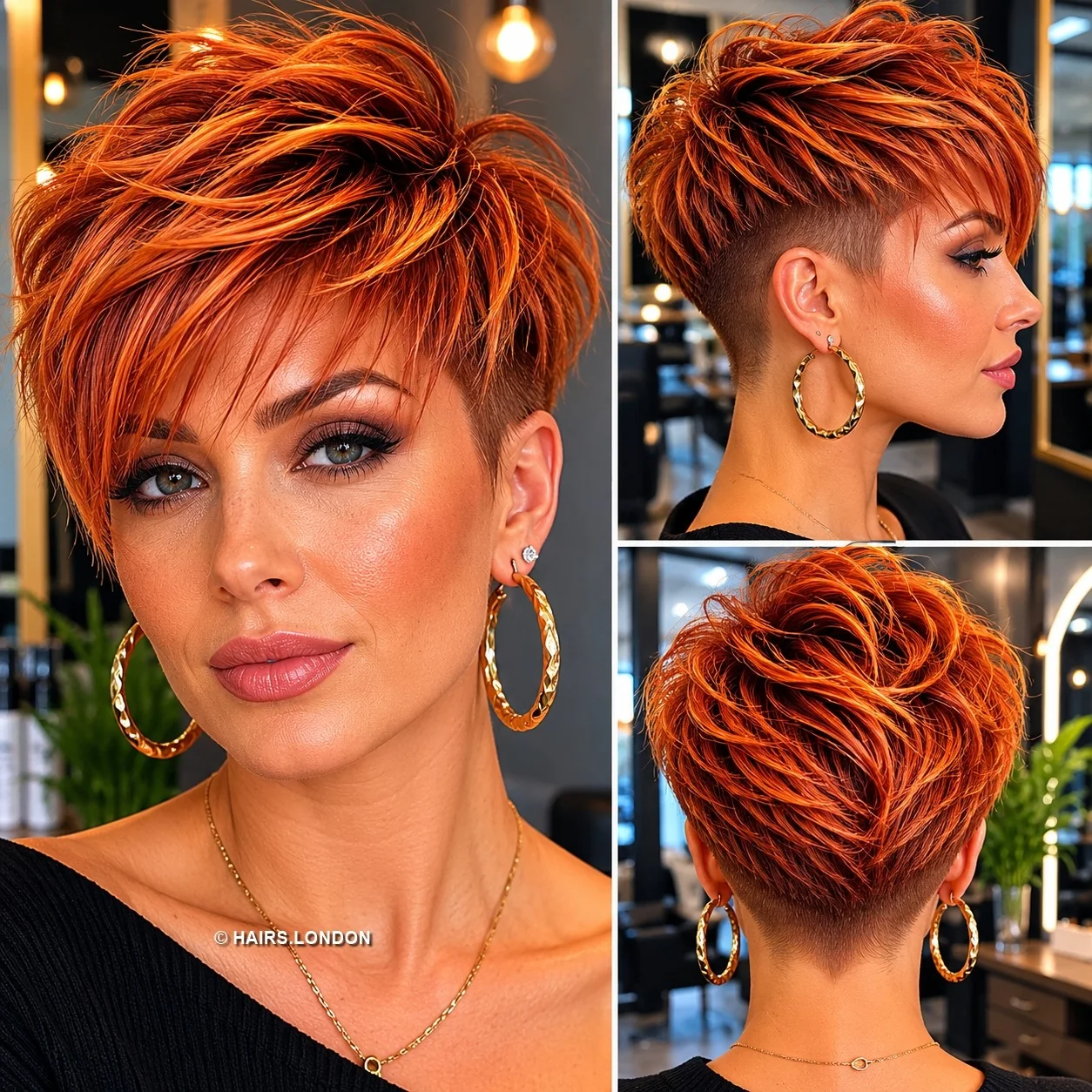
Bright copper-orange color makes the razor-cut texture of this pixie especially visible. Long top layers sweep forward and sideways in narrow, separated ribbons, while the sides are clipped close above and behind the ear. The crown stays full and directional, and the back is tapered neatly to keep the silhouette narrow. This cut depends on strong contrast between the longer surface and the short base. Fine hair can benefit from root lift, while thick hair may need strategic debulking. Finish with a small amount of dry paste. Regular perimeter shaping helps preserve the intended balance as the short layers grow.
5. Icy Platinum Spiky Pixie with Soft Fade
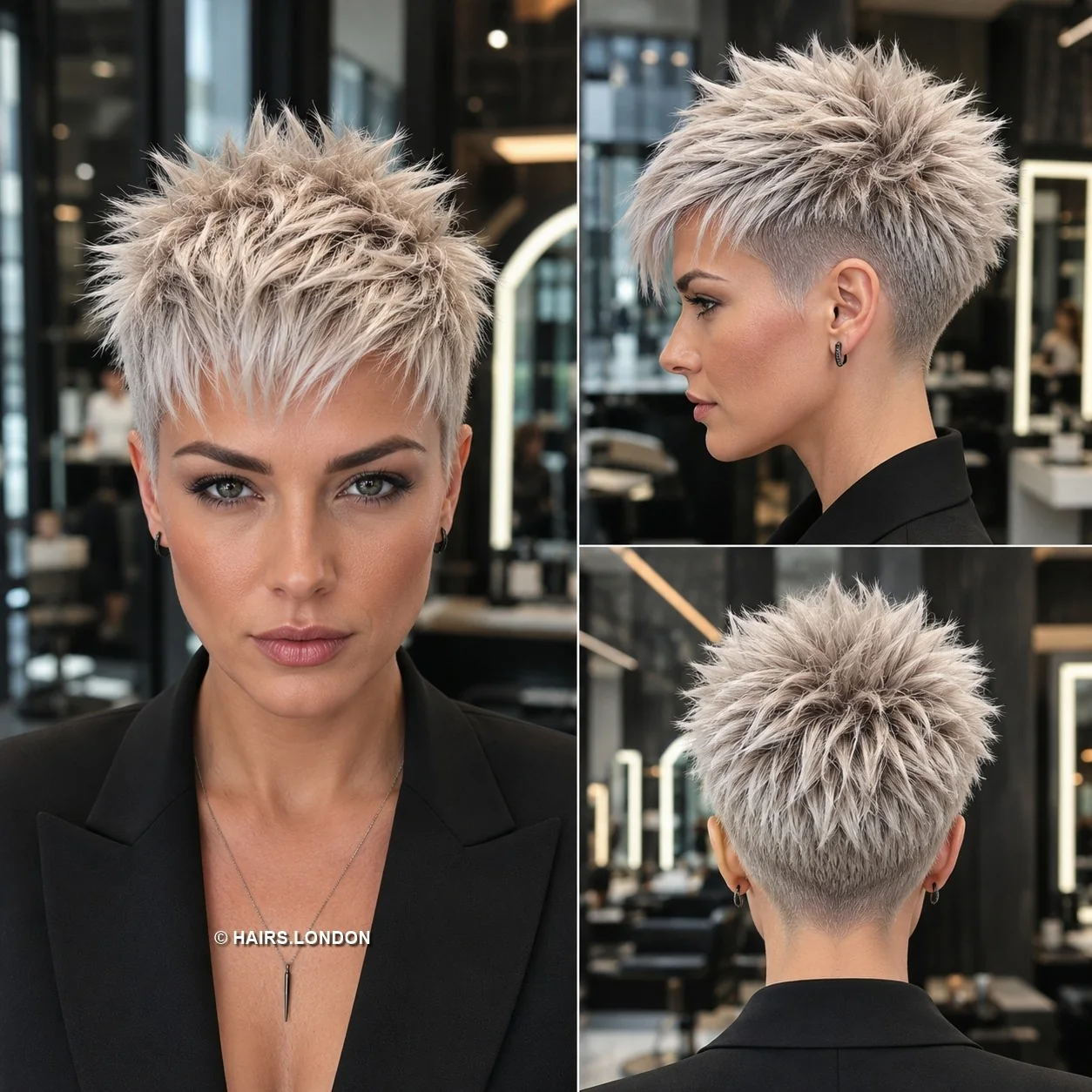
Icy platinum blonde highlights the airy, spiked construction of this short pixie. The fringe is short and wispy, the crown rises in fine separated points, and the sides transition into a very close, soft fade. At the back, the nape is clean and compact with no heavy shelf of hair. The pale color and darker shadow near the roots give the texture extra dimension. Fine to medium hair may respond well to lightweight mousse and directional blow-drying. Avoid heavy wax, which can collapse the delicate separation. Ask your stylist to adapt the reference to your density and natural growth pattern.
6. Ash Blonde Piecey Pixie with Feathered Nape
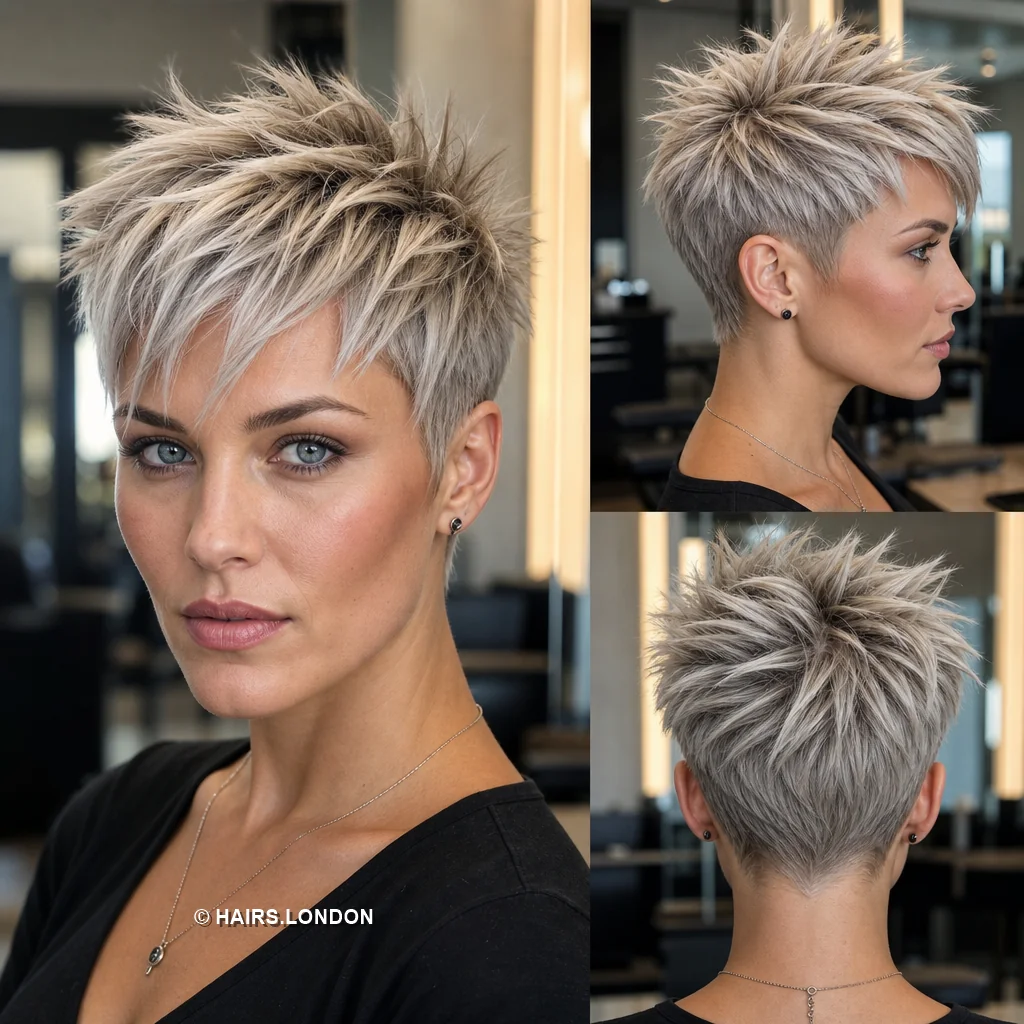
Ash blonde and cool beige tones create a soft dimensional effect through this piecey pixie. The top is longer than the sides and styled into tousled spikes, with a narrow fringe dropping lightly toward the forehead. The side profile shows a close but blended taper rather than a severe undercut, while the back narrows into a feathered point at the nape. This shape offers visible texture without extreme height. A light styling cream or dry paste can separate the ends. For dense hair, careful weight removal helps the crown stay mobile. Discuss maintenance timing with your stylist before committing fully.
7. Plum Choppy Pixie with Short Fringe
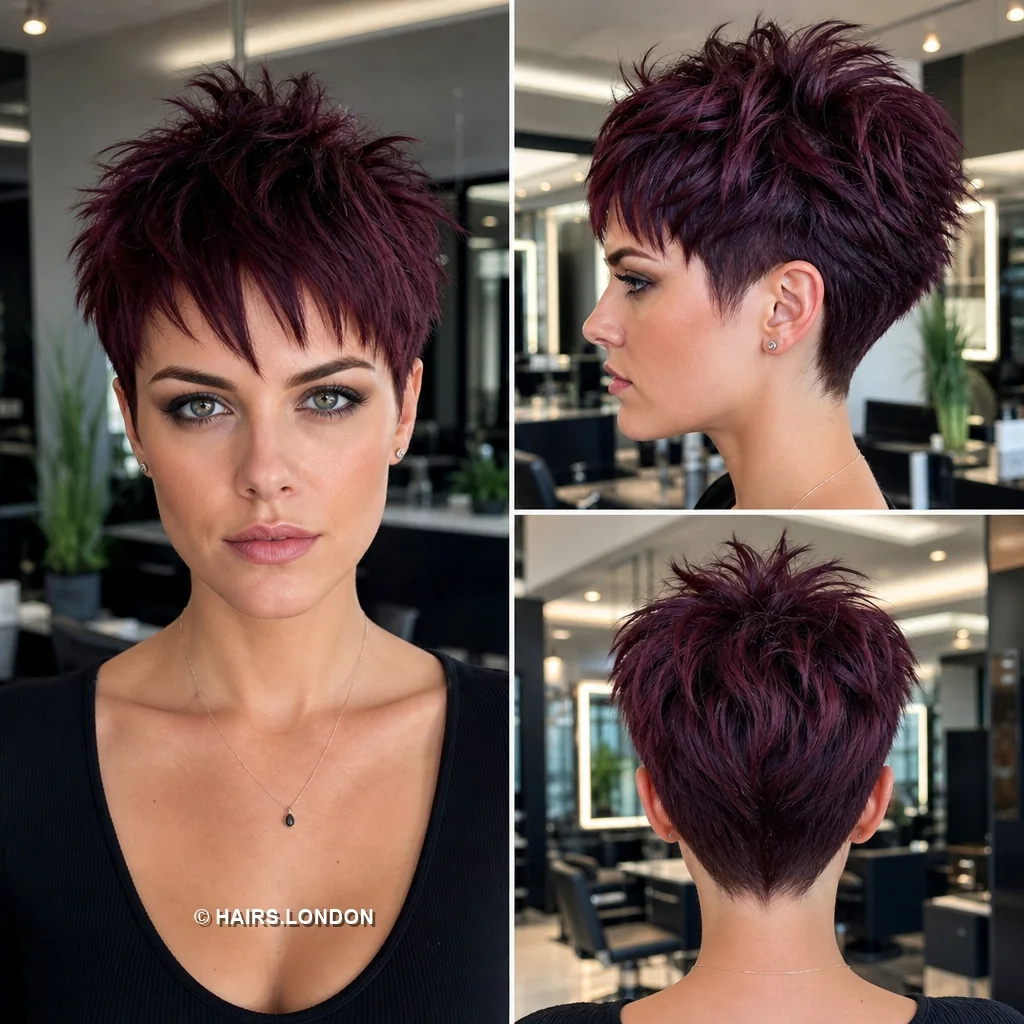
Deep plum-burgundy color complements the compact, choppy structure of this pixie. The fringe is cut short in uneven pieces, and the crown carries slightly longer layers that lift into relaxed spikes. Sides are closely fitted around the ears, while the back tapers into a narrow, pointed nape. The overall silhouette is short but not flat, with enough crown length for daily texture changes. Straight hair can show the jagged edges clearly, though gentle wave can add softness. Use a small amount of matte paste and pinch only selected sections. Keep product light so the separated texture remains easy to reshape.
8. Merlot Spiked Pixie with Pointed Nape
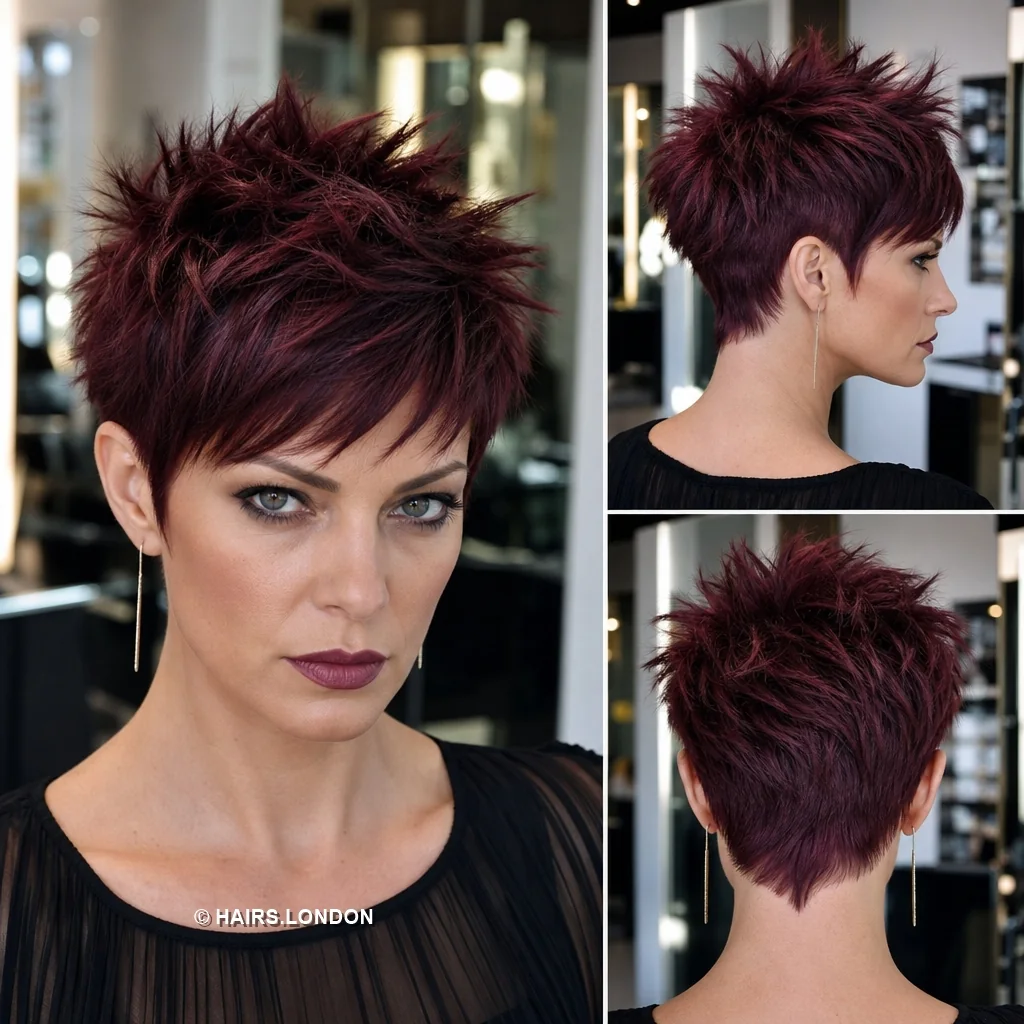
A dark merlot shade gives this spiked pixie a rich, dimensional surface. The front has a longer side-swept section, while the crown rises into sharper, separated points. Sides are cut shorter and hug the head closely, and the rear view shows a distinctly tapered, pointed nape. The longer top creates movement without adding much width through the lower head. Medium or thick hair may need internal reduction beneath the crown to prevent heaviness. Blow-dry upward at the roots, then use flexible paste to direct the tips. Ask your stylist to adapt the reference to your density and natural growth pattern.
9. Deep Brunette Micro Pixie with Spiky Crown
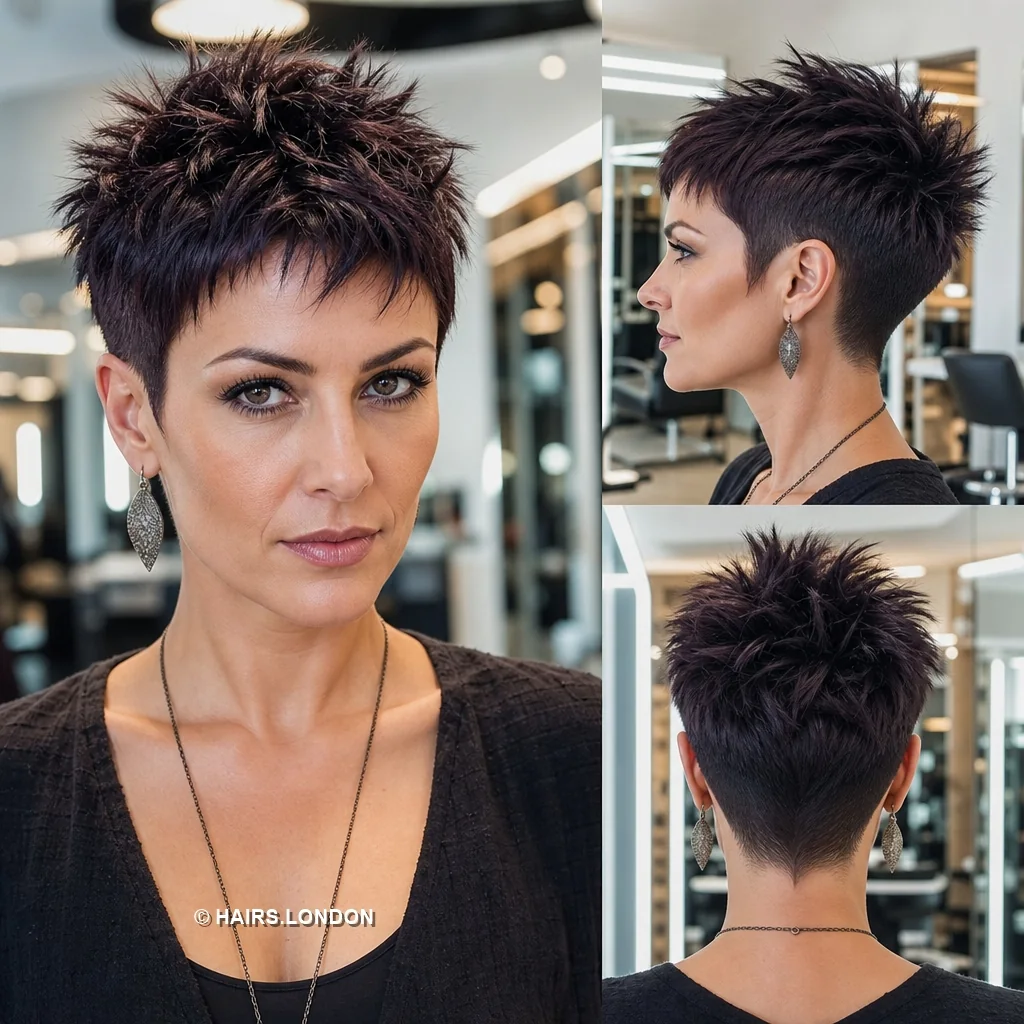
This deep brunette crop is one of the shortest shapes in the collection. The fringe sits close to the forehead in tiny broken pieces, while the crown is lifted into compact spikes for controlled height. Sides are tapered closely around the ear and blend smoothly into a narrow nape, creating a clean silhouette without a dramatic color contrast. The short length can expose natural growth patterns, so cowlicks and crown direction should be discussed before cutting. A lightweight matte cream can add definition without making the hair look rigid. Keep product light so the separated texture remains easy to reshape.
10. Ruby Red Rounded Pixie with Side Sweep
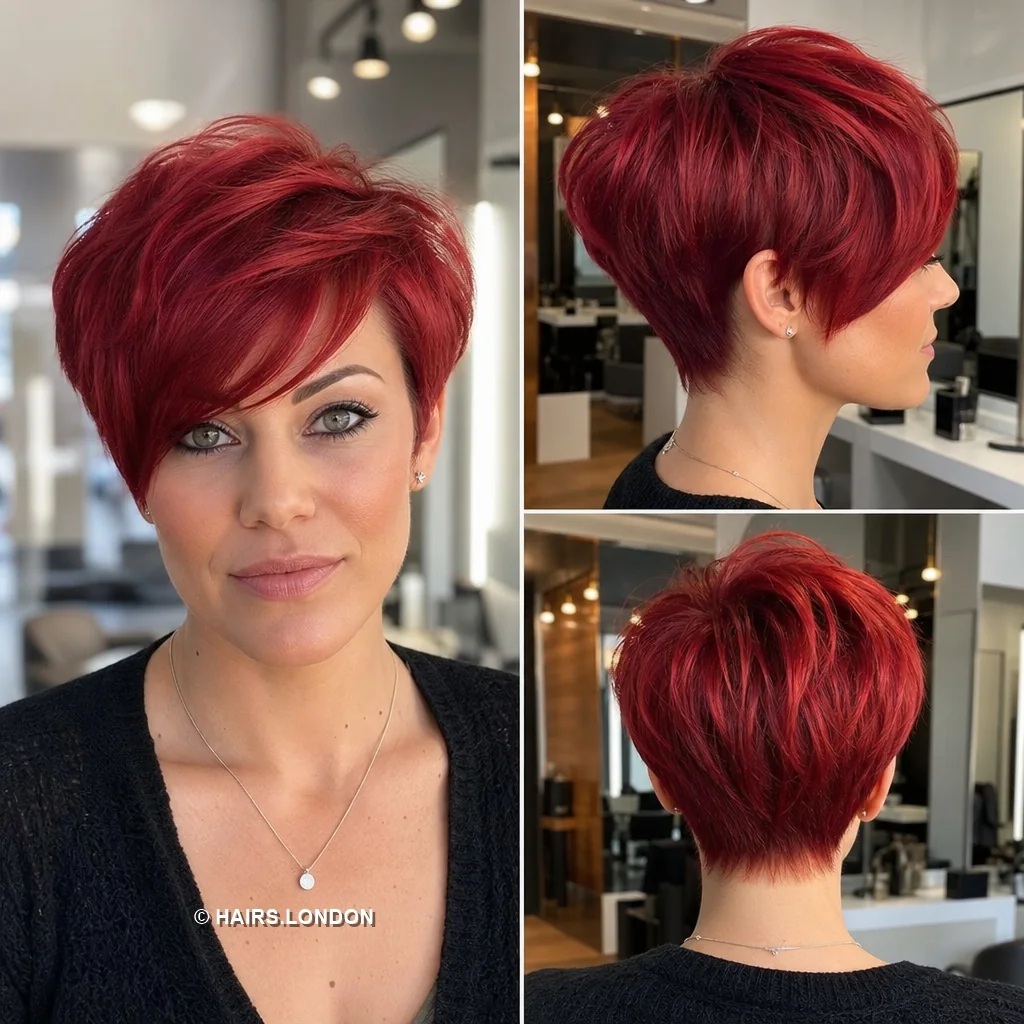
Vivid ruby red color brings attention to the rounded layering in this polished pixie. The fringe sweeps across the forehead in a broad curved section, while the crown and upper back remain full and smoothly stacked. Sides are shorter but softly connected, and the nape tapers gently rather than ending in a hard fade. This is a useful reference for someone who prefers a fuller, less spiky pixie silhouette. A round brush or directional blow-dry can reinforce the sweep. Use flexible cream for shine and separation. Ask your stylist to adapt the reference to your density and natural growth pattern.