


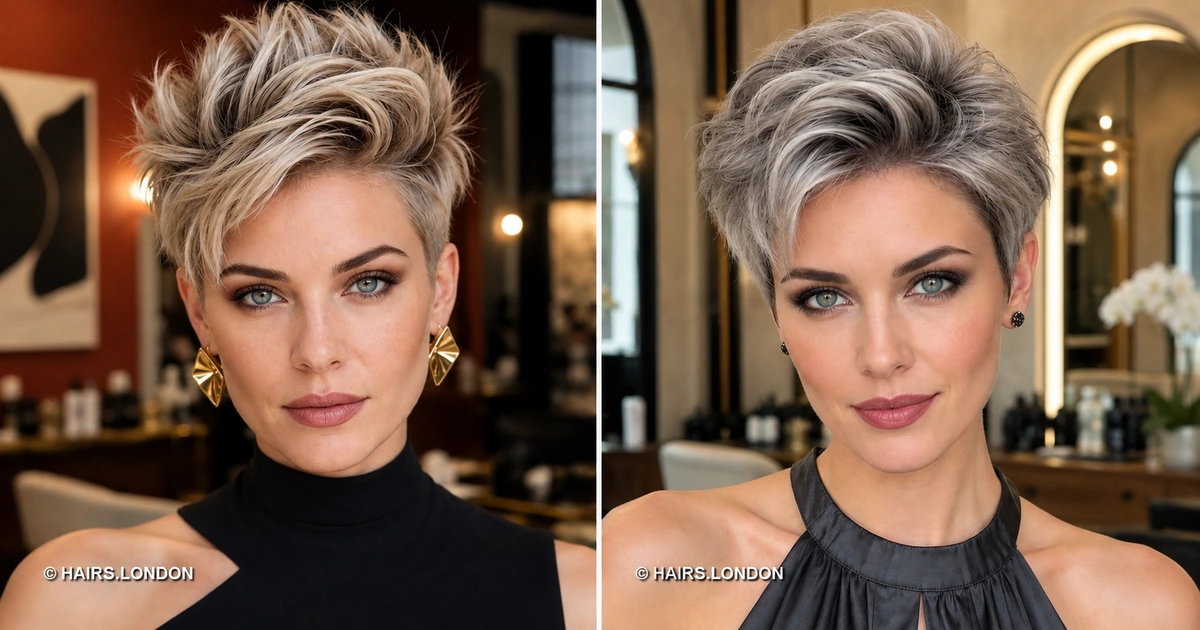
Textured pixie cuts offer more than one short-hair silhouette, and this collection shows how dramatically the result can change through fringe length, crown direction, tapering, undercutting, and color. The twenty references range from softly swept burgundy and champagne-blonde shapes to close platinum undercuts, vivid violet asymmetry, feathered silver layers, and deliberately spiky copper, brunette, and pearl-blonde finishes. Some cuts rely on a longer front for movement, while others use short broken bangs and pronounced crown separation.
Before choosing a reference, compare the amount of side coverage, the length left at the crown, and how closely the nape is tapered. A dramatic undercut usually needs more frequent perimeter maintenance, while a fuller layered pixie can offer a softer grow-out. Consider your natural parting and cowlicks as well: they can change where a swept fringe sits or where crown volume naturally lifts. Fine hair often benefits from lightweight root support and strategic layering, whereas very dense hair may need internal weight removal. Color also changes the visual effect of texture. Silver and blonde shades emphasize fine separation, while burgundy, copper, violet, and dark brunette tones can make piecey layers look deeper and more dimensional. Use the images as consultation references rather than guarantees of an identical result.
How to Compare Textured Pixie Cuts Before Choosing
Start with the silhouette rather than the color. Decide whether you prefer a close undercut, a softly tapered perimeter, or a fuller layered back. Then compare fringe length, crown height, and how much daily separation you want to create with styling. A photograph can show direction and proportion, but your natural growth pattern, density, wave, and preferred maintenance schedule should guide the final cutting plan.
1. Burgundy Swept Layered Pixie
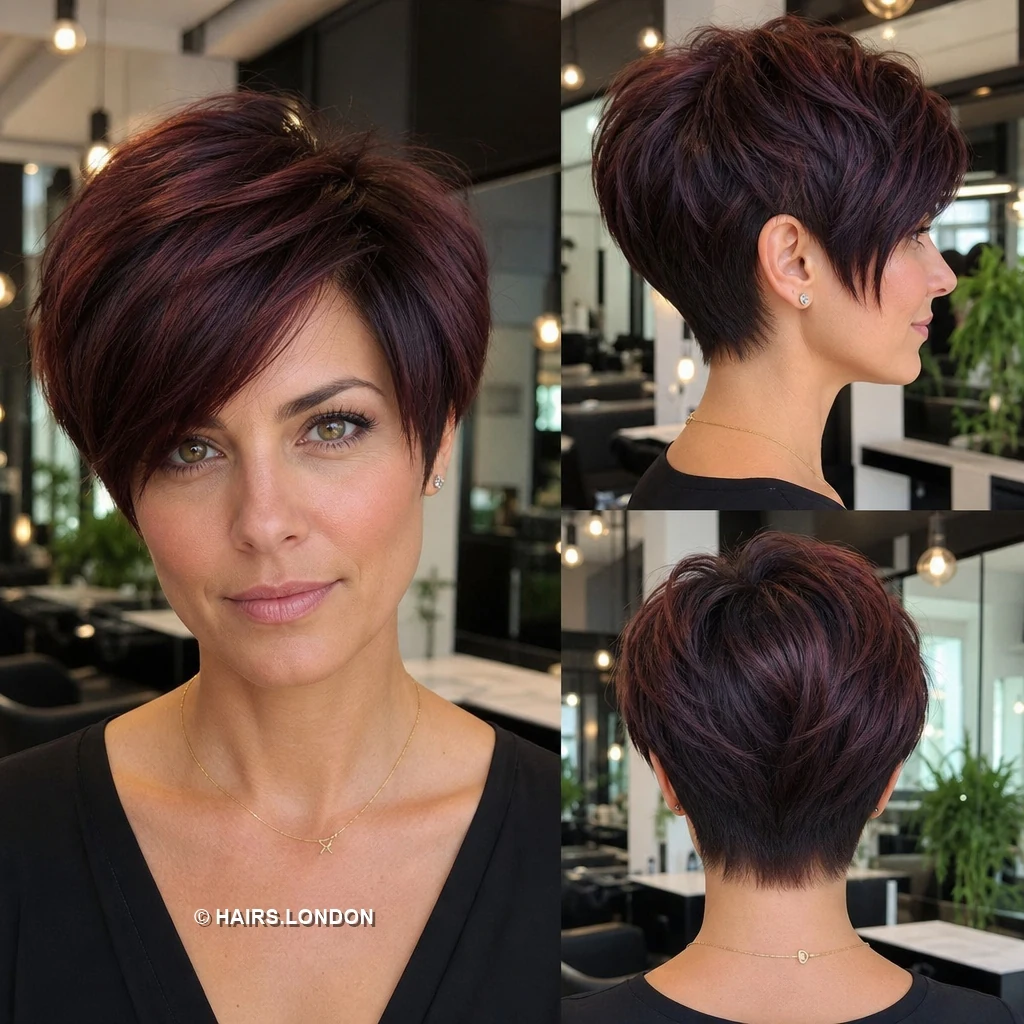
This burgundy pixie keeps generous length through the crown and front, where layered pieces sweep diagonally into a soft side fringe. The sides are closely shaped around the ears while the nape is tapered neatly, allowing the fuller top to remain the focus. Deep wine and red violet tones emphasize separation between layers without requiring a sharply spiked finish. Straight or gently wavy hair can reproduce this direction with a light blow dry and flexible paste. Ask for enough front length to control the sweep, especially if a cowlick changes the natural parting. Use the photograph as a reference and.
2. Plum Tousled Crown Pixie
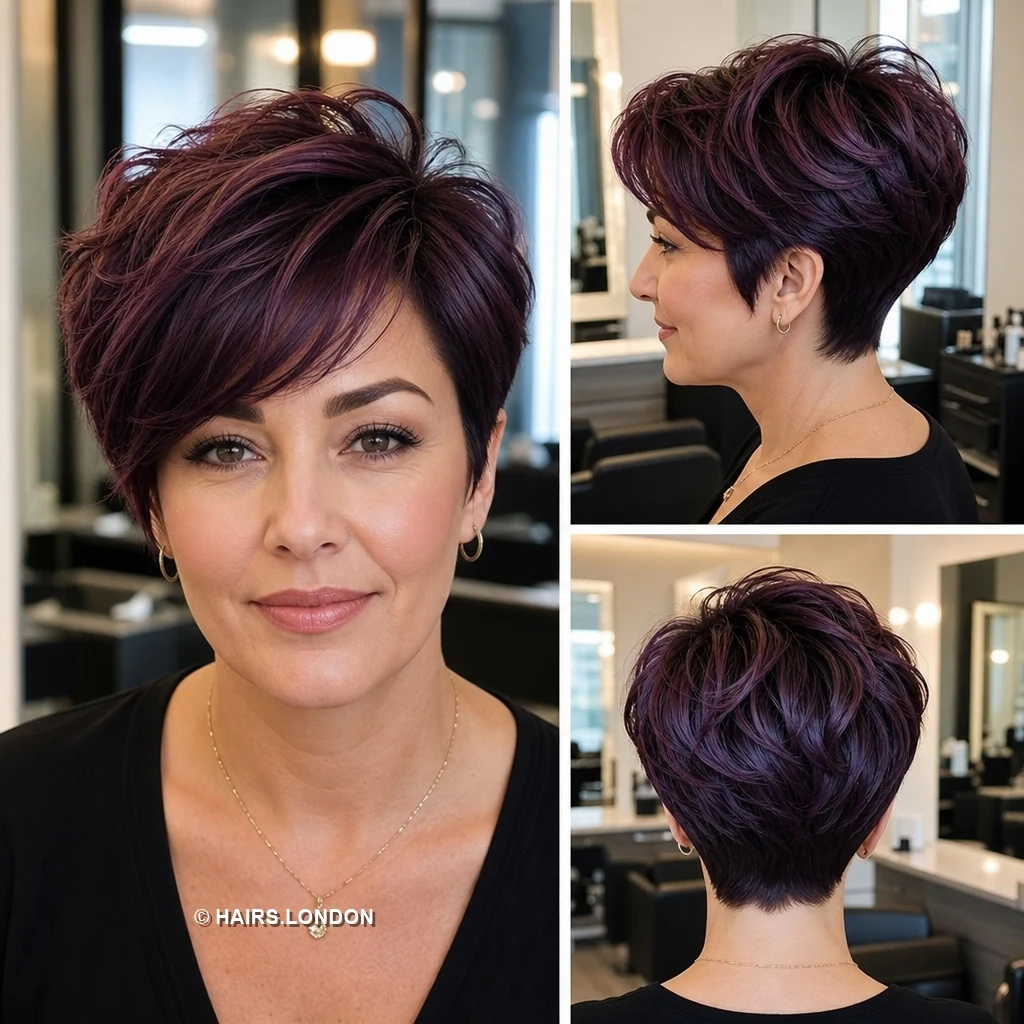
This plum toned pixie uses loose, curved layers to build movement across the crown while a long side fringe blends smoothly into the temple. The back is tapered close at the neckline, but the upper occipital area stays full enough to create a rounded silhouette. Violet and burgundy reflections make the separated waves more visible. Hair with some natural bend can be encouraged with mousse and finger drying, while straighter textures may need a small brush or iron. For thicker hair, internal weight removal can prevent the crown from becoming bulky. Keep the fringe length adjustable during the salon consultation.
3. Midnight Blue Swept Pixie
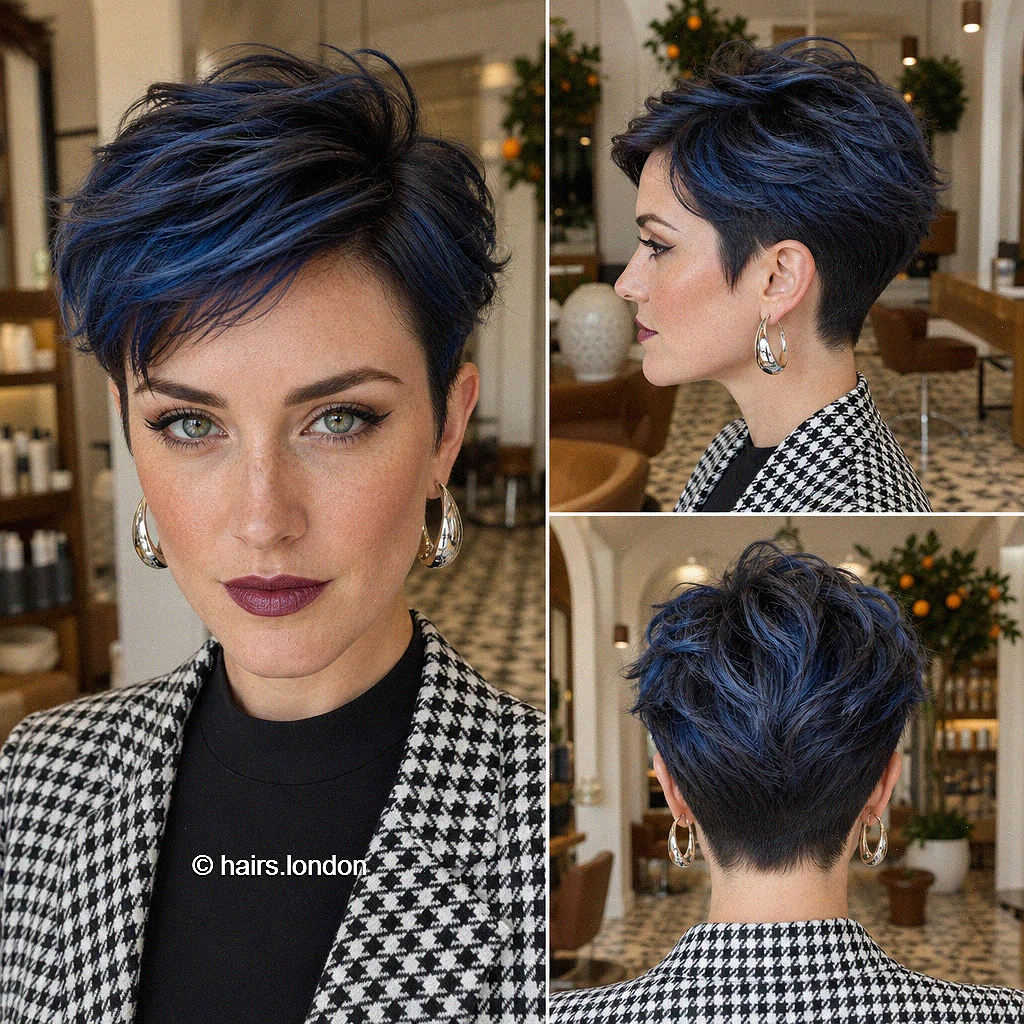
This midnight blue pixie has a long diagonal fringe and rounded, layered crown over closely tapered sides and nape. The front is smooth enough to sweep across the forehead, while the top retains soft separation and lift instead of forming sharp spikes. Blue highlights over the dark base emphasize movement through each layer. Straight or slightly wavy hair can be directed with a vent brush and flexible cream. Fine hair may need root support at the crown, while dense hair can benefit from internal weight removal. Discuss how the cool blue placement will fade and how often you are comfortable.
4. Copper Red Swept Pixie
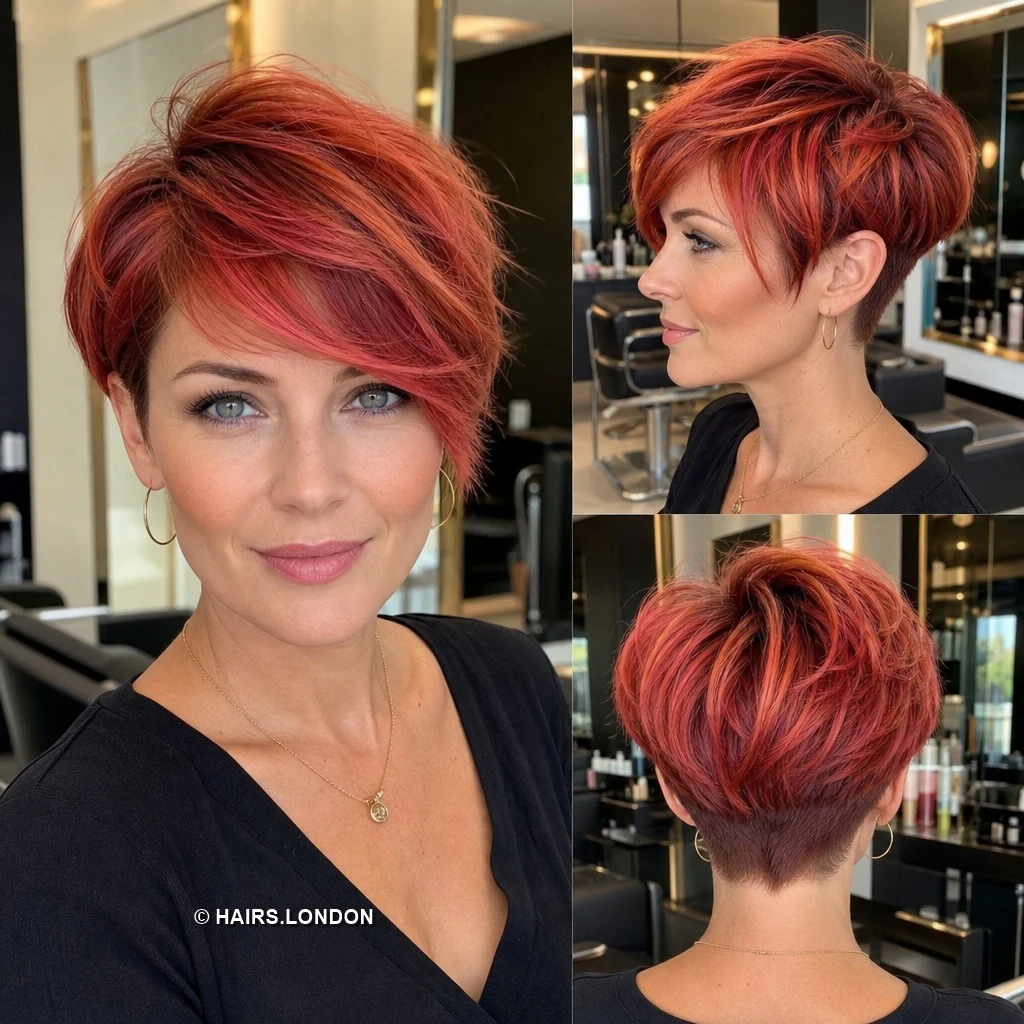
Bright copper red gives this layered pixie extra definition, especially through the long side swept fringe and airy crown. The top remains noticeably longer than the sides and nape, creating a compact shape with movement rather than a severe crop. Fine point cutting through the ends helps the layers separate, while the back is graduated closely for a clean finish. A lightweight root lift product can support the crown without making the fringe stiff. Color this vivid may need more frequent refreshing than natural shades. Bring the photograph as a shape reference and discuss how much fringe coverage feels practical.
5. Ash Gray Cropped Pixie
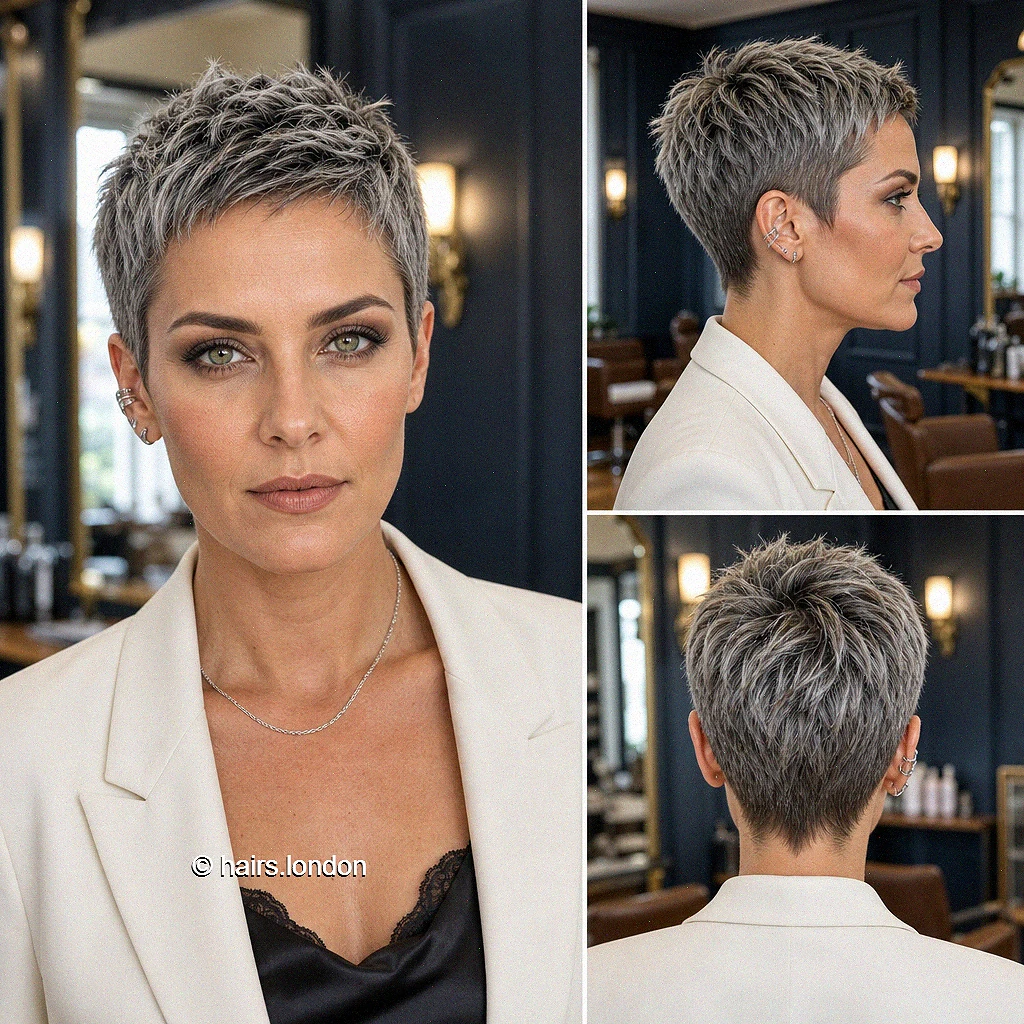
This ash gray pixie is cropped closely around the sides and nape, with short textured layers left slightly longer through the crown. The fringe is minimal and broken, keeping the front open while the top gains subtle height from piecey ends. Cool gray and charcoal tones make the compact layering easy to see. This shape can suit straight or gently wavy hair when the crown has enough natural support. A dry paste adds separation without shine. Dense hair may need careful thinning, but fine hair should keep enough weight at the surface. Regular neckline cleanup preserves the neat tapered outline.
6. Burgundy Voluminous Pixie
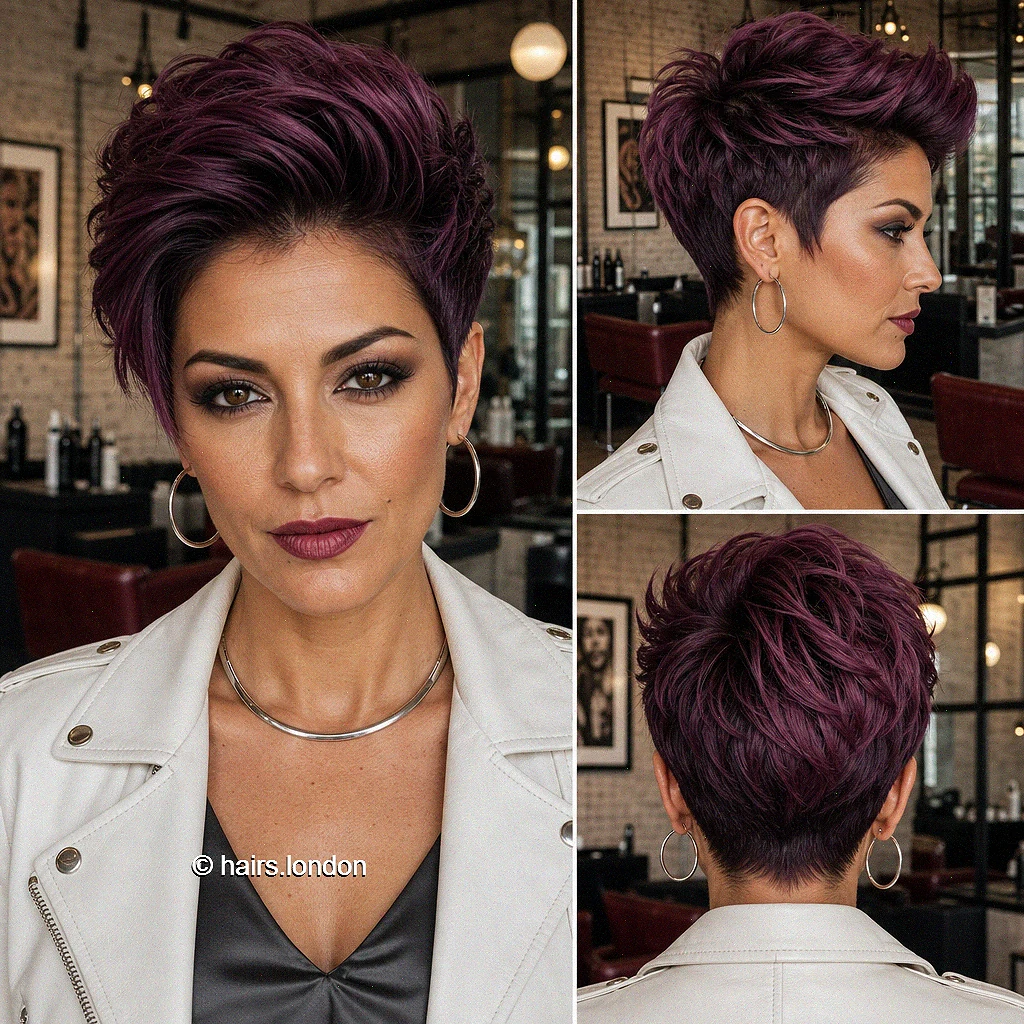
This burgundy pixie carries noticeably more volume through the crown, where curved layers are lifted and swept back from a longer front. The sides are tapered close around the ears, and the nape narrows cleanly beneath the fuller upper shape. Deep wine tones with violet reflections accentuate the overlapping texture. Hair with medium density can be blow dried upward at the roots, then shaped with flexible paste or texture spray. Very thick hair may need internal weight removal to keep the crown controlled. Because the top is longer, this cut can also be styled smoother as it grows between shaping.
7. Champagne Blonde Spiky Pixie
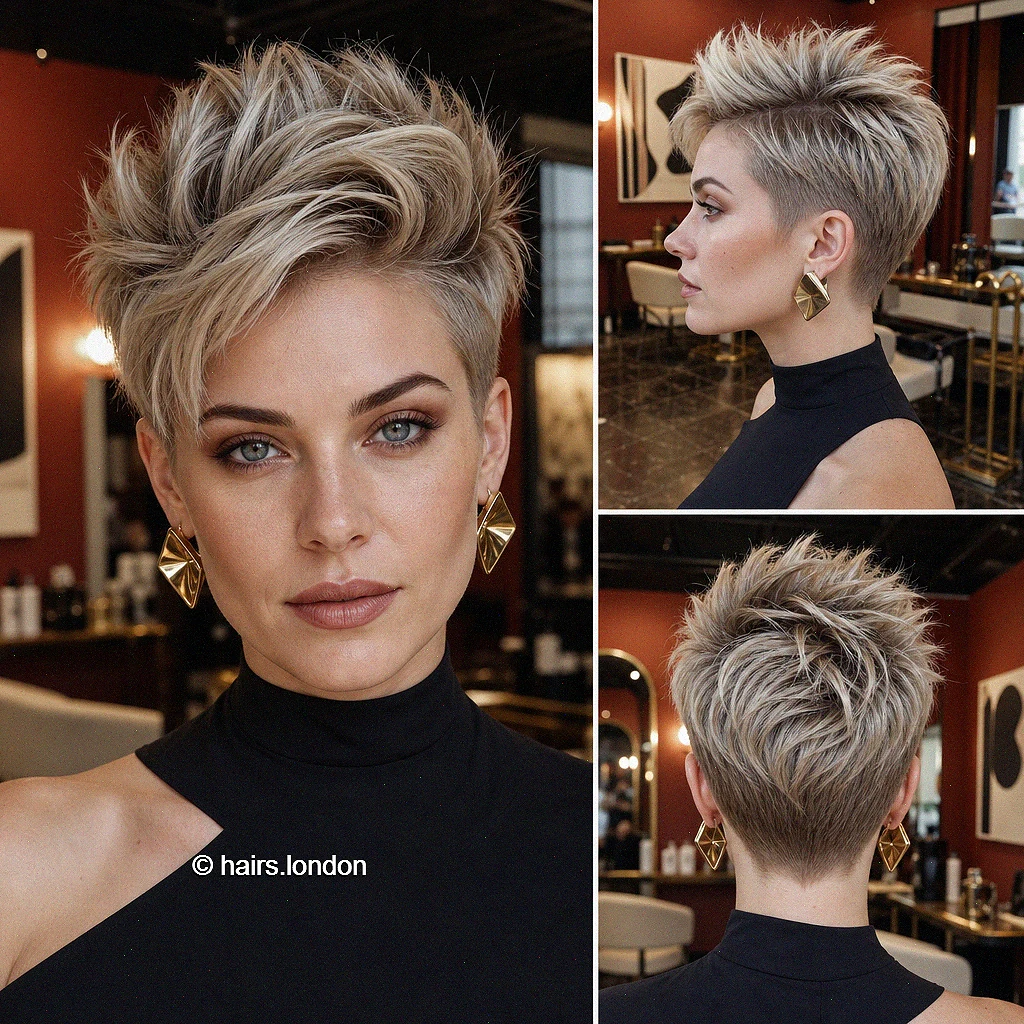
This champagne blonde pixie uses a short tapered base with longer, pointed layers directed upward through the crown. The fringe is light and piecey, blending into the textured top instead of forming a heavy bang. Pale blonde highlights over a slightly deeper root create clear separation between the spikes. Fine hair can gain height from root lift spray and dry texture product, while dense hair may need point cutting to reduce bulk. Work with small amounts of paste so the finish stays airy. The shorter sides show growth quickly, and lightened hair benefits from conditioning and heat protection when styled.
8. Sapphire Blue Textured Pixie
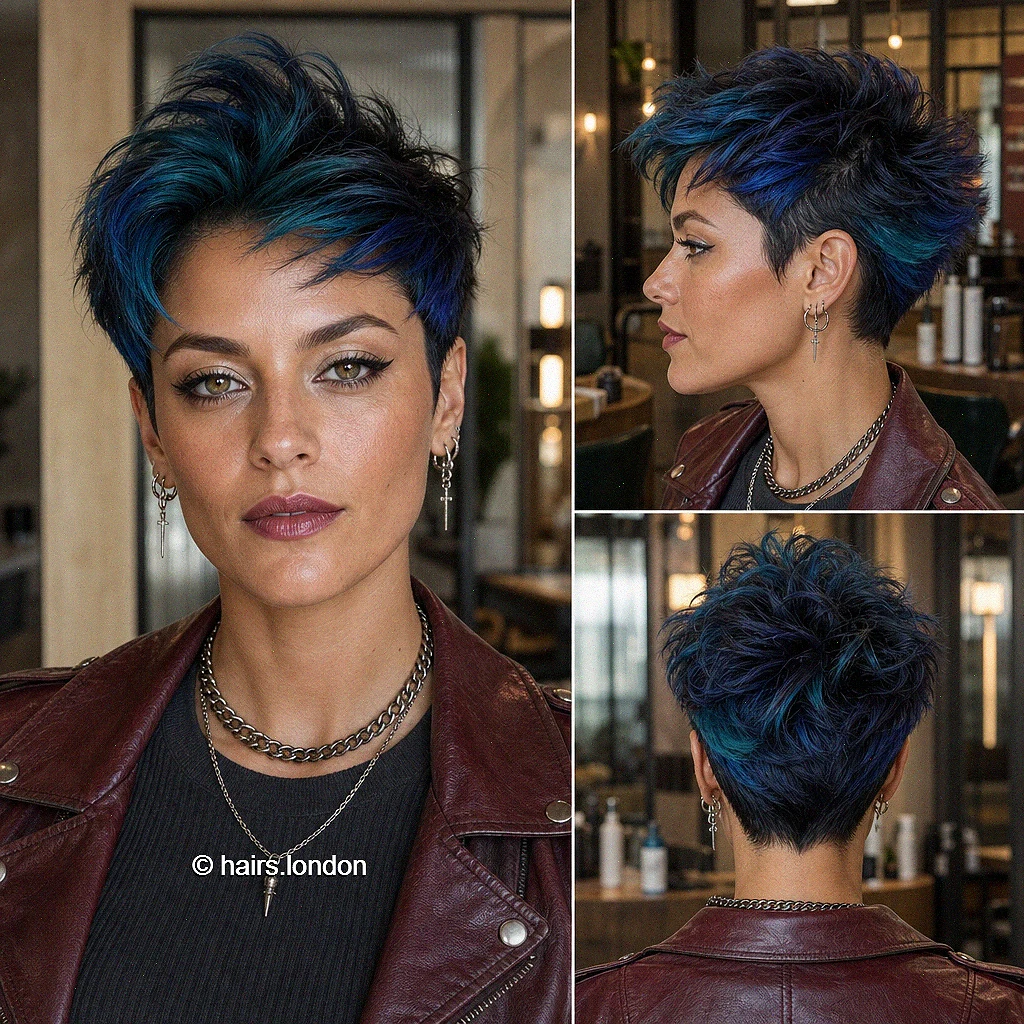
This sapphire blue pixie combines a longer, side swept top with a compact tapered perimeter. The fringe moves diagonally across the forehead, while the crown is tousled into curved, separated pieces that create lift without rigid spikes. Blue and teal reflections stand out over the dark base and make the layered direction especially visible. A flexible paste or texture spray can support the shape while keeping movement. Straight or slightly wavy hair can be finger dried for a relaxed finish. Vivid blue may fade noticeably with washing, so discuss color safe cleansing and realistic refresh timing alongside the haircut maintenance.
9. Brunette Highlighted Taper Pixie
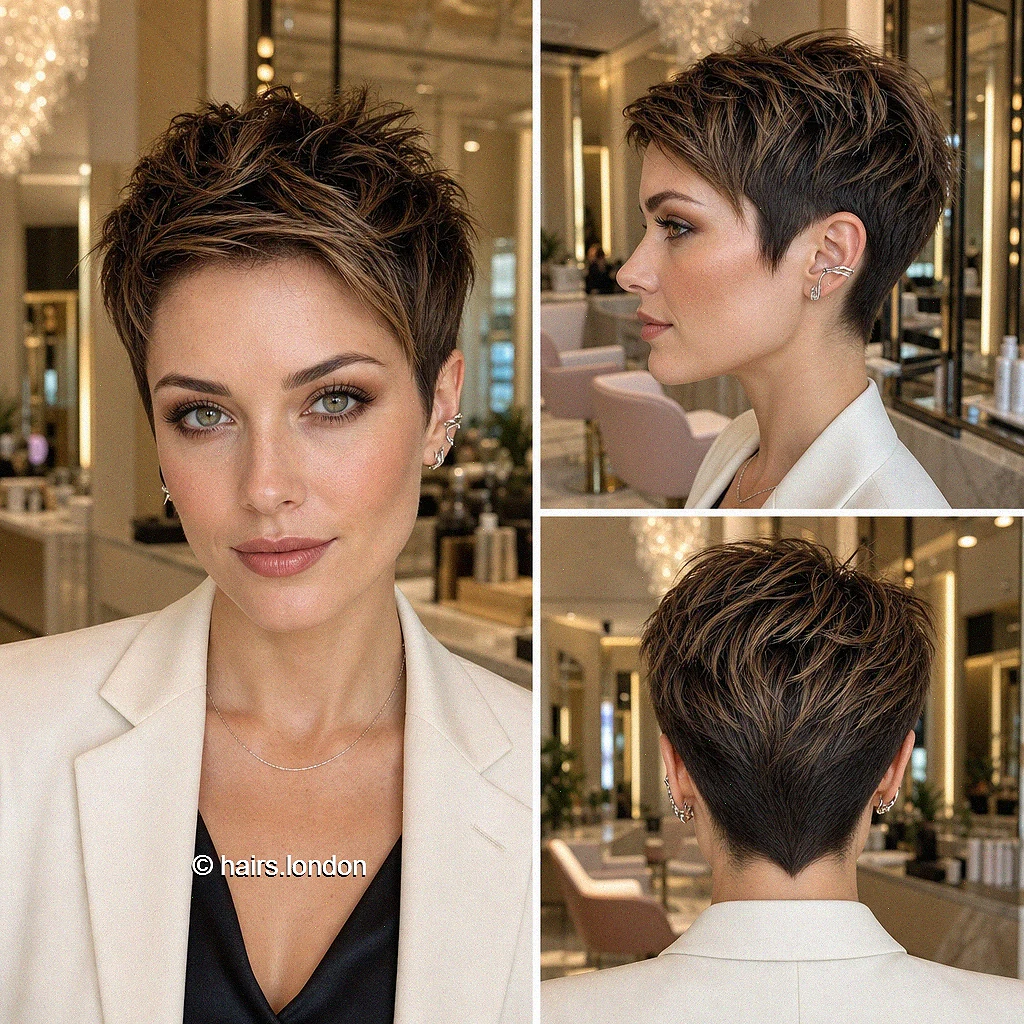
This brunette pixie has a softly tapered nape, close sides, and a longer textured crown with warm highlighted ribbons. The fringe is short and feathered, allowing the front to remain light while the upper layers sweep slightly upward and sideways. Caramel brown accents make the separation visible without turning the overall color blonde. Fine hair can use lightweight mousse for lift, while thicker hair may need interior debulking so the crown does not widen. A small amount of dry paste can define the ends. Ask the stylist to preserve enough top length to offer both smoother and more tousled styling.
10. Silver Sculpted Side Pixie
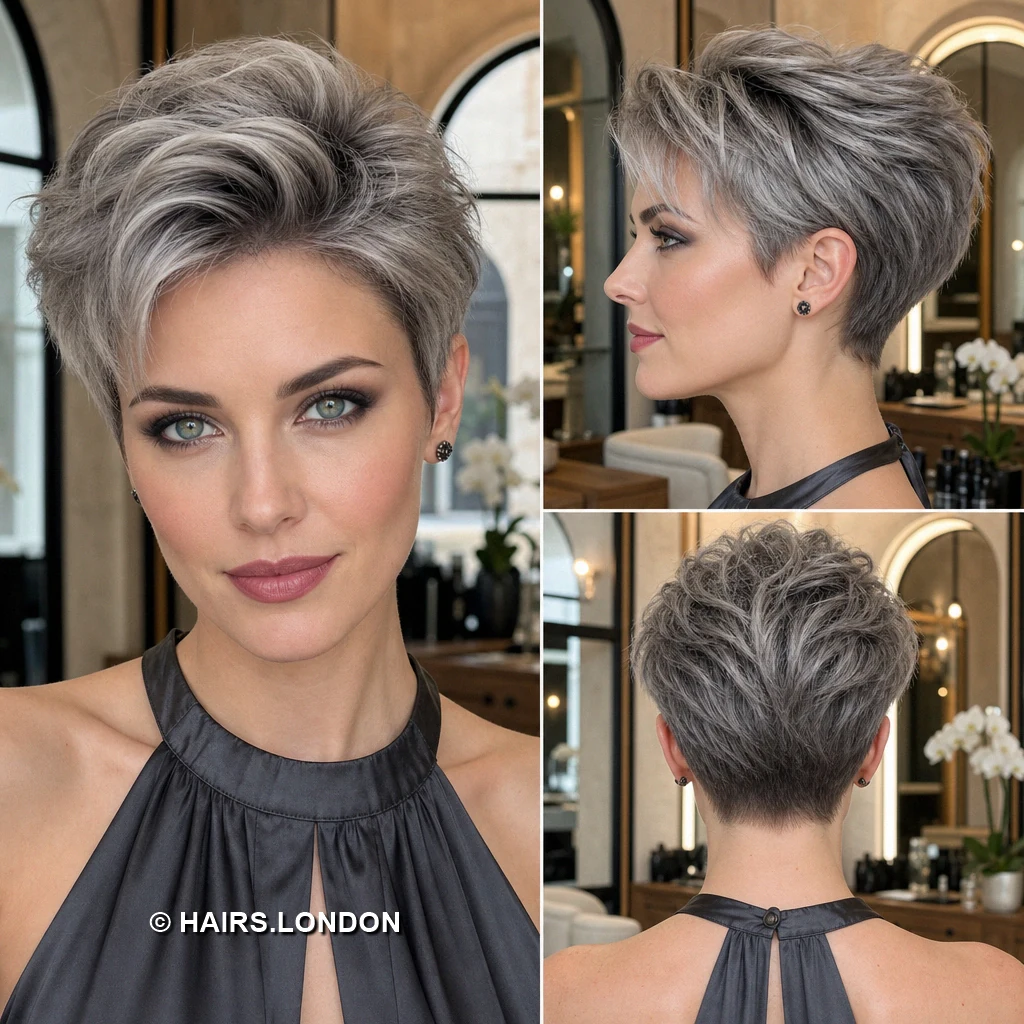
This silver pixie combines a softly lifted crown with a longer front that sweeps away from the face. The sides are tapered closely but not shaved, and the nape narrows into a clean, subtle point. Layering through the top creates feathered movement that prevents the silver finish from looking flat. Straight to slightly wavy textures can style this shape with a round brush, fingers, and a light texture cream. Fine hair may benefit from root spray at the crown, while dense hair may need careful debulking underneath. Silver shades can require toning care depending on the starting color and desired.