


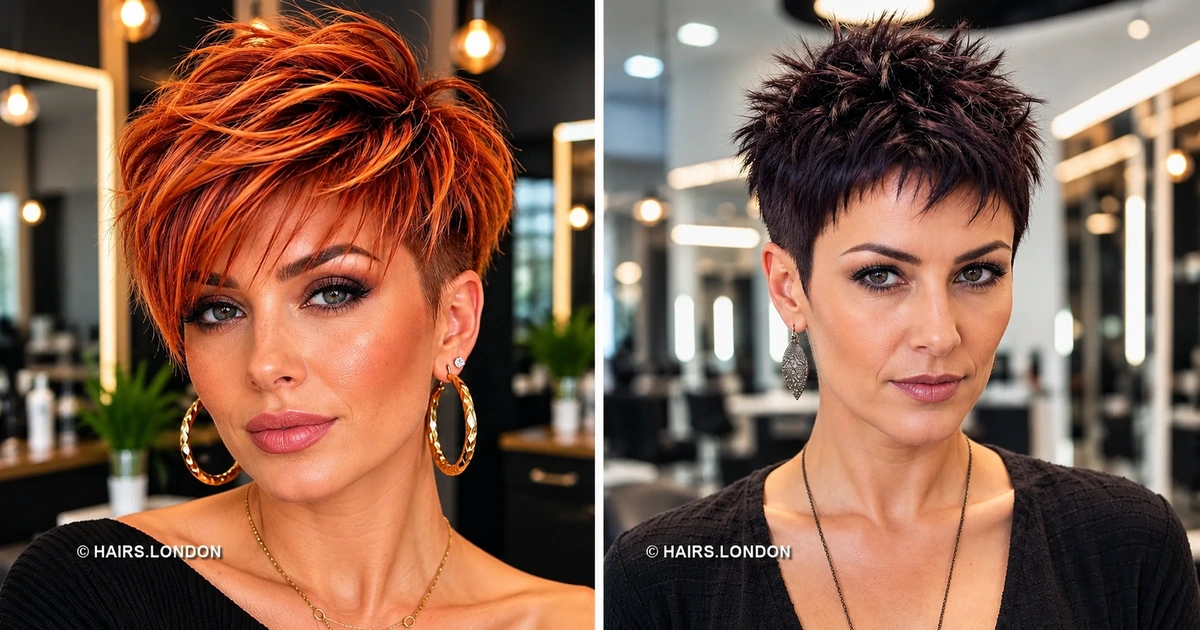
11. Bronde Spiky Pixie with Shadowed Taper
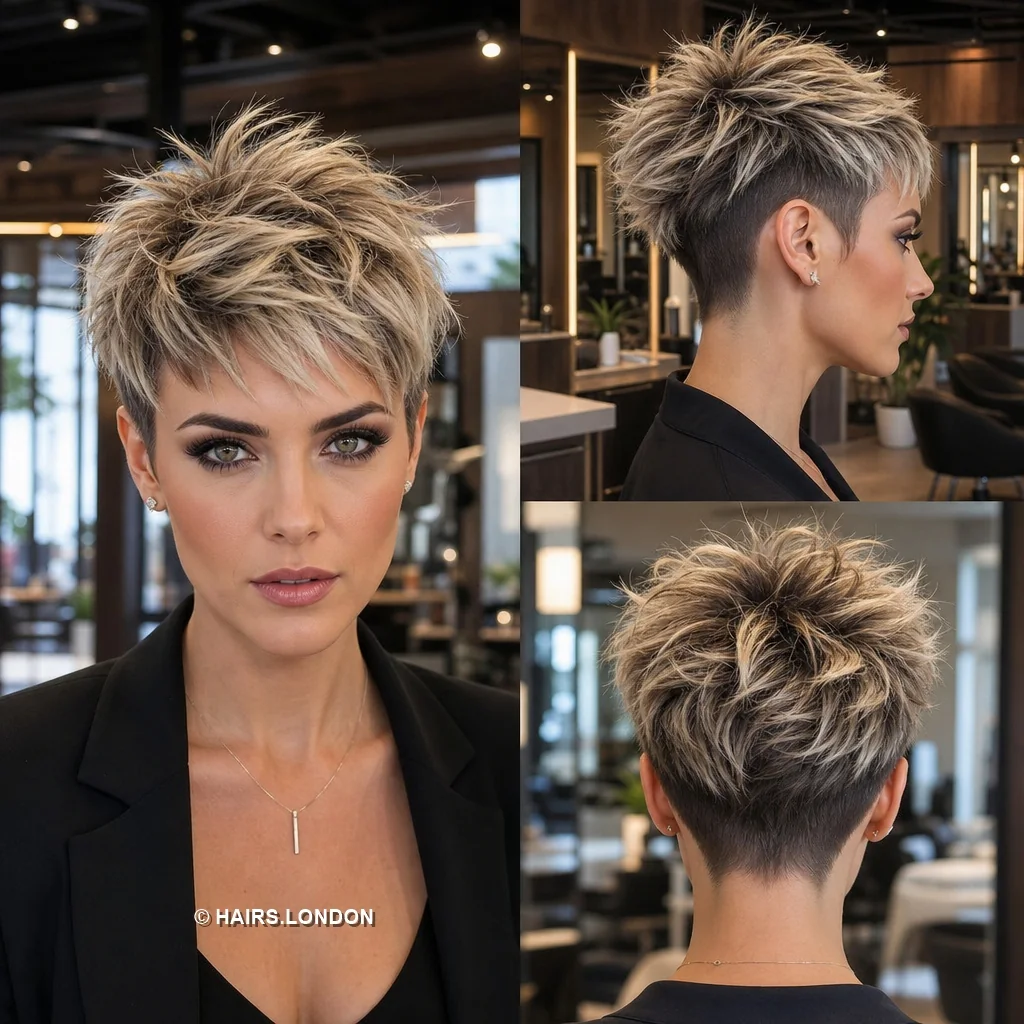
Bronde highlights over a deeper base accentuate the jagged crown of this short pixie. The fringe is compact and lightly separated, while longer top layers lift into airy spikes. The sides are cropped much closer and remain darker, producing a shadowed taper that makes the highlighted crown appear fuller. The back narrows cleanly at the nape. Fine hair may benefit from this visual contrast, although actual volume depends on density and styling. Apply root lift before drying, then use a small amount of matte paste on the ends. Bring this reference and discuss which haircut details matter most to you.
12. Pearl Blonde Cropped Pixie with Airy Texture
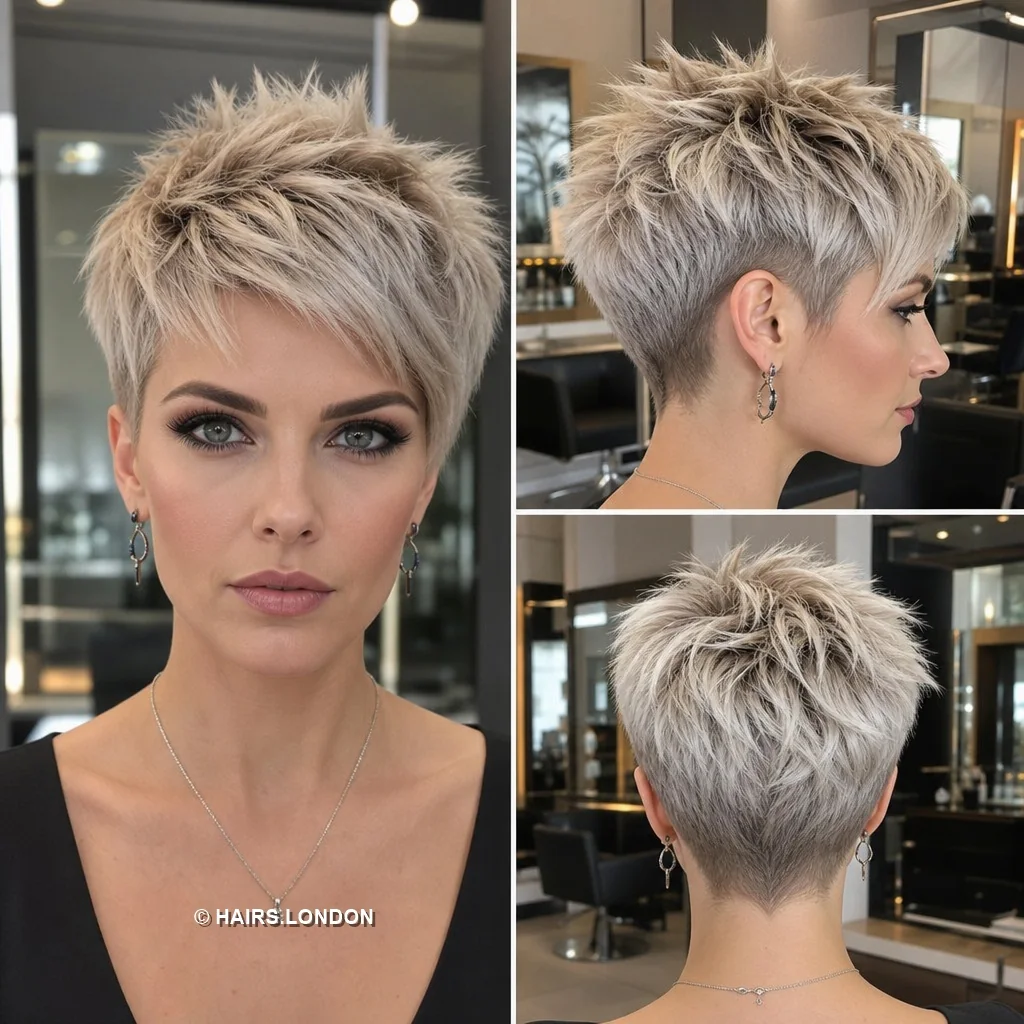
Pearl and pale beige blonde tones soften this closely cropped pixie. The fringe is short and feathered, with slightly longer crown layers styled into light, airy separation rather than pronounced spikes. Sides remain neat around the ears and taper gradually toward the nape, giving the cut a balanced, compact outline. The back view shows soft texture without excessive bulk. Fine hair can use a light volumizing spray, while thicker hair may need subtle internal reduction. Pale blonde hair also benefits from conditioning and careful heat use. Ask your stylist to adapt the reference to your density and natural growth pattern.
13. Burgundy Swept Pixie with Rounded Back
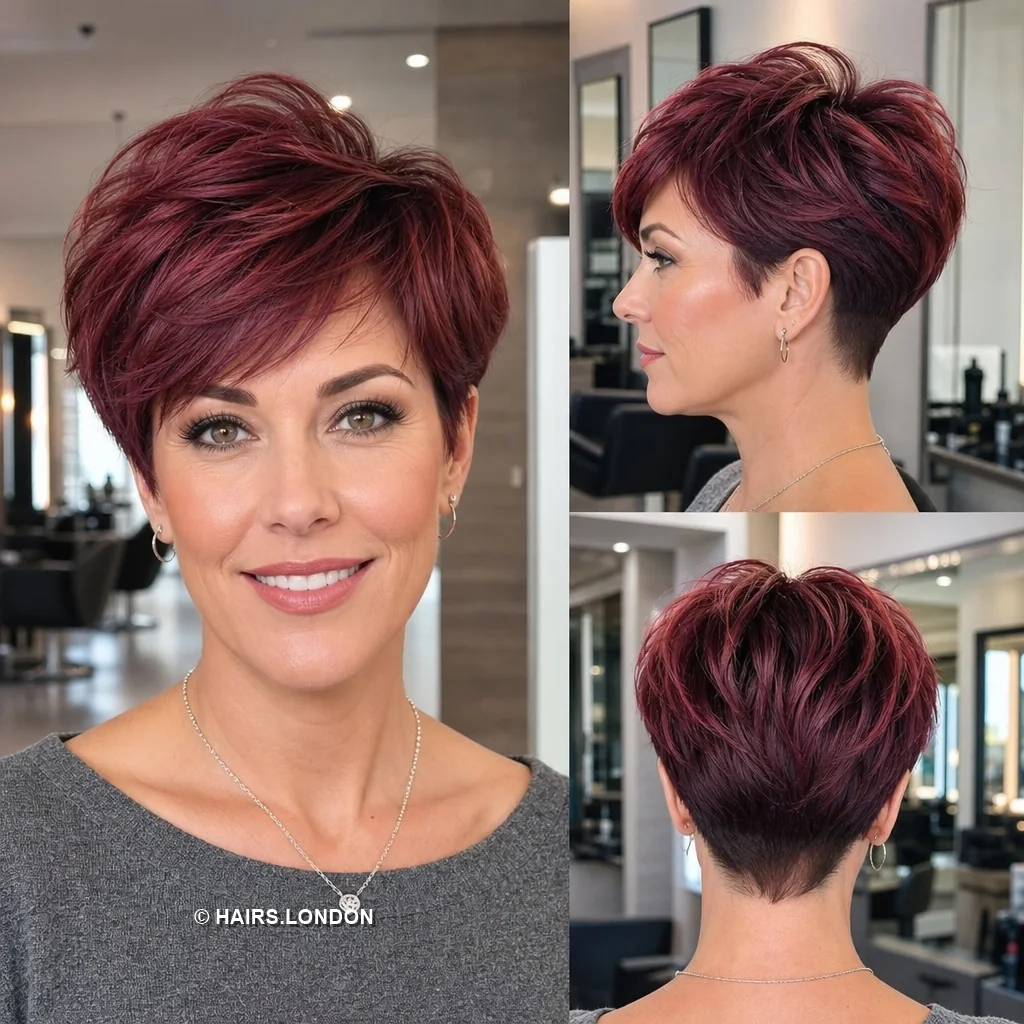
Burgundy-red color enhances the smooth, sweeping movement of this fuller pixie. The front is left long enough to travel diagonally across the forehead, and the crown transitions into rounded, overlapping layers. The sides are short but not shaved, while the back keeps enough length for a softly tapered, polished silhouette. Compared with a spiky crop, this shape relies more on controlled direction and surface shine. A light smoothing cream and blow-dry with a small brush can guide the fringe. Consider natural parting placement before shortening the front. Regular perimeter shaping helps preserve the intended balance as the short layers grow.
14. Fuchsia Quiff Pixie with Dark Taper
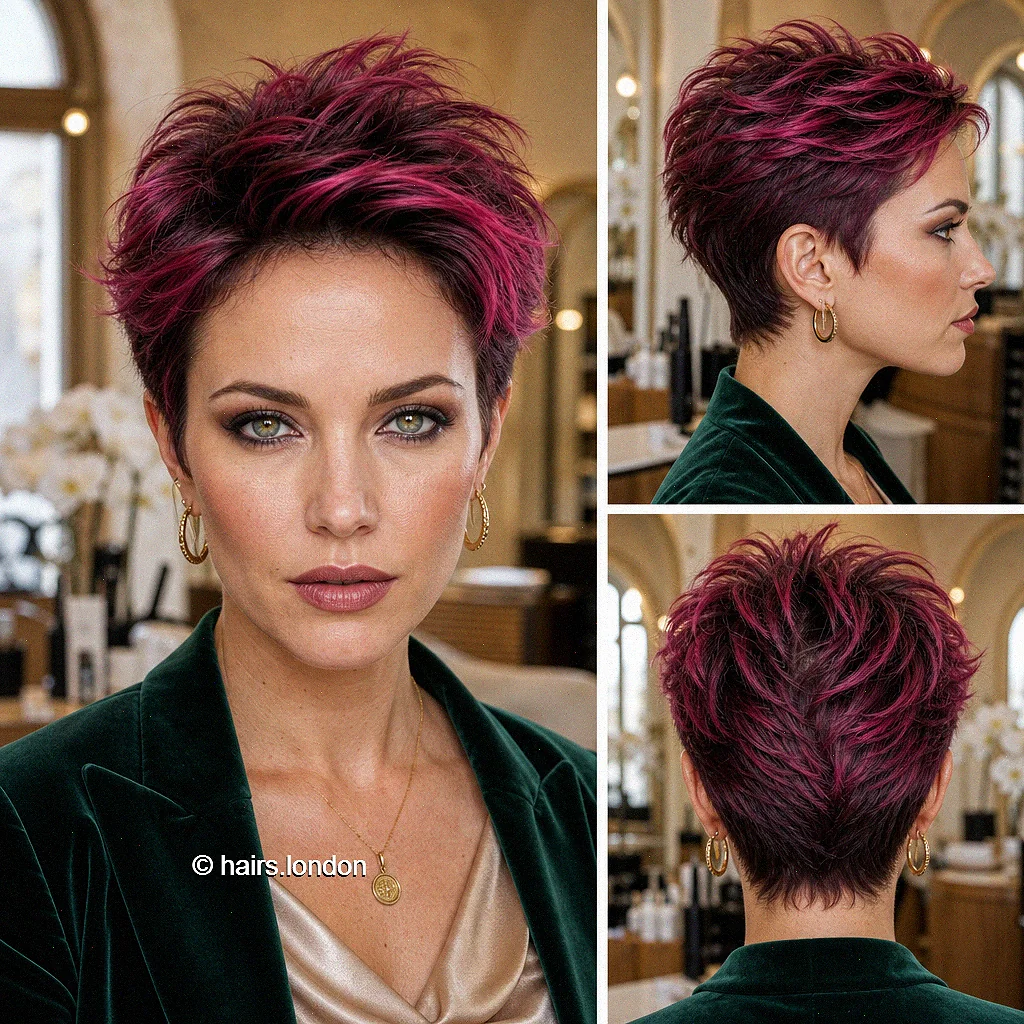
Hot fuchsia highlights create a bold streaked effect through this lifted pixie quiff. The top is substantially longer than the dark sides, sweeping upward and back in broad, textured sections. The side profile shows a close taper around the ear, while the crown retains enough length for height and movement. The nape stays compact beneath the fuller top. Strong directional blow-drying is important for this finish. Start with root support, then use flexible paste to separate the ends without flattening the volume. Use this photograph as a reference then adapt fringe length crown height side exposure and maintenance to routine.
15. Champagne Blonde Pompadour Pixie
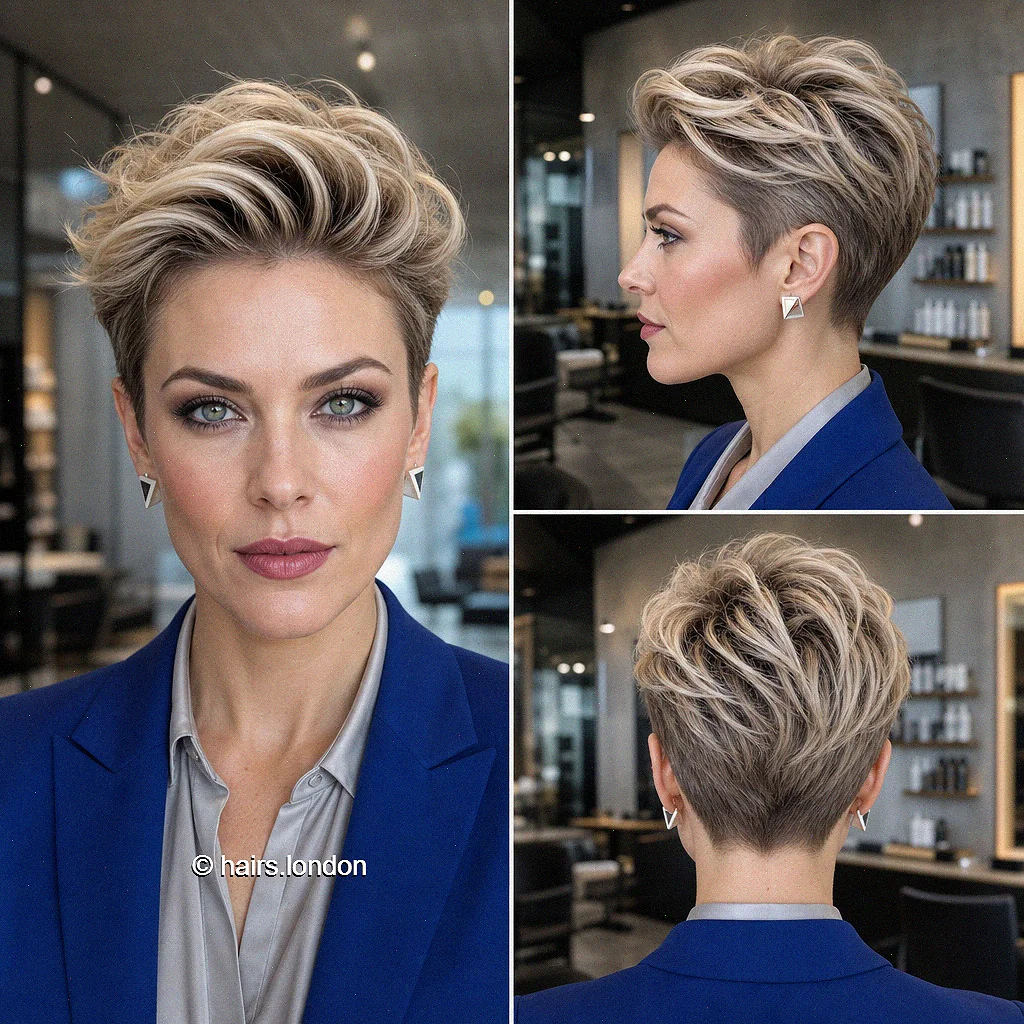
Champagne blonde and cool beige ribbons emphasize the sculpted height of this pompadour-inspired pixie. The front is the longest area, lifted away from the forehead and swept backward into a voluminous crest. Sides are much shorter and closely tapered, creating a strong contrast beneath the elevated top. The back remains neat and narrow at the nape. This style needs enough top length to bend rather than stand straight up. Blow-dry with a brush for lift, then use a workable styling cream or paste for controlled separation. Ask your stylist to adapt the reference to your density and natural growth pattern.
16. Dark Merlot Sculpted Pixie with Side Taper
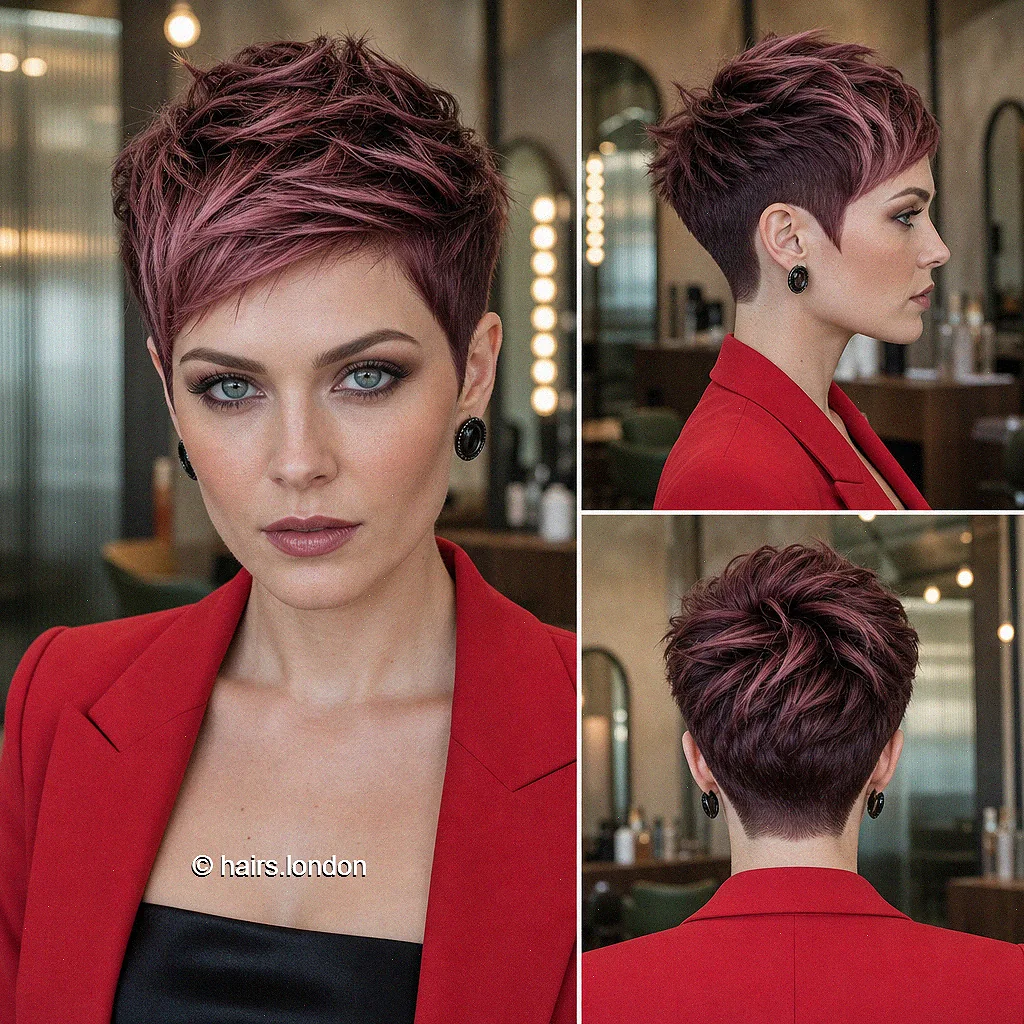
Dark merlot color gives this sculpted pixie a sleek, architectural appearance. The crown and front are cut into short pointed layers that lift upward, while the side profile reveals a much closer taper around the ear. The back is compact and feathered toward the nape, keeping the shape sharp from every angle. The fringe is short enough to stay off the eyes but still shows textured separation. Coarse or dense hair may require thoughtful weight removal. Style with firm but flexible paste, using fingertips to direct individual points. Bring this reference and discuss which haircut details matter most to you.
17. Silver Blonde Tousled Pixie with Wispy Fringe
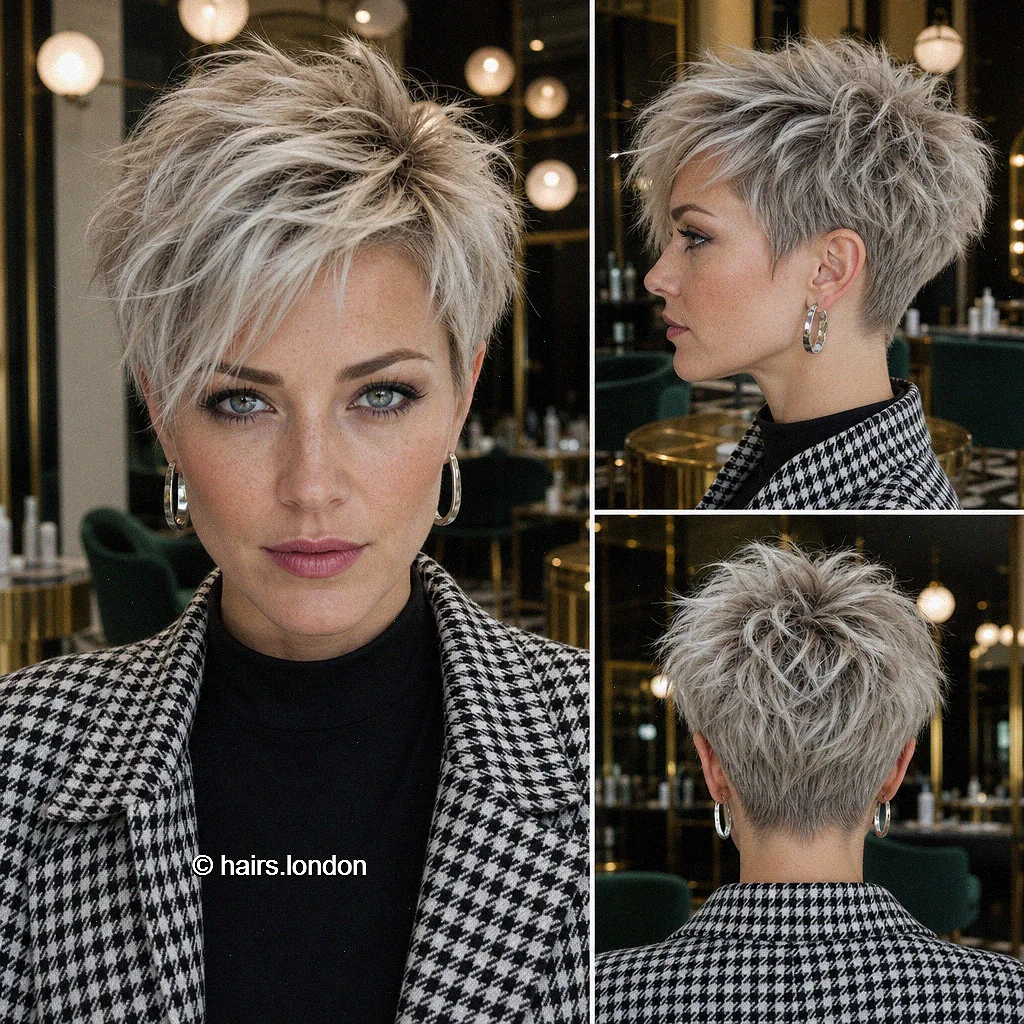
Silver blonde with darker lowlights creates strong dimension through this tousled pixie. The fringe is longer and wispy, falling diagonally across the forehead, while the crown is lifted into soft, irregular spikes. Sides are shorter and blended, and the back tapers neatly beneath the textured top. The mix of pale and shadowed strands makes the layering visible without relying on vivid color. Fine hair can use lightweight mousse for lift, while naturally wavy hair may need only gentle finger styling. Avoid overworking the ends with heavy product. Regular perimeter shaping helps preserve the intended balance as the short layers grow.
18. Espresso Spiky Crop with Feathered Perimeter
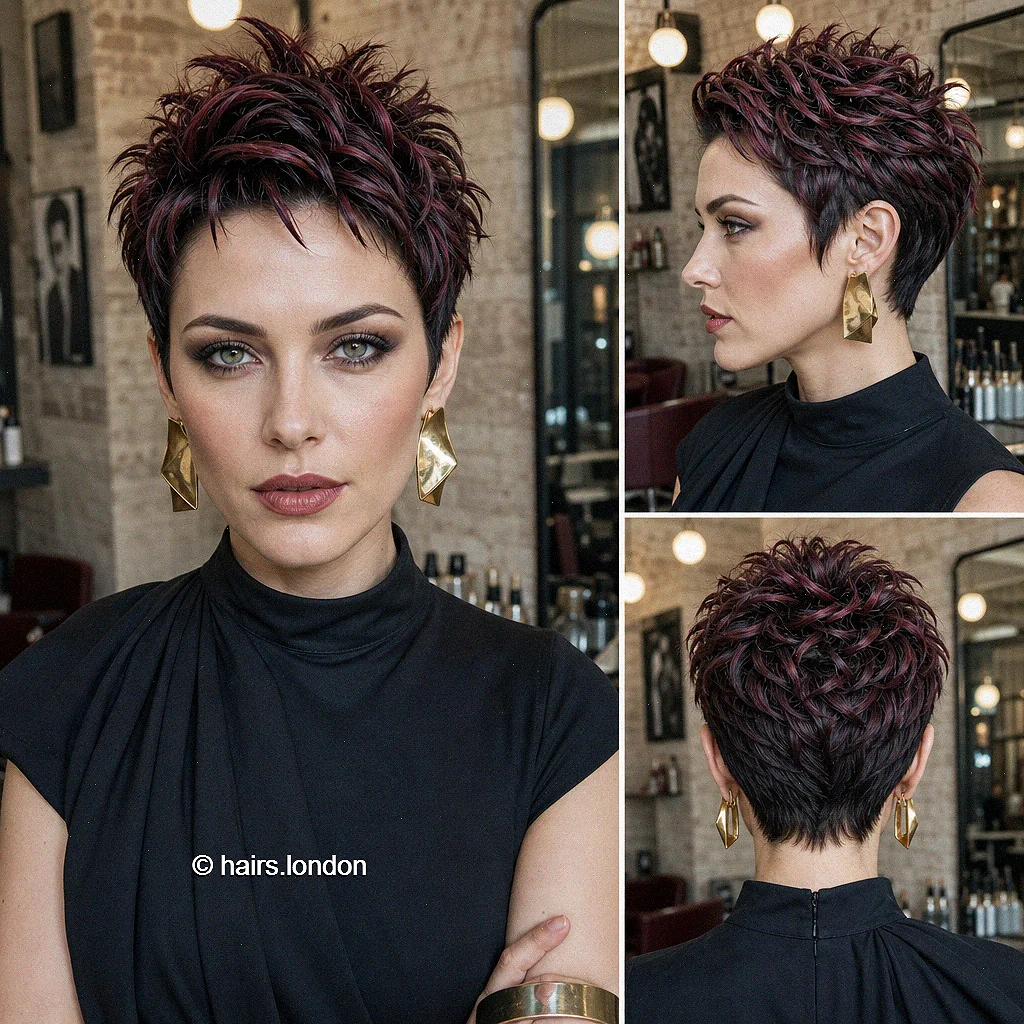
Deep espresso brown keeps the focus on the shape of this short spiky crop. The crown is lifted into many fine, irregular points, while the fringe remains short and broken rather than swept. Sides are closely tapered around the ears, and the rear view shows a feathered perimeter that narrows cleanly toward the nape. This compact silhouette can be adjusted by leaving slightly more side coverage if preferred. Straight to slightly wavy hair can show the separation well. Use dry texture paste sparingly and reshape with fingertips. Regular perimeter shaping helps preserve the intended balance as the short layers grow.
19. Pastel Silver Spiky Pixie with Cool Tint
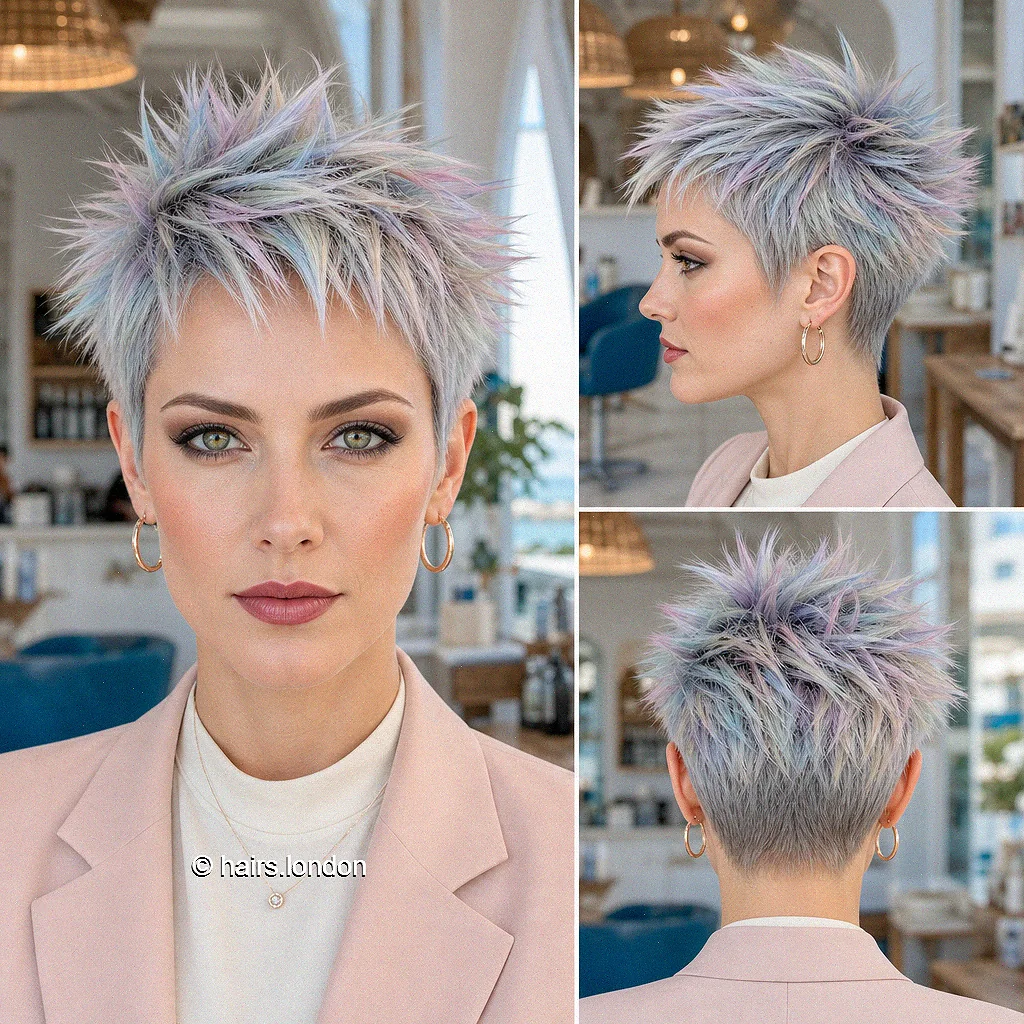
Pastel silver with faint cool lavender and blue tones gives this spiky pixie an icy, editorial finish. The top and crown are left long enough for soft upright points, while the sides are clipped closer and smoothly tapered. The fringe is short, wispy and lightly separated, keeping the face area open. From the back, the crown texture flows into a clean, narrow nape. Lightened hair may need extra conditioning because repeated toning can affect feel and shine. Use heat protection and a lightweight paste for flexible definition. Regular perimeter shaping helps preserve the intended balance as the short layers grow.
20. Magenta Swept Pixie with Textured Crown
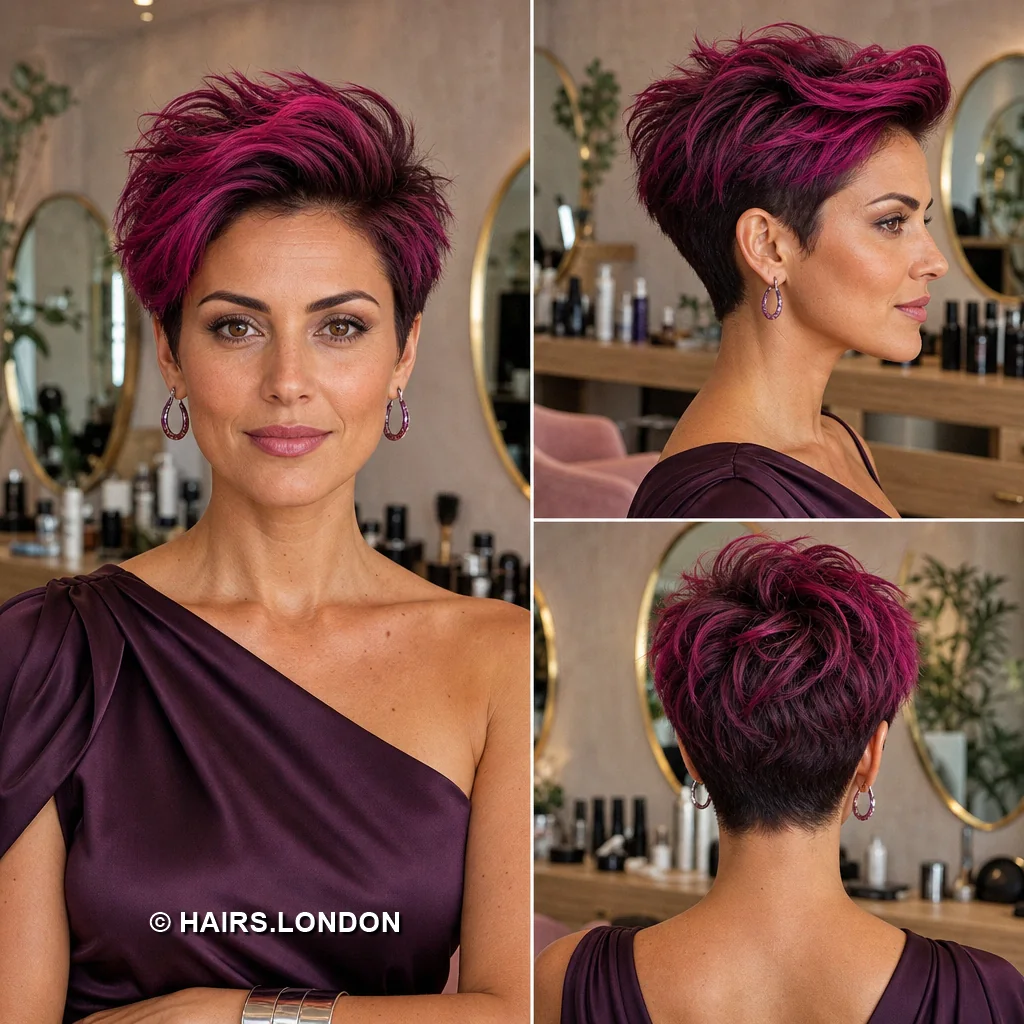
Rich magenta and raspberry tones brighten this swept, textured pixie. The front is longer and pushed upward into a loose side quiff, while the crown carries separated layers that curve and spike softly. Darker sides are cropped close, creating depth beneath the vivid top, and the back tapers neatly into the nape. The shape combines polish at the front with more relaxed texture through the crown. Blow-dry the fringe away from the face, then define the tips with flexible paste. Vivid color needs a realistic refresh plan. Regular perimeter shaping helps preserve the intended balance as the short layers grow.
Choosing the Right Amount of Texture
Cropped, Swept, Curly or Spiky?
A cropped pixie keeps the silhouette compact and usually asks less of the fringe, while swept styles preserve more front length and need directional drying. Curly versions depend on an existing wave or curl pattern, and spiky crowns need enough top length to separate. Choose the finish you are willing to recreate, not only the one that photographs most dramatically.
Fine Hair and Crown Lift
Fine hair often benefits from shorter supporting layers and lightweight root products. Too much wax can make separated pieces merge together. A dryer aimed against the natural fall can create lift before a small amount of paste is added to the ends.
Thick Hair and Weight Removal
Dense hair can support dramatic crowns, but excess bulk beneath short layers may make the shape widen. Ask for controlled internal weight removal rather than indiscriminate thinning. The goal is movement while preserving enough structure for the perimeter to sit cleanly.
Fringe, Partings and Everyday Styling
Swept Fringes
Long diagonal fringes look polished when the root direction is established during drying. Start at the root, guide the hair across the forehead, then refine the ends. If the fringe repeatedly falls into the eyes, a small length adjustment may be more practical than adding stronger product.
Spikes and Separated Pieces
For a broken, spiky finish, dry the crown with movement first. Rub a small amount of matte paste or clay between the fingers and touch only selected ends. Applying too much product at the roots can reduce lift and make the style look heavier.
Cowlicks, Glasses and Humidity
Cowlicks and natural partings can change fringe direction, while glasses may affect how much side length feels comfortable around the temples and ears. Humidity can soften a sculpted finish or encourage natural wave. Mention these everyday factors during consultation so the cut can be adjusted before styling becomes frustrating.
Color Care for Blonde, Silver and Vivid Pixies
Blonde and Silver Maintenance
Platinum, pearl and silver shades can show dryness and tonal shifts quickly because the hair is short and highly visible. Gentle cleansing, conditioning and heat protection help maintain feel, while toning frequency should be based on the actual color service and desired finish.
Red, Copper, Purple and Magenta Upkeep
Vivid reds, coppers, purples and magentas may lose intensity with repeated washing. Cooler water, color-conscious cleansing and sensible heat use can help, but refresh timing varies by starting base and color service. Treat the haircut schedule and color schedule as separate maintenance decisions.
Growing Out and Planning Salon Visits
A Realistic Shape Schedule
Very close tapers and short napes show growth sooner than fuller layered pixies. Instead of following one fixed timetable, book reshaping when the ear area, nape or crown balance stops sitting the way you want. Softer, rounded shapes may tolerate more growth between appointments.
Growing Out a Pixie
During grow-out, the back and side areas often feel heavy before the top reaches a new length. Small perimeter cleanups can maintain proportion without repeatedly cutting away the progress. A swept fringe can also become a useful transition as the front gains length.
What to Discuss at Consultation
Bring one or two photographs that clearly show the front, side and back. Point out the exact fringe length, side exposure, crown height and nape shape you like. Also discuss density, natural texture, cowlicks, styling time and color maintenance so the reference can be adapted realistically.
Frequently Asked Questions
Which of these textured pixie haircuts is easiest for fine hair?
The softer platinum, pearl and bronde crops can be practical references because their shorter supporting layers can create visible separation without requiring a very heavy crown. Fine hair still varies in density, so a stylist may adjust the amount of layering and product weight.
Can thick hair wear the spiky styles shown here?
Yes, but dense hair may need careful internal weight removal so the crown lifts instead of expanding outward. Keeping the sides controlled can also sharpen the silhouette. Avoid assuming that aggressive thinning is always better, because too much can make short layers difficult to manage as they grow.
Will the burgundy curly pixie create curls on straight hair?
No. The haircut can support a rounded, curly silhouette, but it does not create a natural curl pattern. Straight hair would need styling or a separate texture service to imitate that finish, and the result may behave differently from the reference.
How do I keep a spiky crown from falling flat?
Build lift during drying rather than relying only on finishing product. Direct the roots upward or against their natural fall, let the hair cool in position, then add a small amount of paste or clay to selected ends. Heavy product at the roots can reduce volume.
What if a long swept fringe keeps falling into my eyes?
Ask for a small refinement in fringe length or weight while preserving the overall sweep. Root direction during blow-drying also matters. A fringe that fights a strong natural parting may need a modified shape rather than increasingly strong styling products.
How often should a close pixie taper be reshaped?
There is no single schedule for everyone. Very close ear and nape areas usually show growth sooner than rounded layered pixies. Rebook when the perimeter loses the balance you like, taking your growth rate, budget and preferred level of sharpness into account.
Which products work best for the separated texture in these photos?
Light paste, clay, texture cream or a flexible styling product can all work, depending on density and desired shine. Start with less than you think you need. Fine hair usually benefits from lighter formulas, while coarse hair may tolerate a stronger product.
How can I maintain the platinum and silver colors shown here?
Conditioning, heat protection and a toning plan are important because very light shades can show dryness and unwanted warmth. The correct refresh schedule depends on the starting color and service used, so ask a color professional rather than copying a generic formula.
Do red, purple and magenta pixies fade quickly?
Vivid shades can lose intensity with washing and heat, although the rate varies by base color, porosity and service. Gentle cleansing, cooler water and sensible heat use can help. Plan color refreshes separately from haircut appointments because the two may not need attention at the same time.
Can naturally wavy hair wear a swept or spiky pixie?
Often, yes. Natural wave can add useful movement, but it may change the direction and amount of lift compared with a straight-haired reference. A stylist can adjust crown length and fringe weight so the wave supports the shape instead of pushing it outward.
What should I do if I want to grow one of these pixies out?
Keep the perimeter tidy without repeatedly shortening the top. As the sides and back gain length, small balancing trims can prevent a bulky shelf at the nape. A longer side fringe can become part of the transition toward a bixie or short bob.
Which reference photos should I bring to the salon?
Bring the image that best shows your preferred front, plus clear side and back views from the same haircut whenever possible. Explain which details are essential: fringe length, crown height, side exposure, nape shape, texture and color. Treat the photograph as a reference rather than a guaranteed result.
Conclusion
These textured pixie haircuts show how much variety can come from changes in fringe length, crown height, side coverage, nape shape and styling direction. The vivid reds, violets, coppers and magentas emphasize separation, while blonde, silver, brunette and bronde versions make the underlying structure easier to compare. Choose a reference by looking beyond color: decide whether you want a cropped fringe, sweeping front, curly crown, airy spikes or a sculpted quiff, then consider how much daily styling and perimeter maintenance feels realistic. A good consultation can adapt those details to your texture, density, natural growth patterns and preferred grow-out plan.