

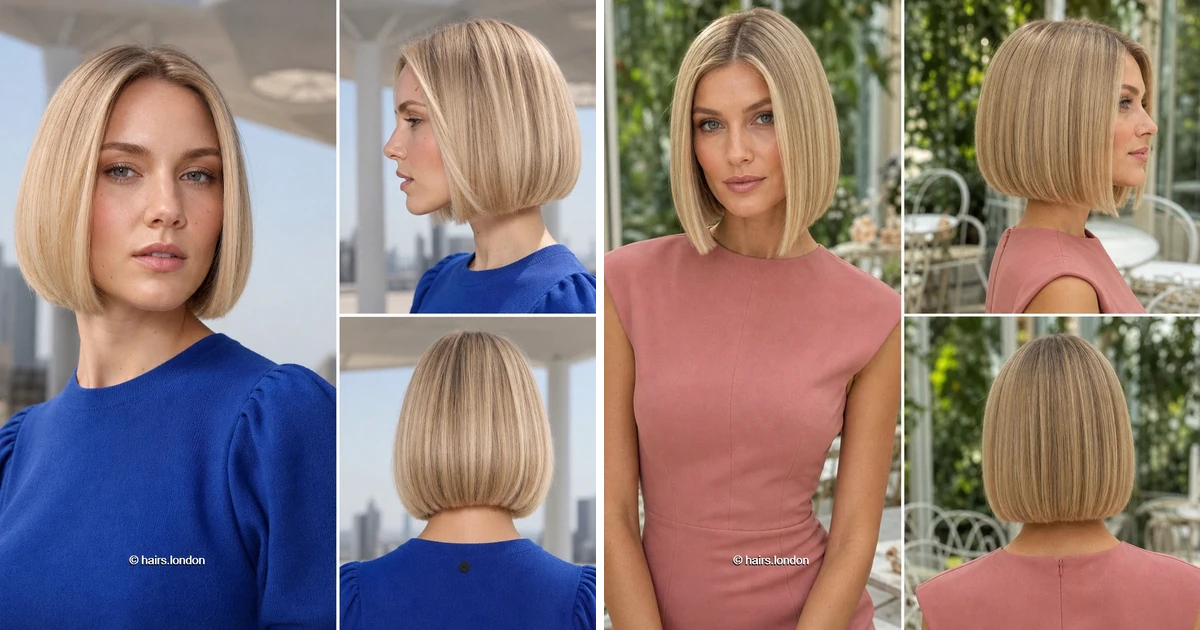
Blonde bob haircuts can look strikingly different depending on where the perimeter falls and how much weight remains through the sides and back. These 20 views move from smooth, rounded jawline cuts to shorter, heavily textured shapes and bobs with noticeably longer fronts. Use the front, side and back views to identify the details you like, then adapt them to your own density, natural texture and styling routine.
1. Creamy Blonde Jawline Bob with a Rounded Edge
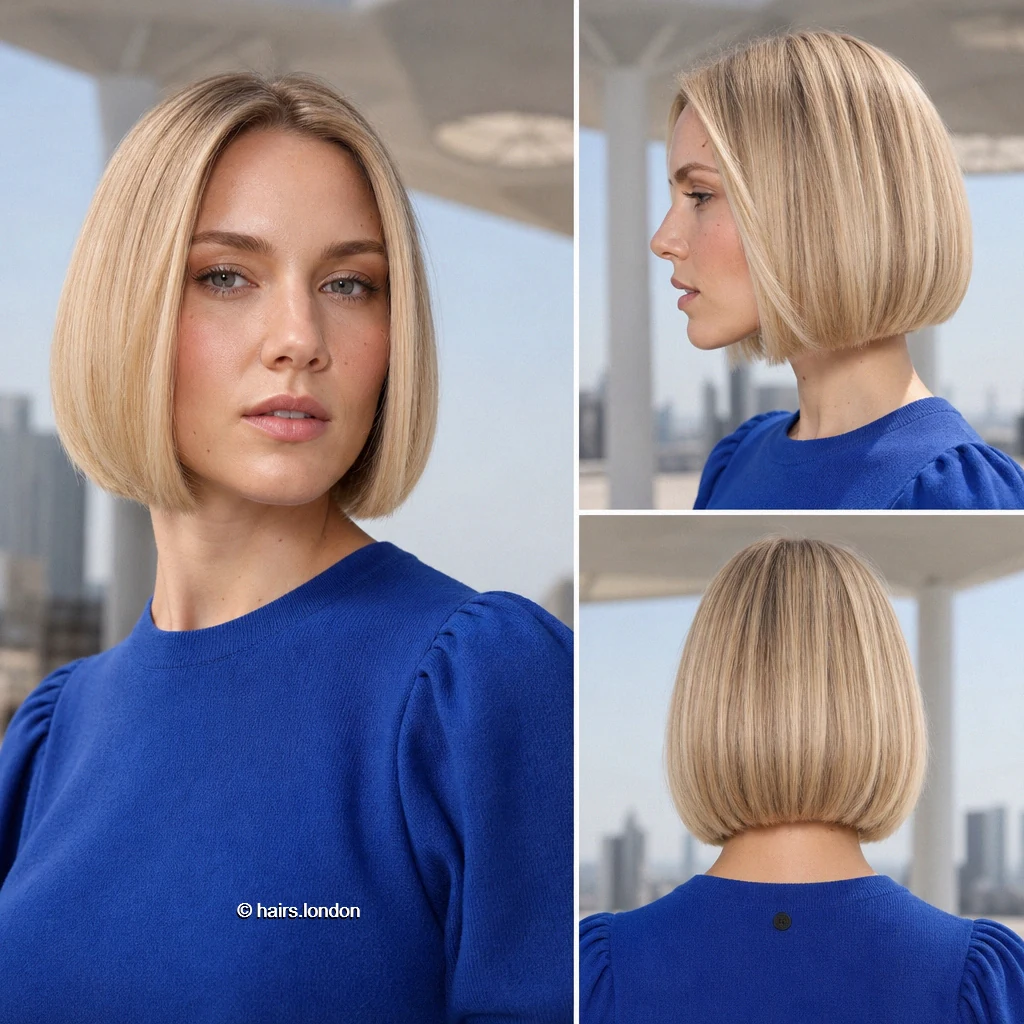
This creamy blonde bob falls around the jaw, with a center part, smooth sides, and a gently curved, compact nape. The back view shows an even, rounded weight line rather than pronounced stacking, while the side remains softly tucked under. Ask for restrained internal shaping if your density needs movement, keeping enough weight at the edge to preserve its outline. Blow dry downward with a paddle brush, then bend the ends lightly; too much oil can flatten finer hair quickly. Schedule trims when the jawline loses definition, and discuss blonde toning according to your starting color and preferred upkeep routine.
2. Side-Parted Blonde Bob with a Softly Rounded Back
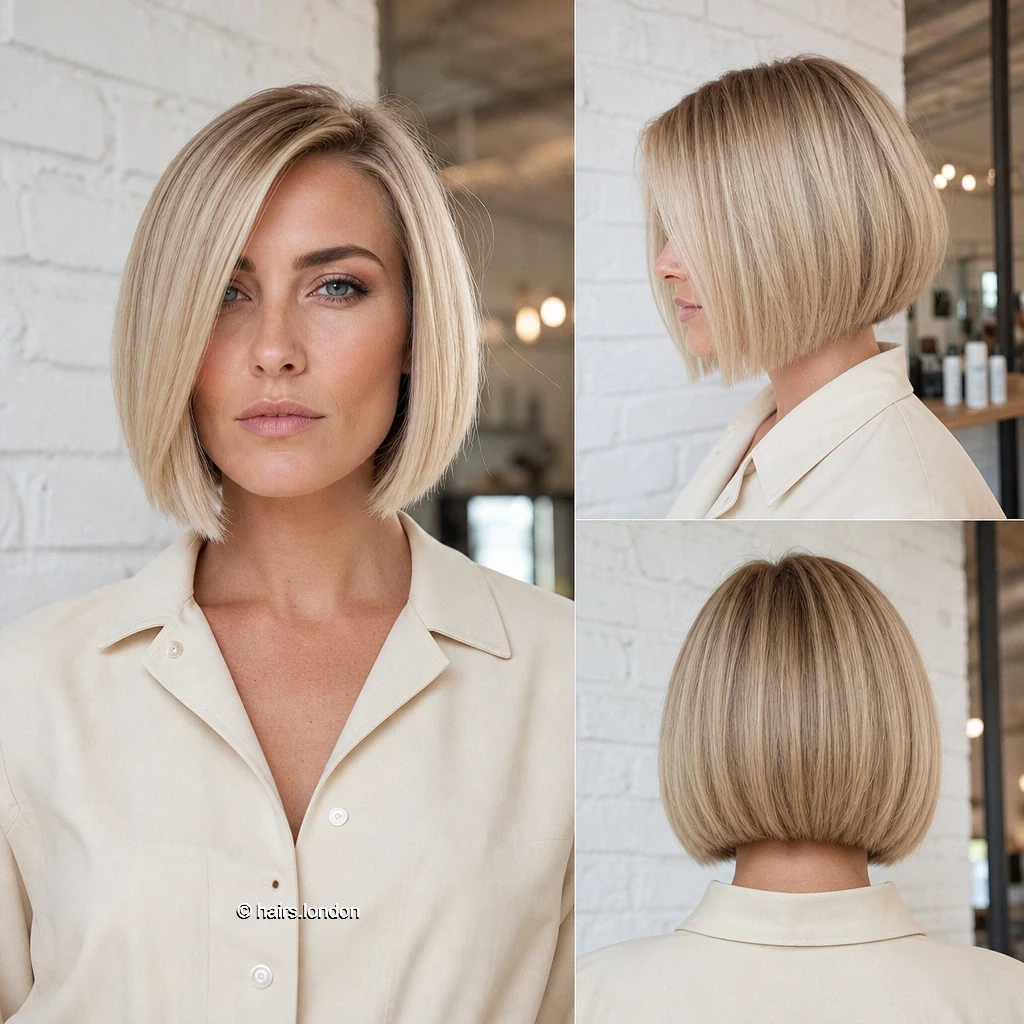
A deep side part gives this pale blonde bob a sweeping front, while its ends sit near the jawline. From behind, the perimeter curves inward and stays full, without a clearly exposed stack of short nape layers. If your hair is dense, ask whether subtle interior weight removal would improve movement without thinning the visible edge. Direct a dryer downward, lift the fringe area at the roots, and finish by smoothing the ends with a brush. Check the side part and rounded outline between trims; lighter blonde pieces may need toning as your preferred shade changes. Avoid overly stiff hairspray.
3. Beige-Blonde Bob with a Gentle Side Sweep
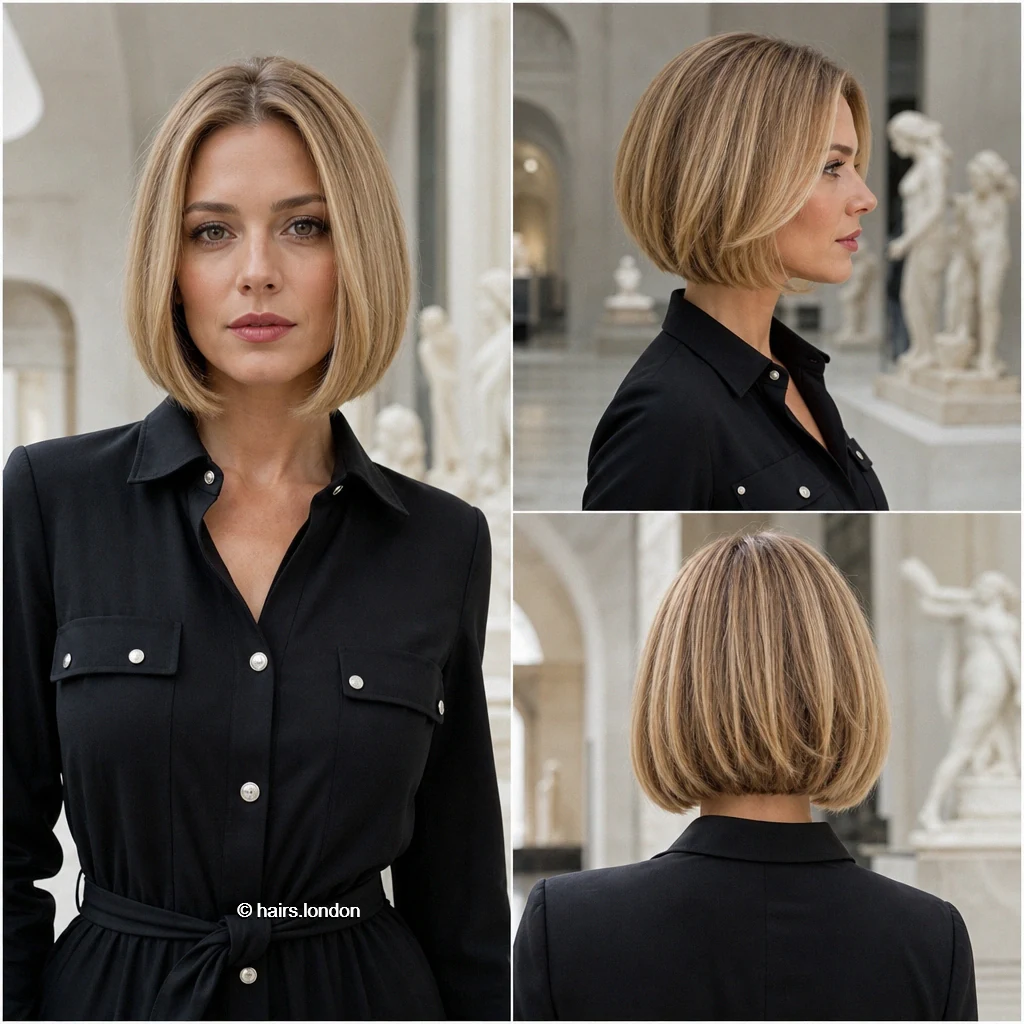
This beige-blonde bob combines a near-center part with face-framing pieces and a softly curved, neck-skimming back. The side view shows a compact silhouette with light movement through the surface rather than a sharply defined front angle. Ask your stylist to preserve enough weight along the bottom if your hair tends to separate into thin ends. A round brush can turn the perimeter inward, while a small amount of flexible cream keeps the longer front loose. Plan a shape check when the back spreads or the framing pieces lose balance, and discuss highlight upkeep around your part. Avoid heavy finishing sprays.
4. Angled Blonde Bob with a Fuller Back
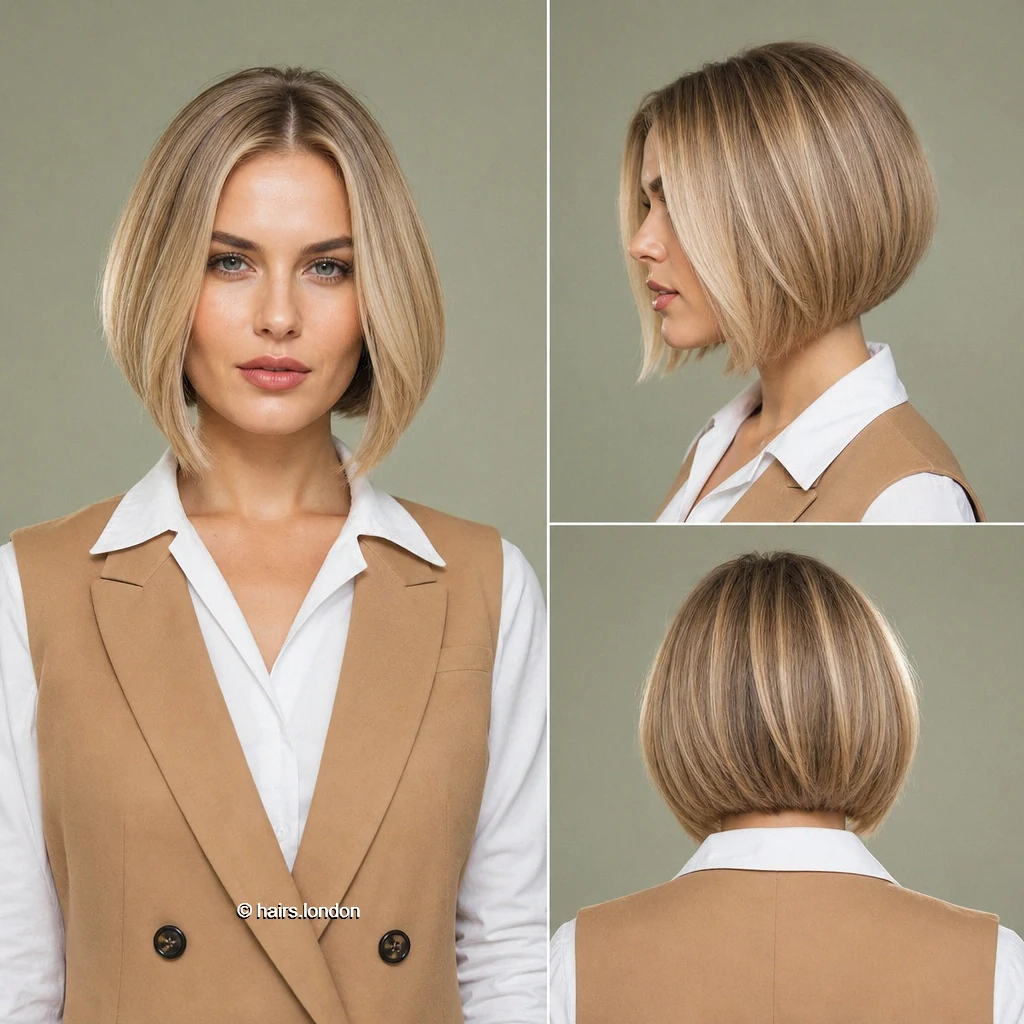
The front pieces extend below the jaw, while this beige-blonde bob rises toward a fuller, shorter back. Its side and back views show a rounded weight line, although individual graduation lines are not sharply defined. Ask how much back shaping your density can support before the sides begin to look too light. Smooth the longer front downward and use a brush to keep the back close to the head without removing its fullness. Regular perimeter checks help retain the visible angle; bring these views to your stylist when discussing the preferred difference between front and back. Keep reference images handy.
5. Polished Light-Blonde Bob with a Compact Nape
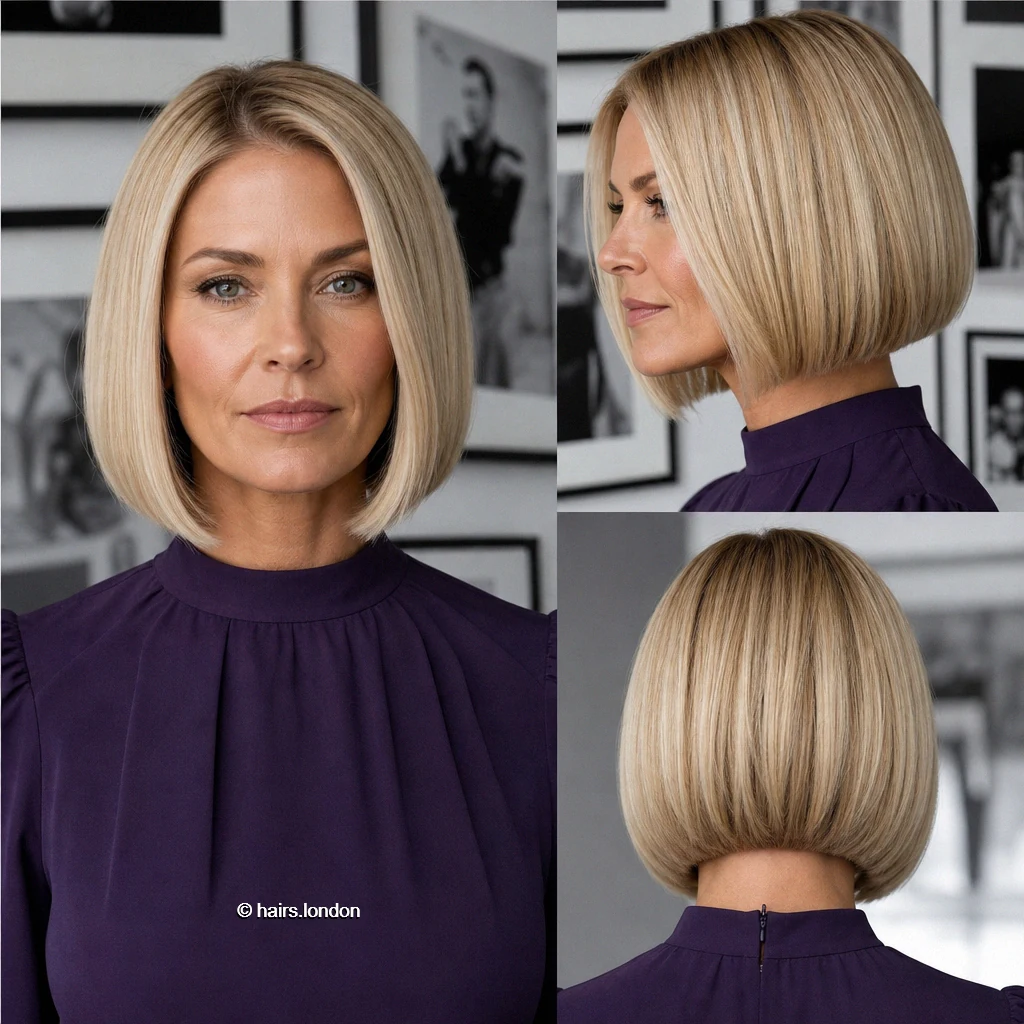
This light-blonde bob has a center part, straight sides, and an inward-curving edge that meets the upper neck. The rear view looks particularly rounded and compact, while the front stays close to jaw length without a dramatic angle. For fine hair, request a solid-looking perimeter before considering any interior layering that could make the ends appear sparse. Dry the roots first, then guide the lengths downward and turn only the tips under for a controlled finish. Book a tidy-up when the nape grows past its neat curve, and discuss how often your blonde needs refreshing. Avoid flattening the crown unnecessarily.
6. Short Textured Blonde Bob with Wispy Fringe
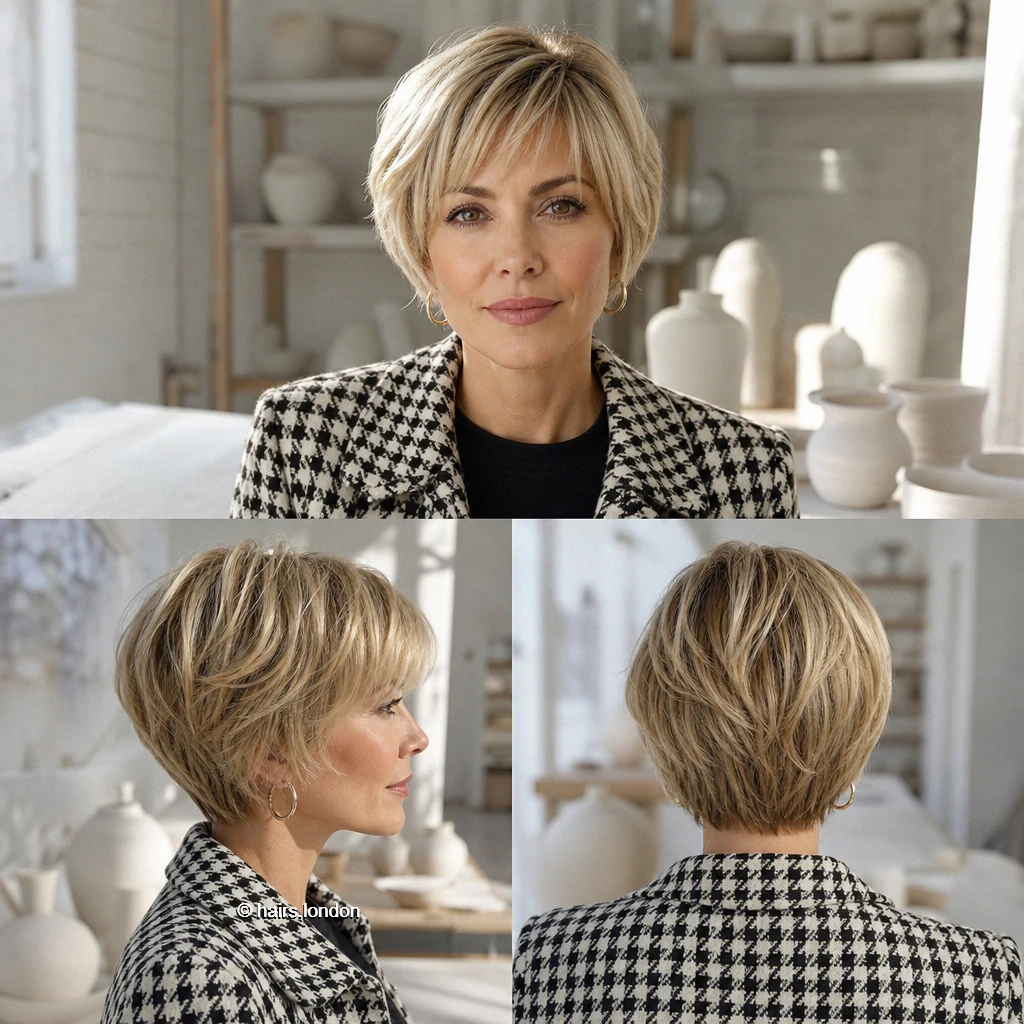
Short, airy layers distinguish this blonde bob, which sits above the jaw and narrows visibly into a closely cropped nape. Wispy fringe crosses the forehead, while darker lowlights give the tousled top more separation and dimension. Ask your stylist to keep sufficient length around the ears if you want this shape to read as a bob. Work a small amount of texture paste through dry layers, lifting rather than flattening the crown. Fringe and nape growth will change this silhouette quickly, so discuss frequent shape checks and a color plan that accommodates the darker roots. Avoid heavy wax near roots.
7. Feathered Blonde Bob with a Side-Swept Front
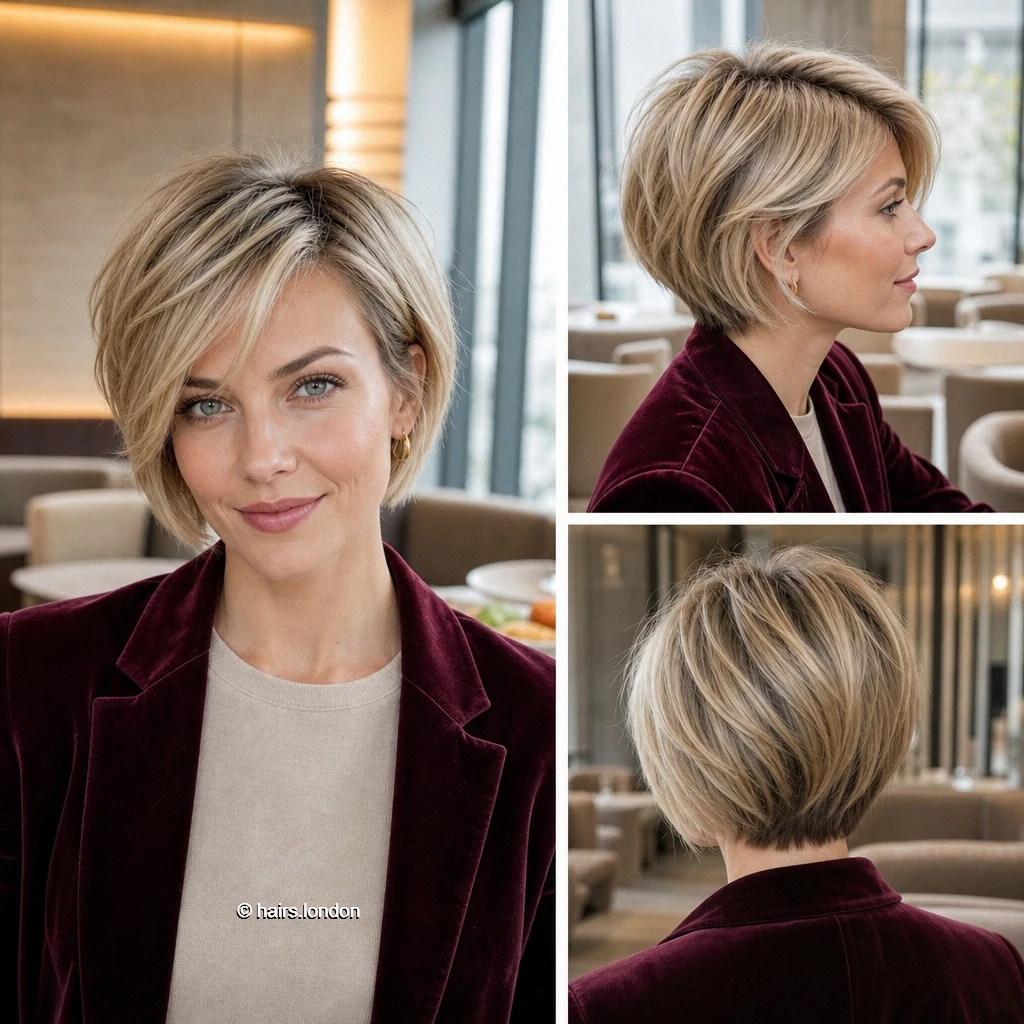
A side-swept front and feathered blonde layers create lift through this short bob, with the nape sitting close to the neck. The back view shows overlapping, tapered pieces rather than the solid weight line seen in a blunt bob. This airy shape can help dense hair move, but finer hair may need fewer layers to retain fullness. Blow dry the front across the forehead, then separate the ends with a light, flexible styling product. Have the nape and fringe checked as they grow, and ask your colorist how the visible dark roots fit your upkeep preferences. Keep the finish touchable.
8. Tousled Honey-Blonde Bob with Piecey Layers
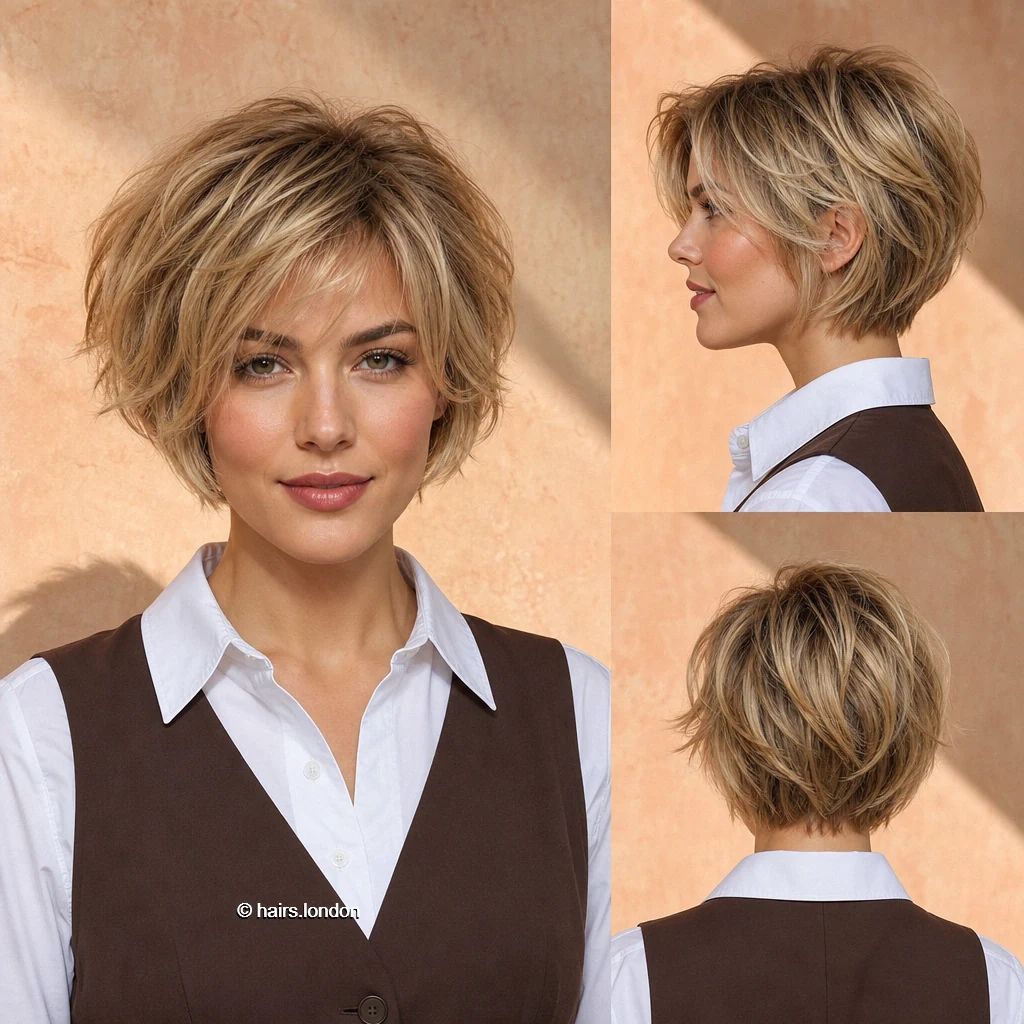
Honey-blonde highlights run through this short, tousled bob, whose piecey fringe and layered sides sit above the jaw. The side view reveals a tapered neck area, while the back keeps textured fullness above the shorter ends. If your hair naturally waves, discuss placing layers where they encourage movement without creating an overly wide outline. Scrunch in a light mousse and let the texture develop, or use a diffuser on low airflow. Trim the fringe when it obscures your preferred view, and refresh the short shape before its feathered edges become heavy or uneven. Avoid brushing out waves after they dry.
9. Ash-Blonde Layered Bob with Soft Fringe
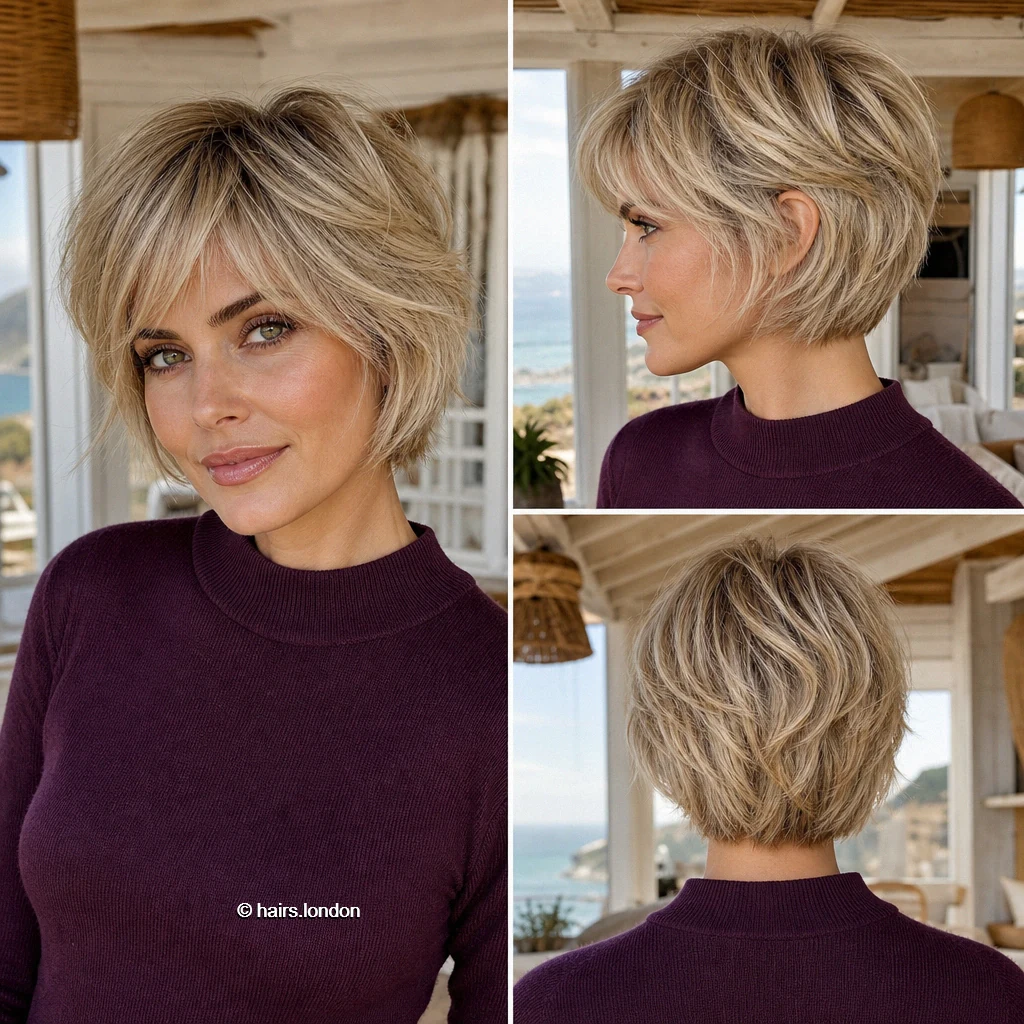
This ash-blonde bob sits above the jaw, with a soft fringe and abundant short layers sweeping around the head. Its back view shows textured ends narrowing toward the neck, not a blunt, level perimeter. Ask for controlled layering if your hair is thick; too much removal can leave the fringe and sides disconnected. Style with root lift and a flexible cream, directing the fringe forward before loosening the longer pieces by hand. Keep appointments focused on the nape and fringe as well as the overall silhouette, and discuss toning if cooler blonde is your goal. Avoid overloading the shorter layers.
10. Side-Swept Blonde Bob with a Tapered Nape
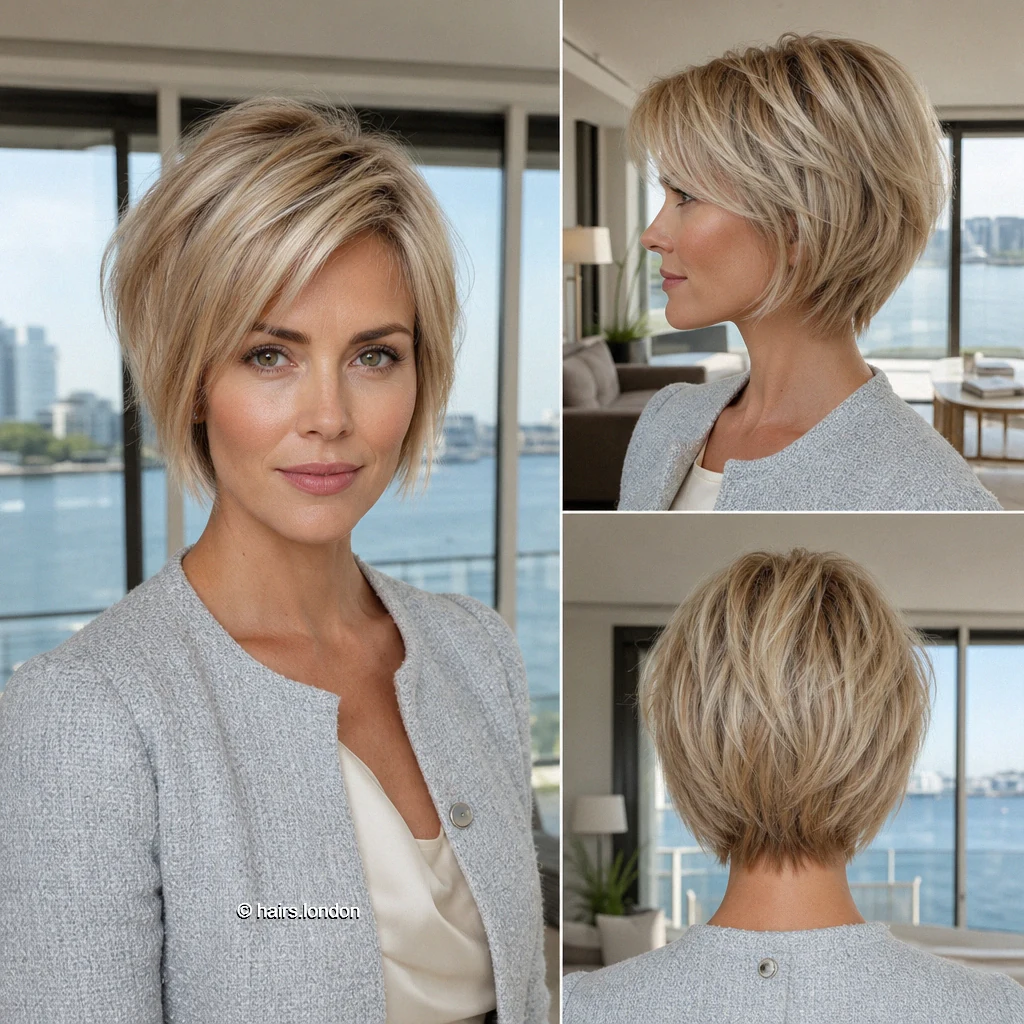
A long, side-swept front crosses the forehead above this short blonde bob, while the layered back tapers toward the neck. The airy surface shows separated blonde and darker strands, creating depth without a rigid perimeter. Ask whether your natural growth pattern will support the sweeping front before committing to its length and part. Lift the roots while drying, then use minimal paste on the ends so the crown retains movement. Short nape layers need regular reshaping; schedule fringe checks separately if that front section starts covering your eyes or collapsing against the face. Avoid heavy spray across the sweeping front.