


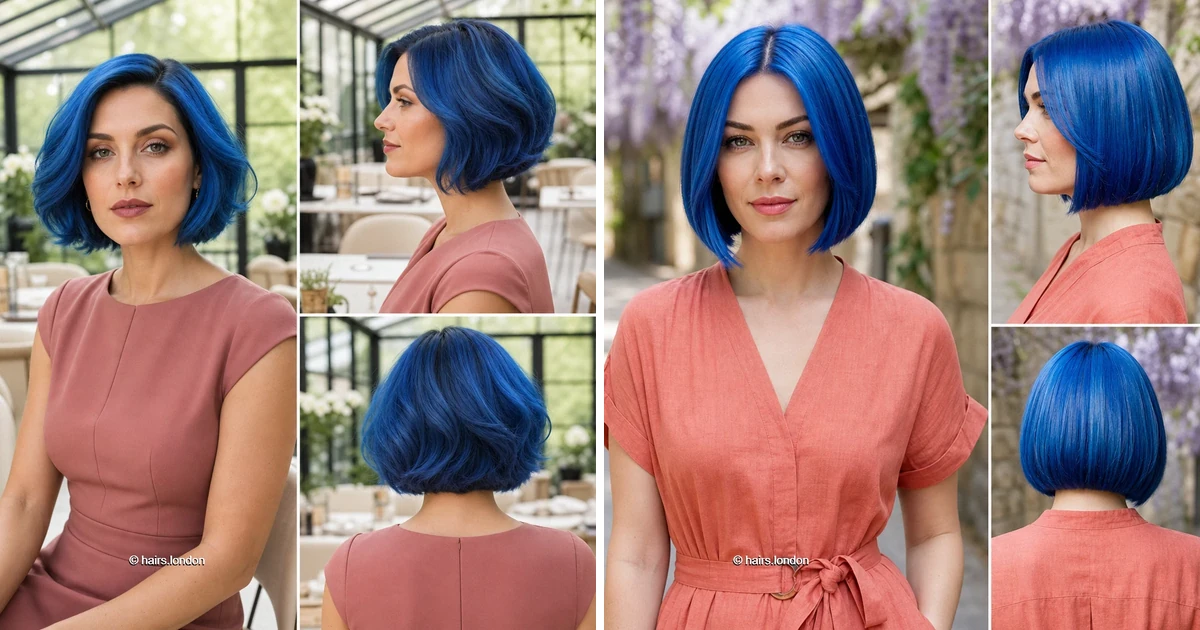
A vivid color can emphasize everything a bob does well: its perimeter, movement, and shape around the face. These blue and green bob haircuts range from clean, compact outlines to airy layers and softly shaped napes. Front, side, and back views make the differences easier to spot. Use them to decide not just which color appeals to you, but how much fullness, fringe, and daily styling you want.
1. Cobalt Bob with a Sweeping Side Part
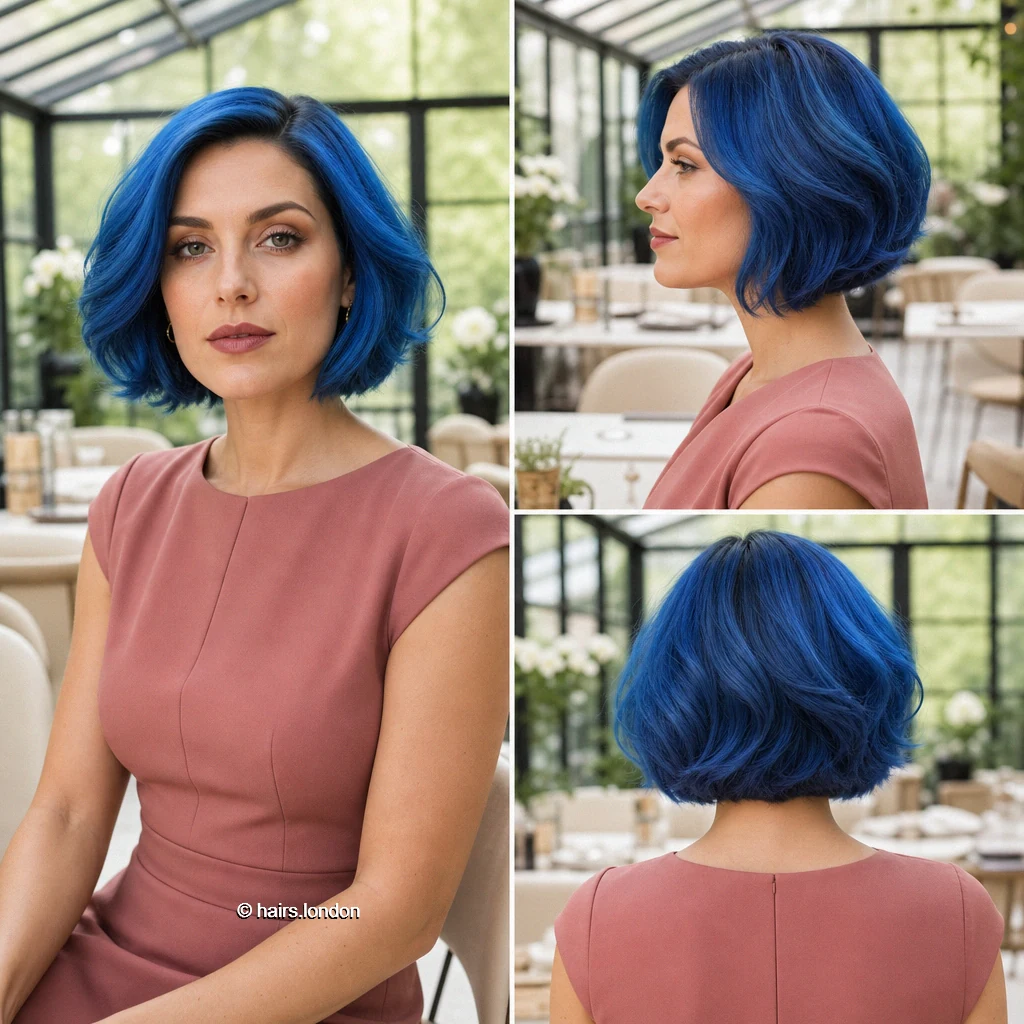
Electric blue color brightens this jaw length bob, whose sweeping side part and softly curved ends frame the face gently. Side and back views show airy layering around a rounded outline, with shorter pieces moving freely above the bare neckline. Try blow drying with a round brush at the roots, then smooth the edge while leaving the ends flexible deliberately. Ask for restrained internal weight removal if your hair feels dense; finer strands may need a fuller lower edge instead. Refresh the outline as it loses shape, and discuss color upkeep with your stylist before committing to vivid blue hair.
2. Inky Navy Bob with a Rounded Outline
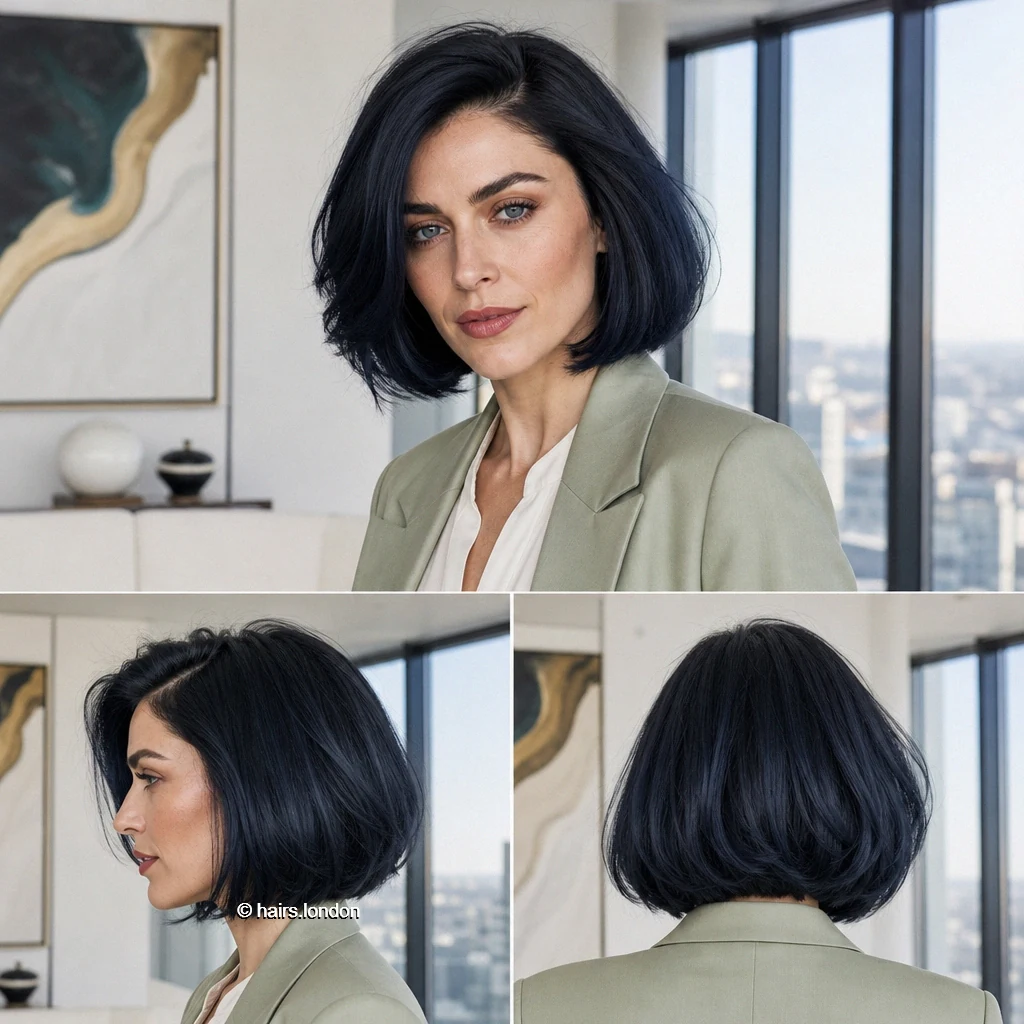
An inky navy bob sits around the jaw, with a deep side part, smooth surface, and softly rounded silhouette overall. Back and profile views reveal a compact neckline and gentle layering, rather than a distinctly longer front or sharp angle. A small brush can turn the ends inward; use light serum sparingly so the rounded perimeter still swings naturally freely. Request careful weight balancing through the sides if thick hair expands, but preserve enough fullness when strands are fine naturally. Trim when the jawline outline begins spreading, and ask how frequently this dark blue shade may need refreshing professionally again.
3. Teal Bob with a Shaped Nape
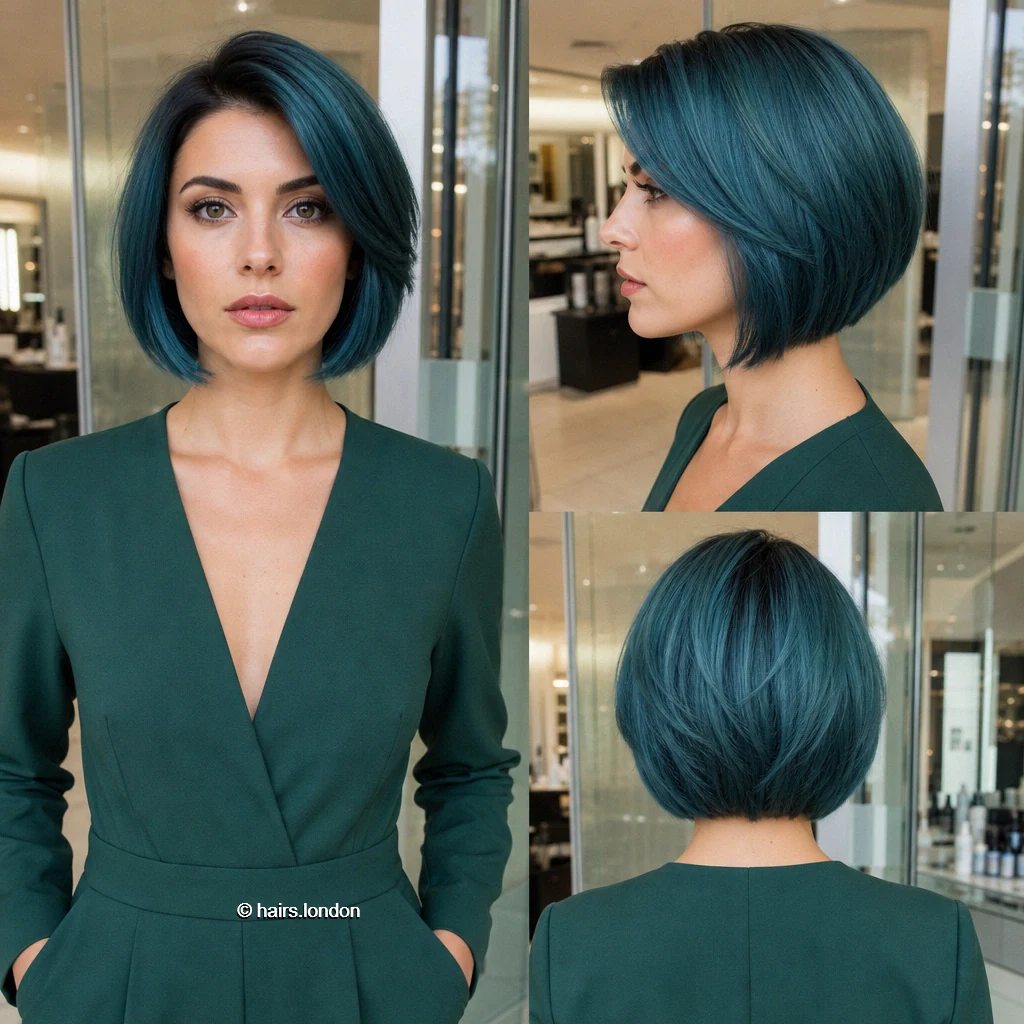
Teal blue color runs through this smooth chin skimming bob, with a side swept front and rounded crown shape overall. From the profile, the front falls slightly longer than the closely shaped nape, while the back shows soft graduation beneath. Blow dry downward for shine, lifting near the part before bending the tips inward with a small brush very lightly. Those with dense hair might discuss discreet bulk reduction; natural waves may require extra smoothing to retain this outline daily. Schedule nape checks as the graduation grows, and plan gentle cleansing plus realistic refreshes for the teal tone between visits.
4. Forest Green Bob with Softly Curved Layers
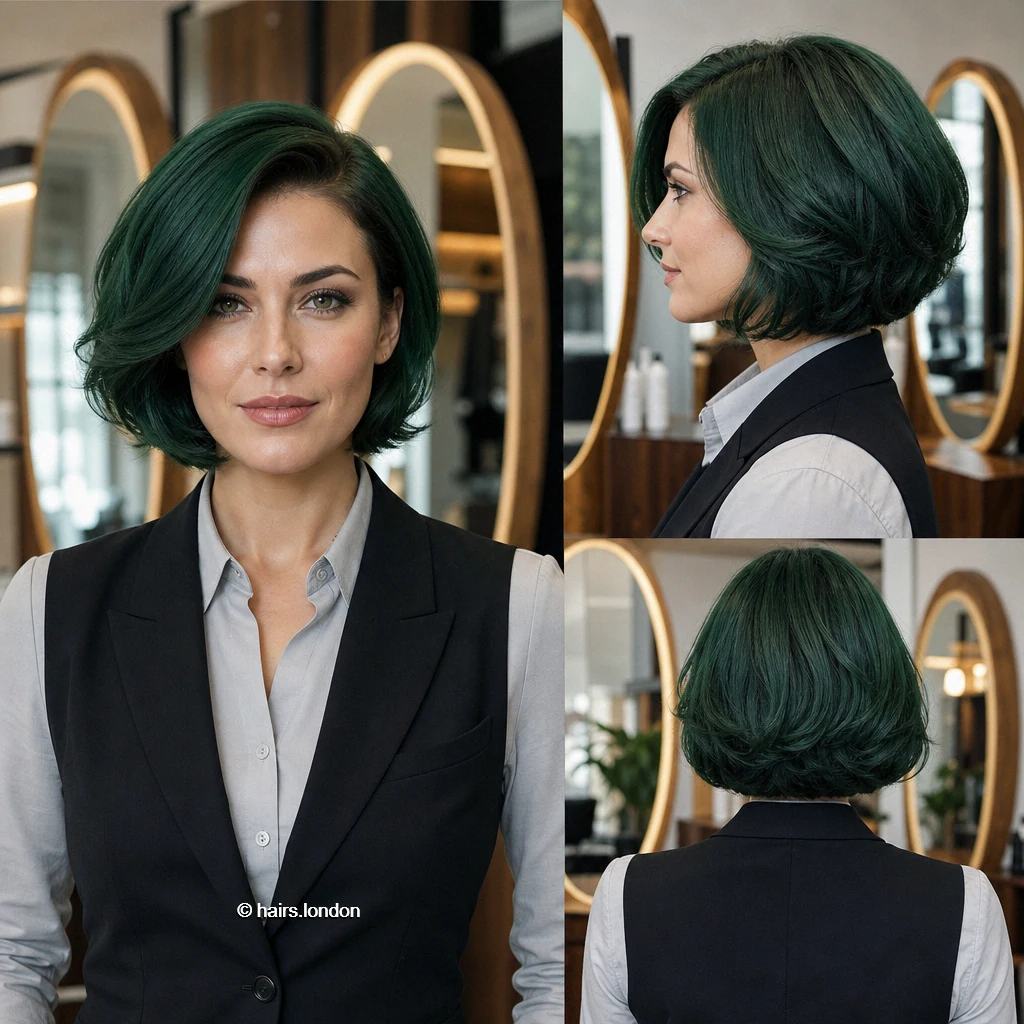
Deep forest green gives this jaw length bob dimension, while a side swept front creates a broad, curved shape. The profile and back show layers gathering near the neckline, with movement through the ends rather than a rigid edge. For styling, lift the roots gently and guide the sides back with a brush; avoid building a stiff, oversized crown. Thick hair may benefit from selective internal shaping, whereas finer hair might need fewer layers to keep the outline substantial. Revisit the shape when its lower curve spreads, and discuss green color refreshes according to your washing routine and eventual fade.
5. Cobalt Bob with Piecey Bangs
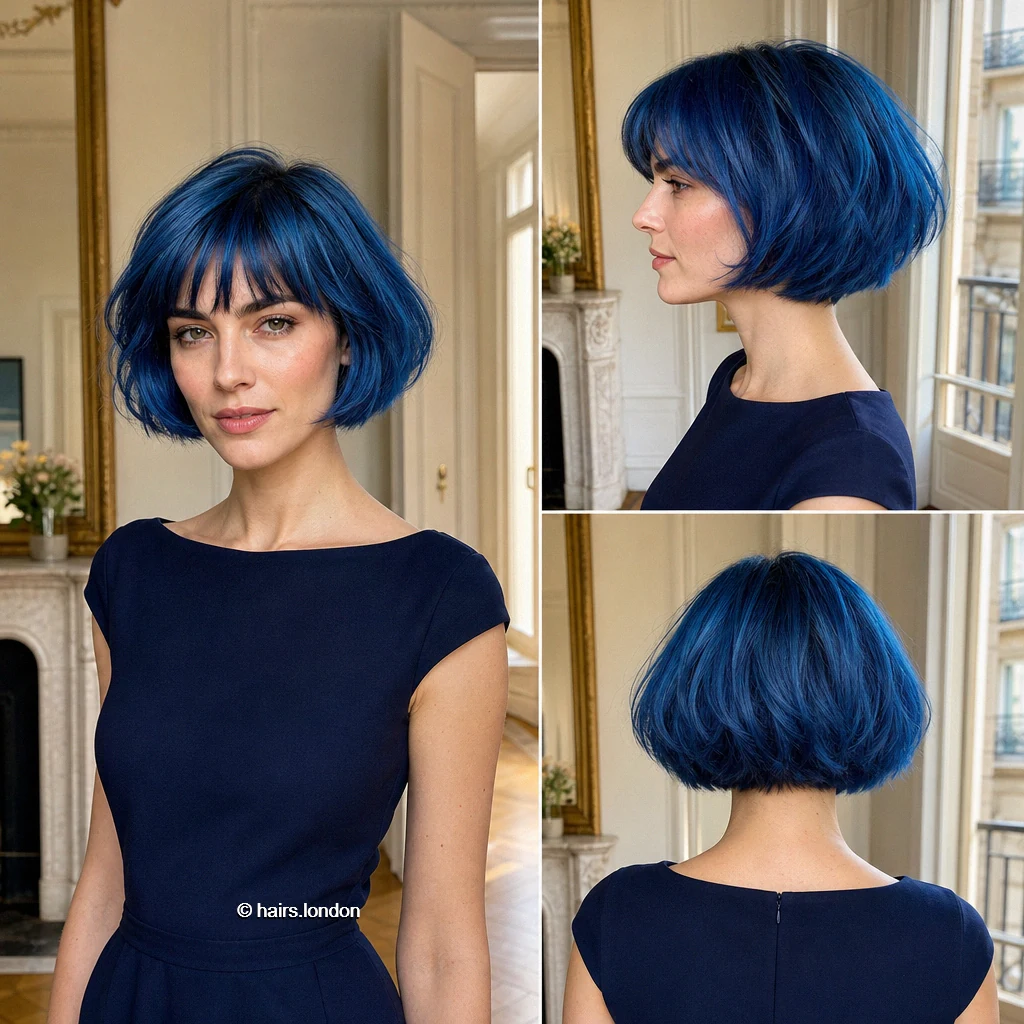
Short, piecey bangs sit above the brows on this bright blue bob, which curves inward at about jaw level. Side and back views show a rounded body, a close neckline, and visible movement throughout the lower sections of hair. Dry the fringe first in its natural direction, then use a brush to neaten the perimeter without flattening the sides. If your hair grows forward strongly, ask how the bangs will separate; dense hair may need careful weight balancing. Fringe trims can come sooner than outline trims, while the saturated blue may call for planned professional blue color maintenance between cuts.
6. Midnight Blue Bob with Soft Bangs
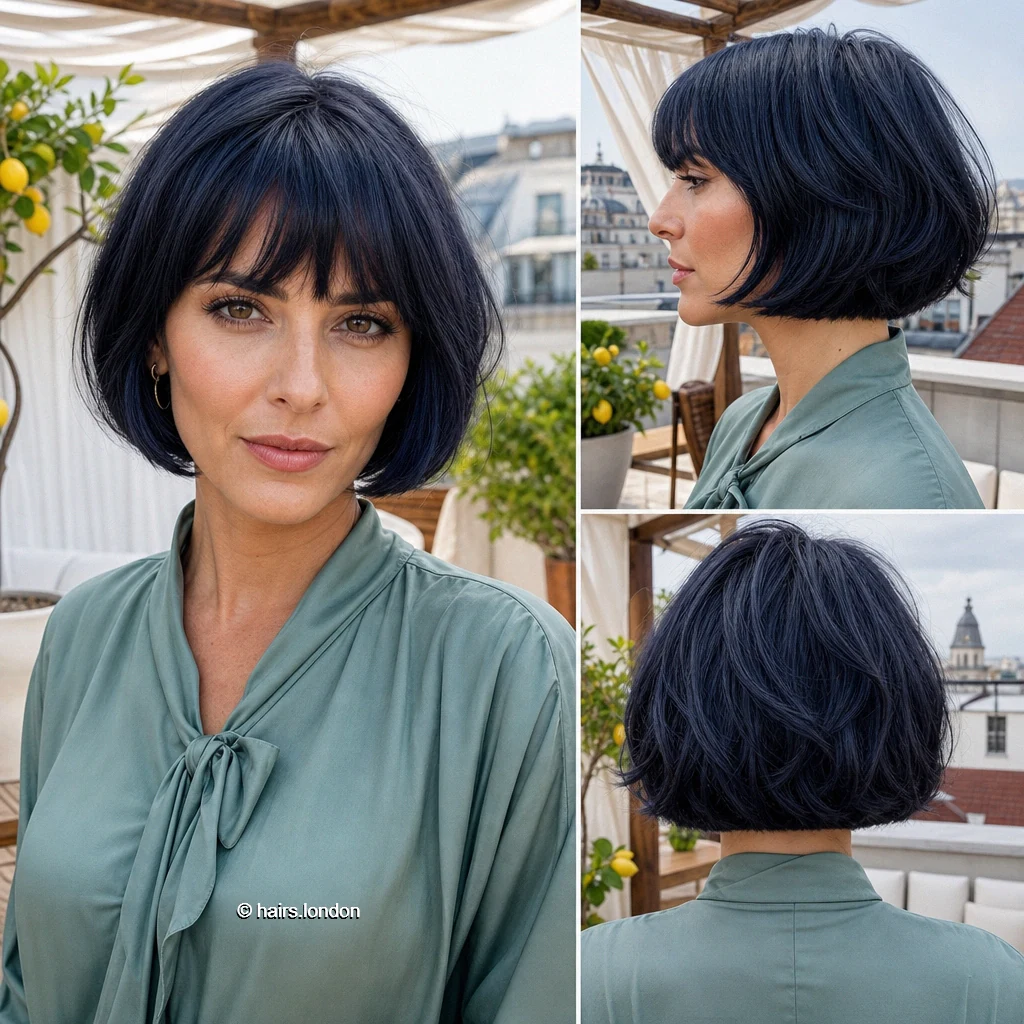
This midnight blue bob reaches the jaw, pairing soft, brow grazing bangs with a full, gently curved outline all around. The back remains rounded and compact, while light surface movement prevents the dark color from looking like one solid block. Work the fringe into place while damp, then brush the ends under lightly or let their natural bend remain visible. A fuller edge may help fine hair appear substantial; thicker hair might need discreet shaping beneath the outer surface. Check both fringe visibility and perimeter neatness between appointments, and ask about maintaining the subtle blue cast over time between visits.
7. Blue Teal Bob with Wispy Fringe
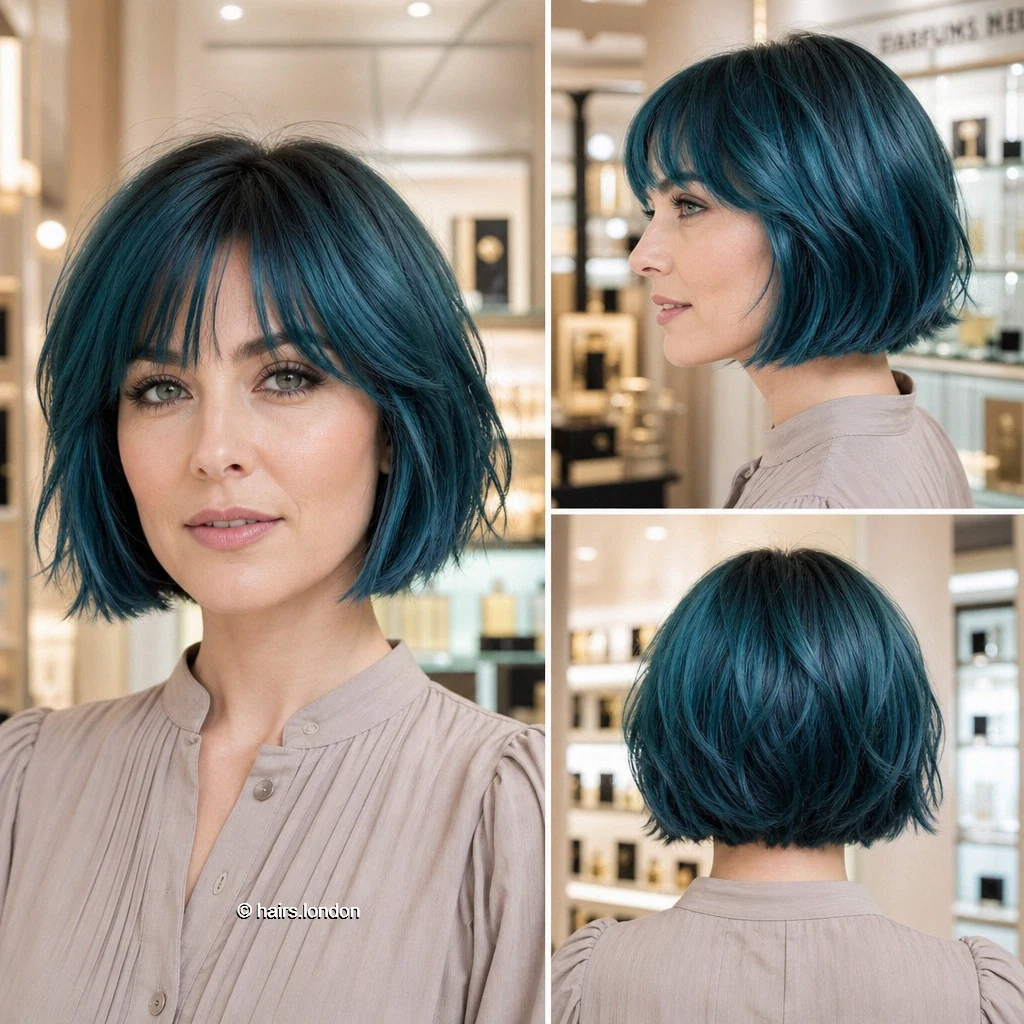
Blue teal lengths end around the jaw, with a wispy fringe and lightly separated pieces beside the cheeks on display. The profile shows a softly tapered outline, while the back retains a rounded shape with texture at the ends. Encourage loose movement with a small amount of lightweight cream, and dry the fringe before it settles into an unwanted part. This shape could suit naturally wavy hair if its bends cooperate; very fine hair may need less layering overall. Maintain the fringe and neckline as they grow, and expect the brighter teal sections to change between scheduled professional color refreshes.
8. Emerald Bob with an Airy Perimeter
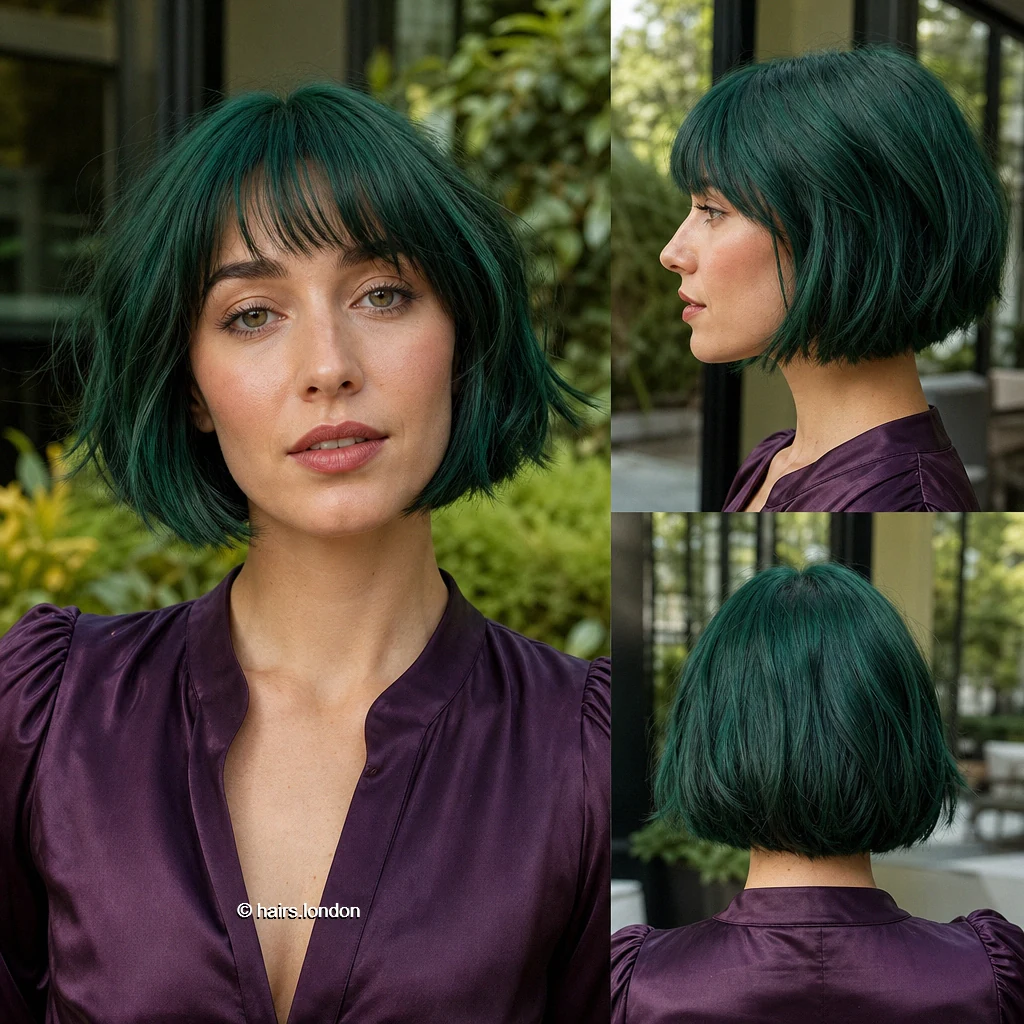
Dark emerald color covers this jaw length bob, whose light bangs and separated tips give the outline an airy finish. The side and back views show a rounded silhouette, with texture concentrated near the ends rather than dramatic length differences. Try air drying with a light styling product, then tidy only the pieces that interrupt your preferred face framing. Dense hair can support subtle weight removal, but ask your stylist to retain enough edge for a recognizable bob shape. Trim when the tips become uneven, and protect the green tone with a washing schedule you can comfortably maintain at home.
9. Bright Blue Bob with Feathered Movement
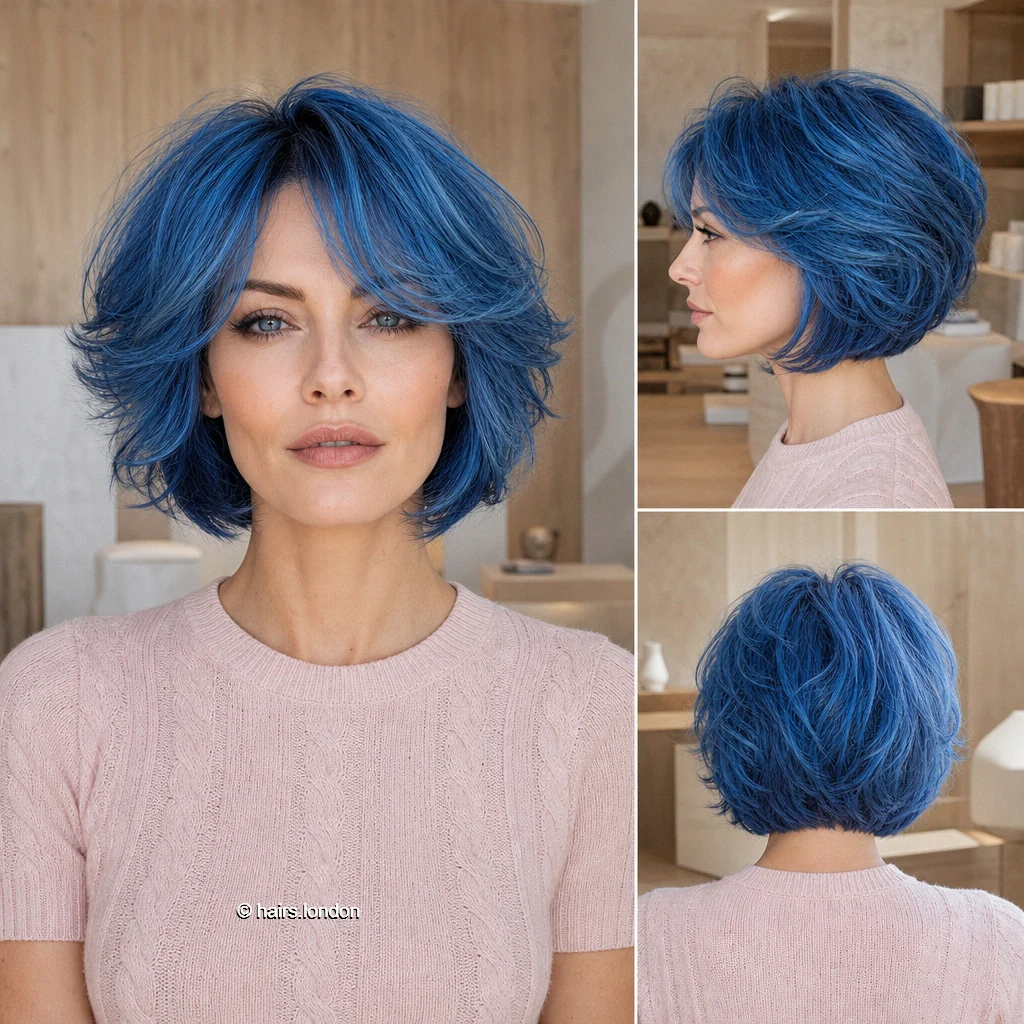
Bright blue layers sweep across this jaw length bob, creating visible lift around the face and softness at the neckline. The side and back views reveal feathered sections over a compact lower outline, without a clean, blunt weight line. Use a brush or fingers to direct the front away from the face, keeping product light enough for movement. Thick hair may carry this layering readily; finer hair should be assessed for how much fullness it can afford to lose. Shape appointments can focus on grown out layers, while color visits help maintain the lively blue rather than noticeably faded patches.
10. Dark Navy Bob with Swept Layers
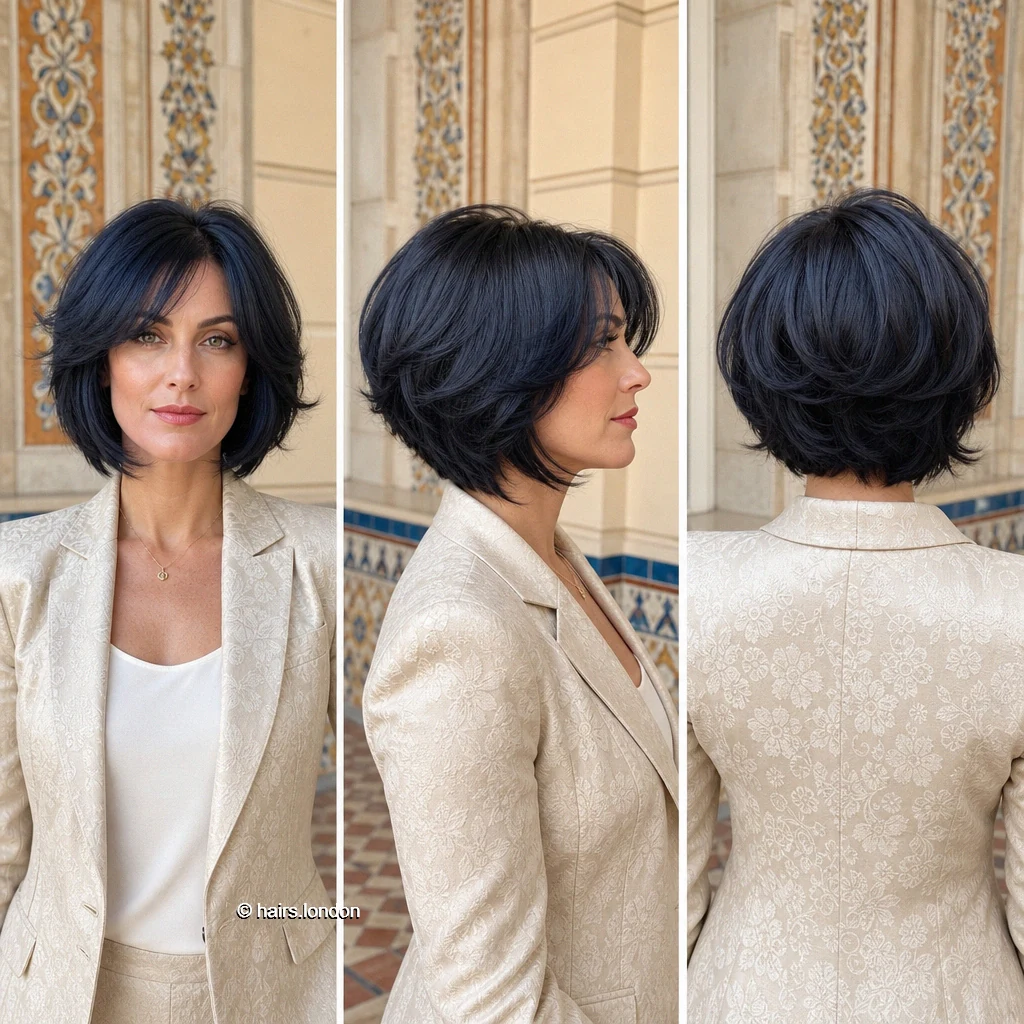
A dark navy bob sits near the jaw, with a side swept front and visible layers that turn outward softly. From behind, the hair gathers into a rounded shape above the neck, with short ends that remain visibly mobile naturally. For a controlled finish, lift the roots while drying and brush the perimeter smooth before releasing the outward flicks. Ask whether your density can support these layers without leaving sparse ends; natural waves may create a different finish. Check the lower outline as it grows, and view the navy shade in daylight when planning any future professional blue color refreshes.
11. Dusty Teal Bob with a Close Nape
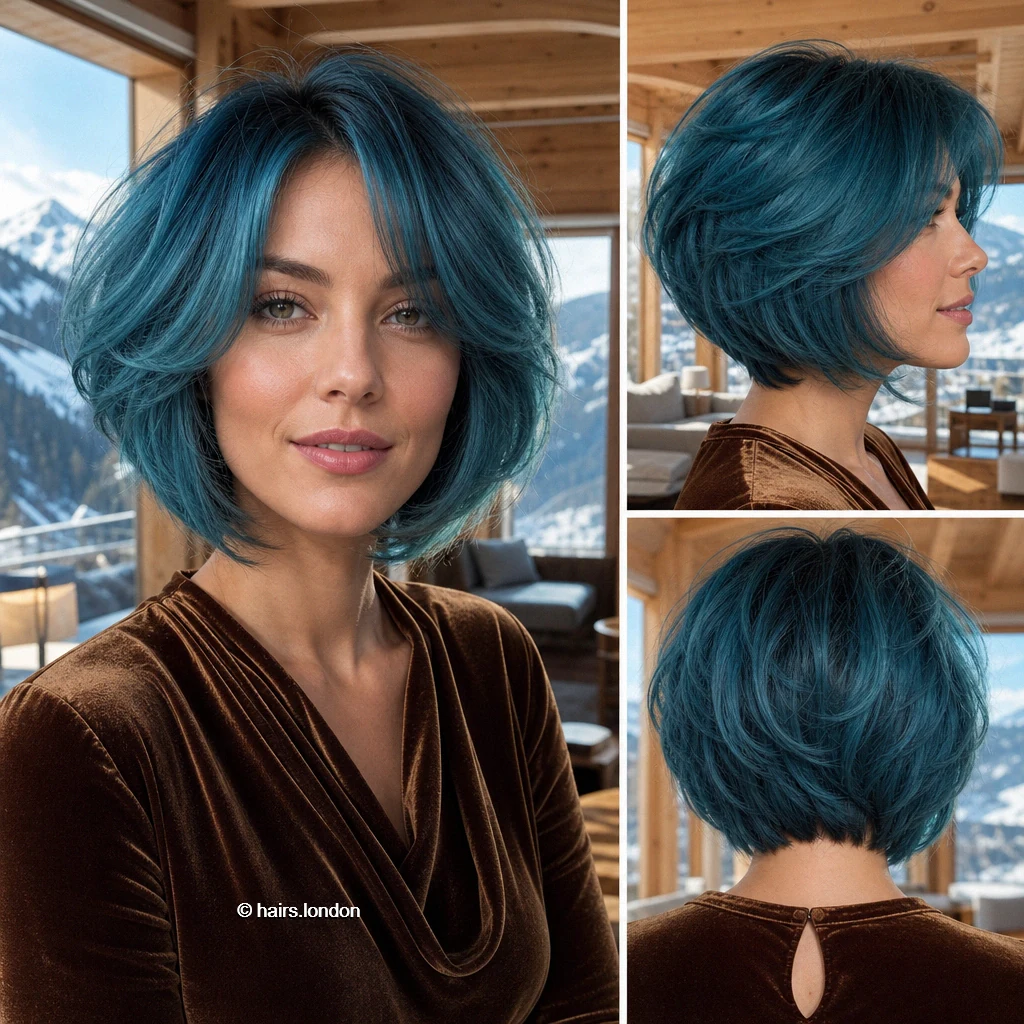
Dusty teal color highlights the soft layers in this bob, which sits around the jaw and opens around the face. Its profile and back show a notably close nape beneath fuller upper sections, making the lower shape worth discussing carefully. Brush the front away from the face and smooth the neckline, leaving the upper layers loose instead of coating them heavily. If your hair is very dense, balanced internal shaping may help; finer hair needs enough coverage above the shorter nape. Arrange shape checks when the nape loses definition, and ask how this muted teal will fade on your hair.
12. Deep Green Bob with Flowing Layers
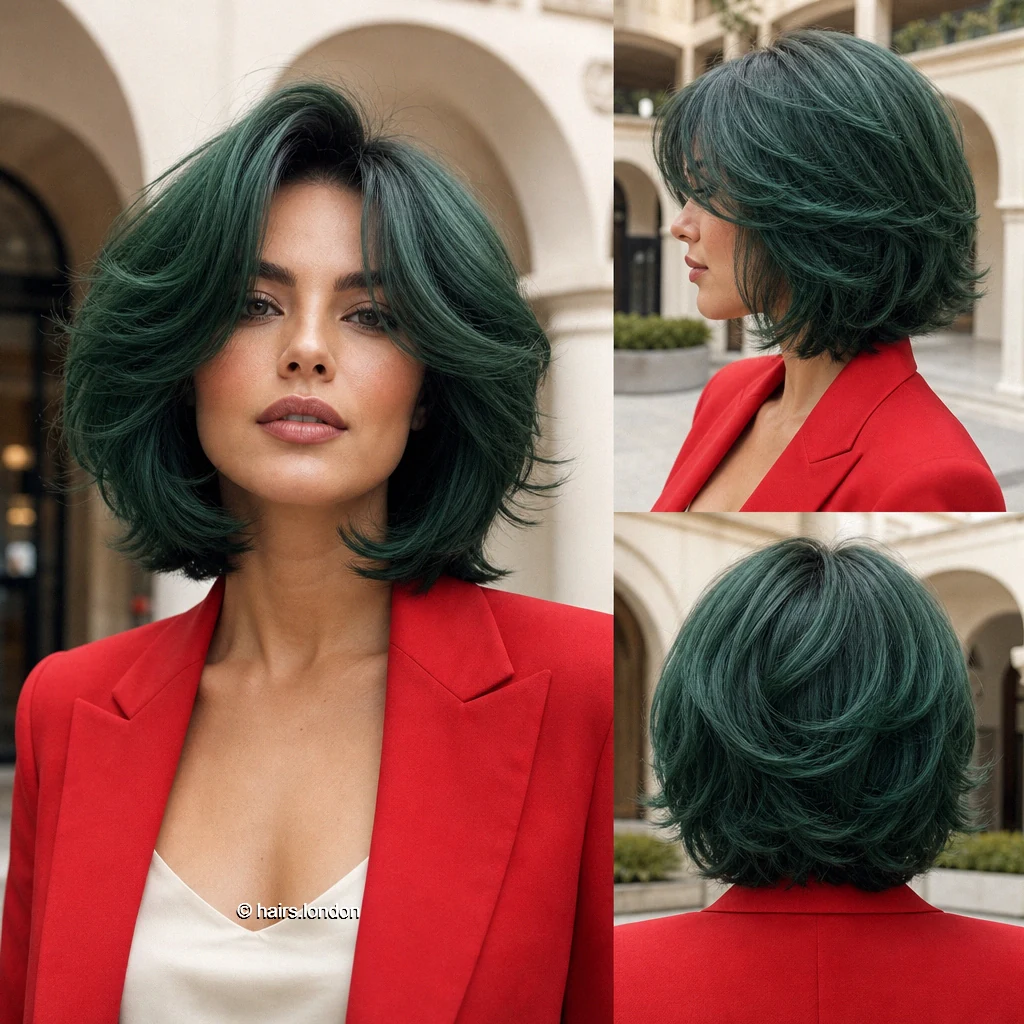
Deep green hair falls around the jaw in broad, flowing layers, with a parted front that opens across the forehead. The back shows overlapping lengths and softly flicked ends, so the perimeter reads more textured than sharply cut here. Style with a brush that follows the natural sweep, then separate the tips using only a little flexible product. This fullness may appeal if your density supports layered volume; discuss a lighter version if your hair is fine. Trim when the lower layers lose balance, and consider how frequently you can refresh this layered green color comfortably over time at home.
13. Electric Blue Bob with a Textured Edge
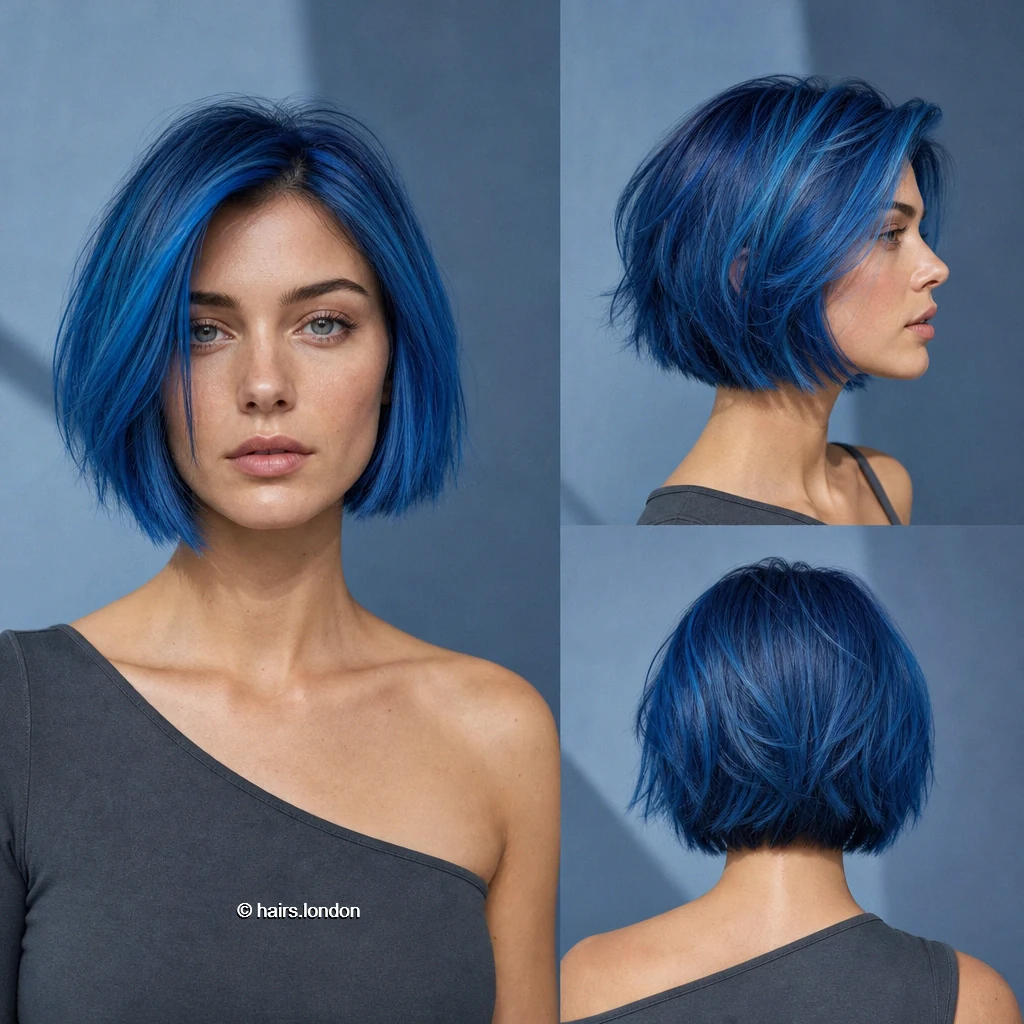
Electric blue gives this jaw length bob impact, while its side part and separated ends keep the silhouette relaxed. The profile shows front pieces near the chin; the back remains compact, with short layers breaking up the lower edge. Rough dry for lift, then smooth individual sections rather than pressing the entire shape into a uniform curve. A light, textured edge can work with some natural waves, but fine hair may need a firmer perimeter. Ask for trims that preserve the face framing length, and plan color refreshes around how quickly your blue fades with your usual washing and styling.
14. Indigo Bob with a Longer Front
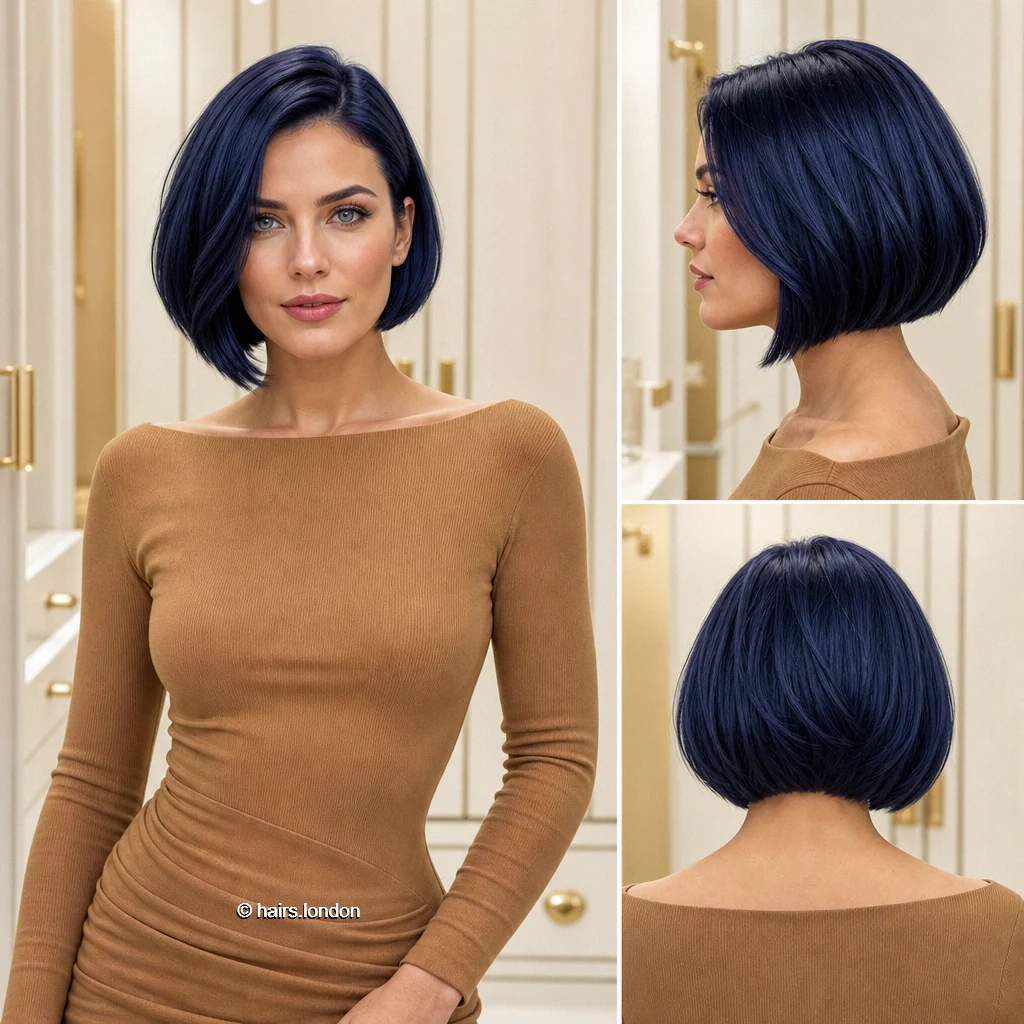
A glossy indigo bob has a deep side part and a front section that reaches below the jaw. The profile shows that front extending beyond the shorter back, while the nape has a rounded, closely shaped finish. Blow dry downward with a brush to show the line clearly, turning the ends inward only if you prefer softness. Dense hair may need weight balanced inside the shape; finer hair can benefit from retaining its smooth outer edge. Ask your stylist to check the front to back relationship at trims, and discuss upkeep for the dark blue sheen as your roots grow.
15. Blue Teal Bob with a Smooth Perimeter
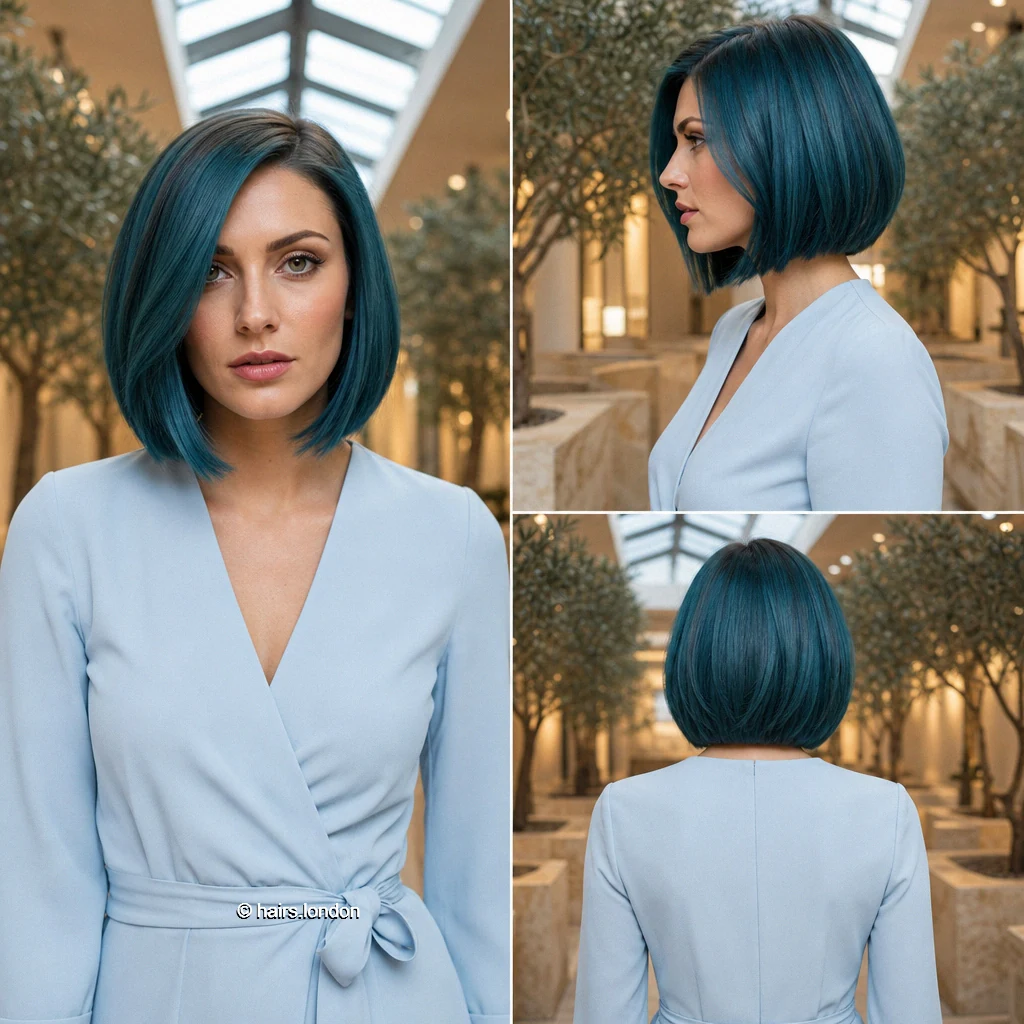
This blue teal bob has a sweeping side part, smooth sides, and a jaw grazing front that frames the face. The back is rounded above the neckline, while the side view suggests only a modest difference between front and back. Direct airflow down the hair shaft, then polish the lower edge with a brush without building excess crown volume. A sleek finish takes more work on strong waves; ask about manageable adjustments rather than removing too much weight. Keep the perimeter even as it grows, and choose a color refresh schedule that fits your wash and regular heat styling habits.
16. Forest Green Bob with Natural Texture
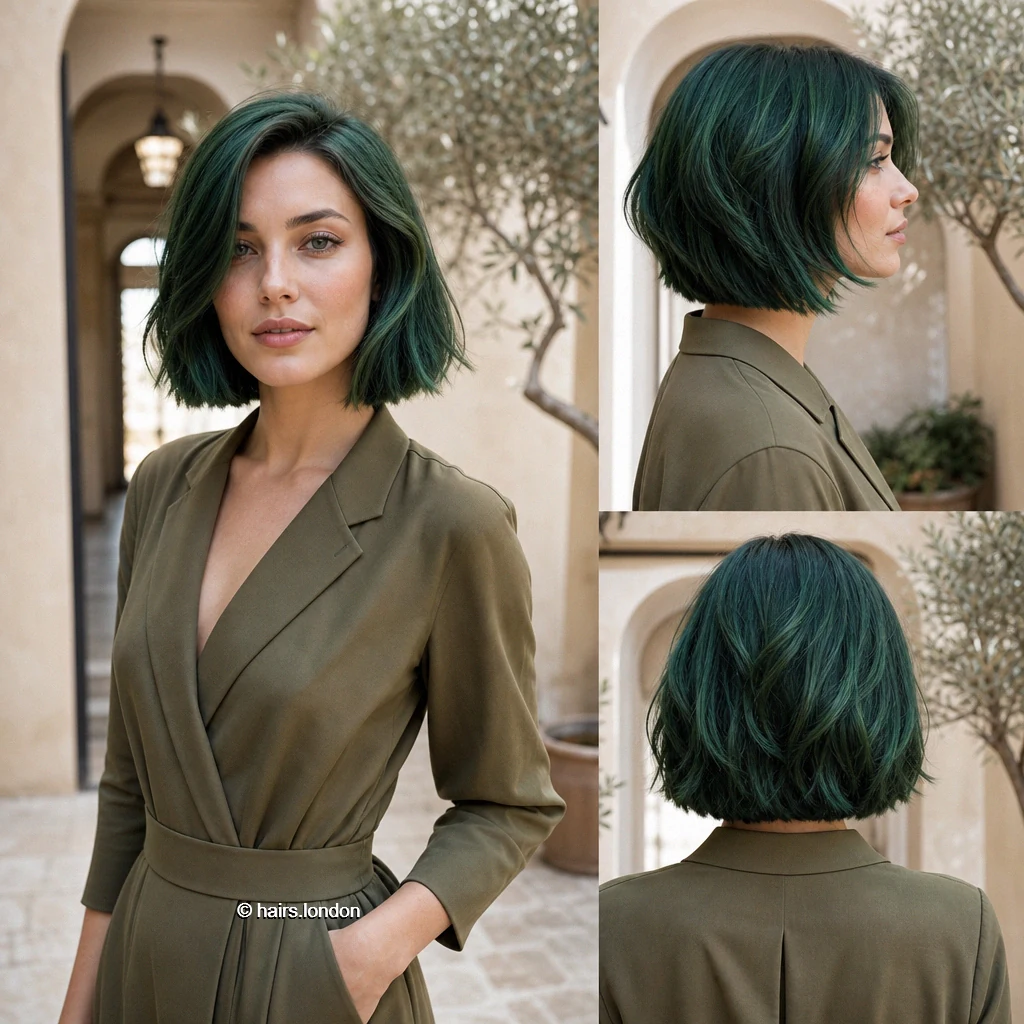
Forest green shades this jaw length bob, where a side swept front and loose bends create an unfussy outline. The side and back show textured ends around a compact neckline, with fullness through the middle rather than a rigid line. If your hair waves naturally, encourage its bends with lightweight cream and let the perimeter dry before adjusting stray pieces. Dense hair might need internal balance to avoid a wide base; finer strands may need less separation at the ends. Trim for symmetry once the outline spreads, and ask how to preserve green vibrancy without overwashing or overheating your hair.
17. Vivid Cobalt Bob with a Center Part
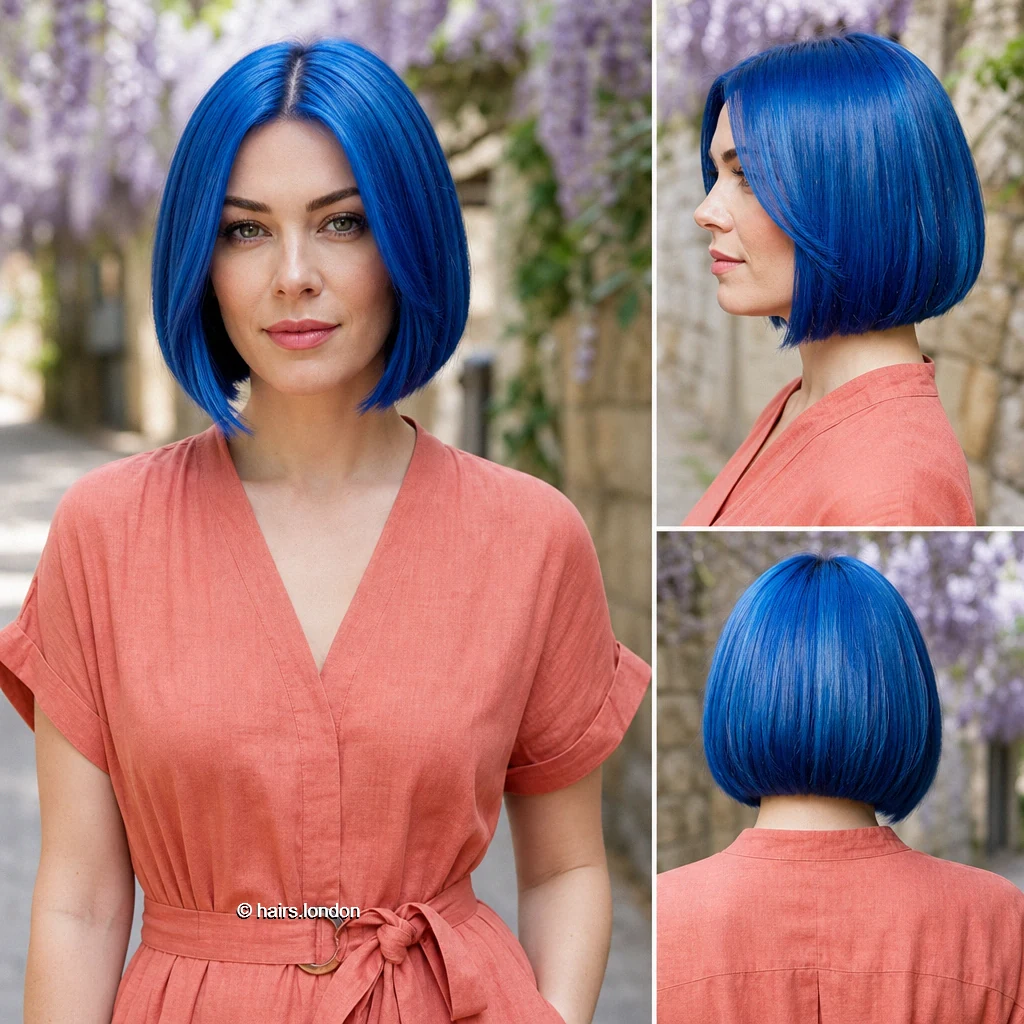
Vivid cobalt covers this smooth bob, whose center part and chin length front pieces create a balanced frame around the face. The profile and back show a softly rounded, compact lower shape rather than a pronounced longer front or visible stack. Smooth the lengths with a brush and finish with minimal product so the clean perimeter remains free to move. Fine hair may welcome this fuller edge; thick hair can discuss careful weight control without sacrificing the silhouette. Book trims before the line loses its shape, and consider the commitment required to keep cobalt looking bright between salon color appointments.
18. Ink Blue Bob with a Graduated Back
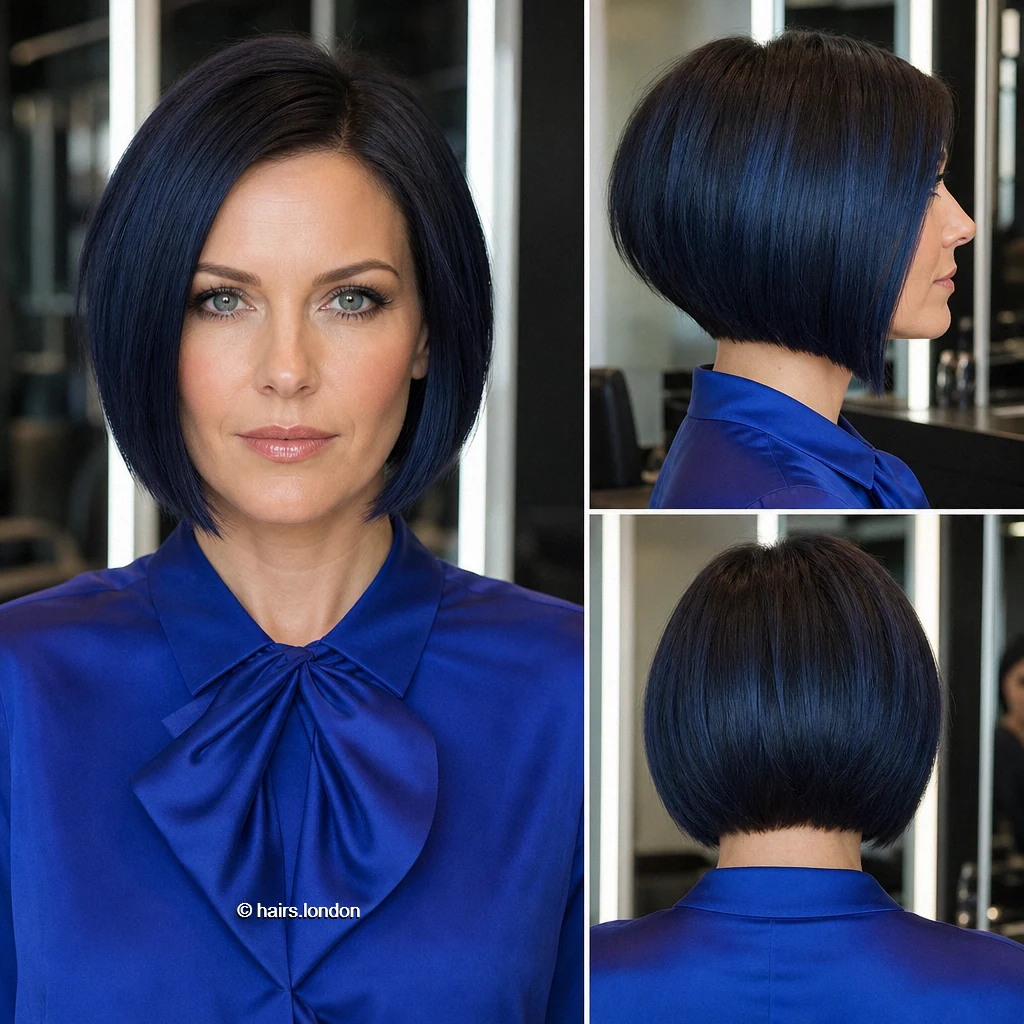
An ink blue bob curves around the jaw, with a side part and longer front pieces pointing toward the chin. The profile shows a shorter nape beneath the front, and the back displays a rounded shape with visible graduation. Brush the top smooth and direct the ends inward, allowing the front to retain its distinct, slightly longer line. Ask whether your growth pattern will keep the nape tidy; denser hair may require careful internal weight management. Maintain the graduated area as it grows out, and discuss how the dark blue will appear between your planned professional salon color refresh appointments.
19. Steel Blue Bob with a Clean Weight Line
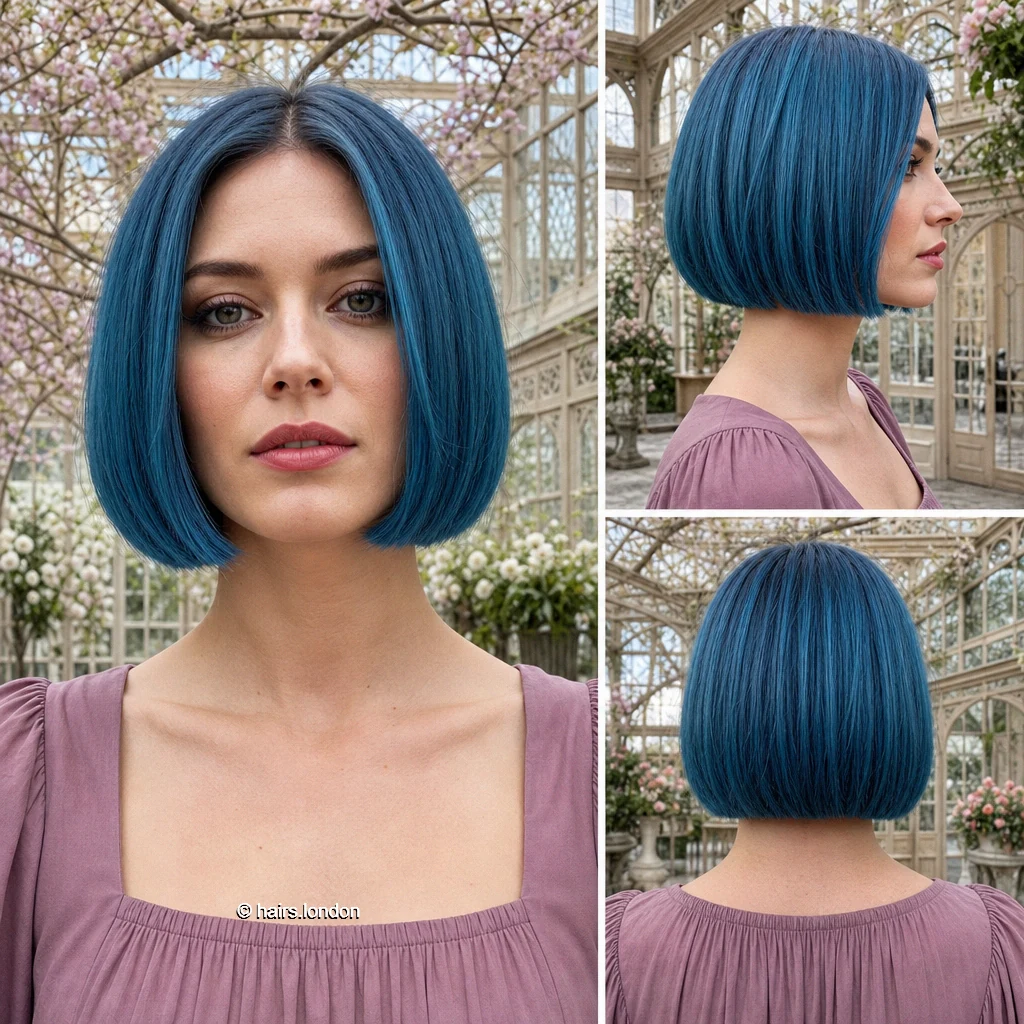
Steel blue color emphasizes the clean, chin length outline of this center parted bob, with smooth sides framing the cheeks. From the side and back, the lower edge looks even and substantial, without obvious choppy layers or strong graduation. Blow dry downward, then pass a brush over the tips to keep the perimeter neat but not excessively tucked. This line can make fine hair look fuller; thick hair may need discreet internal shaping to prevent a heavy base. Even small changes show along this edge, so request regular professional perimeter checks at your salon and plan realistic blue color upkeep.
20. Emerald Bob with a Crisp Neckline
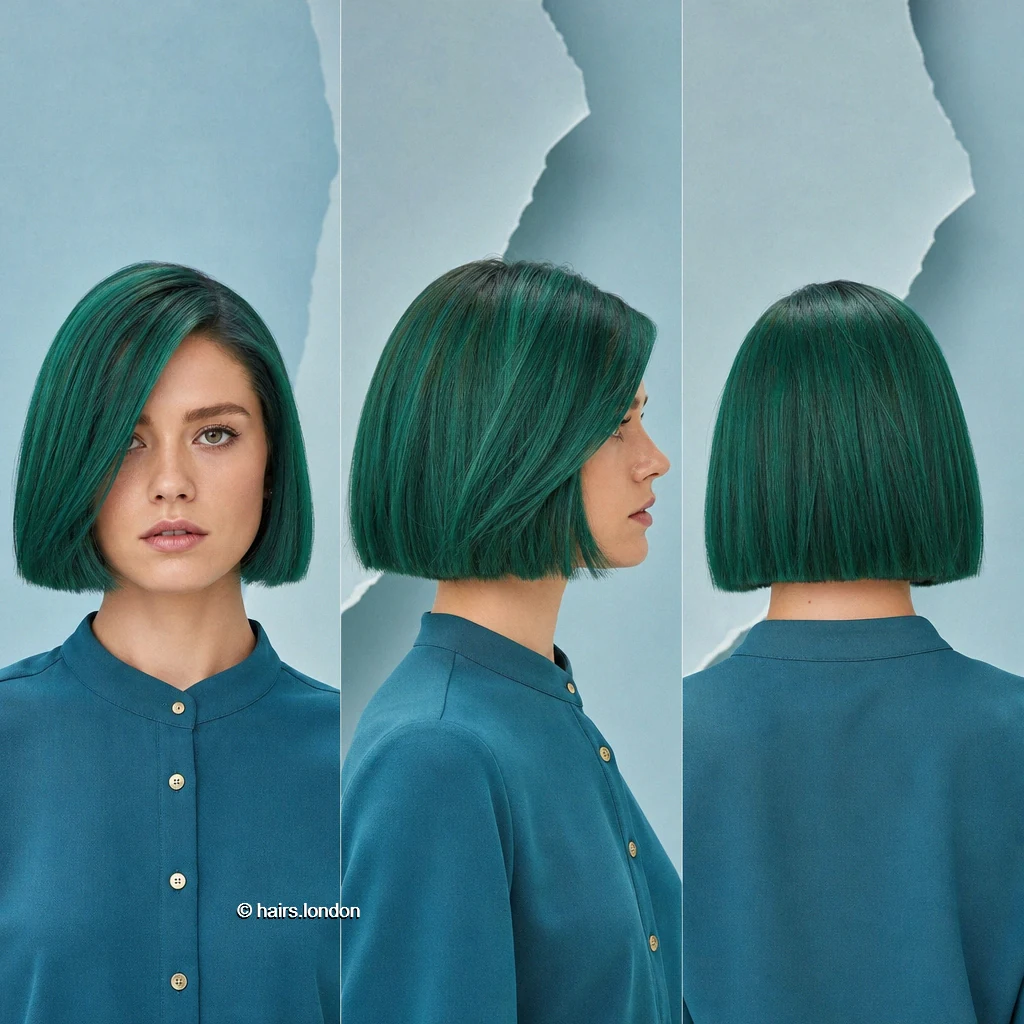
Emerald green runs through this smooth bob, which has a deep side part and ends near the jaw. The side and back views show a straight, compact neckline and a defined perimeter, with little visible surface layering. Dry the heavy front section in its intended direction, then smooth the ends without rolling them far under. If your hair is dense, discuss hidden weight removal; finer hair may be better served by preserving the edge. Check the neckline when it starts to grow unevenly, and ask about maintaining emerald color against your natural root growth between salon visits and regular washes.
How to Choose Your Bob Length and Shape
Start with where you want the perimeter to sit: near the jaw for a compact bob, at the chin for a clear face-framing line, or lower if you want more room to grow. Then compare the side and back views. A front that visibly extends beyond the back creates an A-line effect; a shorter nape with visible graduation needs a different maintenance plan. Decide whether you prefer a full lower edge, soft layers, or a fringe, and account for your density, natural movement, and growth patterns.
Styling Fine, Thick, Wavy, and Curly Textures
Fine hair often benefits from keeping enough weight at the perimeter and using lightweight products at the roots. Thick hair may need carefully placed internal weight removal so a rounded bob does not expand into a bulky base. For waves, encourage the natural bend with a light cream and refine only the sections that disrupt the outline. If you have curls, discuss the length and shape at their dry, springy position before cutting; these images do not establish how the same lines would fall on curls. Style bangs first, then choose whether to smooth or separate the remaining ends.
Keeping Blue and Green Color Fresh
These looks include deep navy, bright cobalt, teal, and green, so upkeep will vary with the starting hair color, the desired result, and washing habits. Ask your colorist what preparation is needed and how the chosen shade is likely to fade on your hair. Follow their washing and product guidance, limit unnecessary heat, and judge the color in daylight as well as indoor light. Schedule refreshes for the result you want rather than assuming every vivid shade needs the same timetable.
Maintaining the Bob Perimeter and Graduation
A smooth, blunt-looking edge shows uneven growth quickly, especially around the jaw or neckline. Layered bobs can tolerate a softer outline, but their face-framing pieces and overall balance still need checking. Where a shortened, graduated nape is visible, ask for shape maintenance before it becomes too heavy beneath the crown. At each trim, specify whether you want to preserve the front length, keep the same weight line, or let the bob gradually grow longer.
What to Discuss with Your Stylist
Bring the front, profile, and back view of the bob you like, then identify the feature that matters most: fringe, perimeter, longer front, rounded fullness, or a close nape. Show how your hair parts naturally and explain how much time you will spend styling it. Ask how the proposed layers or graduation will behave with your density and texture, what you can expect during grow-out, and what the blue or green color will require between salon visits.
Frequently Asked Questions
What is the difference between a bob and a lob?
A bob generally ends around the jaw or chin, while a lob is a longer bob that approaches the shoulders. The exact visual boundary varies, so describe your preferred endpoint to your stylist.
Is an A-line bob the same as a stacked bob?
No. A-line describes a front that falls longer than the back. Stacked or graduated describes visible, progressively shaped layers at the back. A cut can show both features, but one does not automatically imply the other.
Will a blunt-looking bob work on fine hair?
It can preserve fullness at the ends, provided your stylist adjusts the length and weight line to your density. Excess layering may leave some fine-haired bobs looking sparse.
How can thick hair avoid a bulky bob shape?
Discuss selective internal weight removal and how the perimeter should sit. Removing too much from the visible edge can make the shape uneven, so the placement matters.
Can naturally wavy hair wear a smooth bob?
Yes, if you are comfortable smoothing it or prefer a softer version of the line. Ask your stylist to account for where your waves bend and how the hair sits when dry.
What should I consider before cutting a bob on curly hair?
Curly hair can spring up substantially. Discuss the finished dry length, curl pattern, density, and how much roundness you want before deciding where to cut.
Are bangs a low-maintenance addition to a bob?
That depends on their length and your growth pattern. Brow-grazing or piecey bangs may need regular morning adjustment and more frequent trimming than the rest of the bob.
How much daily styling does a graduated bob need?
It depends on your natural texture and the finish you want. A precise, rounded nape may call for brushing, while a softer layered version can allow more natural movement.
How often should I trim a bob?
Trim when its perimeter, fringe, or graduated nape stops sitting as intended. A sharply defined edge usually shows growth sooner than a loose, textured outline.
How do I grow out a short bob gracefully?
Keep the lower edge balanced and decide whether to maintain or gradually reduce any shorter nape. Your stylist can preserve front length while adjusting the shape through the transition.
Will blue and green bob colors fade the same way?
Not necessarily. The starting hair color, preparation, shade, washing, and heat exposure can all affect fading. Ask a colorist about the particular result you want.
What should I bring to a bob haircut consultation?
Bring views that show the front, side, and back, and point out which details you want copied. Be ready to discuss your natural part, density, texture, styling routine, and color-maintenance budget.
Conclusion
The most useful inspiration is a bob you can assess from every angle. Compare the perimeter, front length, layering, fringe, and nape before choosing a favorite blue or green shade. A stylist can then adapt that visible shape to your hair’s density, natural texture, and preferred maintenance routine.


