


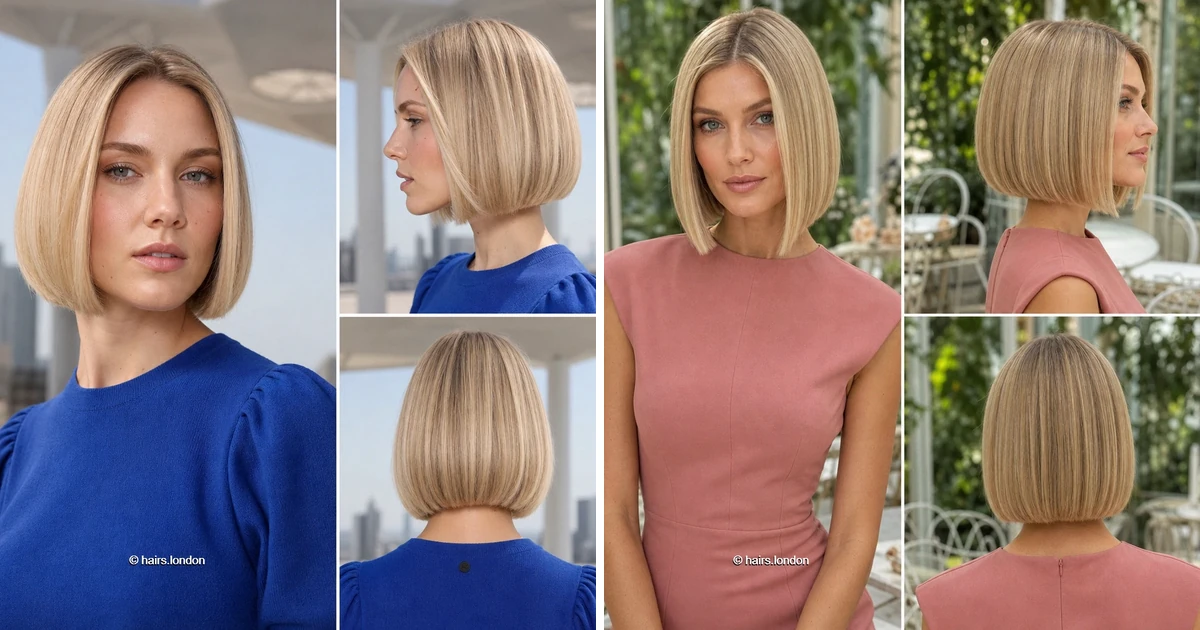
11. Straight Blonde Bob with Subtle Front Length
This straight blonde bob has a center part, smooth panels, and front ends that sit slightly below its rounded back. The side view suggests a gentle front-to-back angle, rather than an extreme A-line or a visibly stacked nape. If your hair is fine, ask for an edge that remains substantial instead of heavily thinned face-framing pieces. Blow dry with a nozzle aimed downward, then smooth the perimeter while leaving the ends naturally mobile. Watch for an uneven front as the cut grows, and discuss root blending or highlight maintenance if you prefer a consistent blonde appearance. Avoid excessive end rounding.
12. Cool-Blonde Bob with a Curved Weight Line
Cool blonde strands and a center part keep this bob sleek, while the side view shows a gently fuller back. The front falls around the jaw and appears a little longer than the compact, inward-curving nape. Ask your stylist to balance that difference against your density, since removing too much underneath may weaken the shape. Dry the sides smooth, then use a round brush only at the bottom to define the curve. Arrange trims when the back loses its clean edge, and discuss toning intervals according to how cool you want the blonde to remain. Keep root products especially lightweight.
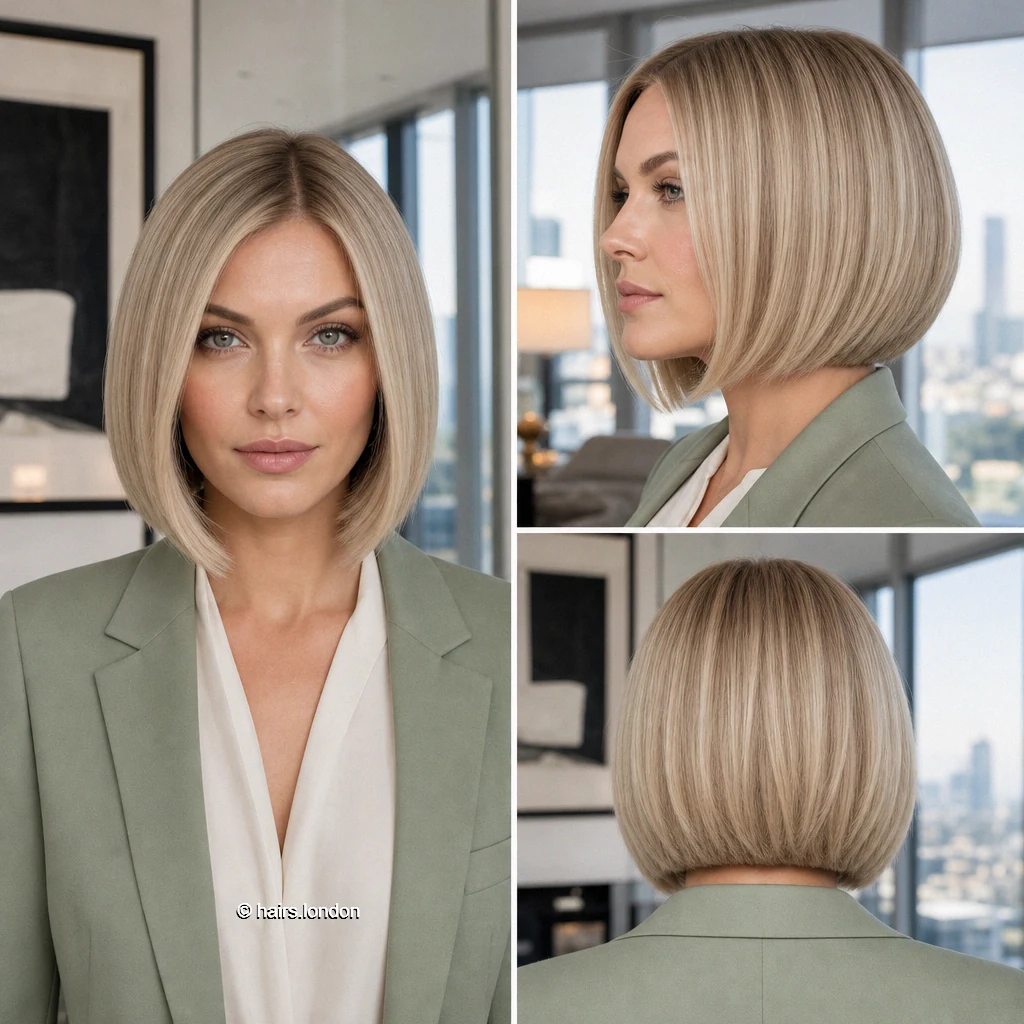
13. Smooth Beige-Blonde Bob with Longer Front Pieces
This beige-blonde bob features a center part, longer jaw-framing fronts, and a rounded back cut closer to the neck. Its visible front-to-back difference supports a gentle A-line description, while the nape does not display pronounced exposed stacking. Ask for the front length to be checked against your usual part and how you prefer to wear it. Smooth the surface with a brush and heat protectant, taking care not to round the longer pieces excessively. Maintain the back edge before it drops onto the collar, and revisit the front angle whenever the ends begin to feel uneven. Avoid overthinning the ends.
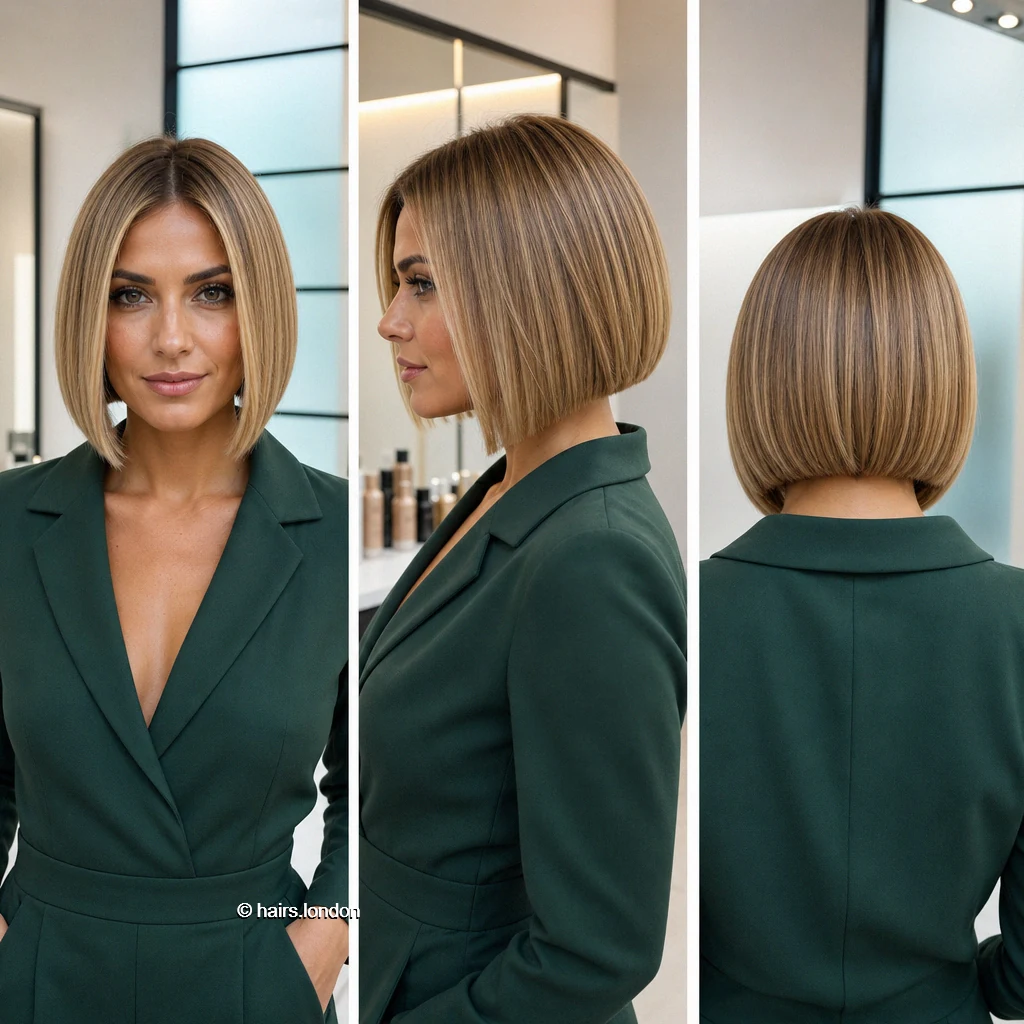
14. Pale-Blonde Bob with a Dramatic Side Sweep
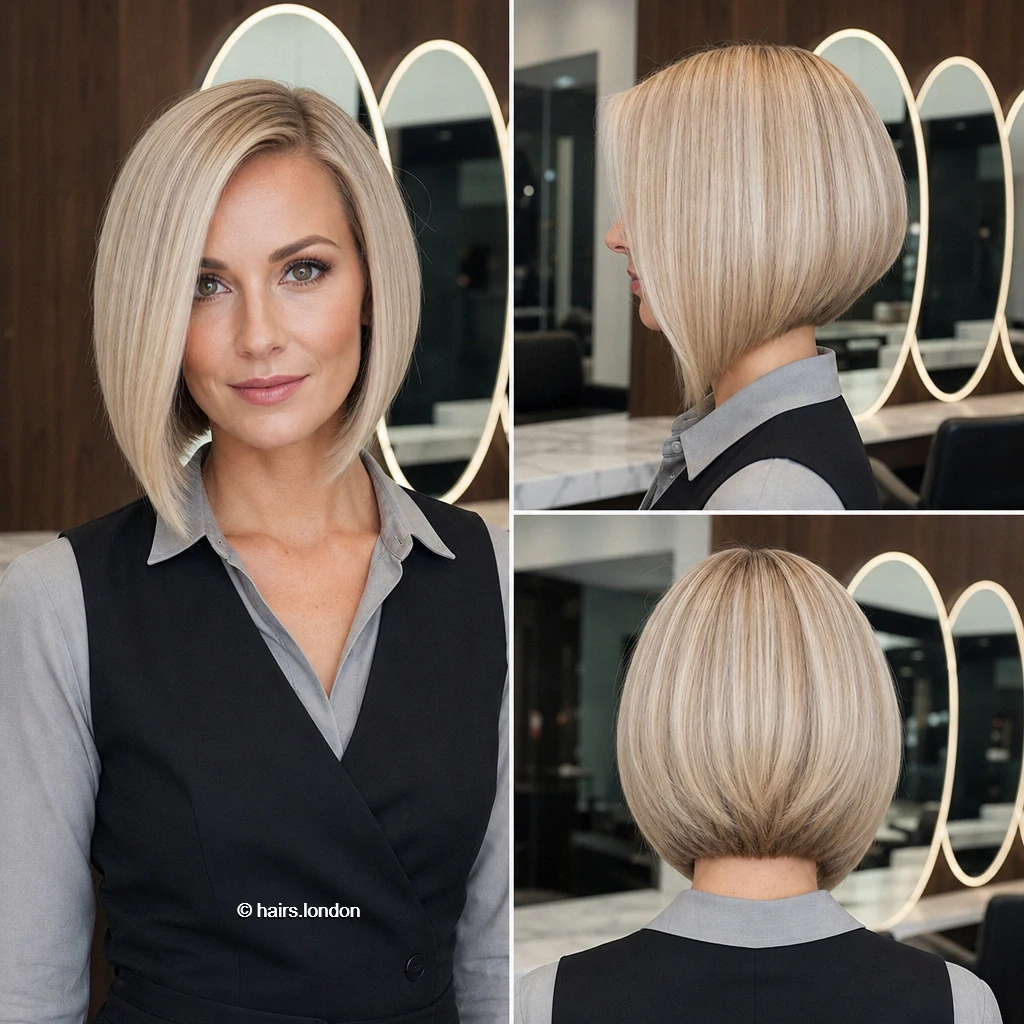
Pale blonde color draws attention to this bob’s dramatic side sweep, longer front section, and short, rounded back. The side and rear views reveal a fuller shape above a narrower nape, with some visible layering through the back. Ask your stylist how much graduation your density can carry while keeping the sweeping front substantial. Dry the roots against their usual direction for lift, then smooth the front downward with a brush. Check the nape as its shorter layers grow, and plan blonde maintenance around your natural root color and desired contrast. Consider how the sweep behaves on nonwash days, too.
15. Center-Parted Blonde Bob with an Inward Curve
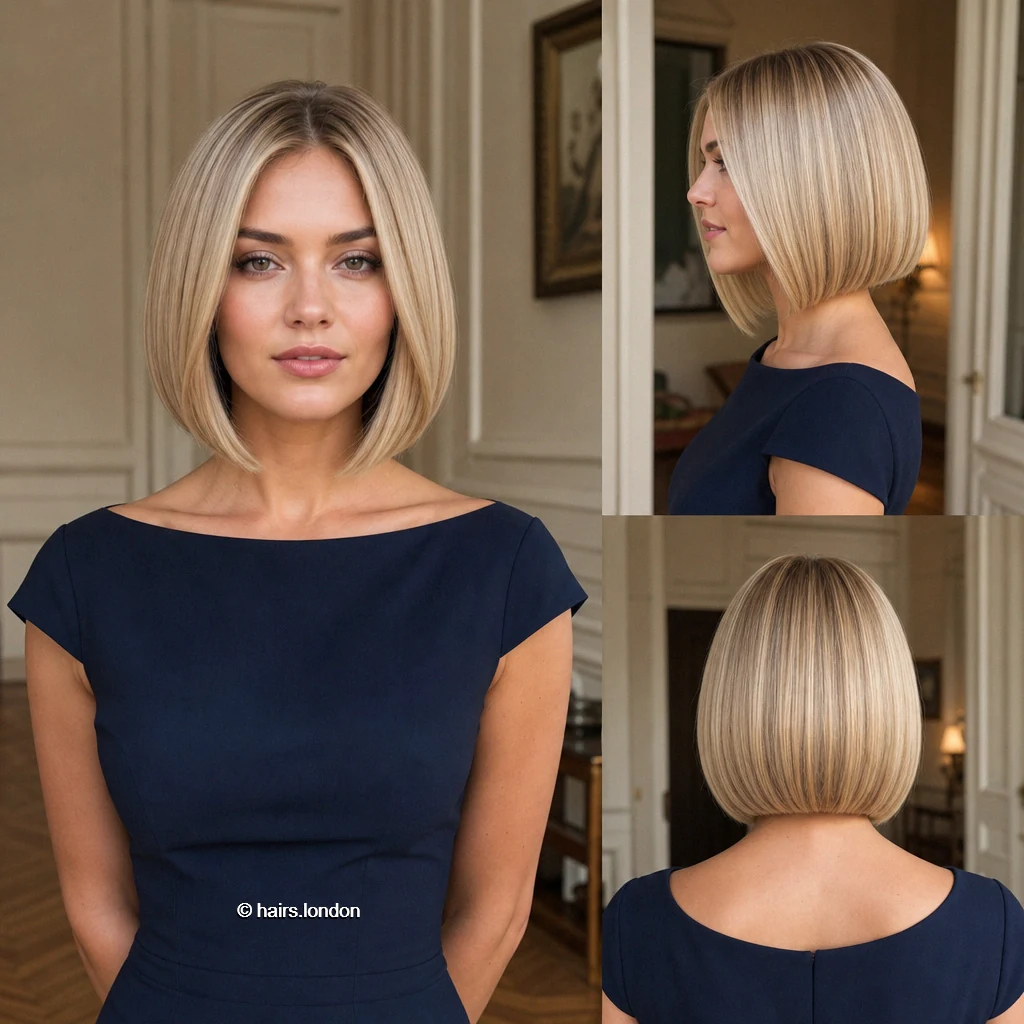
A center part and smooth, jaw-framing sides give this blonde bob a balanced front, while the back curves inward. The rear view shows a compact, rounded perimeter with no clearly defined stack of shorter layers. If your hair expands in humidity, discuss how much interior shaping can control bulk without disturbing that visible outline. Apply heat protectant, dry from roots to ends, and make a slight bend at the tips. Keep the back edge tidy as it grows toward the shoulders, and ask about maintaining the blend between the lighter lengths and darker roots. Avoid heavy creams near the part.
16. Ash-Beige Angled Bob with Soft Front Layers
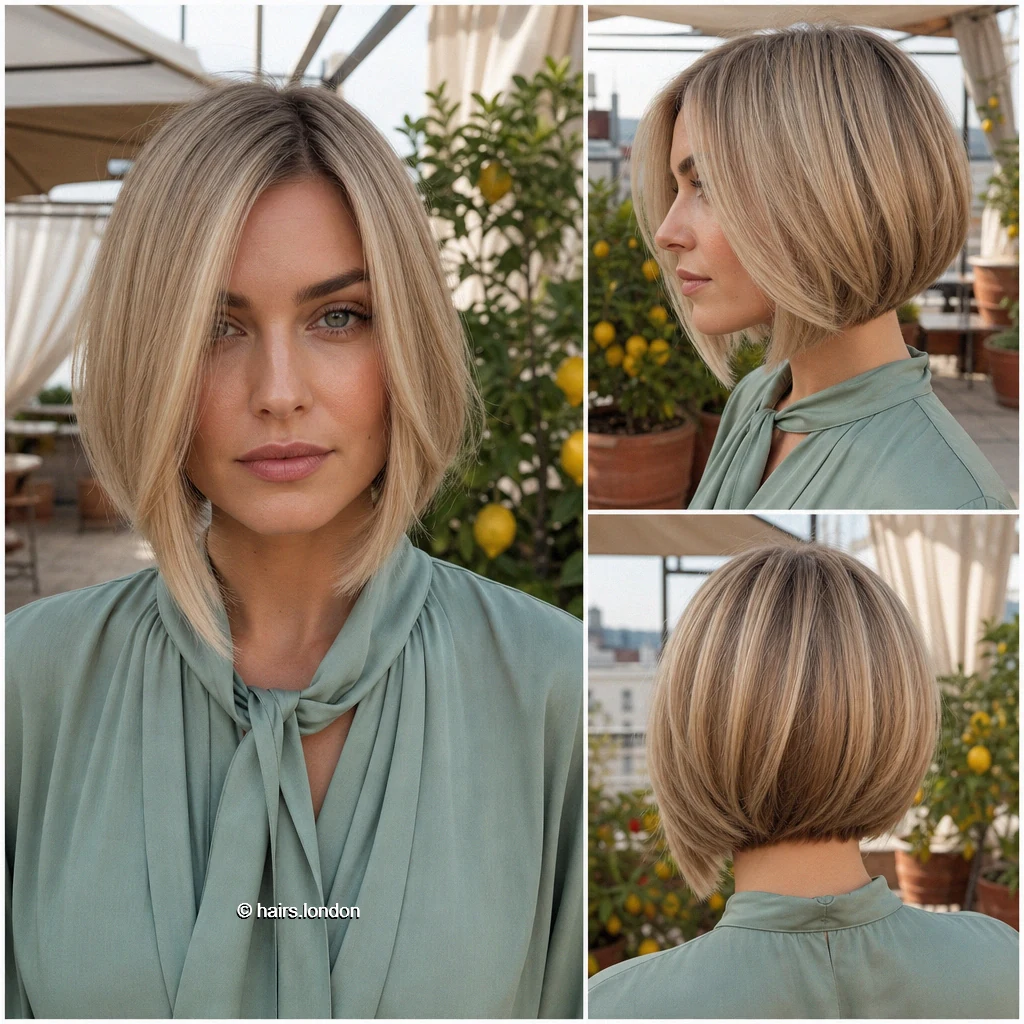
The ash-beige front of this bob extends below the jaw, contrasting with a rounded back that ends at the neck. Softly separated front pieces lighten the outline, while the side view makes the forward length especially clear. Discuss an A-line shape if you want that visible difference, but ask how much interior movement suits your density. Dry the longer pieces forward before smoothing them back into place, and avoid heavy products that obscure their separation. Schedule shape checks when the nape loses its curve, and consider whether the cooler blonde needs periodic toning. Keep the longer fronts light and mobile.
17. Softly Layered Blonde Bob with Face-Framing Ends
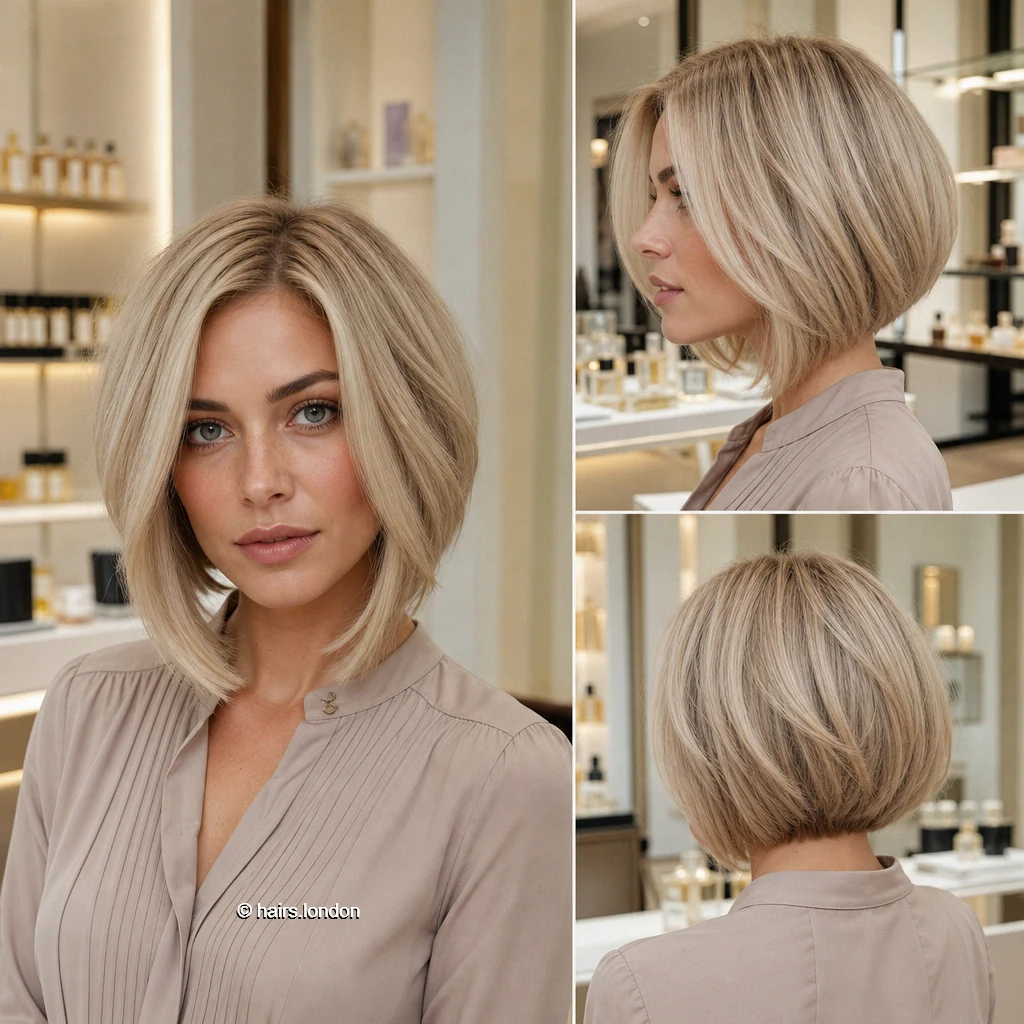
This blonde bob pairs a relaxed center part with face-framing ends that sit below a softly rounded, shorter back. Light layering is visible through the sides and rear, giving the shape movement without looking heavily feathered. Ask your stylist to preserve enough perimeter weight if your hair is fine, or relieve hidden bulk if it is dense. Use a brush to smooth the crown, then loosen the front with your fingers rather than pressing it flat. Maintain the back curve with regular trims, and discuss how the darker roots should transition into the lighter lengths. Avoid overly stiff finishing products.
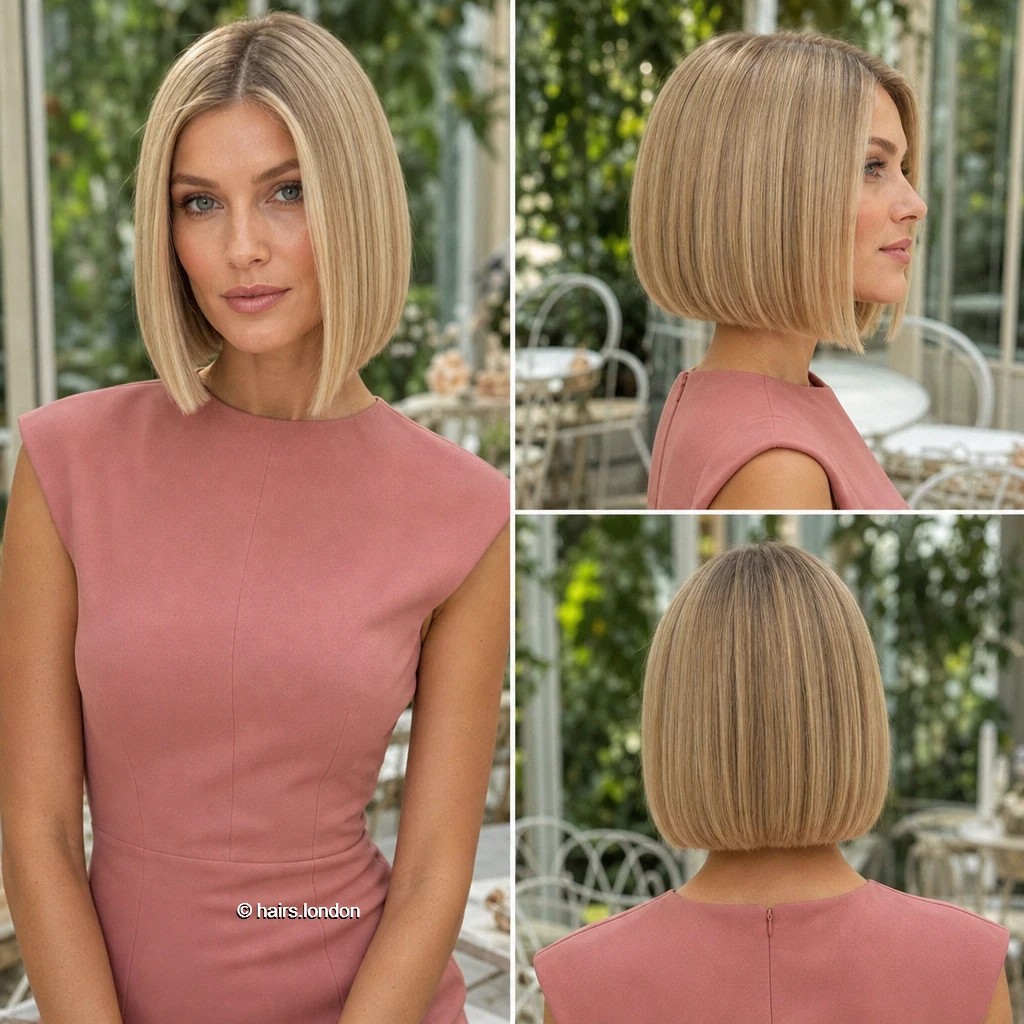
18. Honey-Blonde A-Line Bob with a Rounded Back
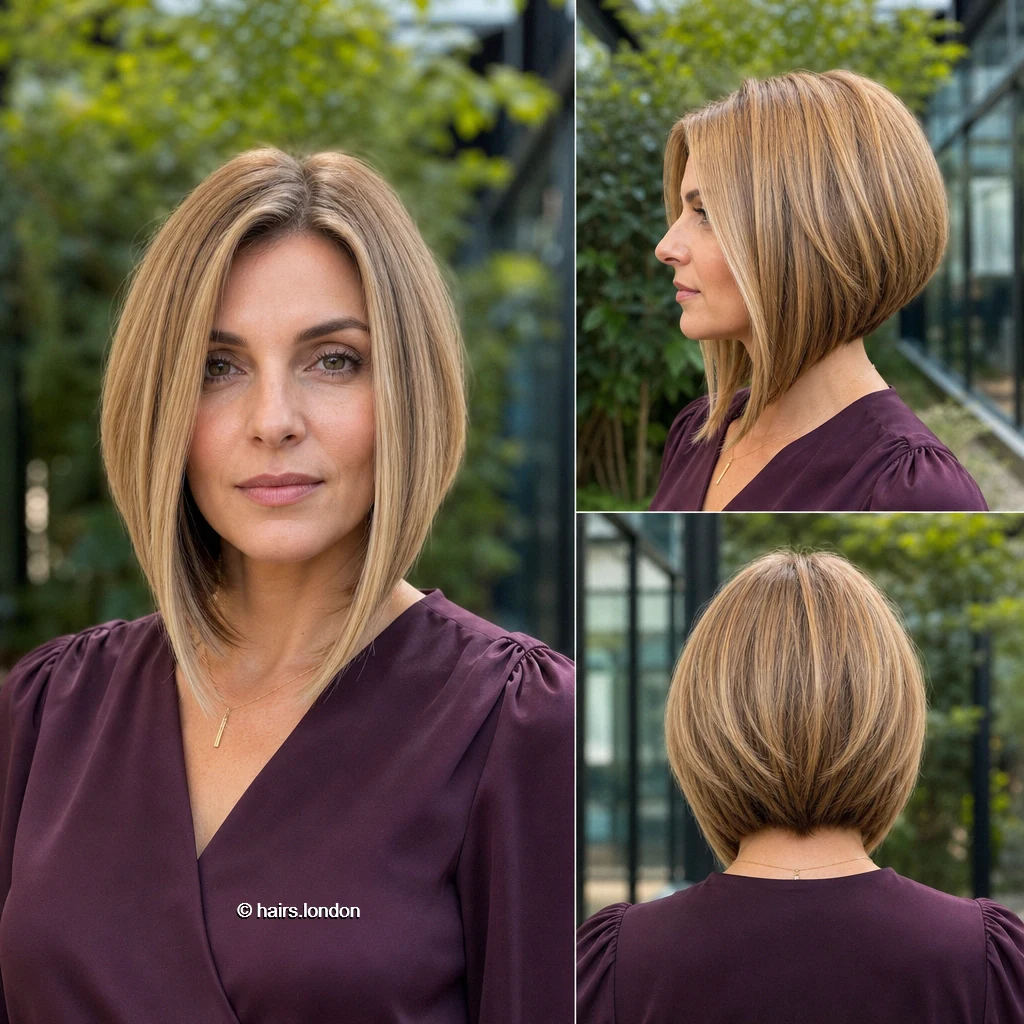
Honey-blonde and beige strands emphasize this bob’s long front pieces, which drop below the jaw ahead of its shorter back. The side view clearly shows an A-line direction, while the rear looks rounded rather than sharply exposed or closely stacked. If your hair is thick, ask about discreet bulk removal that will not make the long fronts appear stringy. Smooth the sections beside the face and keep the back lightly curved with a brush. Trim before the growing nape erases the angle, and discuss highlight placement if you want brightness along the front. Preserve movement through the longer face-framing sections.
19. Side-Parted Beige-Blonde Bob with an Angled Front
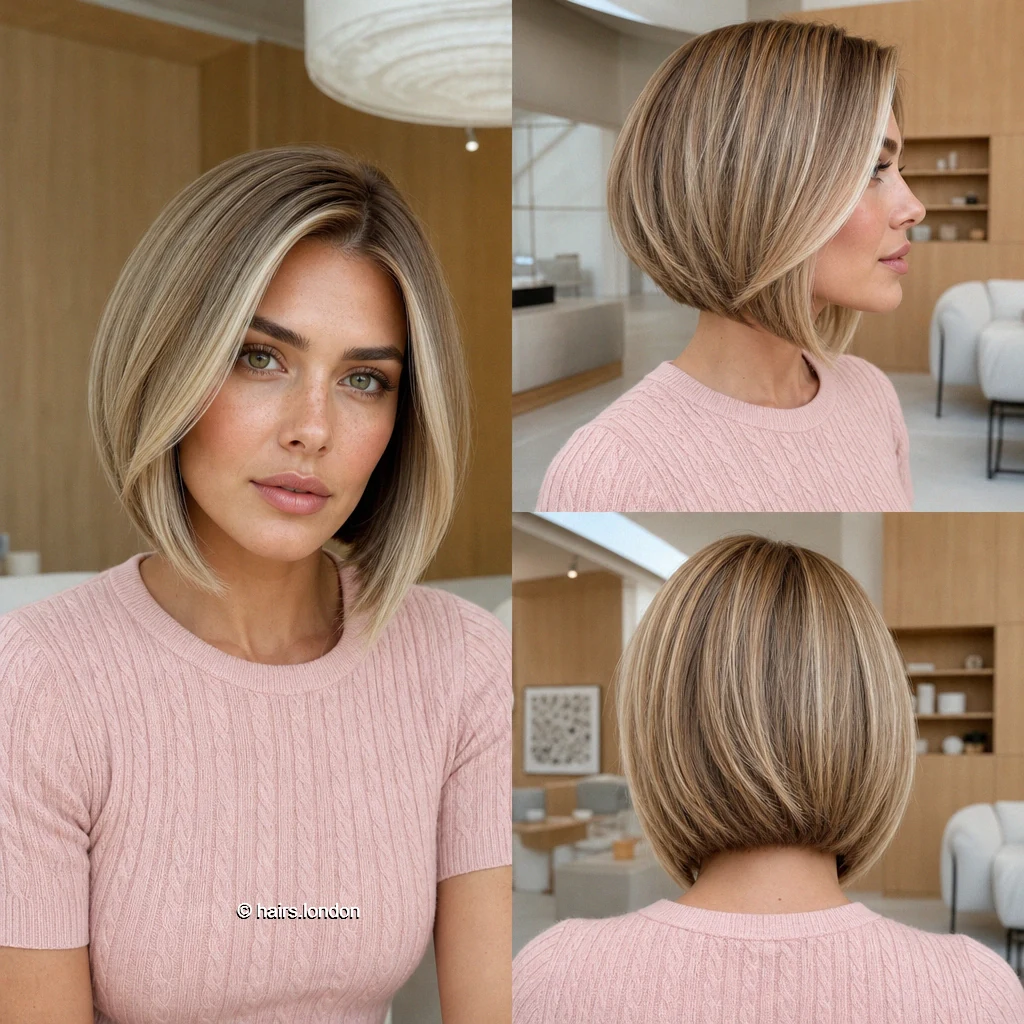
A soft side part feeds into the longer front of this beige-blonde bob, while its rounded back sits near the neck. The side view shows a forward angle and gently layered surface, without enough exposed nape detail to require a stacked label. Ask whether your usual part will keep both front sections balanced as the cut grows. Dry the front toward the jaw, then lift the back lightly so its curve remains full without excessive puffiness. Book trims when the front angle softens, and discuss whether visible darker roots suit your preferred blonde maintenance schedule. Avoid thinning the longer ends.
20. Airy Pale-Blonde Bob with a Sweeping Front
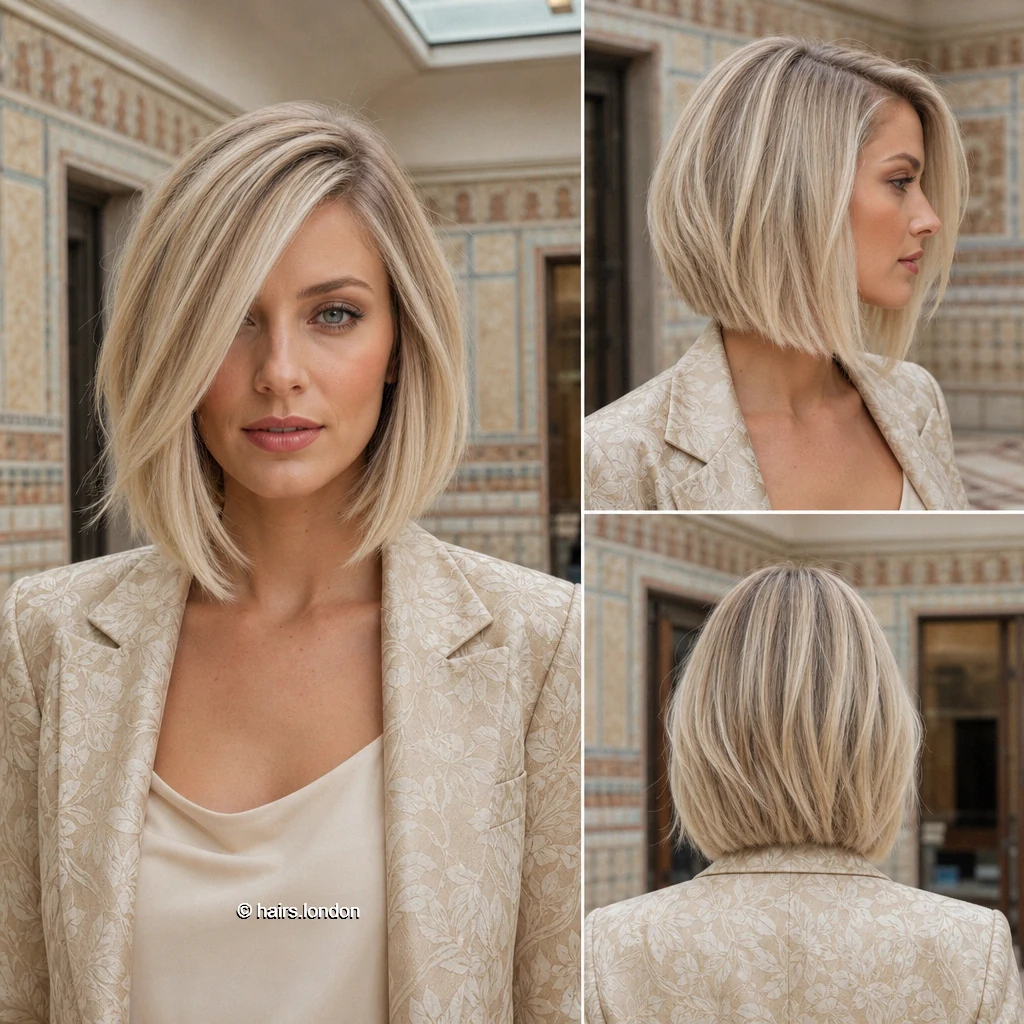
This pale-blonde bob has a deep side sweep, lightly textured ends, and a back that rests around the upper neck. Its side view shows some front length, but the loose surface makes the perimeter less rigid than a polished A-line. Ask for soft layering only where your density needs it, keeping enough weight to prevent wispy, unsupported ends. Dry the fringe area across the forehead and use a light cream to separate the shorter pieces. Refresh the outline when the neck area grows heavy, and protect the lightened hair with a conditioning routine suited to its condition. Avoid stiff hold.
How to Choose Your Bob Length and Shape
Decide first where you want the front to land: above the jaw, at the jaw, or below it. Then consider the back. A level, rounded edge feels different from a longer-front A-line, while a short layered bob needs enough length around the sides to retain its bob shape. Check photos from multiple angles and account for shrinkage, cowlicks, density and whether you normally tuck your hair behind your ears.
Styling Fine, Thick, Wavy and Curly Textures
Fine hair often benefits from a substantial perimeter and light products that do not collapse the roots. Thick hair may need carefully placed interior weight removal, not indiscriminate thinning at the edge. For waves, encourage the existing bend with mousse and gentle scrunching; for curls, discuss the dry length and shape before cutting, then diffuse or air-dry with minimal handling. Smooth only the perimeter if you want a neater finish while preserving natural movement.
Keeping Blonde Bob Color Fresh
Blonde upkeep depends on your starting color, the contrast at your roots and whether you prefer a cool, beige or warmer finish. Ask your colorist whether a gloss, toner or strategically placed highlights make sense between larger appointments. Use a conditioning routine appropriate for lightened hair and heat protection when styling; avoid assuming every blonde needs the same toning schedule.
Maintaining the Bob Perimeter and Graduation
A smooth jawline bob often starts to look different as soon as its edge drops below the intended point. An angled bob can lose its front-to-back distinction, while short layered or graduated shapes may become heavy around the nape. Schedule trims according to the detail you want to preserve, and ask your stylist to assess both sides and the back rather than tidying only the front.
What to Discuss with Your Stylist
Bring the front, side and back view of the shape you prefer. Point out the perimeter, part, fringe and amount of fullness you want behind the ears. Explain your natural texture, growth patterns, usual styling time and tolerance for frequent trims or color visits. Ask which elements will translate to your hair as it grows, and which may require daily heat styling.
Frequently Asked Questions
What is the difference between a bob and a lob?
A bob generally sits around the jaw or neck; a lob is a longer bob that approaches or reaches the shoulders. The boundary can be flexible, so show your stylist the exact endpoint you want.
Is an A-line bob the same as a stacked bob?
No. A-line describes a perimeter that is longer in front than in back. Stacked refers to visible short layers or graduation building shape at the back. A cut can include both features, but one does not imply the other.
How do I choose between a blunt and layered bob?
Consider how much perimeter fullness you want and how your hair moves naturally. A stronger edge can help fine ends look substantial; carefully placed layers can release weight or encourage texture.
Can fine hair hold a rounded bob shape?
It can, depending on density and growth pattern. Ask for a substantial perimeter and restrained interior shaping, then use lightweight styling products rather than heavy oils.
How can thick hair avoid looking bulky in a bob?
Discuss targeted interior weight removal and a length that gives the hair room to fall. Removing too much from the visible edge can trade bulk for thin, uneven-looking ends.
Will a short bob work with natural curls?
It may, but curl shrinkage changes the finished length. Have your stylist assess the curl pattern and agree on the dry silhouette before committing to a short perimeter.
Should I add a fringe to a layered bob?
A fringe can complement short layers if your growth pattern and styling preferences support it. Discuss where it should fall when dry and how often you are willing to maintain it.
What is the quickest daily styling routine for a smooth bob?
Dry the roots, direct airflow down the hair shaft, and smooth the perimeter with a brush. Bend the tips only as much as needed; excessive rounding can change the intended shape.
How often should a precise bob be trimmed?
Trim when its defining edge or front-to-back angle begins to shift. A compact nape or short fringe may need attention sooner than a softer, longer bob.
How can I grow out an angled bob?
Ask your stylist to gradually balance the shorter back with the longer front while keeping the perimeter tidy. Avoid cutting the front immediately unless you want a more level bob.
Do darker roots work with a blonde bob?
Yes, if you like the contrast. Discuss how visible you want the roots to be and how highlight placement or gloss appointments could support that preference.
What should I bring to a bob haircut consultation?
Bring images showing the front, sides and back, plus an example of how you usually wear your hair. Identify the exact length and fullness you like, and explain your styling and maintenance limits.
Conclusion
The strongest starting point is not a subtype name but a clear view of your preferred front length, back shape and amount of movement. Choose the blonde bob details you can see here, then work with your stylist to adjust the cut and color to your hair and the upkeep you actually want.


