

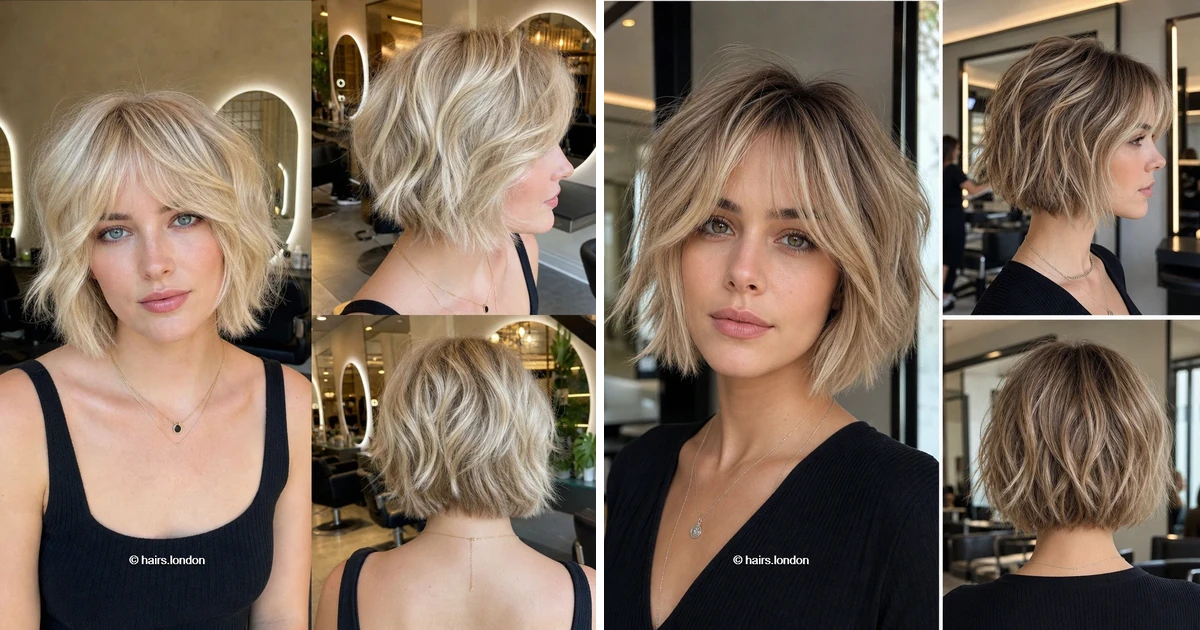
11. Champagne Blonde Bob with a Sweeping Long Front
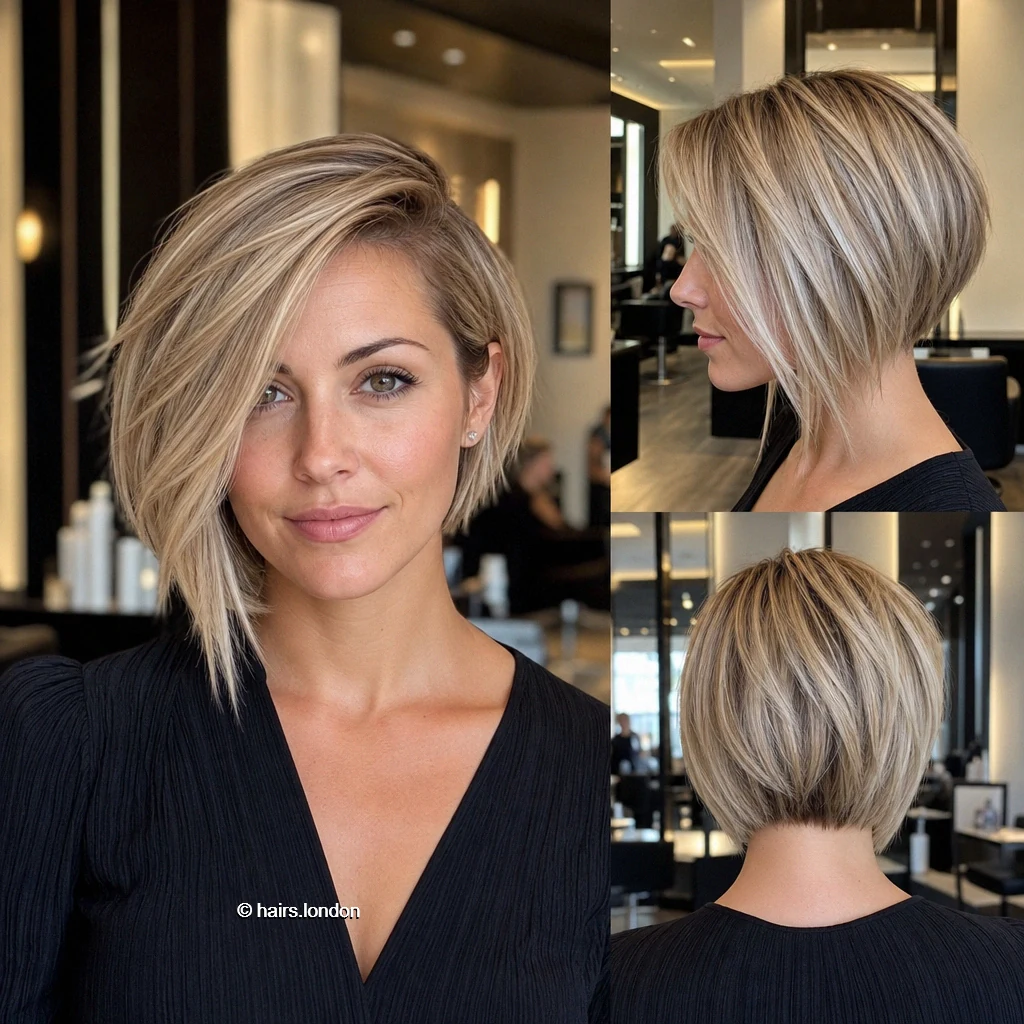
Champagne blonde highlights brighten this compact bob with elongated front. The deep side part produces a sweeping, eye grazing fringe. Visible graduation rounds the back above its closely tapered nape. Longer forward lengths stretch below the jaw, emphasizing deliberate contrast. Brush the fringe sideways while smoothing the extended front panel. Lift upper layers modestly, avoiding too much crown product buildup. A shorter nape requires attention if growth patterns resist closeness. Consider gentler graduation when fine density cannot support rounded volume. Book shaping trims to preserve both the nape and angle. Refresh light highlights according to visible regrowth and tonal changes.
12. Ash Blonde Graduated Bob with a Smooth Side Sweep
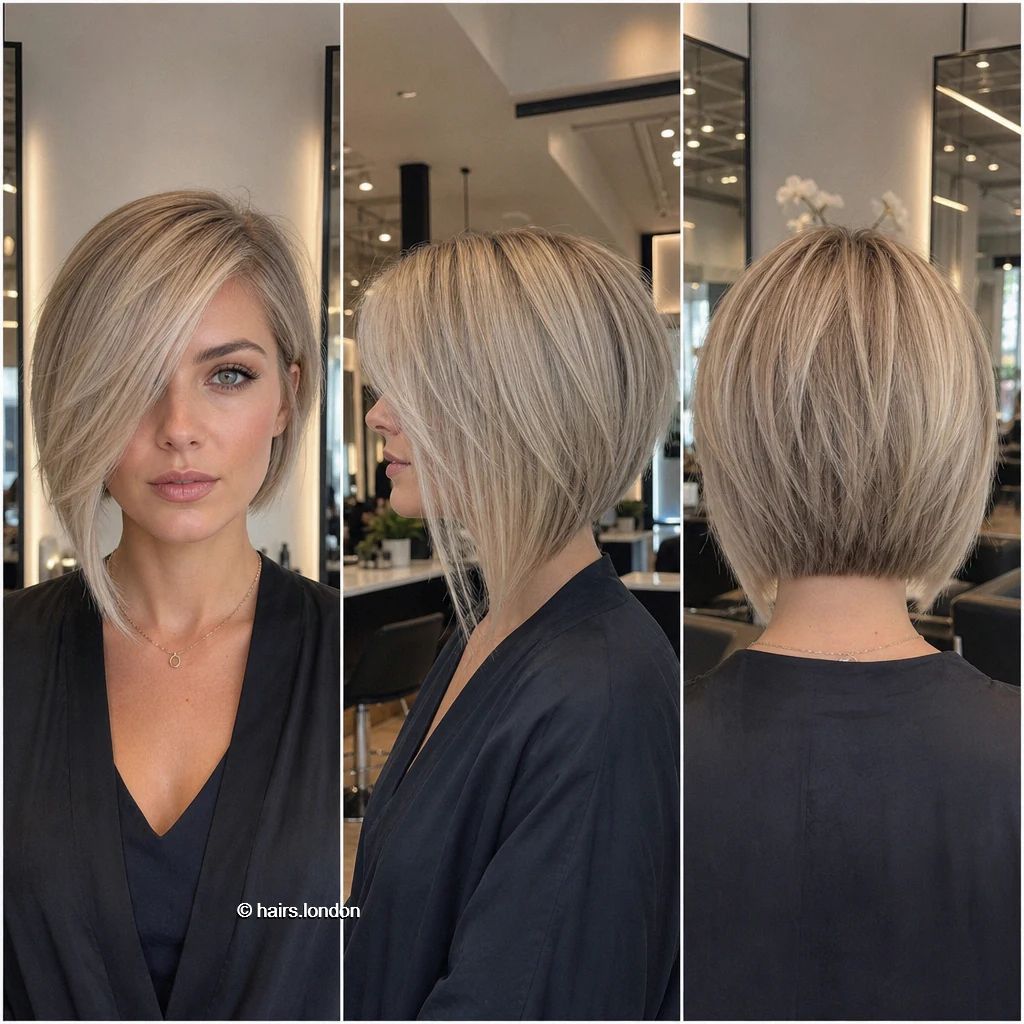
Cool ash blonde shades soften this neatly graduated angled bob. A heavy side sweep hides part of the forehead gently. The front reaches below the chin while back layers shorten. Rear views reveal rounded buildup above a clean, defined nape edge. Smooth the sides downward and lift the back with brushing. A touch of cream can tame flyaways without flattening volume. Request precise perimeter checks from every angle during salon visits. Fine hair may benefit from keeping weight through frontal sections. Short graduation grows out visibly, so plan trims regularly. Ask about cool blonde toning if highlights become noticeably warmer.
13. Warm Beige Bob with Rounded Back Layers
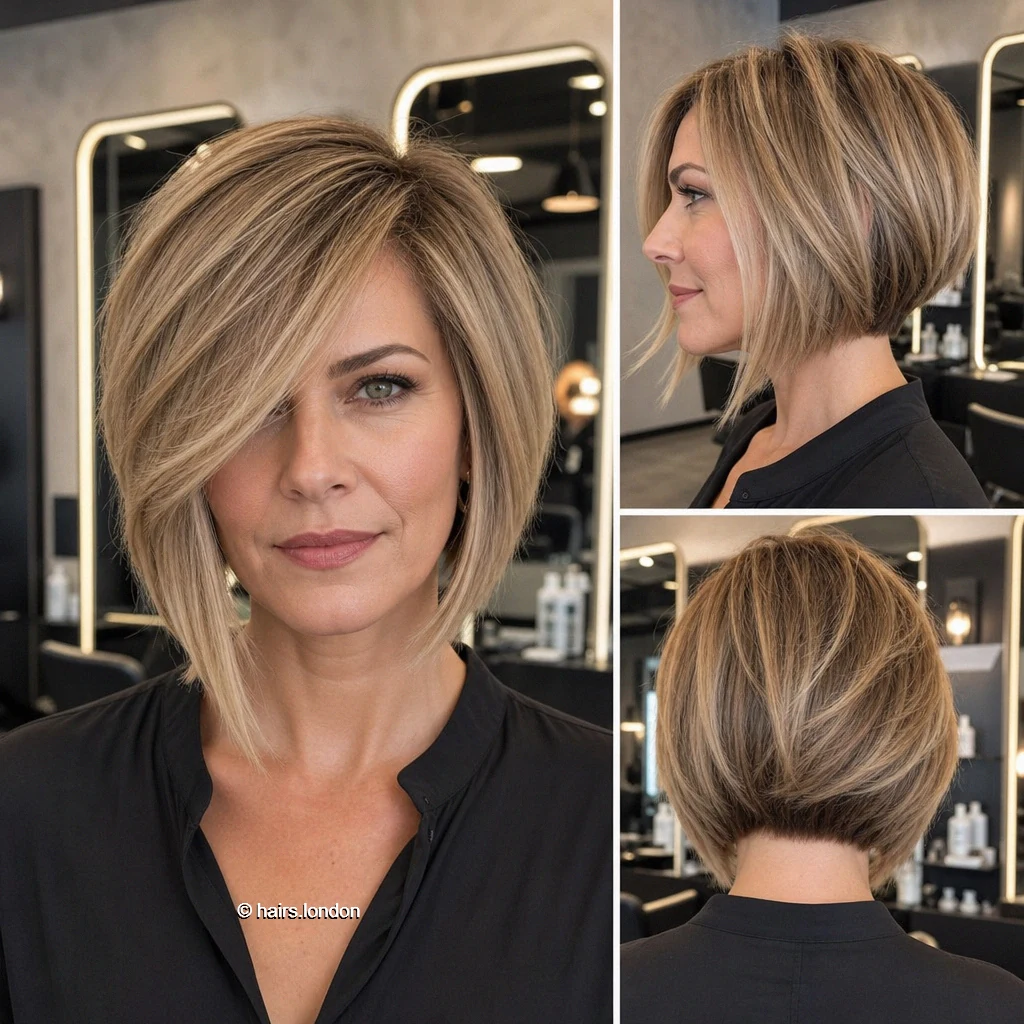
Warm beige blonde gives this sculpted bob soft dimensional depth. A side swept fringe connects smoothly with longer cheek framing. Front pieces reach below the jaw; the back stays compact. Layering around the nape creates a distinct rounded graduated profile. Dry upper sections with lift, then turn the ends inward. Keep the front airy rather than sealing it with hairspray. Thick hair might need inner weight reduction near the crown. Fine density calls for conservative layering to preserve enough substance. Revisit the nape before growth softens its deliberate rounded contour. Maintain highlighted brightness with appropriate conditioning and occasional tonal refreshes.
14. Golden Blonde Bob with a Smooth Forward Angle
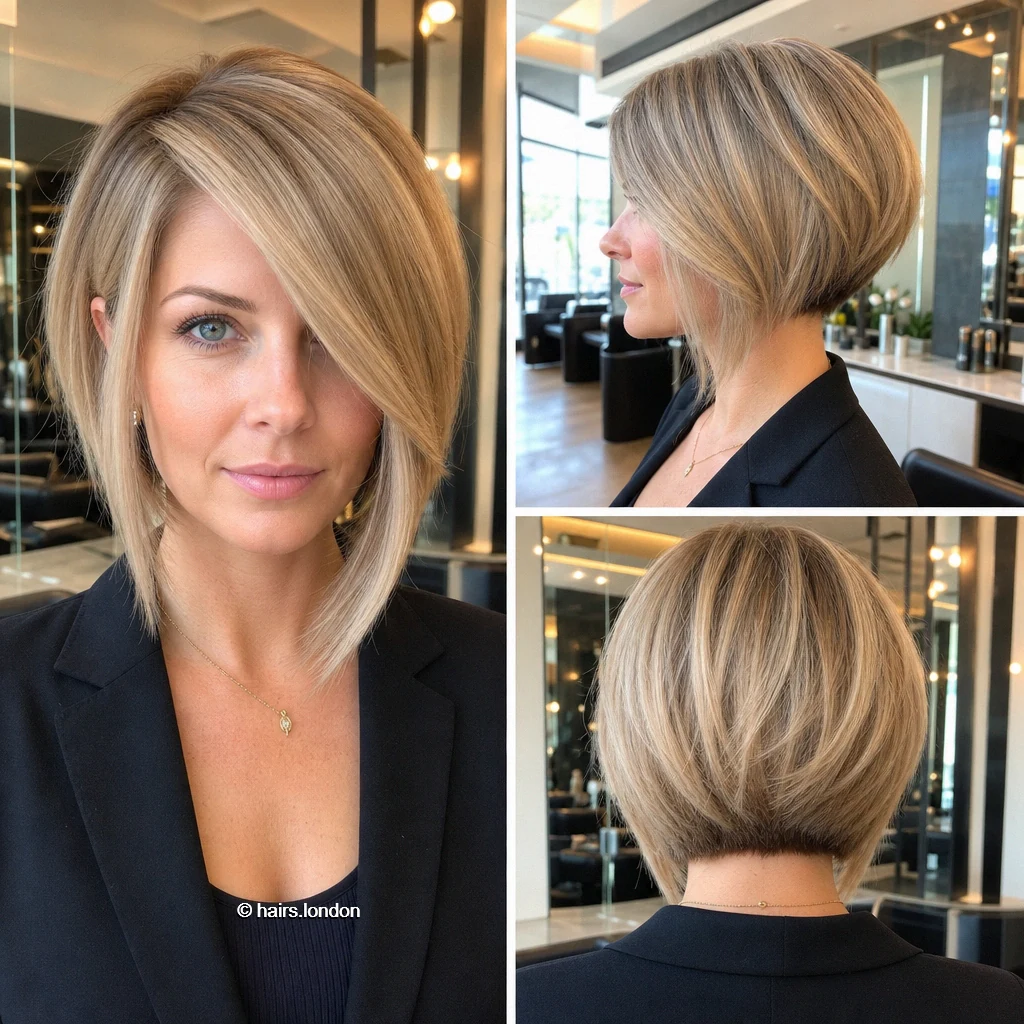
Light golden blonde warms this sleek bob with rounded graduation. The sweeping fringe covers one eyebrow and joins extended sides. Front lengths reach below the jaw; the nape stays short. The back shows layered fullness curving inward above its edge. Brush the surface smooth, then preserve gentle lift behind crown. Use heat protection before polishing the longer front with tools. Discuss nape growth patterns before requesting such closely shaped graduation. Thicker strands may need internal shaping to prevent rear bulk. Trims keep the forward length distinct from the shorter back. Refresh blonde color according to root contrast and noticeable warmth.
15. Feathered Blonde Bob with a Tapered Nape
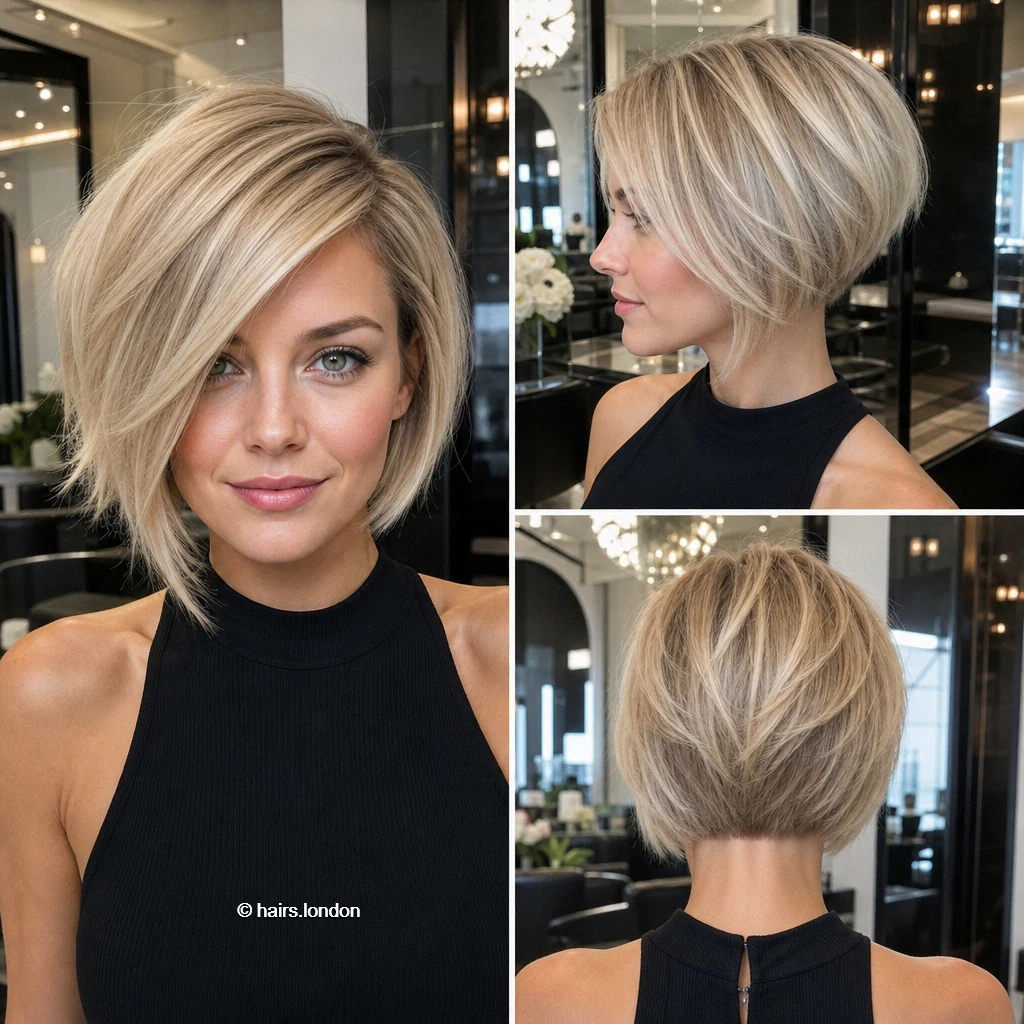
Cool blonde ribbons define this softly feathered, side parted bob. An extended fringe sweeps across the forehead toward one cheek. Shorter back layers rise above a noticeably tapered nape line. The longer front keeps its shape forward without looking blunt. Blow dry the fringe across, directing air from above gently. Separate feathered tips lightly with cream instead of heavy wax. Check natural growth direction before choosing a very short nape. Preserve weight through the fringe if your density runs fine. Trim the back regularly so the forward sweep stays balanced. Protect highlighted sections and refresh tone when desired coolness fades.
How to Choose Your Bob Length and Shape
Start with where you want the front to finish: near the jaw for a compact bob or below the chin for more face-framing length. Then consider the back. An A-line outline describes a longer front; a stacked or graduated back needs visible buildup through shorter rear layers. Several styles here combine both features. If you prefer a softer edge, look at the waved bobs rather than the closely shaped napes. Ask how your density and growth patterns will affect the silhouette.
Styling Fine, Thick, Wavy and Curly Textures
Fine hair often needs a substantial lower edge and restrained layering to keep the bob from looking sparse. Thick hair may benefit from internal weight removal, especially where a rounded back could become bulky. For waves, apply a small amount of mousse or cream to damp hair and diffuse gently; smooth just the perimeter if you want a neater finish. Natural curls need their own length assessment because the finished outline can rise as they dry. Keep fringe styling light enough to preserve movement.
Keeping Blonde Bob Color Fresh
The images range from warmer golden highlights to cooler pale blonde with visible root contrast. Choose upkeep around the result you want, not a fixed toning schedule: refresh when unwanted warmth becomes noticeable, and plan highlight visits around the amount of regrowth you enjoy. Color-safe cleansing, conditioning and heat protection are particularly useful for lighter ends that also receive regular blow-drying.
Maintaining the Bob Perimeter and Graduation
A smooth, forward-angled bob depends on its front and back remaining distinct. Closely shaped napes and visible graduation usually need attention sooner than a loose, piecey perimeter; growth can soften the rounded back or change how the front hangs. Check the outline from the side and back between appointments. Fringe-only trims may help when bangs reach the eyes before the rest of the bob needs cutting.
What to Discuss with Your Stylist
Bring the front, side and back view of the shape you like. Point out where the front should end, how closely you are comfortable cutting the nape, and whether you want a precise or textured edge. Discuss your natural part, fringe growth, density, waves or curls, and how often you will style with heat. Ask what the shape will look like air-dried and how frequently your preferred perimeter and blonde tone may need maintenance.
Frequently Asked Questions
What is the difference between a bob and a lob?
A bob generally finishes around the jaw or neck, while a lob extends farther toward the shoulders. Longer front pieces do not necessarily make a short-backed bob a lob.
Is an A-line bob the same as a stacked bob?
No. A-line describes a perimeter that is longer toward the front. Stacked describes visible graduation that builds shape at the back. One haircut can have both.
Which pictured shapes have visible graduation?
The smoother angled styles show rounded buildup over shorter napes in their side and back views. The loose wavy bobs generally have softer, less distinctly graduated outlines.
Can fine hair wear a layered bob?
Yes, if the layering leaves enough weight at the ends. Discuss density with your stylist before choosing heavy texture or a very full graduated back.
How can thick hair avoid looking bulky in a rounded bob?
Ask about discreet internal weight removal while keeping the visible perimeter strong. The amount needed depends on your density and natural movement.
Can naturally wavy hair hold a precise angled bob?
It can, but waves may make the angle look softer when air-dried. Decide whether you like that variation or would rather smooth the perimeter regularly.
What should I consider before cutting a bob on natural curls?
Have the stylist assess your curls in their natural state, including how much the length rises as it dries. Agree on the finished outline rather than judging only wet length.
Will a sweeping fringe require daily styling?
It may need a quick reset, particularly if your natural part or growth pattern pushes it elsewhere. A light blow-dry often gives more control than heavy product.
What is a quick daily routine for a textured bob?
Refresh the roots or fringe first, then encourage existing waves with damp hands and a little lightweight product. Avoid loading the ends until they lose movement.
How often should a graduated bob be trimmed?
Trim it when growth noticeably changes the nape, rounded back or forward angle. A closely shaped, precise version will usually show growth sooner than a tousled bob.
How do I keep cool blonde highlights from looking warm?
Use an appropriate color-care routine and discuss toning when warmth appears. Your starting color, washing habits and heat use affect how often that is necessary.
Can I grow out a short-backed bob without losing its shape?
Yes. Ask for interim perimeter trims that keep the front and back balanced while gradually allowing the nape to lengthen.
Conclusion
The right blonde bob is as much about its side and back views as its face-framing front. Choose the outline you want to maintain, then adjust its layering, fringe and finish to your hair’s natural behavior and the styling time you enjoy.