


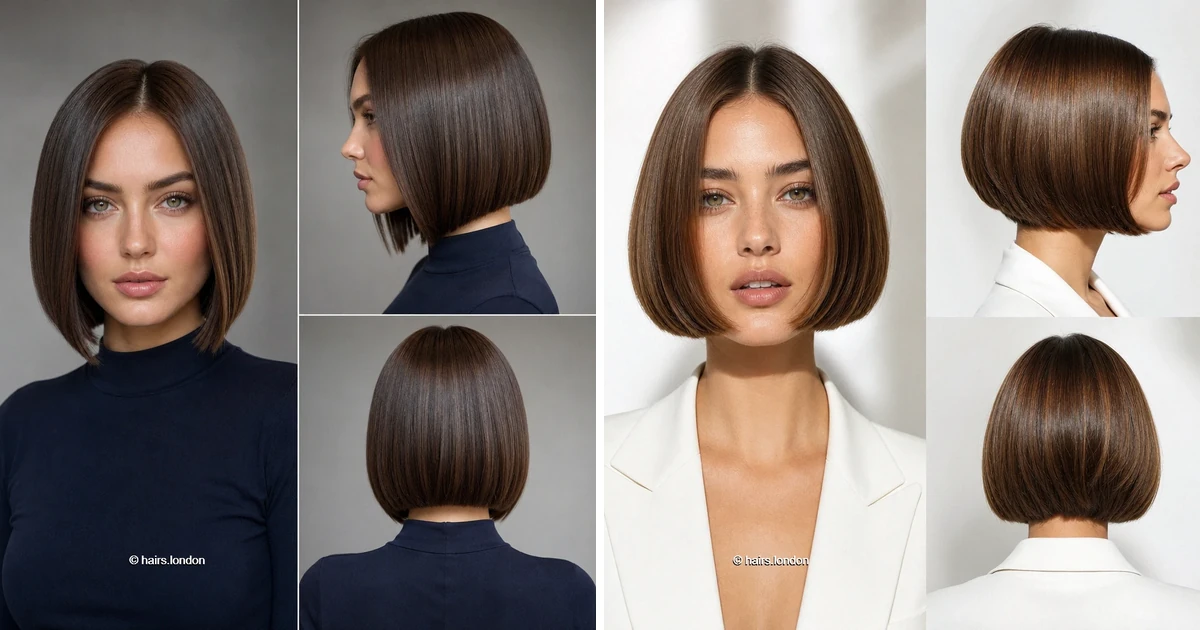
Brunette bob haircuts can look remarkably different at the same length. These 25 images move from smooth, precise perimeters to longer fronts, rounded graduation and airy layers. Use the front, side and back views to decide where you want the weight to sit, how much movement you prefer and how often you are willing to maintain the shape.
1. Chestnut Layered Bob with a Sweeping Fringe
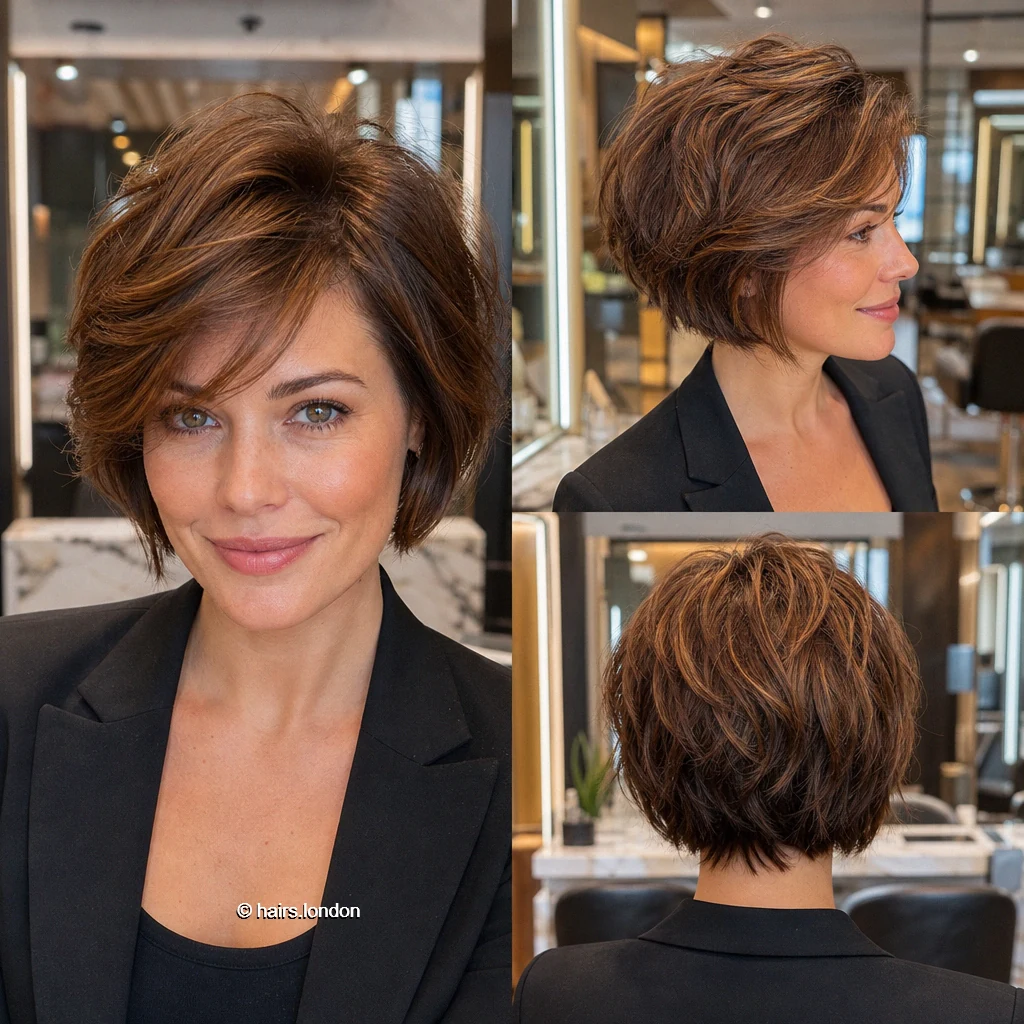
Chestnut highlights run through this airy, side-swept layered bob shape. The front brushes the jaw while shorter pieces frame eyes. Visible back layers create fullness above a softly tapered nape. Ask your stylist to preserve weight without obscuring natural movement. Dry the roots upward, then direct the fringe sideways gently. Work lightweight paste into ends for separation and subtle definition. Thicker hair may benefit from restrained internal weight removal here. Fine hair needs less product to avoid flattening crown volume. Refresh the nape regularly as short layers lose definition quickly. Protect highlighted strands with gentle washing and thoughtful heat styling.
2. Short Rounded Bob with a Tapered Nape
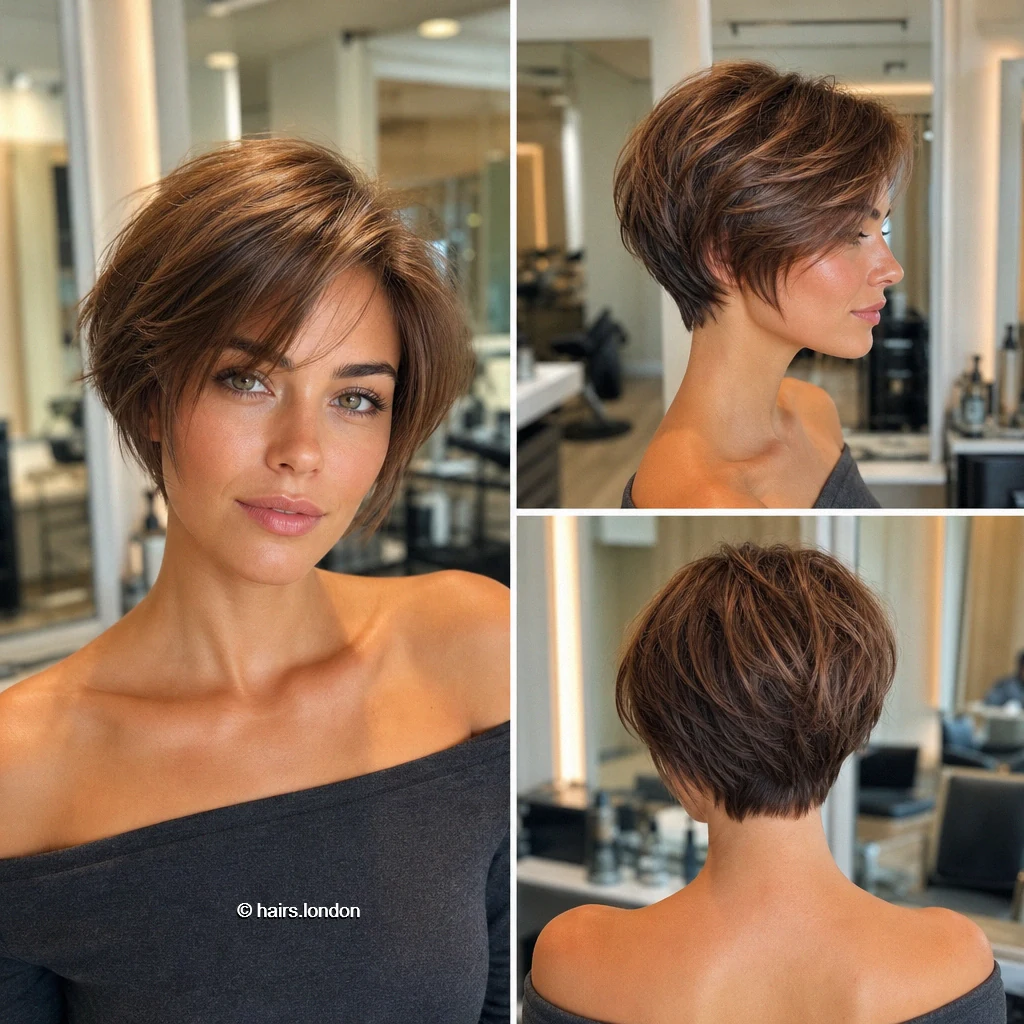
Soft brown tones emphasize this rounded, jaw-skimming bob silhouette beautifully. Its airy upper layers sit over a visibly close nape. A side-swept front softens the transition around the cheek area. Request enough length near the face for comfortable daily styling. Blow-dry the crown with gentle lift instead of heavy teasing. Smooth the fringe sideways, allowing shorter ends to remain separate. Dense hair may need carefully placed debulking beneath the surface. Finer strands could benefit from keeping the outer shape fuller. Plan nape tidy-ups when its neat outline begins growing out. A lightweight shine spray can flatter brown without collapsing volume.
3. Sleek Center-Part Bob with Longer Front Pieces
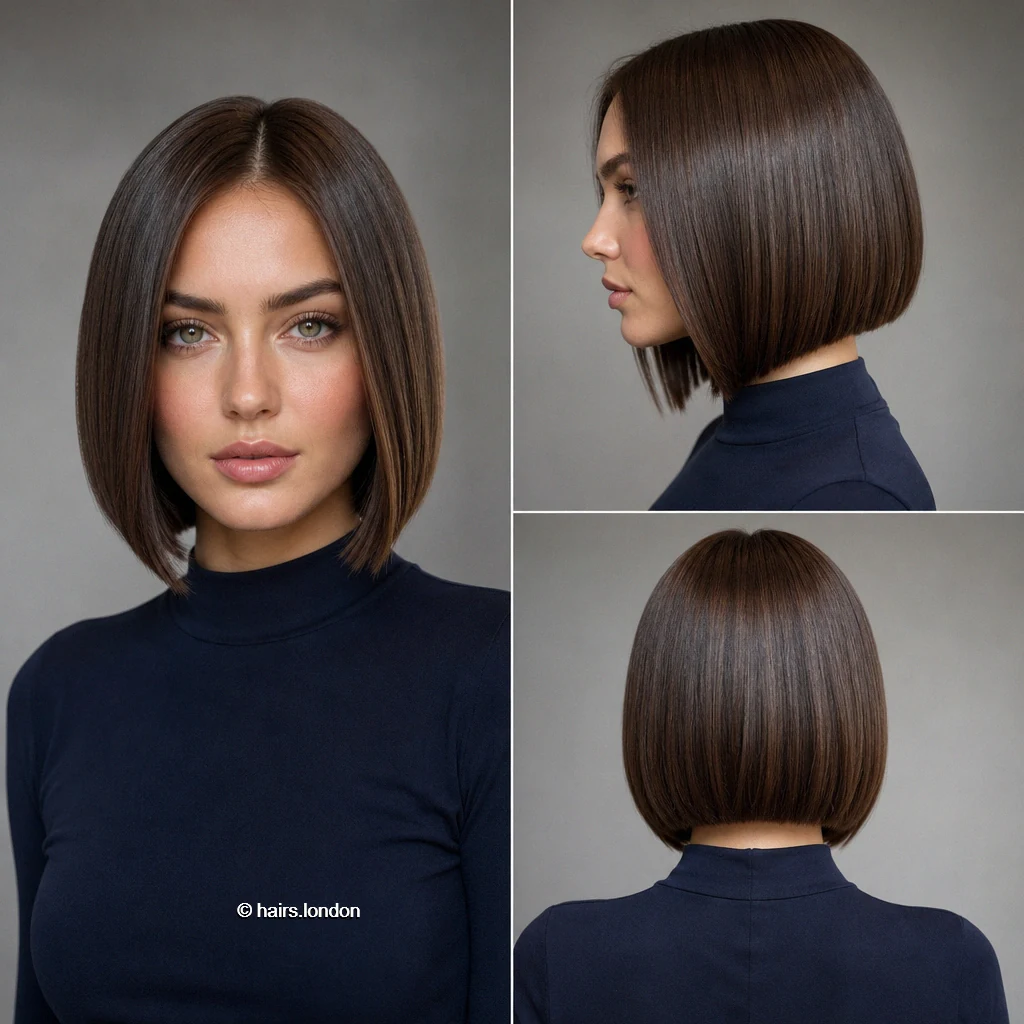
Deep brunette color gives this smooth, center-part bob glossy depth. The back meets the neck with a clean, rounded edge. Front pieces extend below the jaw, creating a subtle A-line. Keep the perimeter substantial if you value this polished finish. A paddle brush can guide each side smoothly toward ends. Apply heat protection before using irons to refine the surface. Fine hair may appreciate limited layering that preserves visible fullness. Thick hair might require discreet weight control beneath the top. Book trims before uneven growth blurs the front-to-back length difference. Discuss your natural parting before committing to symmetrical front pieces.
4. Rounded Jaw-Length Bob with a Soft Side Part
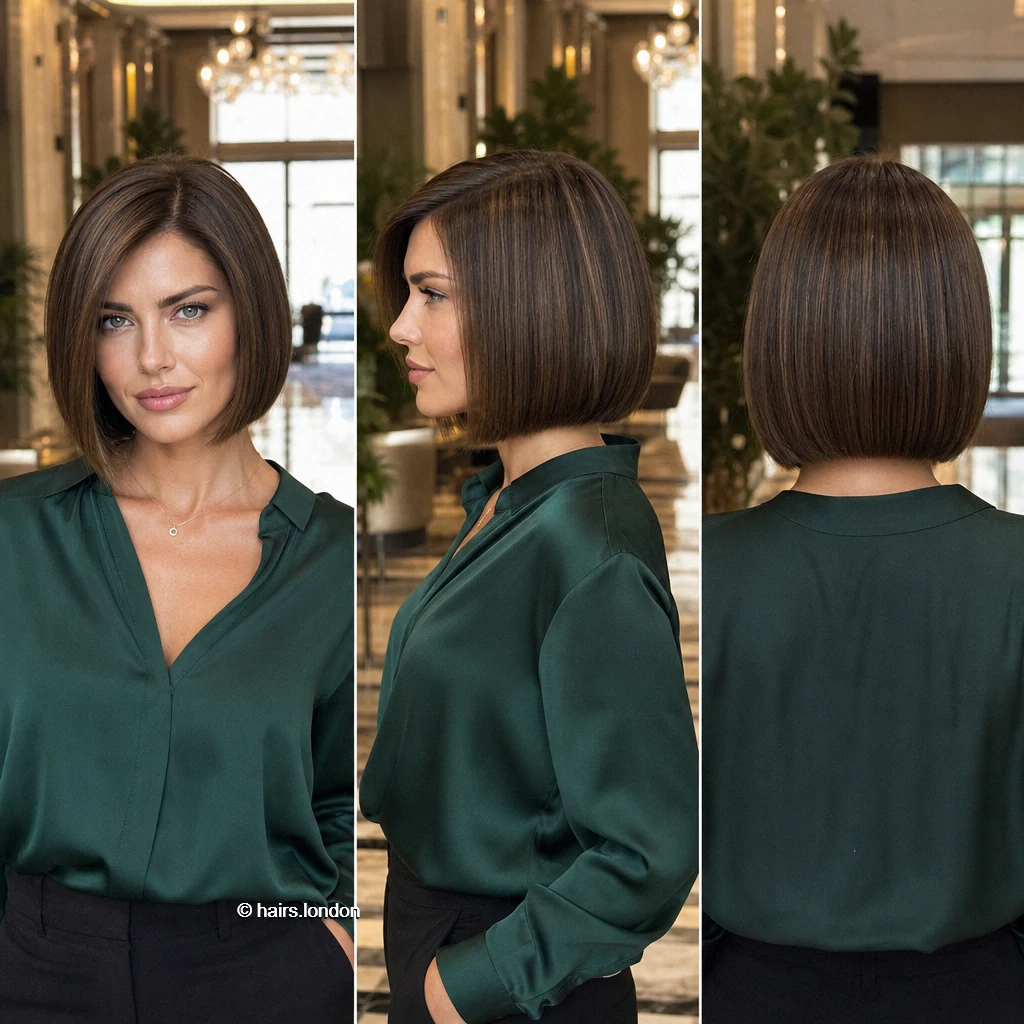
This smooth brunette bob forms a rounded shape around jawline. Its neat back perimeter sits against the upper neck evenly. A soft side part adds lift without requiring visible fringe. Ask for a strong outline rather than extensive surface layers. Direct warm airflow downward to keep the finish smooth looking. Turn the ends inward lightly, avoiding an overly curled edge. Dense hair may need internal shaping to prevent triangular bulk. Finer hair often benefits from retaining weight near the perimeter. Maintain the jaw-skimming line with trims when ends become uneven. Use modest serum amounts so dark strands retain natural movement.
5. Glossy Brown Bob with a Gentle Front Angle
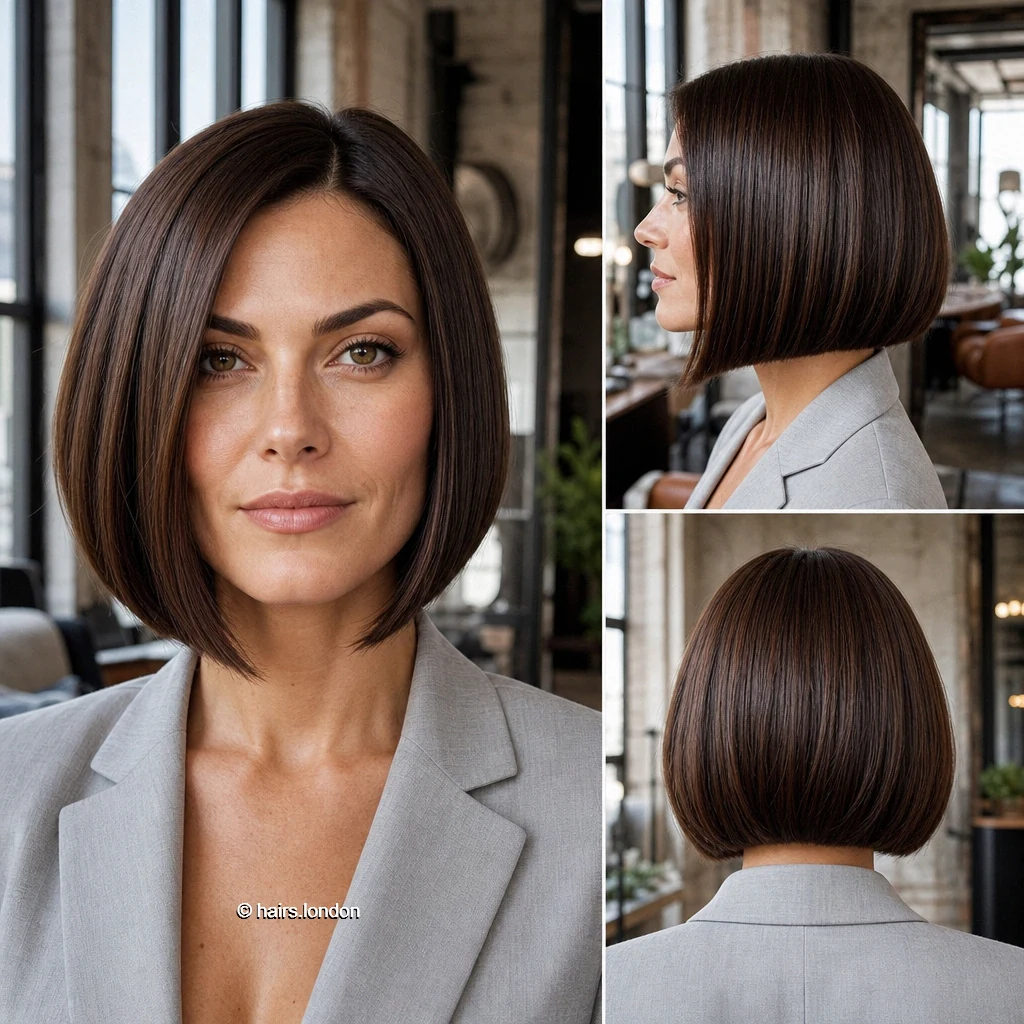
Rich brown color highlights the smooth surface of this bob. The front extends slightly beyond its tidy, neck-level back perimeter. A gentle side part lets one panel fall across cheek. Keep the front long enough to preserve that angle. Blow-dry downward with a brush that supports the curved ends. Avoid excessive layering if you want the outline to remain solid. Thick hair could need concealed weight removal for easy smoothing. Fine hair may prefer a lighter cream instead of oil. Trim the back before growth makes its rounded edge uneven. Discuss whether your usual ear tuck changes the desired balance.
6. Center-Part A-Line Bob with a Rounded Back
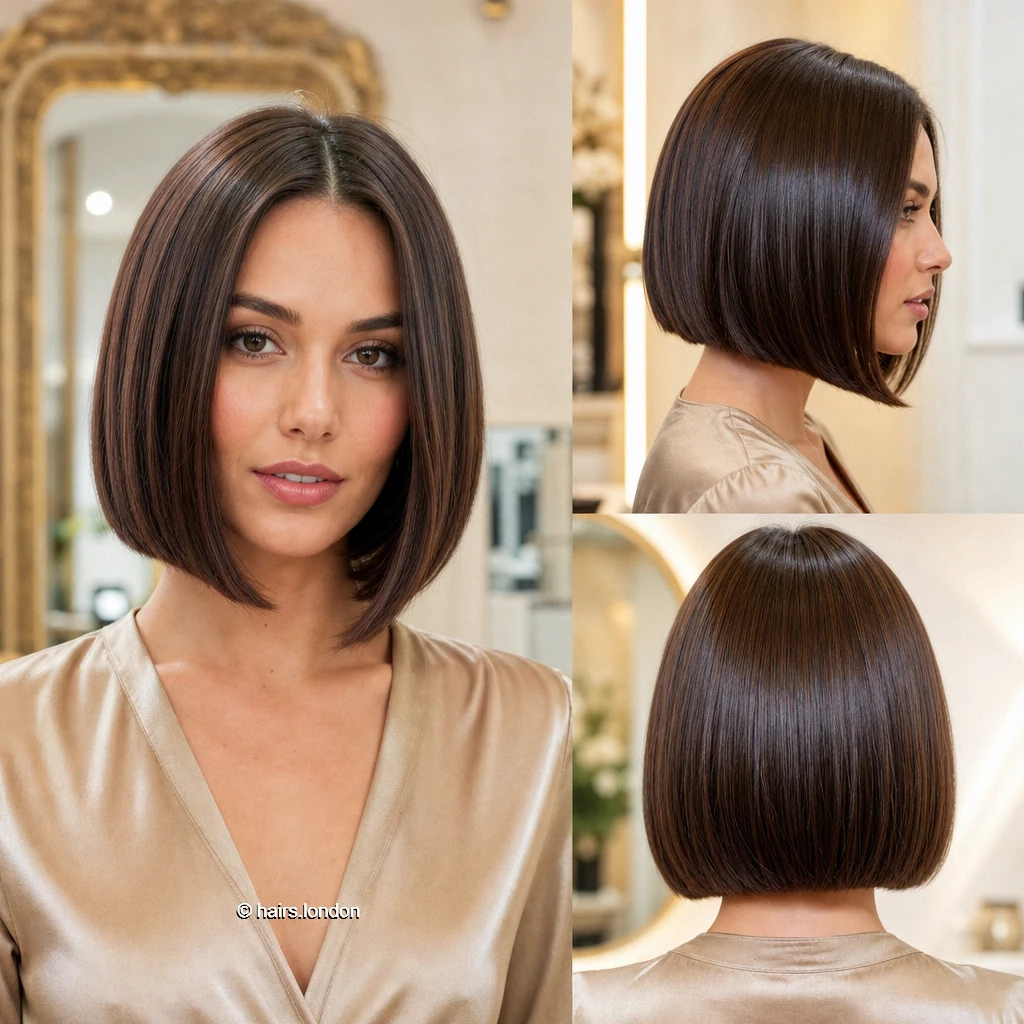
This glossy brunette bob pairs longer fronts with shorter back. Its rounded rear perimeter rests above the lower neck area. The center part makes the face-framing difference particularly easy noticing. Ask your stylist to check both front lengths when dry. Smooth each panel downward, then bend only the ends inward. A light finishing cream controls flyaways without stiffening the shape. Dense strands may require discreet internal reduction behind the ears. Fine hair benefits from keeping the front edges visually substantial. Schedule trims when the back starts losing its clean boundary. Heat protection helps preserve the shine visible through brown lengths.
7. Smooth Chestnut Bob with an Extended Front
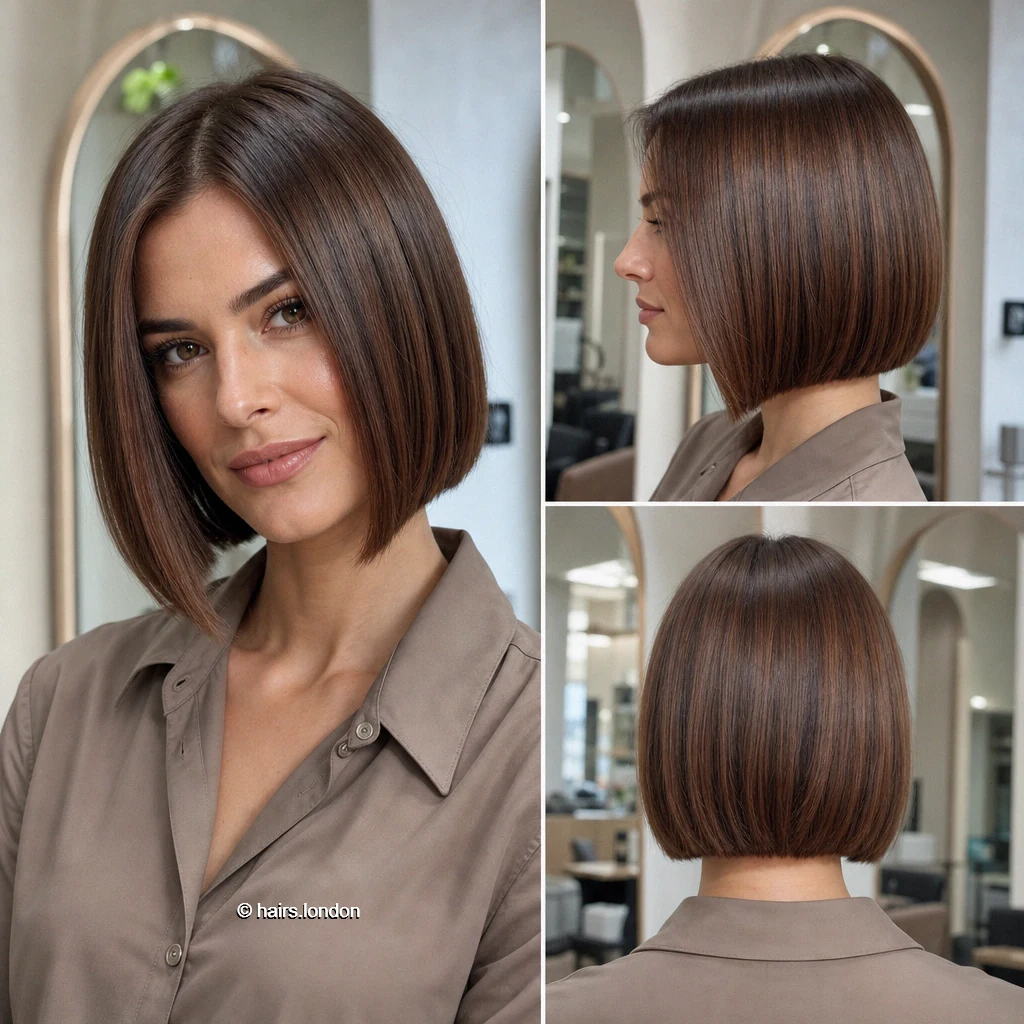
Chestnut brown tones warm this smooth, slightly angled bob shape. One visible front panel reaches below the jaw toward neck. The back finishes higher with a tidy, softly rounded perimeter. A near-center part keeps the finish understated and flexible. Ask for balanced front pieces suited to your usual part. Use a nozzle and brush to flatten stray surface hairs. Curve the ends gently rather than rolling them too tightly. Thick hair may need weight managed without exposing short layers. Fine hair can keep more fullness through the lower edge. Refresh the back line promptly when its clean shape grows uneven.
8. Warm Brown Bob with a Tucked Side
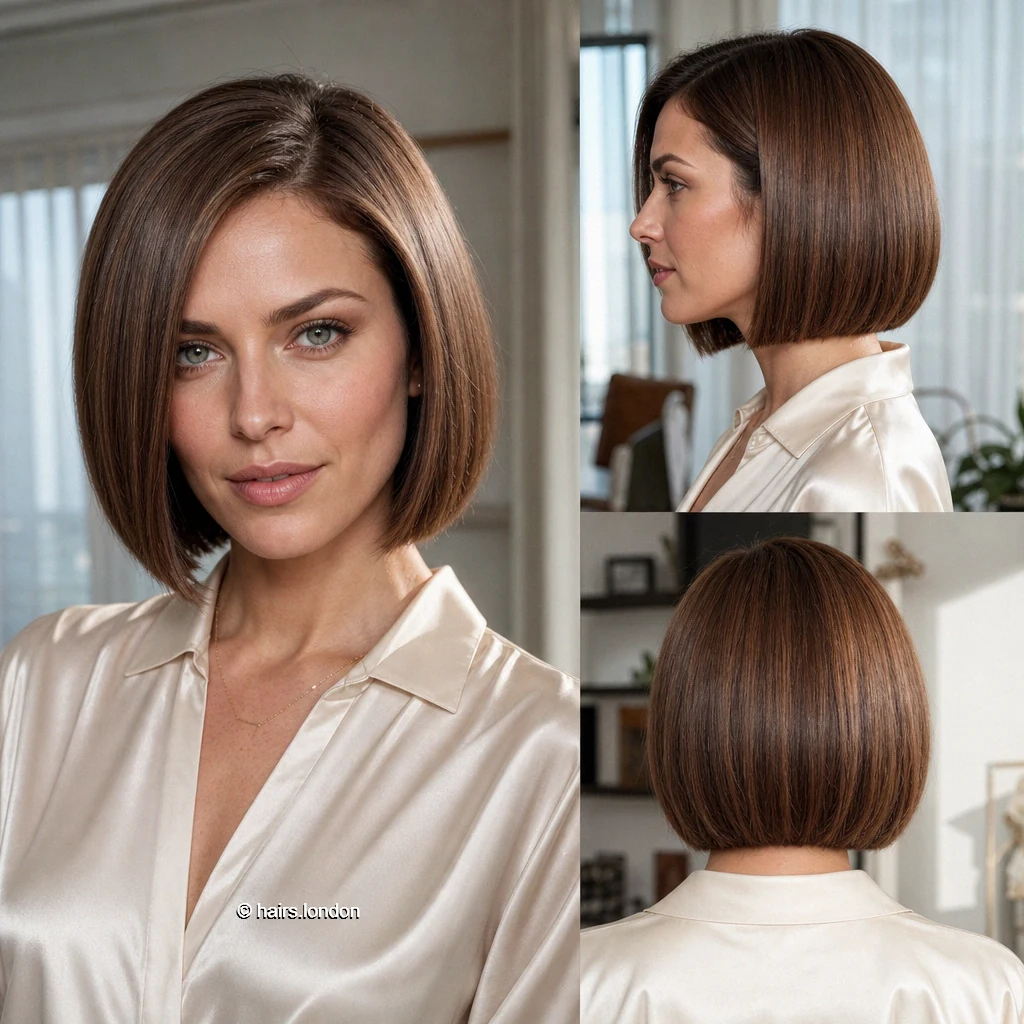
Warm brown color adds dimension to this smooth, compact bob. The jaw-length front drops slightly past the shorter back outline. One tucked side reveals how neatly the perimeter curves inward. A side part creates a little natural height above forehead. Request a perimeter that remains tidy with your normal tuck. Dry hair downward, guiding the ends inward with gentle tension. Lightweight smoothing lotion helps maintain shine without making ends rigid. Denser hair could need internal shaping around the lower sides. Fine hair may favor fewer layers and an intact baseline. Trim when the tucked side starts looking longer than planned.
9. Centered Rounded Bob with a Clean Perimeter
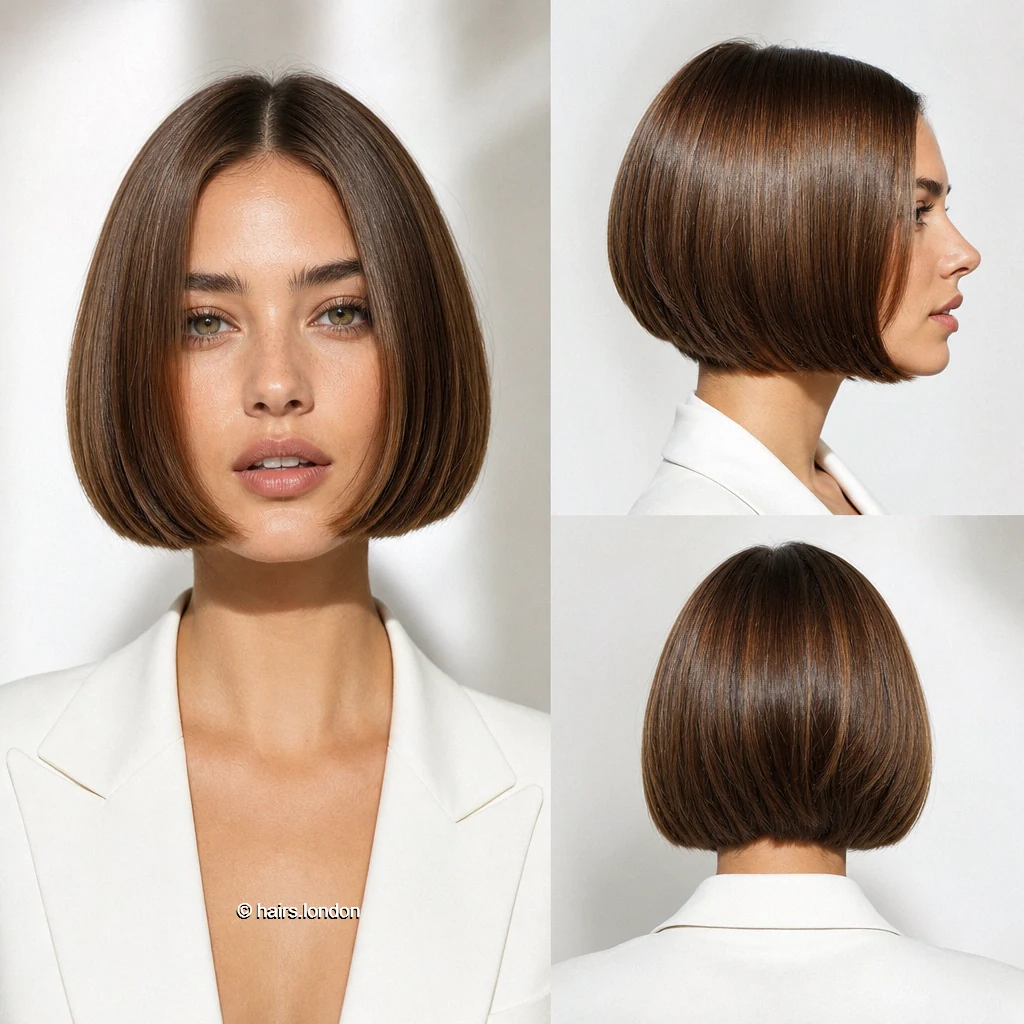
Glossy medium brown gives this centered bob a polished finish. The rounded perimeter meets the jaw and clears the neck. Its front appears slightly longer, without a dramatic forward angle. Keep the lower edge strong to retain this compact silhouette. Direct a brush downward while drying, then soften the tips. A small amount of serum can emphasize its smooth surface. Thick hair may need controlled weight removal under the crown. Fine strands should avoid heavy products that separate the perimeter. Schedule line checks whenever growth changes the balanced jaw length. Discuss whether your center part stays consistent throughout the day.
10. Deep Side-Part Bob with a Shorter Back
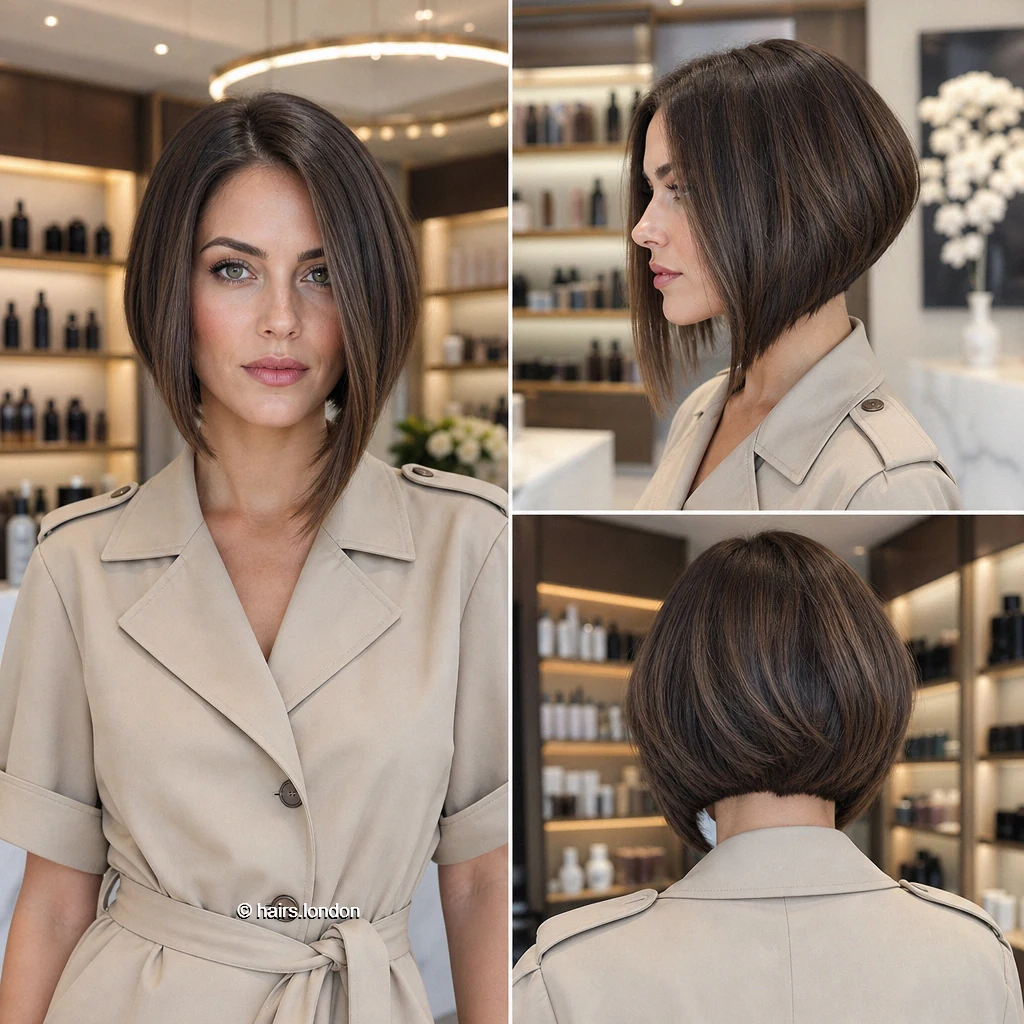
Dark brunette hair forms a rounded back and elongated front. The longer side falls below the jaw toward the neck. Visible layering softens the shape above its shorter nape perimeter. Ask your stylist to balance movement against front panel thickness. Blow-dry the longer section forward for a smooth face frame. Lift the rear roots gently rather than teasing the crown. Dense hair may benefit from careful internal weight removal behind. Fine hair could require fewer layers to maintain front fullness. Check the nape regularly as growth changes the overall angle. A glossing product can highlight depth without making layers clump.


