


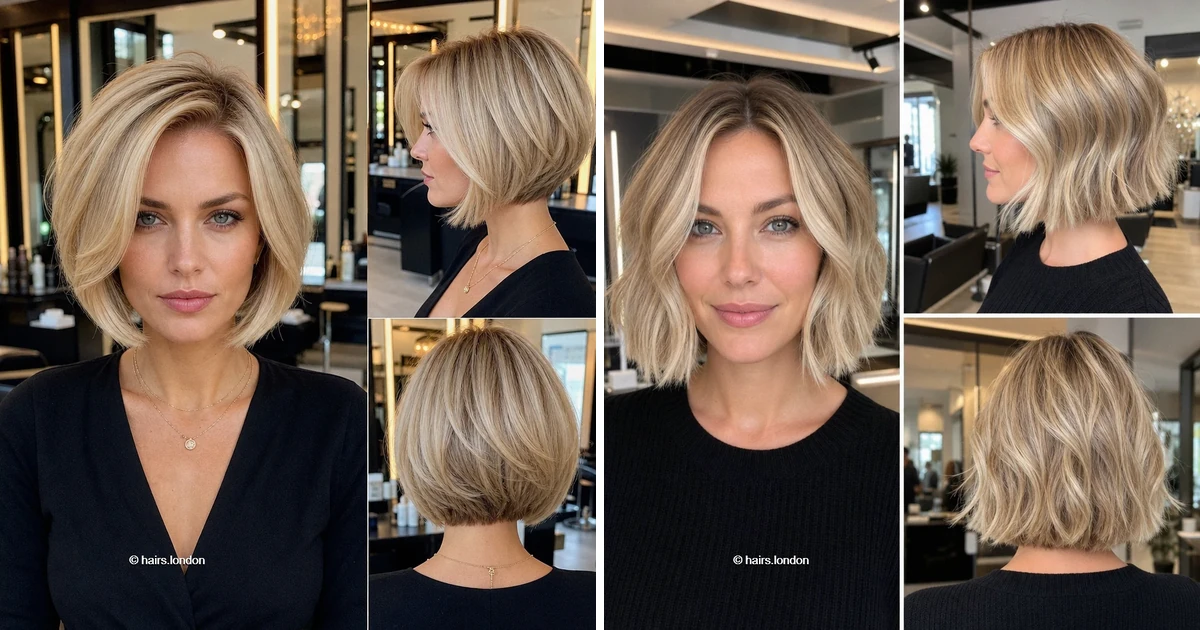
11. Feathered Blonde Bob with Longer Layers
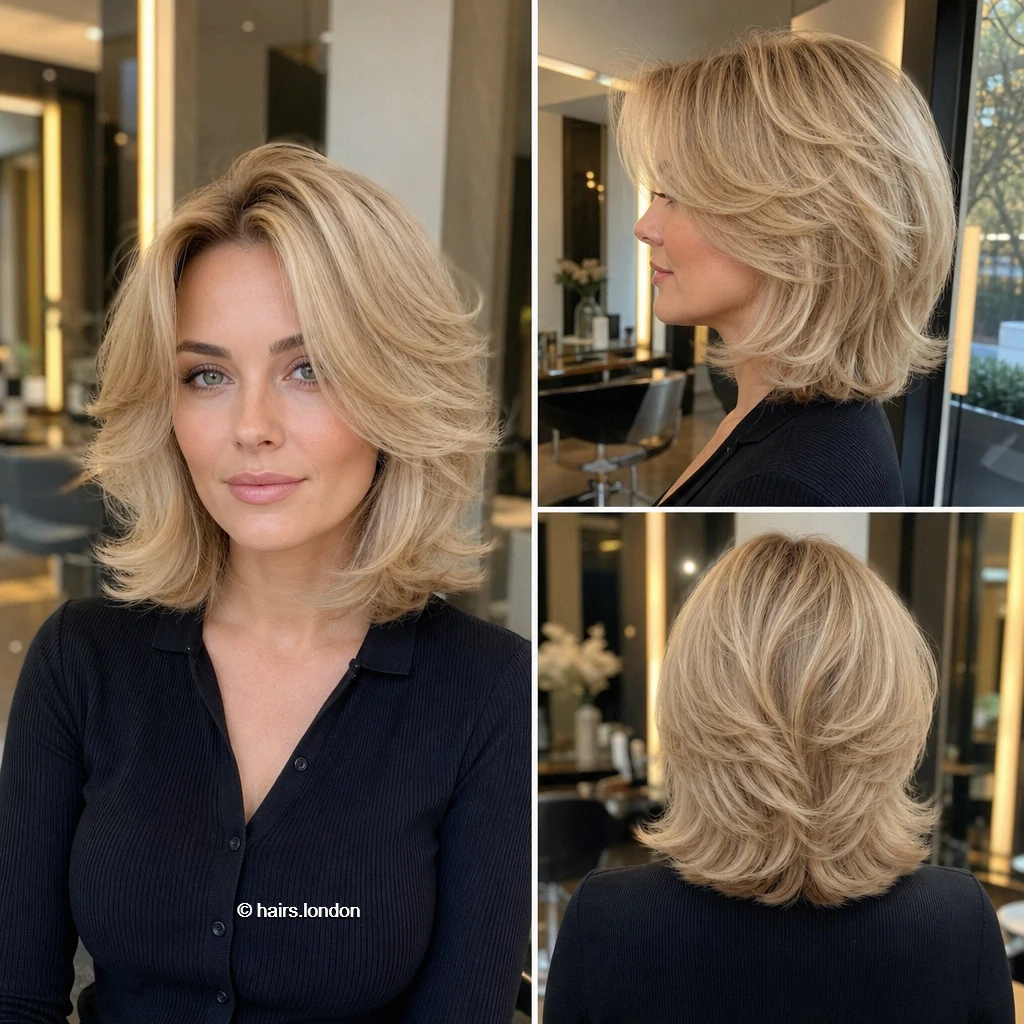
This longer blonde bob reaches the neck with soft feathered layers. The face framing sections sweep outward from an open part. Side and back views show flipped ends and generous movement. The perimeter looks softer than a sharply cut blunt bob. Ask for layer lengths that still leave adequate lower density. Brush ends away from the face for a lifted finish. A flexible spray can support movement without locking every strand. Thick hair may appreciate shaping, while fine hair needs restraint. Trim when the feathered ends begin looking uneven or sparse. Condition highlighted lengths to help keep their texture manageable.
12. Short Layered Blonde Bob with Flipped Ends
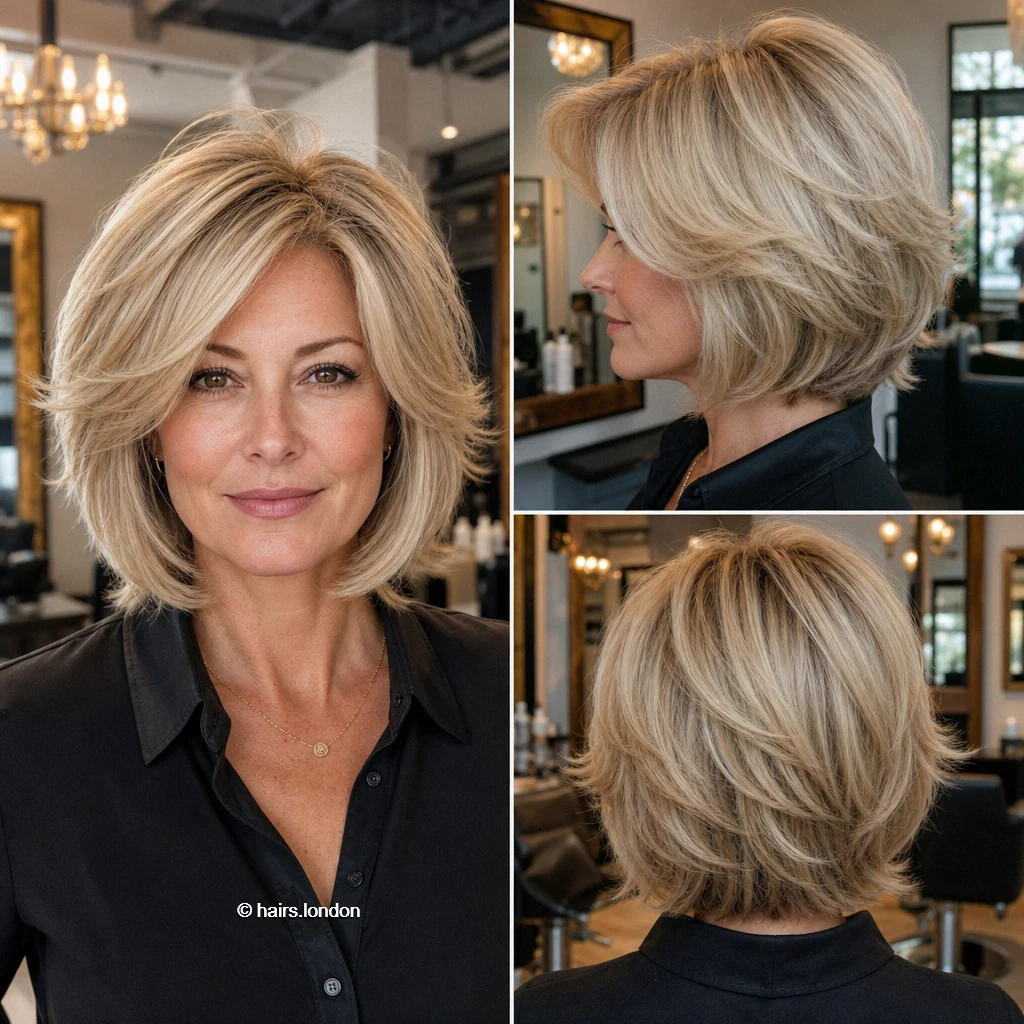
Pale blonde layers create lift around this neck length bob. Broad front sections sweep across the forehead without distinct bangs. The side view shows separated ends turning gently outward here. Behind, overlapping layers make the outline airy and softly rounded. Discuss how much layering your density can comfortably support first. Style with a round brush, directing selected ends away outward. Keep products light so the shorter pieces retain their separation. Naturally wavy hair may need less brushing and more scrunching. Review the lower edge as flipped layers grow past it. Use heat protection when repeatedly shaping these highlighted blonde ends.
13. Voluminous Beige Bob with Swept Layers
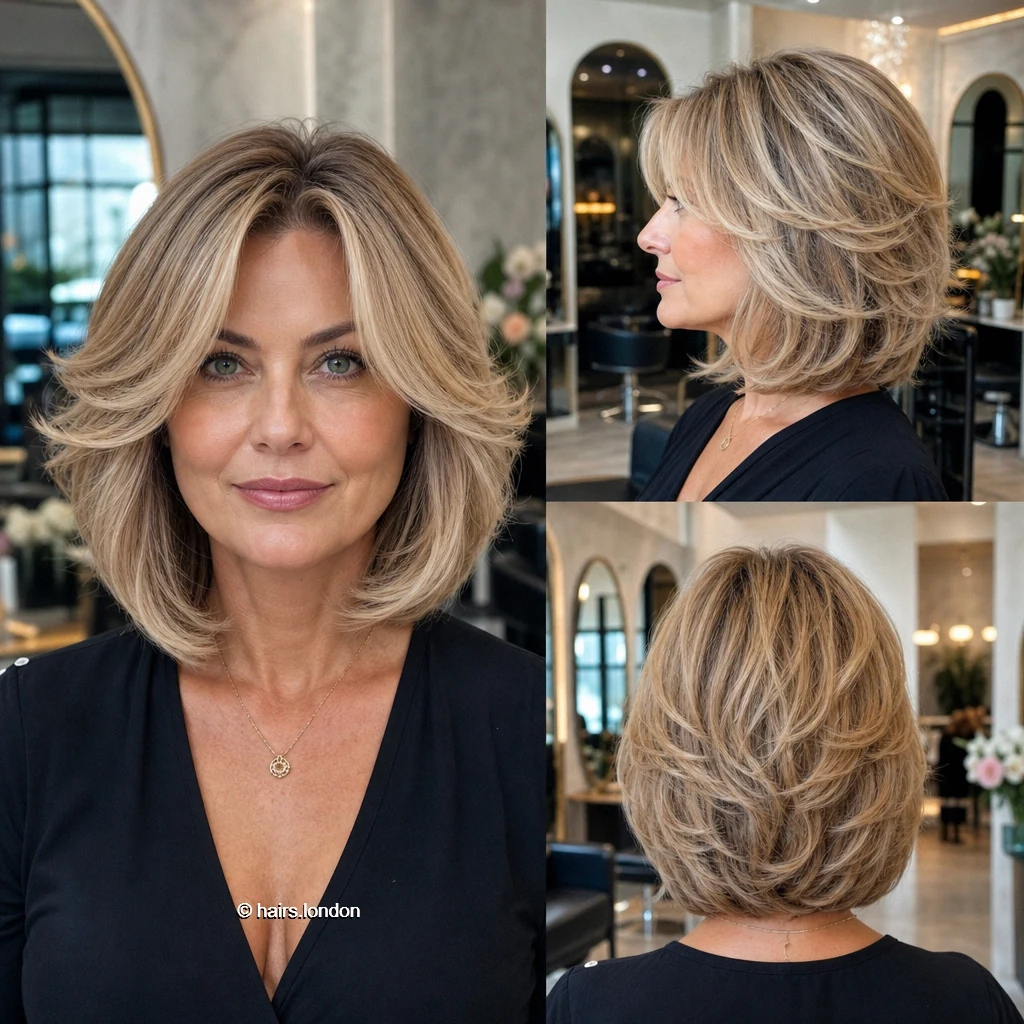
Beige blonde highlights emphasize the sweeping layers of this bob. It falls below the jaw with fullness around the cheeks. The rear view shows overlapping pieces above a rounded perimeter. Long front sections open around the face without short fringe. Ask your stylist to balance crown lift against lower fullness. Brush the front outward, then gently shape the back layers. Avoid heavy cream if it makes these airy ends collapse. Medium or thick density may support this visibly layered silhouette. Trim when the lower shape starts spreading instead of curving. Maintain highlighted tones according to your preferred warmth and contrast.
14. Shoulder-Skimming Blonde Lob with Feathered Ends
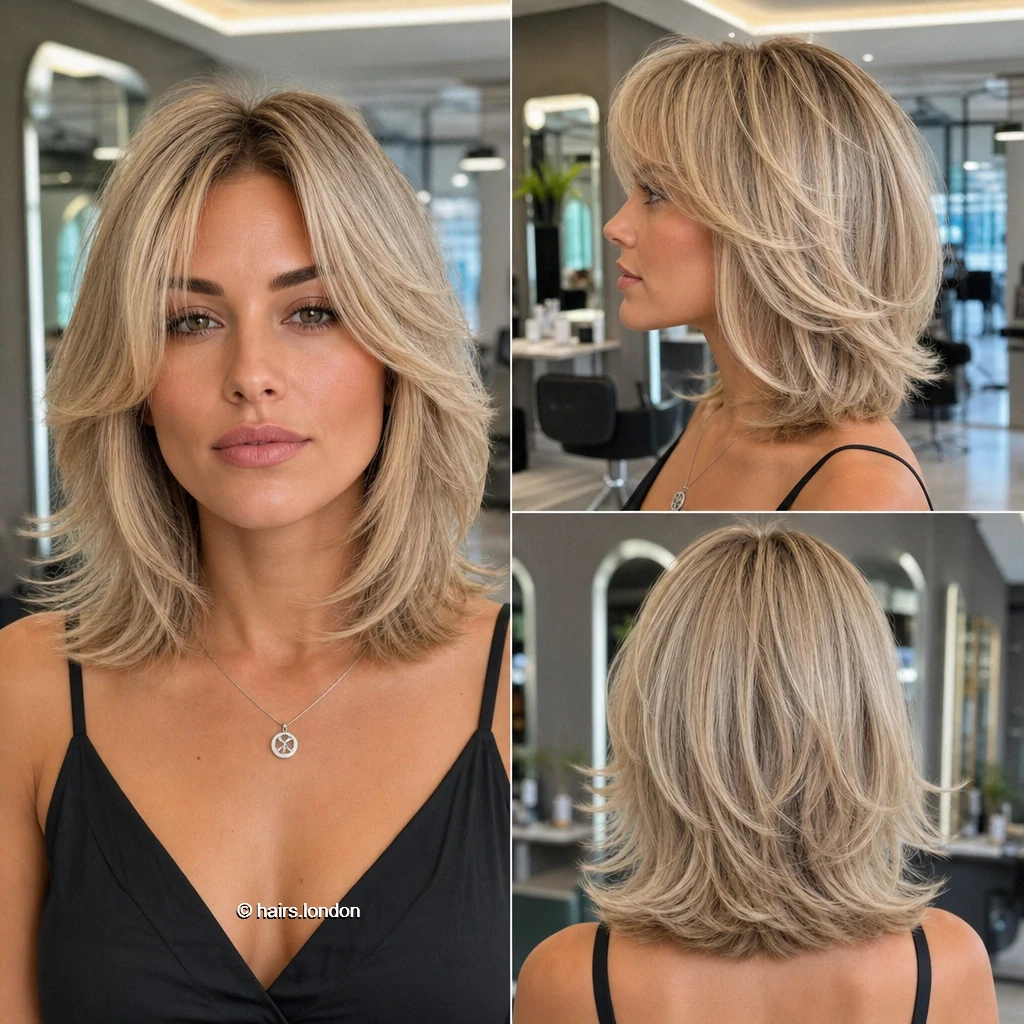
This blonde lob falls toward the shoulders with feathered ends. Long layers frame the face from a divided part. Side and back views show outward movement through the lower lengths. Its extended perimeter distinguishes it from the shorter jawline bobs. Ask for layers that preserve enough weight at the bottom. Brush the ends outward for polish without forcing extra volume. Natural waves can add movement with minimal heat styling instead. Finer hair may need fewer short layers to retain density. Trim the feathered edge when its shape becomes thin or uneven. Moisturize lighter lengths to keep the ends feeling supple.
15. Choppy Blonde Bob with Sweeping Front Layers
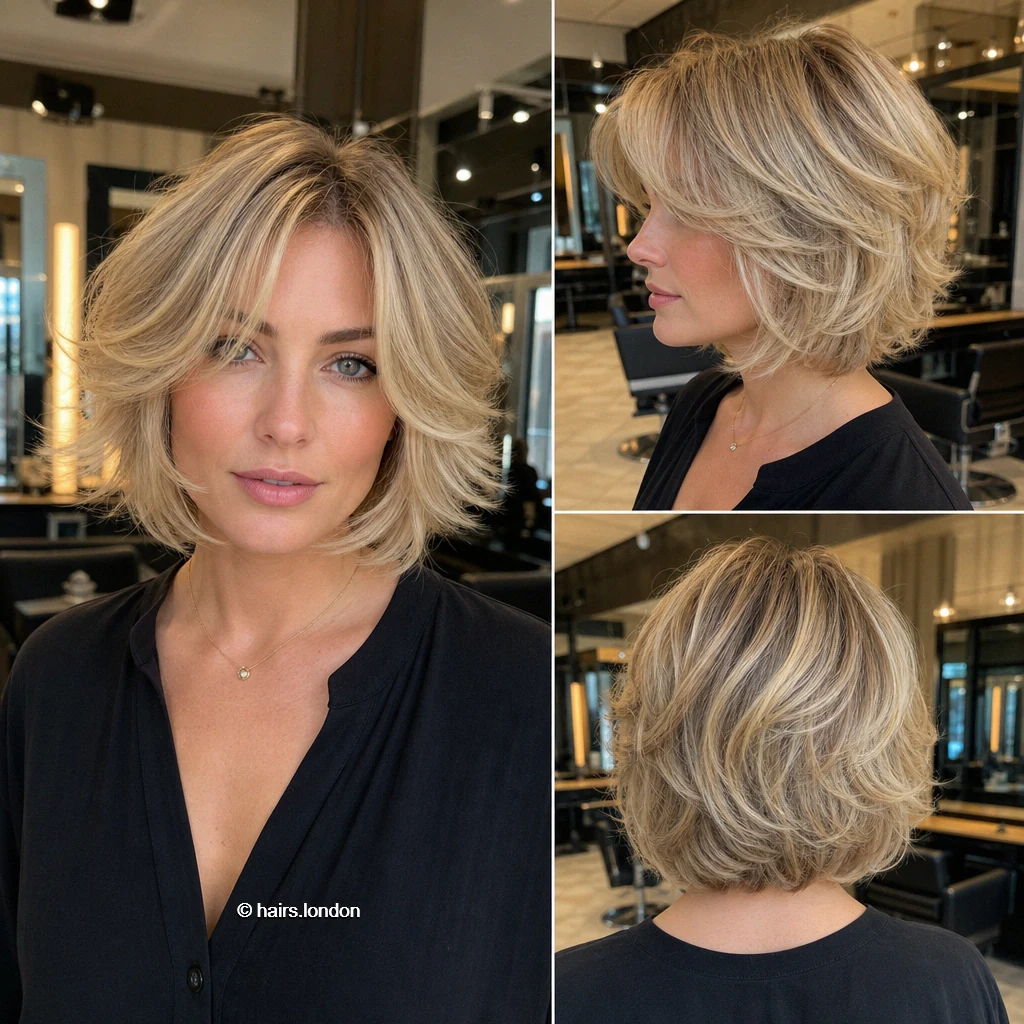
Bright blonde pieces sweep across this short, tousled bob. Its jaw length sides finish with noticeably feathered, softly separated ends. Side and back views reveal layered fullness above the nape. The front has a sweeping section rather than defined bangs. Ask for softness around the face without thinning everything underneath. Rough dry the roots, then bend selected ends outward gently. A little texture spray can emphasize separation without excessive bulk. Natural waves may make this finish easier to maintain daily. Trim when the nape or front pieces lose their balance. Check whether visible root contrast matches your preferred color upkeep.
16. Wavy Blonde Bob with a Soft Middle Part
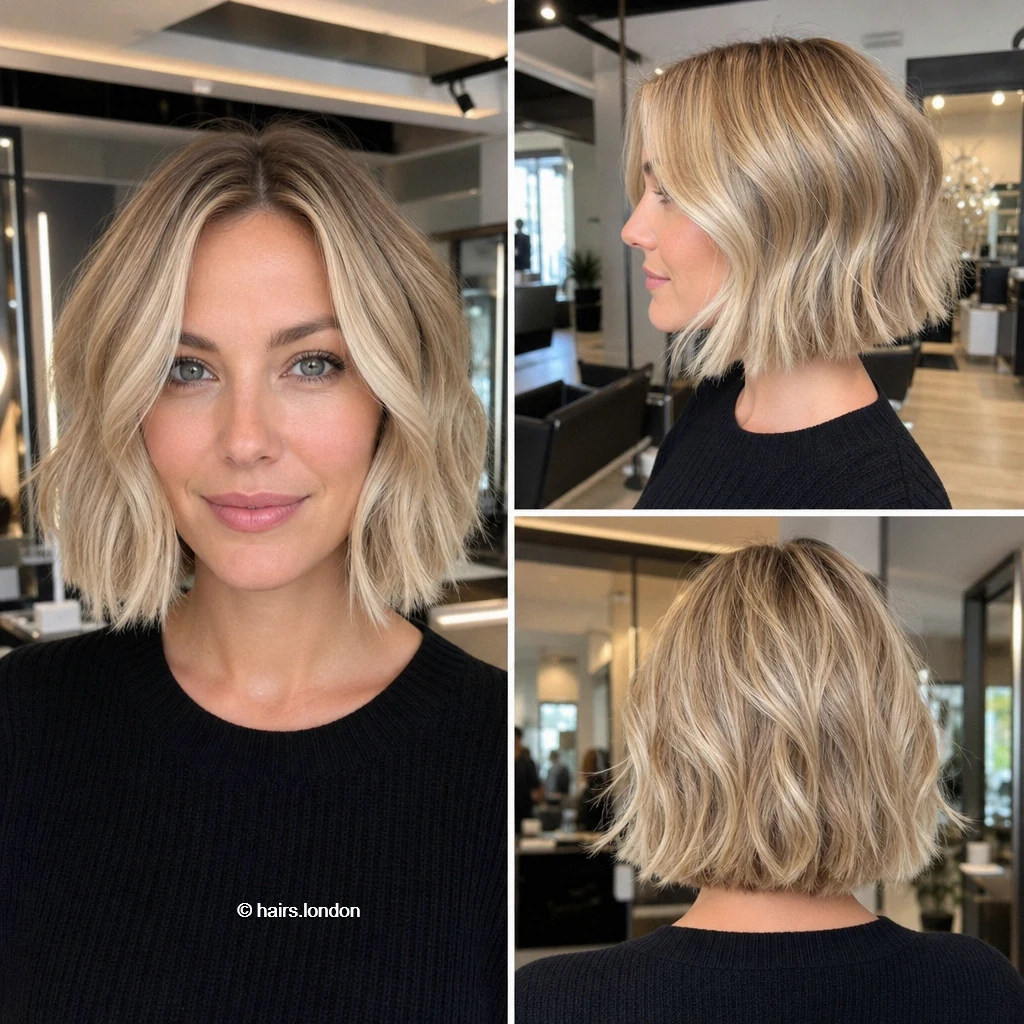
Soft waves give this blonde bob an easy, textured outline. A middle part sends longer front pieces toward the jaw. Side and back views show loose bends throughout the lengths. The lower edge remains visible beneath the movement and layers. Ask for enough perimeter weight to prevent overly thin ends. Scrunch a lightweight foam into damp hair to encourage waves. Diffuse gently or air dry according to your natural texture. Straight hair may require heat styling to recreate these bends. Trim when the lower line becomes uneven beneath the waves. Condition lightened strands so their texture stays manageable between visits.
17. Jaw-Length Blonde Bob with Airy Ends
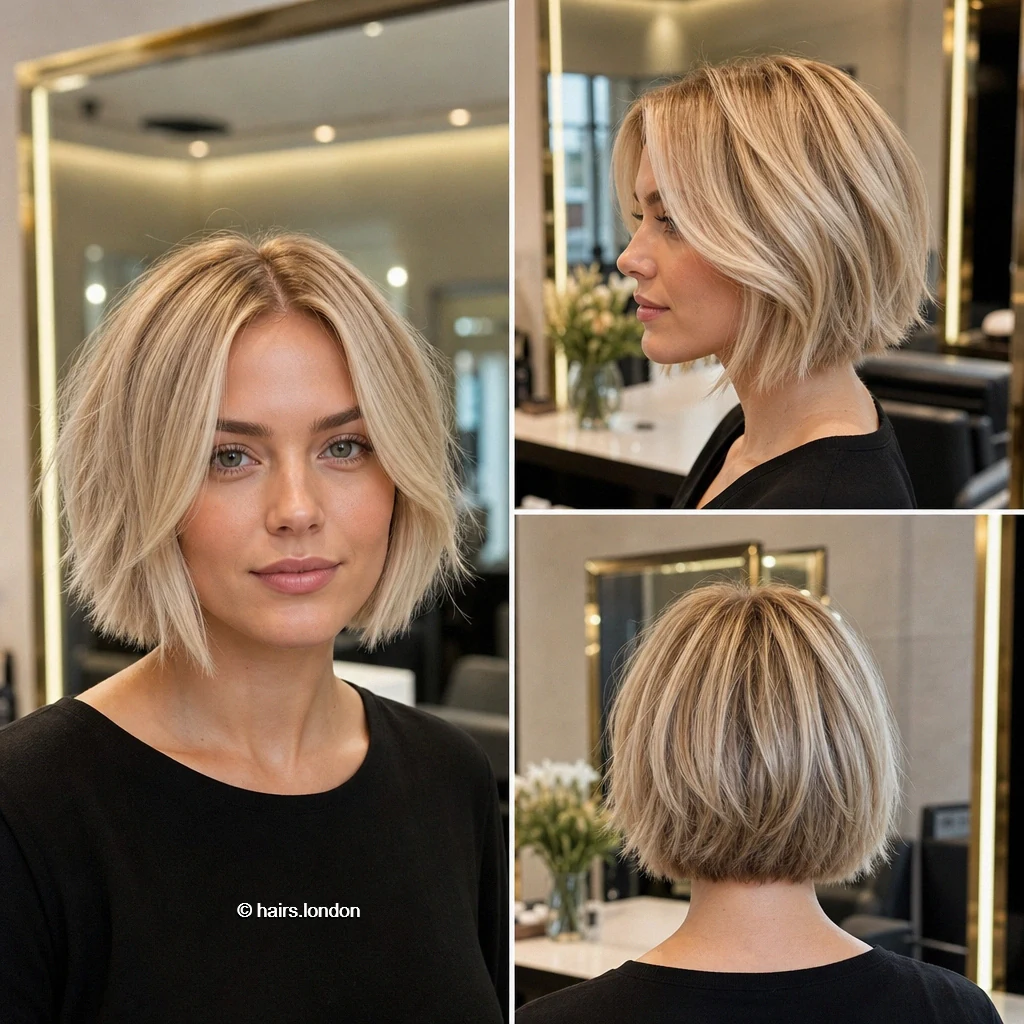
A softly parted blonde bob sits close to the jaw. Light face framing pieces fall forward without forming a fringe. The side view shows movement above a slightly shorter back. Behind, fine surface layers soften a compact, rounded lower edge. Ask for layering that leaves enough substance through the perimeter. Smooth the ends, then separate a few pieces with fingers. Fine hair may prefer minimal product to preserve natural lift. Dense hair might need careful weight removal below the surface. Arrange trims before the shorter back begins changing the profile. Discuss toning only if you want a different blonde balance.
18. Smooth Champagne Blonde Bob with a Rounded Back
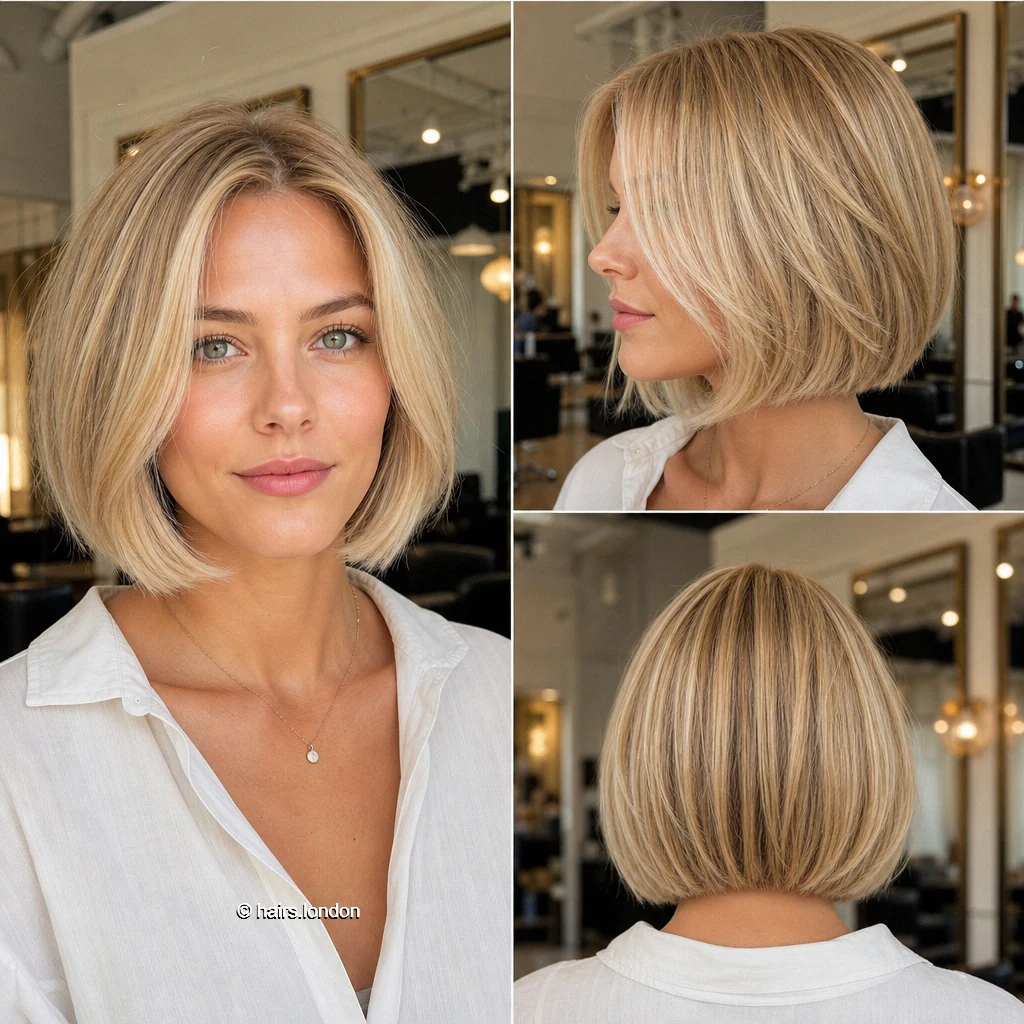
Champagne blonde lengths form a smooth, softly curved jawline bob. A gentle side part leaves the front open and unfringed. The rear view shows a rounded silhouette with compact ends. Its profile appears shorter behind, without a dramatic front angle. Ask how much graduation your hair needs to hold shape. Blow dry downward, turning the brush slightly beneath the perimeter. Finish with light serum only where the ends need smoothing. Thick density may require discreet shaping to prevent excessive bulk. Trim the back when its clean outline begins sitting lower. Maintain light blonde tones with gentle cleansing and appropriate conditioning.
19. Neutral Blonde Bob with a Relaxed Perimeter
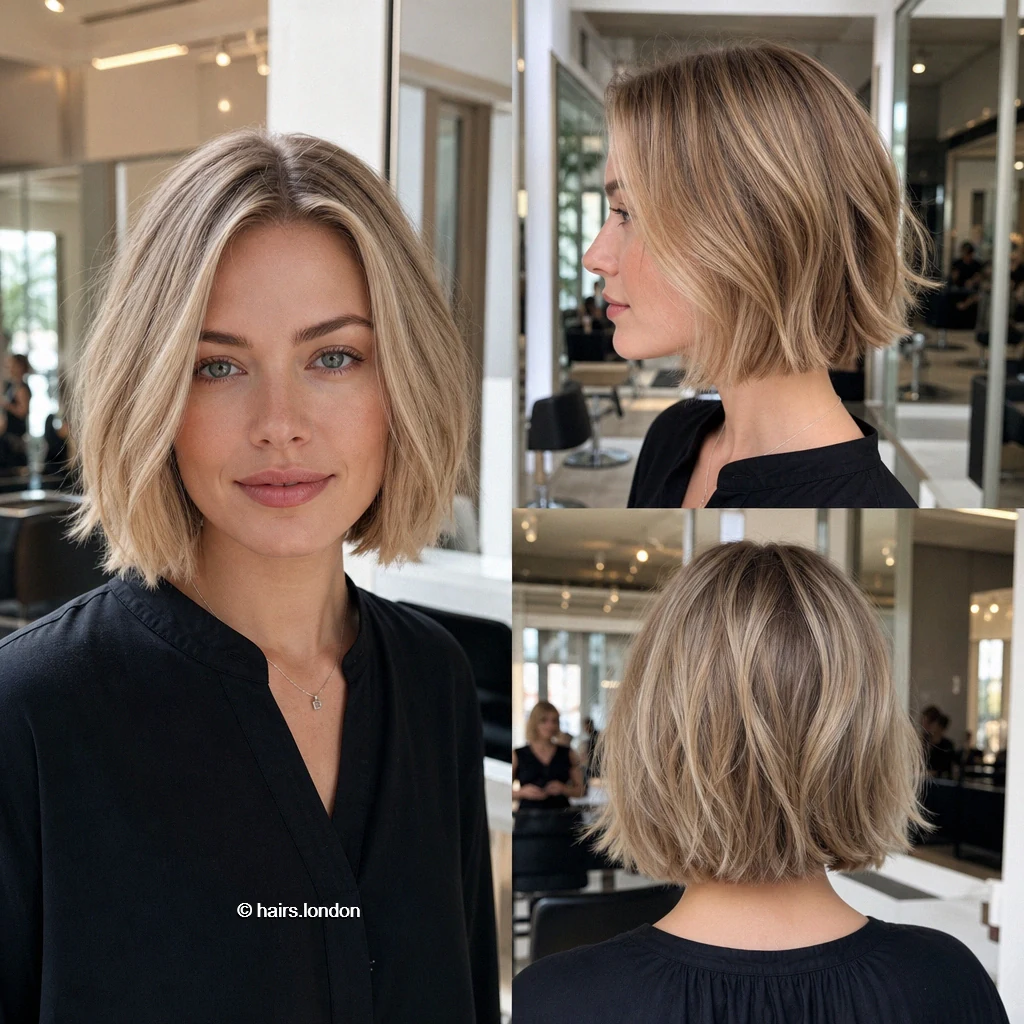
Neutral blonde strands give this short bob soft dimension here. The center part frames the face with loose jawline lengths. Side and back views show subtle layers and textured tips. Its perimeter is relaxed rather than sharply blunt or stacked. Ask for a little movement while protecting lower edge density. Dry with your fingers, then smooth any uneven perimeter sections. Naturally straight hair may need only minimal styling each morning. Wavier textures can benefit from product applied sparingly to ends. Trim when the back starts losing its tidy overall width. Refresh highlights when their contrast no longer suits your preference.
20. Side-Parted Blonde Bob with Wispy Layers
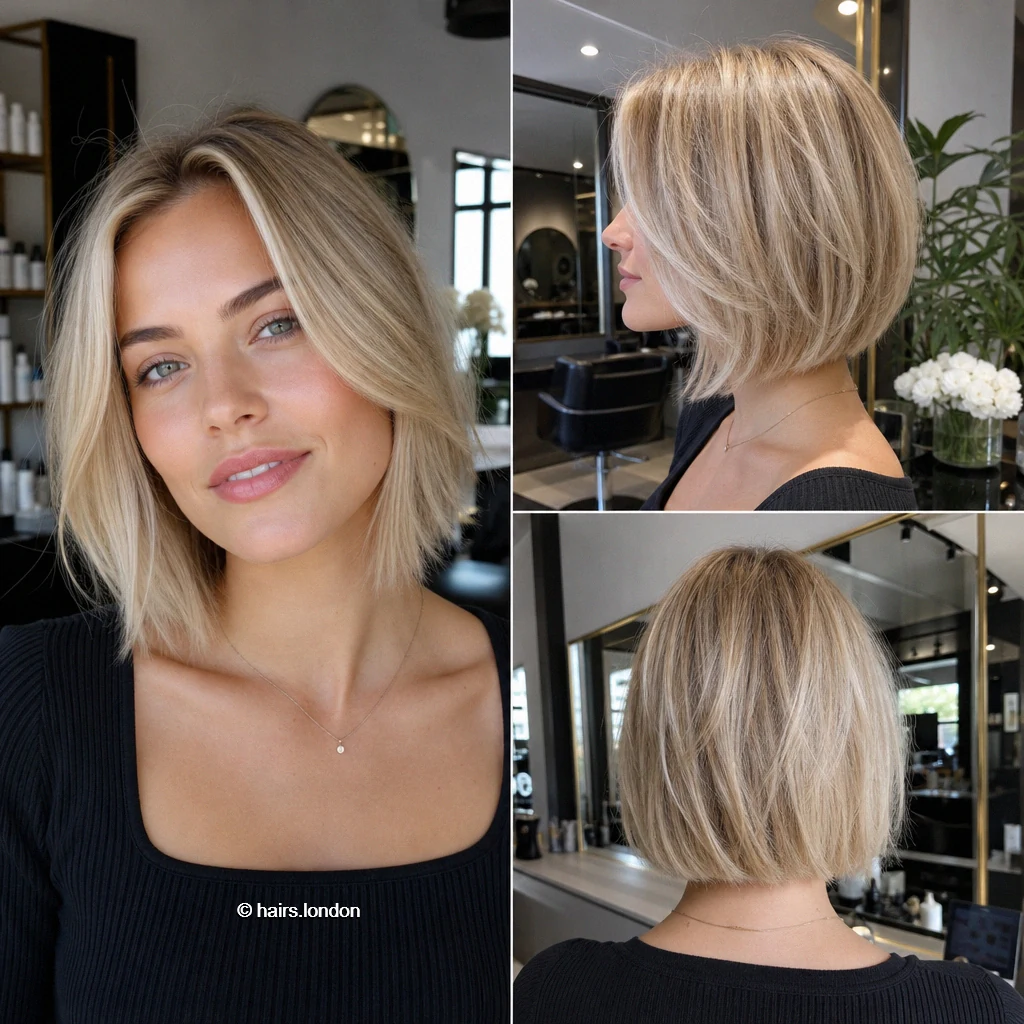
A side part gives this blonde bob sweeping movement. The front reaches the jaw, with soft wispy layers toward it. Side and rear views show a shorter, softly rounded back. Lighter face framing strands contrast with deeper blonde underneath here. Ask whether subtle graduation would support your preferred daily volume. Brush the front across, then smooth the back into place. Keep styling products light to avoid flattening the airy layers. Finer density may need less texturizing at the lower edge. Trim as the nape grows and changes the side profile. Protect highlighted ends when heat styling to preserve their finish.
How to Choose Your Bob Length and Shape
Start with where you want the perimeter to sit: at the chin, along the jaw, below it or nearer the shoulders. Then look at the side and back, not just the front. A longer front describes an A-line shape; a rounded back with shorter lengths supporting the hair above it indicates graduation. These photos offer several softly graduated and layered options, but not every rounded bob needs pronounced stacking. Consider how your density, natural texture and neckline affect where the weight line will settle.
Styling Fine, Thick, Wavy and Curly Textures
For fine hair, preserve enough weight at the lower edge and start with a small amount of mousse or light spray. Thick hair may benefit from carefully placed internal shaping so a rounded bob moves without becoming bulky. Enhance natural waves by scrunching product into damp lengths, then air drying or diffusing gently; smooth only the perimeter if needed. For curls, discuss the shape at its dry, sprung-up length before cutting, and avoid brushing out the finished pattern. Dry a fringe early so its fall is easier to direct.
Keeping Blonde Bob Color Fresh
The visible blondes range from pale and creamy to beige, sandy and honey, often with darker roots or lighter face-framing pieces. Choose a level of contrast that fits the upkeep you want. Use gentle cleansing, condition lightened ends and protect them before heat styling. If the shade shifts warmer than you prefer, ask your colorist whether toning is appropriate rather than assuming every blonde needs the same product or schedule.
Maintaining the Bob Perimeter and Graduation
A compact jawline edge and a short, rounded nape can change noticeably as they grow, so arrange trims around the shape you want to retain. Check the profile and back when deciding whether it is time: a dropping weight line, widening lower edge or uneven fringe may matter more than the calendar. Longer feathered bobs can tolerate a softer grow-out, although sparse or uneven ends still benefit from a tidy-up. Ask your stylist to preserve movement while refining the perimeter.
What to Discuss with Your Stylist
Bring the front, side and back view of the bob you like. Point out the intended front length, parting, fringe, lower edge and amount of fullness at the back. Explain how your hair behaves when air dried, where it grows strongly, how much time you spend styling and whether you want to maintain visible blonde contrast. Ask which details can be adapted to your density and texture, and what the cut will look like as it grows.
Frequently Asked Questions
What is the difference between a bob and a lob?
A lob is a longer bob, typically falling closer to the shoulders. Several cuts here sit at the jaw, while the feathered, shoulder-skimming option reads as a lob.
Is an A-line bob the same as a stacked bob?
No. A-line describes a perimeter that is longer toward the front. Stacking describes visible graduation that builds weight at the back; a cut can have one feature without the other.
How do I choose between a blunt and layered bob?
Choose based on the edge and movement you want, then check your density. A stronger perimeter gives a more defined line, while layers can release weight and add movement if enough fullness remains at the bottom.
Can fine hair wear a rounded bob?
Yes, if the shape retains enough lower-edge density. Ask your stylist to use layering and texturizing sparingly, then test whether lightweight styling gives you the lift you want.
How can thick hair avoid a bulky bob?
Discuss the weight line and where selective internal shaping might help. Removing too much from the ends can make the perimeter look thin without solving fullness higher up.
Can naturally curly hair have a bob like these?
A curly bob is possible, but its dry length and outline will differ from the smoother examples shown. Consult a stylist about curl shrinkage, density and how the shape should sit when worn naturally.
Which fringe is easiest to grow out?
A longer, sweeping front section generally blends into the sides more readily than short bangs. Its ease still depends on your growth patterns and how you part your hair.
Do I need to blow dry a bob every day?
Not necessarily. A smooth rounded finish may take brushing, while a textured or naturally wavy bob can work with air drying and light product. Choose a cut that suits the routine you prefer.
How often should I trim a graduated bob?
Arrange a trim when the shorter back and weight line stop sitting where you want them. Precision shapes usually need attention sooner than soft, longer layered bobs.
What should I do when a bob grows out unevenly?
Have the perimeter checked before removing more layers. Your stylist can tidy the lower edge, balance the sides and decide whether the back needs reshaping.
How much upkeep do blonde highlights add?
That depends on how light the pieces are, how much root contrast you enjoy and your preferred tone. Discuss a refresh plan with your colorist, and protect lightened ends between visits.
Can I grow a short bob into a lob?
Yes. As it grows, ask for occasional perimeter adjustments so shorter back lengths can catch up with the front while the overall shape remains intentional.
Conclusion
The strongest starting point is the shape you want to see from every angle, not a bob label alone. Save the front, side and back details that appeal to you, then work with your stylist to adapt the length, layering and blonde upkeep to your hair and routine.
20 Blonde Bob Haircuts, From Rounded Shapes to Airy Layers
These blonde bob haircuts show how much a change in length, weight or texture can alter a familiar shape. Some sit neatly at the jaw with rounded backs; others use feathered layers, fringe or a slightly longer perimeter for movement. The front, side and back views make it easier to compare what you like—and to discuss what your own density, texture and styling routine can support.
1. Rounded Blonde Bob with Sweeping Layers
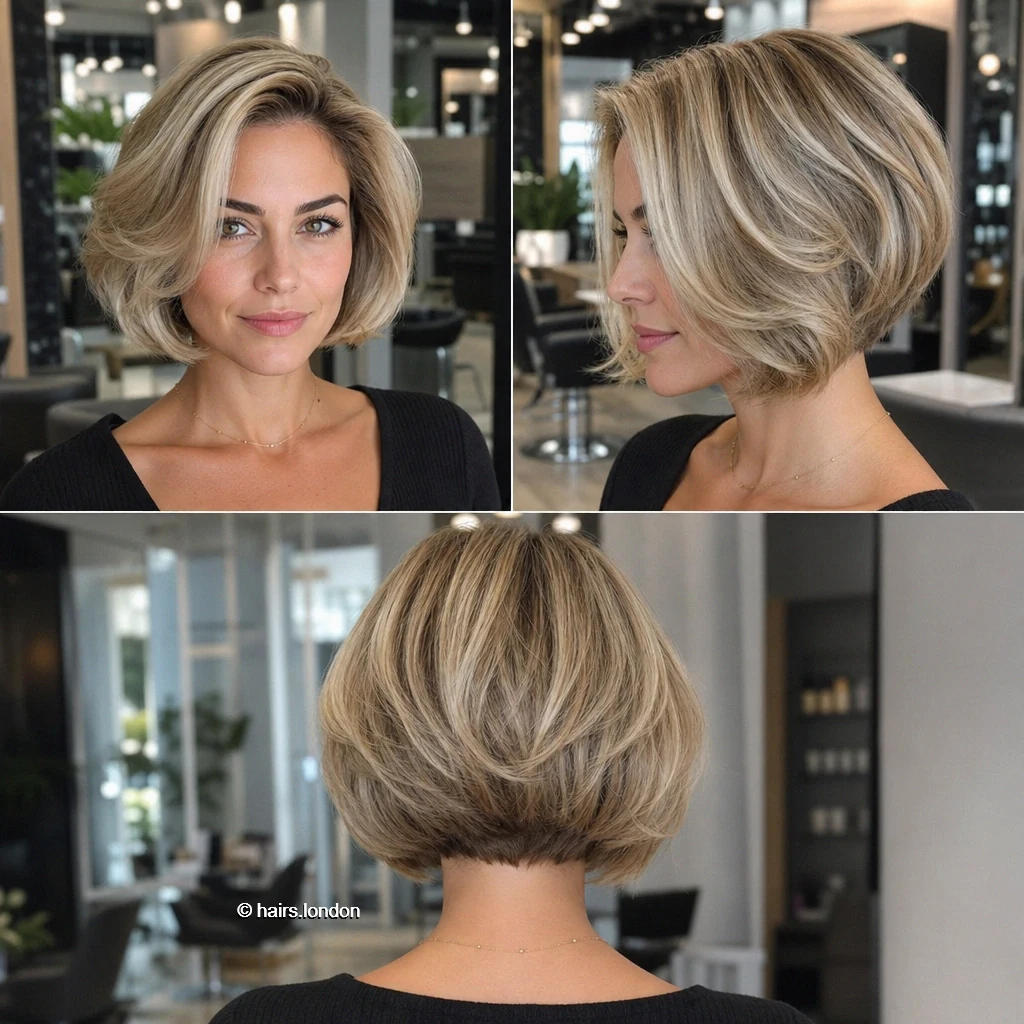
Soft blonde layers sweep across this rounded, jaw length bob. Side and back views reveal fullness above a tapered nape. Brighter ribbons contrast gently with the deeper blonde roots here. Long front pieces frame the face without forming bangs here. Ask for controlled graduation if your hair holds volume well. A round brush can direct the ends softly inward daily. Apply lightweight heat protection before smoothing the outer surface gently. Thicker densities may need discreet weight removal beneath layers instead. Trim the nape regularly to preserve its rounded outline shape. Refresh highlights according to visible regrowth and desired contrast levels.
2. Side-Parted Blonde Bob with a Graduated Back
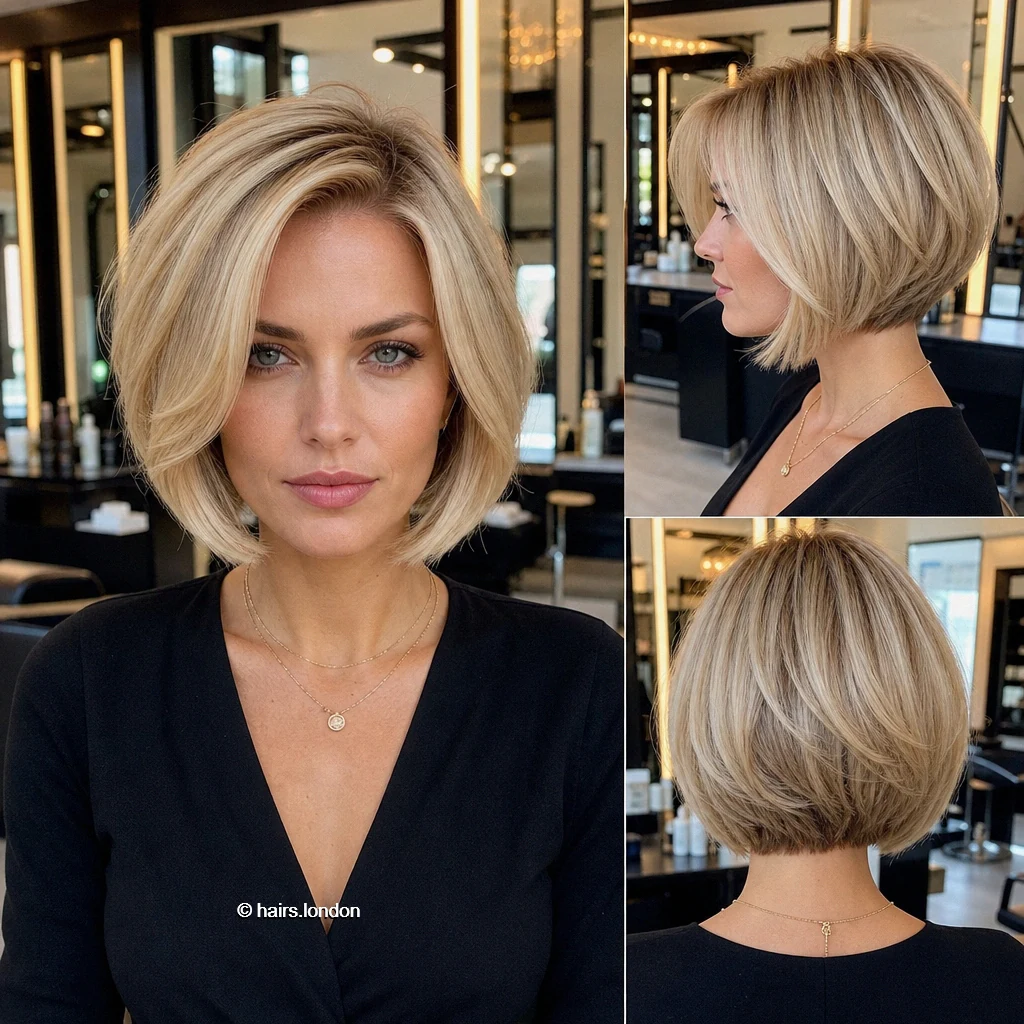
A creamy blonde bob sits near the jaw with volume. Side views show shorter back hair beneath longer fronts clearly. Subtle graduation shapes the nape without exposing the scalp here. The deep side part creates a soft sweeping fringe effect. Fine hair may welcome this controlled lift over heavy layering. Brush the front away, then curl the ends under slightly. Use mousse sparingly to avoid stiffening the smooth silhouette unnecessarily. Check back weight placement with your stylist before cutting begins. Frequent perimeter trims keep the short nape looking intentional throughout. Tone lighter sections when warmth exceeds your preferred finish visibly.
3. Beige Blonde Bob with Face-Framing Movement
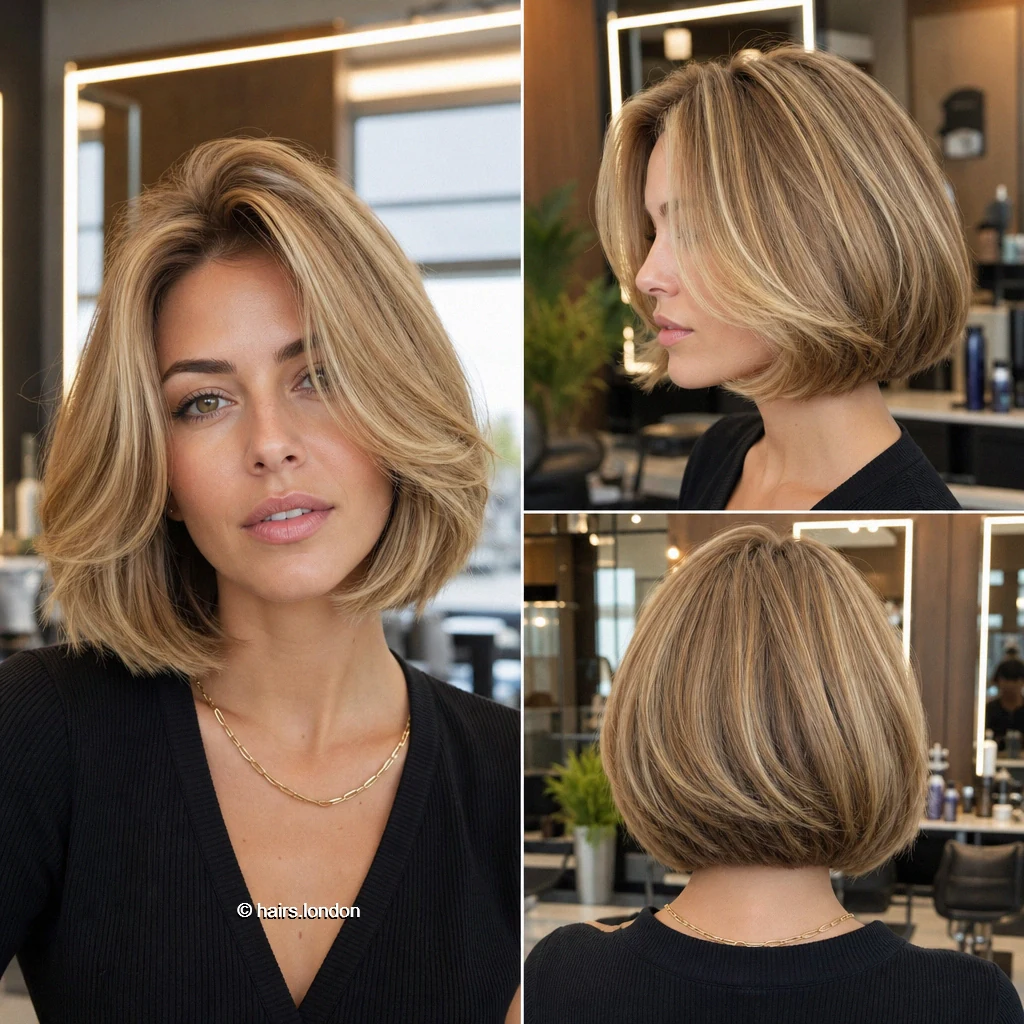
Beige blonde highlights trace the flowing layers of this bob. Front lengths reach the jaw while the back sits higher. A softly rounded rear silhouette carries a compact weight line. The offcenter part opens into relaxed, cheek framing movement here. Ask about subtle graduation rather than a sharply stacked finish. Blow dry forward sections with a broad, gentle bend outward. Keep styling cream light so the ends retain bounce naturally. Medium density can support fullness without excessive internal thinning here. Schedule shape checks when the nape starts losing definition. Maintain highlight contrast with gentle cleansing and occasional toning as needed.
4. Ash Blonde Bob with a Rounded Weight Line
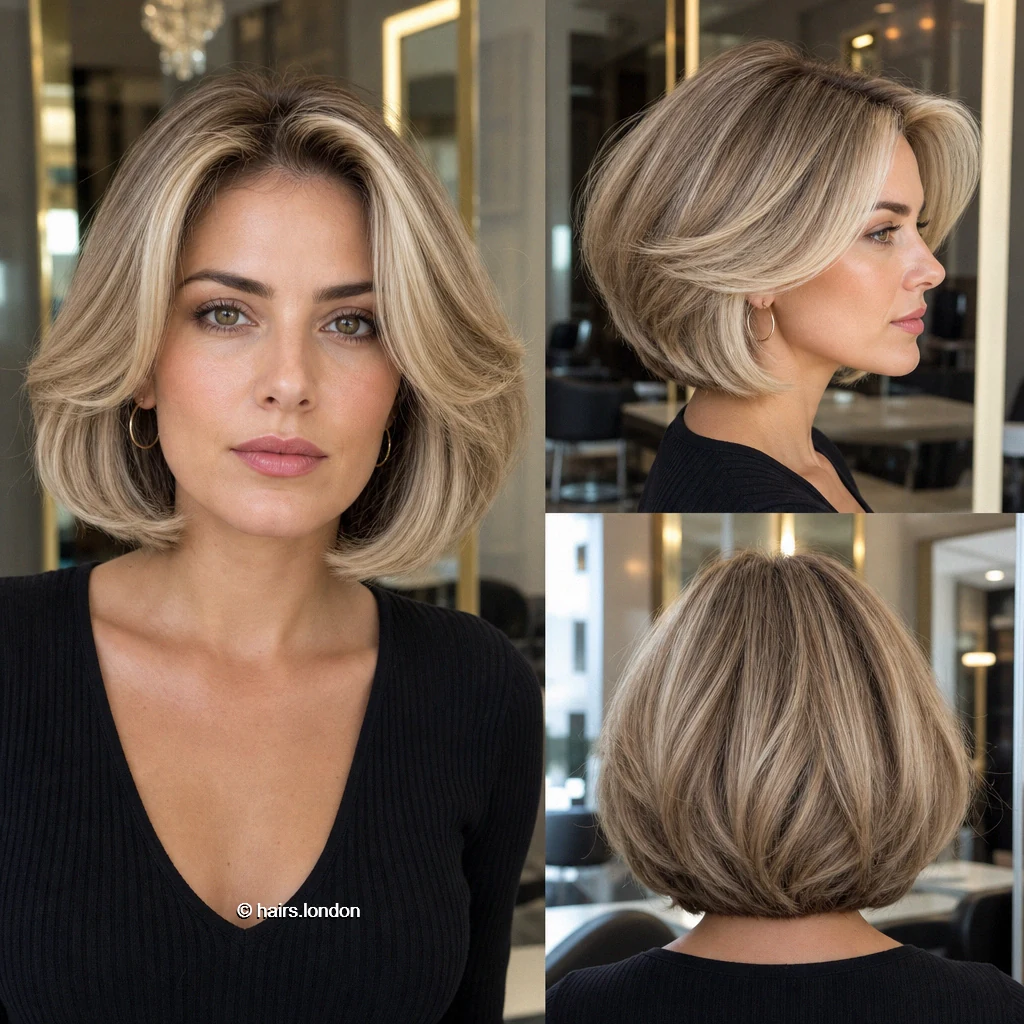
Cool blonde ribbons brighten this full, softly rounded jawline bob. Its center leaning part opens into broad face framing pieces. Side and back views show layers settling above the nape. The lower edge looks compact rather than wispy or blunt. If your hair is thick, discuss where weight needs removal. Brush sections outward around the face for an airy finish. Smooth the underside gently to keep the perimeter from expanding. Fine hair may need fewer layers to preserve that fullness. Book trims regularly when the rounded weight line begins dropping lower. Protect the cooler blonde appearance with color appropriate care.
5. Short Blonde Bob with a Tucked Nape
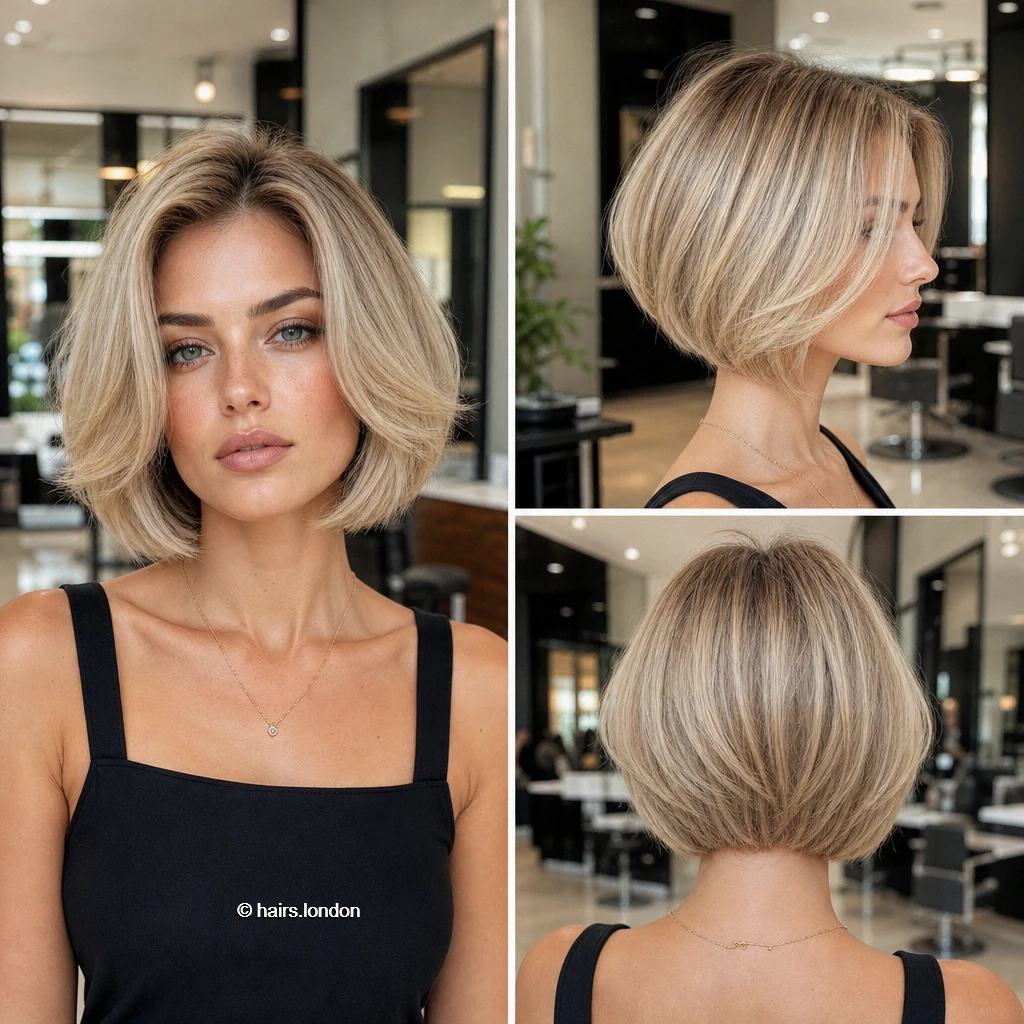
This light blonde bob curves neatly beneath the jaw at front. The side view reveals a shorter nape and rounded profile. Fine highlights add dimension against the darker root area here. A loose center part lets both front sections fall forward. Ask your stylist whether modest graduation suits your growth pattern. Direct a round brush downward to polish the lower edge. Lift gently at the crown without building unnecessary side bulk. Dense hair may require internal shaping to maintain that curve. Trim the nape before its tidy outline loses definition again. Discuss highlight upkeep alongside the cut, especially around regrowth.
6. Tousled Blonde Bob with Wispy Fringe
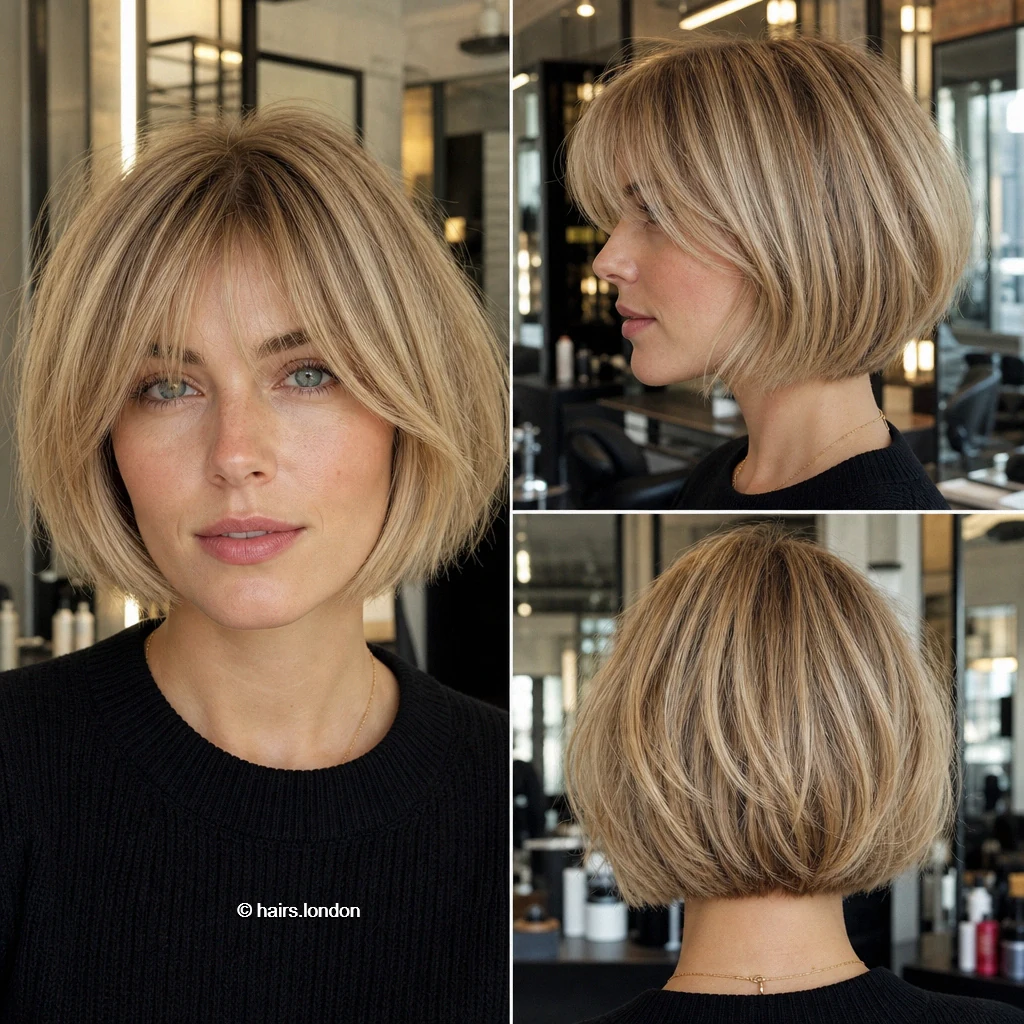
A wispy fringe softens this textured blonde, jaw length bob. Shorter pieces move through the sides and rounded back visibly. Warm and pale blonde strands give the layers extra definition. The ends look airy rather than firmly tucked underneath here. Ask for fringe placement that respects your natural growth patterns. Scrunch light styling cream into damp hair for separated movement. Smooth only the perimeter if frizz obscures the bob shape. Fine hair may benefit from restrained product and modest layering. Trim the fringe independently when it begins covering your eyes. Reassess the back outline as its softer layers gradually grow.
7. Pale Blonde Bob with Soft Brow Fringe
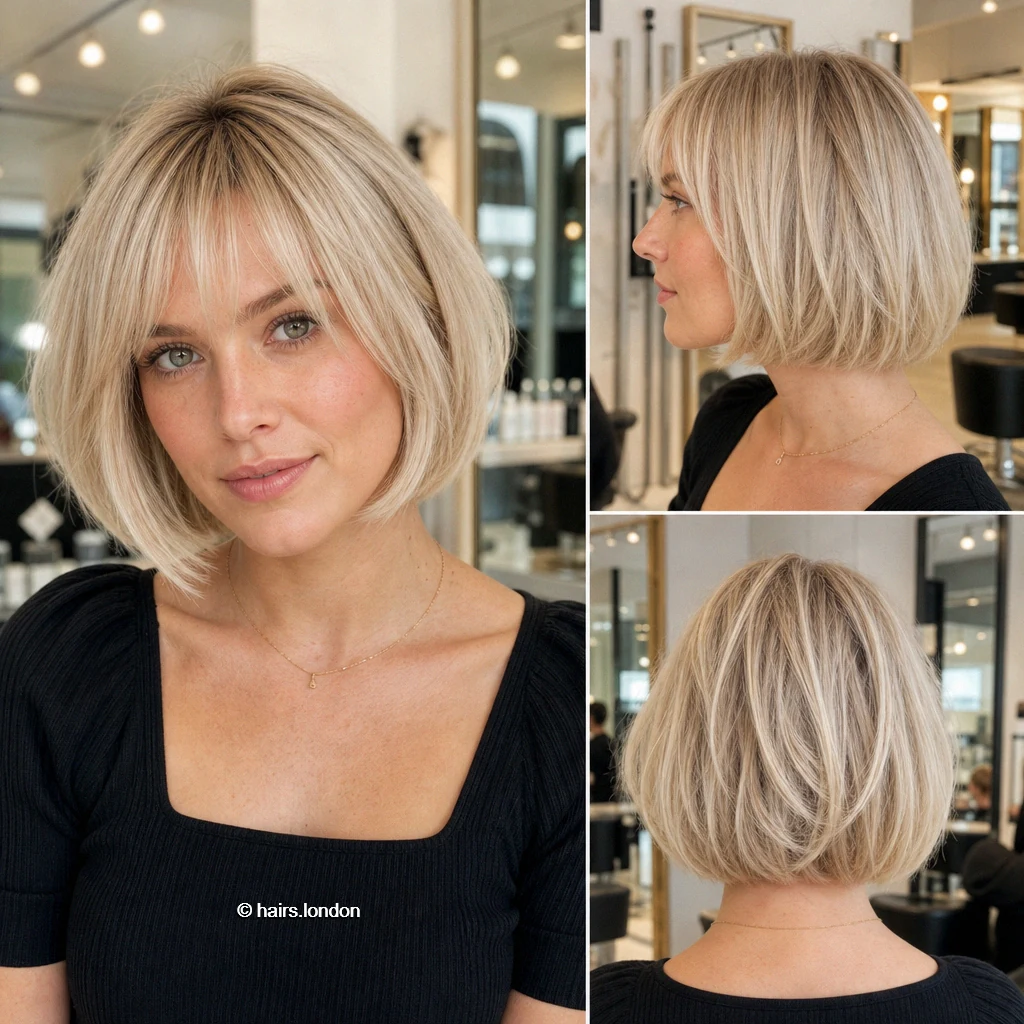
Pale blonde strands frame a softly rounded bob with brow skimming fringe. The front sits near the jaw, with lightly textured ends. From behind, layered strands fall into a compact curved outline. The side view shows fullness without a dramatic front angle. Consult your stylist about fringe density before removing too much. Dry the bangs first, directing them gently across the forehead. Brush the sides underneath for polish, or loosen them afterward. Thicker hair may need selective debulking beneath the rounded shape. Keep fringe appointments flexible as its length changes more quickly. Condition the lightened ends while avoiding heavy roots.
8. Textured Honey Blonde Bob with Full Fringe
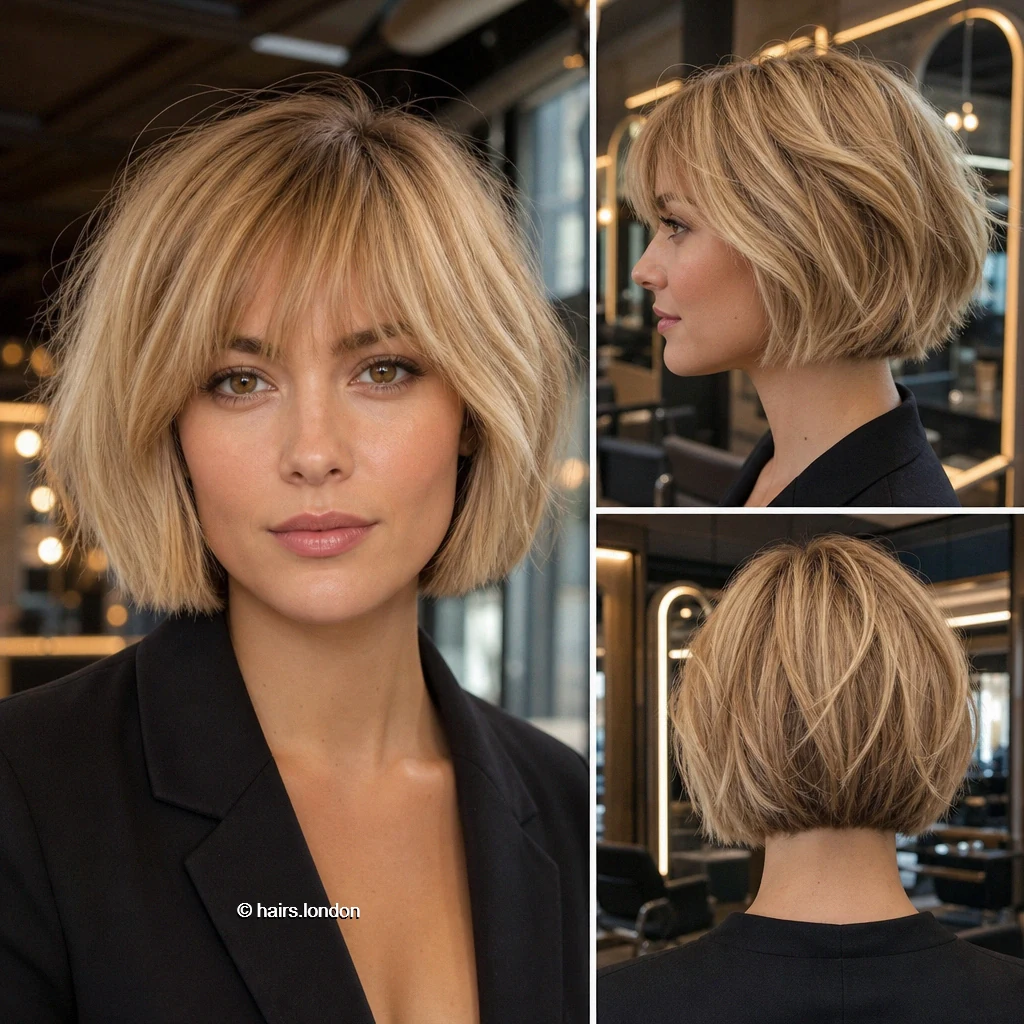
Honey blonde tones warm this choppy bob with soft fringe. Its jaw grazing edge appears deliberately loose rather than blunt. The side and back show short layers creating soft piecey volume. Slightly darker roots add visible depth beneath the lighter lengths. Ask for texture that suits your density, not excessive thinning. Work a small amount of paste through dry ends sparingly. Air drying may enhance movement if your natural texture cooperates. Dense hair might need weight adjusted inside the rounded back. Refresh the fringe and uneven perimeter when they lose definition. Protect lighter pieces from heat whenever you restyle them.
9. Rooted Blonde Bob with Airy Fringe
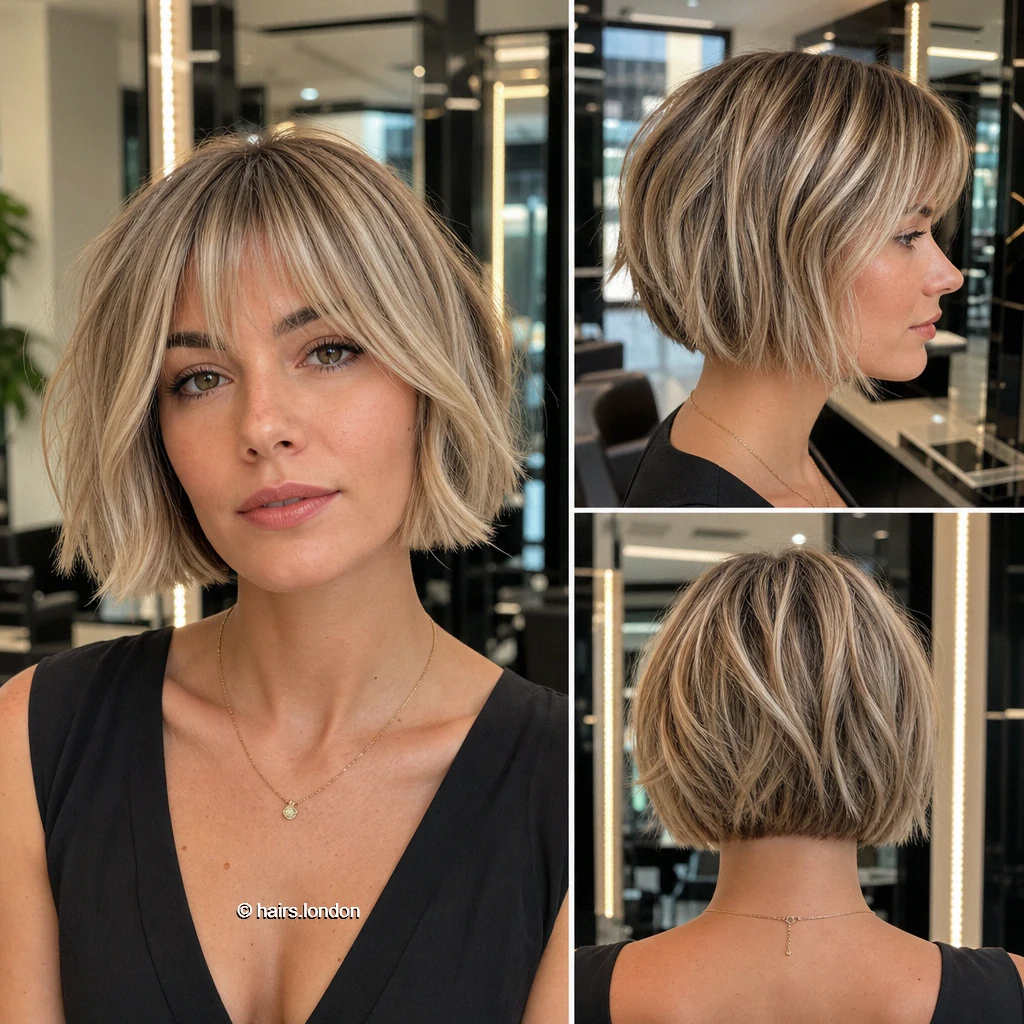
Rooted blonde highlights define this relaxed bob with airy bangs. The sides skim the jaw, ending in lightly separated, delicate points. Back layers create movement above a comparatively neat lower edge. A soft fringe breaks up the forehead without heavy coverage. If your hair is fine, request restrained interior texturizing first. Blow dry bangs gently before working through the side lengths. A light spray can preserve separation without making ends rigid. Check how the back sits after your hair dries naturally. Trim when its edge starts losing the intended compact shape. Plan highlight refreshes around the contrast you enjoy wearing.
10. Rounded Sandy Blonde Bob with Soft Bangs
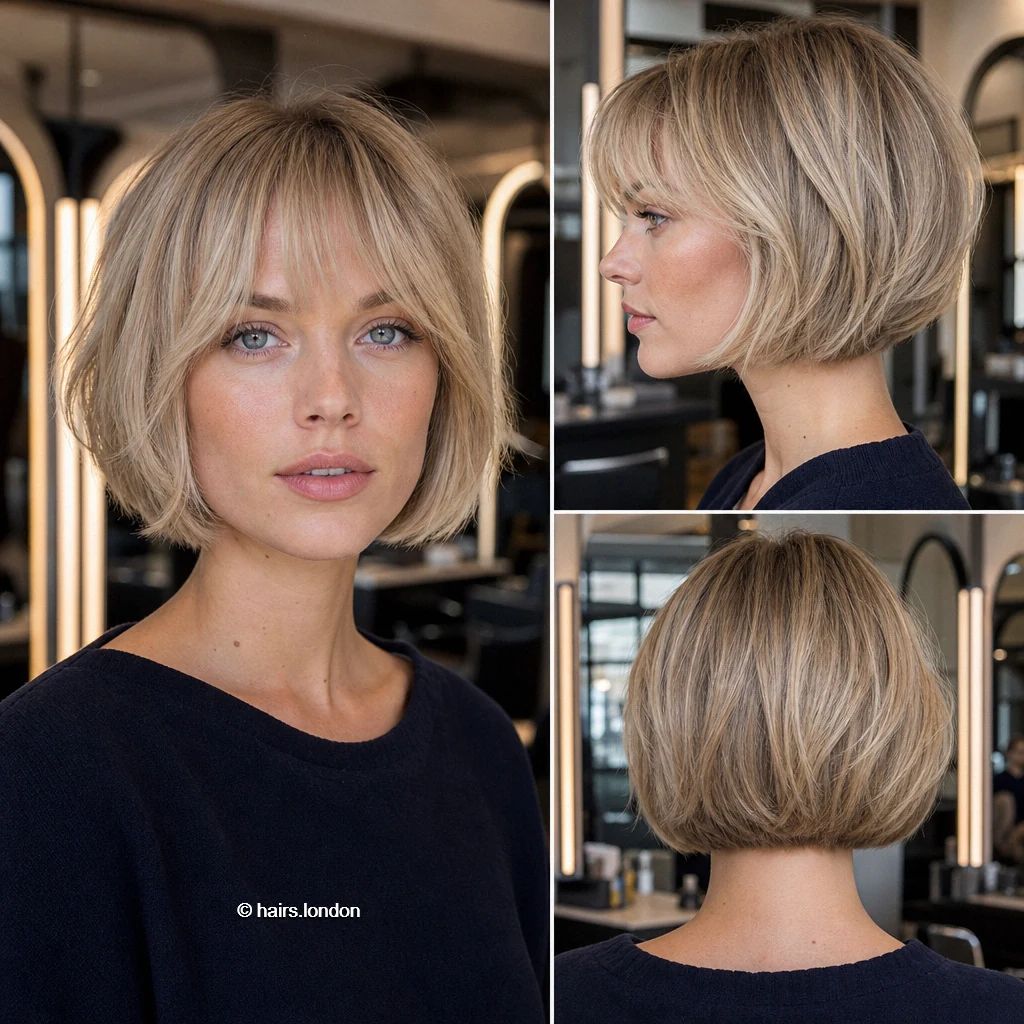
Sandy blonde shades run through this rounded, chin grazing bob. Its featherlight bangs blend into longer pieces around the cheeks. Side and rear views reveal fullness over a shorter nape. The visible lower line remains tidy beneath the surface layers. Ask whether gentle graduation will support your natural hair density. Use a round brush to smooth ends without flattening natural volume. Guide the fringe forward while drying to control its fall. Very thick hair may need subtle internal weight adjustment here. Maintain the nape before growth changes its softly curved outline. Refresh toning when your preferred sandy shade looks warmer.
11. Feathered Blonde Bob with Longer Layers
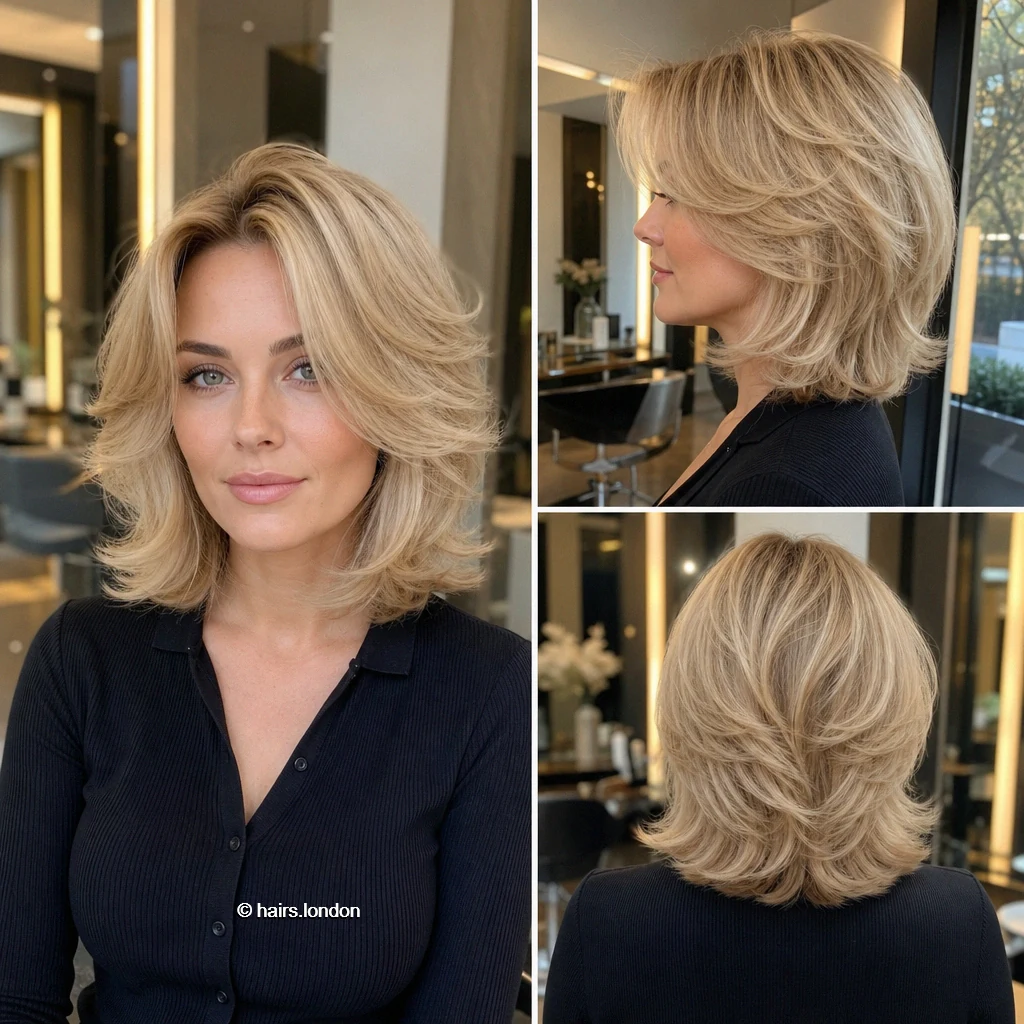
This longer blonde bob reaches the neck with soft feathered layers. The face framing sections sweep outward from an open part. Side and back views show flipped ends and generous movement. The perimeter looks softer than a sharply cut blunt bob. Ask for layer lengths that still leave adequate lower density. Brush ends away from the face for a lifted finish. A flexible spray can support movement without locking every strand. Thick hair may appreciate shaping, while fine hair needs restraint. Trim when the feathered ends begin looking uneven or sparse. Condition highlighted lengths to help keep their texture manageable.
12. Short Layered Blonde Bob with Flipped Ends
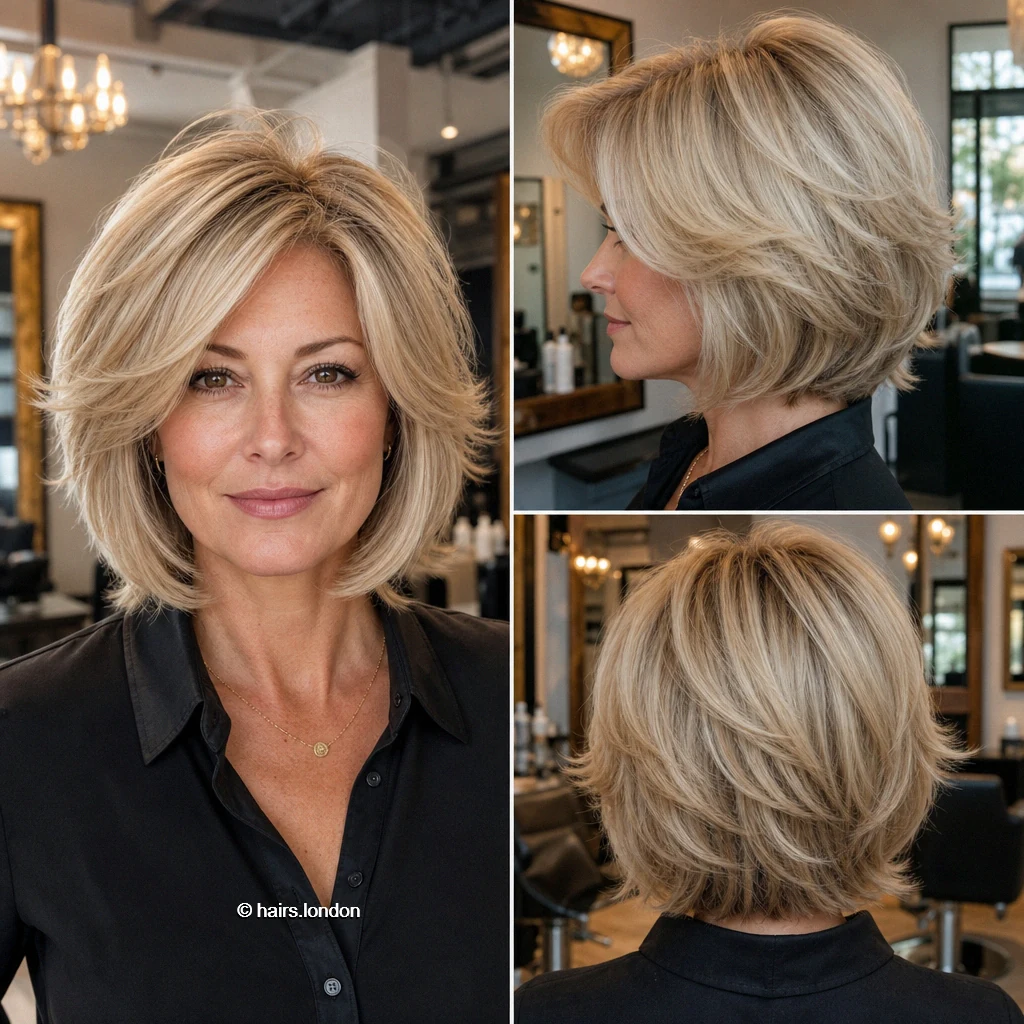
Pale blonde layers create lift around this neck length bob. Broad front sections sweep across the forehead without distinct bangs. The side view shows separated ends turning gently outward here. Behind, overlapping layers make the outline airy and softly rounded. Discuss how much layering your density can comfortably support first. Style with a round brush, directing selected ends away outward. Keep products light so the shorter pieces retain their separation. Naturally wavy hair may need less brushing and more scrunching. Review the lower edge as flipped layers grow past it. Use heat protection when repeatedly shaping these highlighted blonde ends.
13. Voluminous Beige Bob with Swept Layers
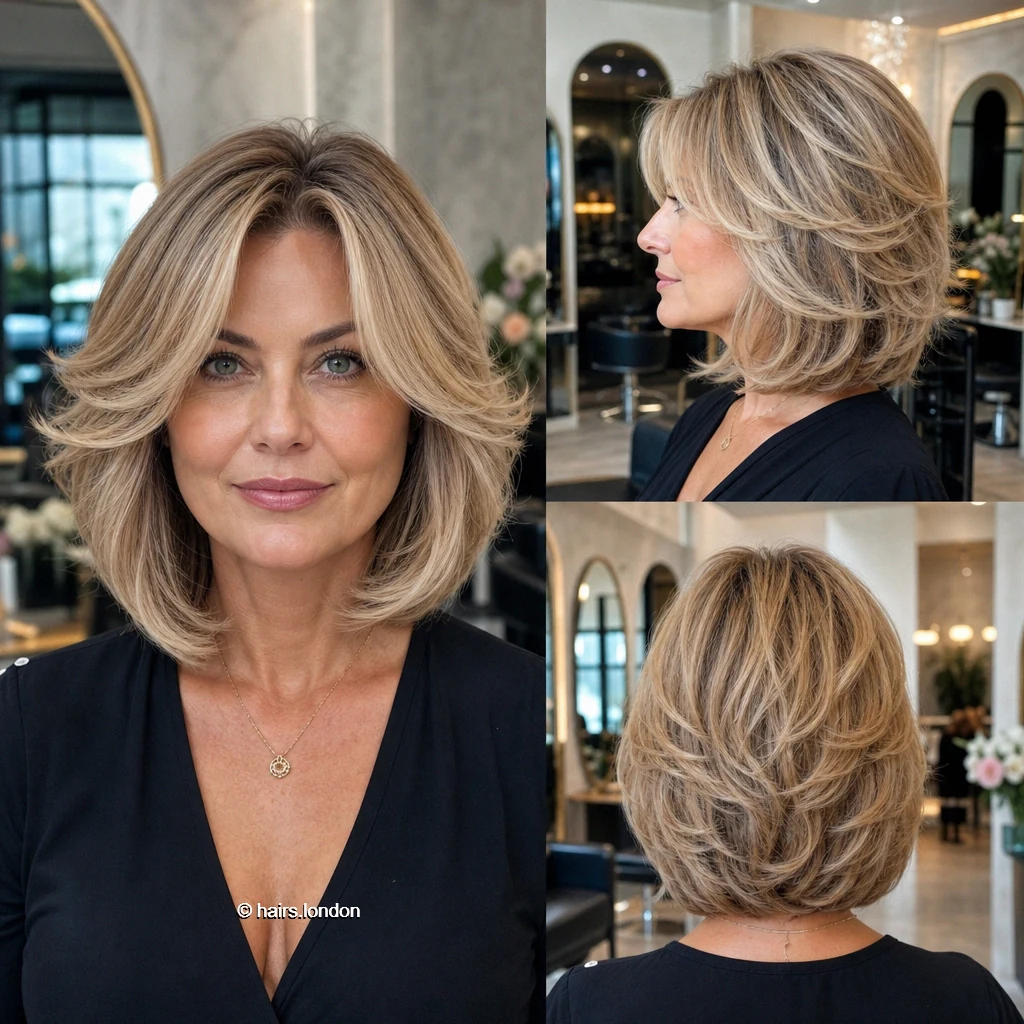
Beige blonde highlights emphasize the sweeping layers of this bob. It falls below the jaw with fullness around the cheeks. The rear view shows overlapping pieces above a rounded perimeter. Long front sections open around the face without short fringe. Ask your stylist to balance crown lift against lower fullness. Brush the front outward, then gently shape the back layers. Avoid heavy cream if it makes these airy ends collapse. Medium or thick density may support this visibly layered silhouette. Trim when the lower shape starts spreading instead of curving. Maintain highlighted tones according to your preferred warmth and contrast.
14. Shoulder-Skimming Blonde Lob with Feathered Ends
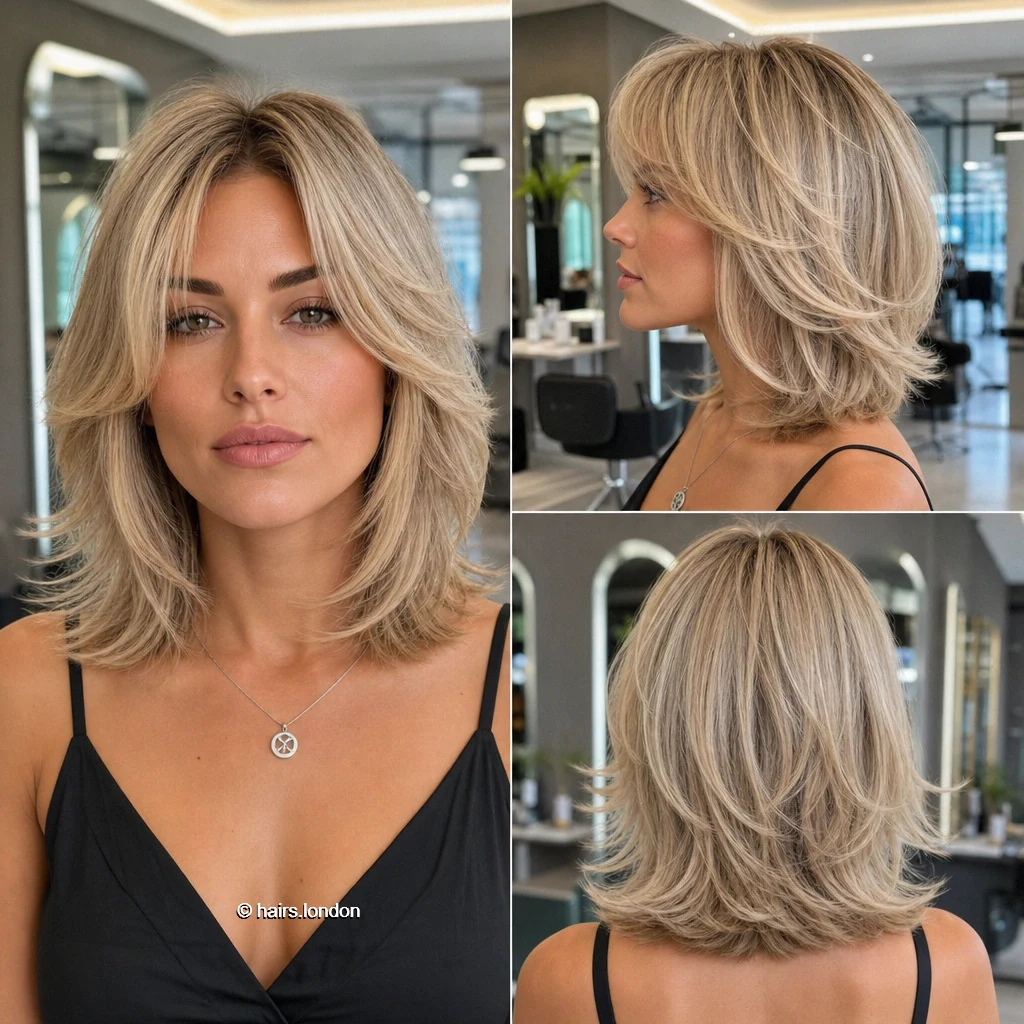
This blonde lob falls toward the shoulders with feathered ends. Long layers frame the face from a divided part. Side and back views show outward movement through the lower lengths. Its extended perimeter distinguishes it from the shorter jawline bobs. Ask for layers that preserve enough weight at the bottom. Brush the ends outward for polish without forcing extra volume. Natural waves can add movement with minimal heat styling instead. Finer hair may need fewer short layers to retain density. Trim the feathered edge when its shape becomes thin or uneven. Moisturize lighter lengths to keep the ends feeling supple.
15. Choppy Blonde Bob with Sweeping Front Layers
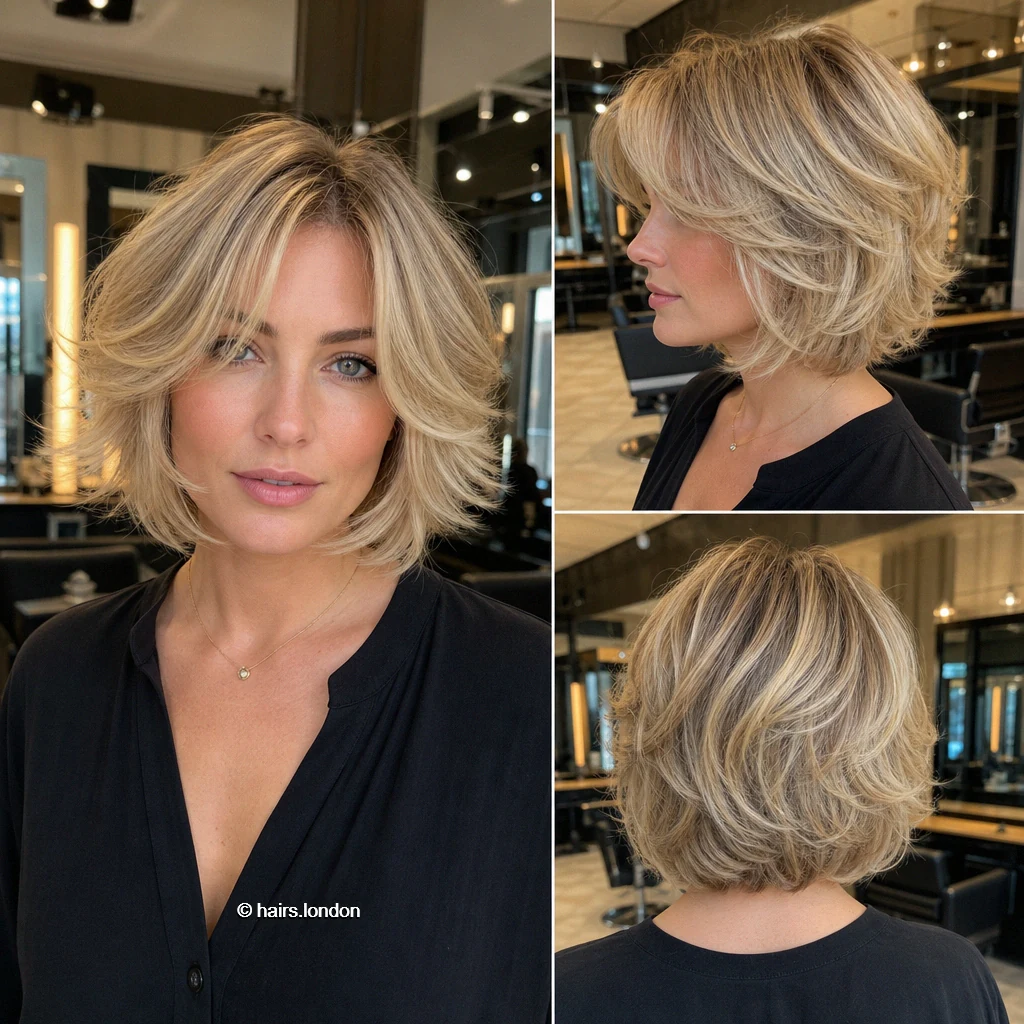
Bright blonde pieces sweep across this short, tousled bob. Its jaw length sides finish with noticeably feathered, softly separated ends. Side and back views reveal layered fullness above the nape. The front has a sweeping section rather than defined bangs. Ask for softness around the face without thinning everything underneath. Rough dry the roots, then bend selected ends outward gently. A little texture spray can emphasize separation without excessive bulk. Natural waves may make this finish easier to maintain daily. Trim when the nape or front pieces lose their balance. Check whether visible root contrast matches your preferred color upkeep.
16. Wavy Blonde Bob with a Soft Middle Part
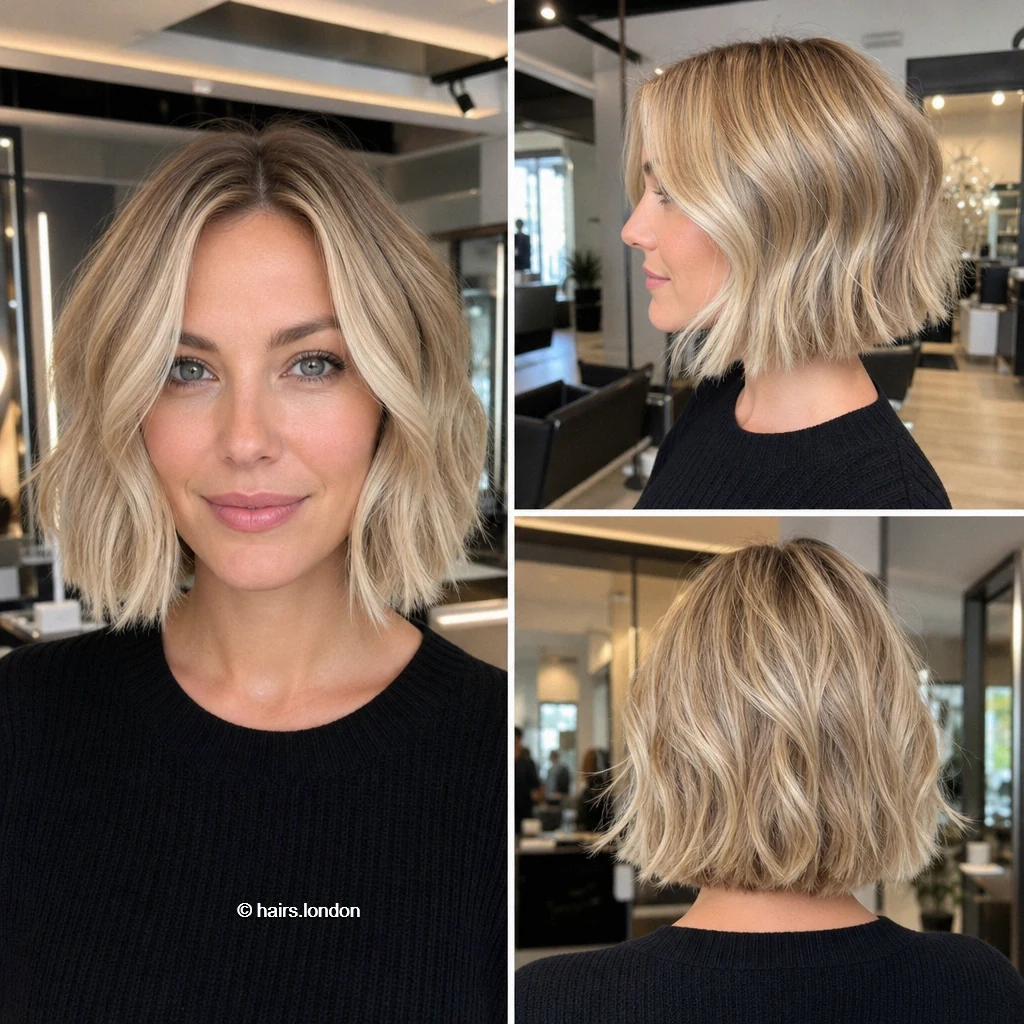
Soft waves give this blonde bob an easy, textured outline. A middle part sends longer front pieces toward the jaw. Side and back views show loose bends throughout the lengths. The lower edge remains visible beneath the movement and layers. Ask for enough perimeter weight to prevent overly thin ends. Scrunch a lightweight foam into damp hair to encourage waves. Diffuse gently or air dry according to your natural texture. Straight hair may require heat styling to recreate these bends. Trim when the lower line becomes uneven beneath the waves. Condition lightened strands so their texture stays manageable between visits.
17. Jaw-Length Blonde Bob with Airy Ends
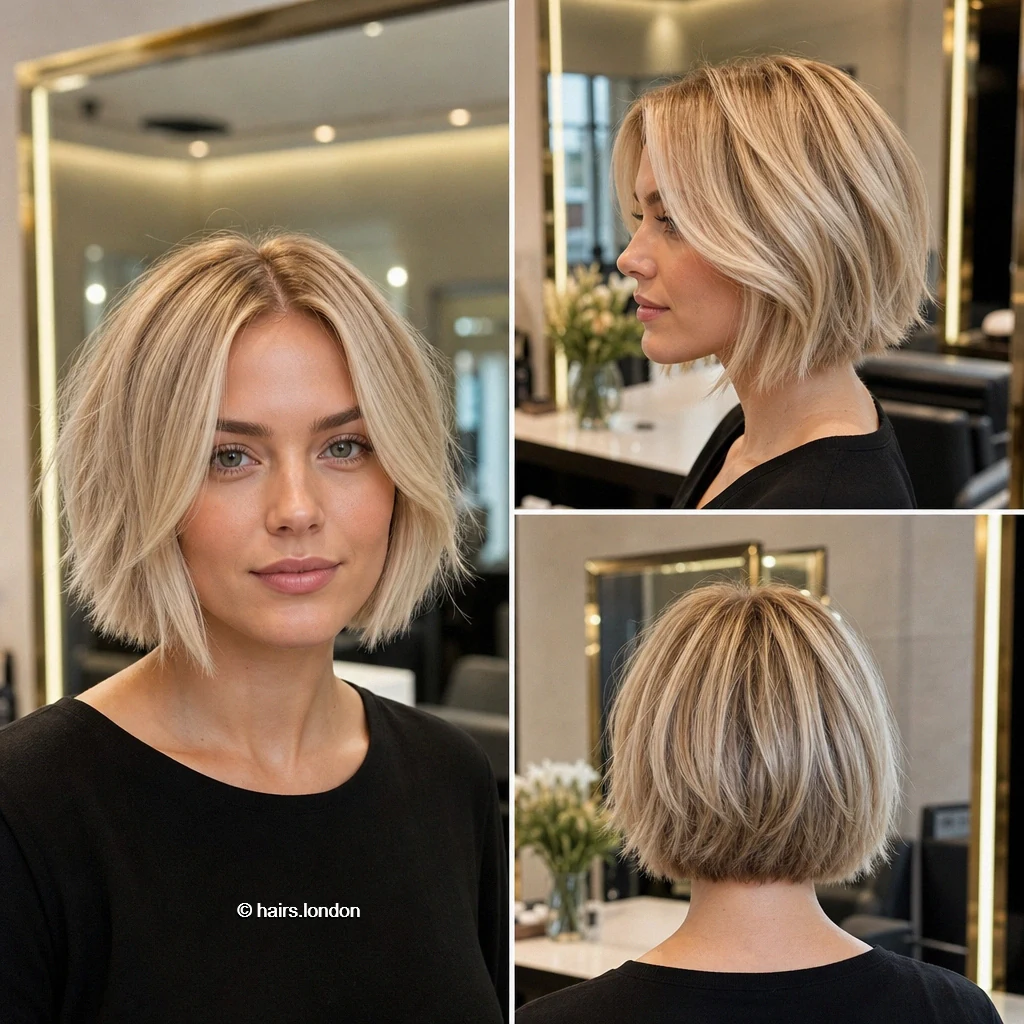
A softly parted blonde bob sits close to the jaw. Light face framing pieces fall forward without forming a fringe. The side view shows movement above a slightly shorter back. Behind, fine surface layers soften a compact, rounded lower edge. Ask for layering that leaves enough substance through the perimeter. Smooth the ends, then separate a few pieces with fingers. Fine hair may prefer minimal product to preserve natural lift. Dense hair might need careful weight removal below the surface. Arrange trims before the shorter back begins changing the profile. Discuss toning only if you want a different blonde balance.
18. Smooth Champagne Blonde Bob with a Rounded Back
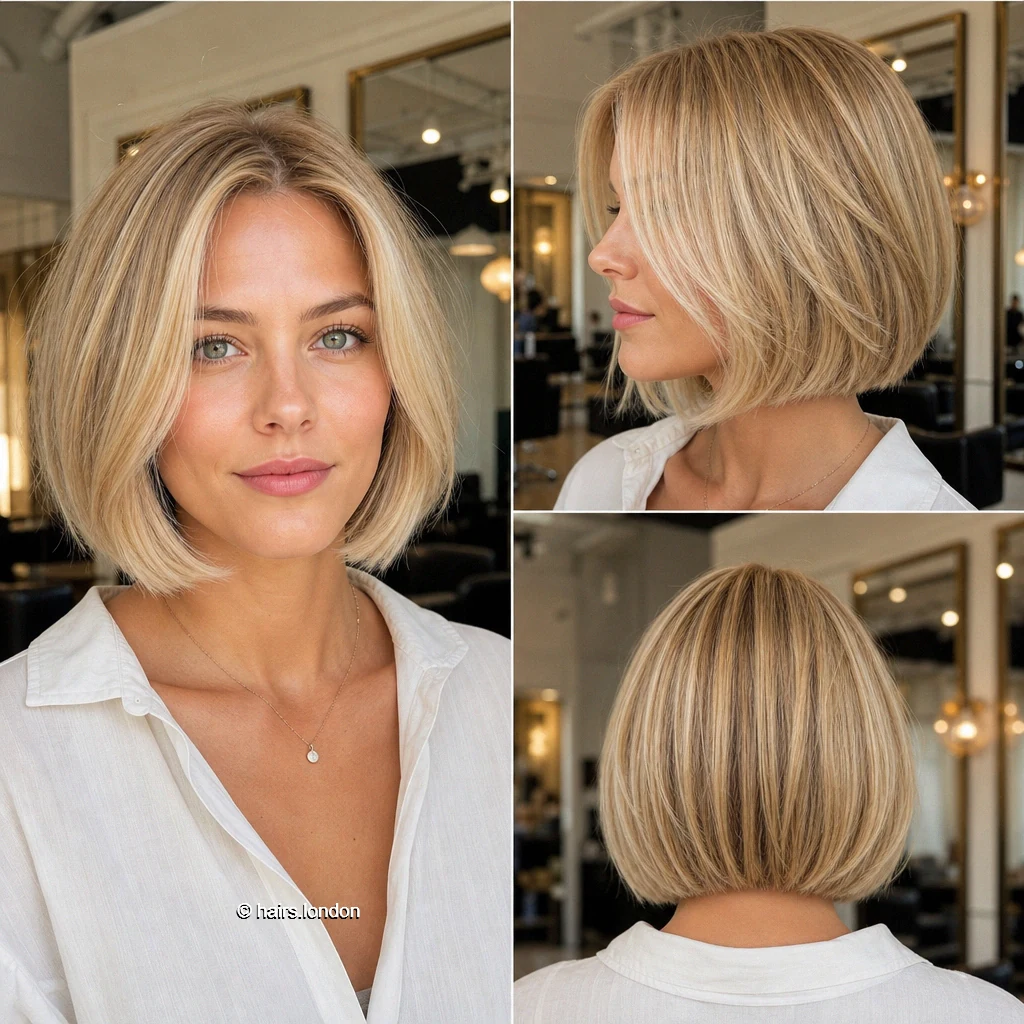
Champagne blonde lengths form a smooth, softly curved jawline bob. A gentle side part leaves the front open and unfringed. The rear view shows a rounded silhouette with compact ends. Its profile appears shorter behind, without a dramatic front angle. Ask how much graduation your hair needs to hold shape. Blow dry downward, turning the brush slightly beneath the perimeter. Finish with light serum only where the ends need smoothing. Thick density may require discreet shaping to prevent excessive bulk. Trim the back when its clean outline begins sitting lower. Maintain light blonde tones with gentle cleansing and appropriate conditioning.
19. Neutral Blonde Bob with a Relaxed Perimeter
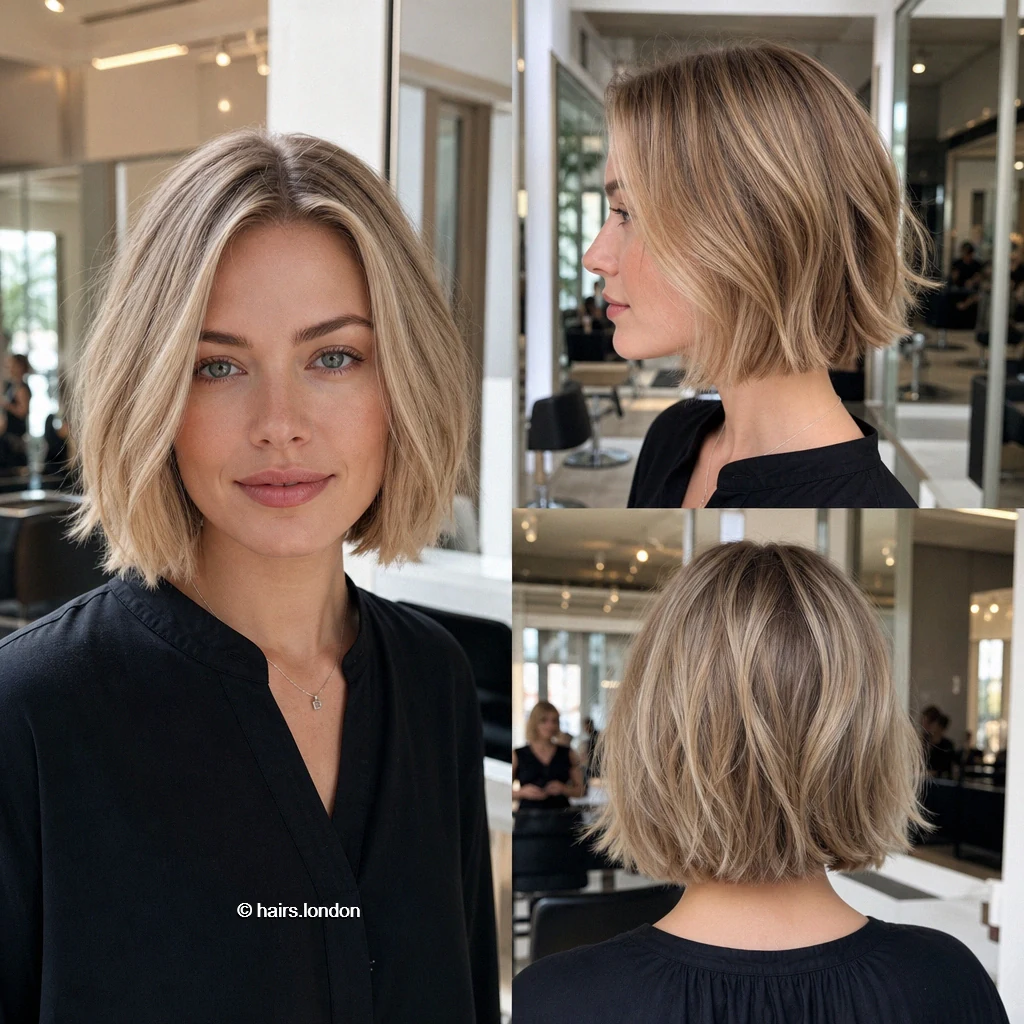
Neutral blonde strands give this short bob soft dimension here. The center part frames the face with loose jawline lengths. Side and back views show subtle layers and textured tips. Its perimeter is relaxed rather than sharply blunt or stacked. Ask for a little movement while protecting lower edge density. Dry with your fingers, then smooth any uneven perimeter sections. Naturally straight hair may need only minimal styling each morning. Wavier textures can benefit from product applied sparingly to ends. Trim when the back starts losing its tidy overall width. Refresh highlights when their contrast no longer suits your preference.
20. Side-Parted Blonde Bob with Wispy Layers
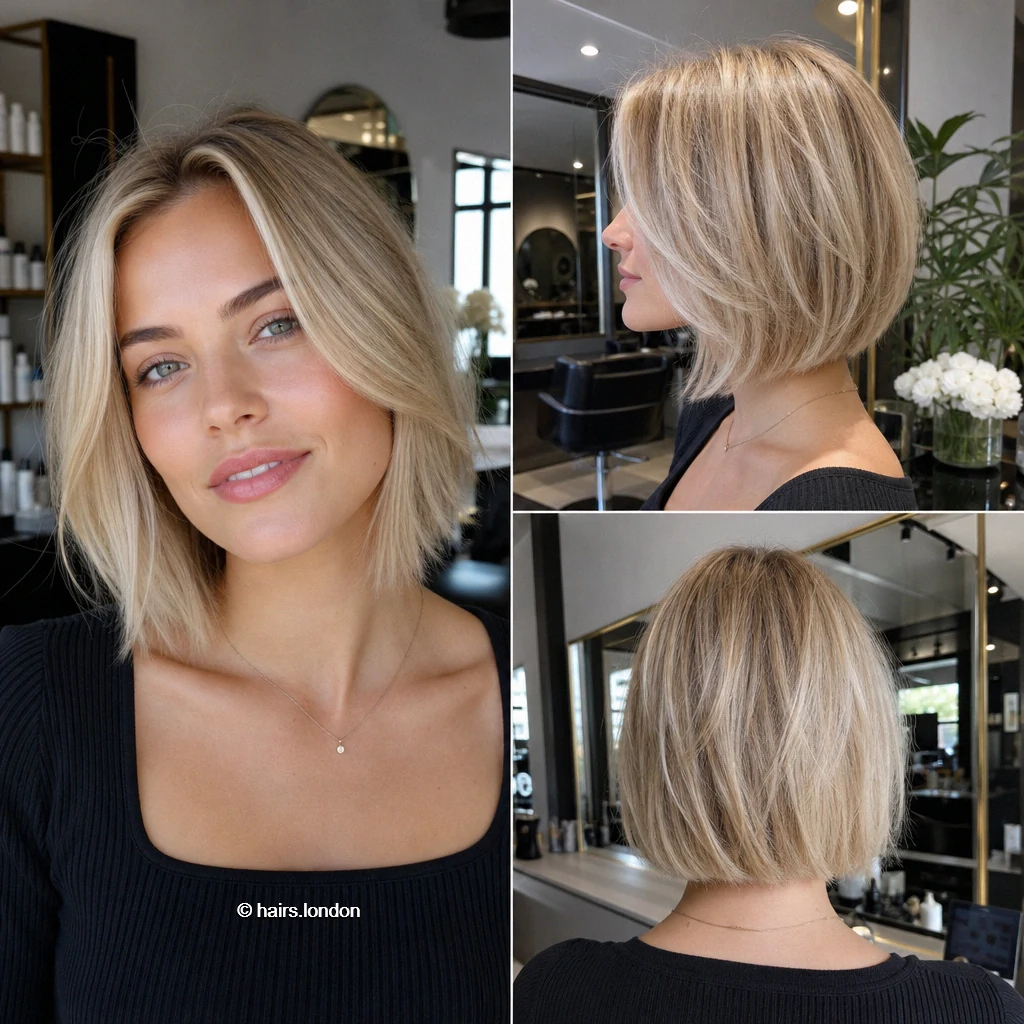
A side part gives this blonde bob sweeping movement. The front reaches the jaw, with soft wispy layers toward it. Side and rear views show a shorter, softly rounded back. Lighter face framing strands contrast with deeper blonde underneath here. Ask whether subtle graduation would support your preferred daily volume. Brush the front across, then smooth the back into place. Keep styling products light to avoid flattening the airy layers. Finer density may need less texturizing at the lower edge. Trim as the nape grows and changes the side profile. Protect highlighted ends when heat styling to preserve their finish.
How to Choose Your Bob Length and Shape
Start with where you want the perimeter to sit: at the chin, along the jaw, below it or nearer the shoulders. Then look at the side and back, not just the front. A longer front describes an A-line shape; a rounded back with shorter lengths supporting the hair above it indicates graduation. These photos offer several softly graduated and layered options, but not every rounded bob needs pronounced stacking. Consider how your density, natural texture and neckline affect where the weight line will settle.
Styling Fine, Thick, Wavy and Curly Textures
For fine hair, preserve enough weight at the lower edge and start with a small amount of mousse or light spray. Thick hair may benefit from carefully placed internal shaping so a rounded bob moves without becoming bulky. Enhance natural waves by scrunching product into damp lengths, then air drying or diffusing gently; smooth only the perimeter if needed. For curls, discuss the shape at its dry, sprung-up length before cutting, and avoid brushing out the finished pattern. Dry a fringe early so its fall is easier to direct.
Keeping Blonde Bob Color Fresh
The visible blondes range from pale and creamy to beige, sandy and honey, often with darker roots or lighter face-framing pieces. Choose a level of contrast that fits the upkeep you want. Use gentle cleansing, condition lightened ends and protect them before heat styling. If the shade shifts warmer than you prefer, ask your colorist whether toning is appropriate rather than assuming every blonde needs the same product or schedule.
Maintaining the Bob Perimeter and Graduation
A compact jawline edge and a short, rounded nape can change noticeably as they grow, so arrange trims around the shape you want to retain. Check the profile and back when deciding whether it is time: a dropping weight line, widening lower edge or uneven fringe may matter more than the calendar. Longer feathered bobs can tolerate a softer grow-out, although sparse or uneven ends still benefit from a tidy-up. Ask your stylist to preserve movement while refining the perimeter.
What to Discuss with Your Stylist
Bring the front, side and back view of the bob you like. Point out the intended front length, parting, fringe, lower edge and amount of fullness at the back. Explain how your hair behaves when air dried, where it grows strongly, how much time you spend styling and whether you want to maintain visible blonde contrast. Ask which details can be adapted to your density and texture, and what the cut will look like as it grows.
Frequently Asked Questions
What is the difference between a bob and a lob?
A lob is a longer bob, typically falling closer to the shoulders. Several cuts here sit at the jaw, while the feathered, shoulder-skimming option reads as a lob.
Is an A-line bob the same as a stacked bob?
No. A-line describes a perimeter that is longer toward the front. Stacking describes visible graduation that builds weight at the back; a cut can have one feature without the other.
How do I choose between a blunt and layered bob?
Choose based on the edge and movement you want, then check your density. A stronger perimeter gives a more defined line, while layers can release weight and add movement if enough fullness remains at the bottom.
Can fine hair wear a rounded bob?
Yes, if the shape retains enough lower-edge density. Ask your stylist to use layering and texturizing sparingly, then test whether lightweight styling gives you the lift you want.
How can thick hair avoid a bulky bob?
Discuss the weight line and where selective internal shaping might help. Removing too much from the ends can make the perimeter look thin without solving fullness higher up.
Can naturally curly hair have a bob like these?
A curly bob is possible, but its dry length and outline will differ from the smoother examples shown. Consult a stylist about curl shrinkage, density and how the shape should sit when worn naturally.
Which fringe is easiest to grow out?
A longer, sweeping front section generally blends into the sides more readily than short bangs. Its ease still depends on your growth patterns and how you part your hair.
Do I need to blow dry a bob every day?
Not necessarily. A smooth rounded finish may take brushing, while a textured or naturally wavy bob can work with air drying and light product. Choose a cut that suits the routine you prefer.
How often should I trim a graduated bob?
Arrange a trim when the shorter back and weight line stop sitting where you want them. Precision shapes usually need attention sooner than soft, longer layered bobs.
What should I do when a bob grows out unevenly?
Have the perimeter checked before removing more layers. Your stylist can tidy the lower edge, balance the sides and decide whether the back needs reshaping.
How much upkeep do blonde highlights add?
That depends on how light the pieces are, how much root contrast you enjoy and your preferred tone. Discuss a refresh plan with your colorist, and protect lightened ends between visits.
Can I grow a short bob into a lob?
Yes. As it grows, ask for occasional perimeter adjustments so shorter back lengths can catch up with the front while the overall shape remains intentional.
Conclusion
The strongest starting point is the shape you want to see from every angle, not a bob label alone. Save the front, side and back details that appeal to you, then work with your stylist to adapt the length, layering and blonde upkeep to your hair and routine.
20 Blonde Bob Haircuts, From Rounded Shapes to Airy Layers
These blonde bob haircuts show how much a change in length, weight or texture can alter a familiar shape. Some sit neatly at the jaw with rounded backs; others use feathered layers, fringe or a slightly longer perimeter for movement. The front, side and back views make it easier to compare what you like—and to discuss what your own density, texture and styling routine can support.
1. Rounded Blonde Bob with Sweeping Layers
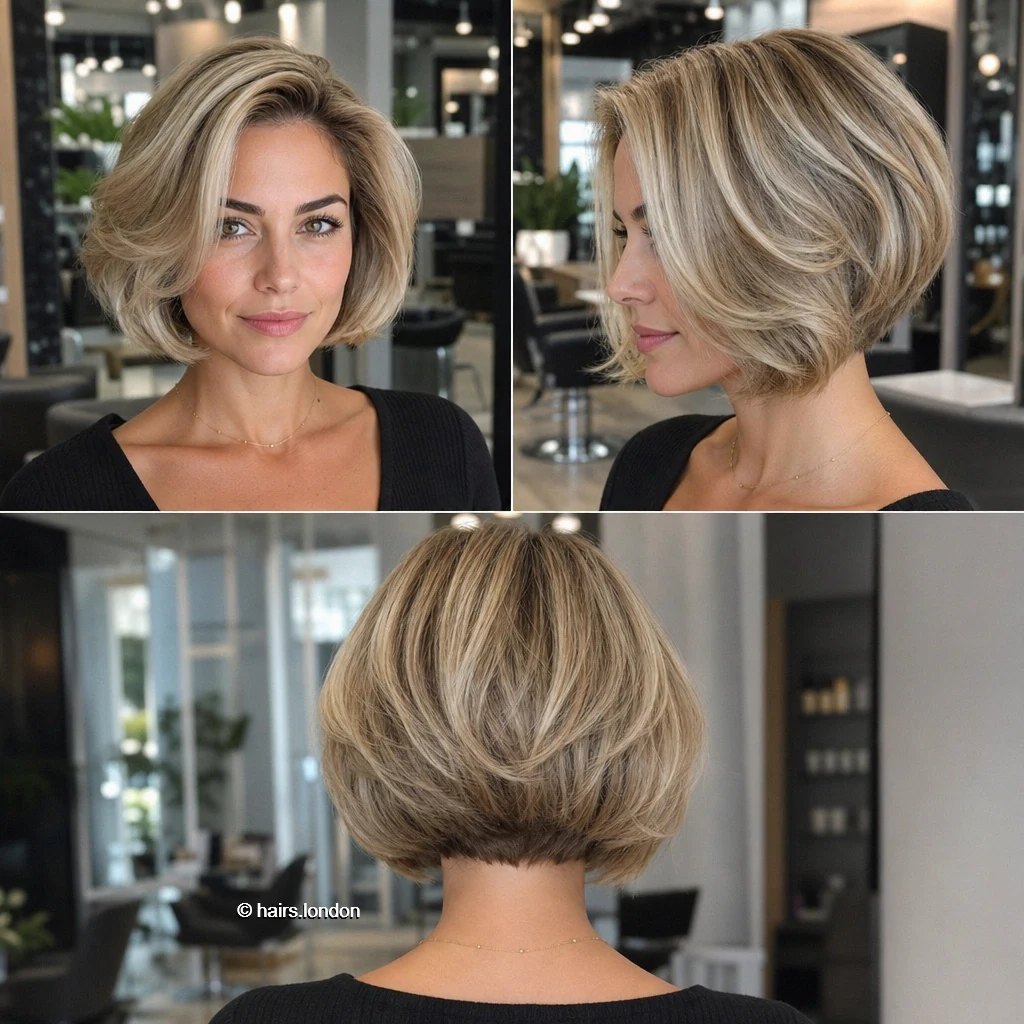
Soft blonde layers sweep across this rounded, jaw length bob. Side and back views reveal fullness above a tapered nape. Brighter ribbons contrast gently with the deeper blonde roots here. Long front pieces frame the face without forming bangs here. Ask for controlled graduation if your hair holds volume well. A round brush can direct the ends softly inward daily. Apply lightweight heat protection before smoothing the outer surface gently. Thicker densities may need discreet weight removal beneath layers instead. Trim the nape regularly to preserve its rounded outline shape. Refresh highlights according to visible regrowth and desired contrast levels.
2. Side-Parted Blonde Bob with a Graduated Back
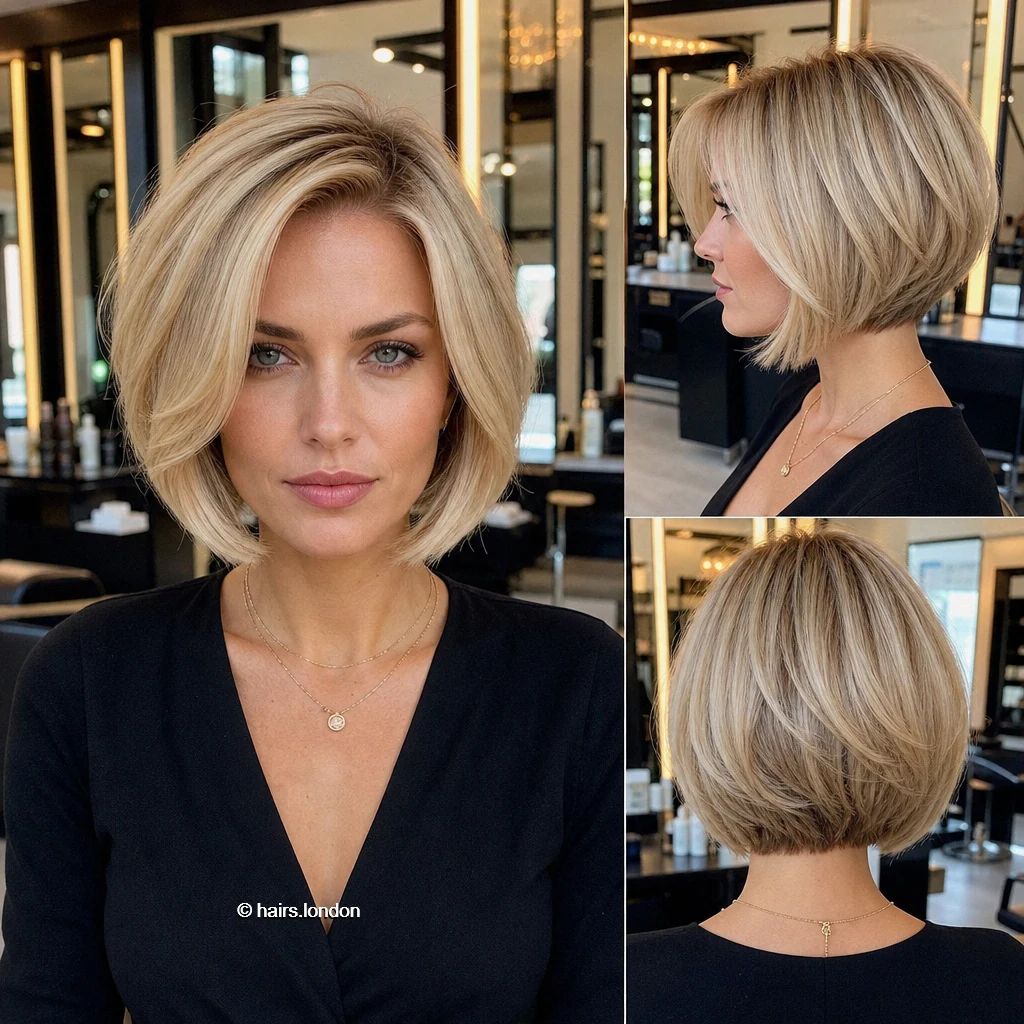
A creamy blonde bob sits near the jaw with volume. Side views show shorter back hair beneath longer fronts clearly. Subtle graduation shapes the nape without exposing the scalp here. The deep side part creates a soft sweeping fringe effect. Fine hair may welcome this controlled lift over heavy layering. Brush the front away, then curl the ends under slightly. Use mousse sparingly to avoid stiffening the smooth silhouette unnecessarily. Check back weight placement with your stylist before cutting begins. Frequent perimeter trims keep the short nape looking intentional throughout. Tone lighter sections when warmth exceeds your preferred finish visibly.
3. Beige Blonde Bob with Face-Framing Movement
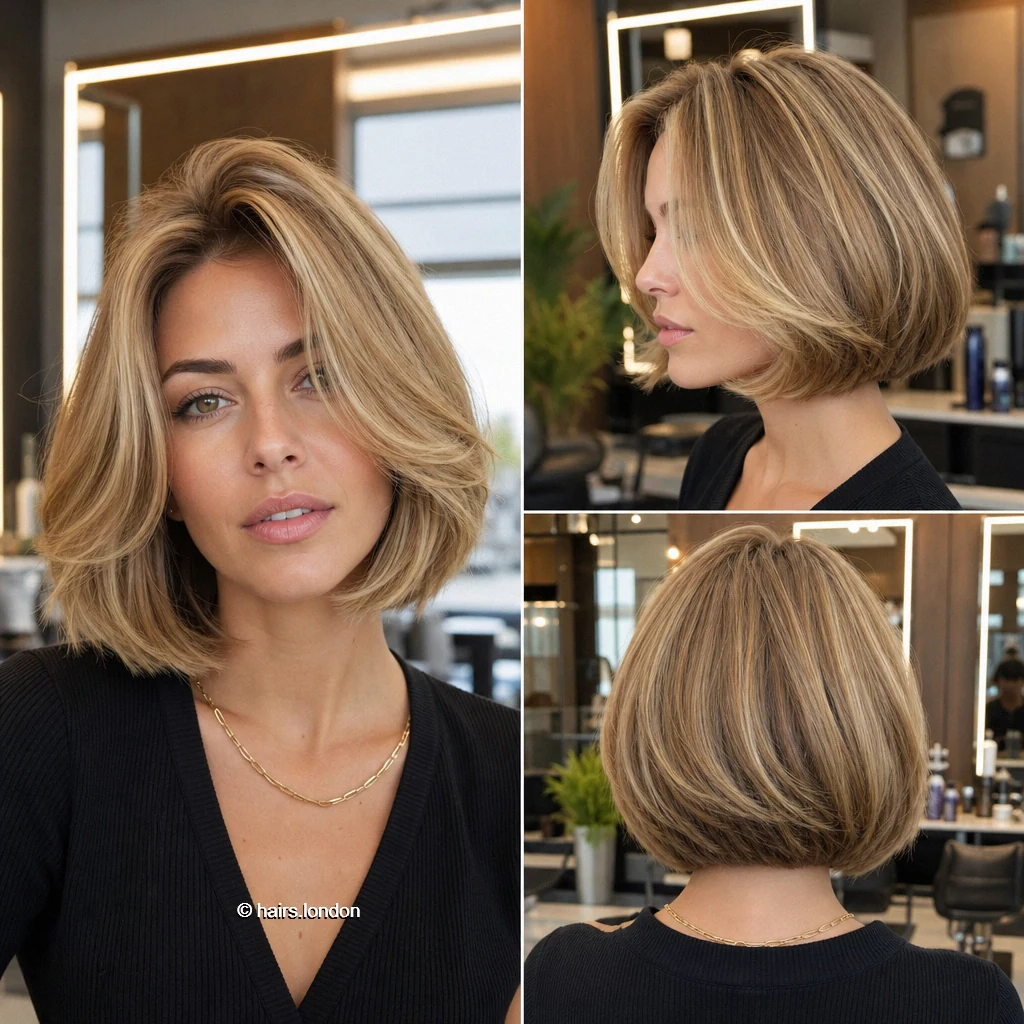
Beige blonde highlights trace the flowing layers of this bob. Front lengths reach the jaw while the back sits higher. A softly rounded rear silhouette carries a compact weight line. The offcenter part opens into relaxed, cheek framing movement here. Ask about subtle graduation rather than a sharply stacked finish. Blow dry forward sections with a broad, gentle bend outward. Keep styling cream light so the ends retain bounce naturally. Medium density can support fullness without excessive internal thinning here. Schedule shape checks when the nape starts losing definition. Maintain highlight contrast with gentle cleansing and occasional toning as needed.
4. Ash Blonde Bob with a Rounded Weight Line
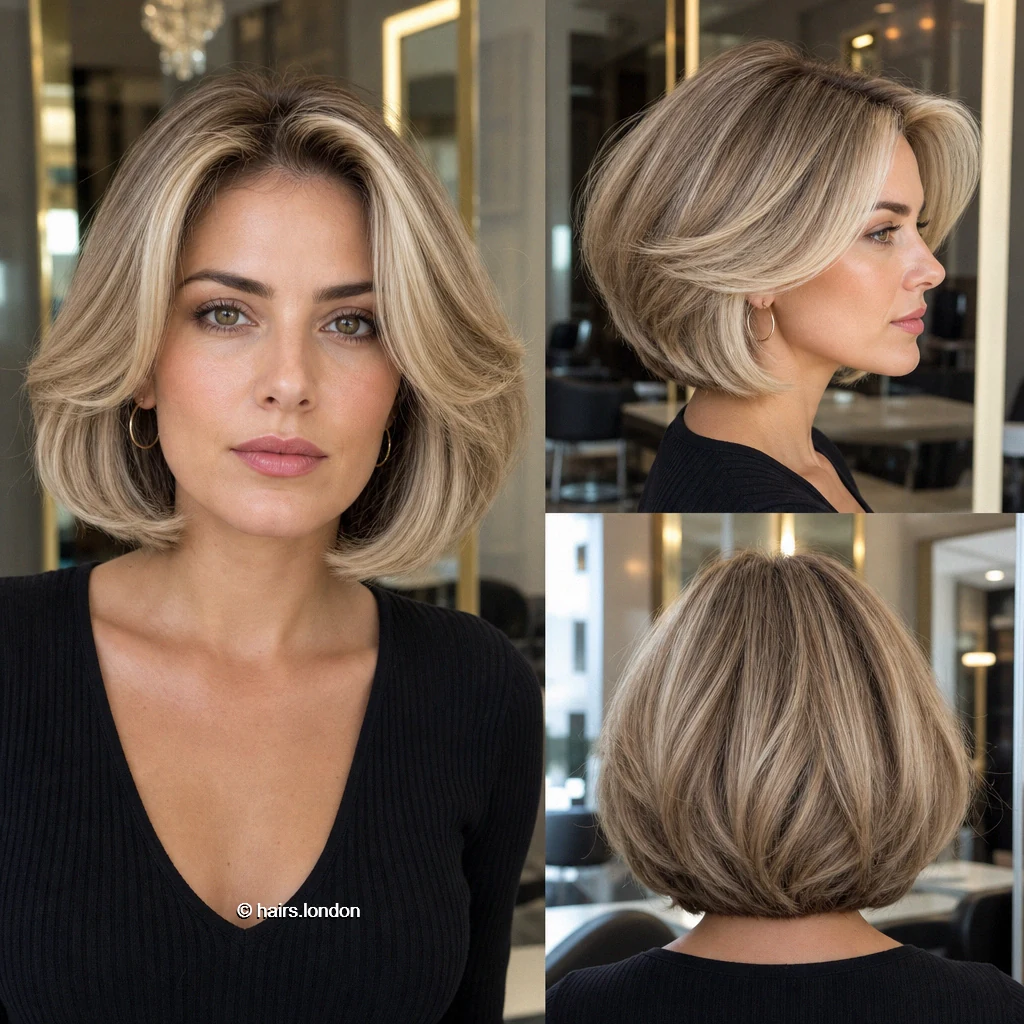
Cool blonde ribbons brighten this full, softly rounded jawline bob. Its center leaning part opens into broad face framing pieces. Side and back views show layers settling above the nape. The lower edge looks compact rather than wispy or blunt. If your hair is thick, discuss where weight needs removal. Brush sections outward around the face for an airy finish. Smooth the underside gently to keep the perimeter from expanding. Fine hair may need fewer layers to preserve that fullness. Book trims regularly when the rounded weight line begins dropping lower. Protect the cooler blonde appearance with color appropriate care.
5. Short Blonde Bob with a Tucked Nape
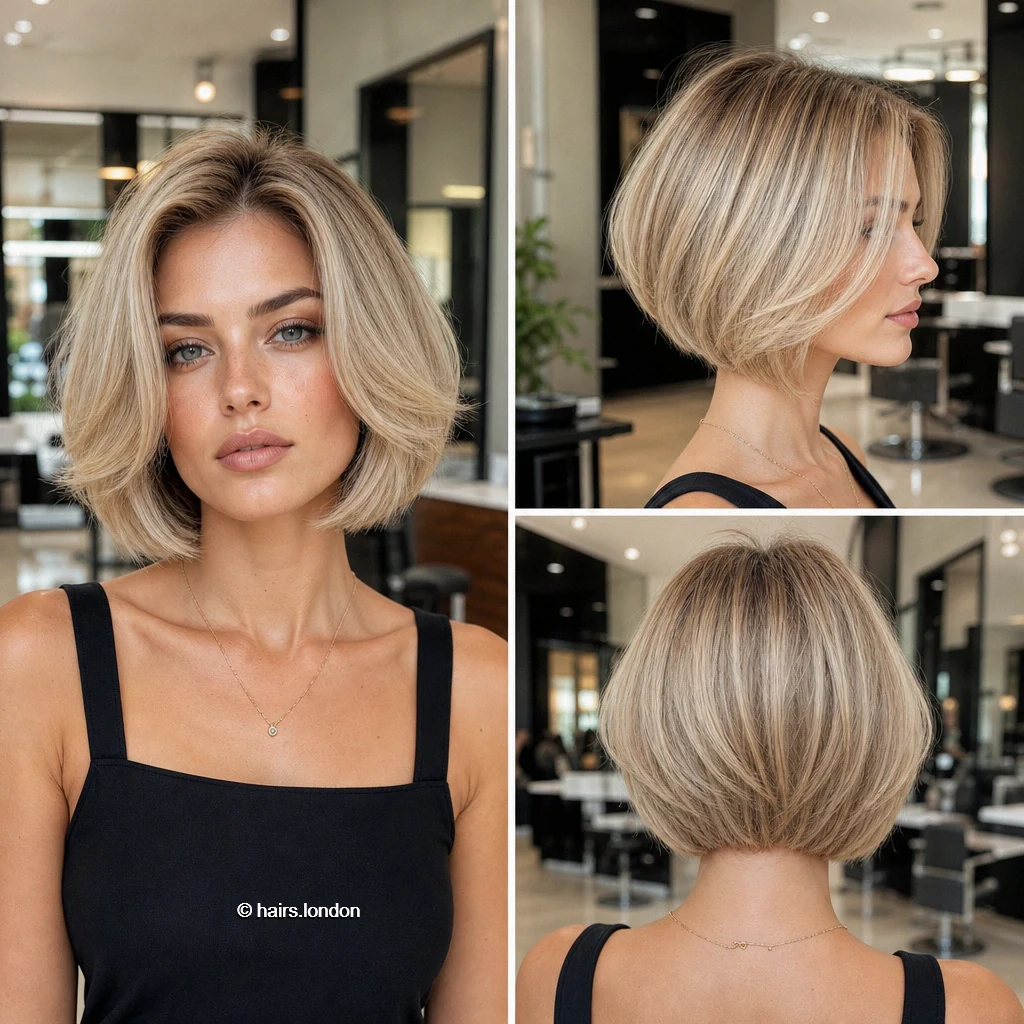
This light blonde bob curves neatly beneath the jaw at front. The side view reveals a shorter nape and rounded profile. Fine highlights add dimension against the darker root area here. A loose center part lets both front sections fall forward. Ask your stylist whether modest graduation suits your growth pattern. Direct a round brush downward to polish the lower edge. Lift gently at the crown without building unnecessary side bulk. Dense hair may require internal shaping to maintain that curve. Trim the nape before its tidy outline loses definition again. Discuss highlight upkeep alongside the cut, especially around regrowth.
6. Tousled Blonde Bob with Wispy Fringe
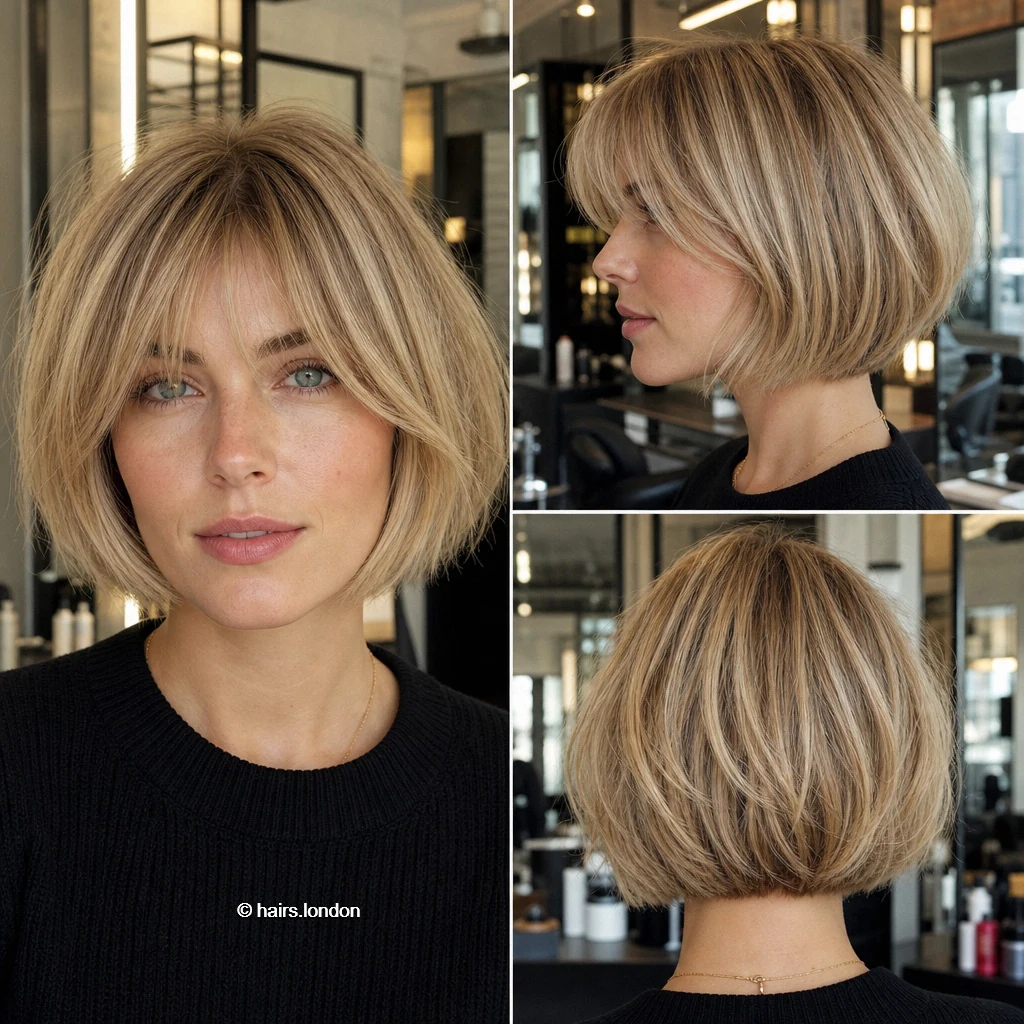
A wispy fringe softens this textured blonde, jaw length bob. Shorter pieces move through the sides and rounded back visibly. Warm and pale blonde strands give the layers extra definition. The ends look airy rather than firmly tucked underneath here. Ask for fringe placement that respects your natural growth patterns. Scrunch light styling cream into damp hair for separated movement. Smooth only the perimeter if frizz obscures the bob shape. Fine hair may benefit from restrained product and modest layering. Trim the fringe independently when it begins covering your eyes. Reassess the back outline as its softer layers gradually grow.
7. Pale Blonde Bob with Soft Brow Fringe
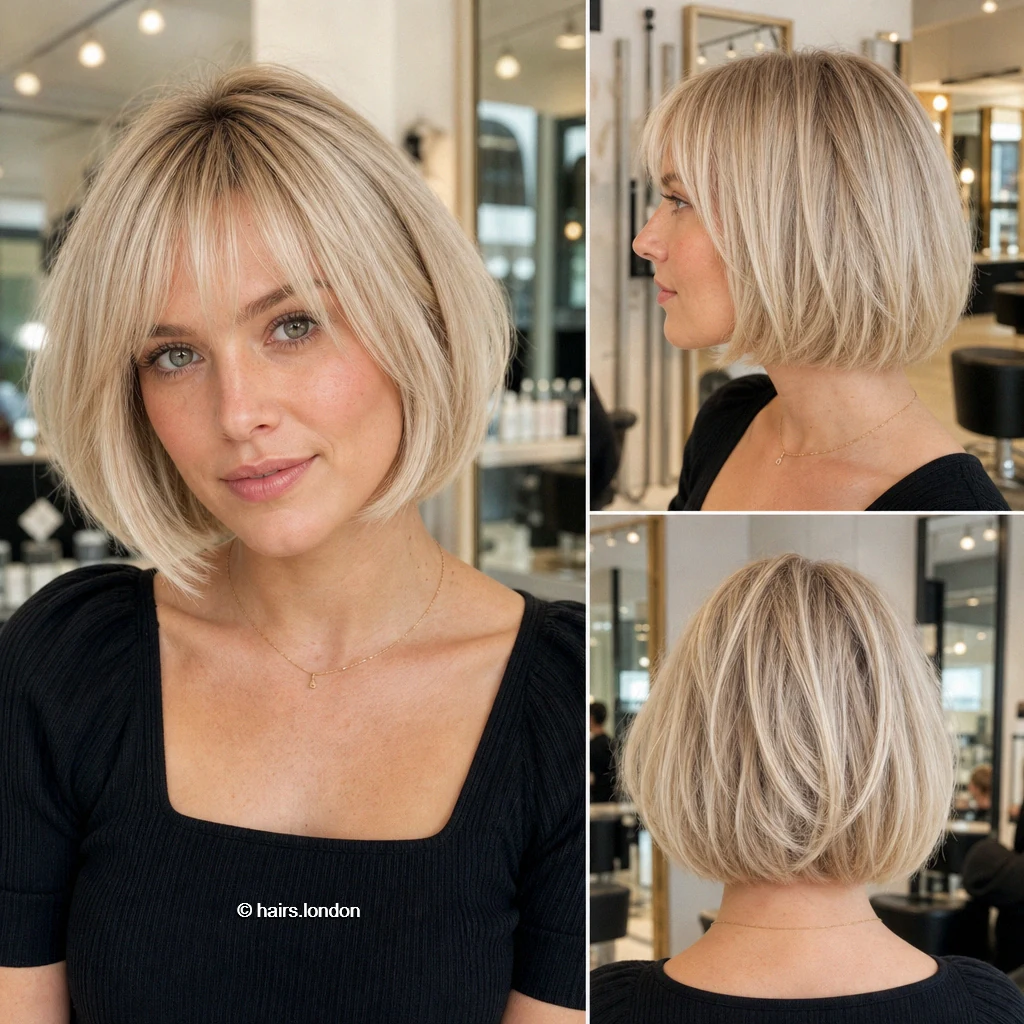
Pale blonde strands frame a softly rounded bob with brow skimming fringe. The front sits near the jaw, with lightly textured ends. From behind, layered strands fall into a compact curved outline. The side view shows fullness without a dramatic front angle. Consult your stylist about fringe density before removing too much. Dry the bangs first, directing them gently across the forehead. Brush the sides underneath for polish, or loosen them afterward. Thicker hair may need selective debulking beneath the rounded shape. Keep fringe appointments flexible as its length changes more quickly. Condition the lightened ends while avoiding heavy roots.
8. Textured Honey Blonde Bob with Full Fringe
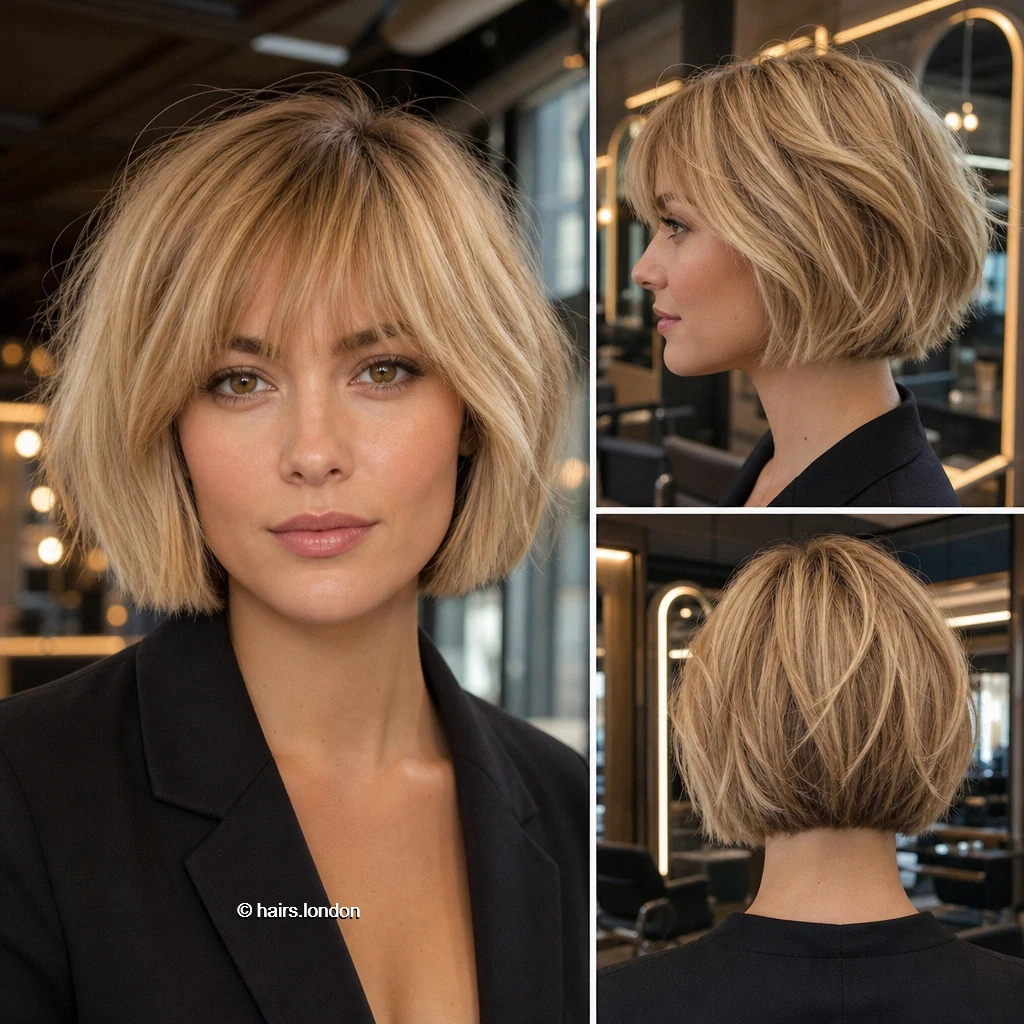
Honey blonde tones warm this choppy bob with soft fringe. Its jaw grazing edge appears deliberately loose rather than blunt. The side and back show short layers creating soft piecey volume. Slightly darker roots add visible depth beneath the lighter lengths. Ask for texture that suits your density, not excessive thinning. Work a small amount of paste through dry ends sparingly. Air drying may enhance movement if your natural texture cooperates. Dense hair might need weight adjusted inside the rounded back. Refresh the fringe and uneven perimeter when they lose definition. Protect lighter pieces from heat whenever you restyle them.
9. Rooted Blonde Bob with Airy Fringe
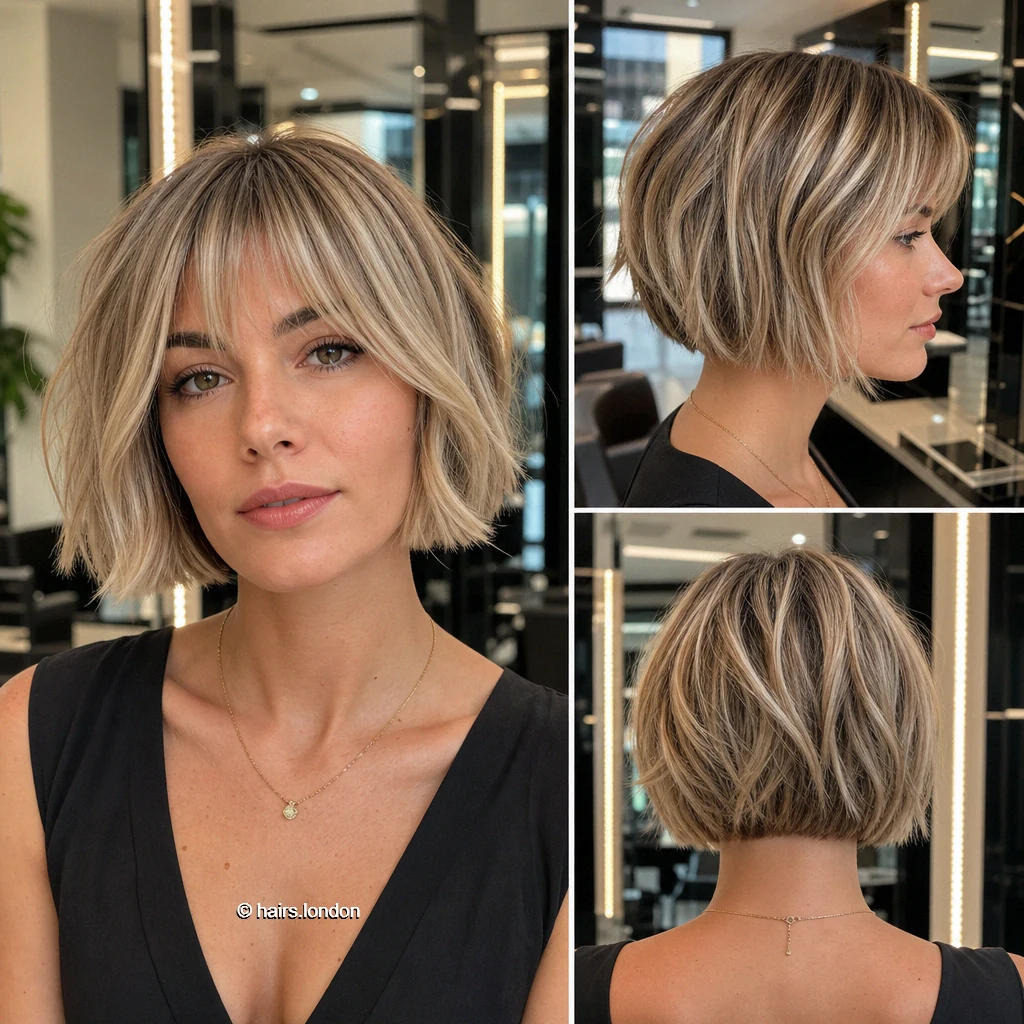
Rooted blonde highlights define this relaxed bob with airy bangs. The sides skim the jaw, ending in lightly separated, delicate points. Back layers create movement above a comparatively neat lower edge. A soft fringe breaks up the forehead without heavy coverage. If your hair is fine, request restrained interior texturizing first. Blow dry bangs gently before working through the side lengths. A light spray can preserve separation without making ends rigid. Check how the back sits after your hair dries naturally. Trim when its edge starts losing the intended compact shape. Plan highlight refreshes around the contrast you enjoy wearing.
10. Rounded Sandy Blonde Bob with Soft Bangs
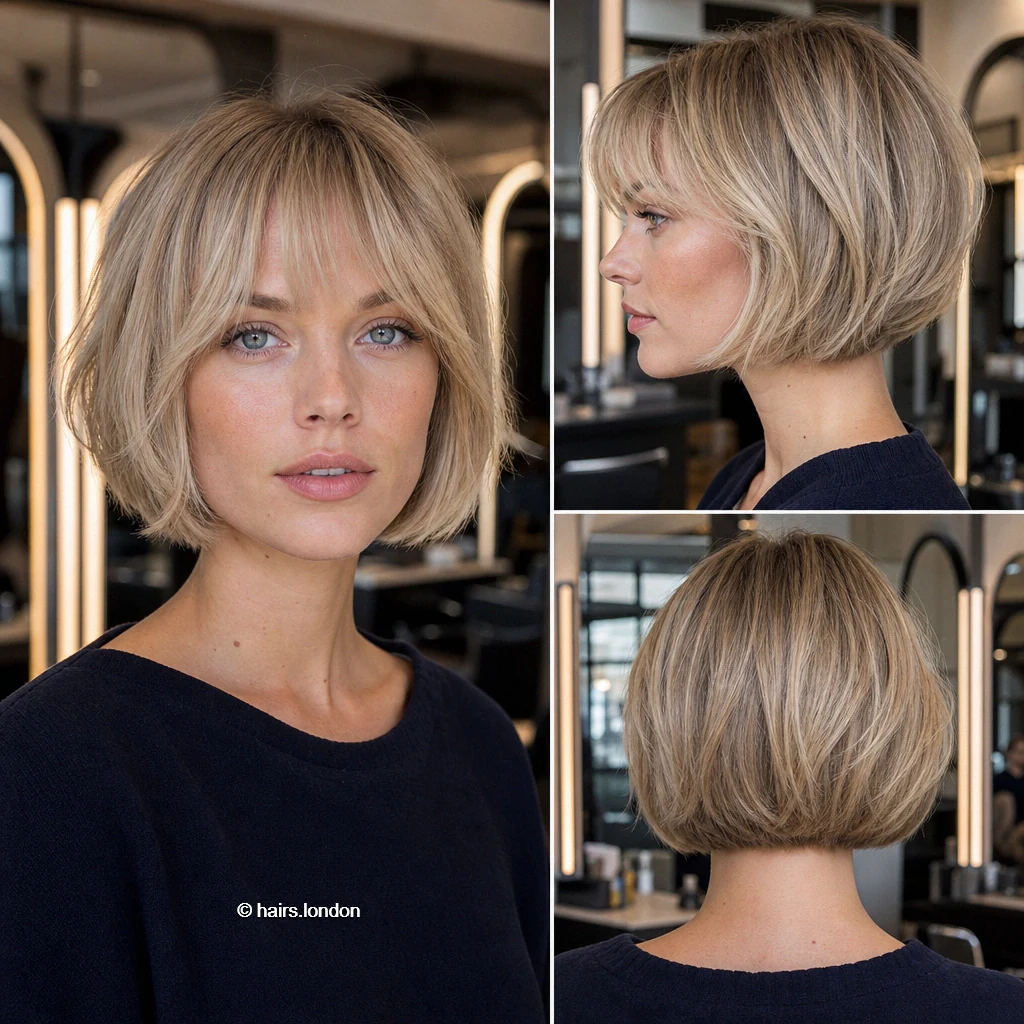
Sandy blonde shades run through this rounded, chin grazing bob. Its featherlight bangs blend into longer pieces around the cheeks. Side and rear views reveal fullness over a shorter nape. The visible lower line remains tidy beneath the surface layers. Ask whether gentle graduation will support your natural hair density. Use a round brush to smooth ends without flattening natural volume. Guide the fringe forward while drying to control its fall. Very thick hair may need subtle internal weight adjustment here. Maintain the nape before growth changes its softly curved outline. Refresh toning when your preferred sandy shade looks warmer.
11. Feathered Blonde Bob with Longer Layers
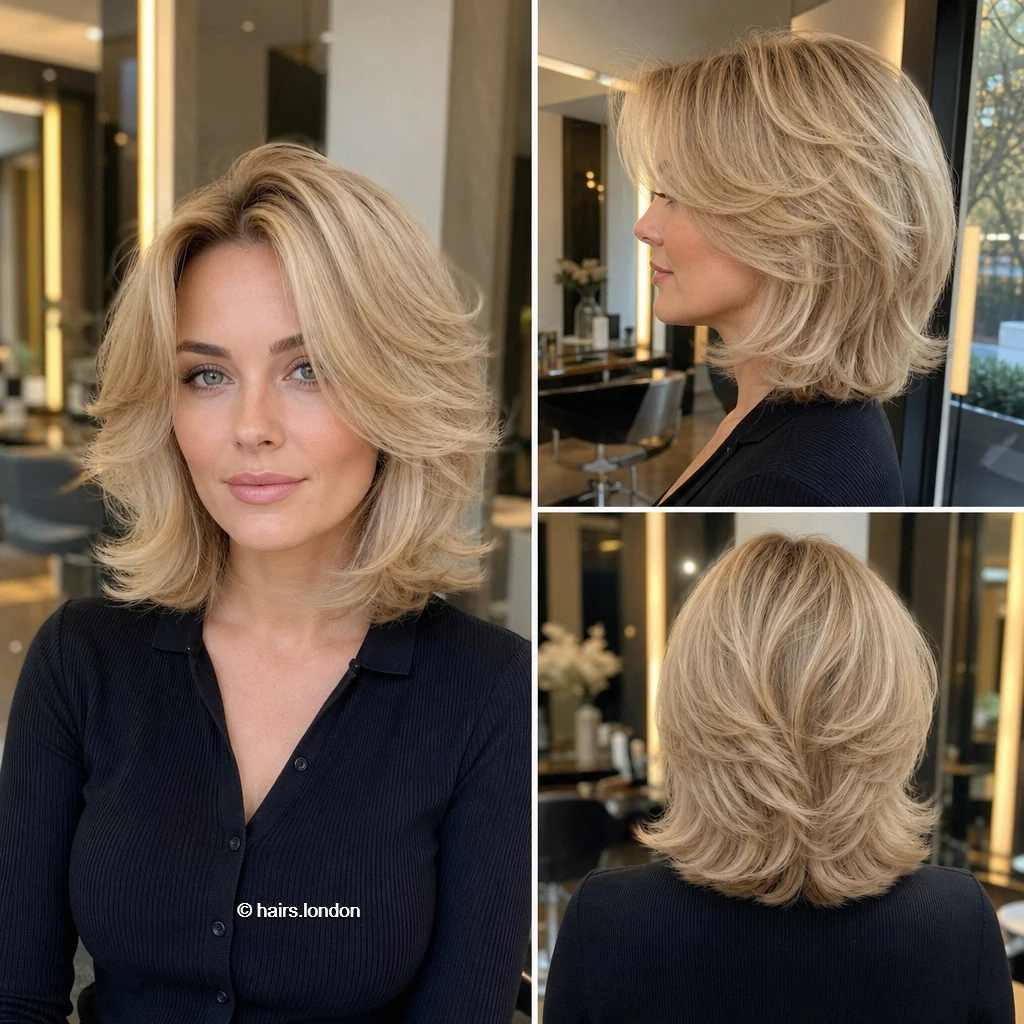
This longer blonde bob reaches the neck with soft feathered layers. The face framing sections sweep outward from an open part. Side and back views show flipped ends and generous movement. The perimeter looks softer than a sharply cut blunt bob. Ask for layer lengths that still leave adequate lower density. Brush ends away from the face for a lifted finish. A flexible spray can support movement without locking every strand. Thick hair may appreciate shaping, while fine hair needs restraint. Trim when the feathered ends begin looking uneven or sparse. Condition highlighted lengths to help keep their texture manageable.
12. Short Layered Blonde Bob with Flipped Ends
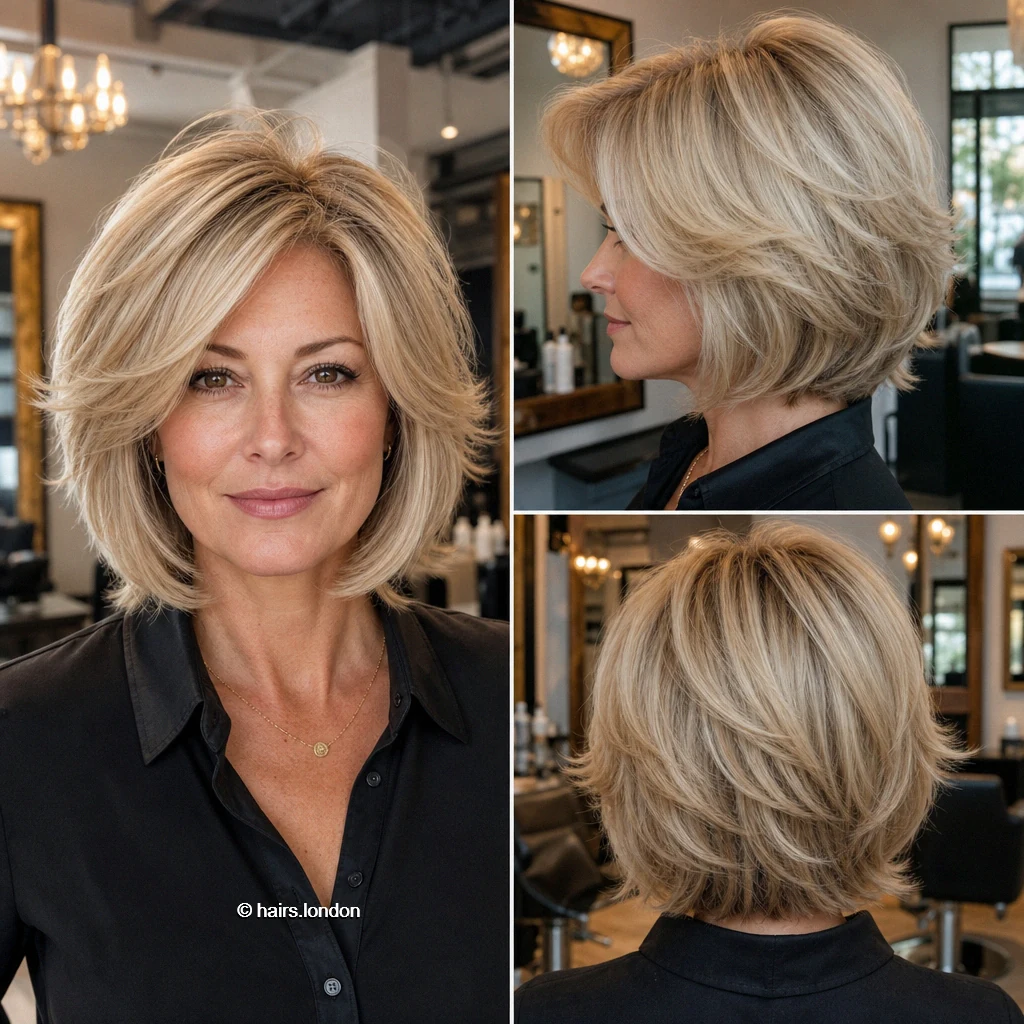
Pale blonde layers create lift around this neck length bob. Broad front sections sweep across the forehead without distinct bangs. The side view shows separated ends turning gently outward here. Behind, overlapping layers make the outline airy and softly rounded. Discuss how much layering your density can comfortably support first. Style with a round brush, directing selected ends away outward. Keep products light so the shorter pieces retain their separation. Naturally wavy hair may need less brushing and more scrunching. Review the lower edge as flipped layers grow past it. Use heat protection when repeatedly shaping these highlighted blonde ends.
13. Voluminous Beige Bob with Swept Layers
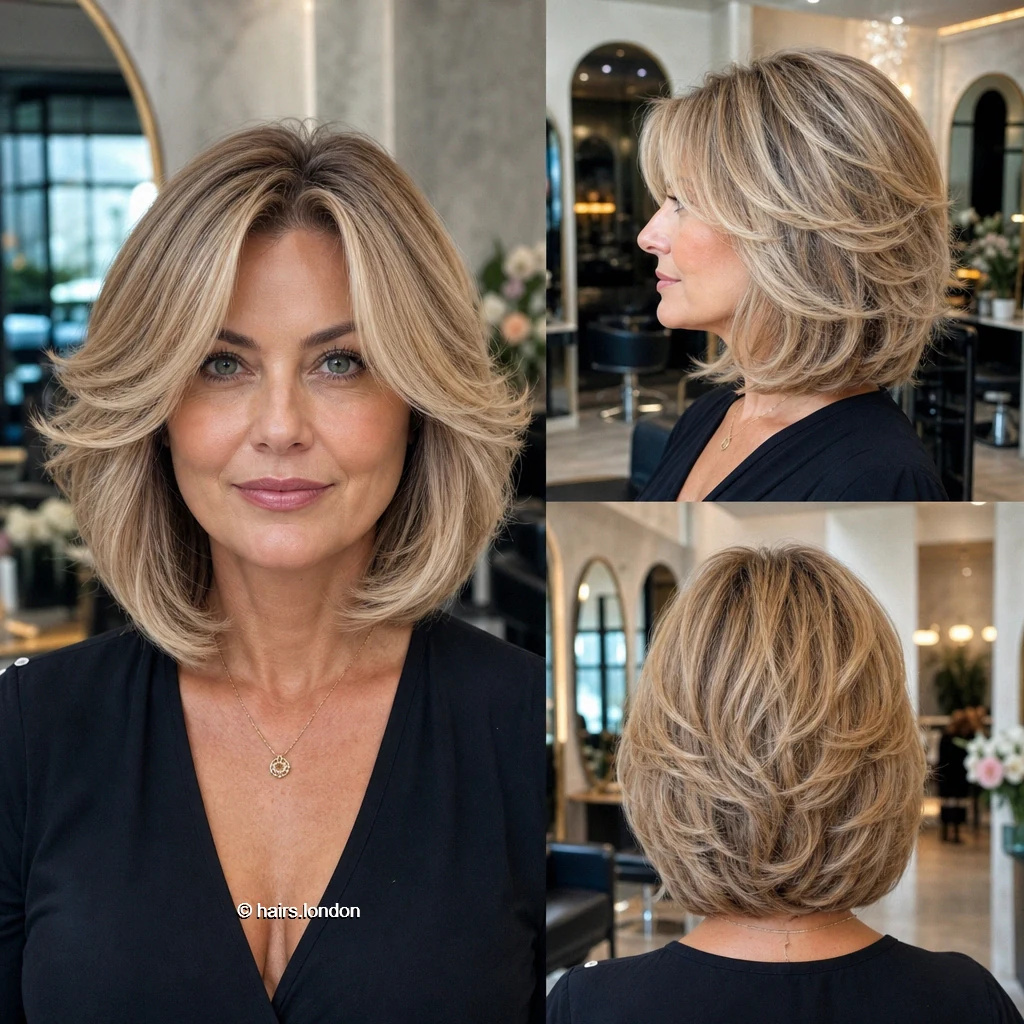
Beige blonde highlights emphasize the sweeping layers of this bob. It falls below the jaw with fullness around the cheeks. The rear view shows overlapping pieces above a rounded perimeter. Long front sections open around the face without short fringe. Ask your stylist to balance crown lift against lower fullness. Brush the front outward, then gently shape the back layers. Avoid heavy cream if it makes these airy ends collapse. Medium or thick density may support this visibly layered silhouette. Trim when the lower shape starts spreading instead of curving. Maintain highlighted tones according to your preferred warmth and contrast.
14. Shoulder-Skimming Blonde Lob with Feathered Ends
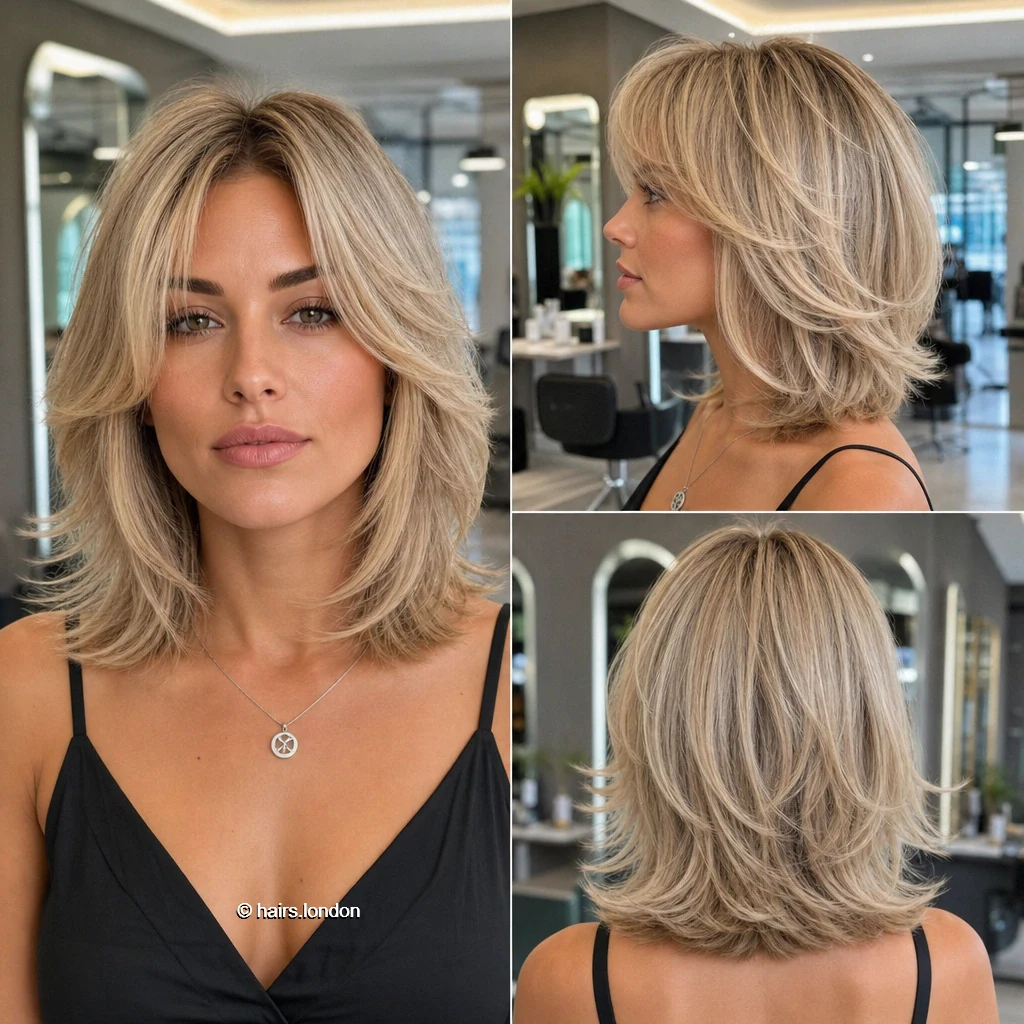
This blonde lob falls toward the shoulders with feathered ends. Long layers frame the face from a divided part. Side and back views show outward movement through the lower lengths. Its extended perimeter distinguishes it from the shorter jawline bobs. Ask for layers that preserve enough weight at the bottom. Brush the ends outward for polish without forcing extra volume. Natural waves can add movement with minimal heat styling instead. Finer hair may need fewer short layers to retain density. Trim the feathered edge when its shape becomes thin or uneven. Moisturize lighter lengths to keep the ends feeling supple.
15. Choppy Blonde Bob with Sweeping Front Layers
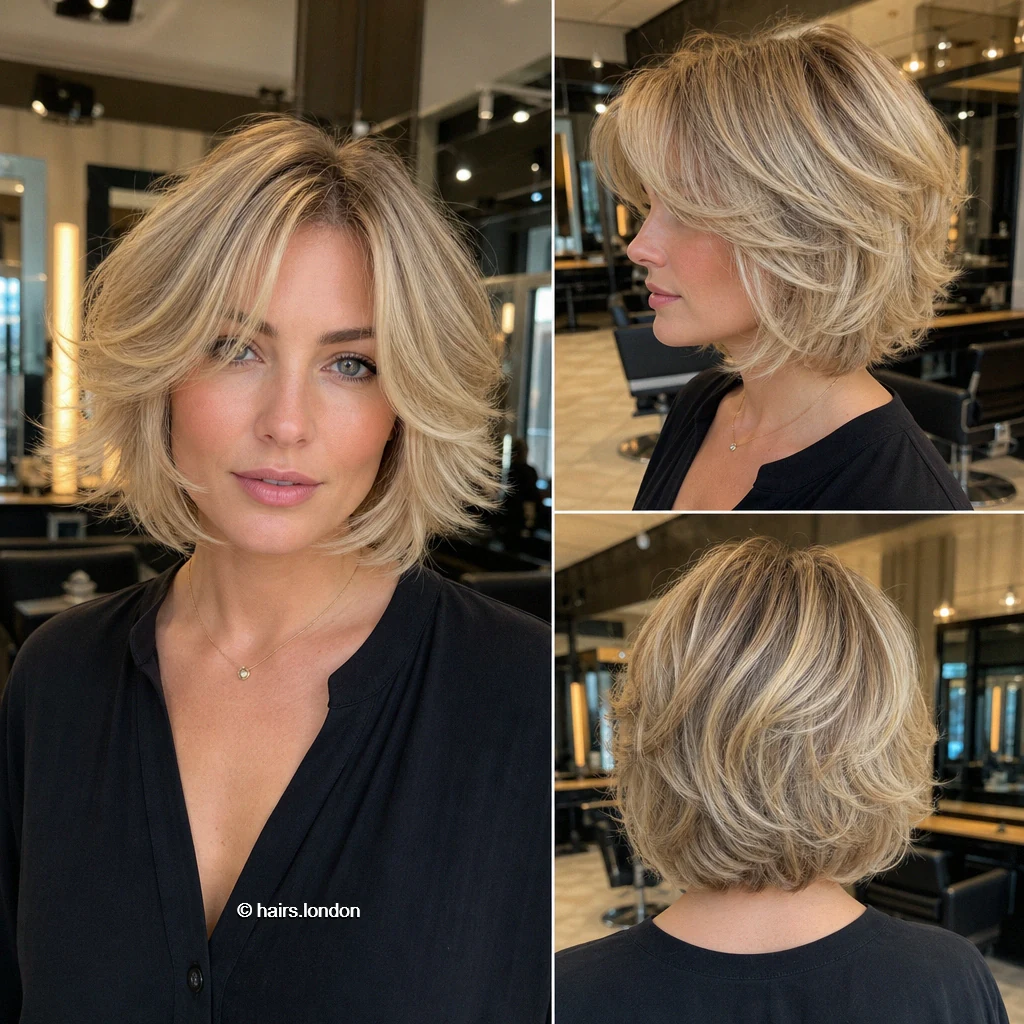
Bright blonde pieces sweep across this short, tousled bob. Its jaw length sides finish with noticeably feathered, softly separated ends. Side and back views reveal layered fullness above the nape. The front has a sweeping section rather than defined bangs. Ask for softness around the face without thinning everything underneath. Rough dry the roots, then bend selected ends outward gently. A little texture spray can emphasize separation without excessive bulk. Natural waves may make this finish easier to maintain daily. Trim when the nape or front pieces lose their balance. Check whether visible root contrast matches your preferred color upkeep.
16. Wavy Blonde Bob with a Soft Middle Part
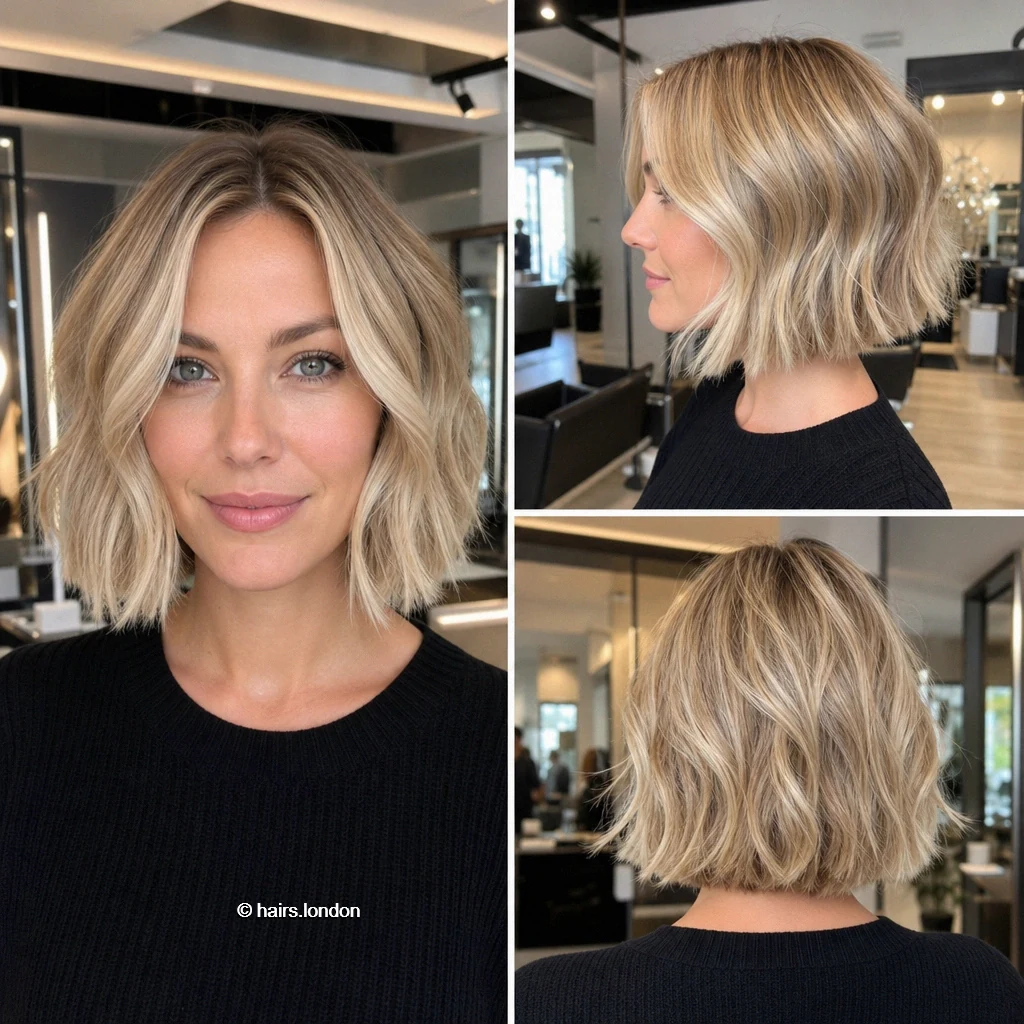
Soft waves give this blonde bob an easy, textured outline. A middle part sends longer front pieces toward the jaw. Side and back views show loose bends throughout the lengths. The lower edge remains visible beneath the movement and layers. Ask for enough perimeter weight to prevent overly thin ends. Scrunch a lightweight foam into damp hair to encourage waves. Diffuse gently or air dry according to your natural texture. Straight hair may require heat styling to recreate these bends. Trim when the lower line becomes uneven beneath the waves. Condition lightened strands so their texture stays manageable between visits.
17. Jaw-Length Blonde Bob with Airy Ends
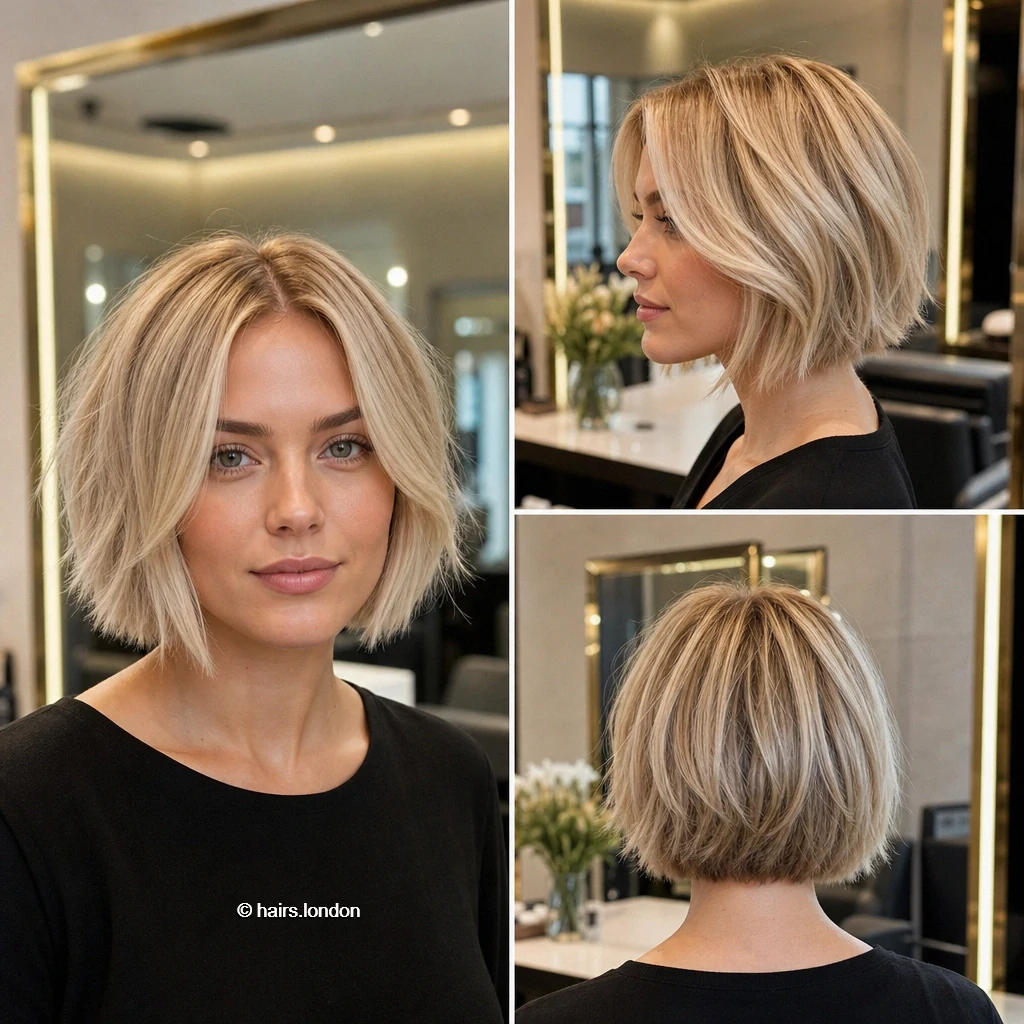
A softly parted blonde bob sits close to the jaw. Light face framing pieces fall forward without forming a fringe. The side view shows movement above a slightly shorter back. Behind, fine surface layers soften a compact, rounded lower edge. Ask for layering that leaves enough substance through the perimeter. Smooth the ends, then separate a few pieces with fingers. Fine hair may prefer minimal product to preserve natural lift. Dense hair might need careful weight removal below the surface. Arrange trims before the shorter back begins changing the profile. Discuss toning only if you want a different blonde balance.
18. Smooth Champagne Blonde Bob with a Rounded Back
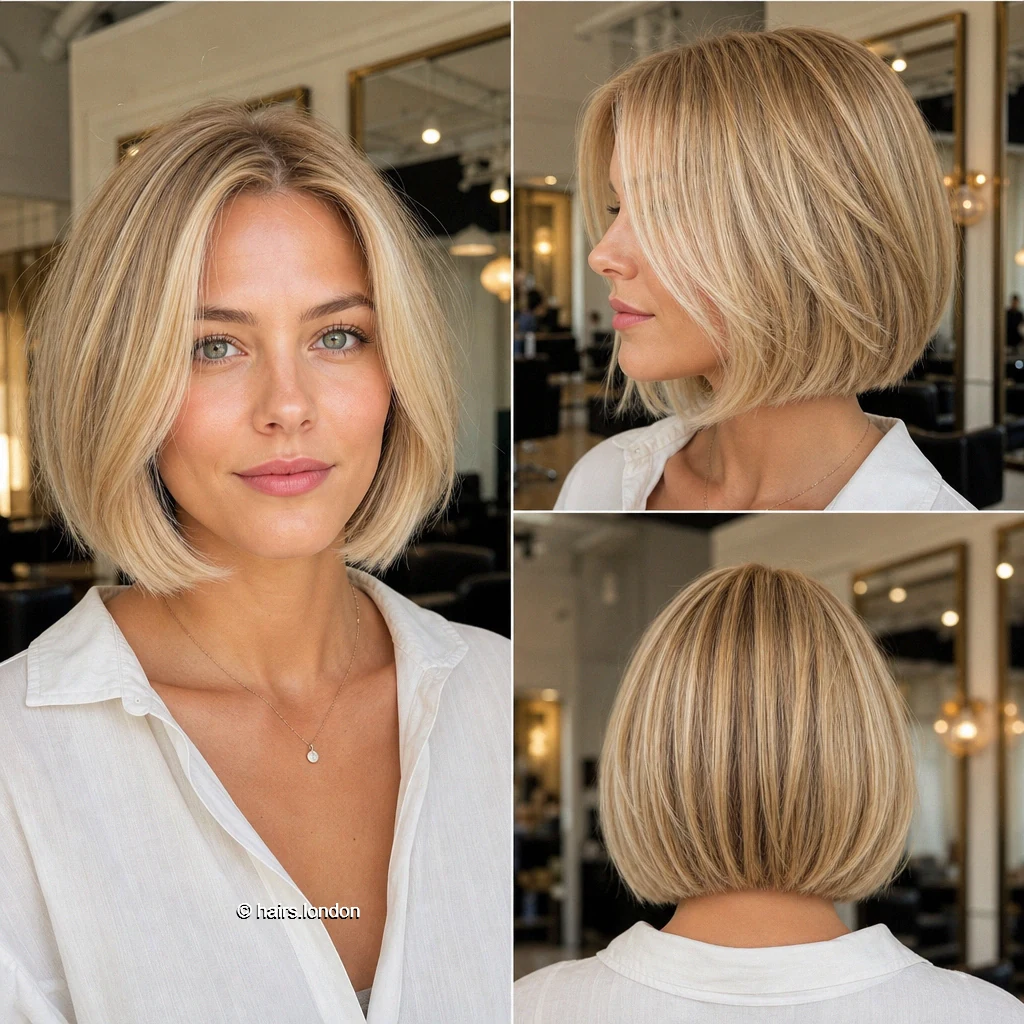
Champagne blonde lengths form a smooth, softly curved jawline bob. A gentle side part leaves the front open and unfringed. The rear view shows a rounded silhouette with compact ends. Its profile appears shorter behind, without a dramatic front angle. Ask how much graduation your hair needs to hold shape. Blow dry downward, turning the brush slightly beneath the perimeter. Finish with light serum only where the ends need smoothing. Thick density may require discreet shaping to prevent excessive bulk. Trim the back when its clean outline begins sitting lower. Maintain light blonde tones with gentle cleansing and appropriate conditioning.
19. Neutral Blonde Bob with a Relaxed Perimeter
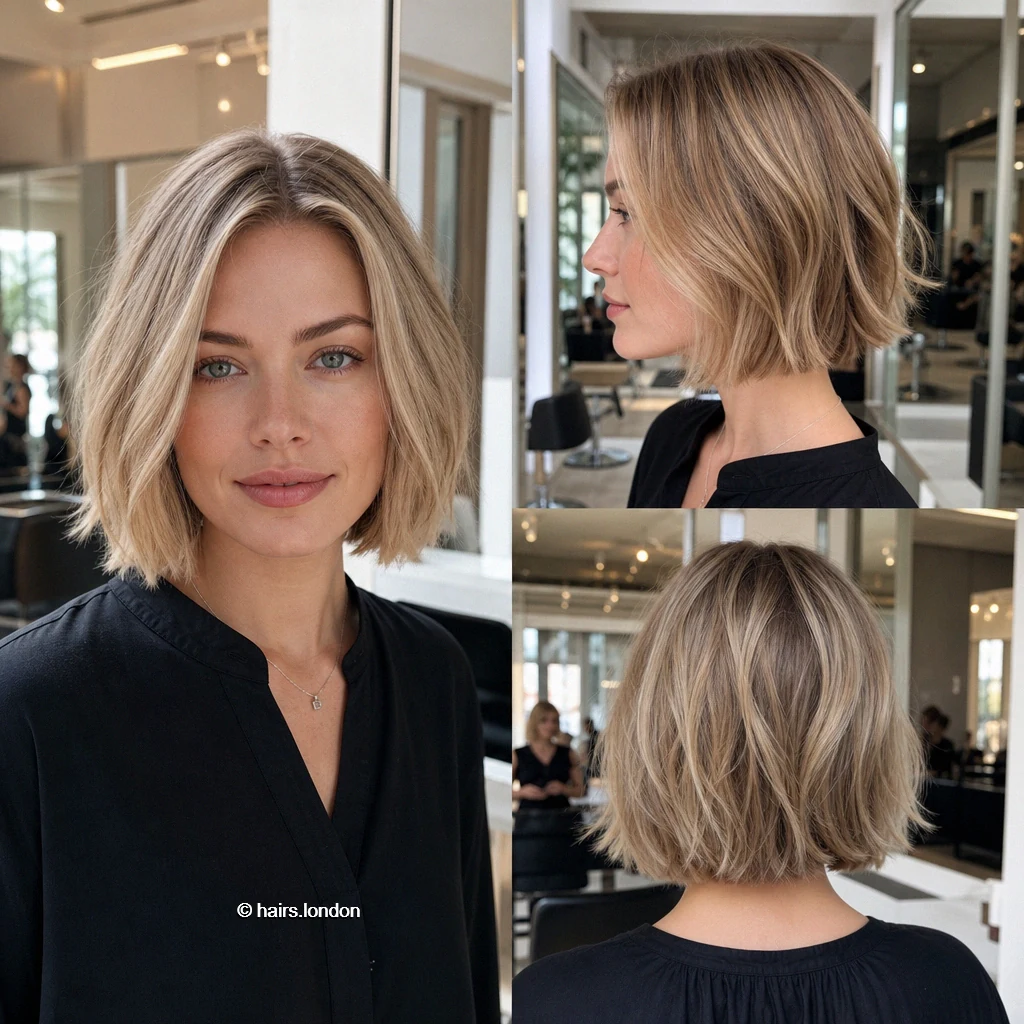
Neutral blonde strands give this short bob soft dimension here. The center part frames the face with loose jawline lengths. Side and back views show subtle layers and textured tips. Its perimeter is relaxed rather than sharply blunt or stacked. Ask for a little movement while protecting lower edge density. Dry with your fingers, then smooth any uneven perimeter sections. Naturally straight hair may need only minimal styling each morning. Wavier textures can benefit from product applied sparingly to ends. Trim when the back starts losing its tidy overall width. Refresh highlights when their contrast no longer suits your preference.
20. Side-Parted Blonde Bob with Wispy Layers
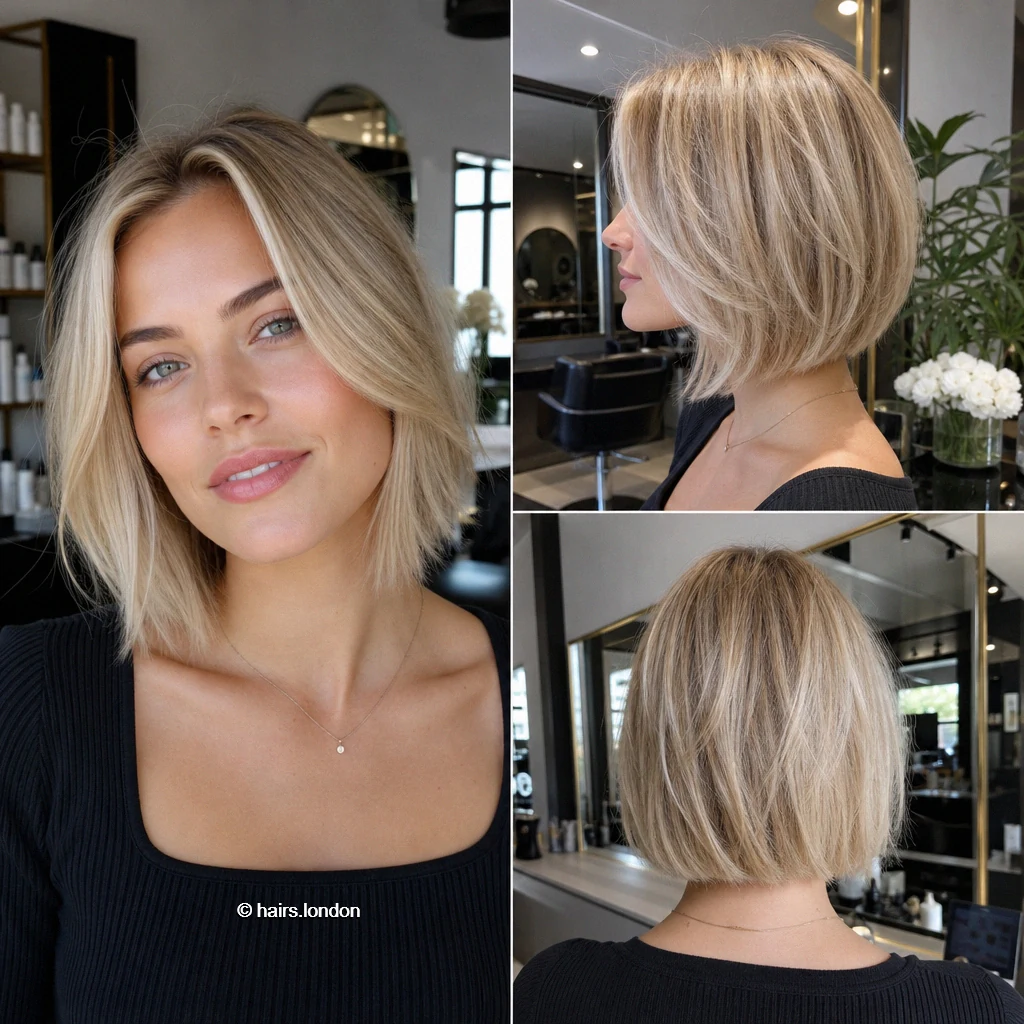
A side part gives this blonde bob sweeping movement. The front reaches the jaw, with soft wispy layers toward it. Side and rear views show a shorter, softly rounded back. Lighter face framing strands contrast with deeper blonde underneath here. Ask whether subtle graduation would support your preferred daily volume. Brush the front across, then smooth the back into place. Keep styling products light to avoid flattening the airy layers. Finer density may need less texturizing at the lower edge. Trim as the nape grows and changes the side profile. Protect highlighted ends when heat styling to preserve their finish.
How to Choose Your Bob Length and Shape
Start with where you want the perimeter to sit: at the chin, along the jaw, below it or nearer the shoulders. Then look at the side and back, not just the front. A longer front describes an A-line shape; a rounded back with shorter lengths supporting the hair above it indicates graduation. These photos offer several softly graduated and layered options, but not every rounded bob needs pronounced stacking. Consider how your density, natural texture and neckline affect where the weight line will settle.
Styling Fine, Thick, Wavy and Curly Textures
For fine hair, preserve enough weight at the lower edge and start with a small amount of mousse or light spray. Thick hair may benefit from carefully placed internal shaping so a rounded bob moves without becoming bulky. Enhance natural waves by scrunching product into damp lengths, then air drying or diffusing gently; smooth only the perimeter if needed. For curls, discuss the shape at its dry, sprung-up length before cutting, and avoid brushing out the finished pattern. Dry a fringe early so its fall is easier to direct.
Keeping Blonde Bob Color Fresh
The visible blondes range from pale and creamy to beige, sandy and honey, often with darker roots or lighter face-framing pieces. Choose a level of contrast that fits the upkeep you want. Use gentle cleansing, condition lightened ends and protect them before heat styling. If the shade shifts warmer than you prefer, ask your colorist whether toning is appropriate rather than assuming every blonde needs the same product or schedule.
Maintaining the Bob Perimeter and Graduation
A compact jawline edge and a short, rounded nape can change noticeably as they grow, so arrange trims around the shape you want to retain. Check the profile and back when deciding whether it is time: a dropping weight line, widening lower edge or uneven fringe may matter more than the calendar. Longer feathered bobs can tolerate a softer grow-out, although sparse or uneven ends still benefit from a tidy-up. Ask your stylist to preserve movement while refining the perimeter.
What to Discuss with Your Stylist
Bring the front, side and back view of the bob you like. Point out the intended front length, parting, fringe, lower edge and amount of fullness at the back. Explain how your hair behaves when air dried, where it grows strongly, how much time you spend styling and whether you want to maintain visible blonde contrast. Ask which details can be adapted to your density and texture, and what the cut will look like as it grows.
Frequently Asked Questions
What is the difference between a bob and a lob?
A lob is a longer bob, typically falling closer to the shoulders. Several cuts here sit at the jaw, while the feathered, shoulder-skimming option reads as a lob.
Is an A-line bob the same as a stacked bob?
No. A-line describes a perimeter that is longer toward the front. Stacking describes visible graduation that builds weight at the back; a cut can have one feature without the other.
How do I choose between a blunt and layered bob?
Choose based on the edge and movement you want, then check your density. A stronger perimeter gives a more defined line, while layers can release weight and add movement if enough fullness remains at the bottom.
Can fine hair wear a rounded bob?
Yes, if the shape retains enough lower-edge density. Ask your stylist to use layering and texturizing sparingly, then test whether lightweight styling gives you the lift you want.
How can thick hair avoid a bulky bob?
Discuss the weight line and where selective internal shaping might help. Removing too much from the ends can make the perimeter look thin without solving fullness higher up.
Can naturally curly hair have a bob like these?
A curly bob is possible, but its dry length and outline will differ from the smoother examples shown. Consult a stylist about curl shrinkage, density and how the shape should sit when worn naturally.
Which fringe is easiest to grow out?
A longer, sweeping front section generally blends into the sides more readily than short bangs. Its ease still depends on your growth patterns and how you part your hair.
Do I need to blow dry a bob every day?
Not necessarily. A smooth rounded finish may take brushing, while a textured or naturally wavy bob can work with air drying and light product. Choose a cut that suits the routine you prefer.
How often should I trim a graduated bob?
Arrange a trim when the shorter back and weight line stop sitting where you want them. Precision shapes usually need attention sooner than soft, longer layered bobs.
What should I do when a bob grows out unevenly?
Have the perimeter checked before removing more layers. Your stylist can tidy the lower edge, balance the sides and decide whether the back needs reshaping.
How much upkeep do blonde highlights add?
That depends on how light the pieces are, how much root contrast you enjoy and your preferred tone. Discuss a refresh plan with your colorist, and protect lightened ends between visits.
Can I grow a short bob into a lob?
Yes. As it grows, ask for occasional perimeter adjustments so shorter back lengths can catch up with the front while the overall shape remains intentional.
Conclusion
The strongest starting point is the shape you want to see from every angle, not a bob label alone. Save the front, side and back details that appeal to you, then work with your stylist to adapt the length, layering and blonde upkeep to your hair and routine.


