


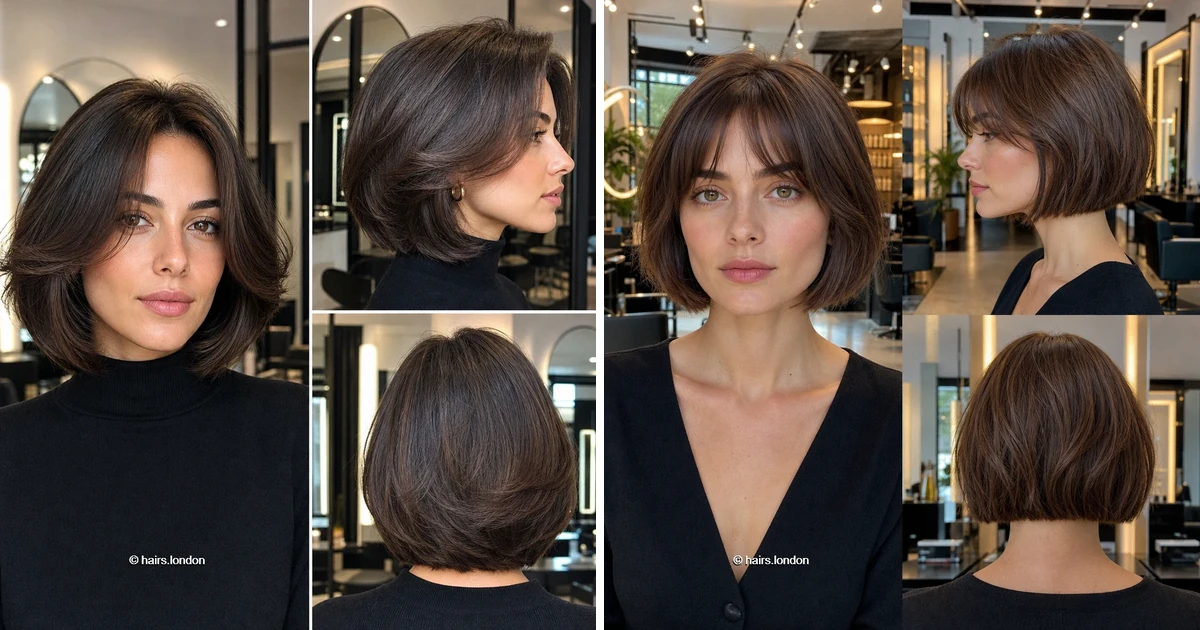
11. Rooted Textured Bob with Bright Face-Framing Highlights
Bright face-framing pieces contrast with this bob’s darker roots. A center part keeps its textured sides balanced visually. The length rests near the jaw and upper neck. Loose waves interrupt an otherwise fairly even bottom edge. Back views show texture rather than obvious stacked graduation. Encourage bends with mousse, then separate them using fingers. Avoid heavy oils that flatten the highlighted front sections. Naturally wavy hair may need less heat for definition. Fine ends benefit from conservative texturizing during the cut. Refresh the bright pieces when their contrast needs adjustment. Consult your colorist about keeping the brighter sections softly blended.
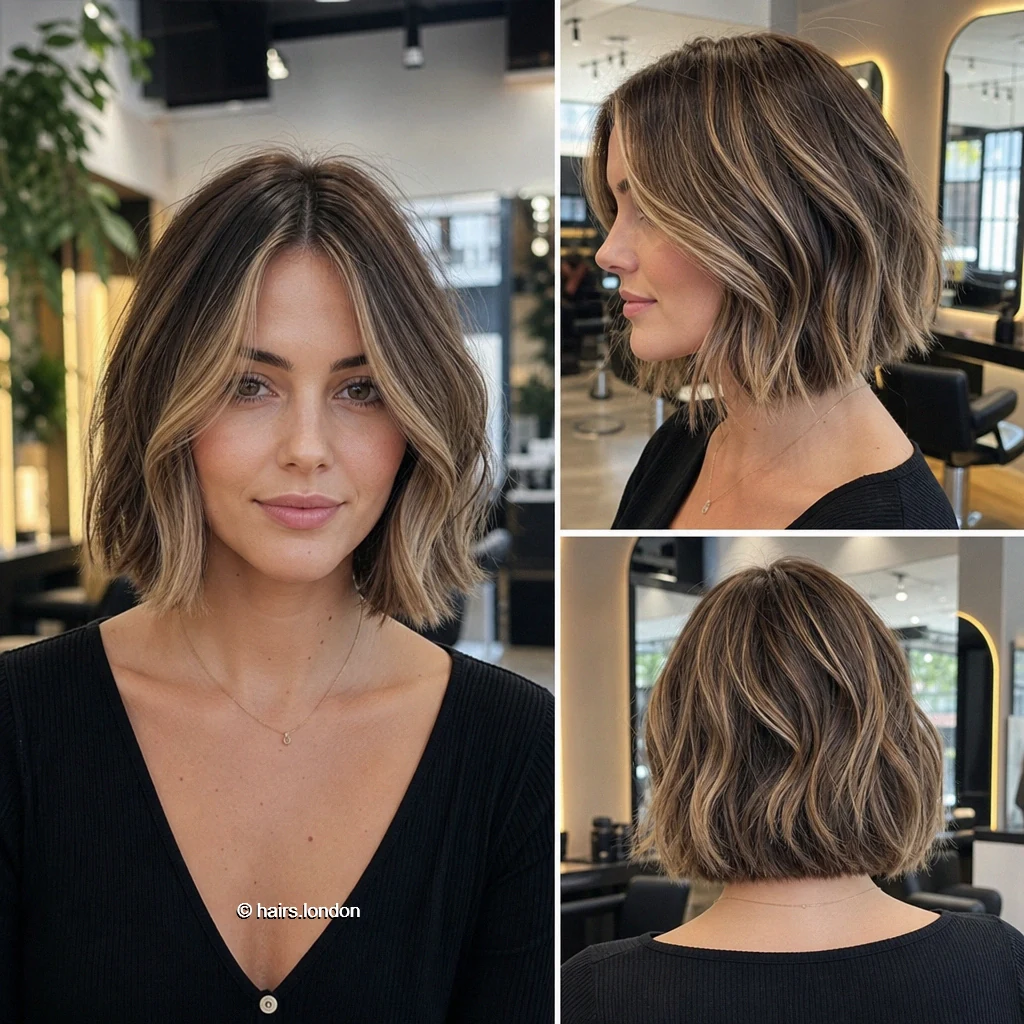
12. Soft Brunette Bob with Loose Natural-Looking Waves
A softly centered part opens this brunette, neck-length bob. Loose bends bring fullness through the sides and back. Its ends appear lightly textured rather than precisely blunt. Subtle warm ribbons catch light within the deeper brown. The front falls gently alongside the cheeks without fringe. Apply lightweight wave cream to damp lengths, then scrunch. Keep the bottom edge defined beneath the airy texture. Wavy hair may settle into this shape with ease. Straight hair needs styling time to reproduce those bends. Trim before uneven growth obscures the bob’s compact outline. Ask for a dry finish to assess the finished perimeter.
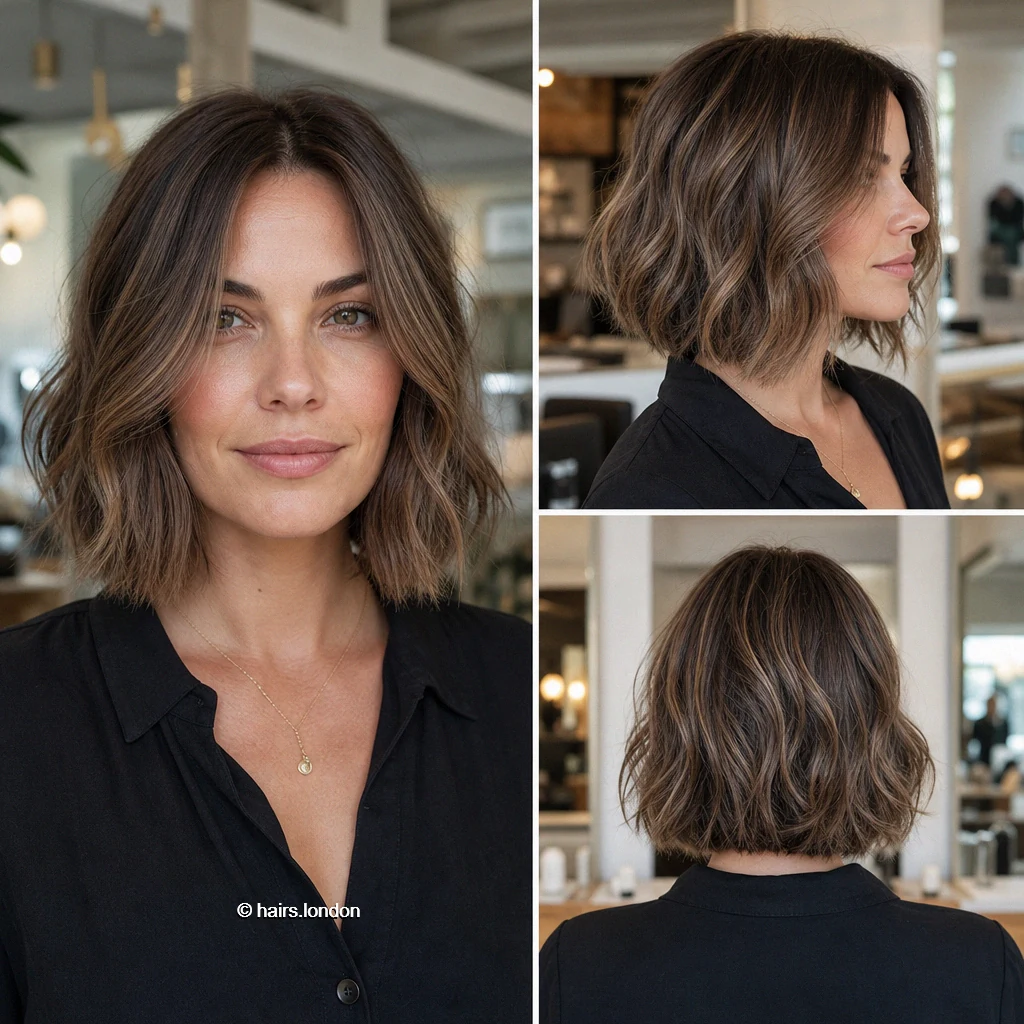
13. Smooth Rounded Bob with a Tucked Neckline
This polished bob sits around the jaw with rounded sides. A near-center part leads into smooth, cheek-length front sections. Its warm brunette color includes fine golden-looking strands. The back shows a tucked, even neckline beneath fullness. Visible layering is subtle, maintaining an uninterrupted outer surface. Brush the ends inward while directing heat down strands. Use a small amount of serum for controlled shine. Medium density can support its smooth, rounded weight line. Very thick hair may require hidden bulk management. Keep regular appointments to preserve that tidy neckline. Ask your stylist whether the inward bend suits your natural growth pattern.
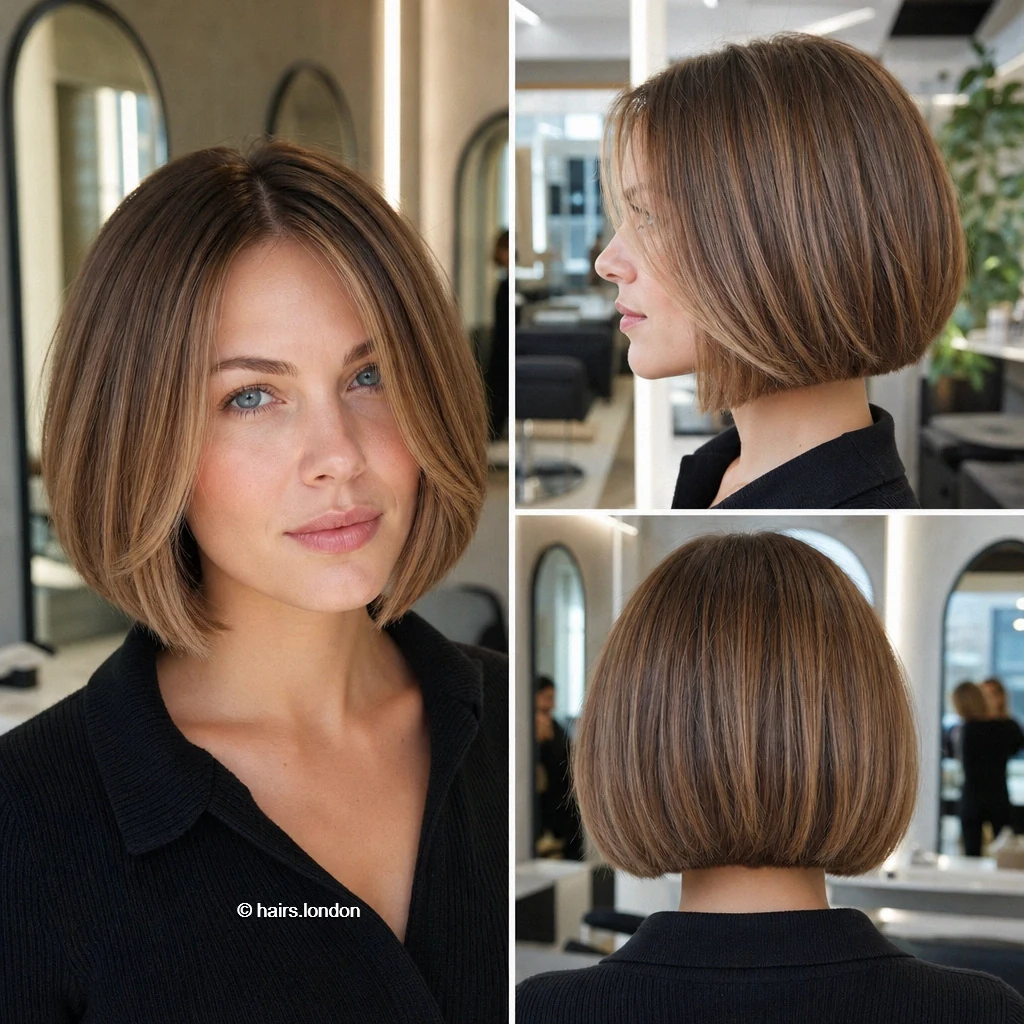
14. Highlighted A-Line Bob with Longer Front Length
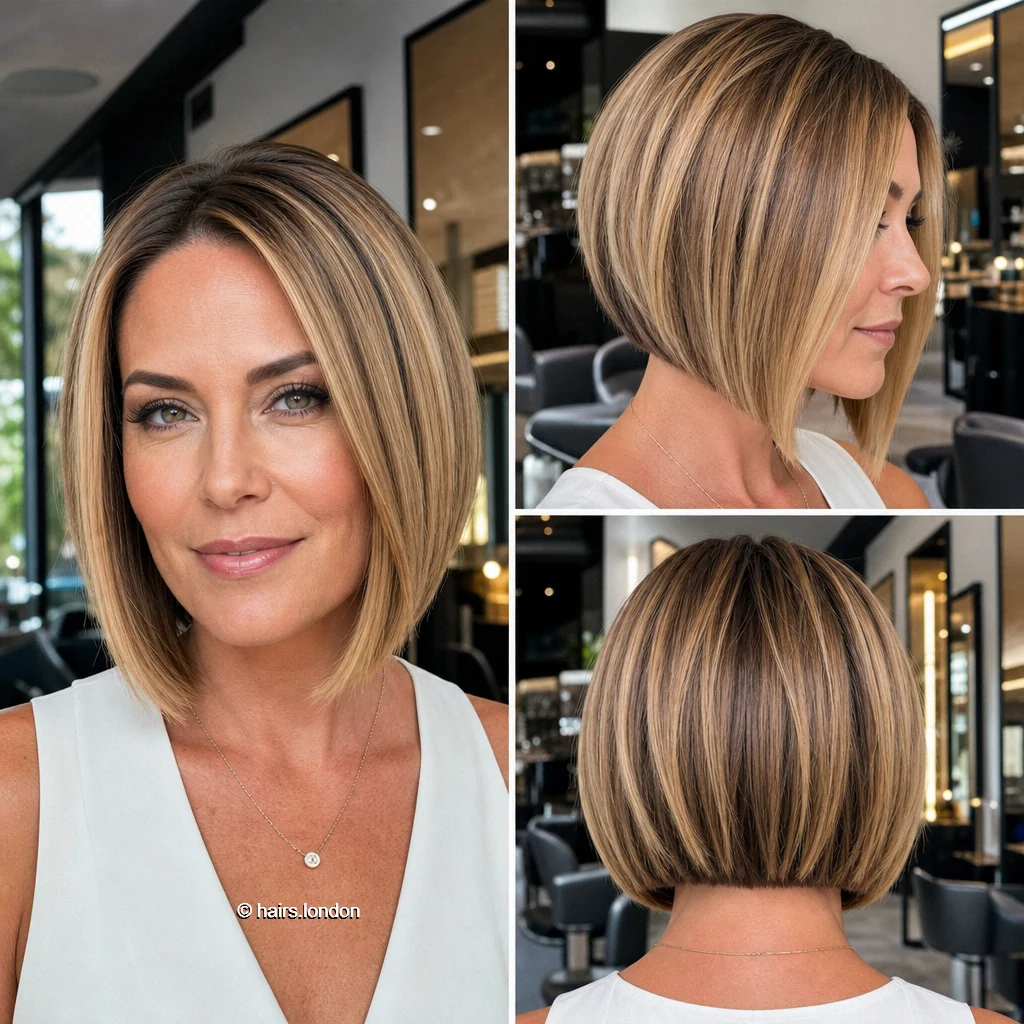
The side view reveals a clearly longer front than back. That visible slope makes this a softly rounded A-line bob. Blonde highlights alternate with deeper roots and brown strands. The nape appears compact beneath a smooth, full crown. A side part directs the longer section past the jaw. Blow-dry downward to emphasize the clean sloping perimeter. Protect highlighted lengths before heat styling to limit dryness. This precise outline needs sufficient density at its ends. Ask how your growth pattern affects the shorter back. Refresh the angle when the front-to-back contrast diminishes. Check how the front length behaves when worn naturally.
15. Sleek A-Line Bob with a Defined Front Angle
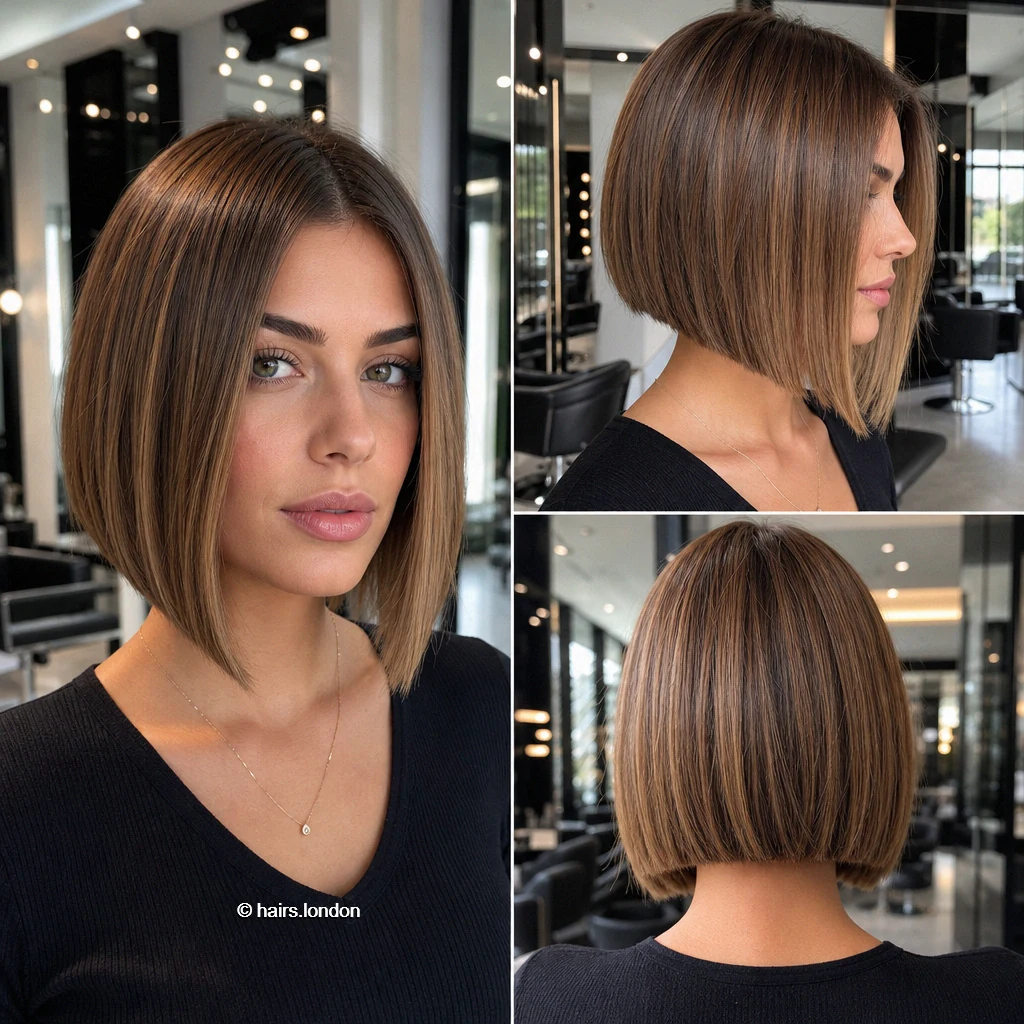
This sleek bob keeps the front noticeably longer than back. Straightened brown hair reveals narrow, lighter vertical highlights. Its side part supports an uninterrupted diagonal toward the jaw. The back perimeter looks crisp rather than heavily layered. Slight fullness above the nape softens the geometric outline. Use a paddle brush to smooth strands while drying. Finish the ends with minimal heat to preserve movement. Fine hair may appreciate the comparatively solid bottom line. Thick hair needs discreet shaping that respects that line. Schedule trims before uneven growth weakens its visible angle. Ask to see the outline before final texturizing begins.
16. Short Graduated Bob with a Sweeping Side Fringe
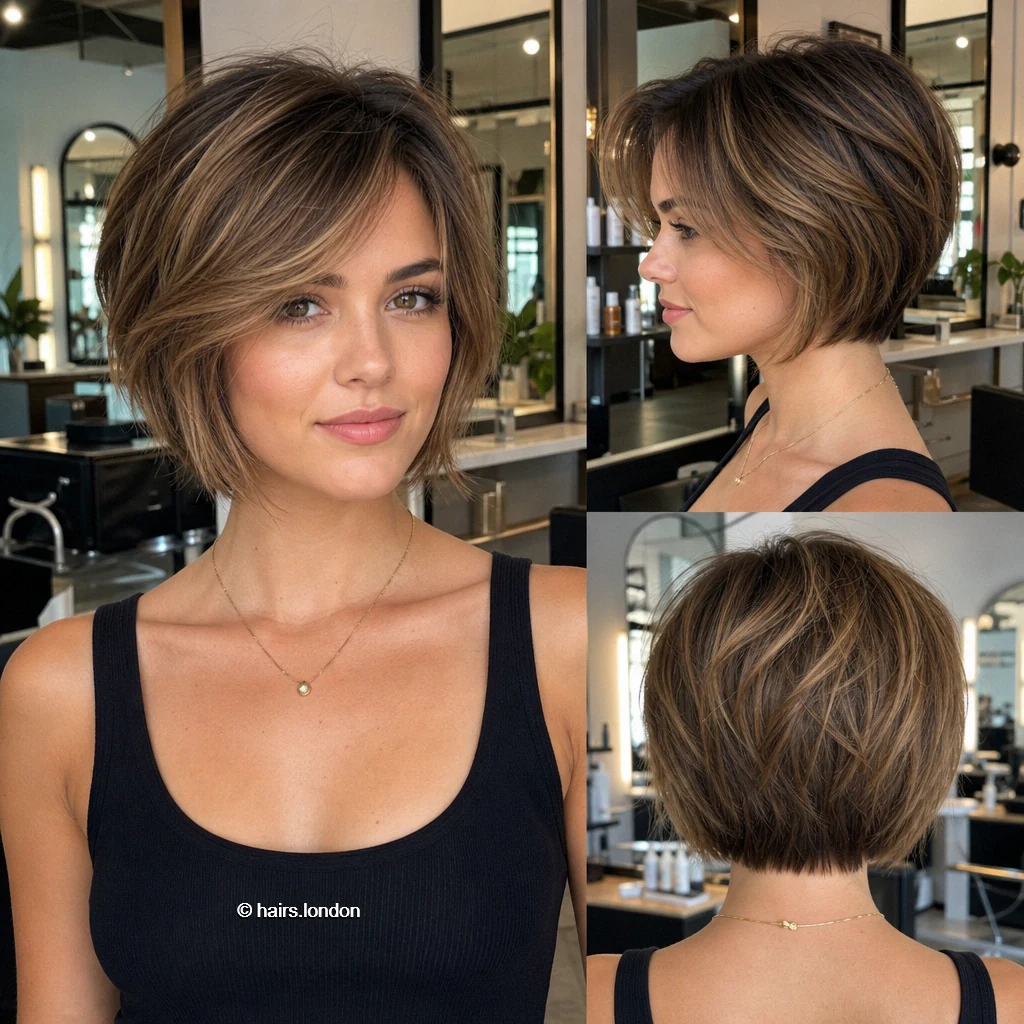
A sweeping side fringe crosses this short, layered bob. The back visibly narrows into a closely cut nape. Fuller upper layers create the rounded graduated silhouette. Brown hair carries fine beige highlights through its movement. Front pieces remain longer than the shortest back sections. Lift the crown gently while directing fringe across naturally. Avoid stiff product that disguises the soft layer separation. Dense hair may benefit from the compact, shaped back. Fine hair needs graduation planned around available coverage. Trim the nape when it grows beyond the rounded outline. A side view at your consultation can clarify desired back fullness.
17. Highlighted Stacked Bob with an Asymmetrical Sweep
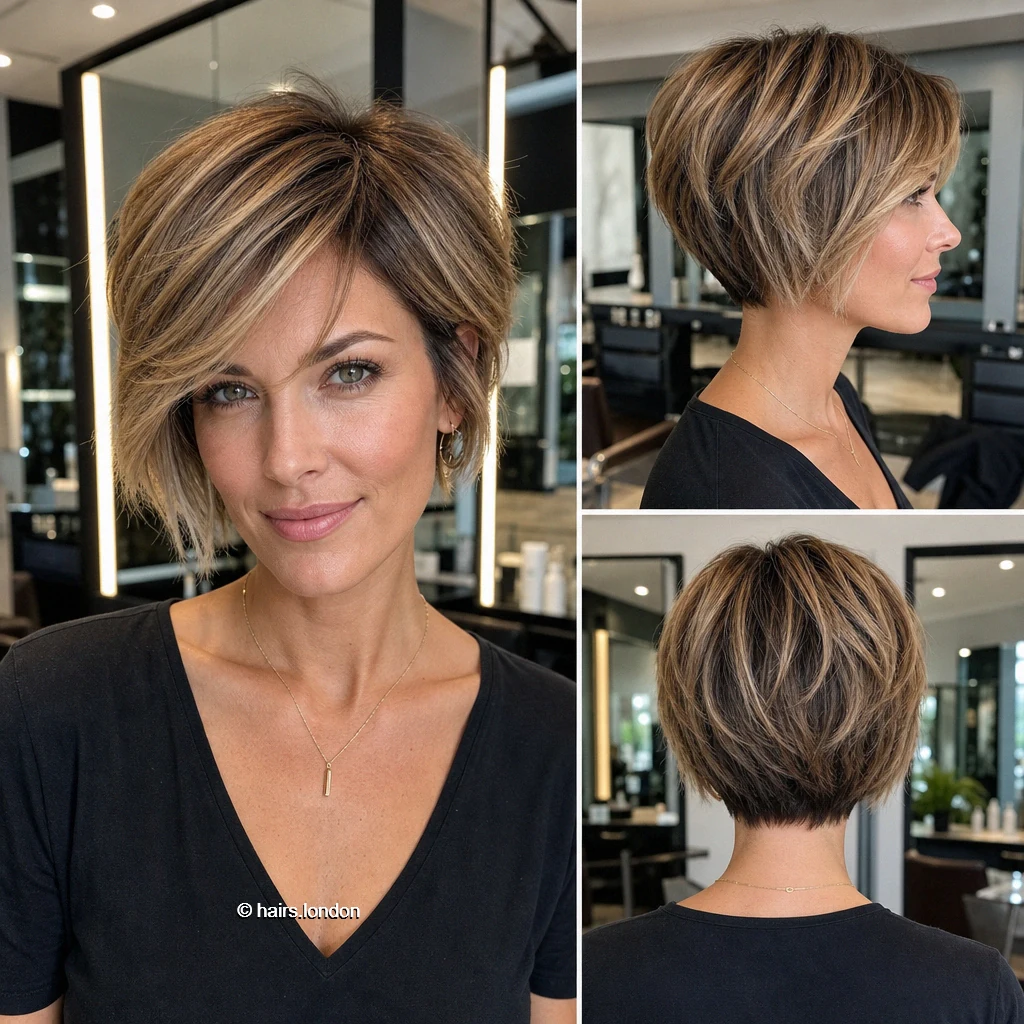
This short bob shows visible stacking above its narrow nape. One sweeping front section falls farther across the face. Lighter blonde ribbons accent the brown, separated upper layers. The side profile clearly contrasts fuller back with shorter neckline. Its airy surface keeps the graduated shape from appearing rigid. Direct airflow upward at the crown, then smooth sides. Ask whether your growth pattern supports the close neckline. Thicker density can accommodate layering without losing back fullness. Fine hair requires careful balance between lift and coverage. Maintain the nape frequently to preserve its profile. Keep highlights conditioned to maintain visible strand separation.
18. Tousled Short Bob with a Tapered Nape
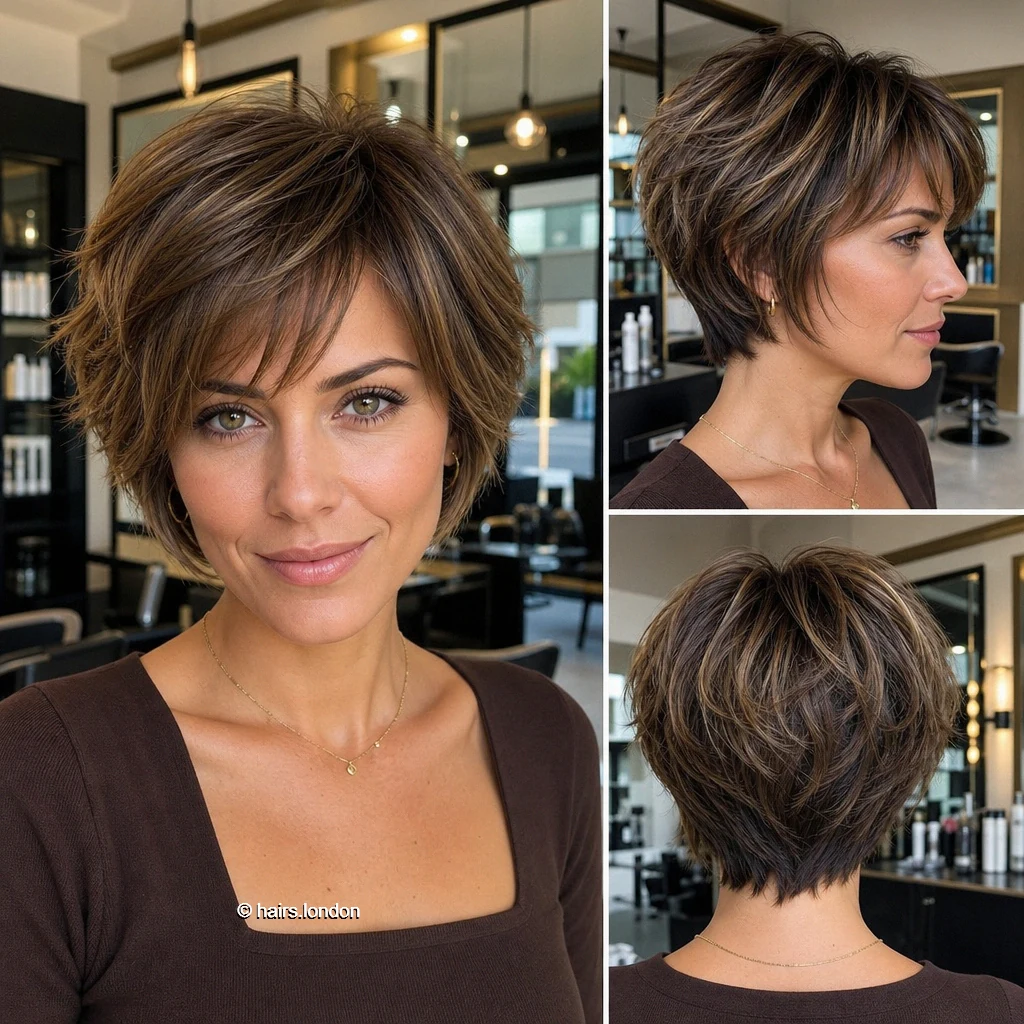
Tousled brown layers give this very short bob volume. Wispy fringe pieces cross the forehead in different directions. The back tapers distinctly to a narrow, textured nape. Longer sides still frame the face around ear level. Beige highlights pick out movement across its rounded crown. Work a little paste through dry upper layers. Keep product away from the nape to avoid clumping. This shape suits density that can support airy layers. Ask about styling time if your texture lies flat. Refresh the tapered back before it loses its definition. Discuss whether the shorter sides leave enough coverage for your preference.
19. Polished Angled Bob with a Smooth Weight Line
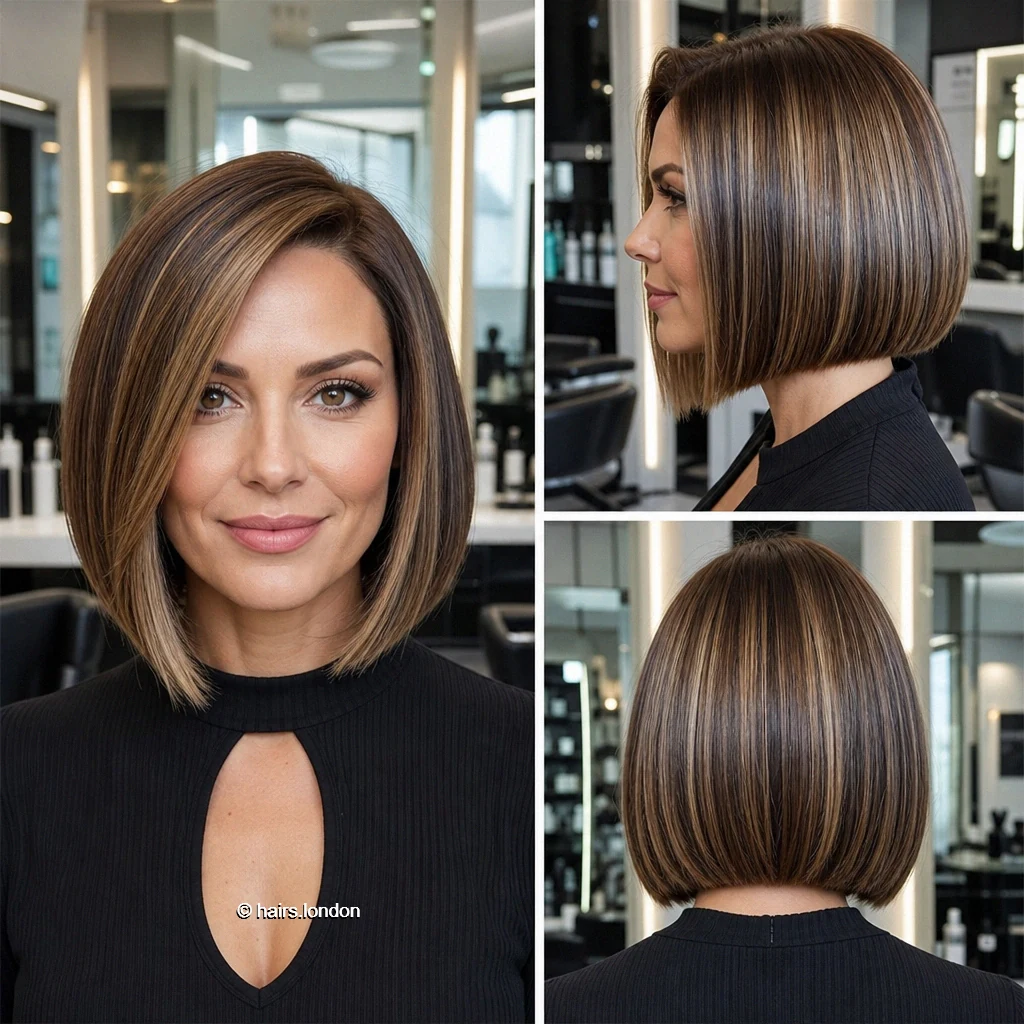
A side part sets off this polished, angled bob. Its longer front reaches the jaw, while back sits higher. Smooth brown lengths reveal delicate beige highlight ribbons throughout. The side view supports an A-line shape, not stacking. A rounded back weight line gives it gentle fullness. Dry with downward airflow, then refine the lower edge. Limit heavy serum to keep the perimeter from separating. This clean outline benefits from ends with reliable density. Strong waves may need extra time for this finish. Trim once growth blurs the front-to-back slope. Ask your stylist to confirm the angle on your natural texture.
20. Smooth Neck-Length Bob with Subtle Front Length
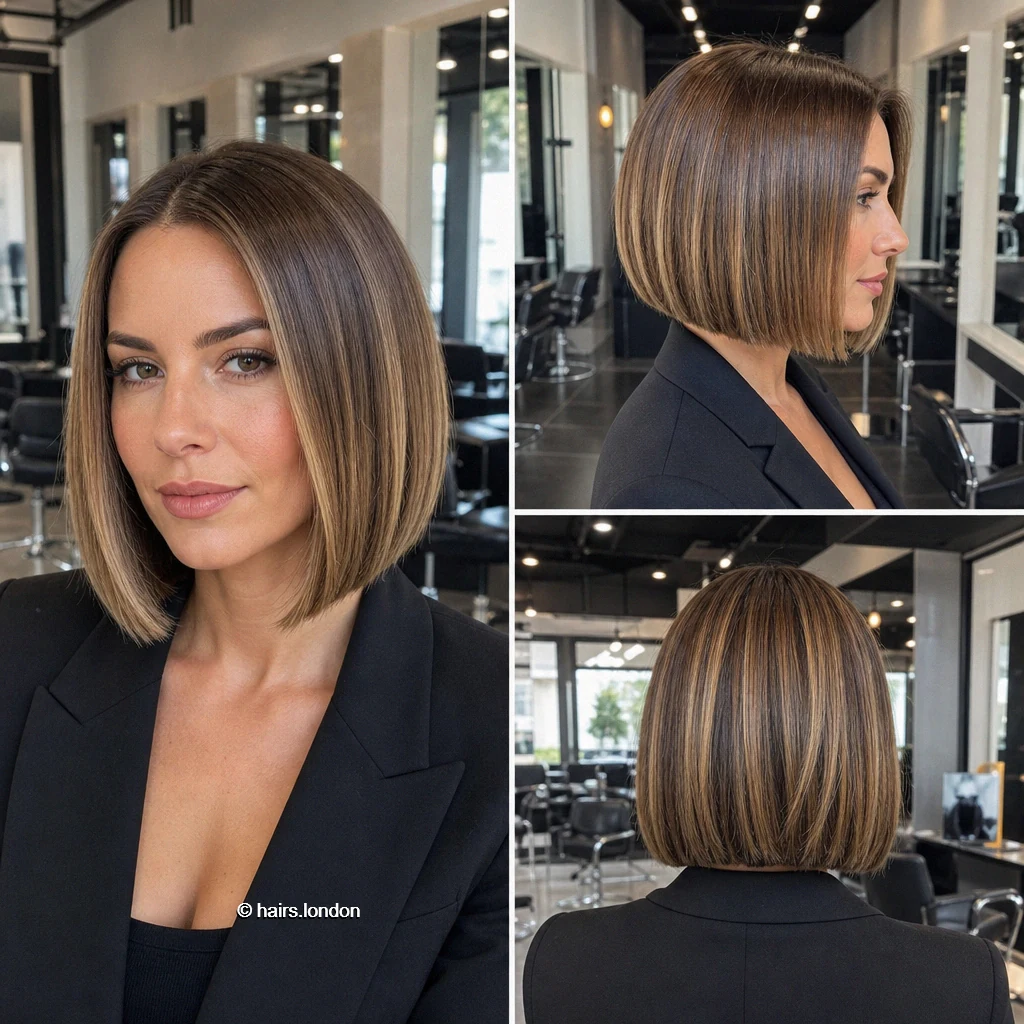
This smooth bob falls near the jaw and upper neck. Its front sits slightly longer than the back profile. Fine beige ribbons run through a medium brunette base. A subtle side part leaves the forehead uncovered. The back retains a tidy, gently curved bottom line. Direct your brush downward to keep that surface sleek. Bend ends lightly rather than turning them sharply under. Fine hair may welcome its relatively solid-looking perimeter. Dense hair could need restrained internal shaping for movement. Book trims when the bottom line starts appearing uneven. Check the dry shape before deciding whether further layering is needed.
How to Choose Your Bob Length and Shape
Start with the point where you want the ends to fall: around the jaw, against the neck or near the shoulders. Check that position against your hair’s natural bend and growth patterns. A solid perimeter gives fine ends a fuller appearance; layers can release weight when density makes the sides expand. Choose a longer front for a visible A-line slope, or a graduated back if you want fullness above a shorter nape. A softly rounded bob offers another option without a pronounced angle.
Styling Fine, Thick, Wavy and Curly Textures
For fine hair, use lightweight root lift and smooth the perimeter without overworking the ends. For thick hair, dry in sections and keep product light enough that layers retain movement rather than forming a solid shelf. Scrunch naturally wavy hair while damp, then refine only pieces that need it. Natural curls need a bob planned at their dry, sprung-up length; ask for a shape that allows the curls to sit together without excessive side bulk. Dry a fringe first if its direction matters to the finished style.
Keeping Highlighted Bob Color Fresh
The images include fine brunette ribbons, brighter face-framing pieces and more pronounced blonde contrast. Upkeep depends on how different the lighter sections are from your base and where they sit. Protect colored lengths from excessive heat, use products appropriate to your color service, and ask your colorist when the front pieces or highlights will need refreshing. A gloss may be worth discussing when you want to adjust shine or tone without adding more highlights.
Maintaining the Bob Perimeter and Graduation
Check your bob from the side and back as well as the front. A precise A-line can lose its slope as the nape grows; a stacked or graduated bob can lose its rounded profile. A blunt or smooth perimeter shows uneven ends more readily than a tousled one, while layered lobs can begin to flip where they touch the shoulders. Set trim timing by those visible changes rather than assuming every bob needs the same schedule. Fringe and close napes may need attention before the rest of the cut.
What to Discuss with Your Stylist
Bring views that show the front, side and back of the shape you like. Point out whether your priority is a full bottom edge, a shorter nape, longer front pieces, a fringe or easy air-drying. Discuss density, natural wave or curl, cowlicks, how often you use heat and how frequently you can return for trims. Ask which details can be adapted to your hair, and agree on where the perimeter should fall when it is dry and styled the way you normally wear it.
Frequently Asked Questions
What is the difference between a bob and a lob?
A lob is a longer bob, commonly reaching toward the shoulders. Shorter bobs in these images sit around the jaw or neck; the longer layered examples approach shoulder length.
How is an A-line bob different from a stacked bob?
A-line describes a perimeter that is visibly longer in front than in back. Stacked describes shorter, graduated layers at the back that build fullness above the nape. A cut can show both features, but one does not automatically imply the other.
Will layers make fine hair look thinner?
They can if too much weight is removed from the ends. Ask for layering that creates the movement you want while preserving enough density along the perimeter.
How can a bob manage very thick hair?
Length, internal shaping and well-placed layers can control bulk. Ask your stylist to preserve the visible outline while removing weight only where your hair needs it.
Can naturally curly hair be cut into a bob?
Yes, provided the shape is planned around curl shrinkage and how the hair falls when dry. Discuss your preferred dry length and whether you want a rounded outline or more length through the sides.
Should I choose a blunt or textured perimeter?
Choose according to the finish and upkeep you prefer. A stronger line emphasizes precision and fullness at the ends; a textured edge allows a looser appearance but still needs enough weight to retain a bob shape.
Is a fringe practical with a bob?
It can be if you are comfortable styling and trimming it separately. Check how your fringe falls around any cowlicks, and decide whether a wispy, side-swept or fuller shape fits your routine.
How much daily styling does a smooth bob need?
That depends on your natural texture and the precision of the finish you want. Some hair needs only directed drying; strong waves or curls may require more heat styling to reproduce a sleek image.
How often should I trim a graduated bob?
Arrange a trim when the nape grows out or the fullness at the back drops below its intended position. A close, defined shape will usually show that change sooner than a loose layered bob.
What happens when an A-line bob grows out?
The shorter back catches up with the front, making the slope less distinct. If you want to keep the angle, have the perimeter reshaped before that contrast disappears.
Can I grow a short bob into a lob?
Yes. Tell your stylist you are growing it out so trims can preserve a balanced outline without repeatedly cutting the new length away. Fringe, layers or a short nape may need gradual adjustment.
What should I ask about highlighted bob maintenance?
Ask how visible regrowth will be, when the brighter sections may need refreshing, and what heat protection and conditioning suit your color service. Face-framing highlights may call for a different schedule from subtle ribbons.
Conclusion
A bob can look rounded and polished, loose and layered, or sharply angled without relying on one set length. Choose the outline you want first, then decide how much fringe, texture and color contrast fits your hair and routine. The best reference is the view that shows not just how a bob frames the face, but how its sides and back hold their shape.


