21. The caramel balayage lob
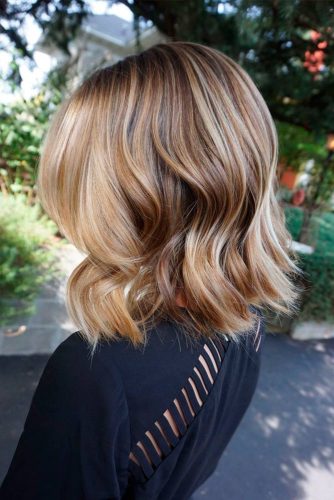
Caught outdoors from behind, this lob shows how caramel blonde behaves in daylight. The brown root stays put, while hand-painted pieces brighten through the outer layers and ends of loose waves that stop just above the shoulders. The lightest color sits right where each curl turns, so the shape looks fuller and the blend looks natural. It is one of the gentlest ways to take brown hair lighter. See more in our blonde balayage ideas.
- Best for: Medium hair; brunettes.
- Ask your stylist for: A caramel blonde balayage on a wavy lob.
- How to style it: Wave with a 1.25-inch iron.
- Upkeep: Balayage every 12 weeks.
22. The creamy ribbon waves
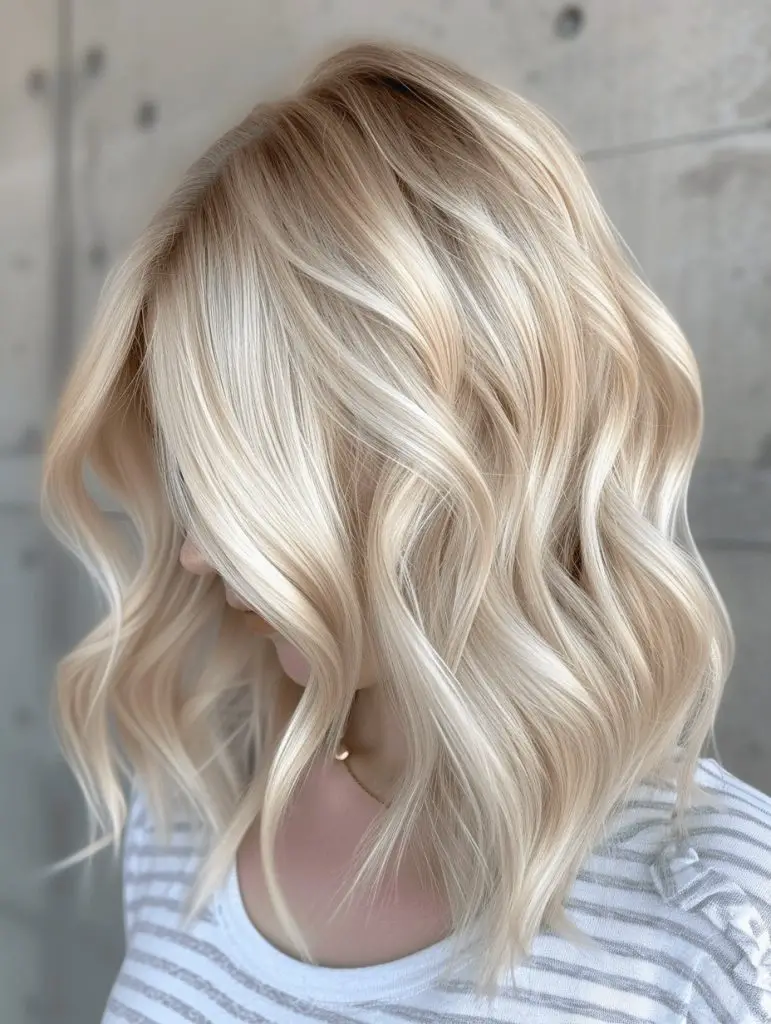
Creamy is the word. This blonde balayage keeps a slightly darker root and lays bright, soft ribbons over the surface of a wavy lob, with the deeper strands tucked underneath. The waves are loose and even, and they let the cream and beige tones wrap around each other. That contrast between top and underneath is what gives pale hair depth. A gloss every couple of months keeps it from turning yellow.
- Best for: Medium hair; light brown to blonde.
- Ask your stylist for: A creamy blonde balayage with a soft root on a wavy lob.
- How to style it: Wave with a 1.25-inch iron.
- Upkeep: Balayage every 12 weeks; toner every 6 to 8 weeks.
23. The festival honey braids
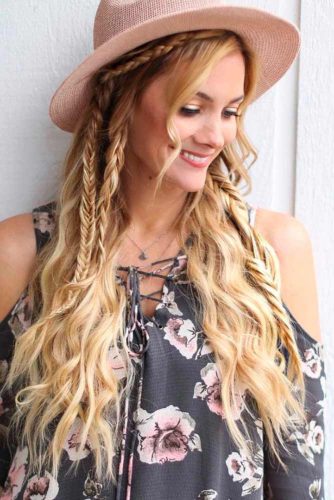
Pink hat on, thin braids in and you are ready for a summer weekend. Long honey-gold waves fall below the chest, with two slim plaits woven from the front hairline down each side. A slightly darker root keeps the color warm and grounded. The braids pick up the lighter and deeper strands, so the color variation looks even richer than it does on loose hair. Casual, playful and easy to copy.
- Best for: Long hair; warm skin tones.
- Ask your stylist for: A honey blonde balayage with a soft root.
- How to style it: Wave with a wand and add thin braids at the front.
- Upkeep: Balayage every 12 to 14 weeks.
24. The white-blonde profile lob
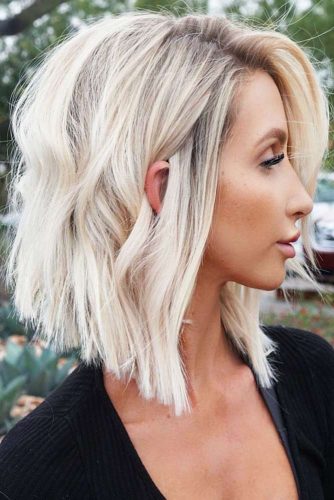
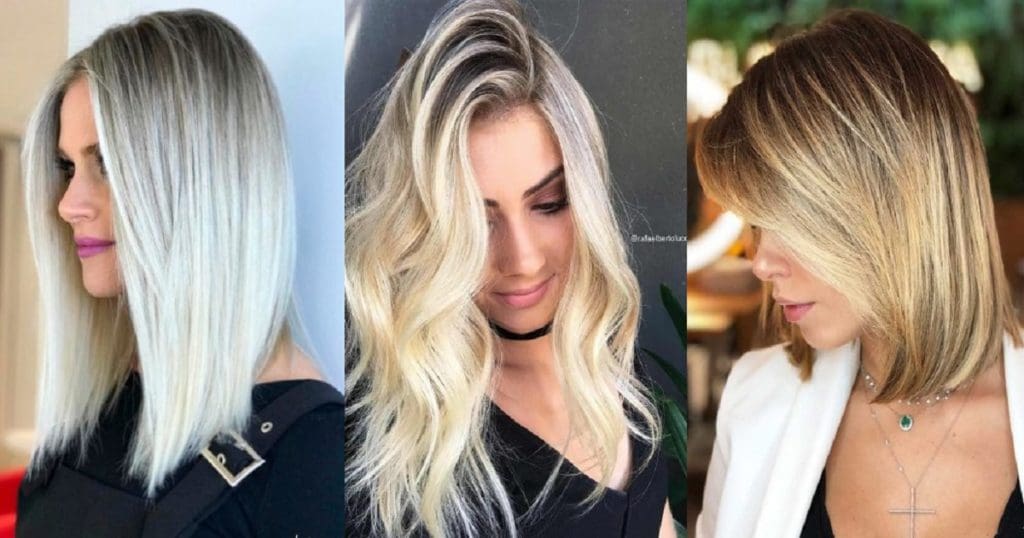
In profile, this lob shows just how bright a soft root can make blonde look. A light brown shadow at the part gives way to near-white ash blonde, and the hair falls in loose, flat-iron bends to just above the shoulders. The ends are left straighter than the mid-lengths, which keeps the wave modern. For more cool shades like this one, browse our ash blonde hair colors.
- Best for: Light hair; cool skin tones.
- Ask your stylist for: An ash platinum with a soft root on a wavy lob.
- How to style it: Wave with a flat iron.
- Upkeep: Toner every 4 to 6 weeks.
25. The sandy root-melt waves
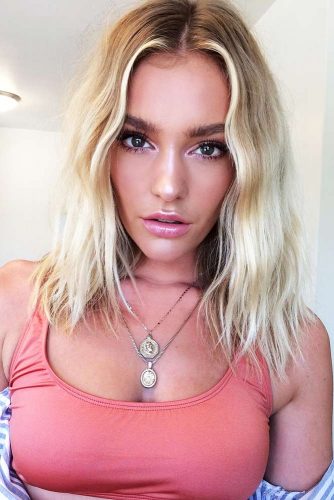
Effortless blonde starts with a good root. This collarbone-length cut has a darker base melting into sandy, slightly ashy blonde, with brighter pieces placed right around the face and a center part. The waves are loose and undone, the kind you get from a flat iron and a spray of texture. Because the root is wide and soft, it can grow for months and still look intentional.
- Best for: Medium hair; neutral to cool skin tones.
- Ask your stylist for: A sandy ash blonde root melt.
- How to style it: Wave with a flat iron and finish with texture spray.
- Upkeep: Color every 12 weeks; toner every 6 to 8 weeks.
Champagne, strawberry and beige blondes
Somewhere between warm and cool sit the soft blondes: creamy champagne, rose-tinted beige and pale strawberry. They look natural on a wide range of skin tones, and strawberry fans can find more in our strawberry blonde hair colors.
26. The rose champagne waves
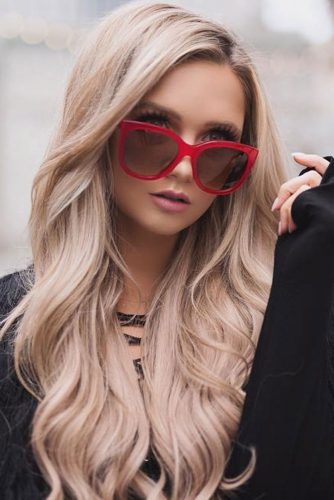
Who says blonde can’t blush? A soft rose-beige toner turns these long, glossy waves into champagne with a hint of pink, and red sunglasses only underline it. The root is a little deeper, so the color reads as warm and rosy rather than pastel. Full, brushed-out curls let each strand catch the light. It suits warm and neutral skin, and fades gracefully toward a soft beige. More in our champagne blonde colors.
- Best for: Long hair; warm or neutral skin tones.
- Ask your stylist for: A rose champagne toner over pre-lightened light blonde, with a soft deeper root.
- How to style it: Curl large sections with a 1.25-inch iron and brush out into soft waves.
- Upkeep: Toner every 4 to 6 weeks; highlights every 10 to 12 weeks.
27. The pale champagne cascade
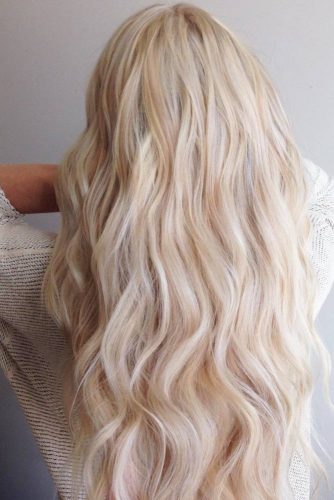
This is blonde at its creamiest, and the back view proves it. Long, pale champagne hair falls to mid-back in soft, even waves, with fine lighter strands catching the light on every bend. A faint warm undertone stops it looking stark, and the root is barely a shade deeper, so the whole length looks bright and consistent. The secret is fine highlights rather than an all-over bleach, which keeps the hair softer.
- Best for: Long, healthy hair; neutral skin tones.
- Ask your stylist for: Fine highlights lifted to pale blonde with a champagne toner and a barely deeper root.
- How to style it: Wave with a 1-inch wand and finish with a few drops of lightweight oil.
- Upkeep: Toner every 6 weeks; highlights every 10 to 12 weeks.
28. The warm platinum Hollywood waves
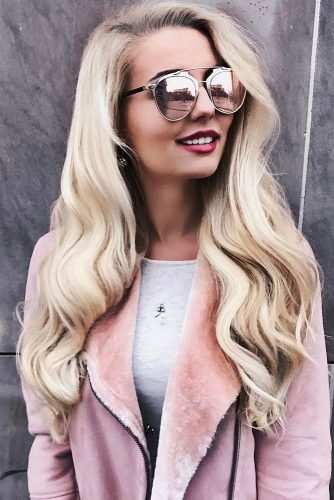
Volume, a deep side part and a pair of mirrored sunglasses: this is platinum with a sense of fun. The blonde is very light but carries a faint golden warmth, which feels softer than icy shades next to the skin. Big, brushed-out waves run from the crown to well past the chest, and a slightly darker root at the parting adds depth. That small shadow is also what helps it grow out gracefully.
- Best for: Long, thick hair; neutral or warm skin tones.
- Ask your stylist for: A warm platinum with a soft root, toned to a creamy rather than icy finish.
- How to style it: Set large sections with a 1.5-inch iron or hot rollers, then brush out.
- Upkeep: Toner every 4 to 6 weeks; lightening every 8 to 10 weeks.
29. The champagne curly crop
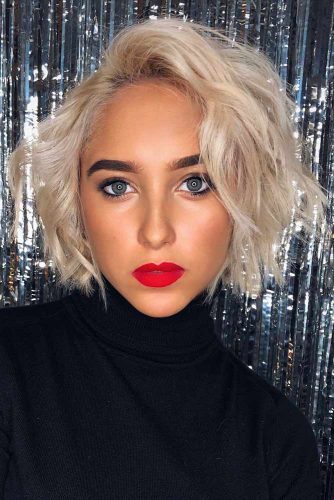
Bold lips, dark brows and a jaw-length bob of champagne curls make a strong trio. The blonde is creamy and warm, and the tousled curls show lighter and slightly deeper strands at the same time, so short hair still looks dimensional. The contrast with the dark brows is deliberate and modern. It is a fun option if your hair holds a curl and you want blonde to look playful rather than polished.
- Best for: Short hair; fair to medium skin with warm or neutral undertones.
- Ask your stylist for: A champagne platinum with a warm toner on a jaw-length bob.
- How to style it: Curl small sections with a 1-inch wand, then break up the curls with your fingers.
- Upkeep: Toner every 4 to 6 weeks; lightening every 8 weeks.
Blonde on short cuts
On a short cut, blonde sits right beside your face and every textured piece catches the light. These four go from shaved and sharp to soft and feathery.
30. The honey undercut crop
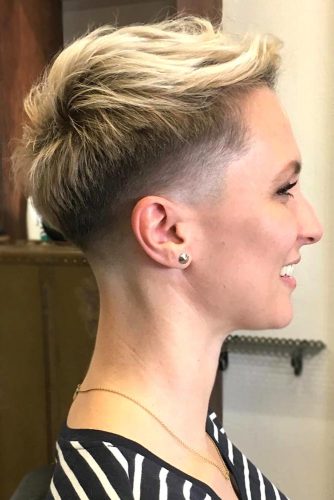
Short, sharp and surprisingly low-maintenance. The sides and back are clipped close, and the longer top is swept up and back in a honey blonde that deepens toward the root. That darker shade blends straight into the undercut, so the bright top looks like it sits on a shadow. It is a confident cut that shows blonde off from every angle. For more ideas, see our blonde pixie cuts.
- Best for: Thick, short hair; anyone who wants a bold, low-maintenance blonde.
- Ask your stylist for: An undercut pixie with a honey blonde through the longer top and a darker root.
- How to style it: Push the top up and back with a matte pomade.
- Upkeep: Trim every 4 weeks; color every 8 weeks.