


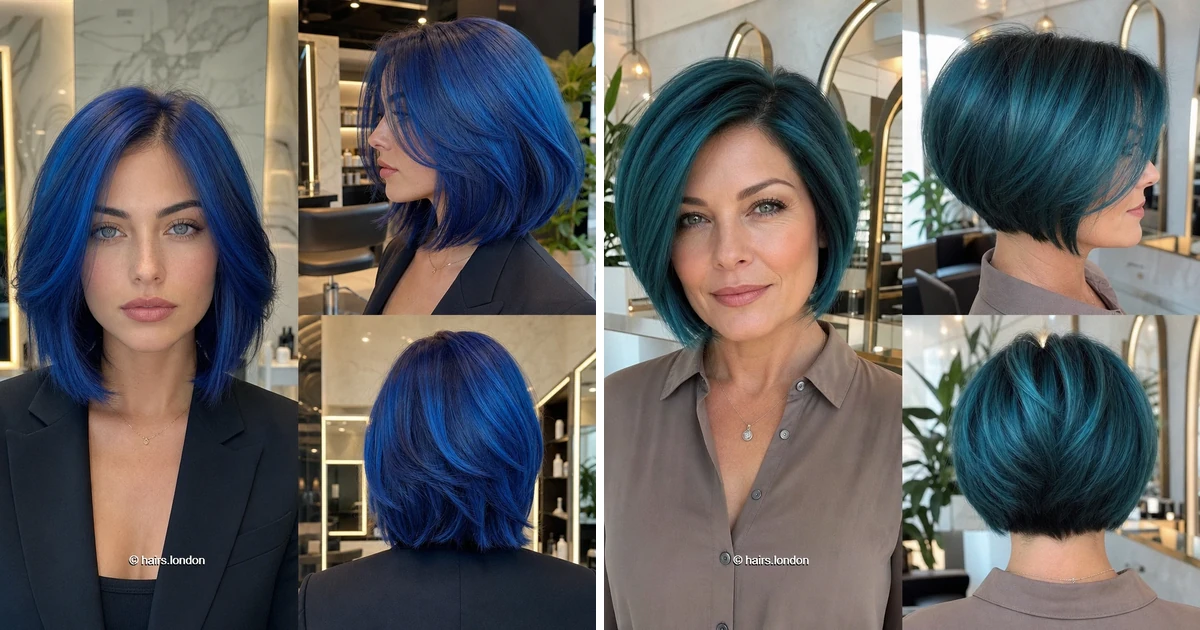
11. Smoky Teal Graduated Bob With Long Front Pieces
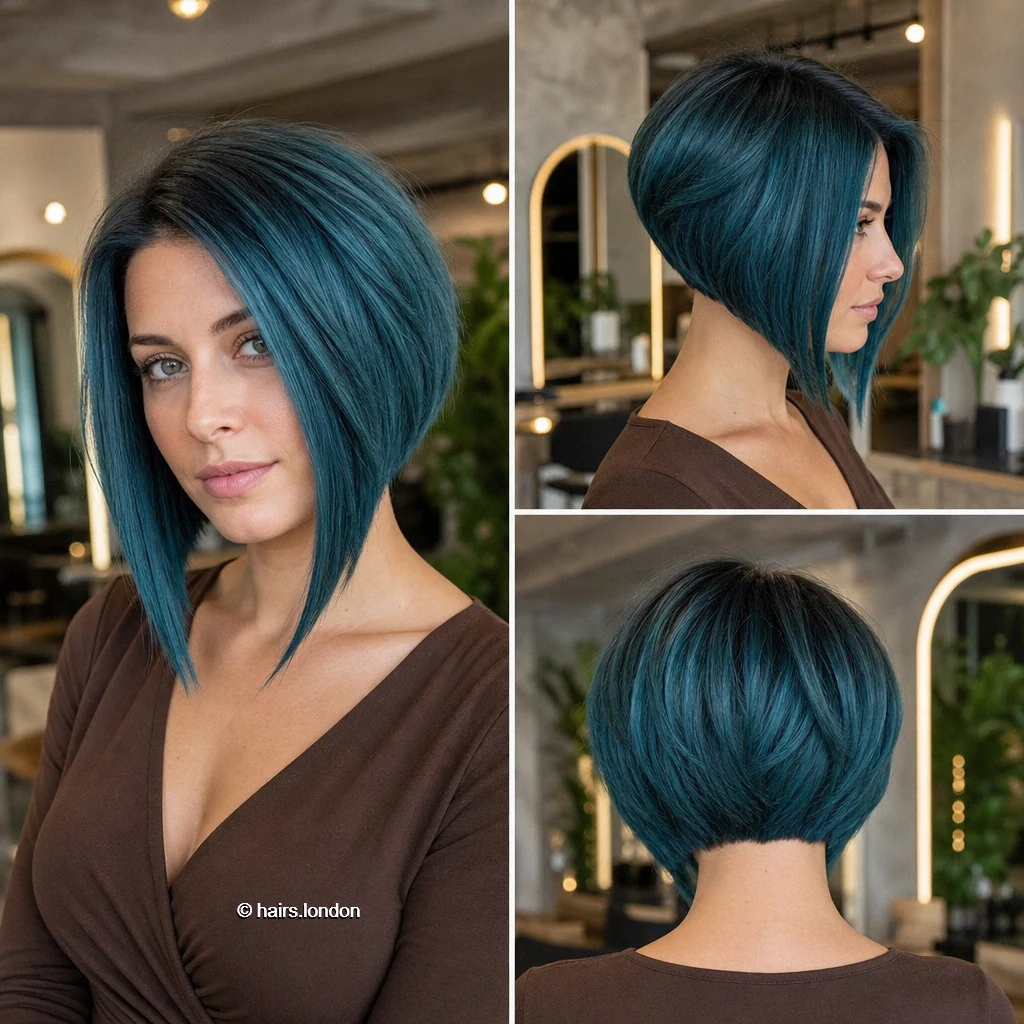
Smoky teal adds dimension to this visibly graduated angled bob. The two front sections extend below the jawline in points. A rounded back builds volume above the closely cut nape. Its longer front and stacked back are both clearly visible. Ask whether those pointed ends suit your hair density naturally. Brush the fronts downward, keeping the ends smooth and defined. Use modest root lift to preserve the back’s rounded silhouette. Thick hair might need selective internal removal, not shredded tips. Refresh teal when washing begins to soften its cool appearance. Trim the short back before the forward angle loses clarity.
12. Emerald Angled Bob With a Tapered Back
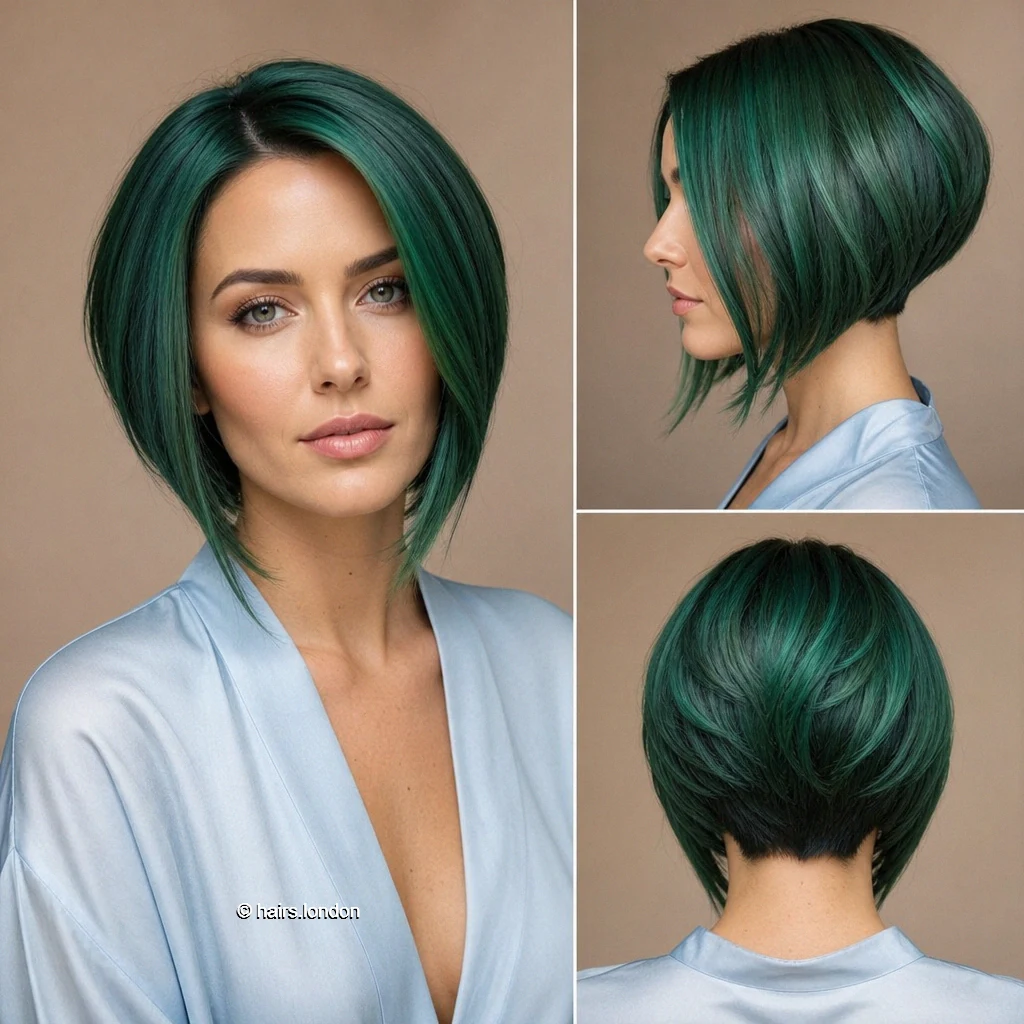
Emerald green shines across this smooth, forward angled bob shape. A side part sends longer front pieces below the jaw. The back rounds outward before tapering into a short nape. Visible graduation gives the shape fullness without a blunt base. Ask your stylist how its nape length accommodates growth patterns. Smooth the top with directed airflow and a broad brush. Leave slight movement around the face instead of flattening everything. Fine hair may need a gentler graduation to retain fullness. Protect green depth by reducing unnecessary heat and aggressive cleansing. Maintain appointments when the tapered back begins losing its outline.
13. Electric Blue Shaggy Bob With Wispy Fringe
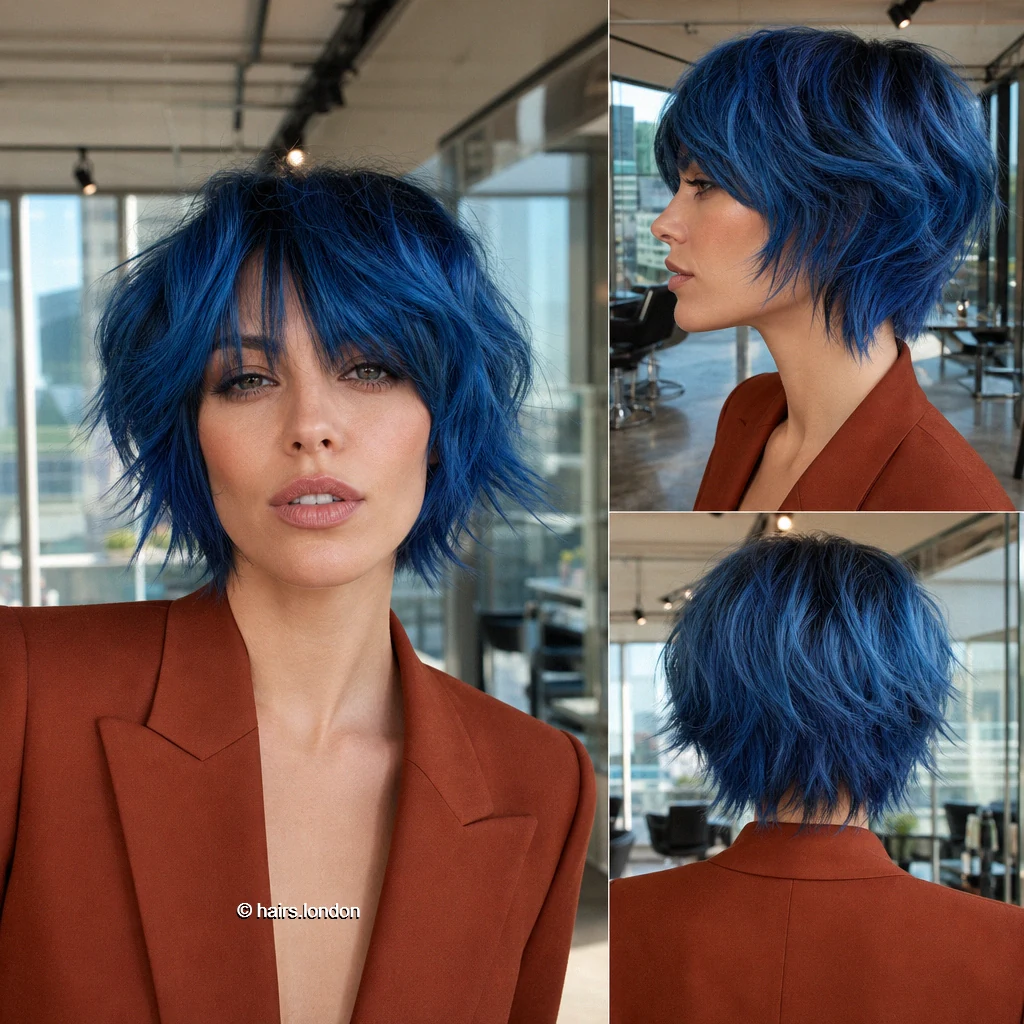
Electric blue energizes this short, heavily textured shaggy bob. Wispy fringe crosses the forehead above softly broken cheek sections. Choppy ends sit around the jaw, with longer nape pieces. The back shows loose layering rather than a compact stack. Ask for texture that respects your density and natural movement. Scrunch damp hair with light cream, then diffuse without overworking. Redirect the fringe while damp if it separates unpredictably overnight. Thick hair may carry this piecey volume more easily naturally. Refresh vivid blue as its brightness gradually fades between salon visits. Trim the fringe separately when it begins covering your eyes.
14. Midnight Blue Shaggy Bob With Soft Bangs
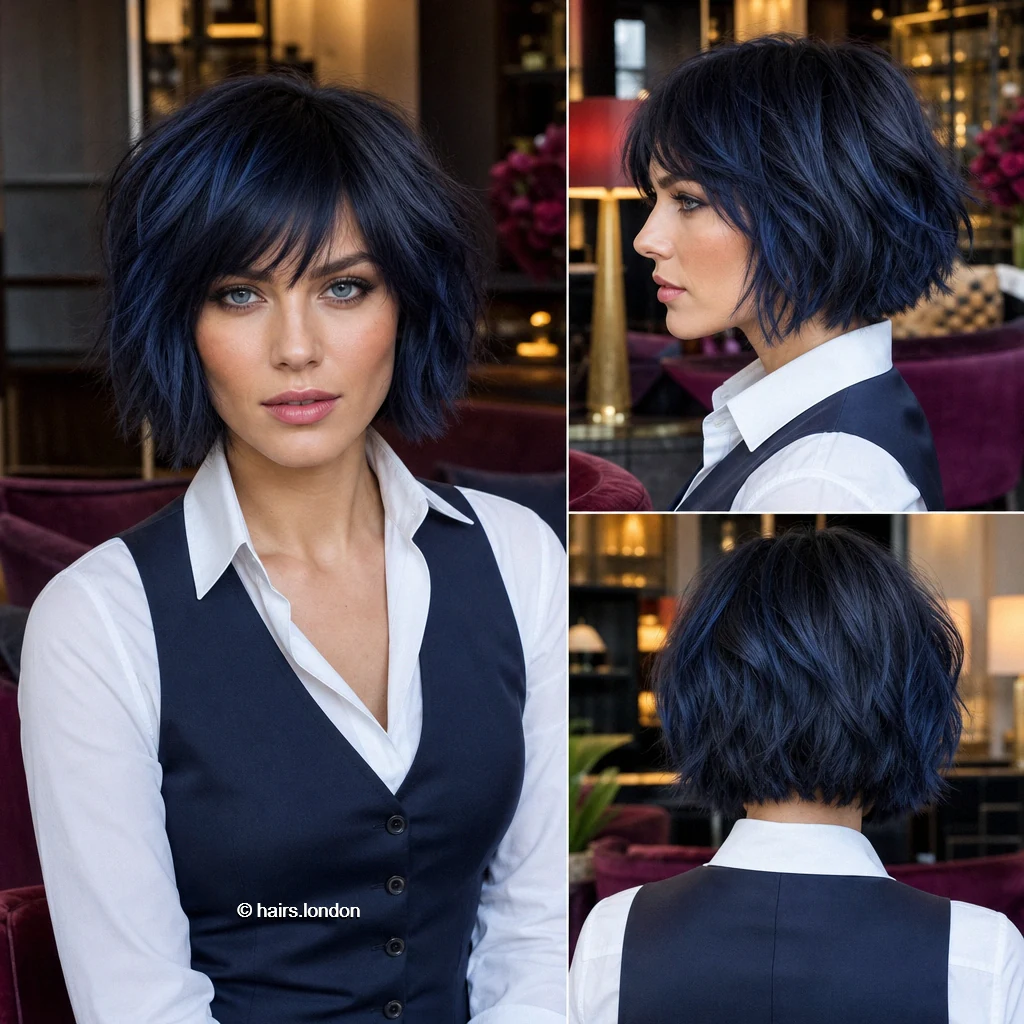
Midnight blue lends subtle shine to this tousled shaggy bob. Soft bangs skim the brows and merge into side layers. The uneven perimeter sits around jaw level, with airy ends. Back views confirm texture throughout, not obvious stacked graduation there. Ask for manageable layers rather than removing too much weight. Work mousse through damp hair and encourage natural bends gently. Dry bangs first if your growth pattern makes them split. Fine density may need a less fragmented lower edge instead. Gentle cleansing helps preserve the dark blue color between appointments. Refresh the fringe and perimeter as their proportions grow uneven.
15. Blue Teal Bob With Broken Ends and Curtain Fringe
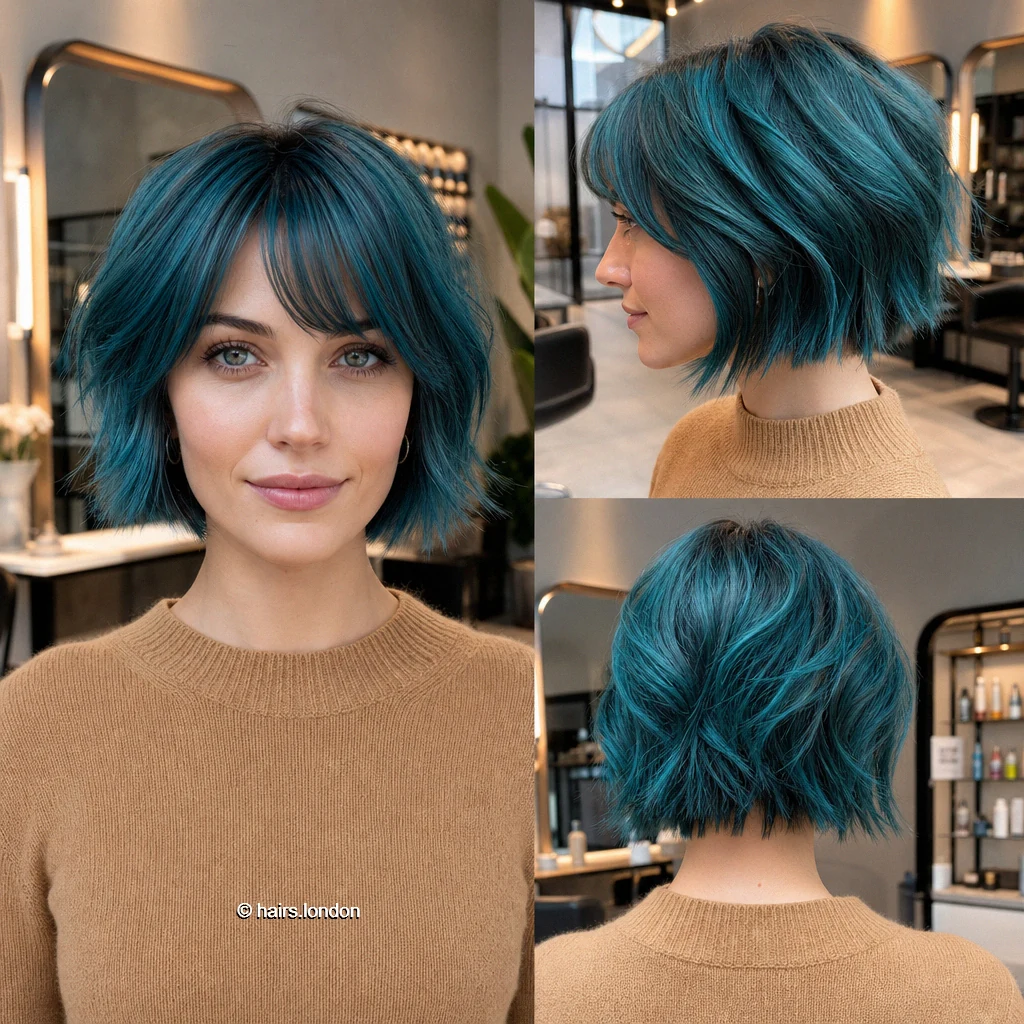
Blue teal gives this textured, jaw length bob depth throughout. A soft curtain fringe parts loosely above the eyes here. Broken ends form an airy outline around cheeks and neck. Side and back views show layers rather than rigid graduation. Ask your stylist to keep enough perimeter for everyday shape. Scrunch a lightweight styler into damp lengths for easy separation. Smooth only the fringe if you prefer its curve controlled. Natural waves may enhance texture; fine hair needs careful layering. Minimize hot water and unnecessary heat to protect teal vibrancy. Trim when the broken edge begins losing its intended balance.
16. Deep Green Tousled Bob With Side Swept Volume

Deep green runs through this airy, side swept bob shape. Its longer top section falls across the forehead and cheek. Textured ends gather around the jaw and upper neck loosely. Back views show irregular movement rather than precise stacked lines. Ask for layers that suit your density and wave pattern. Diffuse damp hair gently, lifting roots without disturbing every section. Smooth the sweeping front selectively if it blocks your vision. Very fine hair might need a firmer lower weight line. Keep green looking rich with appropriate washing and color refreshes. Recut once the shorter side layers stop supporting their shape.
17. Cobalt Blue Graduated Bob With an Asymmetric Sweep
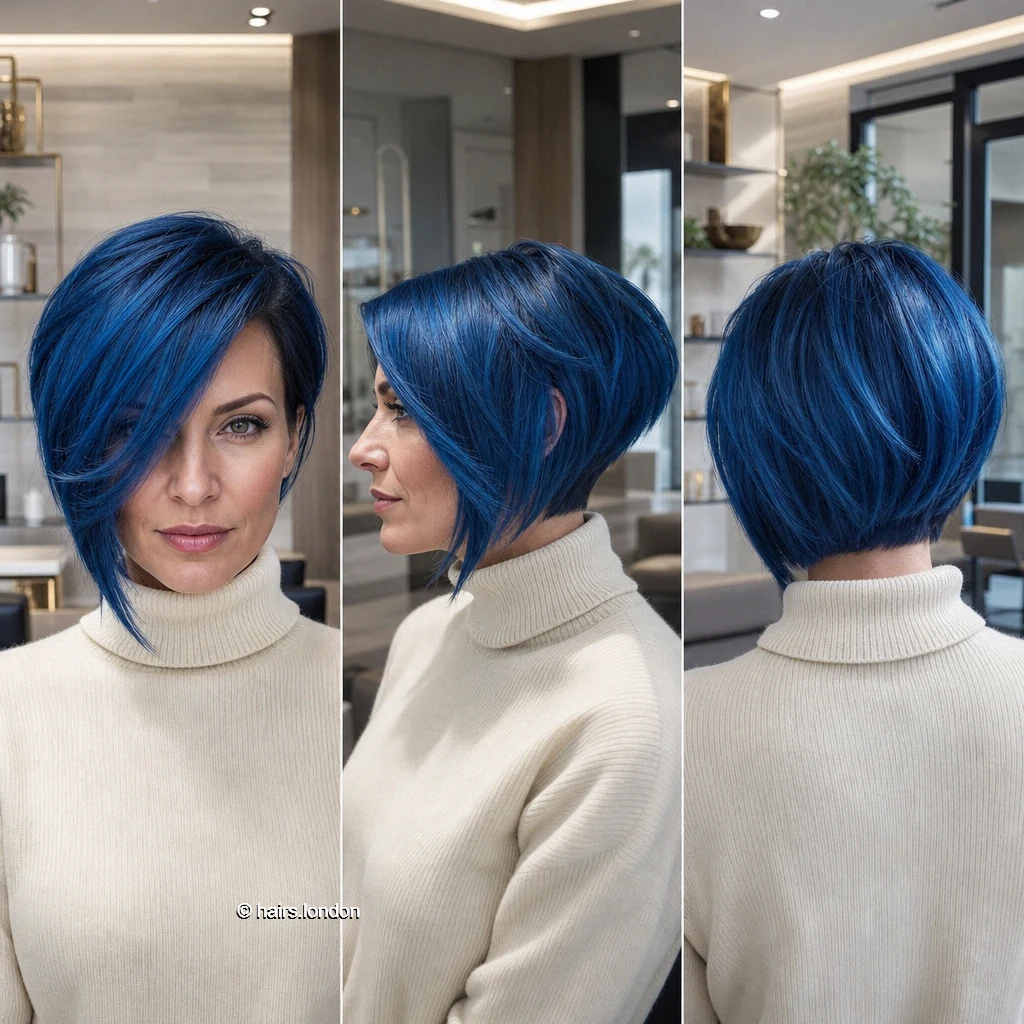
Cobalt blue accentuates this short bob’s dramatic side sweep. One long front section extends beyond the jawline in profile. The opposite side sits closer, exposing a distinctly uneven outline. Rounded back layers descend into a visibly short nape below. Ask how that asymmetry works with your preferred parting position. Brush the sweeping section smooth while maintaining gentle crown lift. Fine hair may require restrained layering to support that front. Dense hair could need concealed bulk removal through the back. Refresh vivid blue whenever fading changes its intended intensity noticeably. Maintain the nape and long point before proportions shift too substantially.
18. Blue Black Bob With a Sculpted Back
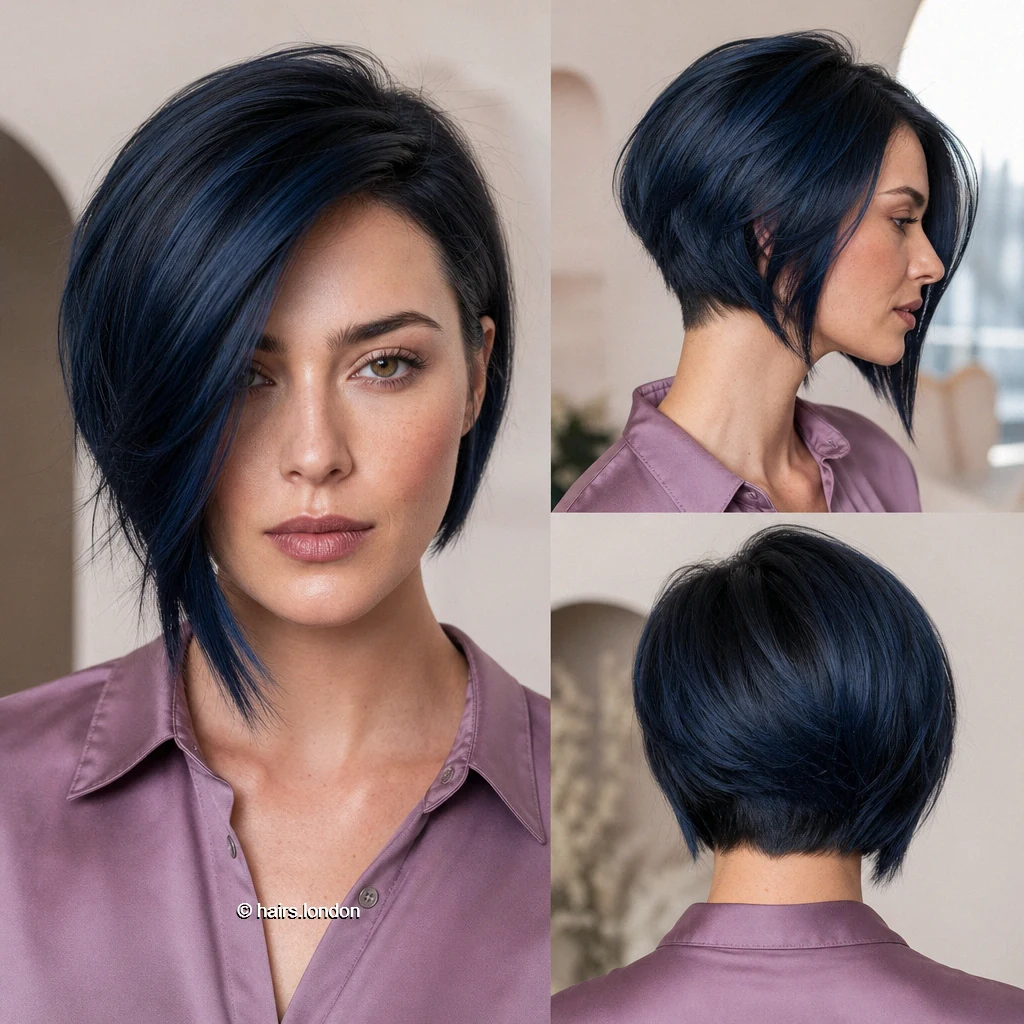
Blue black tones give this sculpted bob a reflective finish. Its heavy side sweep partly covers one eye from front. A pointed front section hangs below the jaw in profile. The back rounds above a neatly tapered, visibly graduated nape. Ask whether that strong sweep fits your daily routine comfortably. Dry the front away from roots, then guide it across. Keep the shorter side smooth without collapsing the fuller crown. Growth patterns at the nape can affect this precise outline. Protect the cool color with gentle cleansing and moderated heat. Trim promptly when the compact back begins changing its shape.
19. Turquoise Blue Bob With a Long Angled Front
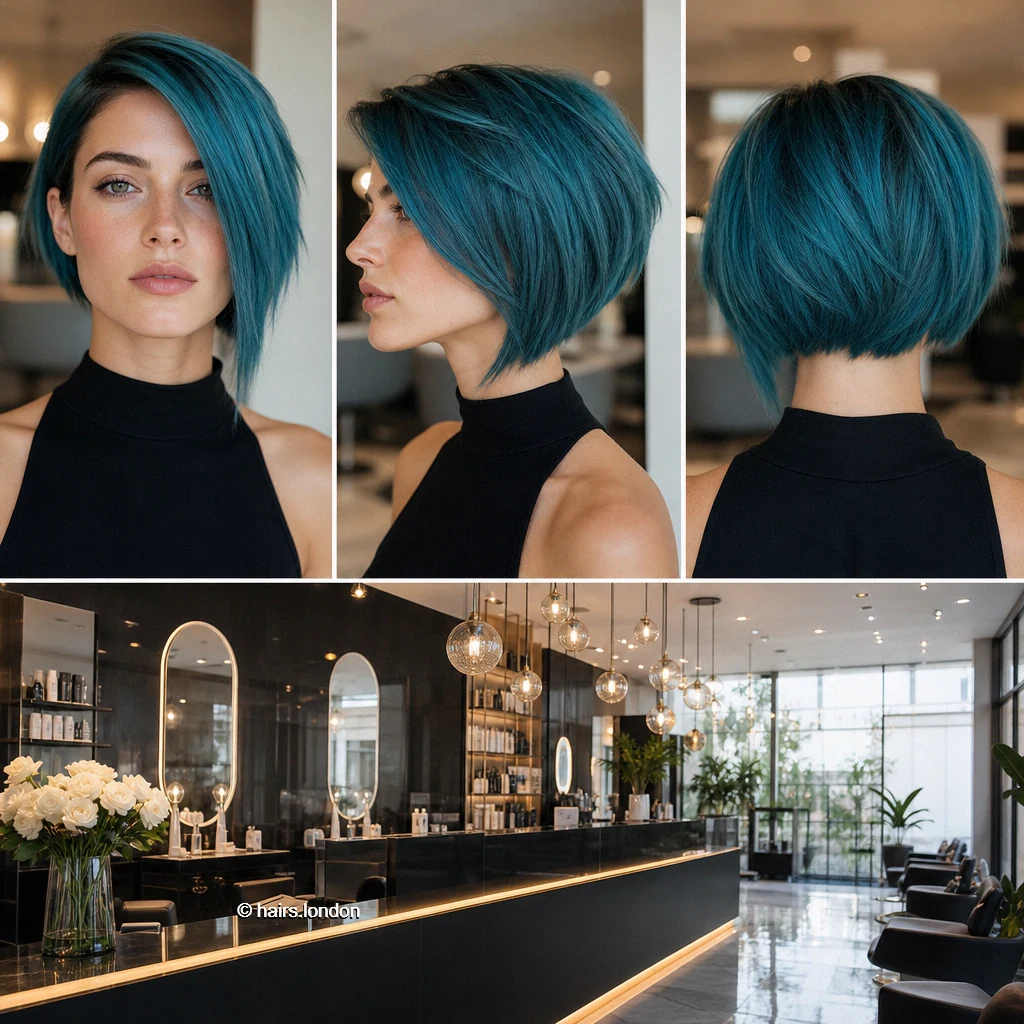
Turquoise blue highlights the bold outline of this angled bob. A deep side part leads into one extended front point. That section falls below the jaw, while its back shortens. The rounded rear also shows graduation above a tapered nape. Ask for a front length compatible with your styling habits. Smooth its long edge with a brush and heat protection. Avoid heavy products that could obscure the crisp silhouette visually. Fine hair may need a solid front to prevent gaps. Discuss color refreshes before the turquoise loses its visible depth. Recut the short back to maintain its forward moving profile.
20. Jewel Green Graduated Bob With Side Swept Front
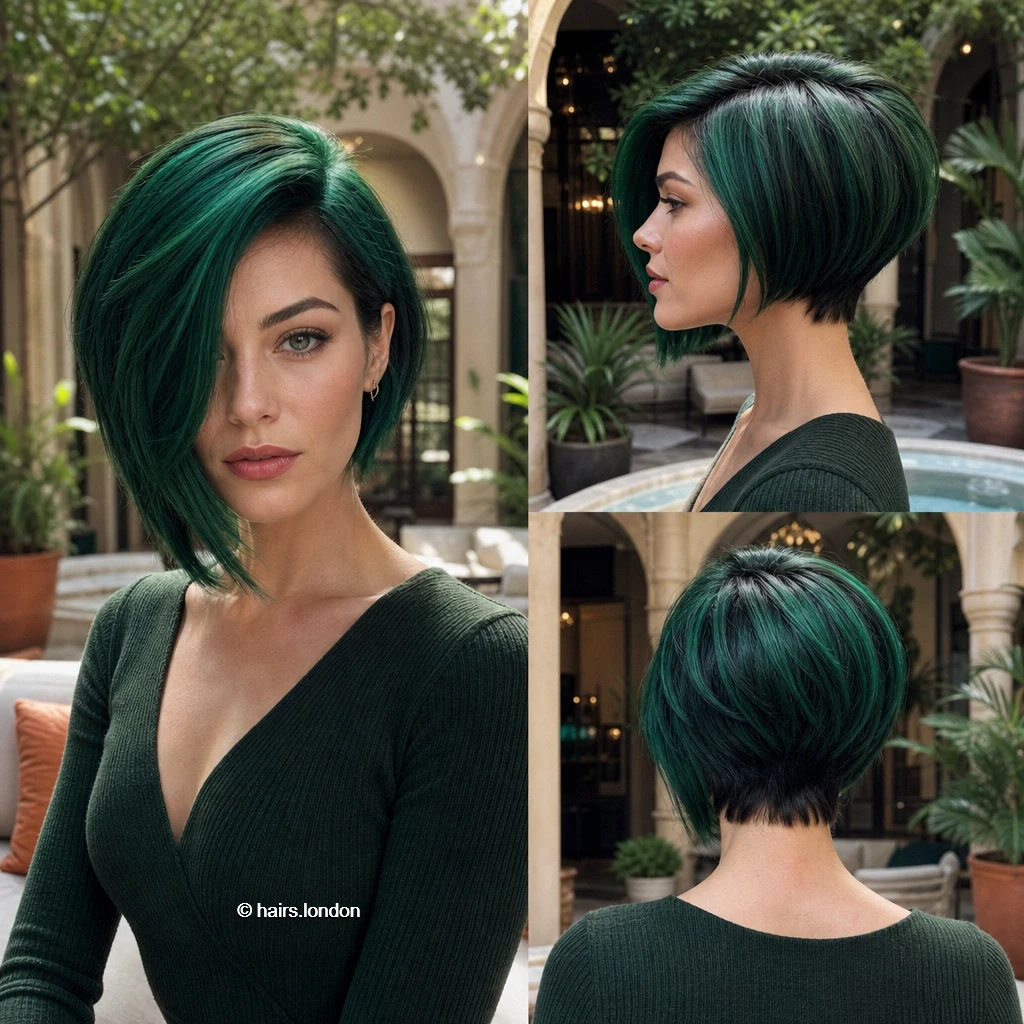
Jewel green brings shine to this polished, graduated bob shape. Its sweeping front reaches below the jaw on one side. The back curves outward, then narrows into a short nape. Visible layering builds weight above that tapered lower hairline clearly. Ask your stylist to assess density before shaping its crown. Direct airflow over the surface, preserving lift behind the ear. Smooth the front without pulling its natural curve completely straight. Strong nape growth may require adjustments to the shortest section. Keep green vibrant with gentle cleansing and sensible heat protection. Return when growth softens the contrast between front and back.
How to Choose Your Bob Length and Shape
Start with where you want the front to finish: near the jaw, below it or toward the collarbone. Then compare that point with the back. The longer layered cuts allow a softer outline, while several shorter cuts combine extended fronts with visibly graduated backs. If you want a precise angle, consider whether you are comfortable maintaining a short nape. If you prefer to air-dry, ask how your natural texture will alter the finished length and perimeter.
Styling Fine, Thick, Wavy and Curly Textures
Fine hair often benefits from a supported lower edge and lightweight root lift; too many short layers can make the ends look sparse. Thick hair may need selective internal weight removal, especially in a rounded back, without thinning the perimeter into gaps. For waves, scrunch a light styler into damp hair and diffuse gently to preserve separation. For curls, agree on the shape in its naturally dried state before cutting: shrinkage can lift both the fringe and the bob perimeter. Smooth only the sections that need control so the cut retains movement.
Keeping Blue and Green Bob Color Fresh
These images include vivid cobalt and turquoise as well as deeper navy, teal and green. Their upkeep will differ according to the color process, hair condition and washing habits. Ask your colorist how often your chosen shade may need refreshing. Gentle cleansing, moderate water temperature and heat protection can help limit visible fading. A smoother surface also makes the darker tones’ shine and the brighter tones’ dimension easier to see.
Maintaining the Bob Perimeter and Graduation
A softly layered lob can tolerate some growth before its outline changes substantially. A compact graduated bob usually needs closer attention: as the nape grows, the rounded back and longer front can lose their contrast. Check the cut from the side as well as the front when deciding whether it needs a trim. Fringes and sharply extended front points may need separate attention before the rest of the bob does.
What to Discuss With Your Stylist
Bring the front, side and back view of the cut you prefer, and point out the specific features you want to keep. Agree on the front endpoint, amount of back graduation, perimeter weight, parting and fringe before cutting. Mention your density, natural wave or curl, nape growth patterns and realistic daily styling time. For color, discuss your starting hair, desired blue or green depth and a maintenance plan rather than assuming every pictured shade requires the same process.
Frequently Asked Questions
What is the difference between a bob and a lob?
A lob is a longer bob, typically reaching toward the shoulders. Several cuts here sit around the jaw or neck, while the longer layered examples approach lob length.
How is an A-line bob different from a stacked bob?
A-line describes a perimeter that is longer in front. Stacked describes visible graduation that builds fullness at the back. A cut can show both features, as several of these images do.
Will a graduated bob work on fine hair?
It can, but the amount of graduation matters. Ask your stylist to protect enough weight at the front and lower edge so the ends do not look thin.
How can thick hair avoid looking bulky in a rounded bob?
Ask about selective internal weight removal and a shape that places fullness where you want it. Excessive thinning at the visible perimeter can create a different problem.
Can naturally curly hair wear these bob shapes?
Yes, with adjustments based on curl pattern, shrinkage and density. Have the stylist assess how the front, fringe and nape sit when your curls are dry.
Do I need bangs for a shaggy bob?
No. The pictured shaggy cuts include soft fringe, but layered movement can also work with a longer face-framing front.
How should I style a long side-swept front?
Direct it while damp, lifting the roots before guiding the hair across. Use a brush and moderate heat if you want a smoother finish.
Can I air-dry a graduated bob?
That depends on your natural texture and the precision you expect. Air-drying may produce a softer outline than the polished, rounded examples shown here.
How often does a short stacked back need trimming?
It generally needs attention sooner than a loose, longer bob because nape growth changes its profile quickly. Set the interval with your stylist according to your cut and growth rate.
How do I keep blue or green hair from looking faded?
Follow your colorist’s washing and refresh plan, cleanse gently and limit unnecessary heat. Bright and deep shades may show fading differently.
What should I ask for if I want movement without wispy ends?
Ask your stylist to retain a supported perimeter while adding measured internal or surface layers. Show which pictured bob has the amount of separation you prefer.
How can I grow out an angled bob?
Discuss gradually bringing the back and front closer in length. Interim trims can tidy the nape and rebalance the outline without immediately removing every longer front section.
Conclusion
The most useful distinction among these blue and green bob haircuts is shape: some rely on loose layers and broken ends, while others need a carefully maintained nape and front-to-back angle. Choose the outline that fits your texture and styling routine, then make a separate plan for keeping the color and cut looking as intended.


