

11. Rich Teal Bob with Rounded Back Layers
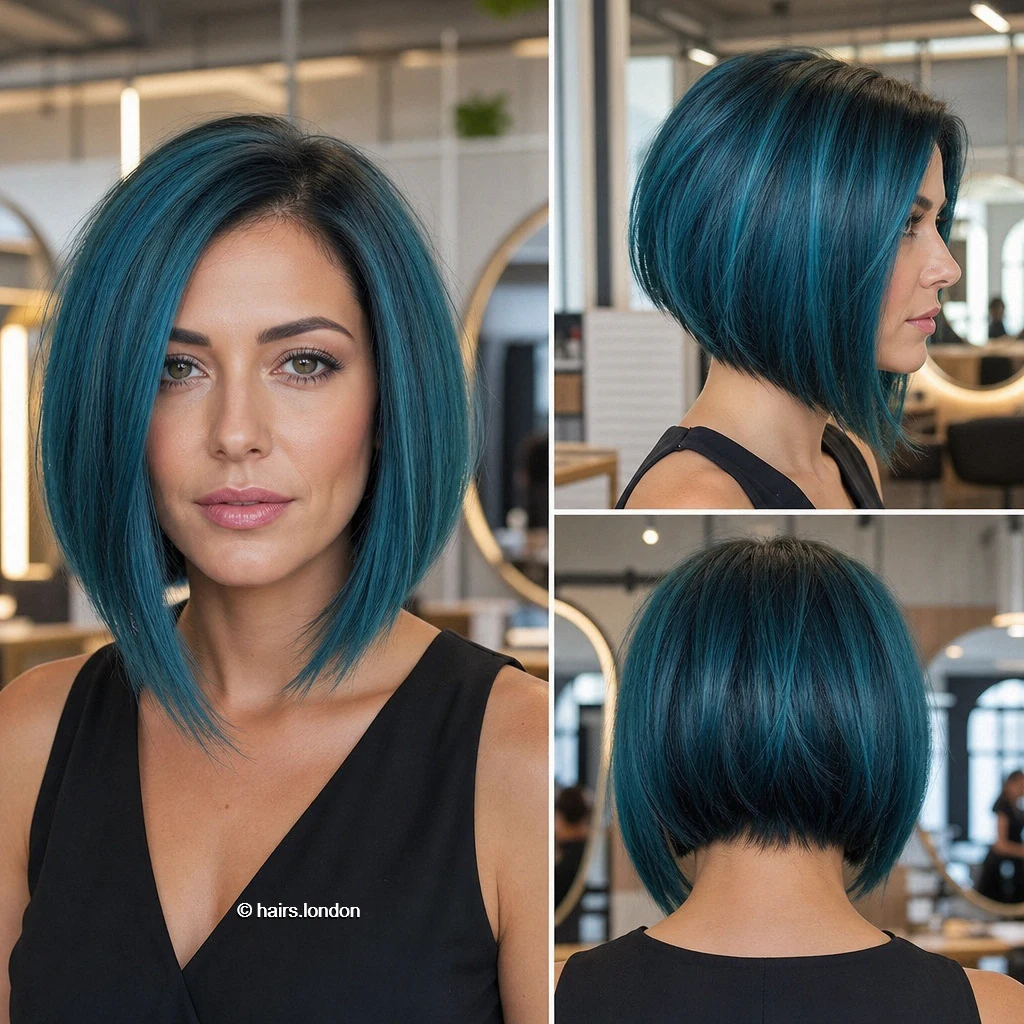
Rich teal blends with deeper roots in this angled bob. A side part introduces flowing, chin grazing front strands here. The rear sits above the neck beneath a rounded silhouette. Visible back layering builds volume without a heavy blunt hem. Finish the face framing lengths with a lightweight serum sparingly. Schedule shape checks as the exposed nape begins growing out. Protect saturated color with cooler rinses and gentle shampoo regularly. Ask your stylist to preserve movement without hollowing ends unnecessarily. Fine hair benefits when the perimeter retains sufficient weight visibly. Thicker hair may need selective debulking beneath the surface only.
12. Deep Green Angled Bob with Tapered Front Pieces
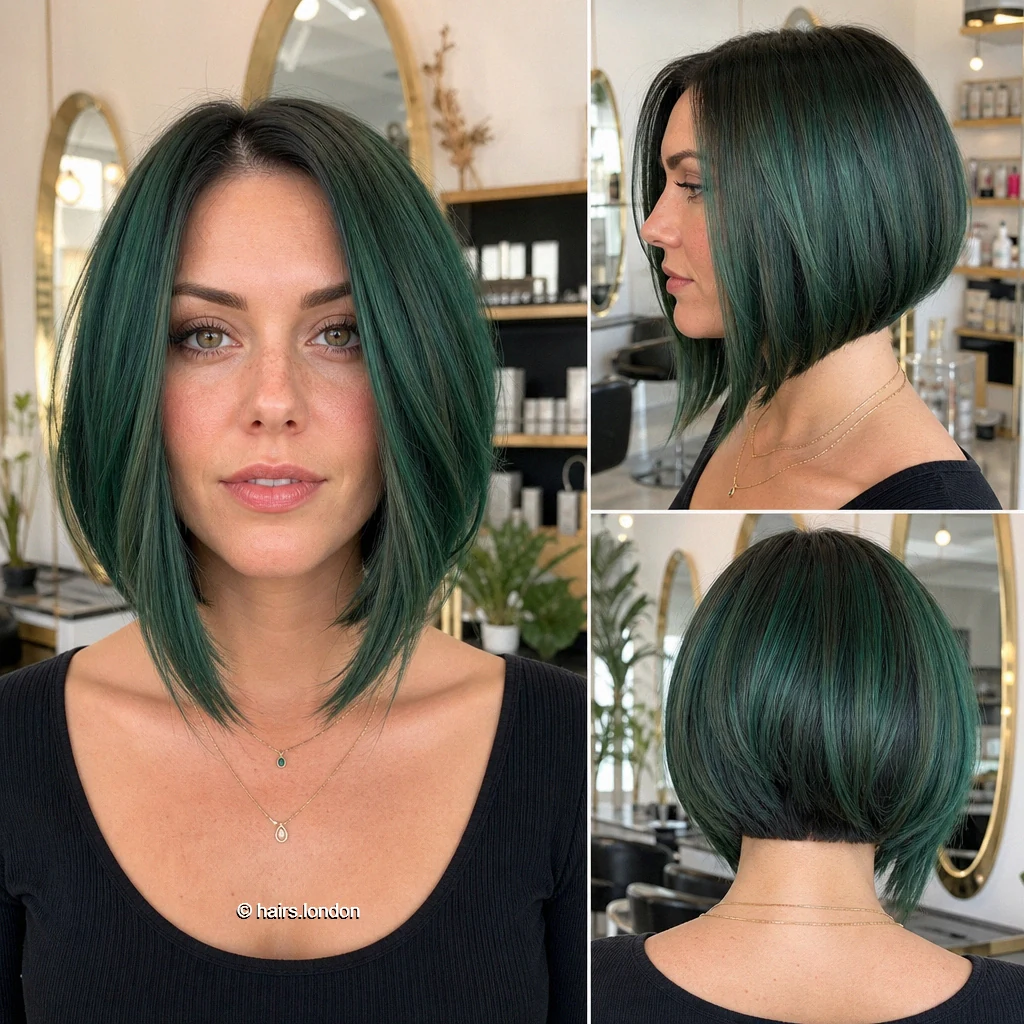
Deep green tint gives this longer angled bob dimension throughout. A central part frames both sides with tapered front pieces. Those points descend toward the collarbone, beyond the jaw line. The shorter rear curves around an exposed, neat nape area. Smooth the surface while leaving the long ends flexible naturally. Schedule shape checks as the exposed nape begins growing out. Protect saturated color with cooler rinses and gentle shampoo regularly. Ask your stylist to preserve movement without hollowing ends unnecessarily. Thicker hair may need selective debulking beneath the surface only. Use heat protection before smoothing the surface with brushes gently.
13. Electric Blue Tousled Layered Bob
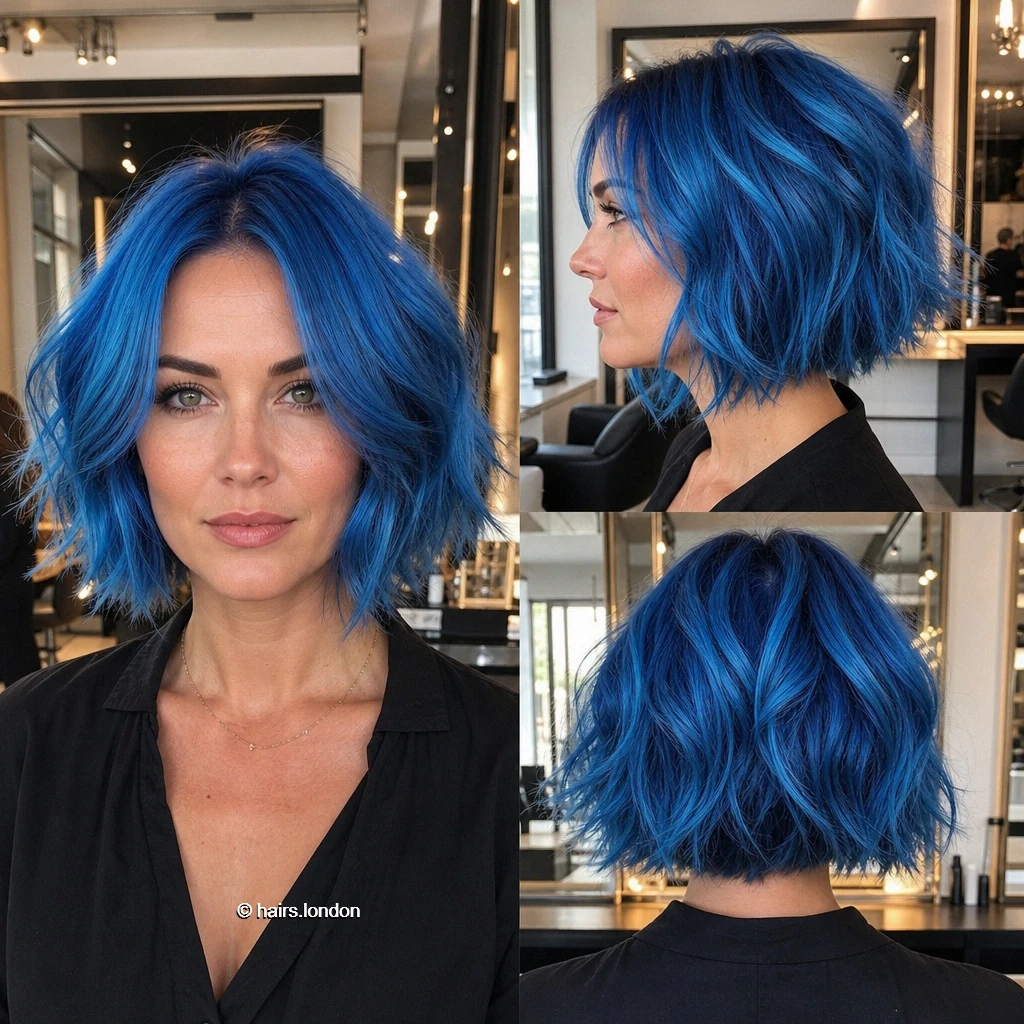
Electric blue enlivens this jaw length, tousled layered bob beautifully. Loose central parting opens the face without a fringe here. Broken ends and surface movement keep the outline airy throughout. The rear shows loose texture rather than strong graduation lines. Scrunch a little mousse through damp hair before diffusing gently. Use a diffuser when encouraging separation rather than frizz overall. Protect saturated color with cooler rinses and gentle shampoo regularly. Ask your stylist to preserve movement without hollowing ends unnecessarily. Thicker hair may need selective debulking beneath the surface only. Refresh the outline when its shape starts losing definition visibly.
14. Nearly Black Navy Wavy Bob with Wispy Bangs
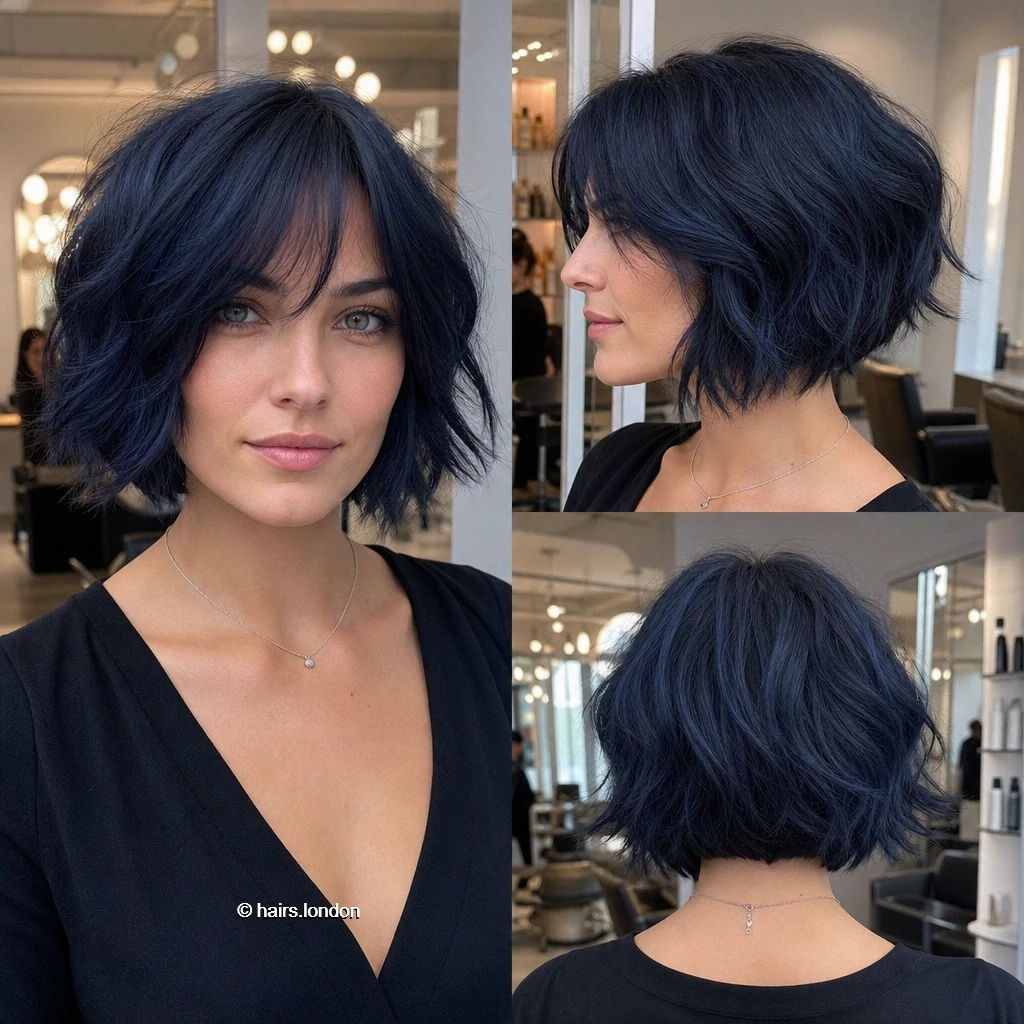
Nearly black navy shades this wavy, jaw skimming bob throughout. Wispy bangs soften the forehead above loose side waves here. Light layers loosen the perimeter without erasing its bob shape. The back looks full and softly uneven at the ends. Diffuse gentle waves, then adjust fringe using your fingertips lightly. Ask your stylist to preserve movement without hollowing ends unnecessarily. Protect saturated color with cooler rinses and gentle shampoo regularly. Thicker hair may need selective debulking beneath the surface only. Refresh the outline when its shape starts losing definition visibly. Use a diffuser when encouraging separation rather than frizz overall.
15. Blue-Teal Short Shaggy Bob
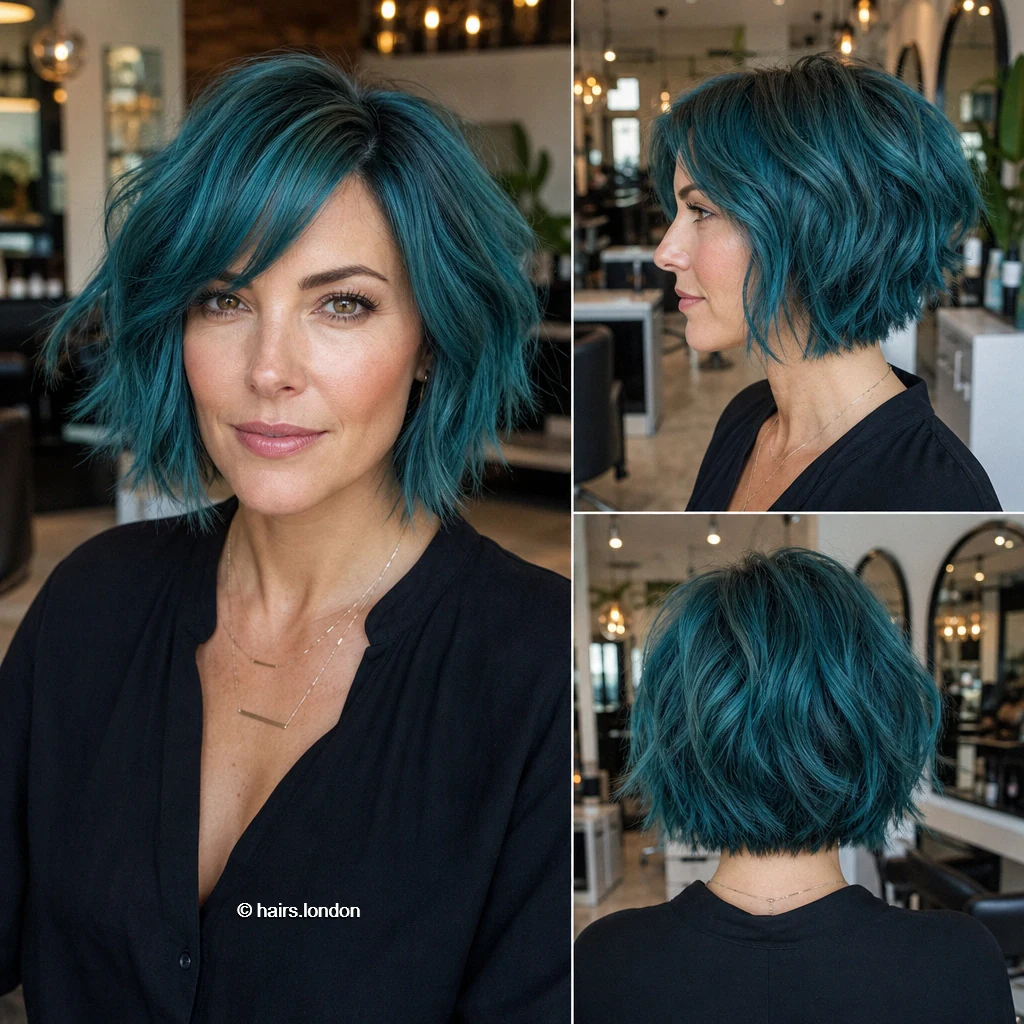
Blue teal color brightens this lively, short shaggy bob throughout. A side swept fringe blends into cheek length pieces naturally. Layered sides flick outward while the back remains loosely tapered. The irregular outline favors movement over a precise edge here. Scrunch lightweight foam through damp sections and air dry naturally. Ask your stylist to preserve movement without hollowing ends unnecessarily. Protect saturated color with cooler rinses and gentle shampoo regularly. Thicker hair may need selective debulking beneath the surface only. Schedule shape checks as the exposed nape begins growing out. Use a diffuser when encouraging separation rather than frizz overall.
16. Deep Emerald Gently Waved Bob
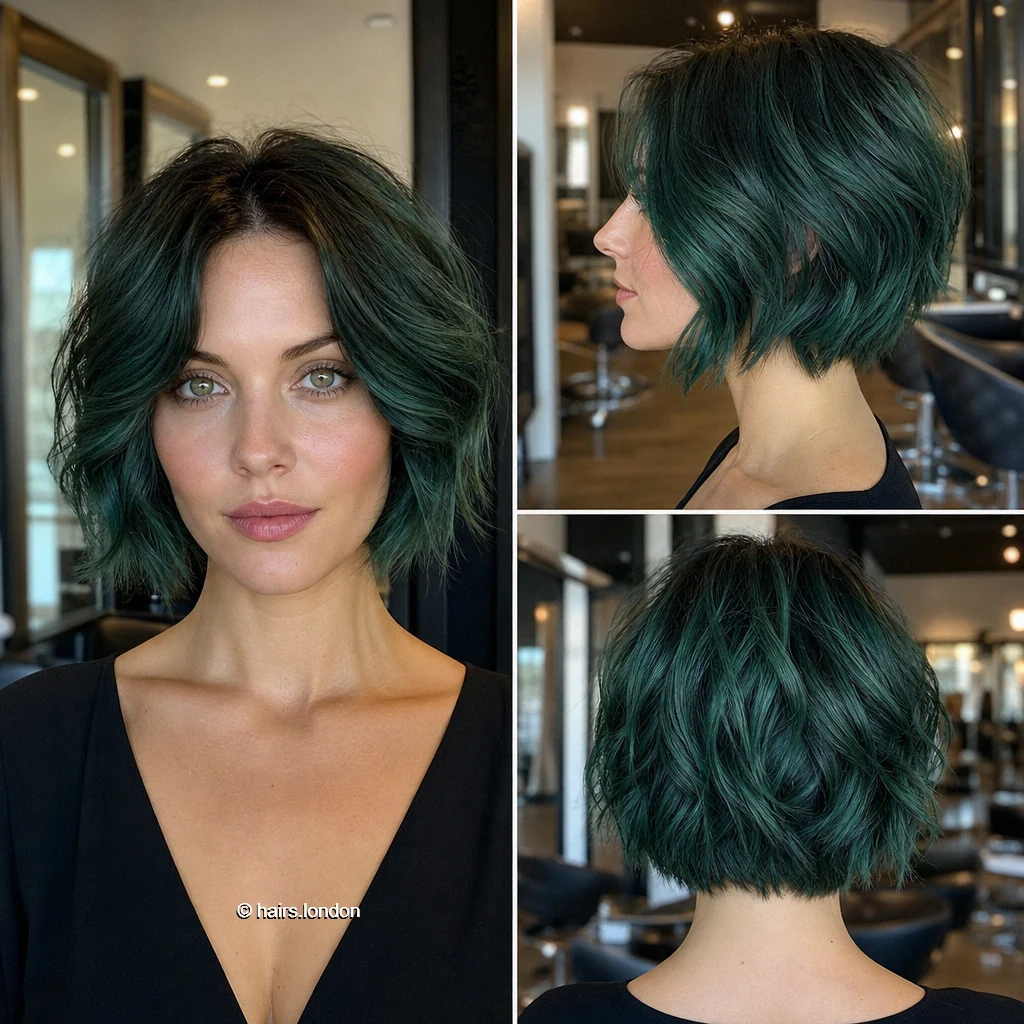
Deep emerald hues enrich this gently waved chin length bob. A loose middle part lets the front fall softly forward. Textured ends gather around the jaw, with fullness above them. Rear layers taper subtly toward the neckline without sharp stacking. Air dry with curl cream, then separate any clumps gently. Use a diffuser when encouraging separation rather than frizz overall. Protect saturated color with cooler rinses and gentle shampoo regularly. Ask your stylist to preserve movement without hollowing ends unnecessarily. Thicker hair may need selective debulking beneath the surface only. Refresh the outline when its shape starts losing definition visibly.
17. Vivid Royal Blue Smooth Jawline Bob
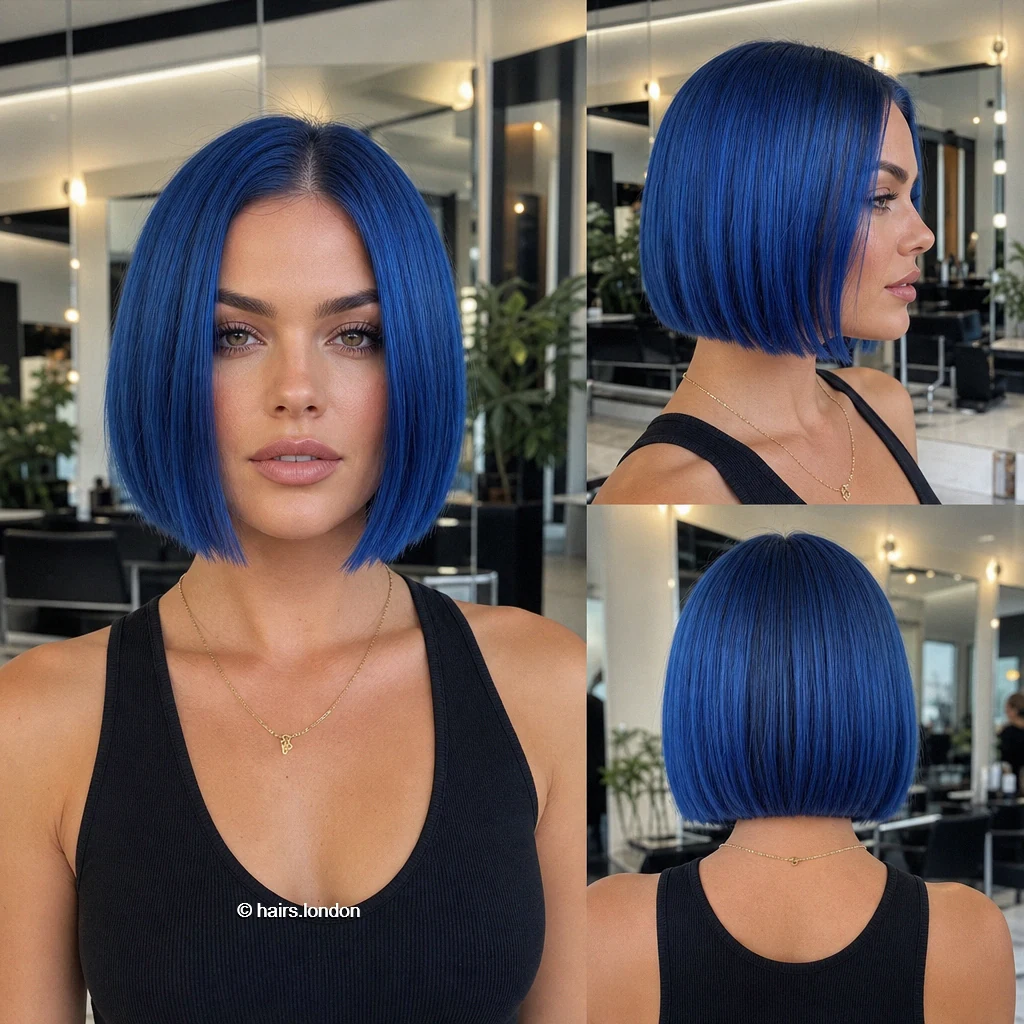
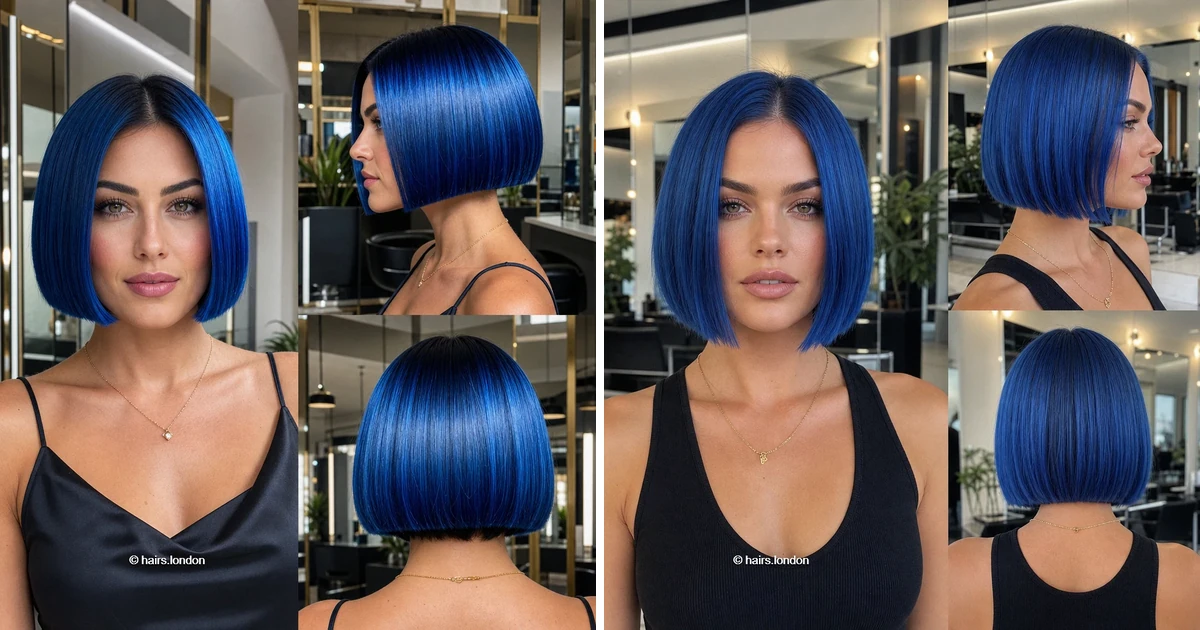
Vivid royal blue defines this compact, smooth jawline bob precisely. A centered part divides sleek sides without a fringe visibly. The side and back show a fairly level perimeter overall. Subtle inward bending softens otherwise straight, weighty ends throughout here. Use tension while drying to keep each edge smooth daily. Fine hair benefits when the perimeter retains sufficient weight visibly. Protect saturated color with cooler rinses and gentle shampoo regularly. Refresh the outline when its shape starts losing definition visibly. Thicker hair may need selective debulking beneath the surface only. Use heat protection before smoothing the surface with brushes gently.
18. Dark Navy Chin-Skimming Precision Bob
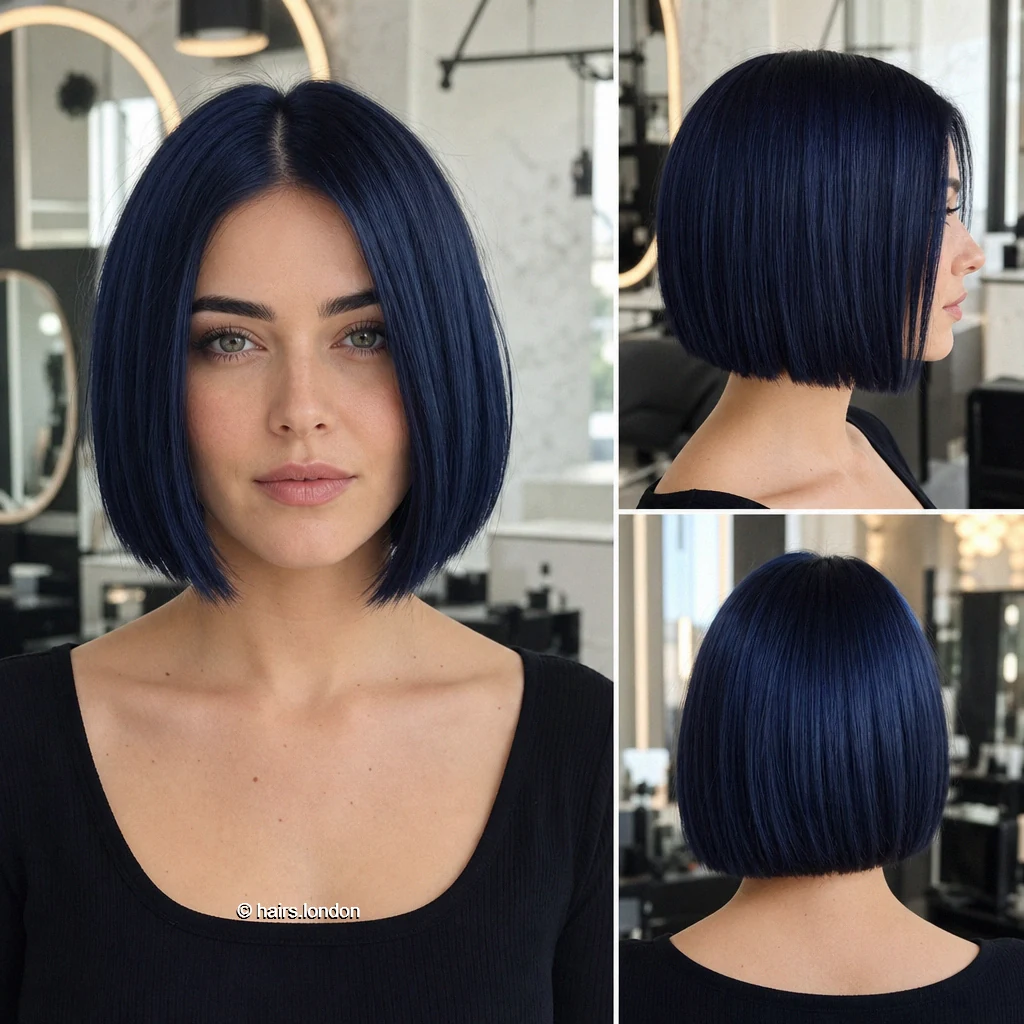
Dark navy blue coats this polished, chin skimming bob evenly. The middle part reveals two balanced, unfringed front panels clearly. Side views show a dense perimeter ending near the jaw. Back ends appear straight and even against the neck here. Smooth with a paddle brush, then lightly tuck tips inward. Fine hair benefits when the perimeter retains sufficient weight visibly. Refresh the outline when its shape starts losing definition visibly. Protect saturated color with cooler rinses and gentle shampoo regularly. Thicker hair may need selective debulking beneath the surface only. Use heat protection before smoothing the surface with brushes gently.
19. Bright Turquoise Bob with a Clean Back Line
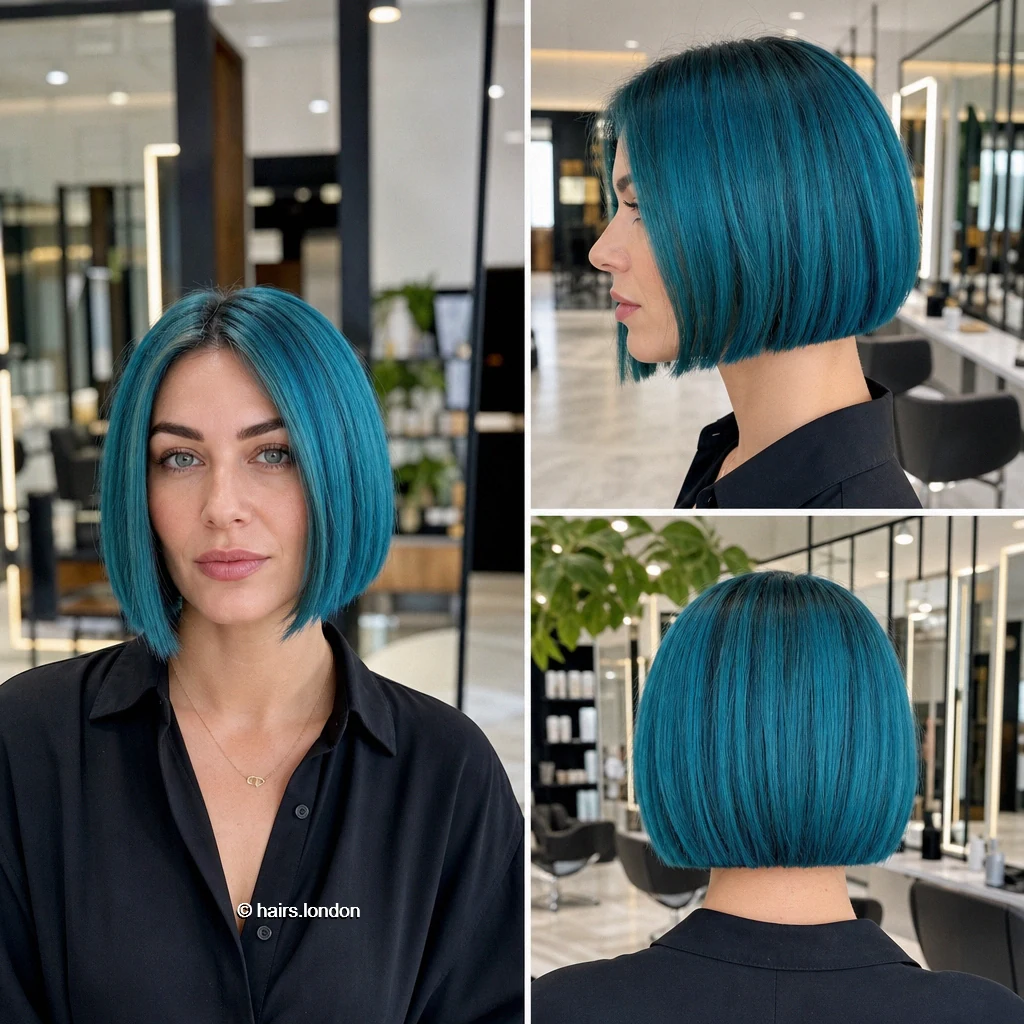
Bright turquoise blue distinguishes this tidy, jaw length bob immediately. A slight side part creates an understated face framing sweep. The side profile keeps front pieces slightly longer than back. Rear ends form a clean, softly rounded horizontal edge overall. Blow dry toward the face, guiding ends gently inward throughout. Fine hair benefits when the perimeter retains sufficient weight visibly. Protect saturated color with cooler rinses and gentle shampoo regularly. Refresh the outline when its shape starts losing definition visibly. Thicker hair may need selective debulking beneath the surface only. Use heat protection before smoothing the surface with brushes gently.
20. Dark Green Bob with Rounded Back Volume
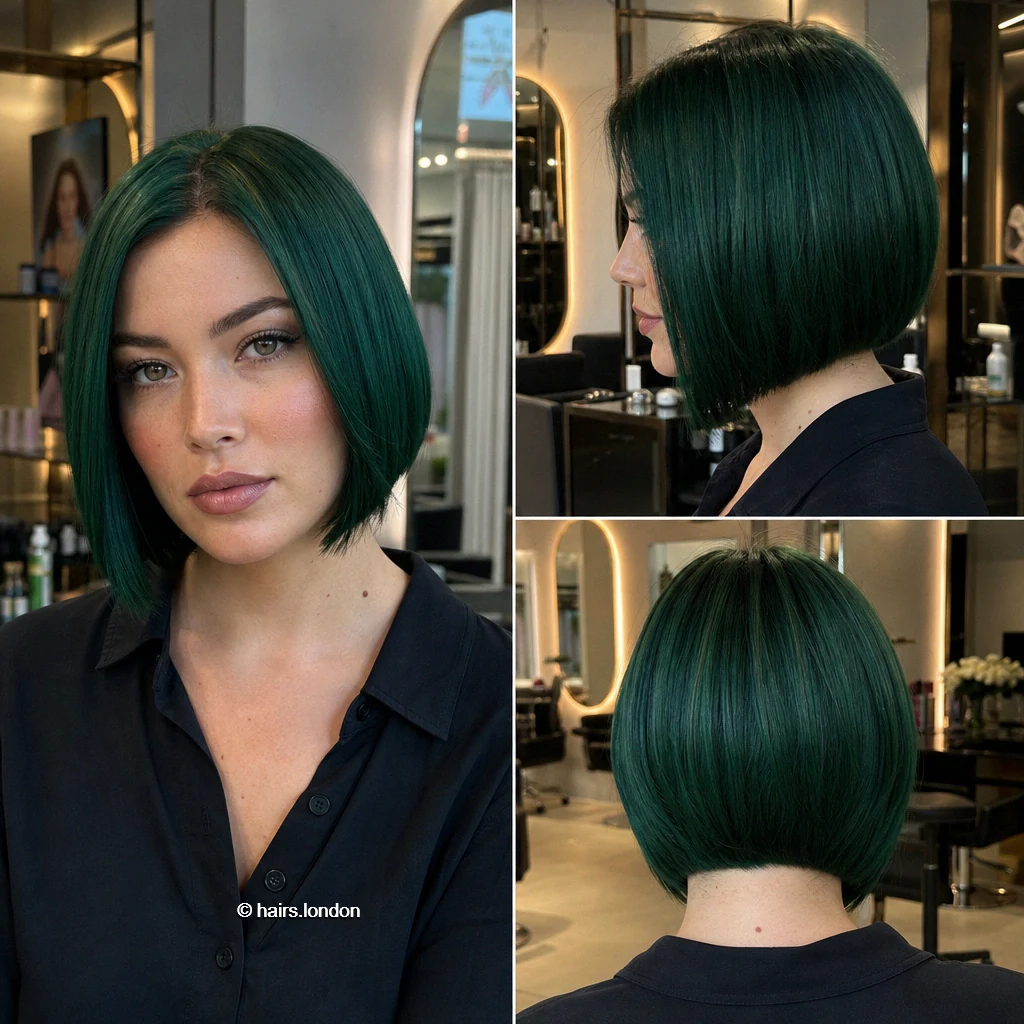
Dark green colors this sleek bob with longer front pieces. An offset part allows one side to sweep forward naturally. Front hair reaches below the jaw, above the neckline here. The visible back curves inward over a closely shaped nape. Use a round brush for controlled volume beneath the crown. Schedule shape checks as the exposed nape begins growing out. Protect saturated color with cooler rinses and gentle shampoo regularly. Thicker hair may need selective debulking beneath the surface only. Ask your stylist to preserve movement without hollowing ends unnecessarily. Use heat protection before smoothing the surface with brushes gently.
How to Choose Your Bob Length and Shape
Start with the point where you want the front to land: near the jaw, beneath the chin or closer to the collarbone. Then consider the back. A nearly level perimeter gives a different result from the images with an exposed nape and visibly shorter, graduated back. An A-line describes a longer front; graduation describes the shorter layers that build shape at the back. Some cuts here show both. Check side and back views with your stylist, since a front view alone cannot establish the whole shape.
Styling Fine, Thick, Wavy and Curly Textures
Fine hair may benefit from a substantial perimeter and limited internal layering; use light products so the ends do not collapse. Thick hair can need carefully placed weight removal, but over-thinning makes a bob’s edge look sparse. For natural waves, scrunch mousse or cream into damp hair and diffuse or air-dry before refining a few pieces. If you have curls, discuss the finished length after shrinkage and request a shape assessed on your natural pattern. Smooth sleek bobs with downward airflow, while keeping textured bobs touchable rather than stiff.
Keeping Blue and Green Bob Color Fresh
The saturated blues, teals and greens shown here can change visibly as they fade. Ask your colorist what upkeep is realistic for your starting hair color and the depth you choose. Gentle washing, cooler water and heat protection can help reduce premature fading; follow your colorist’s advice on any pigment-depositing product. Deeper roots are visible on some looks, so decide whether you prefer that contrast or more frequent root appointments.
Maintaining the Bob Perimeter and Graduation
A smooth, blunt edge shows growth and unevenness sooner than a broken, shaggy outline. Check the front pieces as well as the back when booking trims: longer points can lose their definition even while the crown still looks full. On graduated shapes, the exposed nape and rounded back need particular attention as they grow. Textured bobs allow more flexibility, but occasional reshaping keeps layers from collecting too much weight at the sides. Fringe may need attention between full cuts.
What to Discuss with Your Stylist
Bring the image that best represents your desired silhouette, plus its side and back views. Point out the front length, perimeter, parting, fringe and amount of back graduation you actually want. Explain your density, natural texture, growth patterns, daily styling time and willingness to maintain vivid color. Ask how the proposed cut will look when air-dried as well as styled, and agree on a trim and color plan before cutting.
Frequently Asked Questions
What makes a cut a bob rather than a lob?
A bob generally ends around the jaw or neck; a lob is a longer bob that approaches the shoulders. Long front points can make the distinction less clear, so consider the overall silhouette as well as the longest strands.
Is an A-line bob the same as a stacked bob?
No. A-line describes a perimeter that is longer toward the front. Stacked or graduated describes shorter layers that build shape at the back. A cut can have one feature or both.
Which of these shapes makes back graduation most visible?
The styles with exposed napes and rounded, shorter back sections show it most clearly, particularly images 2 and 9. A smooth, level back line should not be described as stacked merely because its front looks longer.
Can fine hair carry a textured bob?
Potentially. Keeping enough weight at the perimeter and using restrained layers may give fine hair movement without making the ends look thin. Your stylist should assess your density first.
How can thick hair avoid a bulky bob shape?
Discuss where the hair gathers weight, especially behind the ears and at the sides. Selective internal weight removal may help, but excessive thinning can disrupt a clean perimeter.
Can naturally curly hair work with these bob lengths?
Yes, provided the length and layers are planned around your curl pattern and shrinkage. Ask to assess the shape in its naturally dried state rather than relying only on a smooth reference image.
Which fringe needs the least daily adjustment?
That depends on your growth patterns and texture. A longer side-swept fringe may blend into the bob as it grows, while short or wispy bangs can need more frequent repositioning and trims.
Do sleek bobs require daily heat styling?
Not necessarily. Some hair dries smoothly with a brush and directed airflow; other textures may take more work. Discuss a version that suits how you normally wear your hair.
How often should I trim a blunt bob?
Book a check when the edge stops looking even or lands at an awkward point. A precision perimeter usually needs attention sooner than a deliberately tousled outline.
How does a graduated bob grow out?
The nape and lower back typically change first, softening the intended graduation. Your stylist can tidy those areas while leaving more length elsewhere if you are growing it longer.
How can I reduce visible fading in blue or green hair?
Use gentle washing habits, protect hair from styling heat and ask your colorist whether a suitable pigment-depositing product makes sense. The best upkeep depends on your starting color and chosen shade.
What should I bring to a bob consultation?
Bring front, side and back references, then specify which details matter most. Tell your stylist about your natural texture, density, parting, styling routine and preferred appointment schedule.
Conclusion
The strongest choice is not simply the blue or green shade you like most. Compare the weight line, front length, back shape and amount of texture, then adapt those details to how your hair behaves. A clear consultation makes it easier to keep the bob recognizable both after styling and as it grows.