

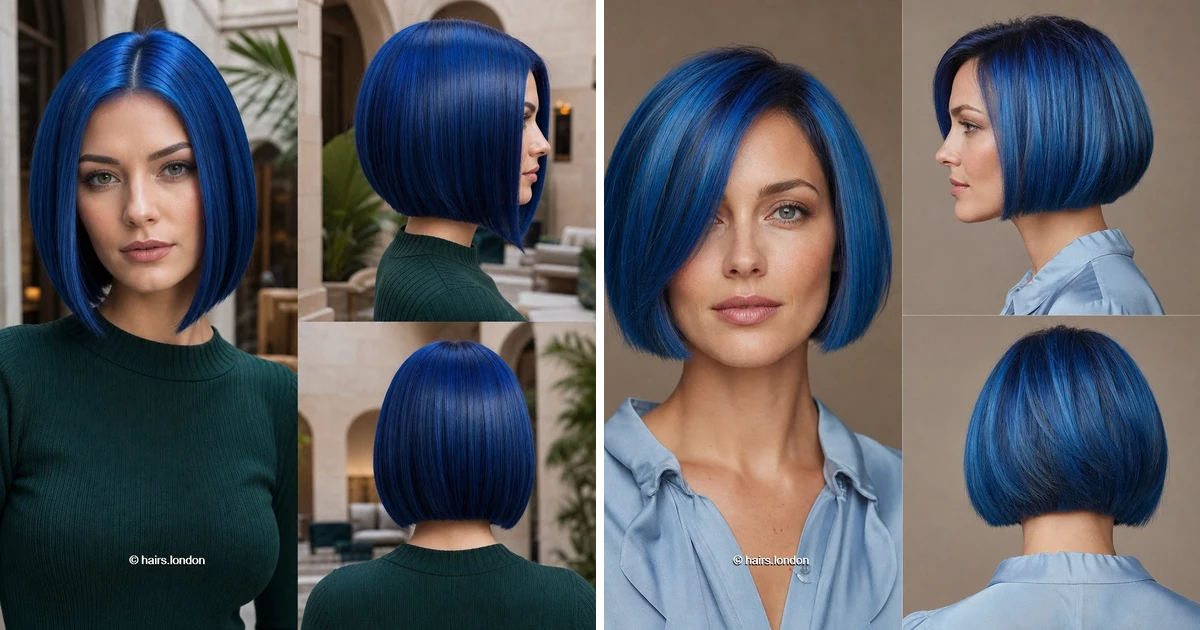
11. Petrol Blue Graduated Bob With Tapered Fronts
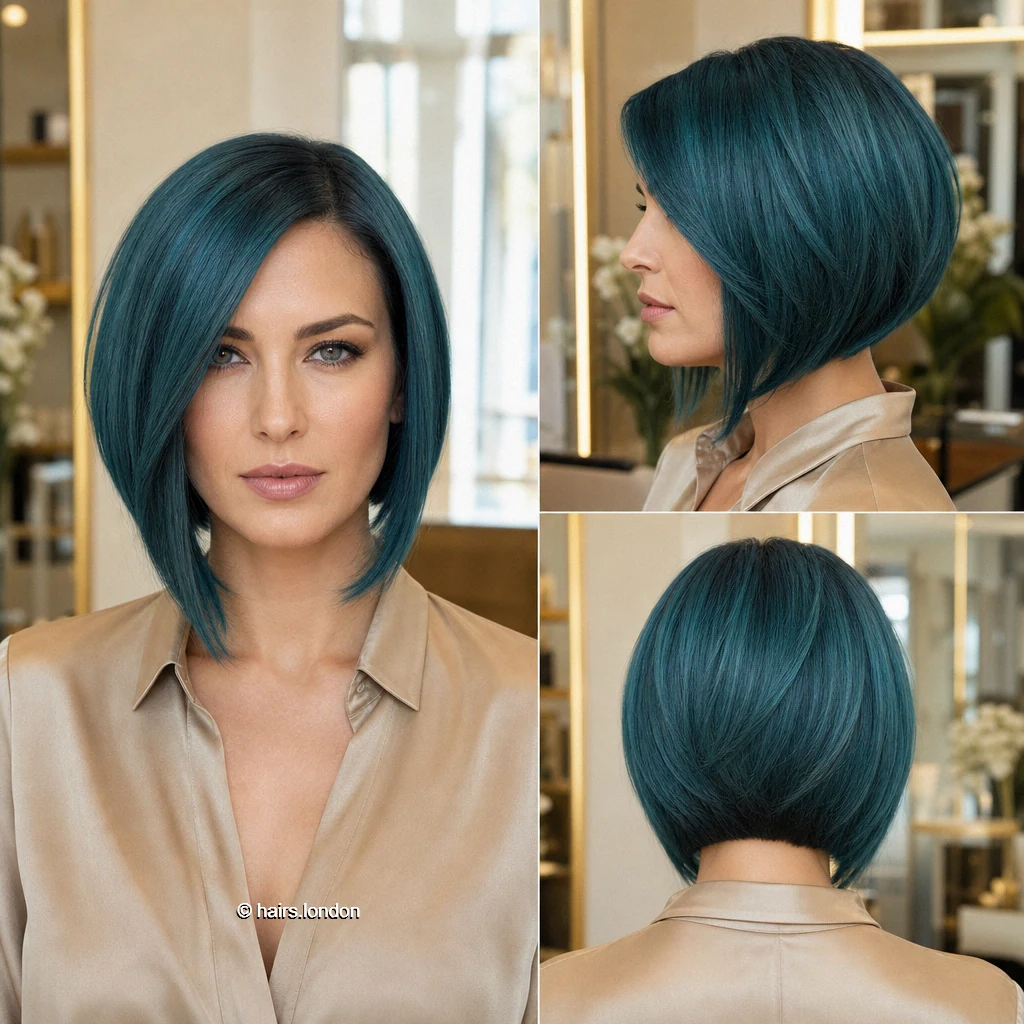
Petrol blue adds cool depth to this graduated bob silhouette. A side swept front drapes across part of the forehead. Longer pointed sections frame the face below the jaw. The rear view clearly reveals rounded weight above a visibly narrower nape. Ask for balanced graduation if you want that rear fullness. Dry the back with lift, then smooth the face framing lengths. Keep serum light so the pointed ends retain movement. This cut depends on density and your preferred styling effort. Nape trims help preserve the contrast between back and front. Discuss color refreshes to prevent the petrol tone dulling.
12. Deep Green Bob With an Extended Front
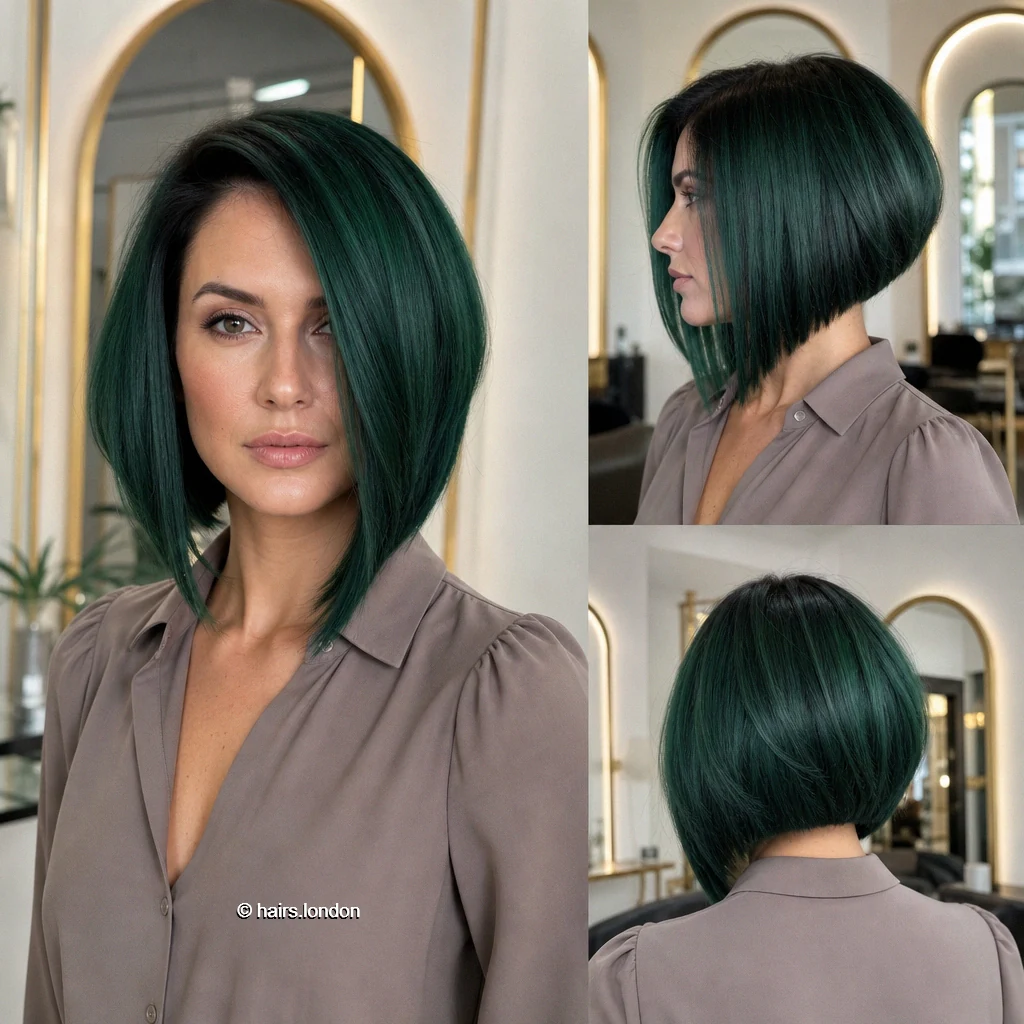
Deep green emphasizes the smooth curve of this angled bob. A strong side part creates one prominent face framing section. That front extends below the jaw, past its shorter back. Rear fullness narrows visibly toward the base of the neck. Ask whether graduation will support this silhouette in your hair. Smooth the longer side downward while gently shaping the crown. Avoid removing so much weight that the front becomes stringy. Density and growth direction can change how sharply it falls. Keep shorter back sections tidy with regular shape focused trims. Green color may need glossing when its depth begins fading.
13. Vivid Blue Tousled Bob With Broken Ends
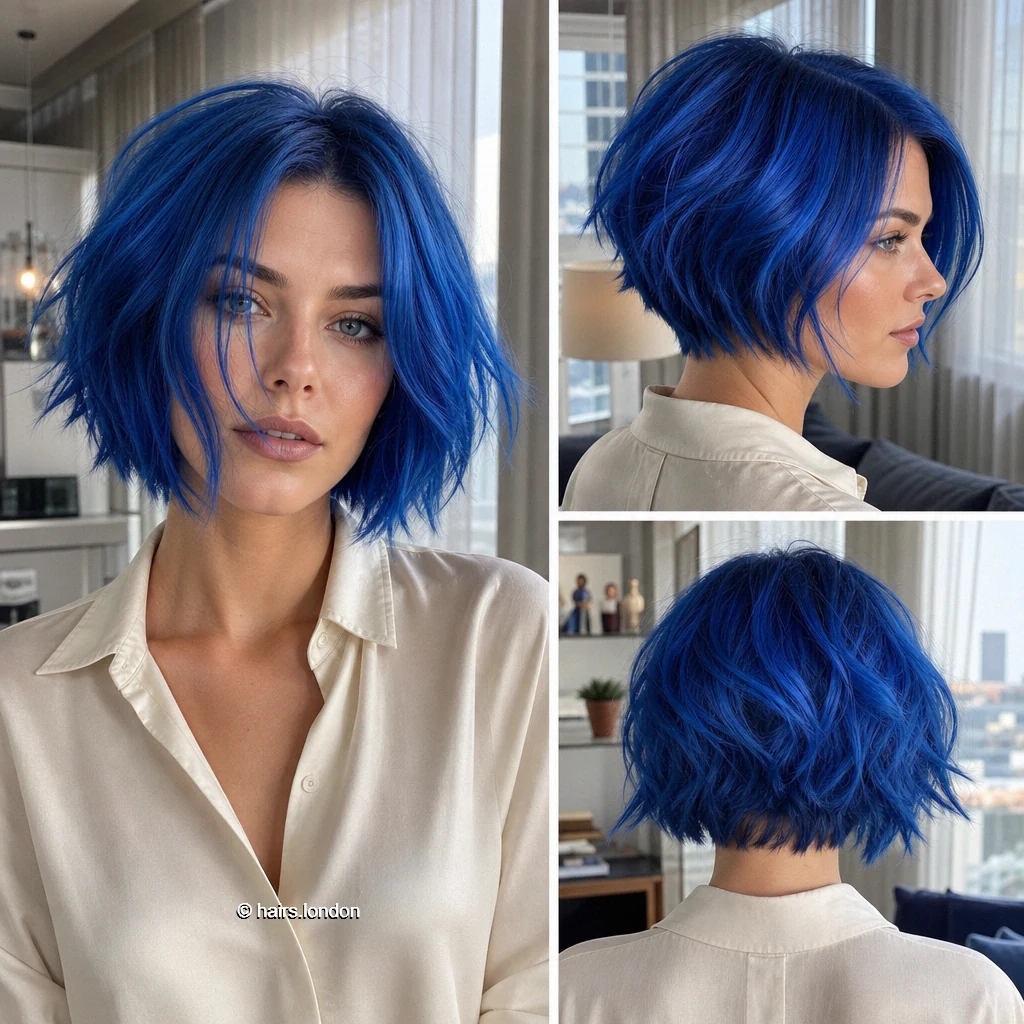
Vivid blue gives this tousled bob an energetic, textured finish. Loose front pieces fall toward the eyes without a solid fringe. Its sides reach roughly jaw length with deliberately broken ends. Back views reveal separated layers rather than a polished line. Scrunch a little styling cream through damp midlengths and ends. Let natural movement show instead of brushing every piece smooth. Fine hair may need lighter product to avoid losing lift. Ask which layers will complement your density and wave pattern. Trim when the ends become shapeless rather than simply uneven. Discuss how fading might soften this particularly bright blue.
14. Dark Blue Choppy Bob With Loose Movement
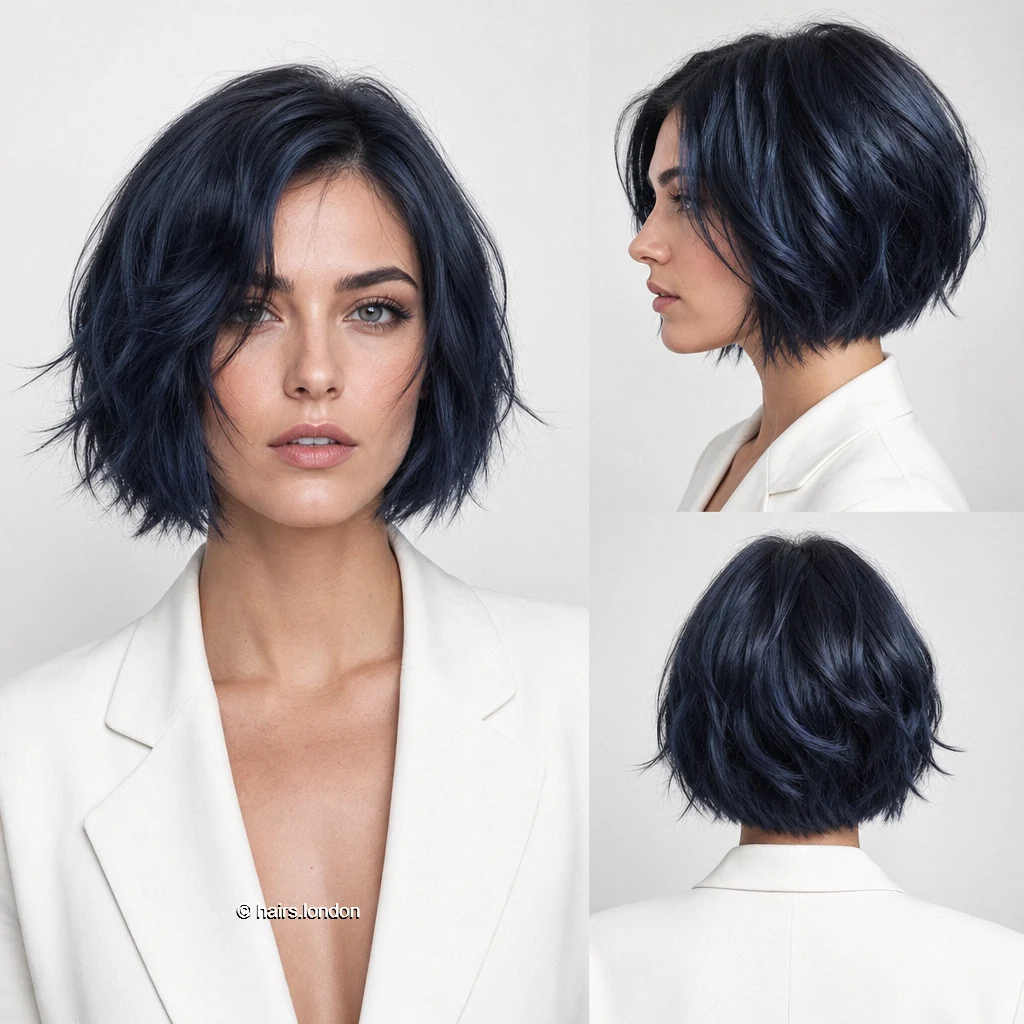
Dark blue color lends depth to this loose, choppy bob. A soft side part lets longer pieces skim the forehead. The sides finish near the jaw with visibly uneven texture. From behind, layers create movement around a short neck length. Work flexible cream through ends rather than coating the roots. Gently bend selected pieces if your natural texture falls straight. Ask for restraint with thinning if your hair lacks density. A strong cowlick may need a different front section length. Refresh the outline when the lower pieces lose their shape. Gentle cleansing helps preserve the blue cast between color visits.
15. Ocean Teal Wavy Bob With Face-Framing Pieces
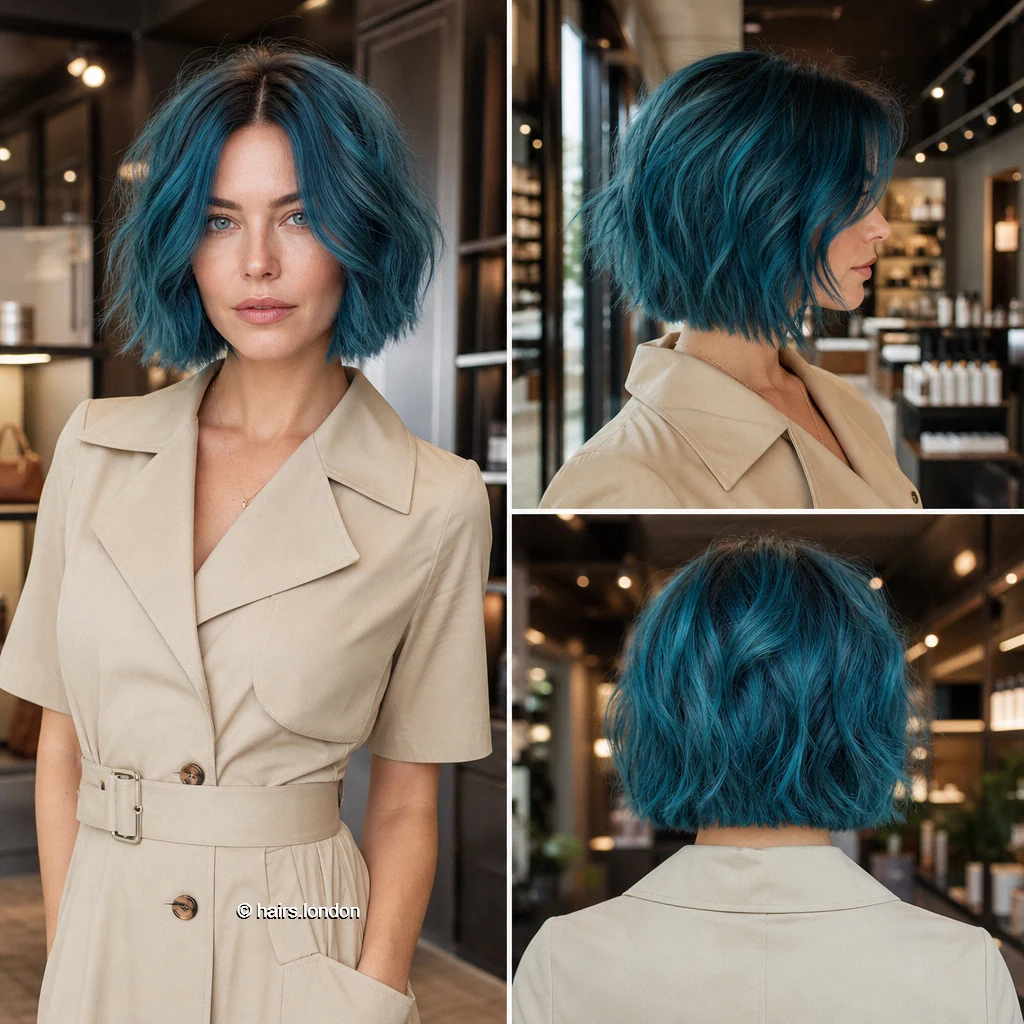
Ocean teal brings out the bends in this textured bob. A loose center part opens into soft face framing pieces. The visible uneven perimeter sits near the jaw and upper neck. Side and back views show waves throughout its layered shape. Scrunch mousse into damp hair, then diffuse without overworking sections. Preserve some weight at the ends to avoid unwanted puffiness. This approach suits natural waves when the layers are balanced. Ask how your hair shrinks before settling on final length. Trim when individual ends begin disrupting the intended soft outline. Discuss whether teal maintenance fits your usual washing routine.
16. Evergreen Wavy Bob With Soft Layers
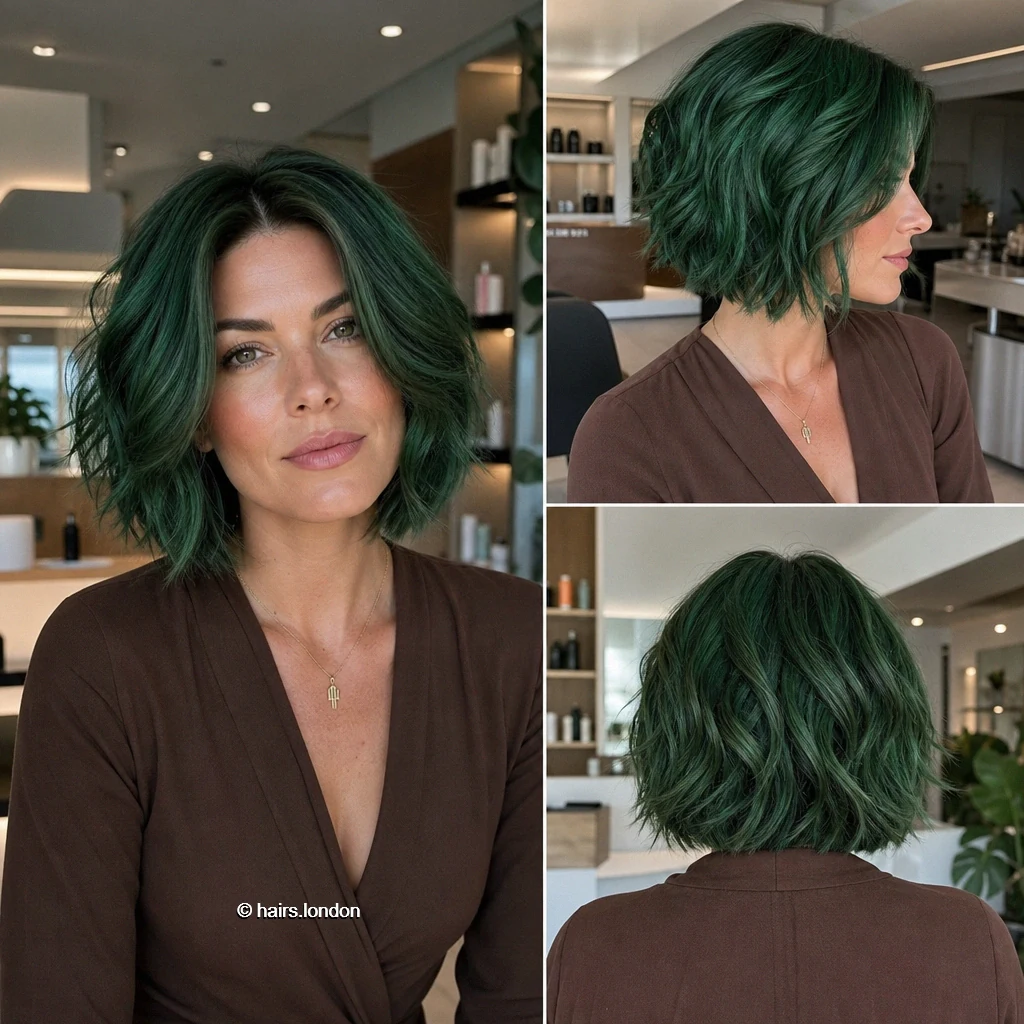
Evergreen color gives this relaxed, wavy bob a moody finish. The center part separates loose sections around the cheekbones evenly. Softly textured ends fall around the jaw, with noticeable movement behind. The rear view shows a softly irregular edge, not precision. Encourage existing waves with cream applied mainly through the ends. Diffuse gently or air dry if your texture responds well. Dense hair may welcome subtle bulk removal without excessive layering. Finer waves might need a stronger perimeter for lasting fullness. Shape trims should follow the waves rather than flatten them. Ask about maintaining green depth as the color fades.
17. Royal Blue Jawline Bob With a Rounded Shape
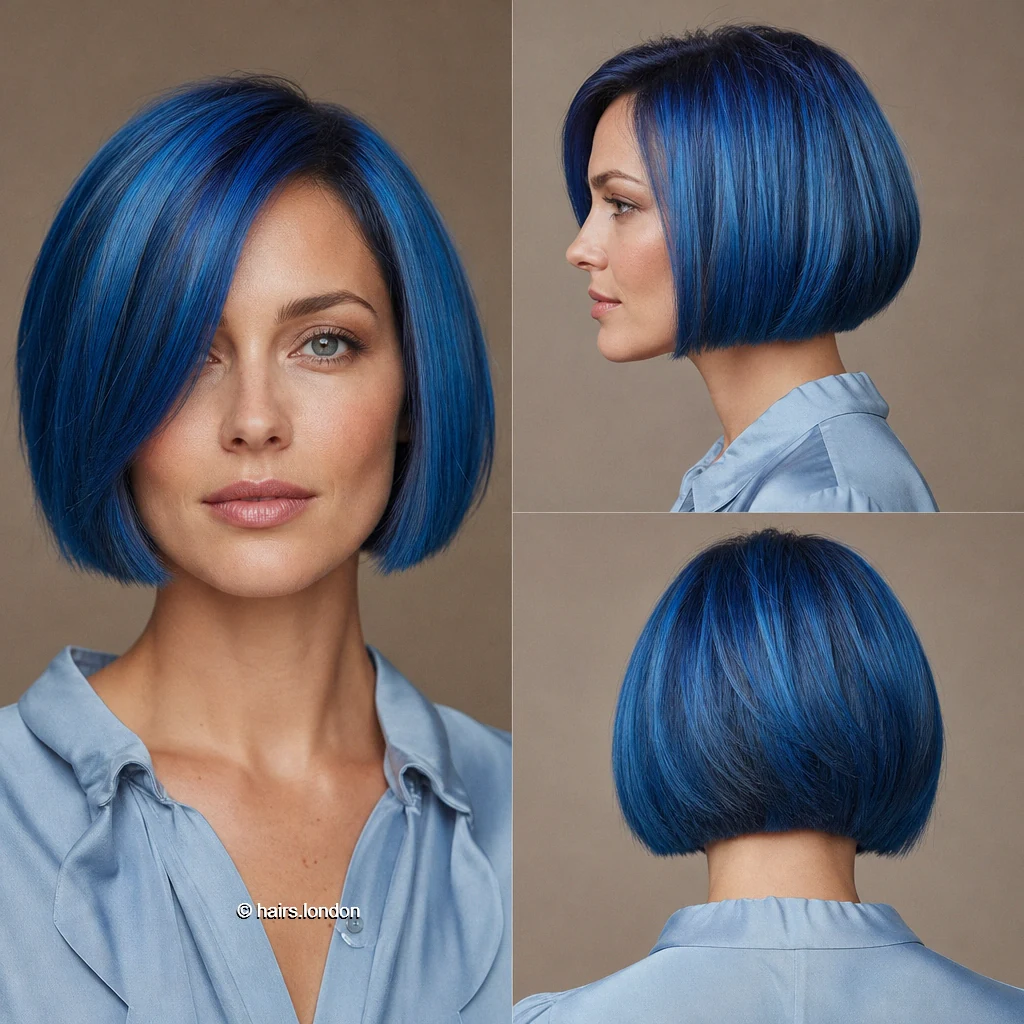
Royal blue makes this compact, jaw length bob stand out. A deep side part creates a long, smooth forehead skimming sweep. The sides curve inward toward a neat, substantial lower edge. Profile and back views show rounded fullness above the nape. Ask for a solid perimeter if you value that weight. Smooth downward during drying, then gently curve the ends under. Fine hair may hold this outline with minimal internal layering. Thick hair could need controlled weight removal inside the shape. Keep the nape and jawline edge aligned through regular trims. Discuss blue refreshes alongside the time needed for smoothing.
18. Midnight Blue Bob With a Smooth Side Sweep
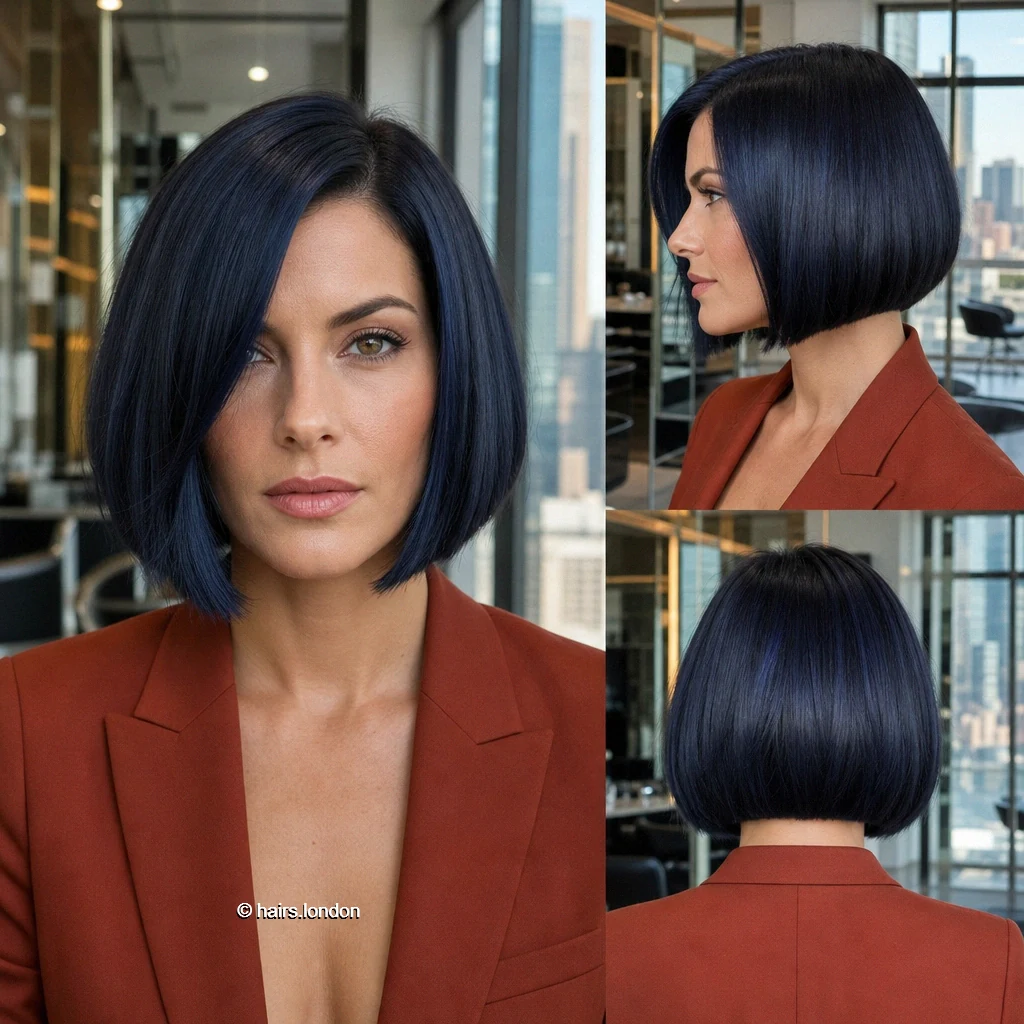
Midnight blue adds a subtle sheen to this polished bob. Hair parts deeply, sweeping across the forehead toward one cheek. The visible sides end near the jaw with curved edges. A softly rounded back rests comfortably above the neck without obvious stacking. Direct the front across while blow drying to establish shape. Finish by smoothing the perimeter, keeping its natural swing intact. This cut may need extra work on strongly wavy hair. Discuss how your usual part influences the front section balance. Trim when the rear edge begins to sit too low. Gentle washing helps protect the understated blue reflect.
19. Turquoise Blunt Bob With a Center Part
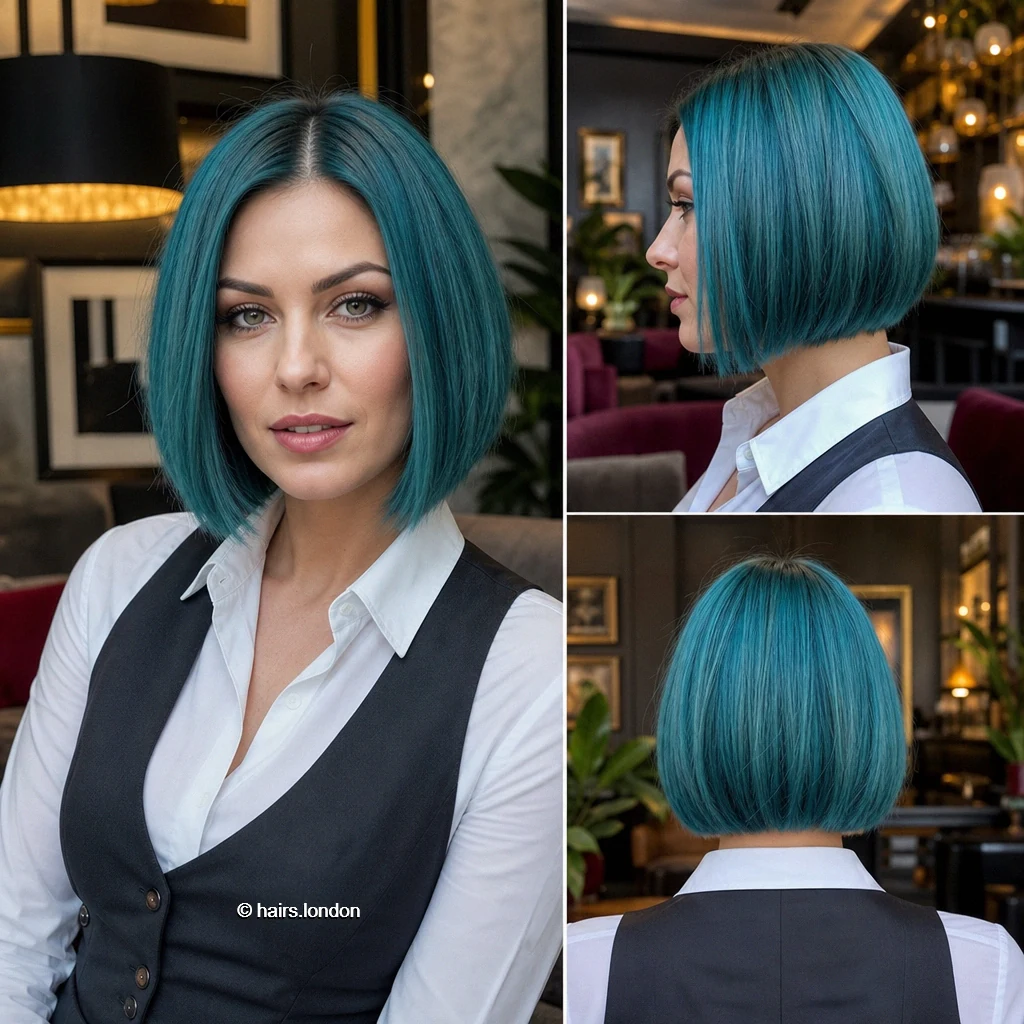
Turquoise gives this center parted bob a bright, cool finish. Smooth front sections frame the face and reach the jaw. The profile shows a slight front to back length difference. Its visible rear perimeter looks nearly level and remains notably full. Ask for a clean edge rather than pronounced back graduation. Blow dry downward, directing only the ends gently inward. Preserve sufficient bottom weight if your hair is naturally fine. Dense hair may need internal control to avoid a wedge. Book trims when the compact lower line starts looking uneven. Discuss root growth and turquoise fading before choosing refresh intervals.
20. Emerald Green Rounded Bob With Softly Angled Fronts
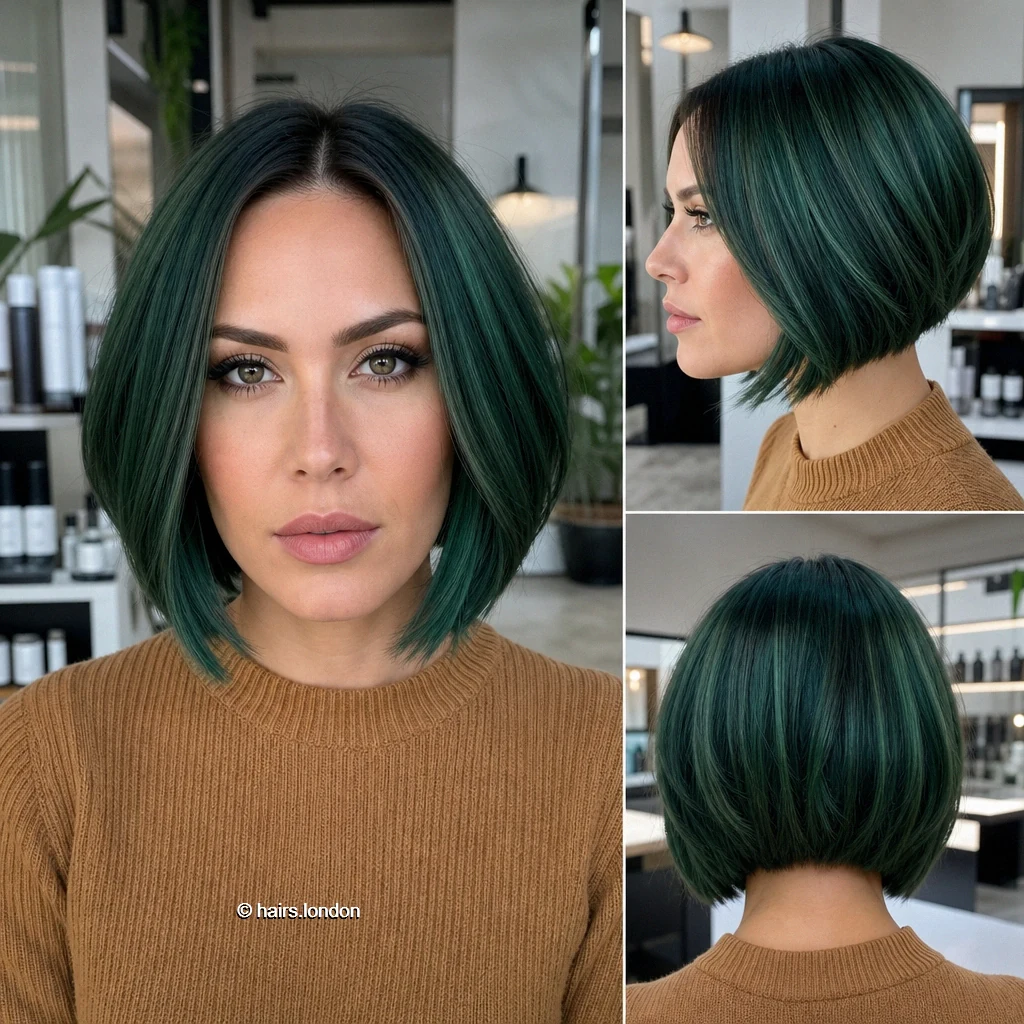
Emerald green adds dimension to this softly angled, rounded bob. A center part keeps the longer front pieces evenly balanced. Those sections reach below the jaw beside the face. The visible back curves inward above the exposed neck. Subtle surface movement prevents its fuller shape from appearing overly stiff. Smooth the perimeter first, leaving some lift through the crown. Ask whether your density supports the rounded rear weight line. Natural waves may require styling to maintain these smooth edges. Trim the nape as the longer front contrast becomes less clear. Discuss green refreshes and root upkeep during your salon consultation.
How to Choose Your Bob Length and Shape
Start with where you want the perimeter to sit: near the jaw for a compact bob or lower beside the face for more coverage. Compare the side and back views, not just the front. An A-line bob has longer front sections; a stacked or graduated bob also shows shorter, built-up shaping at the back. Your density, natural texture, nape growth and willingness to style a fringe all affect which version is practical.
Styling Fine, Thick, Wavy and Curly Textures
For fine hair, protect weight at the bottom and use lightweight products so a bob does not collapse. Thick hair may benefit from carefully placed internal weight removal, while keeping the visible perimeter substantial. Scrunch and diffuse natural waves rather than brushing out their movement. For curls, discuss dry shape, shrinkage and where the finished length will sit before cutting. Smooth precise bobs with heat protection and downward airflow; direct a sweeping fringe early in the drying process.
Keeping Blue and Green Bob Color Fresh
These images range from dark blue and forest green to vivid cobalt and turquoise, so upkeep will vary. Ask your colorist how your starting color and desired brightness affect fading, root visibility and refresh appointments. Gentle washing, cooler water where comfortable and restrained heat styling can help preserve the finish. A color-depositing product is worth considering only after your colorist recommends a suitable shade.
Maintaining the Bob Perimeter and Graduation
A blunt or clean-edged bob shows uneven growth quickly, especially along the jaw and nape. Longer front points also need checking from both sides. On a graduated bob, the shorter back can lose its compact shape before the front needs much length removed. Textured, wavy bobs allow a softer outline, but still benefit from trims when the ends stop forming the intended silhouette. Set your schedule according to the cut, not one universal interval.
What to Discuss With Your Stylist
Bring front, profile and back references for the shape you like. Point out whether you want a solid edge, separated layers, a longer front, visible back graduation or a manageable fringe. Show your usual part and explain how your hair behaves when air dried, including cowlicks, curl shrinkage and bulk at the sides. Agree on the finished length, realistic daily styling and a color maintenance plan before the cut begins.
Frequently Asked Questions
What is the difference between a bob and a lob?
A bob generally finishes around the jaw or neck, while a lob extends closer to the shoulders. The exact label matters less than showing your stylist where you want the ends to sit.
How is an A-line bob different from a stacked bob?
An A-line bob is longer at the front than the back. A stacked bob has visible graduation that builds weight above a shorter back or nape; a cut can show both features.
Will a blunt bob work with fine hair?
It can help fine hair appear fuller by preserving weight along the edge. Ask your stylist to account for your density and growth patterns before choosing the length.
How can thick hair avoid looking bulky in a bob?
Thoughtful internal weight removal can control bulk without leaving thin, uneven ends. The right placement depends on your density, texture and chosen perimeter.
Can natural curls be cut into a bob?
Yes. Plan for shrinkage and discuss the shape at its natural, dry finish so the curls sit at the length you expect.
Should I add a fringe to my bob?
A fringe can change the shape considerably. Consider your forehead growth patterns, preferred part and whether you are comfortable styling it each morning.
How much daily styling does a sleek bob need?
That depends on your natural texture. Smooth hair may need little work, while strong waves or curls can require more time and heat to maintain a polished edge.
How do I style a wavy bob without making it puffy?
Apply a modest amount of wave product to damp hair, scrunch and diffuse gently or air dry. Avoid brushing through the finished waves.
How often should I trim a bob?
Trim when its defining shape starts to change. A precise jawline edge or short graduated nape will usually need attention sooner than a loose, textured bob.
What happens when a graduated bob grows out?
The short back can lose its rounded weight distribution as it lengthens. Your stylist can tidy the nape while gradually adjusting the overall silhouette.
Do bright blue and green bobs need special color care?
Vivid shades may fade and show roots noticeably. Ask your colorist about gentle cleansing, heat use and a refresh plan suited to your starting color.
Can I grow a short bob into a lob?
Yes. Regular shape adjustments can help the back catch up with longer front sections while keeping the growing cut intentional.
Conclusion
The most useful inspiration is a bob you can picture from every angle. Choose the length and weight line first, then decide how much layering, daily styling and blue or green color maintenance fits your hair and routine.