

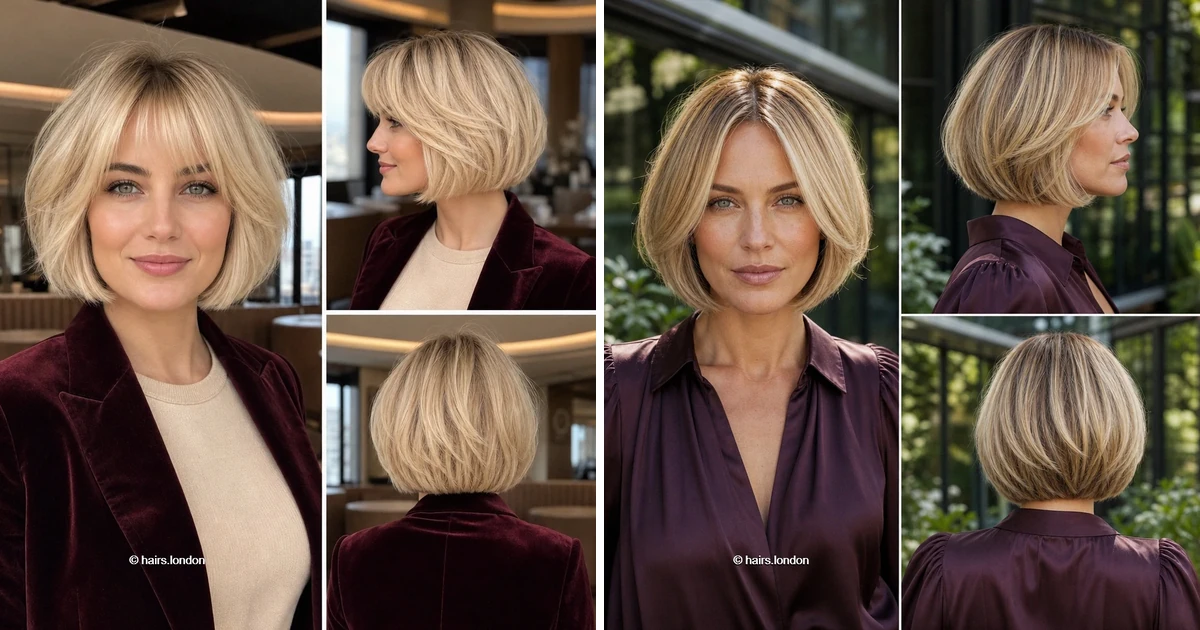
11. Voluminous Blonde Bob with Swept Layers
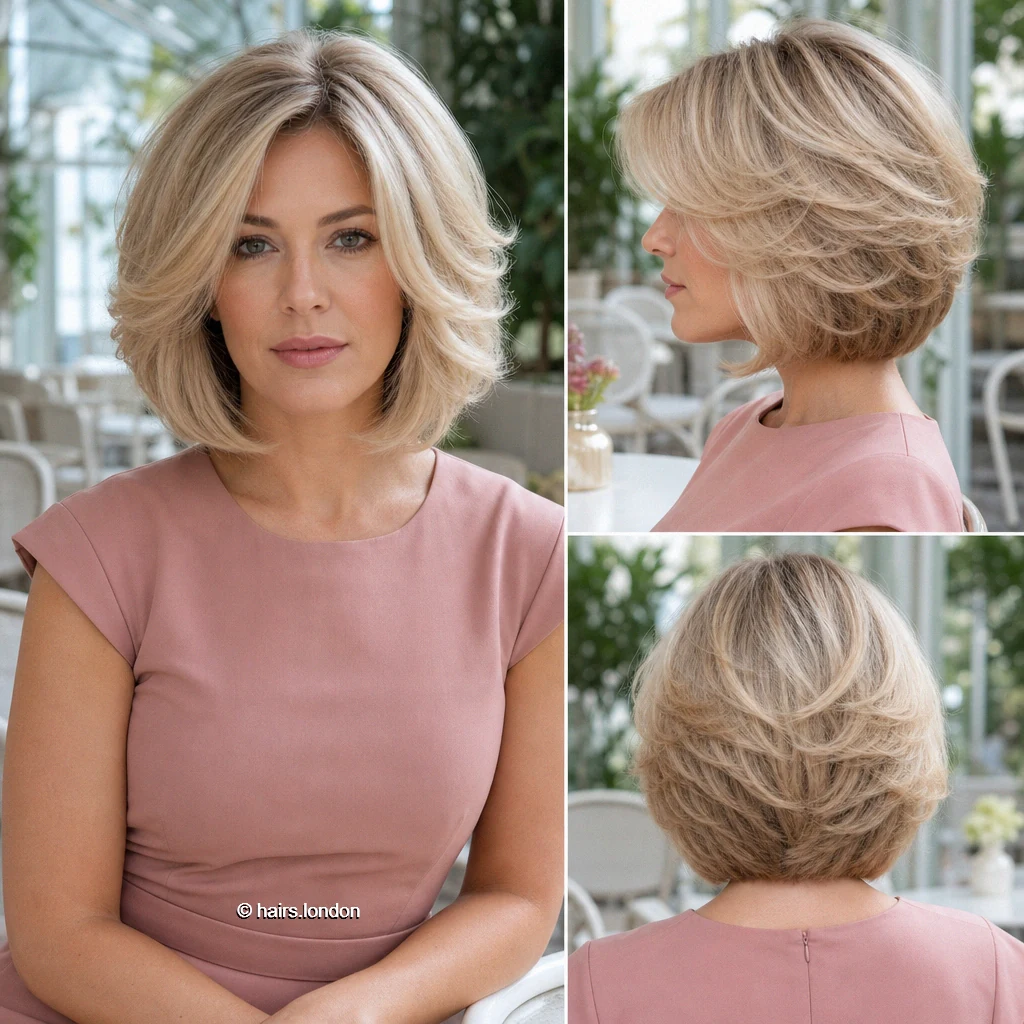
Broad, swept layers give this blonde bob generous side volume. Its longer front falls around the jaw with turned ends. The side view shows shorter layering toward the visible back. Pale highlights run through a deeper blonde base for dimension. Ask whether your density can support this much airy layering. Blowdry sections away from the face using a round brush. Keep the lower edge smooth while allowing upper pieces movement. Natural waves may create a fuller result than pictured here. Trim when the sweeping front stops meeting the shorter back. Use conditioning care if highlighted ends become rough between appointments.
12. Tousled Blonde Bob with Flicked Outer Layers
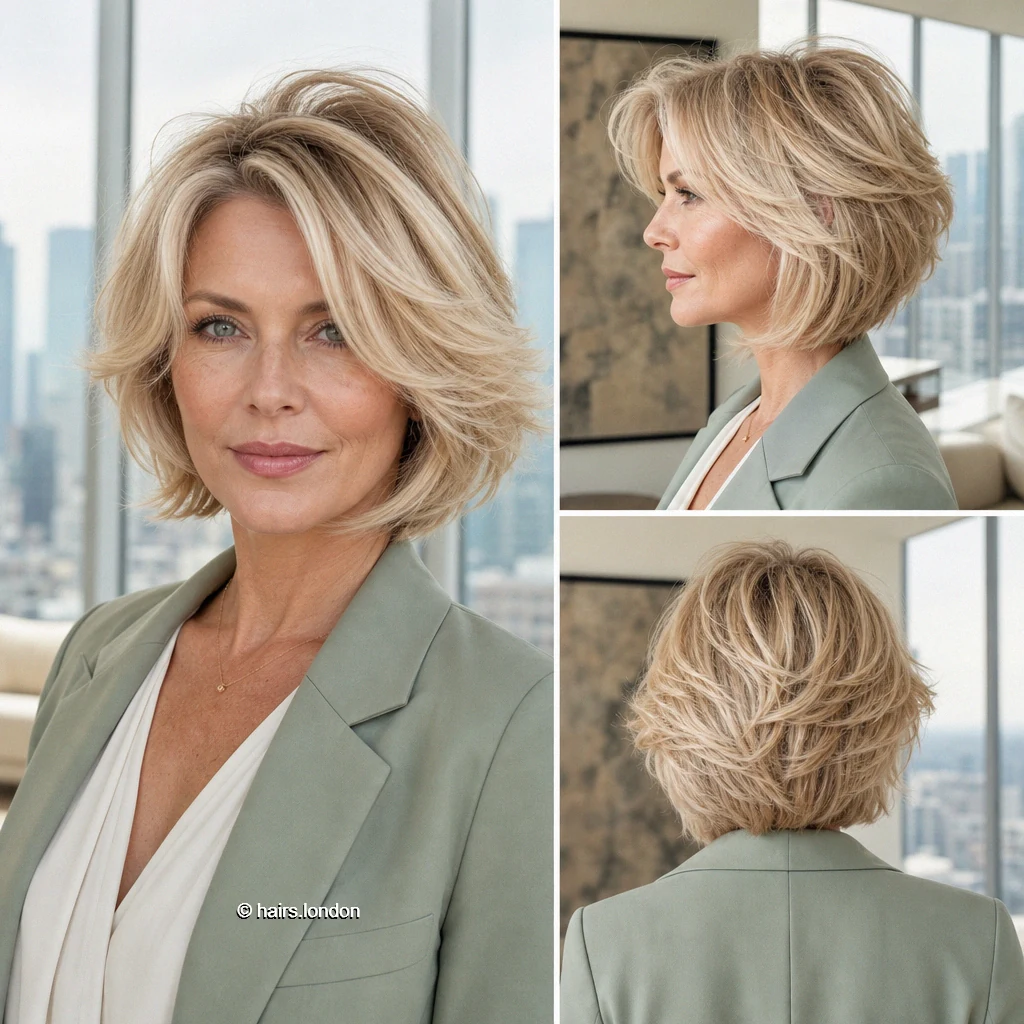
This tousled blonde bob has airy layers flicking around jawline. Its long side-swept front adds height without a separate fringe. Side and rear views show a loose, textured outline. Bright blonde pieces alternate with darker strands across the surface. Request layers that release movement while retaining a recognizable perimeter. Lift roots while drying, then turn selected ends gently outward. Use flexible spray sparingly to avoid stiffening the layered finish. Hair with some natural body may require less styling time. Refresh the outline regularly when the lower ends lose their shape. Discuss lightening maintenance before committing to similarly bright front sections.
13. Shoulder-Grazing Layered Lob with Flipped Ends
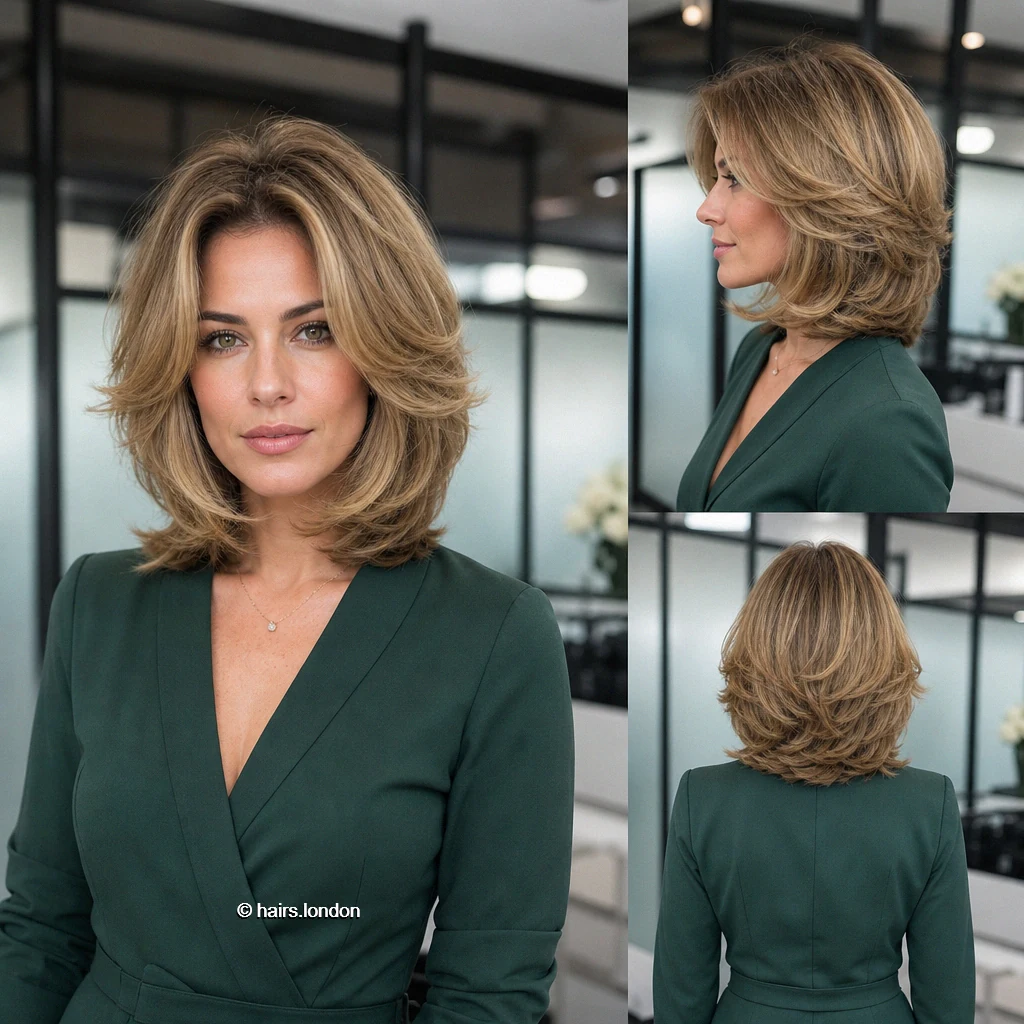
This layered lob approaches the shoulders rather than ending at jawline. Face-framing sections sweep outward from a loose central part. The visible back shows multiple tiers and flipped lower ends. Warm beige blonde highlights bring separation to those flowing layers. Ask for enough length to keep the silhouette below the chin. Round-brush the front away from the face for lift. Smooth lower layers first, then loosen the outward flicks gently. Thicker hair may need tailored weight removal to avoid bulk. Trim when separated ends become thin rather than simply longer. Check that highlight placement complements the layers you actually wear.
14. Full Ash Blonde Bob with Feathered Sides
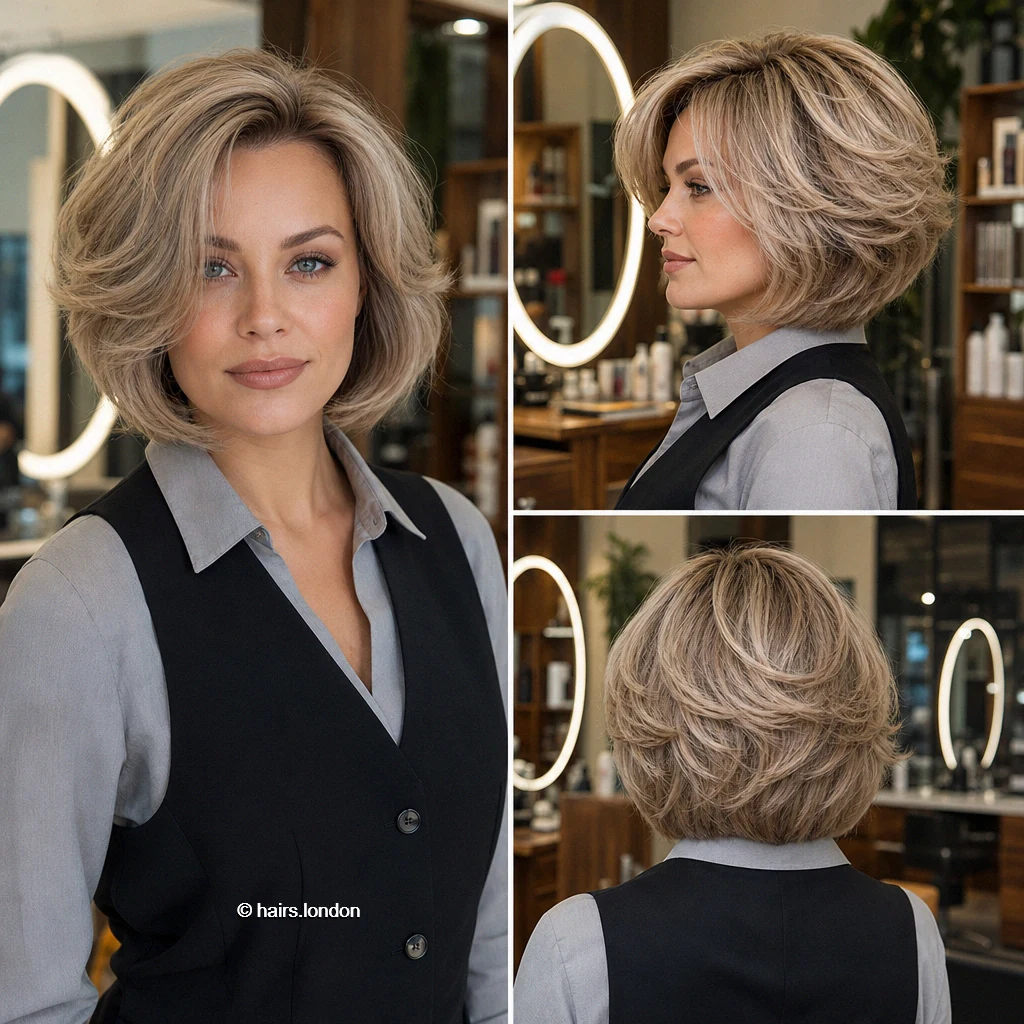
Ash blonde layers build width around this full, jawline bob. Swept front sections soften the face without creating distinct bangs. The back appears rounded, with feathered movement across its surface. Cooler highlights sit over a noticeably deeper blonde base shade. Ask to balance side volume against your hair’s natural density. Use a round brush to lift roots and guide ends. Keep finishing products light enough to preserve visible layer separation. Dense hair may require careful shaping beneath its outer layers. Tidy the lower edge before the back grows excessively wide. Discuss toning options if maintaining cooler highlights matters to you.
15. Airy Layered Bob with Curtain-Like Front Pieces
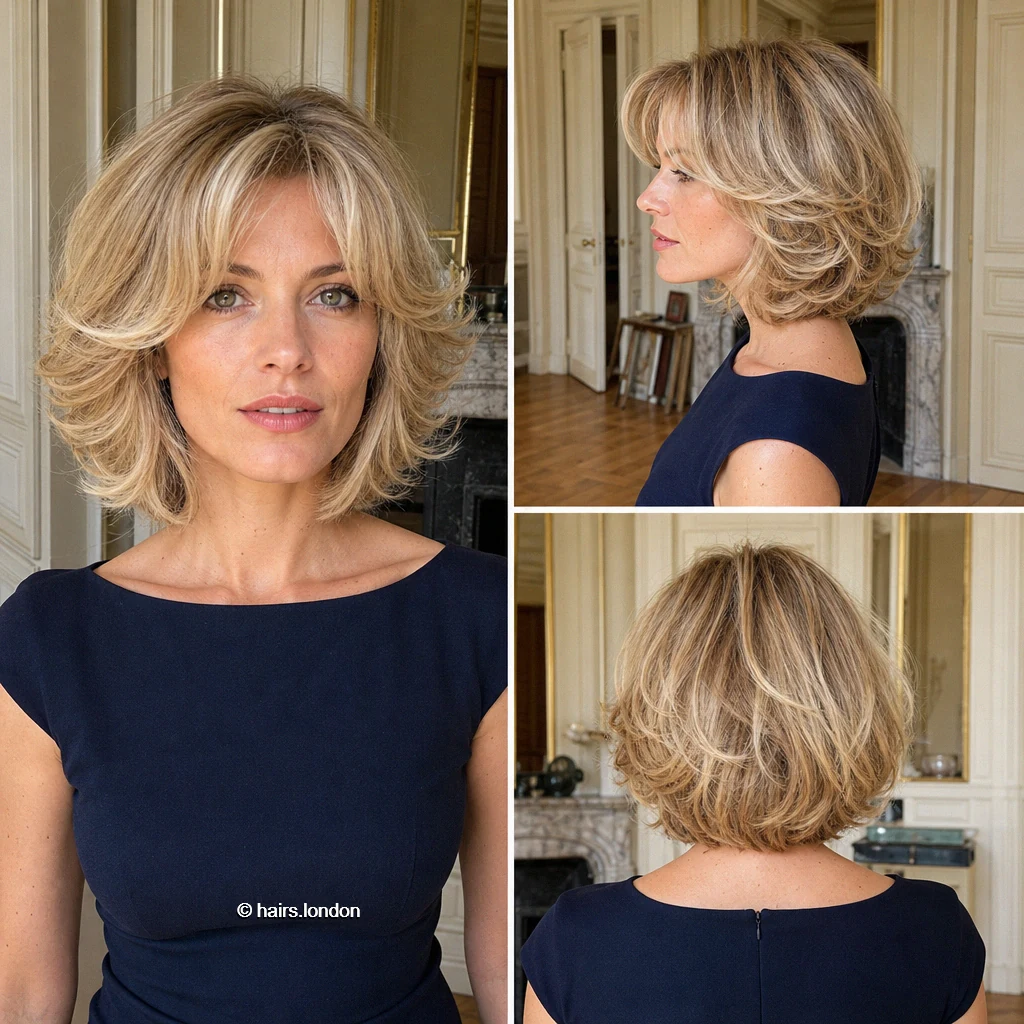
Curtain-like front pieces open across this softly layered blonde bob. Its sides reach toward the neck with lightly flicked ends. The rear remains rounded beneath a lively, visibly layered crown. Honey blonde tones mix with lighter pieces around the face. Ask for face-framing layers that still connect with length. Style the front away from your face using gentle airflow at home. Scrunch remaining ends if your natural waves give them movement. Very fine density may need fewer layers for fullness. Trim when the outline loses coherence beneath its softer texture. Keep highlighted ends conditioned if frequent styling causes visible dryness.
16. Choppy Blonde Bob with a Loose Center Part
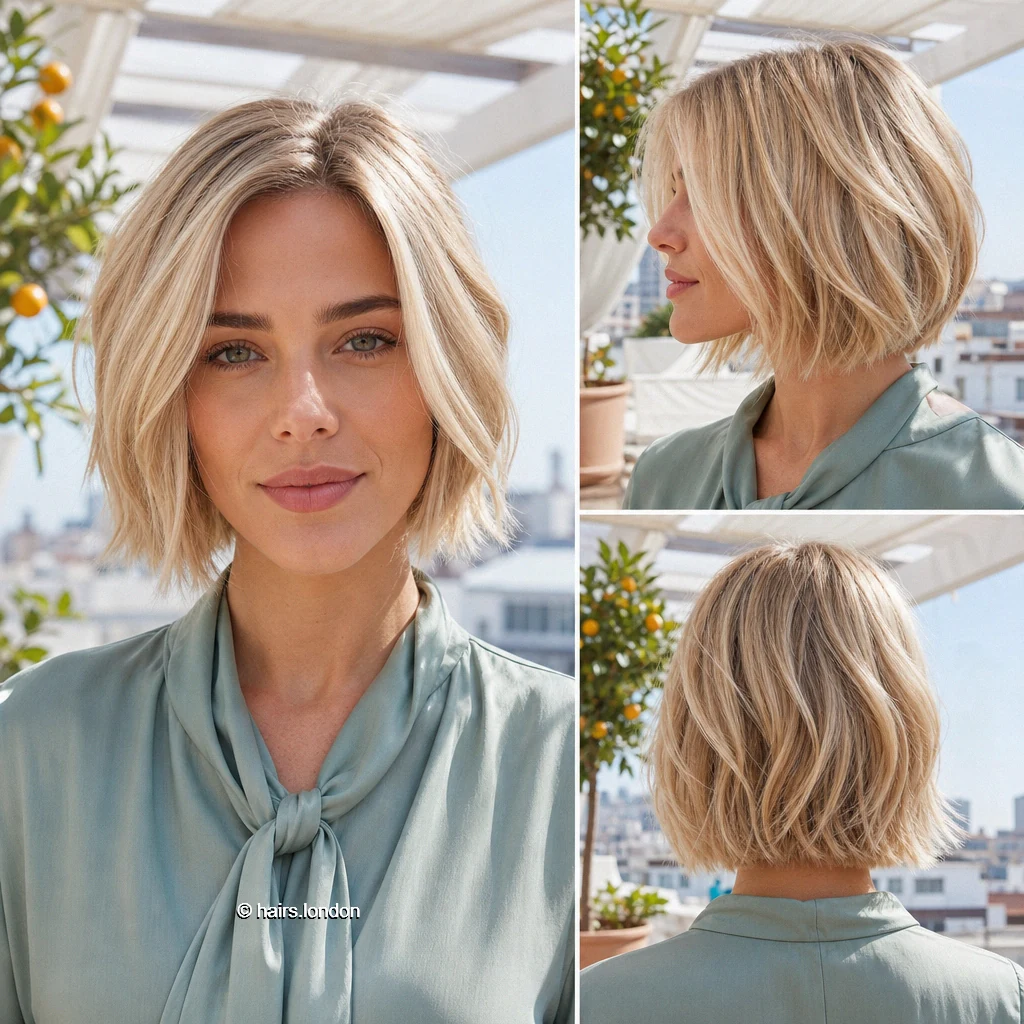
A loose center part divides this lightly choppy blonde bob. The sides fall around jaw level with visibly textured ends. Rear strands form a relaxed outline rather than tight graduation. Pale blonde pieces blend with deeper tones close to roots. Ask to keep enough weight for the perimeter to register. Encourage natural bends with mousse and gentle hand scrunching afterward, if needed. Smooth only the front if flyaways obscure the part. Straighter textures may need styling to achieve this looseness. Trim scattered ends before they begin looking noticeably uneven overall. Consider root contrast when planning the next blonde color appointment.
17. Pale Blonde Bob with a Compact Graduated Back
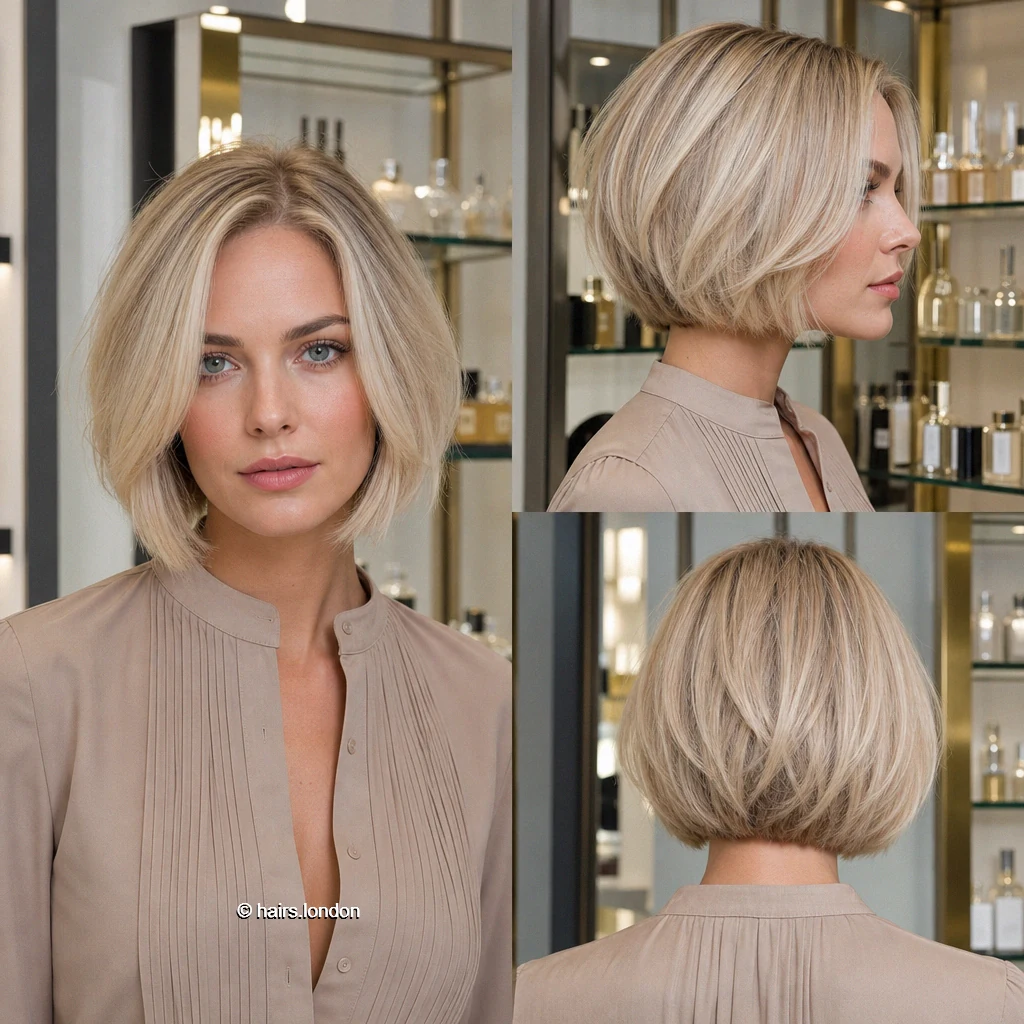
This pale blonde bob frames the jaw with smooth, rounded sides. Its profile shows a shorter back and subtly longer front. Rear views reveal compact shaping beneath its rounded upper layers. Deeper roots provide contrast against the bright, creamy blonde. Ask whether restrained graduation will work with your nape growth. Smooth side sections downward while lifting the back with airflow. A tiny amount of cream can settle its lower edge. Fine density may benefit from keeping ample weight above graduation. Recut the back when its close outline starts growing outward. Discuss toning and root upkeep before choosing this light finish.
18. Smooth Golden Blonde Bob with a Rounded Perimeter
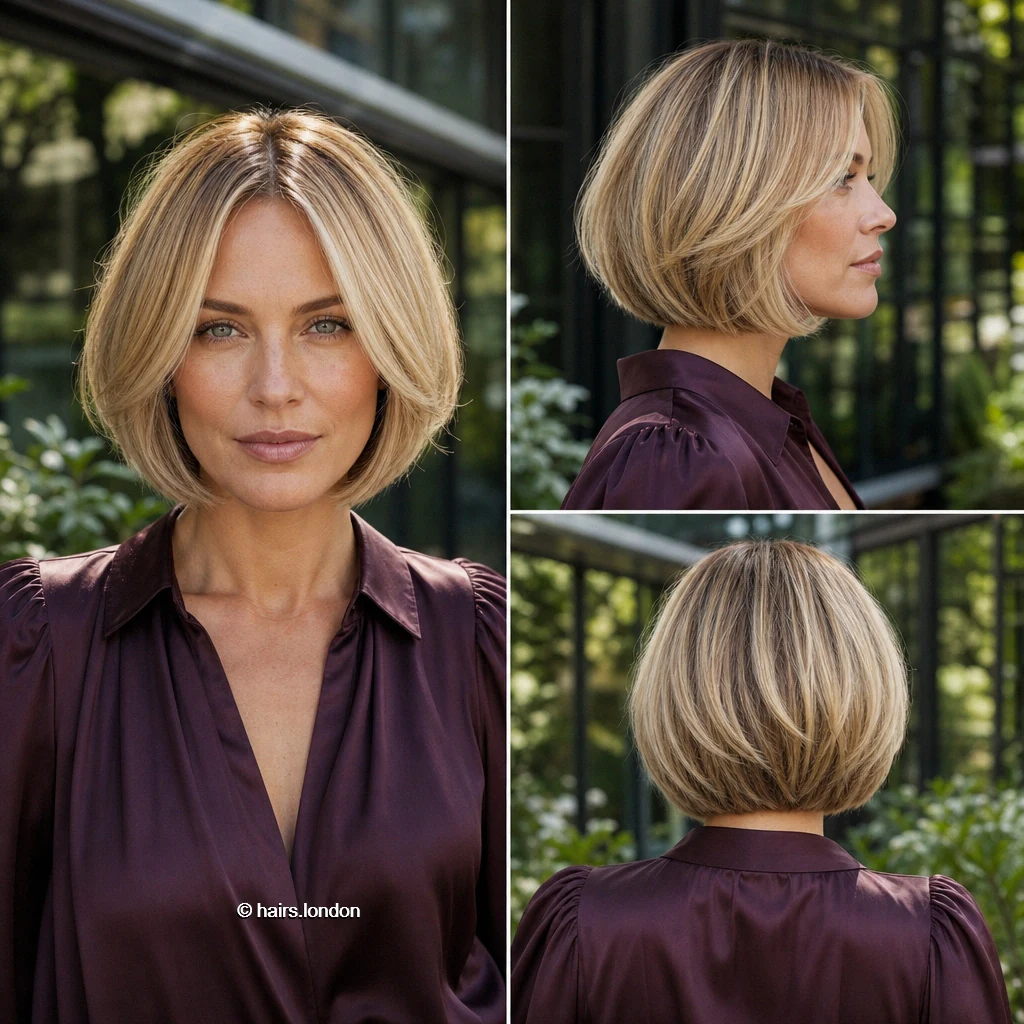
Golden blonde panels brighten this smooth bob around the jaw. Its parted front opens softly rather than forming a fringe. Side and back views show a full, curved perimeter. Subtle layering keeps the exterior sleek without appearing completely solid. Ask your stylist to preserve the weight around the bottom. Blowdry downward, following with a gentle inward turn at the ends. Avoid excess oil that might collapse the airy upper sections. Hair density and natural bend determine how smoothly it settles. Maintain the edge before longer ends change its rounded proportions. Refresh highlights according to your preferred contrast with darker roots.
19. Neat Beige Blonde Bob with a Side-Swept Front
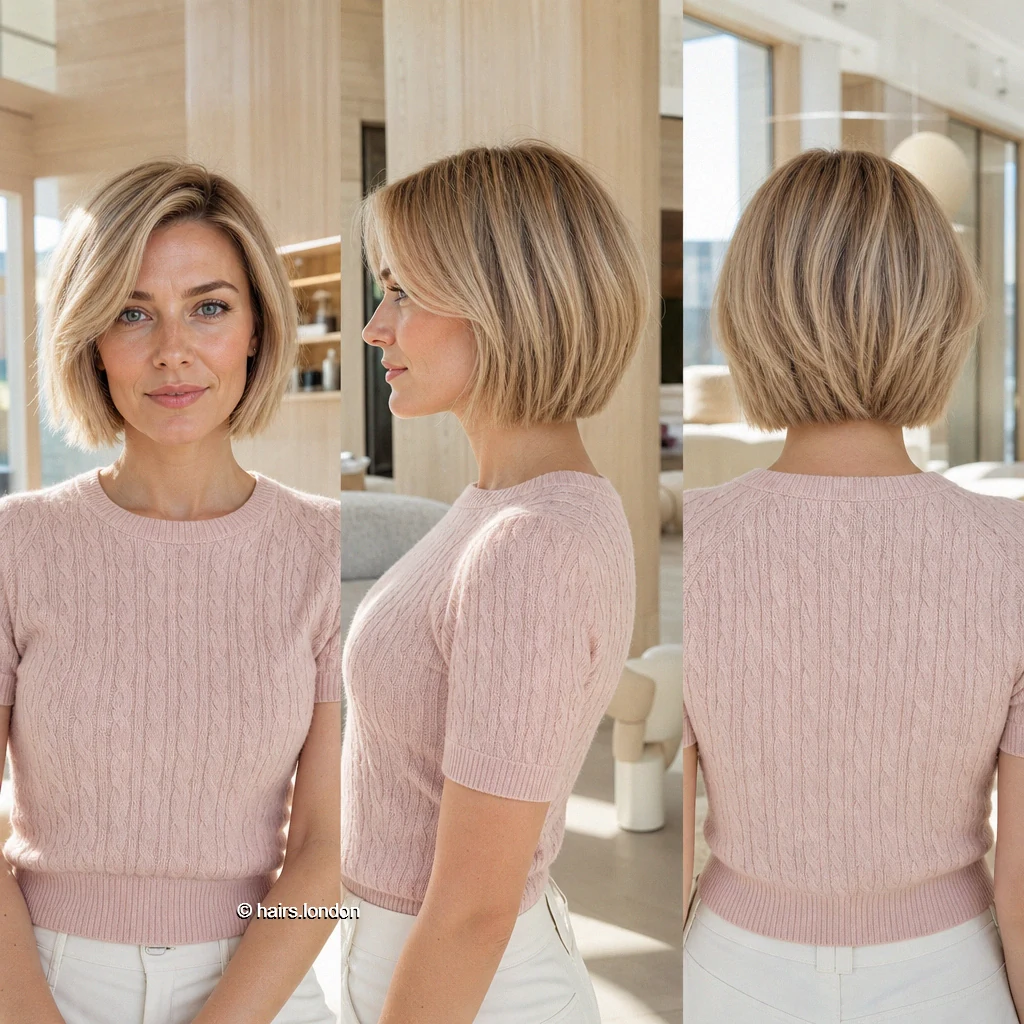
This neat beige blonde bob finishes close to the jaw. A side part gives its front a gentle diagonal side sweep. The side and rear views show a softly tapered outline. Lighter lengths blend into darker blonde near the crown. Ask for a tidy edge without removing all internal movement. Brush the front across while directing the ends slightly inward. Lightweight styling cream can keep flyaways from interrupting lines. Straight or lightly wavy hair may need different finishing effort. Trim the perimeter when its lower edge begins looking irregular. Discuss whether your preferred blonde contrast needs more regular salon visits.
20. Angled Blonde Bob with a Rounded Back
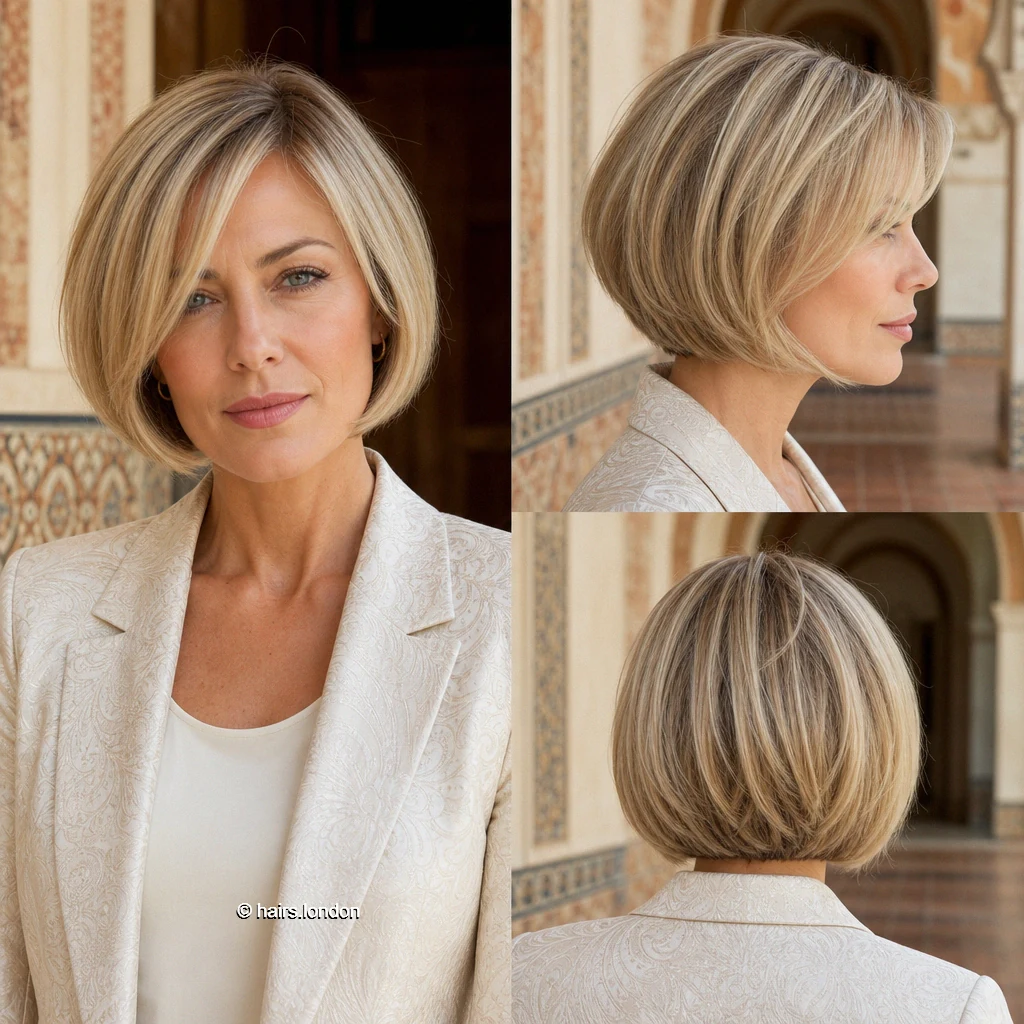
The side view shows this blonde bob extending forward just slightly. Its visible back sits shorter beneath a rounded upper shape. A sweeping front section crosses the forehead without full bangs. Light blonde ribbons stand out against a darker blonde base. Ask for the front-to-back difference you can style comfortably. Smooth the sides while lifting the rounded back gently upward. Keep product light so the perimeter does not look heavy. Nape growth and density will affect its compact rear silhouette. Trim the back when its shorter edge starts losing definition. Discuss highlight placement that reinforces movement without demanding excessive upkeep.
How to Choose Your Bob Length and Shape
Decide where you want the bottom edge to sit when your hair is dry: near the jaw, below the chin or approaching the shoulders. A jaw-length bob makes its perimeter more prominent, while a longer lob leaves more room for natural bend and tying hair back. Compare side and back views before requesting an angle. An A-line shape has a longer front; a stacked or graduated shape needs visible building of length above a shorter back. Density, cowlicks and shrinkage can change how either shape sits on you.
Styling Fine, Thick, Wavy and Curly Textures
For fine hair, keep weight through the bottom and apply volumizer sparingly at the roots. Thick hair may need targeted internal weight removal, not indiscriminate thinning that makes the edge fray. On wavy hair, scrunch damp lengths and let them dry with minimal handling; smooth only the pieces you want more defined. For curls, agree on the finished dry length before cutting and use curl-friendly layering to prevent a bulky shelf. Dry a fringe in its intended direction first, then style the rest without coating the bob in heavy product.
Keeping Blonde Bob Color Fresh
These images show a range of pale, beige, honey and ash blondes, often with darker roots. Ask your colorist what level of contrast you want as the roots grow, and whether toning will be part of your routine. Color-safe washing, conditioning on lightened ends and heat protection help preserve the finish. If the front pieces are especially bright, discuss whether they will need attention sooner than the rest of the bob.
Maintaining the Bob Perimeter and Graduation
A smooth jawline edge starts to read differently once stray ends fall below it. Check the shape from the side and back, not just in a front-facing mirror. Compact graduated backs may need tidying sooner than loose, layered bobs because growth changes their silhouette quickly. Soft fringes can need separate appointments. During a trim, identify whether you want the edge sharpened, the layers refreshed or both; removing too much from the bottom can change the entire shape.
What to Discuss with Your Stylist
Bring front, side and back references for the same bob, and point out the details you actually want: parting, fringe, fullness, perimeter and any shorter back. Explain how your hair behaves when air-dried and how much time you will spend blowdrying. Ask how the proposed layers will affect your density, whether your growth patterns allow the pictured sweep, and what the shape will look like between trims. Discuss blonde maintenance separately from the cut so both fit your routine.
Frequently Asked Questions
What is the difference between a bob and a lob?
A bob generally ends around the jaw or neck, while a lob is a longer bob that approaches or reaches the shoulders. The shoulder-grazing layered cut shown here is the clearest lob.
How is an A-line bob different from a stacked bob?
A-line describes a perimeter that gets longer toward the front. Stacked describes visible graduation that builds volume above a shorter back. A cut can have elements of both, but one does not automatically imply the other.
Can fine hair wear a layered bob?
Yes, if the layering leaves enough weight at the lower edge for your density. Ask your stylist to show where layers will fall and how much fullness will remain.
How can a thick bob avoid looking bulky?
Have your stylist assess where weight collects, then discuss targeted internal shaping. Keeping the exterior perimeter intact often works better than aggressively thinning every section.
Will a bob work with natural curls?
It can, but curl shrinkage and density should guide the dry finished length and layers. A curly bob should be planned around how your curls sit naturally, not a straight-haired reference alone.
Should I add bangs to my bob?
Choose bangs if you like their look and are comfortable styling and trimming them. Check your fringe growth pattern first; wispy and fuller bangs require different amounts of daily attention.
How do I style a rounded bob each morning?
Direct airflow down the hair shaft, then use a brush to turn the ends gently inward. Lift the roots only where you want volume, and finish with a small amount of lightweight product.
How often does a bob need a trim?
Book a trim when its intended edge or back shape begins to change. A precise perimeter or compact graduated back usually shows growth sooner than a loose, textured bob.
Can I air-dry a textured bob?
Often, especially when your natural wave supports the shape. Apply a modest amount of styling product to damp hair, scrunch if appropriate and avoid disturbing it repeatedly while it dries.
What makes a bob look longer in front?
A visible front-to-back difference creates that effect. Ask your stylist to discuss the perimeter in profile rather than assuming that side-swept styling means the cut itself is angled.
How can I grow out a short bob?
Keep the back and front balanced through occasional shaping appointments. You can gradually reduce any short-back difference and let the perimeter move toward a longer lob.
How do I keep a highlighted blonde bob looking healthy?
Condition the lightened ends, protect them from heat and discuss toning or root maintenance with your colorist. A tidy perimeter also helps prevent worn ends from distracting from the shape.
Conclusion
The most useful bob reference is the one that shows the shape you want from more than one angle. Notice where its weight sits, how the front meets the back and how much styling creates the visible texture. Those details give your stylist a practical starting point for a bob that works with your own hair.