

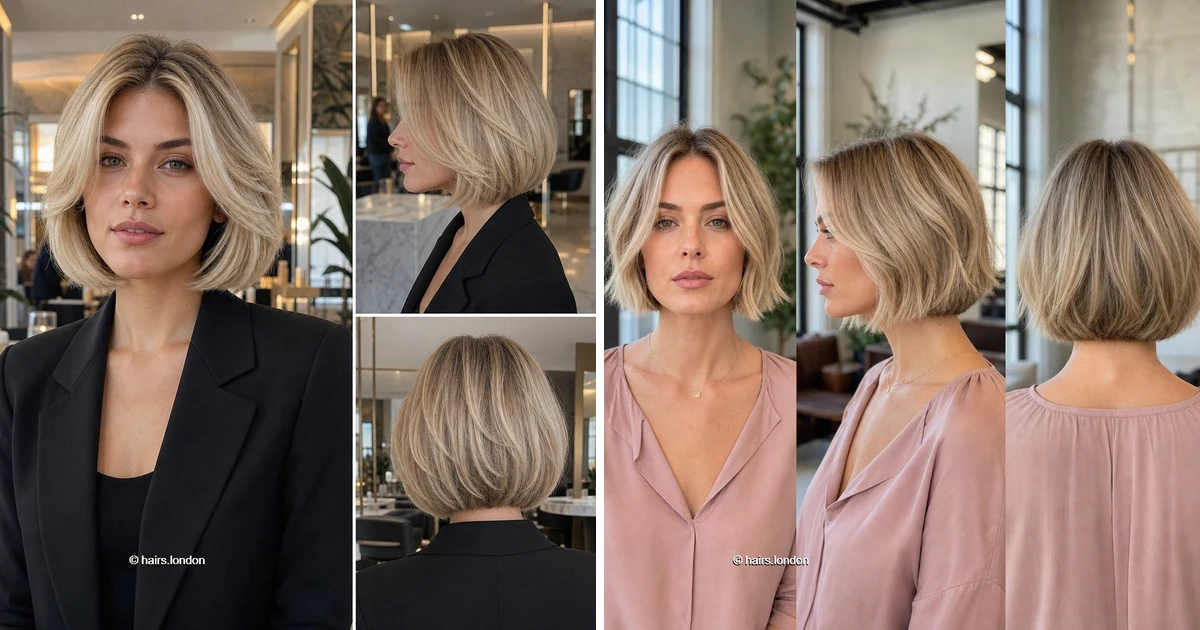
11. Feathered Blonde Bob Near the Shoulders
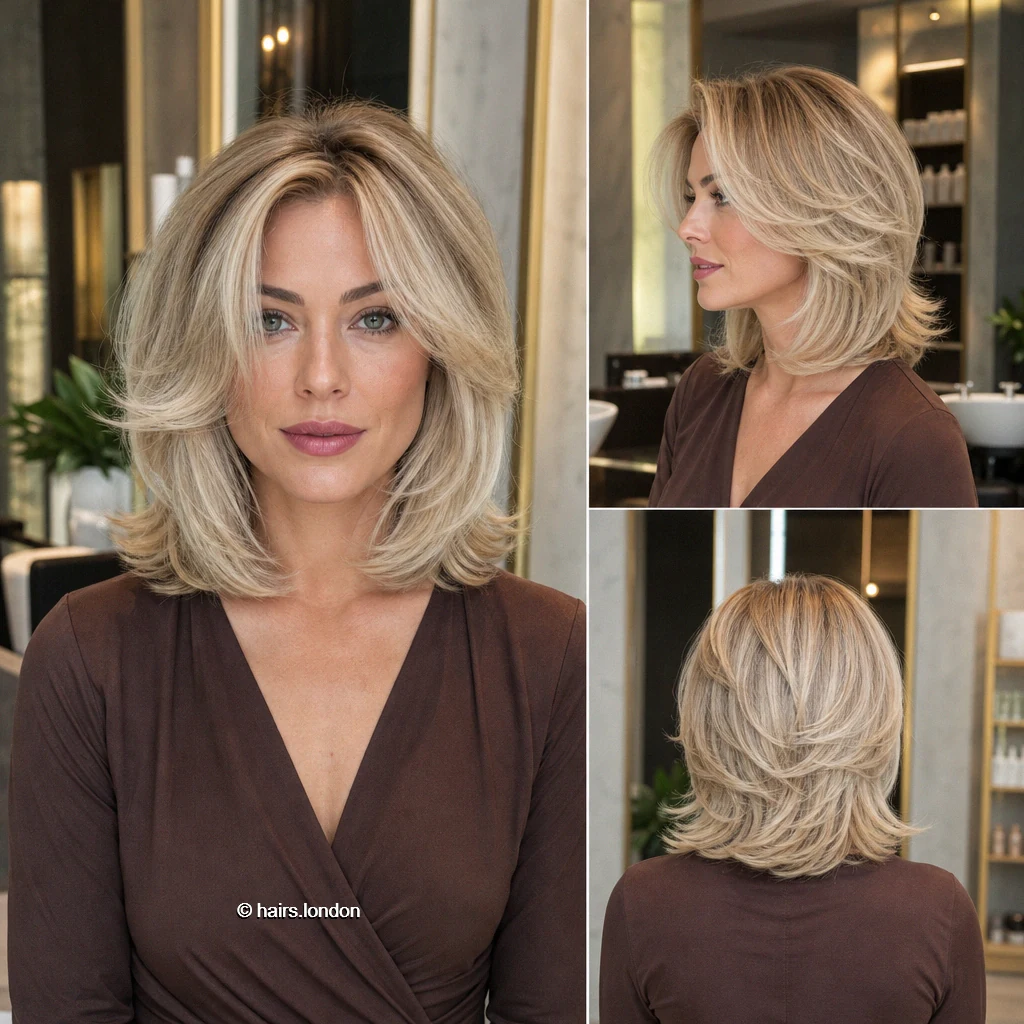
This longer blonde bob reaches the upper shoulders, with abundant feathered layers and sweeping pieces around the cheekbones. The back shows flicked, separated ends rather than the compact weight line of a shorter rounded bob. Ask for layers that create movement while leaving enough substance at the bottom for your particular hair density. Direct a brush away from the face during drying, then ease apart the ends with your fingers. This airy finish may take more styling on straight hair; trim the outer layers when they lose definition and monitor dryness across the highlights. Avoid excessive brushing between styling sessions.
12. Short Layered Bob with Sweeping Blonde Fringe
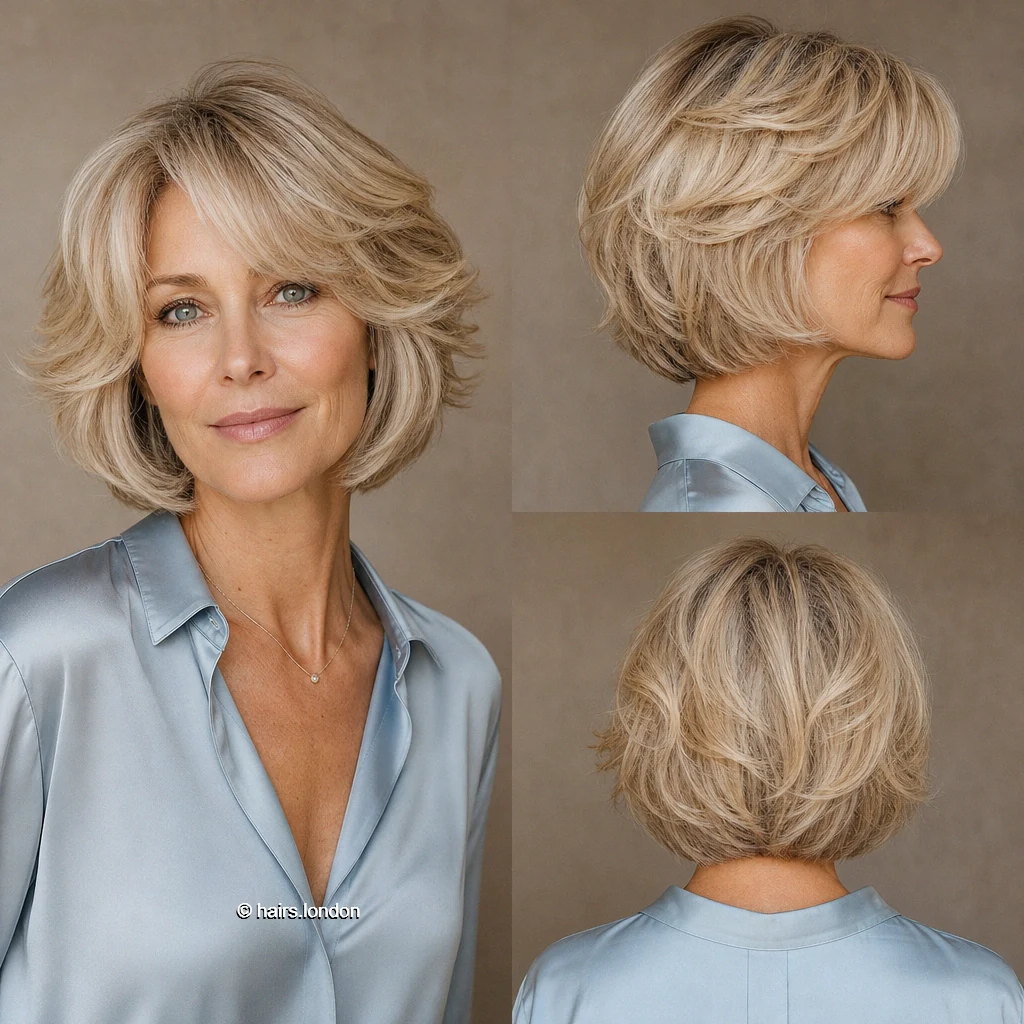
A long, sweeping fringe blends into this blonde bob, with visible layers giving its jaw length sides a lifted finish. The profile shows flicked ends near the neck, and the back has a rounded outline softened by airy texture. Brush the front away from the face, then use fingers to separate the side layers without teasing unnecessary volume. Denser hair may support the abundant layering; finer hair could need a firmer perimeter to avoid wispy ends. Discuss how short the fringe should dry, and refresh the cut when its textured outline begins looking heavy. Check how it falls between washes.
13. Dimensional Blonde Bob with Loose Layered Movement
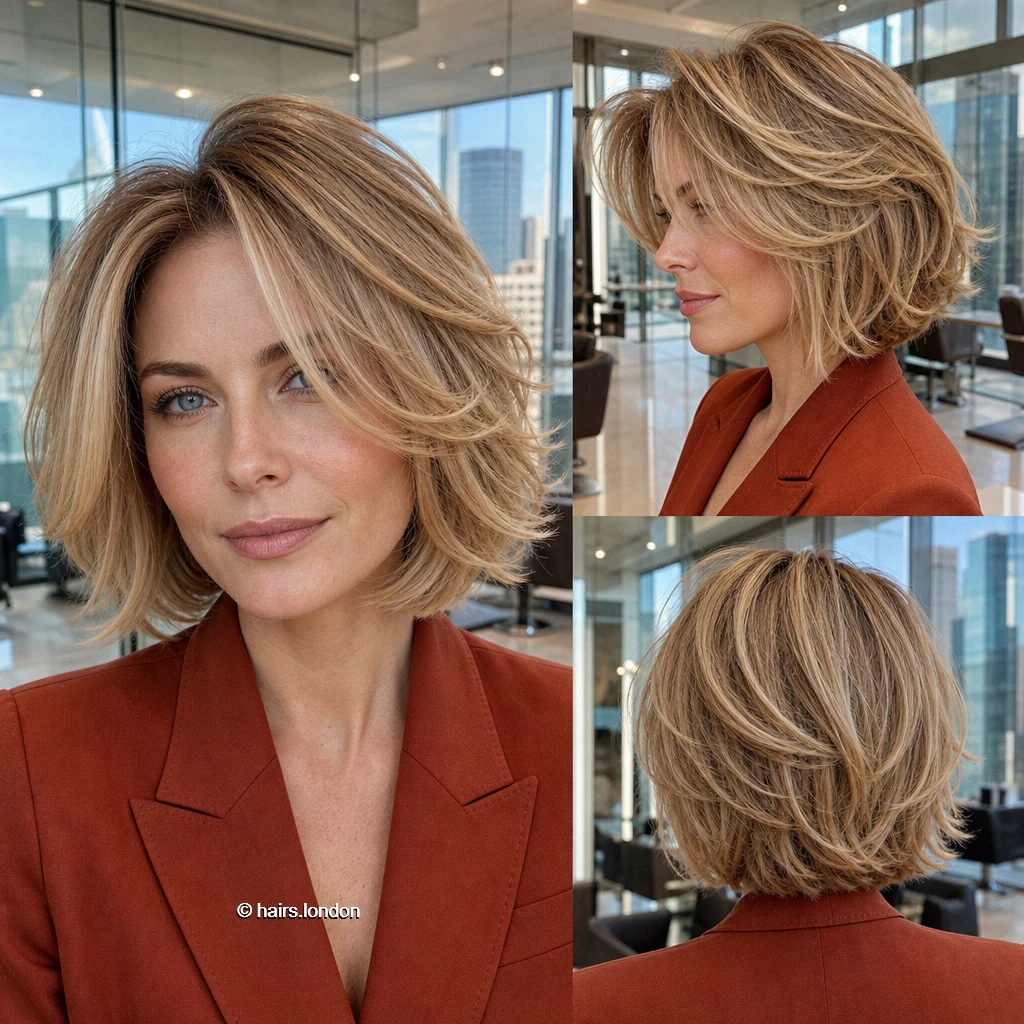
Warm blonde highlights run through this lively bob, whose long front pieces and loose layers finish around the jaw. The visible back is full of directional movement, with a soft lower boundary rather than a precise, blunt edge. To echo the finish, lift damp roots while drying and bend a few surface pieces away from the face. Thick hair may need careful bulk control, whereas fine hair might benefit from fewer layers beneath the crown. Ask your stylist to check the shape from every view, and trim when the ends stop separating cleanly. Avoid heavy sprays that stiffen the layers.
14. Shoulder-Grazing Blonde Lob with Feathered Layers
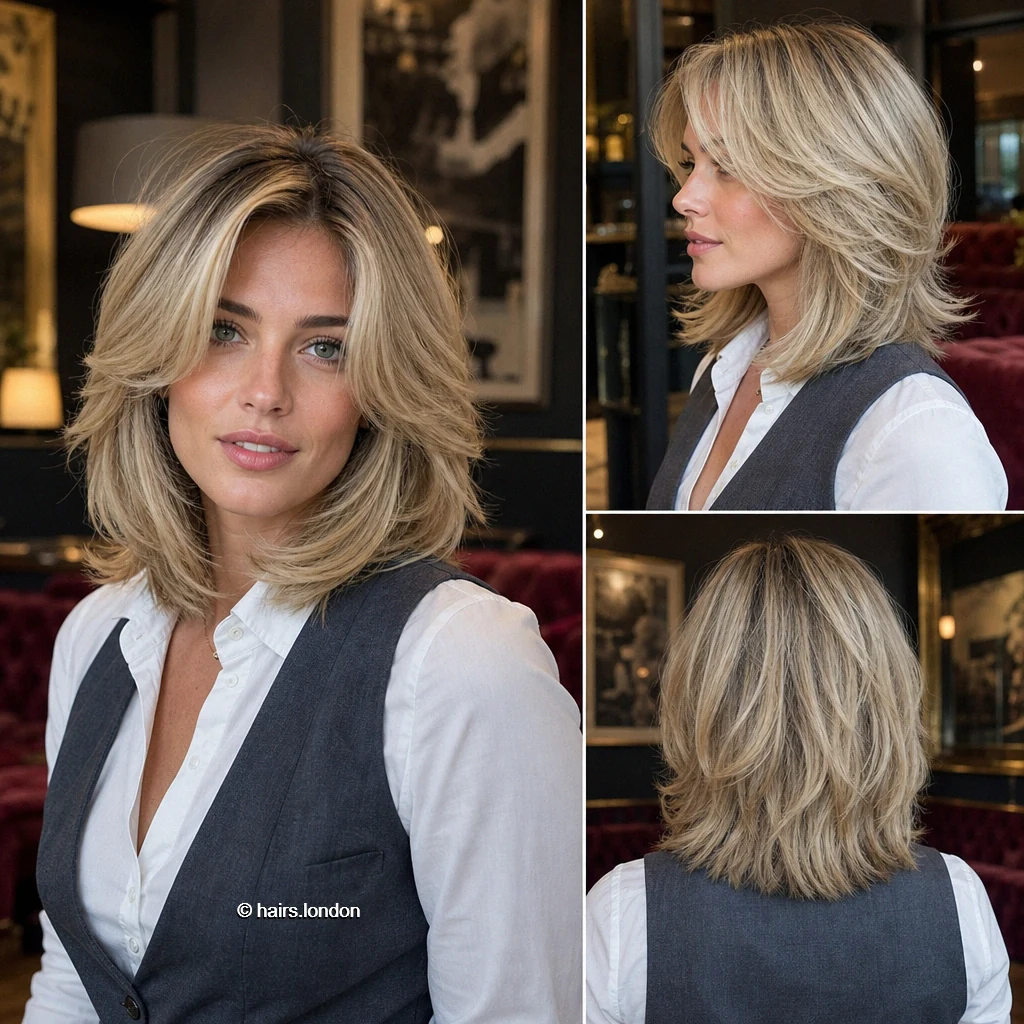
This blonde lob grazes the shoulders, placing sweeping face framing layers over a longer, softly feathered back. Its ends turn outward in places, so the shape feels lighter than a solid, one length lob. Brush the front away from your face and use a light finishing product to preserve separation through the ends. Dense hair may appreciate some internal softness; fine hair might require fewer short layers to maintain a convincing perimeter. Discuss where the longest pieces should land when dry, and trim the feathered ends once they lose their movement. Avoid heavy waxes that make the ends look stringy.
15. Full Blonde Bob with Outward-Flicking Layers
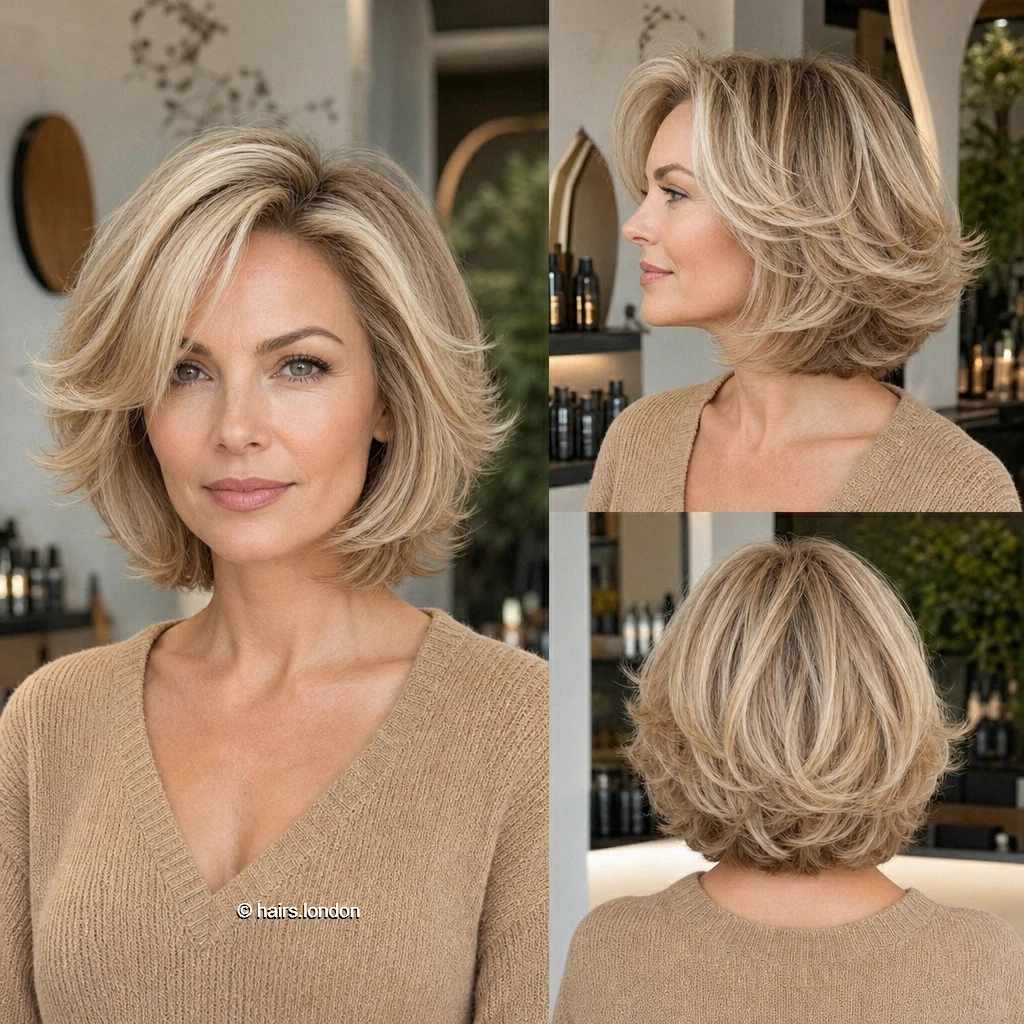
A broad side sweep and outward flicking layers give this blonde bob fullness without hiding its jaw length base. From behind, the layered surface sits over a rounded lower shape, creating movement without a sharply exposed nape. Use a medium brush to lift the roots, then turn selected ends outward instead of curling every piece identically. This finish may suit hair with enough density to support layers; discuss a lighter version if your hair collapses easily. Check the perimeter as it grows, and condition the blonde ends so their feathered texture remains soft. Keep crown lift soft rather than teased.
16. Center-Parted Blonde Bob with a Lightly Textured Edge
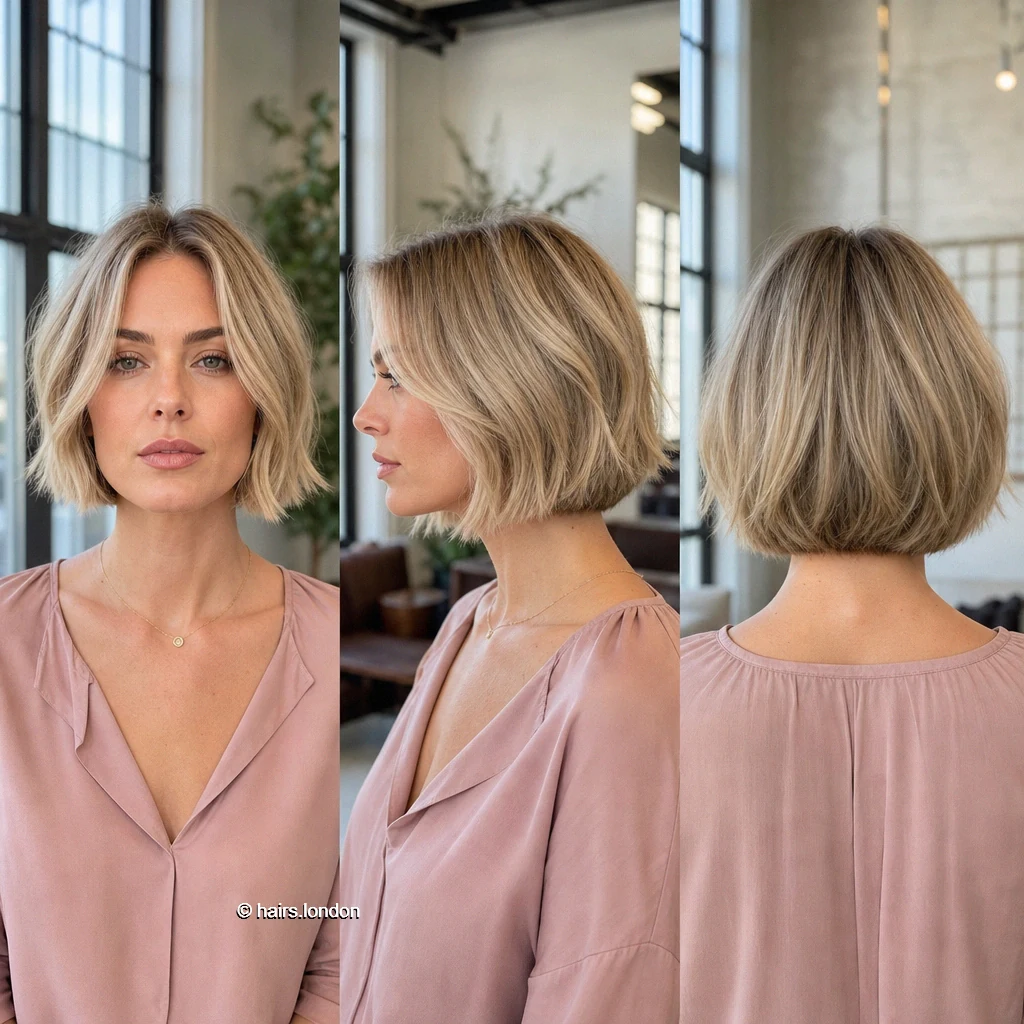
This center parted blonde bob sits near the jaw, with longer front pieces and a lightly textured lower edge. The profile and back show rounded fullness above the neckline, but no strong forward angle or pronounced stacked graduation. Smooth the surface with a brush, then separate the ends with a small amount of light styling cream. If your hair is fine, keep the lower edge substantial; thicker hair might benefit from subtle internal weight removal. Ask your stylist to account for how the center part falls naturally, and neaten the perimeter when it loses symmetry. Recheck balance after each wash.
17. Ash Blonde Bob with a Defined Lower Line
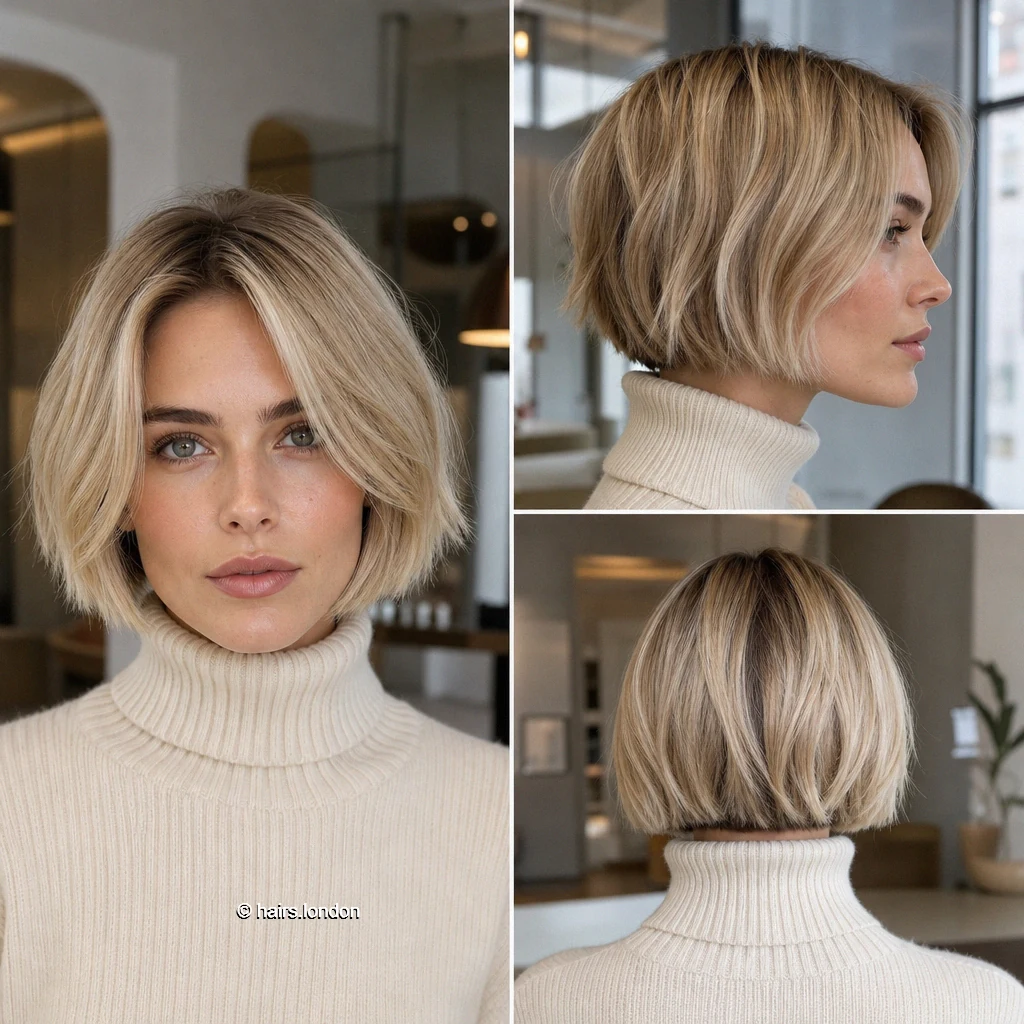
Ash blonde lengths frame this jaw length bob, with a center part and gently swept sections around the cheeks. The back presents a clear lower line at the neck, softened by visible movement through the surface layers. Blow dry the perimeter smooth, then release the front with your fingers so the cut does not look rigid. Fine hair may appreciate the retained weight; on dense hair, ask about internal balance before adding visible layers. Plan trims around the lower line’s precision, and discuss how often you want to refresh the cool blonde tone. Avoid heavy oils near the finished edge.
18. Side-Parted Blonde Bob with a Tapered Back
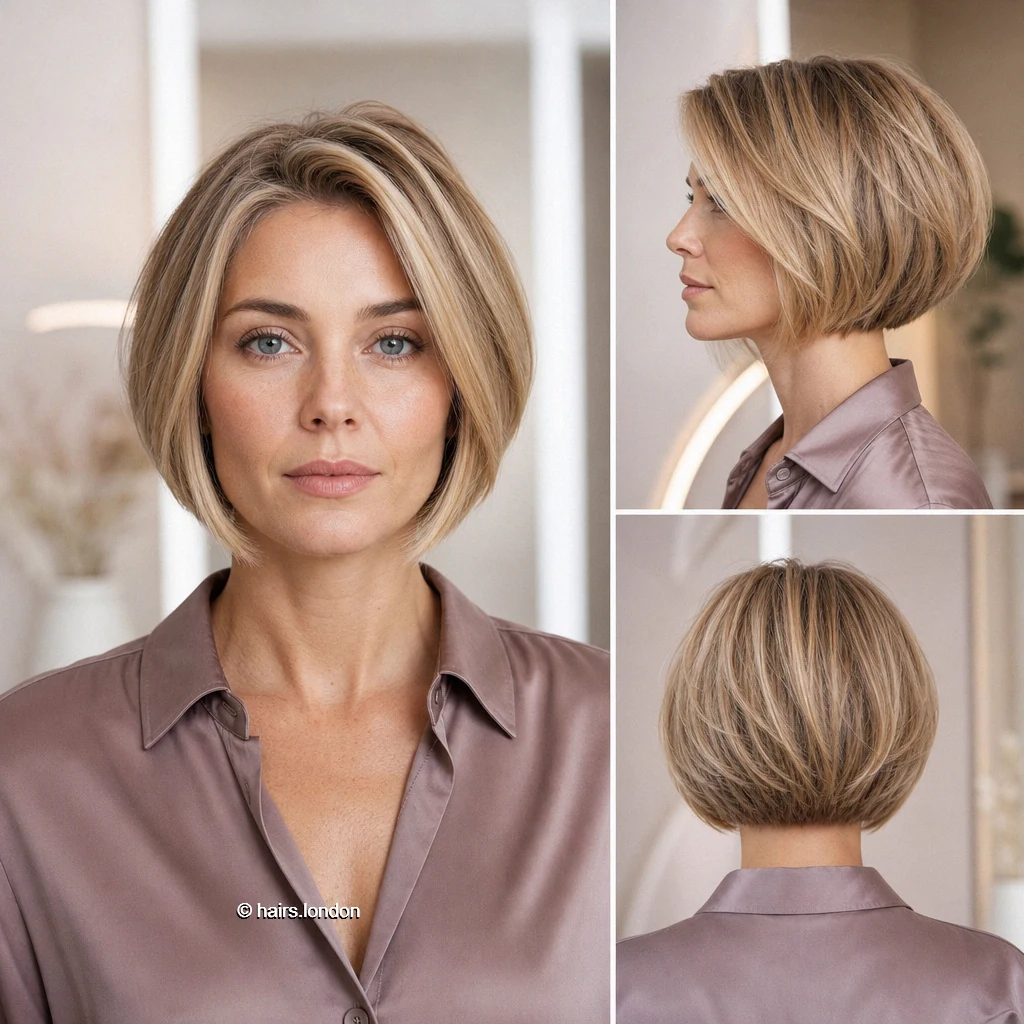
A side part directs the highlighted blonde front across this jaw length bob, creating a sleek, curved face frame. The profile and back show fullness above a shorter, tapered neckline, supporting a softly graduated shape rather than an A-line. Ask your stylist how much back graduation will work with your density and the way your nape hair grows. Brush the sides smooth and lift the crown lightly, avoiding heavy products that collapse its rounded silhouette. Because the lower back defines this cut, book shape checks before growth obscures its tidy, tapered finish. Check how the nape settles after each wash.
19. Beige Blonde Bob with Subtle Back Graduation
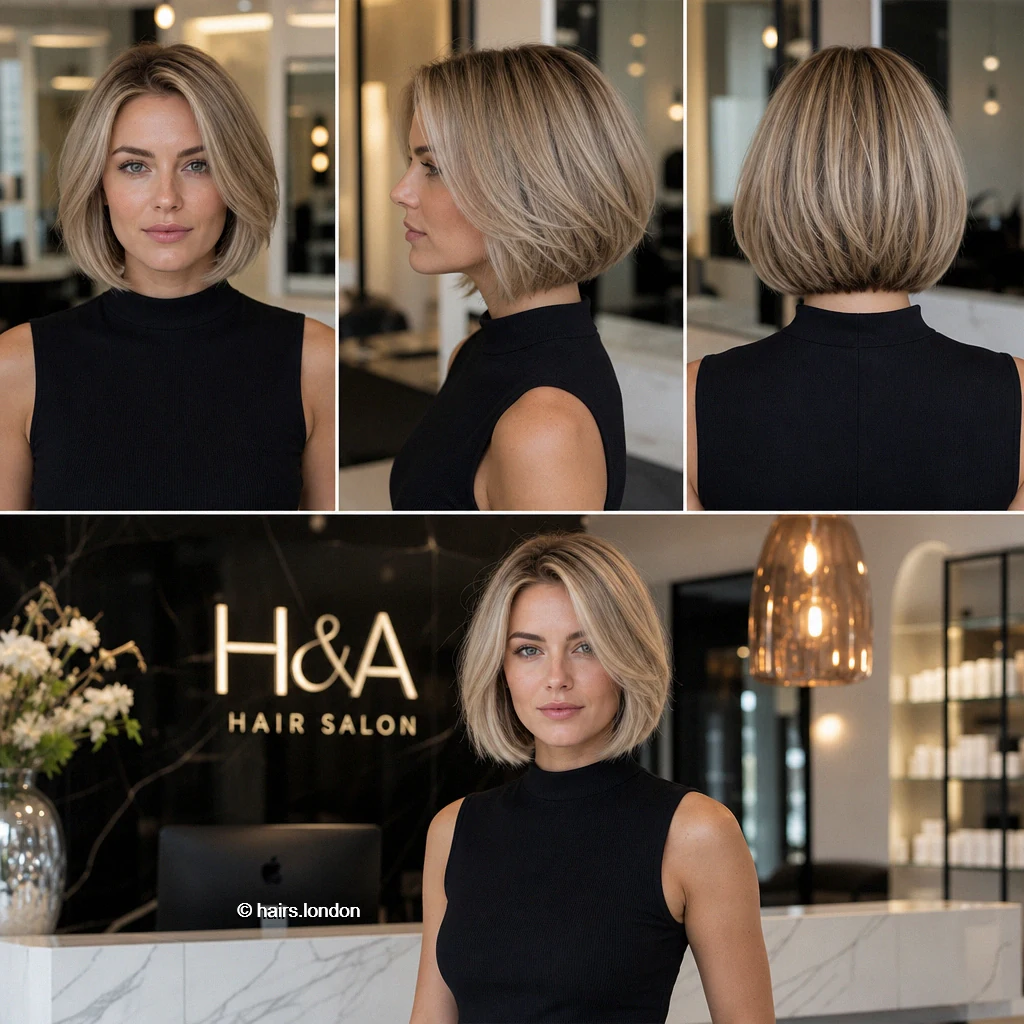
Beige blonde highlights add depth to this smooth bob, whose side part sends soft layers across the cheek. The visible back is compact beneath rounded upper fullness, while the profile suggests gentle graduation rather than an extended front. Use a brush to polish the outside, directing the ends inward and keeping lift concentrated above the weight line. Ask about restrained layering if your hair is fine; denser hair may need interior shaping to prevent a heavy triangle. Maintain the back as it grows and choose color refreshes according to how much visible root contrast you enjoy. Avoid weighing down roots.
20. Natural-Looking Blonde Bob with a Rounded Neckline
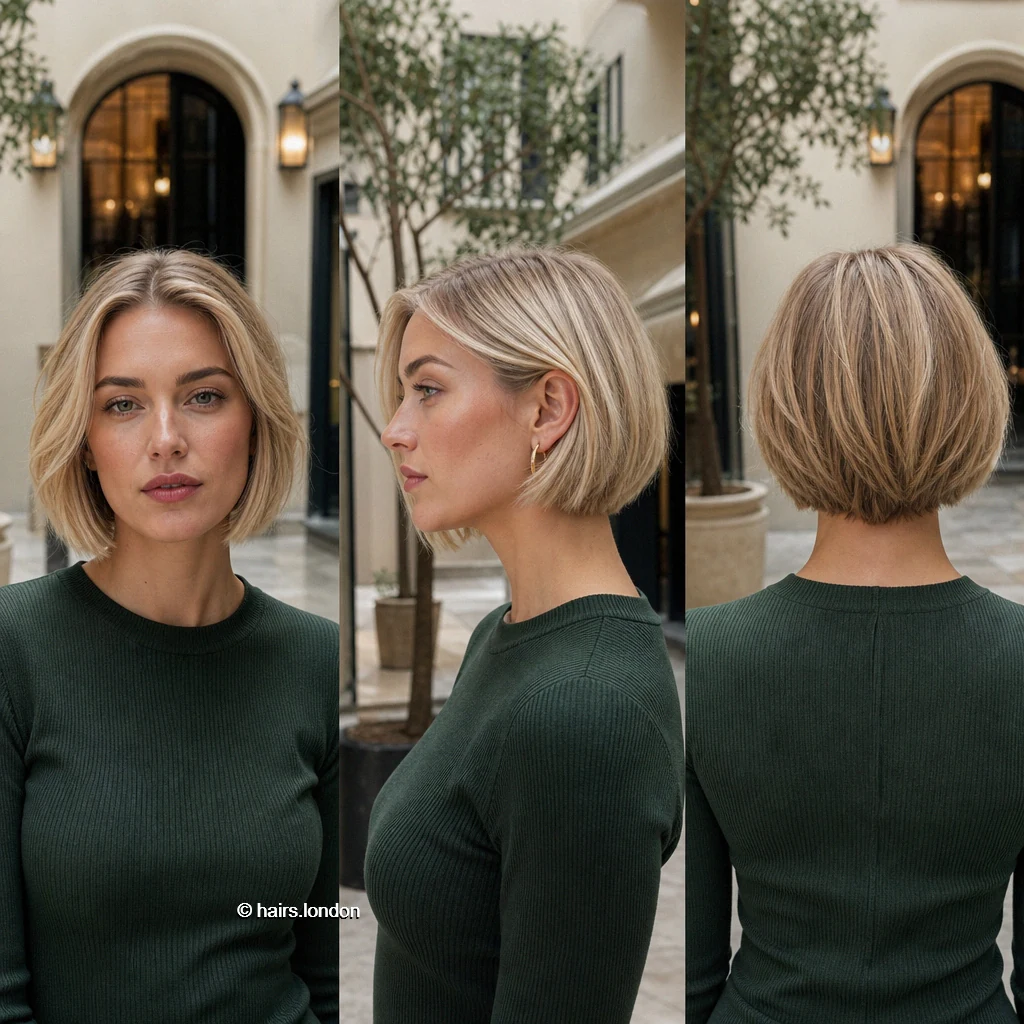
This blonde bob has a center part, softly curved jaw length sides, and a rounded back above the neck. Darker roots and lighter lengths create visible dimension without changing the cut’s smooth, compact overall outline. Tuck one side behind the ear for a simple finish, or brush both sides forward to emphasize fullness. Hair with natural bend may need smoothing at the perimeter; very dense hair could benefit from discreet internal shaping. Show your stylist the neckline you want from behind, and schedule trims when that lower curve starts losing definition. Check the back view periodically as the hair grows.
How to Choose Your Bob Length and Shape
Start with where you want the ends to sit when your hair is dry: at the jaw, below the chin, near the neck, or at the shoulders. A compact rounded bob places visual weight differently from a feathered, shoulder-grazing lob. If you want longer front pieces, check the profile for an actual front-to-back angle; if you want a stacked effect, discuss visible graduation at the back. Your density, natural bend, and growth patterns will affect how closely a cut can follow a reference image.
Styling Fine, Thick, Wavy, and Curly Textures
Fine hair often benefits from a substantial perimeter and selective layering rather than extensive thinning. On thick hair, ask whether discreet interior weight removal could reduce bulk without weakening the edge. For waves, scrunch in a light product and dry gently to keep the bob mobile. Natural curls need their own length plan because shrinkage changes where the perimeter sits; have your stylist assess the shape in its usual worn texture. A fringe also needs a routine that suits its growth pattern.
Keeping Highlighted Bob Color Fresh
These images show variations of blonde, including warmer, cooler, and rooted finishes. Choose upkeep according to the contrast you are comfortable seeing as your hair grows, not just the color on appointment day. Use gentle cleansing and conditioner on lightened ends, limit unnecessary heat, and ask your colorist how to maintain your preferred tone. A rooted look can make regrowth less abrupt, but it does not remove the need to care for the highlighted lengths.
Maintaining the Bob Perimeter and Graduation
A smooth, compact bob makes changes in its lower edge easy to spot, so book a shape check when the perimeter starts to lose its curve. Short, tapered or graduated backs can change noticeably as the nape grows; longer feathered bobs may instead need attention when their ends become thin or lose separation. Fringe trims can be scheduled independently. Ask your stylist to check the cut from the front, profile, and back rather than refining only the view you see in the mirror.
What to Discuss with Your Stylist
Bring images showing every available angle and point out the features you actually want: length, weight line, fringe, layering, back shape, or styling finish. Explain whether you usually air dry, diffuse, or blow dry, and show your natural part and any areas that resist lying flat. Ask what adjustments your density and texture require, how the shape will grow out, and whether the color and cutting appointments fit the maintenance you want.
Frequently Asked Questions
What is the difference between a bob and a lob?
A bob generally finishes around the jaw or neck, while a lob extends closer to the shoulders. The exact label matters less than agreeing on where the dry ends should sit.
Is an A-line bob the same as a stacked bob?
No. An A-line describes a perimeter that is longer in front; stacked refers to visible graduation that builds shape at the back. A cut can include both, but one does not imply the other.
How can fine hair keep a bob looking full?
Ask about retaining weight at the perimeter and limiting layers that leave the ends sparse. The best balance depends on your density and natural texture.
How do I prevent a thick bob from looking too wide?
Discuss where the bulk sits with your stylist. Selective interior shaping and a suitable length can help, while removing too much weight near the edge can create a different problem.
Can natural curls be cut into a bob?
Yes, but curl shrinkage and uneven curl patterns must be considered when setting the length and outline. Discuss how you normally wear and dry your curls before cutting.
Should I add a fringe to my bob?
A fringe changes both the look and the daily routine. Ask your stylist to assess your forehead growth patterns and decide whether a full, wispy, or sweeping fringe suits your styling preferences.
Does a rounded bob require daily blow drying?
Not necessarily. It depends on your natural texture and the finish you want. A polished inward curve may take brushing, while a softer textured version can require less heat.
How often should a precise bob be trimmed?
Trim it when its defining line or back shape begins to shift. Short, precise perimeters and graduated necklines often need attention sooner than longer, feathered shapes.
What happens as a bob grows out?
The weight line drops, the front may sit differently, and a short back can lose its intended shape. A stylist can adjust the perimeter during the transition to a longer bob or lob.
Will layers make every bob easier to style?
No. Layers can encourage movement or reduce bulk, but too many may weaken fine ends or increase styling time. Their placement should serve your hair and desired outline.
How do I keep blonde bob ends from looking dry?
Condition the lightened lengths, use heat thoughtfully, and keep damaged or thin ends trimmed. Ask your colorist for care advice appropriate to your hair and highlighting schedule.
Which views should I bring to a bob consultation?
Bring front, side, and back views when possible. Together they show whether you want a rounded perimeter, longer front, textured layers, or actual back graduation.
Conclusion
A successful bob starts with a clear outline and a realistic plan for styling it. Save the views that show your favorite length, perimeter, and movement, then work with your stylist to adapt those details to your own hair. The right choice is the one that still feels manageable after the salon finish has grown and been washed away.