


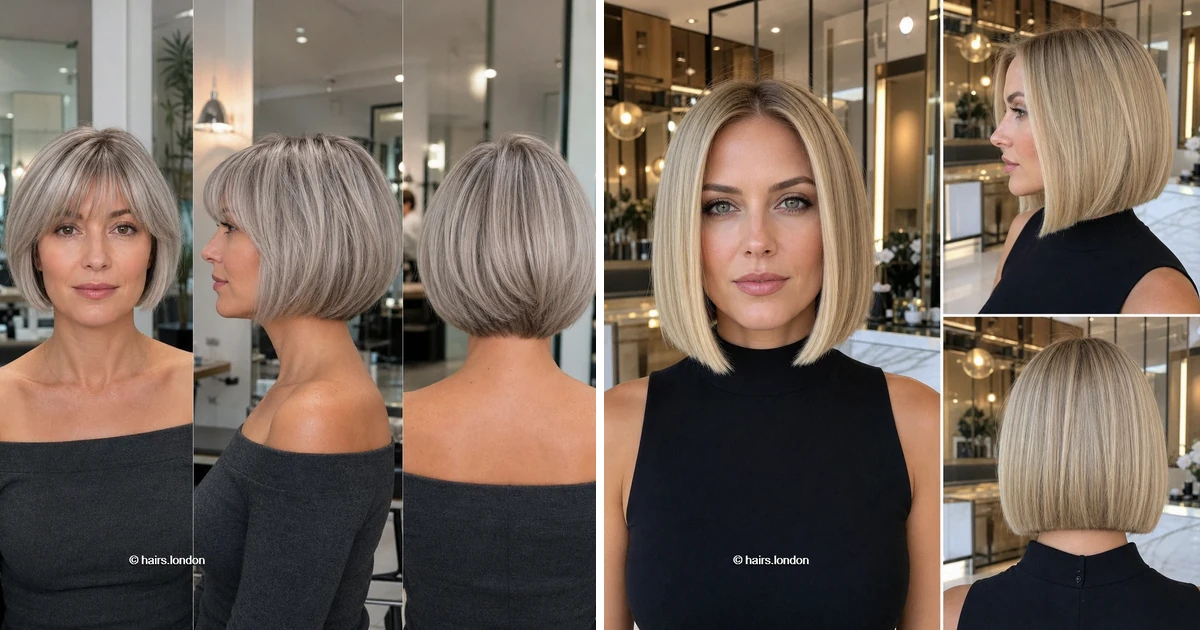
11. Shoulder-Skimming Silver Layered Lob
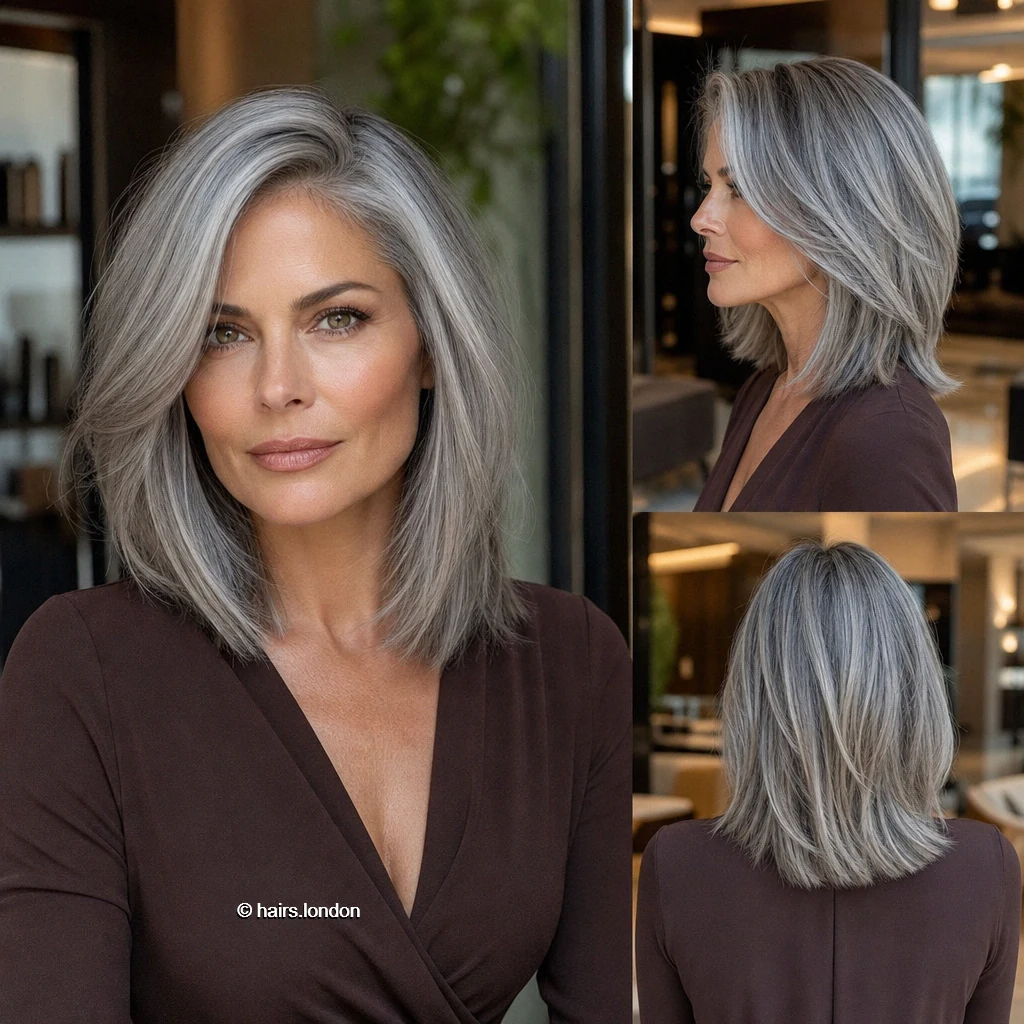
This silver lob falls near the shoulders, longer than others. Its side parted front forms a loose, face framing sweep. Visible layers break up the ends and create outward movement. The back has a softer, less precise line than bobs. Smooth the roots, then encourage bends through the lower lengths. A lightweight cream can separate layers without weighing them down. This longer option allows more room for natural wave patterns. Fine hair may need fewer layers to retain fuller ends. Trim dry, straggly tips when they interrupt the loose outline. Discuss where the finished length meets your usual shirt collars.
12. Silver Layered Bob with a Softly Tapered Back
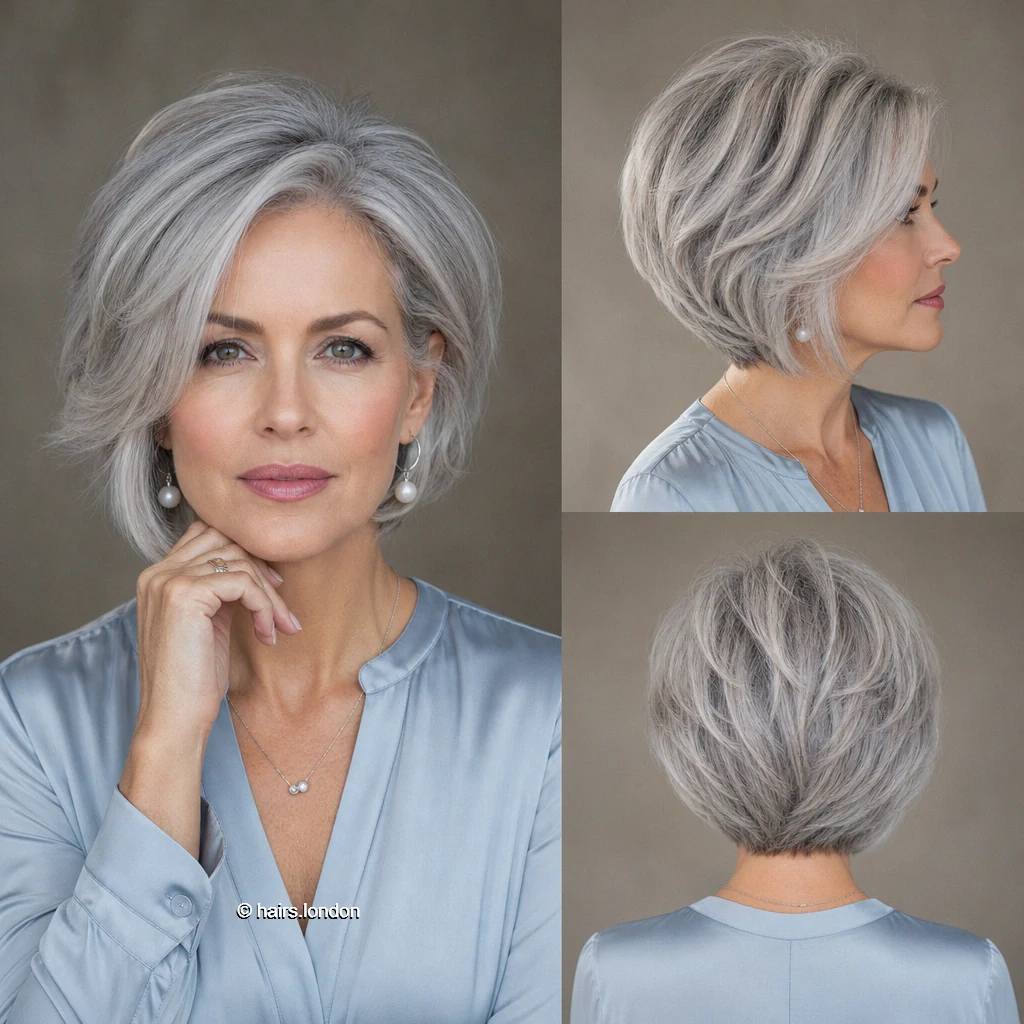
Long silver front layers sweep into a shorter, textured back. The side view shows a visibly tapered section near neck. Rounded fullness sits higher, supported by separated surface layers above. A side part gives the front its soft diagonal fall. Work mousse into roots if your texture needs extra lift. Let the ends remain slightly undone instead of curling uniformly. This layered shape depends on density for its airy volume. Ask your stylist to preserve coverage if strands are sparse. Check the back regularly as growth changes its tapered profile. Keep heat moderate to avoid drying already delicate silver ends.
13. Dramatic Silver A-Line Bob with a Graduated Back
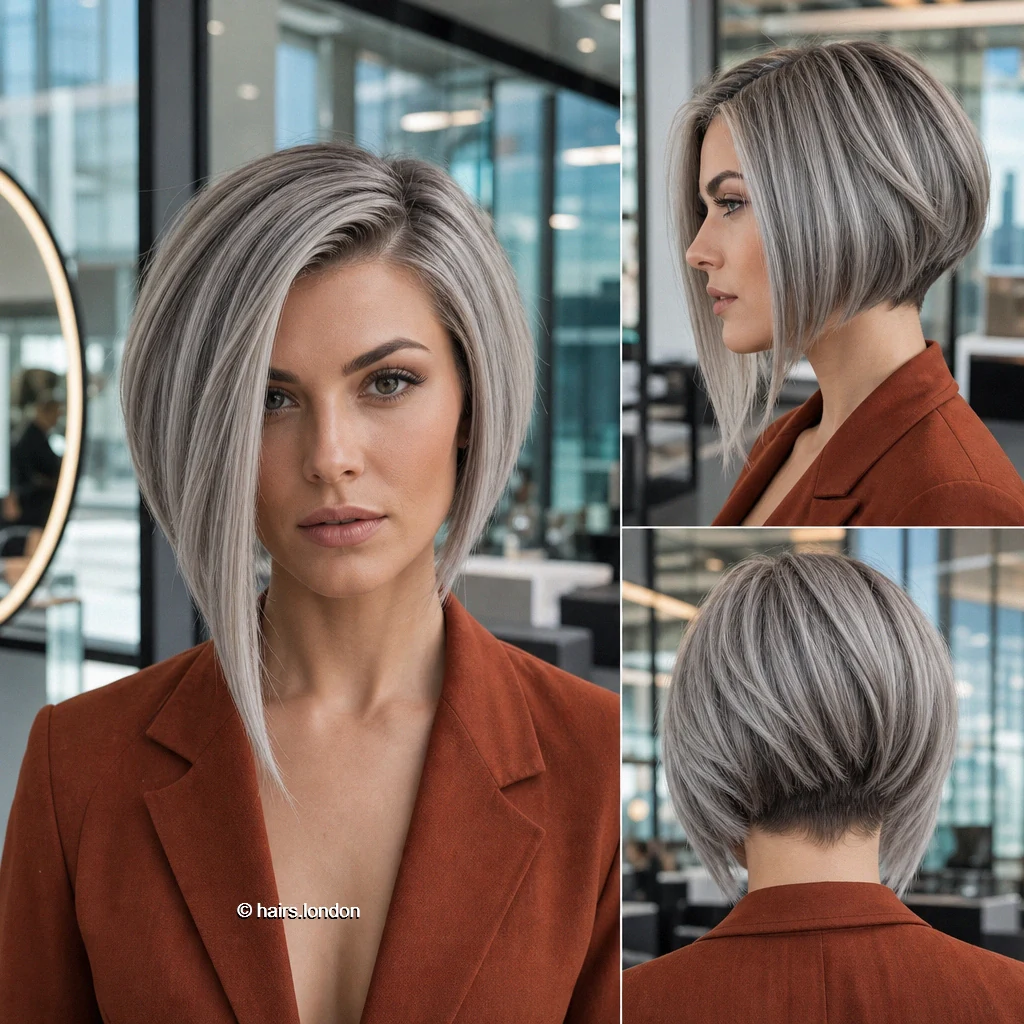
This silver bob has striking, long pieces beside the face. They extend below the jaw while the back sits higher. Side and rear views also show visible graduation around nape. A side part sharpens the contrast between front and back. Smooth the longer sections downward to emphasize their forward length. Use a small brush to shape the shorter back gently. Discuss whether your growth patterns support its close neck finish. Thick hair may require careful weight distribution above the graduation. Frequent trims preserve both the back and deliberate front contrast. Ask to see the proposed front length before cutting begins.
14. Shaggy Silver Bob with Piecey Ends
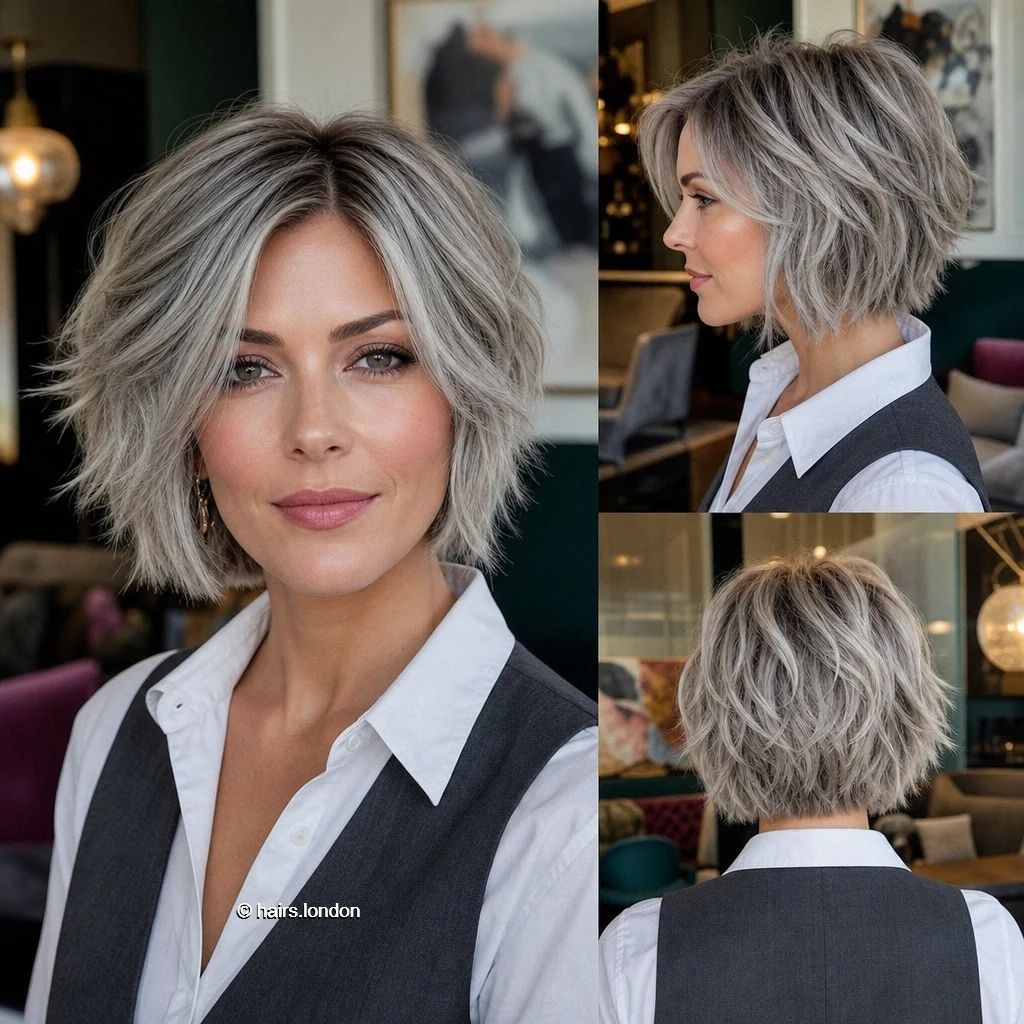
Choppy silver layers give this jaw length bob relaxed width. The front opens into soft pieces around the cheekbones and eyes. Side and back views show an irregular, textured lower edge. Its shape reads shaggy, without a sharply stacked back section. Scrunch damp hair with light mousse to encourage natural bends. Diffuse gently or let the layers settle with minimal handling. This approach favors texture over a perfectly straight perimeter. Fine hair needs thoughtful layering to avoid overly sparse ends. Trim scattered tips when the outline starts looking unintentionally uneven. Ask how much styling your own wave pattern will require.
15. Asymmetrical Silver Bob with Graduated Nape
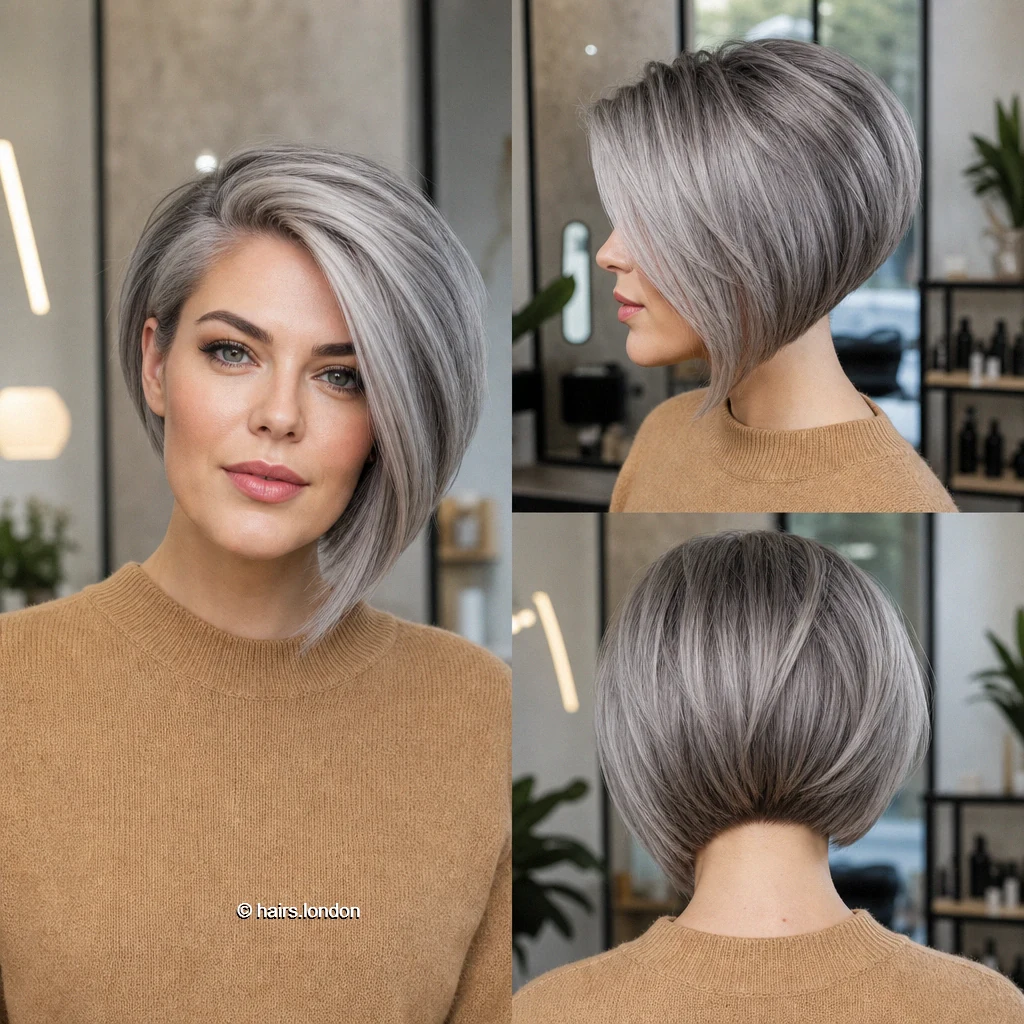
The silver front falls longer on one side of face. Its opposite side sits shorter, making the asymmetry plainly visible. Profile and rear views show rounded graduation above the nape. Smooth surface layers keep the difference intentional rather than ragged. Blow dry the longer side forward for a defined line. Tuck the shorter side away to emphasize the contrasting lengths. Ask whether your preferred part will maintain this planned balance. Strong growth patterns may change how the short side rests. Trim the nape regularly so its graduation remains clearly shaped. This cut suits those comfortable wearing a consistently directional part.
16. Honey Blonde Bob with a Rounded Perimeter
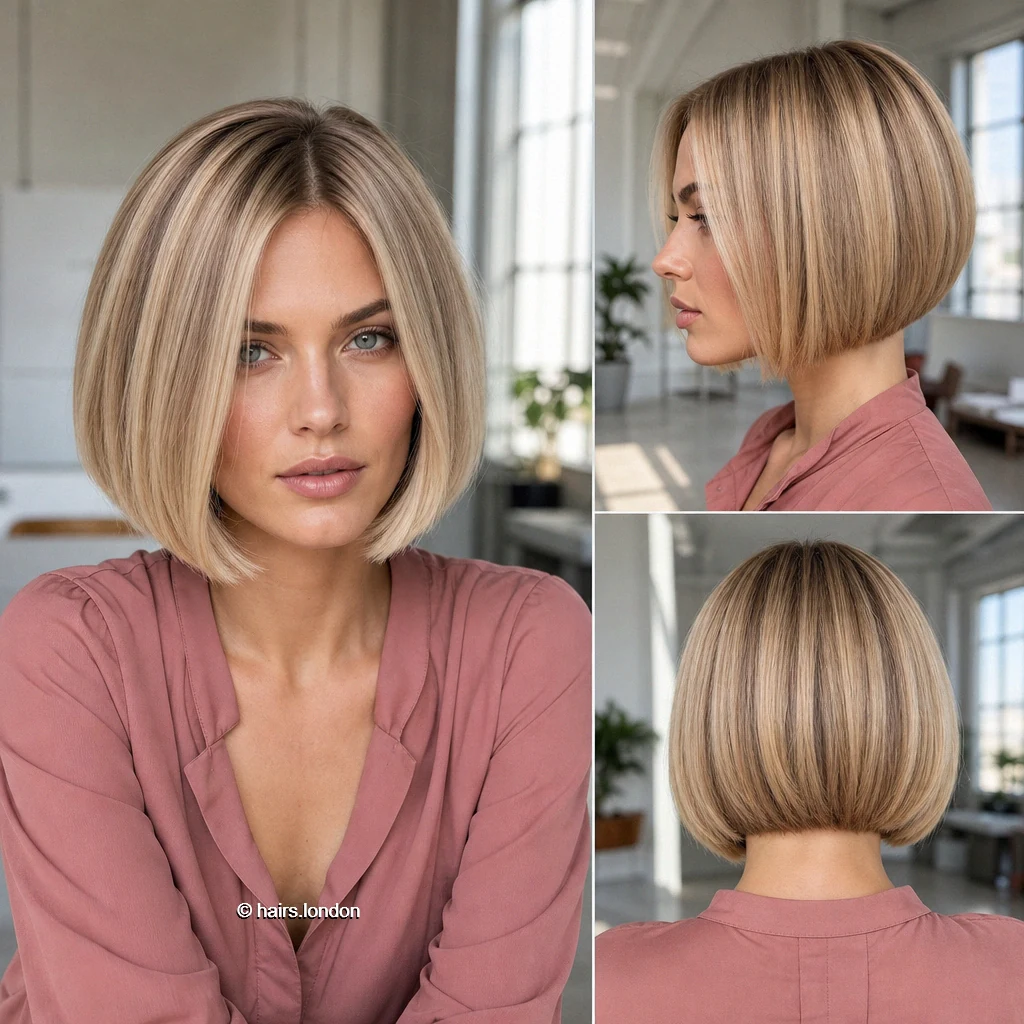
Warm honey blonde brightens this smooth, jaw length bob. A near central part divides the front into soft panels. Profile and back views show a rounded, neck clearing perimeter. The hair appears full, with few distinct layers showing outside. Blow dry from roots downward, lightly turning the ends inward. Keep conditioners concentrated below the roots to maintain natural airy fullness. If your hair is dense, discuss invisible interior weight reduction. Finer strands may benefit from preserving this substantial lower edge. Trim regularly before the curved back begins to lose shape. Ask about color refreshes suited to your natural growing roots.
17. Cream Blonde Bob with Softly Layered Back
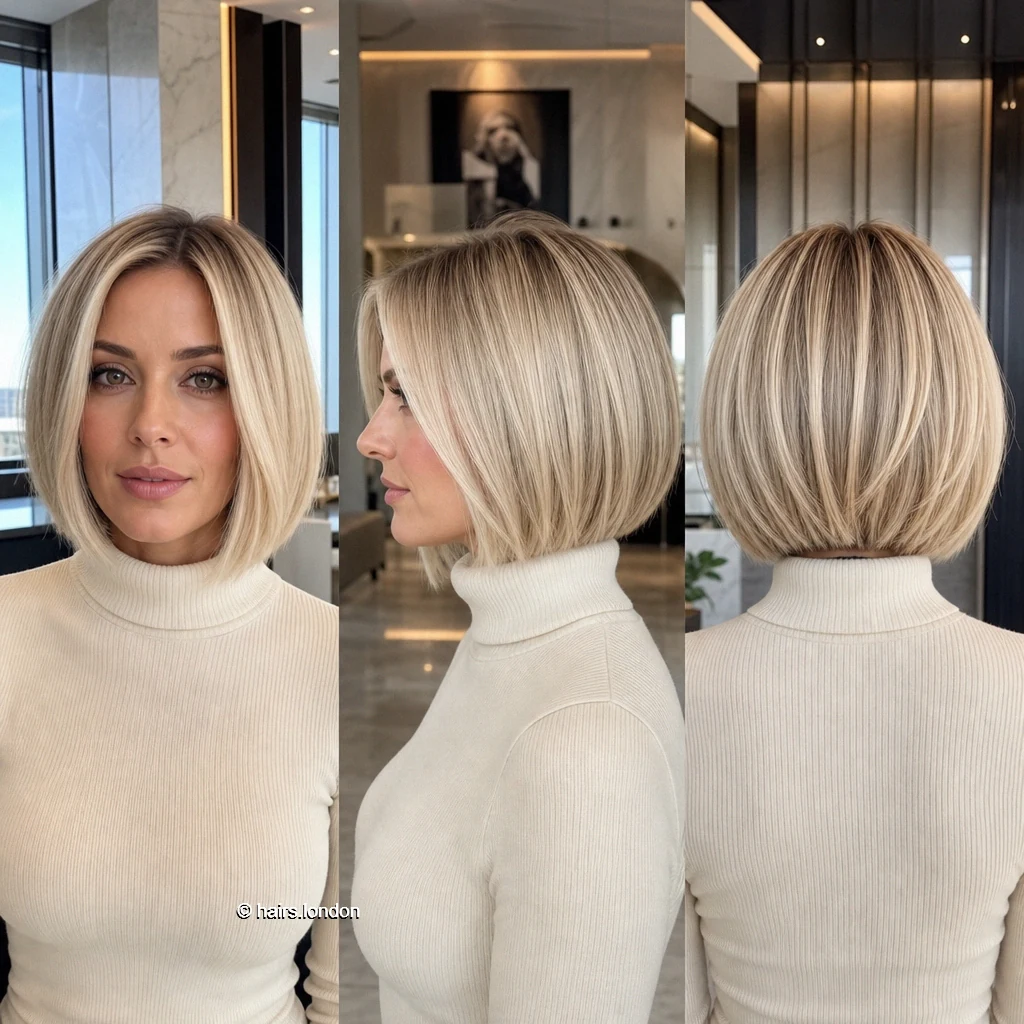
Creamy blonde lengths form a full bob around the jaw. Its central part gives the front a balanced, open shape. The side and back show soft layers within rounded fullness. A shorter lower edge rests above the neckline behind. Dry with gentle root lift, then smooth the face sections. Avoid overloading the ends with product if natural movement matters most. Discuss subtle layering based on your density and natural bend. Regular back trims help its curved outline stay above collars. Pale blonde hair may need protection from heat and dryness. Ask how often your chosen tone needs professional refreshing appointments.
18. Beige Blonde Bob with a Tucked Back
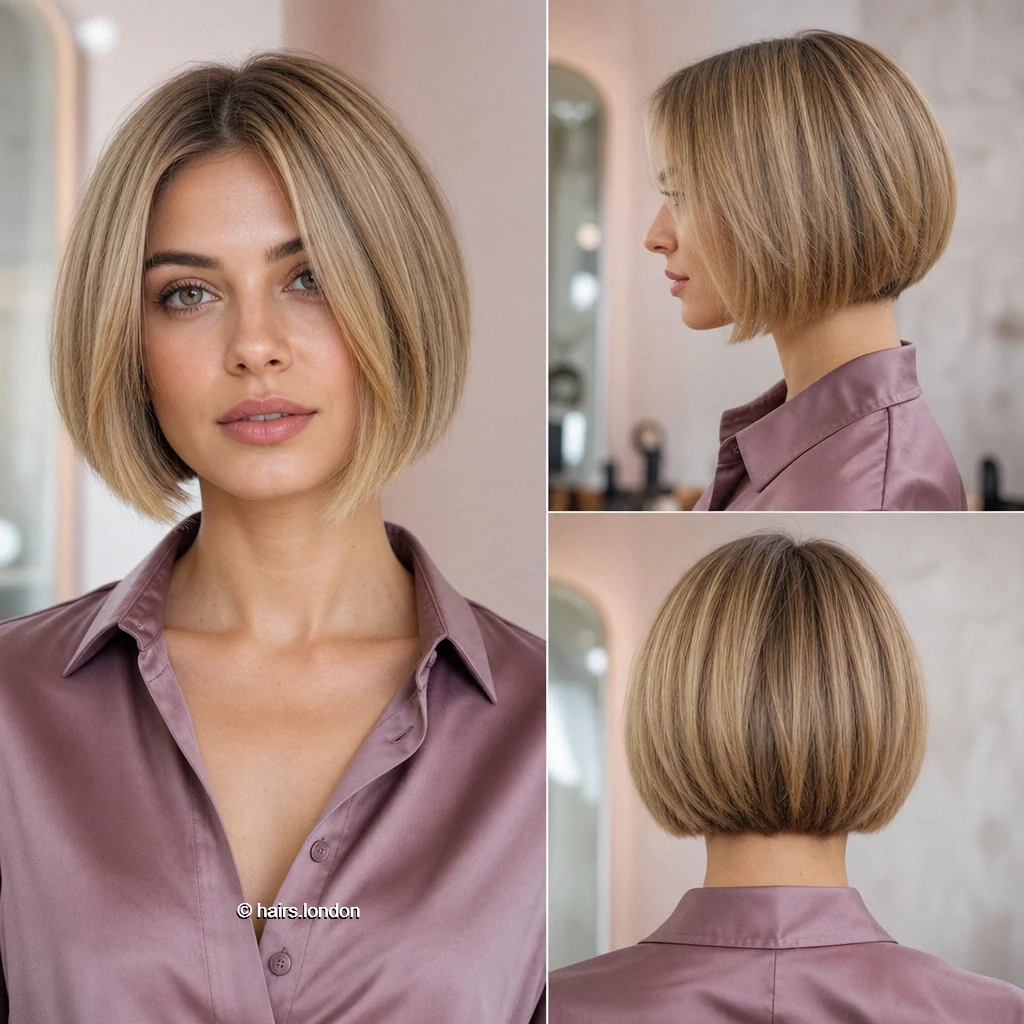
Beige blonde strands frame the face in a rounded bob. A softly off center part leaves both front sides visible. The side view shows ends angling slightly toward the jaw. From behind, the perimeter curves inward above the neck. Blow dry with a brush to preserve that tucked finish. Use minimal product so the smooth lengths retain their natural swing. Dense hair may need carefully controlled bulk at the back. Finer hair can benefit from maintaining its solid lower outline. Book trims when the tucked edge begins turning outwards instead. Discuss how your hair behaves when you skip heat styling.
19. Pale Blonde Blunt Bob with a Center Part
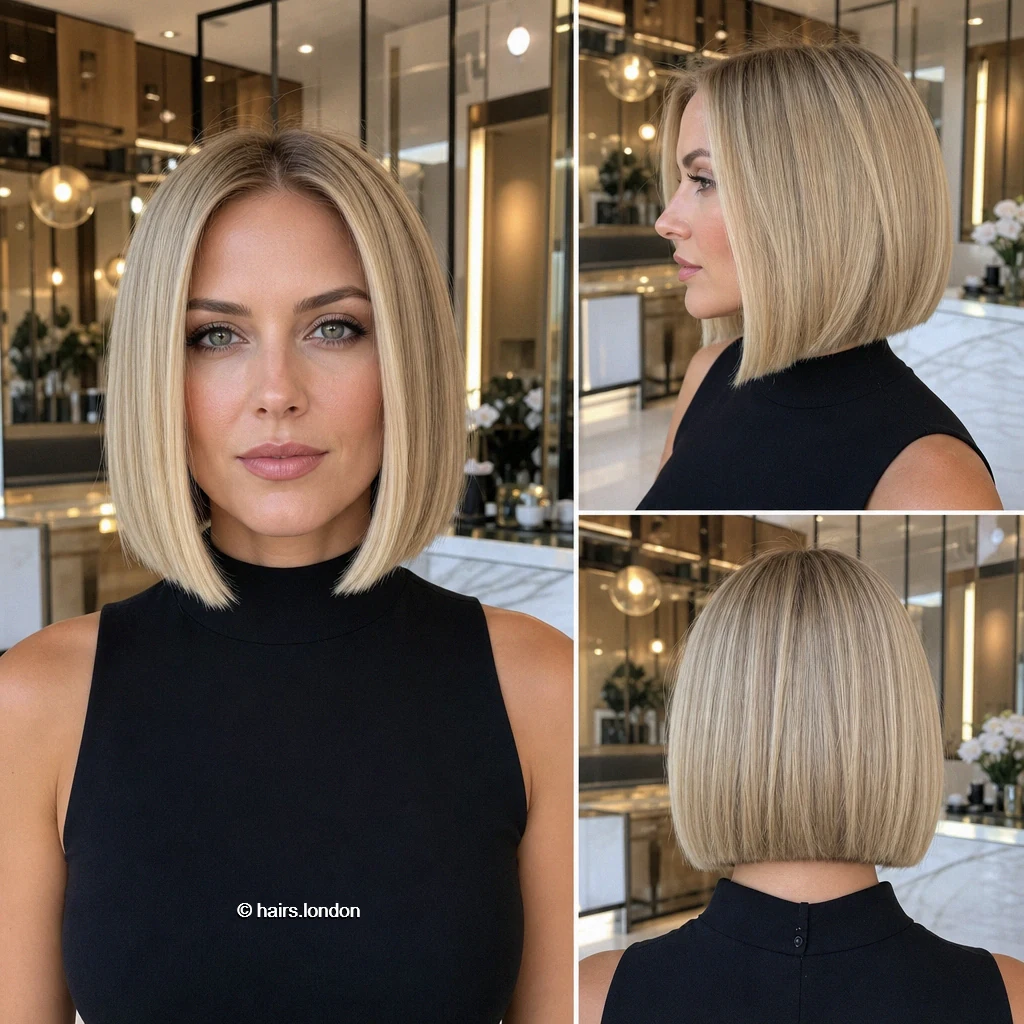
Pale blonde lengths meet in a crisp, chin grazing bob. A center part gives its front an even, simple frame. Side and back views show a nearly level perimeter throughout. The lower edge looks substantial, with little visible layering outside. Smooth from roots to ends without curving the tips excessively. A flat brush can help maintain its clean vertical fall. Fine hair often benefits from keeping this perimeter relatively solid. Dense hair may require discreet internal shaping for comfort instead. Trim before uneven growth disrupts the precise bottom line. Discuss your natural part and desired amount of daily heat smoothing.
20. Light Blonde Blunt Bob with a Sharp Outline
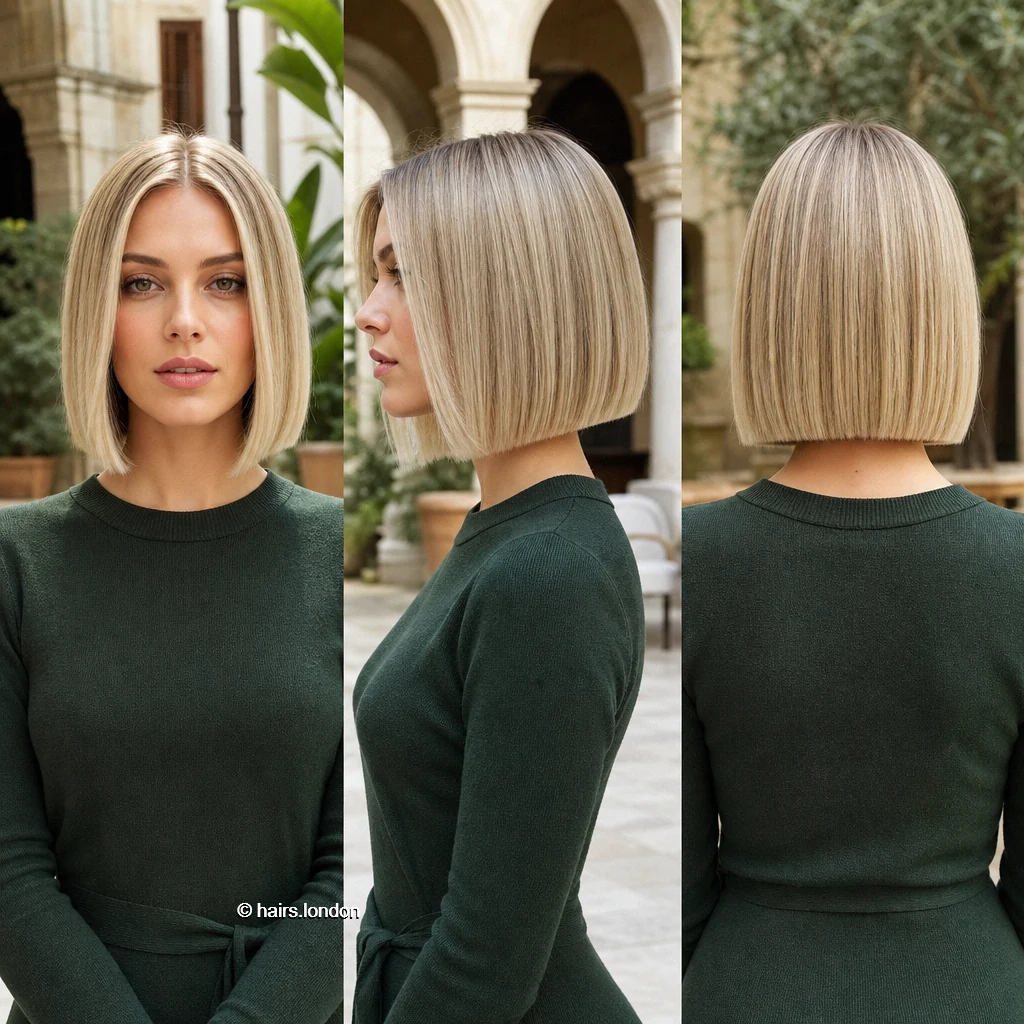
This light blonde bob finishes around the lower jawline here. A central part divides straight front sections into even panels. Side and back views reveal a clean, blunt lower edge. The rear sits slightly shorter, without visible stacked graduation above. Dry hair downward and smooth the perimeter with restrained heat. Use a light finishing product only where flyaways interrupt lines. A precise outline needs frequent trims, especially as sides grow. Discuss natural waves before expecting this finish without daily styling. If hair is very dense, ask about managing interior bulk. Protect pale color and ends with conditioning matched to texture.
How to Choose Your Bob Length and Shape
Start with the point where you want the front to land: above the jaw, at the chin, below the jaw or near the shoulders. Then decide how much neck exposure feels comfortable. A-line bobs have longer fronts; a stacked or graduated shape also needs visible buildup through the back. Rounded cuts keep fullness near the lower outline, while layered cuts create more separation and movement. Compare those features with your density, natural bend, growth patterns and willingness to style.
Styling Fine, Thick, Wavy and Curly Textures
For fine hair, protect the lower edge from excessive layering and use light root lift rather than heavy creams. Thick hair may need carefully placed interior weight removal so a rounded or angled bob moves without expanding into a block. On wavy hair, encourage the existing pattern with mousse and gentle diffusing; smooth only the sections needed to clarify the perimeter. For curls, plan the finished length around shrinkage, define curls with suitable moisture, and avoid treating a straightened reference image as an effortless wash-and-wear result.
Keeping Silver and Blonde Color Fresh
The images move from cool silver to warmer beige, honey and pale blonde. Ask your colorist what maintenance your chosen tone requires rather than assuming every light shade follows the same schedule. Gentle cleansing, conditioning suited to your hair and heat protection help limit dryness and dullness. If unwanted warmth develops in a cool shade, seek product guidance before using a strongly pigmented shampoo frequently; warmer blonde tones may need a different approach.
Maintaining the Bob Perimeter and Graduation
Blunt bobs show uneven growth quickly, so book a trim when the bottom line stops looking level. Rounded bobs need attention when their ends begin to turn outward or crowd the neck. On graduated cuts, the shorter back can lose definition before the longer front needs much removed; ask whether a back-only tidy-up is practical. Shaggy bobs and lobs can tolerate a looser outline, but their layers still need periodic balancing.
What to Discuss with Your Stylist
Bring views that show the front, profile and back, then identify the detail you actually want: fringe placement, front length, a curved weight line, visible graduation or a sharp perimeter. Show how you normally part and dry your hair. Discuss density, cowlicks, curl shrinkage, collar contact, color history and the time you can spend styling. Ask your stylist to explain which features are achievable with your texture and how the cut will change as it grows.
Frequently Asked Questions
What is the difference between a bob and a lob?
A bob generally finishes around the jaw or neck; a lob is a longer bob that approaches the shoulders. The distinction can be flexible, so describe where you want the ends to sit.
How does an A-line bob differ from a stacked bob?
An A-line bob has a longer front than back. A stacked bob has visible graduation that builds fullness at the back. One cut can have both features, but a longer front alone does not establish stacking.
Will a blunt bob work on fine hair?
It can, because a substantial perimeter often makes ends appear fuller. Ask your stylist to assess density and avoid removing more weight than the lower edge can support.
How can thick hair avoid looking bulky in a rounded bob?
A stylist may adjust interior weight while preserving the visible outline. The right amount depends on density, strand texture and how the hair expands when dry.
Can naturally curly hair wear these bob shapes?
Yes, but curl shrinkage and the dry shape need planning. Discuss a curl-specific version of the desired silhouette rather than expecting it to fall like the smooth examples without styling.
Which fringe is easiest to manage with a bob?
That depends on your growth patterns and routine. A longer side fringe offers some flexibility, while a shorter fringe generally needs more frequent shaping and deliberate drying.
How much daily styling does a precise bob require?
It varies with natural texture. Hair that dries close to the intended shape may need only light smoothing; strong waves or curls may take more time if you want a straight, exact perimeter.
How often should I trim a blunt bob?
Book a trim when growth makes the line visibly uneven or changes where it meets your jaw and neck. A highly precise edge usually calls for more frequent attention than a loose, layered outline.
Does a graduated bob need different maintenance?
Often, yes. Its shorter back can lose its shape while the front still looks appropriately long. Ask whether a targeted back tidy-up would maintain the profile between full cuts.
What should I expect when growing out a short bob?
The back may reach the neck before the front catches up. Small reshaping trims can gradually balance the outline without removing all the length you have gained.
How do I keep a silver or pale blonde bob looking fresh?
Limit unnecessary heat, condition according to your hair’s needs and ask a colorist how to address changes in tone. Avoid assuming that strongly pigmented products are suitable for every light shade.
What should I bring to a bob consultation?
Bring front and side references, plus a back view if nape shape matters. Explain your preferred part, styling time and the exact length you want around your face.
Conclusion
A bob’s character comes from details that are easy to overlook in a single front-view photo. Compare the perimeter, side profile and back shape before choosing a favorite, then adapt the length, layers and styling demands to your own hair. The best reference is the one that helps you have a specific conversation with your stylist.


