

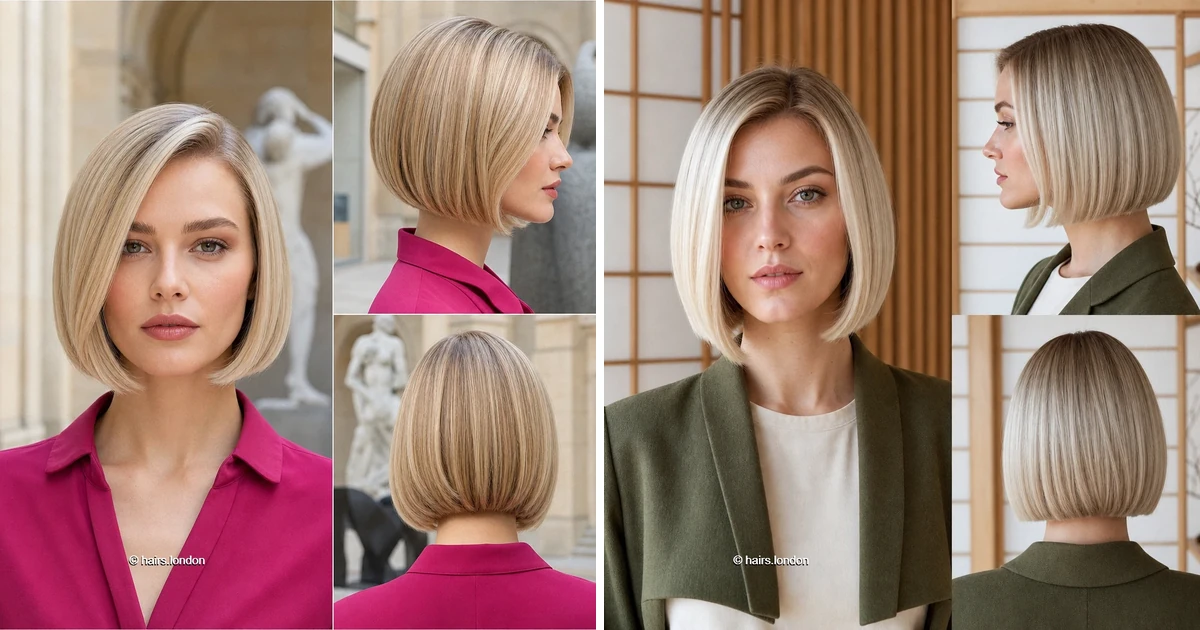
11. Angled Blonde Bob With an Asymmetrical Front
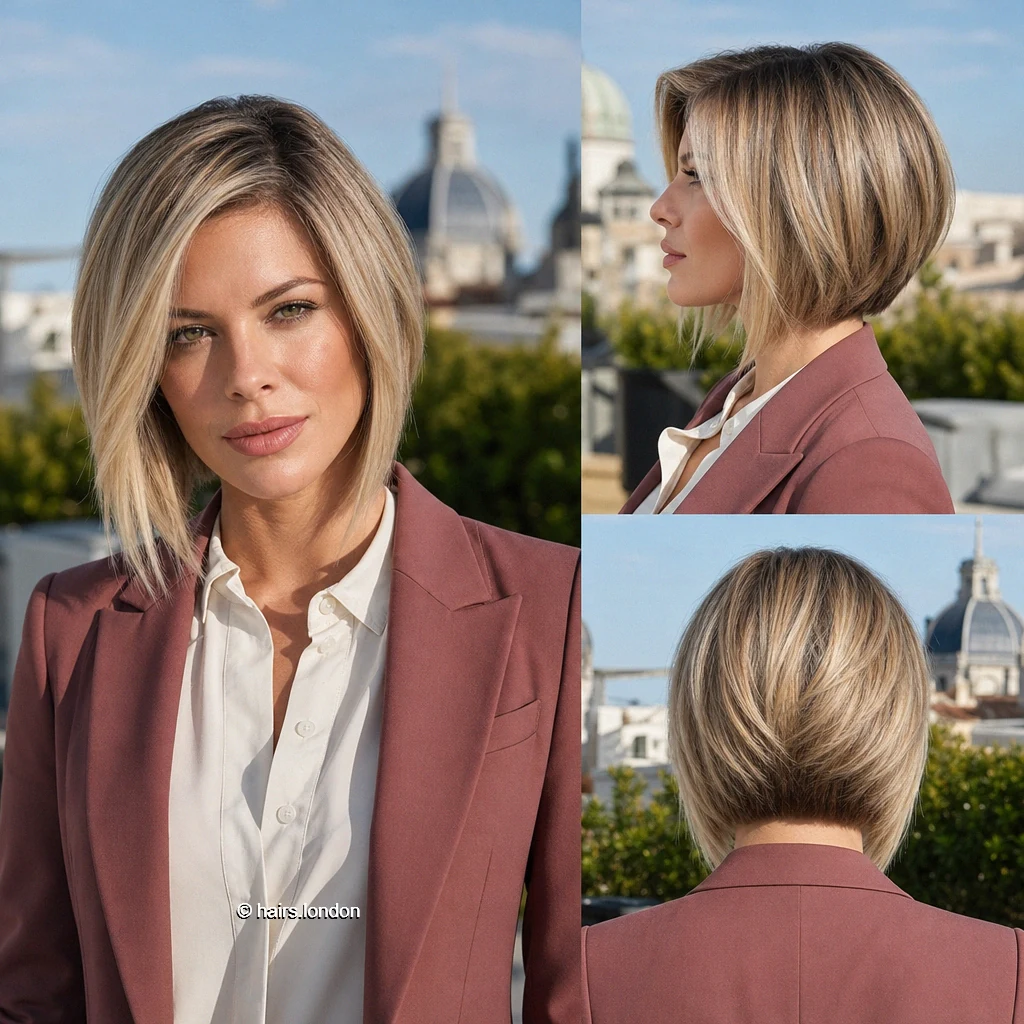
This sandy blonde bob has a visibly shorter graduated back. One sweeping front section extends lower than its opposite side. Layered volume rounds the crown above a closely tapered neckline. Darker roots deepen the beige highlights throughout the angled shape. Request careful balance between front length and visible rear graduation. Smooth the longer panel with a brush, lifting crown roots. Keep product light so the tapered silhouette stays airy underneath. Check the nape often because regrowth alters this contrast quickly. This suits density able to sustain a full rounded crown. Ask how much asymmetry feels comfortable with your natural part.
12. Ash Blonde Bob With Long Front Pieces
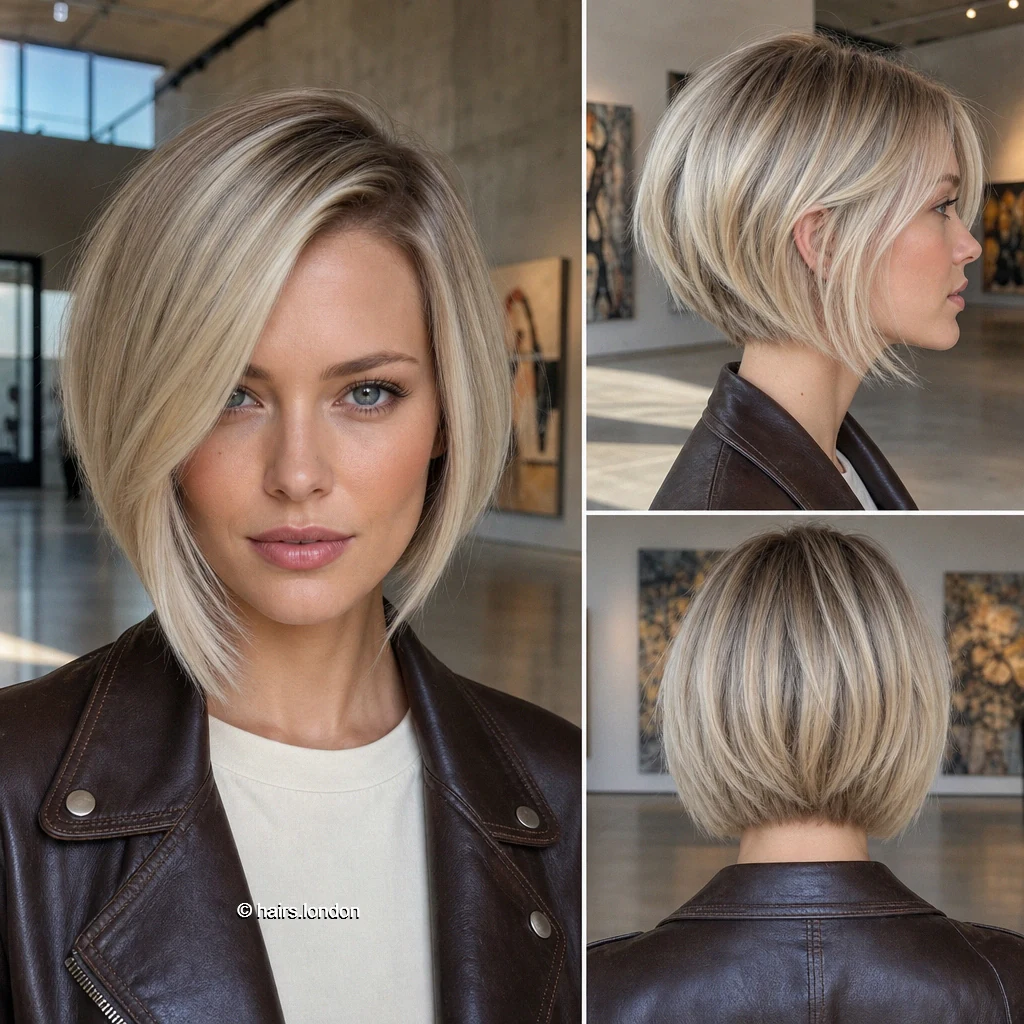
This ash blonde bob pairs elongated front strands with graduation. The back rounds outward before tapering toward the exposed neck. Side swept fringe merges with cheek framing, slightly piecey ends. Cool pale highlights contrast against darker strands around the crown. Request soft texturing that leaves the forward corners noticeably substantial. Direct the fringe diagonally while drying the back with lift. Add flexible cream to separate ends without coating the roots. Trim the nape before graduation loses its compact visual effect. Fine hair may need restrained layering to preserve front thickness. Discuss whether face framing pieces interfere with daily eyewear use.
13. Honey Blonde Bob With Soft Curtainlike Pieces
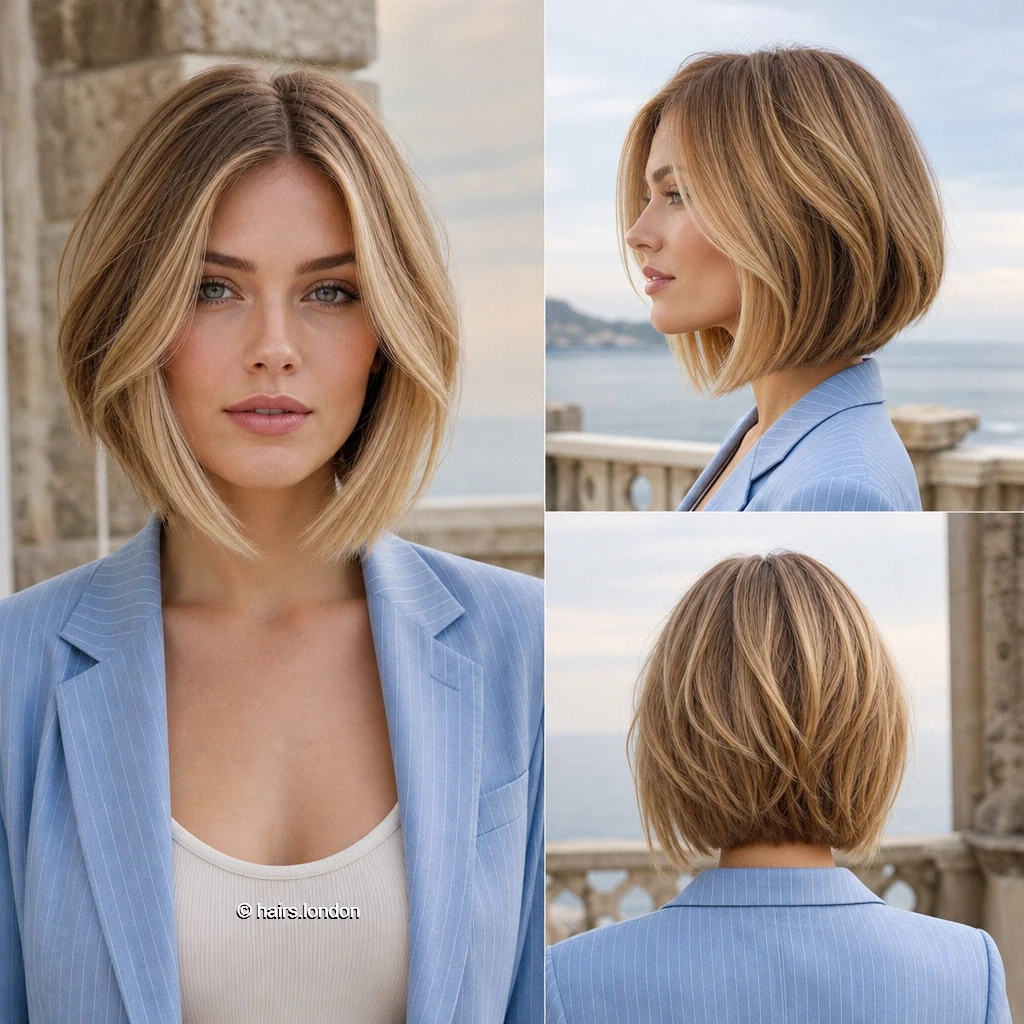
This honey blonde bob brushes the jaw around its front. The shorter back looks softly layered, with rounded crown volume. A loose central part opens curtainlike pieces around both cheeks. Golden highlights and deeper beige strands emphasize its airy texture. Ask for gentle frontward length without sacrificing a wearable neckline. Use a round brush selectively, keeping the ends softly separated. A dry texture mist can enhance movement without creating stiffness. Maintain the lower back before its curved outline becomes bulky. Medium density with gentle wave could recreate this relaxed silhouette. Ask how the front pieces behave with your preferred part.
14. Beige Blonde Bob With a Longer Face Frame
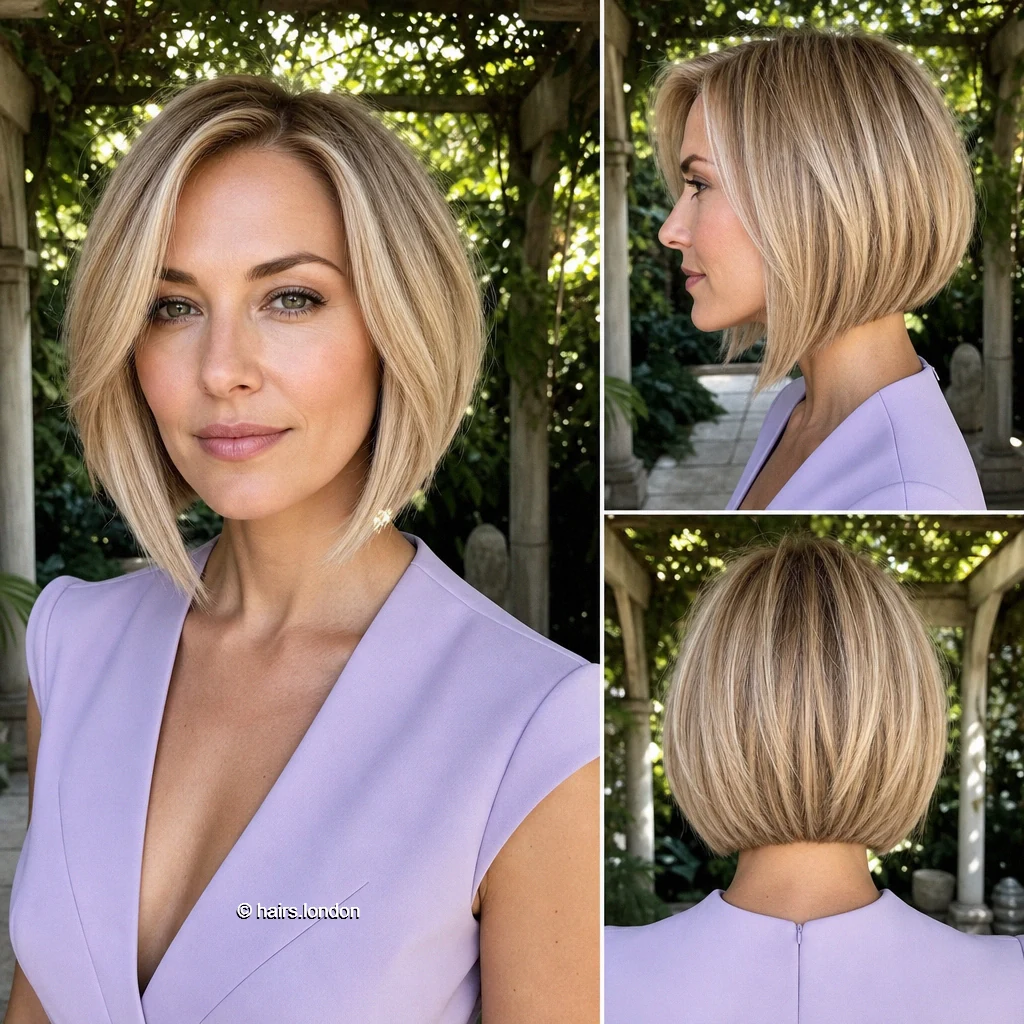
This beige blonde bob angles toward longer pieces beside cheeks. The back appears rounded and shorter, ending above the neck. A deep side part sends a broad section across forehead. Warm creamy highlights brighten darker strands through the smooth layers. Request a measured frontward slope with enough weight near temples. Blow dry forward, then turn ends gently beneath the jaw. Keep finishing products light to preserve the rounded profile naturally. Regular back trims protect the contrast with longer face framing. Thick hair may need subtle interior debulking rather than thinning. Check the profile together to agree on your preferred angle.
15. Pale Blonde Bob With Longer Front Corners
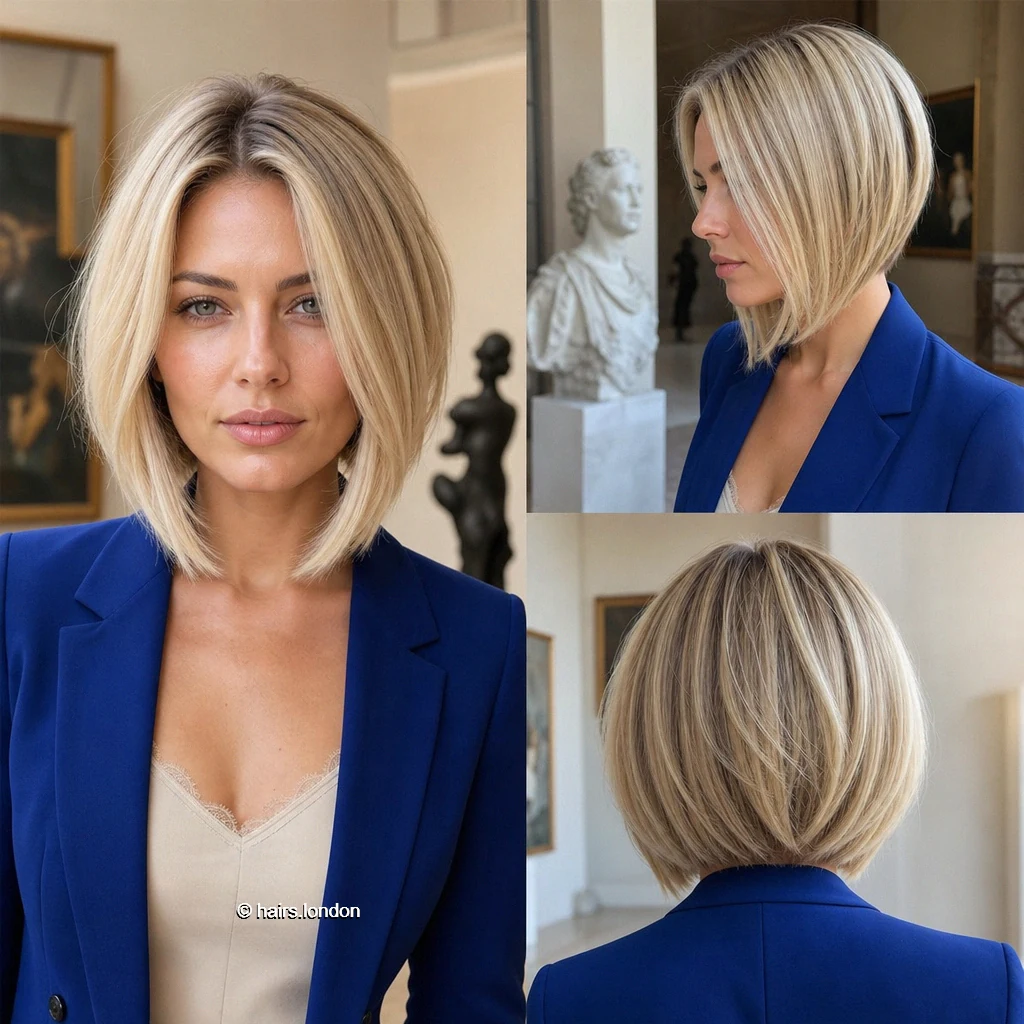
This pale blonde bob frames the face with longer corners. Layered back fullness rounds above a shorter, tucked neckline neatly. A near central part lets soft front sections swing freely. Visible darker roots contrast with cool highlights and creamy ends. Ask for longer face framing without removing essential perimeter density. Smooth the front using downward airflow, then lift crown roots. Finish with flexible spray to maintain shape without rigid separation. Neckline trims matter when shorter rear sections begin growing unevenly. Wavy hair can wear this shape with less daily polishing. Discuss whether that front length works with your usual collars.
16. Polished Brunette Bob With a Rounded Perimeter
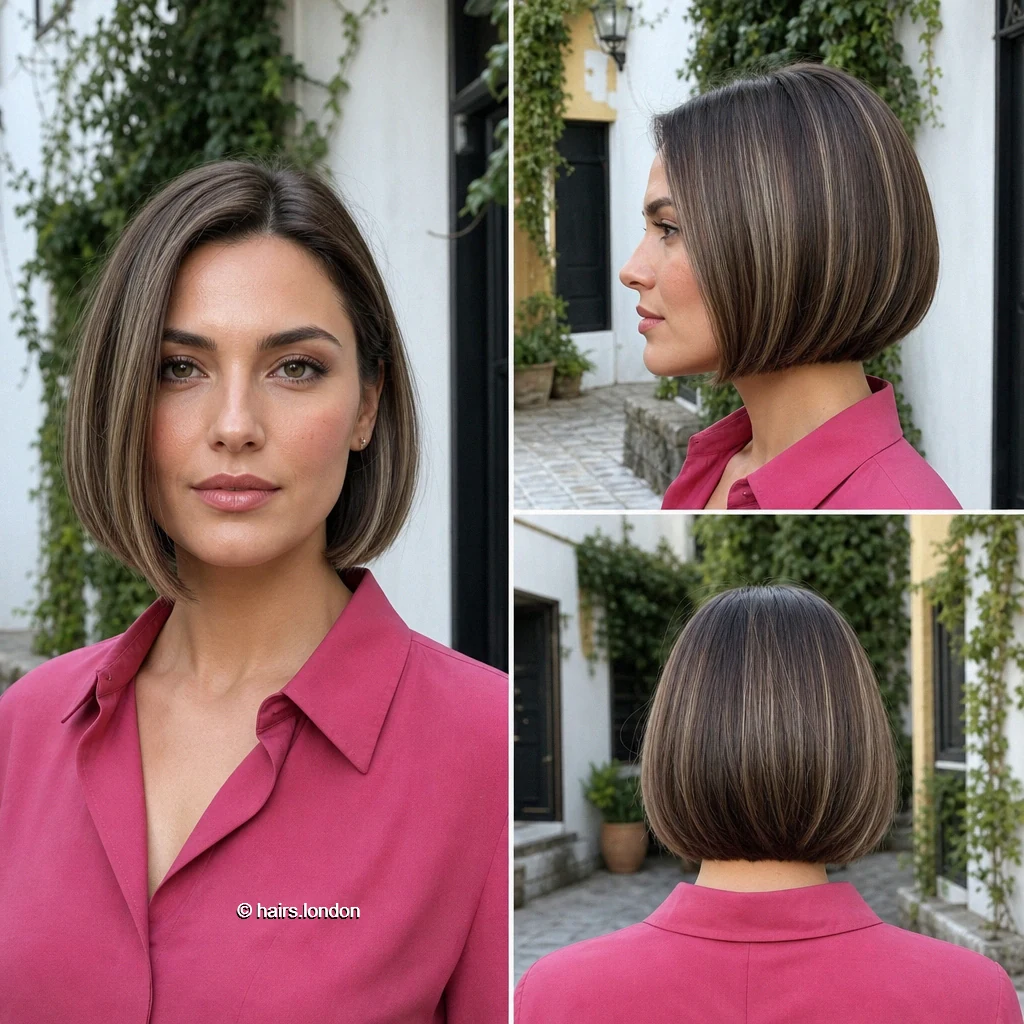
This cool brunette bob ends near the jaw with polish. A level, rounded back edge shows little obvious external layering. The side part creates an elongated, softly curved front panel. Subtle lighter ribbons run through the brown without overwhelming depth. Request a strong edge, adjusting interior weight for your density. Brush downward while drying and gently direct tips toward neck. A drop of serum helps clarify its smooth outer surface. Trim consistently if the precise jawline contour matters most daily. Naturally straight hair may need less work than textured hair. Ask about cowlicks before choosing the pictured side part placement.
17. Layered Chestnut Bob With Caramel Highlights
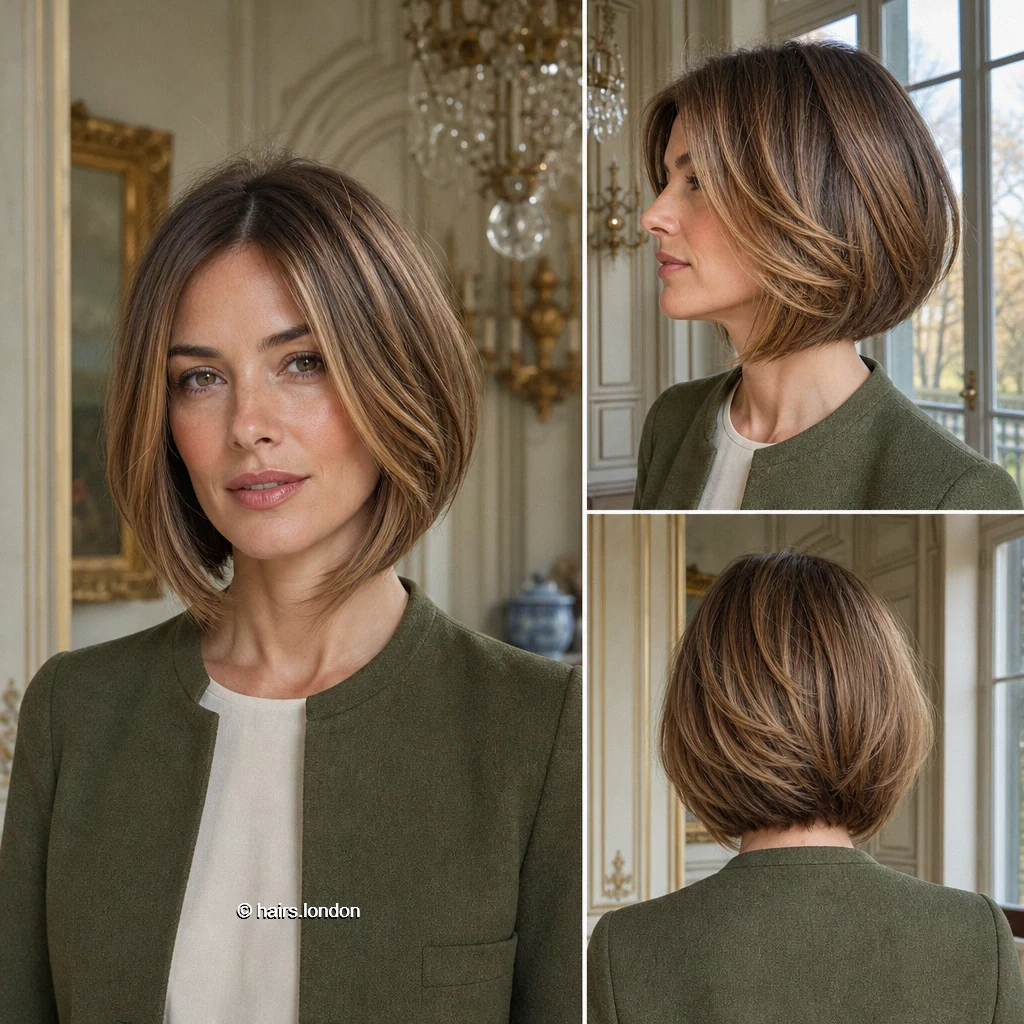
This chestnut bob curves under the jaw with layered movement. The back sits shorter, its textured strands crossing rounded fullness. A loose side part allows longer pieces to skim cheeks. Caramel highlights emphasize individual layers against deeper brown roots underneath. Request moderate interior shaping while keeping sufficient lower edge weight. Blow dry for root lift, then separate pieces using fingers. A flexible texture spray keeps visible definition without stiff bulk. Neaten the shorter back once its rounded outline starts dropping. Medium density often supports this fullness without intensive daily teasing. Talk through how your natural wave changes the finished perimeter.
18. Graduated Brunette Bob With a Long Sweeping Front
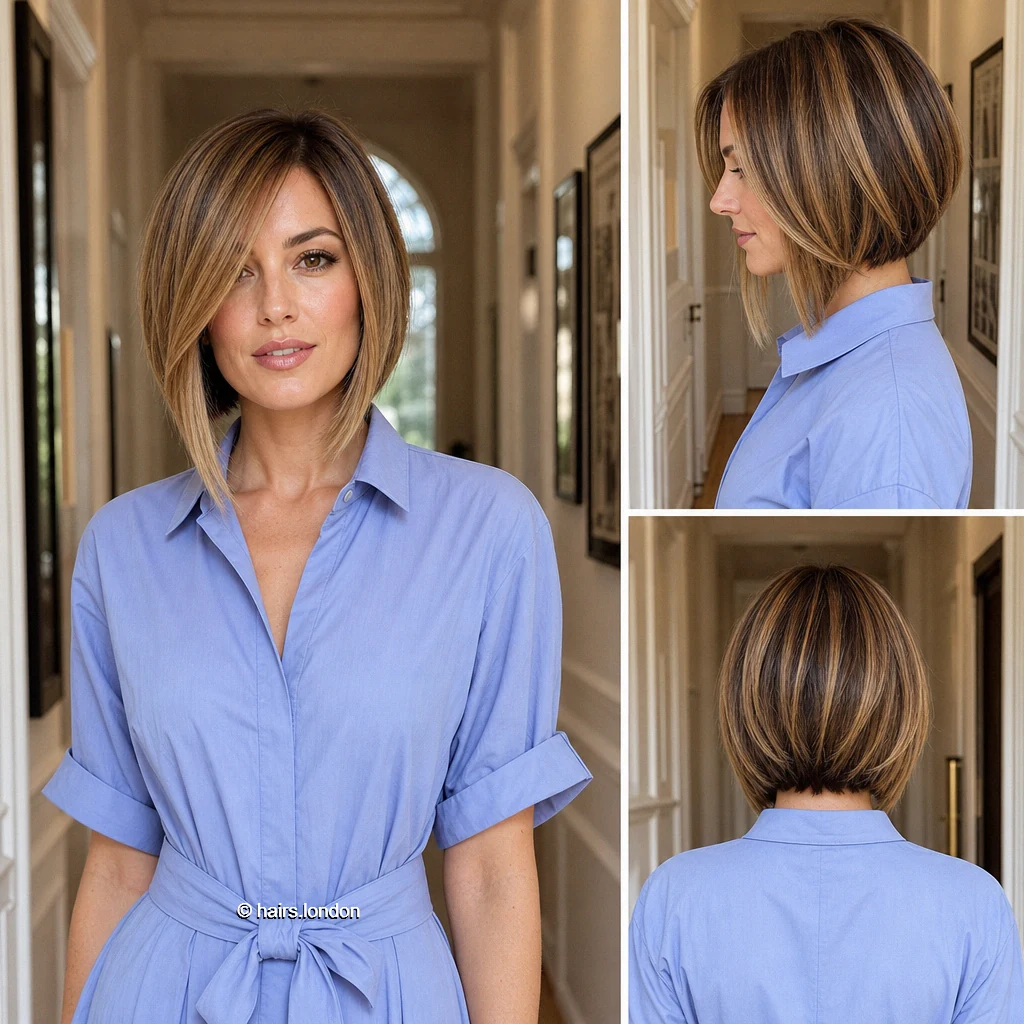
This brunette bob features a notably longer, sweeping front section. The layered back narrows toward the neckline beneath rounded volume. Side fringe crosses the forehead and blends with pointed corners. Warm caramel ribbons streak through deeper chocolate brown lengths throughout. Ask for clear front to back contrast with controlled graduation. Smooth the longer pieces while lifting the rear with airflow. Use lightweight cream to define tips without weighing down volume. Shorter nape layers require attention before the silhouette grows rounder. Straight or gently wavy textures can show the angle clearly. Discuss fringe upkeep if yours naturally separates in another direction.
19. Chocolate Bob With a Tapered Back and Longer Front
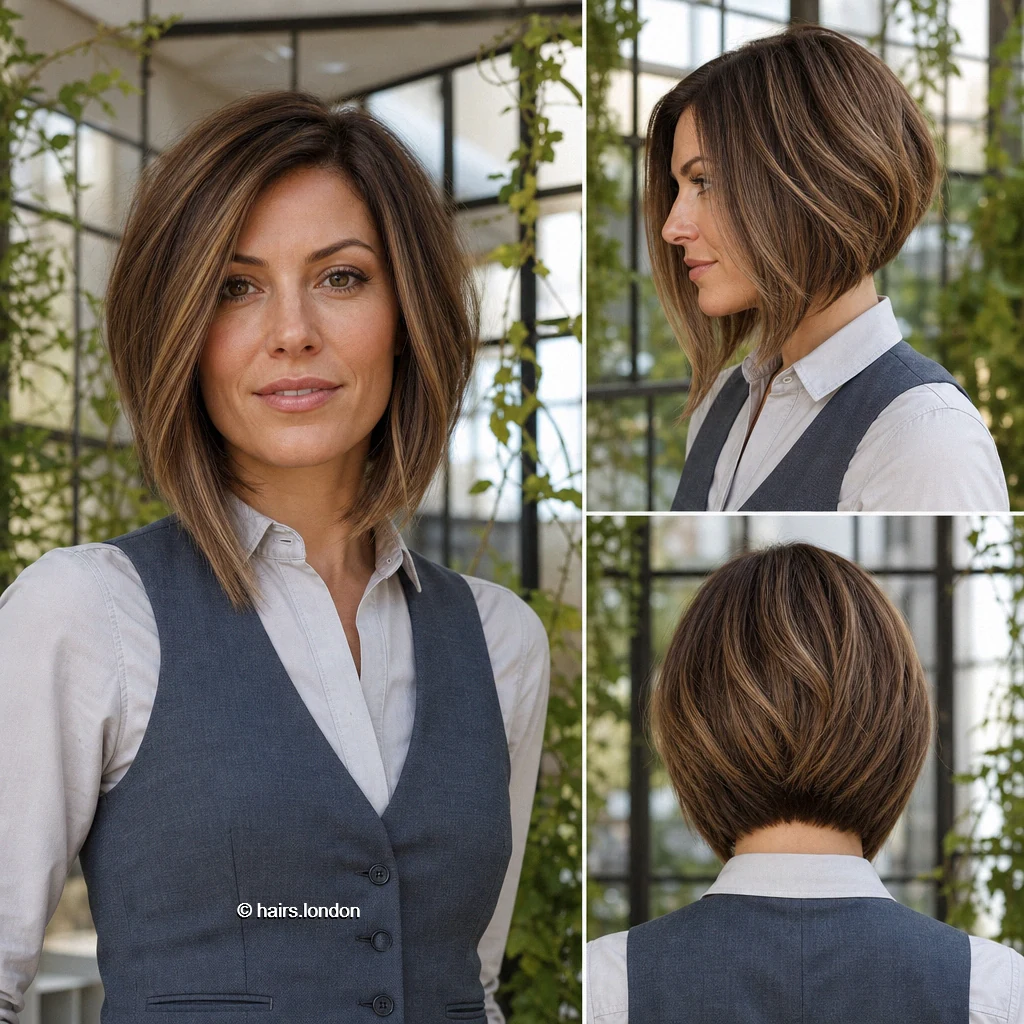
This chocolate bob combines elongated front pieces with shorter layers. Visible back graduation rounds the crown above a tapered neckline. A deep side part sweeps longer strands across one cheek. Subtle caramel threads illuminate the darker brown throughout the layers. Request enough perimeter substance so front ends avoid looking wispy. Dry the back upward briefly, then smooth the longer panel. Light cream defines separated pieces without making the crown sticky. Schedule neckline tidy ups as graduation loses its distinct taper. Medium density supports fullness; fine hair may need fewer layers. Bring profile photos to discuss how dramatic that slope feels.
20. Wavy Brown Bob With Caramel Face-Framing Pieces
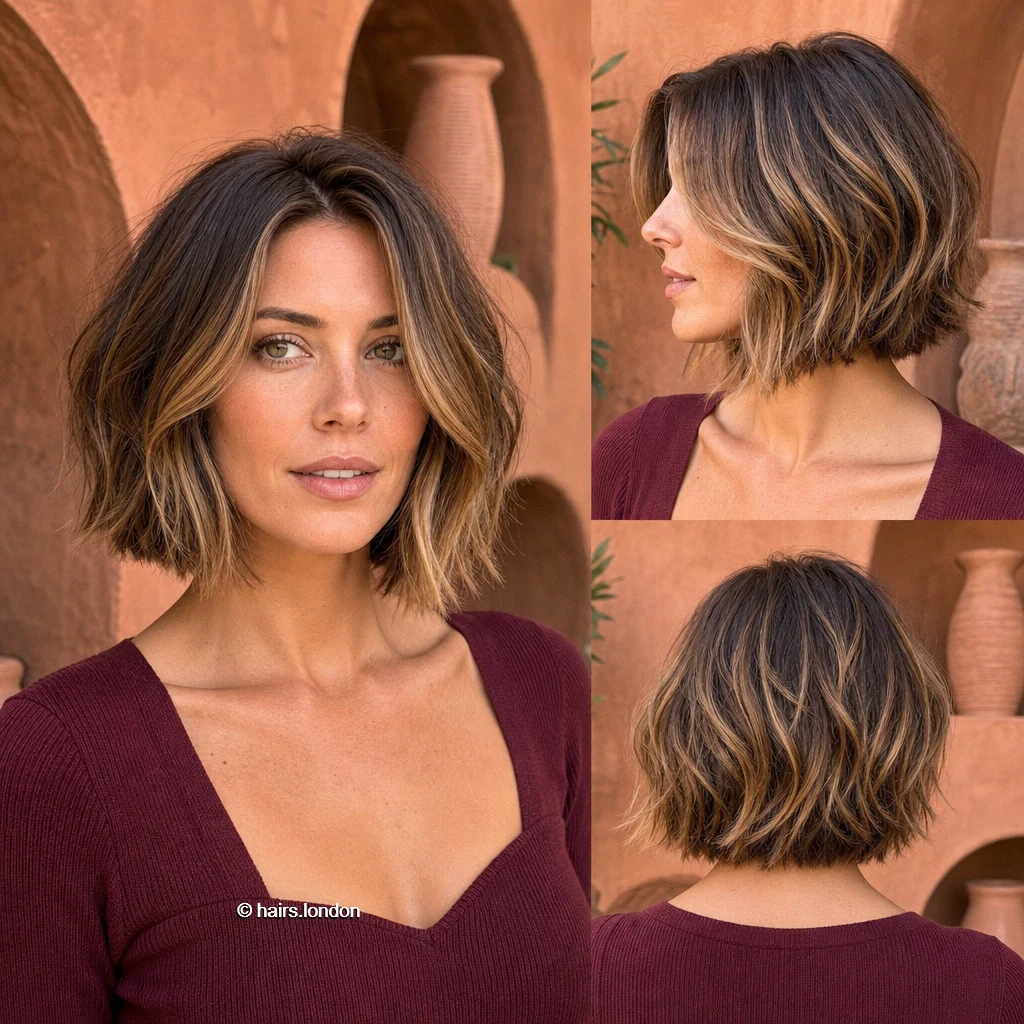
This wavy brown bob sits near the jaw with texture. Loose layers break up its slightly irregular, soft lower edge. A middle part opens caramel face framing ribbons around cheeks. Deeper brunette roots continue through the tousled, highlighted back layers. Ask for movement without removing so much weight curls separate. Scrunch mousse into damp lengths, then diffuse on gentle airflow. Refresh individual bends using water instead of adding heavy wax. Trim by checking the dry shape, not just stretched strands. Natural waves simplify styling if the chosen layers preserve density. Discuss shrinkage and whether you prefer symmetry or casual irregularity.
How to Choose Your Bob Length and Shape
Start with where you want the front to fall: above the jaw, at the chin or slightly below it. Then assess the side and back separately. A front that extends beyond the back creates an A-line shape; visible shortening and buildup through the back indicate graduation or stacking. Neither detail is required for a rounded or nearly blunt bob. Account for curl shrinkage, neckline exposure and whether the front must stay out of your face during the day.
Styling Fine, Thick, Wavy and Curly Textures
Fine hair often benefits from a substantial lower edge and lightweight root lift rather than extensive layering. With thick hair, ask about removing weight inside the shape while keeping the perimeter intact. For waves, scrunch a light styling product into damp hair and diffuse gently; smooth just the front if you want a tidier outline. Curly hair needs a length and layer plan that respects its dry shape and shrinkage. Use a small amount of product first so movement does not turn into bulk or stiffness.
Keeping Bob Hair Color Fresh
The images include pale blondes, warmer blonde ribbons and brunettes with subtle caramel contrast. Ask how often your chosen lightness and root contrast will need attention before making a color change. Protect lightened lengths when heat styling, and use toning products only when their purpose matches the warmth you see. Color placement near a fringe or front corner can become more noticeable as those sections grow, so consider color timing alongside your cut appointments.
Maintaining the Bob Perimeter and Graduation
A smooth, nearly blunt bob shows an uneven lower edge readily, so book a trim when that line stops looking balanced. Short graduated backs need particular attention at the neckline: growth can soften the taper and shift the apparent weight lower. Angled bobs also lose their front-to-back contrast over time. A layered, wavy perimeter can tolerate a softer outline, but it still benefits from checking its shape when dry.
What to Discuss With Your Stylist
Bring front, side and back references rather than relying on a subtype name alone. Point out the front length, amount of crown fullness, visible nape exposure, fringe direction and how crisp or soft you want the edge. Show your natural part and describe cowlicks, density, texture and the time you will spend styling. Ask your stylist which details are realistic for your hair and what the shape will look like between trims.
Frequently Asked Questions
What is the difference between a bob and a lob?
A bob generally finishes around the jaw, chin or neck, while a lob is a longer bob that approaches or reaches the shoulders. The boundary is flexible; describe your desired front and back lengths instead of relying on the name.
Is an A-line bob the same as a stacked bob?
No. A-line describes a perimeter that is longer in front than in back. Stacked or graduated describes visible buildup from shorter sections through the back. A cut can have both features, but one does not guarantee the other.
Does a rounded back always mean the bob is graduated?
No. Ends styled inward can give an even-edged bob a rounded appearance. Look for visible shortening and layered buildup at the back before calling it graduated.
Can fine hair wear a layered bob?
Yes, if the layering leaves enough weight at the perimeter for the finish you want. Ask for a conservative approach if your ends tend to look sparse.
How can a thick bob keep movement without looking bulky?
Discuss selective interior weight removal and the placement of any layers. Removing too much from the visible edge can leave it thin while the shape remains full elsewhere.
Can natural curls work with a chin-length bob?
They can, but the finished length depends on shrinkage and curl pattern. Discuss the shape on dry hair and whether you want an even-looking edge or a softer layered outline.
Should I add a fringe to my bob?
Consider your growth patterns and willingness to style it. A sweeping fringe needs directional drying, while an unfringed front can offer more flexibility when changing your part.
How much daily styling does a sleek bob require?
That depends on your natural texture and how exact you want the edge to look. Straight hair may need only controlled drying; waves or curls may require additional smoothing for the same finish.
How often should I trim a bob?
Trim it when its defining feature starts to change. A precise lower edge or exposed, graduated nape will usually show growth sooner than a softly textured perimeter.
What happens when a graduated bob grows out?
The short neckline fills in and the weight can appear to drop lower at the back. Your stylist can refresh the graduation or help transition it toward a more even shape.
Can an angled bob be grown into an even-length cut?
Yes. You can keep trimming the longer front while the shorter back catches up. Ask how much front length you are comfortable losing during that transition.
What should I bring to a bob haircut consultation?
Bring views that show the front, profile and back, and identify the specific details you like. Also explain your natural texture, parting, styling habits and preferred time between appointments.
Conclusion
The strongest choice is not simply a favorite front view: it is a bob whose side profile, back shape and upkeep also fit your hair. Compare the details you can see, then ask your stylist how to adapt the length, perimeter and layering to your texture and routine.