


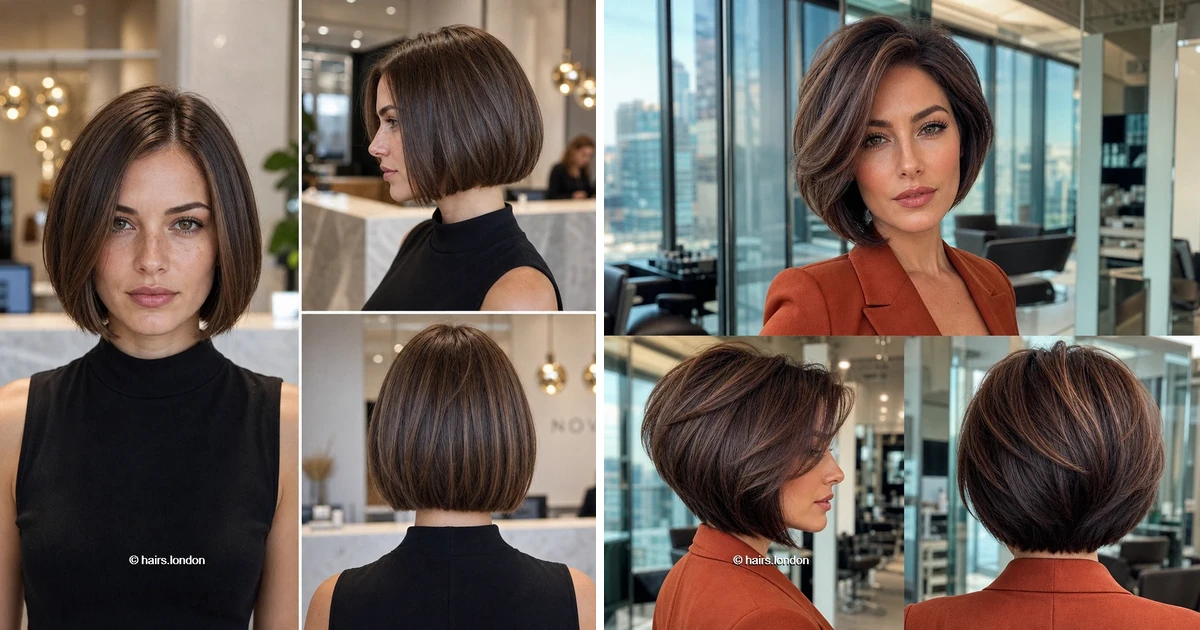
11. Brunette Layered Shoulder-Grazing Lob
This dark brunette lob reaches the shoulders, with a loose center part, sweeping face framing layers and ends that flick outward rather than forming a blunt shelf. From the side and back, the lower layers create movement through the perimeter without the tight nape graduation of a short stacked bob. Ask for enough length to account for any natural wave or outward flip at the shoulders. A round brush can emphasize the airy ends, while a light cream keeps them separated and softly defined. Trim selectively when the layers lose their flow; this length allows more flexibility between precision appointments.
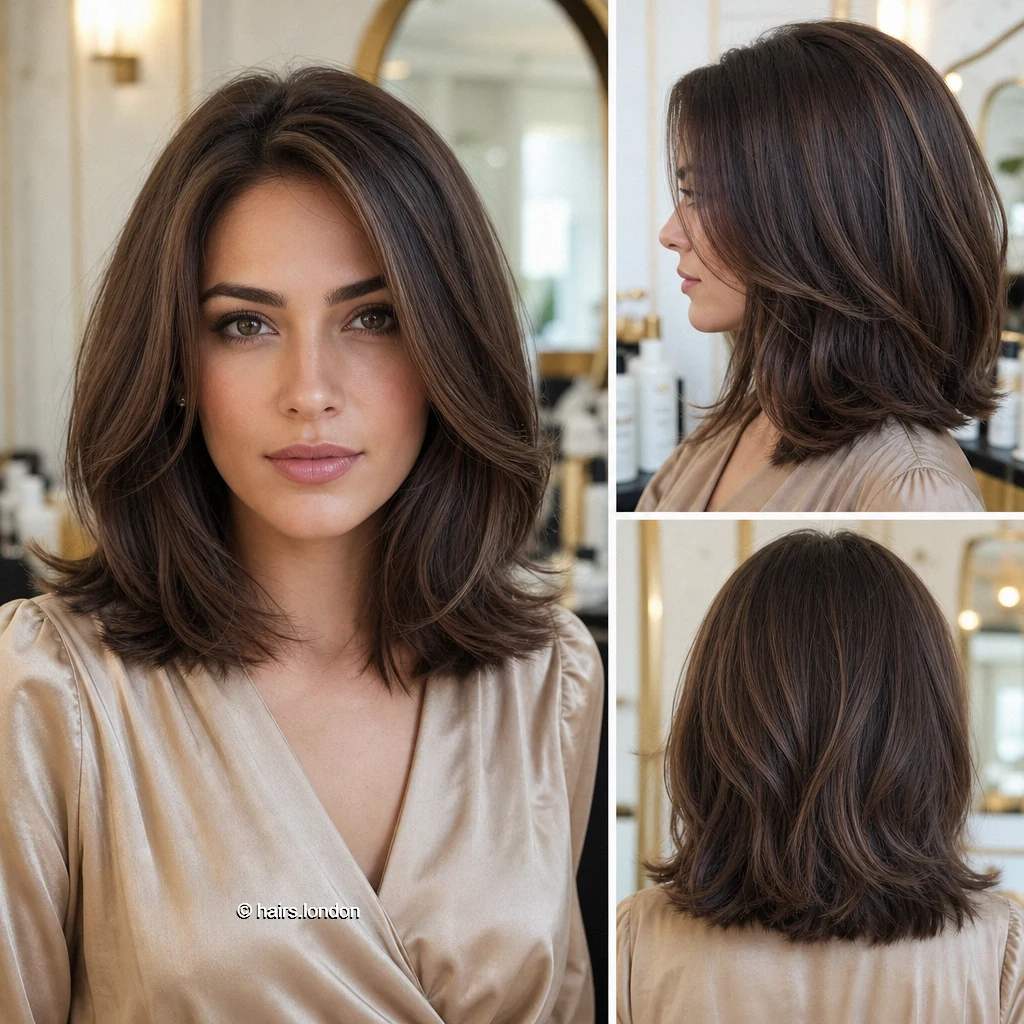
12. Wavy Brown Collarbone Lob
Soft brown dimension runs through this collarbone grazing lob, where a center part and loose waves create width around the cheeks and lower sides. The back shows a lightly textured, nearly level edge, not a short graduated nape or a pronounced A-line angle. Discuss where the waves should finish when dry; cutting to their stretched length alone could leave the result shorter than expected. Scrunch in mousse, dry gently and separate a few bends by hand rather than brushing everything smooth. Remove damaged tips when the edge looks sparse, while preserving enough weight to prevent unwanted puffiness as it grows.
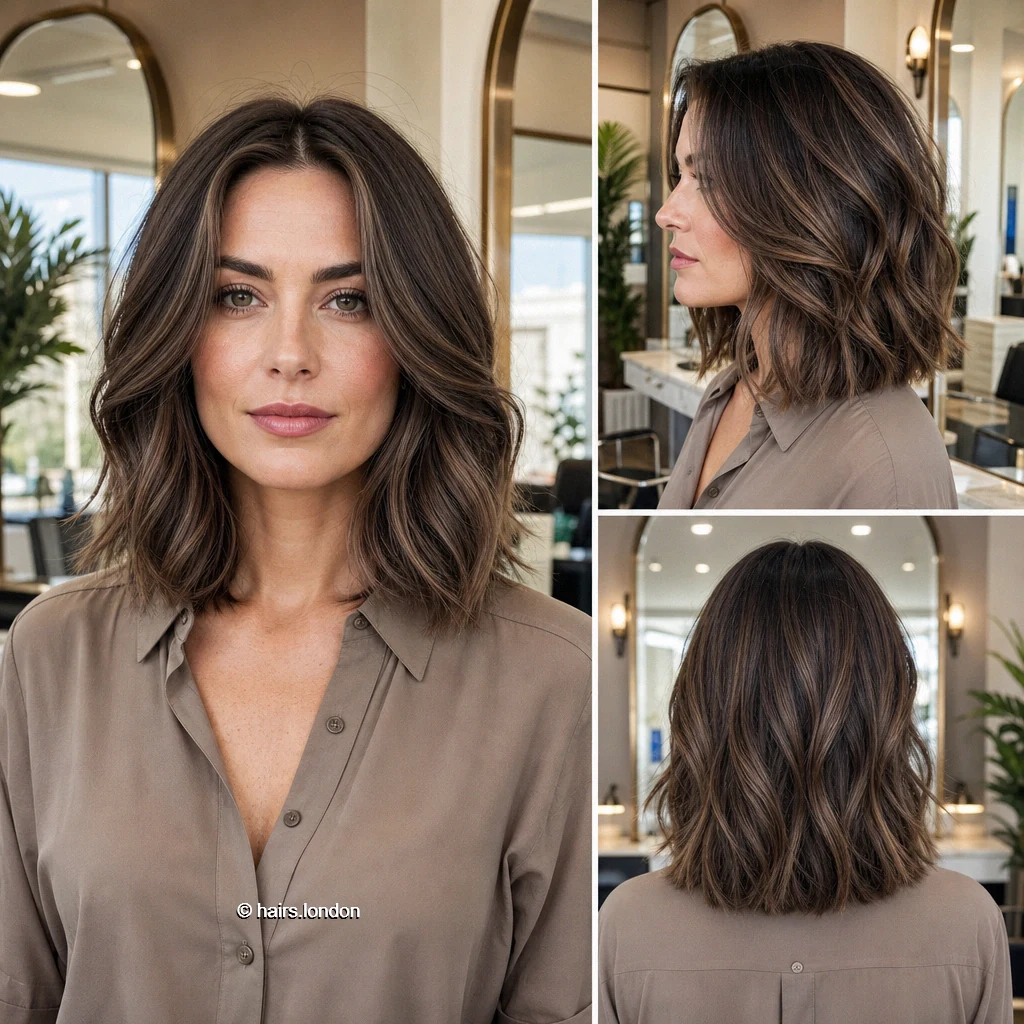
13. Espresso Layered Neck-Length Bob
Deep espresso brown makes the soft layers of this neck length bob easy to see, especially where the ends turn outward beside the jaw and collar. A loose center part opens the face, and the back retains a visible perimeter beneath the airy surface pieces. Ask your stylist for movement around the face without stripping density from the bottom if your hair is fine. On thicker hair, targeted internal shaping may keep the sides from becoming too wide. Work a little styling cream through damp ends, then brush or air dry. Refresh layers when they lose their separation over time.
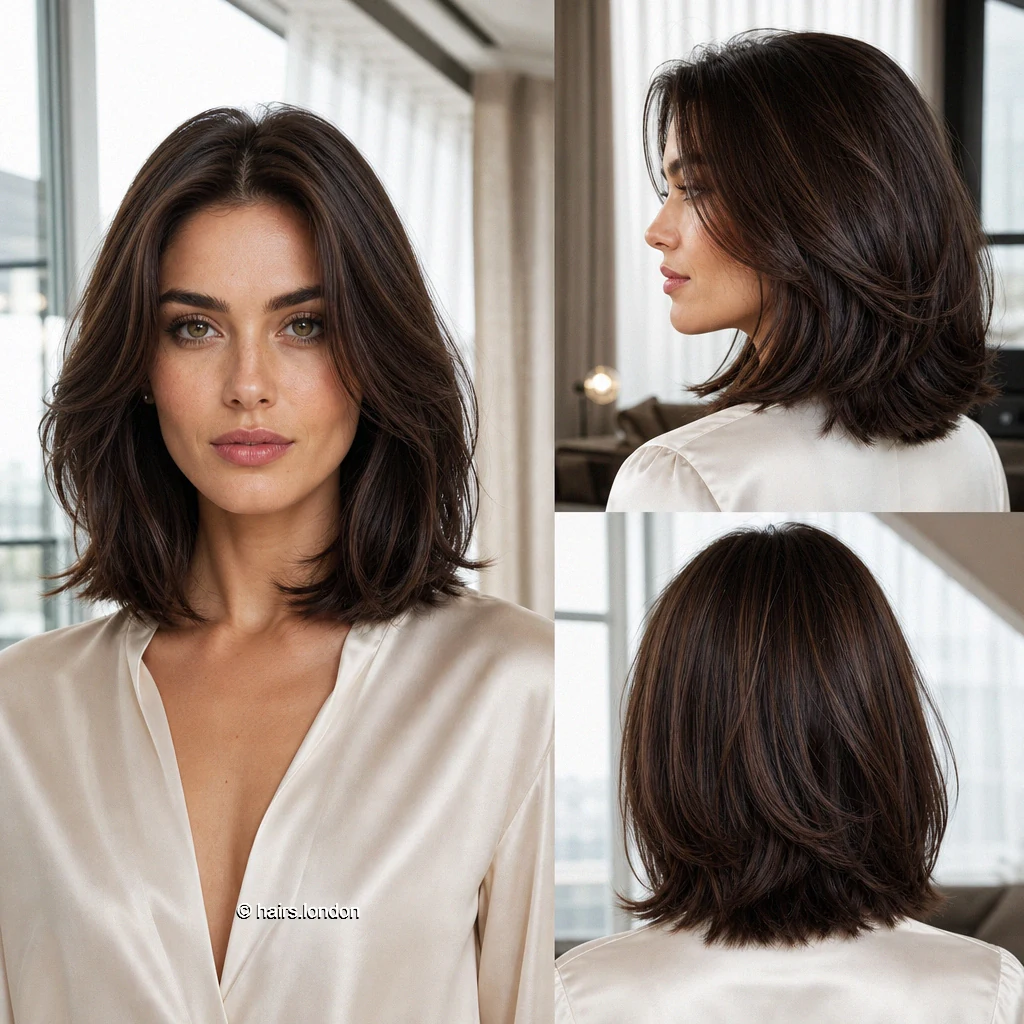
14. Feathered Mocha Bob
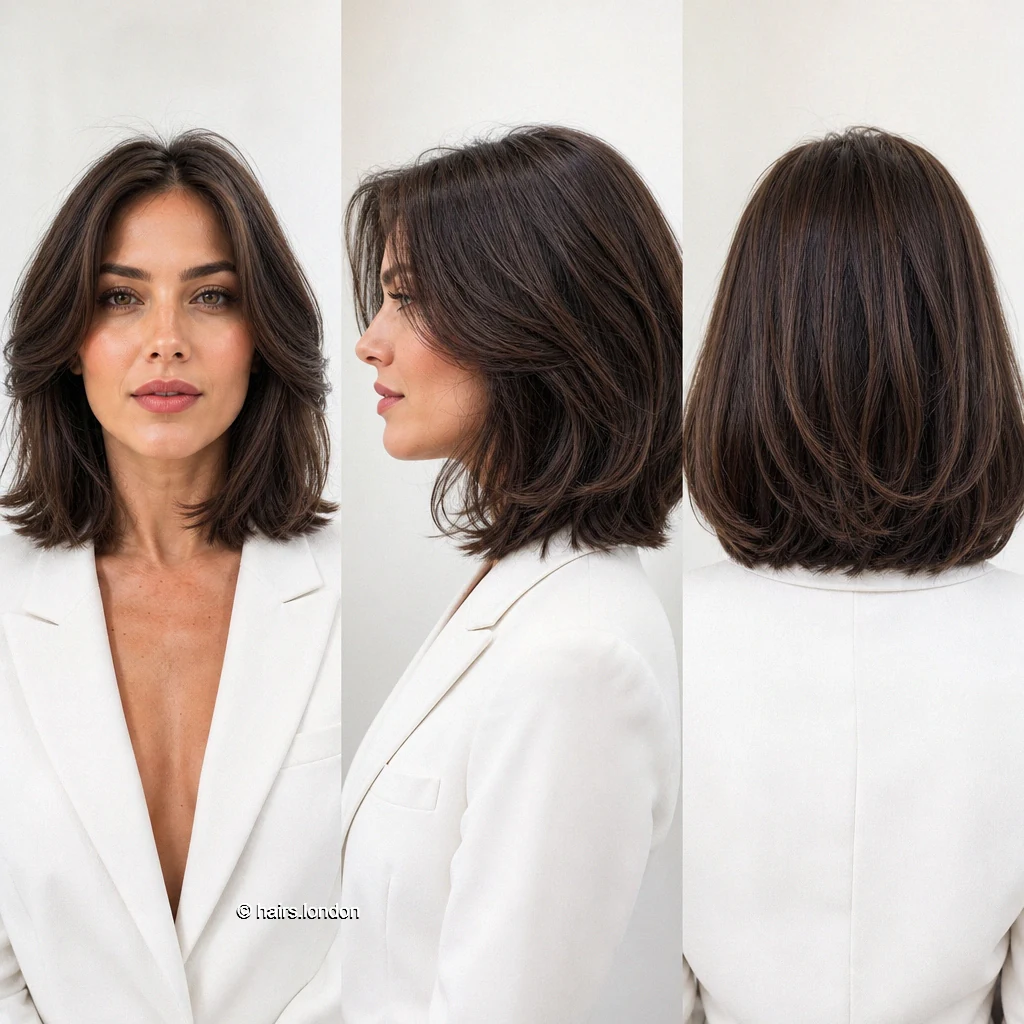
This mocha brown bob sits near the shoulders, with a soft center part, feathered sides and a lightly flicked perimeter across the back. Its fullness comes from flowing layers rather than a blunt weight line or visible short stack at the nape. Ask how much layering your density can support: too much may make fine ends look thin, while too little can leave thick hair bulky. Direct the front sections away from the face with a brush, then loosen the finish with your fingers. Trim the lowest pieces when they become uneven, keeping the layered outline soft at the shoulders.
15. Tousled Cinnamon-Brown Bob
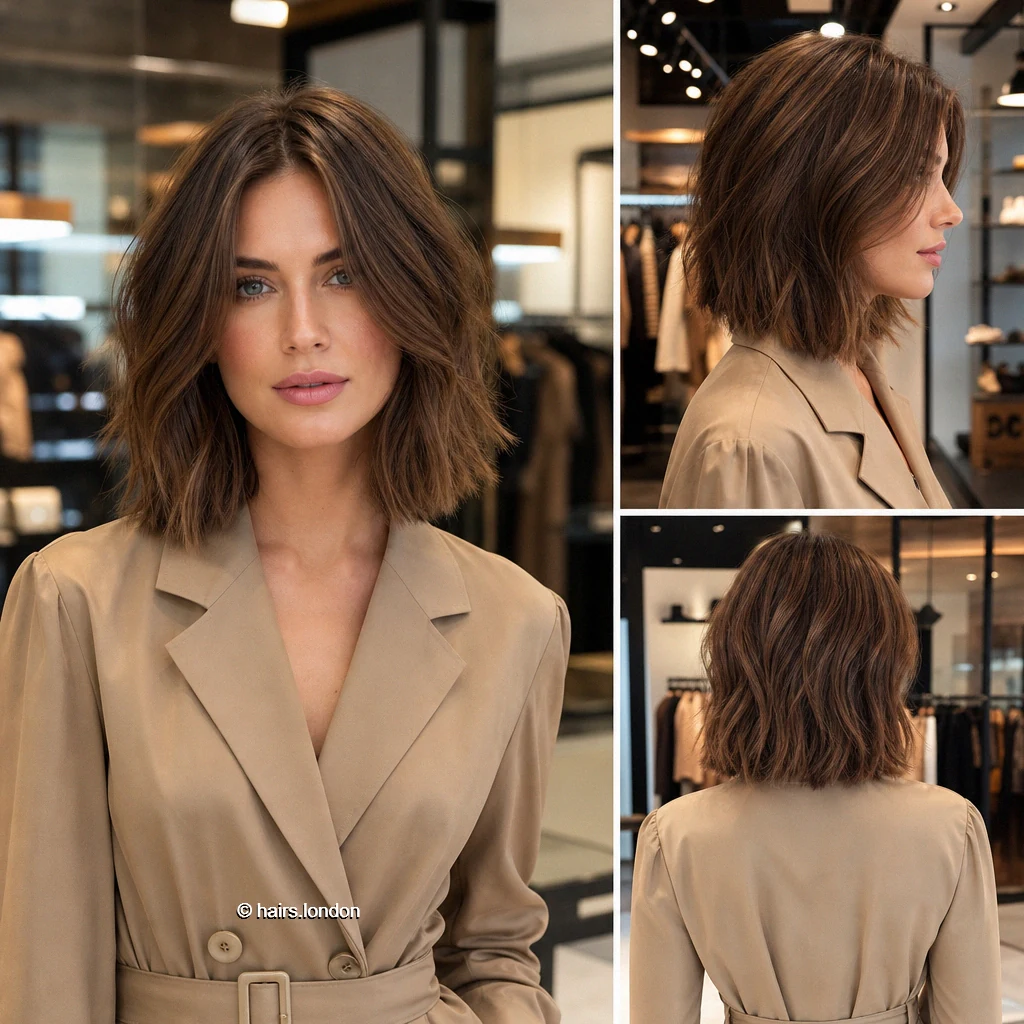
Cinnamon brown highlights lift this tousled bob, which falls around the neck with a center part, loose bends and an irregular, airy edge. The side and rear views show texture through the lower sections, but no clear stacked structure or dramatic front to back slope. Ask for layering that works with your natural bend and retains enough weight to keep the perimeter from looking wispy. Scrunch with a light mousse, then dry without repeatedly disturbing the waves. Dust the ends when they appear frayed, and discuss color upkeep according to whether the lighter strands are dyed or from natural variation.
16. Caramel-Accented Layered Lob
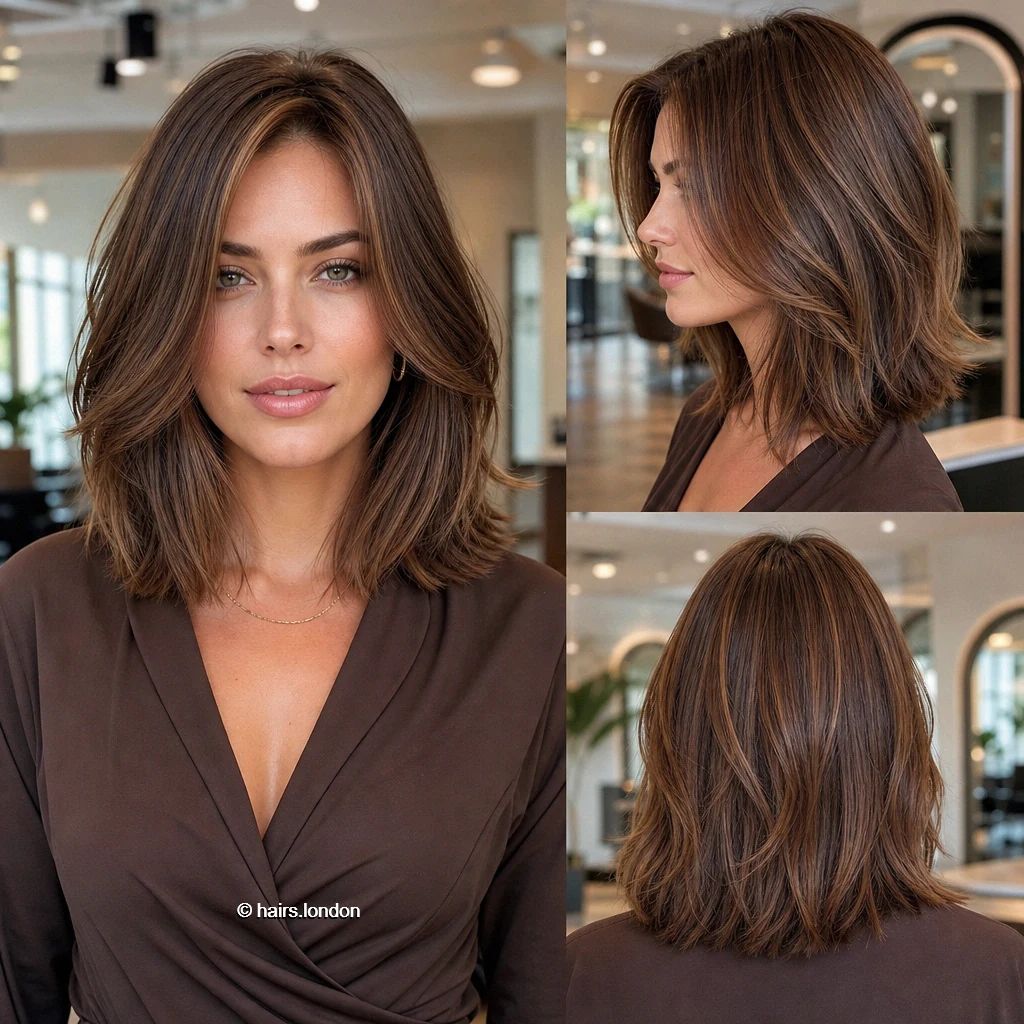
Caramel accents catch the face framing layers of this brown lob, whose side part and shoulder grazing ends create a relaxed, sweeping shape. The back falls into a soft, slightly broken perimeter, with length and movement taking priority over the precision of a jaw length bob. Ask for front layers that still connect to the sides if you want to tuck your hair behind an ear. A large brush encourages the outward flick, while a small amount of cream controls flyaways without adding bulk. Maintain the shape with occasional gentle end trims and review how the lighter color is fading.
17. Softly Waved Chestnut Lob
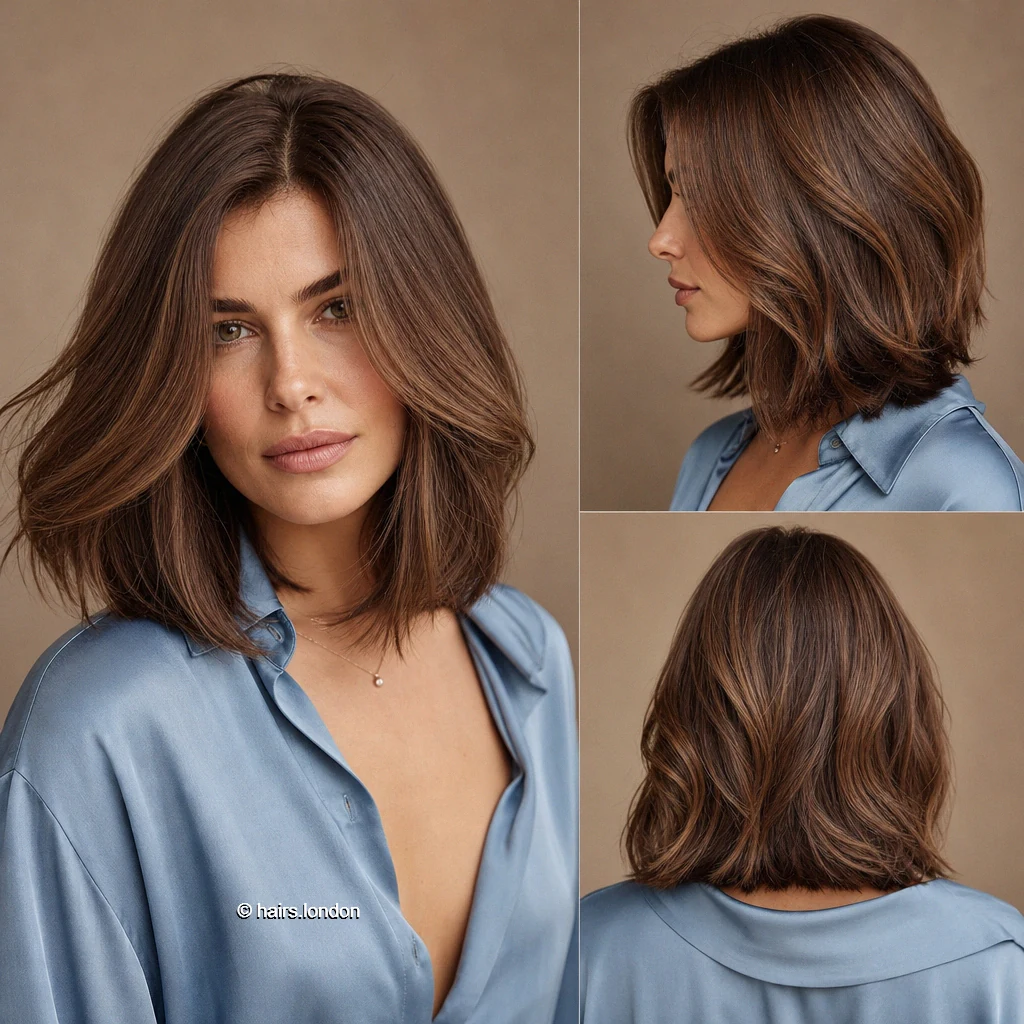
Chestnut brown hair forms a full lob just above the shoulders, with a near center part and broad, soft waves through the middle lengths. The back edge looks gently textured, while the longer front pieces swing naturally rather than forming a strong A-line point. Discuss density before requesting layers: thicker hair may need internal relief, but finer hair benefits from a supportive lower edge. Enhance existing bends with a light cream or add a few loose waves using heat protection. Trim when the ends lose their shape, taking care not to shorten the front more than intended on both sides.
18. Side-Swept Brunette Graduated Bob
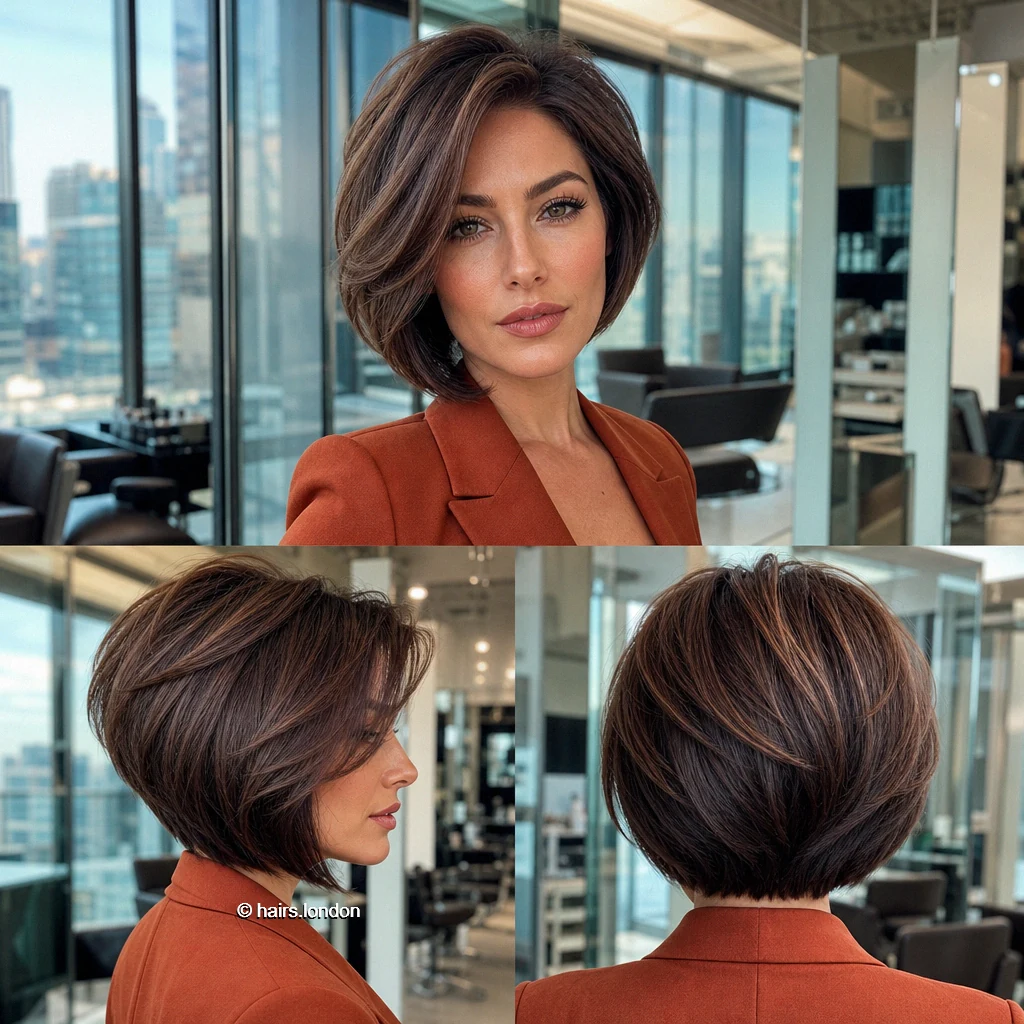
This short brunette bob has a deep side sweep, a full rounded crown and a closely tapered lower back that leaves the neck exposed. The side and rear views show visible graduation beneath the longer upper sections, distinguishing its structure from a simple A-line bob. Ask your stylist to adjust that graduation to your density and nape growth pattern; removing too much can compromise support in fine hair. Lift the roots with a brush while directing the longer front smoothly across the forehead. Schedule trims as soon as the lower back grows out and blurs its compact outline with growth.
19. Highlighted Sweeping Stacked Bob
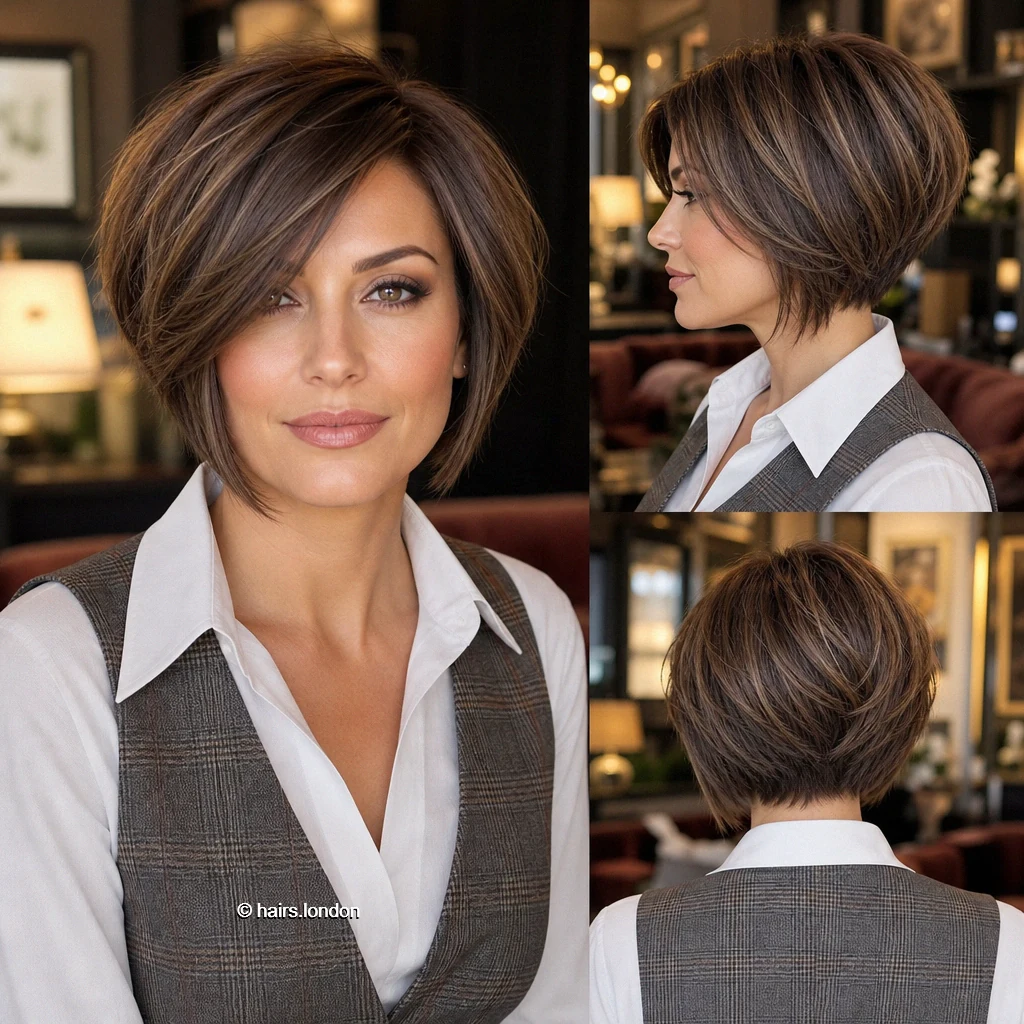
Light brown ribbons define the sweeping layers of this compact bob, with a long side fringe and a rounded crown above a shorter nape. The side and back views reveal graduated layers building fullness, making stacked a more useful description than a cut defined only by longer front pieces. Ask for a fringe length that respects your part and cowlicks, and keep enough weight through the top for smooth movement. Blow dry the sweep first, then lift the crown lightly. Maintain the nape regularly; revisit the highlights when their contrast no longer suits the visible shape at your color appointment.
20. Deep Brunette Rounded Graduated Bob
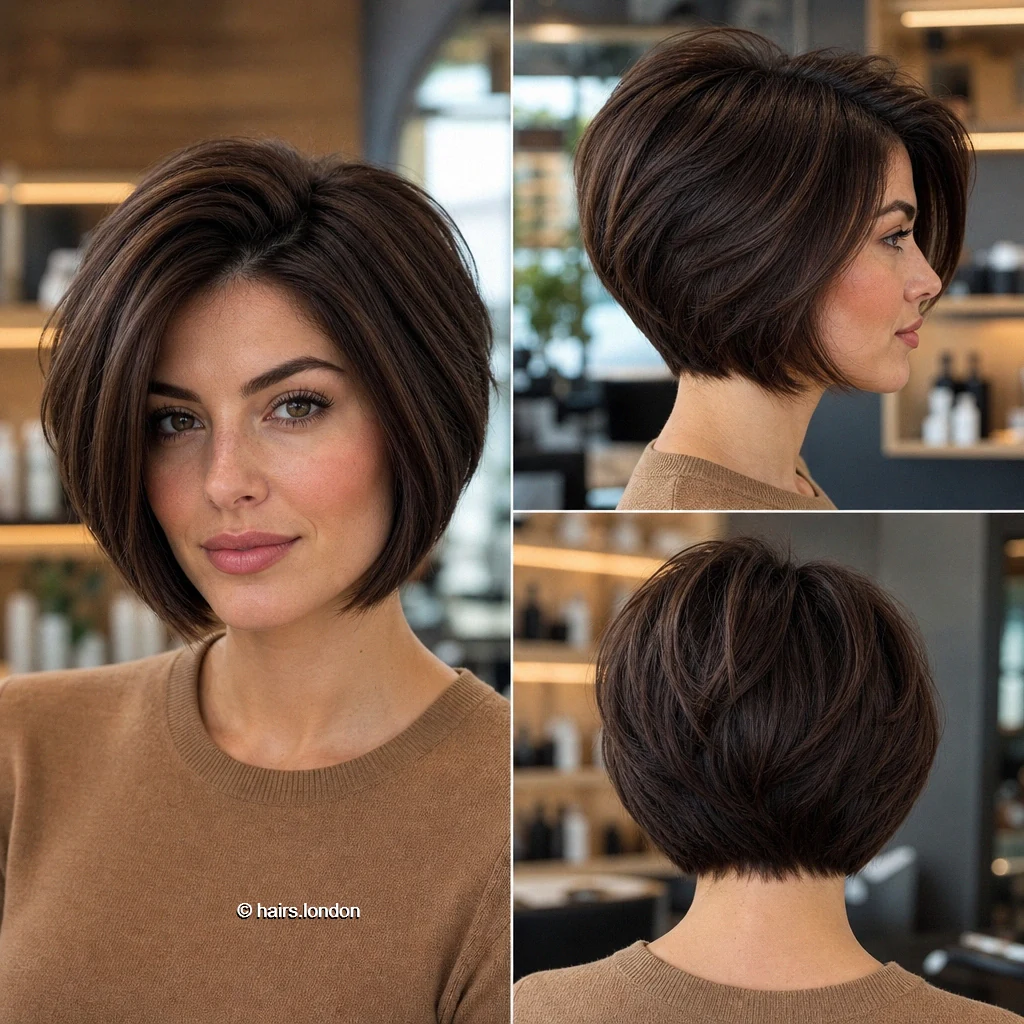
Deep brunette color gives this short bob a smooth finish, while a generous side sweep curves over the forehead toward the jaw. The profile and back show a full rounded crown over a much shorter, exposed nape, providing visible evidence of graduation. Ask your stylist to balance the upper volume against your density and the direction your hair grows at the back. Use a brush to guide the fringe across, then polish the surface without flattening its lift. Book shape trims before the nape becomes heavy or the front sweep starts falling into your eyes. Discuss timing with your stylist.
How to Choose Your Bob Length and Shape
Start with where you want the dry perimeter to land: at the jaw, below the chin, against the neck or near the shoulders. A compact rounded bob emphasizes a smooth outline; a textured bob leaves more movement; and a lob offers more length around the shoulders. Choose an A-line shape when the visible longer front appeals to you. Choose graduation when you want shorter lower sections supporting a fuller back. Your density, natural texture and growth patterns determine how closely a reference image can be adapted.
Styling Fine, Thick, Wavy and Curly Textures
Fine hair often benefits from a substantial lower edge, modest layering and lightweight root lift. Thick hair may need carefully placed internal weight removal, not automatic thinning through every end. For waves, scrunch in a light product and dry gently to retain bends without widening the sides. If you have curls, agree on the intended dry length and shape before cutting, since shrinkage changes both. Smooth a precise perimeter with a brush when desired, but avoid so much product or heat that the bob loses its movement.
Keeping Bob Color Fresh
The images include deep brunettes, warm browns, copper tones and lighter ribbons. If your color is treated, ask your colorist how often its particular tone needs refreshing; a gloss, highlight appointment or root service addresses different concerns. Use color-friendly cleansing and heat protection where appropriate. On short, smooth bobs, shine and even-looking color draw attention to the edge; on layered shapes, lighter strands can emphasize movement. Do not assume that every visible highlight requires the same upkeep.
Maintaining the Bob Perimeter and Graduation
A clean jawline or A-line edge usually needs attention as soon as uneven growth changes its outline. Short graduated bobs also rely on the contrast between a close lower back and fuller upper sections, so their shape may need checking sooner than a relaxed lob. Textured ends can tolerate a softer line, but should be trimmed when they turn sparse or ragged. Ask your stylist to assess the cut dry as well as styled, especially if waves, curls or a strong part change where it sits.
What to Discuss with Your Stylist
Bring front, side and back references, then identify the details you actually want: fringe direction, front length, perimeter weight, visible graduation or loose layering. Show how you normally part and style your hair, and mention cowlicks, shrinkage, density and how often you are willing to return for trims. Ask what can be achieved with your natural texture and what requires daily brushing or heat. Agree on the shortest acceptable dry length before any substantial cutting.
Frequently Asked Questions
What is the difference between a bob and a lob?
A bob generally finishes around the jaw or neck, while a lob is a longer bob that reaches toward the shoulders. The boundary is flexible; the dry perimeter matters more than the label.
How is an A-line bob different from a stacked bob?
A-line describes a perimeter that is visibly longer in front than at the back. Stacked describes shorter, graduated layers at the back that support fullness. One cut can show both, but neither detail should be assumed from a front view alone.
Does fine hair need layers in a bob?
Not necessarily. Fine hair can look fuller with a substantial perimeter and limited layering. Ask your stylist whether small adjustments inside the shape would add movement without thinning the ends.
How can a bob avoid looking bulky on thick hair?
The stylist can assess where weight gathers and remove it selectively inside the cut. Preserving a deliberate perimeter while refining the interior often works better than thinning every end.
Can naturally curly hair be cut into a bob?
Yes, provided the shape is planned around curl pattern, density and shrinkage. Discuss the intended dry length and how the curls sit at the sides and back.
Should I add a fringe to my bob?
Consider how your hair parts, whether you have a front cowlick and how often you want to style or trim a fringe. A longer side sweep may offer more flexibility than a short, precise fringe.
Which bob takes less daily styling?
A shape that works with your natural texture generally takes less effort than one requiring daily smoothing or curling. Ask to see how your proposed length behaves when air dried.
How often should a precise bob be trimmed?
Book a shape check when the edge loses its intended position or symmetry. A crisp jawline and a short graduated nape usually show growth sooner than a softly layered lob.
Will an A-line bob grow out evenly?
Its longer front and shorter back can become less distinct as they grow. Your stylist can gradually rebalance the perimeter if you want a more even length.
What happens when a stacked bob grows out?
The shorter lower sections gain length, reducing the contrast beneath the fuller crown. A trim can restore the graduation or begin transitioning the cut toward a softer bob.
Can I wear a sleek bob with natural waves?
You can smooth it with appropriate tools and heat protection, but the required effort depends on your wave pattern and humidity. A softly textured version may be easier for everyday wear.
What should I show my stylist besides a front-view photo?
Bring side and back views whenever possible. They clarify the front-to-back angle, perimeter, nape length and any graduation that a portrait alone cannot establish.
Conclusion
A good bob starts with a clear choice about length, perimeter and movement. Save the views that show those details, then work with your stylist to adjust the shape for your density, natural texture and preferred routine. The right reference is one whose upkeep appeals to you as much as its finished look.


