

11. Rooted Blonde Bob with Loose Movement
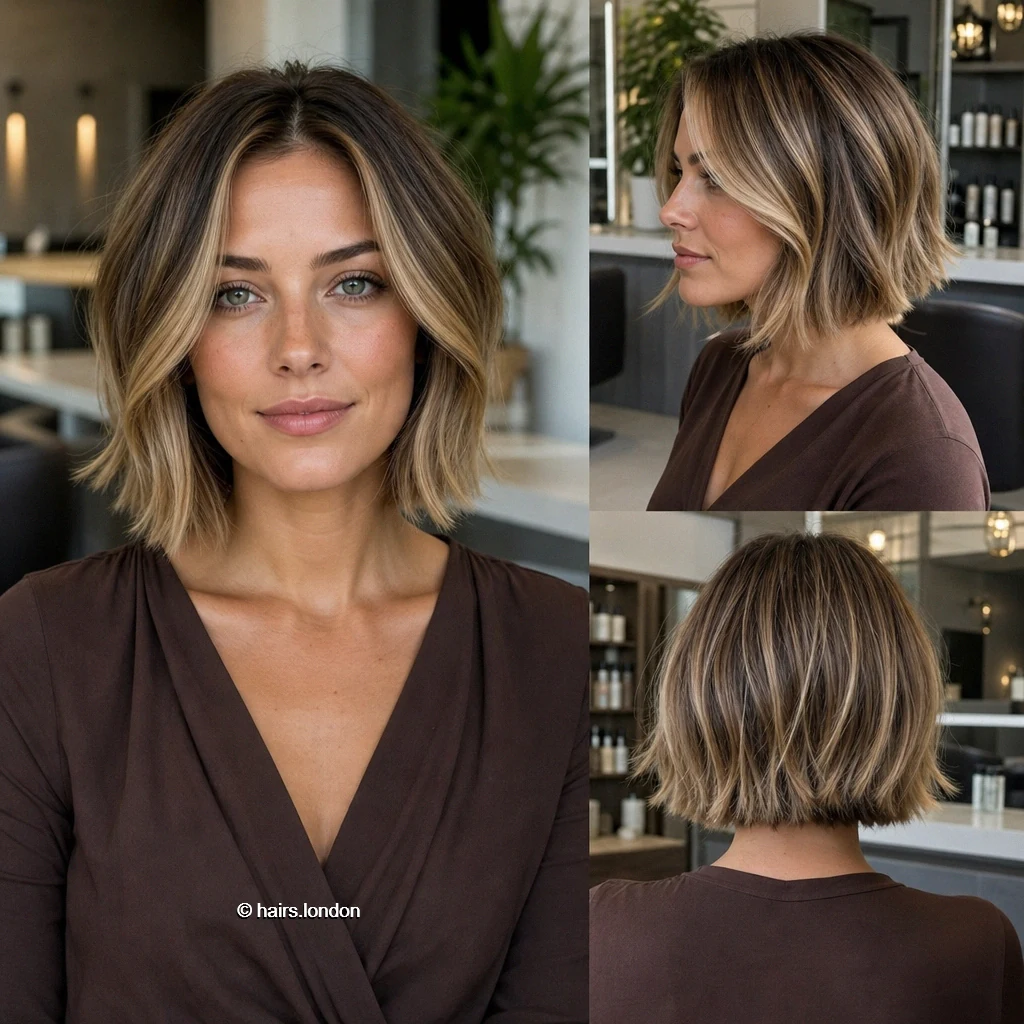
Bright blonde framing pieces stand out against darker roots on this jaw length bob, which has a relaxed center opening. The ends look lightly broken up, and the back sits close to the neck without a sharply stacked profile. Create a few broad bends through the sides, then smooth only the surface so the lower edge keeps its movement. If your hair is fine, discuss preserving perimeter weight before adding texture; naturally fuller hair may need selective bulk reduction. Use heat protection on the lighter sections, and schedule trims when the ends appear thin or uneven between regular salon visits.
12. Rounded Brown Bob with Soft Face Framing
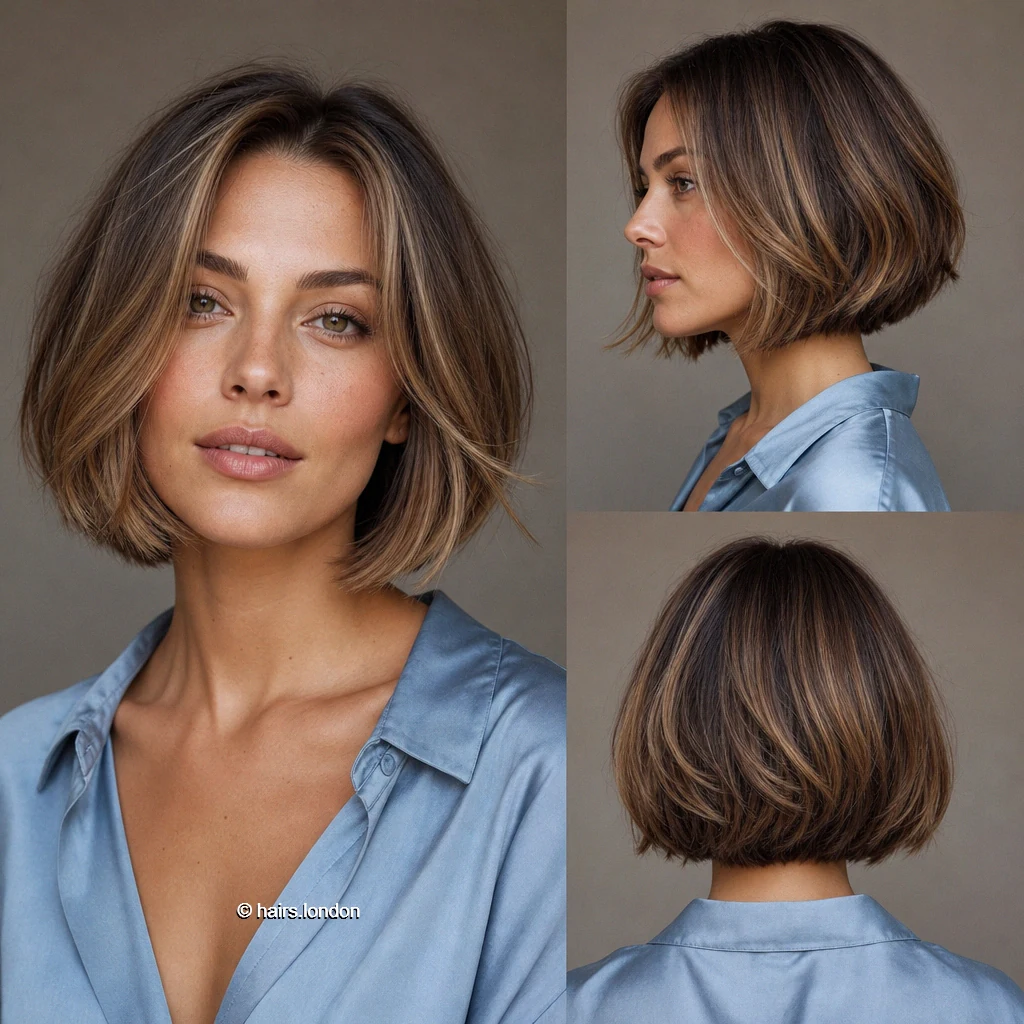
This brown bob rounds gently beneath the jaw, with lighter face framing strands and a loose, slightly off center part. The side and back views show fullness above a short nape, but no pronounced length difference between front and back. Smooth the outer surface with a brush while allowing the front pieces to bend away from the cheeks. Hair with natural body may hold the rounded form easily; ask for less layering if your ends lose fullness quickly. Check the nape as it grows, refresh the outline when needed, and maintain the lighter pieces according to contrast and visible regrowth.
13. Smooth A-Line Bob with a Rounded Back
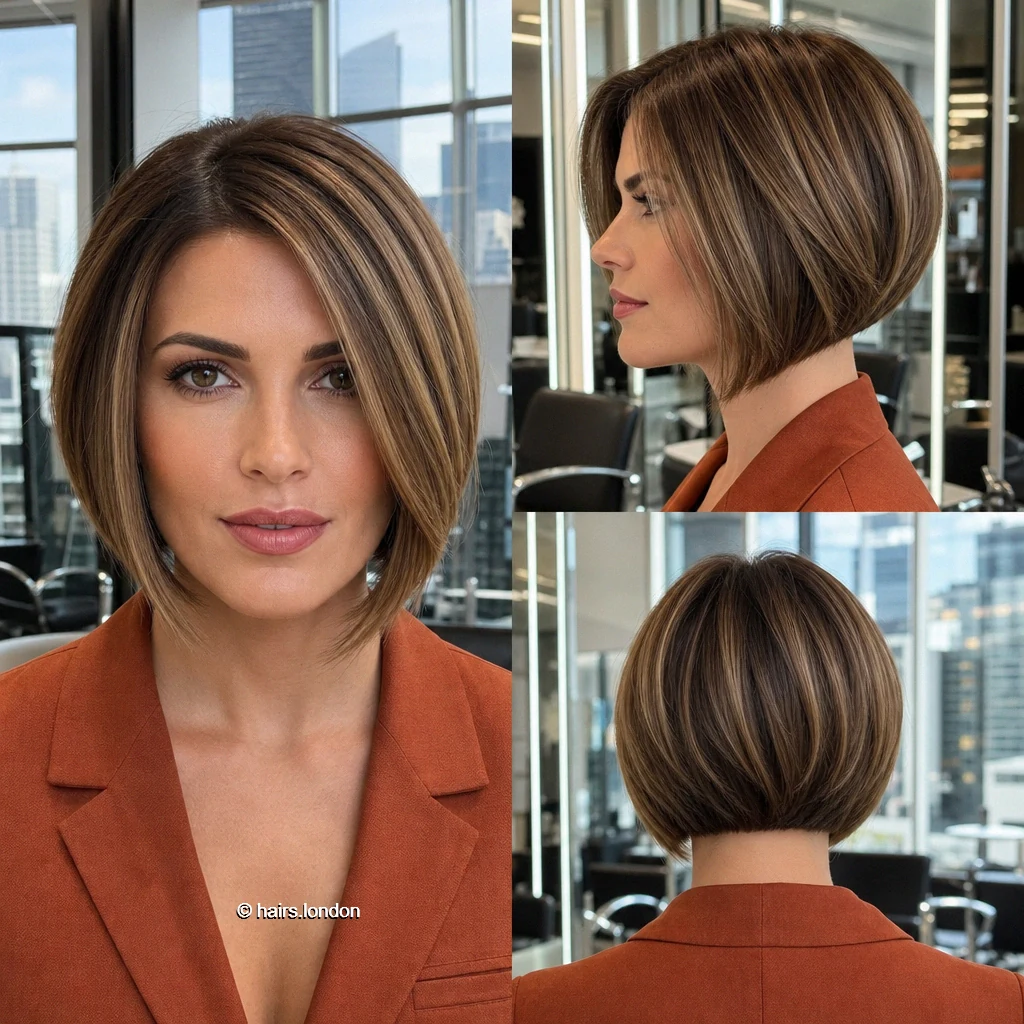
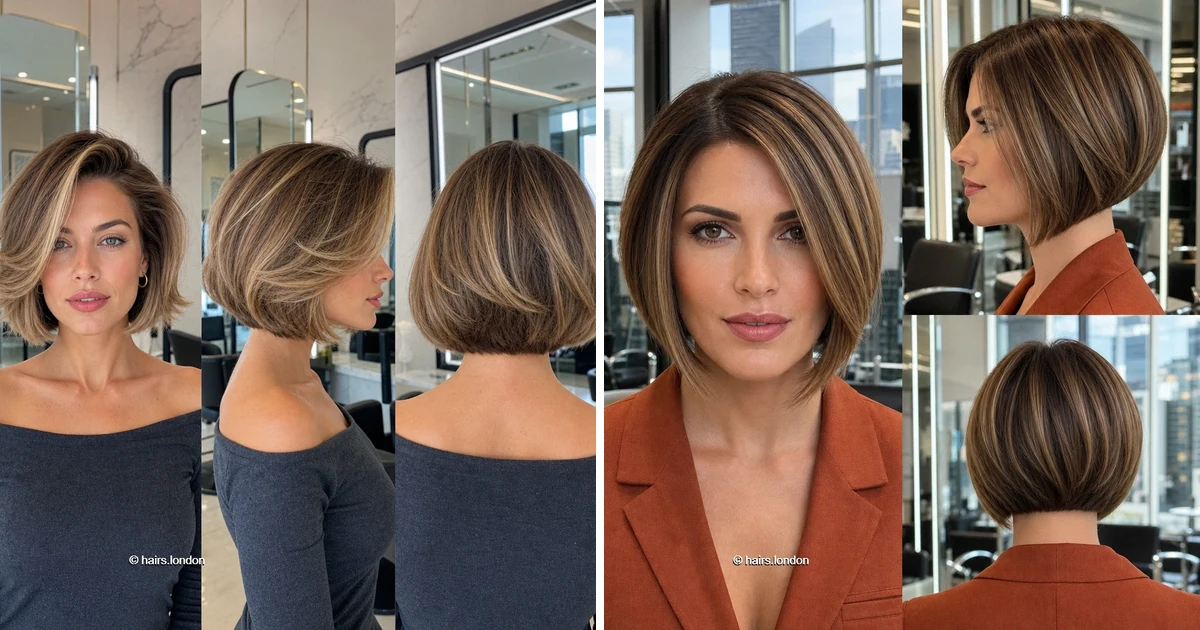
Warm brown highlights accent this smooth bob, whose front reaches below the jaw while the back finishes shorter at the neck. The side profile supports a gentle A line, and the rear view shows rounded fullness above a closely shaped nape. Blow dry downward for shine, then use a brush to keep the front straight without forcing every end inward. This precise silhouette benefits from enough density to support its edge; discuss softening the interior if thick hair feels bulky. Arrange regular outline checks, since growth changes the front to back balance and exposes unevenness along the nape between appointments.
14. Sleek Blunt Bob at the Jaw
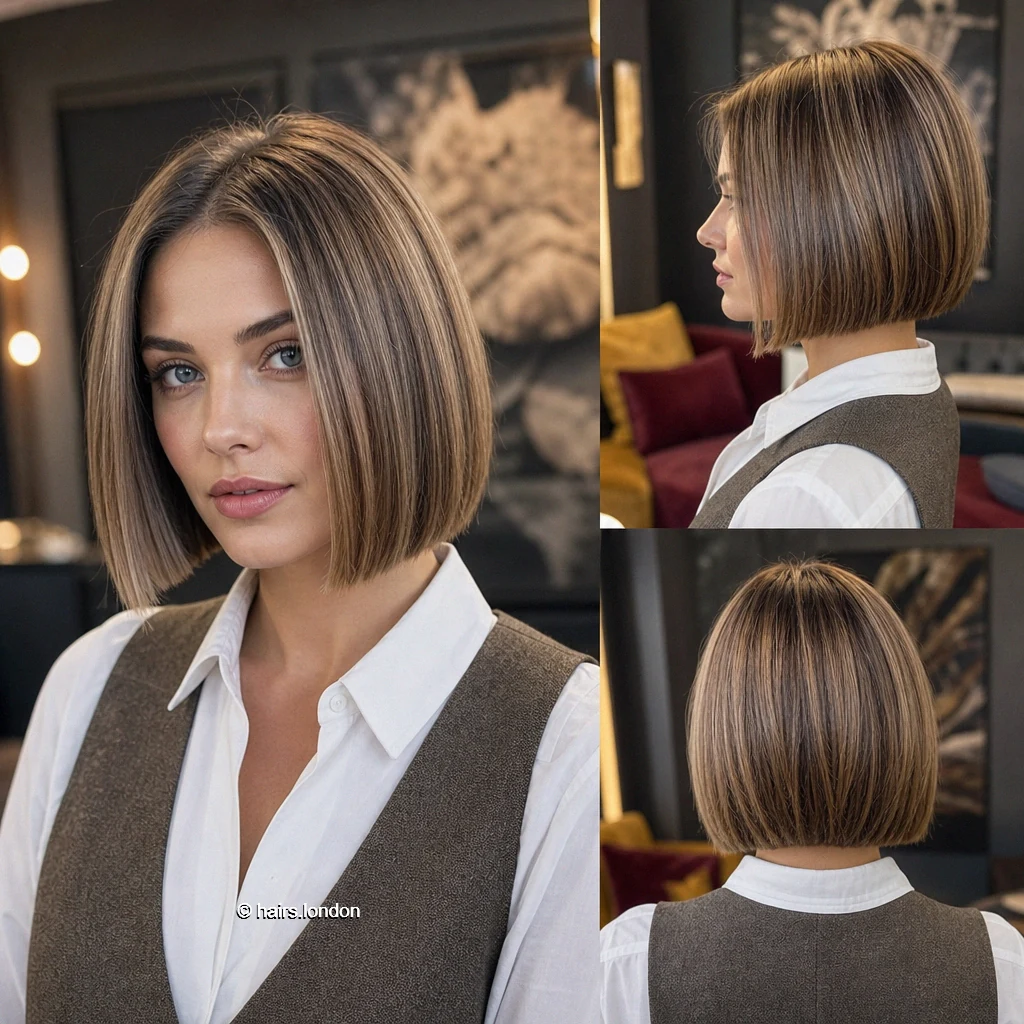
This sleek beige brown bob falls near the jaw, with a side part, straight sides, and a clean lower edge. The back appears evenly rounded rather than visibly stacked, while fine lighter strands add dimension without disrupting the smooth surface. Blow dry in sections with the nozzle pointing downward, and pass a flat iron sparingly over areas that need refinement. A strong perimeter may help fine hair appear fuller, although growth patterns can change how neatly the ends settle. Trim before the edge becomes uneven, and use heat protection to preserve both shine and the visible color between salon visits.
15. Angled Brunette Bob with a Short Nape
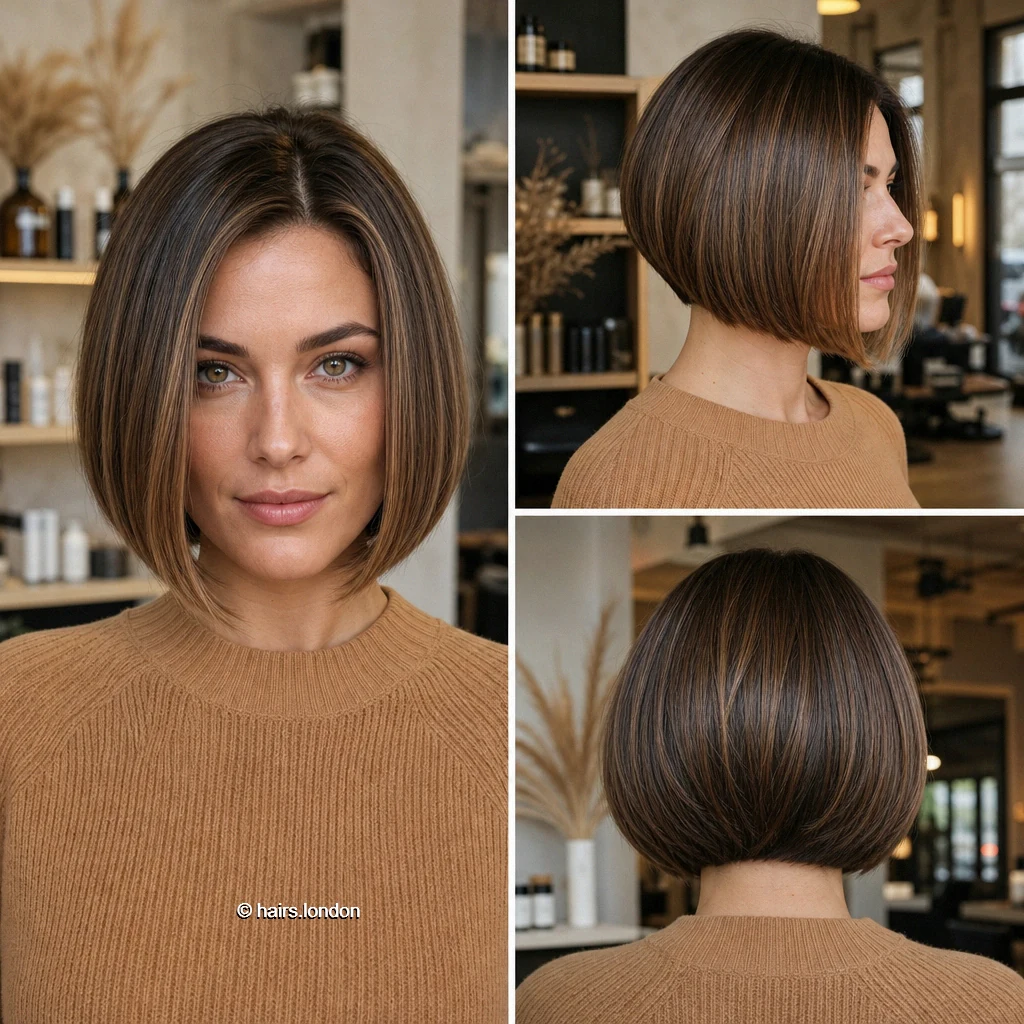
A center leaning part opens this polished brunette bob, with warm fine highlights running through its smooth surface and sides. Its profile shows longer pieces toward the jaw and a shorter nape, while the back holds a distinctly rounded shape. Use a brush to guide the front down and gently curve the lower edge, avoiding excess volume around the cheeks. If your hair is very thick, ask whether discreet internal removal would keep the silhouette compact without weakening it. Frequent nape and perimeter checks preserve the visible angle; plan color refreshes around the softness you prefer between routine salon visits.
16. Short Stacked Bob with Side-Swept Front
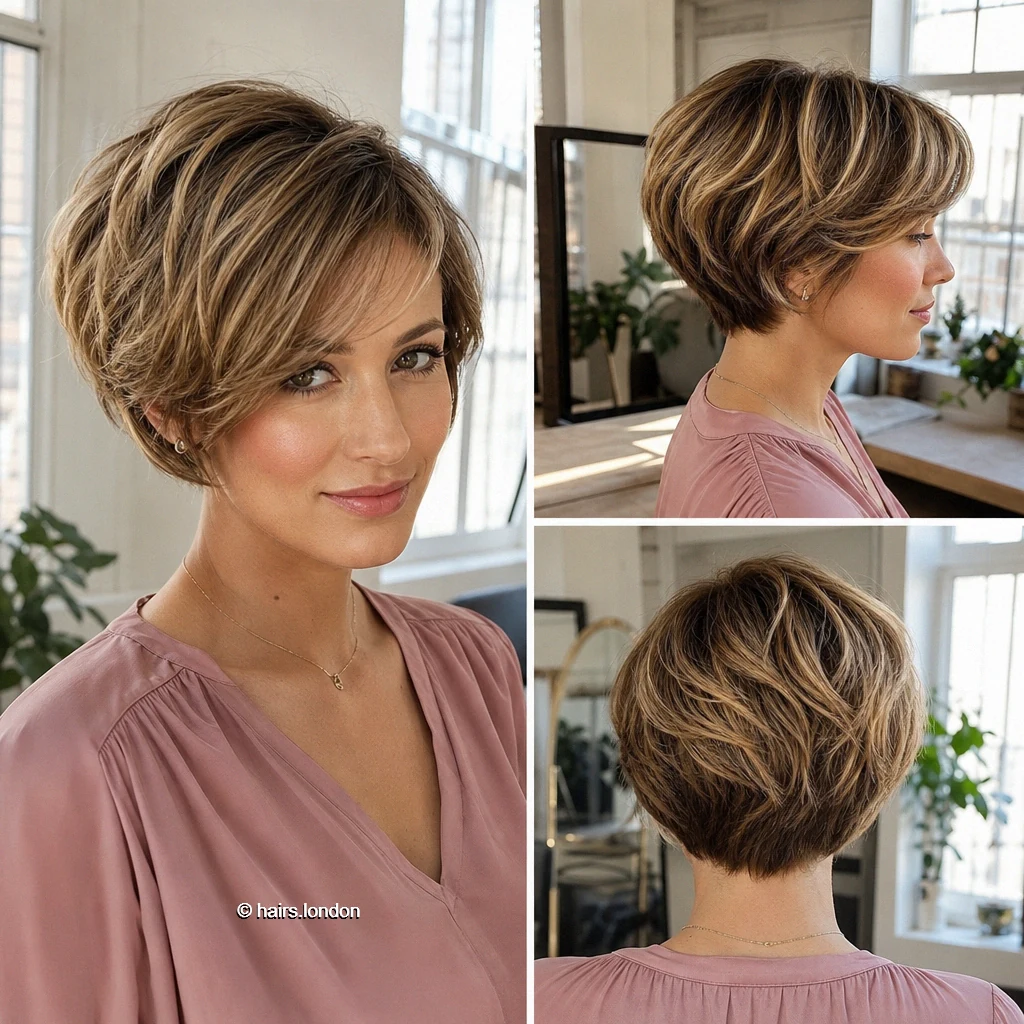
This short highlighted brown bob has a sweeping front, a cropped nape, and visible fullness built above the back hairline. The side profile and rear view support a softly stacked shape, while separated surface layers keep its rounded crown lively. Lift the roots with a small brush, then direct the longer fringe across the forehead without pressing it flat. Discuss your growth patterns before choosing this nape length; strong cowlicks may change how the back sits between appointments. Maintain the graduated area with timely reshaping, and keep lighter strands conditioned when using heat for daily lift to avoid unnecessary dryness.
17. Layered Short Bob with Sweeping Fringe
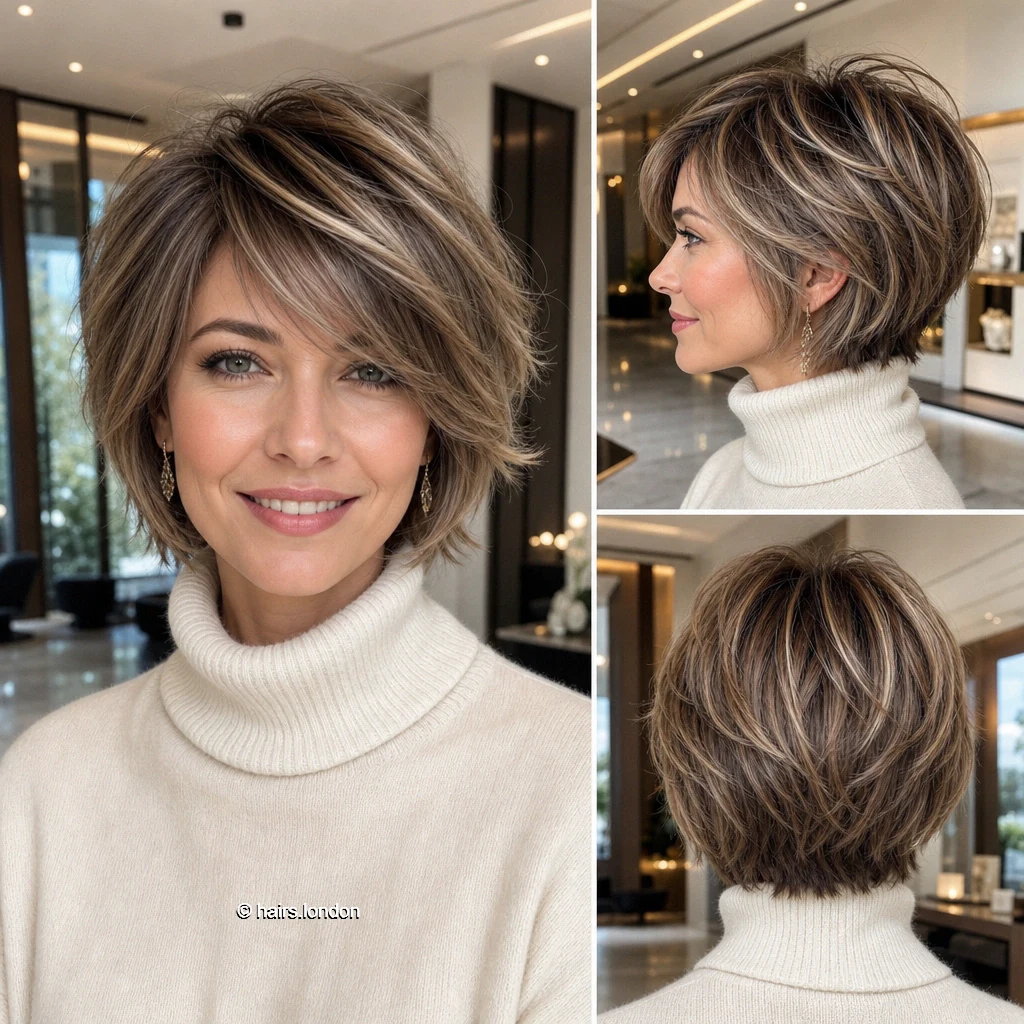
A sweeping fringe crosses this short brown bob, where pale highlights emphasize lifted layers and a softly uneven outer edge. The back remains bob length at the nape, with airy layering throughout rather than a dense, polished graduated shelf. Apply lightweight foam near the roots and shape selected pieces with your fingers, leaving the fringe flexible across the forehead. This cut can flatter hair with existing body, but very fine density may need fewer layers for sufficient coverage. Reshape the fringe and back as they grow, and avoid heavy wax that could collapse the visible texture between your salon visits.
18. Tousled Short Bob with Lightly Layered Ends
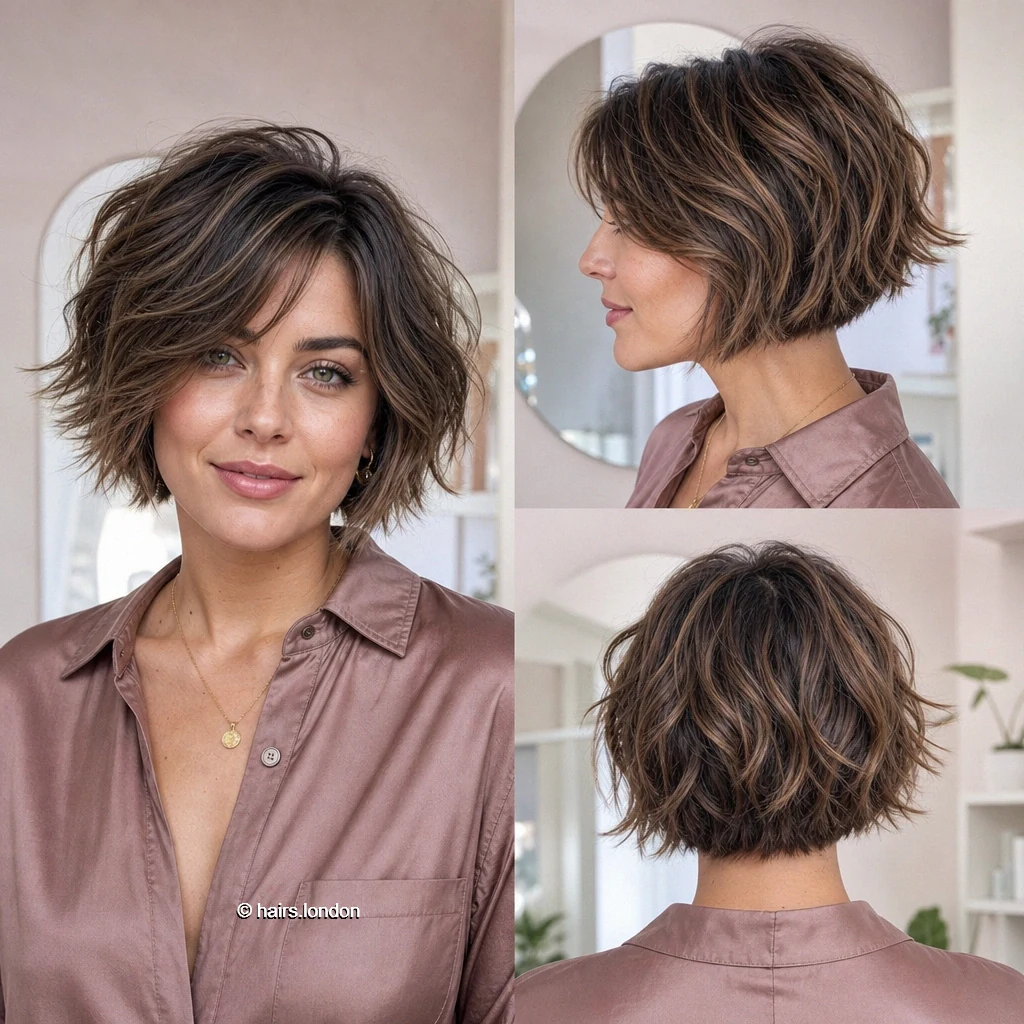
Loose, irregular bends bring movement to this short brown bob, while a side swept front blends into cheek level layers. The rear view shows a short, textured perimeter and generous separation through the upper sections, not a smooth blunt finish. Encourage natural waves with a diffuser, then define only a few stray pieces with a small amount of styling cream. Ask for layering suited to your curl pattern and density so the sides retain shape without becoming overly wide. Check the perimeter as uneven ends grow, and refresh the understated highlights when they lose their intended definition between scheduled trims.
19. Polished A-Line Bob with Bright Front Pieces
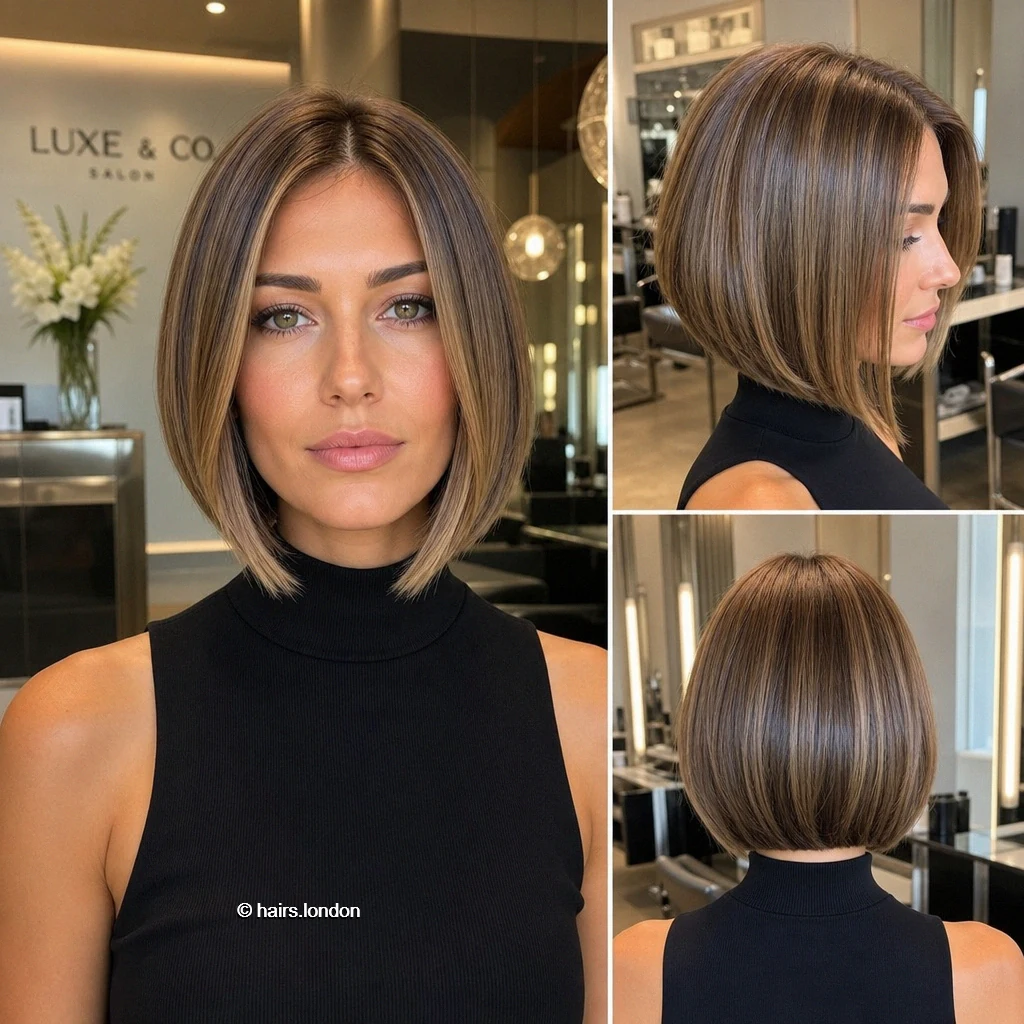
This smooth brown bob features pale blonde face framing pieces, a center part, and front sections that reach below the jaw. The side view shows those pieces extending past the shorter nape, creating a clear A line with rounded rear fullness. Smooth from roots to ends using a brush and directed airflow, keeping the front panels straight and the lower edge controlled. Discuss density before committing to this contrast in lengths, since fine or coarse ends may settle differently at the front. Maintain the nape and front points with precise trims, and protect the lighter strands from unnecessary daily heat.
20. Compact Rounded Bob with Blonde Face Framing
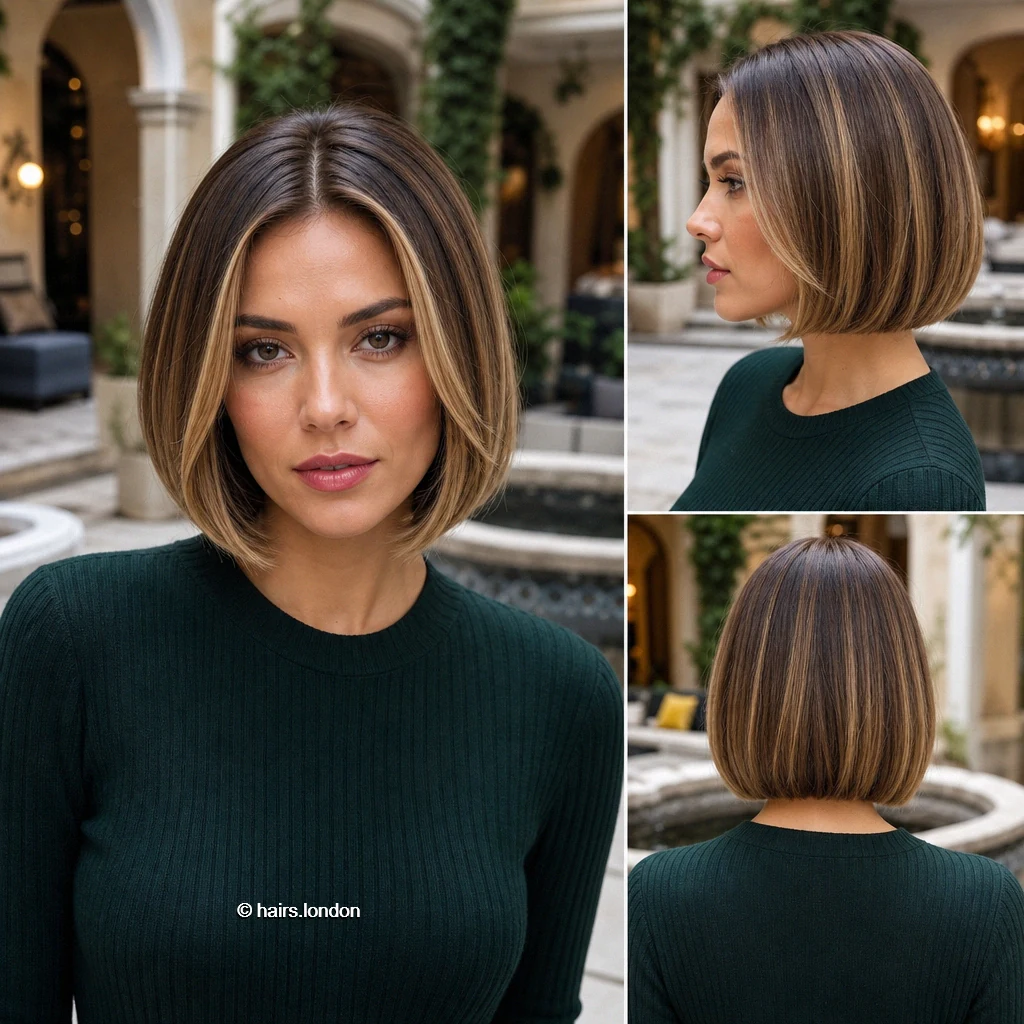
A neat center part and blonde face framing strands soften this compact brown bob, which curves just below the jaw. From the side, the front appears slightly longer than the nape, while the back forms a smooth, rounded weight line. Work with a brush to polish the perimeter, then loosen the front gently if you prefer less structure around your face. Hair with enough density can support this full outline; ask for careful internal shaping if the back feels bulky. Trim when the nape loses its curve, and maintain the bright front pieces at intervals that suit regrowth and contrast.
How to Choose Your Bob Length and Shape
Start with where you want the perimeter to sit: near the jaw for a compact bob, lower on the neck for more movement, or close to the shoulders for a lob. Then look at the profile. An A-line bob has a visibly longer front; a stacked or graduated bob builds shape through shorter lengths at the back. Consider whether your hair naturally expands at the sides, bends at the nape, or needs enough length to tuck behind an ear. Those details matter more than a label alone.
Styling Fine, Thick, Wavy, and Curly Textures
Fine hair often benefits from a supported perimeter, light root lift, and restrained layering. On thick hair, ask about removing weight internally rather than thinning the visible edge indiscriminately. For waves, scrunch in a light styler and diffuse without repeatedly brushing the shape apart. If you have curls, assess the proposed length at its natural shrinkage and discuss cutting and drying methods with your stylist. Whatever your texture, keep fringe styling gentle and avoid so much product that the bob loses movement.
Keeping Highlighted Bob Color Fresh
Several of these bobs use lighter ribbons or bright front pieces rather than an all-over light color. Their upkeep depends on contrast, placement, and how much regrowth you enjoy seeing. Use a color-safe routine, protect highlighted sections before heat styling, and ask your colorist whether a gloss or toner would address a change in tone before scheduling more lightening. A sleek perimeter can also make dry, faded ends particularly noticeable.
Maintaining the Perimeter and Graduation
A blunt or polished bob shows an uneven edge sooner than a tousled one. Check both front points and the back when deciding on a trim, rather than judging the cut only in a mirror facing forward. Short napes and visibly graduated shapes need particular attention as growth shifts their weight line. Layered bobs can often tolerate a softer outline, but benefit from reshaping when the sides become bulky or the ends lose their intended movement.
What to Discuss with Your Stylist
Bring images showing the front, side, and back, and point to the specific length, fringe, perimeter, or fullness you like. Explain how much time you spend styling, whether you wear your hair naturally wavy or curly, and how often you are willing to return for trims or color. Ask how your density, nape growth patterns, and existing color will affect the result. If a cut appears longer in front, clarify whether you want an A-line outline or visible graduation at the back.
Frequently Asked Questions
What is the difference between a bob and a lob?
A bob generally finishes around the jaw or neck. A lob, or long bob, extends closer to the shoulders. The boundary is flexible, so describe the endpoint you want rather than relying only on the name.
Is an A-line bob the same as a stacked bob?
No. A-line describes a perimeter that is longer toward the front. Stacked describes visible graduation that builds fullness at the back. A cut can show both features, but one does not automatically imply the other.
Can fine hair wear a layered bob?
Yes, if the layering leaves enough density at the perimeter. Ask your stylist to assess where your hair looks fullest before adding texture or short layers.
How can a bob feel lighter on thick hair without looking thin?
A stylist may be able to remove weight inside the shape while keeping the outer edge substantial. The best placement depends on your density, texture, and where bulk collects.
Will a bob work with natural curls?
It can, but the finished length and shape depend on curl spring, shrinkage, and density. Discuss how you normally wear your curls and assess the cut in its natural state.
Should I add bangs to a bob?
Consider how your hair grows at the forehead and whether you want to style bangs most mornings. A light fringe or longer side sweep may offer a different commitment from dense, short bangs.
What is the quickest way to style a smooth bob?
Dry the roots and perimeter thoroughly, directing airflow downward with a nozzle. Use a brush to guide the ends into place, then refine only sections that need additional smoothing.
How do I keep a wavy bob from becoming too wide?
Ask for layering based on where your waves expand, and apply styling product sparingly. Diffuse gently, then let the hair settle before deciding whether any sections need refinement.
How often does a precise bob need trimming?
The right interval depends on growth and the edge you want to maintain. Short napes, sharp front points, and blunt perimeters usually reveal changes sooner than loosely textured outlines.
How can I grow out a graduated bob?
Ask your stylist to gradually balance the shorter back with the longer sides. Interim trims can refine the perimeter without automatically returning the cut to its original graduation.
Do face-framing highlights require frequent upkeep?
That depends on their brightness, how close they start to the roots, and your tolerance for contrast as they grow. Discuss a refresh plan with your colorist before committing.
What should I check before choosing a very short nape?
Consider your growth patterns, how the hair sits without styling, and whether you are comfortable with frequent shape maintenance. Ask to see the proposed side and back profile.
Conclusion
A bob is easiest to choose when you can picture its back and side as clearly as its front. Save the shapes that appeal to you, note the details you would change, and take those observations to a stylist who can adapt the cut to your hair and routine.