

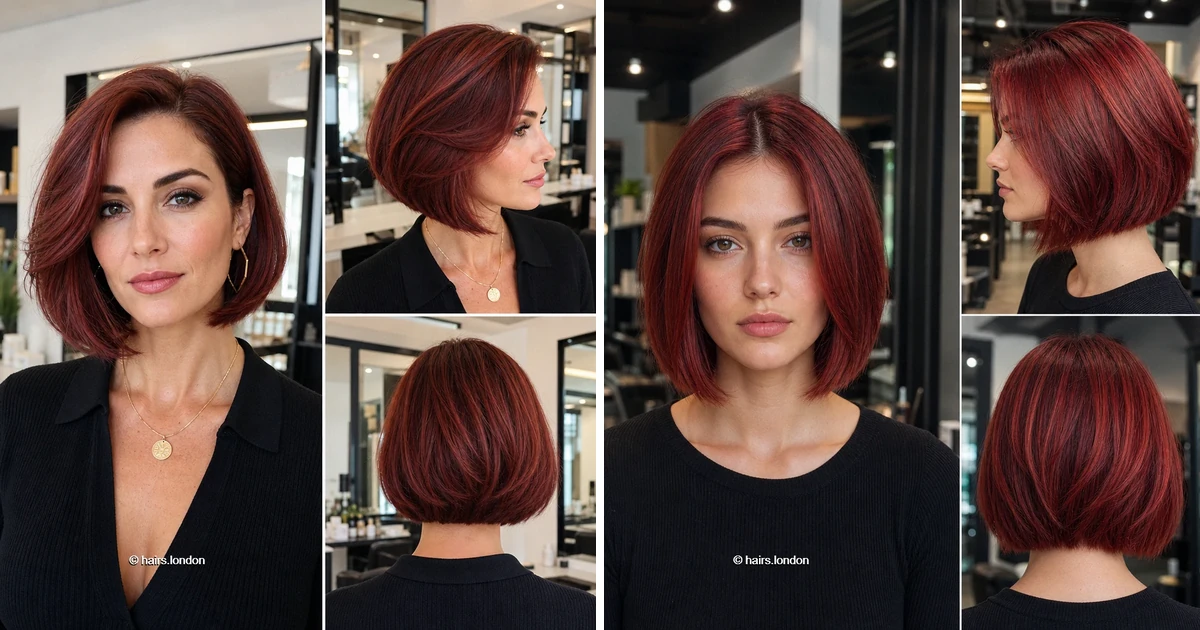
11. Layered Auburn Bob with a Tapered Nape
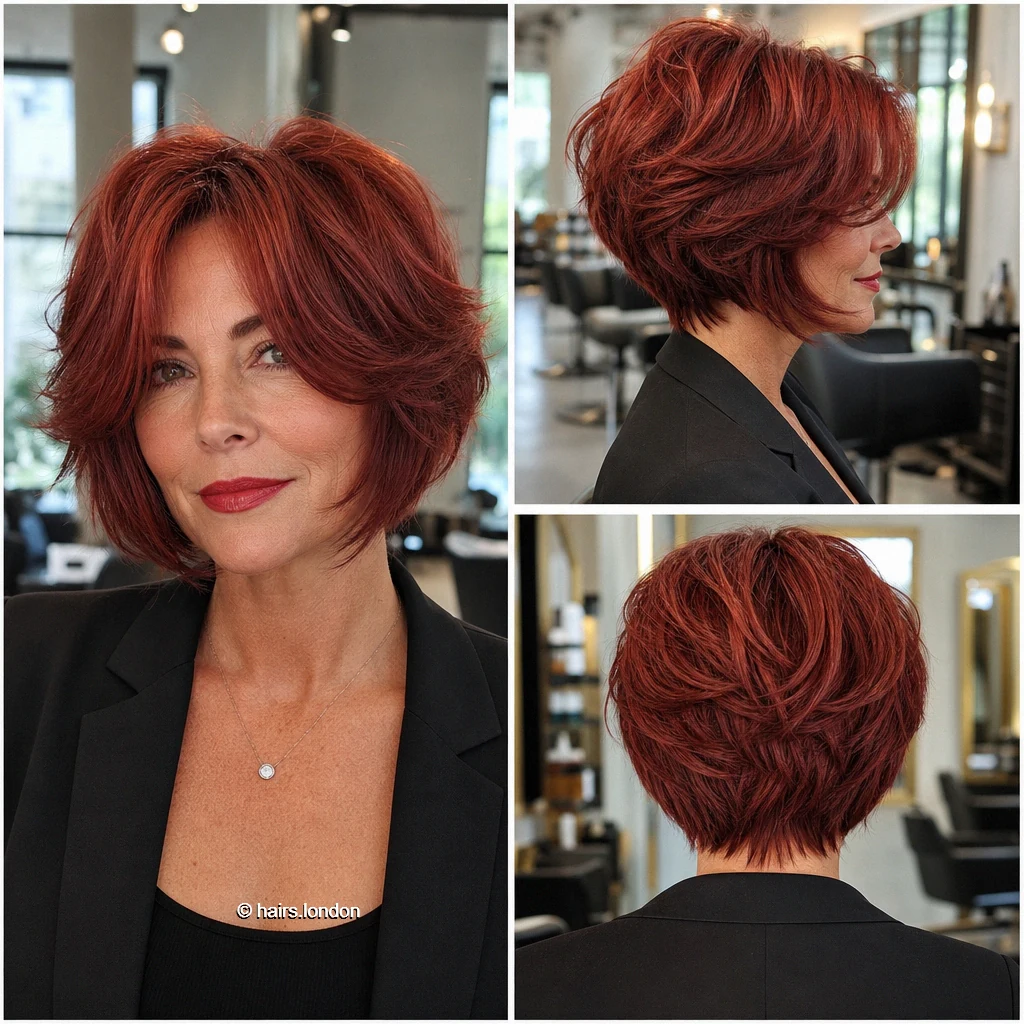
Warm auburn highlights the pronounced layers in this short bob. Long, softly sweeping front pieces balance a visibly tapered rear neckline. The side view shows fullness above shorter hair at the nape. That contrast supports a graduated shape rather than simple layering. Ask how much back buildup your density can comfortably support. Direct root airflow upward, then loosen layers with your fingers. Use light paste only on ends needing extra definition. Strong growth patterns may require a different nape or parting. Keep the tapered section trimmed before its shape loses definition. Discuss color refreshes that protect the layered red finish.
12. Shaggy Auburn Lob with Sweeping Fringe
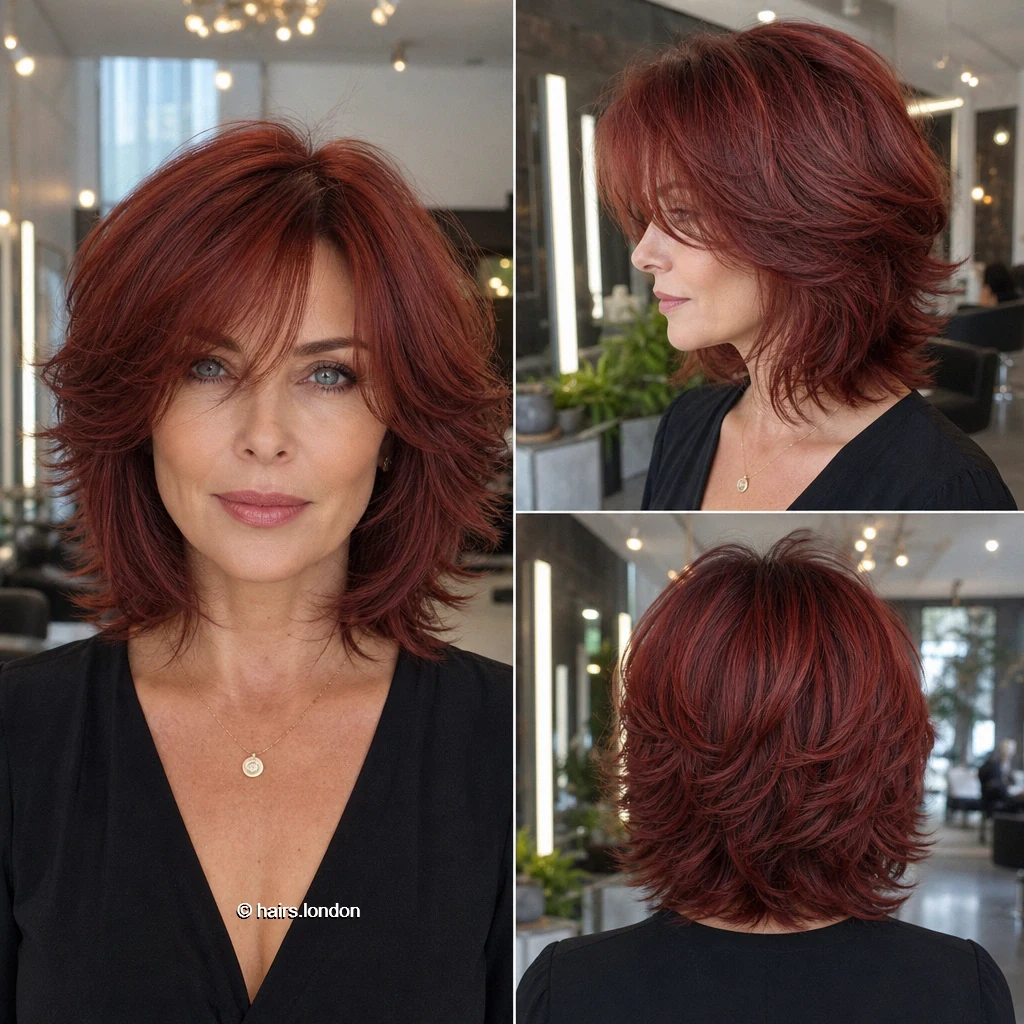
Auburn red brings depth to this shaggy, neck length lob. Sweeping front layers blend into feathery pieces around the cheeks. Wispy ends reach toward the shoulders rather than forming bulk. The back shows abundant layering and a broken lower edge. Request a shape that works with your natural wave pattern. Scrunch mousse into damp hair and diffuse without excessive handling. Smooth only the fringe if you prefer a clearer opening. Thicker density may need strategic removal through the middle layers. Trim when the feathered outline becomes difficult to style neatly. Refresh red tones as needed while protecting the porous ends.
13. Copper Shaggy Lob with Flipped Ends
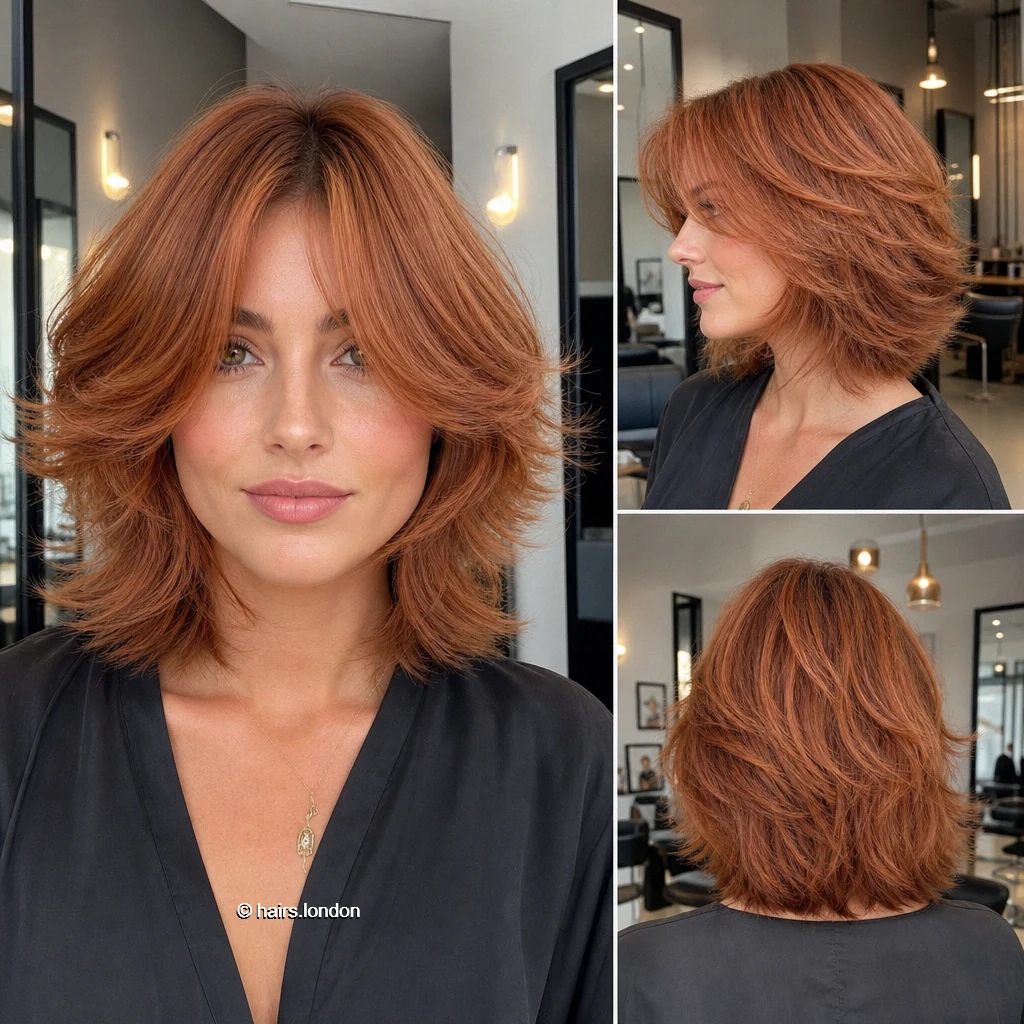
Light copper warms this airy lob with pronounced feathered layers. Curtainlike front pieces open around the face below the forehead. The longest ends skim the shoulders and flick outward visibly. Layering continues across the back, creating a loose outline. Ask your stylist to keep enough length for natural movement. Blow dry with a brush that turns selected ends outward. A lightweight mist can hold separation without making layers stiff. This shape may suit dense hair seeking a less solid edge. Revisit the salon when the face framing loses its balance. Discuss copper upkeep alongside the condition of these finer ends.
14. Plum Layered Bob with Side-Swept Front
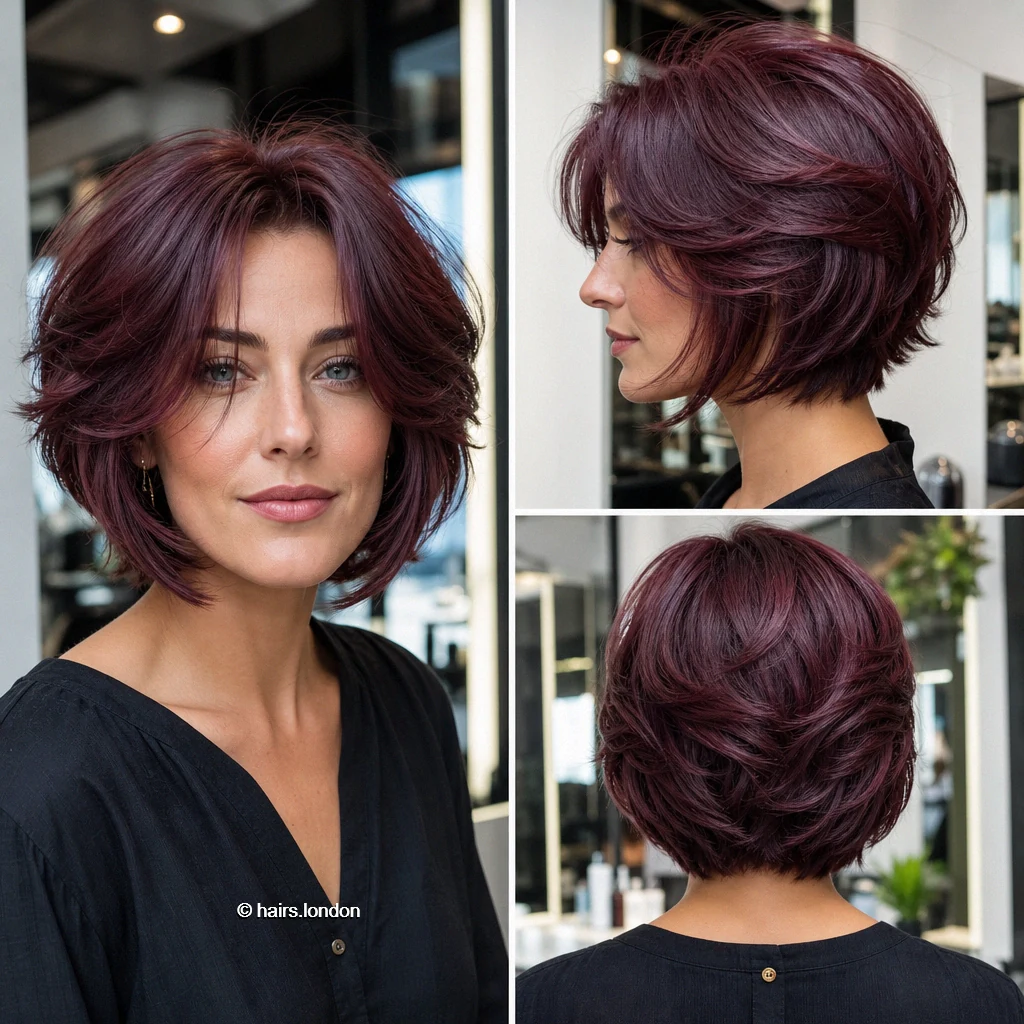
Plum burgundy shades this layered bob with a soft silhouette. Long front sections sweep outward from a side part. The visible side reaches near jaw level before curving back. Behind, defined layers create volume above a shorter neckline edge. Ask whether shorter layers will complement your own density and texture. Lift roots while drying, then smooth the face framing lightly. Avoid heavy oils that could flatten the airy upper shape. Naturally wavy hair may need less brushing to retain movement. Trim the neckline as it grows beyond the layered shape. Discuss shade maintenance if cool burgundy tones fade between visits.
15. Burgundy Shaggy Lob with Wispy Ends
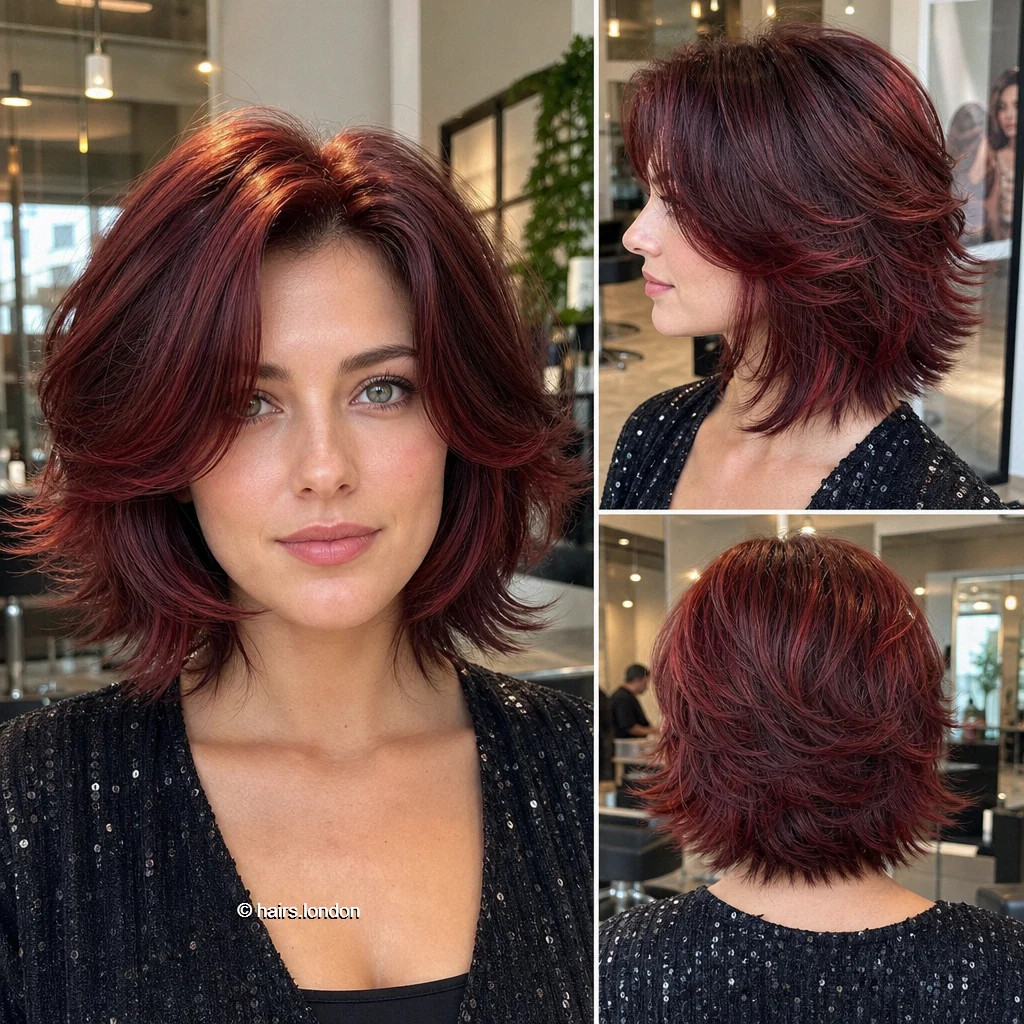
Deep burgundy adds shine to this shaggy, neck length lob. Broad front layers sweep across the cheeks without short bangs. Flicked ends and a broken back outline create visible movement. The longest pieces approach the shoulders while retaining airy separation. Ask for layers that flatter your density without thinning ends. Use a diffuser or gentle brush to encourage natural bends. Touch only selected pieces with a styling cream for definition. Coarser hair may need more moisture to keep feathering smooth. Trim when the perimeter spreads farther than you prefer wearing. Consider color safe products to preserve the deeper red tone.
16. Copper-Red Bob with a Swept Front
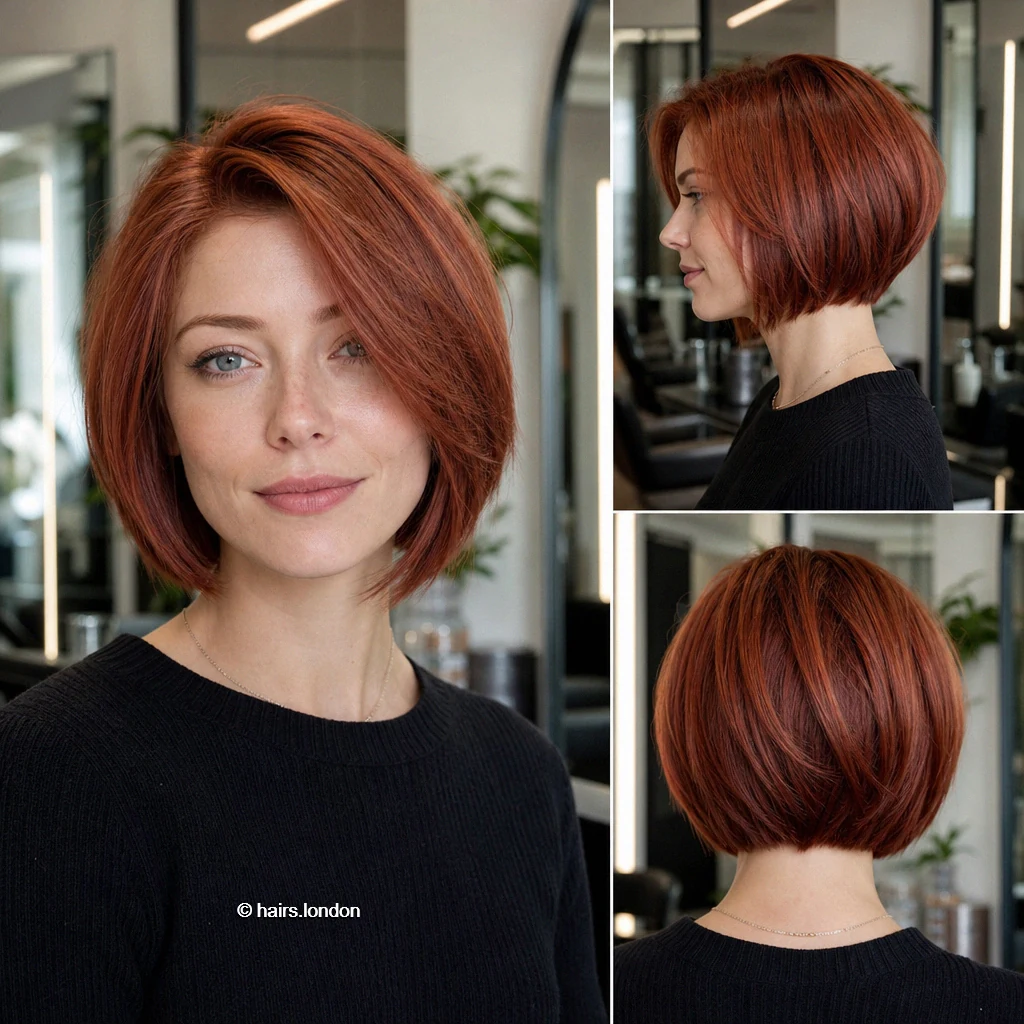
Copper red gives this smooth, jaw length bob lively warmth. A deep side part sends longer front hair across forehead. The side view shows front length extending below the back. A rounded rear section ends neatly above the exposed neck. Ask your stylist how much front to back difference works. Brush downward for shine, then gently turn the ends inward. Keep styling products light so the sweep retains its lift. Straight or softly wavy hair may need different drying routines. Trim the rear edge before the compact shape grows heavy. Discuss glossing options if your copper tone loses its brightness.
17. Rich Red Bob with a Clean Jawline Edge
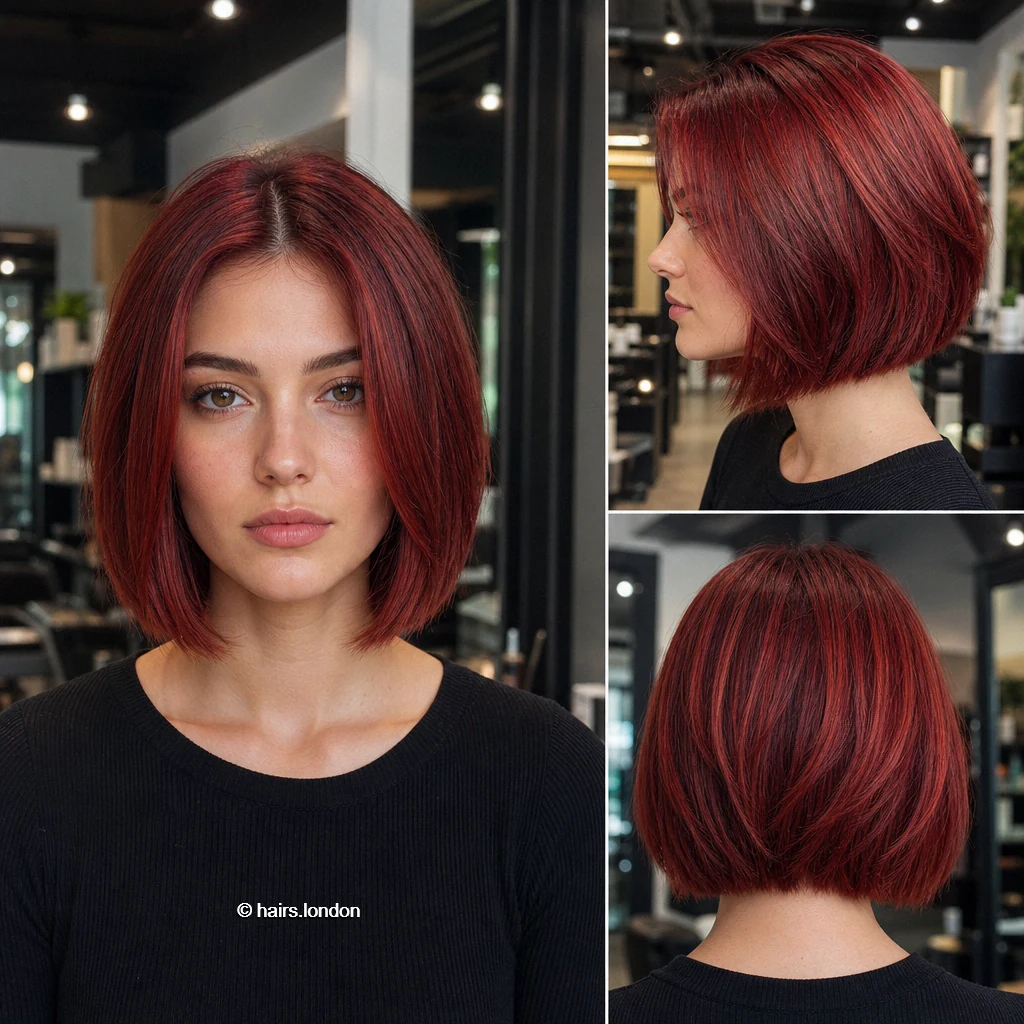
Rich red colors this smooth bob with a center part. Front sections hang near the jaw, framing both cheeks evenly. The visible back has a rounded outline above the neckline. Subtle layering softens the surface while keeping the edge substantial. Ask for a perimeter that accommodates your natural growth patterns. Direct airflow downward, then polish the ends with a brush. Add heat protection before using tools to refine the finish. Fine density may benefit from preserving weight through the baseline. Trim once the sides begin dropping below your chosen length. Protect the saturated red with a suitable color care routine.
18. Ginger Bob with a Full, Tapered Back
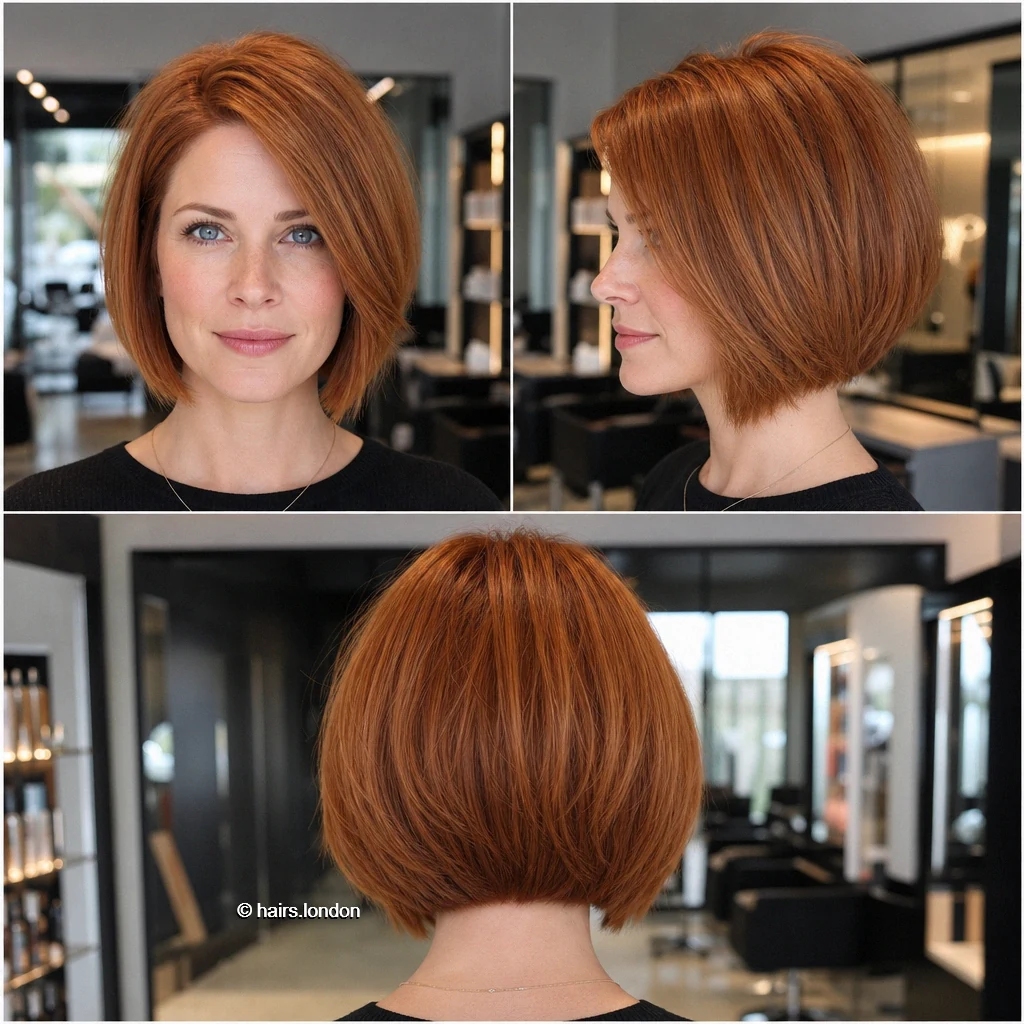
Bright ginger copper accentuates this rounded, side parted bob. Sweeping front hair reaches the jaw and curves toward cheeks. The back has visible fullness above a shorter neckline edge. Its compact taper gives the silhouette a noticeably softly graduated appearance. Ask whether your density will support that rounded back shape. Lift the crown while drying, then smooth the outer surface. Use minimal serum so the lower edge keeps its bounce. Strong nape growth may change how closely the back sits. Maintain the shorter section before its tidy taper becomes overgrown. Discuss gloss timing if bright copper fades faster than expected.
19. Deep Burgundy Bob with an Angled Side Profile
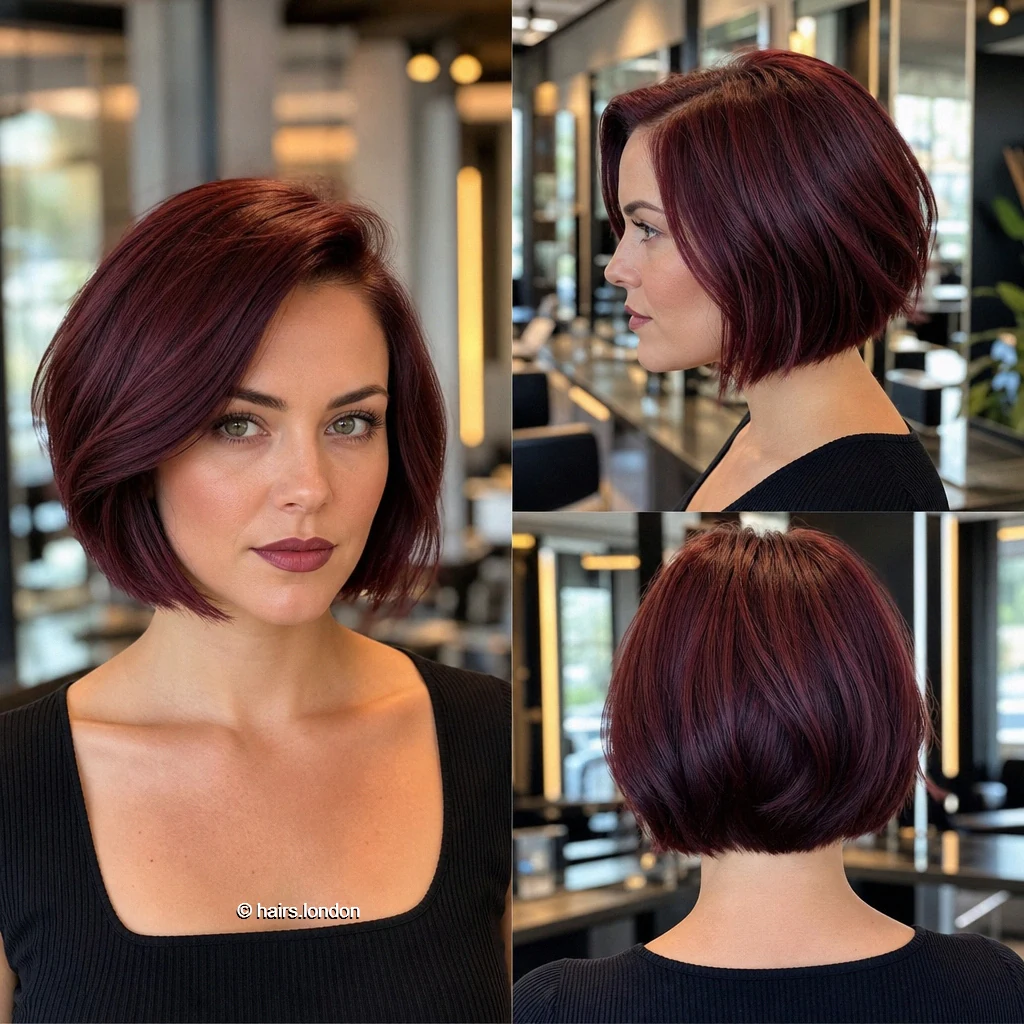
Deep burgundy adds dimension to this sleek, side parted bob. The longer front reaches the jaw beside one cheek. From the side, it extends past the shorter rear edge. The back rounds smoothly above the visible neckline without sharp stacking. Ask whether this gentle angle suits your preferred styling routine. Brush the front downward while keeping the back softly curved. A small amount of serum can emphasize the polished surface. Dense hair may require internal weight control to avoid bulk. Trim the front points and back edge as they grow. Discuss color refreshes when the burgundy begins appearing less vibrant.
20. Plum Textured Bob with a Side Sweep
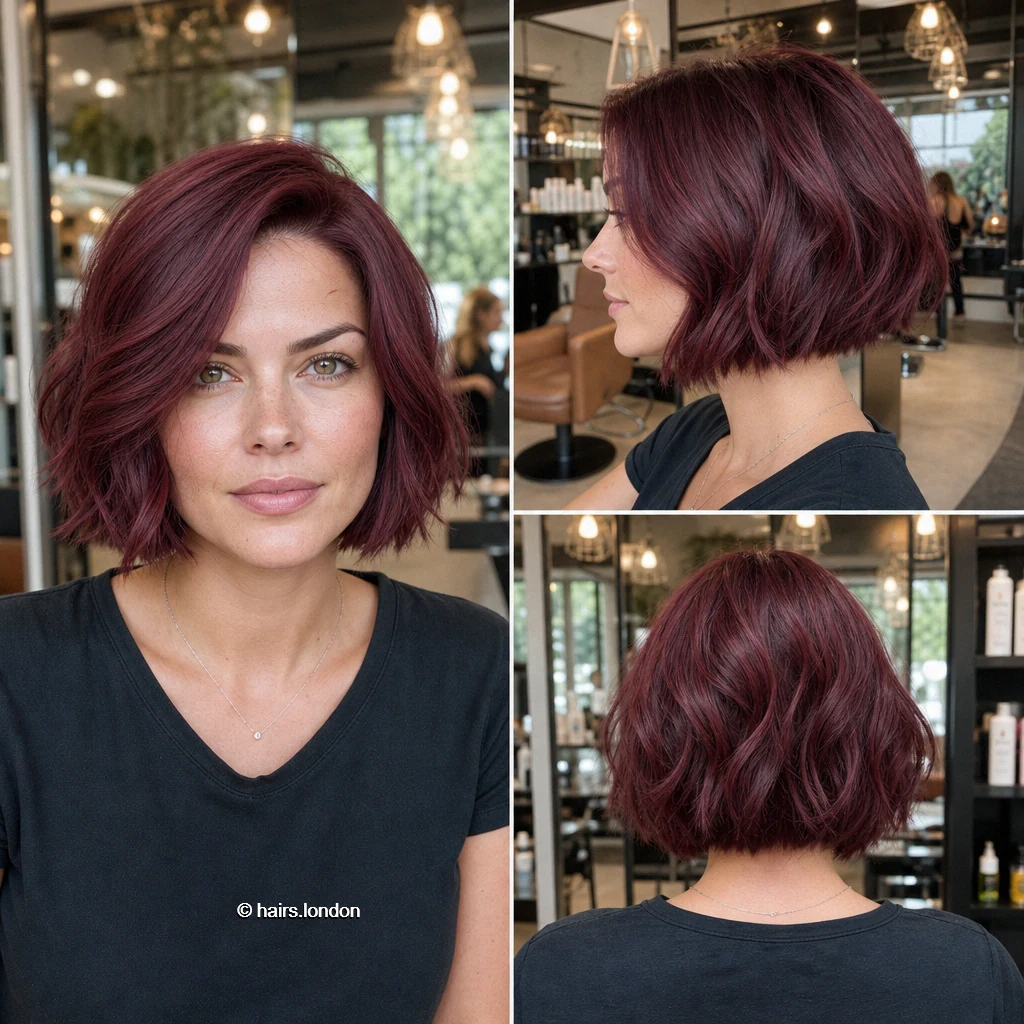
Plum red enriches this textured bob with a sweeping front. A side part directs longer hair diagonally across the forehead. Lightly tousled sides finish near the jaw with visibly separated ends. The back retains fullness above its softly broken lower edge. Ask for layering that releases movement without sacrificing bob structure. Encourage existing waves with scrunching rather than aggressive round brushing. Define a few pieces using lightweight cream on damp hair. Straight hair may need gentle bending to recreate this texture. Trim when the jawline outline begins losing its deliberate shape. Maintain the plum tone according to your colorist’s advice.
How to Choose Your Bob Length and Shape
Start with the shortest point you are comfortable wearing at the jaw or neck, then consider whether you want the front to match it or extend farther down. A rounded bob keeps more visual fullness through the sides and back; an A-line bob has a visibly longer front. A graduated or stacked shape depends on shorter hair supporting weight above the back neckline, not simply on a side-swept front. If you want more tying-back options or room for curls to spring up, consider a neck-to-shoulder lob instead.
Styling Fine, Thick, Wavy and Curly Textures
Fine hair often benefits from a substantial lower edge, root lift and light products rather than extensive thinning. For thick hair, ask about internal weight removal while keeping enough perimeter to prevent the ends from looking sparse. Encourage waves with scrunching and a diffuser, polishing only sections that need it. For natural curls, assess the intended shape when dry: shrinkage, curl grouping and the placement of layers can change where a bob actually sits. Keep fringe styling separate from the rest of the cut when needed.
Keeping Red Bob Color Fresh
The images range from bright copper and auburn to deeper cherry and plum, so upkeep will vary with the chosen shade and your starting color. Ask your colorist when a gloss or color refresh would be useful. Gentle cleansing, sensible heat settings and heat protection can help limit fading and dryness. On a layered bob, pay particular attention to the finer ends, which may look dull sooner than the fuller sections.
Maintaining the Bob Perimeter and Graduation
A smooth jawline edge shows growth sooner than a shaggy, broken outline. Check whether the sides still meet your intended length and whether a short back remains neat above the neck. If the cut has visible graduation, ask for its shorter supporting section to be maintained along with the outer shape; trimming only the front will not restore the back’s balance. Fringe may need its own appointment between full cuts.
What to Discuss with Your Stylist
Bring front, side and back references for the same shape whenever possible. Point out the perimeter you like, the amount of back fullness you want and whether you prefer inward-curving, straight or separated ends. Discuss density, natural texture, cowlicks, nape growth, fringe behavior and how much daily styling you will actually do. Agree on both a trim plan and a red-color upkeep plan before committing to a short, precise outline.
Frequently Asked Questions
What is the difference between a bob and a lob?
A bob generally finishes around the jaw or neck, while a lob extends lower, often toward the shoulders. The useful distinction is where the longest perimeter sits on your hair.
Is an A-line bob the same as a stacked bob?
No. A-line describes a front that is visibly longer than the back. Stacked describes shorter hair creating built-up shape at the back. A cut can have either feature or both.
How can I tell whether a bob is graduated?
Look at the back and side for shorter hair supporting a fuller area above the neckline. A rounded finish alone does not establish visible graduation.
Can fine hair hold a rounded bob?
It can, depending on density and growth pattern. Keeping weight at the perimeter and using light styling products may help, while excessive layering can make the ends appear thinner.
How can thick hair avoid a bulky bob?
Ask about carefully placed internal weight removal rather than automatically thinning the visible edge. The best placement depends on your texture and where the bob feels heavy.
Should a naturally curly bob be cut to the same length as a straight bob?
Not necessarily. Curl shrinkage can make the finished shape sit higher, so discuss your desired dry length and how your curls group before deciding on the perimeter.
Do bob bangs require separate maintenance?
Often, yes. Brow-length fringes can obstruct your view or lose their shape before the main bob needs trimming, particularly if your hair grows quickly.
What is a practical daily routine for a smooth bob?
Dry the roots in your chosen part, direct airflow down the hair and brush the ends into the intended outline. Use heat protection and only enough finishing product to control flyaways.
How do I style a textured bob without losing its shape?
Encourage your natural bends with a light mousse or cream, then scrunch or diffuse gently. Define selected pieces rather than coating the entire perimeter with heavy product.
How often should I trim a bob?
Book a trim when its defining edge, short neckline or back graduation starts losing balance. Precise, compact shapes usually show growth sooner than layered lobs.
Will copper and burgundy reds need the same color upkeep?
Not necessarily. Their fading and refresh needs depend on the chosen color, starting hair and routine. Ask your colorist for a plan suited to your shade.
What happens when I grow out a short bob?
The front, sides and back may grow into different proportions. Periodic reshaping can keep the perimeter intentional while you move toward a longer bob or lob.
Conclusion
The strongest starting point is the outline you want to see every day: a tidy jawline curve, a longer front, a fuller short back or loose layers around the neck. Choose a red tone and styling routine you can maintain, then use the relevant views to discuss how that shape will behave on your own hair.