

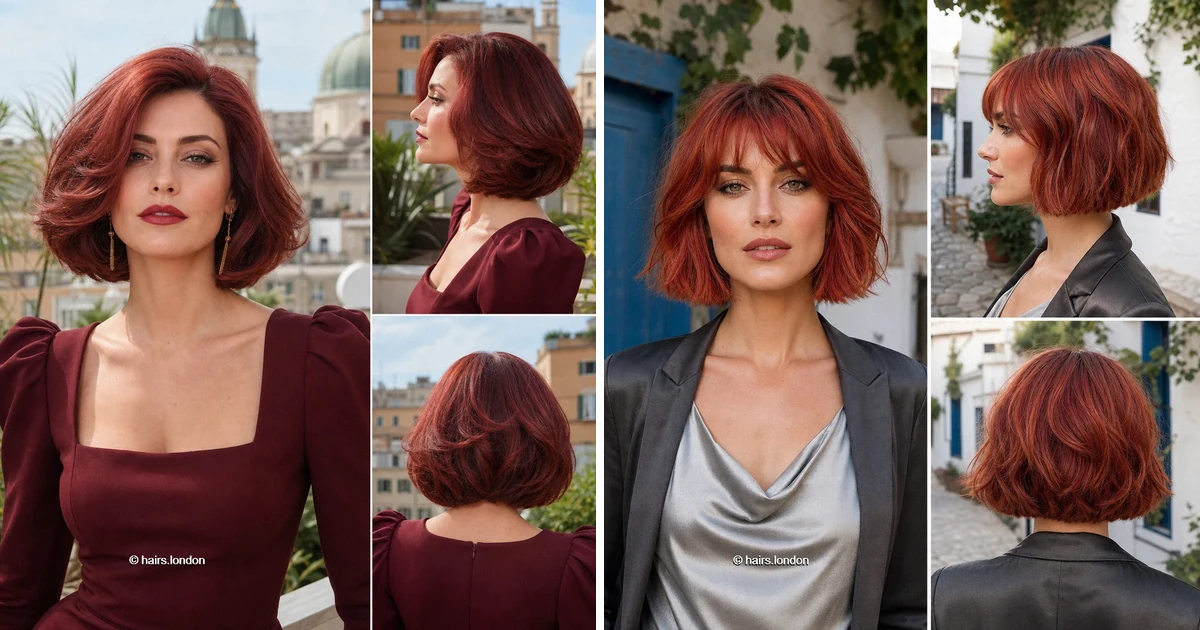
11. Copper Shaggy Bob with Face-Framing Layers
Copper hair brings warmth to this airy, shaggy bob. Loose front pieces part around the face like grown bangs. The sides end near the jaw with outward flicks. Layered sections remain visible across the crown and back. Ask for movement without removing too much perimeter weight. A diffuser can encourage bends in naturally wavy hair. Alternatively, twist small sections while drying for casual separation. This shape may work well when hair holds soft texture. Fine hair needs especially restrained layering to avoid sparse ends. Trim when the lower outline loses its bob shape completely, without creating a thin lower edge.
12. Auburn Layered Bob with Feathered Ends
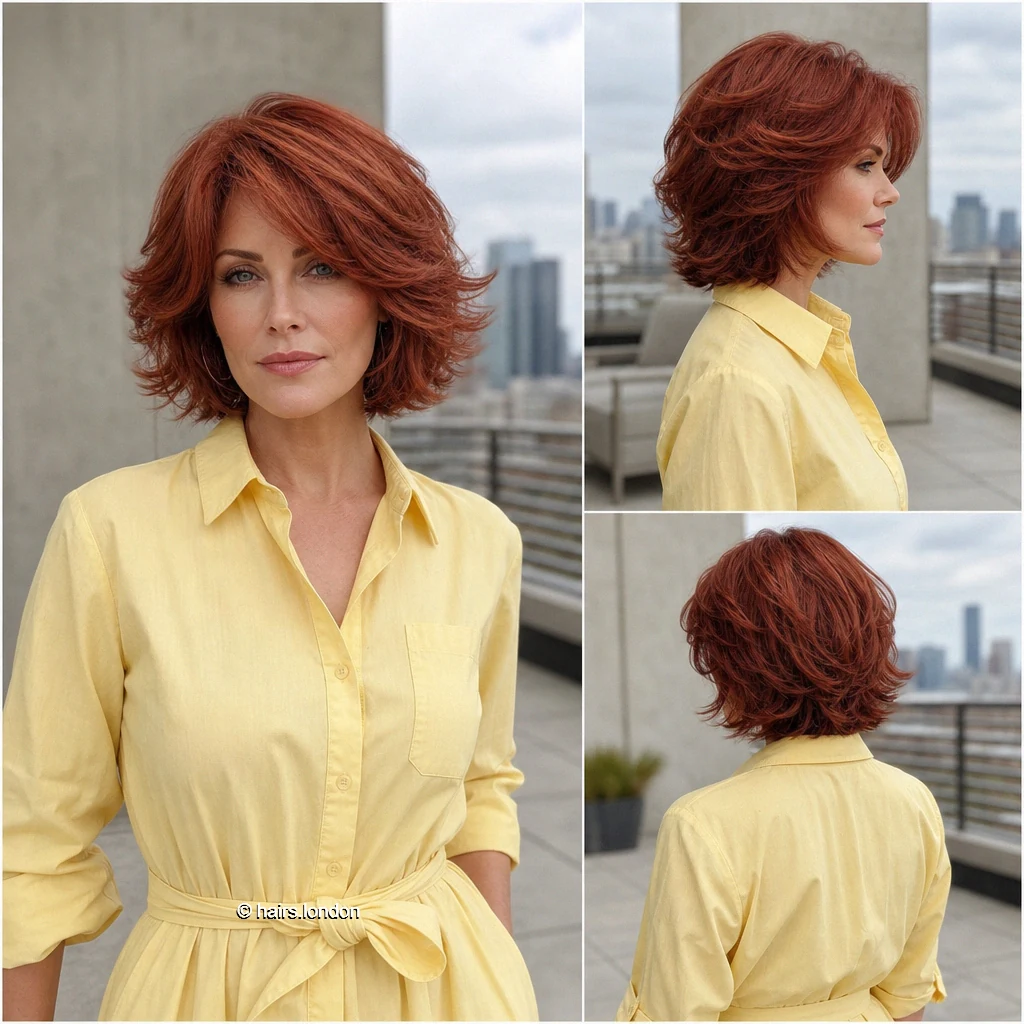
Warm auburn color accentuates the feathered edges of this bob. A side swept front leads into fuller, layered sides. The silhouette reaches around the jaw with flicked ends. Back layers create visible movement above the lower outline. Ask your stylist where layers should release rather than collect weight. Blow dry sections away from the face for outward movement. Add a flexible spray instead of coating every feathered end. This styling may be easier on hair with natural body. Dense hair needs thoughtful bulk control around the widest point. Refresh layers when their separation and overall balance begin fading over time.
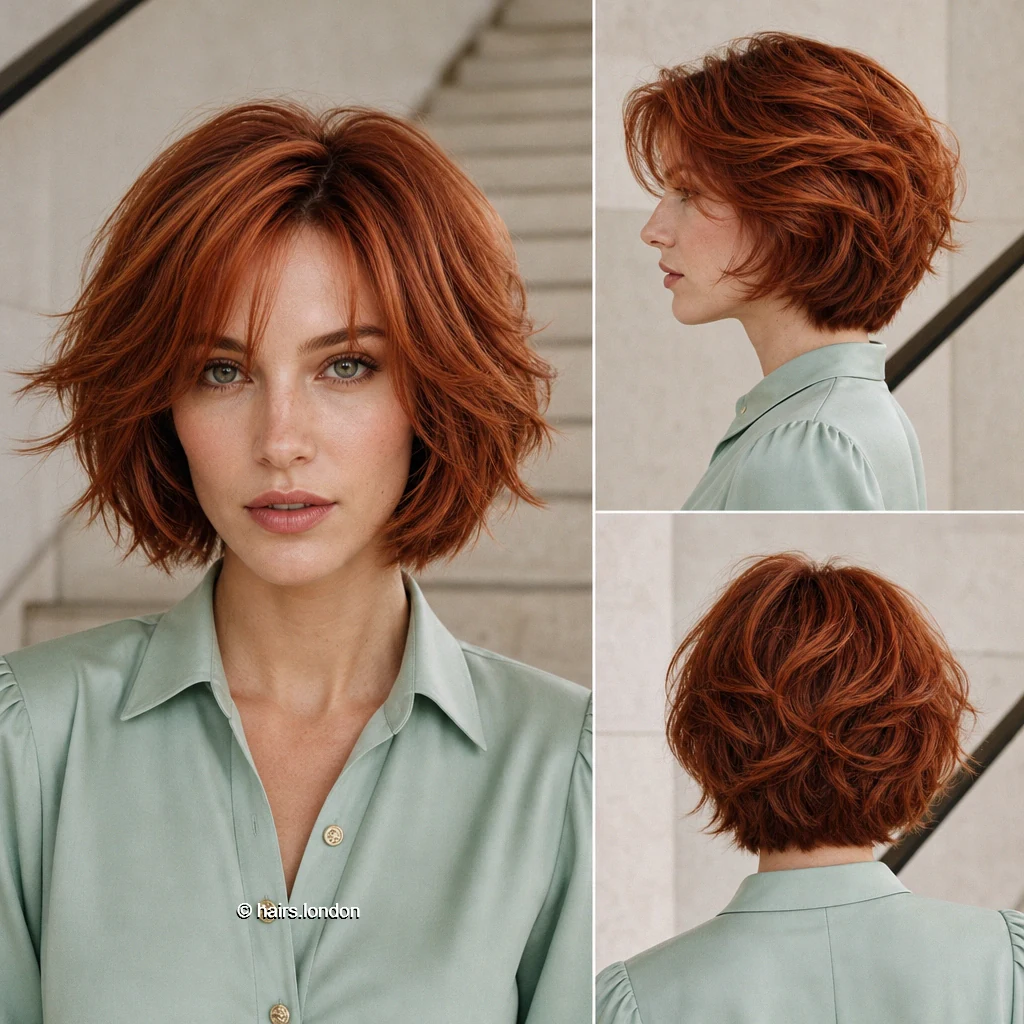
13. Copper Layered Bob with a Loose Center Part
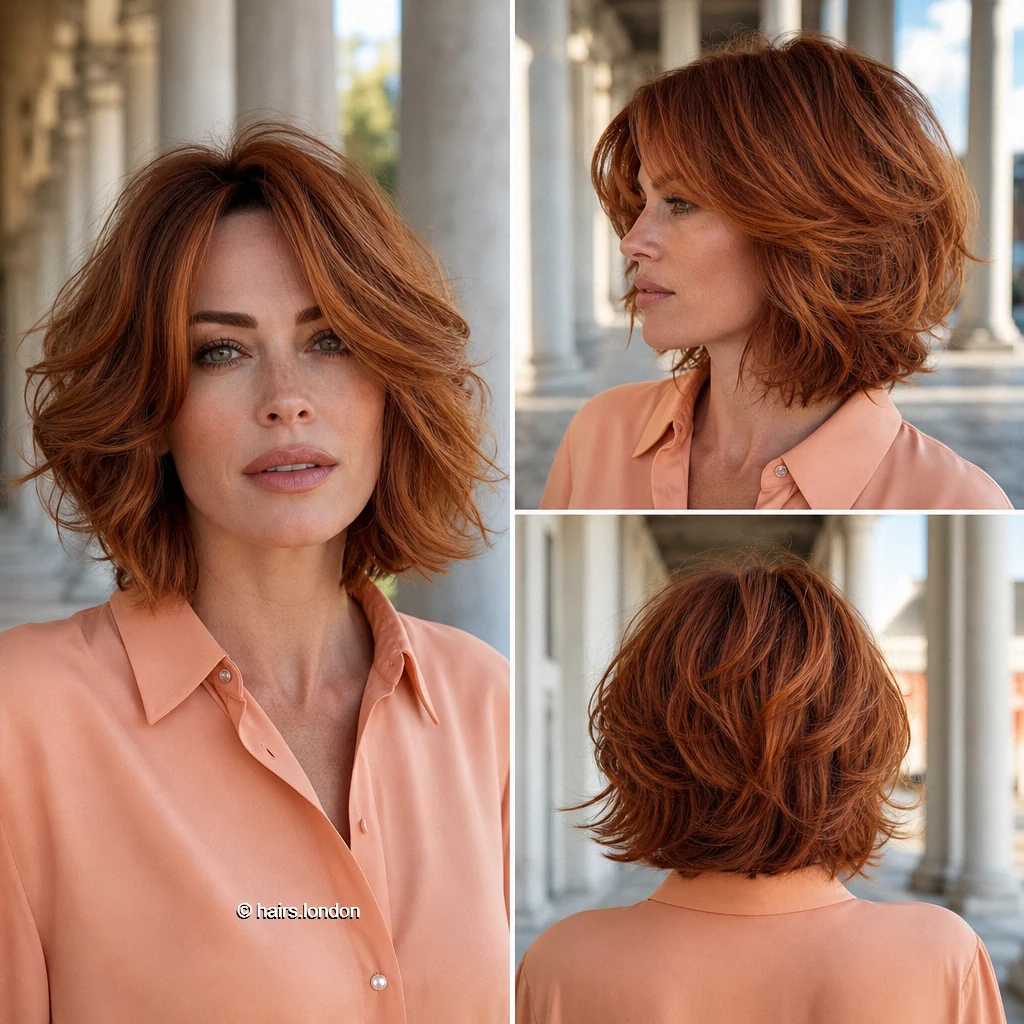
Golden copper tones run through this loose, layered bob. The near center part opens into soft face framing. Sides fall just below the jaw in separated waves. The back shows an airy outline with flicked lower ends. Ask for layers that enhance movement without sacrificing bob definition. Scrunch damp hair, then diffuse on a gentle setting. Smooth only the face framing pieces if they fall awkwardly. This shape may suit hair with a natural bend. Straighter textures might require occasional heat for comparable movement. Trim whenever longer pieces begin reading as a disconnected tail. Avoid heavy products that flatten waves.
14. Plum Shaggy Bob with Swept Layers
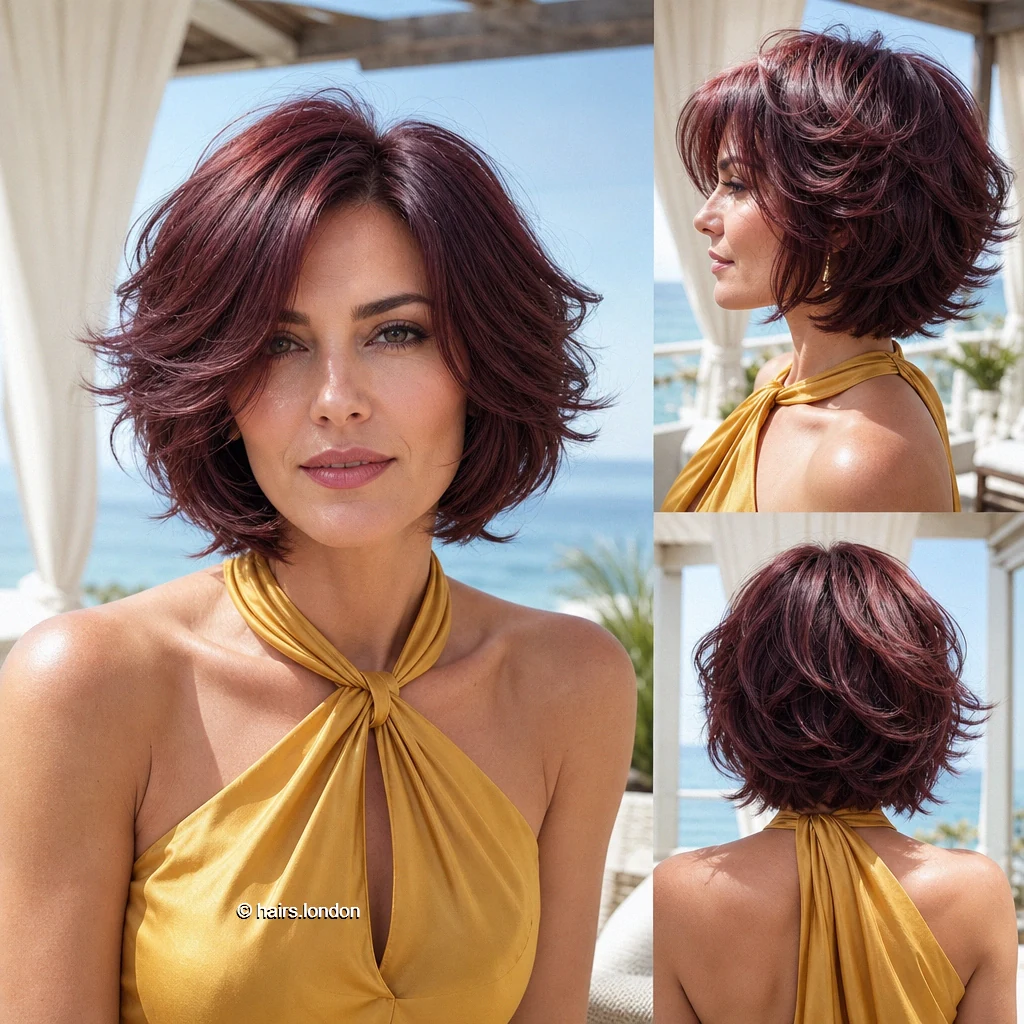
Plum colored hair makes the separated layers especially noticeable. A deep side part sends the front across the forehead. The jaw length sides flick outward around the face. At the back, textured layers create an airy silhouette. Ask your stylist to preserve a clear lower bob outline. Dry with your fingers for lift and natural separation. Add flexible paste sparingly to emphasize selected outer pieces. Medium or thick hair may carry this volume more easily. Fine hair might need fewer layers and lighter product. Trim the perimeter when the feathered ends lose their balance. Check front length as it grows.
15. Burgundy Layered Bob with Curtain Front
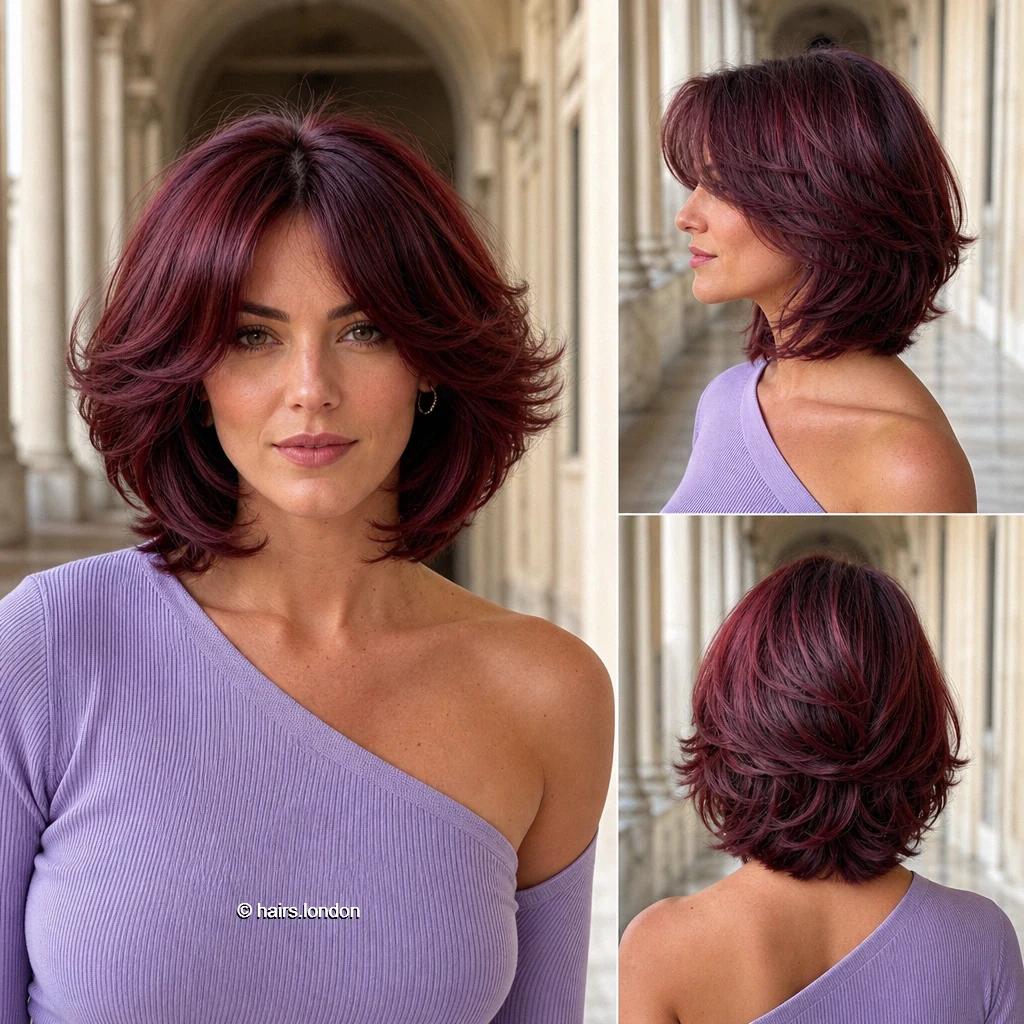
Deep burgundy hair gives this layered bob rich dimension. Longer front sections open around the face like curtains. The sides reach the jaw while shorter layers create lift. A textured back sits above the neck without severe stacking. Ask for face framing that connects smoothly with side layers. Blow dry the front away from your face for movement. Keep the lower sections controlled so the silhouette stays compact. This shape may suit hair with enough density for layers. Coarse hair could need strategic weight removal, not excessive thinning. Revisit the salon as the front loses its sweeping shape over time.
16. Copper Bob with a Softly Textured Perimeter
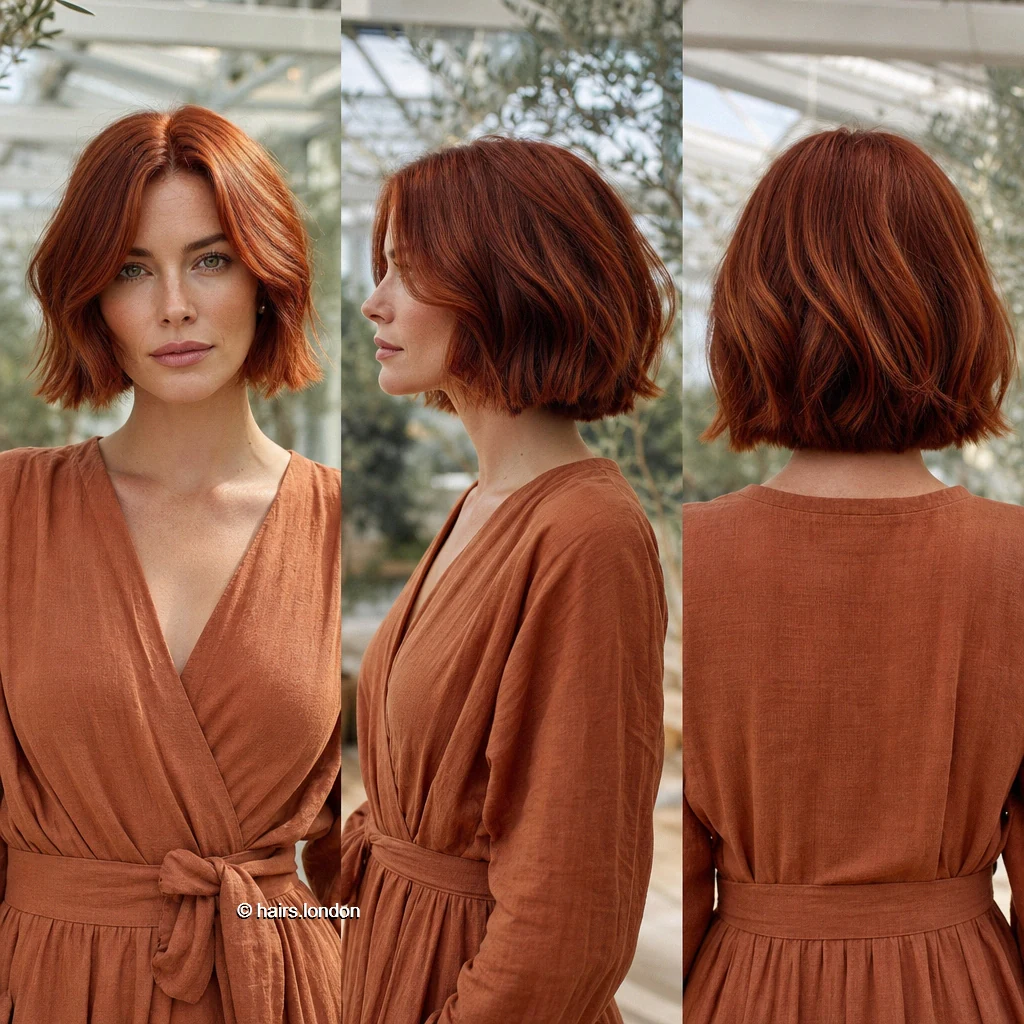
Even copper color defines this simple, chin length bob. A center part lets longer front pieces frame both cheeks. The lower edge looks softly textured rather than sharply blunt. Side and back views show a compact, neck clearing outline. Ask for subtle perimeter softness without sacrificing the bob shape. Rough dry first, then smooth the ends with a brush. A small amount of serum can control surface frizz. This cut may suit someone wanting limited daily styling. Very dense hair might need bulk adjusted beneath the surface. Trim when the short back starts brushing the collar or losing its definition.
17. Auburn Bob with a Gentle Front-to-Back Angle
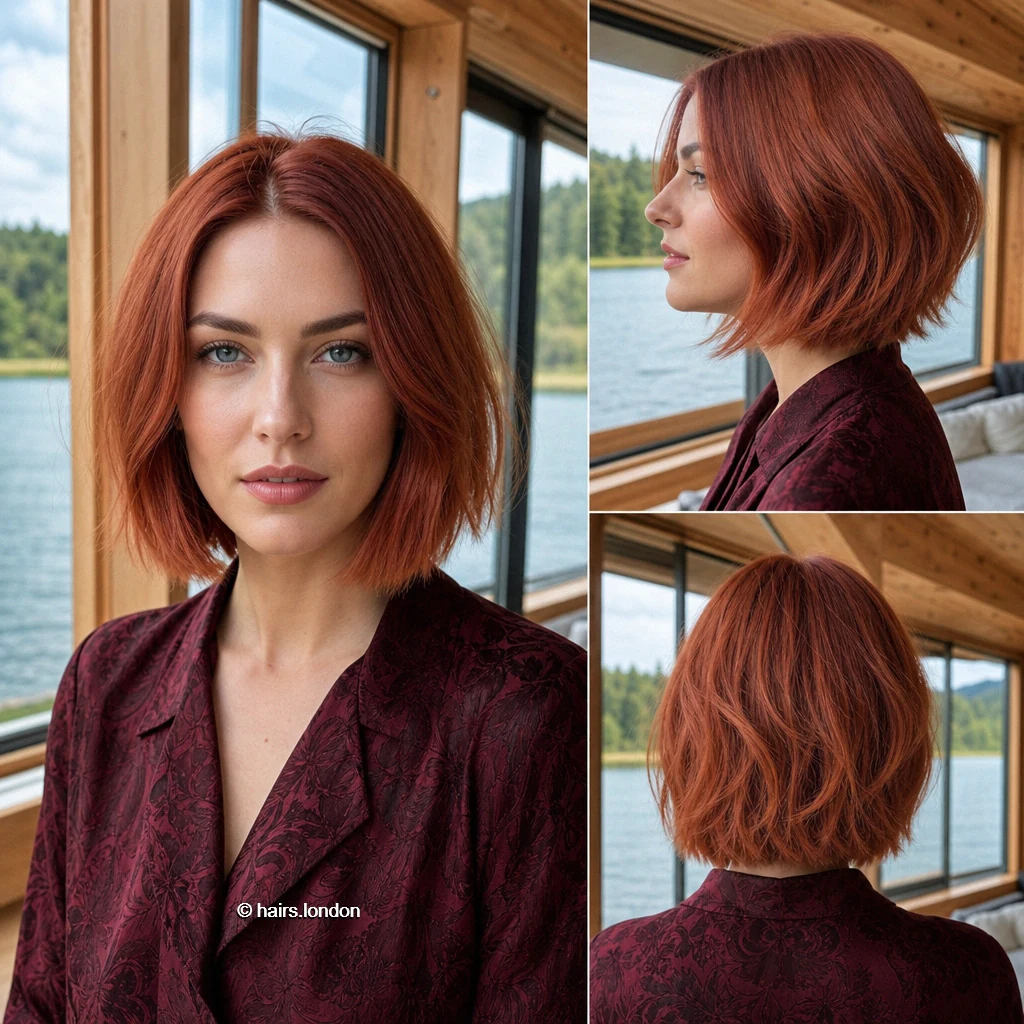
Auburn hair forms a lightly textured bob around the jaw. Its center part gives the front a balanced frame. The side view suggests slightly longer front pieces than back. A softly layered rear adds fullness without pronounced stacked steps. Ask your stylist to confirm how much angle you want. Smooth the sides while allowing natural movement at the ends. Lightweight texture spray can define pieces without stiffening them. This shape depends on density and how your hair falls. Fine hair may need a stronger perimeter for visual fullness. Recheck the front and back balance at each trim for consistent shaping.
18. Golden Copper Bob with Softly Swept Sides
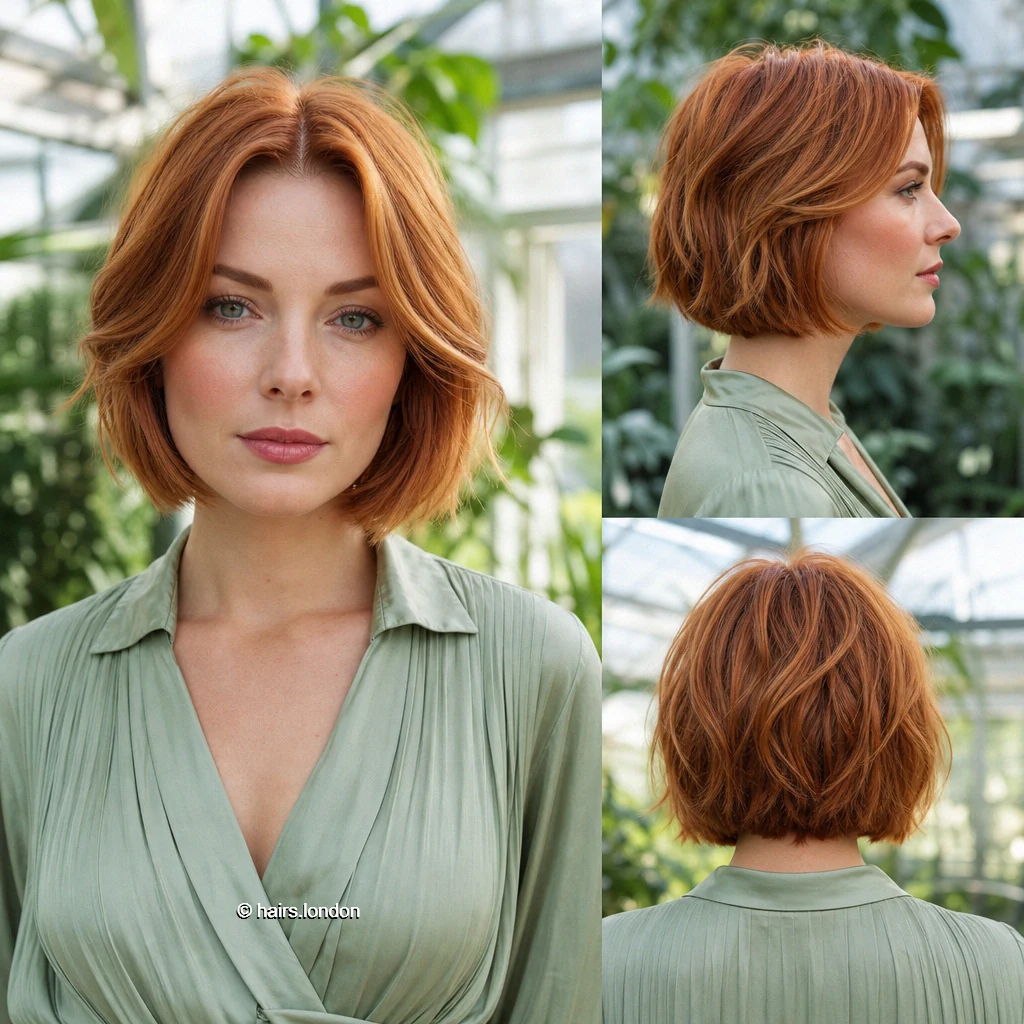
Golden copper brings brightness to this rounded, jaw length bob. A center part opens into softly swept face framing. The back looks fuller above a neat, short neckline. Subtle layers loosen the surface while preserving the perimeter. Ask your stylist to keep enough weight at the ends. Blow dry the sides downward, then lift gently at roots. Separate a few pieces for movement without adding bulk. This finish may suit hair with moderate natural volume. Thick hair might need internal refinement to avoid widening. Schedule trims when the neckline and rounded sides lose balance. Protect the color from excessive heat.
19. Burgundy A-Line Bob with a Sweeping Front
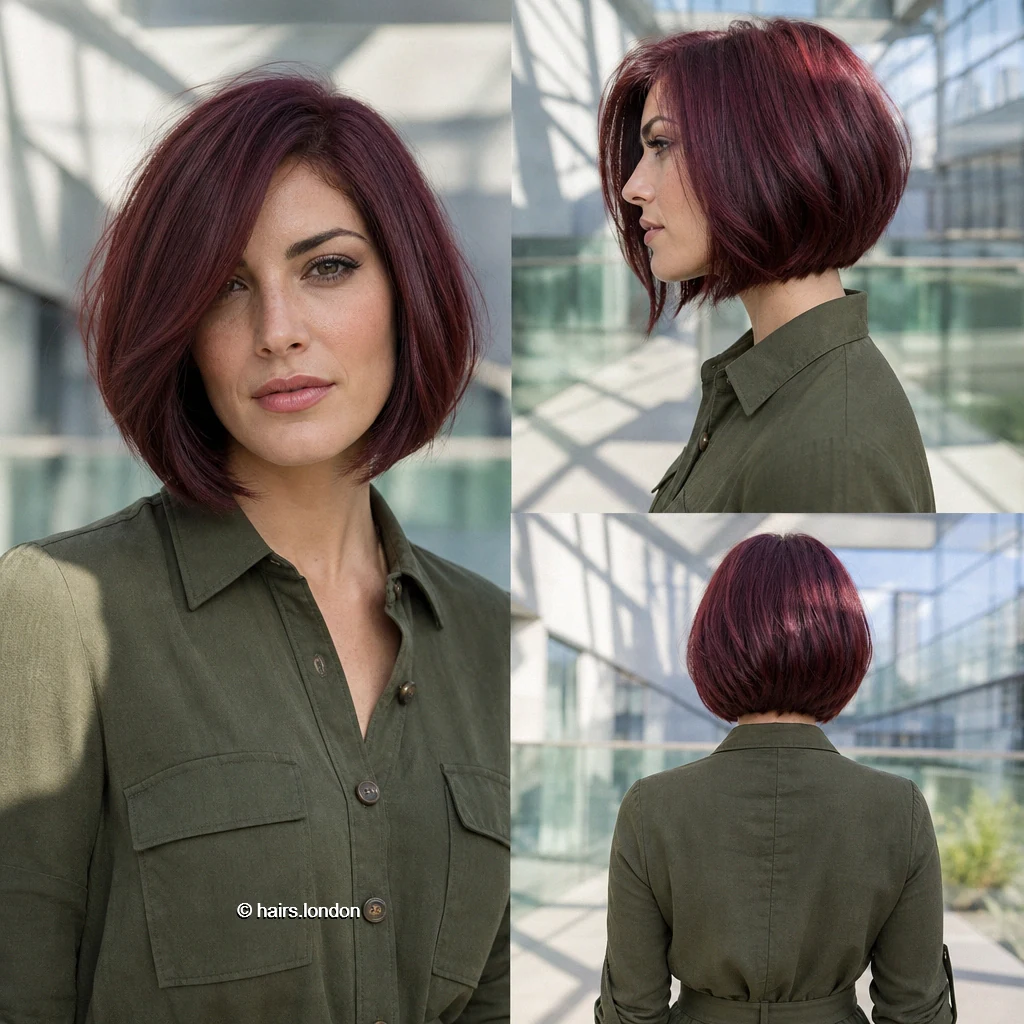
Dark burgundy color sharpens the outline of this bob. A deep side part creates a long, sweeping front. The profile clearly shows front pieces extending below the back. Its short rear outline is rounded, with no obvious stacking. Ask for an A-line proportion that matches your styling habits. Direct the long front downward while smoothing the shorter back. A flat brush helps maintain the clean, close perimeter. This shape may suit hair that responds well to smoothing. Strong waves could require extra styling to reveal its angle. Trim regularly to preserve the contrast between front and back through normal regrowth.
20. Wine-Red Bob with Side-Swept Fringe
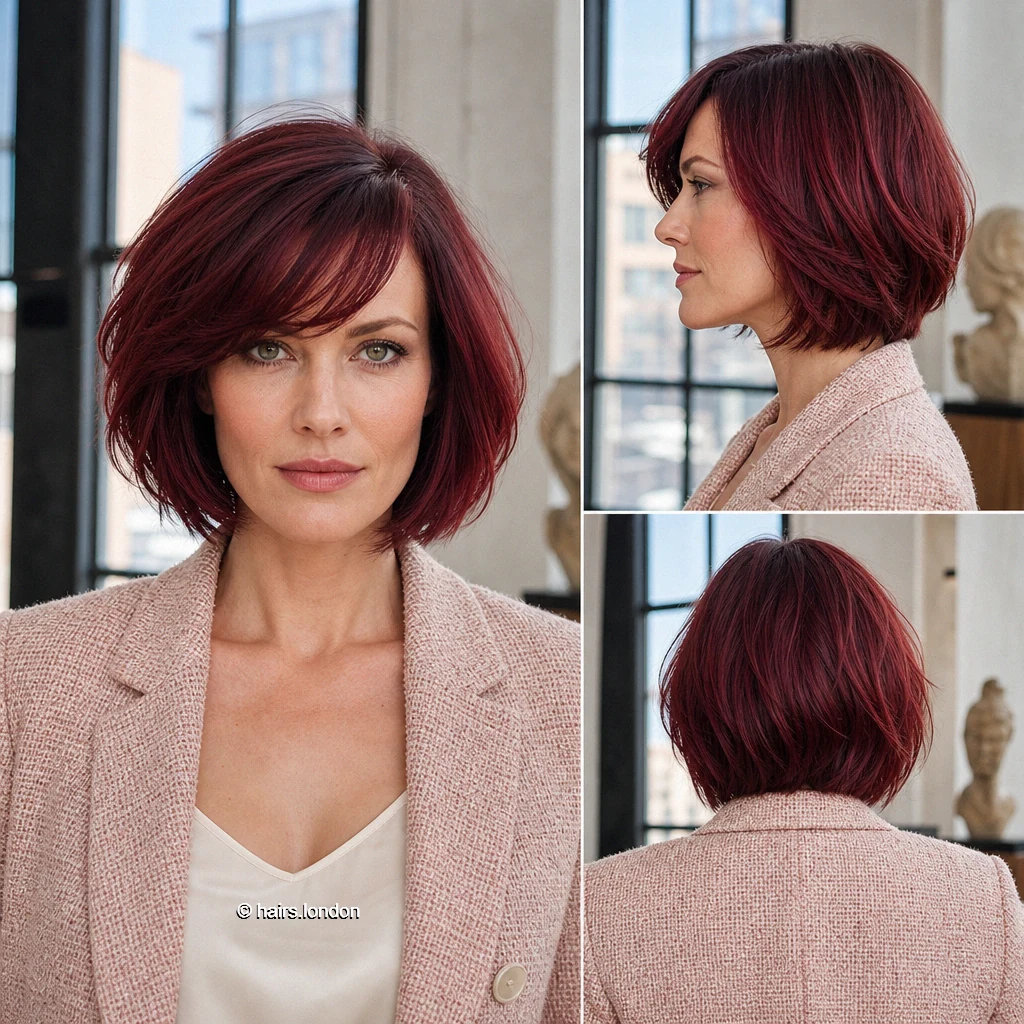
Wine red hair gives this compact bob noticeable depth. A side swept fringe crosses the forehead and meets the sides. The jaw length front curves toward a shorter neckline. Soft layers round the back without a pronounced stacked shelf. Ask your stylist to balance fringe length against your hairline. Dry the fringe first, guiding it across the forehead. Smooth the ends lightly to keep the perimeter defined. This bob may suit hair that holds a curved finish. Fine hair could benefit from fewer layers near the edge. Refresh the fringe and neckline before either overwhelms the shape through normal regrowth.
How to Choose Your Bob Length and Shape
Decide where you want the perimeter to sit when your hair is dry: near the jaw, below the chin or clear of the neck. A strong lower edge can make fine hair appear fuller, while soft layers can release movement in dense hair. If you prefer longer pieces at the face, discuss a visible front-to-back angle; if you want fullness through the back, ask how much graduation your density can support. Account for wave or curl shrinkage before choosing the final length.
Styling Fine, Thick, Wavy and Curly Textures
For fine hair, start with lightweight root lift and avoid overloading the ends. Thick hair may need carefully placed internal weight removal so the bob moves without expanding at the sides. Enhance natural waves with mousse and gentle diffusing rather than brushing them out. For curls, agree on the dry silhouette with your stylist and use a curl product that defines without obscuring the perimeter. Smooth only the sections that need it; an entirely polished finish is not necessary for a textured bob.
Keeping Copper, Auburn and Burgundy Color Fresh
These images show several warm red and deeper burgundy tones, which can change in appearance as color fades. Ask your colorist what upkeep your chosen shade requires for your starting color and hair condition. Color-safe washing, moderate heat and sun protection can help preserve vibrancy. A gloss or color appointment may be useful between major changes, but the appropriate schedule depends on your color service and desired finish.
Maintaining the Bob Perimeter and Graduation
Check the shape from the side and back, not just around your face. A smooth or angled perimeter can lose its definition as the neckline grows; a textured edge has more flexibility but still needs balancing. If your bob has visible graduation, plan trims before its weight line drops and the back loses lift. Fringe may need attention sooner than the rest of the cut. Ask your stylist for a trim schedule based on your particular length and growth rate.
What to Discuss with Your Stylist
Bring the front, side and back views of the bob you prefer, and identify the details that matter most: fringe, parting, fullness, texture or perimeter. Show how your hair falls naturally and mention cowlicks, density, previous color and the time you can spend styling. Ask what cutting adjustments would preserve the look on your texture, and have your stylist explain which details will need heat styling or more frequent maintenance.
Frequently Asked Questions
What is the difference between a bob and a lob?
A bob generally finishes around the jaw, chin or neck. A lob is a longer bob, typically extending closer to the shoulders.
How is an A-line bob different from a stacked bob?
An A-line bob has a visible front-to-back length difference, with longer front pieces. A stacked bob has graduation that builds shape and weight at the back. A cut can combine features, but one does not automatically imply the other.
Will a blunt-looking bob work on fine hair?
It can, because a stronger perimeter may make the ends look fuller. Your stylist should adjust the length and any internal layering to your density and growth patterns.
How can thick hair avoid looking bulky in a bob?
Discuss where fullness collects when your hair is dry. Selective internal weight removal or well-placed layers may help, while excessive thinning can weaken the perimeter.
Can naturally curly hair be cut into a bob?
Yes, provided the length and shape account for your curl pattern and shrinkage. Ask your stylist to assess how the finished perimeter will sit when the curls are dry.
Are bangs necessary for a short bob?
No. These images include open center parts, side-swept fronts and several fringe styles. Choose a fringe according to your hairline and willingness to maintain it.
Which bob takes the least daily styling?
That depends on your natural texture. A shape cut to follow your existing wave or fall will generally demand less work than one that requires daily smoothing or added curls.
How often should I trim a precise bob?
Book a trim when its perimeter, neckline or front-to-back balance starts changing. Precise outlines usually need attention sooner than deliberately tousled ends.
How should I style a side-swept fringe?
Dry it early in your routine, directing it across the forehead with light tension. Use minimal product so it retains movement.
Can I grow a short bob into a lob?
Yes. Ask for periodic shaping as it grows so the back, front and any fringe stay balanced rather than developing an uneven outline.
Does a textured bob need layers?
Not always. Texture can come from your natural wave and styling; whether layers help depends on density, length and the amount of movement you want.
How do I choose between copper and burgundy for my bob?
Use the images to identify the depth and warmth you like, then discuss your starting color, hair condition and upkeep preferences with a colorist.
Conclusion
The most useful bob haircut ideas are the ones you can picture from every angle. Choose the perimeter and length first, then decide how much layering, fringe and styling you want to maintain. A stylist can adapt those details to your hair’s natural behavior while keeping the shape you liked in the images.