


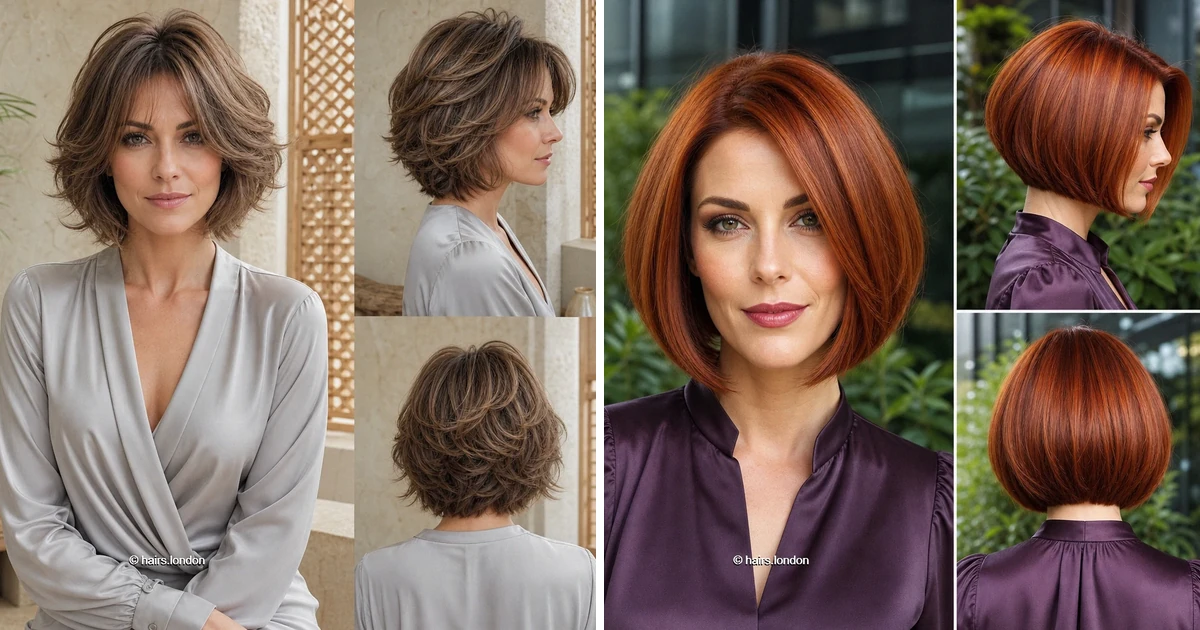
11. Side-Parted Brown Bob with a Defined Weight Line
The front of this brown bob reaches toward the jaw. Its side part sends a longer section across the forehead. A shorter back and rounded fullness establish a defined weight line. The polished ends retain movement rather than forming stiff points. Dry the longer front away from your face for control. Smooth the nape separately so its short edge stays neat. Discuss whether your hair naturally falls into this sweeping part. Dense hair may require careful refinement beneath the rounded shape. Refresh the back before growth blurs its compact outline. Finish with light shine spray if your hair tolerates it.
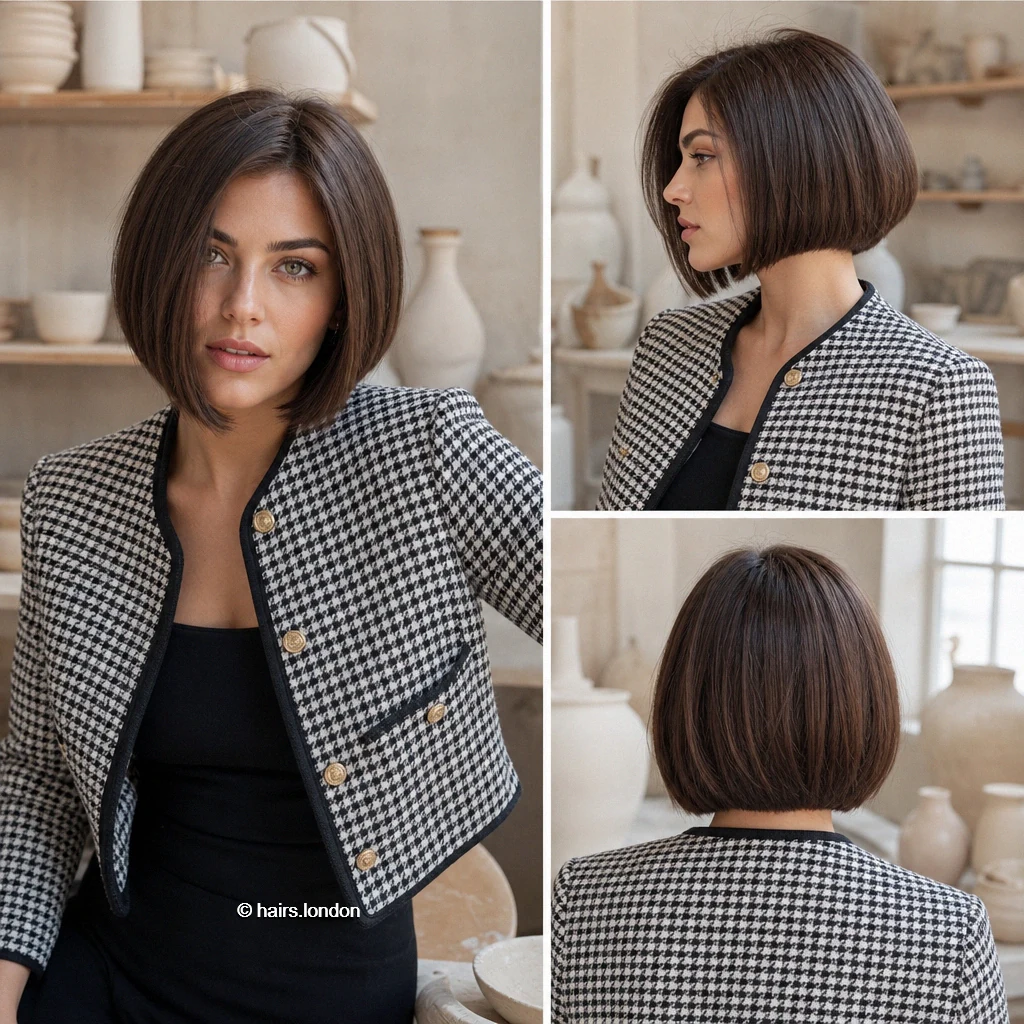
12. Smooth Brunette Bob with Even Back Fullness
Dark brunette hair creates a smooth bob around the jaw. A near center part keeps the front simple and open. The back is rounded, with a short, even neckline. Its weight sits low enough to preserve a compact silhouette. Dry with gentle brush tension, keeping the ends aligned. Use a small amount of smoothing cream where flyaways appear. Ask your stylist to check the outline after natural drying. Naturally wavy hair may show a different perimeter without heat styling. Trim when the neat neckline begins to lose its shape. Protect the dark shine by limiting repeated high temperature passes regularly.
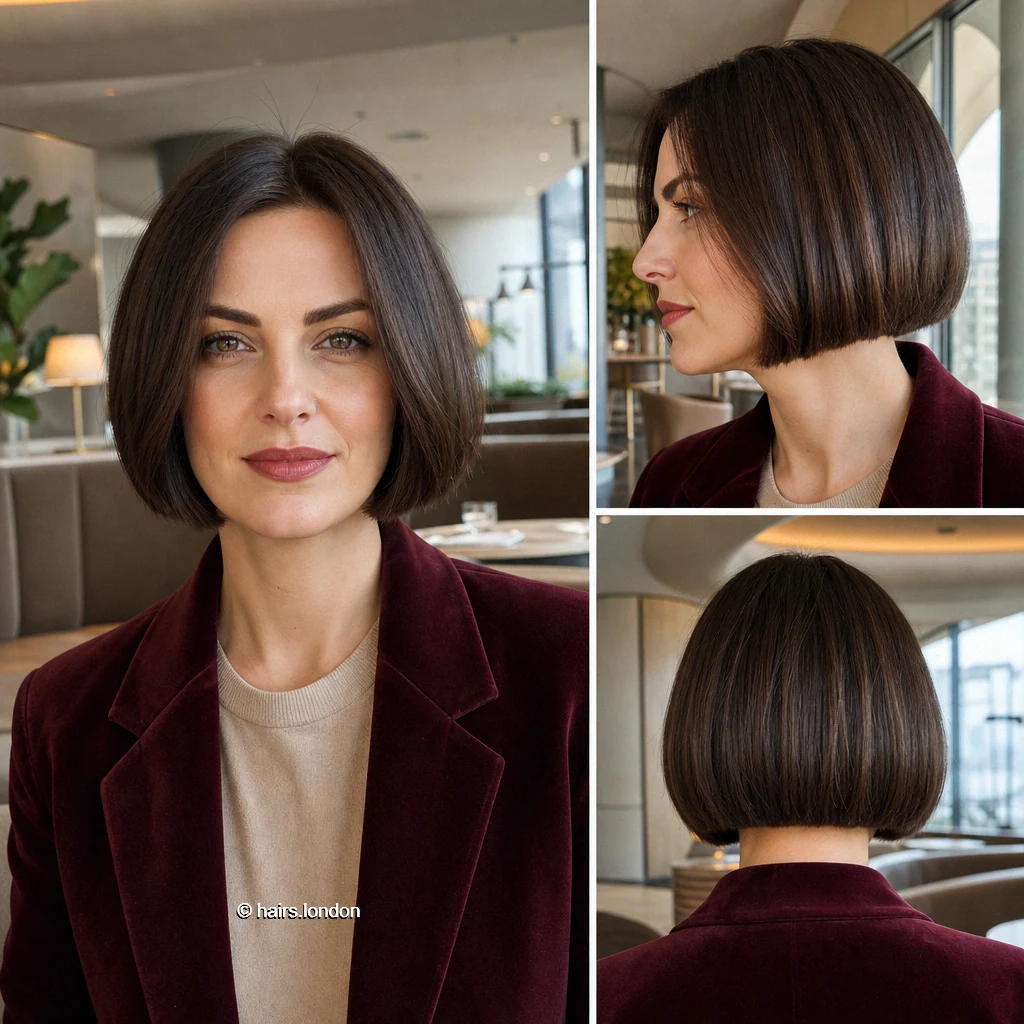
13. Warm Brown Bob with a Swept Front
Warm brown highlights soften this softly rounded, jaw length bob. The side part produces a broad sweep across one cheek. Behind, lightly separated strands sit above a slightly short neckline. The side profile remains curved rather than dramatically angled forward. Blow dry the front in its preferred direction first. Gently smooth the lower edge while leaving the upper layers mobile. Ask for selective layering if your hair feels overly dense. Fine hair may need more uninterrupted weight around the bottom. Regularly refresh the neckline once growth changes the curved profile. Consider color safe care to preserve the visible warm dimension.
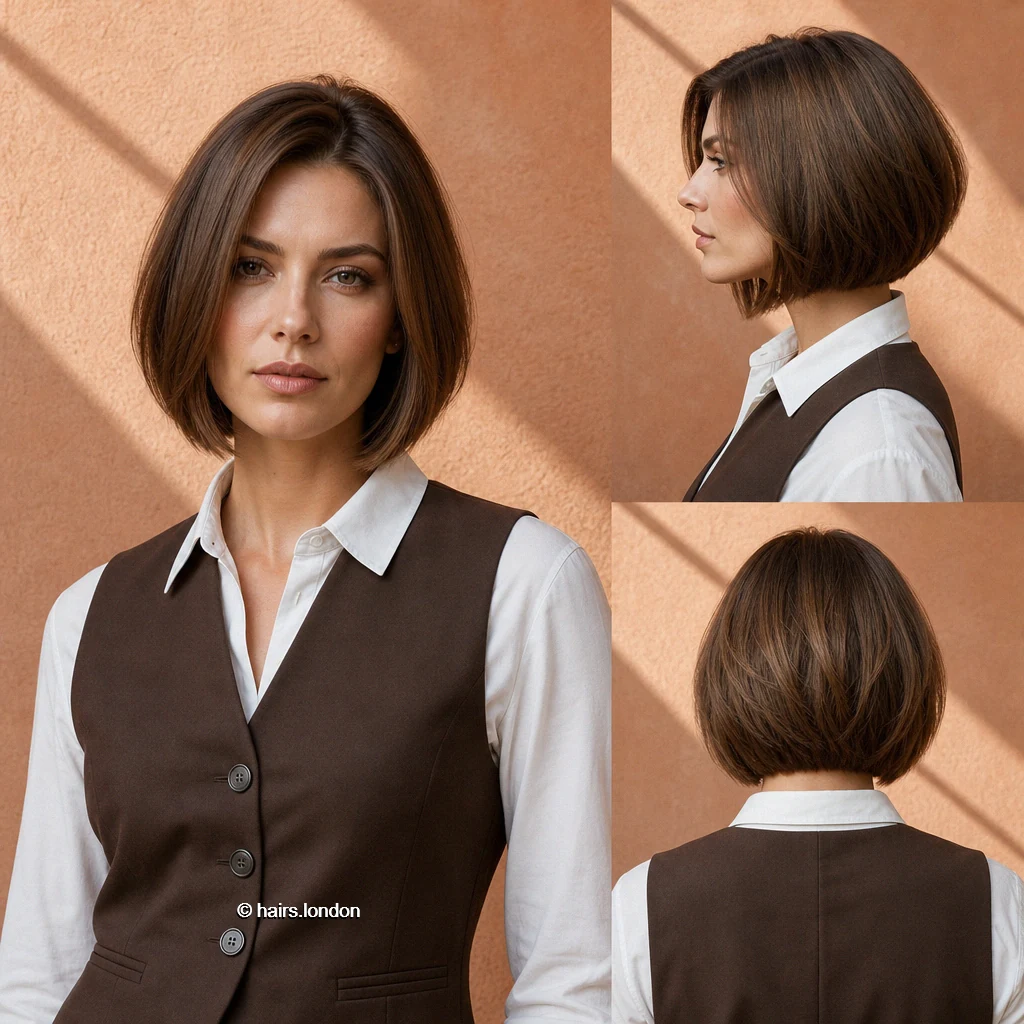
14. Polished A-Line Bob with a Rounded Back
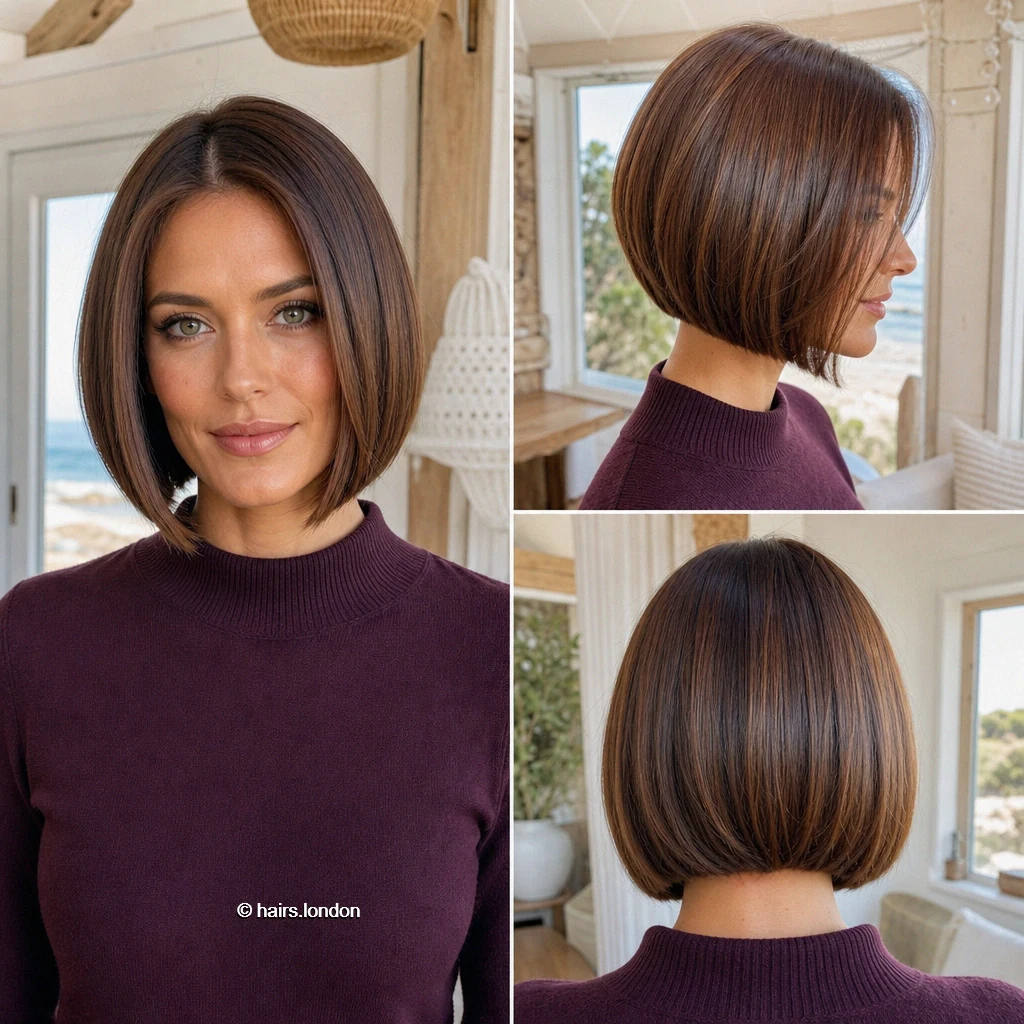
A warm brunette bob frames the jaw with longer fronts. Its side view reveals a shorter neckline and subtle forward slope. Rounded back fullness softens what is visibly an A-line shape. A quiet side part allows the front to fall naturally. Lightly smooth each section downward to make the outline legible. Keep the ends flexible instead of pressing them completely flat. Ask how your density affects the back’s rounded weight. Natural waves may conceal the angle without occasional smoothing. Regularly trim the nape before it catches up with the front. Maintain shine with gentle conditioning suited to your hair texture.
15. Chin-Framing Brown Bob with a Smooth Slope
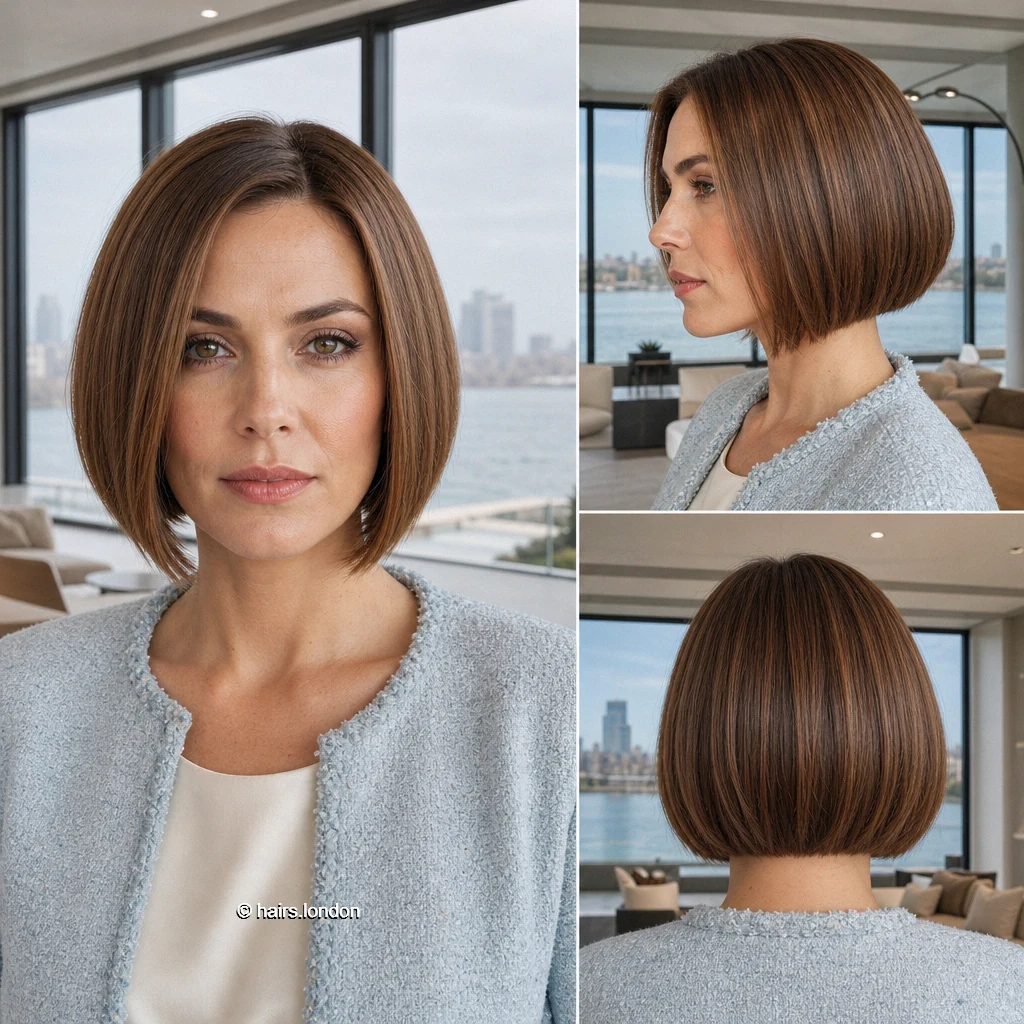
Visible light brown dimension runs through this polished chin framing bob. The longer front descends toward the jaw from a short back. Its smooth side profile makes that gentle slope easy to see. The rear stays rounded above a tidy neckline. Carefully direct the dryer downward to keep individual strands aligned. Bend the ends slightly under, preserving their visible movement. Discuss how much length you want beside each cheek. Thick hair may require internal refinement beneath the polished surface. Trim regularly when the nape softens the front to back contrast. Limit excess heat to protect the color’s soft tonal variation.
16. Short Layered Bob with a Sweeping Fringe
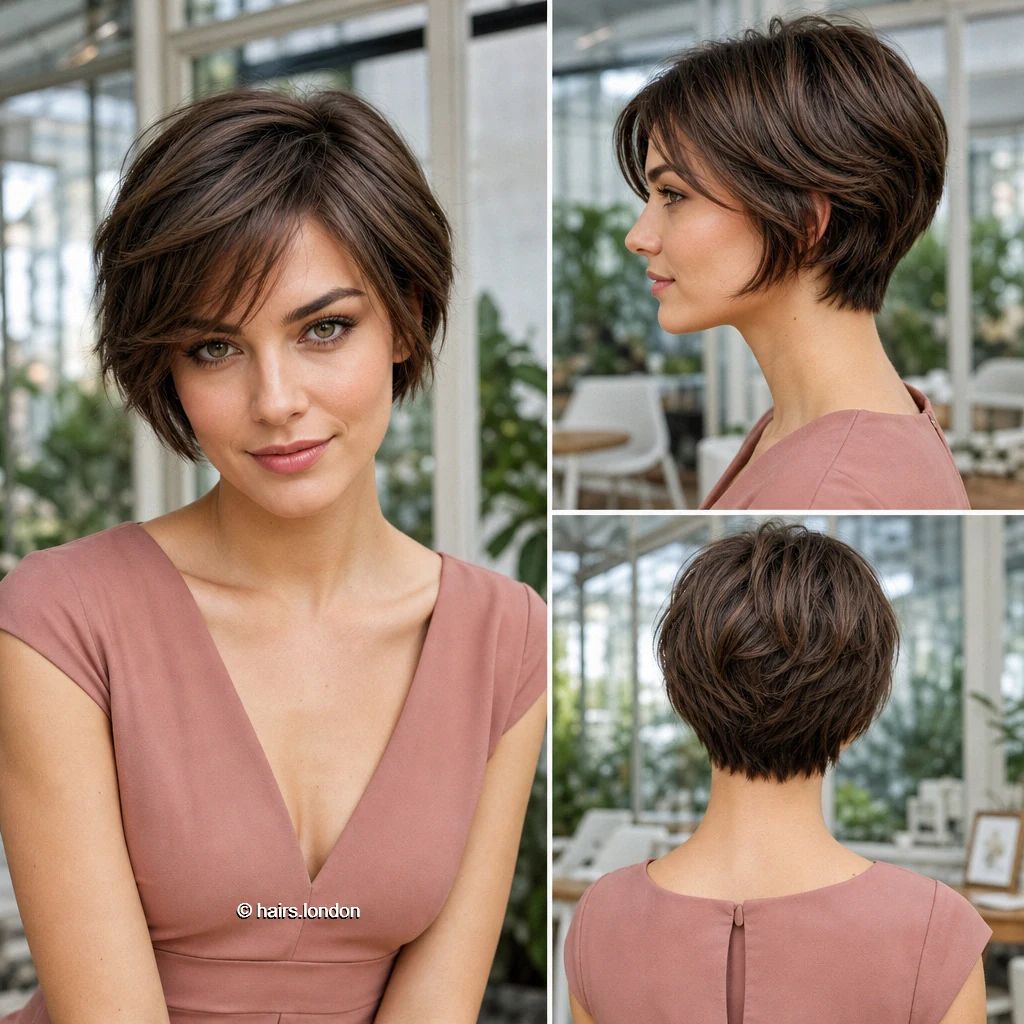
This short brown bob has abundant layers and airy movement. A sweeping fringe crosses the forehead and meets the sides. The front covers the ears, while the back exposes the neck. Rear views show tapered layers rather than a blunt perimeter. Style with fingers and lightweight cream to separate the sections. Direct the fringe while damp to accommodate its growth pattern. Ask your stylist how short the nape can comfortably sit. Dense hair may need controlled removal to keep movement visible. Refresh the fringe when it interferes with your preferred view. Trim the tapered back before its outline becomes uneven.
17. Airy Brunette Bob with a Tapered Nape
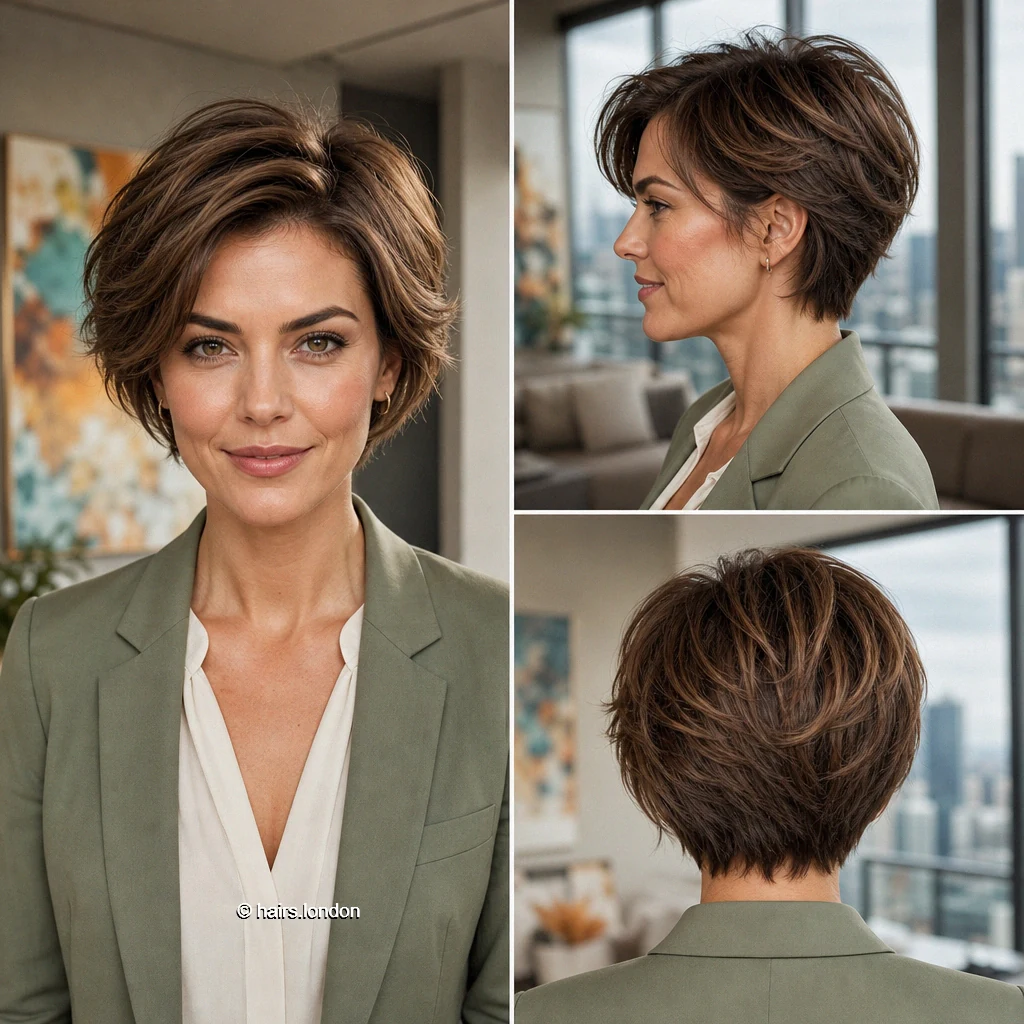
Chestnut brown layers create height at the roots across this short bob. Its side swept front brushes the brow without heavy bangs. The profile narrows visibly toward a short, textured nape. That taper distinguishes it from the fuller rounded bobs above. Lift the roots while drying, then lightly separate ends with fingers. Avoid waxy buildup that can close the airy layers together. Ask whether your density supports this much upper volume. Natural waves may enhance the separation with minimal styling. Keep the nape trimmed regularly when it starts losing definition. Refresh the longer front according to your preferred facial coverage.
18. Piecey Dark Brown Bob with Short Back Layers
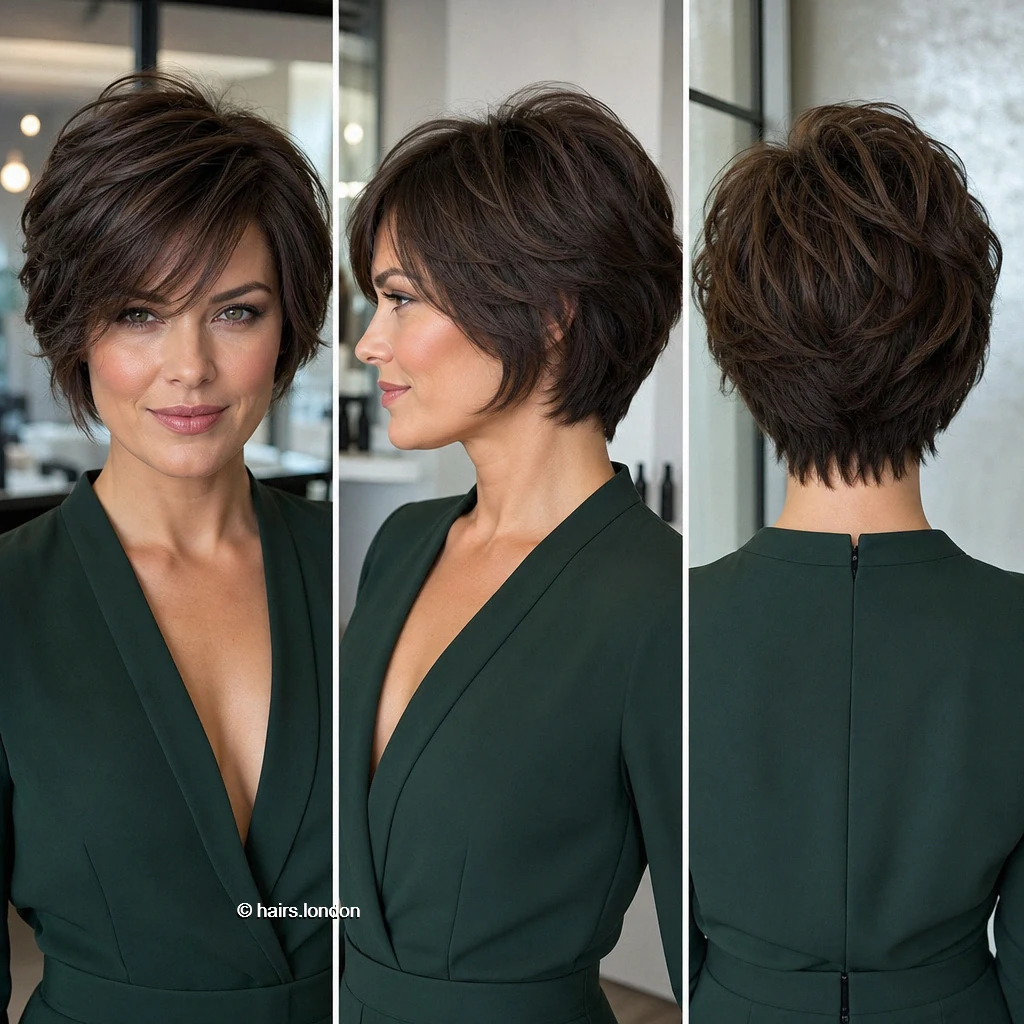
Dark brown hair forms a short bob with piecey layers. The side fringe angles across the brow toward one cheek. A soft curved side section extends below the ear for framing. At the back, textured layers taper into the exposed neck. Work a small amount of lightweight cream through separated ends. Dry the fringe forward, then guide it gently sideways. Discuss how your growth patterns affect the short neckline. Thick hair may need refinement to avoid a bulky crown. Schedule trims regularly as soon as the tapered back loses clarity. Keep daily product light so its textured surface remains touchable.
19. Short Shaggy Bob with a Side Fringe
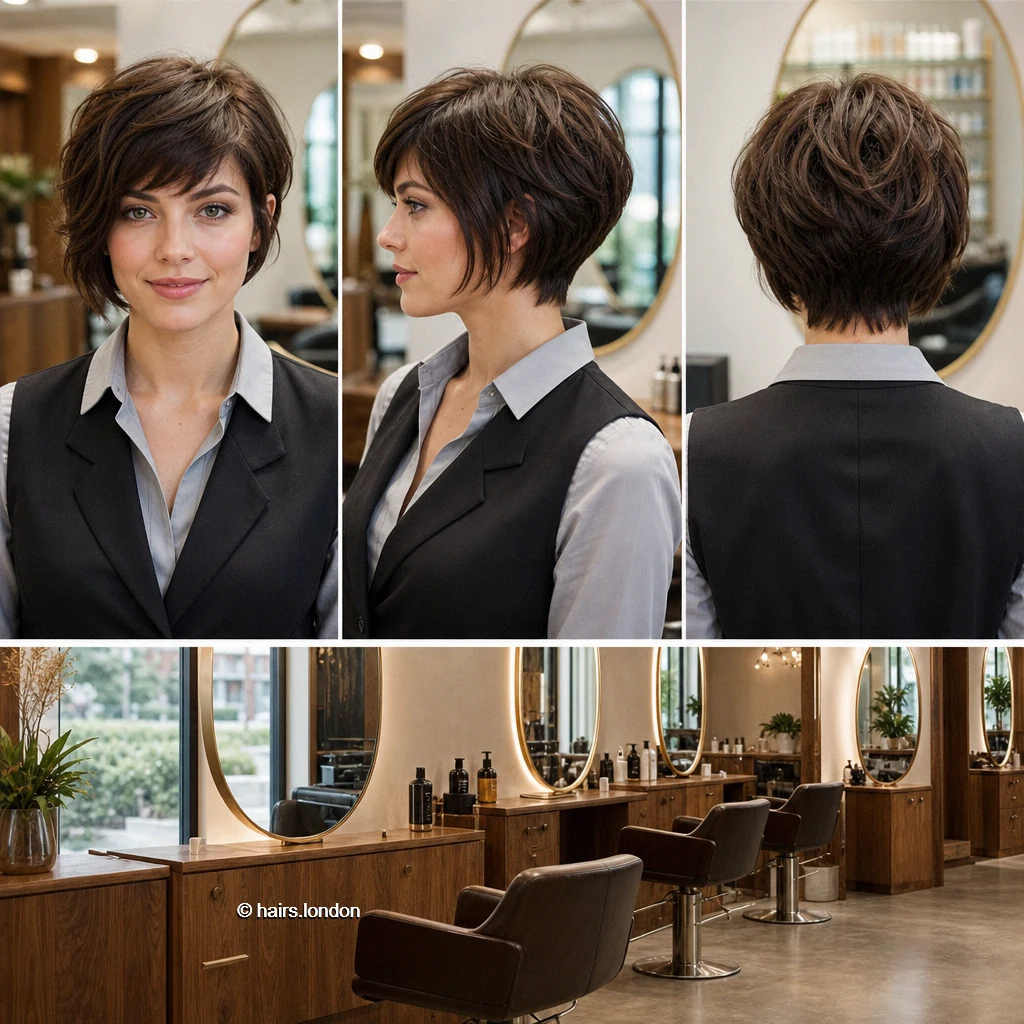
Layered brown hair gives this short bob shaggy movement. A side fringe sits above the eyes and blends outward. The longer side pieces frame the cheek and cover part of each ear. Back layers narrow toward a visibly short, textured nape. Gently scrunch damp hair if your natural texture produces soft bends. Use a brush only where the fringe needs direction. Ask for layers that suit your density without exposing gaps. Finer hair may need less separation around the lower sides. Trim the fringe before it becomes difficult to position. Maintain the nape regularly as its short layers grow unevenly.
20. Feathered Chestnut Bob with a Close Neckline
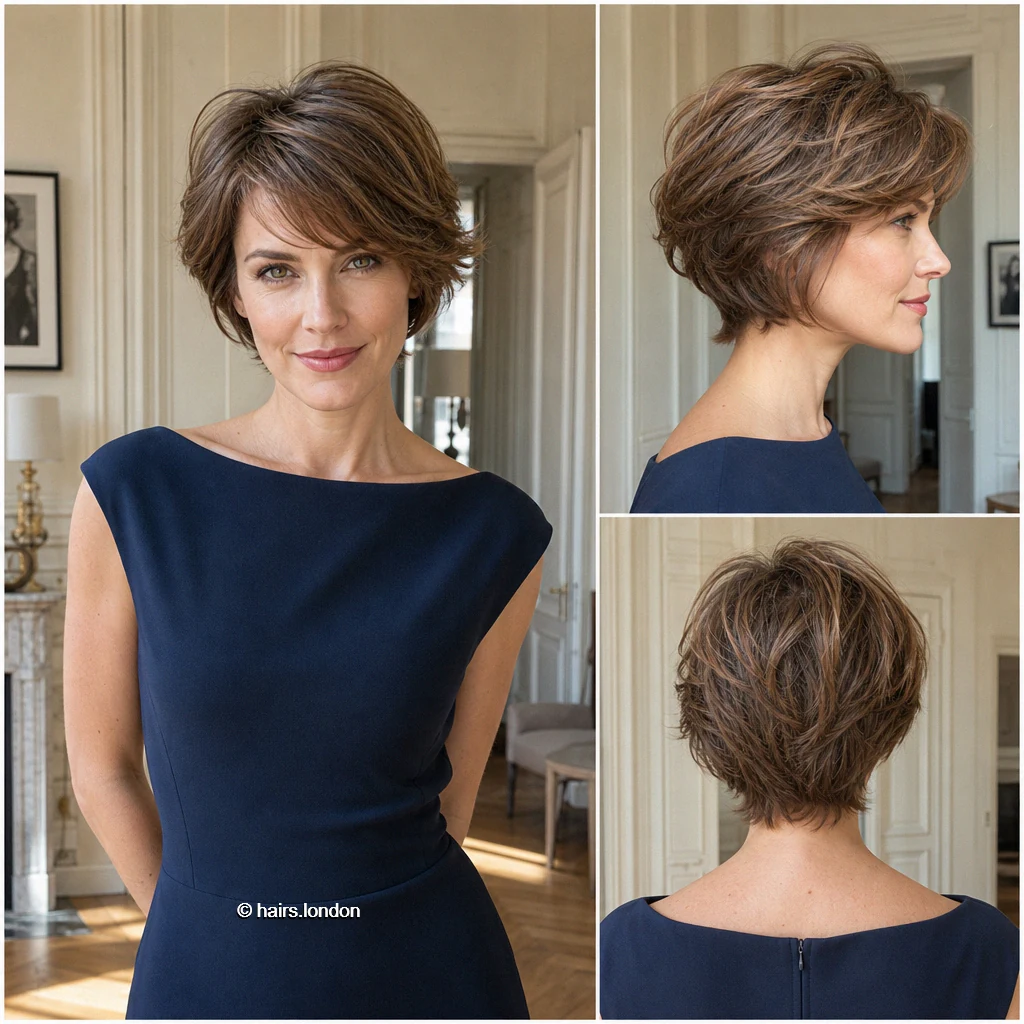
Chestnut strands sweep across this short, feathered bob with softly separated ends. The fringe angles sideways, leaving the eyes mostly clear. Visible layers create lift above a close, tapered neckline. Side pieces flick outward slightly instead of following a blunt edge. Dry with fingers, gently directing the fringe before the rest. Add lightweight styling cream only to the outer pieces. Discuss whether your natural texture will encourage those flicks. Dense hair may need thoughtful weight removal beneath the crown. Refresh the short back regularly when its taper becomes less distinct. Keep highlighted strands lightly conditioned without flattening the lifted top.
21. Vivid Copper A-Line Bob
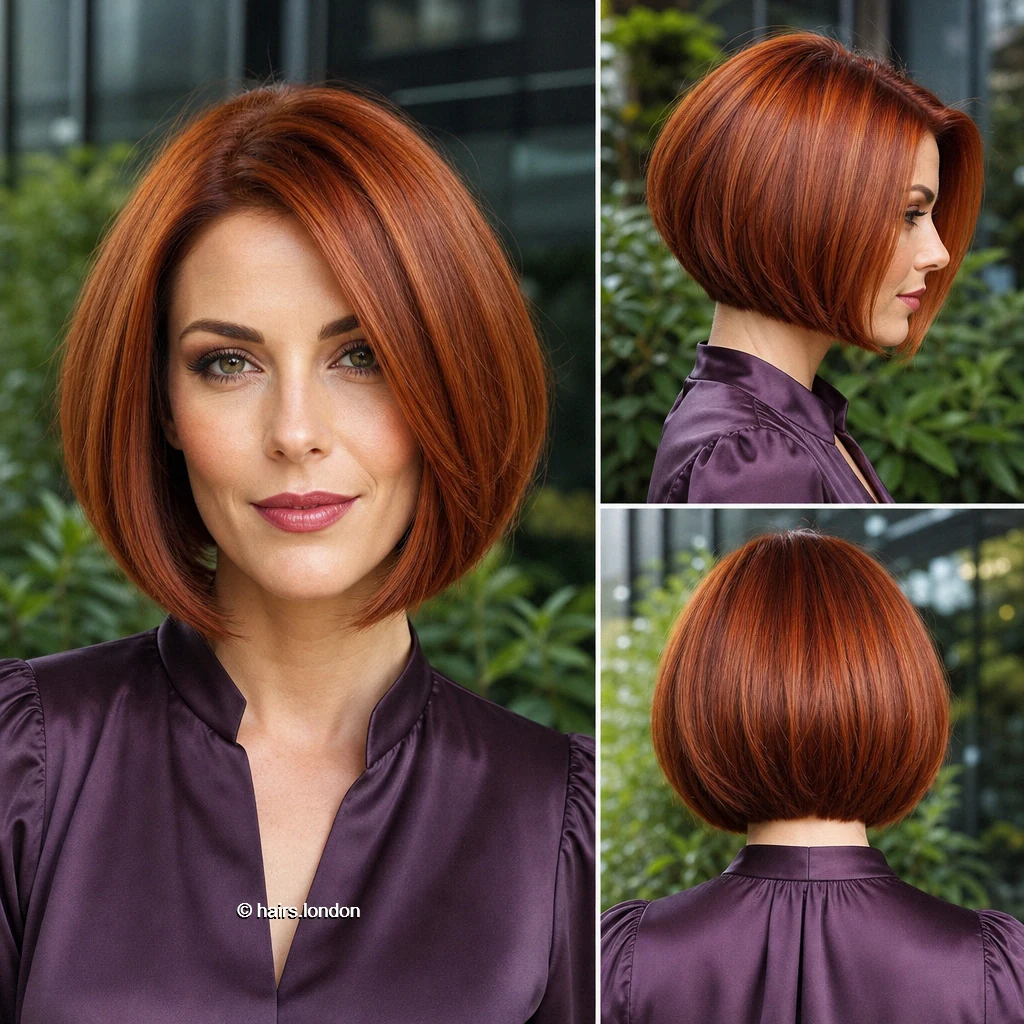
Vivid copper color emphasizes this smooth, rounded bob. A deep side part sends a long front across the cheek and toward the jaw. The profile shows a shorter back and visibly longer front. Its clean forward slope supports an A-line description. Blow dry downward, smoothing the ends without flattening the crown. Use heat protection to help preserve shine and color. Ask whether your density can support the full rounded back. Natural waves may need styling to display the precise outline. Trim when nape growth begins weakening the front length contrast. Discuss color upkeep before committing to this vivid copper finish.
How to Choose Your Bob Length and Shape
Start with where you want the front to fall: near the cheek, at the jaw, or below the chin. Then decide how much neck you want exposed. A rounded bob keeps visible fullness through the back; an A-line bob has a front that is visibly longer than its back. Graduation refers to the build of shorter lengths and weight at the back, not simply a sloping side view. Check your natural part, density, wave pattern and willingness to style before choosing a particularly short or precise outline.
Styling Fine, Thick, Wavy and Curly Textures
Fine hair often benefits from a reasonably full perimeter, lightweight root lift and minimal oil near the ends. On thick hair, ask for selective internal refinement rather than automatically thinning every edge; the bob still needs a coherent outline. For waves, scrunch in a small amount of cream and smooth just the perimeter if needed. With curls, agree on the finished dry length before cutting, since shrinkage changes where the bob sits. Dry a fringe in its intended direction early, and avoid adding so much product that the layers stop moving.
Keeping Bob Hair Color Fresh
The brown shades here range from deep and glossy to visibly warm and dimensional, while the final copper is much more vivid. Choose washing and conditioning products appropriate to your color and hair condition, protect strands before heat styling, and ask your colorist how often your particular shade will need refreshing. Highlighted pieces may need different attention from an allover color. Copper upkeep is especially worth discussing before the appointment because visible fading or new growth may change its impact.
Maintaining the Bob Perimeter and Graduation
A short neckline can change the silhouette quickly as it grows, especially on the rounded and graduated examples. Watch the shape from the side and back, not just the front: trim when the nape loses definition, the weight line drops, or an A-line front and back begin to look too similar. A textured short bob can tolerate a softer outline, although its fringe and tapered sections may need separate attention. Your stylist can set a trim interval based on growth rate and how precise you want the finish.
What to Discuss with Your Stylist
Bring the relevant front, side and back views, and point to the exact features you want: front length, parting, fringe, fullness, neckline and amount of texture. Mention cowlicks, curl shrinkage, density changes, daily styling time and whether you prefer an air-dried or smoothed result. Ask what the proposed shape will look like on your natural texture, which areas need regular trims, and how any color choice fits your maintenance budget.
Frequently Asked Questions
What makes a haircut a bob rather than a lob?
A bob generally finishes around the jaw, chin or neck, while a lob is a longer bob that approaches the shoulders. The visible perimeter matters more than the name alone.
How is an A-line bob different from a stacked bob?
An A-line bob has a visibly longer front than back. A stacked bob has noticeable layers and built-up graduation at the back. A cut can show both features, but one does not automatically imply the other.
Does a rounded bob require thick hair?
Not necessarily. Density, strand thickness and styling determine how much fullness is achievable. Ask a stylist to assess whether a fuller perimeter or gentle back shaping will work better for your hair.
Can naturally curly hair be cut into a bob?
Yes, provided the shape and finished length account for curl pattern and shrinkage. Discuss how you wear your curls most often and have the stylist check the cut in its natural state.
Should I choose a fringe with a short layered bob?
A fringe is optional. The pictured short layered bobs show side-swept versions, but its placement should depend on your growth patterns, preferred coverage and willingness to style it.
How much daily styling does a sleek bob need?
That depends on your natural texture and the precision you want to maintain. Some hair needs only careful drying; stronger waves or curls may require more smoothing to show a crisp perimeter.
What helps a bob keep movement without becoming bulky?
Preserve enough weight at the edge while asking for selective layering or internal refinement where needed. Start with lightweight products and add only enough to define the surface.
How often should I trim a short graduated bob?
Book a trim when the neckline grows out or the back weight shifts enough to change the intended profile. The interval depends on your growth rate and preferred precision.
Will an A-line bob still look angled when air-dried?
It may, but waves, curls and uneven shrinkage can soften or obscure the slope. Ask to see how your proposed front and back lengths behave with your usual drying routine.
What is the easiest way to grow out a short bob?
Keep the perimeter tidy while allowing the nape to catch up gradually with the sides. Your stylist can adjust the back shape during transition appointments rather than repeatedly shortening the front.
How can I keep copper bob color looking vivid?
Discuss a shade-specific refresh plan with your colorist, use care suited to colored hair and limit unnecessary heat. The timing will depend on the color service and how your hair holds pigment.
What should I look for in bob reference photos?
Look for front, side and back views, then compare the part, fringe, perimeter, front-to-back length and back fullness. Choose references close to your natural texture when possible.
Conclusion
The strongest starting point is the outline you want to see in the mirror: softly rounded, distinctly longer at the front, or short and layered around the neck. Use these bob haircut ideas to identify that shape first, then work with your stylist on the length, texture, color and maintenance that make it practical for your hair.


