


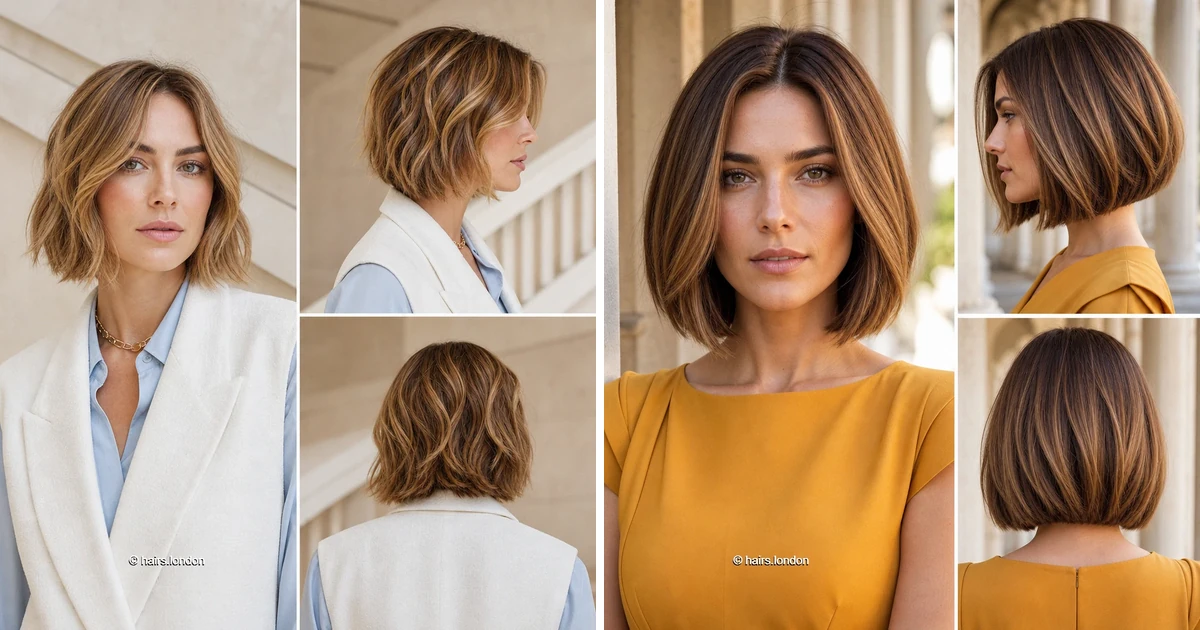
11. Taupe Layered Bob with a Tapered Neckline
Muted taupe brown and lighter ribbons define this layered bob. Its side parted front sweeps softly across the forehead. Rounded sides meet a visibly shorter, tapered back section. The layers create volume above the neckline rather than bluntness. Ask your stylist to preserve enough weight around the ears. Blow dry the crown for lift and guide ends inward. A flexible spray holds shape without making highlights look stiff. Thick density may require careful internal shaping at the back. Fine density benefits from avoiding overly short upper layers. Maintain the tapered neckline as it grows and refresh the fading color tone.
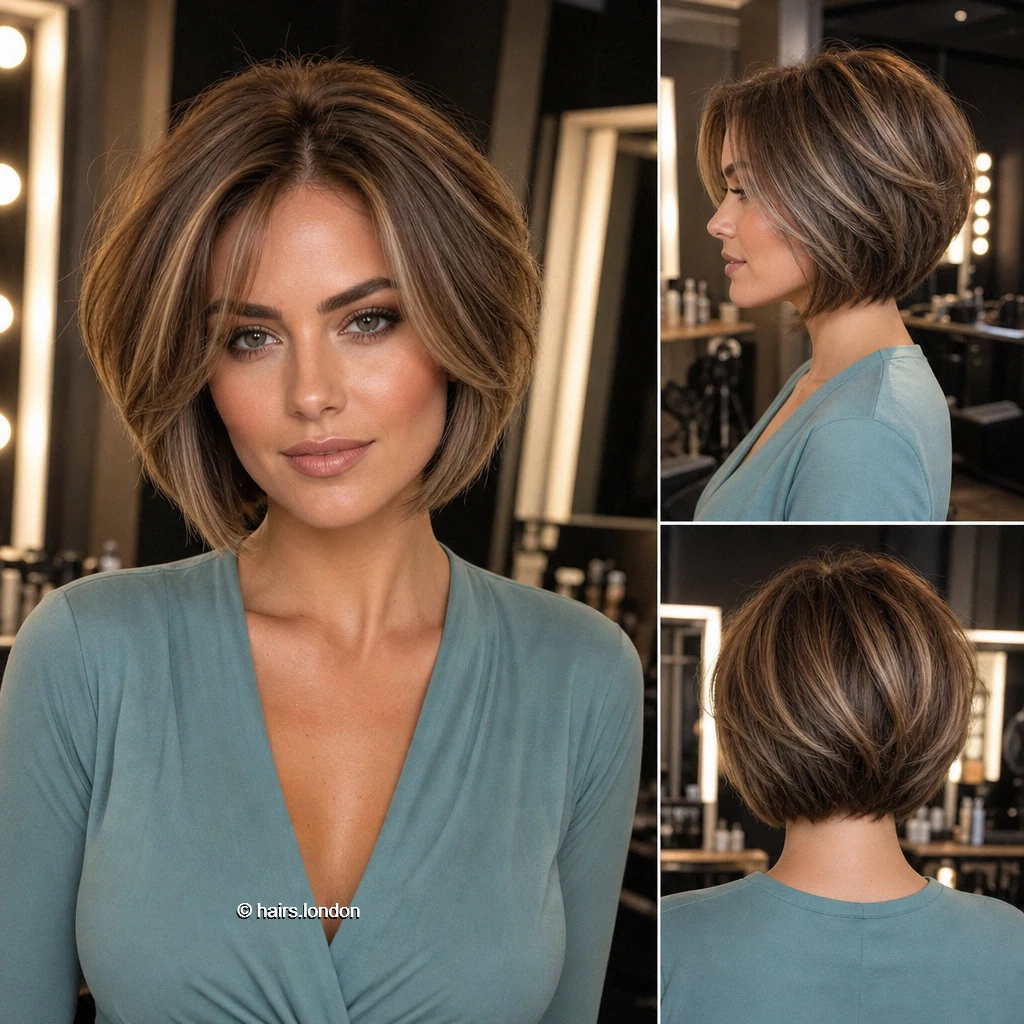
12. Brunette Angled Bob with an Extended Front
This brunette bob has subtle lighter strands and smooth surfaces. A deep side part emphasizes one long, sweeping front panel. From profile, that panel extends well beyond the short nape. Back views also show rounded volume above the closely finished neckline. The combination supports an angled shape with visible rear graduation. Ask whether your density can maintain its strong front point. Smooth each side downward while protecting hair from excess heat. Check how the longest piece falls with your everyday part. Frequent neckline trims help retain the contrast between front and back. A lightweight gloss can emphasize the brown dimension.
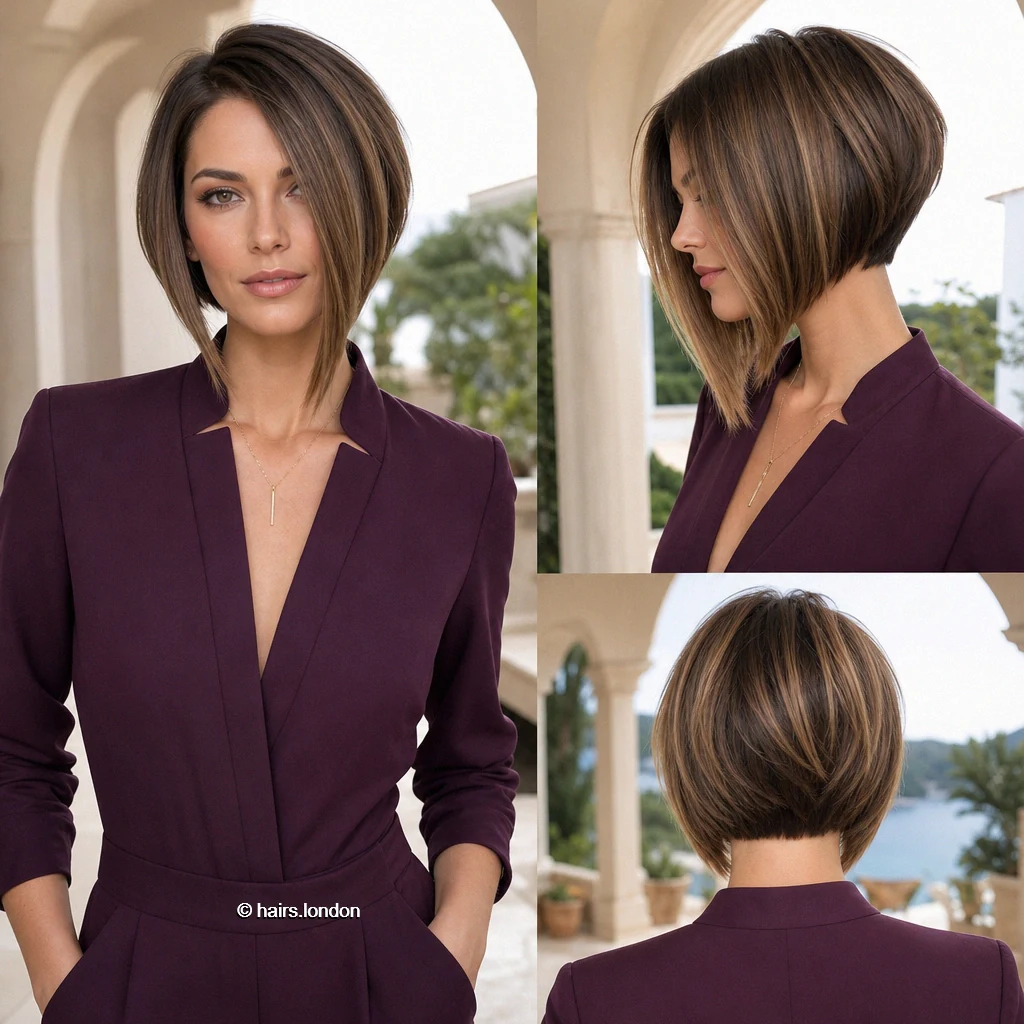
13. Bronde Bob with a Sculpted Short Back
Bronde highlights sweep across this bob and its elongated front. The side part directs a smooth panel past the jaw. Behind it, visible layers build fullness above a short nape. That graduated back creates a stronger contrast than simple layering. Ask your stylist to assess growth patterns around the neckline. Blow dry the front straight while rounding the back gently. Avoid heavy oils that could flatten the lifted rear shape. Thick hair may need internal weight removed without exposed gaps. Fine hair requires caution before adding too many short layers. Maintain the nape regularly and refresh highlights when they dull.
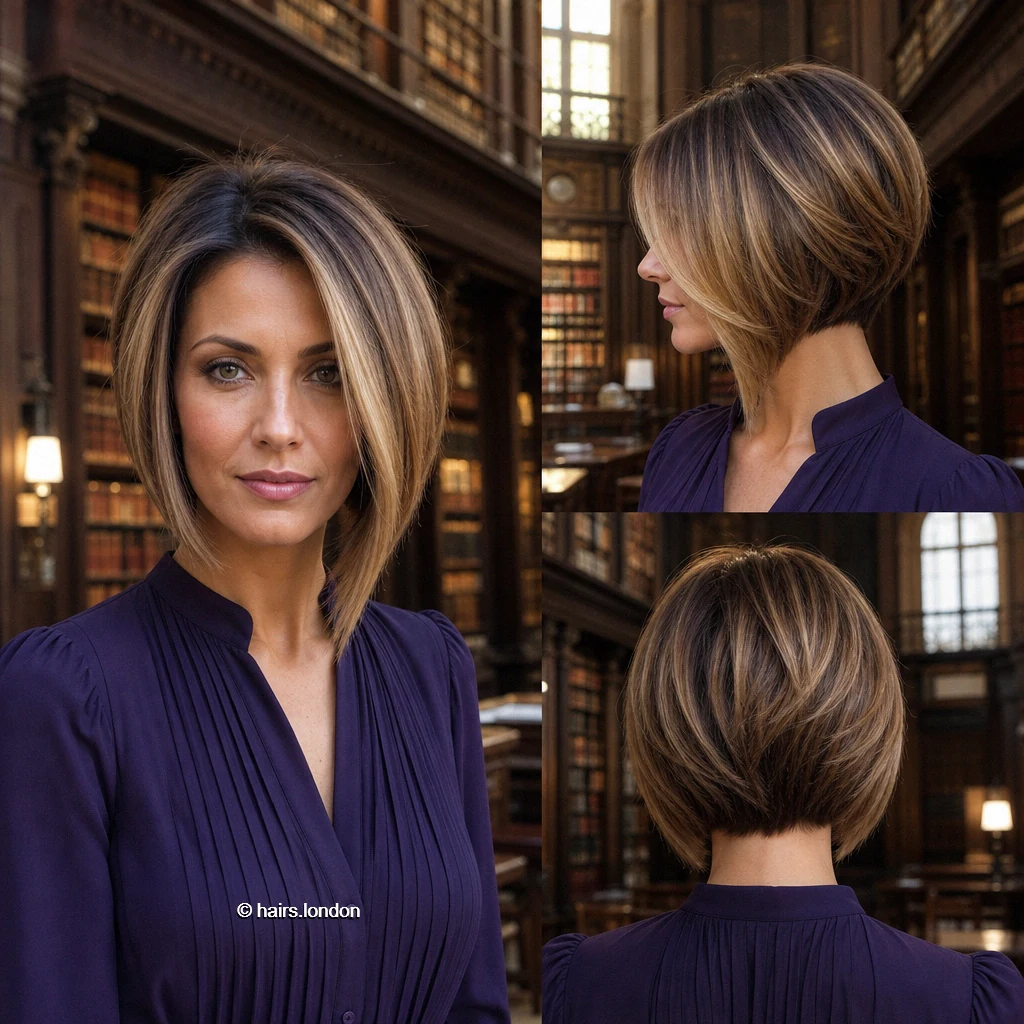
14. Brown Angled Bob with a Defined Nape
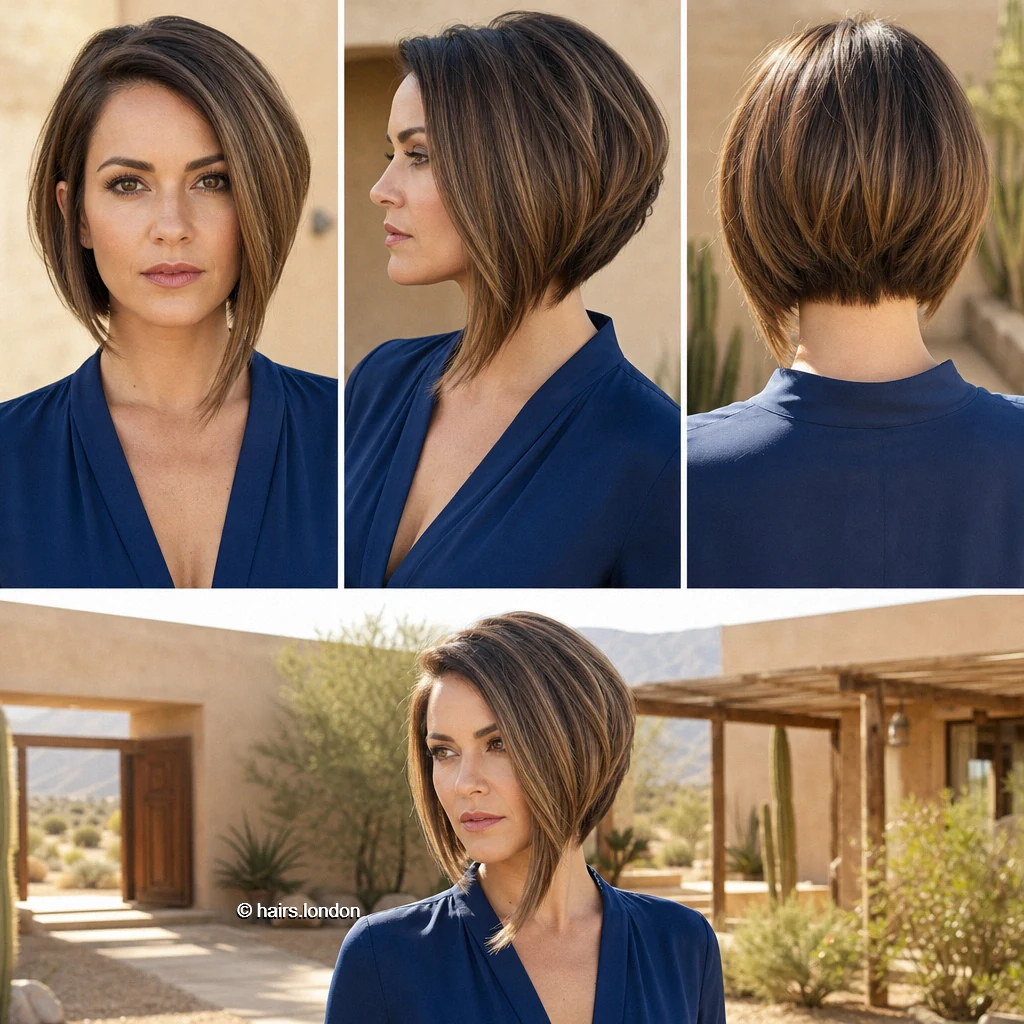
Warm brown hair with golden strands forms this angled bob. Its deep side part leaves one front section longer. The profile slopes toward a short nape with rounded fullness. Back views confirm a compact neckline beneath the fuller crown. Ask how the long front will behave behind your ear. A smooth blowout makes the change in length easy to see. Use minimal serum to polish ends without weighing down roots. Dense hair might need discreet interior shaping through the back. Fine hair may need a softer transition to retain coverage. Revisit the salon when neckline growth starts blurring the angle.
15. Tousled Bronde Bob with Separated Ends
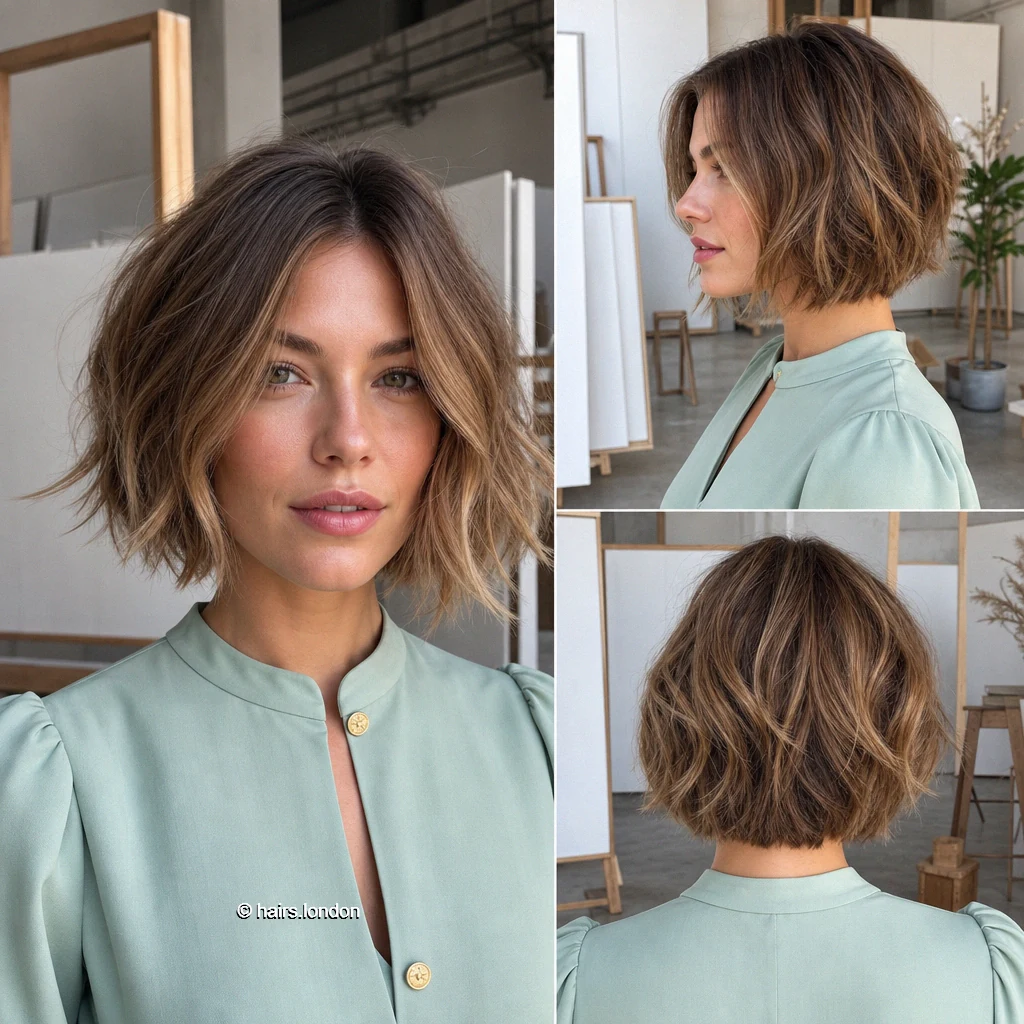
Lighter bronde ends give this jaw length bob soft contrast. A center part releases loose, cheek grazing pieces on both sides. The back looks full, with irregular ends around the neck. Visible waves supply texture without a sharply stacked rear shape. Ask for enough lower weight to prevent overly wispy edges. Scrunch in mousse, then air dry or diffuse gently. Curl a few uneven sections only if natural waves need help. Fine hair may prefer sparse product and minimal additional layering. Thick waves could need bulk reduction beneath their outer shape. Trim frayed ends while preserving the intentionally relaxed outline.
16. Shaggy Chestnut Lob with a Soft Fringe
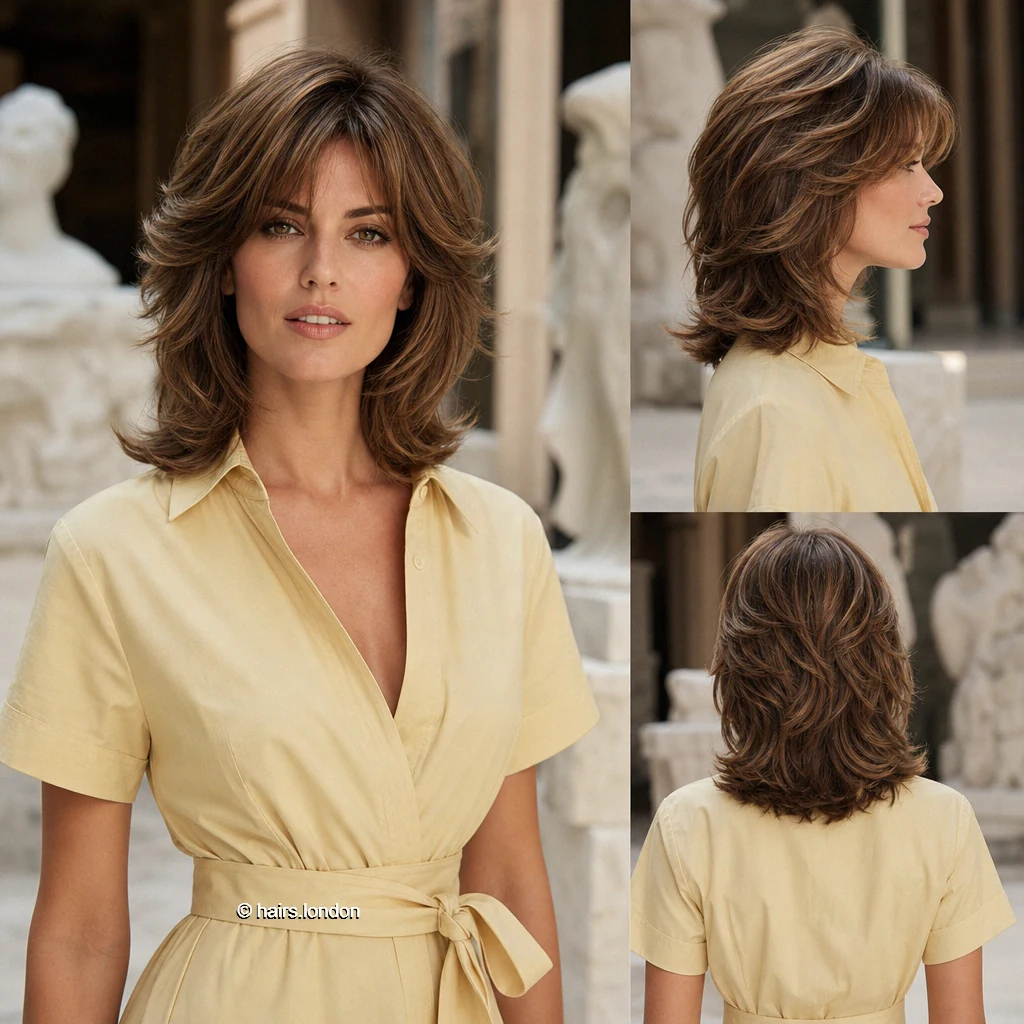
Chestnut brown with warm ribbons defines this shoulder grazing lob. Its soft fringe crosses the forehead and opens around the eyes. Numerous visible layers flip outward through the sides and back. The outline is feathered rather than a precise, solid edge. Ask for fringe length that respects your forehead growth patterns. Style layers with a brush, directing some ends away. A little mousse helps maintain lift without hardening movement. Dense hair can support these layers more readily than sparse hair. Natural waves may need less brushing to retain their shape. Refresh the fringe separately when it begins obstructing your view.
17. Soft Brunette Bob with a Curved Perimeter
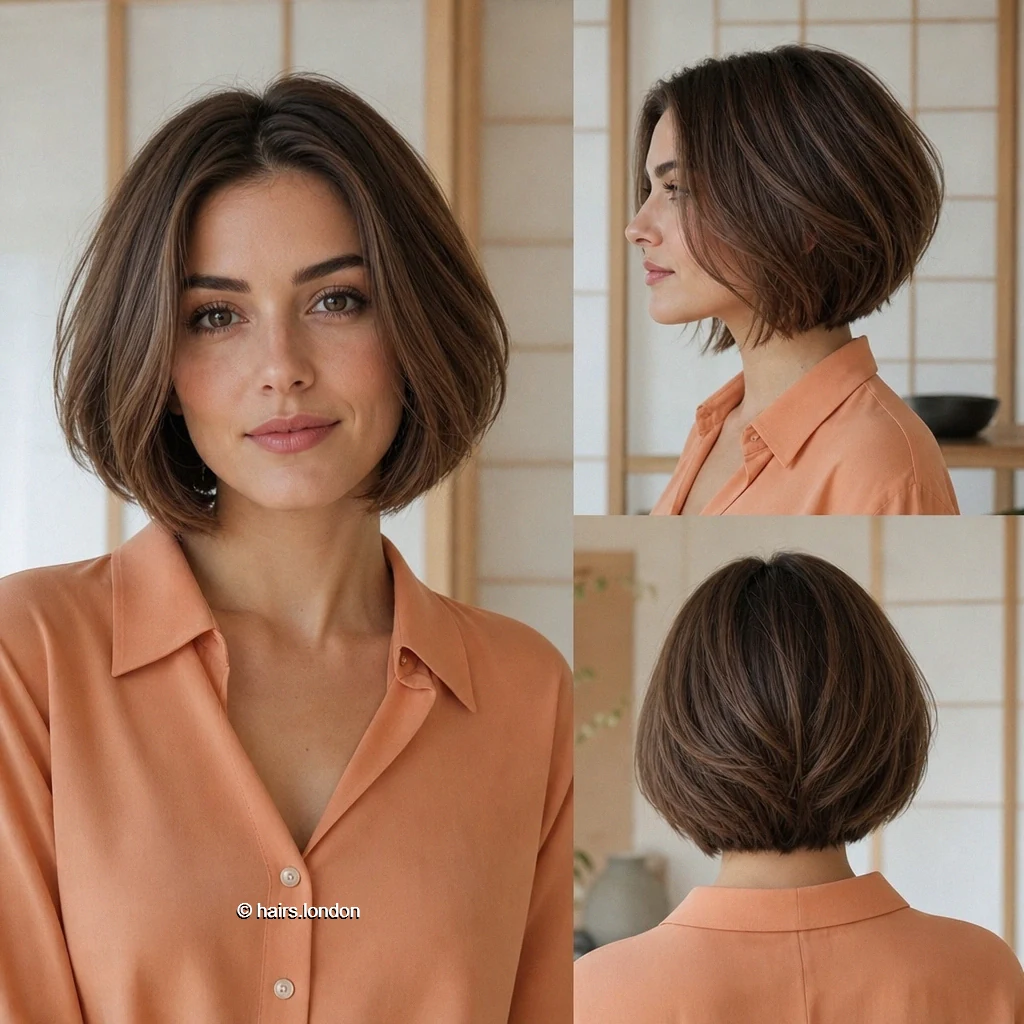
Deep brunette color keeps this softly curved bob understated. The center part leads into smooth pieces beside the cheeks. Its ends sit close to the jaw and turn gently inward. From behind, the lower edge looks compact, not heavily feathered. Ask for a perimeter that retains this softly rounded weight. Guide damp hair downward with a brush for a smooth finish. If natural bends appear, tuck them under without overstraightening. Fine hair may welcome the substantial edge and limited layering. Thick hair could need discreet weight adjustment beneath that edge. Check both sides at trims to preserve their visual balance.
18. Chocolate Bob with Rounded Neckline Fullness
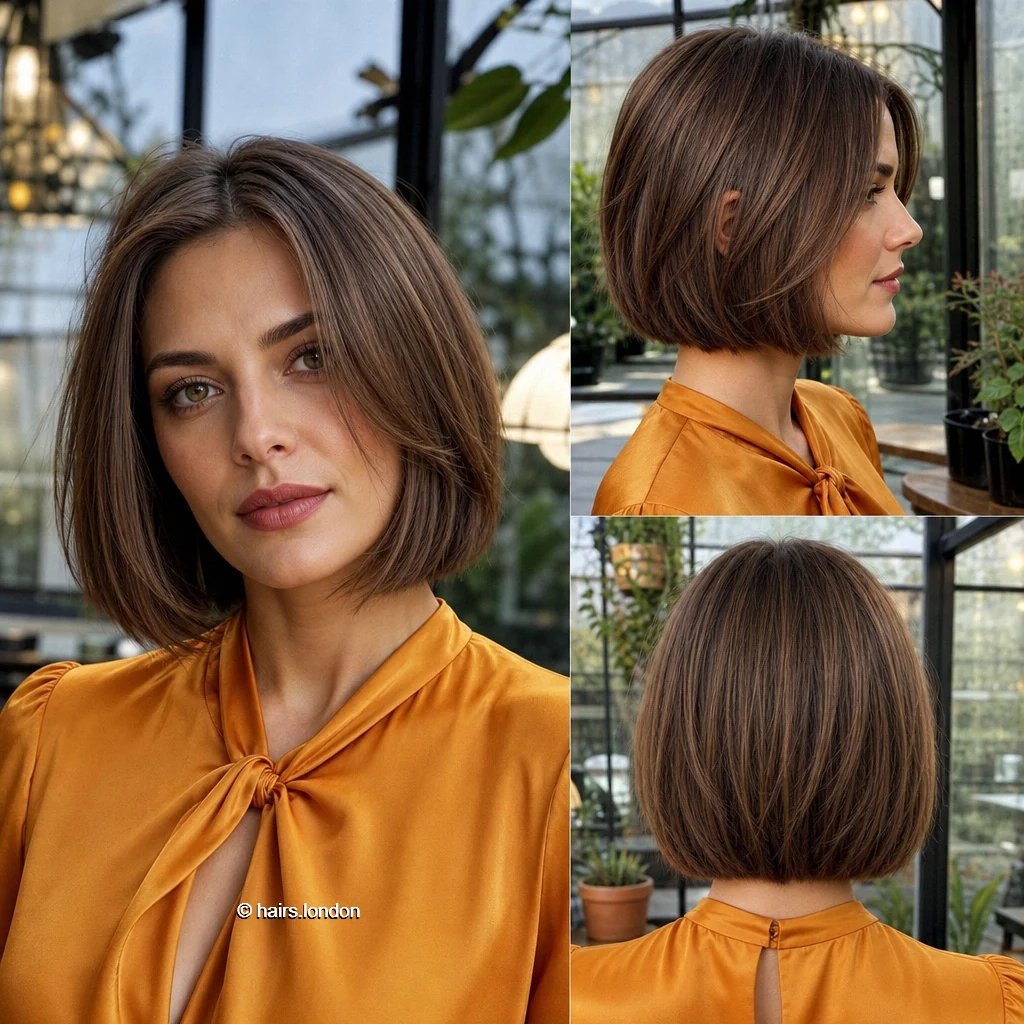
Chocolate brown strands show faint warmth across this polished bob. A loose center part lets the front skim the jaw. Its side profile curves into a slightly shorter back outline. Rear views show a rounded lower edge above the neckline. The shape reads smooth rather than noticeably stacked or choppy. Ask for enough weight to keep that curve looking continuous. Dry downward and turn the ends under with gentle tension. Coarse hair may need smoothing product applied only through lengths. Fine hair should avoid heavy conditioner near the roots. Refresh the lower edge when its clean, smooth curve becomes uneven.
19. Espresso Bob with Softly Layered Fullness
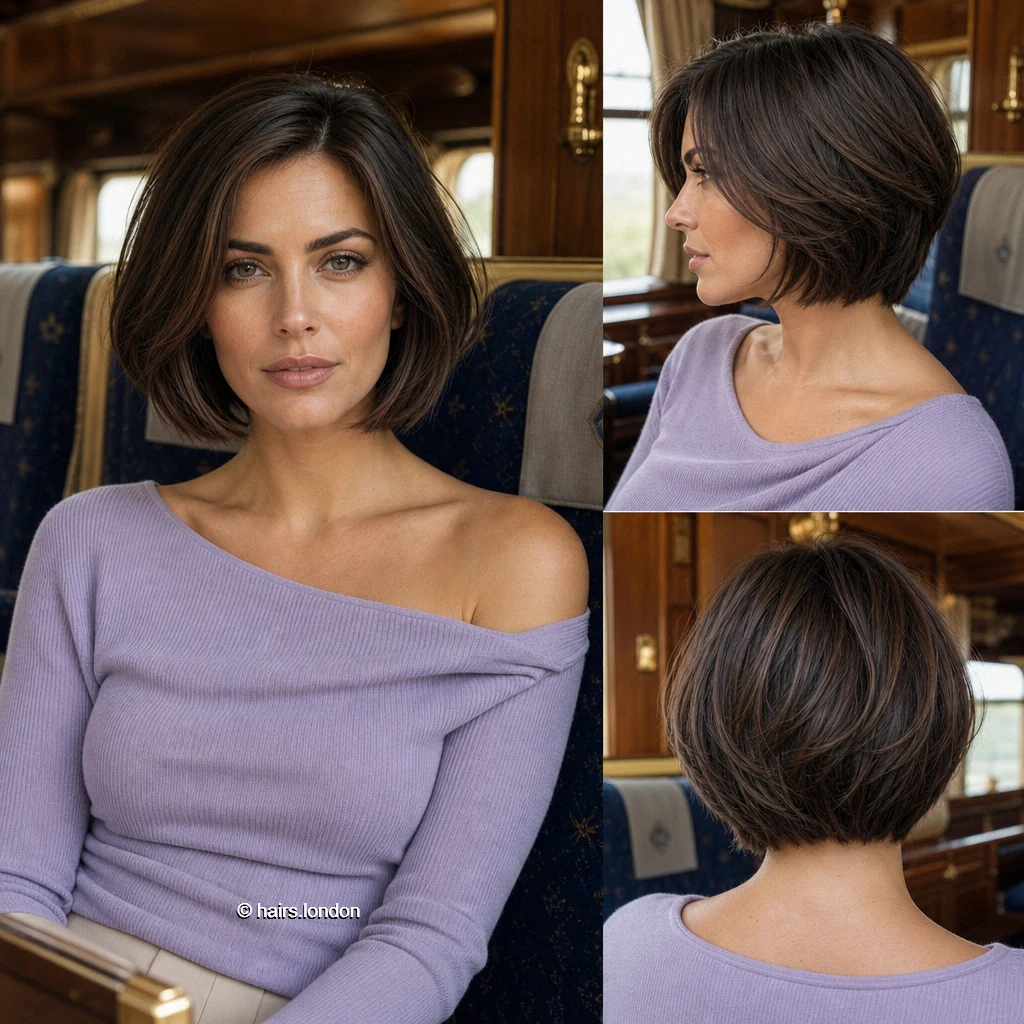
Dark espresso hair gives this compact bob a rich finish. The side part adds lift above a gently sweeping front. The sides curve around the jaw without a long point. Side and back views show fullness above the shorter neckline. Soft layering is visible through the rounded rear surface. Ask whether gentle graduation would support your preferred fullness level. Dry roots for lift, then smooth the outer layers lightly. Avoid excessive backcombing, which could obscure the neat lower edge. Dense hair may need internal control; fine hair needs restraint. Maintain the neckline before growth makes the rounded shape noticeably droop.
20. Deep Brown Bob with a Smooth, Rounded Shape
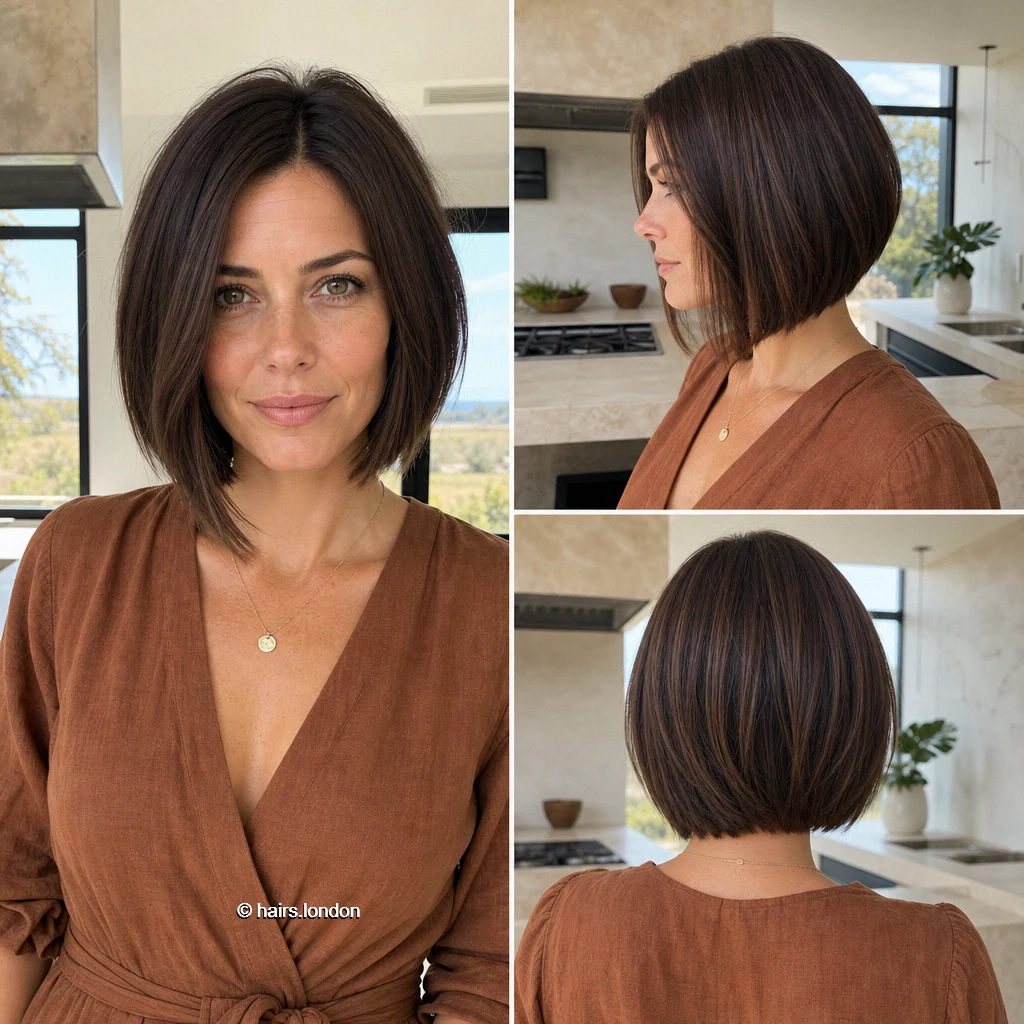
Deep brown color emphasizes the smooth surface of this bob. Its center part frames the face with gently curved sides. The front reaches below the jaw, toward the upper neck. Profile and back views show fullness above a shorter neckline. The outline slopes subtly, without an exaggerated pointed front section. Ask for a shape that accommodates your natural nape growth. Blow dry downward, turning the lower edge inward as needed. Thick hair may require hidden weight control for this silhouette. Fine hair benefits when the visible perimeter remains relatively substantial. Schedule trims once the back starts losing its compact curve.
How to Choose Your Bob Length and Shape
Start with the point where you want the ends to fall when your hair is dry: at the jaw, along the neck or near the shoulders. A substantial lower edge creates a different effect from feathered ends. If you like length around your face, compare a softly sloping bob with a more pronounced long-front shape. A stacked or graduated bob also needs visible shaping at the back; longer front pieces alone do not make a cut stacked. Consider how much of your neck you want exposed and whether your everyday part changes the apparent balance.
Styling Fine, Thick, Wavy and Curly Textures
Fine hair often keeps a fuller-looking perimeter with fewer layers and lightweight root products. Thick hair may need selective internal weight removal, but taking too much from the ends can weaken a bob’s outline. For waves, scrunch a flexible product into damp hair and diffuse gently or air dry before correcting individual pieces. For curls, ask for a length assessment that accounts for shrinkage and cutting decisions based on how the curls group naturally. Smooth only the areas that need polishing so the cut retains movement.
Keeping Highlighted Bob Color Fresh
Lighter face-framing pieces draw attention to the front edge, while ribbons through a layered back emphasize its movement. Discuss how visible you want regrowth to be before adding brightness. Use heat protection when smoothing or curling highlighted hair, and choose color care suited to the tone your colorist has created. If highlights become dull or noticeably warm, ask whether a gloss or toner would help; a full lightening appointment is not always necessary.
Maintaining the Bob Perimeter and Graduation
A smooth, substantial edge depends on keeping the sides and back balanced. Check the outline from behind as well as from the front when deciding whether it needs a trim. A short graduated neckline usually loses its definition sooner than a loose, shoulder-skimming lob, so plan appointments around the shape you want to retain rather than one fixed schedule. For wavy or shaggy bobs, remove split or uneven ends without automatically cutting away the movement.
What to Discuss with Your Stylist
Bring front, side and back reference views. Point out the precise features you want, such as a jaw-level front, a compact neckline, a full lower edge or a soft fringe. Explain your density, natural texture, usual part, growth patterns and realistic morning styling time. Ask how the proposed cut will look air dried, what areas require brushing, how often the neckline or fringe might need attention, and how it could be adjusted if you decide to grow it out.
Frequently Asked Questions
What is the difference between a bob and a lob?
A bob generally sits around the jaw or neck; a lob is a longer bob that approaches or reaches the shoulders. The transition is gradual rather than a strict measurement.
How is an A-line bob different from a stacked bob?
An A-line bob has a perimeter that becomes longer toward the front. A stacked bob has visible graduation creating fullness above a shorter back or nape. A cut can show both features.
Does fine hair need a blunt bob?
Not necessarily. A substantial edge can help fine hair look fuller, but light layering may add movement. The amount depends on density and how the hair falls.
How can a thick bob avoid looking bulky?
Ask about selective weight removal inside the shape while keeping the intended perimeter intact. Placement matters more than removing as much hair as possible.
Can natural curls work with a bob?
Yes, if the length and shaping account for curl grouping, shrinkage and density. Discuss where you want the dry curls to finish rather than judging length only while wet.
Should I add a fringe to my bob?
Choose a fringe based on your hairline growth patterns, natural texture and willingness to style it. A longer, sweeping fringe can be easier to move aside than a short one.
Which bob requires the least daily styling?
That depends on your natural texture. A cut designed around your existing waves or straightness generally needs less intervention than one requiring you to change that texture each day.
How often should I trim a bob?
Trim when its defining feature starts to disappear. A precise perimeter or short graduated nape often needs attention sooner than a relaxed, longer shape.
Will a center part change how an angled bob looks?
It can. Moving the part changes where the front weight falls and may make the sides appear less balanced, so show your stylist how you normally wear it.
How do I keep a wavy bob from becoming frizzy?
Apply a suitable lightweight product to damp hair, avoid rough towel drying and handle the waves minimally as they set. Smooth individual ends rather than brushing out the entire shape.
What should I consider before highlighting a bob?
Decide whether you want brightness around the face, dimension through the back or both. Ask about regrowth, toning and how the placement will look after perimeter trims.
Can a graduated bob grow out into a longer bob?
Yes, though the shorter back may need reshaping while it catches up with the front. Your stylist can gradually reduce the contrast without sacrificing a tidy outline.
Conclusion
Use these bob haircut ideas to identify the shape you actually want to maintain—not just the front view you like most. A soft waved edge, a smooth jawline curve and a lifted graduated back each ask for different cutting and styling choices. Taking clear references of your preferred front, sides and neckline to a consultation makes those choices easier to discuss.


