


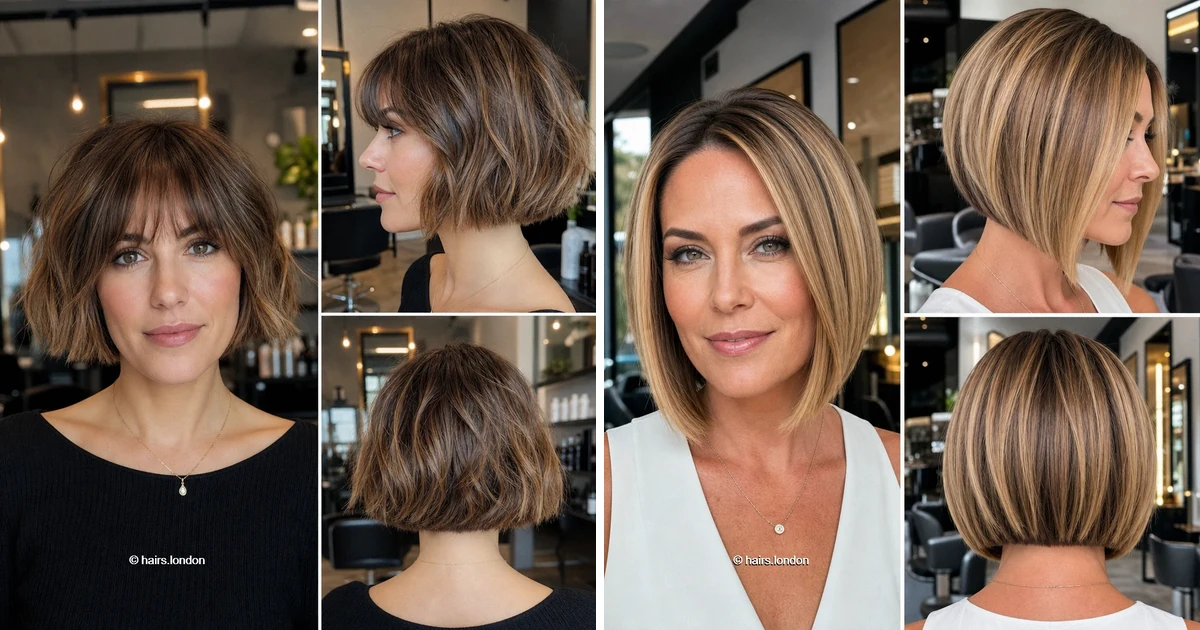
11. Full Dark Bob with Soft Straight-Across Bangs
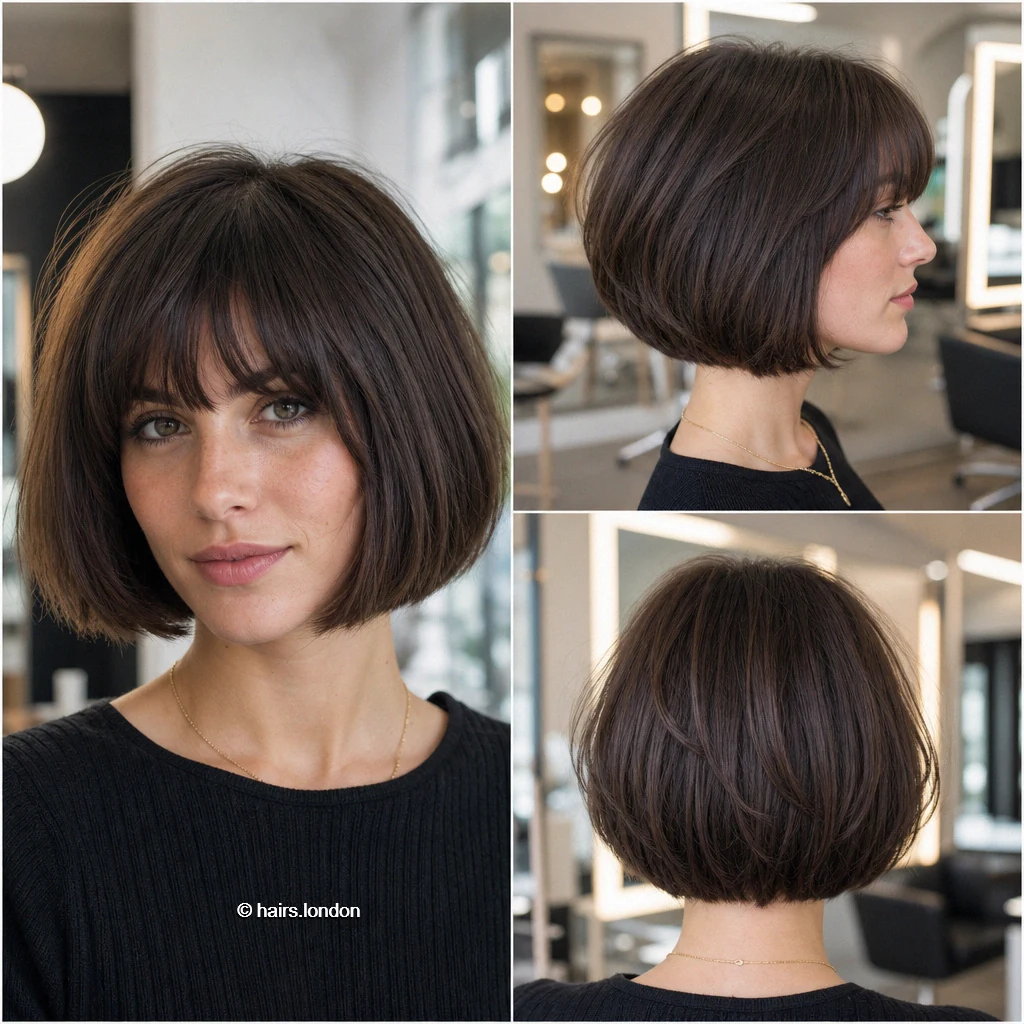
A full, dark brown bob frames the face with bangs. Its softly separated fringe falls around eyebrow level at front. The sides curve toward the jaw, creating a rounded outline. Back views show a tidy neckline beneath the fuller shape. Gentle surface movement prevents the cut from appearing rigidly blunt. Smooth the outer layer while brushing lower ends slightly inward. Dry the fringe promptly to prevent unwanted parting or lift. Dense hair might need interior shaping without weakening the edge. Fine hair may prefer fewer layers to keep similar fullness. Maintain the bangs and neckline whenever they lose their proportions.
12. Warm Chestnut Bob with a Light Fringe
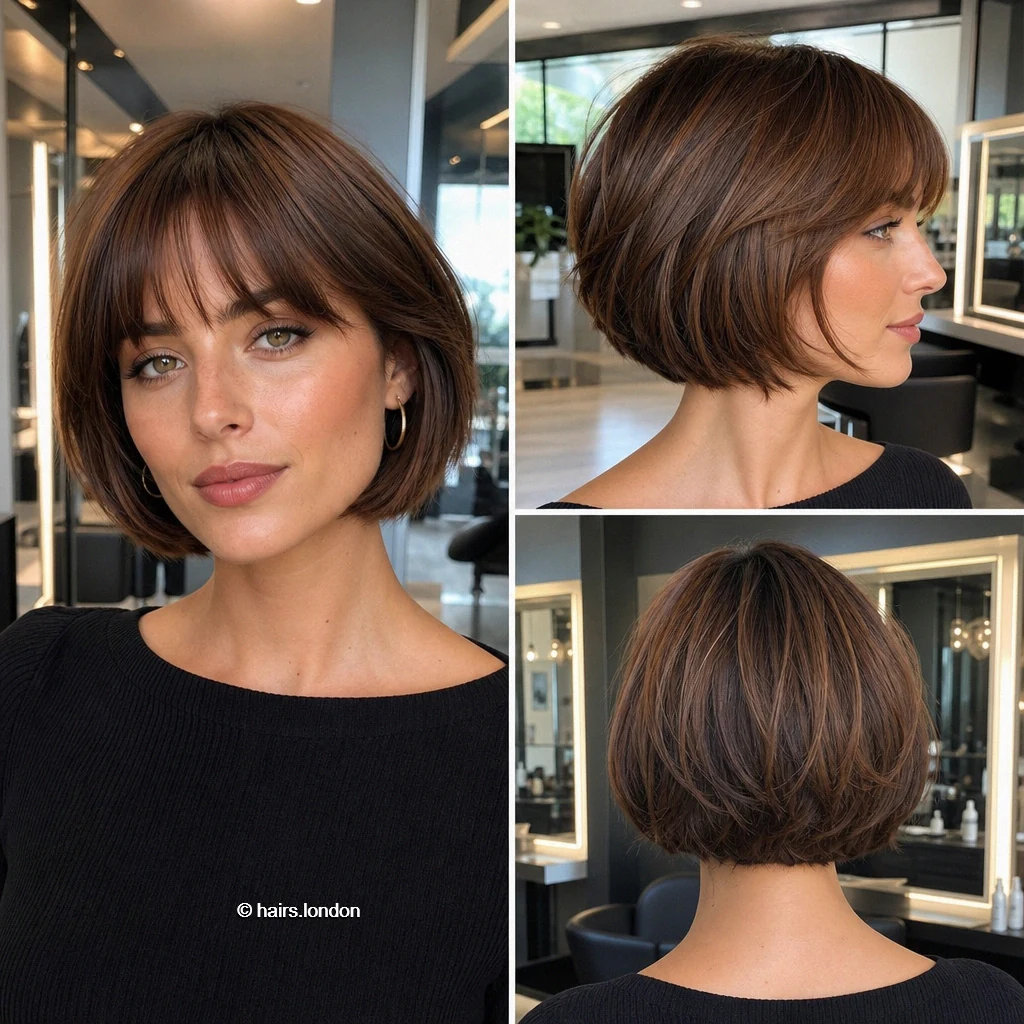
Warm chestnut color adds dimension to this rounded, short bob. A light fringe skims the eyebrows and blends sideways softly. The front sections sit around the jaw with softly curved ends. At the back, visible layers soften fullness above the neckline. Its silhouette stays compact without a pronounced forward-reaching front section. Blow-dry the fringe with controlled airflow directed gently downward. Brush the sides inward, then loosen them with your fingers. Consider less layering if your hair lacks natural body. If hair is thick, discuss where bulk tends to collect. Schedule trims before the fringe covers your eyes or eventually splits.
13. Textured Chestnut Bob with Feathery Bangs
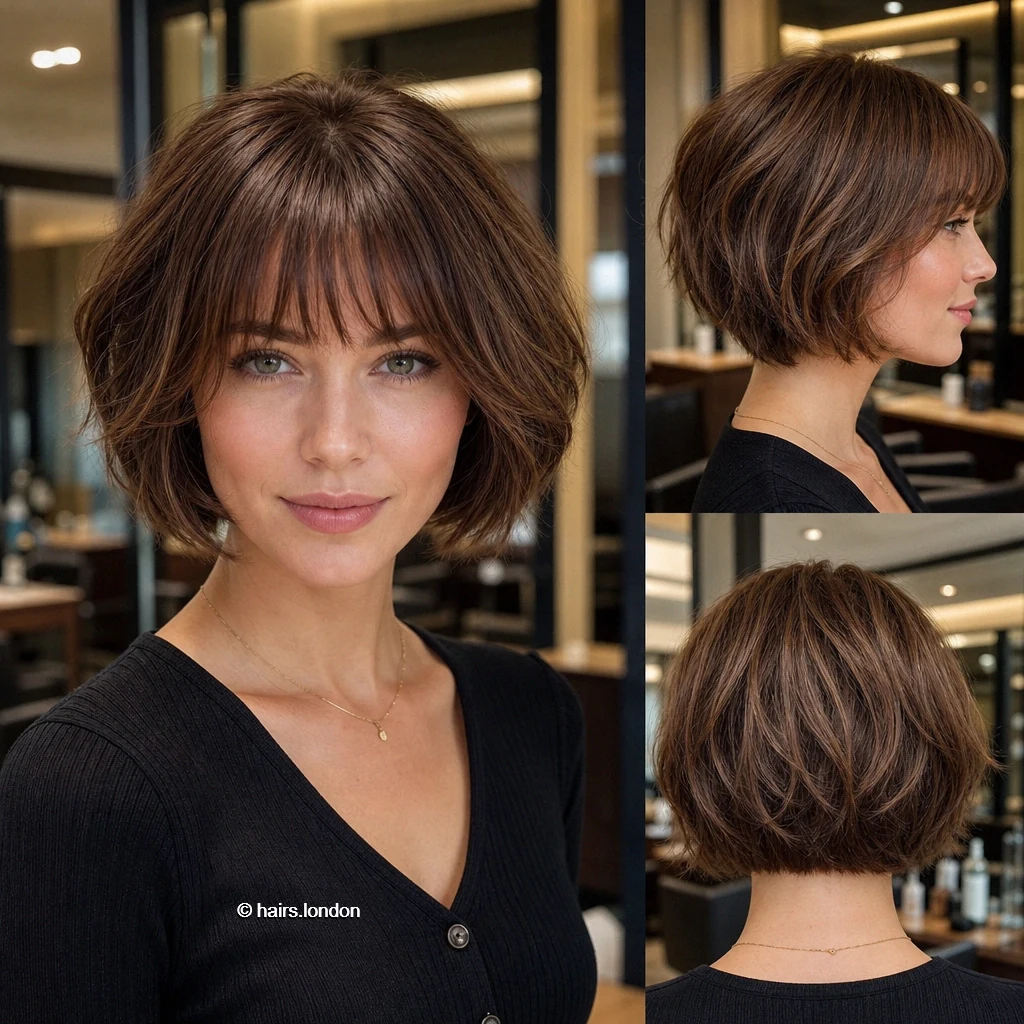
This chestnut bob combines feathery bangs with softly tousled sides. The front sits near jaw level with an airy edge. Subtle layers create natural movement across the back without visible stacking. Its fringe looks lightly separated rather than cut perfectly straight. Work a small amount of texture cream through dry ends. Keep product away from bangs if they separate too heavily. Ask your stylist to retain enough weight below the layers. That balance matters particularly when your hair is naturally fine. Denser hair may welcome selective shaping around the wider sides. Trim when the ends lose their light, controlled outline.
14. Soft Shaggy Bob with a Brow-Length Fringe
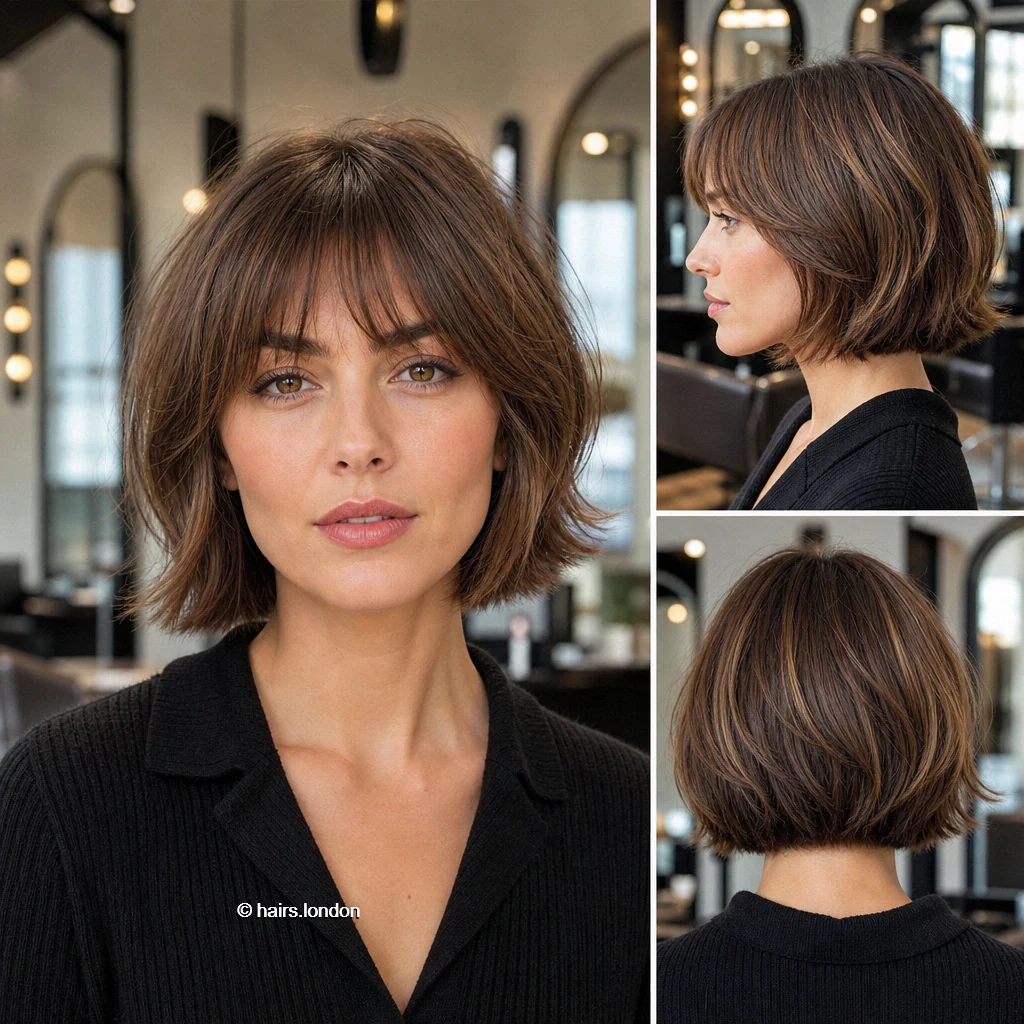
A brow-length fringe tops this softly shaggy brown bob shape. Layered sides flick outward near the jaw instead of curving inward. The back shows loose texture above a gently uneven neckline. Warm highlights bring out movement through the shorter surface pieces. Scrunch damp hair with mousse for a more relaxed finish. Dry the fringe separately if you prefer it lying flatter. Avoid overthinning the ends, which could leave them looking sparse. This cut may need adaptation for very fine hair. Dense, wavy hair may require careful volume placement at sides. Refresh the layers when the flicked shape becomes too heavy.
15. Feathered Brunette Lob with Curtain-Like Front Layers
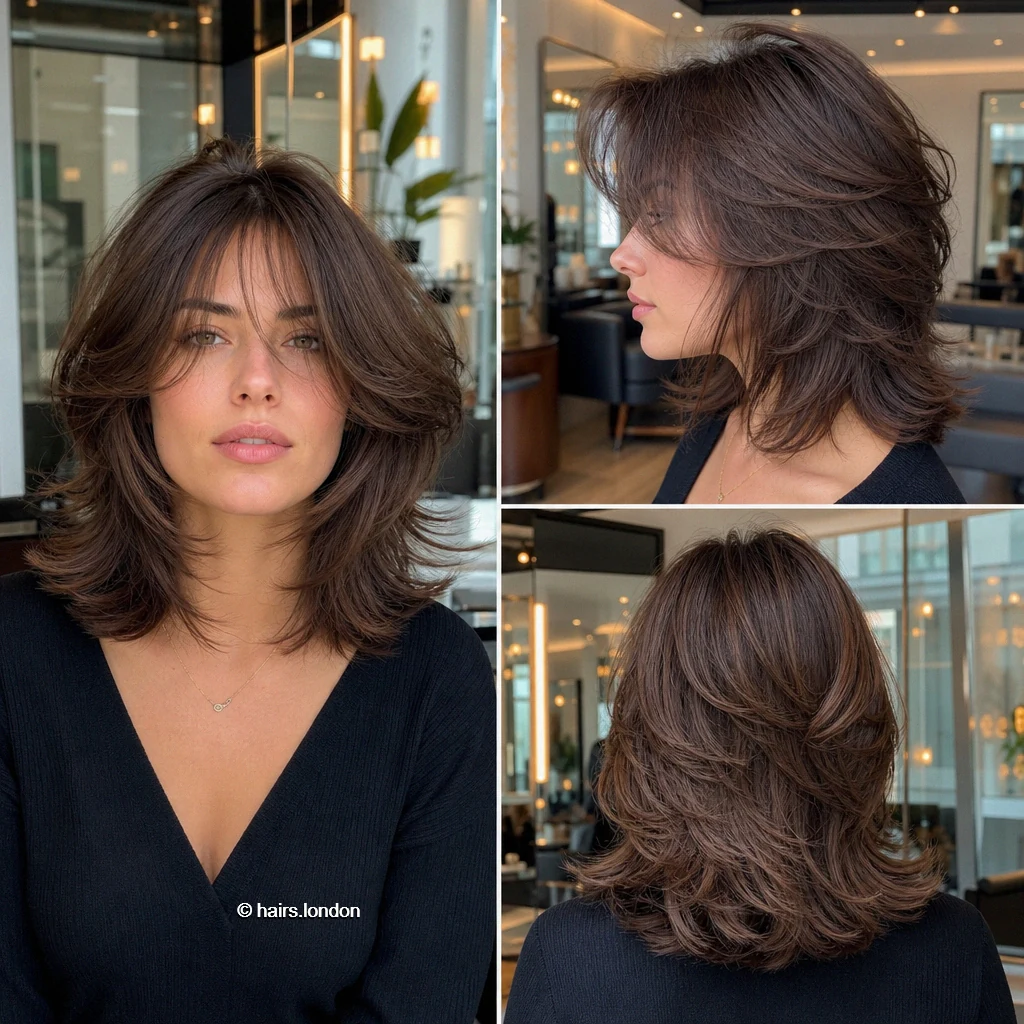
This feathered brunette lob falls very close to the shoulders. Long front layers open from a soft, near-center part, gently framing the face. Shorter pieces sweep across the cheekbones and flick outward. The back reveals multiple visible layers and a loose perimeter. It offers more length than the compact jaw-level bobs here. Use a round brush to direct face framing pieces backward. Keep the ends moving rather than pressing them completely flat. Dense hair may benefit from layered weight distribution throughout. Fine hair might need fewer short pieces for fullness. Trim when the feathered ends stop separating and begin clumping.
16. Shoulder-Grazing Brown Lob with Flipped Layers
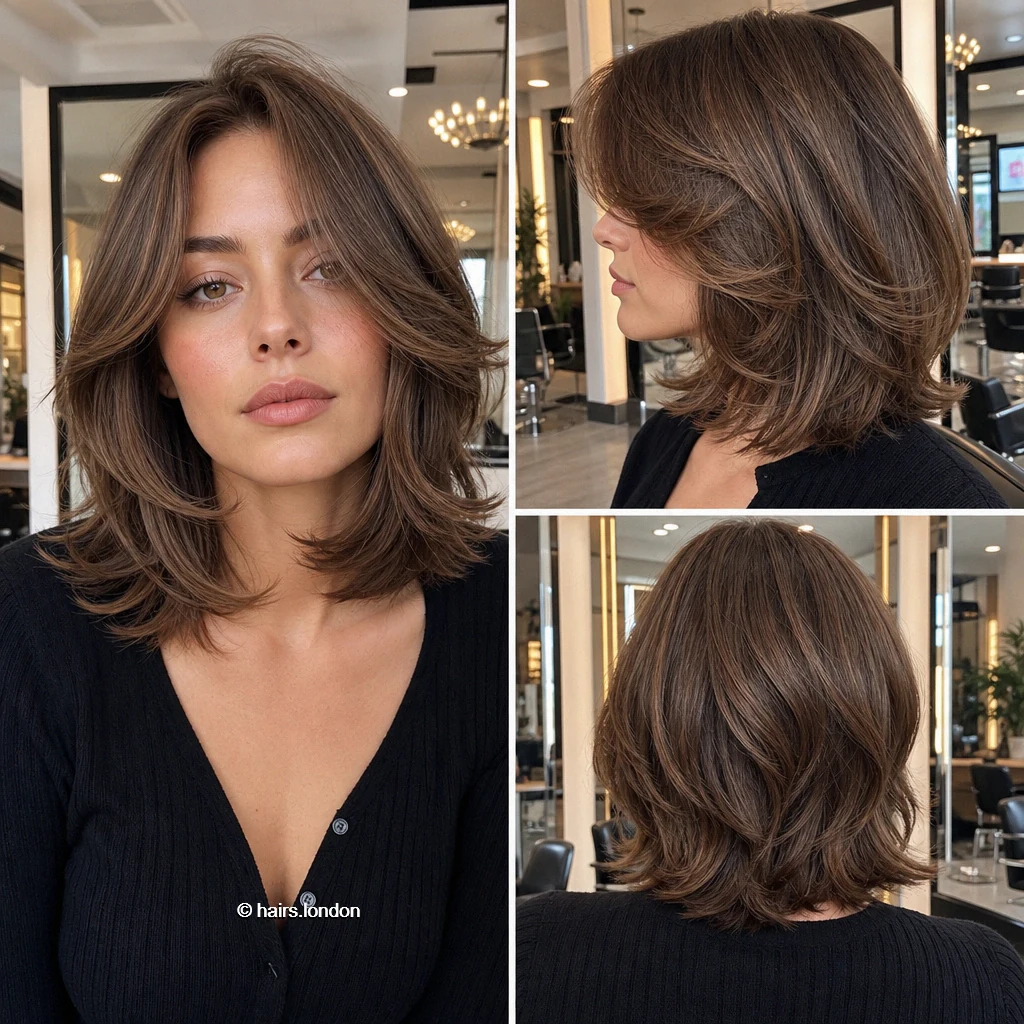
Cool brown hair falls around shoulder level in this lob. Sweeping front pieces create an open, softly parted shape. Layered midlengths end in visible outward flips at sides. From behind, the perimeter looks light rather than sharply solid. This length leaves room for movement around the neck. Turn the ends away using a brush during blow-drying. A flexible spray can hold the flips without stiffness. Thick hair may need balanced layers to manage the width around the cheeks and neck. Finer hair could keep a denser base beneath shorter pieces. Have the ends refreshed once their outward movement becomes uneven.
17. Voluminous Brown Lob with Sweeping Feathered Layers
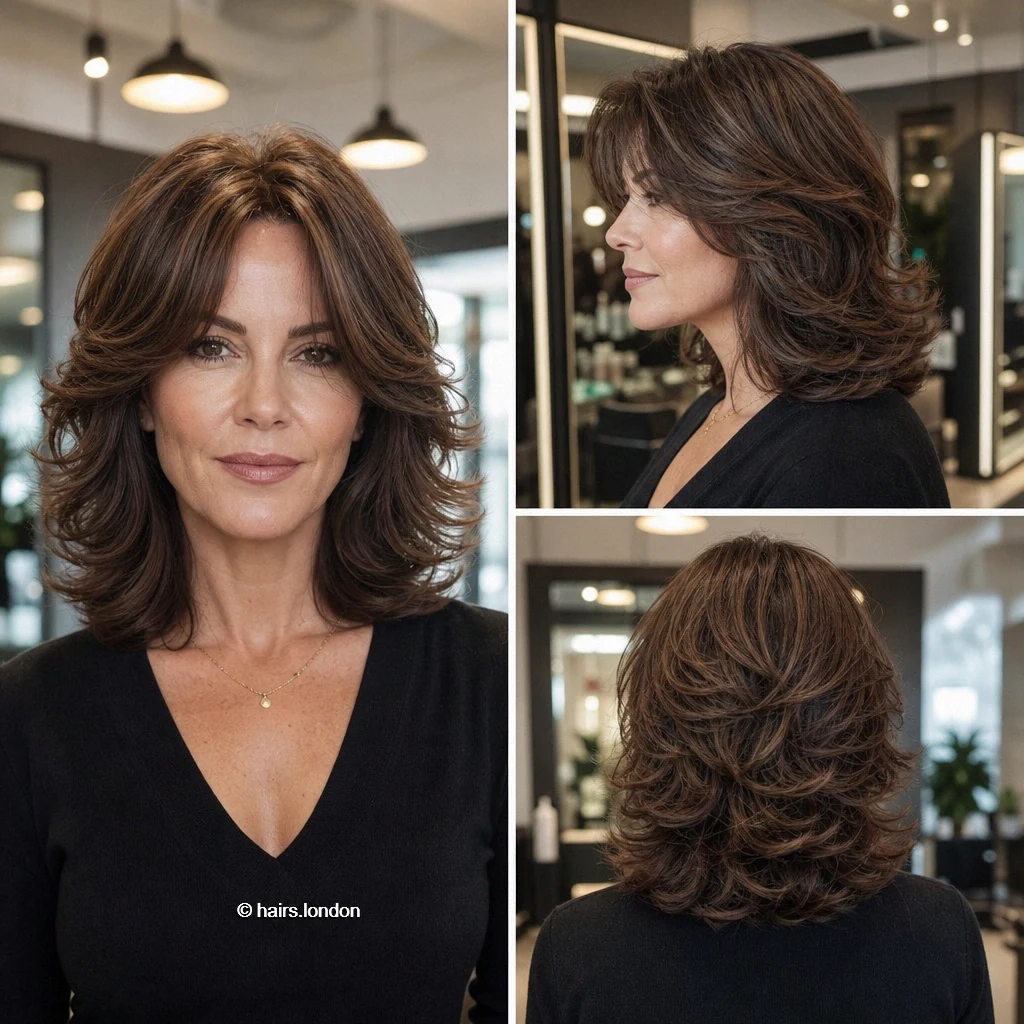
This voluminous brown lob reaches approximately the shoulder area. A central opening sends layered front sections sweeping outward. The sides carry substantial fullness above lighter, feathered ends. Behind, several visible layers create a soft cascading outline. Styling can emphasize that movement with a medium round brush. Lift at the roots, then direct ends away from cheeks for a softer, open shape. Use modest product to avoid adding unnecessary bulk underneath. Naturally dense hair may need carefully balanced layer placement. Fine hair might require fewer layers for an equally full perimeter. Reshape the ends when their distinct feathered sections grow together.
18. Dark Brown Layered Lob with Curved Ends
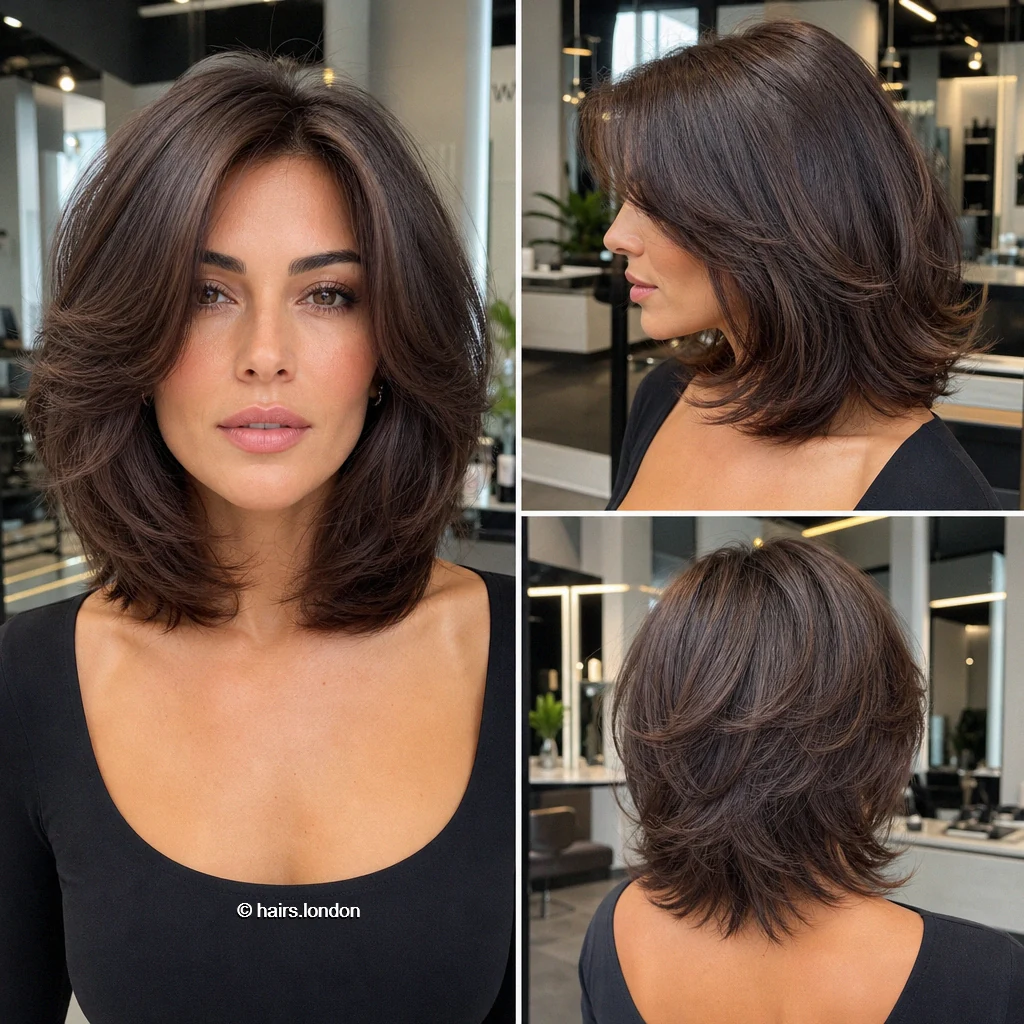
Dark brown hair forms a shoulder-near lob with layered ends. The front opens at the center into broad, sweeping sections. Soft curves bring volume beside the cheeks and jaw. The back shows movement through layers, not a blunt shelf. Its lower pieces turn outward slightly around the neckline. Blow-dry with a brush, allowing the ends to separate. Choose light finishing cream if your hair becomes fluffy. Dense hair may need shaping where side volume gathers. Finer hair might benefit from a less layered base. Trim when the lower sections lose their controlled, curved finish or start spreading around the neckline.
19. Warm Brunette Lob with Relaxed Feathered Ends
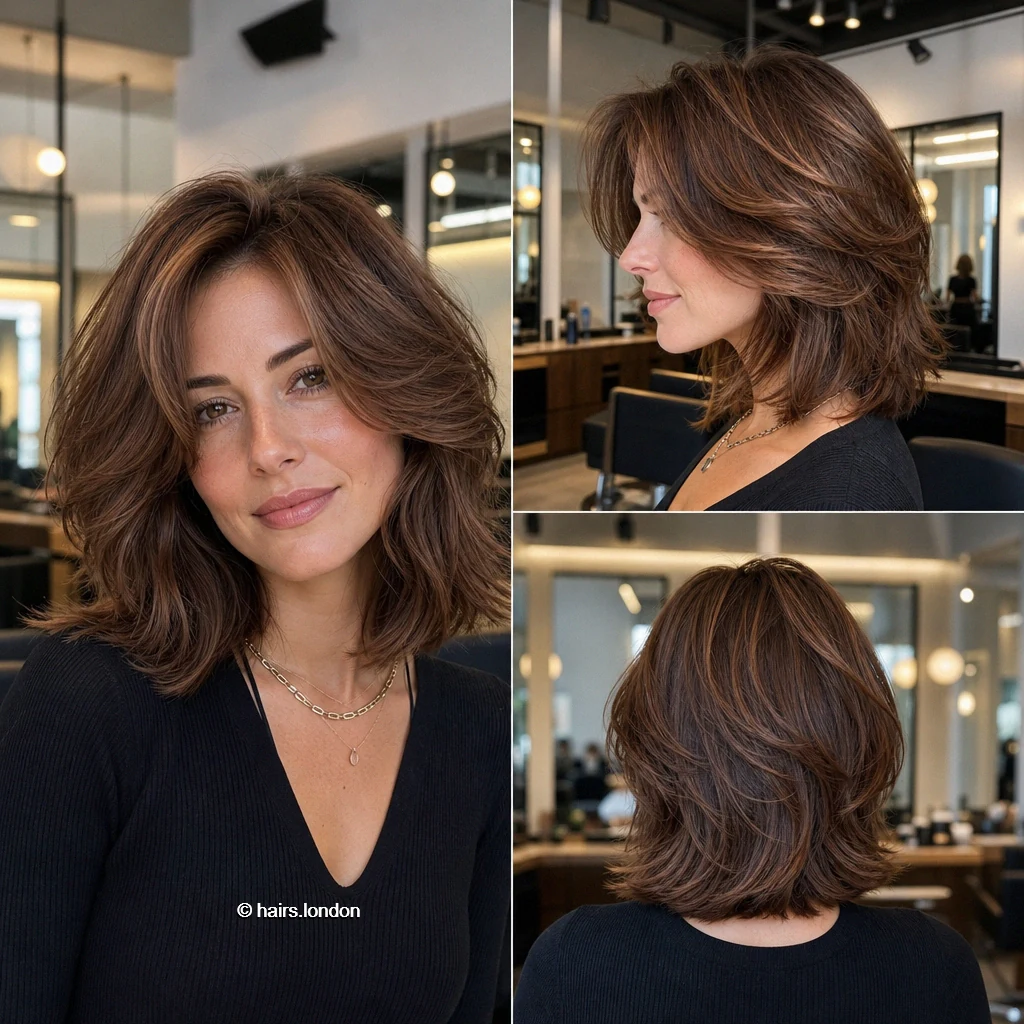
Warm brunette tones brighten the layers of this relaxed lob. Its side-parted front sweeps outward across the cheek area. The ends sit near shoulder level with soft feathering. Back layers overlap without forming a compact rounded weight line. That longer outline moves differently from a chin-length bob. Encourage separation with a small amount of lightweight cream. A round brush can lift the front away from faces. Keep lower layers longer if your hair is naturally fine. Thick hair may need thoughtful shaping beneath the outer layers where excess bulk collects. Refresh the ends when their feathered finish begins looking heavy.
20. Caramel-Brown Layered Lob with Bouncy Ends
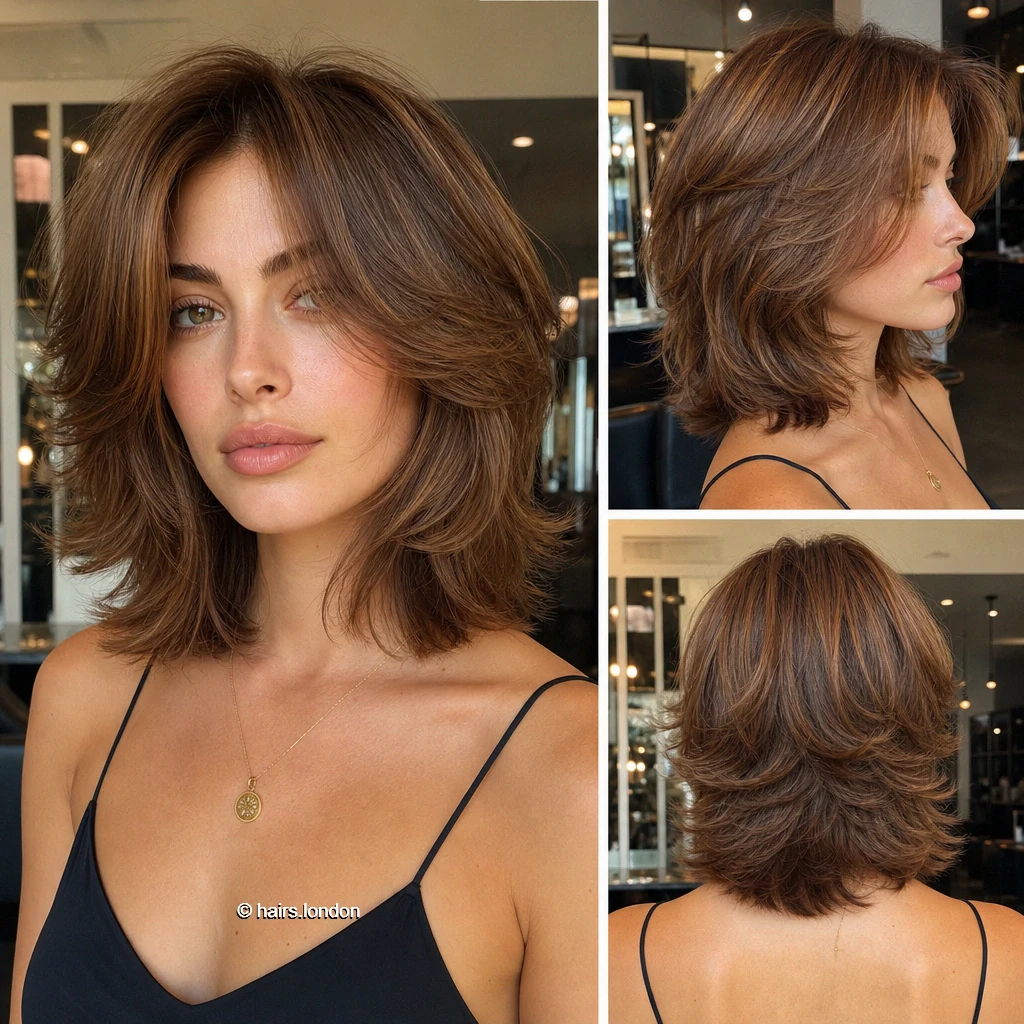
Caramel-brown ribbons highlight the movement in this layered lob. The parted front falls into sweeping, cheek-framing sections. Shorter layers build fullness around the sides and back. Longer ends reach toward the shoulders with outward flicks. The visible perimeter is soft, not a crisp blunt line. Blow-dry roots upward before turning the lower sections outward. Finish with flexible hold so individual layers remain separate. Very dense hair may need careful control of side volume. Fine hair could retain longer layers to protect fullness. Keep highlights conditioned so lighter ends retain shine. Book reshaping when the ends lose bounce or merge together.
How to Choose Your Bob Length and Shape
Start with where you want the perimeter to sit: near the jaw for a compact bob, below it for more coverage, or near the shoulders for a lob. A rounded outline concentrates fullness around the sides; a more solid edge gives fine hair a stronger visual line. The layered lobs shown here trade that crisp edge for movement. Check the side and back views before requesting a specific shape: longer front pieces alone do not establish a stacked or graduated back.
Styling Fine, Thick, Wavy and Curly Textures
For fine hair, keep heavy products off the roots and consider a substantial perimeter with restrained layers. For thick hair, ask about removing bulk internally without making the ends wispy. Encourage natural waves with mousse or light cream and gentle diffuser drying; smooth the perimeter only where it needs definition. If your hair is curly, discuss the cut at its naturally worn length, accounting for shrinkage and curl pattern. Dry fringes early if you want them to sit predictably, and avoid layering so heavily that a bob loses its shape.
Keeping Brown Hair Color Fresh
The images range from deep brunette to warmer chestnut and caramel-brown tones. If you color your hair, use a cleansing routine appropriate to your color and condition the ends, which are particularly visible on a bob. Protect hair from excessive heat when creating smooth curves or flipped layers. Ask your colorist how often your chosen shade needs refreshing; a softly varied color and a more uniform deep brown may have different upkeep.
Maintaining the Bob Perimeter and Layered Shape
A compact bob announces growth at its neckline and jawline sooner than a loose, shoulder-near lob. Arrange a trim when its perimeter stops sitting where you want it, rather than relying on one schedule for every cut. If you choose a rounded or graduated shape, have your stylist check its balance from the side and back as it grows. Layered lobs may tolerate more length, but benefit from reshaping once the ends become heavy or stop moving separately. Bangs can need attention between full cuts.
What to Discuss with Your Stylist
Bring front, side and back references, then identify the detail you actually want: a smooth edge, rounded fullness, a soft fringe or sweeping layers. Show how your hair behaves when air-dried and mention growth patterns, density, styling time and whether you tuck it behind your ears. Ask where the finished perimeter will sit on your hair, how the layers will affect its fullness, and what the proposed shape will look like as it grows.
Frequently Asked Questions
What is the difference between a bob and a lob?
A bob generally finishes around the jaw or neck, while a lob is a longer bob that approaches the shoulders. The exact boundary is flexible; describe your desired perimeter rather than relying on the label alone.
Is an A-line bob the same as a stacked bob?
No. A-line describes a perimeter that is longer toward the front. Stacked describes visible, shorter graduation that builds volume at the back. A cut can have either feature or both, but one does not prove the other.
Which bob shape can help fine hair look fuller?
A relatively solid perimeter and restrained layering can help preserve the appearance of fullness. The best length also depends on your density, growth patterns and how you style it.
How can thick hair avoid a bulky bob?
Discuss where your hair expands and whether selective internal weight removal would help. Keep enough weight at the perimeter to maintain the intended outline instead of thinning every end.
Can naturally curly hair be cut into a bob?
Yes, but the length and layering should account for your curl pattern, shrinkage and preferred styling method. Ask your stylist to assess how the shape sits when worn curly.
Should I choose bangs with a bob?
Bangs change both the look and upkeep of a bob. Consider your hairline, growth patterns and willingness to style or trim a fringe before choosing a light or fuller version.
How do I style a smooth rounded bob each morning?
Smooth the lengths downward, then turn the ends gently inward with a brush. Use only enough finishing product to control flyaways without flattening the shape.
How do I keep a textured bob from looking puffy?
Use light product, define the bends you already have and avoid brushing out dry waves. If puffiness persists, ask whether the cut needs a different distribution of weight.
How often does a short bob need trimming?
Trim when the neckline, fringe or perimeter no longer sits as intended. A short, precise outline often shows growth sooner than a relaxed layered lob.
Can I grow a bob into a lob without an awkward shape?
Yes. Ask for occasional reshaping that keeps the perimeter balanced while preserving length. A fringe and short back layers may need particular attention during the transition.
Do layers make a bob easier to style?
They can encourage movement or manage density, but too many layers may weaken a fine-haired perimeter or add unwanted width. Placement matters more than simply adding layers.
What photos should I take to a bob haircut appointment?
Bring views of the front, sides and back when possible. Point out the length, fringe, perimeter and amount of volume you like, and explain how much daily styling you want to do.
Conclusion
The most useful bob inspiration is a shape you can describe from every angle. Decide where you want the ends to fall, how much fullness to keep, and whether you prefer a polished curve or freer layers. Then work with your stylist to adapt that outline to your hair’s density, texture and everyday routine.


