


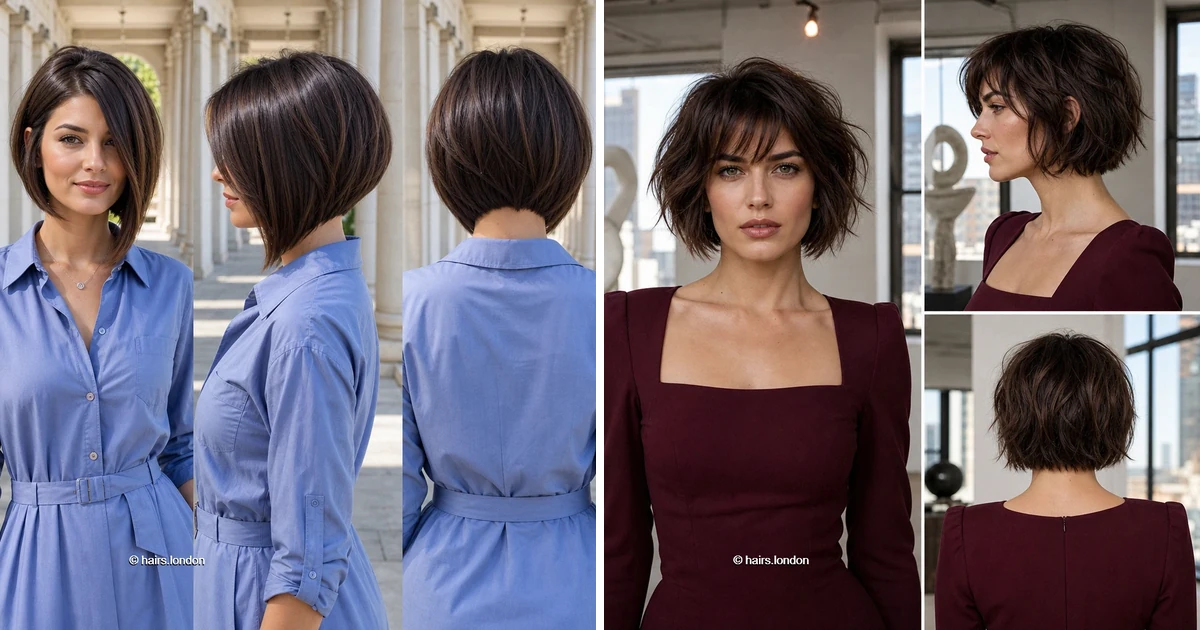
11. Medium Brown Layered Bob with Curtain Fringe
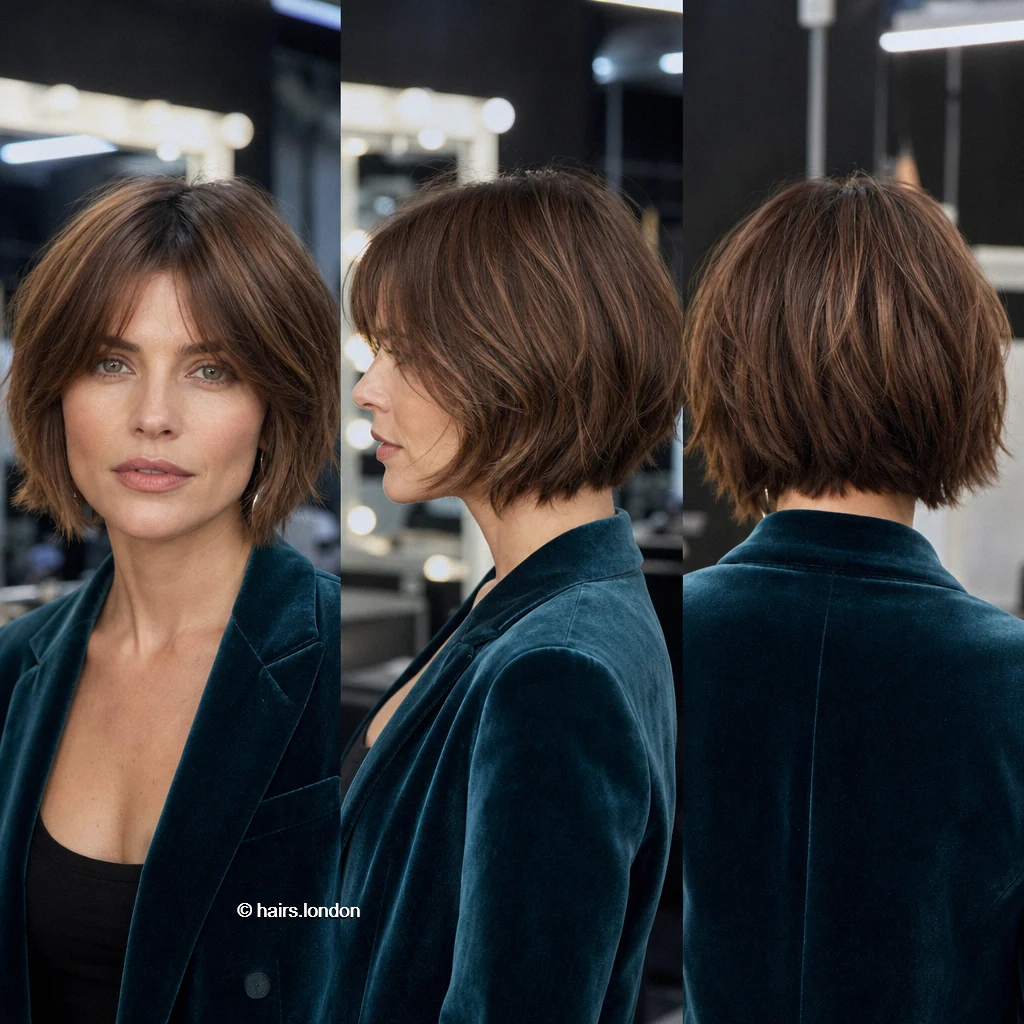
A parted curtain fringe frames this medium brown bob. The ends rest around the jaw with soft outward movement. Light layers add fullness without creating a sharply stacked back. Subtle honey tones pick out strands around the face. Brush the fringe away from the center while drying. Then loosen the ends with fingers for an easy finish. A little mousse can help fine hair retain shape. Suitability depends on whether your fringe follows that center opening. Ask your stylist to adapt its length to your part. Trim the fringe before it hides the cheek framing shape without losing their softness.
12. Auburn Shaggy Bob with Airy Bangs
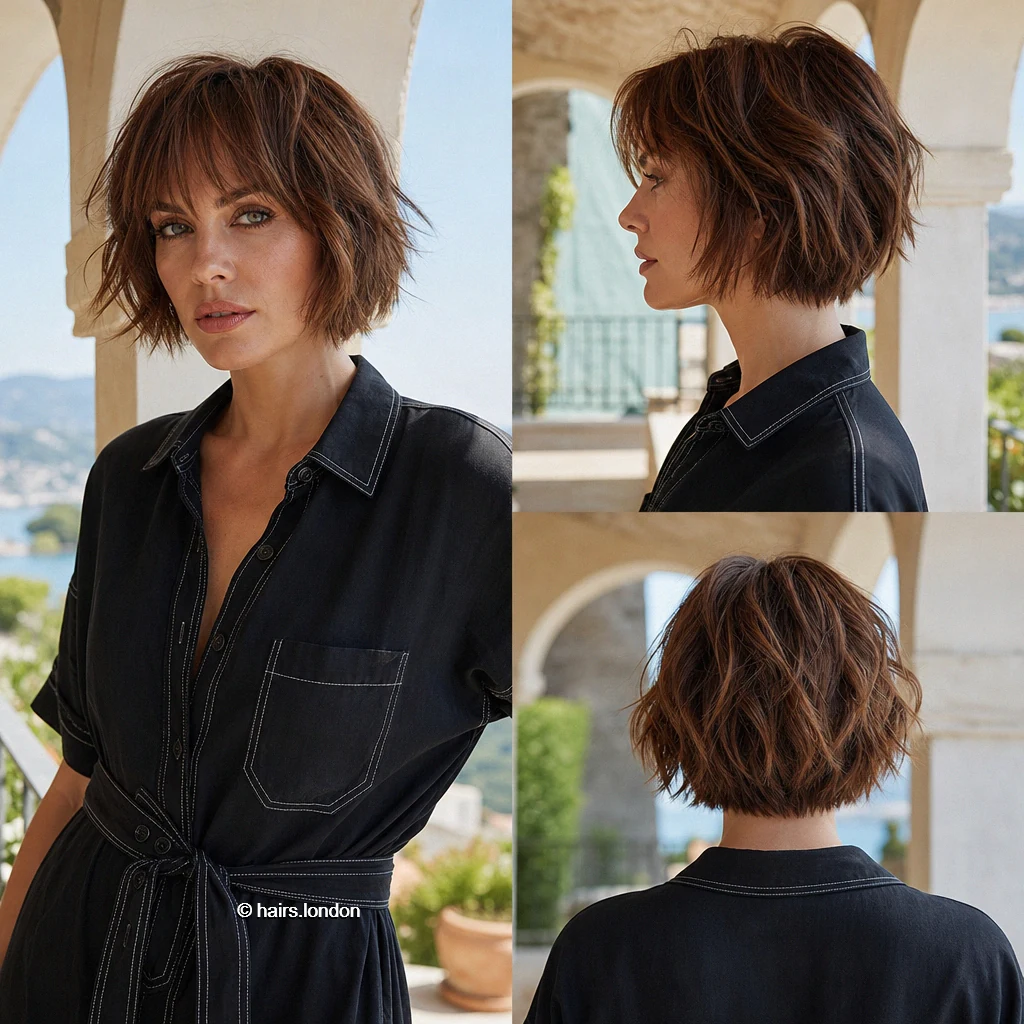
This warm auburn bob has airy bangs and uneven layers. Its perimeter sits near the jaw and upper neck. Loose bends give the sides a gently expanded silhouette. The back remains textured, with no crisp graduation visible. Scrunch a small amount of curl cream into damp hair. Let the fringe dry forward before separating individual strands. Avoid stiff spray if you want the ends to move. This shape may suit hair that naturally forms soft bends. Ask how much layering your density can support without gaps. Fringe trims and occasional perimeter cleanups keep its proportions balanced as the layers grow.
13. Ash Brown Bob with Sweeping, Layered Movement
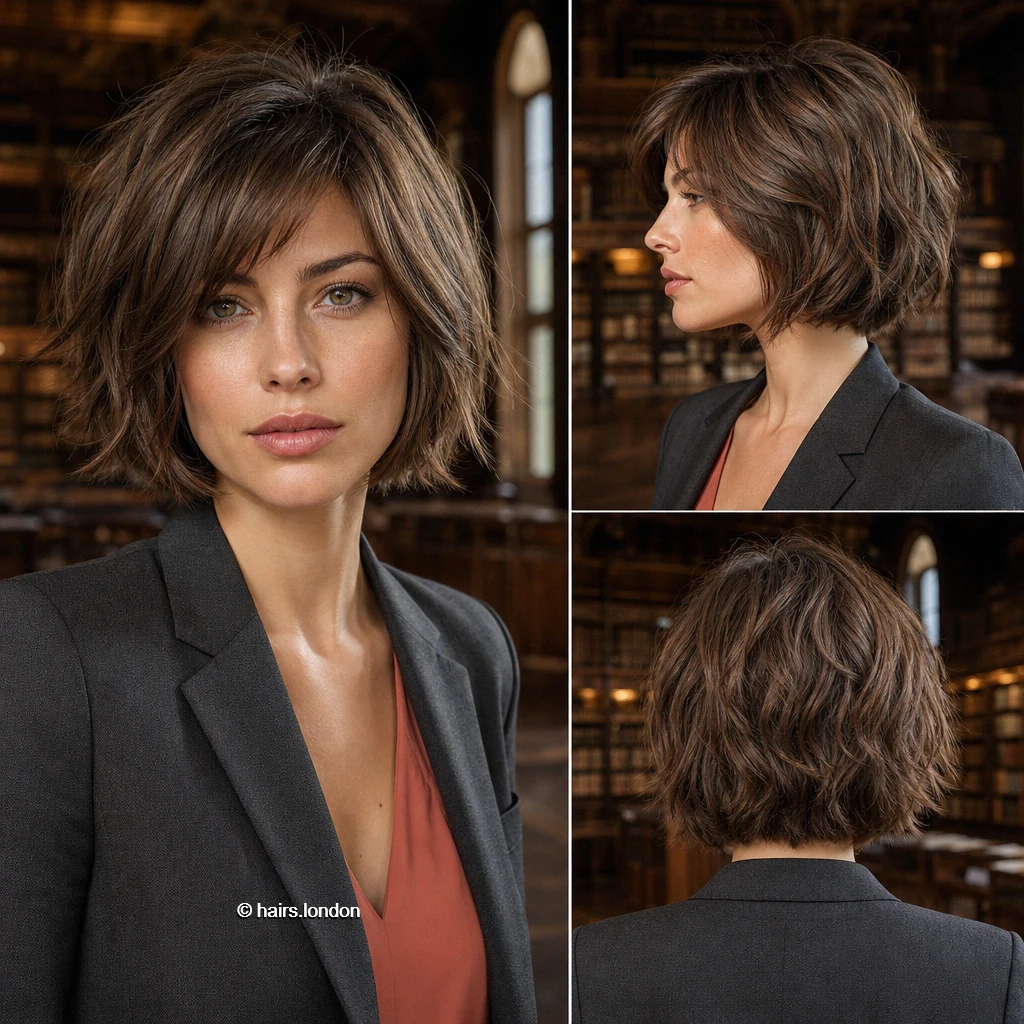
An ash brown finish gives this textured bob depth. The sweeping front crosses the forehead toward one eye. Layered sides skim the jaw with lightly flicked ends. Behind, the outline looks soft and full rather than precise. Use a diffuser or loose brushwork to encourage separation. Keep the crown touchable with flexible hold, not heavy wax. Direct the front away from the eye when needed. This shape may suit hair with some natural movement. Ask whether your density needs fewer or more side layers. Trim the fringe and perimeter as their movement becomes unbalanced. Check side shape after air drying.
14. Chestnut Asymmetrical Bob with a Full Rounded Back
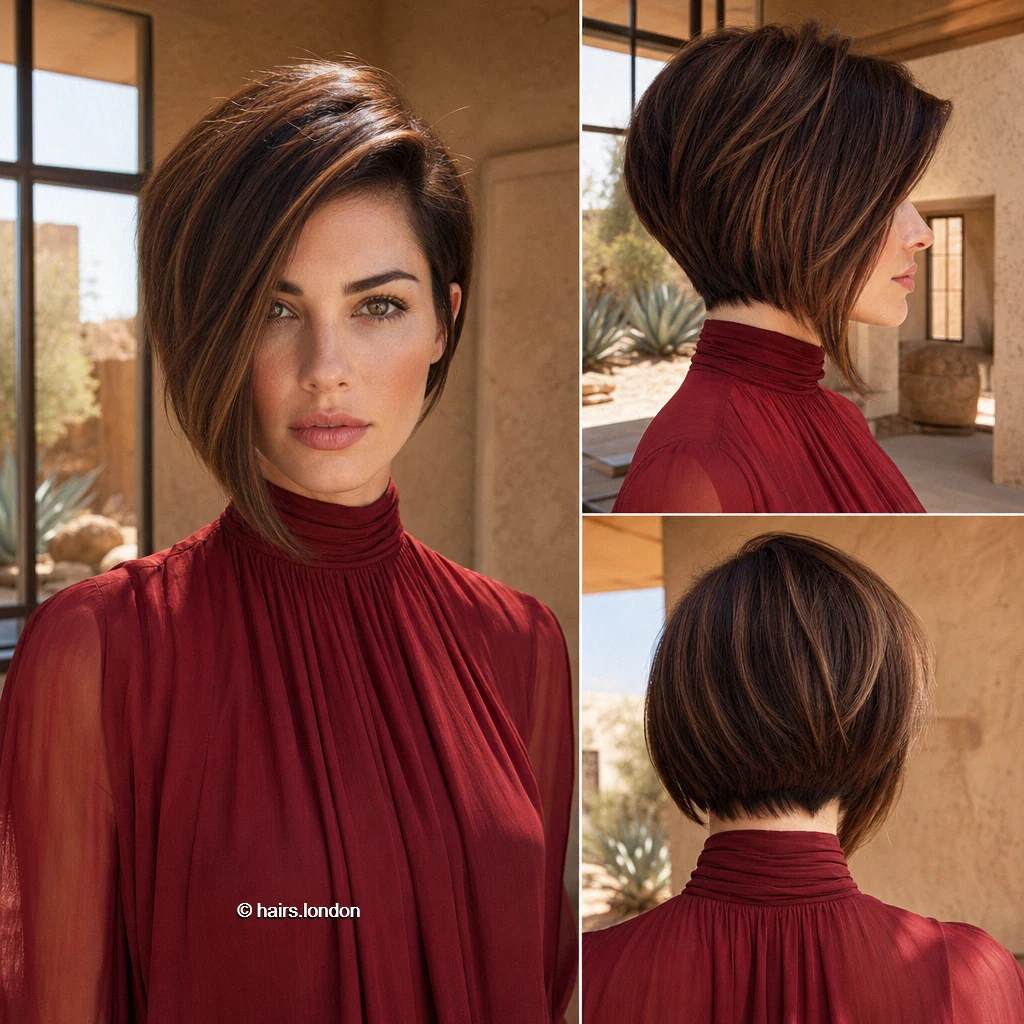
A deep side part gives this chestnut bob drama. The long front passes the jaw on one side. Its opposite side and rounded back remain considerably shorter. The nape sits close beneath a fuller upper shape. Fine warm highlights trace the smooth, sweeping surface. Brush the long section downward, then curve the back inward. Use light hold to keep that front section controlled. This silhouette may suit hair that maintains polished volume. Ask how the unequal lengths will behave with your part. Regular trims protect both the neat nape and extended front. Check that the front stays comfortable during wear.
15. Bronde Angled Bob with Soft Crown Layers
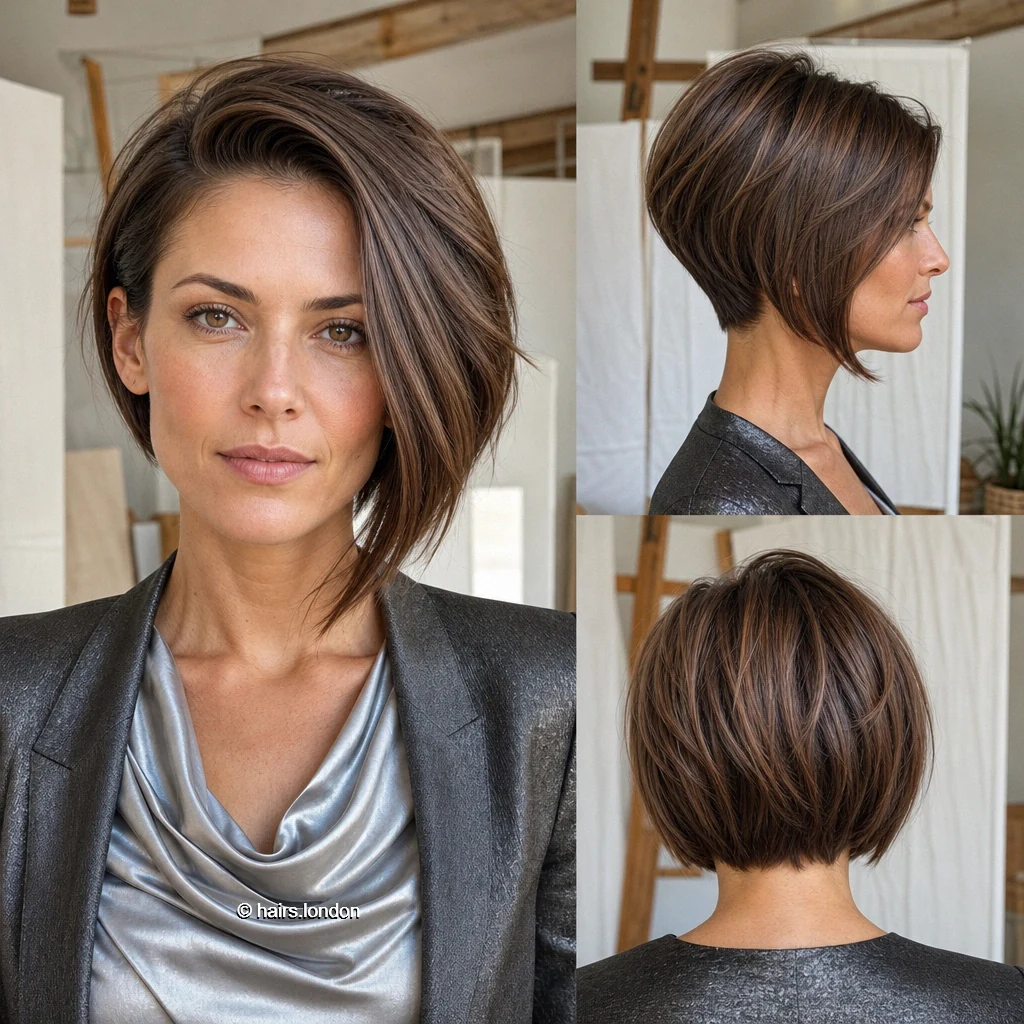
Bronde highlights bring dimension to this rounded, angled bob. The side view shows longer hair toward the chin. A short back and nape support its fuller crown. Swept front layers soften the contrast between both lengths. Smooth the surface with a brush while keeping some lift. Tuck one side back when you want clearer face framing. Avoid heavy creams that could obscure the layered highlights. This bob may work when hair holds a curved silhouette. Discuss where shorter pieces should meet your natural hairline. Trim before the back fills out and blurs the angle, especially if the ends turn outward.
16. Dark Brunette Bob with a Long Side Sweep
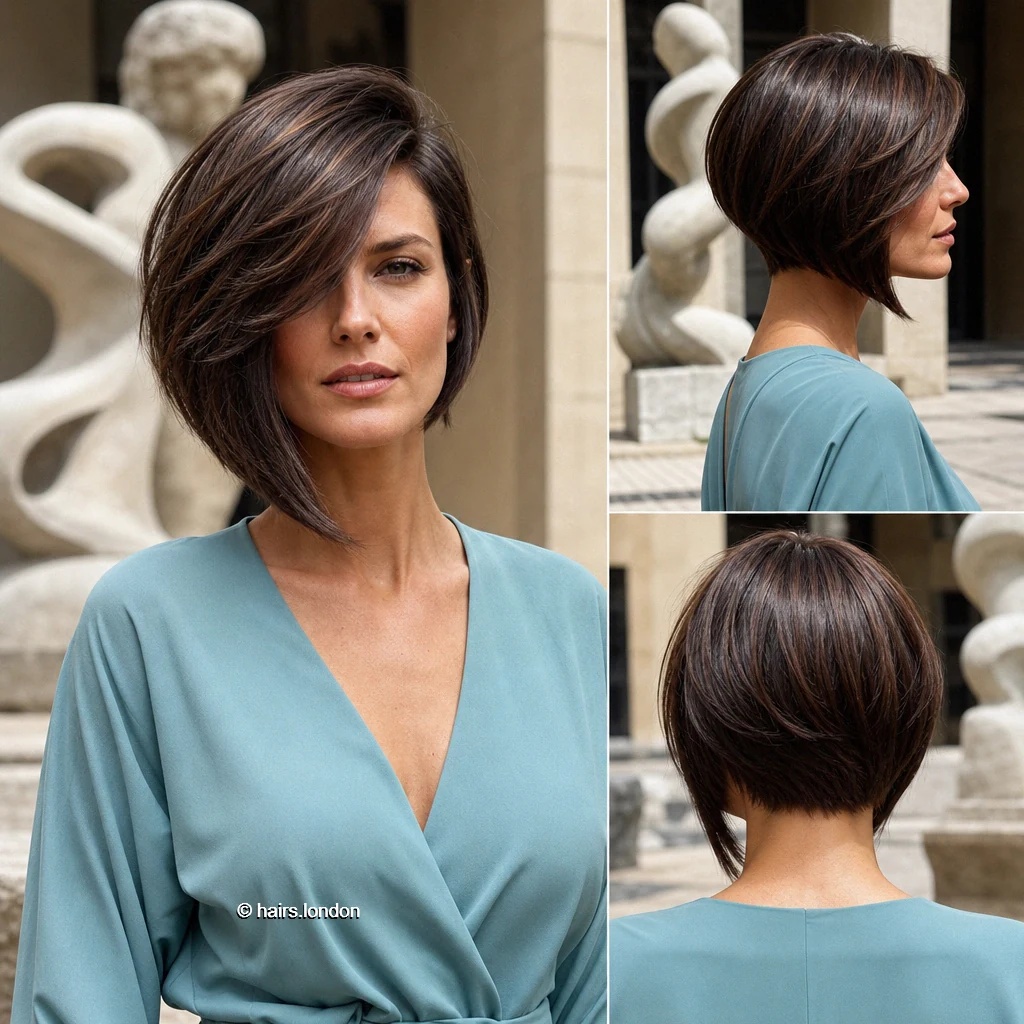
A strong side sweep shapes this dark brunette bob. One front section reaches below the jaw and turns inward. The back is rounded above a close, short nape. Fine lighter strands emphasize the smooth layers across it. Blow dry the long section forward for controlled movement. Lift the back lightly without building excess width. A small amount of serum can polish exposed ends. This cut may suit hair willing to hold directional styling. Ask your stylist how the side sweep behaves naturally. Keep the nape tidy so the front stays distinctive. Check the profile from both sides at your appointment.
17. Espresso Angled Bob with a Compact Nape
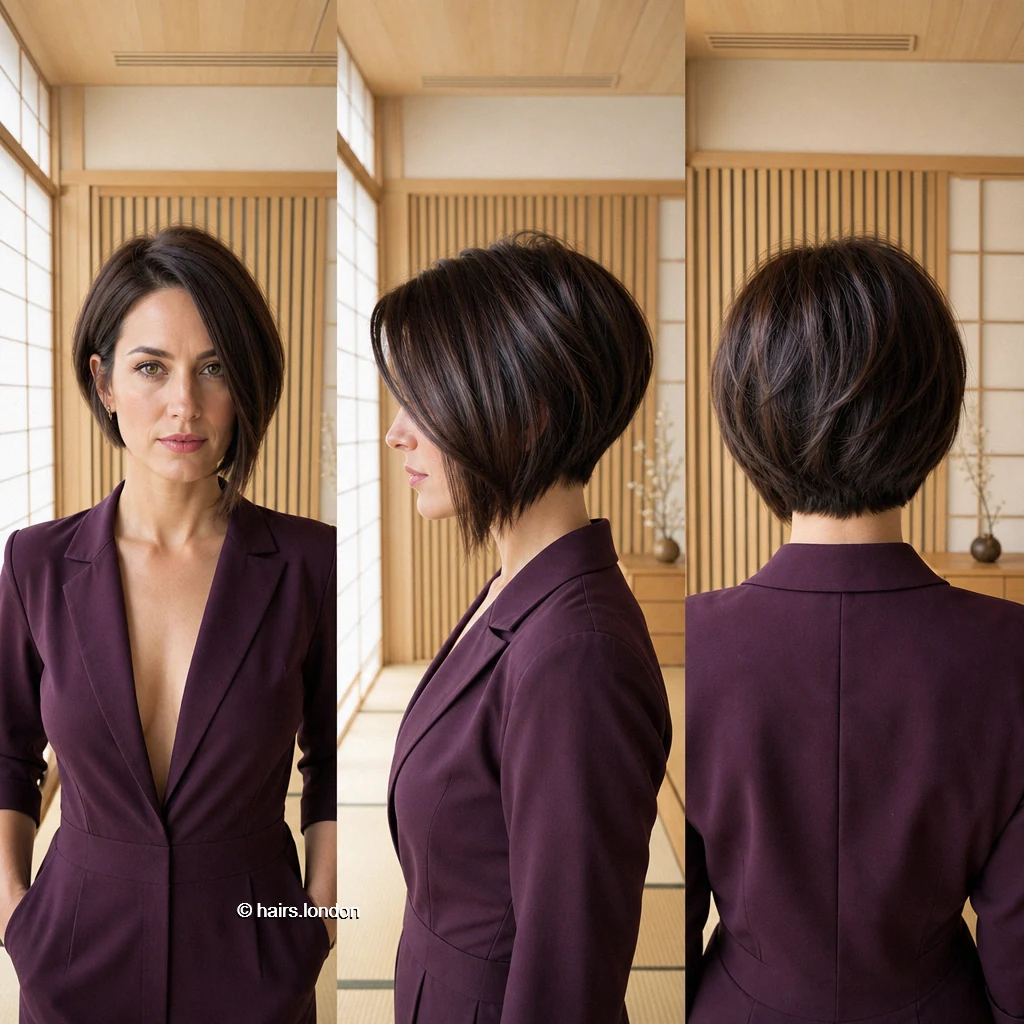
This espresso bob has a compact, closely shaped nape. Its front extends toward the jaw below shorter sides. A smooth side part emphasizes the clear length difference. The back shows rounded volume above its tapered outline. Use a brush to smooth the front toward the face. Keep crown lift moderate for a neat, balanced profile. Lightweight finishing spray helps preserve movement without stiffening it. This cut may require frequent attention to nape growth. Discuss whether your hairline supports the close back shape. Trim both sides carefully to maintain the visible angle. Ask how often its rounded weight line needs reshaping.
18. Cocoa Rounded Bob with Subtle Angling
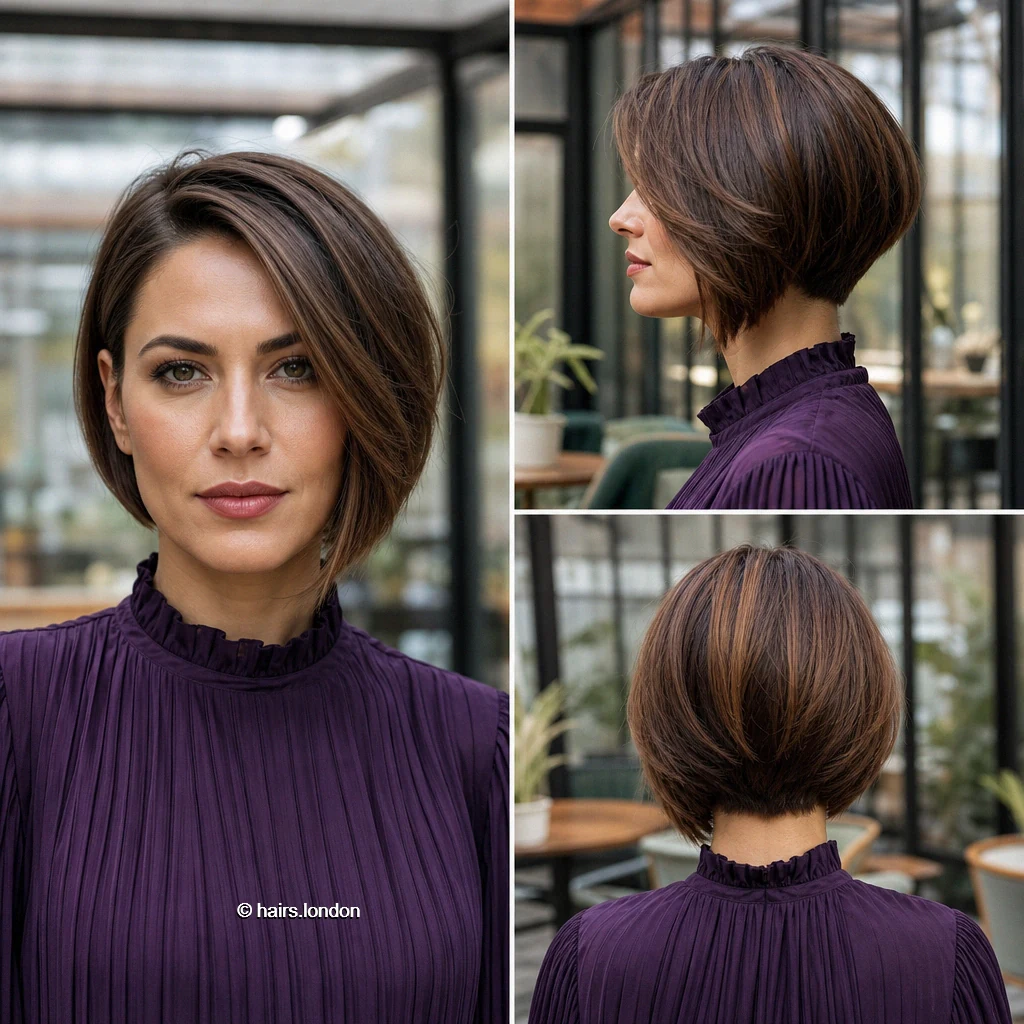
A softly rounded back defines this cocoa brown bob. The front falls nearer the chin than the shorter nape. Gentle side swept layers keep its silhouette less severe. Caramel threads brighten the crown and longer front pieces. Brush downward along the perimeter, then lift the roots. Finish lightly so the smooth shape retains some movement. The modest angle may suit those preferring subtle contrast. Density and natural texture determine how easily the back curves. Ask your stylist to check the shape from behind. Trims keep the nape from obscuring its rounded outline. Watch for excess weight collecting behind the ears.
19. Warm Brunette Asymmetrical Bob with a Sleek Back
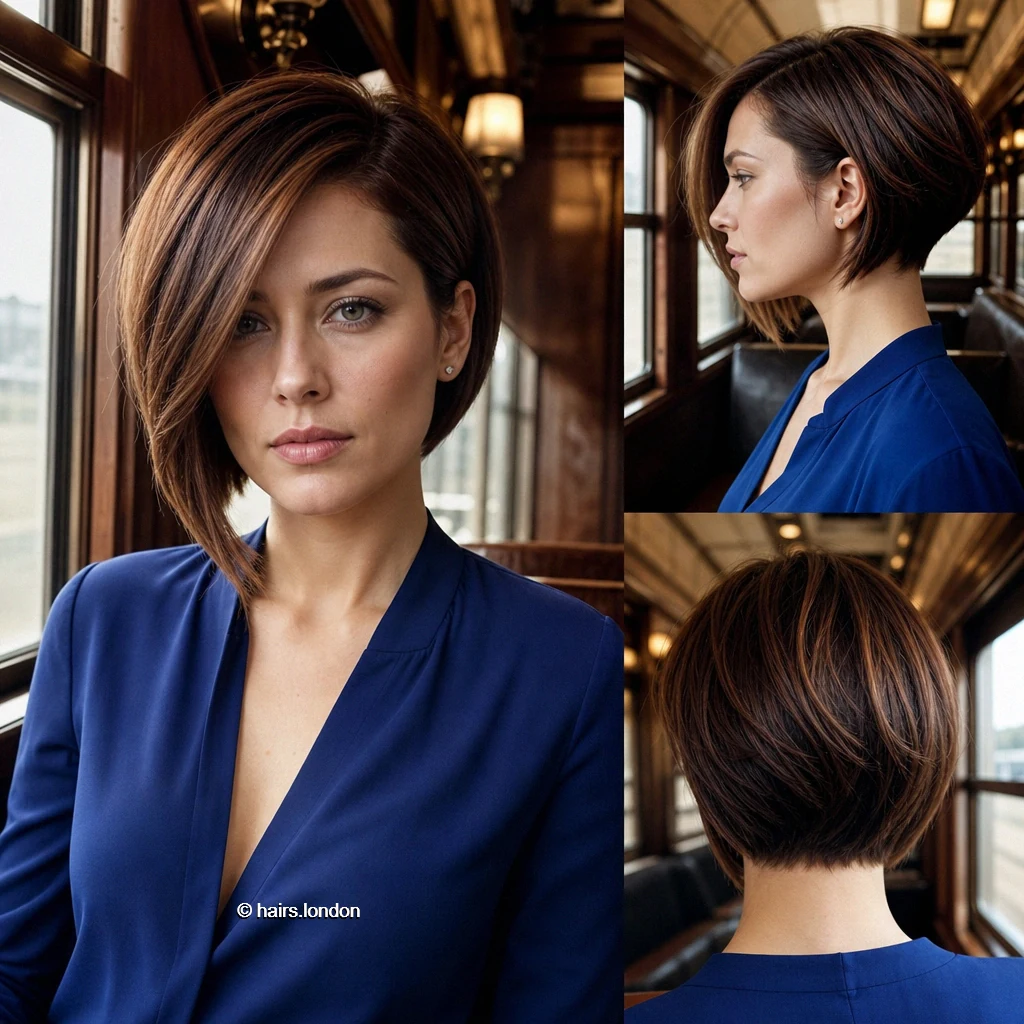
This warm brunette bob places extra length at one front. The opposite side sits close to the cheek and jaw. Its back narrows into a smooth, short neck line. A deep part makes the longer section sweep diagonally. Warm highlights accentuate that front without changing the outline. Direct a brush along the perimeter for a polished finish. Avoid flattening the back when smoothing its upper layers. This shape may suit someone comfortable with unequal front lengths. Discuss how often you switch your part before cutting. Maintain the nape and long point to preserve contrast, especially if your nape grows quickly.
20. Mocha Angled Bob with a Side-Swept Front
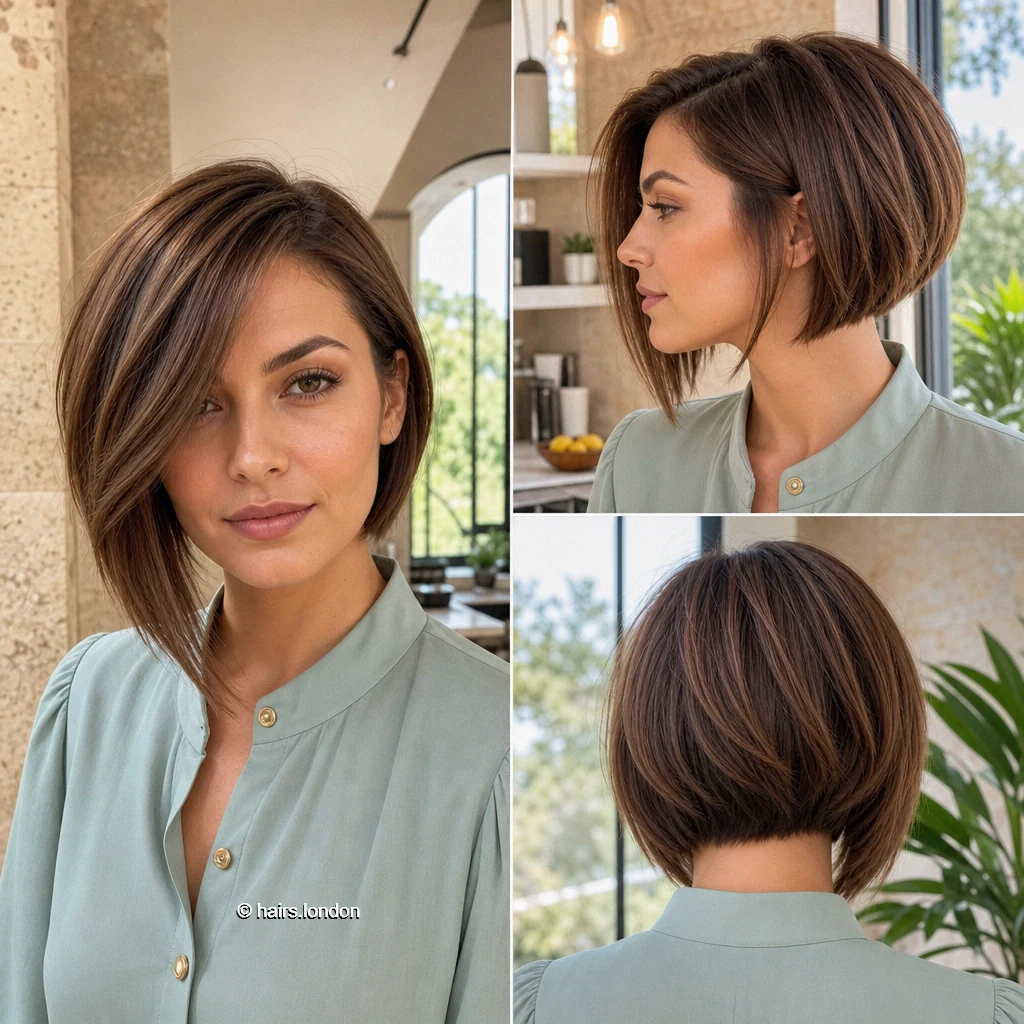
A side swept front gives this mocha bob asymmetry. The longer section reaches below the jaw on one side. Behind it, rounded layers taper toward the upper neck. Fine caramel strands add warmth through the smooth surface. Blow dry with the part in its intended position. Smooth the perimeter while letting the crown keep gentle volume. A touch of cream controls ends without excessive weight. This shape may suit hair that cooperates with side styling. Ask your stylist to assess cowlicks near the front. Timely trims keep the shorter back and longer side distinct as the front begins to grow.
How to Choose Your Bob Length and Shape
Start with the shortest point you are comfortable wearing at the back, then decide where the front should meet your jaw or neck. The smoother looks here show a clear front-to-back difference; the shaggy looks rely more on layers and a loose perimeter. A-line describes a longer front, while stacked or graduated describes visible shaping and weight through the back. A bob becomes a lob when its overall length extends farther toward the shoulders. Allow for the way waves or curls shorten when dry.
Styling Fine, Thick, Wavy and Curly Textures
Fine hair may benefit from a fuller perimeter and light root lift rather than extensive layering. With thick hair, ask for controlled weight removal that preserves the outer bob shape. For waves, scrunch or diffuse before deciding whether the ends need smoothing; a tousled bob should still have a deliberate outline. Natural curls need a shape planned around their dry spring and density, not an assumption that they will fall like the smooth examples. Dry a fringe in its intended direction early, and use product sparingly so movement remains visible.
Keeping Brunette and Highlighted Bob Color Fresh
The images range from deep brown to warm chestnut and softly highlighted bronde. On a short shape, even restrained highlights can make crown layers and a sweeping front more noticeable. Ask your colorist how often your chosen contrast needs refreshing. Use color-friendly cleansing and heat protection, especially if you regularly blow dry the perimeter; discuss a gloss if your brown tone loses its desired depth or warmth.
Maintaining the Bob Perimeter and Graduation
A close nape and distinct longer front show growth sooner than a softly broken, shaggy edge. Book a shape check when the nape spreads, the rounded back loses definition or the front no longer falls where you intended. A fringe may need attention before the rest of the cut. If you plan to grow out a graduated bob, ask your stylist to rebalance the back gradually rather than repeatedly shortening the front.
What to Discuss with Your Stylist
Bring the front, side and back views of the look you prefer. Point to the front length, nape coverage, amount of crown volume, part and fringe separately; those choices are not interchangeable. Explain your natural texture, density, cowlicks, styling time and how often you want trims. Ask what the shape will look like on an ordinary air-dried day as well as after a blowout.
Frequently Asked Questions
What is the difference between a bob and a lob?
A bob usually sits around the jaw or neck; a lob is a longer bob that extends closer to the shoulders. The front of an angled bob can be long without making the entire cut a lob.
Is an A-line bob the same as a stacked bob?
No. A-line describes a perimeter that becomes longer toward the front. Stacked or graduated describes shorter shaping that builds weight at the back. One cut can show both features.
How can I tell whether a rounded back will work with my hair?
Ask your stylist to assess density, texture and nape growth patterns. Those determine whether the shape will hold naturally or need regular blow drying.
Can fine hair wear a layered bob?
Yes, if the layering preserves enough weight at the perimeter. Ask for a plan that adds movement without leaving the ends sparse.
Will a graduated bob feel bulky on thick hair?
It can if too much weight collects at the back. Your stylist can adjust the graduation and remove internal bulk while keeping the outline intact.
Can natural curls wear an angled bob?
Yes, but the angle should be planned for the curls’ dry shape and spring. Review the front and back lengths with your stylist before cutting.
Which fringe is easiest to grow out?
A longer side-swept or curtain fringe generally blends into a bob more readily than short, full bangs. Its behavior still depends on your part and growth patterns.
How much daily styling does a smooth angled bob need?
That depends on your natural texture. Hair that dries close to the desired shape may need only light smoothing; other textures may need brushwork to define the perimeter and rounded back.
How often should I trim a short bob?
Trim when its intended line starts to change. A close nape, precise angle or fringe often needs attention sooner than a loose, textured perimeter.
How do I keep a shaggy bob from looking too wide?
Concentrate lift where you want it, keep product light and separate the ends rather than fluffing every layer. Ask your stylist to review where the cut carries weight.
Can I change my part after getting an asymmetrical bob?
You can, but its longer side and sweeping front may no longer sit as intended. Tell your stylist if you regularly switch sides.
What is the best way to grow out a graduated bob?
Have your stylist gradually rebalance the shorter back while retaining a wearable perimeter. Discuss your target length before each trim so the front is not shortened unnecessarily.
Conclusion
The most useful choice is not simply polished or tousled: it is the bob whose front length, back shape and daily styling demands suit your hair. Take the views that appeal to you to a consultation, then adapt their details to your texture and maintenance preferences.


