

11. Long-Front Blonde Bob With a Shorter Nape
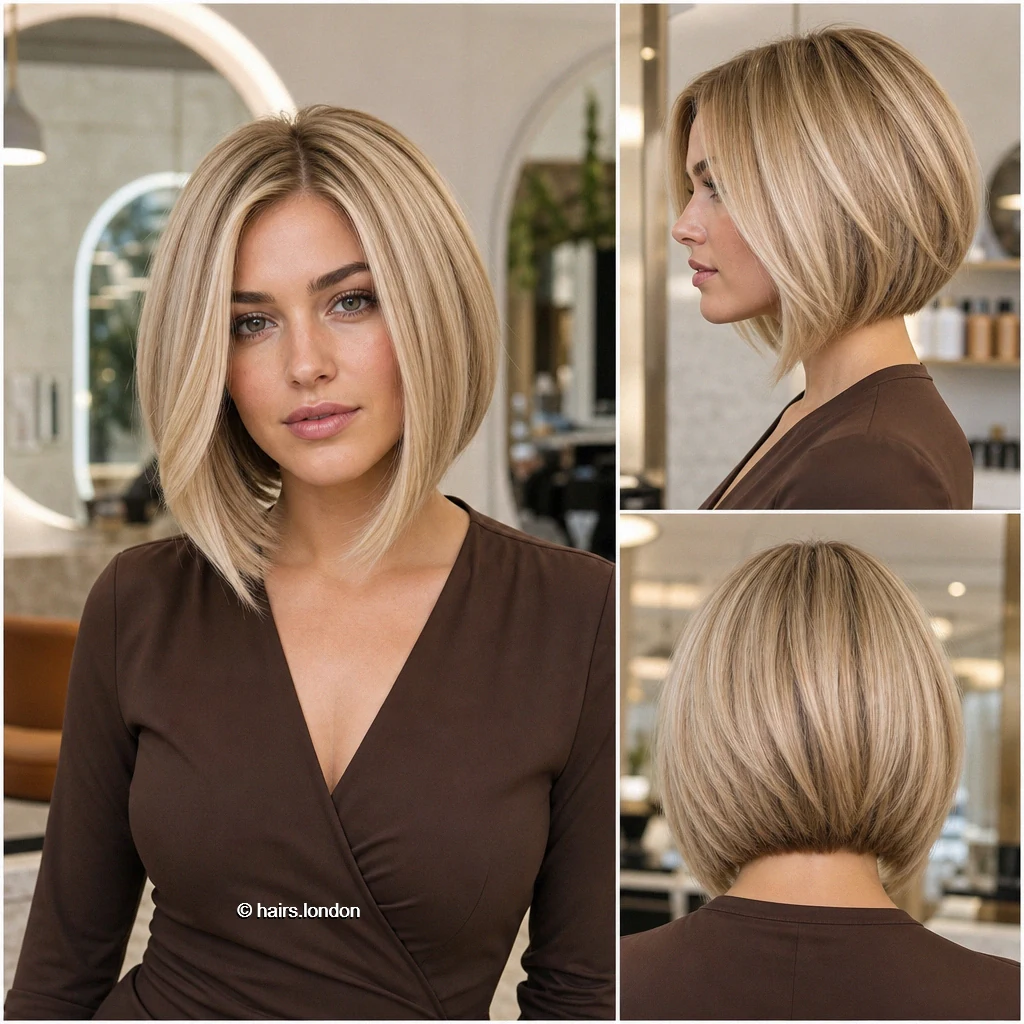
Long blonde front pieces fall toward the upper neck, noticeably below this bob’s shorter, rounded back. The side view shows a forward angle and visible fullness above the neckline, distinguishing it from a uniformly blunt bob. A center part opens the face, while darker roots give the pale lengths depth. Smooth the longer sections with a brush and lift the back gently instead of flattening its shape. This outline may need frequent checks where the short back grows into the long front. Ask how much graduation your density and growth patterns can support before committing to the contrast between visits.
12. Pale Blonde A-Line Bob With a Rounded Back
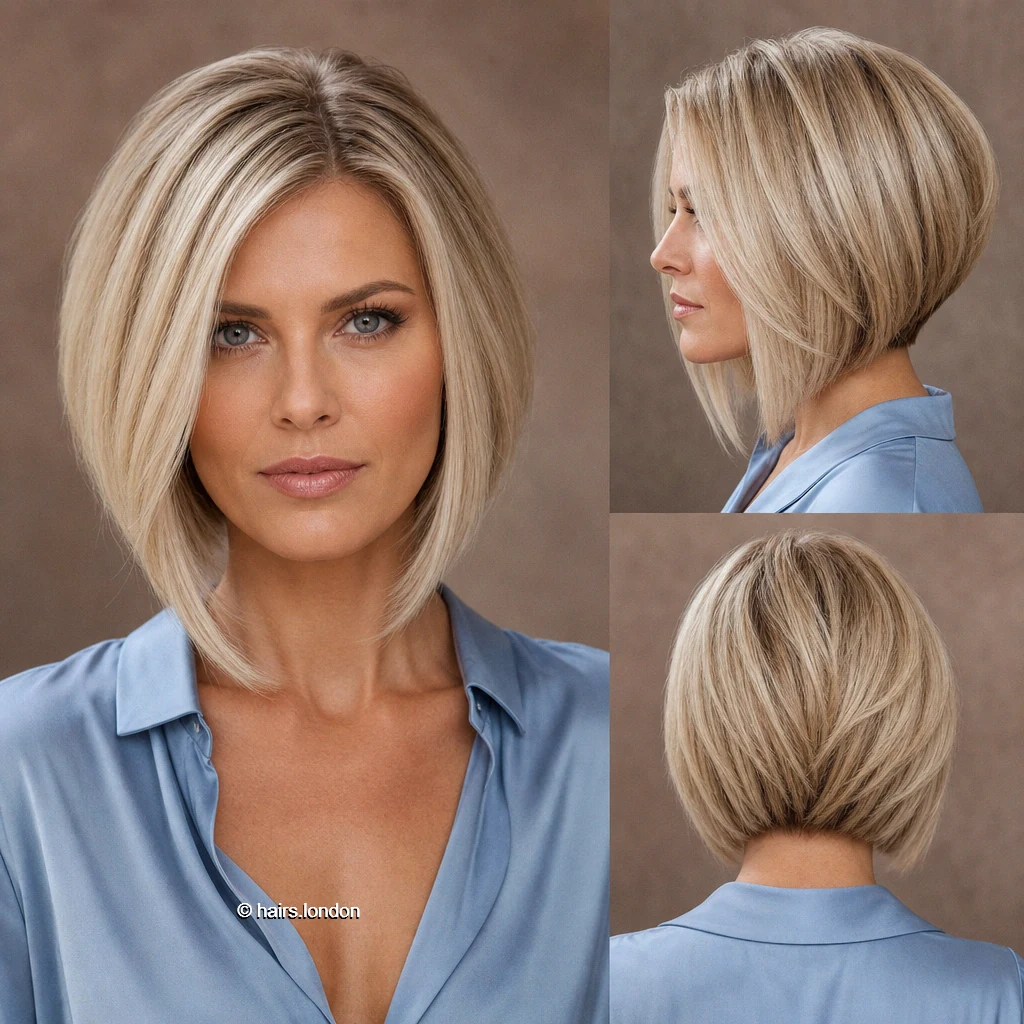
This pale blonde bob has longer front sections, a rounded, shorter back and a visible forward angle in profile. Its side-swept front adds softness without a separate fringe, while subtle tonal variation shows through the smooth surface. Ask your stylist where the back should hold its weight: the visible shape has fullness, but the amount of underlying graduation should suit your density. For styling, lift the back lightly and smooth the front toward the face, keeping the tips flexible. The contrast between front and back needs checking at trims; discuss color toning when the light blonde begins to shift.
13. Warm Blonde A-Line Bob With Back Fullness
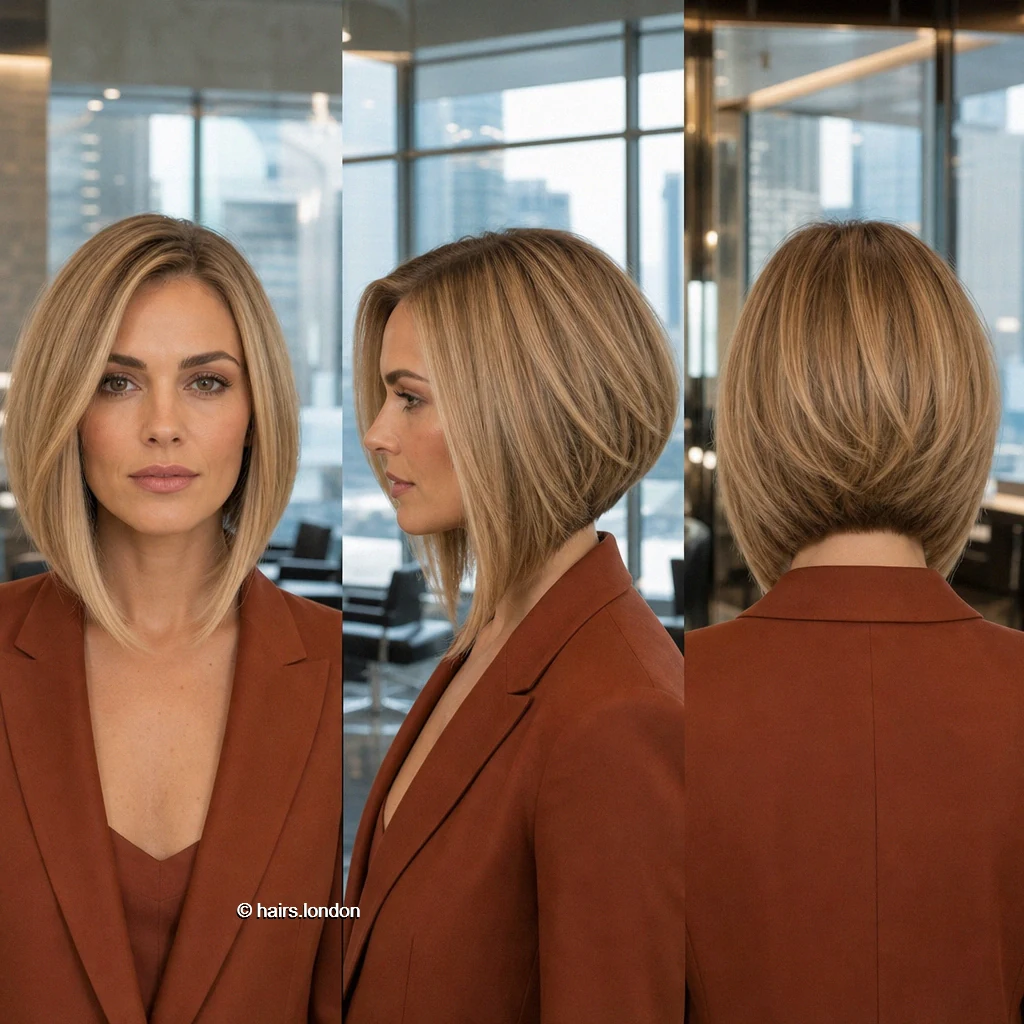
The front of this warm blonde bob extends below the jaw, while its back curves inward above the neck. A side part adds height, and the back view shows layered movement feeding into a shorter lower outline. That combination gives the shape a clear forward angle, rather than a level blunt perimeter. Brush the longer pieces smooth and work some lift into the back with restraint so its fullness stays visible. If your hair is thick, discuss selective bulk removal; if it is fine, protect the front ends. Trim the nape and front corners together to preserve the intended balance.
14. Softly Textured Blonde Bob at Jaw Length
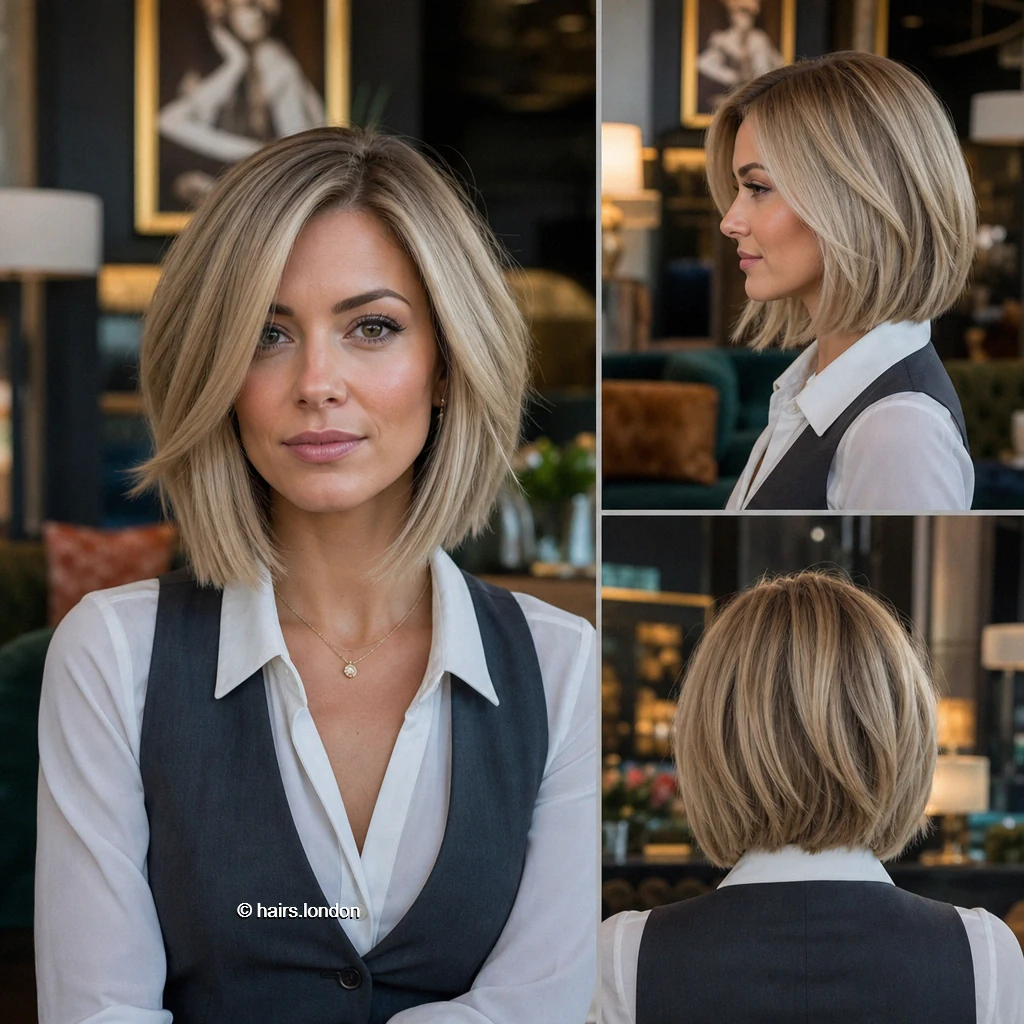
A long side-swept front and softly broken ends make this blonde bob less rigid than the sleek cuts nearby. It reaches around the jaw, with a back that appears gently rounded rather than tightly stacked. Darker roots and pale strands make the surface movement easy to see. Encourage a natural daily bend with light styling cream or a loose brush finish, keeping the lower edge from puffing outward. Ask for texture only where your density allows it; removing too much can weaken the outline. Trim when the ends lose their shape, and refresh the blonde according to its tonal shift.
15. Side-Part Blonde Bob With a Tucked Back
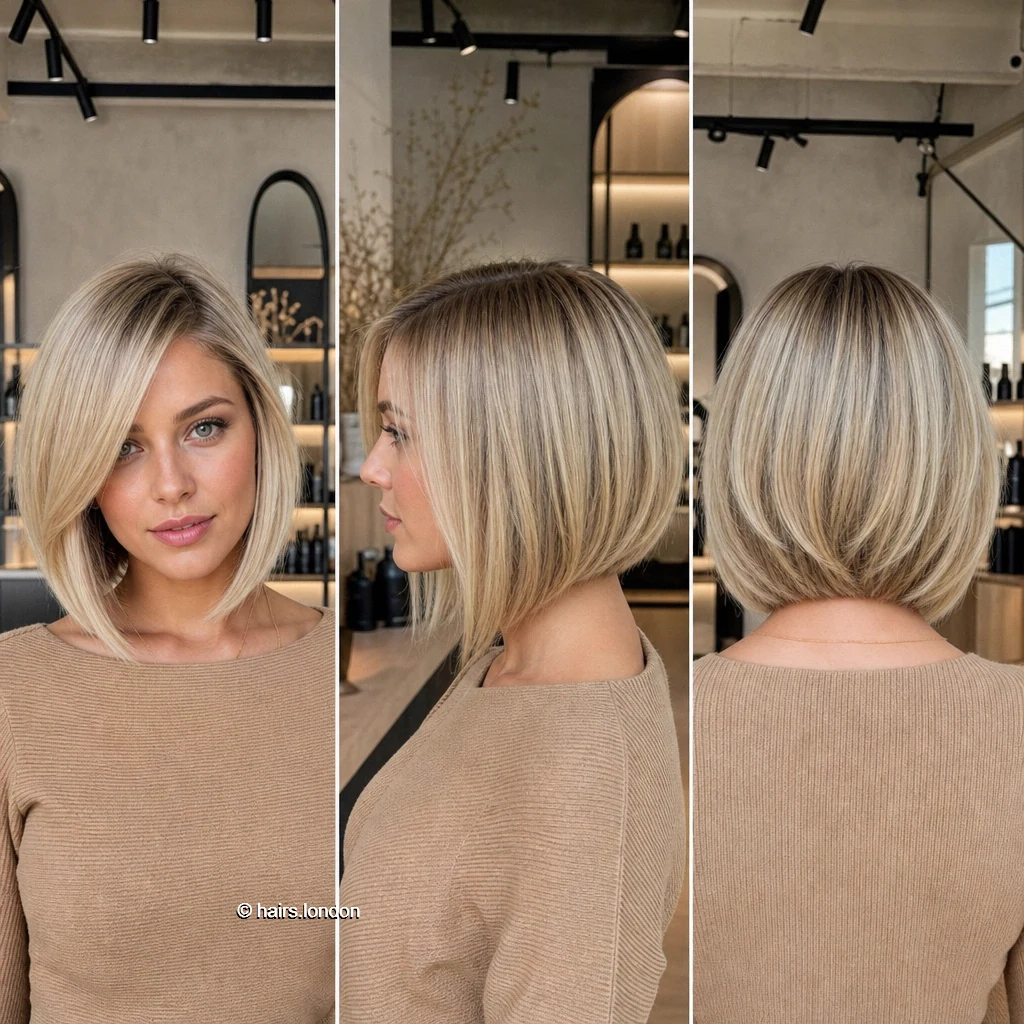
This blonde bob combines a deep side sweep with front lengths near the jaw and a back tucked against the neck. The profile shows a modest forward angle, while visible layers soften the rounded back without erasing its lower outline. Lighter pieces through the front stand out against darker roots and underneath tones. Blow dry the side sweep first, then guide the back inward with a brush; leave a little separation through the ends. Ask whether your hair’s density can maintain that back fullness. Monitor the neckline as it grows and discuss toning if the blonde loses its preferred shade.
16. Glossy Brunette Bob With a Rounded Silhouette
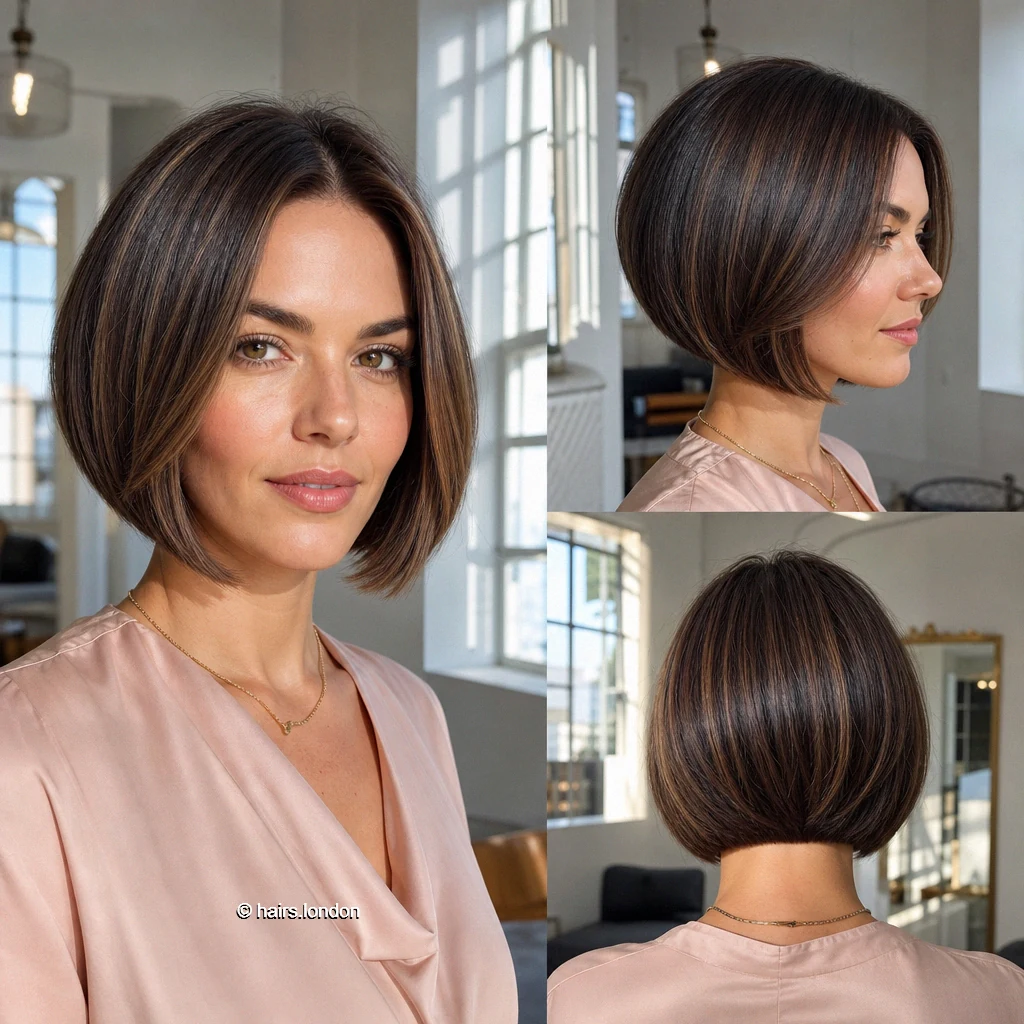
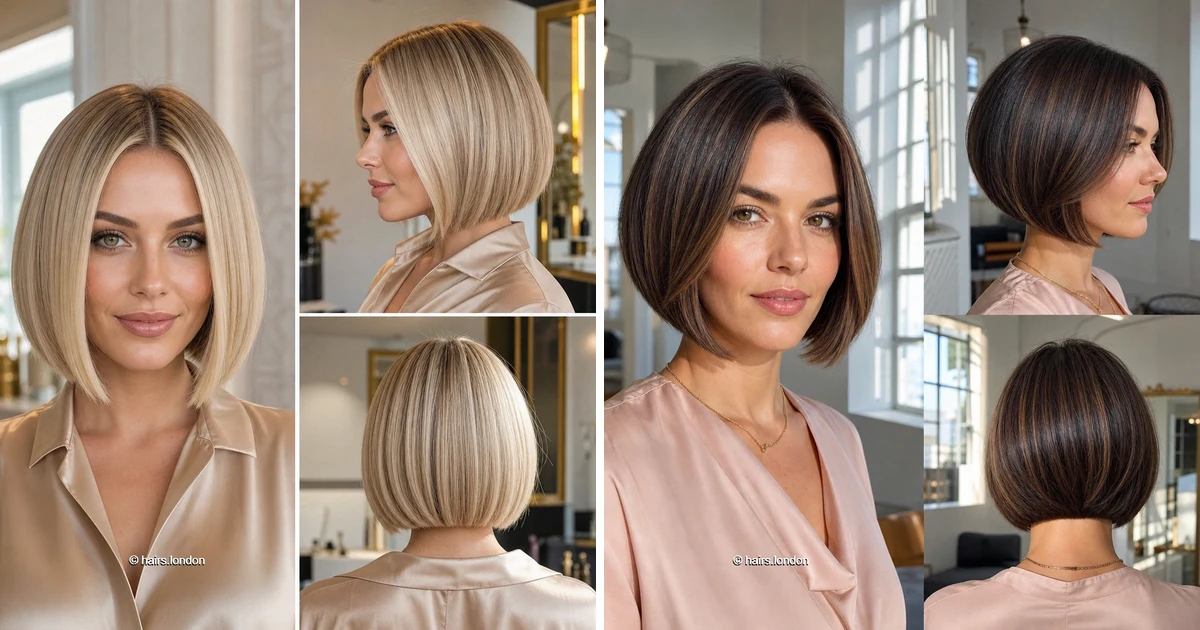
Deep brunette color and restrained warm highlights show off this bob’s smooth, rounded silhouette. The front falls around the jaw, and the side and back views reveal a shorter neckline beneath the fuller body of hair. There is a gentle front-to-back difference, but the visible effect is a compact curve rather than a dramatically pointed angle. Smooth the surface with downward airflow and a small amount of shine product, keeping the ends from becoming heavy. Discuss the back weight line if your hair is dense or grows outward. Trim when its rounded neckline begins to lose definition in the mirror.
17. Highlighted Brunette Bob With Longer Front Pieces
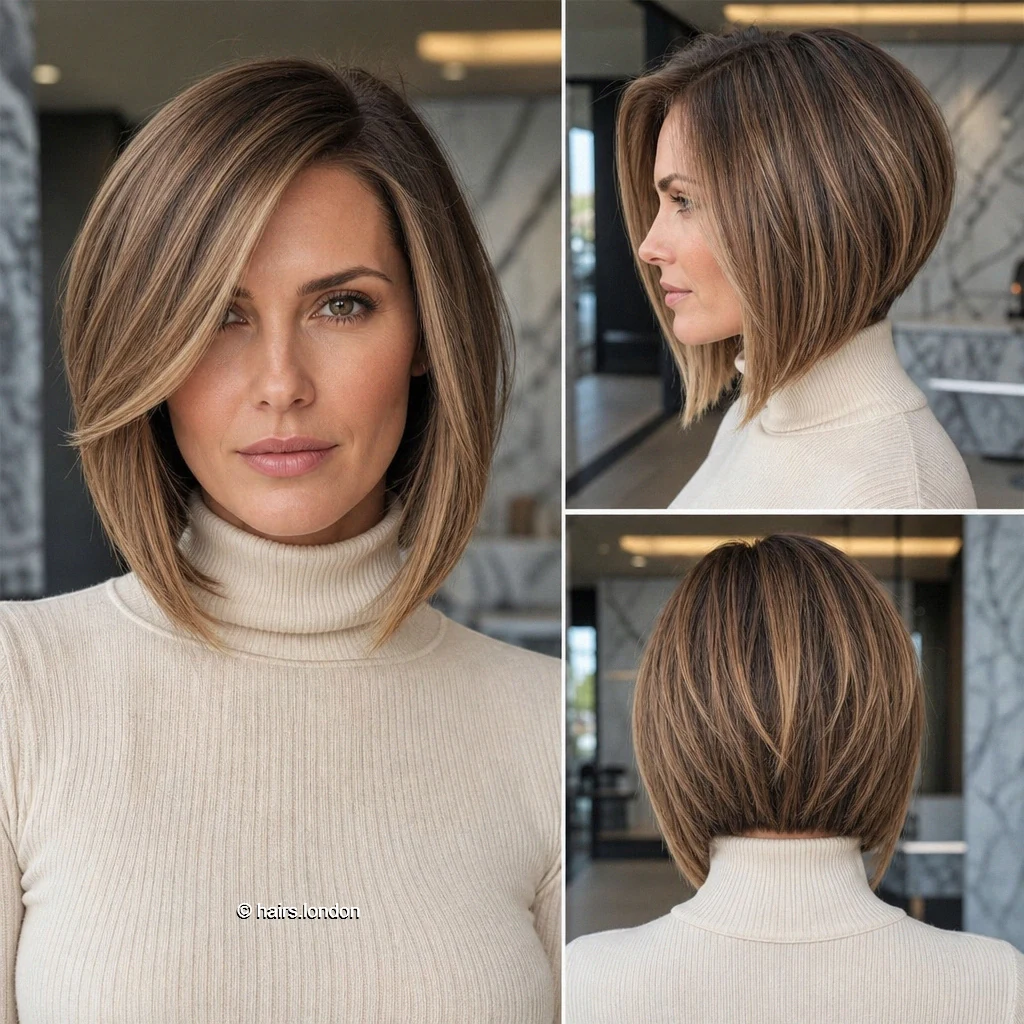
A long side sweep, warm highlights and front pieces below the jaw give this brunette bob a pronounced forward silhouette. The back sits higher at the neck, with visible layering and fullness above its shorter edge. Smooth the front sections while lifting the back gently; flattening the crown can make the longer front feel disconnected. If your hair is fine, ask how to retain enough weight in those tips, while dense hair may need careful shaping inside. Check both the short back and longer corners at trims. Discuss highlight placement and upkeep without assuming every color refresh requires another haircut.
18. Caramel-Highlighted Bob With a Soft Forward Angle
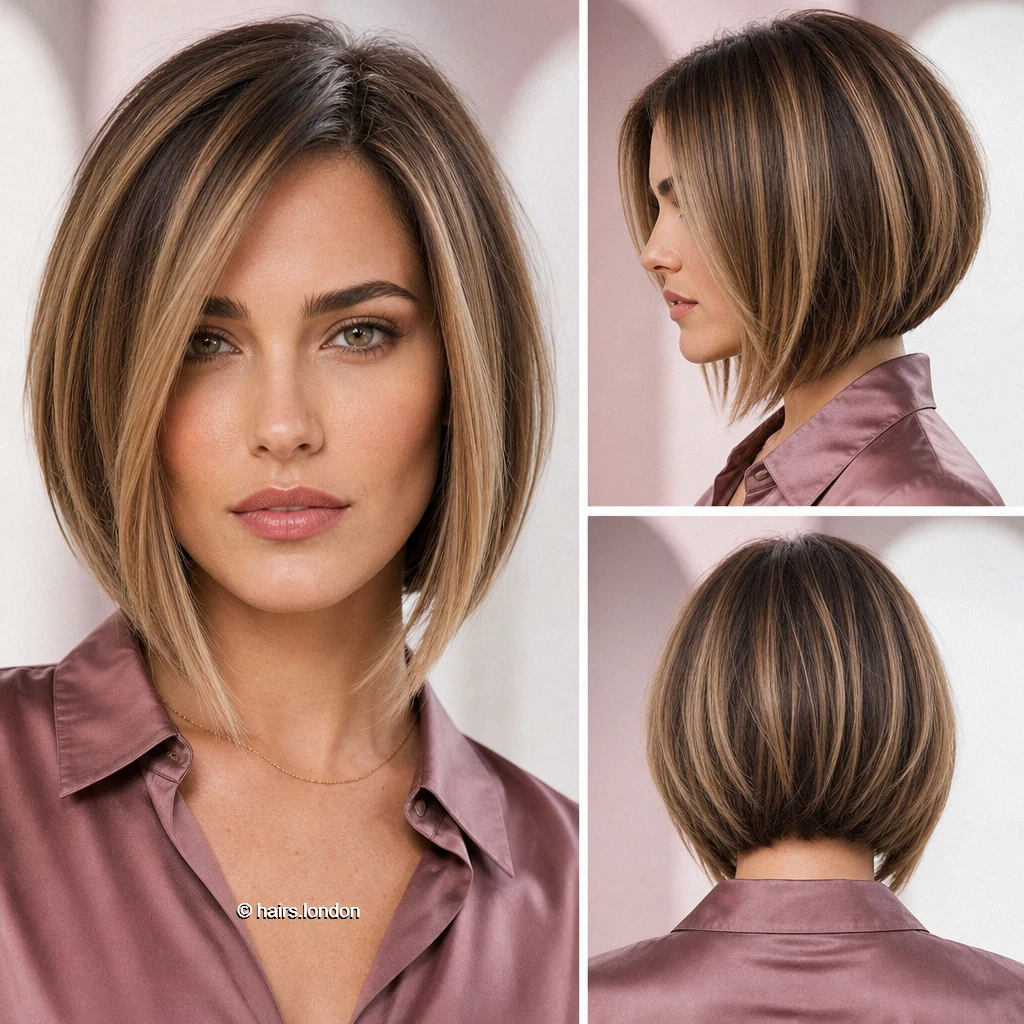
Caramel-toned front pieces brighten this brown bob, whose side view shows longer hair toward the face and a shorter, rounded nape. The back carries visible fullness, while the smooth front keeps the angle easy to read. Style the side sweep with a brush that follows its natural fall, then direct the back inward without building excessive bulk if humidity causes expansion. Ask your stylist how your growth pattern affects the short neckline, especially if hair there pushes outward. Trims should preserve the difference between front and back. Color appointments can focus on the brighter face-framing pieces as their contrast changes.
19. Deep Brown Bob With a Long Side Sweep
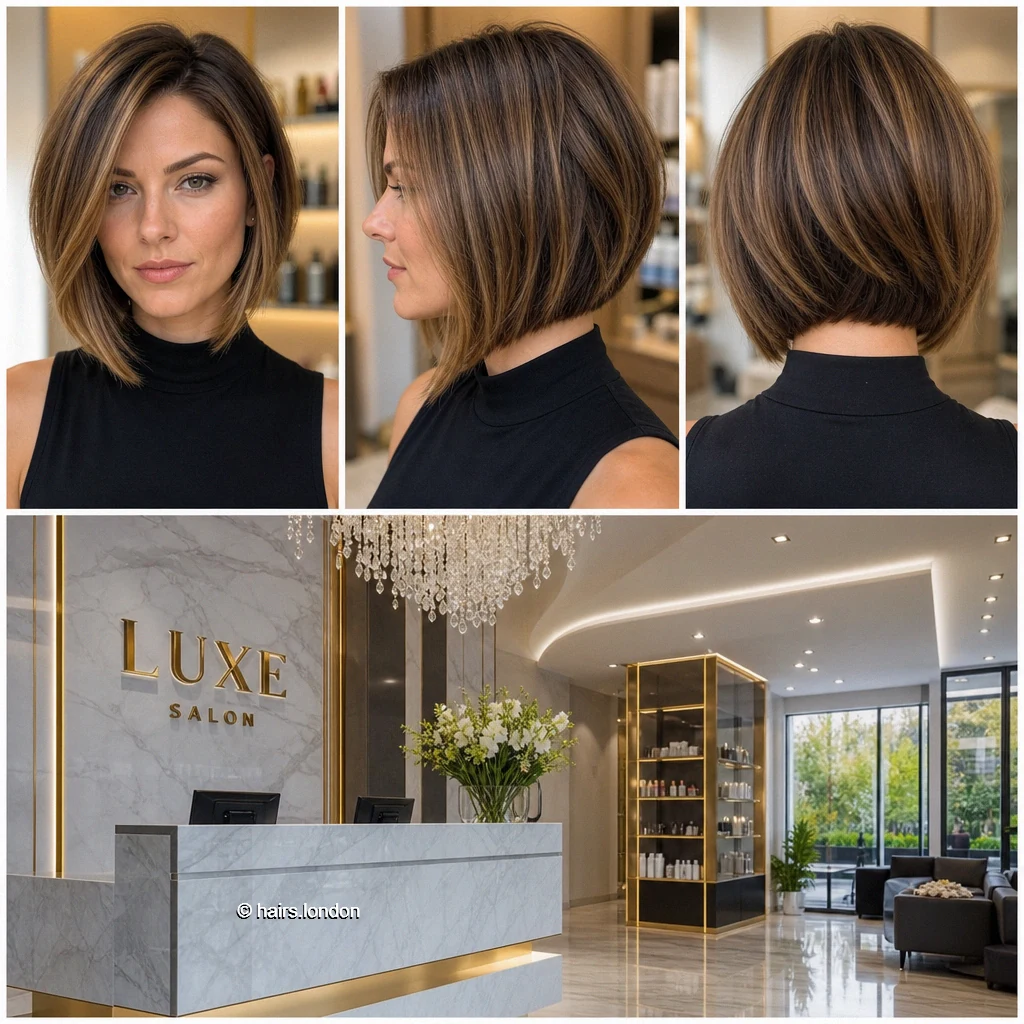
This deep brown bob has a long side-swept front, warm lighter strands and a rounded back that finishes close to the neck. The profile reveals a forward angle, with the front extending beyond the shorter rear outline. Back layers create visible movement without making the neckline look wispy at the ends. Smooth the longest sections with a brush, then use a lighter touch through the back so it retains its curve. Ask about maintaining enough density at the front if your hair is fine. Regular neckline checks help protect the shape; highlighted pieces may need refreshing on a separate schedule.
20. Tousled Brown Bob With Golden Ribbons
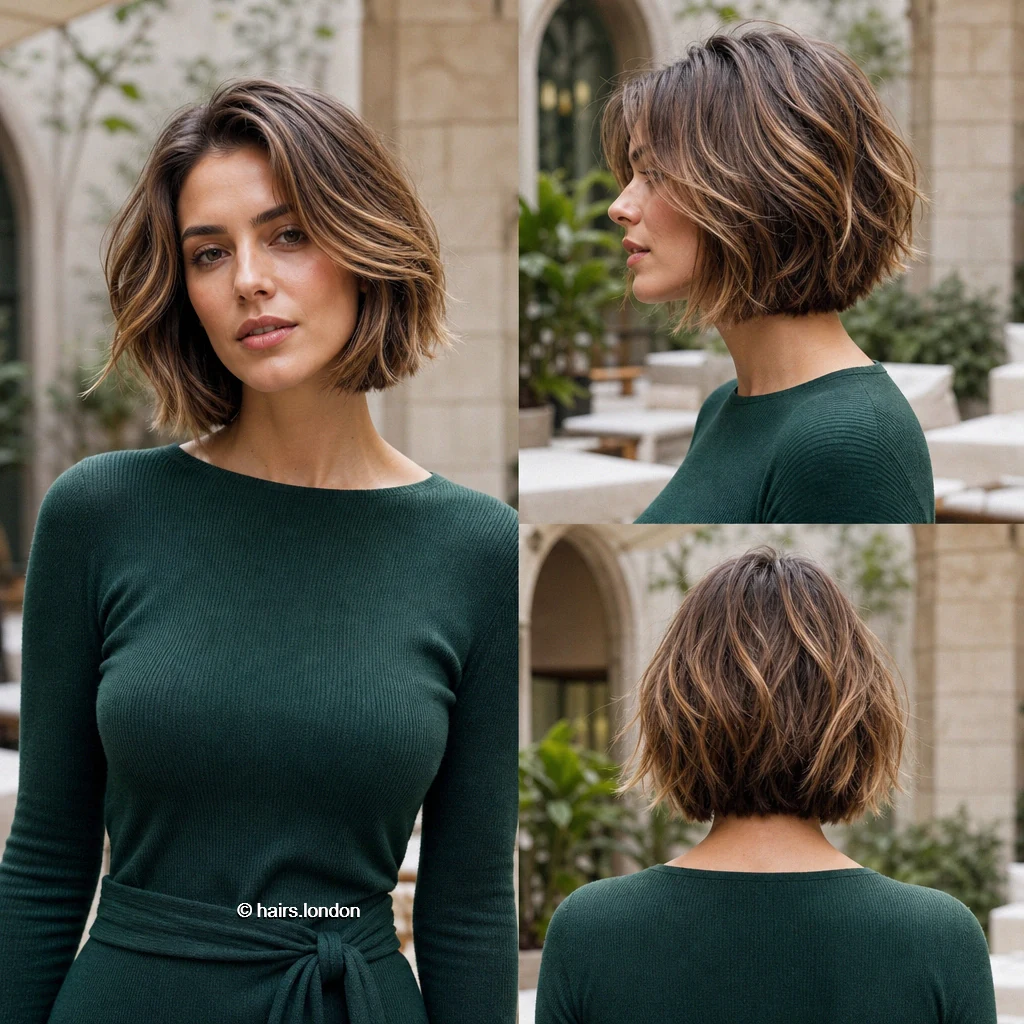
Loose bends and separated ends give this brown bob a relaxed finish around the jaw and upper neck. Golden ribbons catch the movement through its side-swept front and textured back, where the lower edge looks soft rather than sharply blunt. Encourage existing waves with a light cream and gentle scrunching; avoid piling on product that turns the perimeter bulky. If your hair is straight, ask how much daily styling those bends would require. Discuss selective texture according to density and natural growth. Trims can tidy wandering ends without removing the lived-in movement, while highlighted strands need consistent, gentle color care.
How to Choose Your Bob Length and Shape
Start with the point where you want the front to finish: at the jaw, just below it or nearer the upper neck. Then consider the back separately. A nearly level perimeter keeps weight low, an A-line shape leaves the front longer, and graduation builds visible fullness above a shorter neckline. Bring side and back references as well as front portraits. If you often tuck your hair behind your ears, tell your stylist; that habit changes how the front corners appear.
Styling Fine, Thick, Wavy and Curly Textures
Fine hair often benefits from retaining a substantial lower edge; apply root lift sparingly so the ends do not separate too much. With thick hair, ask for selective internal bulk control rather than automatically thinning the visible perimeter. Smooth a sleek bob by directing airflow downward and finishing the ends with a brush. For natural waves, scrunch in light product and let bends interrupt a softer outline. Curly hair should be planned around its dry shape and shrinkage: discuss where the perimeter will sit when the curls spring up, and avoid creating a dense shelf above the ends.
Keeping Blonde and Brunette Color Fresh
These images range from pale, root-shadowed blondes to deep browns with warm highlights. Ask your colorist which changes to expect as your particular shade fades. A suitable toning routine can help maintain a preferred blonde tone, while gentle washing and heat protection help preserve both pale lengths and highlighted brunette pieces. A color refresh and a shape trim need not always happen at the same appointment.
Maintaining the Bob Perimeter and Graduation
Check the outline from the front, side and back as it grows. A straight, weighty bob shows uneven corners readily; a short graduated back may lose its rounded silhouette sooner than longer front pieces do. A textured bob can tolerate a softer edge, but still needs occasional tidying to keep movement from becoming bulk. Base trim timing on how quickly your own hair grows and which part of the shape matters most to you, rather than following one fixed interval for every bob.
What to Discuss With Your Stylist
Show the views that explain your preferred neckline, front length, fringe and weight line. Say whether you normally air dry, round brush, straighten or encourage natural texture. Ask how your density, curl or wave pattern, parting and nape growth will affect the proposed shape. For a longer-front bob, agree on how noticeable the angle should be; for a graduated one, agree on where fullness should sit. Discuss color upkeep and the amount of at-home styling you are comfortable doing.
Frequently Asked Questions
What is the difference between a bob and a lob?
A bob generally finishes around the jaw or neck; a lob is a longer bob that approaches or reaches the shoulders. The name matters less than agreeing on the exact finished length.
Is an A-line bob the same as a stacked bob?
No. A-line describes a perimeter that is longer toward the front. Stacked describes visible graduation and fullness at the back. One haircut can show both features.
Does a rounded back always mean the bob is stacked?
No. A back can look rounded because of its perimeter, styling or natural fullness. Look for visible graduation before calling it stacked.
Which bob details help fine hair look fuller?
A well-supported lower edge can make fine ends appear denser. Ask your stylist whether layers or extensive texturizing would weaken the perimeter you want.
How can a bob work with thick hair?
The stylist can assess where bulk collects and remove it selectively inside the shape. Preserving enough weight at the edge helps prevent a thick bob from spreading outward.
Can I wear one of these shapes with natural curls?
Potentially, but curls change the visible length and outline. Plan the cut around its dry, springy shape rather than expecting it to resemble a smoothed reference exactly.
Should I add a side-swept fringe?
Consider how your front hair grows and whether you will style the fringe most mornings. A longer sweep offers flexibility, but may need brushing or occasional fringe trims.
What is the simplest daily styling approach for a sleek bob?
Use heat protection, direct the dryer downward and smooth the perimeter in manageable sections. Finish lightly so the clean line remains visible.
How do I style a bob without flattening its back?
Lift the roots gently while drying, then smooth only the outer surface and lower edge. Heavy creams or excessive brushing can compress a rounded shape.
How often should I trim a bob?
Trim when the feature you value starts to shift. A crisp blunt edge or short graduated nape may need attention sooner than a deliberately textured outline.
What happens when a graduated bob grows out?
The short neckline lengthens and the fullness can settle lower. Ask your stylist whether to maintain the graduation or gradually blend it into a more level bob.
Can I grow an angled bob into one length?
Yes. Your stylist can gradually even the shorter back with the longer front, adjusting the perimeter at successive trims rather than removing all the front length at once.
Conclusion
A bob is defined as much by its side and back as by the pieces framing the face. Choose the outline you would enjoy maintaining, then adapt its weight, texture and color to your own hair. A clear conversation about the neckline, front corners and daily styling will make an inspiration photo far more useful at your appointment.