


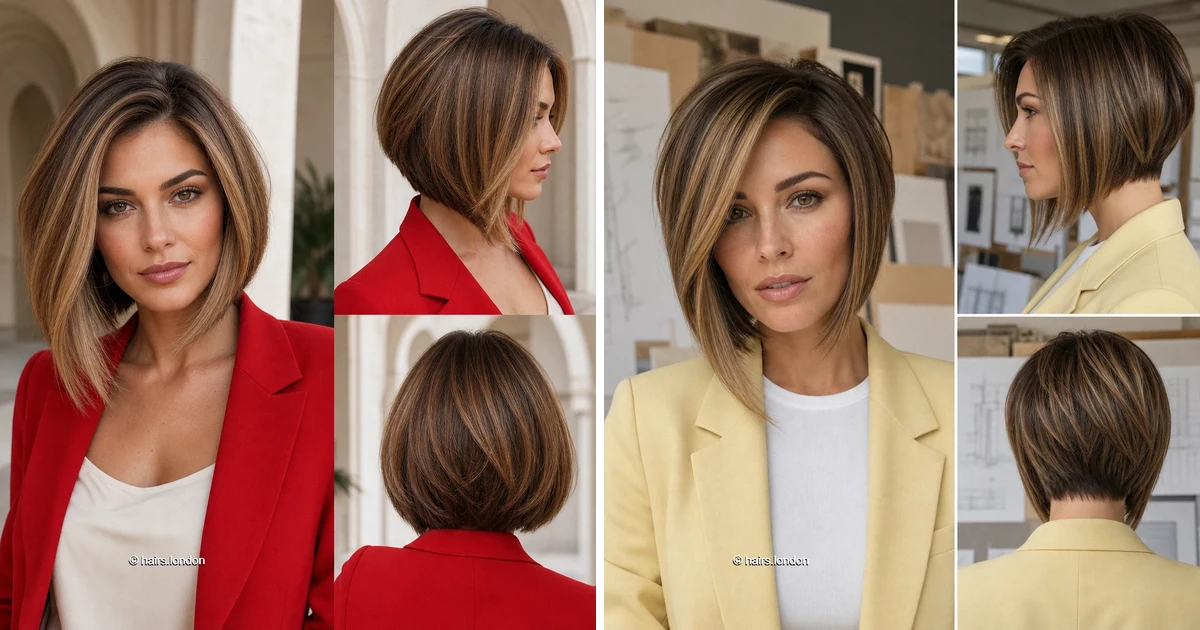
11. Long Layered Bob With Relaxed Side Sweep
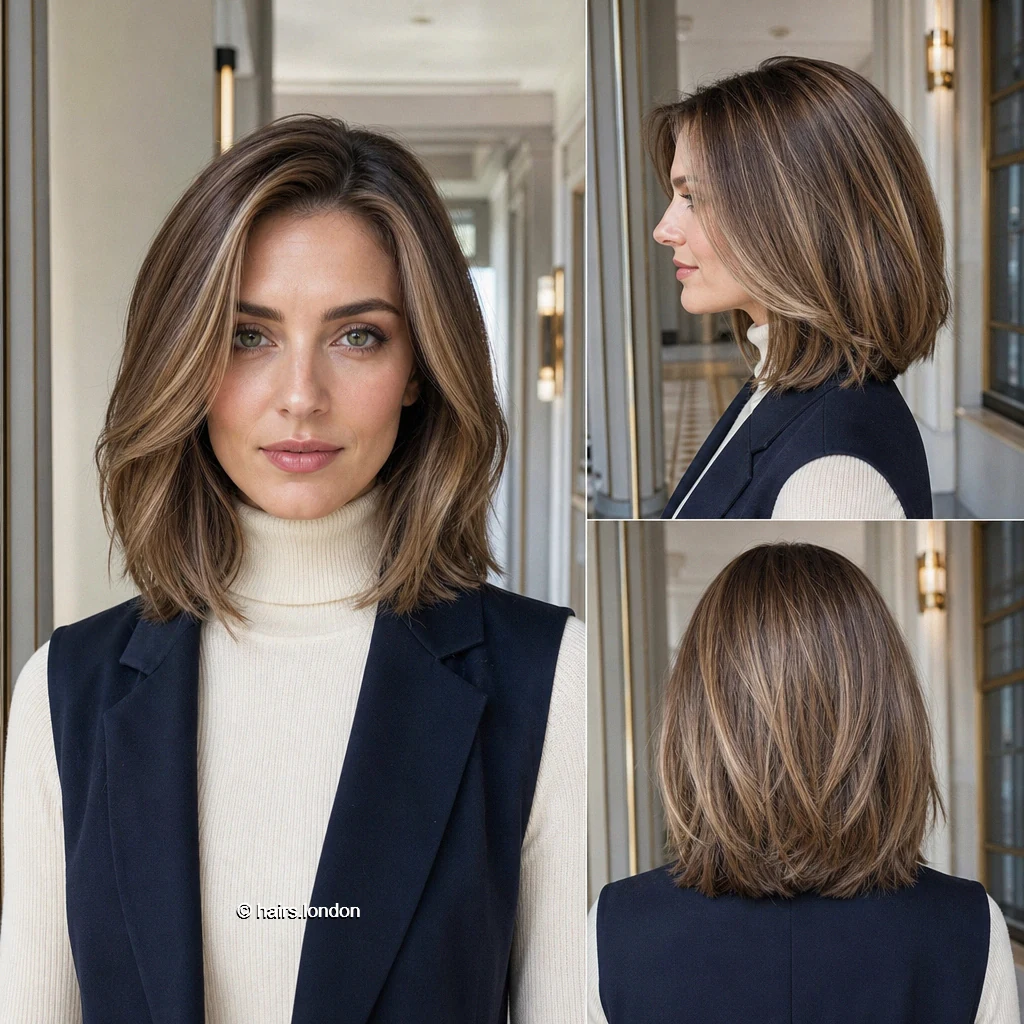
Brown hair with beige highlights forms this longer layered bob. Its ends approach the shoulders but remain visibly above them. Soft face framing pieces flow from a relaxed side part. The back has separated layers rather than a solid edge. Loose bends emphasize movement without creating a sharply angled profile. Use a wide brush for smoothness or scrunch existing waves. Avoid too much texturizer if the ends already feel light. This length offers more movement when sufficient density supports layers. Ask your colorist how often brighter pieces need refreshing. Trim dry looking tips regularly while keeping the longer outline balanced.
12. Tousled Lob With Loose Face-Framing Waves
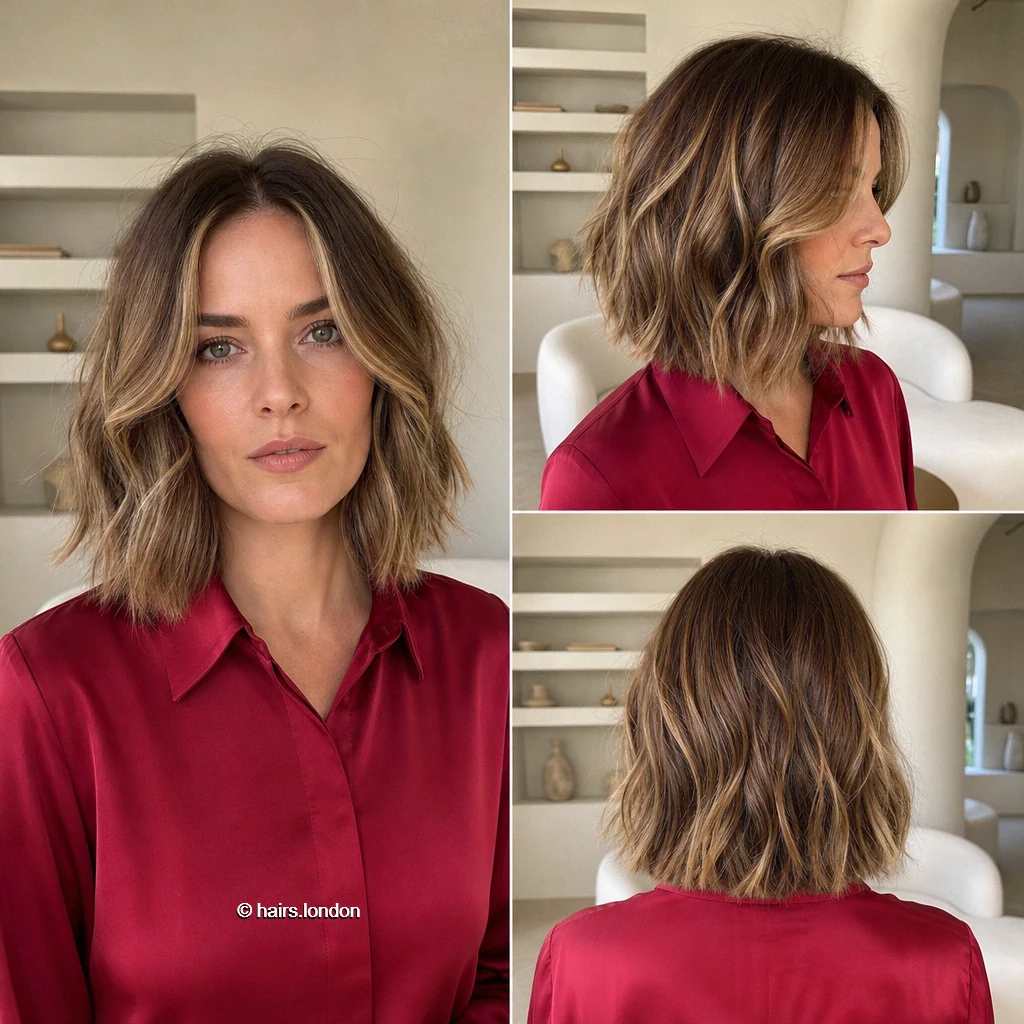
Caramel blonde ribbons brighten the brown base of this lob. Its loose, textured ends sit just above the shoulder line. A center part releases bent pieces beside the cheeks. Back views show an airy outline without a rigid weight line. Enhance existing waves with light hold cream on damp lengths. Alternatively, bend selected sections while leaving their tips more relaxed. Thick hair may need careful internal shaping to prevent width. Fine hair can keep more weight at its outer edge. Limit heat and maintain gloss when highlighted ends lose sheen. Book a trim when the longer waves lose their balance.
13. Wavy Bob With a Sweeping Front Section
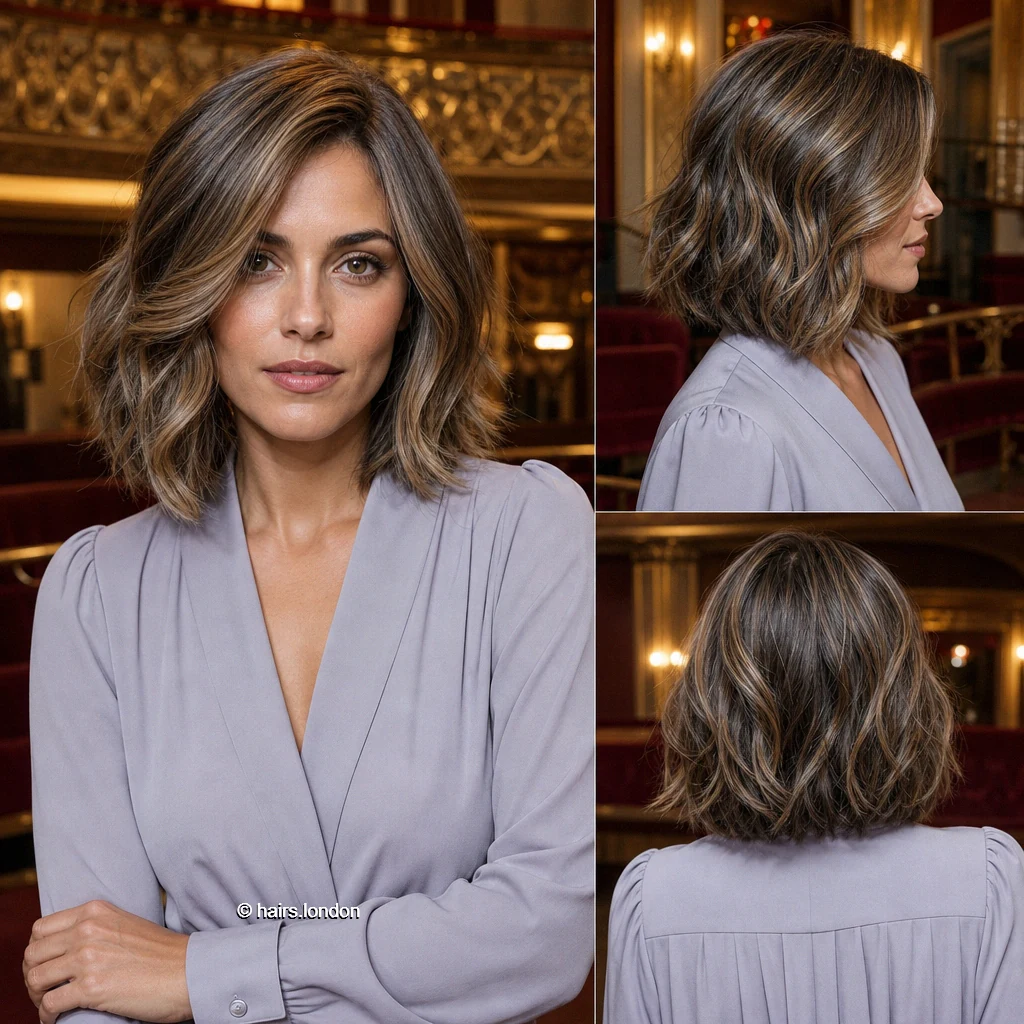
Ash brown hair carries lighter ribbons through these loose waves. This bob ends around the lower jaw and upper neck. A sweeping side part creates volume above one eye area. The back looks softly layered, with an irregular textured perimeter. Follow natural wave direction rather than forcing identical polished bends. Scrunch in foam, then diffuse slowly for controlled, airy definition. If hair is dense, request movement without excessive crown layers. Finer strands may benefit from lighter product and fuller ends. Discuss toning only if the brighter ribbons become too warm. Trim when the front sweep overwhelms the shorter overall outline.
14. Rounded Graduated Bob With Layered Crown Movement
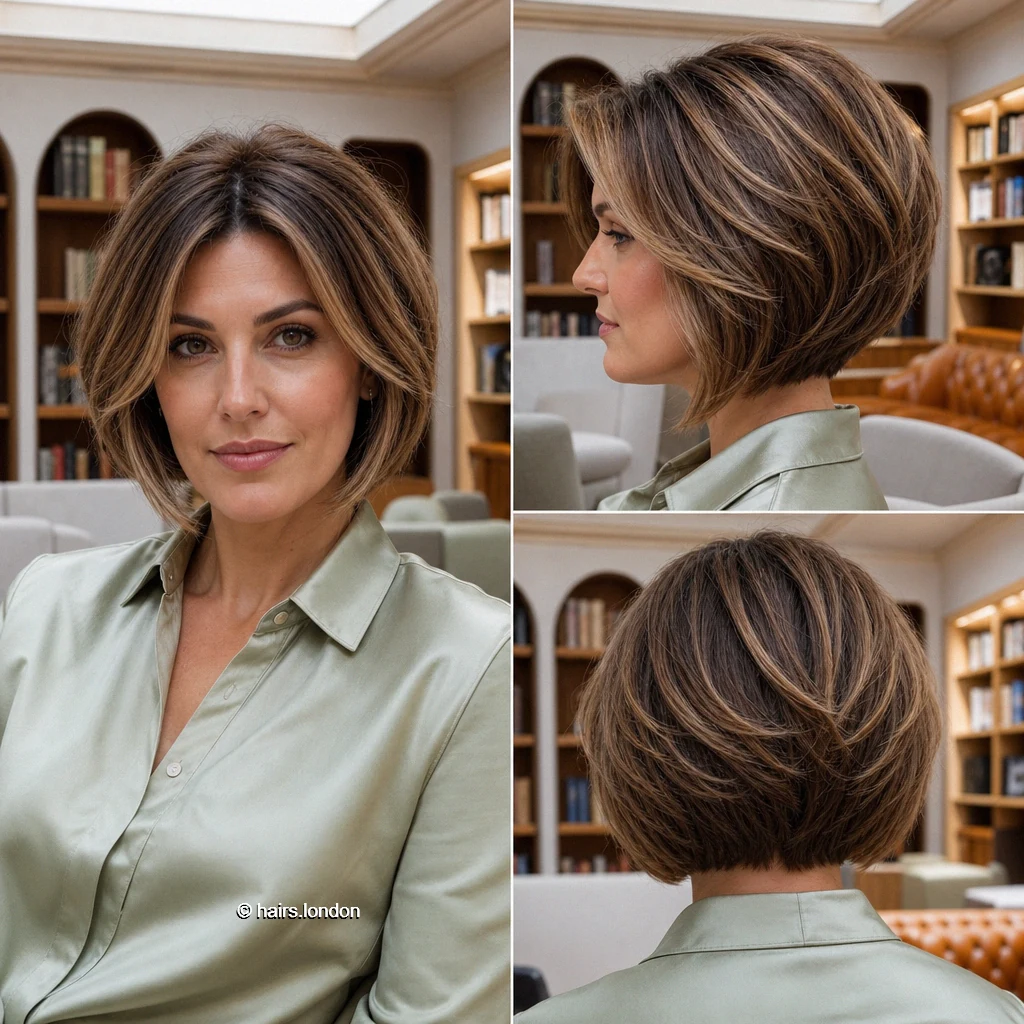
Warm brown highlights accent this short, full graduated bob. Longer front pieces settle around the jaw beside its side part. From the side, layered fullness tapers into a shorter nape. The rear view makes its rounded weight distribution especially clear. Brush top layers loosely backward to show their natural separation. Keep the nape smoother so the silhouette does not widen. Dense hair may need targeted interior shaping beneath crown fullness. Fine hair should retain enough surface weight for coverage there. Ask how your growth pattern affects the short back section. Maintain graduation before the nape loses its tidy, tapered finish.
15. Short Stacked Bob With a Blonde Side Sweep
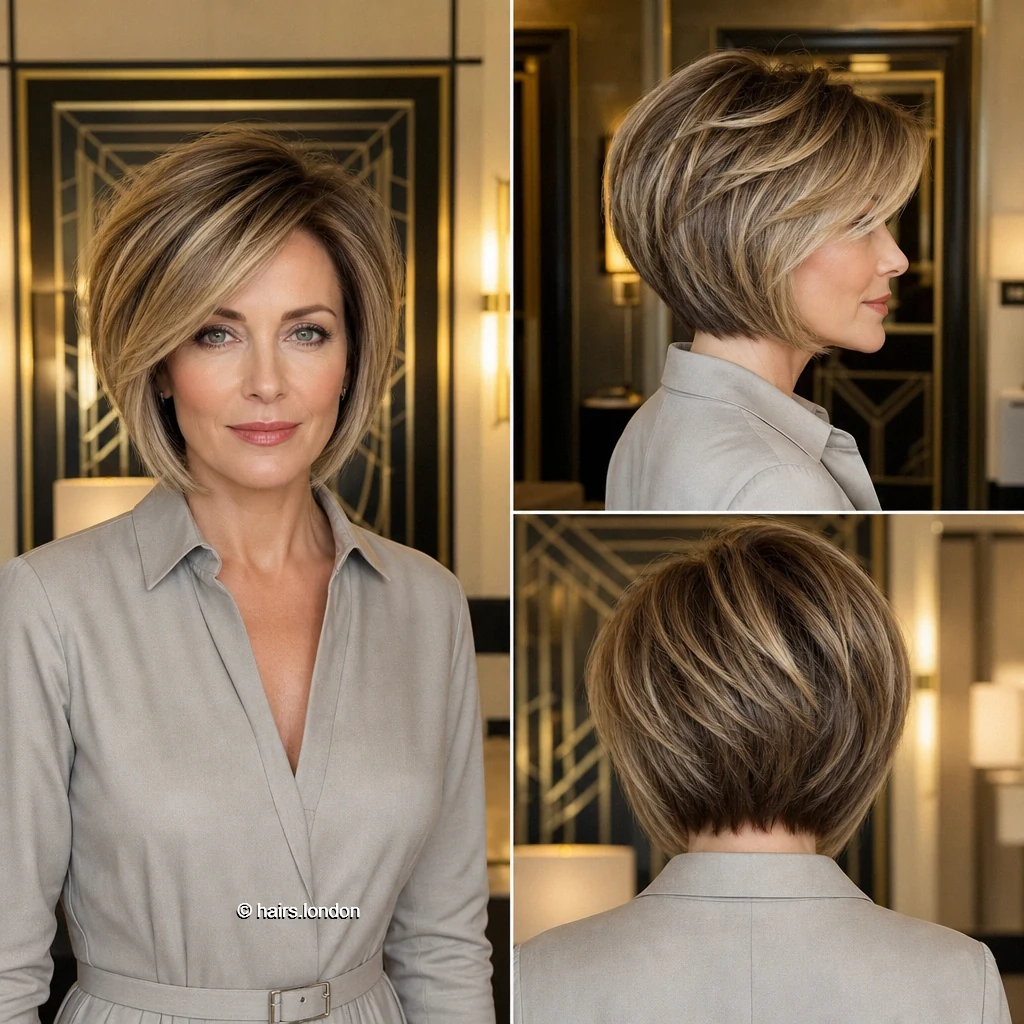
Blonde highlights sweep across the warm brunette base of this bob. Its long side fringe meets a fuller, visibly graduated crown. Side and back views reveal a closely tapered lower nape. Short layers create lift above the narrower rear outline. Brush the sweeping fringe sideways while directing crown roots upward. Finish with flexible spray rather than stiff, bulky backcombing techniques. Strong growth patterns may change how that long fringe falls. Ask your stylist whether this short nape fits your upkeep. Bright pieces may need toning according to your preferred warmth. Frequent trims preserve the separation between fullness and tapered neckline.
16. Side-Parted Bob With Subtle Back Graduation
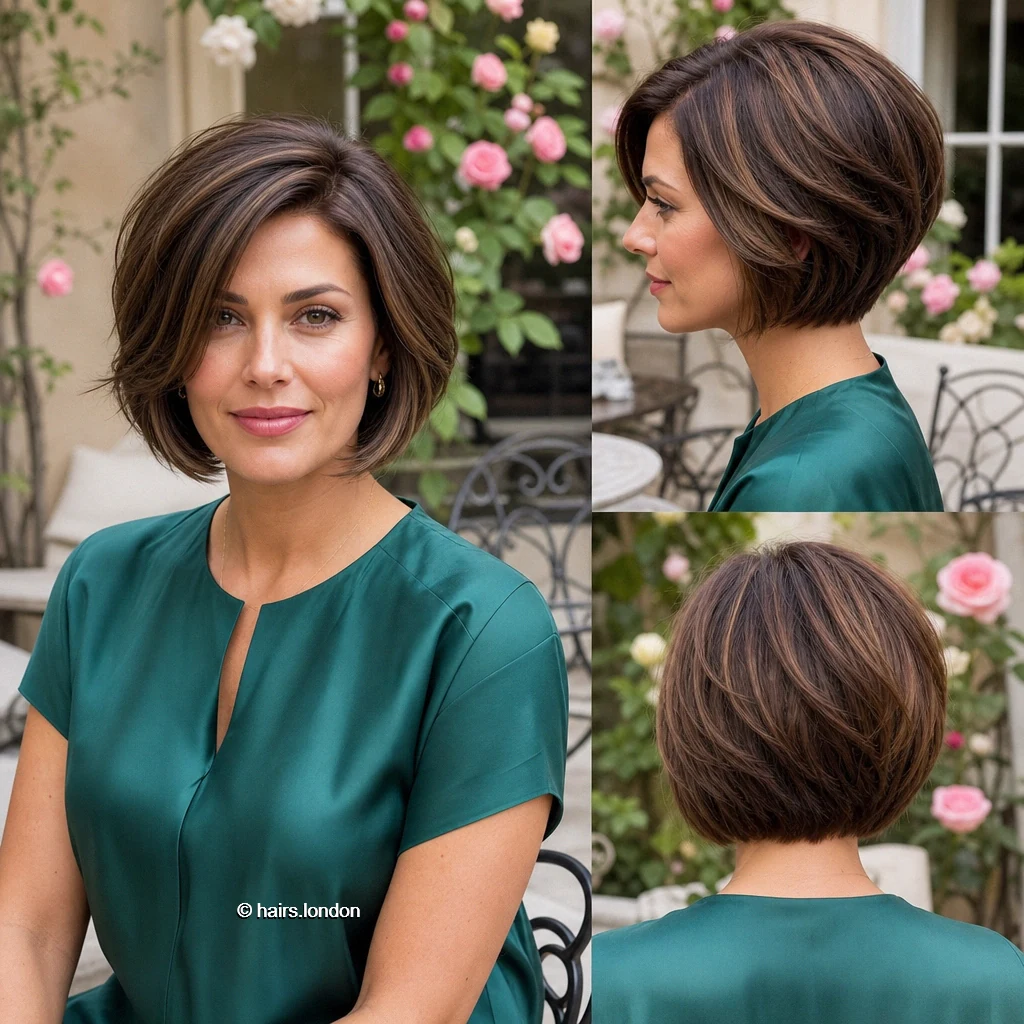
Deep brunette hair has faint warm highlights across this bob. A side part sends a longer section across the forehead. Its front curves beside the jaw instead of extending dramatically. The back shows gentle graduation above a short, tidy neckline. Rounded fullness sits behind the ear without obvious hard steps. Dry the front in its preferred direction before shaping ends. Use minimal cream to keep the short back from separating. Discuss density before requesting more layers through the rounded crown. Low contrast color may need less frequent visible touchups here. Trim the neckline when its neat curve begins growing out.
17. Strongly Angled Bob With a Graduated Back
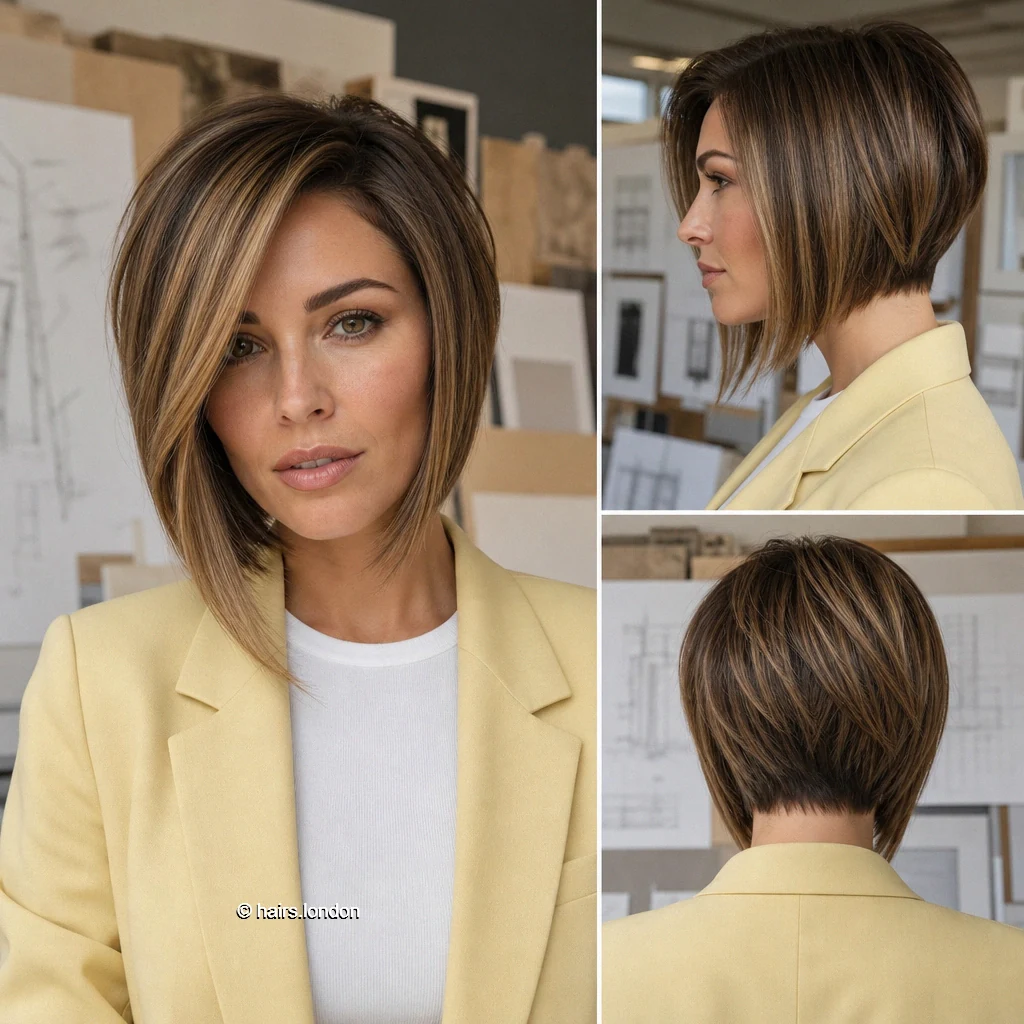
Brunette hair with blonde highlights defines this contrasting bob. The long front reaches toward the collar while back stays short. Side views show a forward angle and raised graduation. A side part reinforces the extended panel across one cheek. The back narrows toward a close nape beneath rounded fullness. Smooth long sections separately to keep their points from flipping. Lift rear roots lightly without adding unnecessary width behind ears. Ask whether your density supports the pronounced front to back difference. Refresh highlighted face framing strands when their tone looks uneven. Shorter back sections need timely trims to preserve this silhouette.
18. Rounded Graduated Bob With a Sweeping Highlight
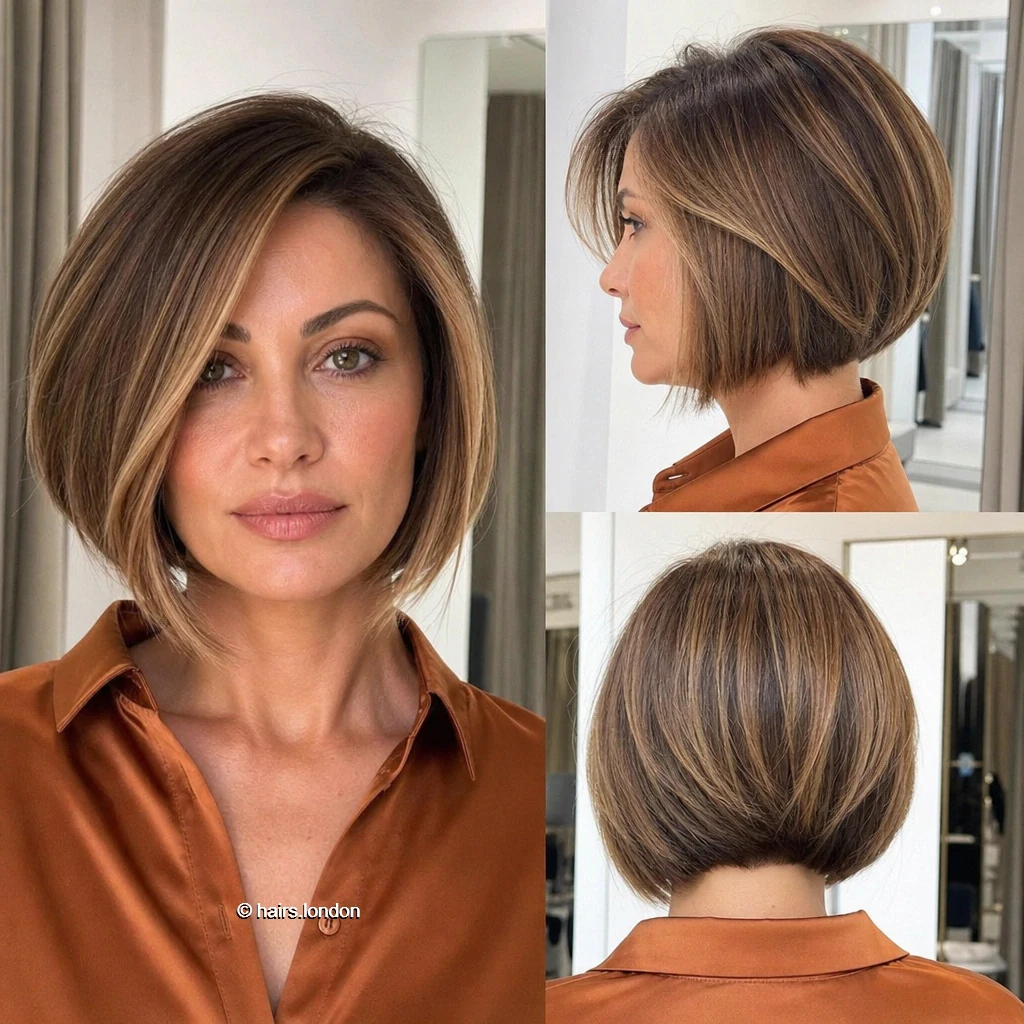
Caramel highlights sweep through the brown front of this bob. A side part leads into a smooth, cheek skimming panel. Visible back graduation builds rounded fullness above the tapered nape. Front ends reach the jaw while rear ends sit higher. Direct the front downward during drying for a polished finish. Brush through the back gently to maintain its curved volume. Thick hair could need careful internal removal beneath that shape. Fine hair may require fewer layers to avoid sparse ends. Ask about highlight placement before committing to a brighter sweep. Trim the nape promptly when its graduated outline loses definition.
19. Long-Front Bob With a Smooth Graduated Nape
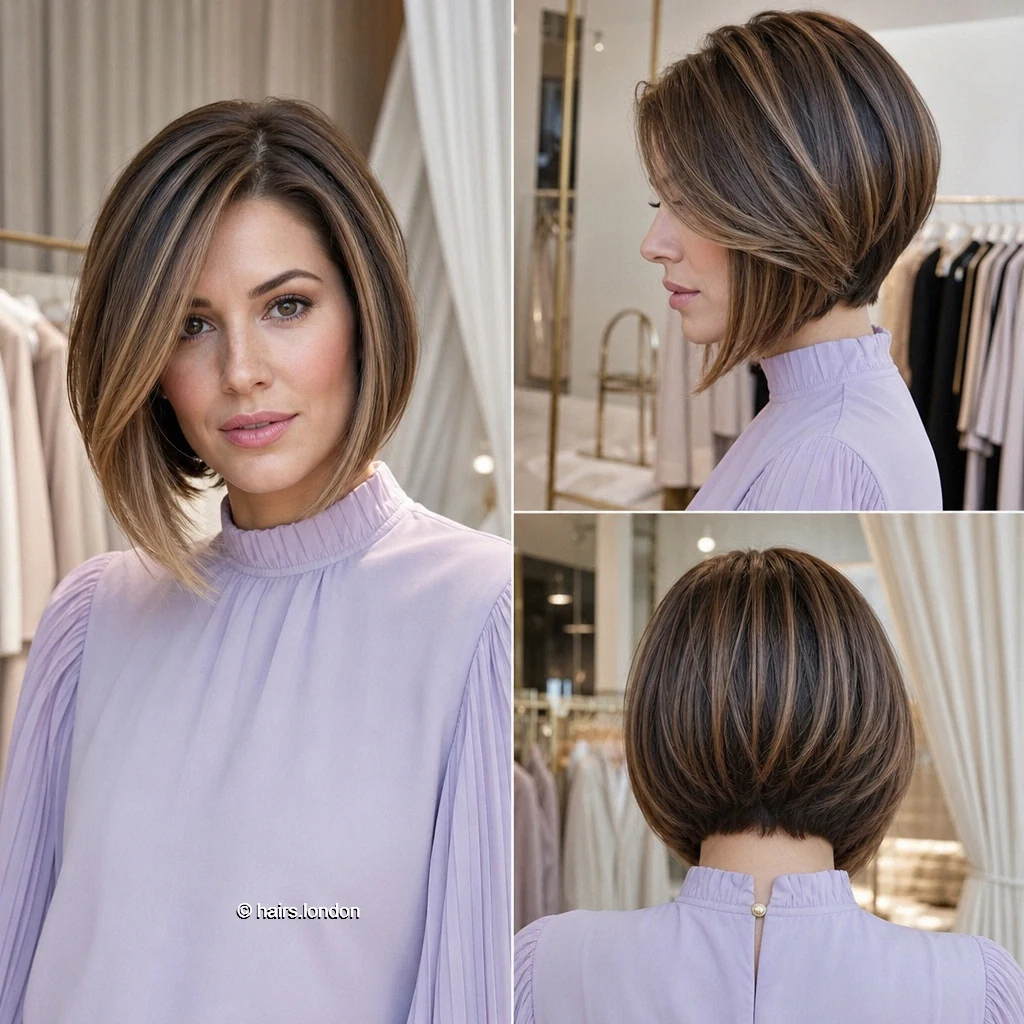
Warm brunette hair shows blonde ribbons around this angled bob. The longest front falls below the jaw toward the collar. Its side view reveals shorter back lengths and rounded graduation. At the nape, the outline sits close and compact. A side part lets highlighted strands sweep across the face. Smooth ends with controlled airflow while protecting the longer points. Discuss internal weight if thick hair overwhelms the rear curve. Fine hair needs enough fullness to support that forward line. Keep brighter strands conditioned if frequent styling dries their ends. Regular shape trims should balance growing fronts against the shorter back.
20. Textured Bob With Wispy Fringe
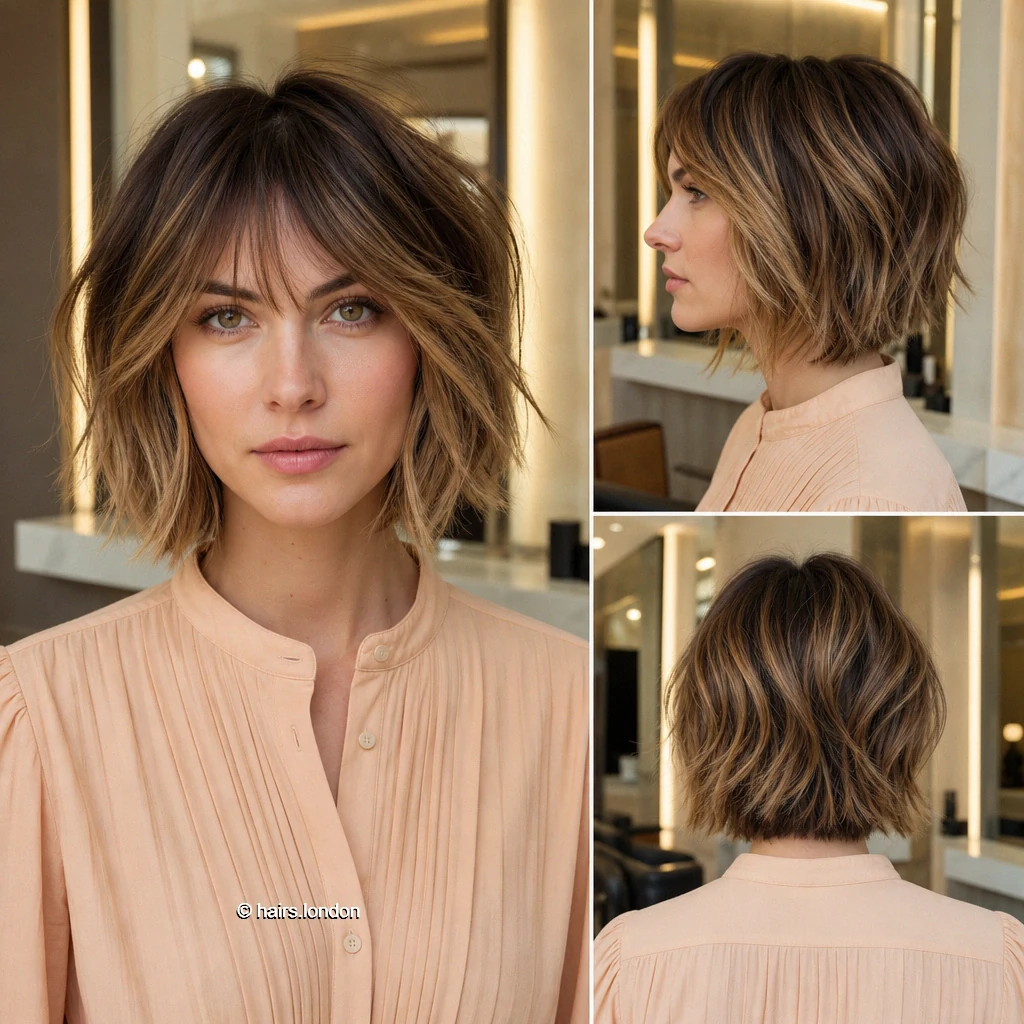
Honey brown highlights illuminate the waves of this textured bob. Wispy fringe crosses the forehead above longer cheek framing pieces. The uneven perimeter lands around the jaw and upper neck. Rear layers create separated movement without a visible stacked shape. Let natural bends dry partly before gently scrunching the ends. Style the fringe separately with light airflow across its roots. Heavy cream could collapse these airy sections or overwhelm bangs. Ask whether your wave pattern supports this particular fringe length. Refresh highlights when their warmth no longer feels balanced overall. Trim bangs and textured ends as their shapes lose definition.
How to Choose Your Bob Length and Shape
Start with where you want the perimeter to land: near the jaw, below the chin, at the neck or closer to the shoulders. A fuller, straighter outline emphasizes a clean edge; layers encourage movement. If you like longer front pieces, decide whether you also want the shorter, visibly graduated back seen in several images. An A-line bob can be longer in front without being stacked. Check where your hair naturally bends or expands before choosing a length that needs frequent smoothing.
Styling Fine, Thick, Wavy and Curly Textures
Fine hair often benefits from a well-supported perimeter and lightweight root lift; extensive layering can leave the ends thin. On thick hair, ask about selective internal weight removal rather than thinning the visible outline indiscriminately. For waves, scrunch a light product into damp hair and diffuse gently or air-dry with minimal handling. If you have curls, plan the bob around their dry shape and shrinkage, and discuss curl-aware layering with your stylist. Style a fringe separately, then use just enough product to define movement without building bulk.
Keeping Highlighted Bob Color Fresh
Many of these bobs pair brown roots with warmer or beige-toned highlights, but their upkeep depends on how much contrast you choose. Ask a colorist whether glossing, toning or selective highlight refreshes would maintain your preferred result. Use heat protection when smoothing the perimeter or adding bends, and condition lighter ends that feel dry. A softer transition at the roots may let you space out color appointments without changing the cut.
Maintaining the Bob Perimeter and Graduation
A straight, full perimeter shows uneven growth sooner than a tousled edge, so let your desired precision guide trim timing. Short, graduated backs also need attention when the nape grows out and the rounded weight line drops. Longer, wavy bobs can often tolerate more growth, although their ends still need reshaping when the silhouette spreads or loses balance. At home, smooth only the sections that need it; excessive brushing or heavy product can erase the movement that makes a layered bob work.
What to Discuss with Your Stylist
Bring the front, side and back view of your preferred bob, and point out the exact perimeter, front length and back fullness you want. Explain how you normally part and dry your hair, whether a fringe fits your routine, and how often you are willing to book trims. Ask how density, texture, cowlicks and curl shrinkage could alter the photographed shape on your hair. If you want both a cut and highlights, discuss a maintenance plan for each rather than treating them as one appointment schedule.
Frequently Asked Questions
What is the difference between a bob and a lob?
A bob generally ends around the jaw or neck, while a lob is a longer bob that approaches the shoulders. The visual distinction can be subtle when a bob has extended front pieces.
How is an A-line bob different from a stacked bob?
An A-line bob has a perimeter that gets longer toward the front. A stacked bob has visible graduation that builds fullness above a shorter back or nape. One cut can show both features.
Does an inverted bob need a much longer front?
An inverted bob has a shorter, graduated back leading into a visibly longer front. The contrast can vary, but both the front-to-back shape and back graduation should be apparent.
Which bob details can help fine hair look fuller?
A supported, relatively full perimeter and restrained layering can make fine ends appear denser. Lightweight styling products are less likely to flatten the shape.
How can a thick bob avoid looking too wide?
Ask your stylist to assess where weight collects and whether selective internal shaping would help. Removing too much hair from the visible perimeter can make the outline less controlled.
Can natural curls work with a bob?
Yes, if the length and layers account for your curl pattern, density and shrinkage. Discuss the intended dry silhouette rather than judging the finished length only while the hair is wet.
Should I add a fringe to my bob?
A fringe can complement a textured or compact bob, but its upkeep depends on your growth patterns and willingness to style and trim it separately.
What is a simple daily routine for a smooth bob?
Set the part, dry the roots in their intended direction and smooth the perimeter with a brush. Turn the ends only as much as the cut requires, then use a small amount of finishing product.
How do I keep a wavy bob from becoming bulky?
Apply a lightweight wave product sparingly, scrunch the bends and avoid brushing them out once dry. If the cut expands at the sides, discuss its weight distribution at your next appointment.
How often does a precision bob need a trim?
Book a trim when the outline begins losing the clean edge you want. A short graduated nape or sharply angled front will usually show growth sooner than a relaxed, textured perimeter.
Can I grow out a graduated bob gracefully?
Yes. Have your stylist gradually rebalance the shorter back and longer front at each trim, while keeping the nape tidy until the lengths meet more evenly.
Do highlights change how a layered bob looks?
Highlights can make individual bends, layers or face-framing pieces more noticeable. Placement and contrast matter, so discuss the cut and color together without assuming every layer needs a lighter ribbon.
Conclusion
The most useful bob reference is the one whose outline you like from more than one angle. Compare its front length, back weight, perimeter and styling demands with the way your own hair behaves. From there, your stylist can help adapt the shape—whether smooth, graduated or softly wavy—without losing the detail that drew you to it.


