


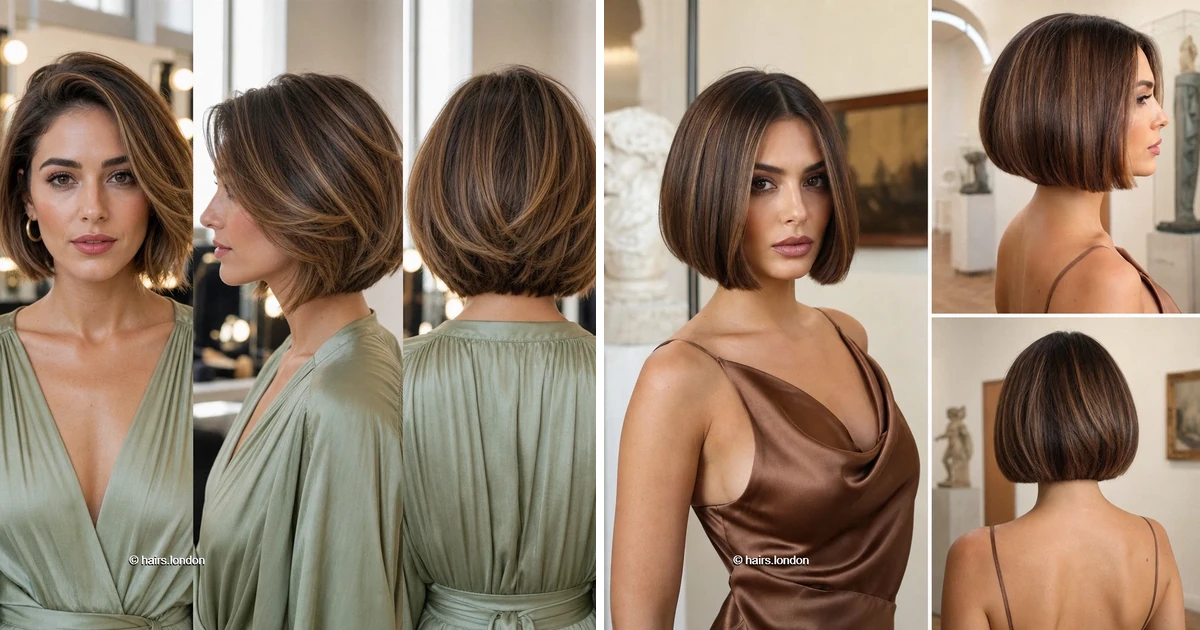
21. Full Rounded Bob with Sweeping Side Layers
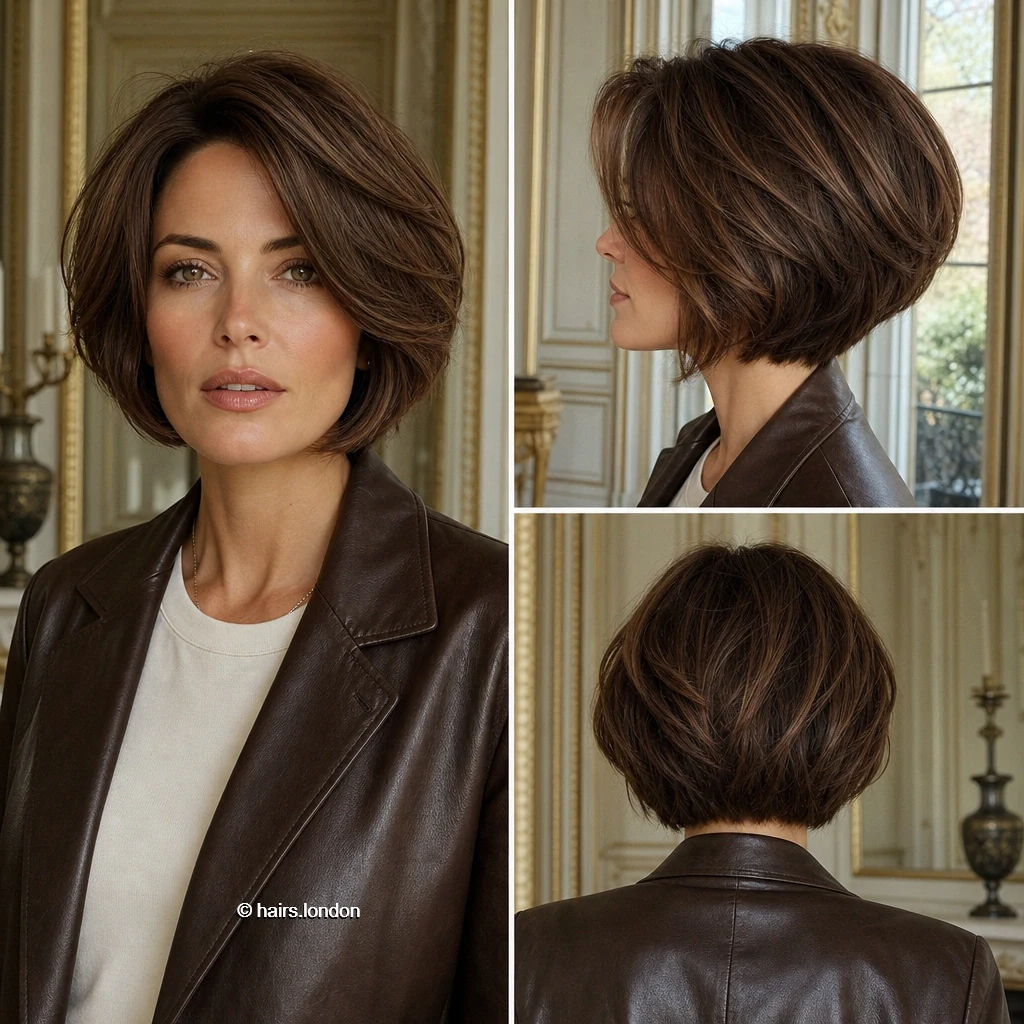
This full bob curves around the jaw, with sweeping side layers above a compact back that rests at the neck. Rich brown hair has restrained warm highlights, and the visible layers create softness without exposing a sharply stepped outline. If your hair is thick, ask for controlled interior weight removal while keeping the lower shape sufficiently full. Direct the front away from the face, then smooth the back gently to avoid building too much crown volume. Rebalance the sides as they grow, and trim the neck edge when its rounded shape starts to spread without overworking the highlighted surface strands.
22. Graduated Bob with a Full Crown
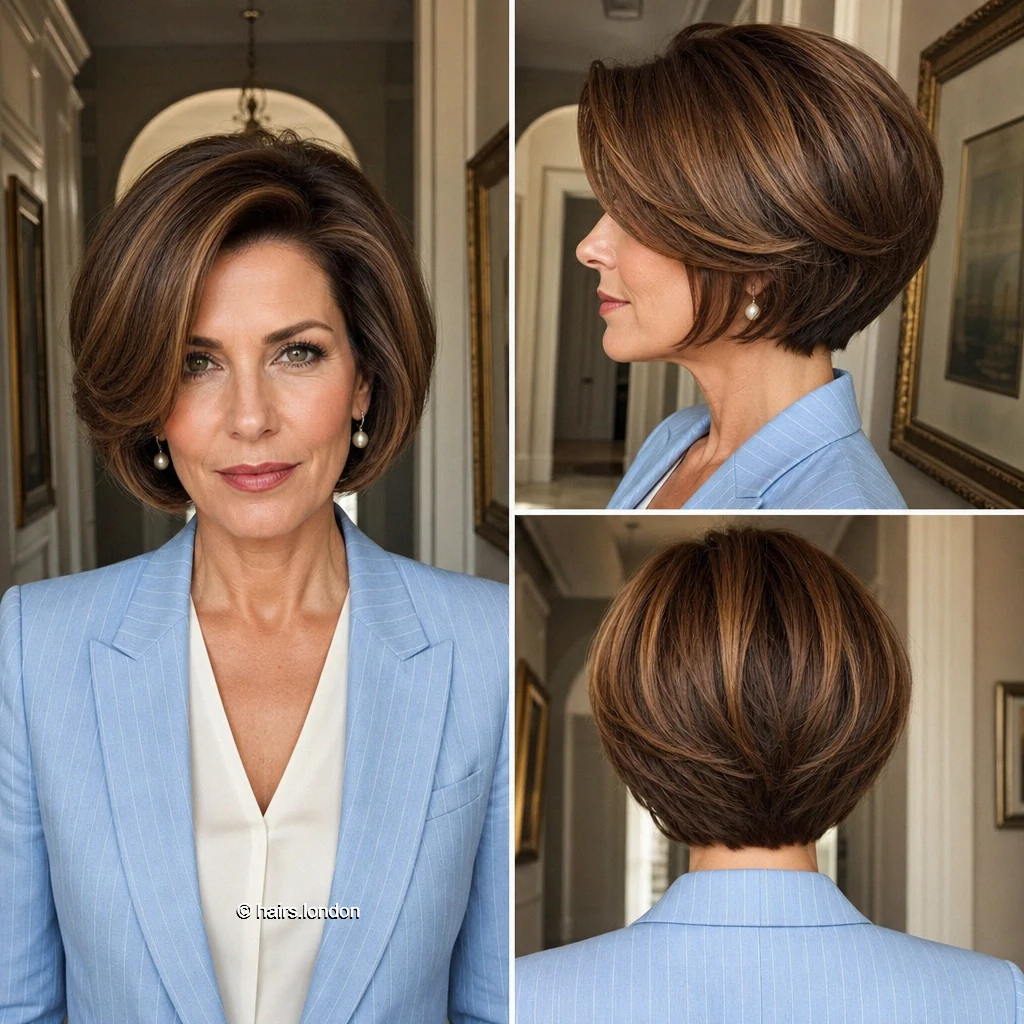
A long side sweep sits above this short bob, whose layers visibly build volume over a closely tapered neckline. Warm brunette hair has caramel highlights that pick out the graduation and the rounded movement across the back. Ask your stylist to tailor the nape and crown weight to your density, particularly if you dislike frequent styling. Lift the roots as you dry, then smooth the front into place without creating a stiff, heavily sprayed finish. Schedule trims when the nape becomes bulky or the crown loses its balance; maintain highlights according to regrowth. Avoid heavy product around the tapered neckline.
23. Side-Swept Stacked Bob with a Neat Nape
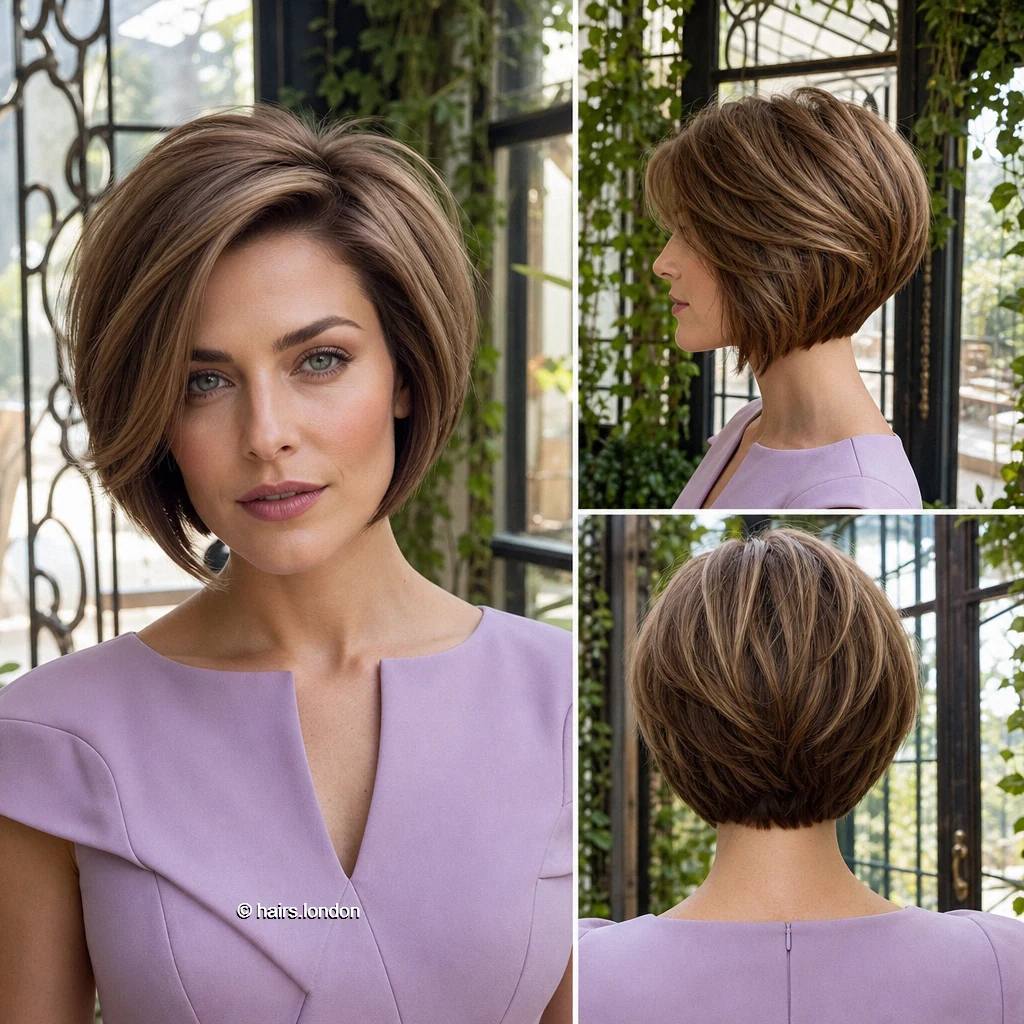
This side swept bob keeps length around the face while shorter back layers create a rounded crown above the nape. Light brown hair with beige highlights makes those overlapping layers visible, especially through the back and longer front. Discuss how closely to cut the neckline and how much crown volume your natural density can comfortably support. Dry the roots for lift, then smooth the longer side into a soft curve rather than a rigid sweep. Keep appointments close enough to preserve the short nape, and condition highlighted pieces if they start feeling dry. Avoid heavy product that flattens the crown.
24. A-Line Bob with a Graduated Back
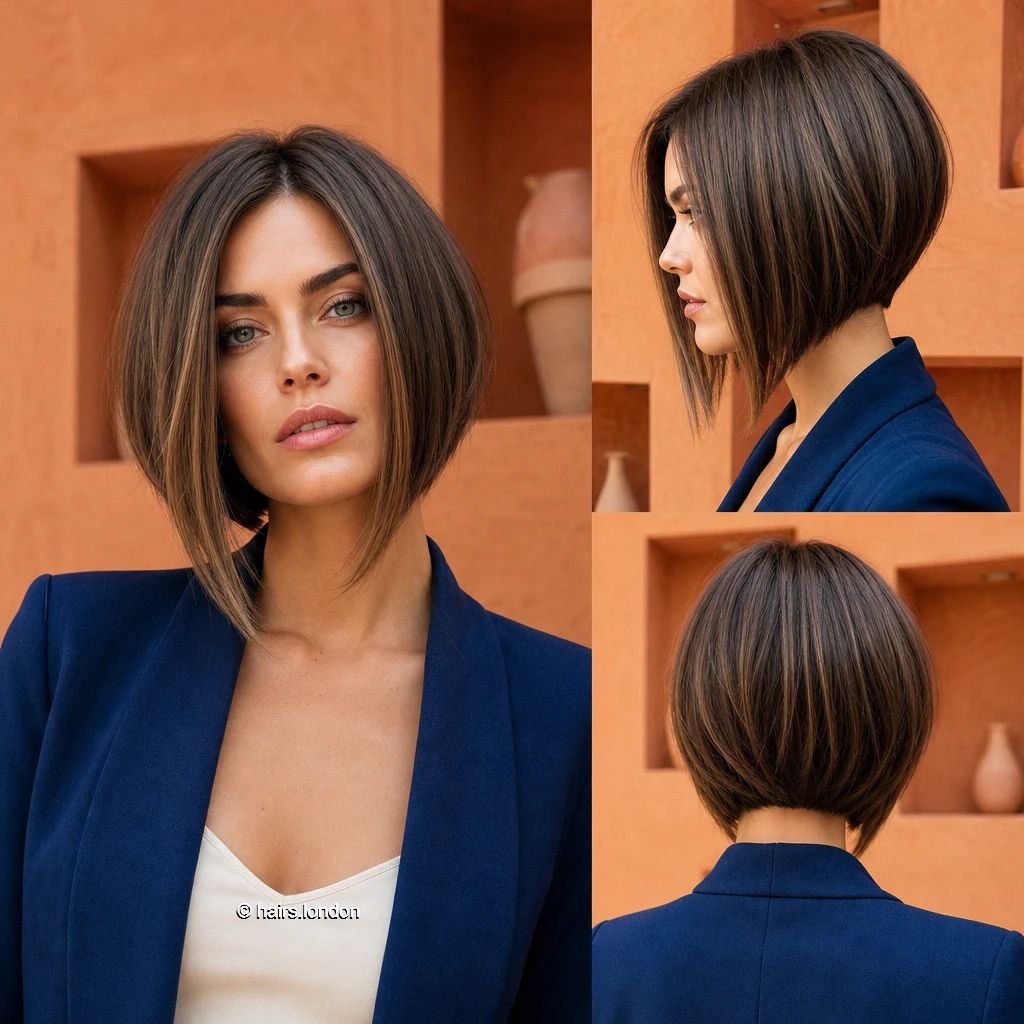
Long front sections extend below the jaw, while this bob rises toward a short, visibly graduated back at the neck. Dark brown hair has subtle warm ribbons that follow the smooth front and curved layers through the rear. Ask your stylist to agree on both front length and nape height, since either change affects the overall profile. Smooth the longer panels downward while lifting the back lightly, preserving contrast without turning the crown into a bulky dome. Trim the nape and angled perimeter as they grow; use heat protection to preserve the finish of colored strands between your planned appointments.
How to Choose Your Bob Length and Shape
Start with where you want the front edge to sit: above the jaw, at the chin or nearer the shoulders. Then compare the side and back views. An A-line bob has a longer front; a stacked or graduated bob also shows shorter layers building shape at the back. A rounded bob keeps more visual fullness around its outline, while a layered lob offers movement and more length. Ask how each option will fall with your density, natural texture and hairline rather than choosing by front-view appearance alone.
Styling Fine, Thick, Wavy and Curly Textures
Fine hair often benefits from a perimeter with enough weight to look full and lightweight product concentrated at the roots. Thick hair may need selective internal weight removal so a rounded bob moves without spreading at the sides. For waves, use a light cream or mousse and encourage the existing bend before deciding where heat styling is necessary. Natural curls need a shape planned around their spring and shrinkage; discuss the dry result before cutting a fringe or a short back. Whatever your texture, smooth only the sections that need it so the bob retains movement.
Keeping Highlighted Bob Color Fresh
These bobs range from deep brown with quiet ribbons to brighter face-framing pieces. The greater the contrast with the roots, the sooner regrowth may become noticeable. Ask your colorist whether a gloss, toner or highlight appointment best addresses the change you see. Use color-friendly cleansing and conditioning products suited to your hair, protect it during heat styling, and pay particular attention to lighter ends that begin to feel dry.
Maintaining the Bob Perimeter and Graduation
A blunt or smooth A-line edge can lose its intended line as soon as uneven growth becomes visible. Rounded bobs need their sides and back rebalanced when weight collects low or spreads outward. Short stacked cuts usually need closer attention because a little nape growth changes the profile. Layered lobs offer more flexibility, but their ends still benefit from a trim when they become thin or hard to style. Set your appointment rhythm by how your particular shape grows, not by a universal schedule.
What to Discuss with Your Stylist
Bring the front, side and back views of the bob you like, and point to the exact edge, fringe or volume you want. Explain how your hair behaves when air-dried, where it parts naturally, and how much time you will spend styling. Ask what the visible shape would require on your density and texture, whether the nape needs graduation, and how the cut will grow out. If you want highlights, discuss placement, upkeep and how the color will look with your usual part.
Frequently Asked Questions
What is the difference between a bob and a lob?
A lob is a longer bob, generally extending toward the shoulders. A shorter bob commonly finishes around the jaw or chin, although the precise boundary is less important than the visible shape.
How is an A-line bob different from a stacked bob?
An A-line bob has a front that falls longer than the back. A stacked bob shows graduation at the back, where shorter layers build shape above the nape. A cut can have both features.
Will a blunt bob work with fine hair?
A solid perimeter can help fine ends look fuller. Ask your stylist whether your density supports the chosen length and how little layering is needed to keep the shape moving.
How can thick hair avoid a bulky rounded bob?
Discuss selective internal weight removal while preserving enough hair at the edge. The placement matters: thinning the perimeter indiscriminately can leave a bulky top and wispy ends.
Can natural curls be cut into a bob?
Yes, but curl spring, density and shrinkage affect the finished length. Plan the shape around your usual styling method and discuss where the perimeter and any fringe will sit when dry.
Should I choose a fringe with my bob?
Choose one if you like its effect and are comfortable maintaining it. Fringe length and density should account for your hairline, natural movement and willingness to style it between trims.
Which bob takes less daily styling?
The one that works most closely with your natural texture and part. A precision-smooth perimeter or short graduated back may require more regular shaping, even if daily styling is simple.
How do I keep a bob’s ends smooth without losing movement?
Use modest brush tension or targeted heat on the perimeter, then leave the upper layers looser. Apply product sparingly so the ends stay defined without making the whole cut rigid.
How often does a short stacked bob need trimming?
It usually needs attention sooner than a longer bob because growth at the nape changes the profile quickly. Book a trim when the neckline or graduated shape stops looking balanced.
Can I grow a short bob into a lob?
Yes. Ask for occasional reshaping as it grows, particularly if a short back needs to catch up with longer front pieces. This can make the in-between length easier to style.
Do highlights change how bob layers look?
Lighter pieces can make bends, separation and overlapping layers more visible. Placement should follow the shape you actually wear, including your usual part and face-framing sections.
What should I ask before committing to an angled bob?
Agree on the front length, back height and how noticeable the difference should be. Ask your stylist to show how that profile will behave with your density, neckline and natural texture.
Conclusion
A bob can look entirely different when its front length, back weight or layering changes. Use these views to narrow down the details you want to keep, then discuss how they will work with your own hair and maintenance preferences. The strongest choice is a shape you can enjoy both on salon day and as it grows.


