


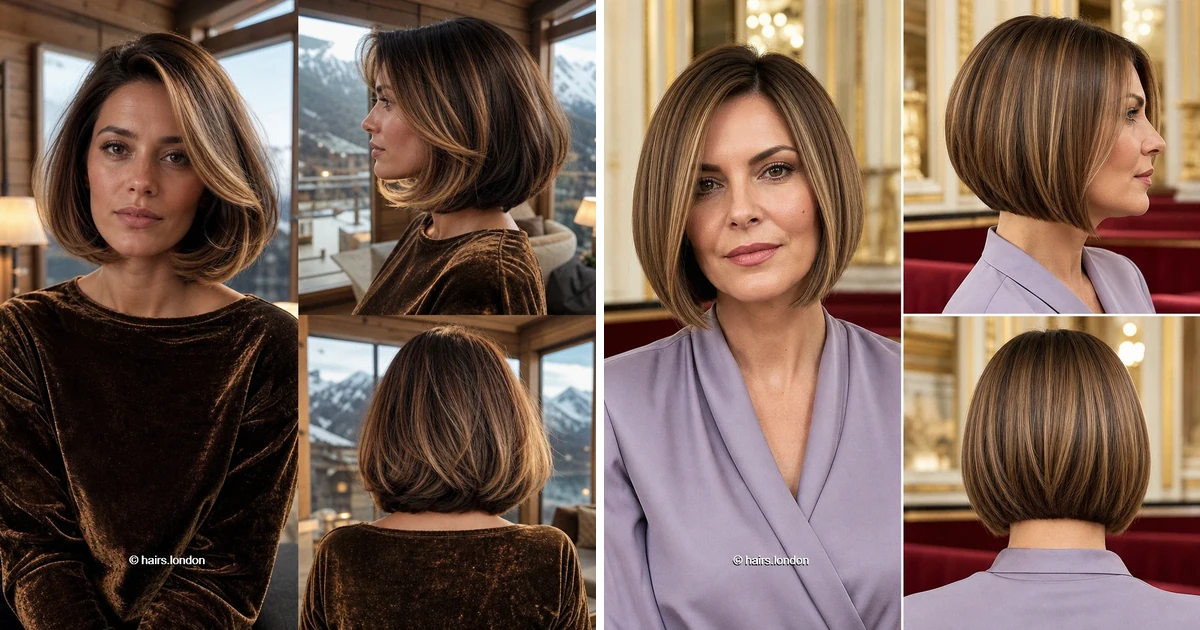
11. Airy Chin-Level Bob with Beige Blonde Highlights
This chin level bob features airy ends and soft volume. Beige blonde ribbons contrast with darker brown root areas visibly. An off center part sends loose pieces across cheeks softly. The back remains rounded, with movement above its neckline edge. Ask to preserve perimeter density while softening bulky sections internally. Work a little mousse through damp roots before drying gently. Roll ends lightly under, leaving a few pieces free moving. Fine strands may prefer less product than dense strands do. Keep blonde toned according to fading, rather than dates alone. Refresh the chin line before the ends look sparse again.
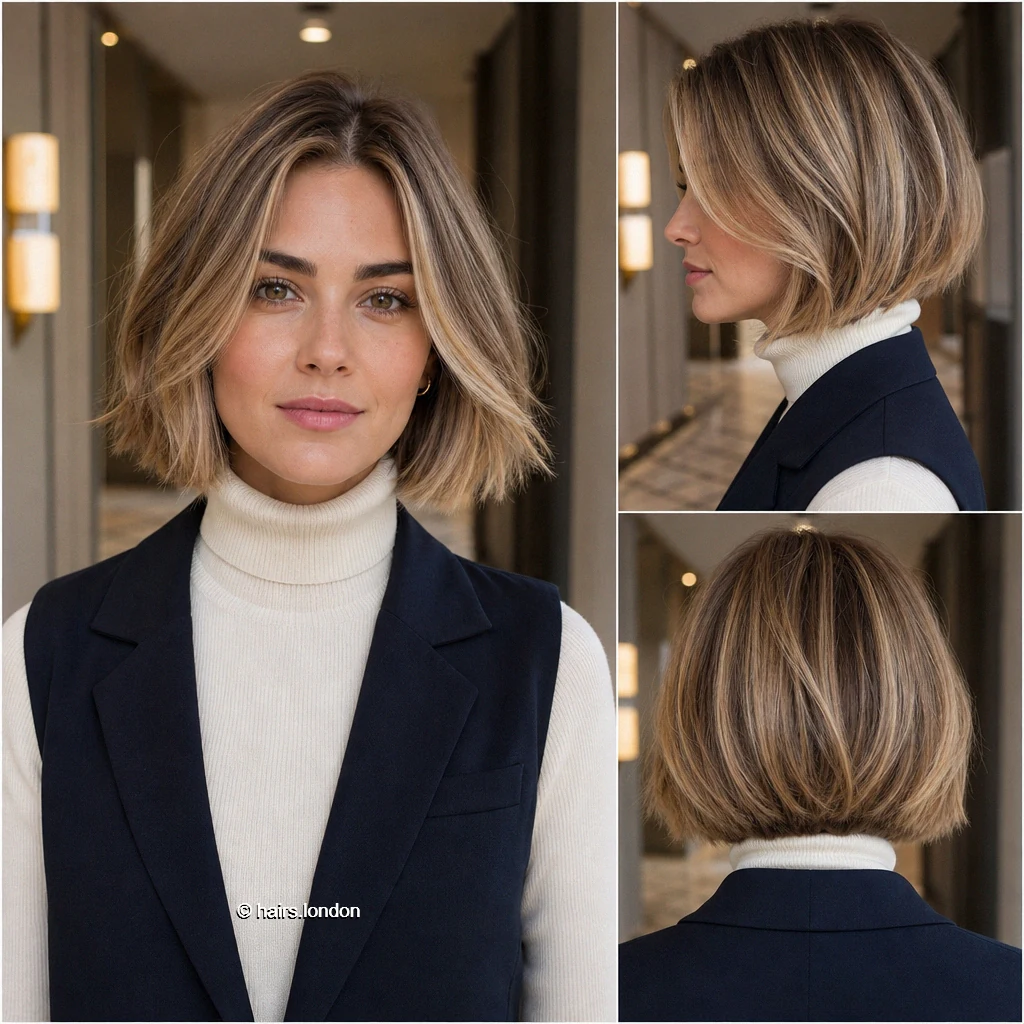
12. Short Rounded Bob with a Sweeping Side Fringe
This short rounded bob has a distinctly fuller back profile. Beige brown color carries subtle golden highlights near front sections. The side view shows a shorter nape beneath longer sides. Soft graduation supports the shape without exposing harsh steps anywhere. Long bangs sweep across one eye from a side part. Request nape weight placement tailored to your growth patterns there. Dry from beneath for lift, then polish the front section. Heavy hair might require discreet removal inside the silhouette only. Keep the shorter neckline trimmed before it changes proportion noticeably. Protect highlights with gentle washing and heat protection spray regularly.
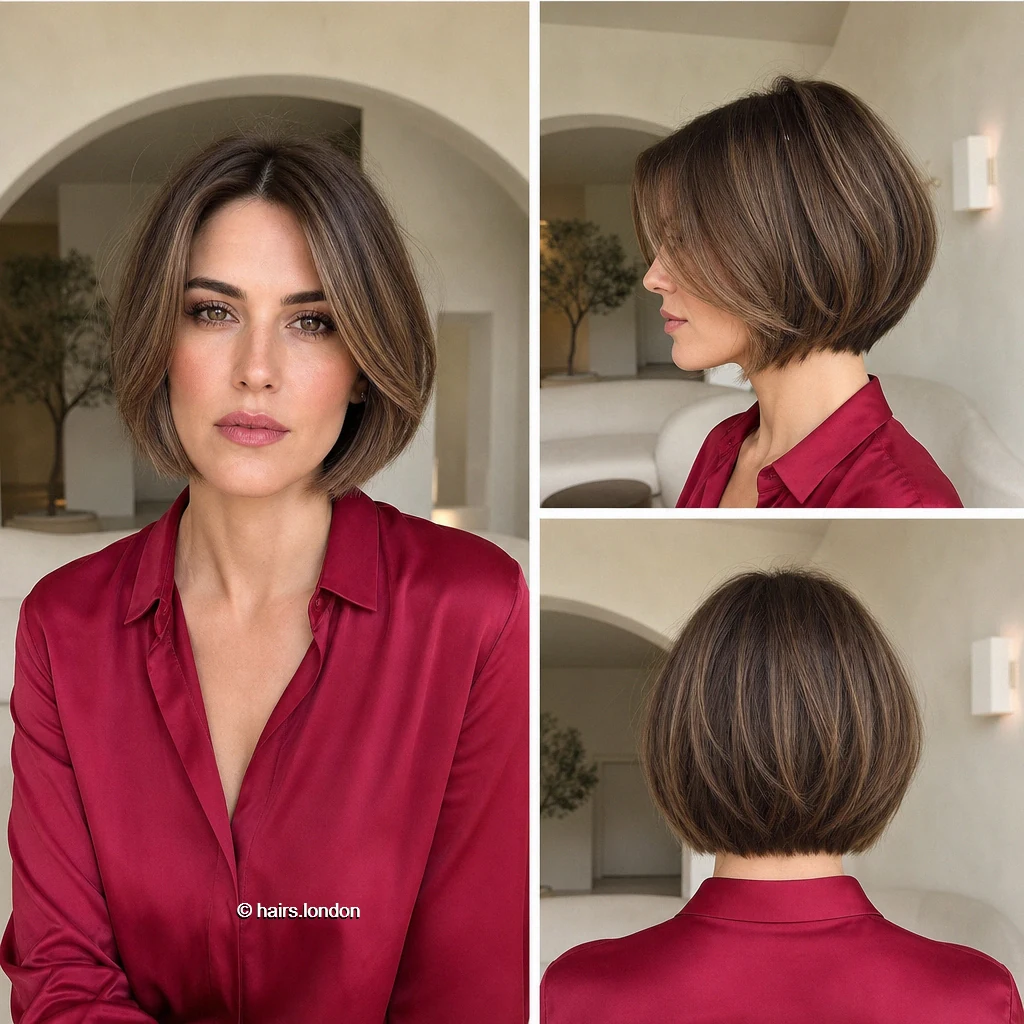
13. Sleek Subtle A-Line Bob with Honey Highlights
This sleek bob angles subtly longer toward its jawline front. Warm brunette color carries narrow honey blonde vertical highlights throughout. The side and back reveal a rounded, shorter neckline shape. Smooth sides retain a solid edge without obvious surface layers. Its slight frontward angle makes an understated A-line silhouette here. Ask for precise front length that accommodates your parting preference. Blow dry downward and finish with gentle flatiron passes sparingly. Dense hair may need invisible interior shaping beneath sides only. Recheck the neckline frequently to maintain the clean curve underneath. Highlights benefit from heat protection and occasional gloss appointments afterward.
14. Even Rounded Bob with Fine Beige Ribbons
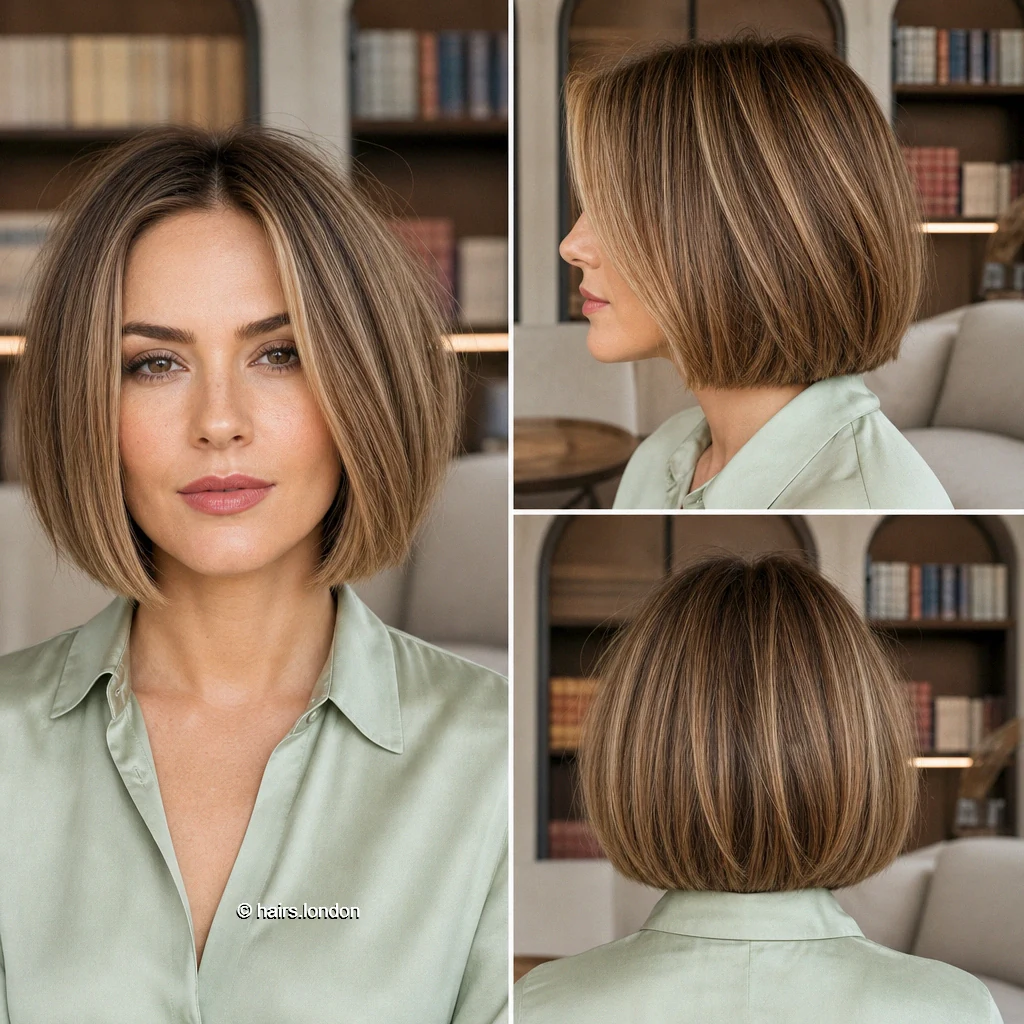
This jaw length bob keeps a nearly even, rounded perimeter. Muted beige brown strands show fine lighter vertical ribbons throughout. An off center part gives its front a gentle drape. The back looks softly full rather than visibly stacked high. Request minimal surface layering to keep those ends cohesive overall. Use a round brush to turn the perimeter inward slightly. Lightweight shine spray can refine texture without adding stiffness afterward. Thicker hair might need hidden softness around the jaw area. Finer strands generally need their bottom weight preserved carefully here. Trim when the back edge loses its rounded alignment noticeably.
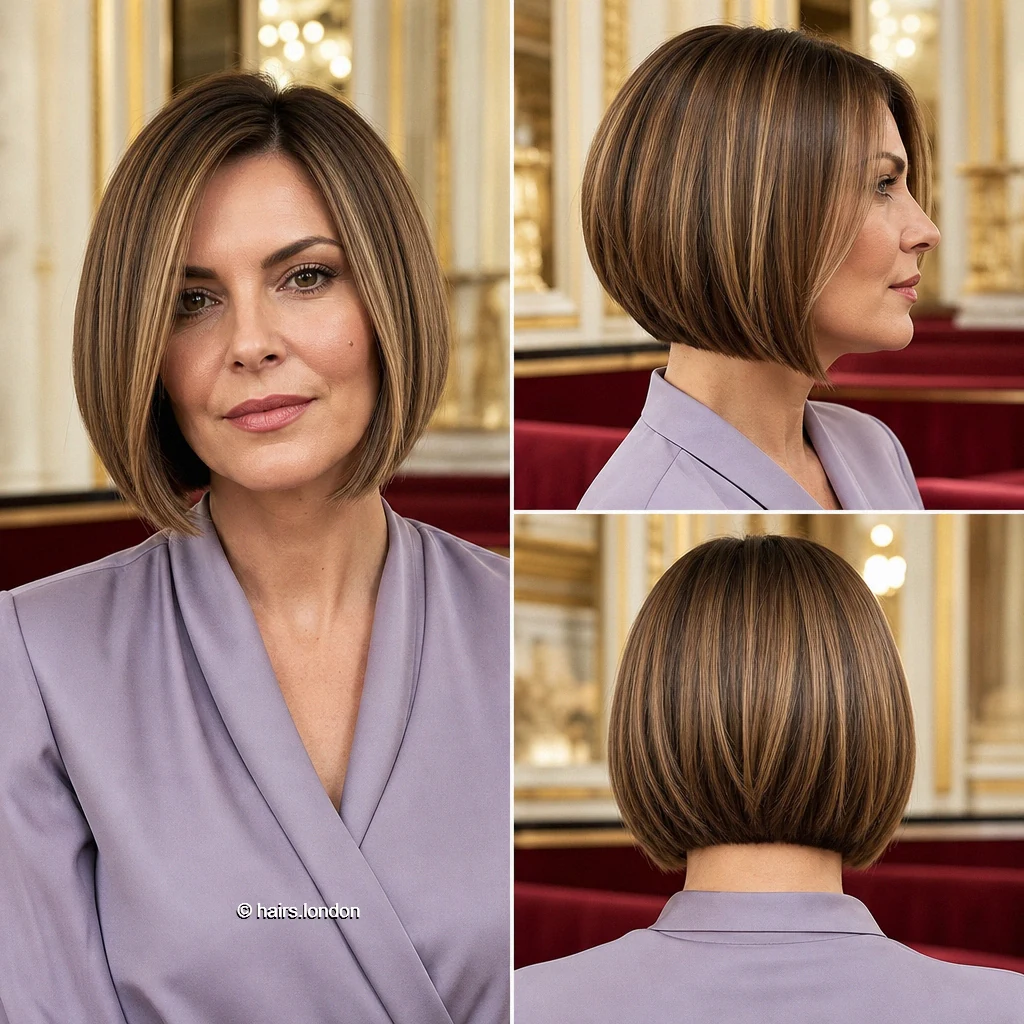
15. Sleek A-Line Bob with a Clean Shorter Back
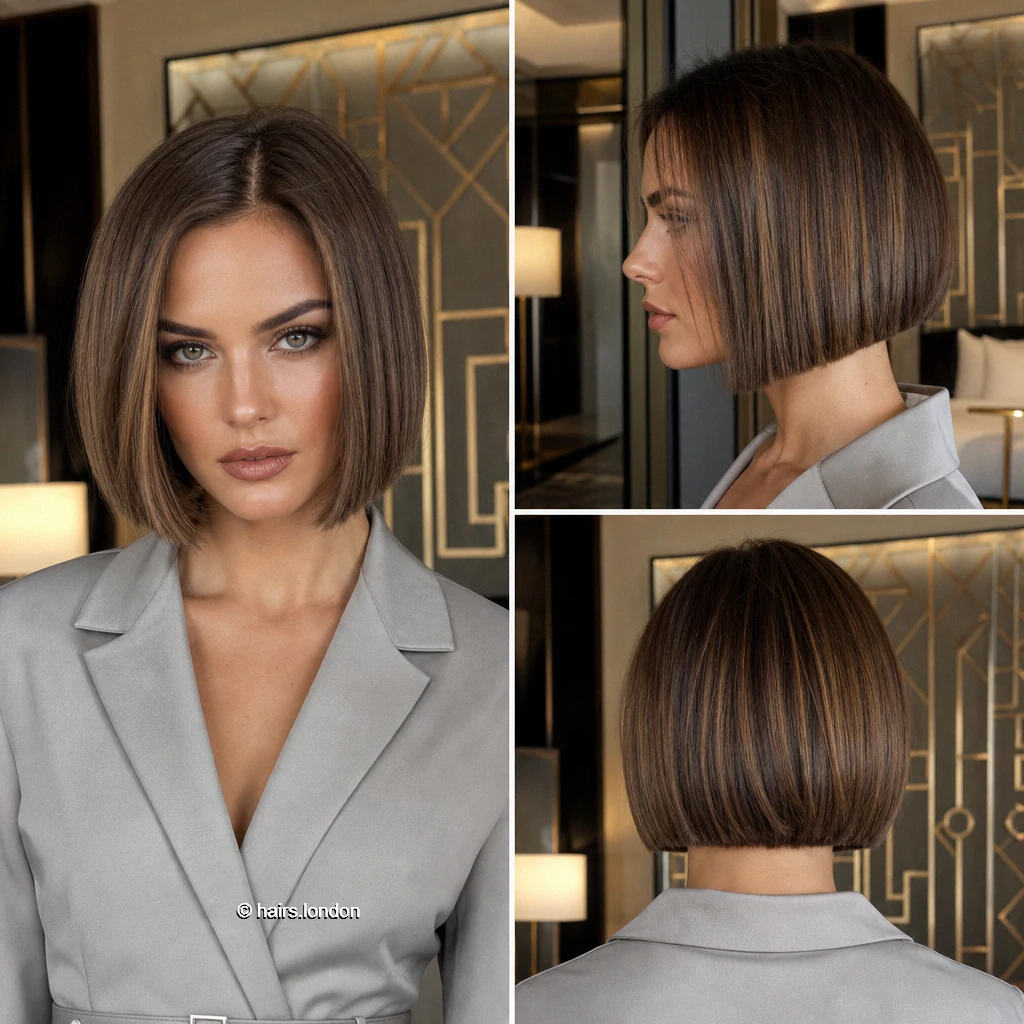
A sleek A-line bob frames the jaw with longer fronts. Brown lengths contain restrained, fine caramel highlights throughout the hair. The back is shorter and clean, without exposed stacking underneath. A side part offsets its smooth, substantial front panels elegantly. Ask for matching corners that respect your natural hairline shape. Direct dryer airflow downwards before straightening any uneven sections gently. Use heat protection to keep the highlighted finish smooth longer. Thicker hair could require subtle debulking behind the ears only. Fine hair may retain fuller tips with minimal layering instead. Trim regularly so the frontward angle stays visibly crisp longer.
16. Short Stacked Bob with a Tapered Nape
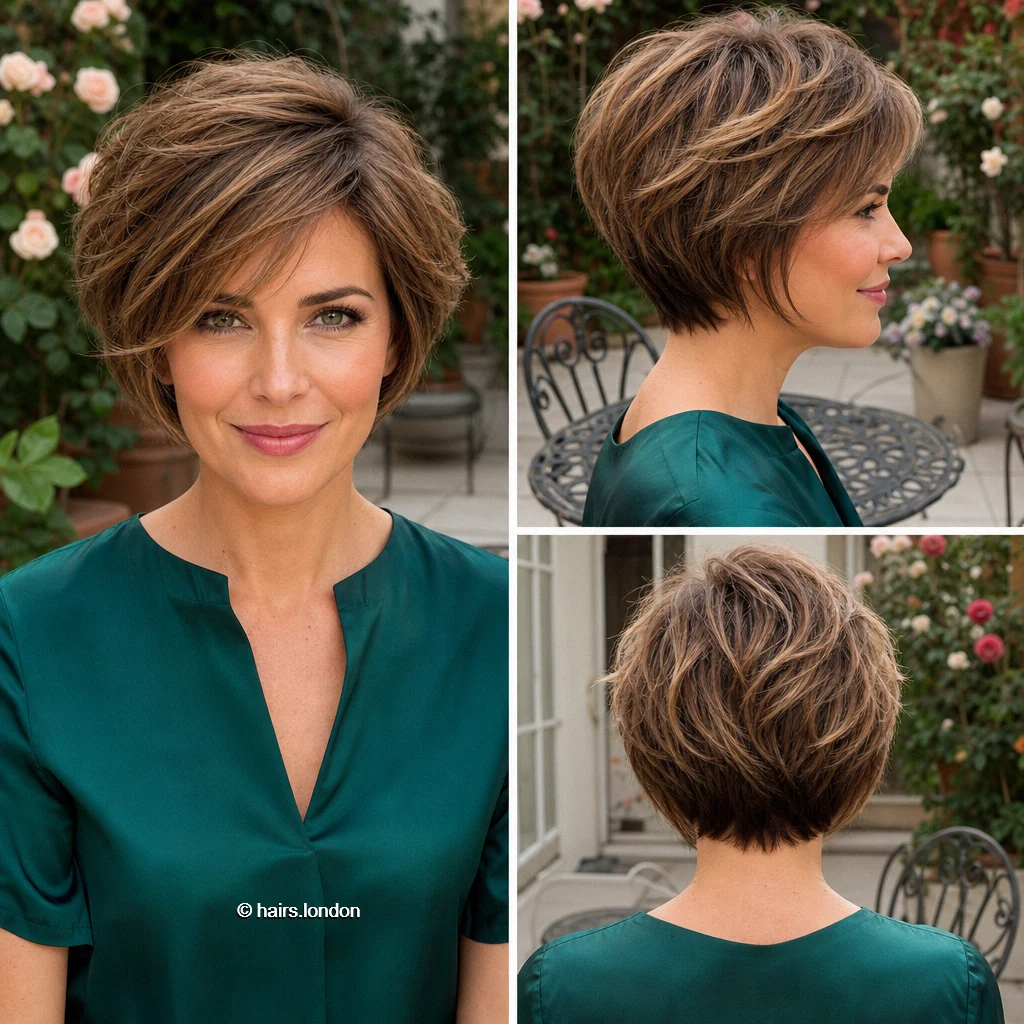
This short stacked bob places fullness high above the nape. Warm brown strands carry honey highlights through feathery layers throughout. The visible back narrows into a distinctly tapered neckline below. A side swept fringe crosses the forehead toward one cheek. Request graduation suited to your crown direction and density levels. Use lightweight paste to separate layers without stiffening them excessively. Lift the crown while drying, then smooth the tapered sides. Coarse textures might require extra control around the hairline perimeter. Fine strands need enough top length to maintain movement easily. Book neckline reshaping before growth rounds off its taper completely.
17. Asymmetrical Short Bob with a Long Sweeping Fringe
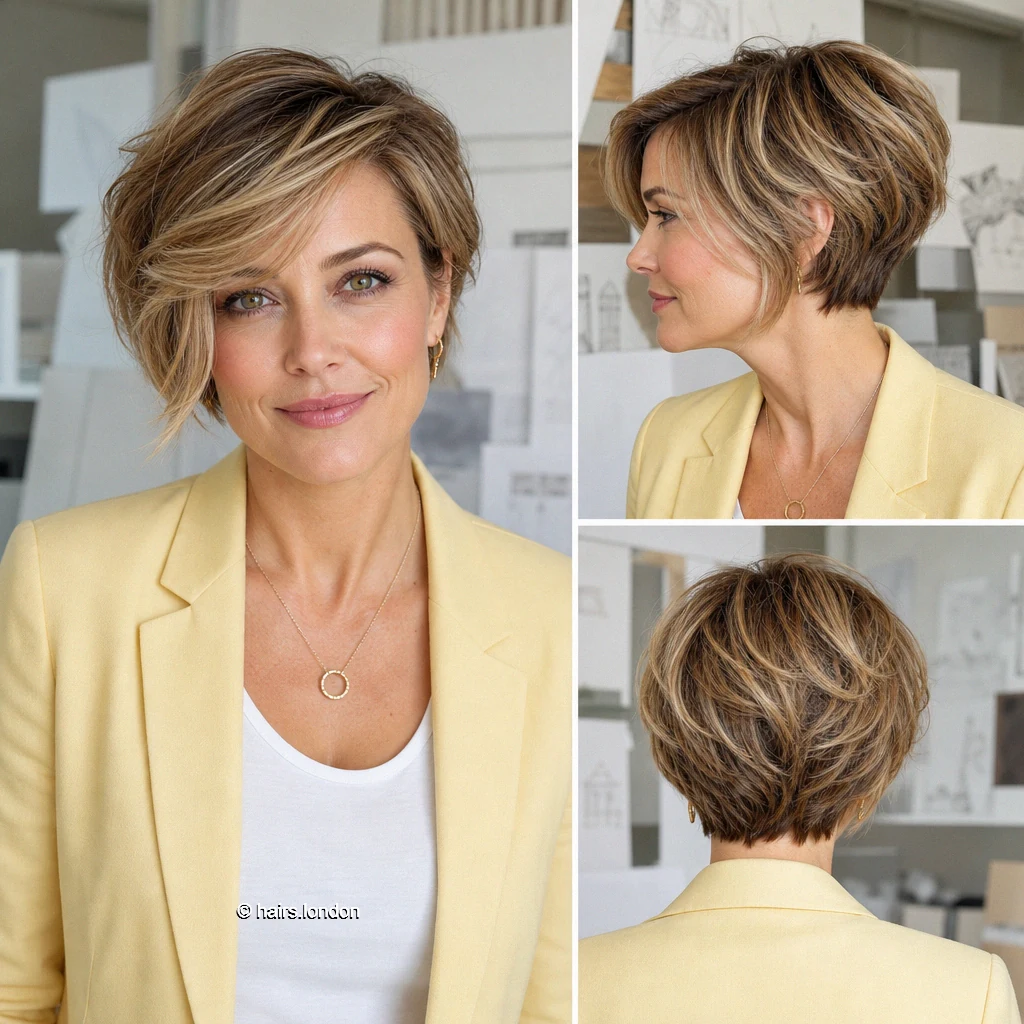
This asymmetric short bob combines longer fringe with cropped sides. Blonde ribbons brighten brown layers sweeping across the face dramatically. The back shows visible graduation narrowing toward a short nape. One front section falls farther down than its opposite side. Discuss whether that imbalance works with your preferred part placement. Dry the longer sweep forward, lifting shorter crown layers gently. A touch of wax defines ends without clumping highlights together. Fine density may require gentler texturizing around the front section. Thicker growth needs careful shaping behind the exposed ear area. Trim both neckline and fringe to preserve intentional contrast regularly.
18. Compact Stacked Bob with an Elongated Fringe
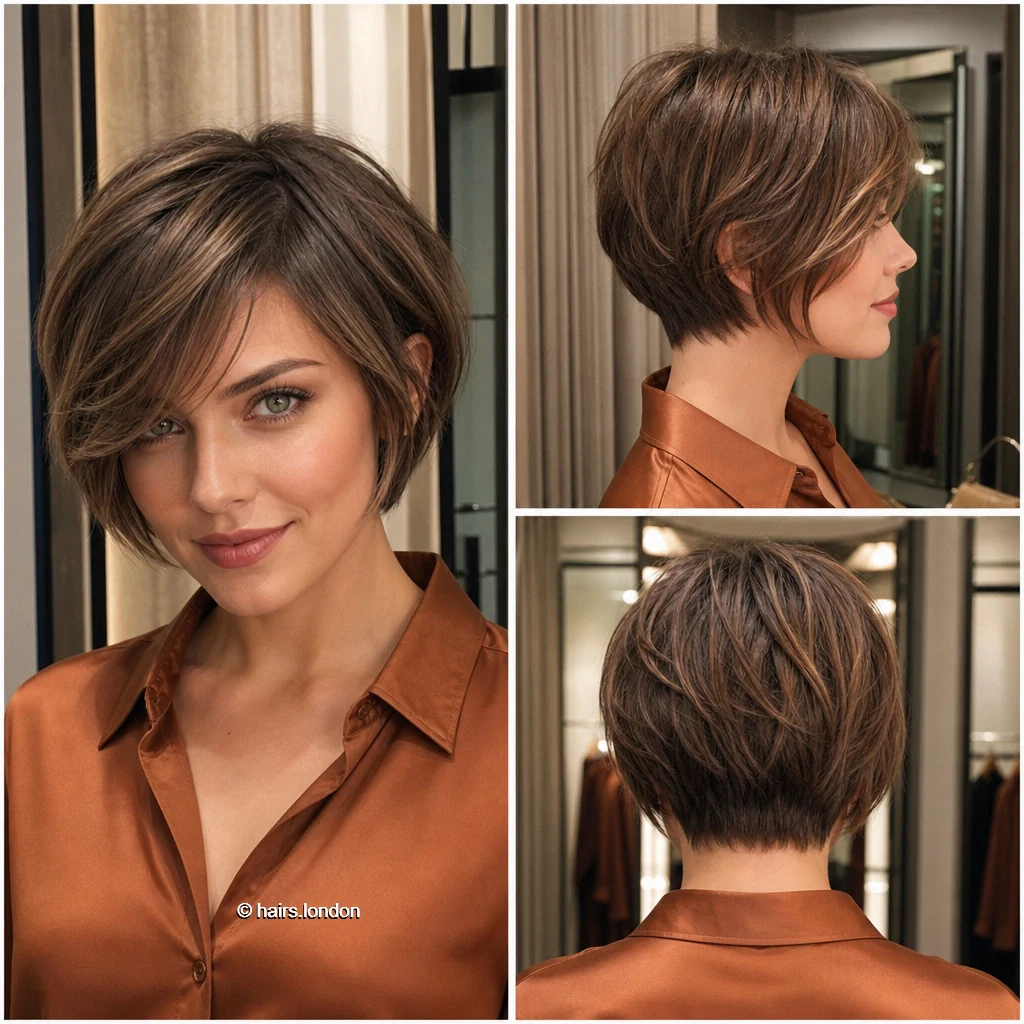
This compact stacked bob wears an elongated, side swept fringe. Warm brunette hair shows delicate caramel threads among layers throughout. Back views reveal clear graduation above a tapered nape underneath. The cheek length front curves softly against the jaw area. Ask for enough fringe weight to retain directional movement naturally. Lift roots with a small brush before arranging fringe neatly. Rub minimal paste between fingertips to separate top layers gently. Dense strands may need controlled interior reduction behind ears only. Fine hair benefits when the back retains sufficient structure naturally. Refresh the narrow neckline once it begins losing definition visibly.
19. Rounded Bob with a Slightly Longer Front
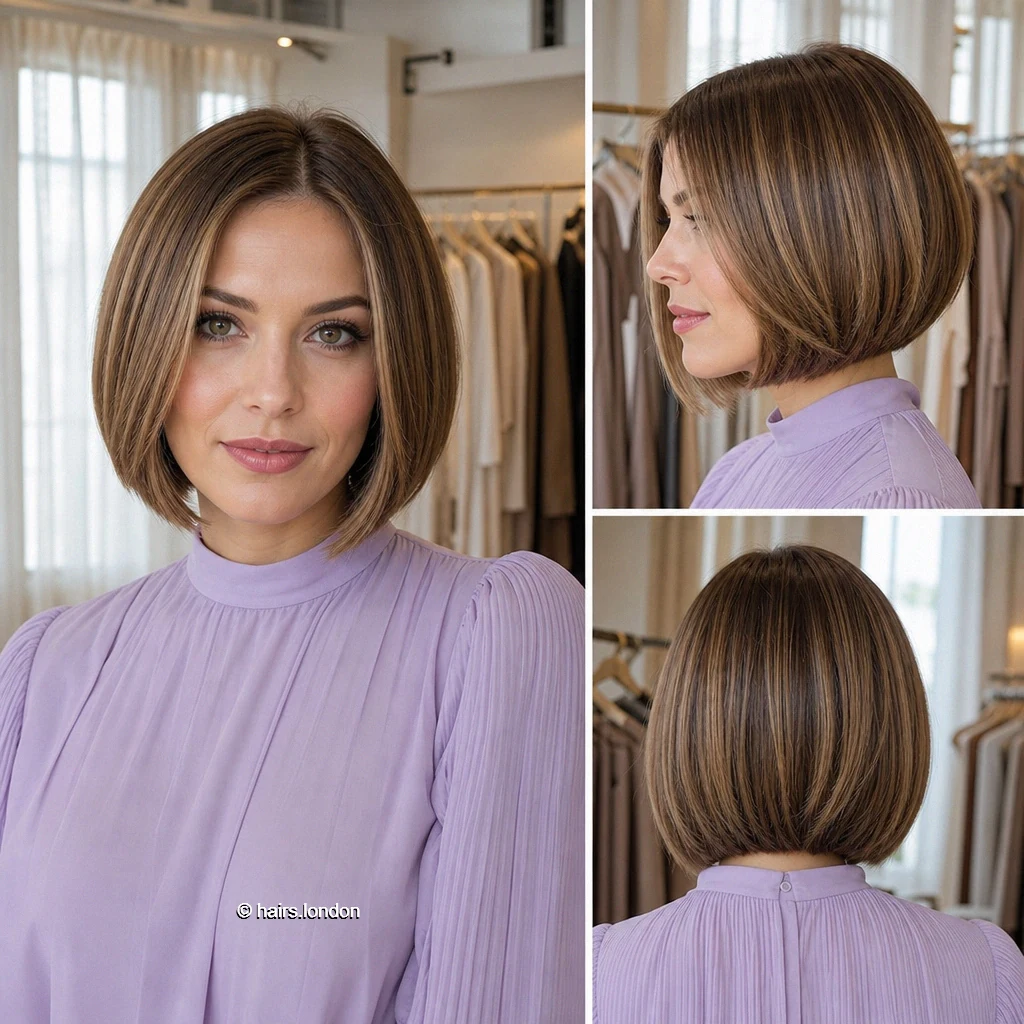
This rounded bob drops slightly below the chin in front. Fine caramel strands highlight its smooth medium brown base color. The side reveals subtle front length over a shorter back. Its back perimeter is tidy, with no obvious stacking visible. Ask for slight forward length without sacrificing the curve behind. Smooth the surface downward, then tuck tips beneath gently afterward. Fine hair often appreciates an intact, compact bottom edge here. Dense hair might require targeted internal softening for comfort instead. Limit hot tool passes to protect those fine highlights better. Trim the lower edge before growth disturbs its balance noticeably.
20. Smooth Chin-Grazing Bob with Blonde Face Framing
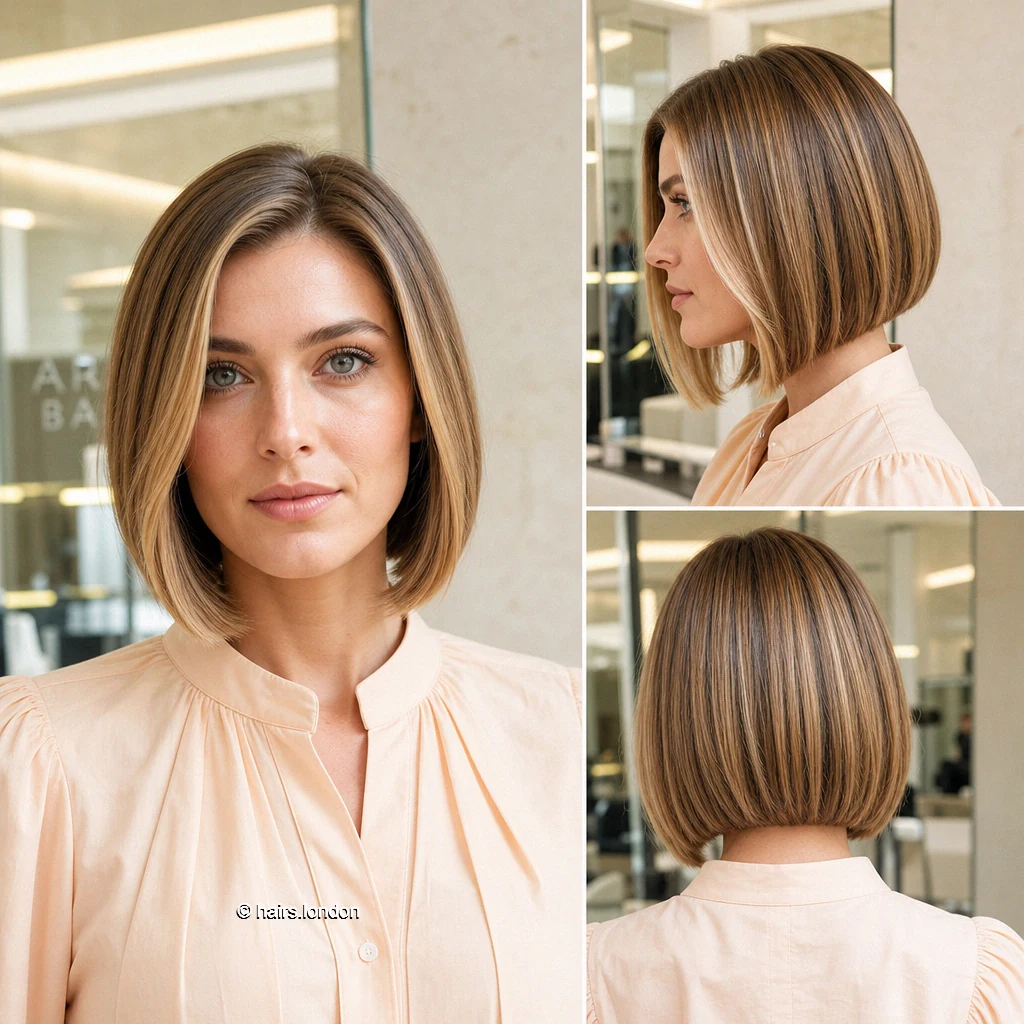
This smooth bob grazes the chin with subtly longer fronts. Beige blonde strands frame a deeper brown underlying base color. The rounded back rests neatly against the upper neckline area. Its side view suggests gentle angle rather than dramatic stacking. A center part divides long, unfringed face framing panels evenly. Request a clean perimeter with sufficient weight at the ends. Dry downward using a brush, bending only the tips inward. Coarse hair may need gentle interior shaping for control underneath. Fine density often looks fuller when layers remain minimal throughout. Refresh blonde framing and trim ends when they lose clarity.
How to Choose Your Bob Length and Shape
Start with the point where you want the ends to meet your face or neck. A chin-length perimeter draws attention to its edge, while a jaw-length bob leaves a little more room for soft shaping. A shoulder-skimming lob offers more length and behaves differently where it touches clothing. Decide whether you prefer a nearly even outline, a longer front, or fullness built above a shorter nape. An A-line describes the front-to-back length change; stacking or graduation describes visible shape built at the back. Your density, curl pattern, hairline, and willingness to style should guide the final choice.
Styling Fine, Thick, Wavy, and Curly Textures
Fine hair often benefits from an intact lower edge, limited layering, and lightweight root support. Thick hair may need carefully placed interior weight removal rather than indiscriminate thinning through the perimeter. For waves, scrunch a light product through damp lengths and diffuse gently if you want separation without puffiness. Naturally curly hair needs its intended dry silhouette discussed before cutting; curl shrinkage can move the perimeter well above its wet position. Smooth bobs by directing airflow down the hair and bending only the ends, while layered cuts need flexible products that keep sections moving.
Keeping Highlighted Bob Color Fresh
The caramel, honey, beige, and blonde pieces here have different upkeep needs, particularly where lighter strands sit beside darker roots. Use color-safe cleansing, condition the ends, and apply heat protection before brushing or ironing. Ask your colorist whether fading calls for a gloss or toner and how often the face-framing pieces may need refreshing. A cut that exposes the neckline also puts the condition of its ends on display, so avoid repeatedly passing hot tools over the same highlighted sections.
Maintaining the Bob Perimeter and Graduation
A sleek, solid bob loses its clean line as ends grow unevenly; arrange a trim when that edge no longer sits where you want it. Rounded cuts need their weight line checked from the side and back, not just around the face. Short stacked and graduated bobs usually show nape growth sooner, which can change their proportions even when the front still looks tidy. Layered bobs can tolerate a softer outline, but split or stringy tips undermine their movement. Bangs may need a separate touchup before the rest of the cut.
What to Discuss with Your Stylist
Bring the views that show the front, side, and back of your preferred bob. Point out the exact perimeter, whether you want a longer front, and where you expect fullness to sit. Discuss your natural part, crown growth, cowlicks, density, wave or curl shrinkage, and how much daily drying you will do. If you want bangs, agree on their dry length and how they should behave between trims. Ask how the proposed layers or graduation will grow out, and whether your color plan fits the maintenance schedule you prefer.
Frequently Asked Questions
What is the difference between a bob and a lob?
A bob generally ends around the jaw, chin, or neck; a lob is a longer bob that reaches toward the shoulders. The shoulder-skimming layered cut shown here is a lob.
Is an A-line bob the same as a stacked bob?
No. A-line describes a perimeter that is longer in front than at the back. Stacking describes visible graduation that builds shape at the back. A cut can include both, but one does not automatically imply the other.
How can I choose between a blunt and layered bob?
Choose based on the edge and movement you want, as well as your density. A stronger, less layered perimeter can preserve fullness; layers can release weight or encourage waves but may leave fine ends looking sparse if overdone.
Can fine hair hold a rounded bob?
It can, depending on its density and growth pattern. Keeping enough weight at the bottom and using light root support may help; extensive interior removal can work against the rounded shape.
What should someone with thick hair ask for?
Ask where weight can be removed without making the perimeter thin or creating bulky short layers. The answer depends on where your hair expands, especially around the ears and back.
Can naturally curly hair be cut into a bob?
Yes, but curl shrinkage, density, and the desired dry outline need consideration. Discuss how the cut will sit when styled naturally rather than judging its length only while wet.
Do bangs require more upkeep than the rest of a bob?
Often, because growth becomes noticeable when a fringe reaches the eyes. Ask about a fringe-only touchup and how to dry it around your natural part or cowlicks.
Which bob is simplest to style each day?
That depends on your natural texture. A softly shaped cut that works with your existing wave or straightness may require less effort than a precise finish that needs daily blow-drying.
How do I keep a sleek bob perimeter smooth?
Direct dryer airflow downward, use a brush to control the ends, and apply heat protection before any ironing. Keep finishing products light enough that the edge still moves.
How often should a short stacked bob be trimmed?
Plan around how quickly its tapered neckline and graduation lose definition. Shorter napes may call for reshaping sooner than a longer, softly layered bob.
Will a highlighted bob need frequent color appointments?
Not necessarily. Upkeep depends on the contrast with your base, placement, fading, and your preferred amount of visible regrowth. Ask your colorist about glossing and face-framing refreshes.
How can I grow out a short bob?
Have your stylist gradually balance the back with the front while tidying the perimeter. If it is stacked, reducing the contrast between the shorter nape and longer sides can help it grow toward an even bob.
Conclusion
Whether you prefer a smooth perimeter or visible layers, compare how each bob looks from the side and back as carefully as you compare its front. The best starting point is the shape you want at your own hairline, followed by a realistic plan for styling, trims, and any highlighted color.


