

11. Shoulder-Grazing Silver Layered Lob
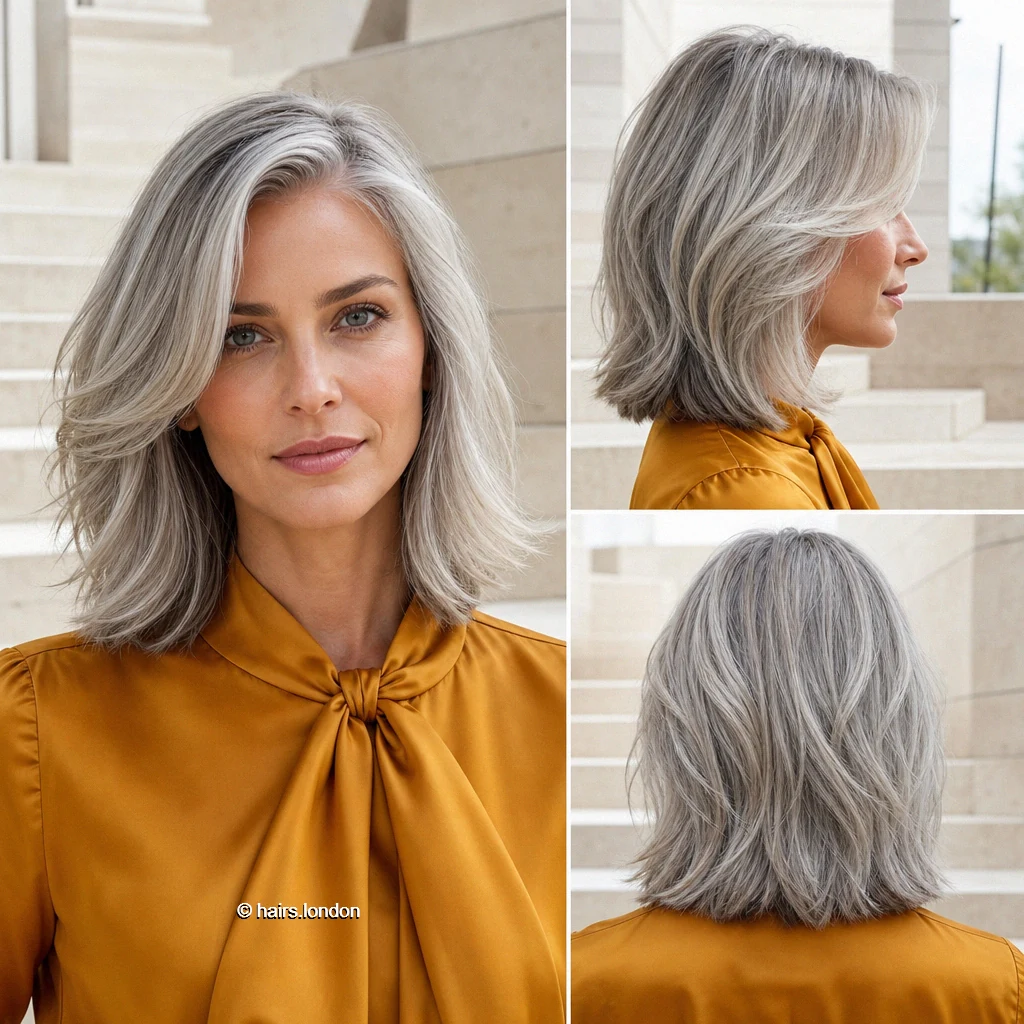
This longer silver bob grazes the shoulders with loose layers. A deep side part sends the front across the forehead. The side and back reveal outward flicks along the perimeter. Those separated ends distinguish it from a compact jaw bob. Ask for layers that move without making lower sections sparse. Blow dry loosely, turning selected ends away from the face. A light texture spray can emphasize separation and natural wave. This length offers flexibility if you prefer less frequent shaping. Fine hair may need a stronger outline beneath the layers. Dust the ends when flicks become frayed rather than intentional.
12. Short Silver Graduated Bob with Long Fringe
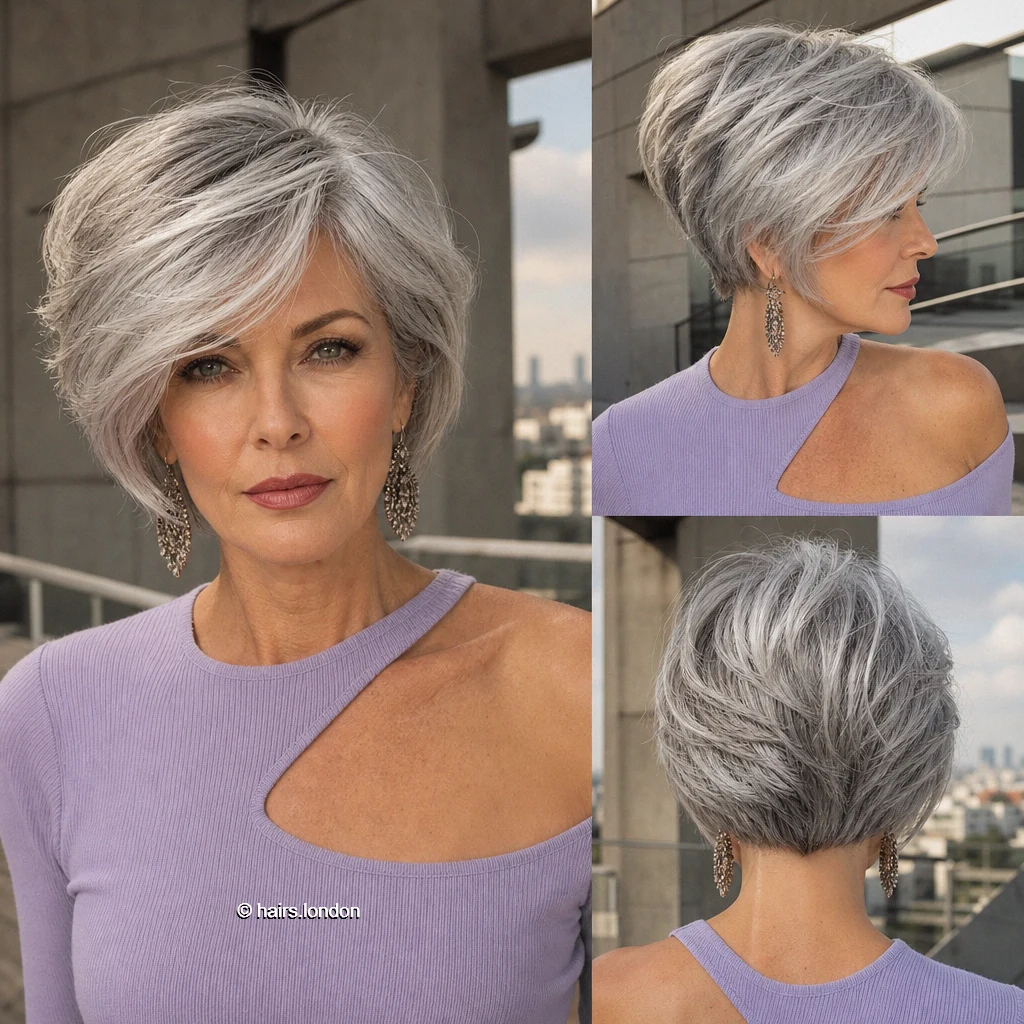
A long silver fringe sweeps across this short, sculpted bob. The side view shows a close nape beneath fuller layers. Back sections rise visibly from the hairline, supporting rounded volume. Textured ends keep the graduation from looking overly solid. Ask about balancing fringe length against your natural parting. Direct the front sideways while blowdrying with a small brush, then lift crown roots. Use flexible paste sparingly so silver pieces remain distinct. Thick hair can support fullness but may need internal control. Fine hair could require less layering to retain apparent density. Short nape trims help maintain the contrast between sections.
13. Silver Angled Bob with Extended Front Pieces
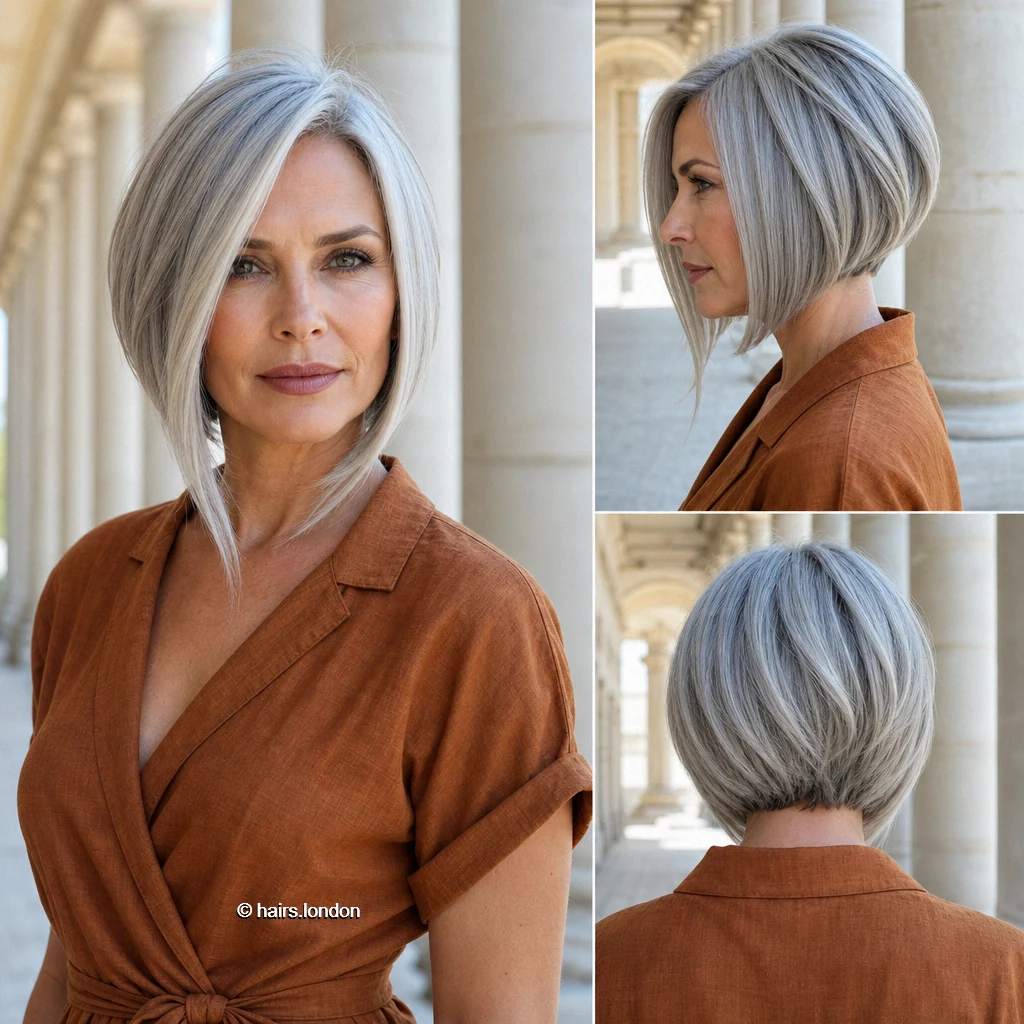
This silver bob has noticeably longer pieces beside the chin. Its rounded back sits higher, creating a distinct forward slope. The side view shows volume above a shorter nape. Together, those features support an angled shape with visible graduation. Ask whether shorter sides would better suit your daily routine. Smooth the long sections downward to make the contrast clear. Brush the back under gently without building unnecessary bulk. Dense hair may require careful weight removal behind the ears. Natural curls will change the apparent angle as they spring. Maintain the nape and front points to preserve both proportions over time.
14. Choppy Silver Bob with a Side-Swept Front
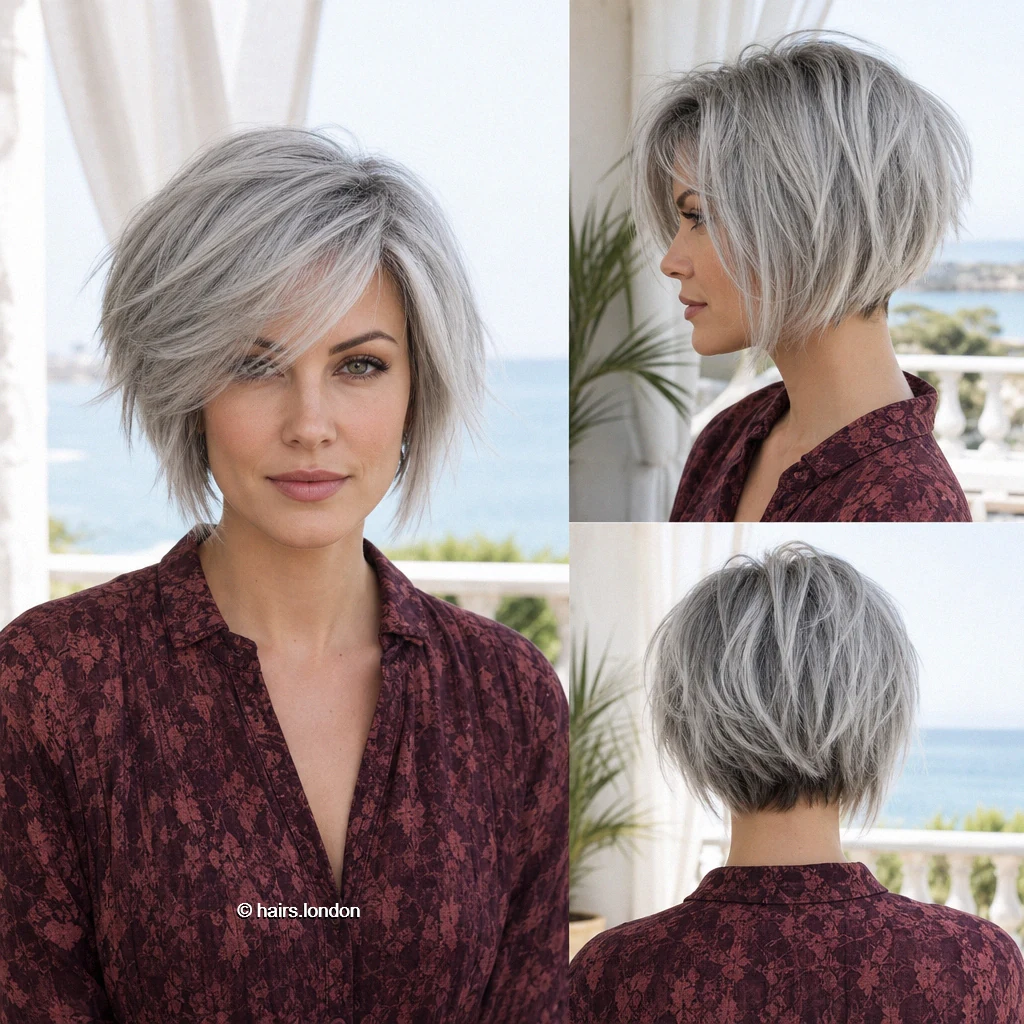
Choppy silver layers give this short bob an uneven finish. A long side swept section partly crosses the forehead. The back narrows toward the nape beneath textured crown pieces. Wispy ends around the jaw prevent a heavy lower line. Ask for separation without cutting the sides excessively thin. Blow dry using your fingers, then redirect the front sideways. A pea sized amount of paste can define individual ends. Natural movement helps achieve this finish with less daily effort at home. Very dense hair may need internal shaping for controlled volume. Trim when the fringe obscures your view or loses direction.
15. Asymmetrical Silver Bob with a Tapered Nape
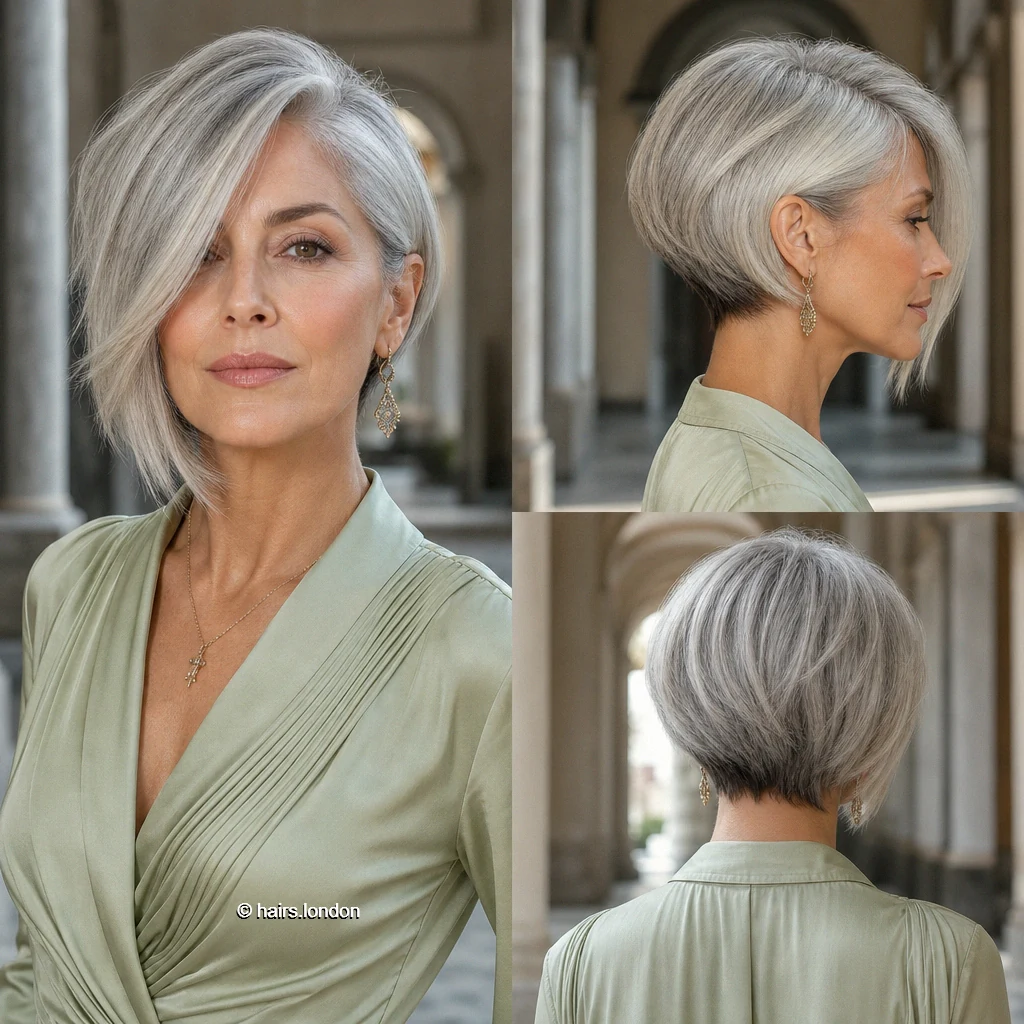
One long silver front panel contrasts with a close nape. The opposite side sits shorter and tucks behind the ear. Side and back views show visible graduation beneath upper fullness. That uneven front makes this an asymmetrical bob, not merely parted. Ask your stylist which side should carry the longer section. Smooth that panel downward while lifting the shorter side slightly. Use flexible hold to preserve movement around the front edge. Growth direction matters when deciding how closely to shape nape. Thick hair may need internal control near its rounded back. Refresh both sides before their difference becomes less noticeable.
16. Blunt Blonde Bob with a Center Part
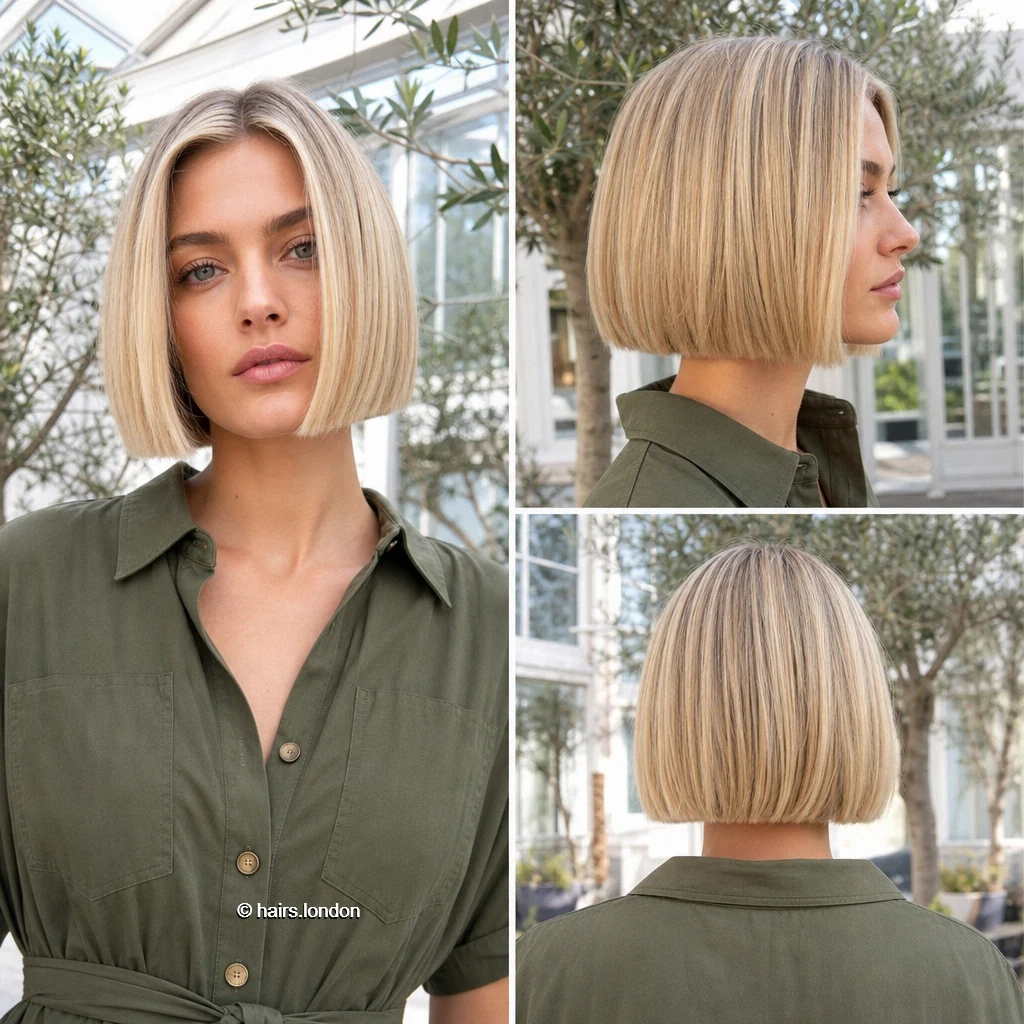
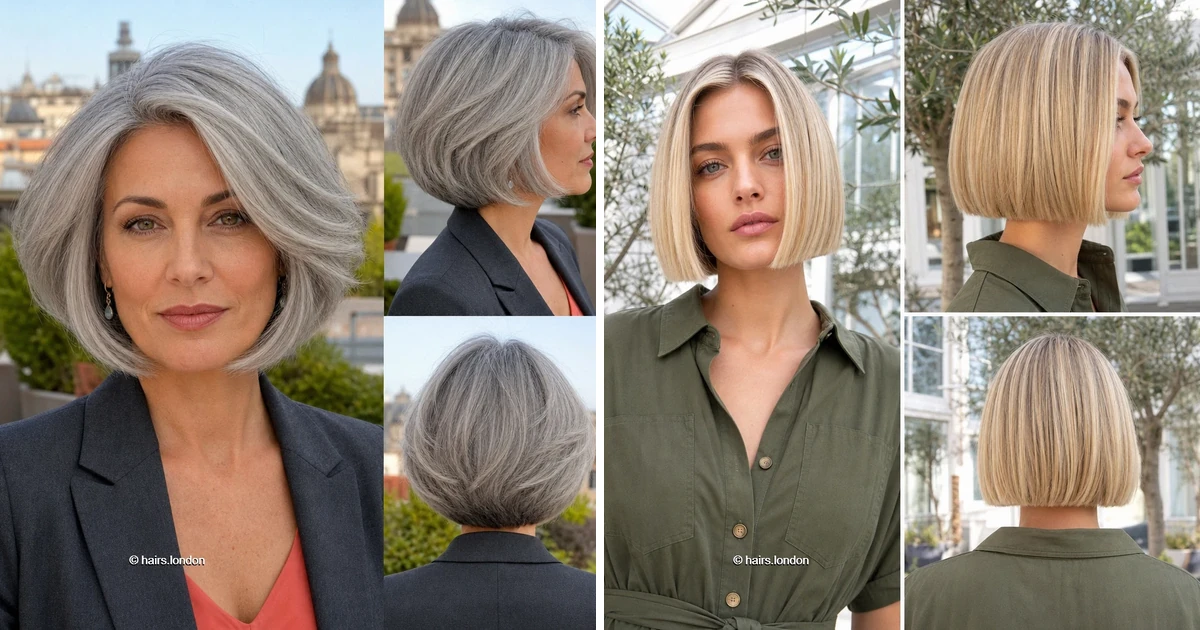
Warm blonde hair falls into a crisp, jaw length bob. A center part divides the smooth front into matching sections. Side and back views show a nearly level, substantial perimeter. Little surface layering interrupts the straight line through the ends. Ask for an outline that accounts for your natural parting. Blow dry downward with a paddle brush for sleek movement. Finish by smoothing only the ends if they turn outward. Fine hair can benefit from keeping this lower edge substantial. Thick hair may require hidden weight control to avoid heaviness. Regular trims keep the blunt line deliberate rather than ragged.
17. Pale Blonde Bob with a Rounded Outline
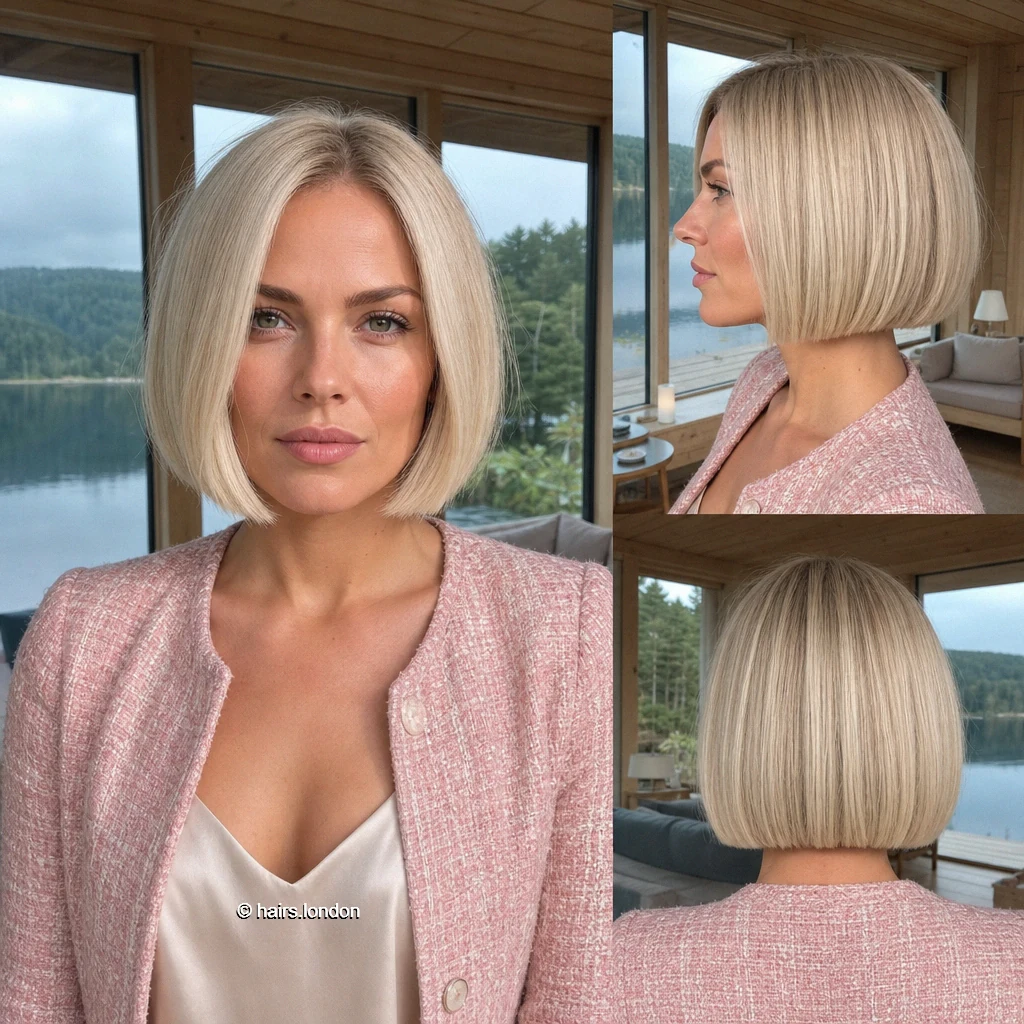
Pale blonde lengths make this jaw length bob look luminous. Its center part frames the face without a separate fringe. The back has a level outline with softly rounded corners. Smooth surface hair keeps visible layering to a minimum here. Ask for enough end weight to hold this curved shape. Brush downward, gently bending the last section toward the neck. A little serum can soften flyaways along the perimeter. Straight hair may need less effort to maintain its finish. Waves could give the outline a less uniform appearance. Trim before the rounded edge drops or separates into points over time.
18. Honey Blonde Bob with Subtle Shaping
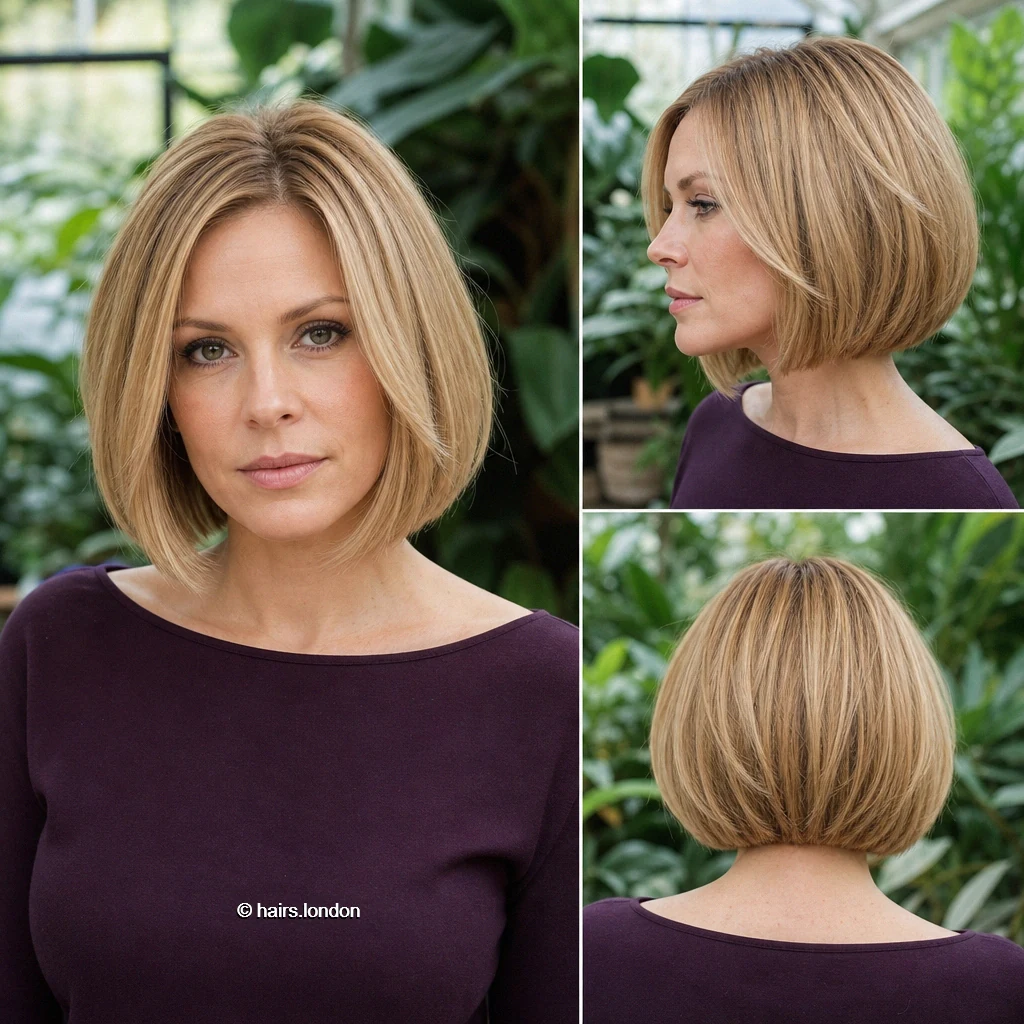
Honey blonde color adds warmth to this softly shaped bob. A slightly off center part keeps the front open. The jaw length perimeter curves gently rather than cutting straight. Side and back views show fullness close to the ends. Subtle shaping gives movement without obvious layers across the surface. Ask whether your density will support this rounded lower edge. Blow dry smoothly, using minimal tension at the final bend. Lightweight cream can reduce frizz while leaving the shape flexible. Natural waves may create a looser version of this silhouette. Rebalance the outline when the sides begin looking uneven over time.
19. Beige Blonde Bob with a Sweeping Side Part
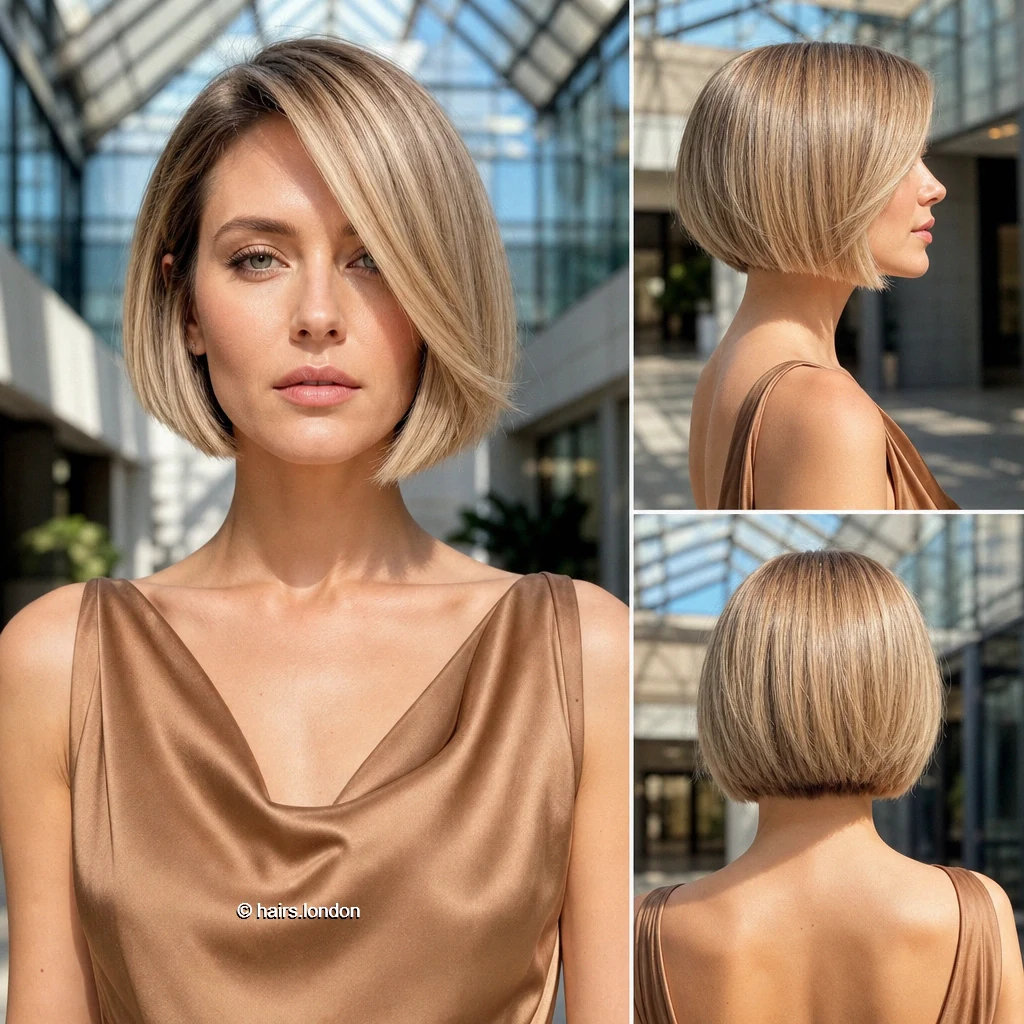
Beige blonde hair forms a compact bob around the jaw. A deep side part creates a broad, sweeping front section. The side view shows its back slightly shorter than front. Back hair remains rounded, without clearly defined stacked layers. Ask for a soft transition rather than an exaggerated angle. Smooth the heavy side forward, then tuck the opposite side. A light spray helps hold direction without freezing the ends. Cowlicks near the part could affect the sweeping front. Thick hair may need internal weight control beneath that section. Maintain the outline before its subtle forward shape disappears with ongoing growth.
20. Golden Blonde A-Line Bob with a Rounded Back
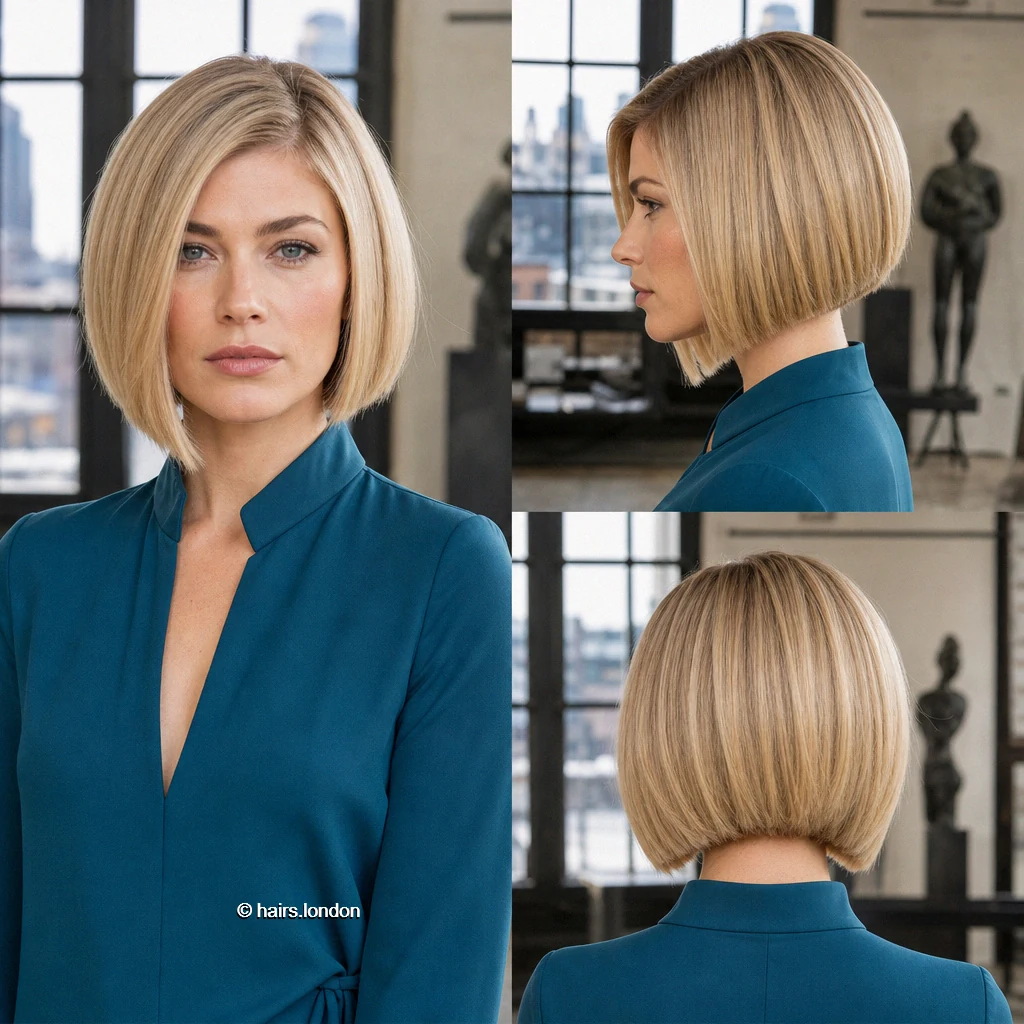
Golden blonde strands create a bob with longer front corners. The side view shows a forward slope from shorter back. Its back remains full and rounded rather than sharply stacked. A side part makes the longer front especially noticeable here. Ask for an angle that stays manageable with your texture. Smooth the perimeter downward to display the clean sloping line. Brush lightly underneath only where the back needs control. Fine hair may benefit from keeping the ends relatively solid. Strong natural waves will soften the visible front to back contrast. Trim the front corners and back together to maintain balance.
How to Choose Your Bob Length and Shape
Start by deciding where you want the outline to sit: near the jaw, against the neck or closer to the shoulders. A blunt perimeter emphasizes a strong lower line; layers create movement but can reduce apparent fullness if overdone. An A-line bob has a longer front, while a stacked or graduated bob shows shorter sections building shape at the back. Bring front, side and back references, since a front portrait alone cannot establish the nape shape.
Styling Fine, Thick, Wavy and Curly Textures
For fine hair, keep product light and discuss retaining weight at the ends. Thick hair may need careful internal weight control so a rounded bob moves without expanding at the sides. Encourage waves with a small amount of mousse or cream and gentle drying rather than brushing out their pattern. For curls, plan the outline around shrinkage and have your stylist assess how the shape sits when dry. Smooth only the sections that need it; a bob need not be uniformly polished.
Keeping Silver and Blonde Color Fresh
The images range from natural-looking silver tones to cool and warm blondes. Ask a colorist about upkeep for the shade you actually want rather than assuming every pale finish needs the same treatment. Gentle cleansing, heat protection and attention to dryness help maintain shine. A toning product can be useful for some cool shades, but overuse may leave hair looking dull; follow advice tailored to your color.
Maintaining the Bob Perimeter and Graduation
A precise blunt edge shows uneven growth sooner than a feathered outline. Short graduated napes also change visibly as they grow, while longer, softly layered bobs can often tolerate more length between appointments. Watch the back as well as the front: a rounded profile may widen, and an A-line shape may lose its slope. Book a reshaping trim when those proportions change, rather than trimming only the face-framing pieces.
What to Discuss with Your Stylist
Show which image views matter most to you, then discuss your natural part, cowlicks, density, curl pattern and willingness to blow dry. Specify whether you want a solid perimeter, visible back graduation, a longer front or a fringe. Ask how the proposed cut will look without styling and how often its particular outline will need maintenance. If color is part of the plan, discuss its separate appointment and home-care needs.
Frequently Asked Questions
What is the difference between a bob and a lob?
A bob generally sits around the jaw or neck; a lob is a longer bob that reaches toward the shoulders. The distinction can be flexible at the boundary.
How is an A-line bob different from a stacked bob?
A-line describes a longer front and shorter back. Stacked describes visible graduation that builds volume at the back. A cut can have both features, but one does not prove the other.
Will a blunt bob work with fine hair?
It can retain a fuller-looking lower edge when the density supports it. Ask your stylist to assess whether minimal layering and your preferred length will keep the ends substantial.
How can thick hair avoid looking bulky in a rounded bob?
A stylist can assess internal weight and shape it without indiscriminately thinning the visible perimeter. The right amount depends on density, texture and how the hair is styled.
Can natural curls be cut into a bob?
Yes, but curl shrinkage changes the apparent length and outline. Discuss where the cut should sit when dry and how much layering preserves your curl pattern.
Should I add bangs to my bob?
Consider your growth patterns and how often you want to style and trim them. An airy fringe and a long side-swept section have different upkeep.
Does a bob need daily heat styling?
Not necessarily. A textured or wavy shape may work with gentle drying and a light product; a sleek, sharply defined perimeter may need more smoothing.
How often should I trim a bob?
Trim when its intended shape starts to change. A short nape or precise blunt line usually calls for attention sooner than a longer, softly layered outline.
How do I keep a graduated back from becoming too round?
Tell your stylist where you want the weight line and how close you want the nape. Regular reshaping helps prevent grown-out sections from widening the profile.
Can I grow out an angled bob evenly?
Yes. Discuss whether to shorten the longer front gradually or let the back catch up, depending on the interim shapes you are comfortable wearing.
Which bob parting is easiest to maintain?
Your natural part is often a practical starting point. A deep side part or sweeping fringe may need more direction if your hair naturally falls elsewhere.
Do silver and blonde bobs need different upkeep?
Their color needs depend on whether the shade is natural or color-treated and on its tone. Both benefit from gentle care and heat protection, while a colorist can advise on toning or touch-ups.
Conclusion
Choose the bob by its side and back shape as well as its front view. A strong perimeter, airy layers, a graduated nape and a longer A-line front each call for different styling and trim habits. Bring the views you like to your stylist, and adapt the length and weight to the way your own hair grows and moves.