

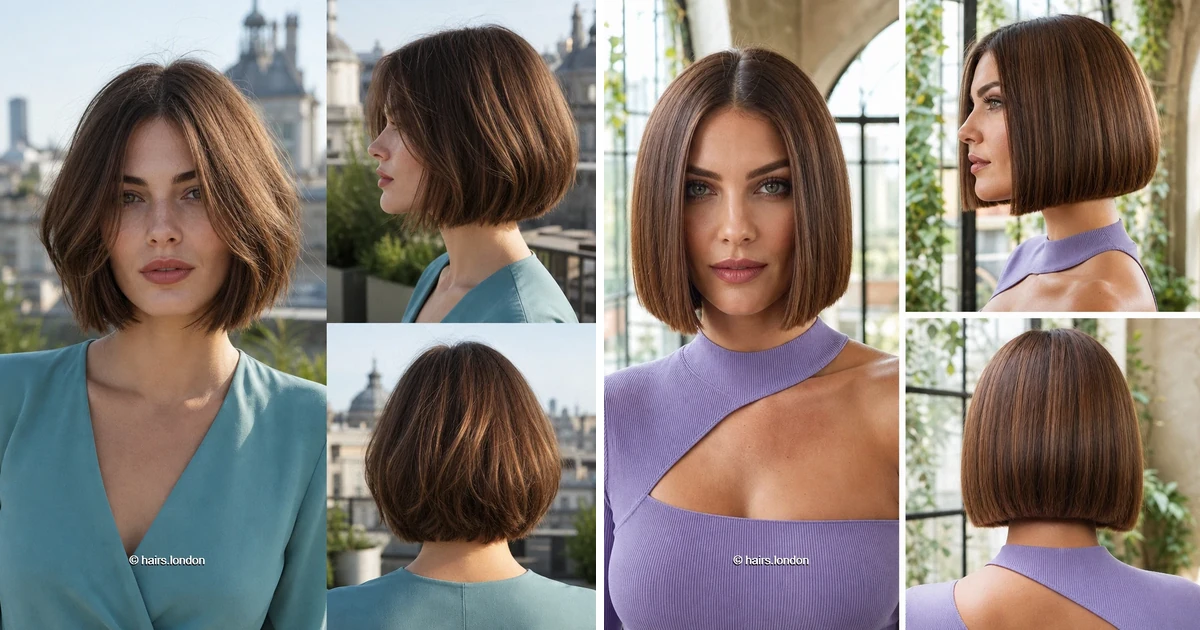
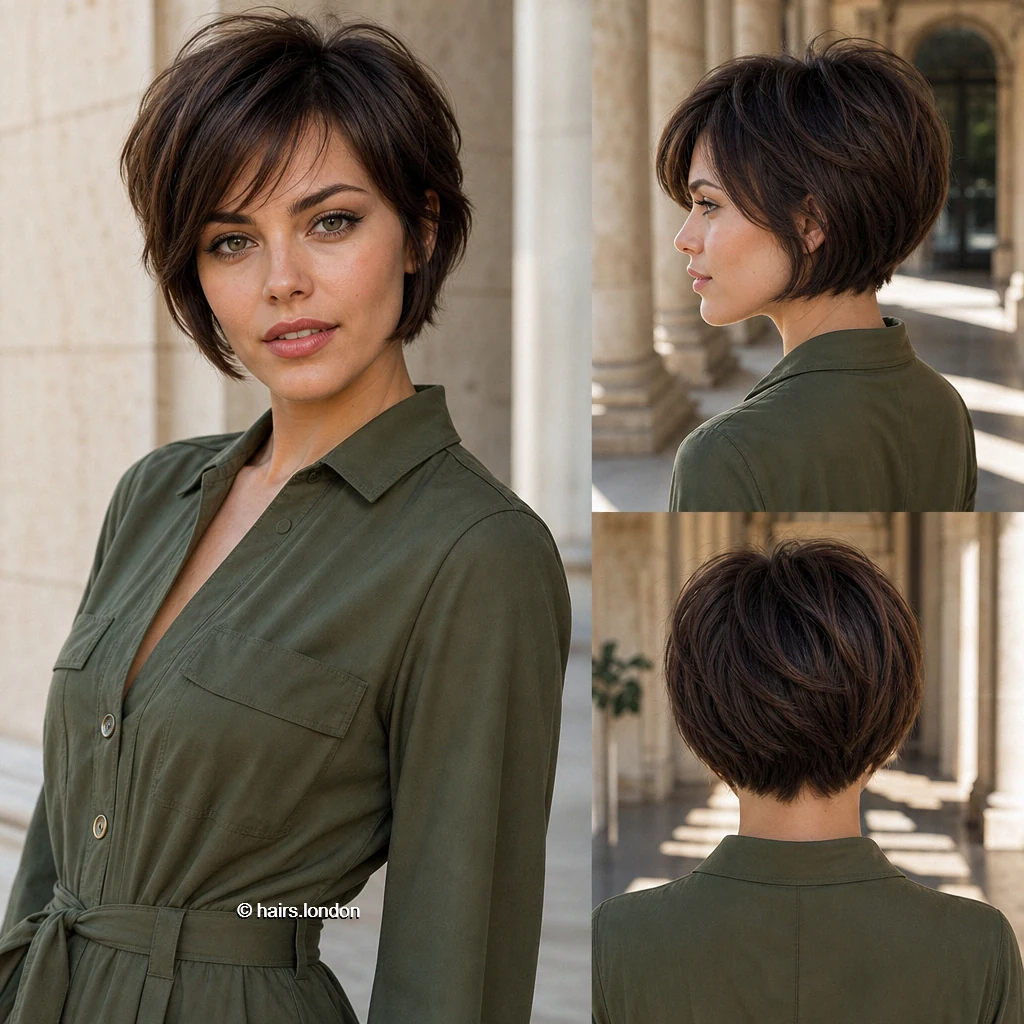
11. Short Layered Bob With Side Fringe
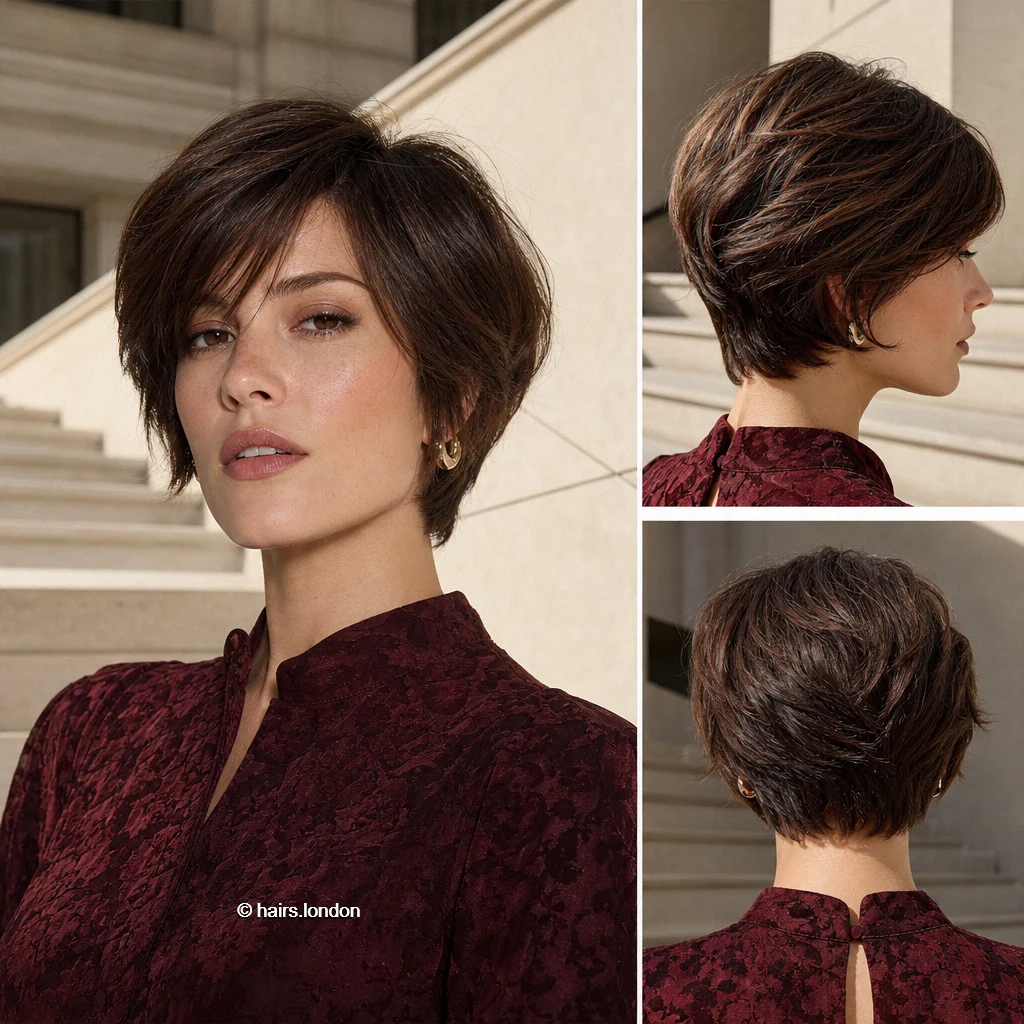
Dark brown layers build volume above a cropped neckline. A side fringe crosses the forehead and blends into longer sides. The back view shows short, visibly textured pieces rather than fullness. This is a cropped, layered bob, not a smooth jawline shape. Ask your stylist to preserve enough length around the face. Lift damp roots while drying, then separate selected ends lightly. Avoid dense pomade that makes the upper layers collapse. Check whether your growth patterns allow the fringe to sweep. Short neckline pieces require regular attention to retain their shape. Protect the warm brown finish when using styling heat.
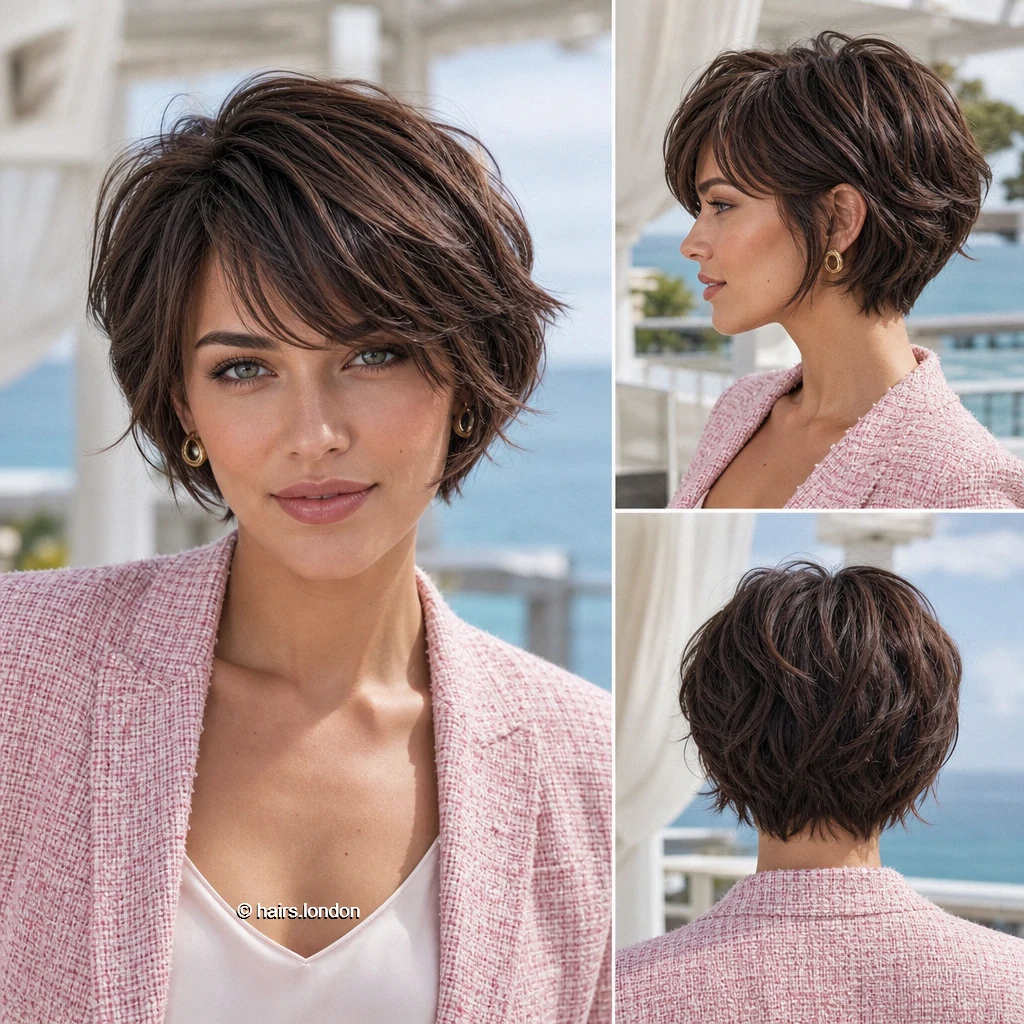
12. Feathered Short Bob With a Tapered Neckline
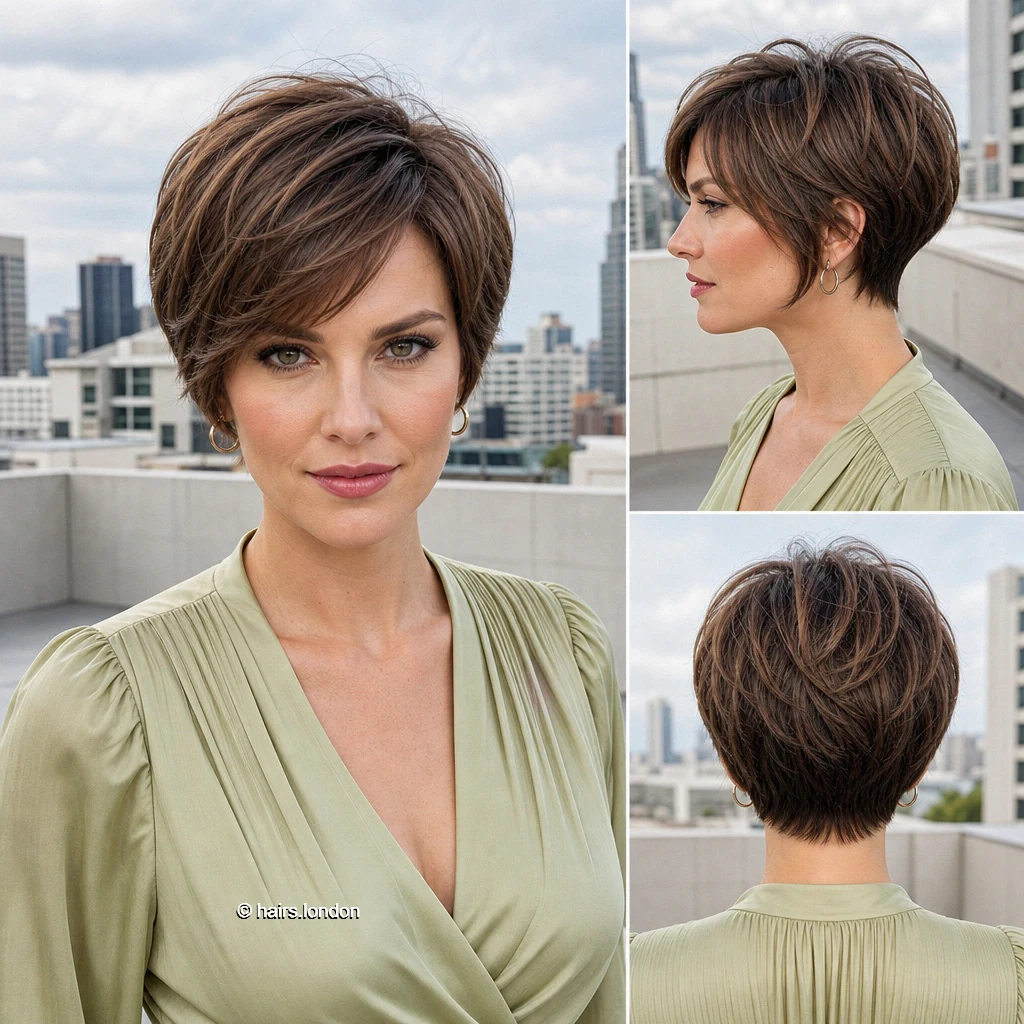
Light brown ribbons brighten the swept, visibly layered upper sections. Short side pieces taper toward an exposed, narrow neckline at the back. A long side fringe supplies softness across the forehead. The back shows distinct feathered texture around the crown. Request a short layered bob if you want this airy outline. Dry upward near the roots, then sweep the fringe sideways. Use light texture spray sparingly to define individual pieces. This silhouette depends on growth patterns and comfortable neck exposure. Neaten the lower outline before it loses its tapered appearance. Color protection keeps the lighter strands from looking unnecessarily dull.
13. Rounded Layered Bob With a Short Back
Deep brunette hair creates rounded fullness at the crown above a short back. Swept fringe and curved side pieces soften the face. Visible layering breaks up the surface without removing its volume. The neckline narrows beneath the fuller upper silhouette. Ask for crown movement balanced against a tidy lower edge. Dry the fringe in its preferred direction before styling lengths. Work a little flexible cream through separated outer pieces. This shape needs enough density to support its rounded crown. Arrange neckline trims as soon as the lower shape spreads. Gentle heat settings help preserve the smooth, glossy dark brown surface.
14. Textured Short Bob With a Wispy Fringe
Brown hair appears tousled through the crown and sides. Wispy side fringe rests across the forehead without heavy coverage. The profile shows short back pieces near the neckline and longer cheekside movement. Uneven outer ends make this layered bob look intentionally loose. Ask for texture that respects your natural wave and density. Scrunch styling cream into damp hair, then dry gently. Define stray pieces individually instead of coating every layer. This choice suits those comfortable with an irregular finish. Trim the neckline when its short ends begin extending downward. Limit repeated hot styling to protect the softly highlighted warm brown.
15. Highlighted Layered Bob With Crown Volume
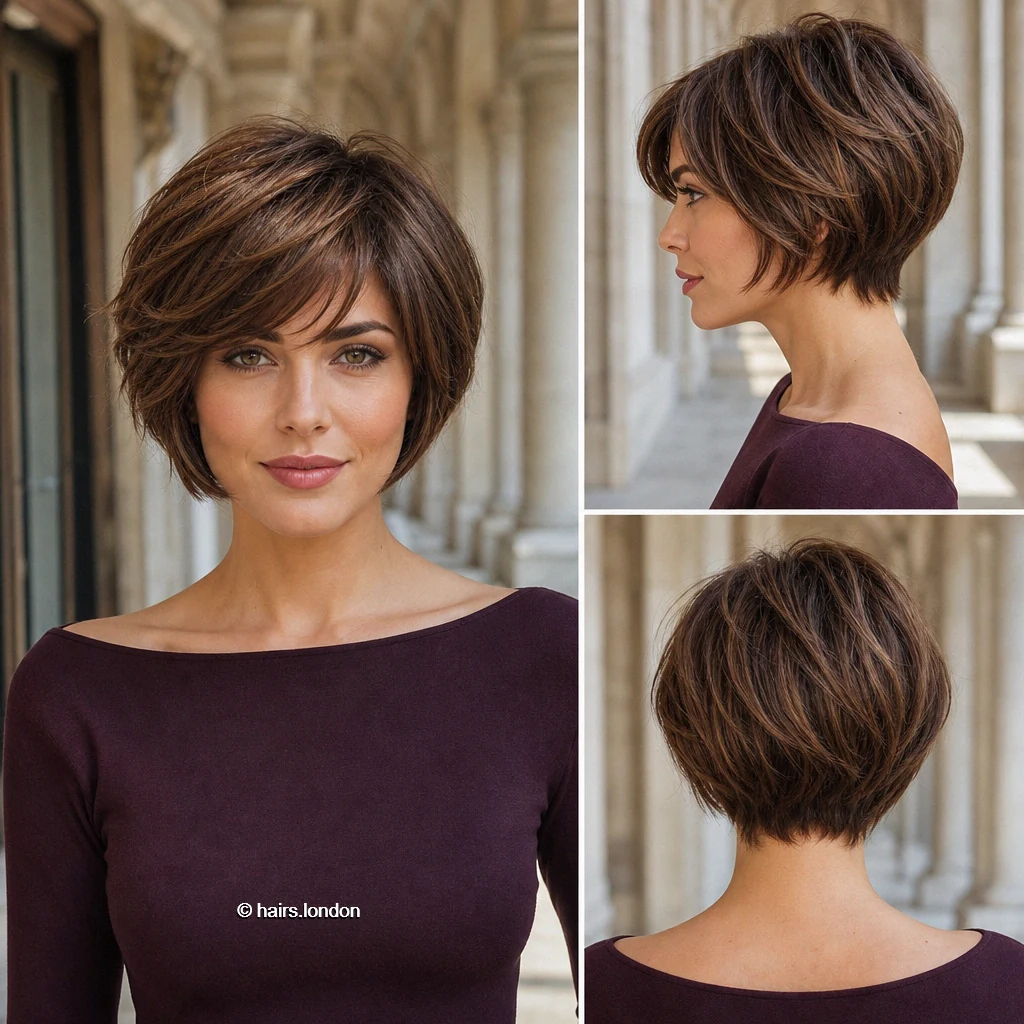
Warm brown highlights thread through the lifted upper layers. A sweeping front section blends into curved cheek length pieces. The back narrows visibly near the neckline beneath a fuller, rounded crown. Piecey ends keep this short bob from appearing solid. Ask your stylist how much height your density can support. Dry roots upward, then guide the fringe across gently. Apply a small amount of paste only to selected outer ends. This cut requires comfort with its exposed, short neckline. Refresh the lower shape before the crown appears disproportionately heavy. Protect highlighted strands from excessive heat to retain their warm color.
16. Jawline Bob With Longer Face-Framing Ends
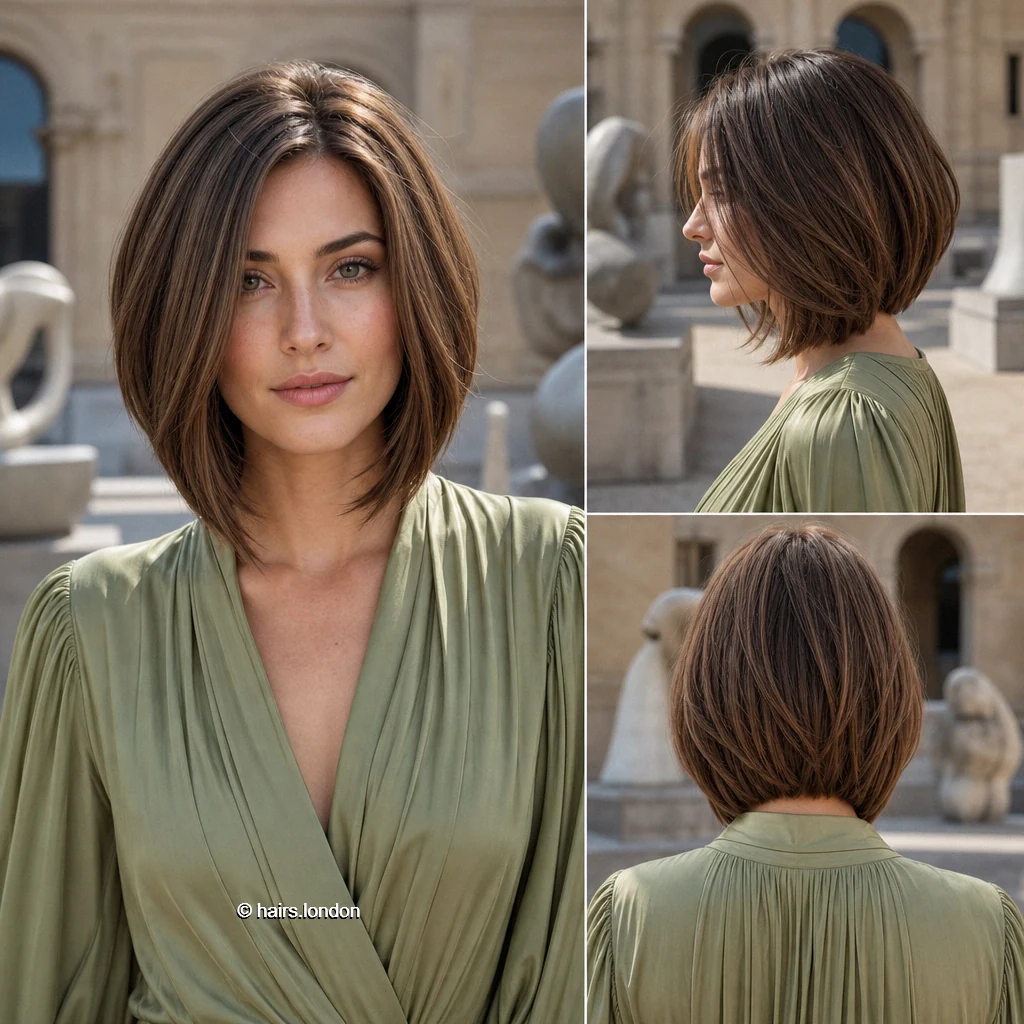
Soft light brown hair sweeps around the cheeks toward longer fronts. The back remains rounded and sits higher against the neck. Its visible front to back change creates a gentle angle. A side leaning part adds volume without a cut fringe. Request soft shaping while keeping substance along the lower edge. Brush the back smooth, then let the fronts curve naturally. Choose lightweight styling products if your hair loses movement easily. Consider whether your density supports this fuller side profile. Keep the back trimmed as its angle begins flattening. Color safe cleansing helps maintain the softly varied warm brown tones.
17. Shaggy Bob With a Light Fringe
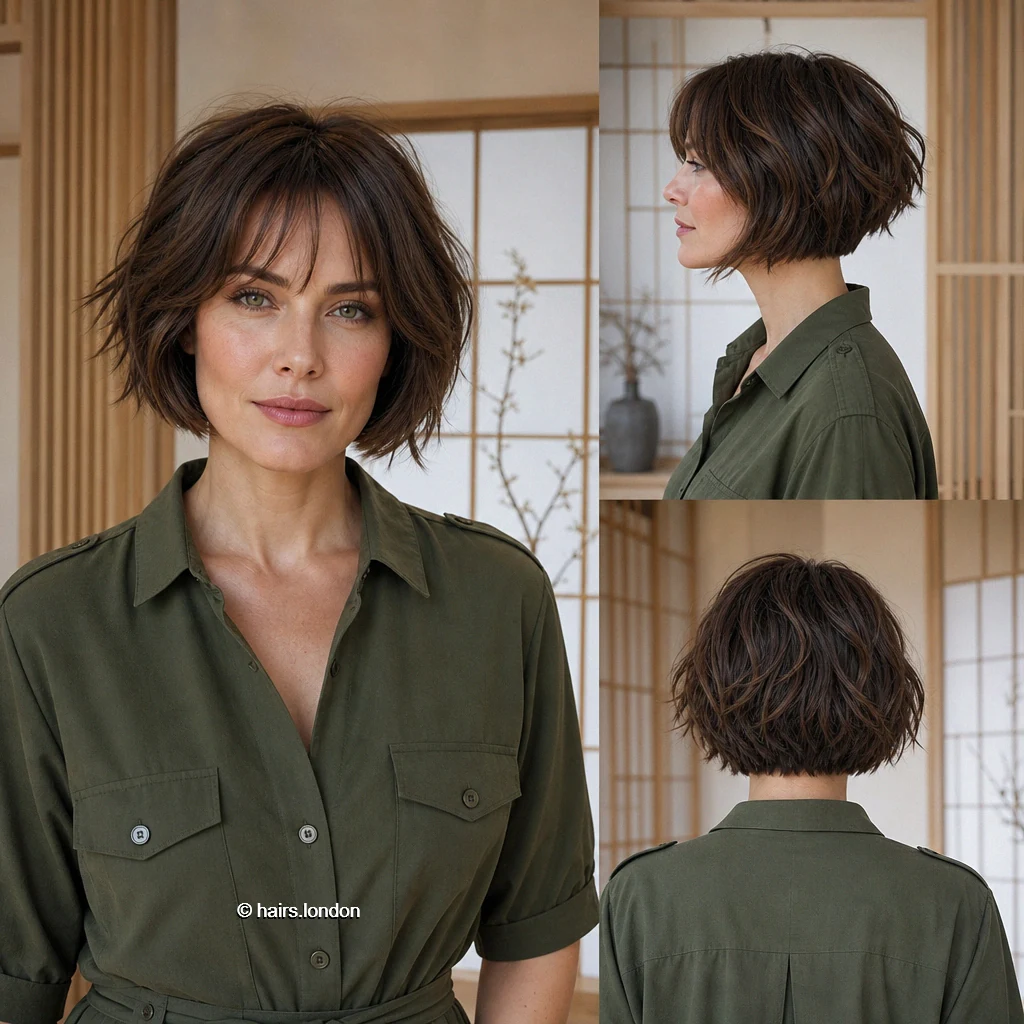
Tousled brown hair sits around the jaw with uneven ends. Light fringe falls across the forehead in separated sections. Side and back views reveal loose, airy layering throughout the shape. The lower outline remains distinctly bob length despite its airy texture. Ask for movement without stripping too much perimeter weight. Enhance natural bends with mousse and gentle scrunching while damp. Smooth the fringe separately if it develops unwanted gaps. This relaxed finish depends on texture, density and styling preference. Trim stray ends when the bob starts losing its outline. Protect the rich brunette color if frequent heat styling becomes necessary.
18. Wavy Bob With Soft Curtain Fringe
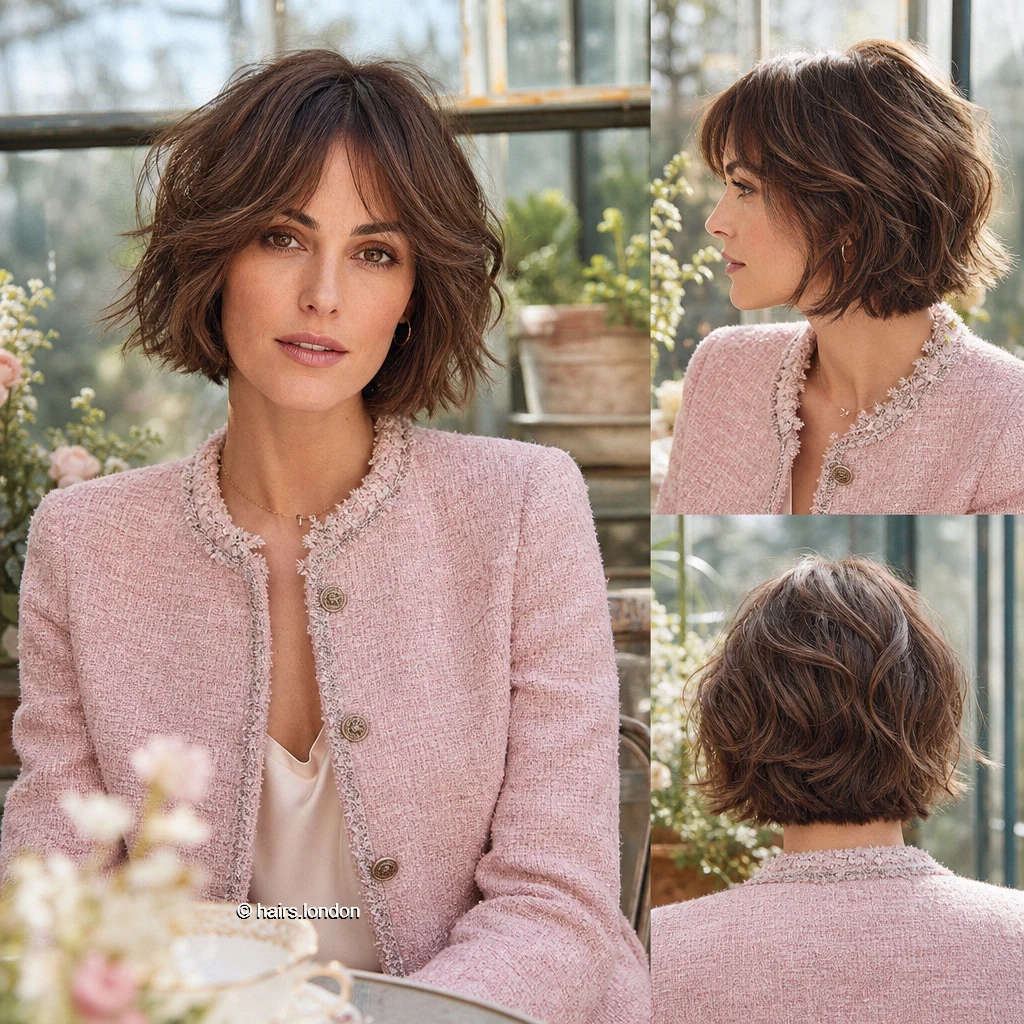
Soft warm brown waves expand around a short, jaw grazing perimeter. Soft curtain fringe opens near the center of the forehead. The rear view shows a textured, rounded bob outline. Loose layers allow movement without creating a sharply stacked back. Ask your stylist to account for natural wave shrinkage. Scrunch a light cream through damp sections and air dry. Adjust the fringe with fingers rather than flattening its bend. This shape works best when you welcome some daily variation. Trim dry looking ends before they disrupt the rounded perimeter. Gentle color care preserves the warmth visible through its natural waves.
19. Loose Layered Bob With Side-Swept Front
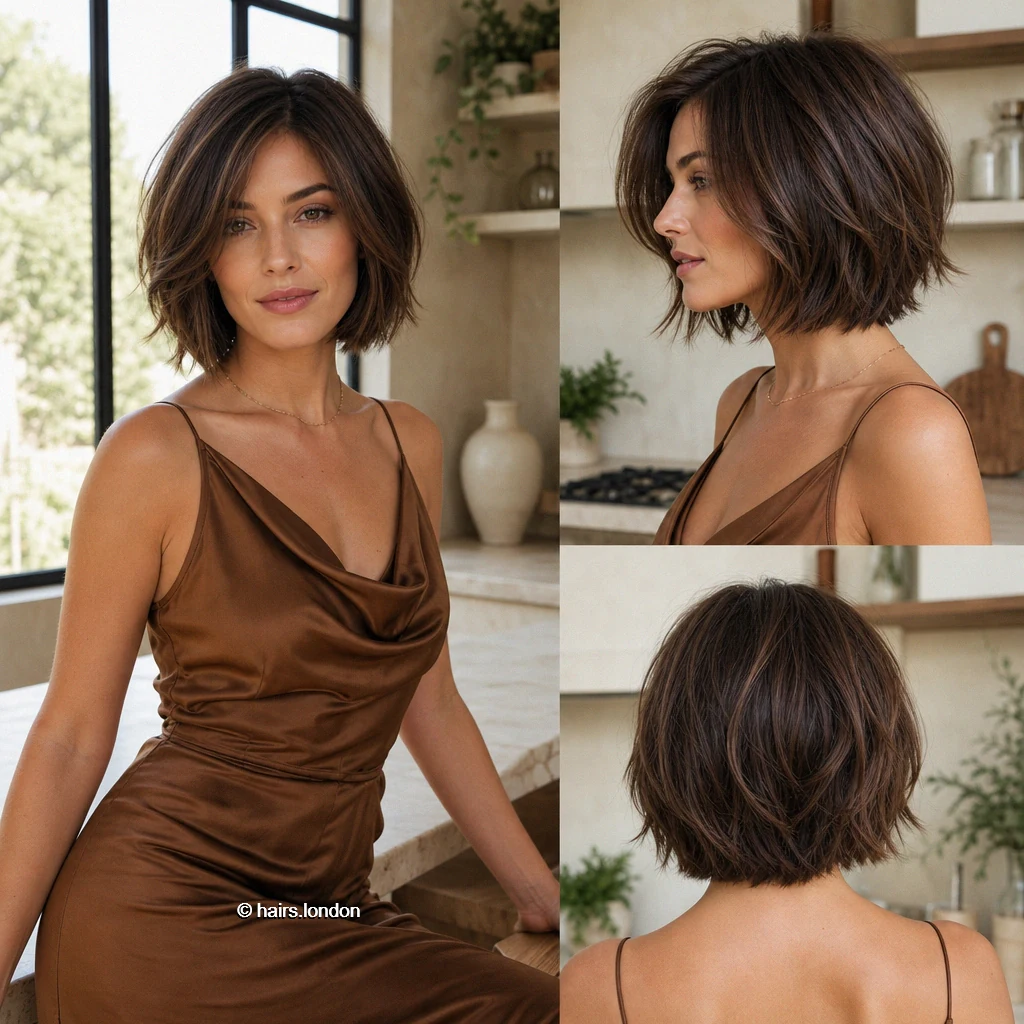
Dark brown hair forms a loose bob above the shoulders. A side swept front frames the cheek without fixed fringe. Visible layers add separation across the sides and back. The perimeter looks softened rather than ruler straight or sharply angled. Ask for enough lower weight to keep this clearly bob shaped. Dry with fingers for movement, smoothing only overly flipped ends. Use light texture spray where layers need extra separation. This flexible outline depends on your natural texture and density. Refresh the ends when growth turns the shape bottom heavy. Heat protection maintains the sheen of its dimensional brunette color.
How to Choose Your Bob Length and Shape
Start with where you want the perimeter to meet your jaw or neck, then consider what happens as the hair dries in its natural texture. A blunt line emphasizes the ends; a rounded bob holds more fullness around the sides. An A-line bob has visibly longer fronts, while a stacked or graduated shape needs visible buildup of shorter lengths at the back. Bring front, side and back references so you and your stylist agree on the whole silhouette.
Styling Fine, Thick, Wavy and Curly Textures
Fine hair may benefit from a substantial perimeter and lightweight root lift rather than many short layers. For thick hair, ask about discreet weight removal that preserves the intended edge. Scrunch wavy hair with a light cream or mousse, then smooth only the sections that interrupt the outline. For curls, plan the length around dry shrinkage and let the stylist assess curl patterns before shaping. Style a fringe separately; avoid loading the rest of the bob with product just to control the front.
Keeping Bob Color Fresh
The smooth brown finishes here show shine and, in some images, lighter ribbons. Use gentle, color-safe washing and heat protection, especially when regularly blow-drying a precise perimeter. If you want highlights, discuss placement where the hair moves and parts, along with the maintenance you are willing to schedule. Protect colored lengths from prolonged sun exposure and ask your colorist when a gloss or highlight refresh is actually needed.
Maintaining the Bob Perimeter and Graduation
A blunt bob shows uneven ends quickly, while an angled bob loses definition when its shorter back grows down. Rounded and visibly graduated shapes can become bulky around the neckline before the front feels long. Book trims according to what your own outline does, not a fixed schedule alone. Between visits, smooth the perimeter when styling, but leave enough movement that the bob does not become stiff.
What to Discuss With Your Stylist
Show the desired front length and the side or back view that explains the shape. Discuss your usual part, density, natural wave or curl, cowlicks, fringe habits and how often you use heat. Ask where weight would be retained or removed, how an angled front will grow out, and how frequently the neckline is likely to need attention. If you prefer to air-dry, say so before the cut is planned.
Frequently Asked Questions
What is the difference between a bob and a lob?
A bob generally ends around the jaw or neck; a lob is longer, often reaching toward the shoulders. The visible perimeter matters more than a strict measurement.
How is an A-line bob different from a stacked bob?
A-line describes a perimeter that lengthens toward the front. Stacked describes visible graduation that builds weight at the back. A cut can show both, but one does not automatically imply the other.
Will a blunt bob work with fine hair?
It can help fine hair look fuller at the ends if enough density is retained. Discuss your growth patterns and how much daily smoothing the chosen length needs.
How can thick hair avoid a bulky rounded bob?
Ask your stylist to assess where the weight gathers and whether discreet internal shaping would help. Removing too much from the perimeter can make the ends look thin.
Can naturally curly hair be cut into a bob?
Yes, but the shape and finished length should account for curl pattern and shrinkage. A consultation with the curls in their usual state helps set realistic expectations.
Should I add a fringe to my bob?
Choose fringe according to your hairline, natural part and willingness to style it. A sweeping or wispy fringe may need different upkeep from a fuller, blunt one.
Which bob needs the least daily styling?
Usually the one planned around your natural texture and part. A precise smooth edge may require more blow-drying than a deliberately loose, textured outline.
How often should I trim a bob?
Trim when its defining detail starts changing: a blunt edge looks uneven, an angled front loses contrast, or a short neckline grows bulky. Your stylist can suggest a schedule after seeing your growth.
What helps a bob keep movement without becoming fluffy?
Keep styling products light, direct smoothing toward the ends and avoid overworking the roots. For waves, define a few sections rather than separating every strand.
Can I tuck an angled bob behind my ears?
Often, but it changes how the longer front reads. Tell your stylist if tucking is part of your routine so the front length and side balance work both ways.
How do I grow out a short layered bob?
Keep the neckline tidy while allowing the sides to catch up. As the layers grow, ask for small perimeter adjustments rather than automatically cutting the front shorter.
What photos should I bring to a bob consultation?
Bring front, side and back views of the shape you like, plus an example of the finish you would actually wear. Point out the length, fringe and neckline separately.
Conclusion
The strongest choice is the bob whose perimeter, weight and styling demands fit your own hair. Save the views that show your preferred front length and back shape, then use them to make a specific plan with your stylist.