


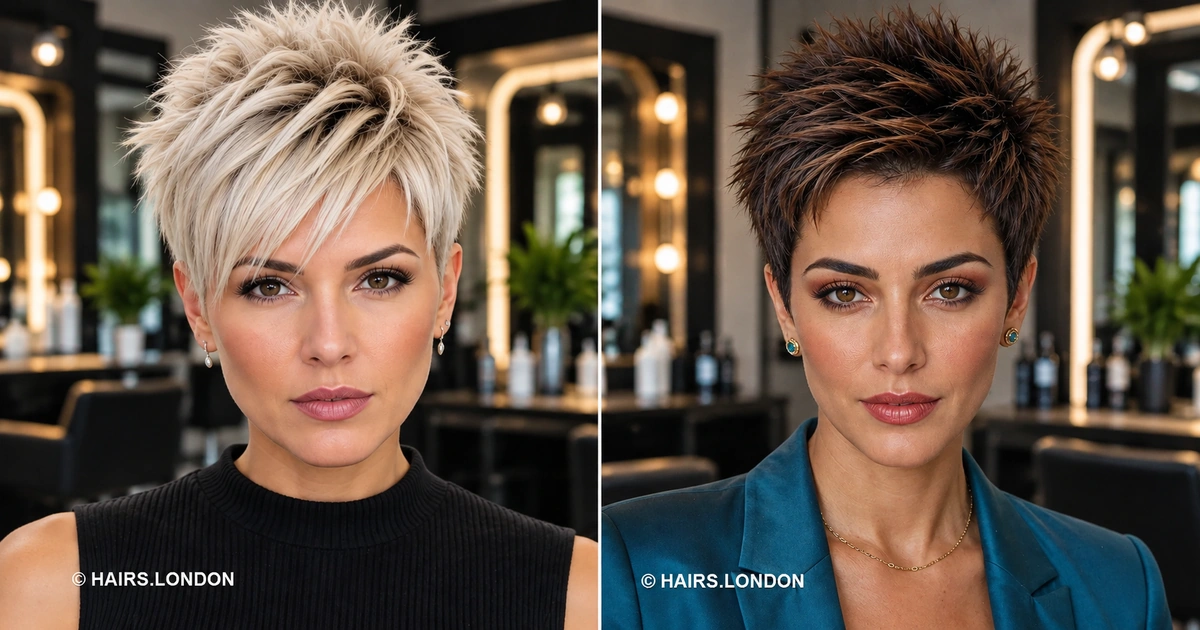
11. Champagne Blonde Undercut Pixie
This ash brown pixie uses fine highlighted ribbons to emphasize a deliberately tousled, spiky crown. The fringe is short and piecey, the sides are tapered close, and the back narrows into a softly pointed nape. Longer top layers are cut with visible separation, creating height without requiring a smooth rounded finish. Straight or slightly wavy hair can be dried forward first, then lifted with fingers for control. A dry texture spray or matte paste can define individual ends. If hair is very thick, removing weight beneath the crown helps prevent width. Highlight placement should follow the haircut rather than overwhelm.
12. Golden Copper Swept Pixie
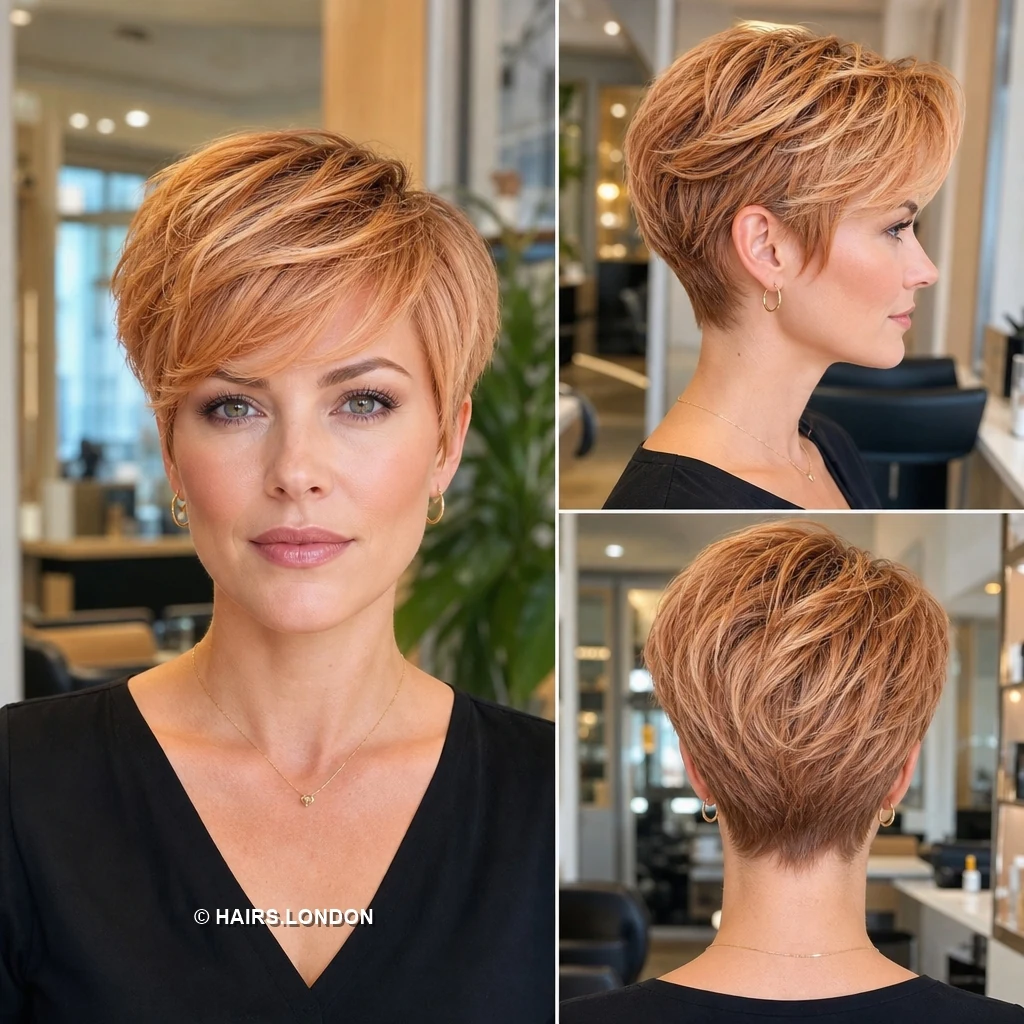
This dark brunette pixie has a compact tapered base with longer, choppy layers pushed upward across the crown. Short separated fringe pieces soften the front while the sides remain close enough to reveal the contrast in length. Subtle warm brown highlights catch the tips and make the spiky texture easier to see. The style works best when product remains flexible, so start with a small amount of matte paste and add only where separation is needed. Coarse or dense hair may need additional texturizing during the cut. A shorter nape can lose its outline quickly, making periodic cleanup useful even.
13. Burgundy Side Swept Pixie
This golden blonde pixie combines a softly tapered nape with longer, pointed layers that radiate through the crown. The fringe is light and broken rather than heavy, allowing the front to connect naturally with the textured top. Honey and beige blonde pieces create visible depth between the spikes, especially over the slightly darker base. Fine hair can gain lift from root spray and blow drying against the natural growth direction. Thick hair may need careful point cutting so the ends separate without becoming bulky. Use a light wax on dry hair for definition. Blonde color care should balance moisture with.
14. Icy Blonde Spiky Pixie
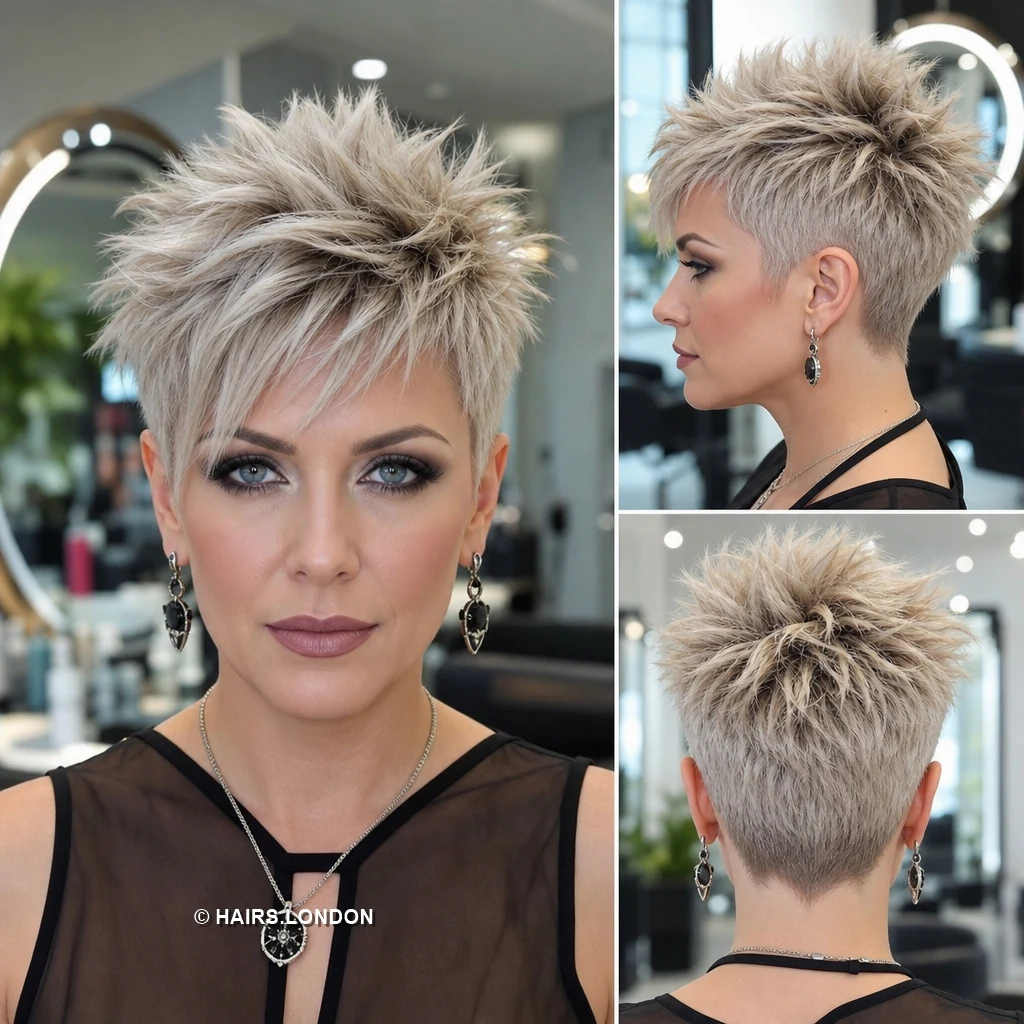
This icy blonde pixie keeps the sides and nape close while leaving noticeably longer feathered layers across the crown and fringe. The top is styled into soft spikes and airy bends rather than rigid points, producing volume with a lighter finish. Cool pearl blonde makes the layering easy to read and may require toning maintenance depending on the natural starting shade. Fine hair can use volumizing foam before drying, followed by a small amount of dry paste. If hair is dense, reducing interior weight can keep the crown from becoming round. Heat protection is particularly useful when lightened hair is.
15. Rose Beige Voluminous Pixie
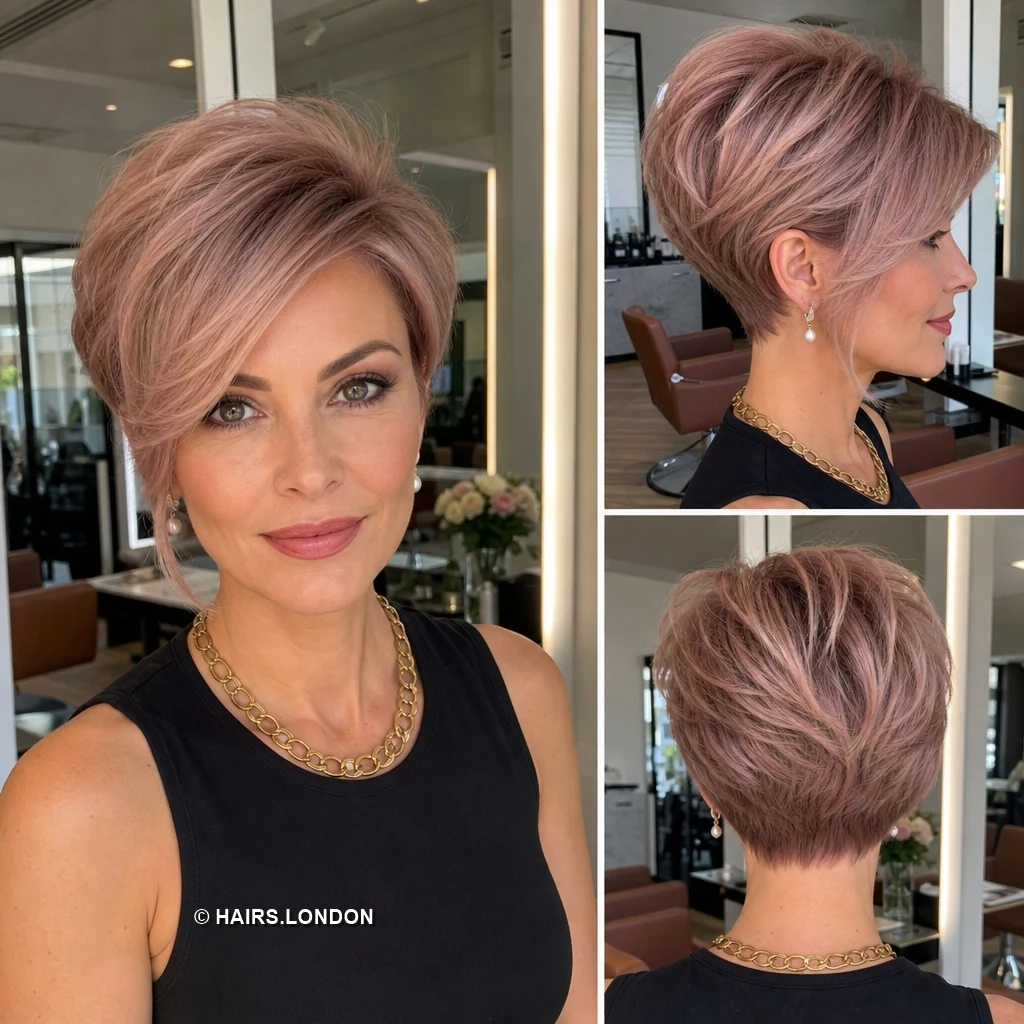
This champagne blonde pixie is shaped with a long diagonal fringe, smooth side coverage, and a softly graduated back. The crown retains moderate length for lift, while the nape is tapered neatly without the sharp contrast of a clippered undercut. Pale blonde highlights over a beige base create dimension through the sweeping layers. A round brush or vent brush can guide the fringe across the forehead, and a light finishing cream can control flyaways. Fine hair may benefit from subtle root support. When discussing this cut, decide how much forehead coverage you want because fringe length strongly affects daily styling.
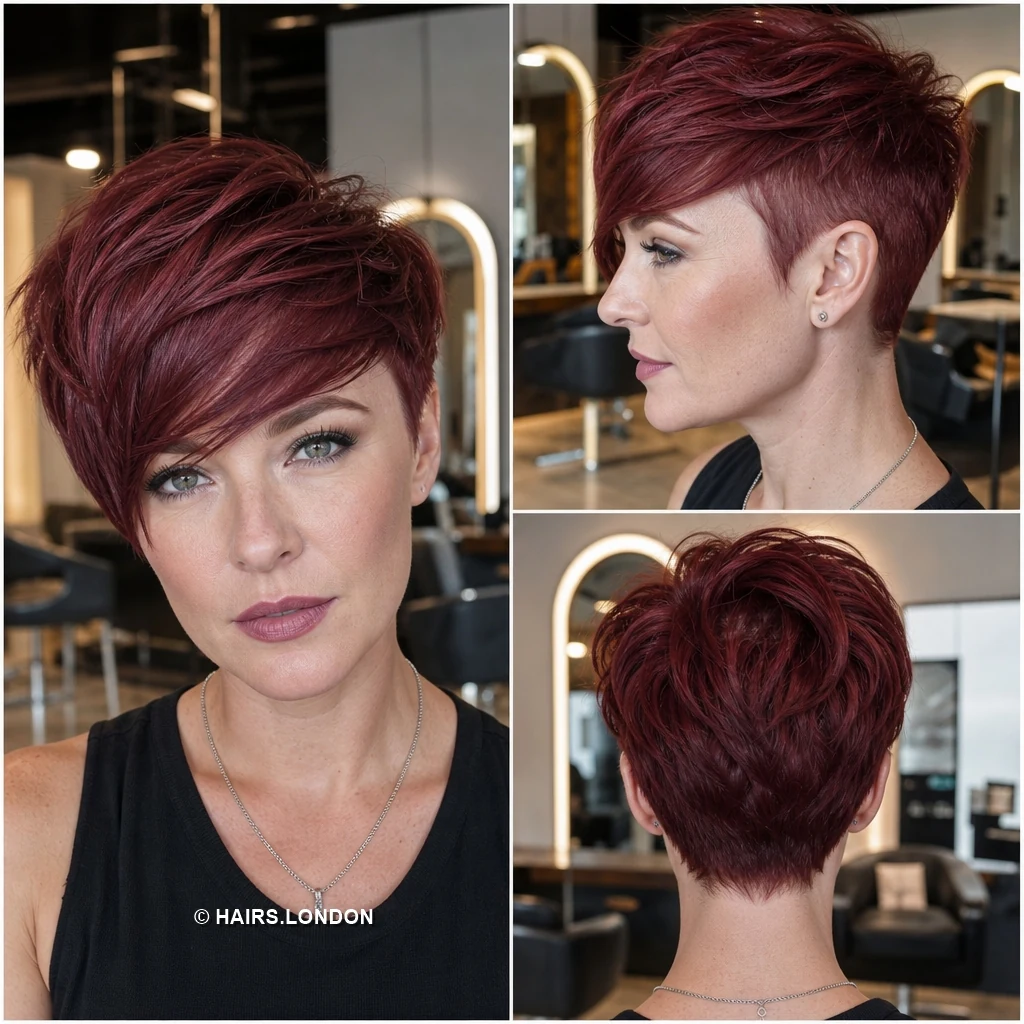
16. Berry Magenta Textured Pixie
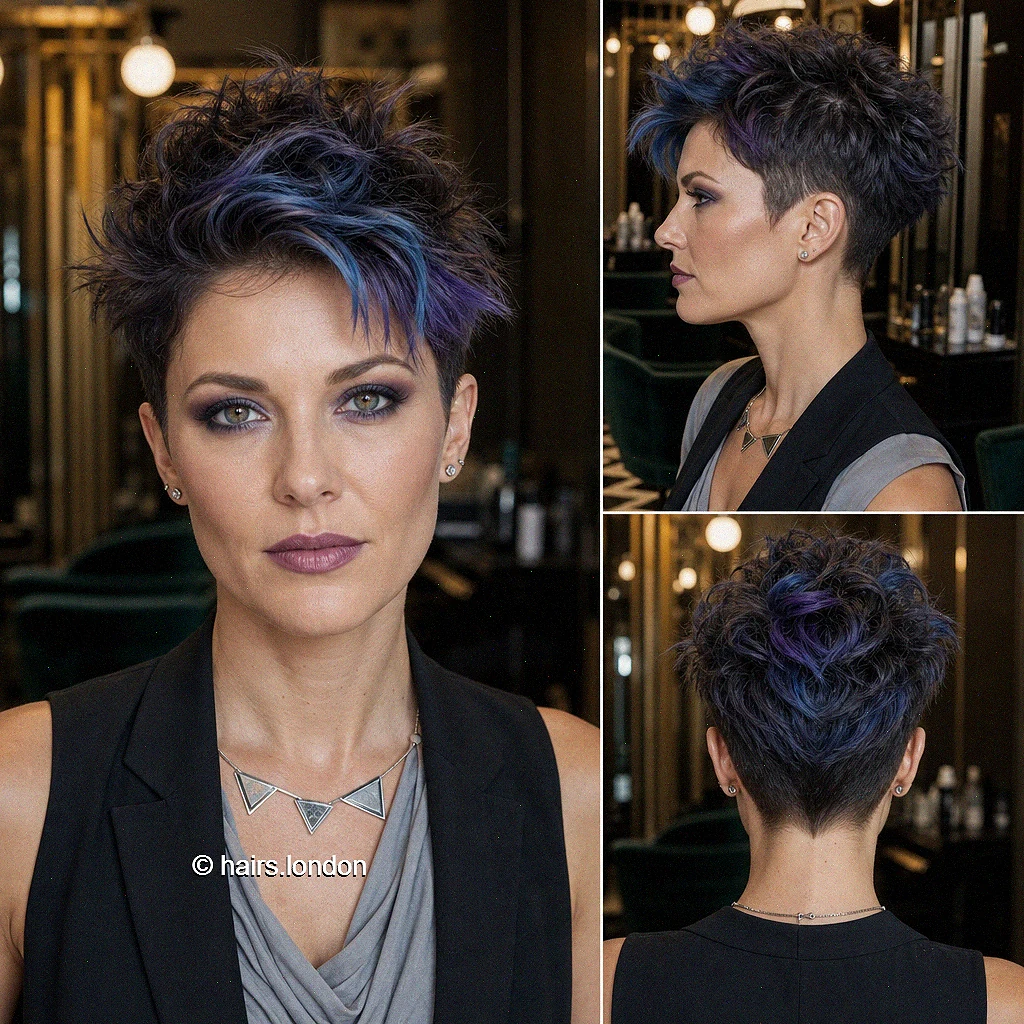
This burgundy pixie uses razor like separation through the crown, producing energetic spikes that remain longer on top than around the ears and nape. A broken fringe falls forward in narrow pieces, while the back is tapered closely enough to keep the silhouette compact. Cherry burgundy color amplifies the contrast between overlapping layers. Medium or thick hair can handle substantial texturizing, but fine hair should retain enough density at the ends. A dry paste or texture powder can create separation without a wet finish. Deep red shades often soften with washing, so gentle color care and planned refresh appointments help.
17. Copper Brown Piecey Pixie
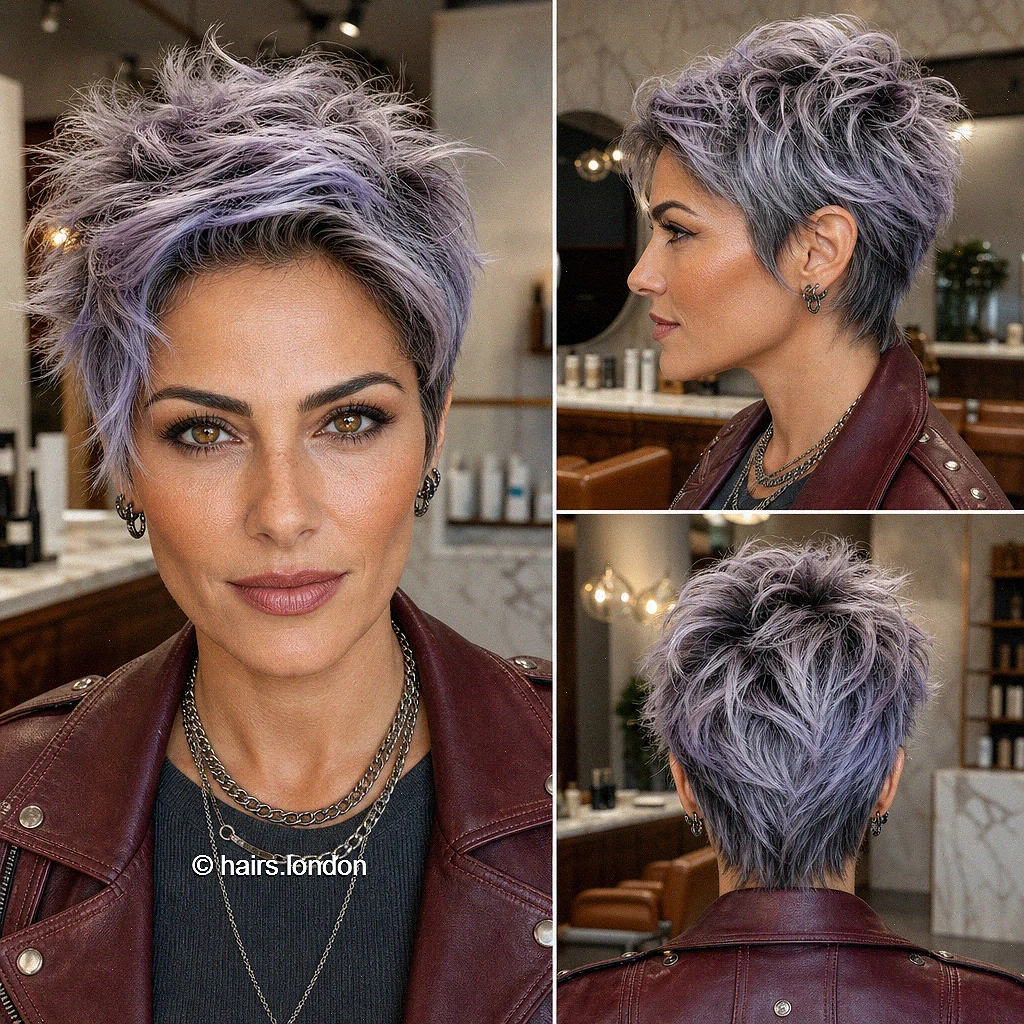
This ash taupe pixie features a heavily textured crown with narrow highlighted strands twisting over a darker base. The fringe is short and wispy, the sides sit close around the ears, and the nape is tapered into longer pointed pieces rather than a blunt line. The combination creates a deliberately airy, spiky silhouette. Fine hair can use texturizing powder for grip, while dense hair may need interior thinning to achieve similar separation. Style with fingers instead of over brushing so the pieces stay distinct. Ask the stylist to adapt the crown length around cowlicks, because natural growth patterns can change.
18. Crimson Burgundy Spiky Pixie
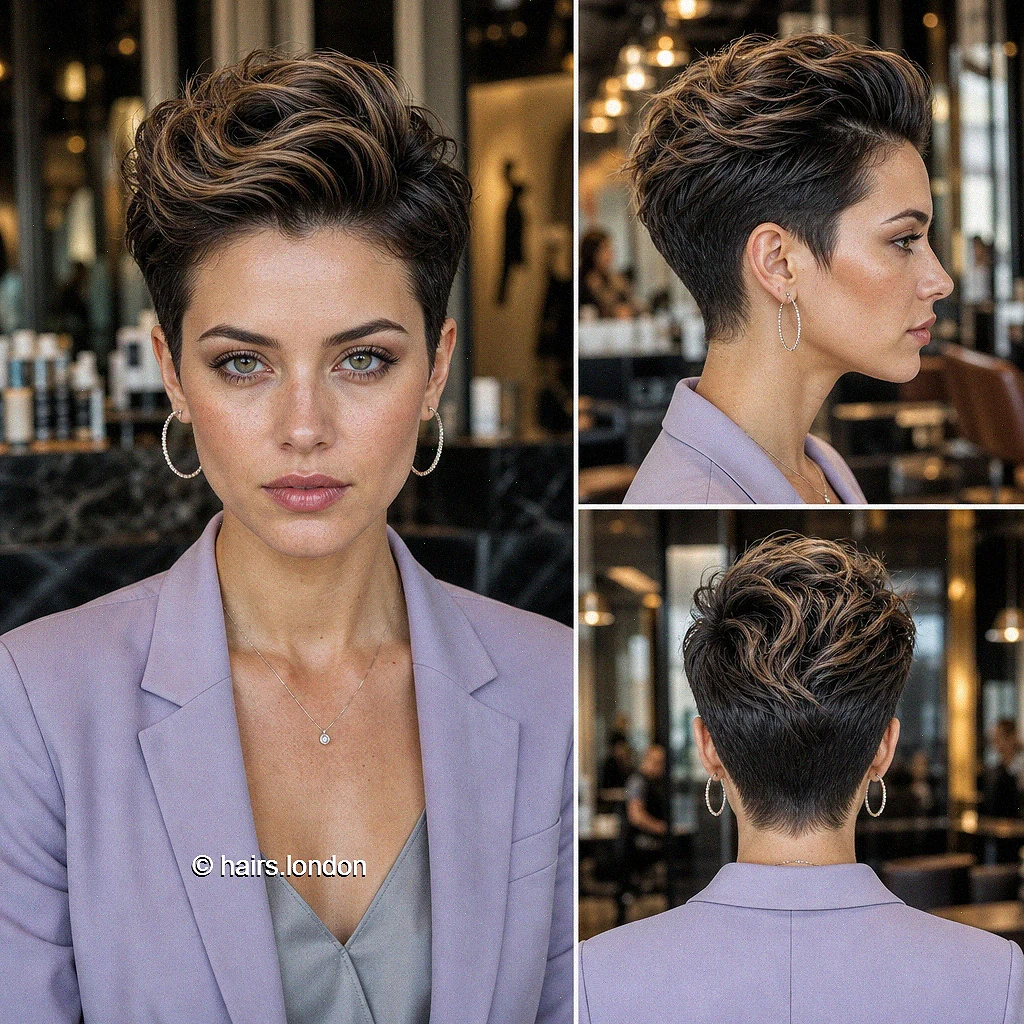
This espresso brunette pixie has a close tapered foundation and longer choppy layers styled upward and forward across the top. The fringe is fragmented into short pieces, while the crown carries enough length for visible spikes and movement. Warm brown accents appear subtly through the dark base, giving the texture depth without changing the overall brunette impression. Straight or slightly wavy hair can be rough dried, then shaped with matte clay. For thick hair, removing bulk underneath helps the top sit closer between styling days. The pointed nape and short sides will show growth relatively quickly, so maintenance timing should.
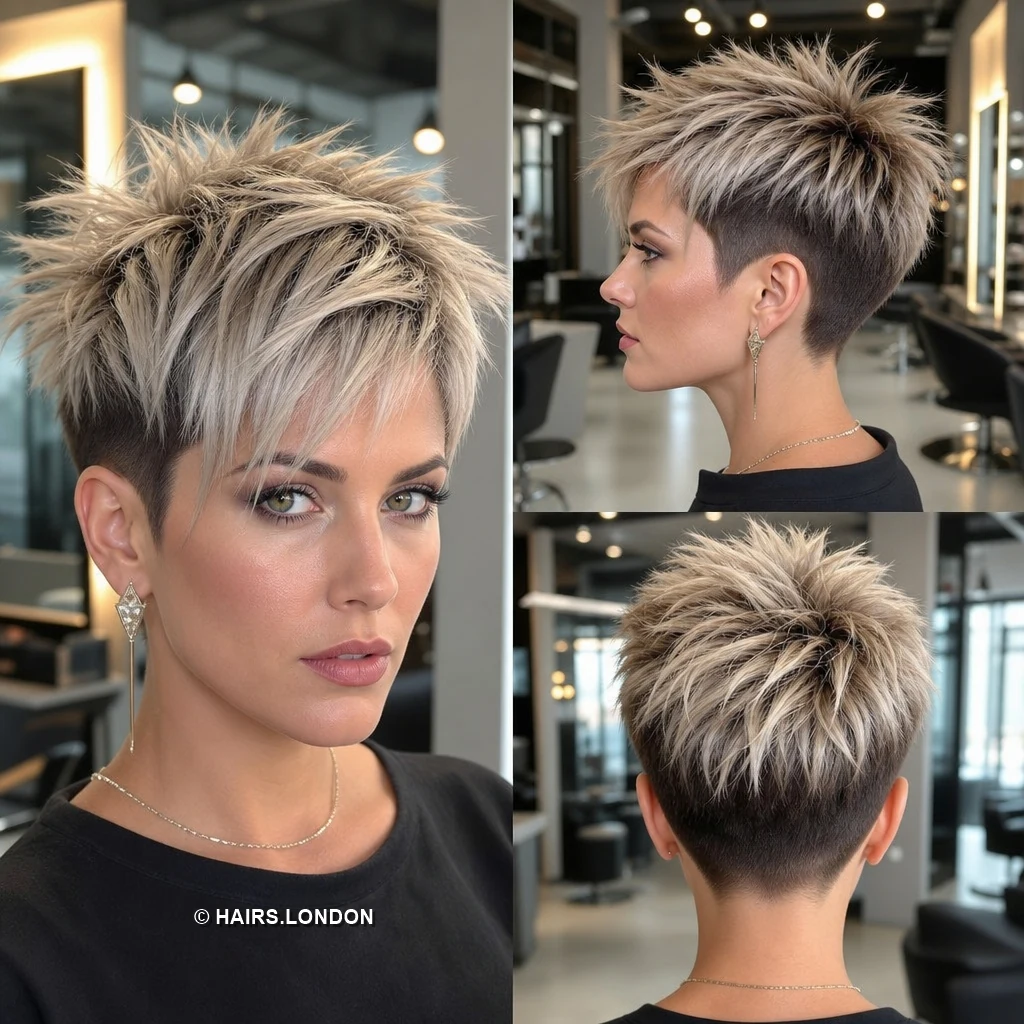
19. Pearl Silver Tousled Pixie
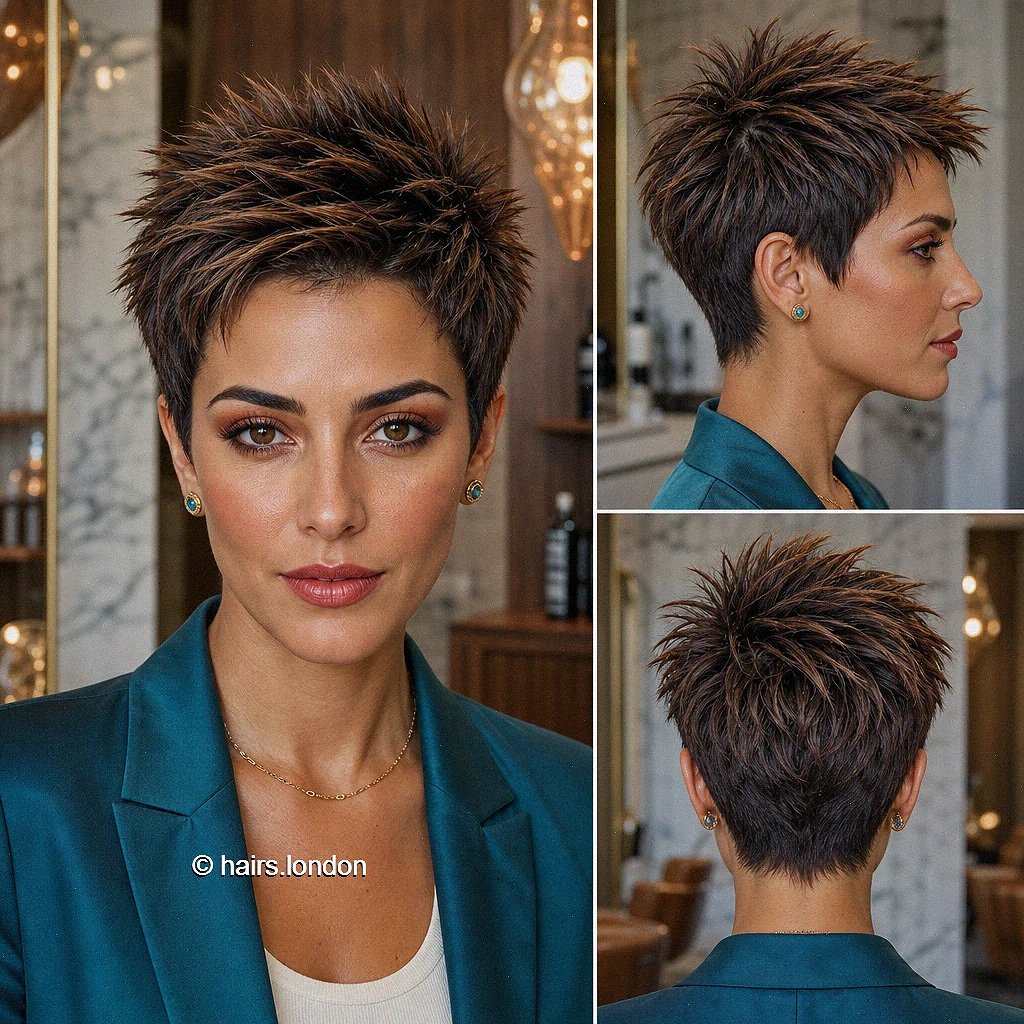
This honey blonde pixie uses pronounced spikes and separated crown layers over a darker tapered base. The fringe is short and airy, with pointed pieces moving forward and sideways rather than forming a solid bang. Golden and beige highlights make the lifted texture stand out clearly. Fine hair can achieve similar height with root lift spray and a lightweight dry paste, while dense hair may need substantial texturizing to avoid excess width. Direct the blow dryer from several angles to encourage movement before adding product. If you prefer less daily styling, ask for slightly longer blended layers so the haircut.
20. Raspberry Plum Textured Pixie
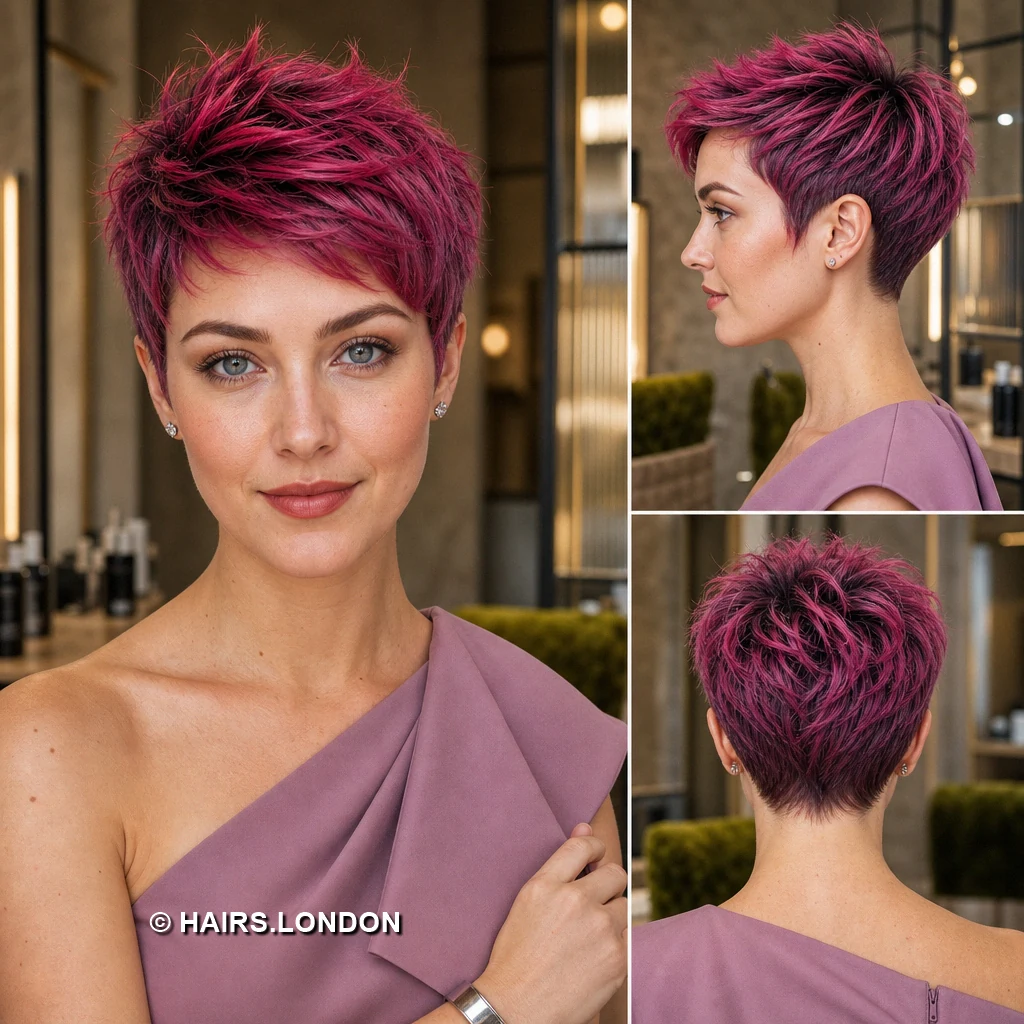
This pearl blonde pixie has a feathered, tousled top with soft spikes, a short side fringe, and closely tapered sides that blend smoothly into the nape. The cool pale color emphasizes each fine layer and gives the crown a light, airy appearance. Straight to gently wavy textures can recreate the finish with volumizing mousse, finger drying, and a small amount of flexible paste. Fine hair should avoid heavy waxes that collapse the crown, while thick hair may require weight removal beneath the longer top. Cool blonde tones can shift between appointments, so discuss toning, conditioning, and heat habits alongside the.
Choosing the Right Pixie Shape for Your Styling Routine
Cropped, Swept, or Spiky
A cropped pixie reduces styling time but exposes growth at the perimeter quickly. Swept versions need enough front length to move across the forehead and usually respond well to directional blow drying. Spiky versions depend more on separation and root support; they can be styled softly or sharply depending on product choice. If you want versatility, keep the crown slightly longer so it can be worn smooth on quieter days and lifted when more texture is wanted.
Fringe Comfort and Natural Parting
A long fringe creates movement but can fall into the eyes if it is cut without considering the natural part. Ask the stylist to check the fringe dry, especially around cowlicks. Shorter broken bangs are easier to keep away from the eyes, while a diagonal fringe gives more coverage and can connect gracefully into longer temple pieces.
Fine Hair, Thick Hair, and Crown Lift
Fine Hair Considerations
Fine hair usually benefits from preserving density through the top instead of excessive thinning. Root lift spray, volumizing mousse, or a small amount of texturizing powder can support the crown. Heavy waxes may make separated layers collapse, so begin with less product than you think you need.
Managing Weight in Thick Hair
Dense hair can make a short crown expand sideways unless weight is removed strategically. Internal texturizing can reduce bulk while keeping the visible surface controlled. With undercuts, discuss how high the clipped area should travel because that choice changes both the silhouette and the grow-out experience.
Styling Waves, Sweeps, and Spikes
Natural Wave and Soft Movement
If the hair naturally bends, encourage that movement with mousse or light curl cream and finger drying. Avoid forcing every layer into the same direction. A diffuser on low airflow can preserve separation when the texture is wavier, while a small brush can smooth only the fringe when desired.
Creating Crown Lift and a Swept Fringe
Dry the roots against their normal direction first, then redirect the top into the finished shape. For a swept fringe, use a vent or round brush with moderate tension and finish with flexible cream or spray. Crown lift lasts better when product is concentrated near the roots rather than coating the full length.
Separated Spikes Without Stiffness
Work matte paste, clay, or dry texture product between the fingertips before touching the hair. Pinch only selected ends and vary their direction. This creates definition without turning the whole crown into one rigid shape. Fine hair often needs powder or spray for grip; coarse hair may respond better to a pliable paste.
Color Care for Blonde, Silver, Copper, Violet, and Burgundy Pixies
Short hair makes color placement highly visible because every layer is exposed. Cool blonde and silver shades may need periodic toning and conditioning, particularly when the hair has been lightened. Copper, red, violet, and burgundy shades commonly lose intensity with repeated washing, so gentle color-safe cleansing and cooler water can help preserve the look. The correct refresh schedule depends on the starting color, chosen shade, and how quickly the hair grows.
Maintenance, Grow-Out, and Salon Consultation
Choosing a Realistic Maintenance Schedule
Very short sides, pointed napes, and undercuts show growth sooner than fuller pixies. Many people prefer perimeter cleanup within several weeks, while softer layered shapes can tolerate a longer interval. Choose a schedule based on how crisp you want the outline rather than following one fixed rule.
Growing Out a Pixie
During grow-out, keeping the nape controlled while allowing the crown and sides to gain length can prevent the shape from becoming bottom-heavy. A stylist can gradually connect previously undercut areas into longer layers. Fringe length can be redirected sideways as it grows instead of being repeatedly shortened.
What to Discuss at the Consultation
Bring front, side, and back references when possible. Discuss natural parting, cowlicks, glasses, humidity, preferred ear coverage, fringe comfort, and how much styling time you will realistically spend. Ask which parts of the reference depend on haircut structure and which depend on blow drying, product, or color. This makes the photograph a useful starting point rather than a promise of an identical result.
Frequently Asked Questions
Can these textured pixie cuts work on fine hair?
Yes, several can be adapted for fine hair, especially the feathered and swept versions. The key is preserving enough density through the crown and avoiding excessive thinning. Lightweight root support can create lift without making the hair look separated or sparse.
Which styles are easier to adapt for very thick hair?
The undercut and strongly tapered examples can remove substantial bulk, while fuller pixies may need internal weight removal. A stylist should decide where to reduce density so the surface layers still move naturally instead of becoming short and puffy.
Can naturally wavy hair wear the softer pixies shown here?
Yes. Natural bend can help create the loose crown movement seen in the plum, rose, and feathered examples. The cut should account for shrinkage and growth direction, and styling can emphasize the wave with mousse, curl cream, finger drying, or gentle diffusing.
Will a pixie haircut create curls if my hair is straight?
No. Cutting layers can reveal existing movement and make hair easier to bend, but it does not create a naturally curly texture. Straight hair may need a brush, iron, or other styling technique to reproduce curved or wavy pieces shown in a reference.
How can I keep crown volume from falling flat?
Start by drying the roots against their natural direction, then redirect the top into place. Use lightweight root spray, mousse, or texture powder rather than heavy wax. The crown also needs enough length and internal structure to support the intended lift.
How do I stop a long pixie fringe from falling into my eyes?
Ask for a fringe length and direction that works with your natural part. Blow dry it into position while the roots are still damp, then use a small amount of flexible product. If comfort matters more than coverage, request a shorter diagonal fringe.
How often should a tapered or undercut pixie be reshaped?
There is no single interval for everyone. Close sides and sharp napes reveal growth quickly, so they generally need more frequent cleanup than softly layered pixies. Your preferred outline, growth rate, and tolerance for a softer grow-out should determine the schedule.
What styling products suit the spiky looks in this collection?
Matte paste, pliable clay, dry texture spray, and texturizing powder are useful options. Choose lighter products for fine hair and stronger but flexible products for dense hair. Apply gradually to dry hair and define selected pieces instead of coating the entire crown.
How quickly can violet, burgundy, copper, and red shades fade?
Fade rate varies with the starting color, product choice, washing frequency, water temperature, sun exposure, and the specific color service. Vivid shades usually need more active maintenance than natural-looking brunettes, so discuss home care and refresh expectations before coloring.
Does naturally gray or silver hair need to be colored for these cuts?
No. A silver pixie can be worn with natural gray if the existing tone and pattern suit the desired look. Coloring or toning is optional and should be based on the finish you want, not on the haircut itself.
What is the easiest way to grow out an undercut pixie?
Let the clipped areas gain length while keeping the nape tidy and gradually connecting the sides into the longer top. Small shaping appointments can prevent awkward bulk. Keeping the crown and fringe longer also provides styling options while the shorter sections catch up.
Which reference photos should I bring to a salon?
Bring the image that best shows the front you want plus clear side and back views when available. Point out specific details such as fringe length, crown height, ear coverage, nape shape, undercut height, and texture. Also explain what you do not want changed.
Conclusion
These textured pixie cuts show how much variety can fit within a short silhouette. A swept burgundy or champagne fringe feels very different from a close platinum undercut, while spiky copper, brunette, violet, and pearl-blonde versions depend more heavily on separation and crown direction. When choosing a reference, focus first on your hair texture, desired fringe, side coverage, styling time, and willingness to maintain a close nape or vivid color. Then ask the stylist to adapt the proportions around natural growth patterns, density, glasses, and humidity. The strongest choice is the one whose shape and upkeep fit your routine as well as your visual preference.