


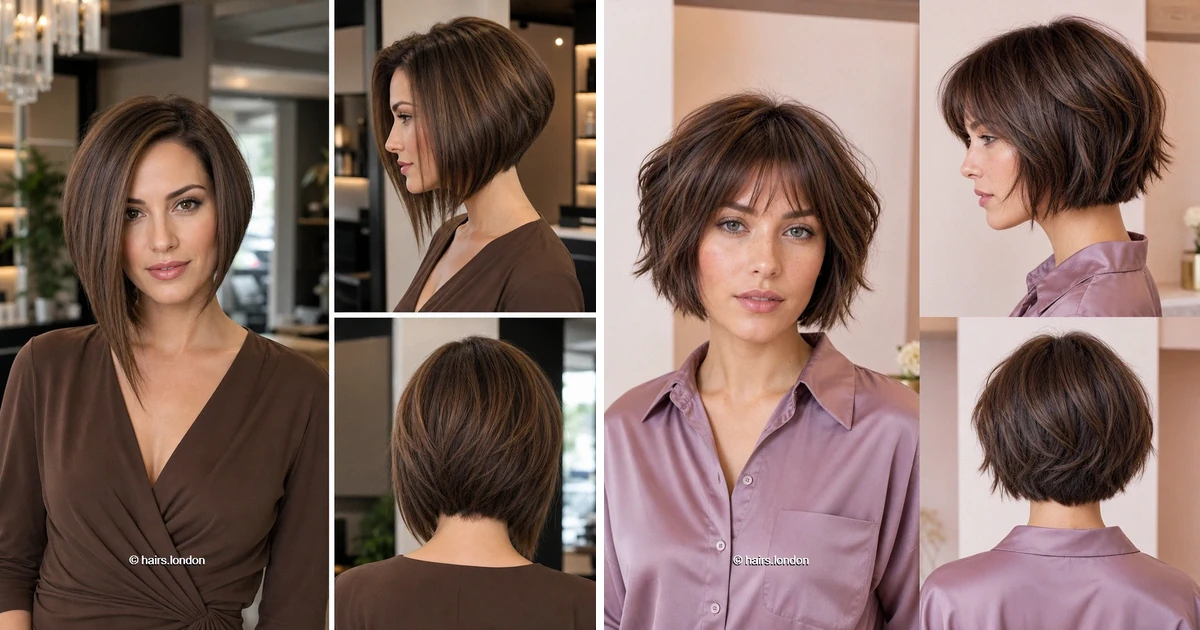
11. Layered Chestnut Bob with a Soft Fringe
Chestnut brown strands fall around the jaw in this layered bob, with shorter sections moving across the forehead. The fringe blends into the sides, while the back shows an uneven, textured edge against the upper neck. Its volume sits through the midlengths rather than in a sharply defined nape or forward point. Apply mousse before drying, then separate a few outer pieces to reveal the layers without creating stiffness. Consider this shape if your hair has enough body to keep those ends from looking thin. Fringe and side pieces may need separate adjustments as the bob grows past the jaw.
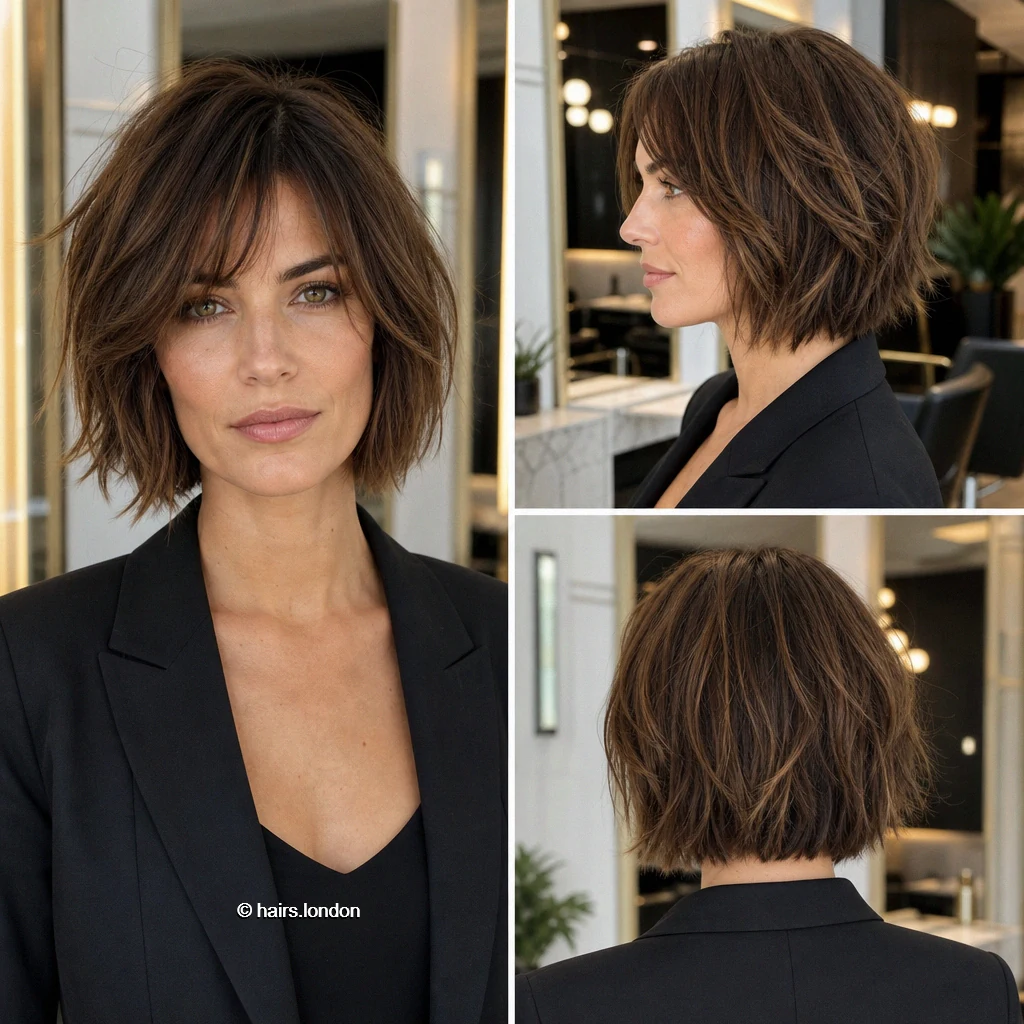
12. Side Parted Brown Bob with Broken Ends
A deep side part gives this brown bob a long sweep across the forehead and cheek. The remaining hair falls around jaw level, with broken ends and visible layering through the back. Unlike the strongly angled bobs here, its outline stays balanced from side to side. Use a brush to control the sweeping front, then loosen the lower sections with your fingers for movement. Hair that develops gentle bends may need less heat, while very dense hair may benefit from selective weight removal. Keep the front clear of your eyes with fringe checks, and trim the perimeter as it drops.
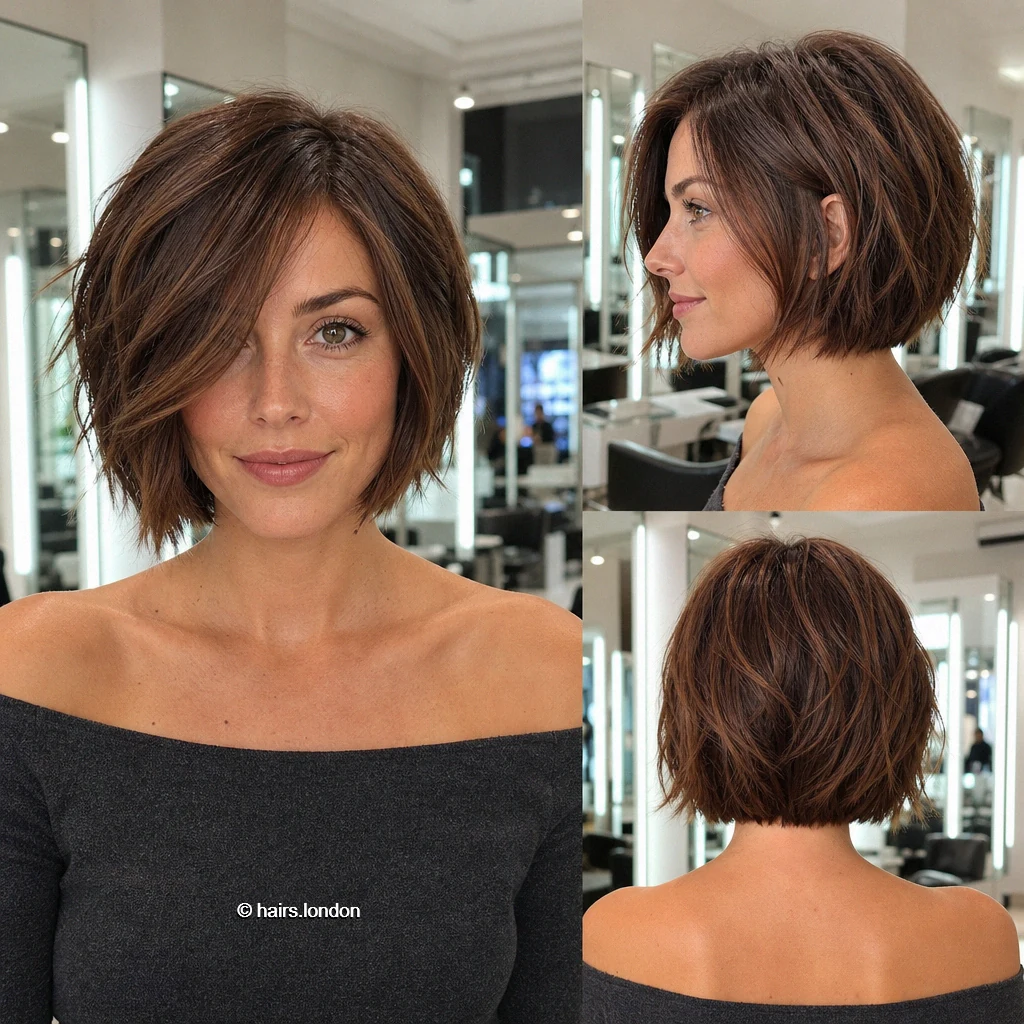
13. Feathered Brown Bob with Center Fringe
This brown bob finishes near the jaw, with feathered side layers and a central opening in its fringe. The back appears softly rounded and textured, with short, separated ends resting against the upper neck. Lighter strands run through the surface, bringing out the direction of the layers without forming bold color panels. Work styling cream through damp hair, then lift and release sections while drying for a loose finish. If your hair is very fine, request layers that preserve a convincing lower edge. The fringe will shift as it grows, so discuss whether you prefer a slightly more open forehead.
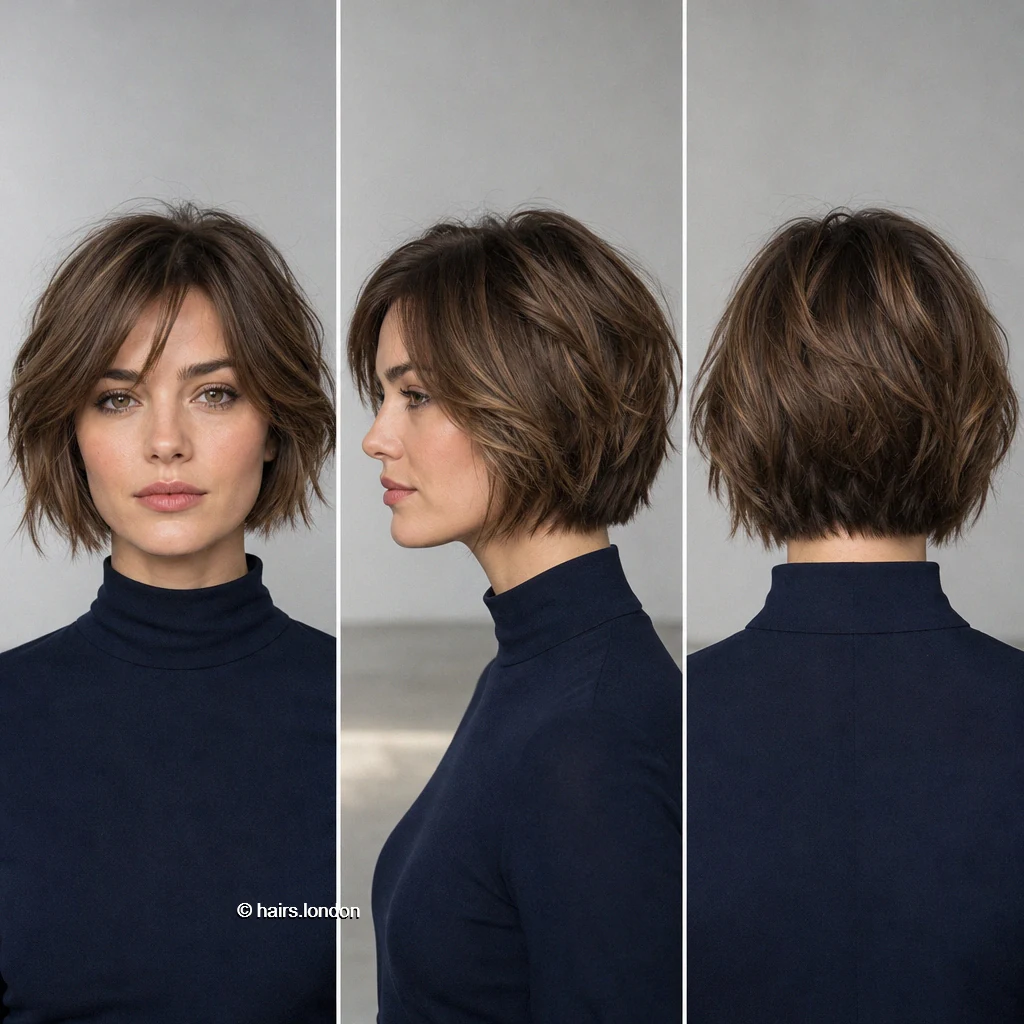
14. Sleek Espresso Bob with a Longer Side
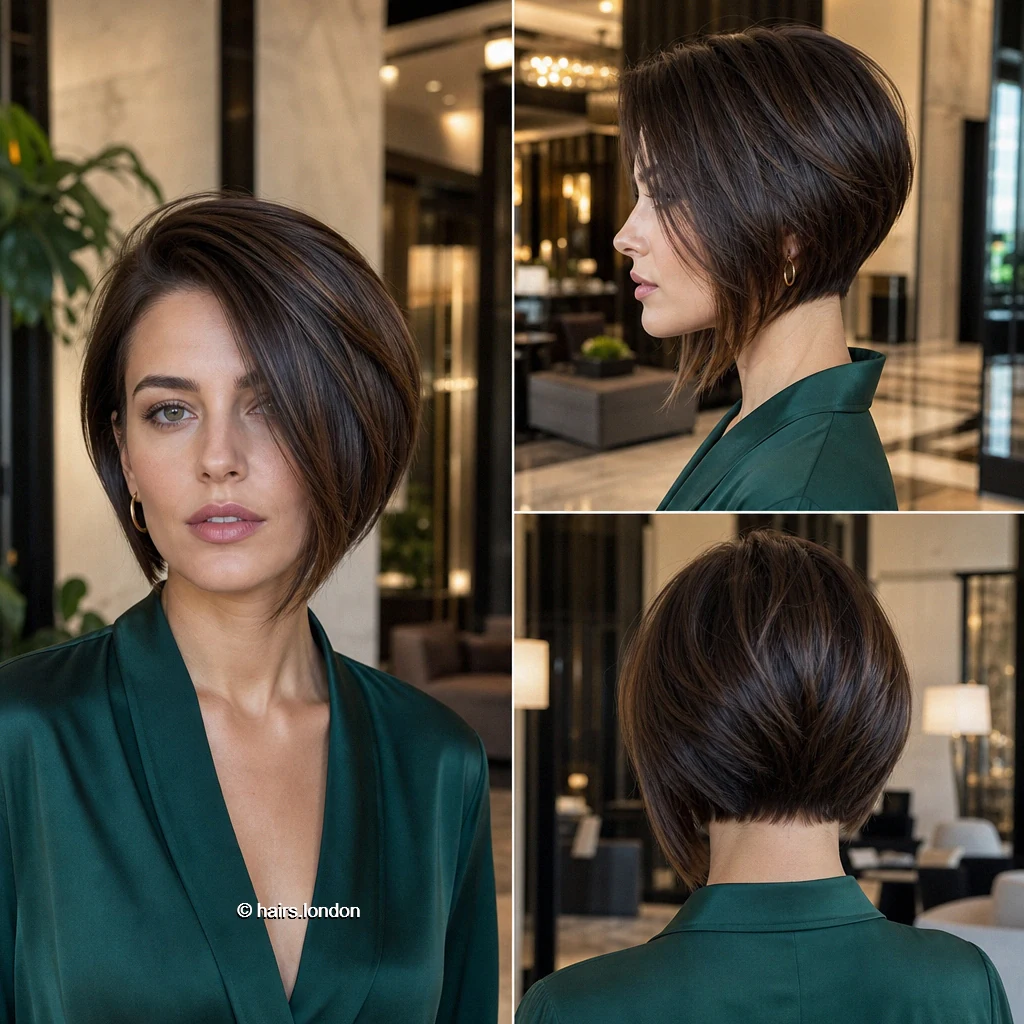
This espresso bob has a short back and a longer front section that reaches below the jaw. A deep side part places the smooth surface on one side, emphasizing the forward falling outline. The back view shows a rounded shape narrowing to the neckline, while the front remains sleek and close. Blow dry downward with a brush, and use heat protectant if you refine the face framing section with an iron. This cut rewards hair that can hold a smooth finish without excessive effort. Maintain the nape regularly, and decide with your stylist how dramatic the front contrast should remain.
15. Brunette Bob with a Sweeping Front Panel
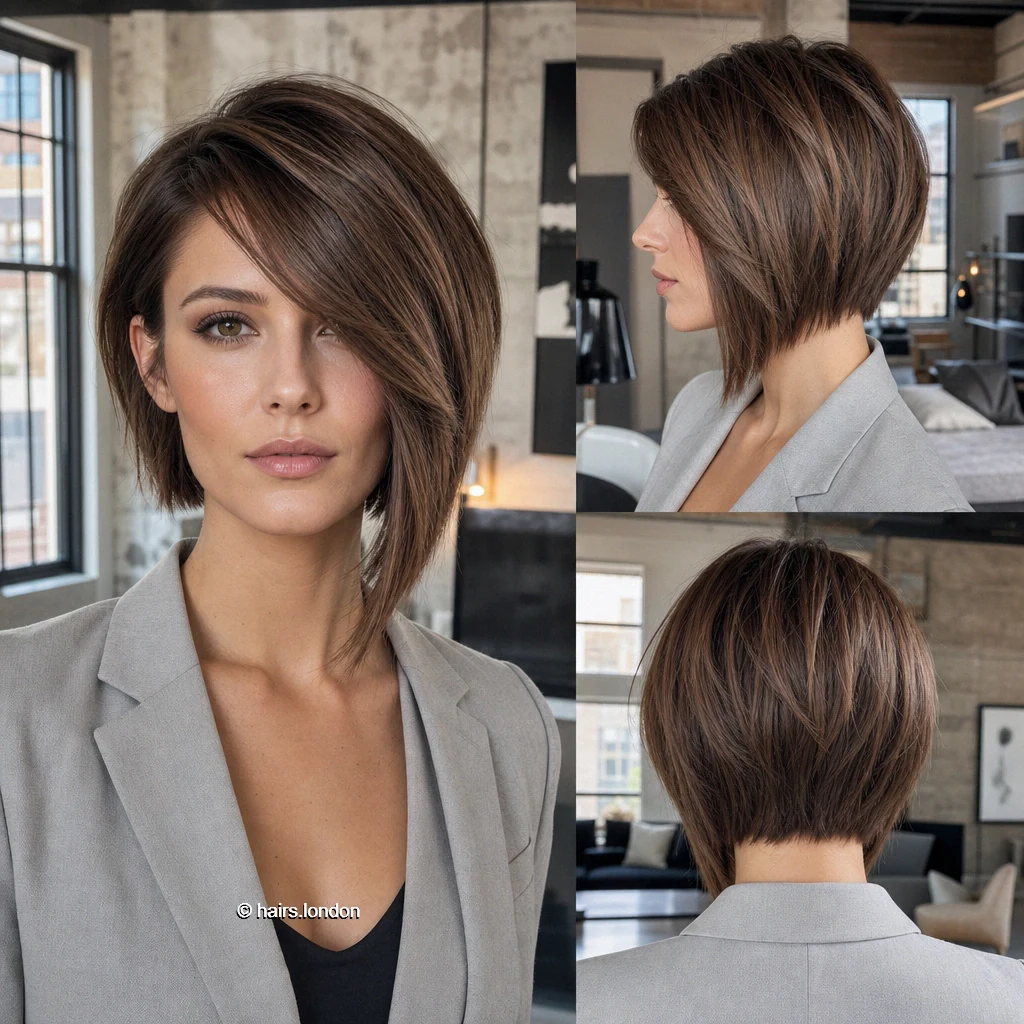
A brunette front section sweeps across the face and extends past the jaw, opposite a much shorter side. Lighter strands show through the smooth surface, while the rounded back tapers to a neat neckline. The side view clearly displays the front to back contrast without requiring a sharply pointed finish. Direct the long panel downward during drying, then tuck the side if you want its asymmetry emphasized. Dense hair may need careful bulk control under the sweep, whereas finer hair may need its edge protected. Schedule trims to maintain the nape and check how the front grows around your face.
16. Rounded Cocoa Bob with Smooth Side Sweep
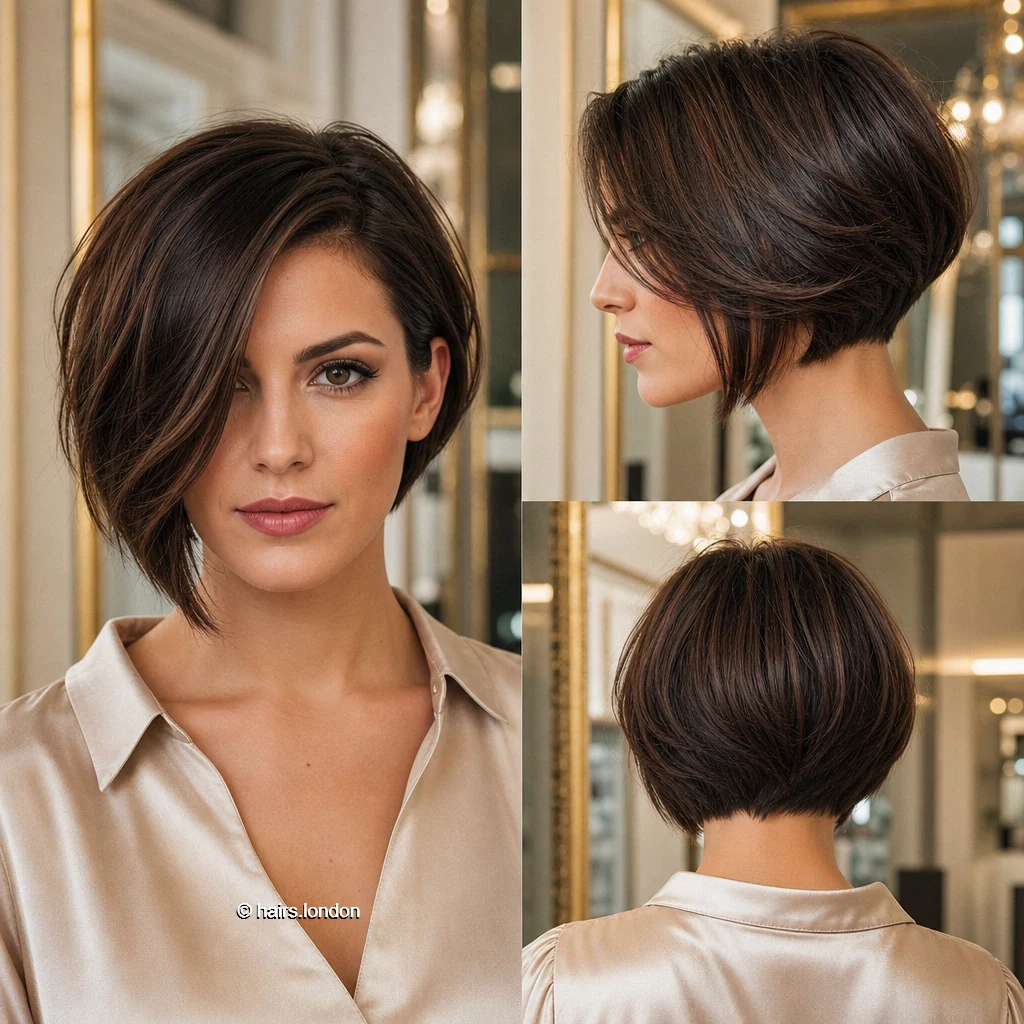
Cocoa brown hair curves around the head in this bob, with one smooth front section reaching below the jaw. Its back is shorter and rounded, finishing at the nape beneath a fuller area through the crown. The side part creates a soft forehead sweep rather than a distinct fringe or sharply separated top layer. For styling, lift the crown, then smooth the front downward so the outline stays light and controlled. This shape may be easier on hair with body, provided the nape grows in a manageable direction. Ask for back fullness, and trim before the lower edge becomes untidy.
17. Dark Brunette Bob with an Exposed Nape
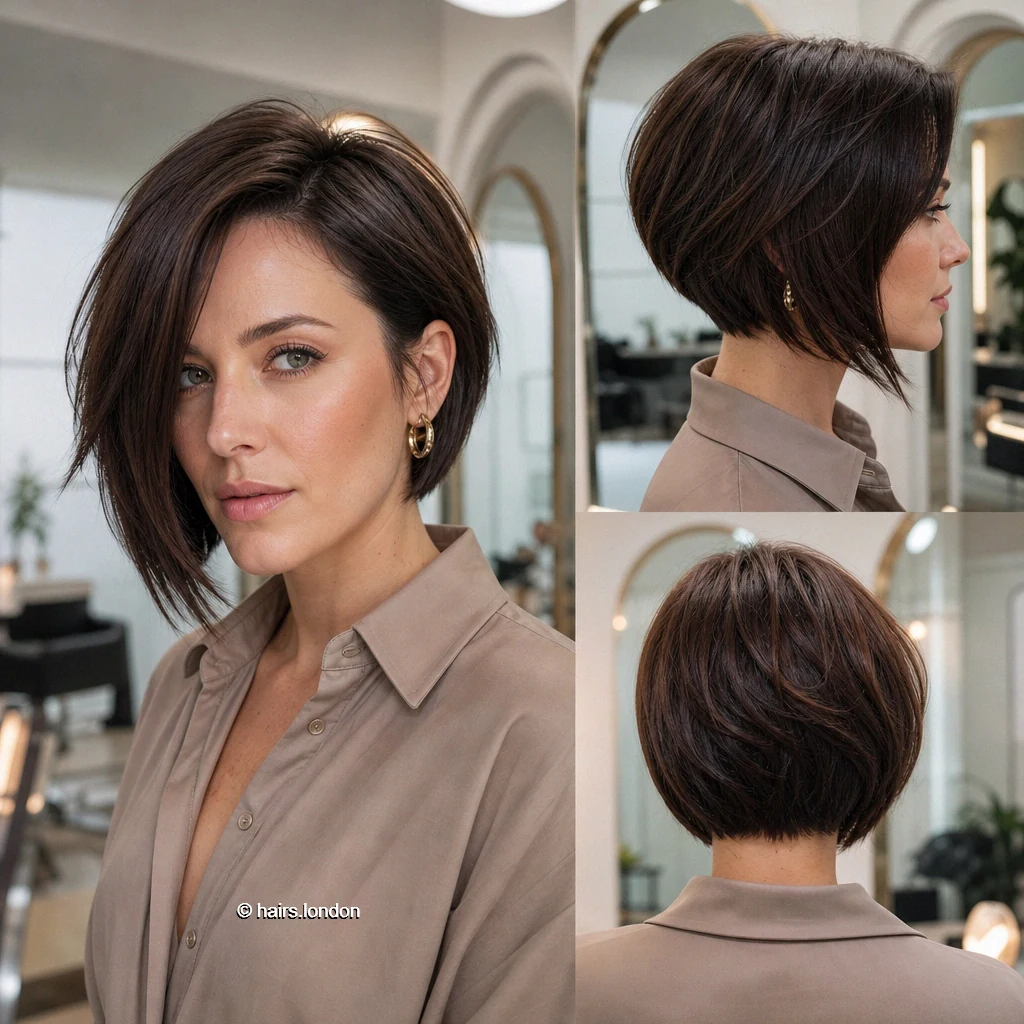
A brunette front section dips below the jaw, contrasting with a shorter side and compact rounded back. From behind, the neckline is exposed and the weight sits higher, giving the bob a graduated appearance. The deep side part lets the longer section sweep across the forehead without creating a cut fringe. Smooth it with a brush and finish sparingly, leaving the crown’s visible fullness intact. Hair that resists a sleek finish may require more styling than the image suggests, so factor that into your choice. Request nape cleanups and have your stylist check how the longer section falls when dry.
18. Copper Brown Bob with a Rounded Crown
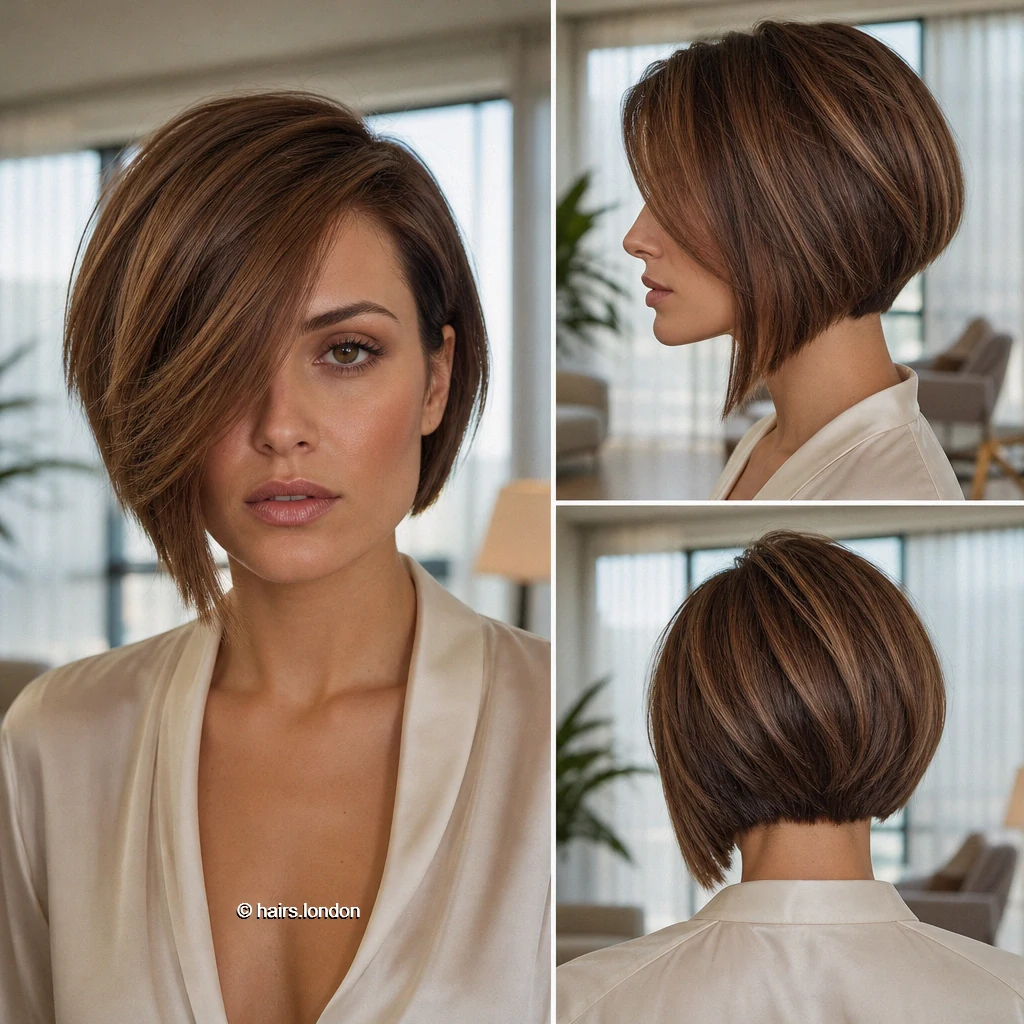
Copper brown strands warm this side parted bob, whose long front falls below the jawline. The crown looks full and rounded, while the back tapers toward a short, clean neckline. A smooth outer surface keeps attention on the sweeping front and the clear difference between front and back lengths. Dry the fringe like section in its intended direction first, then smooth the ends without compressing the crown. This shape depends on your hair’s ability to retain body; discuss alternatives if it collapses or expands easily. Refresh the nape as needed, and protect the visible warm tone with color appropriate care.
19. Textured Chestnut Bob with a Long Side Piece
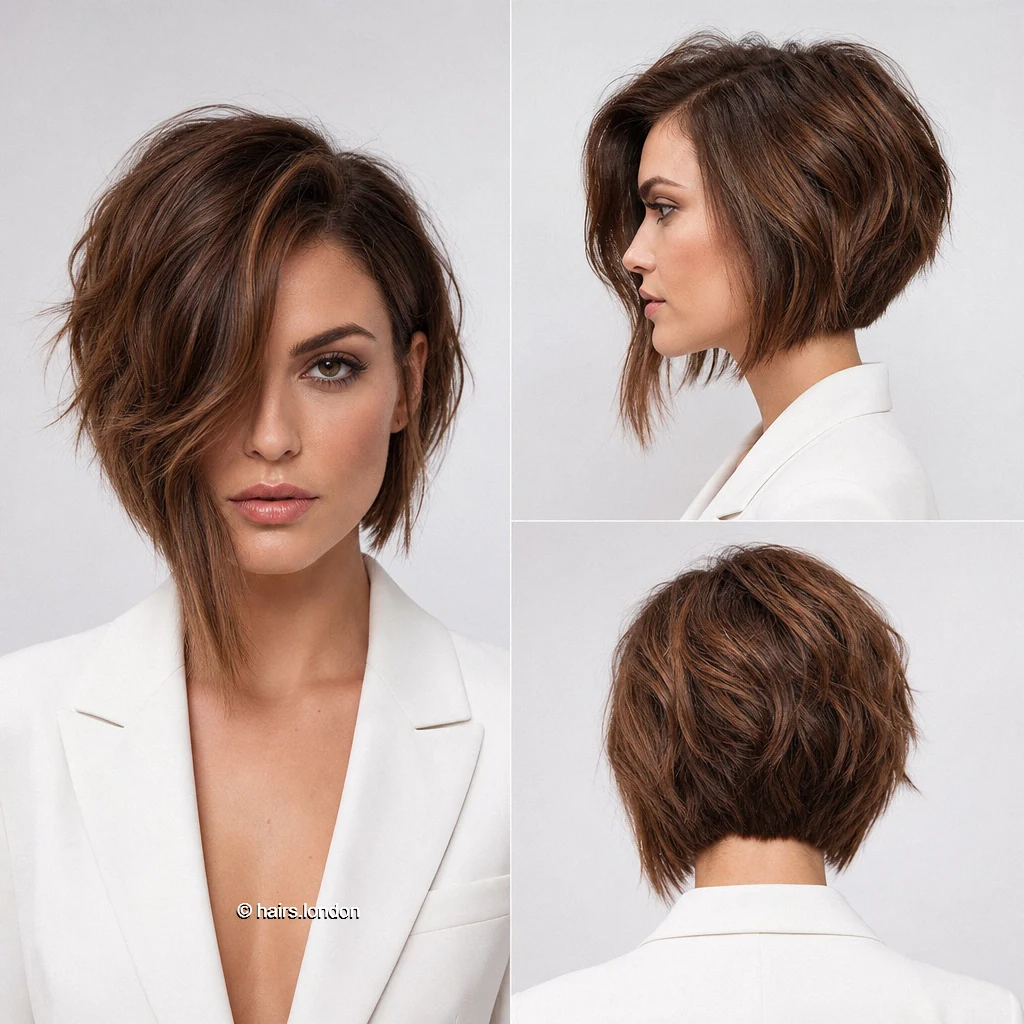
This chestnut brown bob pairs a long, face framing piece with a short back and a tousled crown. The side view reveals a forward drop, while loose layers soften the outline around the ear and neckline. Its off center part allows the front to sweep over the forehead without a separate fringe. Use lightweight texture product through the crown, then smooth the longer piece if you want to preserve contrast. Hair with some movement may make this finish simpler, depending on its density and growth. Plan trims that address the short nape and the front length independently as they grow.
20. Layered Walnut Bob with a Dramatic Side Sweep
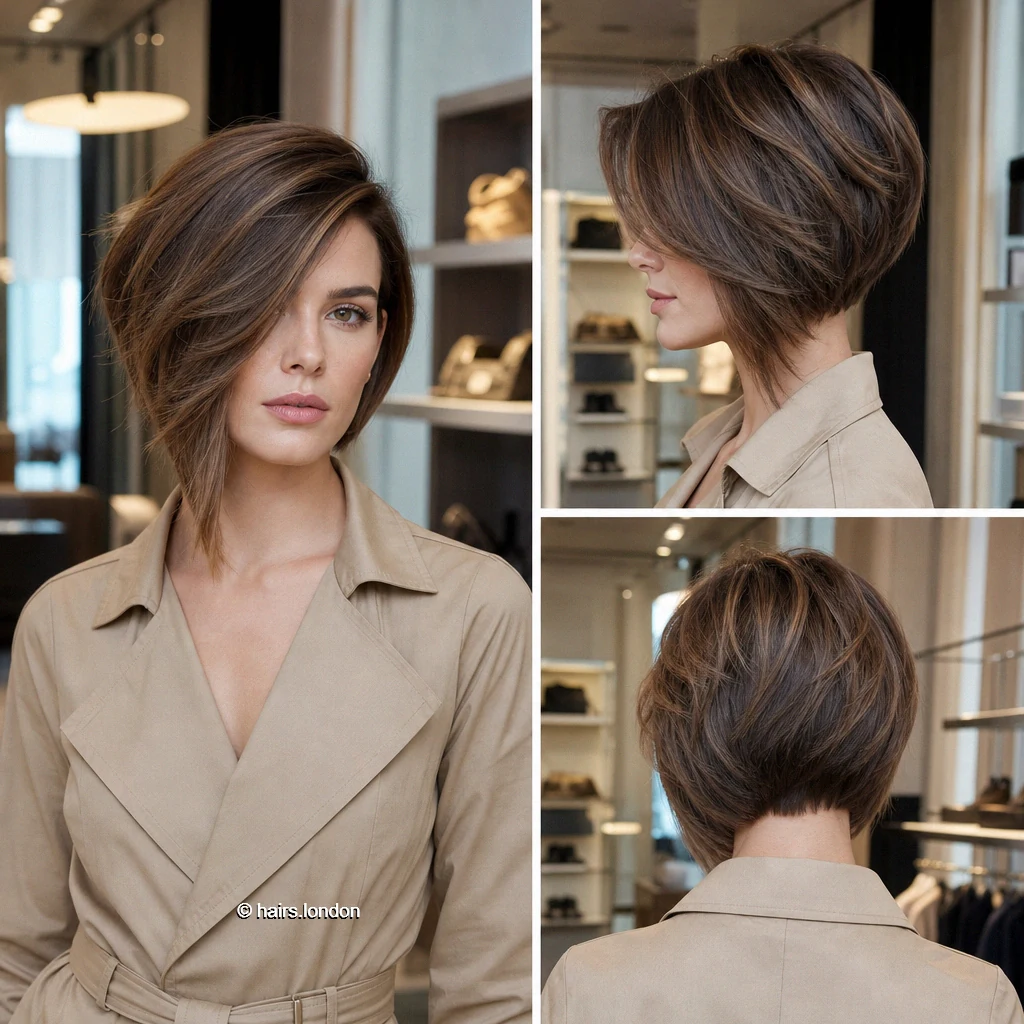
A side sweep crosses the forehead in this walnut brown bob, ending in longer pieces beside the jaw. Its rear view shows a short neckline under fuller, visibly layered hair, with movement continuing across the crown. Lighter strands follow those layers and make the rounded back look less solid. Blow dry the front in its preferred direction, then use fingers to keep the back airy rather than overly polished. If your hair is thick, discuss where weight can be reduced without losing that full outline. Maintain the nape regularly, and consider whether the long sweep suits your daily styling habits.
How to Choose Your Bob Length and Shape
Start with the point you want beside your face: jaw level offers a compact bob, while a longer front can soften the transition to a short nape. Several smooth cuts here combine a forward falling front with visible fullness above a shorter back. That back graduation is a different feature from an A-line outline, which describes a longer front relative to the back. For less upkeep, consider a more balanced, textured perimeter. Check the proposed length with your natural part, hairline, and how your ends behave when dry.
Styling Fine, Thick, Wavy, and Curly Textures
Fine hair often benefits from keeping enough weight at the lower edge; use light mousse rather than heavy cream when seeking lift. For thick hair, ask your stylist to manage bulk within a rounded back without hollowing out the perimeter. Encourage natural waves with a small amount of cream and scrunching or diffusing, leaving the ends flexible. If you have curls, agree on the finished dry length before cutting because shrinkage can move a jaw length bob considerably higher. Dry a fringe first if you want to guide its direction, and avoid loading the crown with product.
Keeping Brunette Bob Color Fresh
The images range from deep espresso to warmer chestnut and copper brown, sometimes with subtle lighter ribbons. Match your care to the color you actually have: use color appropriate shampoo, limit excessive heat, and ask whether a gloss would help maintain shine or a warm tone. Lighter pieces can make layers more noticeable, but they may also require a different refresh schedule from an allover brunette shade. Keep heat protectant handy when smoothing the longer front sections.
Maintaining the Bob Perimeter and Graduation
A short, exposed nape can lose its clean outline before the longer front needs cutting. Arrange trims according to the feature you most want to preserve, whether that is a compact neckline, a smooth forward line, or a jaw level edge. Ask for the back and side views to be checked together so graduation stays balanced. Shaggy bobs allow a softer perimeter, but their layers and fringe still need occasional reshaping. Avoid trimming only the front at home; it can change the intended relationship between lengths.
What to Discuss with Your Stylist
Bring the image that matches both your preferred front and back view, then point out what you would change. Discuss your density, natural wave or curl, cowlicks, neckline growth, preferred part, and willingness to blow dry. Ask where the weight will sit, how much shorter the back will be, and whether the front should fall at the jaw or below it. For a fringe, check its dry length and how it will grow. Agree on a realistic trim and color schedule before the cut.
Frequently Asked Questions
What is the difference between a bob and a lob?
A bob generally finishes around the jaw or neck; a lob is a longer bob that falls closer to the shoulders. The long front pieces in some pictured cuts do not make the entire haircut a lob.
Is an A-line bob the same as a stacked bob?
No. A-line describes an outline that is longer in front. Stacked describes visible graduation that builds weight at the back. A haircut can show both features.
How do I choose between a smooth and a textured bob?
Consider your natural texture and styling time. Smooth, defined outlines usually need more deliberate drying, while textured layers can make better use of loose bends or waves.
Can fine hair have a layered bob?
Yes, if the layering leaves enough weight at the perimeter. Ask your stylist to assess density before adding short layers or heavily thinning the ends.
How can thick hair avoid looking bulky in a rounded bob?
Your stylist can plan where the weight sits and remove bulk selectively while protecting the visible outline. Product alone is unlikely to solve an overly heavy shape.
Will a short bob work with natural curls?
It can, but dry length and shrinkage matter. Discuss the desired finished silhouette and whether you prefer a rounded curl shape or a longer front.
Should I add a fringe to a textured bob?
A fringe can connect the face framing layers, as several images show. First check how your hair grows at the forehead and how often you are willing to trim it.
Does a longer front require daily heat styling?
Not necessarily. It depends on whether your hair naturally falls in the intended direction. A brush and controlled blow dry may be sufficient; some textures will need more work.
How often should a graduated bob be trimmed?
Trim it when the short nape or rounded weight line starts losing the shape you want. A visibly precise back typically calls for attention sooner than a loose, shaggy edge.
Can I change my part with a side swept bob?
Often, but changing the part can alter the apparent front lengths and volume. Ask your stylist to check the cut in the part you wear most frequently.
What should I expect when growing out a short back?
The front to back contrast gradually diminishes. Small reshaping appointments can help blend the nape and preserve a wearable outline while the shorter sections catch up.
Do subtle highlights change how a bob looks?
They can make individual layers and bends more visible, particularly in textured cuts. Discuss placement and upkeep with your colorist rather than assuming the same color plan suits every bob.
Conclusion
The best choice among these brunette bobs is the one whose front length, back shape, and texture suit your own hair and routine. Save views of the outline you like, then use a salon consultation to adapt its weight, fringe, and maintenance needs rather than copying the image without adjustment.


