

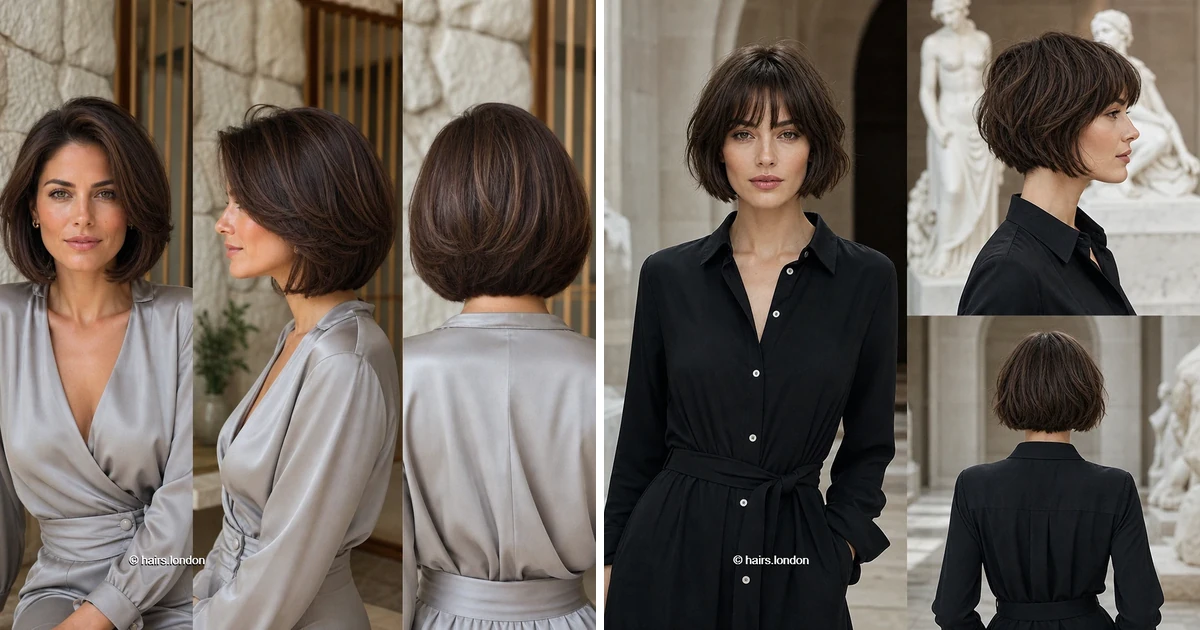
11. Tousled Brown Bob with Soft Bangs
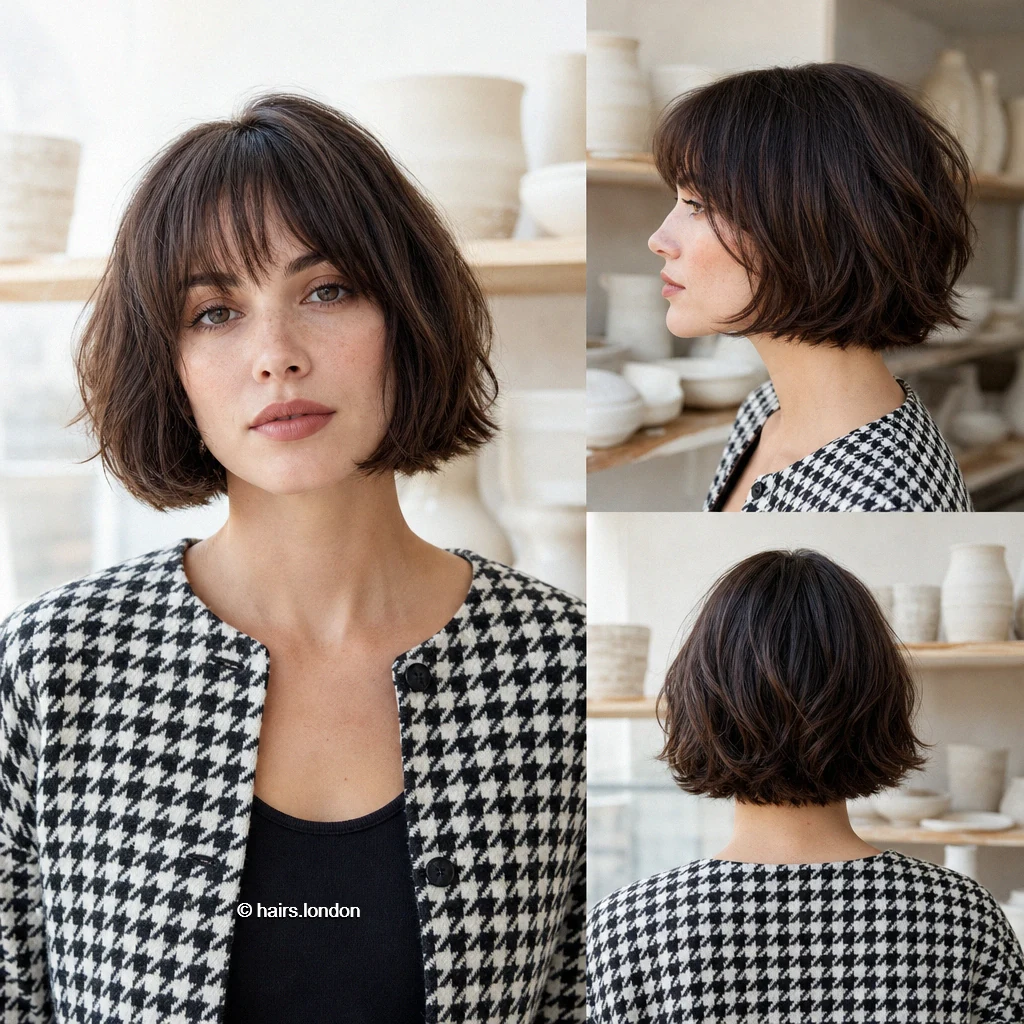
Soft bangs frame the eyes above this loosely textured bob. The brown sides end around the jaw with uneven movement. Its back shows separated layers rather than a polished curve. That relaxed perimeter gives the short shape room to move. Finger style with light cream to separate the shorter layers. Natural waves may need less brushing and more gentle scrunching. Ask for movement without thinning the ends beyond your preference. Adjust product amounts to density, avoiding heavy buildup near roots. Refresh bangs between full haircuts if they obstruct your eyes. Schedule trims when the outline starts losing its clean shape.
12. Chestnut Bob with a Full Fringe
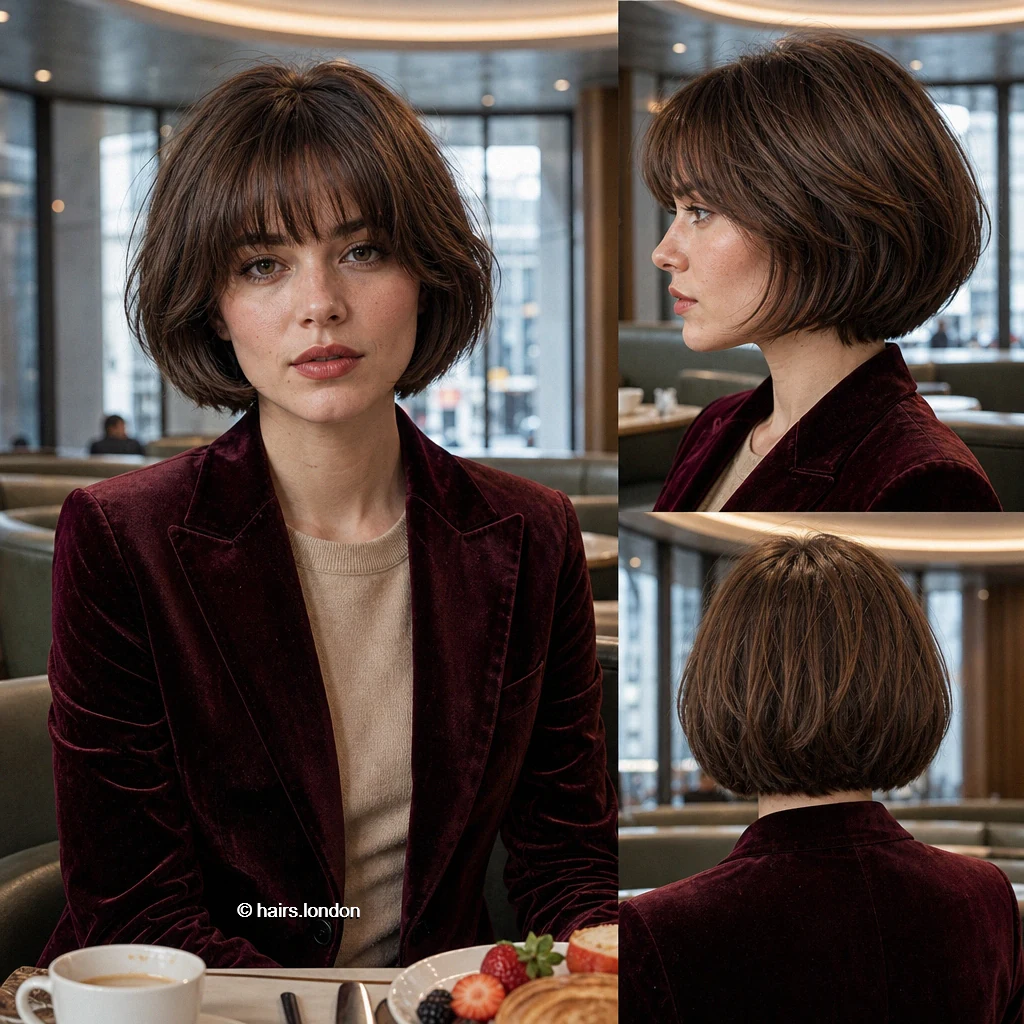
A fuller fringe draws attention to this rounded chestnut bob. The sides brush the jaw, then taper toward the neckline. The back looks compact, with layers crossing its curved surface. Warm brown variation catches the light through the upper sections. Dry the fringe first, following its natural direction of growth. Use a round brush to direct the ends gently inward. Thicker hair can benefit from carefully placed internal weight removal. Keep products light so the softly curved outline remains mobile. Color gloss can refresh shine without changing the overall shade. Refresh bangs between full haircuts if they obstruct your eyes.
13. Polished Brown Bob with Brow-Length Bangs
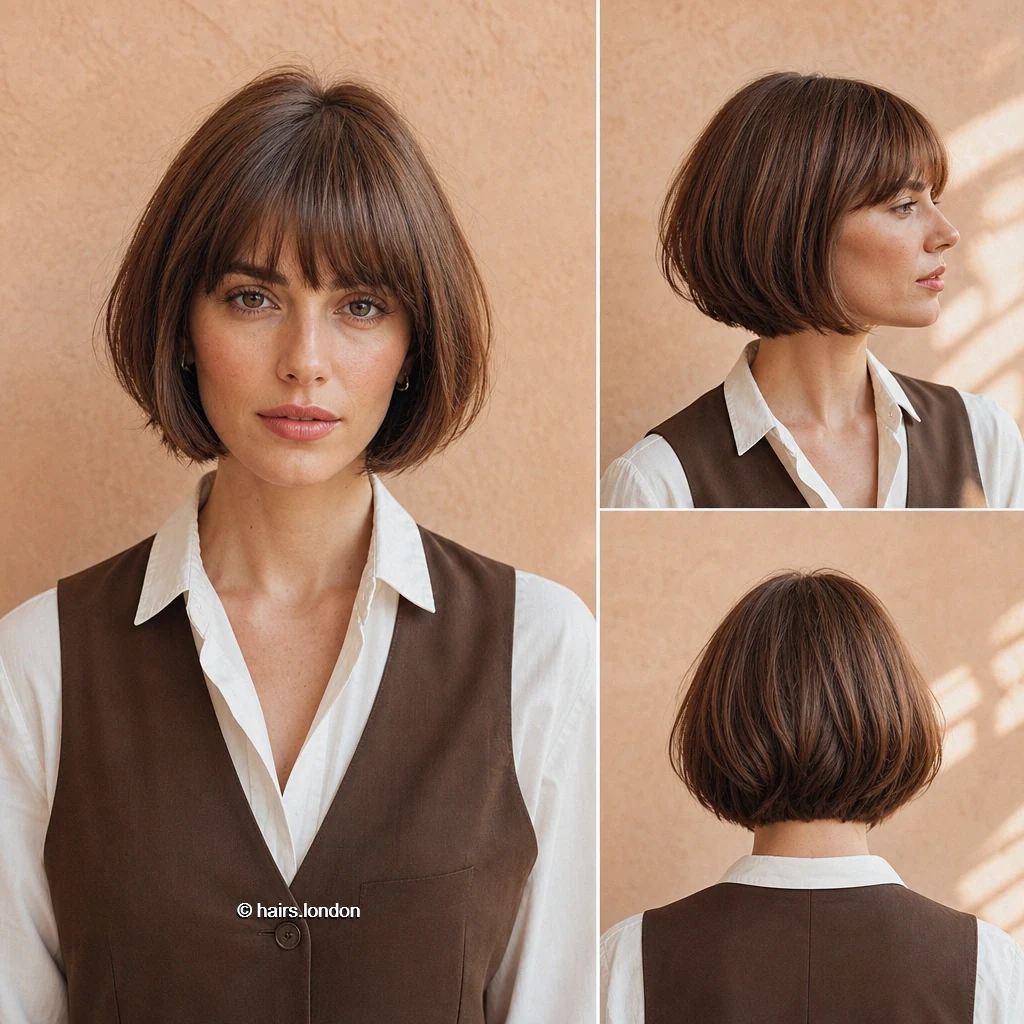
Browlength bangs sit neatly over this softly rounded brown bob. The sides meet the jaw, while the back clears the neck. Gentle layering adds movement without breaking up the tidy perimeter. Lighter brown reflections give the smooth surface visible dimension. Dry the fringe first, following its natural direction of growth. Ask your stylist to preserve fullness through the lower edge. Use a round brush to direct the ends gently inward. Finish with lightweight serum, concentrating on the visible outer ends. Protect colored strands from excessive heat to help retain shine. Check the outline regularly, especially where hair meets the collar.
14. Piecey Brunette Bob with a Light Fringe
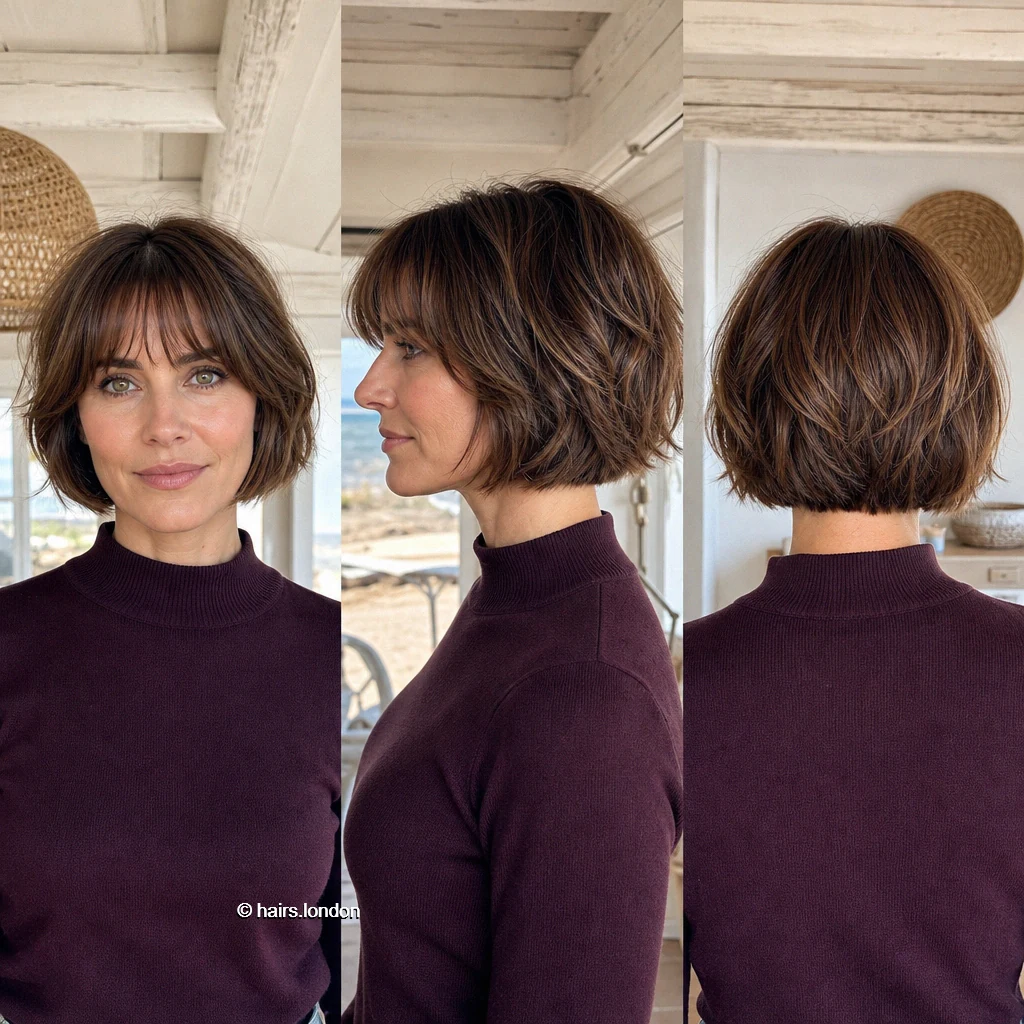
A light fringe complements this piecey, short brunette bob. Its sides reach the jaw, with ends moving in different directions. Visible layers create texture across both sides and back. The neckline stays compact beneath a deliberately airy upper shape. Finger style with light cream to separate the shorter layers. Natural waves may need less brushing and more gentle scrunching. Dry the fringe first, following its natural direction of growth. Ask for movement without thinning the ends beyond your preference. Refresh bangs between full haircuts if they obstruct your eyes. Schedule trims regularly when the outline starts losing its clean shape.
15. Feathered Brunette Bob with Flipped Ends
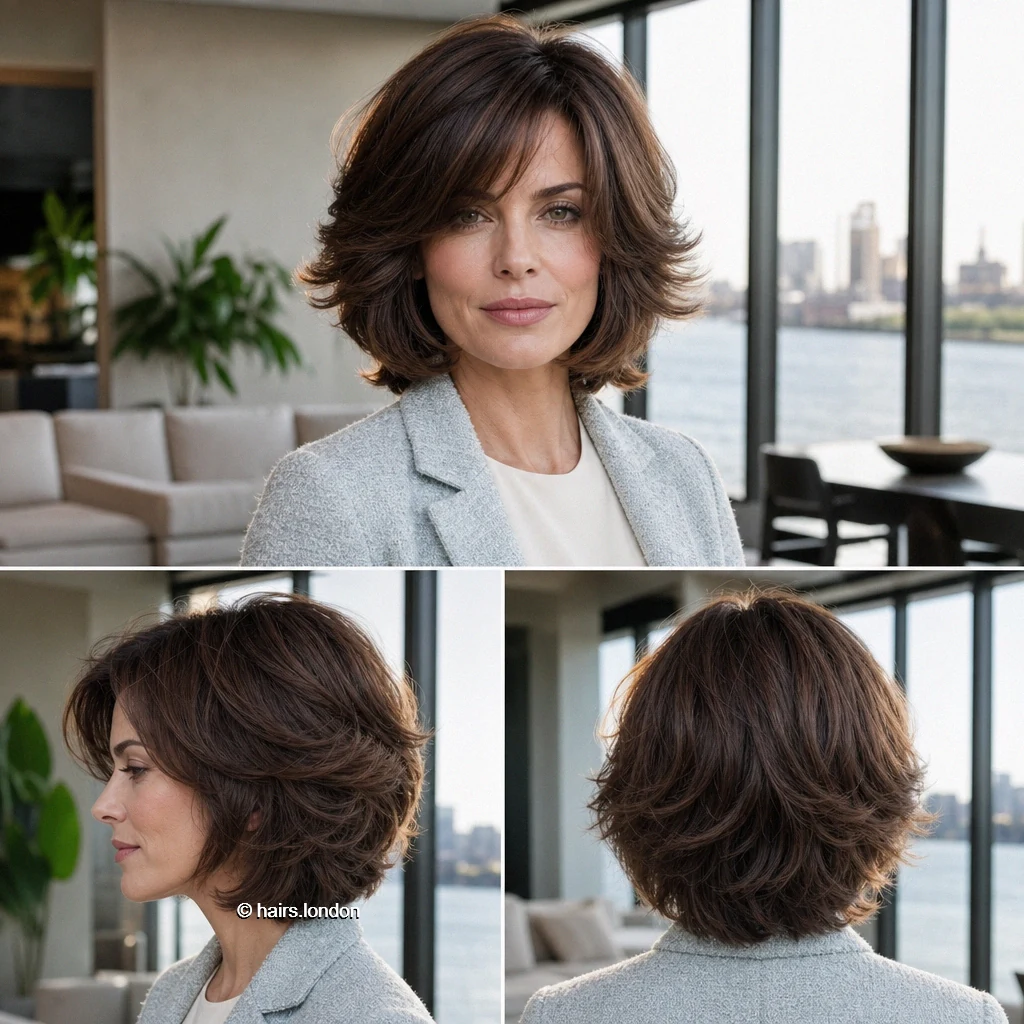
This brunette bob carries feathered layers around the face. Its longer front brushes the neck while shorter pieces flick naturally outward. The side and back views show plentiful layered movement. Rather than a precise line, the perimeter looks softly dispersed. Finger style with light cream to separate the shorter layers. Brushing downward while drying can soften the outward flipping ends. Thicker hair can benefit from carefully placed internal weight removal. Adjust product amounts to density, avoiding heavy buildup near roots. Discuss daily styling time before choosing how short to cut. Schedule trims when the outline starts losing its clean shape.
16. Layered Brown Bob with a Curtain-Like Front
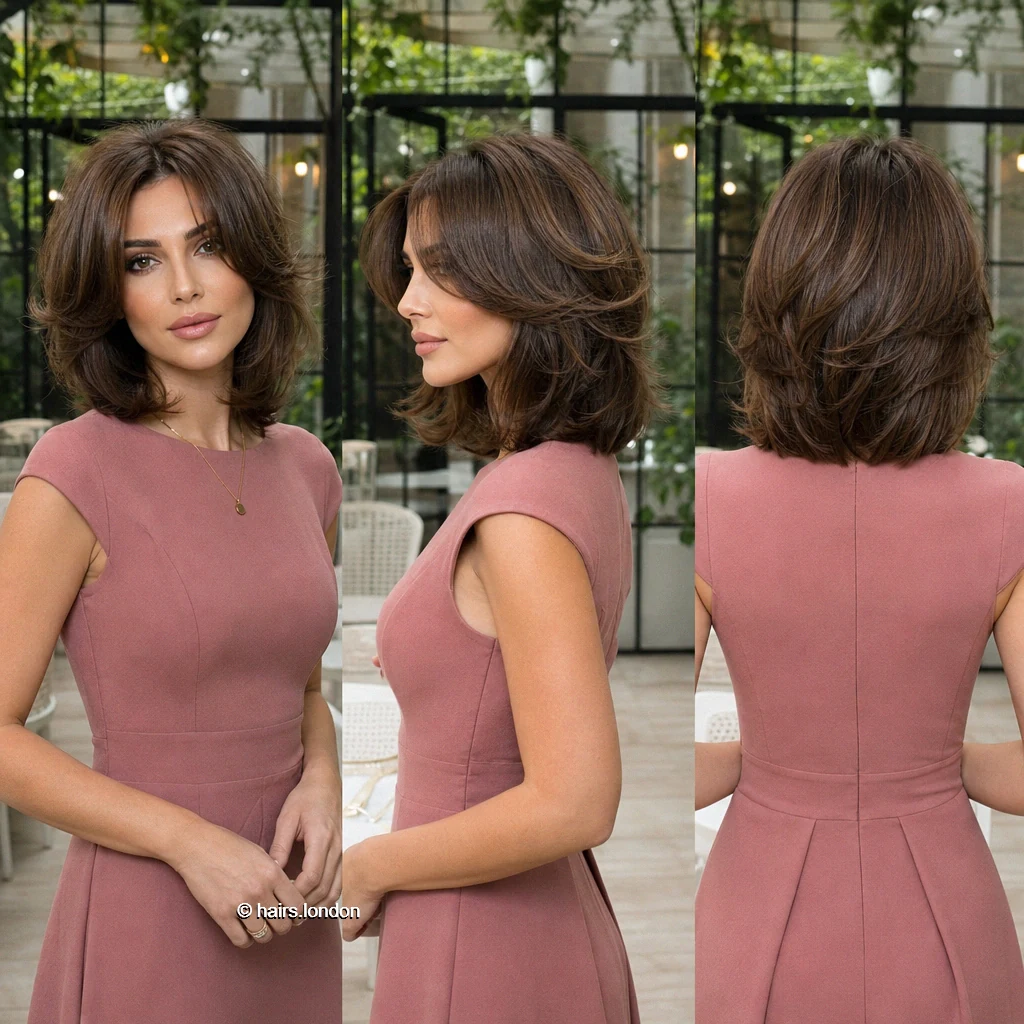
A parted, curtain-like front opens this layered brown bob. The sides skim the neck and carry softly flipped ends. Across the back, overlapping individual layers create a full silhouette. The lower edge remains visible beneath the lighter, feathered pieces. Finger style with light cream to separate the shorter layers. Natural waves may need less brushing and more gentle scrunching. Thicker hair can benefit from carefully placed internal weight removal. Request subtle softness around the face if sharp lines feel restrictive. Protect colored strands from excessive heat to help retain shine. Check the outline regularly, especially where hair meets the collar.
17. Brunette Bob with Feathered Cheekbone Layers
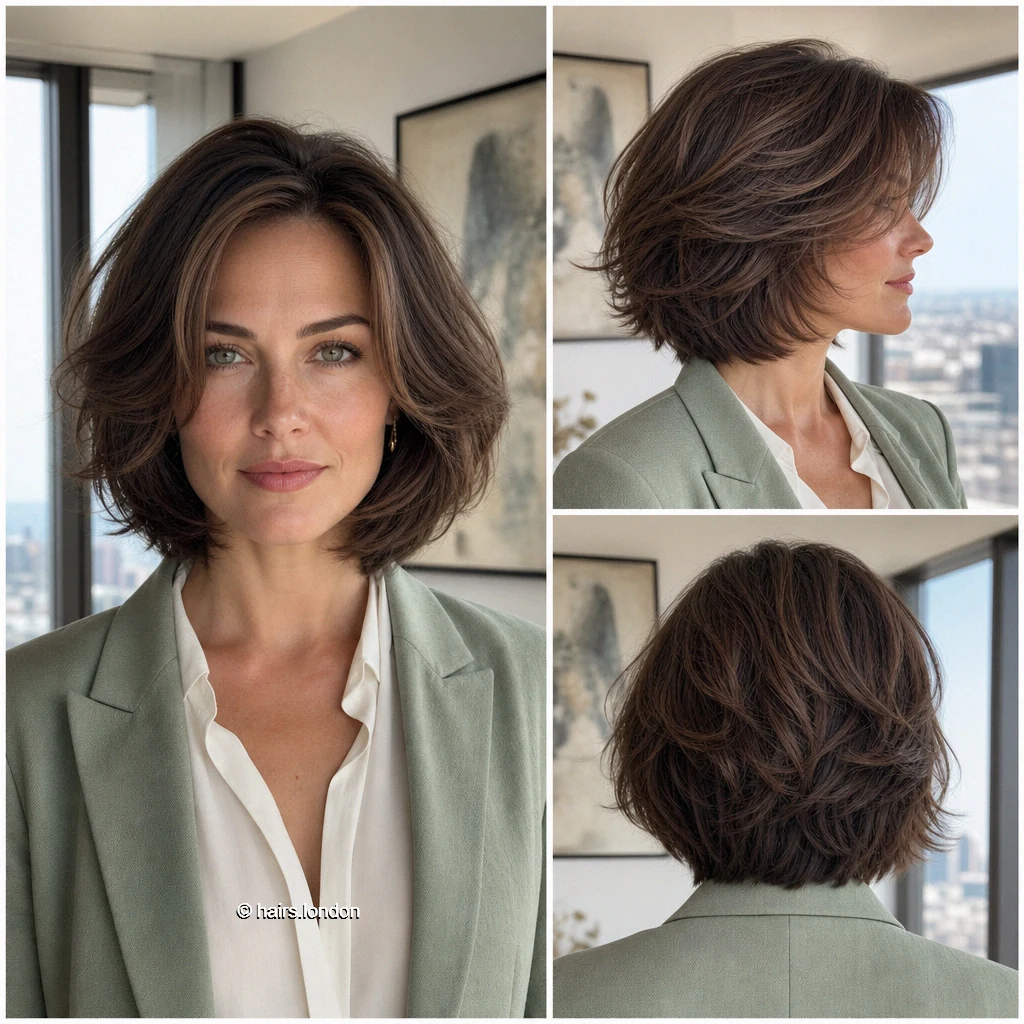
Feathered brunette layers sweep away from the cheekbones here. The bob reaches around the jaw before tapering toward the neck. Side and back views reveal a textured, layered shape. Its softly separated ends keep the full silhouette from looking solid. Finger style with light cream to separate the shorter layers. Thicker hair can benefit from carefully placed internal weight removal. Natural waves may need less brushing and more gentle scrunching. Ask for movement without thinning the ends beyond your preference. Adjust product amounts to density, avoiding heavy buildup near roots. Schedule trims when the outline starts losing its clean shape.
18. Soft Brown Bob with Sweeping Side Layers
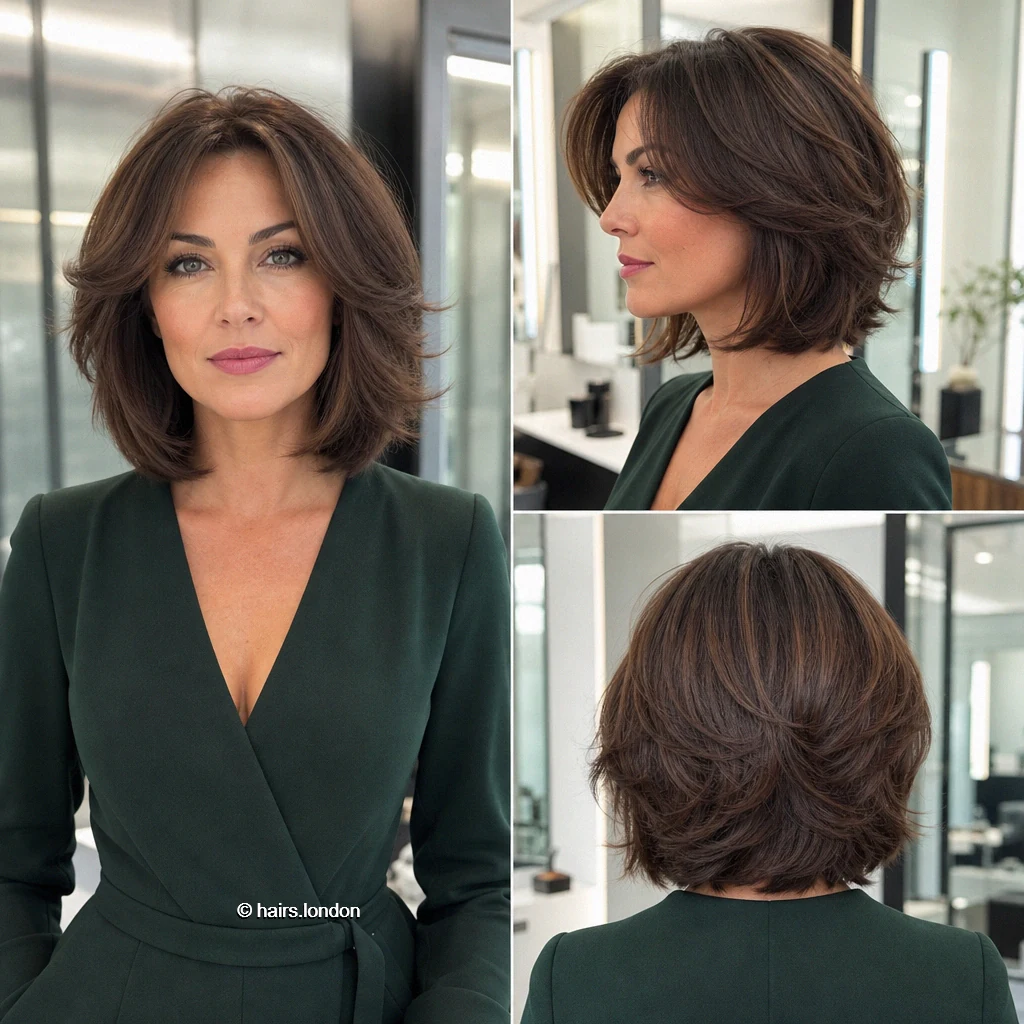
Sweeping side layers give this medium brown bob width. The front falls near the jaw, with ends brushing the neck. Its back has a rounded profile broken by feathery pieces. The shape favors movement over a sharply defined bottom line. Use a round brush to direct the ends gently inward. Brushing downward while drying can soften the outward flipping ends. Thicker hair can benefit from carefully placed internal weight removal. Keep products light so the softly curved outline remains mobile. Request softness around the face if sharp lines feel restrictive. Schedule trims when the outline starts losing its clean shape.
19. Chestnut Layered Bob with Outward Movement
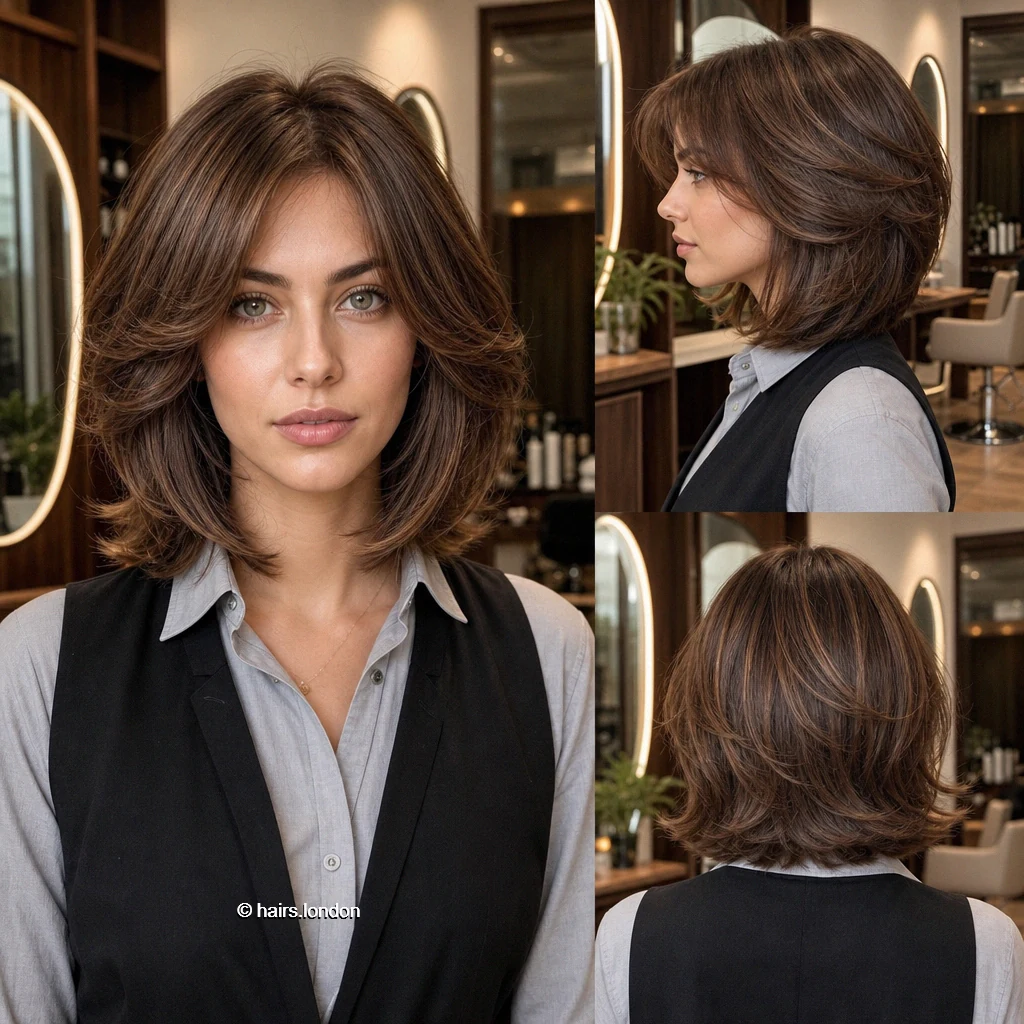
Subtle chestnut ribbons highlight the layers throughout this buoyant bob. Its sides reach the neck, and shorter ends flick gently outward. The back view shows a textured outline with overlapping pieces. A parted front blends into layers around the cheeks. Finger style with light cream to separate the shorter layers. Natural waves may need less brushing and more gentle scrunching. Thicker hair can benefit from carefully placed internal weight removal. Brushing downward while drying can soften the outward flipping ends. Protect colored strands from excessive heat to help retain shine. Ask for movement without thinning the ends beyond your preference.
20. Warm Brown Bob with Rounded Feathered Layers
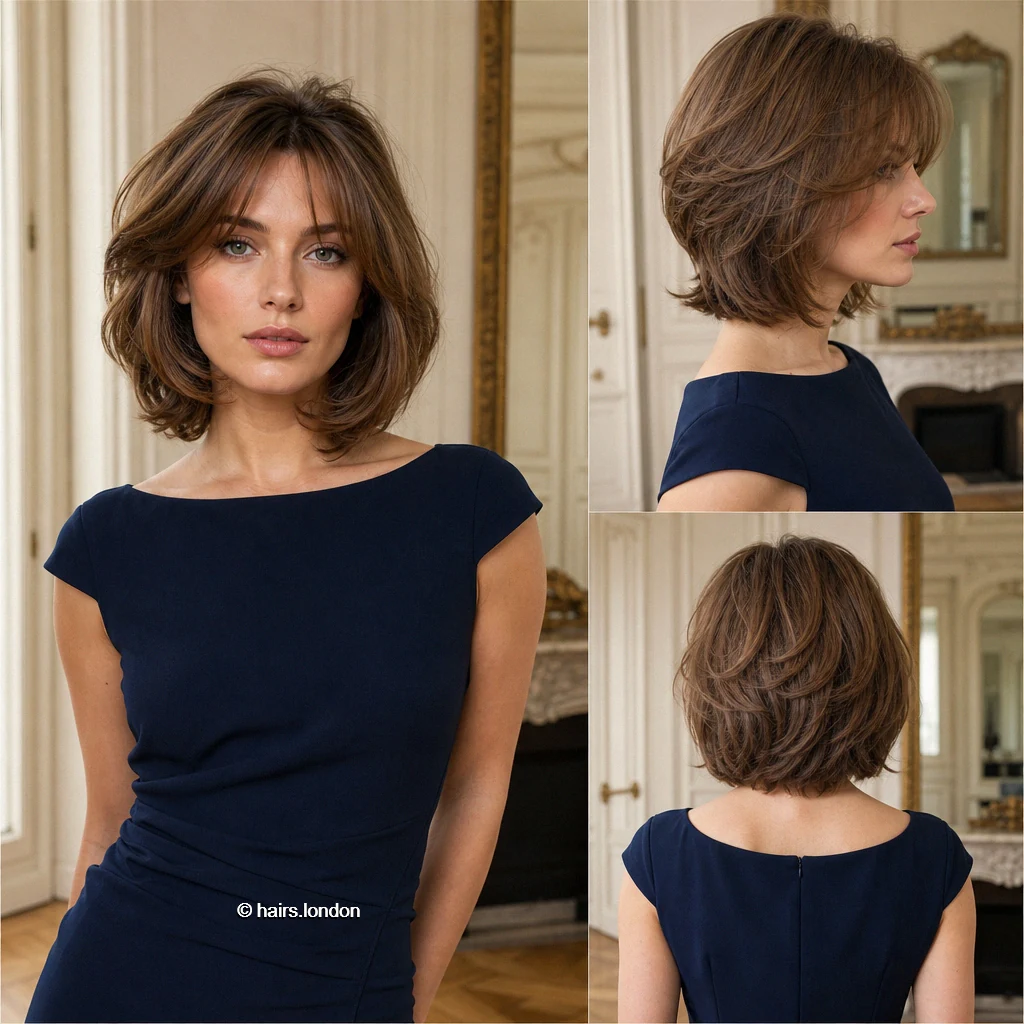
Warm brown tones accentuate this softly rounded, feathered bob. Its front sections reach the jaw and curve toward the neck. Side and back views show layers flowing across the surface. Wispy ends loosen the perimeter without hiding the short silhouette. Use a round brush to direct the ends gently inward. Finger style with light cream to separate the shorter layers. Fine hair may benefit from fewer layers near the bottom. Request softness around the face if sharp lines feel restrictive. Color gloss can refresh shine without changing the overall shade. Schedule trims when the outline starts losing its clean shape.
How to Choose Your Bob Length and Shape
Start with where you want the perimeter to land: at the jaw, just below it or against the neck. A compact outline emphasizes a tidy curve, while more length gives the front room to sweep or tuck behind the ear. Compare side and back views before asking for an A-line or stacked bob. A longer-looking front alone does not establish back graduation. Your density, growth patterns and willingness to style the front are as important as the reference photo.
Styling Fine, Thick, Wavy and Curly Textures
Fine hair often benefits from keeping enough weight at the bottom, then adding only the layers needed for movement. On thick hair, ask whether discreet internal weight removal could reduce bulk without making the ends sparse. Blow-dry a smooth bob with airflow directed downward and a brush that gently guides the perimeter. For natural waves, work a small amount of light styling cream through damp hair and scrunch rather than overbrushing. Natural curls need their length assessed in the dry state, since shrinkage can move a planned jawline higher; diffuse gently or air-dry according to your curl pattern.
Keeping Brunette Bob Color Fresh
The images range from deep brunette to warmer browns with visible lighter strands. To maintain shine, use a color-friendly washing routine, protect hair before heat styling and avoid assuming every brunette shade needs the same toning product. If lighter pieces lose their intended warmth or contrast, ask your colorist whether a gloss or targeted refresh makes more sense than recoloring the entire bob. Smooth ends help reflected light show the color clearly.
Maintaining the Bob Perimeter and Graduation
A smooth, compact bob needs attention when its edge starts spreading over the neck or losing its curve. Textured and feathered versions can tolerate more visible growth, although their layers still need balancing. If your chosen cut has actual graduation at the back, ask your stylist to check how that weight builds as it grows; do not request stacked shaping solely because a photo looks full. Fringe may need a separate tidy-up before the rest of the bob is ready for a trim.
What to Discuss with Your Stylist
Bring the front, side and back view of the shape you prefer, and point to the precise features you want to keep: fringe density, part placement, lower-edge fullness or feathered movement. Explain how your hair behaves without styling and how much time you will spend on it daily. Ask where the shortest layers will sit, how the perimeter will look when air-dried, and whether the proposed length leaves enough room for your preferred tuck or sweep.
Frequently Asked Questions
What is the difference between a bob and a lob?
A bob generally ends around the jaw or neck, while a lob is a longer bob that approaches or reaches the shoulders. The transition is gradual, so describe the endpoint you want rather than relying on the name alone.
How is an A-line bob different from a stacked bob?
An A-line bob has a perimeter that is longer toward the front. A stacked bob has visible graduation building shape at the back. A cut may combine both, but a rounded back does not automatically mean it is stacked.
Can fine hair wear a layered bob?
Yes, if the layering leaves enough density at the lower edge. Ask for restrained layers and assess the cut in its natural state before removing more weight.
How can thick hair avoid a bulky bob?
A stylist can assess whether selective internal weight removal or well-placed layers will help. Keeping the outer perimeter intact often gives better control than heavily thinning the visible ends.
Will these bob shapes work with natural curls?
A curl-friendly bob is possible, but the finished length and silhouette will depend on shrinkage, density and curl pattern. Discuss the shape on dry or naturally styled hair before committing to a jawlength endpoint.
Should I choose a fringe with my bob?
Choose one if you like its framing effect and are comfortable styling and trimming it. A wispy fringe, fuller bangs and a long side sweep have different upkeep, particularly around growth patterns at the hairline.
How do I style a rounded bob each morning?
Start with dry roots, then use a brush and controlled airflow to guide the sides and ends inward. A little lightweight finishing product can smooth the perimeter without flattening its movement.
How can I keep a textured bob from looking puffy?
Use modest amounts of product and separate the layers with your fingers. If bulk consistently collects in one area, show your stylist where it happens rather than thinning the whole cut.
How often does a bob need trimming?
Trim when its intended perimeter, fringe or graduated shape begins to change. A precise compact bob often shows growth sooner than a deliberately feathered one; your hair growth rate also matters.
Can I change my part with a short bob?
Often, but the front may fall differently on each side. Ask your stylist to account for your usual part and growth pattern if you want the option to switch.
How do I grow out a jawlength bob?
Keep the perimeter balanced as it descends toward the shoulders, and gradually blend shorter layers or a fringe if you no longer want them prominent. Occasional shaping trims can make the transition easier.
What should I bring to a bob consultation?
Bring images showing the front, side and back, along with examples of any fringe or finish you dislike. Explain your natural texture, styling routine and preferred length relative to your jaw and neck.
Conclusion
The most useful brunette bob reference is one that shows more than its front view. Notice where the ends meet the jaw or neck, how much fullness remains at the perimeter and whether the layers look smooth or separated. Once those details are clear, a stylist can adapt the shape to your hair’s natural behavior and the amount of styling you want to do.