

11. Burgundy Feathered Bob
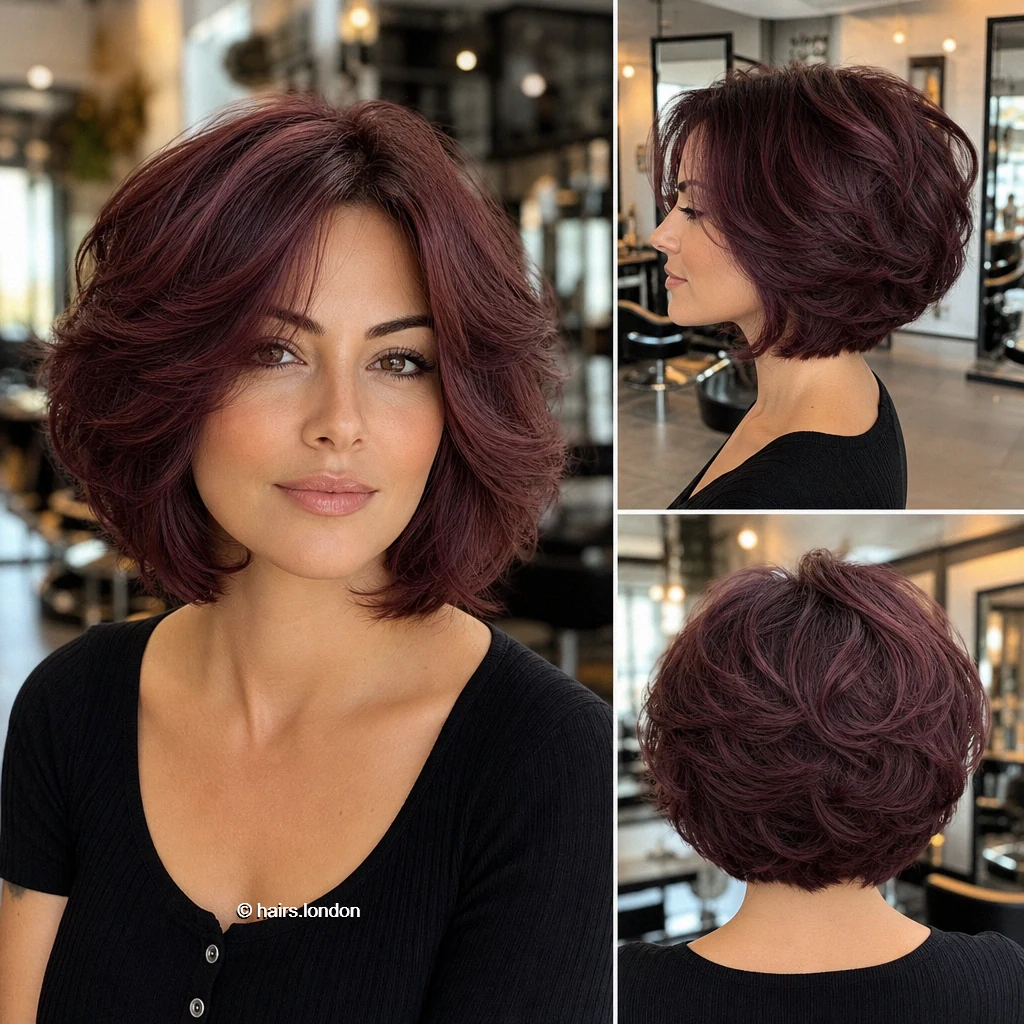
Rich burgundy deepens this airy bob around the jaw. A loose center part opens into sweeping front layers. Feathered sections build visible movement through the sides and back. The lower outline sits above the neck without looking rigid. Ask for layers that leave enough support at the bottom. Use a brush to lift sections away from the face. Finish with flexible hold instead of a heavy wax. Dense hair may benefit from the separation shown here. Fine hair might require fewer layers to avoid gaps. Refresh the color and reshape ends as the bob grows. Keep styling gentle near ends.
12. Lavender Feathered Bob with Side Fringe
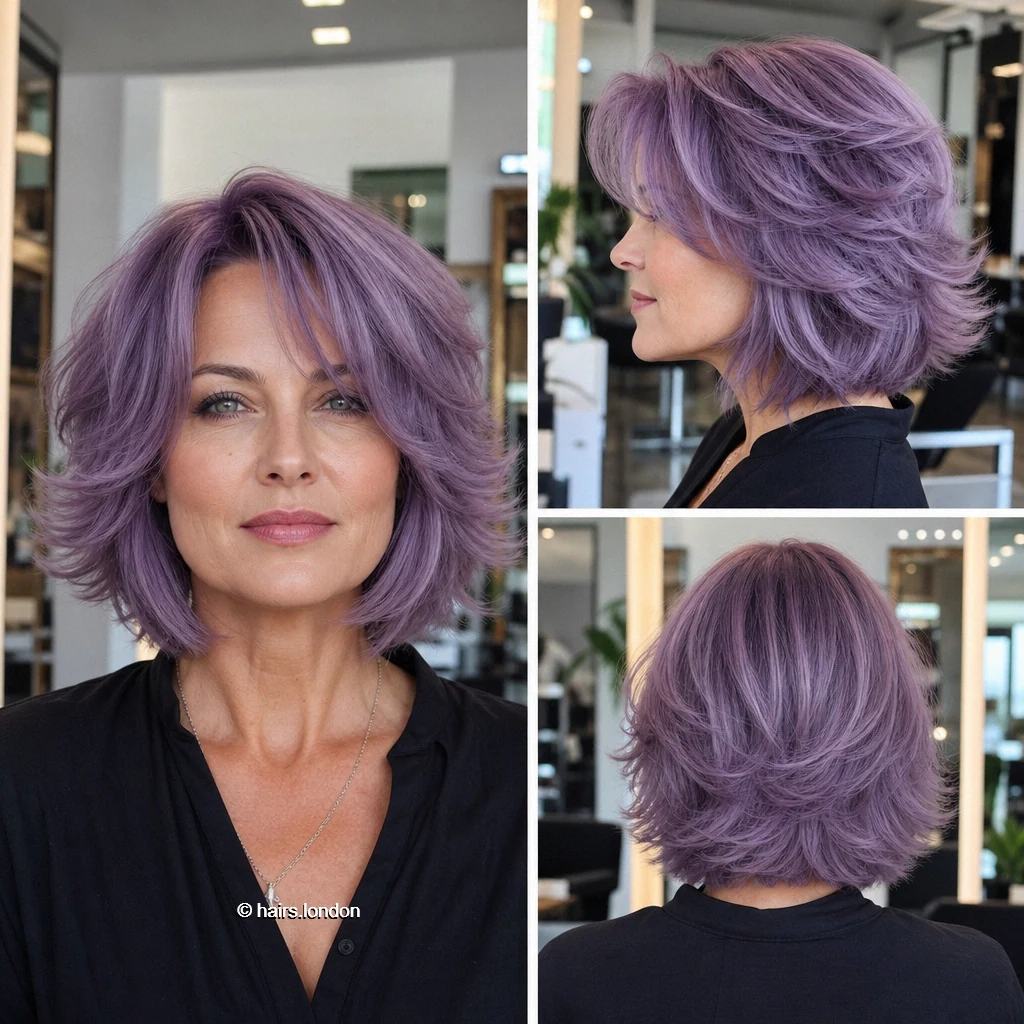
Lavender color highlights the feathered layers in this bob. A long side fringe sweeps across the forehead softly. The sides flip outward, while the back appears airy. Its ends reach around the jaw and upper neck. Ask whether your texture will support this lifted finish. Blow dry layers away from the face using light tension. A small amount of cream can settle flyaway ends. Thick hair may need carefully placed layers for movement. Fine hair might prefer less layering through the bottom. Recut the fringe and refresh faded lavender when necessary. Avoid flattening the front while styling its airy fringe.
13. Vivid Pink Feathered Bob
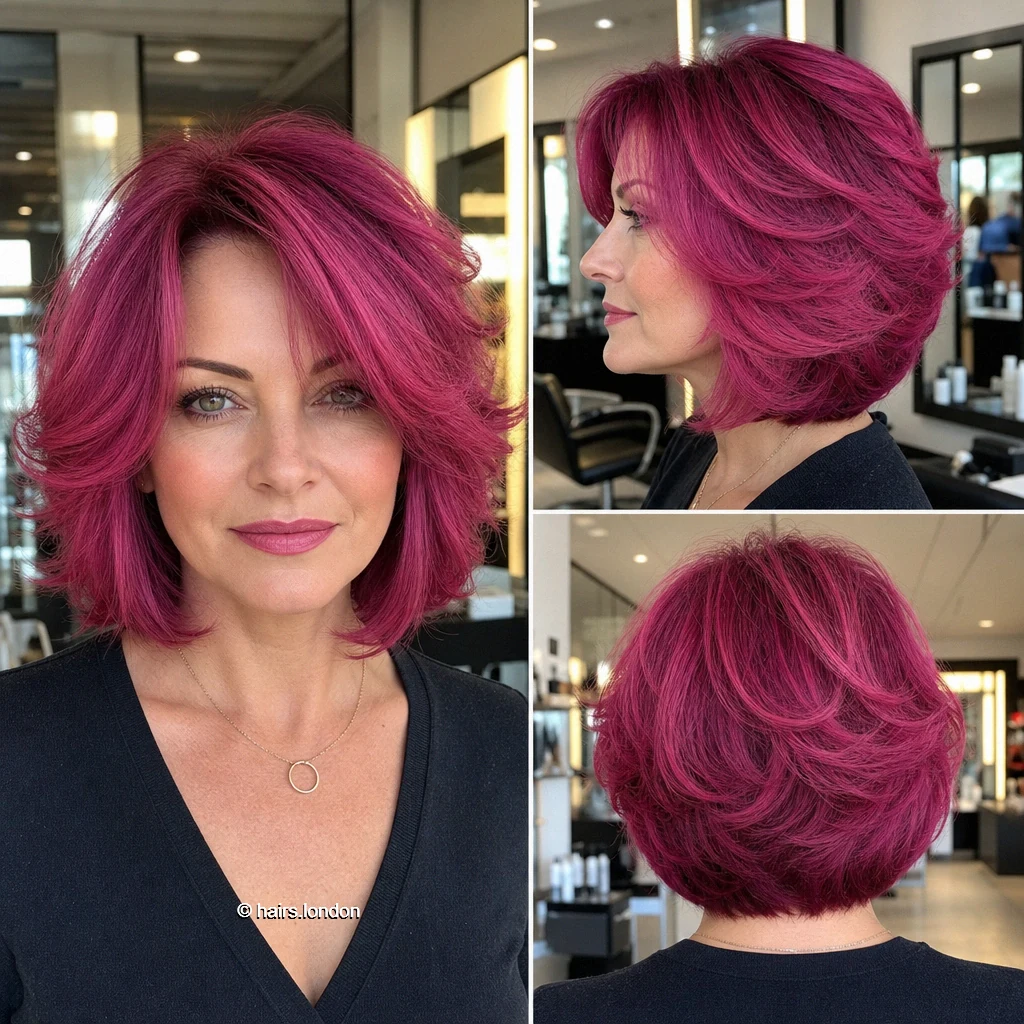
Vivid pink emphasizes the sweeping layers of this bob. The long front opens around a soft, off center part. Feathered sides frame the jaw and skim the neck. Back views show overlapping layers above a short perimeter. Ask for movement without removing support from the bottom. Direct a brush outward to echo the visible flips. Leave some pieces unpolished for a softer finish. This shape may suit fuller hair that needs movement. Finer hair could require longer, less plentiful layers. Maintain the lower outline and plan for pink fading. Use heat protection when shaping the flipped ends with hot tools.
14. Hot Pink Shaggy Bob
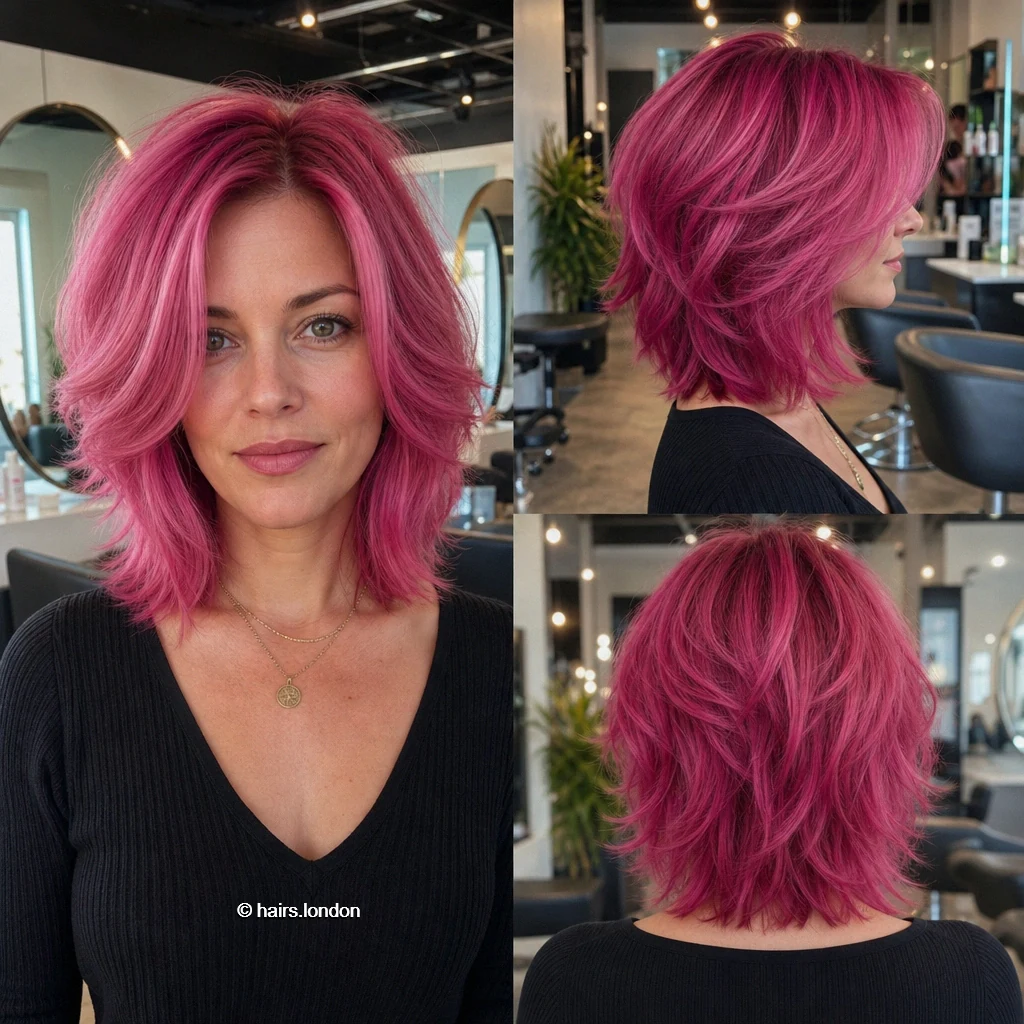
Hot pink gives this shaggy bob a lively outline. Its long front sweeps across a loose side part. Uneven layers flick outward around the cheeks and neck. The back looks intentionally loose rather than closely rounded. Ask for a perimeter that still feels substantial when layered. Encourage natural bends with mousse and gentle scrunching. Avoid heavy oils that could pull down the ends. Wavy, dense hair may show this separation easily. Straight, fine hair might need extra styling for texture. Shape the ends when they lose definition and refresh pink. Keep the longer front clear of your eyes while drying.
15. Blush Pink Airy Layered Bob
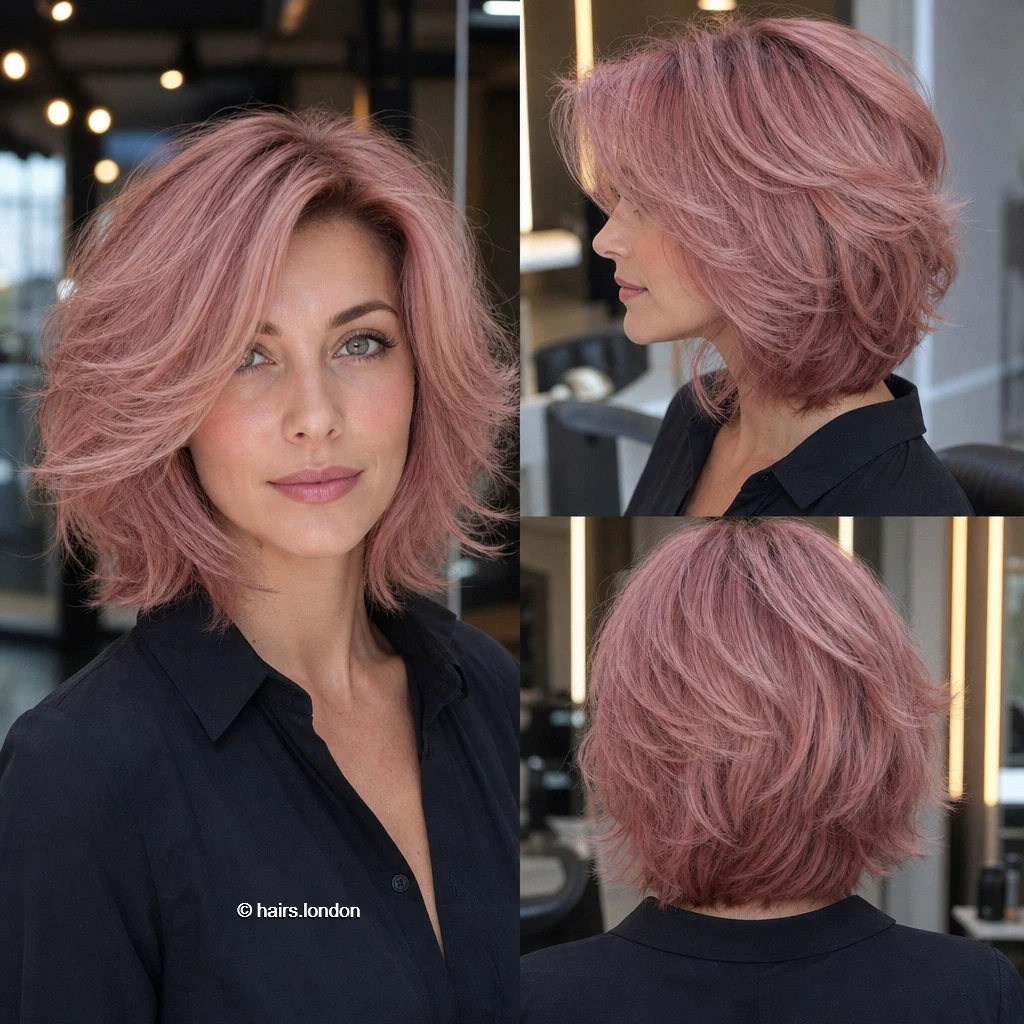
Blush pink softens the lifted layers of this bob. A sweeping front sits over a relaxed side part. Feathered ends spread around the jaw and upper neck. Back layers overlap, creating movement without a blunt border. Ask your stylist to adapt the layers to your density. Blow dry the crown gently, then separate ends with fingers. Lightweight styling cream helps control frizz without hiding texture. This look may suit hair with natural body. Very fine hair could need a stronger bottom edge. Refresh the pastel tone and trim when layers lose balance. Check how the front blends into side layers.
16. Dark Violet Angled Bob
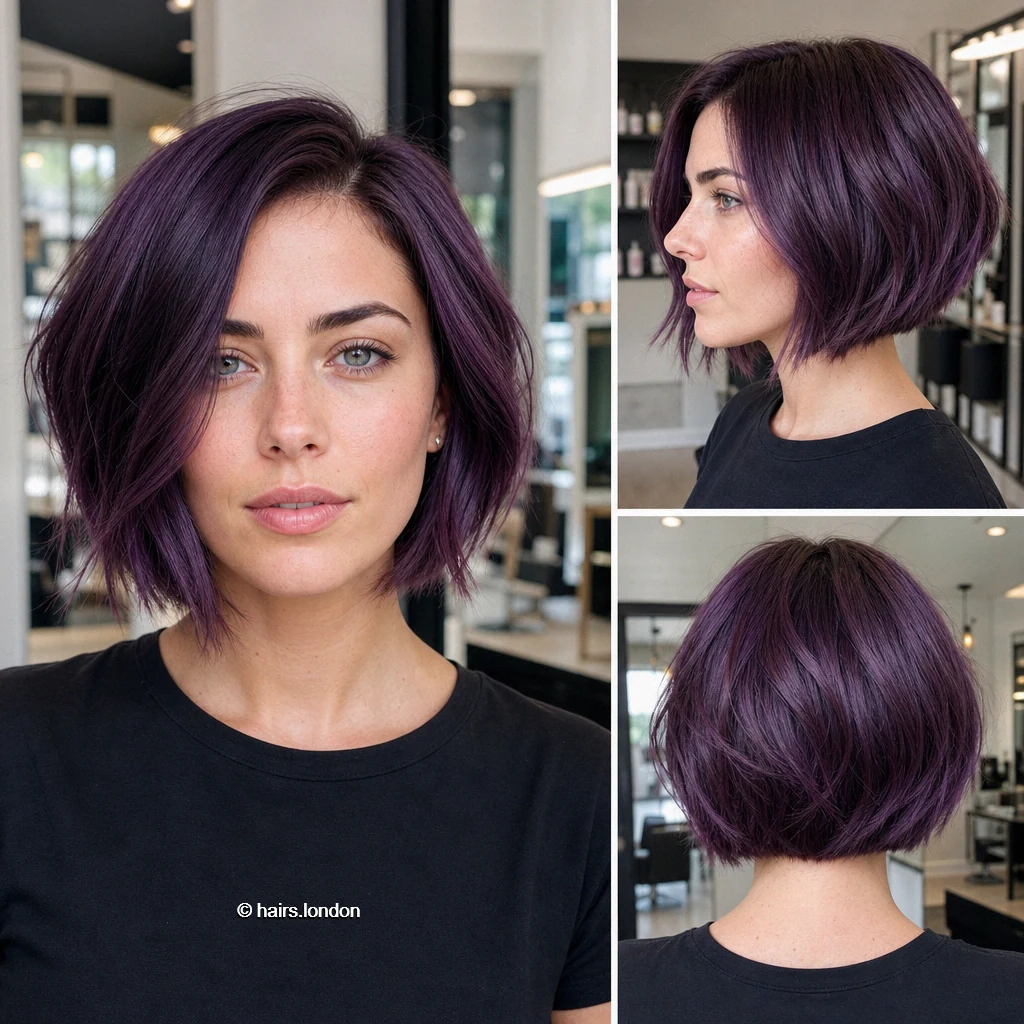
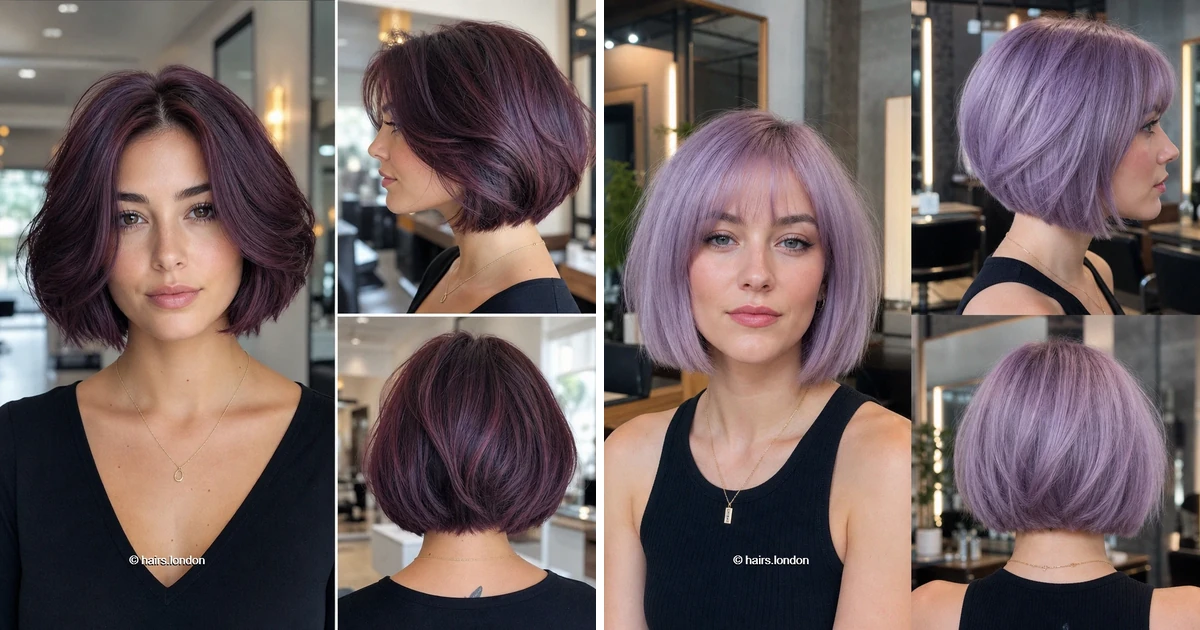
Dark violet colors this bob with a subtle sheen. A deep side part creates a longer sweeping front. The side view shows front pieces extending below the back. Its neckline remains compact beneath a gently rounded crown. Ask for the front to back difference you prefer. Smooth the perimeter with a brush for clear definition. Keep shorter back layers light enough to move naturally. This shape may help dense hair avoid excessive bulk. Fine hair could benefit from preserving weight near ends. Trim before the angle blurs and refresh violet as needed. Light serum can define the longer front pieces.
17. Pale Lilac Rounded Bob with Bangs
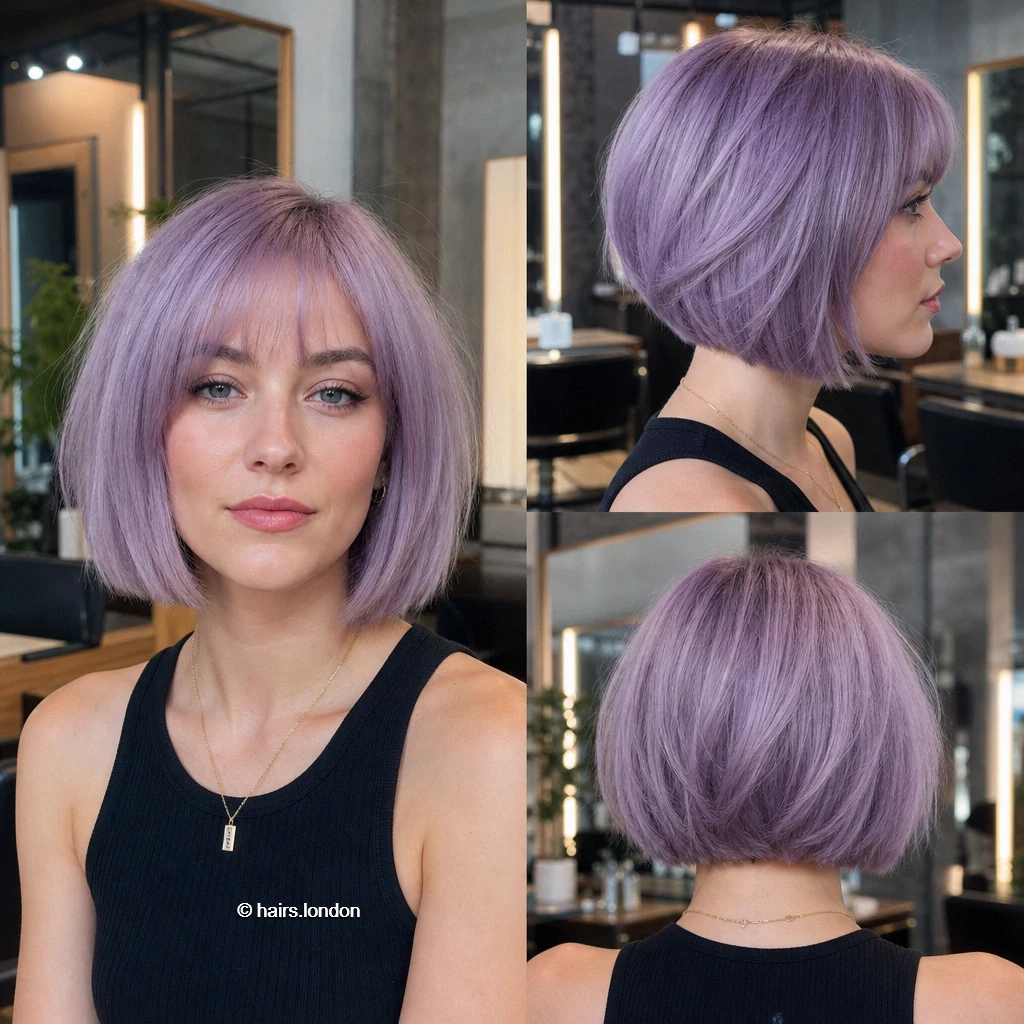
Pale lilac gives this jaw length bob softness. Fine, wispy bangs fall across the upper forehead. Rounded sides frame the cheeks and turn toward the neck. The back shows a full surface above its short edge. Ask for fringe density that suits your hairline. Smooth the perimeter while keeping the crown from collapsing. Dry bangs first, using minimal product near your forehead. Denser hair may need weight adjusted within the curve. Fine hair might benefit from its relatively complete outline. Schedule edge trims and discuss pastel refreshes with your colorist. Keep the fringe airy by limiting product around the roots.
18. Deep Raspberry Textured Bob
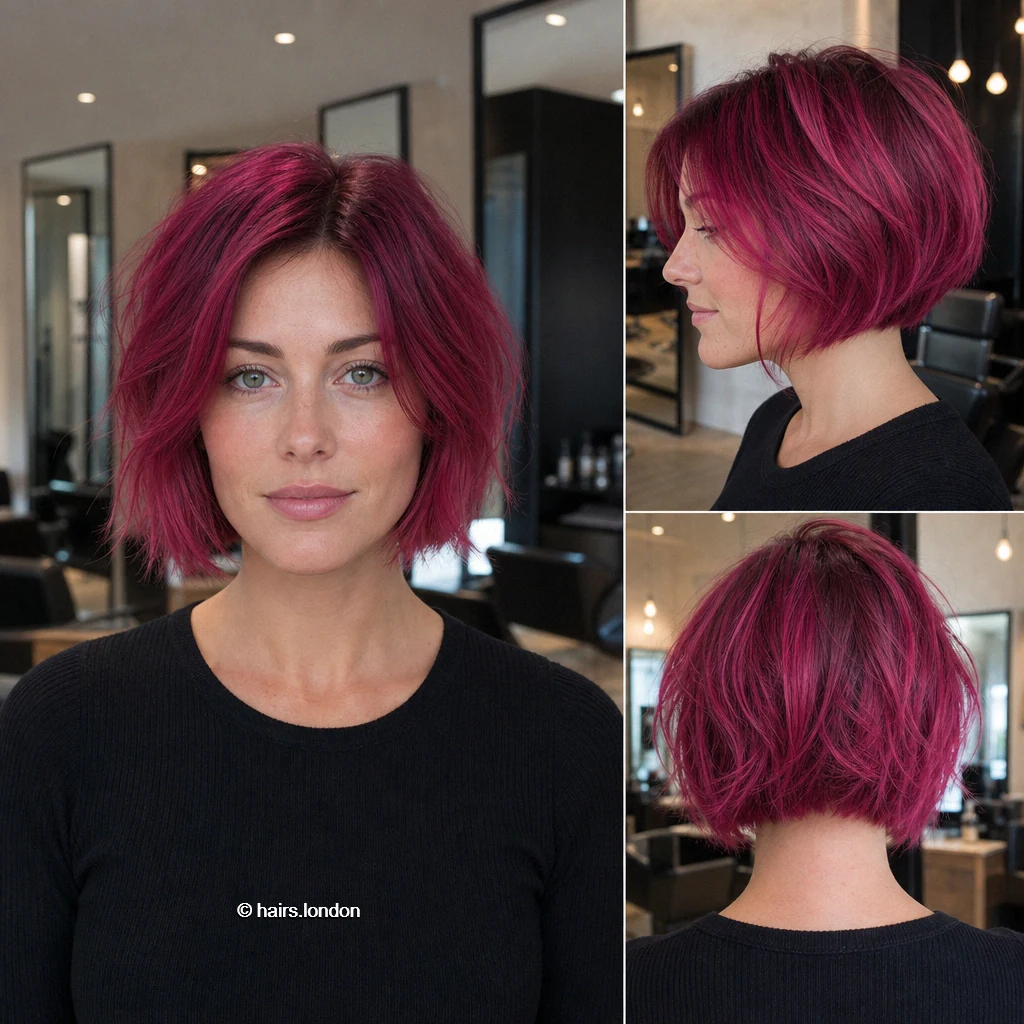
Deep raspberry color adds depth to this textured bob. The center part leaves loose pieces beside the face. Slightly uneven ends sit around the jaw and neckline. Side and back views show movement without heavy stacking. Ask for texture that leaves the perimeter looking complete. Scrunch natural waves or create a few gentle bends. Smooth flyaways selectively rather than pressing every layer flat. Thick hair may need internal weight managed carefully. Fine hair could require less cutting through the ends. Trim the outline as it grows and monitor raspberry fading. Consider how your natural part changes the face framing shape.
19. Pink Angled Bob with Sweeping Front
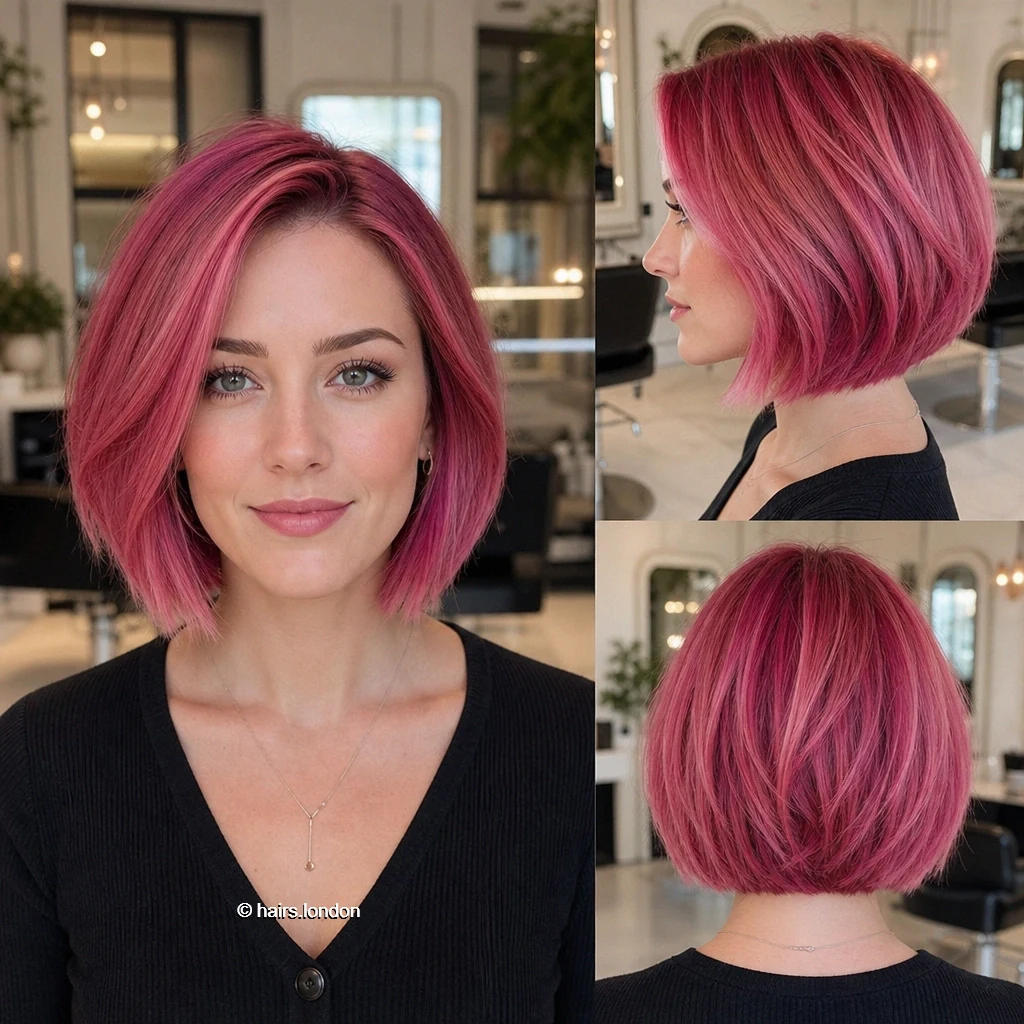
Pink shades brighten this smooth bob around the jaw. A deep side part creates a long sweeping front. The side view shows front pieces below the back edge. Soft layers give its rounded back a little movement. Ask how much visible angle suits your styling preference. Smooth the lower line with a brush and gentle tension. Let the longer front fall naturally rather than forcing volume. Dense hair might need weight managed behind the ears. Fine hair could benefit from keeping the ends substantial. Maintain the angle with trims and plan color refreshes. Keep the side part flexible during styling.
20. Soft Rose Side-Parted Bob
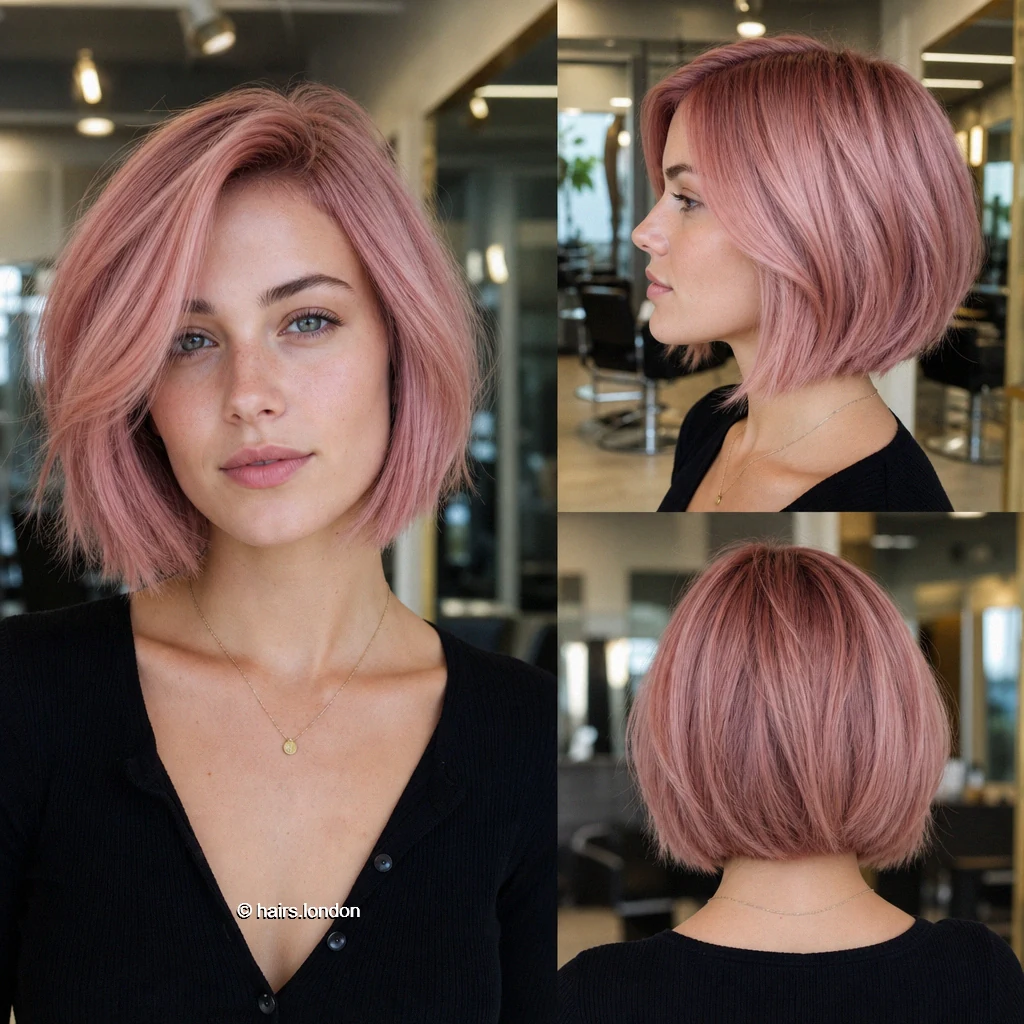
Soft rose color complements this rounded, jaw length bob. A side part sends the front diagonally across the face. The back appears full above a short neckline edge. Light layering adds movement without disrupting the rounded perimeter. Ask your stylist to consider your part and growth patterns. Blow dry the front across, then smooth the lower ends. Use little product so the shape keeps its softness. Thick hair may need selective bulk removal underneath. Fine hair could need fewer layers for similar fullness. Refresh the rose color and trim when the outline spreads. Protect the colored ends when using heat.
How to Choose Your Bob Length and Shape
Start with where you want the perimeter to fall: near the jaw for a compact shape, lower on the neck for more coverage, or toward the shoulders if you want room to grow. Then compare profiles, not just front views. An A-line bob has visibly longer front pieces; a stacked or graduated bob builds weight above a shorter back. A rounded bob can be full without a pronounced angle. Factor in your neck length, hair density, natural bend and willingness to style a fringe.
Styling Fine, Thick, Wavy and Curly Textures
Fine hair often looks fuller when the bottom edge retains weight; use light mousse and avoid coating the ends. Thick hair may need selective internal weight removal, but too much thinning can make a bob expand or turn wispy. For waves, apply a lightweight cream or foam, scrunch and let the pattern form before adjusting individual pieces. For curls, ask for a shape assessed at its natural spring and dry with minimal disruption. Smooth a precise perimeter with a brush when desired, but keep products light enough for layered bobs to move.
Keeping Creative Bob Color Fresh
Plum, violet, lavender, rose and vivid pink can fade at different rates depending on the starting hair, color service and wash routine. Ask your colorist what upkeep your chosen shade requires before committing. Gentle cleansing, fewer unnecessary washes and heat protection can help preserve the finish. Pale shades may need a different refresh plan from deeper tones; avoid assuming one tinted product will suit every color shown here.
Maintaining the Bob Perimeter and Graduation
A compact, smooth edge usually shows growth sooner than an airy, shaggy outline. Watch the shape at the jaw, behind the ears and along the neckline rather than booking trims by a fixed rule alone. If your bob has visible graduation, ask for the shorter back and its weight line to be checked as it grows. Fringe may need attention before the rest of the cut. Layered shapes still need periodic balancing so the ends move without becoming thin.
What to Discuss with Your Stylist
Bring the front, side and back views of the bob you prefer. Point out the exact features you want to keep—such as a rounded edge, sweeping front, airy fringe or longer face-framing pieces—and anything you would change. Explain your natural texture, usual part, growth patterns, styling time and how often you are comfortable returning for cuts and color. Ask how the proposed layers and perimeter will behave when you style your hair at home.
Frequently Asked Questions
What is the difference between a bob and a lob?
A bob typically ends around the jaw or neck, while a lob is a longer bob that falls closer to the shoulders. The distinction can be gradual rather than exact.
How is an A-line bob different from a stacked bob?
An A-line bob is identified by a front that is visibly longer than the back. A stacked bob has visible graduation that builds fullness above a shorter back; the two features can occur together.
Does a rounded bob have to be stacked?
No. A rounded outline describes the silhouette, while stacking describes graduation at the back. A bob can look rounded without pronounced stacking.
Can fine hair wear a layered bob?
Yes, if the layers are planned around its density. Keeping more weight at the perimeter may help fine hair look fuller than heavily textured ends.
How can thick hair avoid a bulky bob shape?
Discuss where the bulk sits before cutting. Selective internal weight removal or suitable layers can help, but excessive thinning may make the ends expand.
Can natural curls work with a jaw-length bob?
They can, provided the length accounts for curl spring and the shape is assessed with your natural pattern in mind. Ask how the cut will sit when dry.
Should I choose bangs with my bob?
Choose bangs if you enjoy their appearance and upkeep. Your stylist can adjust their density and length for your hairline, growth patterns and preferred styling routine.
Which bob is easiest to style each day?
That depends on your natural texture. A shape that works with your existing wave or fall will usually demand less daily reshaping than one requiring a smooth, precise finish.
How often should I trim a bob?
Trim when the perimeter, neckline, graduation or layers stop holding the shape you want. A precise edge or short back often needs attention sooner than a loose, textured bob.
How do I keep pastel bob color looking fresh?
Ask your colorist for a shade-specific refresh plan. Gentle washing habits and heat protection may help, but pale colors can require regular attention.
Can I grow out a graduated bob?
Yes. Discuss whether you want to retain the graduation temporarily or gradually even out the back and front at successive trims.
What should I bring to a bob consultation?
Bring images showing the front, side and back of your preferred cut. Explain your natural texture, usual part, styling time and expectations for color and trim upkeep.
Conclusion
The most useful bob inspiration is specific: notice where the edge lands, how the front relates to the back, and whether the layers create polish or looseness. Choose a colorful bob whose shape works with your hair first, then agree on a shade and upkeep plan you can enjoy maintaining.