


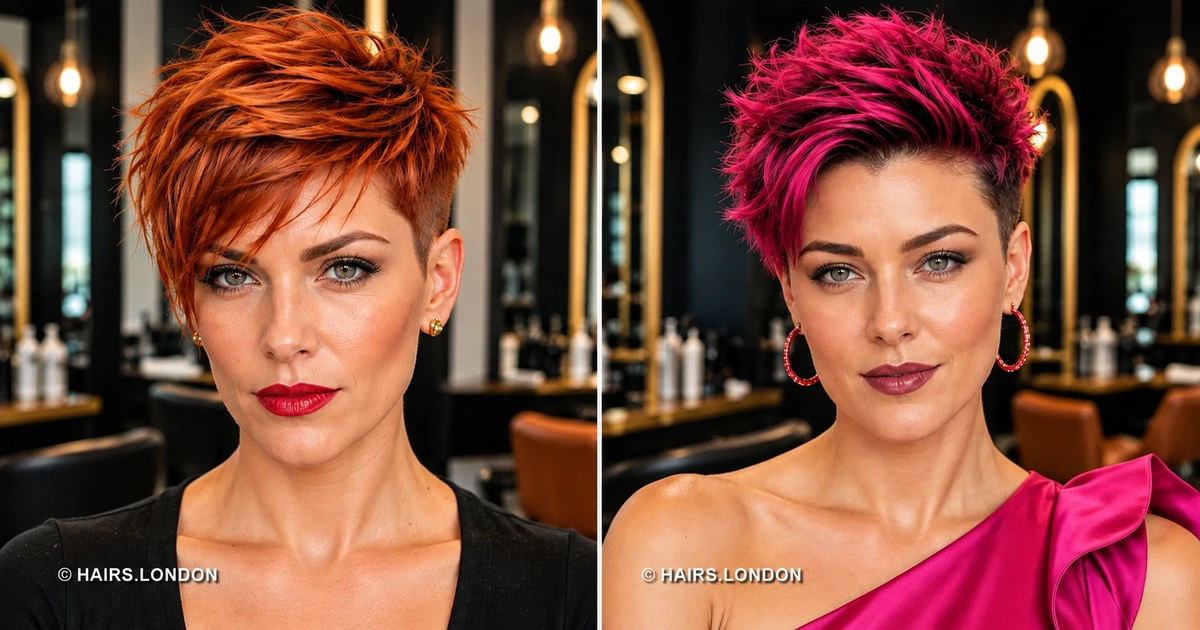
Edgy pixie haircuts can range from softly layered crops to highly contrasted undercuts, and this collection shows how much the details change the overall effect. Across these 20 references, you will see shattered fringes, swept fronts, lifted crowns, feathered napes, close tapers and high fades, along with both connected and deliberately disconnected shapes. The color range is equally varied: crimson, violet, copper, magenta, wine, brunette, platinum, bronde, midnight blue, merlot, pearl blonde, auburn and fuchsia all emphasize texture in different ways.
Before choosing a reference, compare more than the color. Look closely at how much length remains around the ears, whether the nape is soft or tightly tapered, where the crown begins to lift, and how far the fringe falls. Those choices affect daily styling and how quickly the cut changes as it grows. Hair density, natural partings, cowlicks and wave pattern can also influence whether a photograph translates directly or needs adaptation.
A useful salon conversation should separate the shape from the finish. Decide first how short you are comfortable going on the sides and back, then discuss top length, fringe direction and texture. Finally, choose whether you prefer soft movement, separated spikes or a smoother sweep. Color can enhance those lines, but the underlying haircut is what determines the silhouette.
What to Compare Before Choosing a Pixie
Compare the perimeter, crown and fringe separately. A photograph with a dramatic color can distract from the actual cut, so study the side length, nape shape, degree of disconnection and direction of the top. Decide which features are essential and which can be adapted to your density, texture and styling routine.
1. Crimson Shattered Pixie with Skin Taper
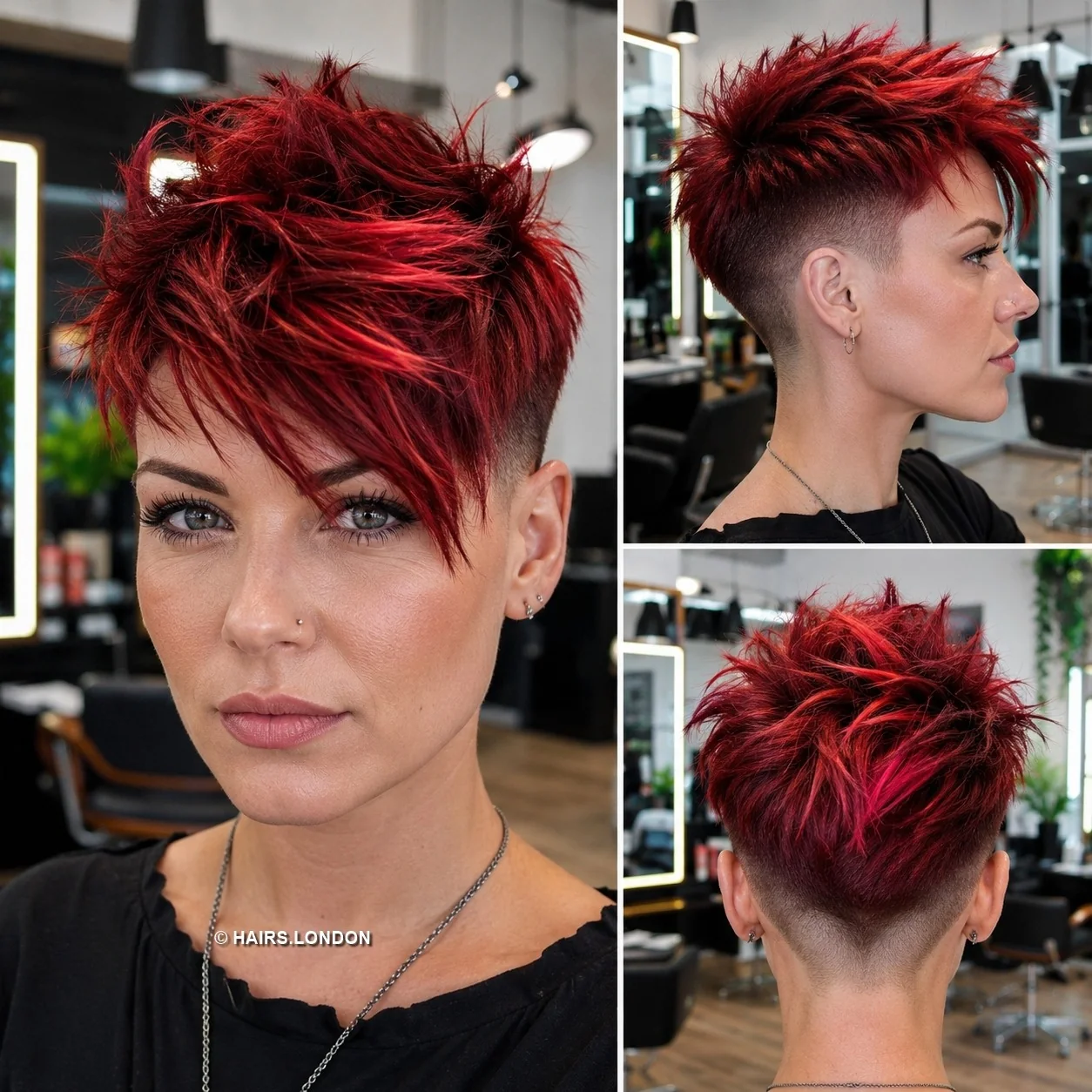
A vivid crimson top gives this pixie immediate definition, while darker roots and closely tapered sides sharpen the silhouette. The crown is left noticeably longer and broken into separated, directional spikes, with an irregular fringe dropping forward in narrow pieces. Around the ears and nape, the cut graduates very close for a clean contrast against the textured top. Straight to slightly wavy hair can make this separation easier to control. Work a small amount of matte paste through dry hair, pinching individual sections upward. Frequent perimeter trims will preserve the tight taper, while red color needs thoughtful fade maintenance This.
2. Violet Spiky Pixie with Long Piecey Fringe
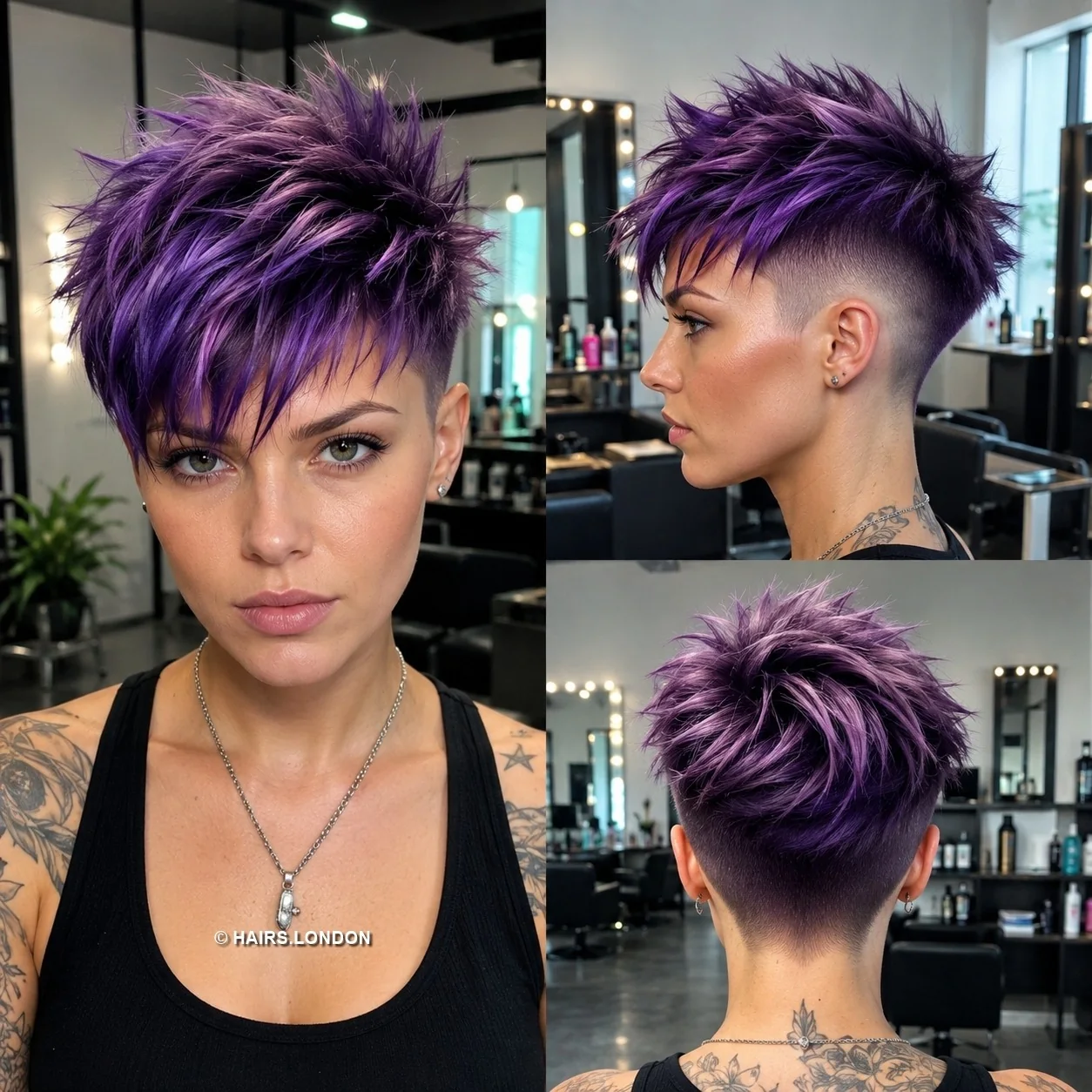
Saturated violet makes the disconnected texture of this pixie especially visible. The top and crown carry substantial length, allowing pointed sections to lift, twist and fall forward into a long, piecey fringe. Both sides are clipped much shorter, creating a clear undercut effect that keeps the outline narrow beneath the fuller top. This shape can help dense hair feel lighter when internal weight is removed carefully. Blow-dry the top in alternating directions before using a flexible texture cream or paste. Ask the stylist how much fringe length suits your daily routine, because the longest pieces may require regular reshaping around.
3. Copper Swept Pixie with Carved Nape
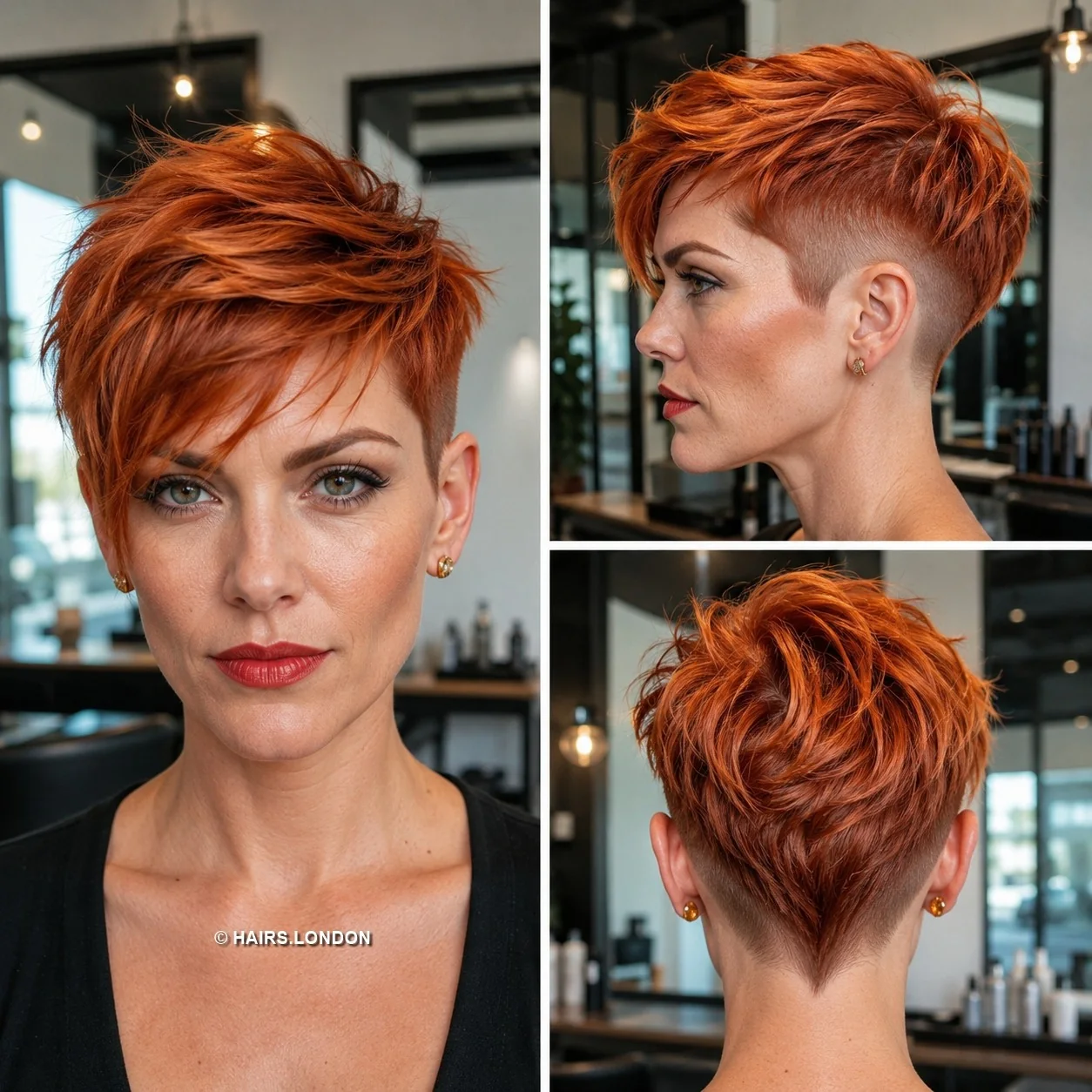
Warm copper color emphasizes the sweeping movement in this asymmetric pixie. Longer layers travel diagonally across the forehead, while the opposite side is cropped close around the temple and ear. The crown remains layered rather than heavily spiked, giving the cut controlled lift and a softer transition toward the back. At the nape, the hair narrows into a distinct pointed finish that makes the rear view part of the design. Fine hair may benefit from lightweight root lift instead of heavy wax. For thicker hair, strategic debulking can prevent the longer top from collapsing. Copper tones generally look freshest with.
4. Magenta Razor Pixie with Faded Sides
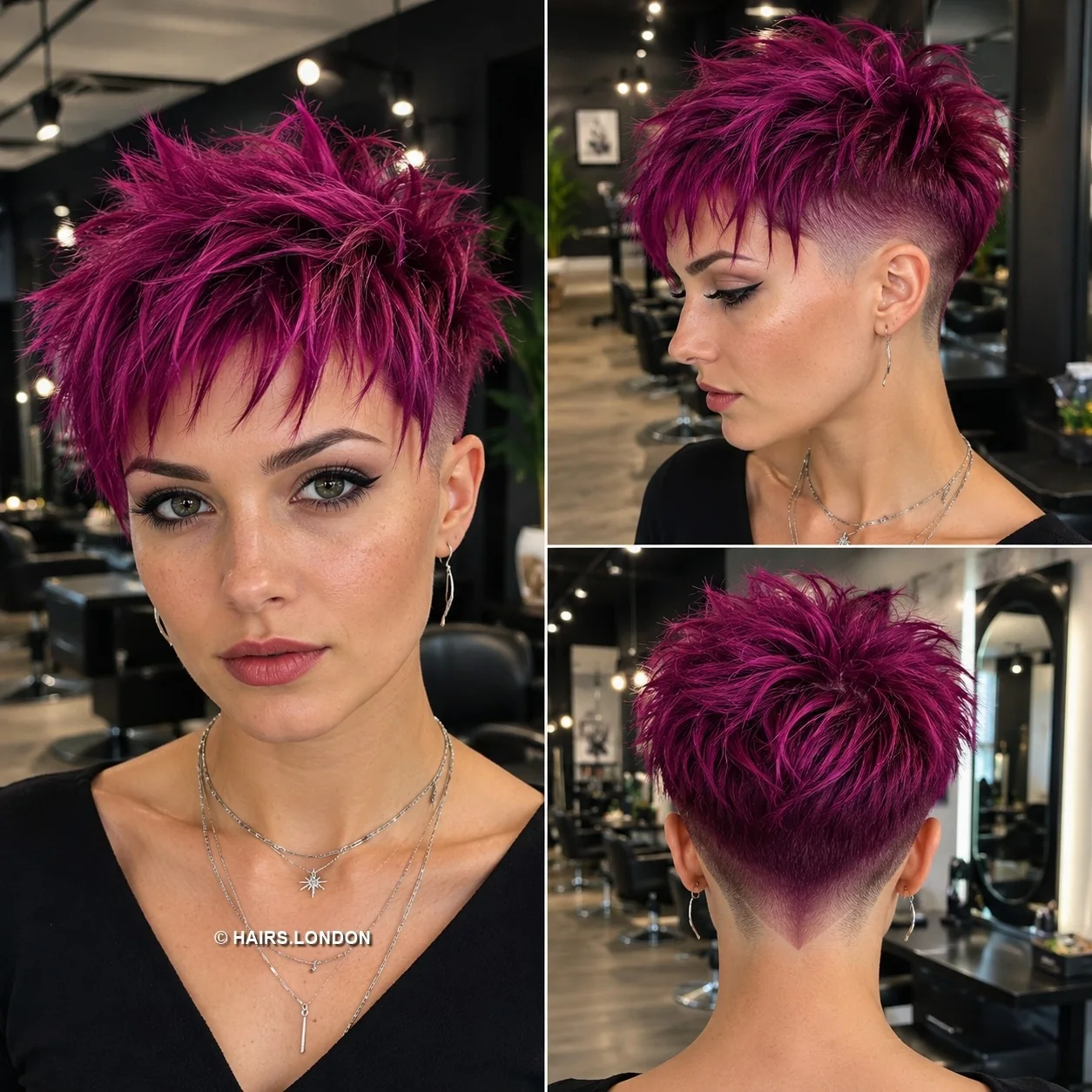
This magenta pixie combines razor-like separation on top with a much tighter side and nape area. The fringe is short, uneven and intentionally piecey, while the crown is lifted into jagged spikes that create height without forming one solid ridge. The sides fade gradually toward the skin, producing strong contrast beneath the saturated berry-magenta top. A firm but workable paste can support the separated points; apply it sparingly so the strands remain defined rather than coated. Coarse or dense hair may need extra internal weight removal. Because both the fade and vivid color are prominent, maintenance involves shape appointments plus.
5. Wine Red Tousled Pixie with Soft Taper
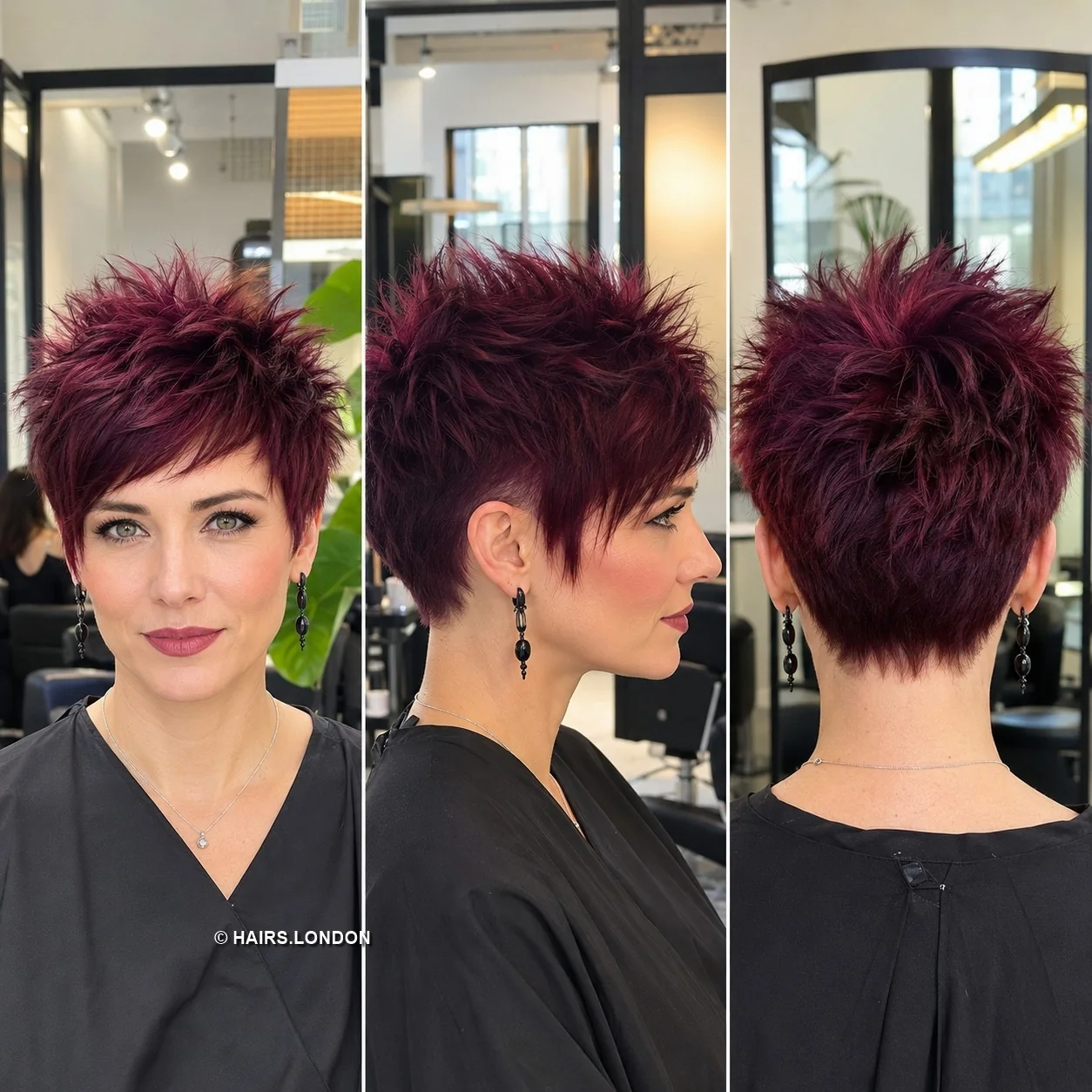
Deep wine-red color gives this tousled pixie a rich, dimensional finish without relying on an extreme fade. The fringe sweeps gently to one side in narrow layers, and the crown is cut into longer pieces that can be lifted or allowed to settle naturally. Sides and nape remain short but softly connected, creating a wearable transition around the head. This is useful for someone who likes visible texture yet prefers more coverage than a skin taper. A light molding cream can encourage separation while retaining movement. During consultation, compare the side length and fringe drop carefully, since those details strongly.
6. Espresso Spiky Pixie with Feathered Nape
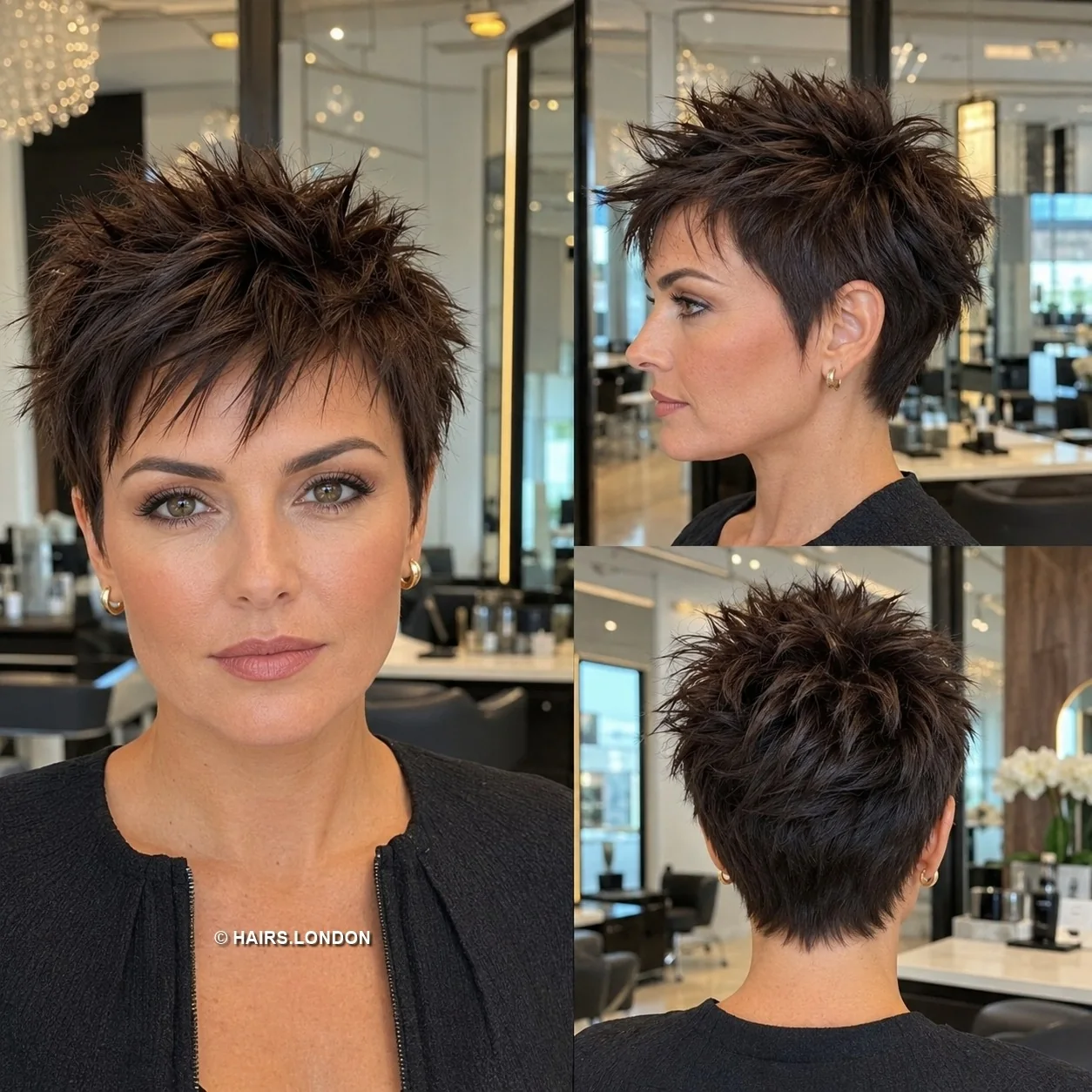
This espresso-brown pixie focuses on sharp, dry-looking texture rather than color contrast. The fringe is short and broken into narrow points, while the crown rises into multiple spikes with enough length to change direction. Sides stay compact and neatly tapered, and the back finishes in a soft feathered nape rather than an abrupt shaved line. The darker color makes the layered structure easy to read under salon lighting. Fine hair can use a root-lifting spray before blow-drying; thicker hair may need selective thinning. Avoid overloading the top with wax, because too much product can merge the carefully separated sections and.
7. Platinum Choppy Pixie with Airy Crown
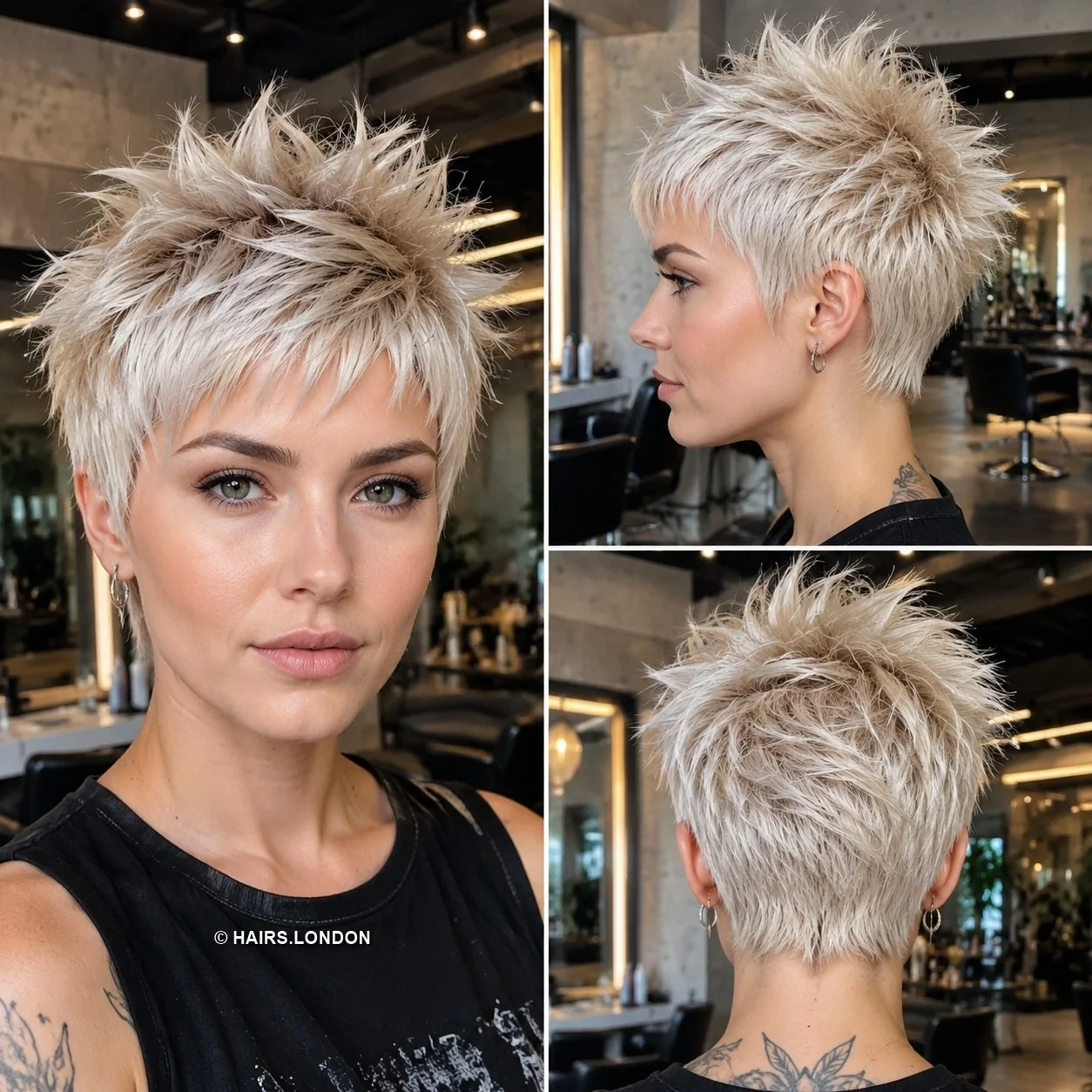
An icy platinum shade highlights every layer in this airy, choppy pixie. The fringe is short and feathered, the crown is deliberately longer, and the upper layers are pushed into loose spikes rather than rigid points. Sides and nape remain short but retain visible softness, so the cut reads textured instead of severely undercut. This shape can work well when the goal is crown lift with a light perimeter. Use a small amount of dry texture product after directing the roots upward with a dryer. Lightened hair can feel drier, so conditioning and heat protection matter alongside regular toning or.
8. Bronde Highlighted Pixie with Textured Quiff
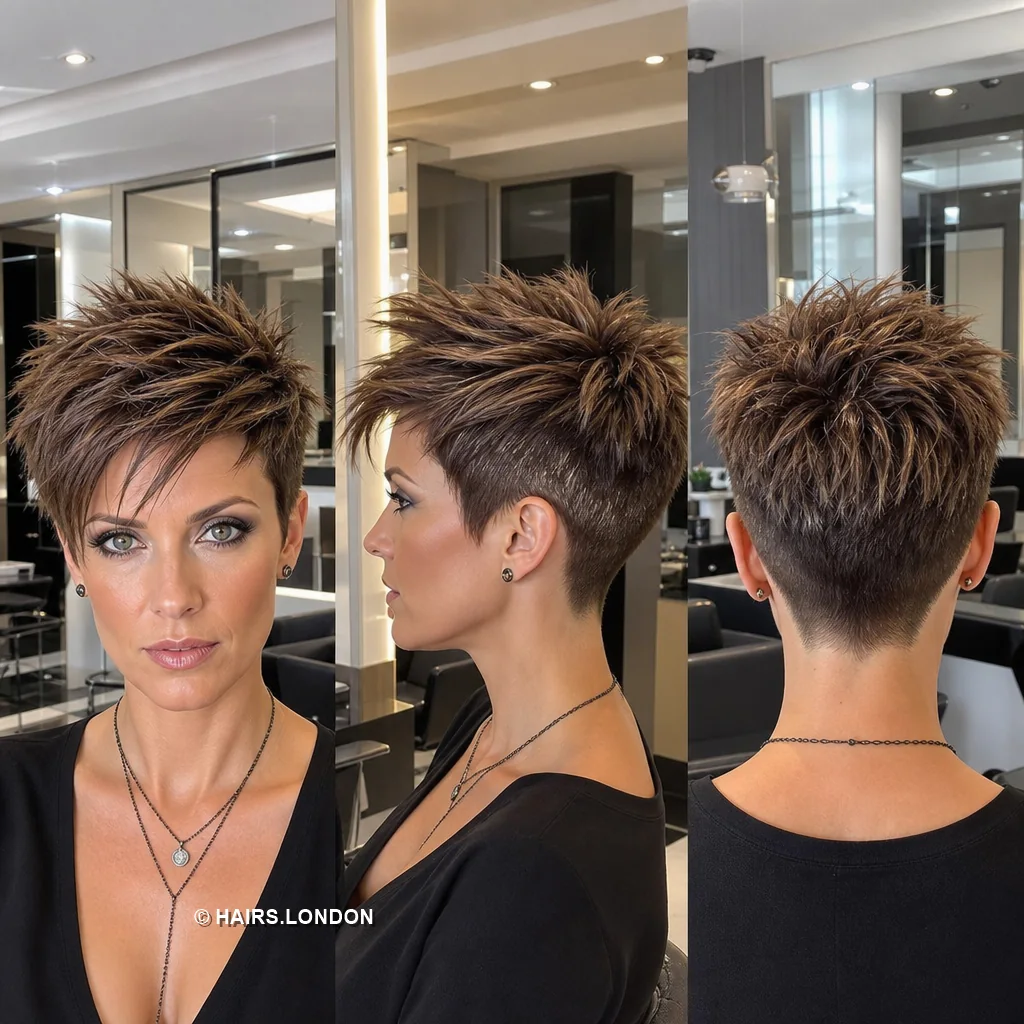
Bronde highlights trace the lifted strands of this textured pixie, creating strong separation against the deeper brown base. The top is longest through the front and crown, where the hair forms a loose quiff with spiky ends. Sides are significantly shorter and smoothly tapered, while the back narrows into a neat, close nape. The contrast between highlighted tips and darker roots adds visual depth without requiring a vivid fashion shade. Medium-density straight hair may style this shape quickly with directional blow-drying. Use lightweight paste at the ends rather than the roots. Ask for enough top length to preserve movement between.
9. Deep Brunette Spiky Pixie with Tapered Nape
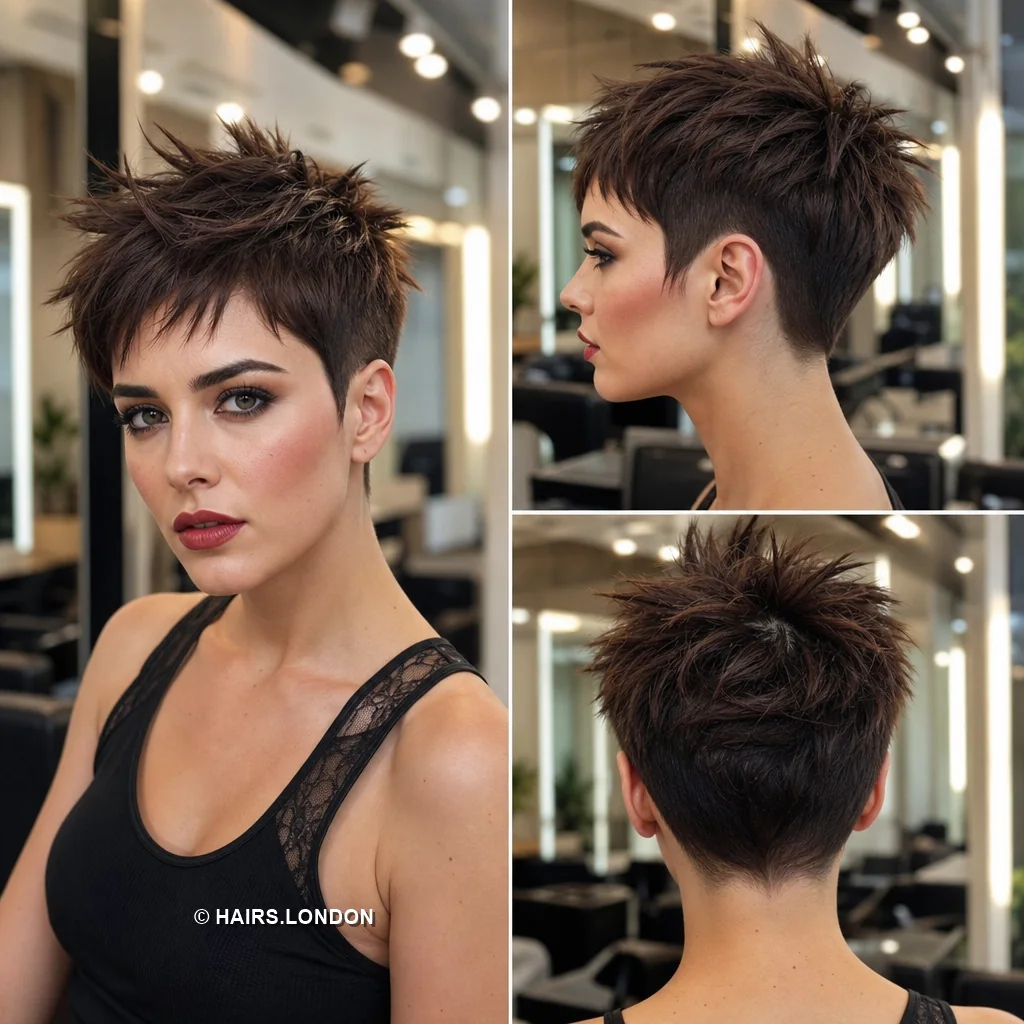
Deep brunette color keeps attention on the sculpted shape of this compact pixie. The front is cut into short, irregular points, while the crown carries extra length for tousled spikes and controlled height. The sides hug the head closely around the ears, then blend into a tapered back with a clean, narrow nape. Compared with a disconnected undercut, the transitions here appear more integrated. A dry clay or paste can create definition on straight or slightly wavy hair. If the hair is very thick, reducing bulk beneath the crown can help. Schedule reshaping when the side outline begins to lose.
10. Burgundy Spiky Pixie with Feathered Nape
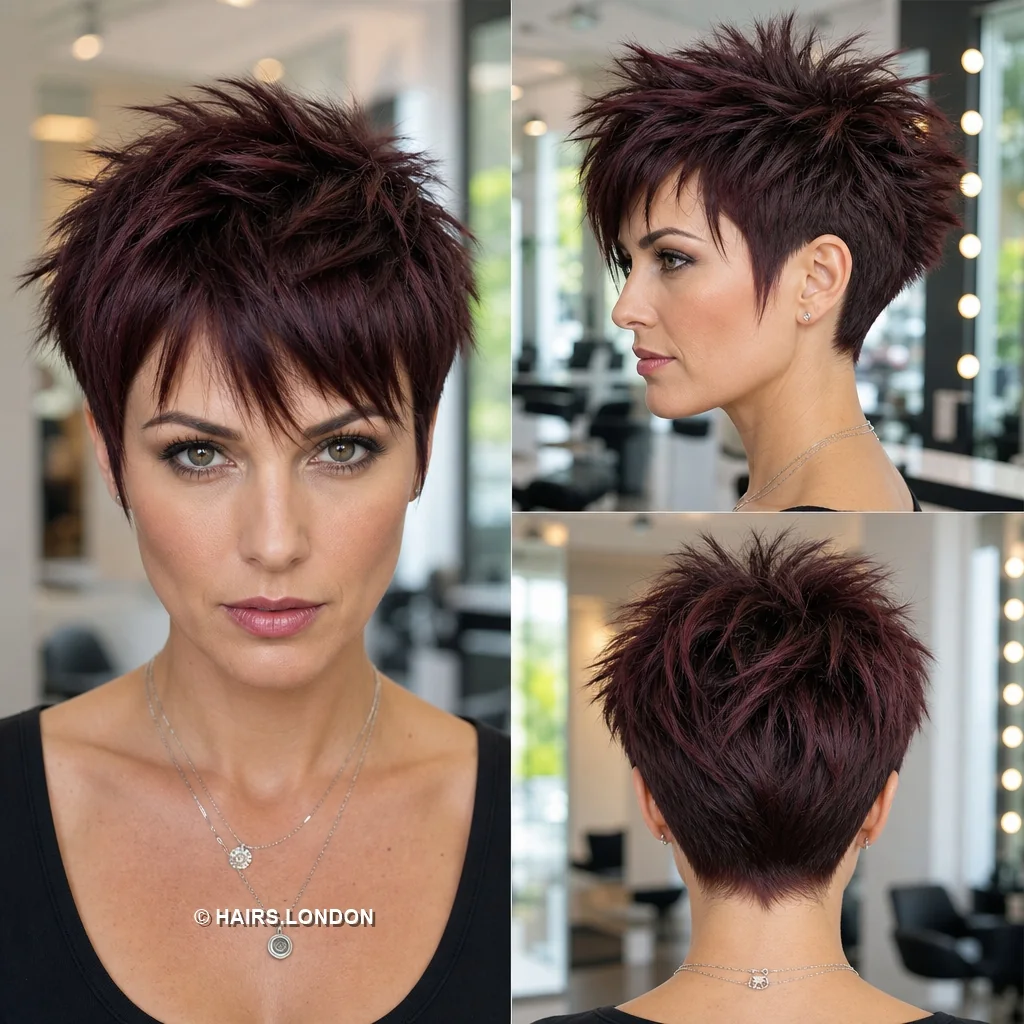
Deep burgundy color reinforces the jagged texture of this short pixie. The fringe falls forward in uneven points, while the crown is lifted into loose spikes that continue toward the back. Sides remain short and closely fitted around the ears, but they are blended rather than shaved into a high fade. The nape finishes in soft feathered points, giving the rear outline a slightly elongated shape. Medium or thick hair may need selective weight removal beneath the crown for easier movement. Apply flexible paste to dry hair and pinch selected ends. Regular shaping keeps the perimeter neat as the short.