


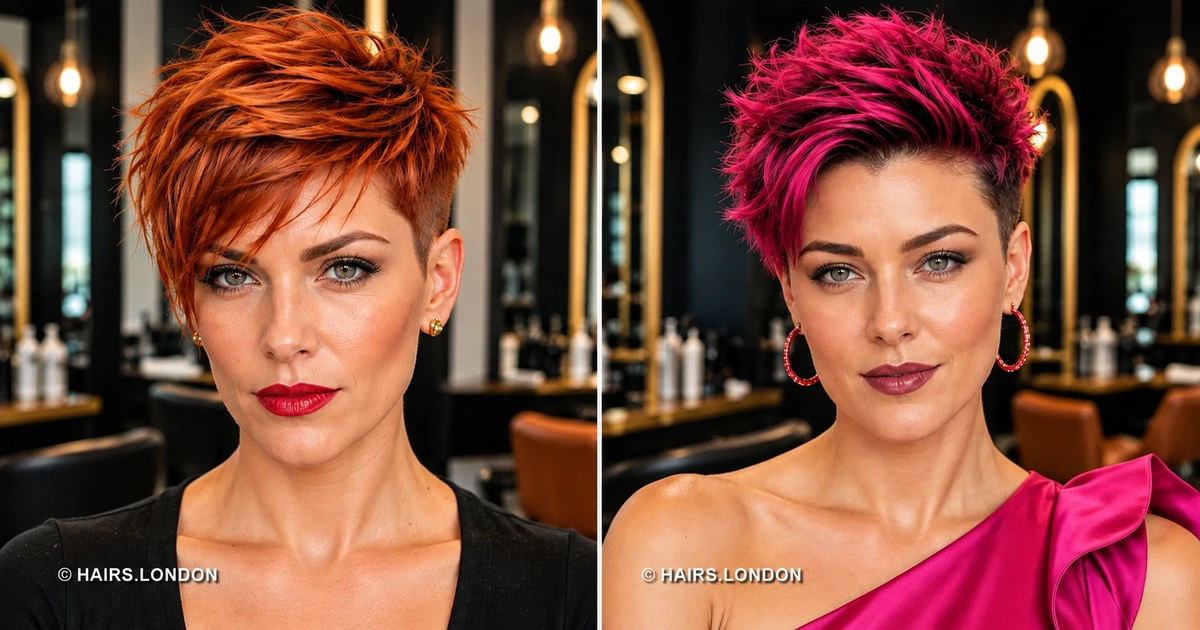
11. Platinum Swept Pixie with Close Undercut
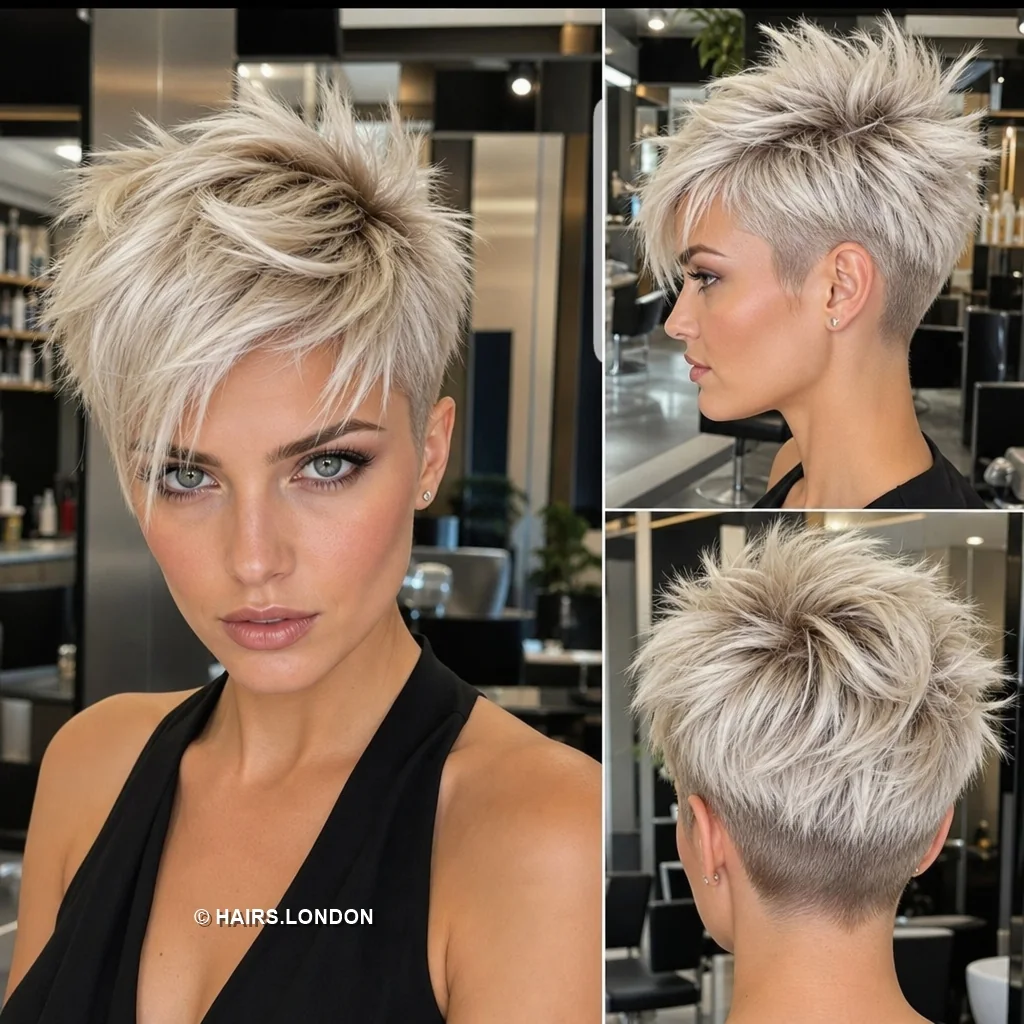
This platinum pixie balances a long sweeping front with closely cropped sides and a tight nape. The fringe travels diagonally across the forehead in soft separated layers, while the crown is lifted into airy texture that prevents the longer top from lying flat. Darker root shadow adds depth beneath the pale blonde surface. The side area is noticeably shorter, producing undercut contrast without making the top excessively rigid. Fine hair should be styled with lightweight volume products, while dense hair may require internal weight removal. Protect lightened lengths from excessive heat and discuss toning frequency according to the desired platinum.
12. Midnight Blue Long Pixie with Side Sweep
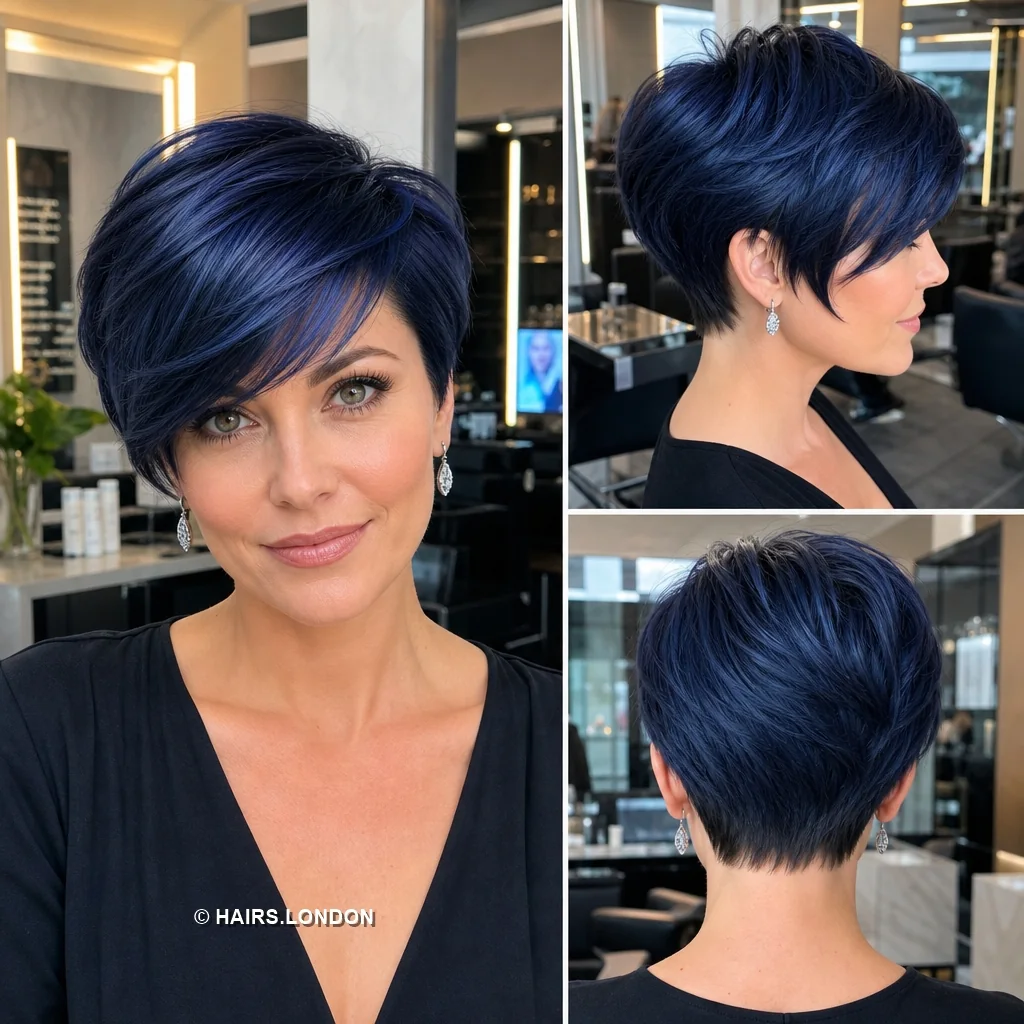
Midnight blue transforms this longer pixie into a sleek dramatic option. The top is substantially longer than the nape, with layered sections sweeping from a deep side direction across the forehead and toward the cheek area. Crown volume is smooth rather than spiky, and the back is softly tapered while retaining enough length for a rounded polished outline. This shape relies on movement and shine more than aggressive separation. A light smoothing cream and controlled blow dry can guide the fringe without flattening the crown. Because deep blue may fade differently on various bases, ask a colorist about realistic maintenance.
13. Merlot Layered Pixie with Rounded Crown
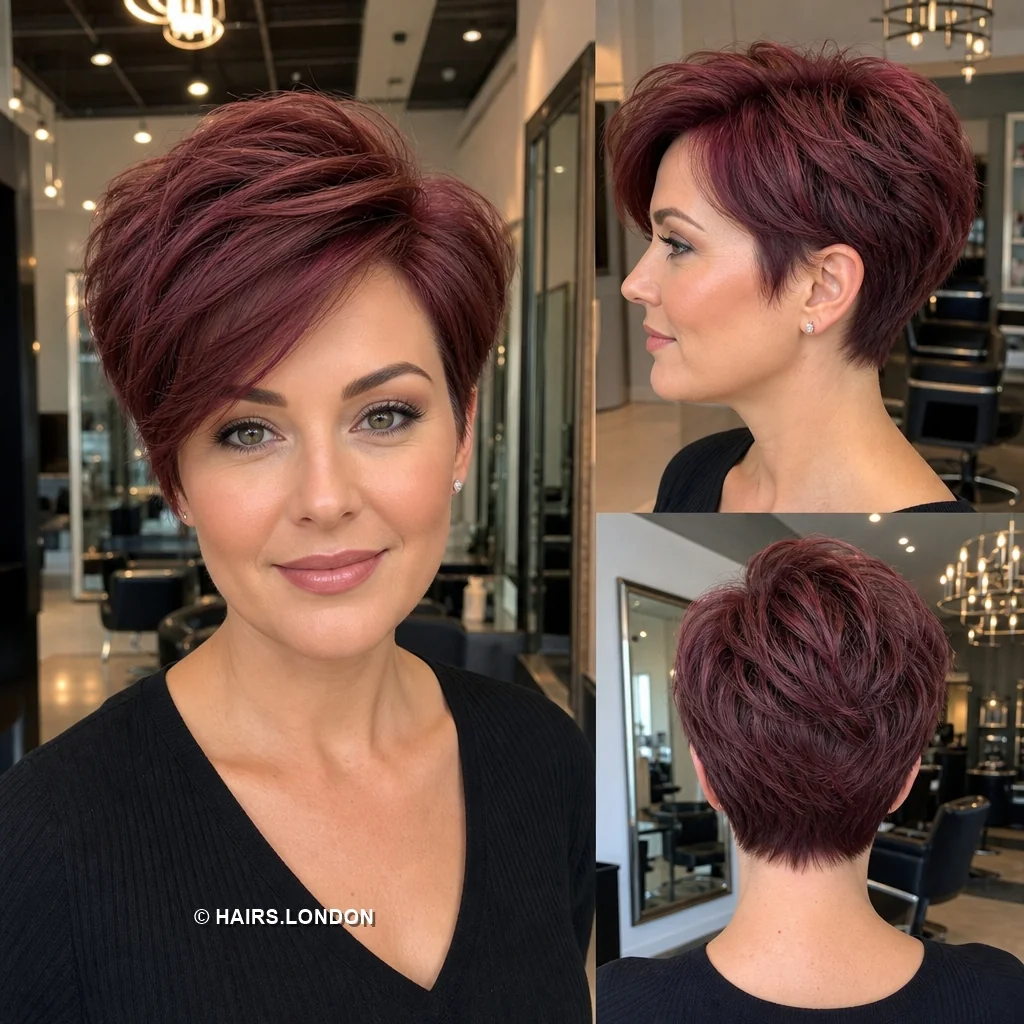
A muted merlot shade complements the rounded layered construction of this pixie. The front has a generous side swept fringe, while the crown and upper back are built with overlapping layers that create fullness without obvious spikes. Around the ears, the hair is shorter and tucked close, and the nape finishes in soft feathered points. This is a useful reference for someone who wants a pixie with more polish and coverage than a high fade. Blow dry with a small brush or fingers to direct the top. Lightweight cream can keep the layers separated. Consider how the fringe behaves with.
14. Pearl Blonde Soft Pixie with Side Fringe
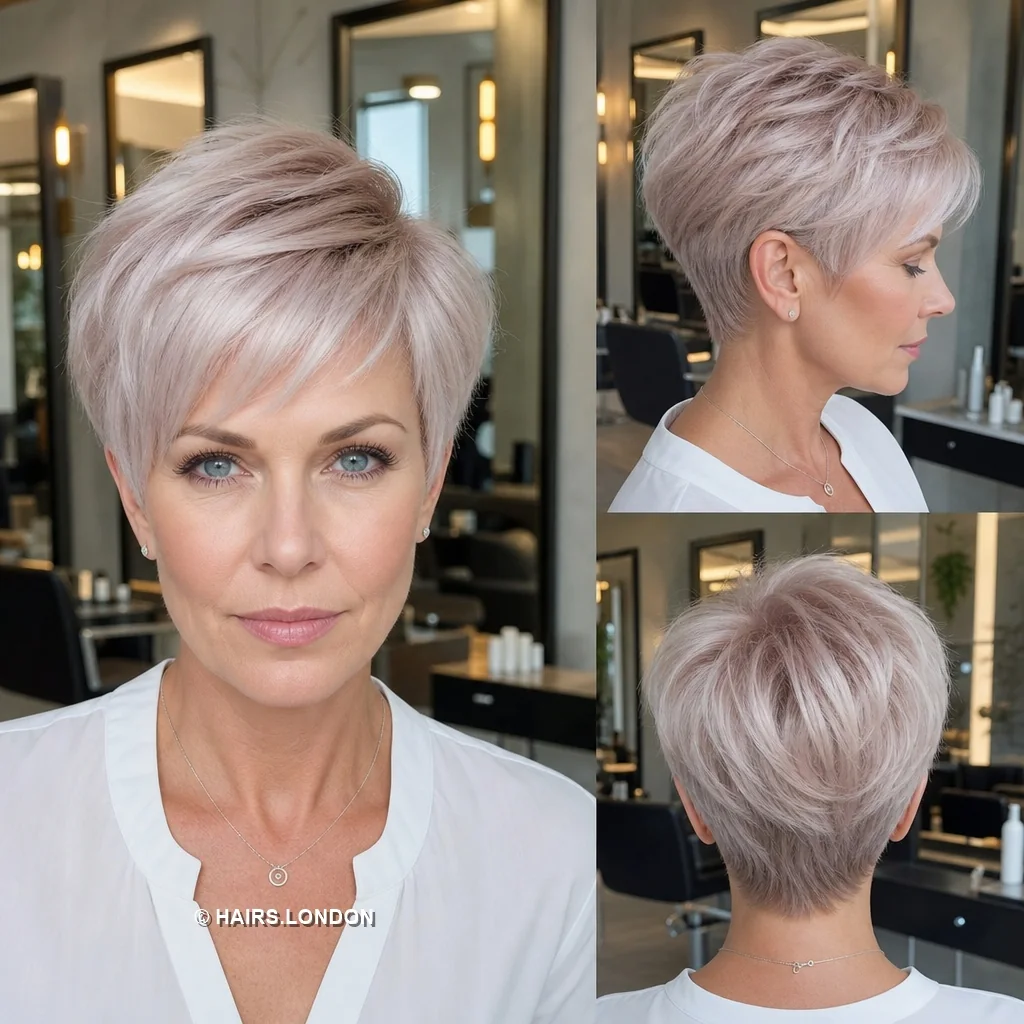
Pearl blonde color gives this softly layered pixie a light blended appearance. The fringe sweeps gently across the forehead, connecting into longer top layers that create subtle crown volume. Sides are short and tidy but not shaved, while the back tapers gradually into a delicate feathered nape. The overall shape is rounded and controlled, making it less spiky than many cuts in this collection. Fine hair may benefit from mousse or root spray for lift, whereas thicker hair can need internal weight reduction. Pale blonde shades may require toning and conditioning, especially when heat styling is frequent. Bring this photograph.
15. Auburn Feathered Pixie with Layered Crown
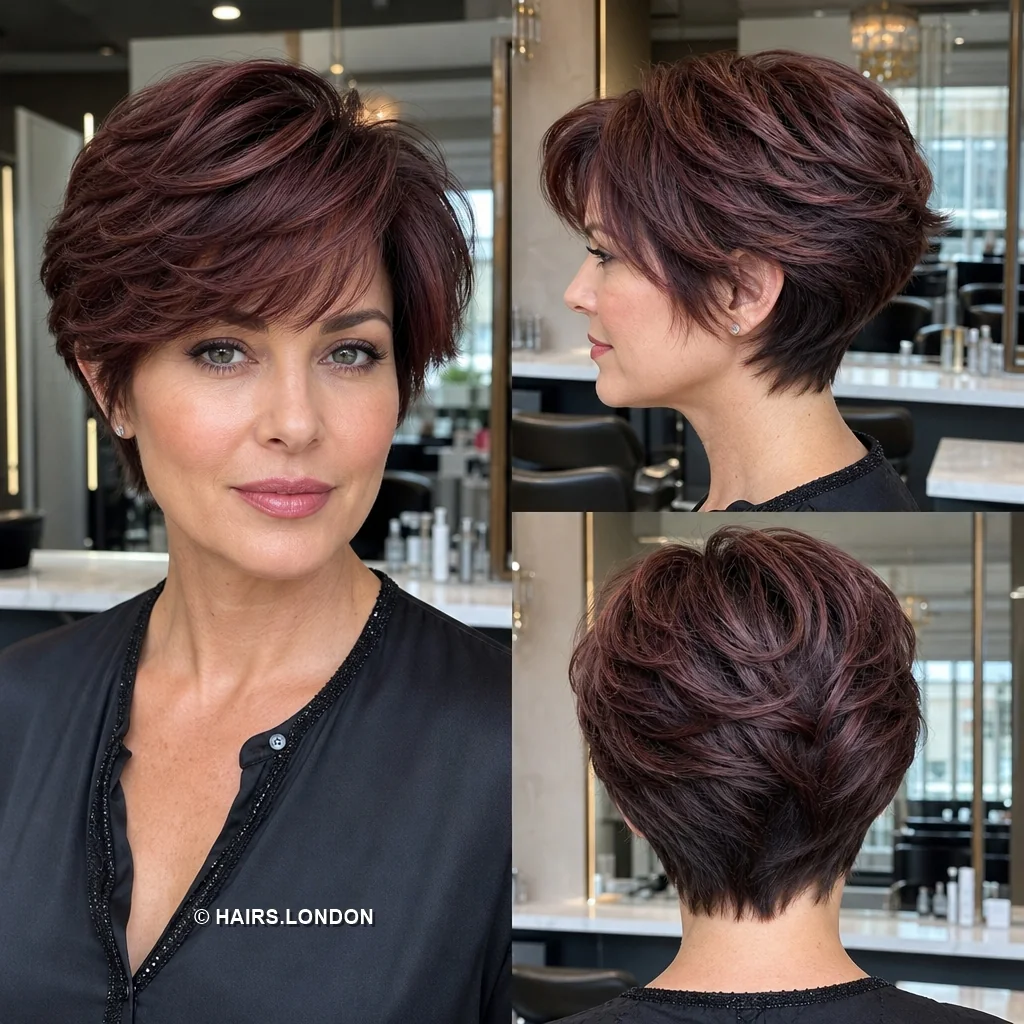
Rich auburn burgundy tones deepen the movement in this feathered pixie. The fringe is long enough to sweep diagonally, and the crown is layered into broad curved sections rather than sharp spikes. Side pieces remain soft around the ear, while the back shows overlapping layers that narrow toward a textured nape. This fuller construction provides more coverage and a gradual grow out compared with a clipped undercut. A round brush or directional finger dry can emphasize the crown without making it stiff. Use a flexible styling cream for separation. If your hair has strong cowlicks, discuss fringe direction and crown.
16. Beige Blonde Spiky Pixie with Dark Root
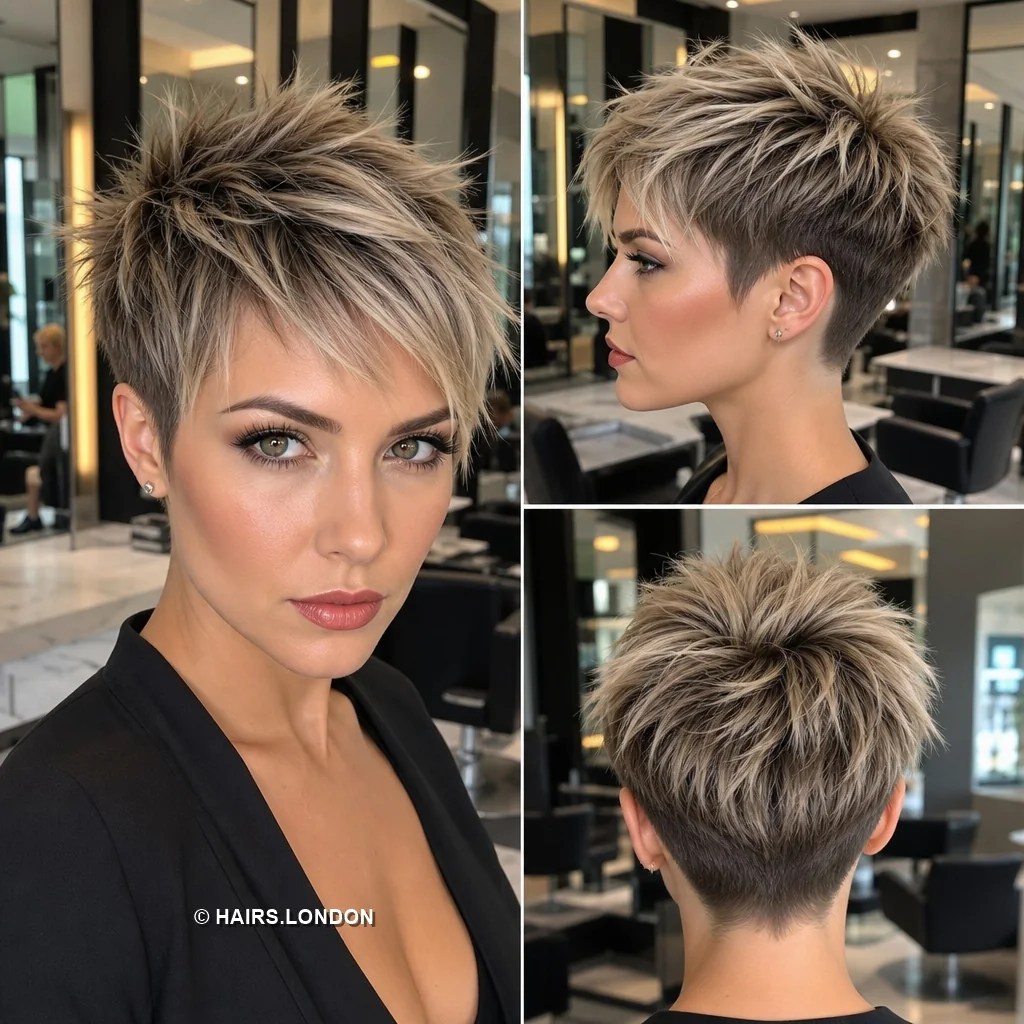
Beige blonde highlights over a deeper root make the spiky architecture of this pixie stand out. The front is short and wispy, while the crown and upper sides contain longer pointed layers that radiate in several directions. The lower sides and nape are closely tapered, creating a compact base beneath the lighter textured top. This combination can visually increase dimension in fine hair, although actual fullness depends on density and styling. Blow dry against the natural fall for lift, then pinch the ends with a small amount of matte paste. Highlighted hair benefits from heat protection, gentle cleansing and a.
17. Caramel Bronde Textured Pixie with Tapered Nape
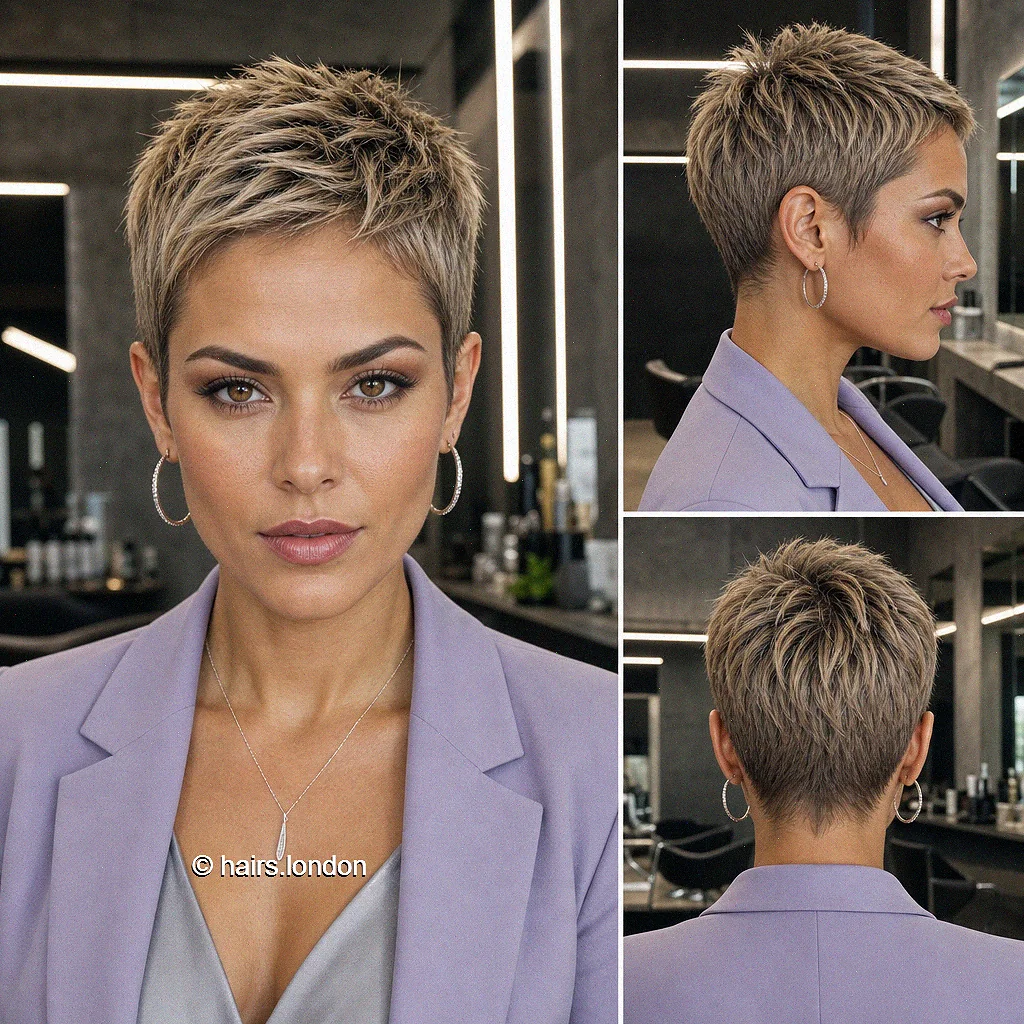
Caramel and beige highlights create striped definition through this short tapered pixie. The crown is built from many pointed layers that lift upward and outward, while the fringe stays short and lightly separated. Darker sides are cropped close, giving the highlighted top a stronger sense of height. The nape tapers neatly and keeps the back silhouette compact. This is a practical reference for someone who likes spiky texture but wants a neutral color palette. A light clay can define the tips after blow drying. On dense hair, ask for controlled weight removal rather than excessive thinning, which may complicate short.
18. Fuchsia Textured Pixie with Soft Taper
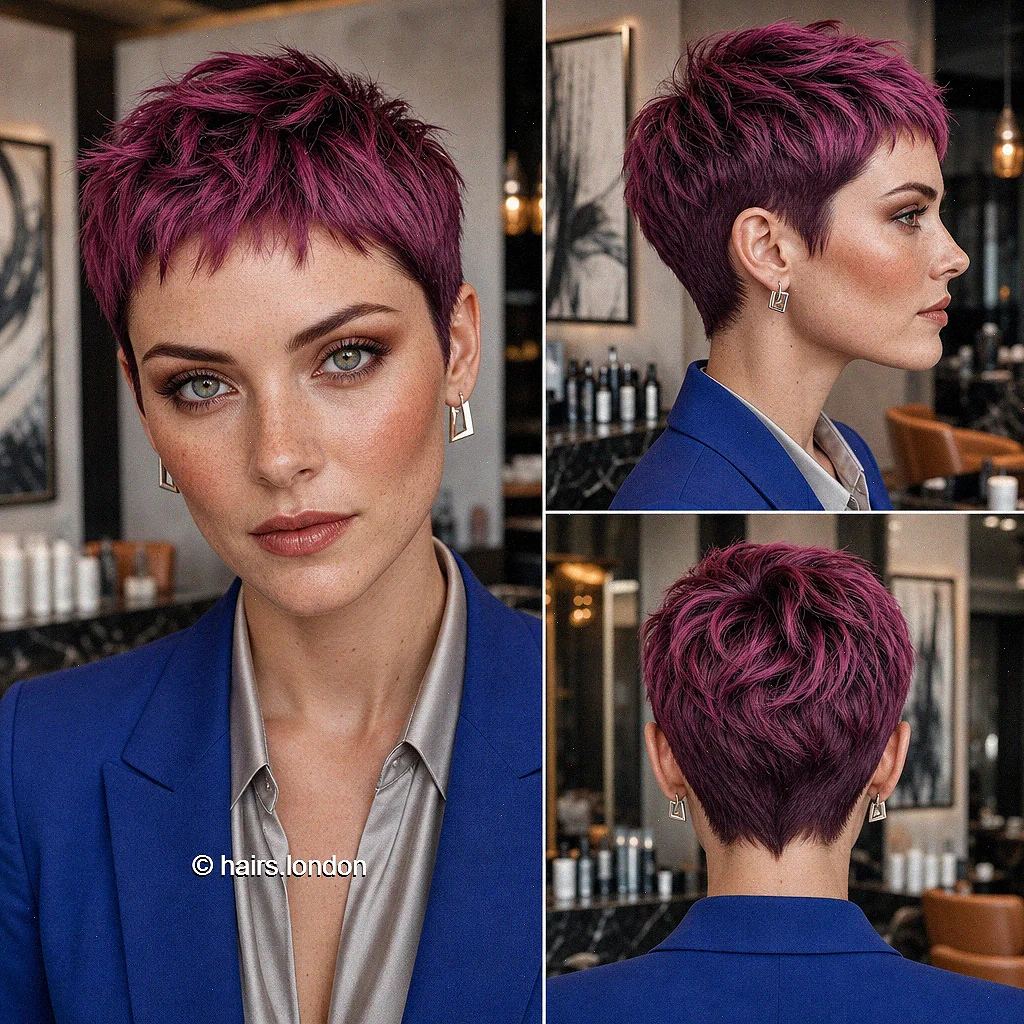
Bright fuchsia color gives this short pixie a vivid finish while the haircut itself stays softly tapered. The fringe is short and broken into narrow pieces, with the top lifted into compact spikes that create texture without excessive height. Sides sit close around the ears and blend into a neat nape rather than forming a dramatic skin fade. This balanced shape can suit someone who wants bold color with a less extreme perimeter. Work a small amount of flexible paste through dry hair, concentrating on the tips. Vivid pink tones may fade with washing, so discuss color safe care and.
19. Silver Spiky Pixie with Sculpted Quiff
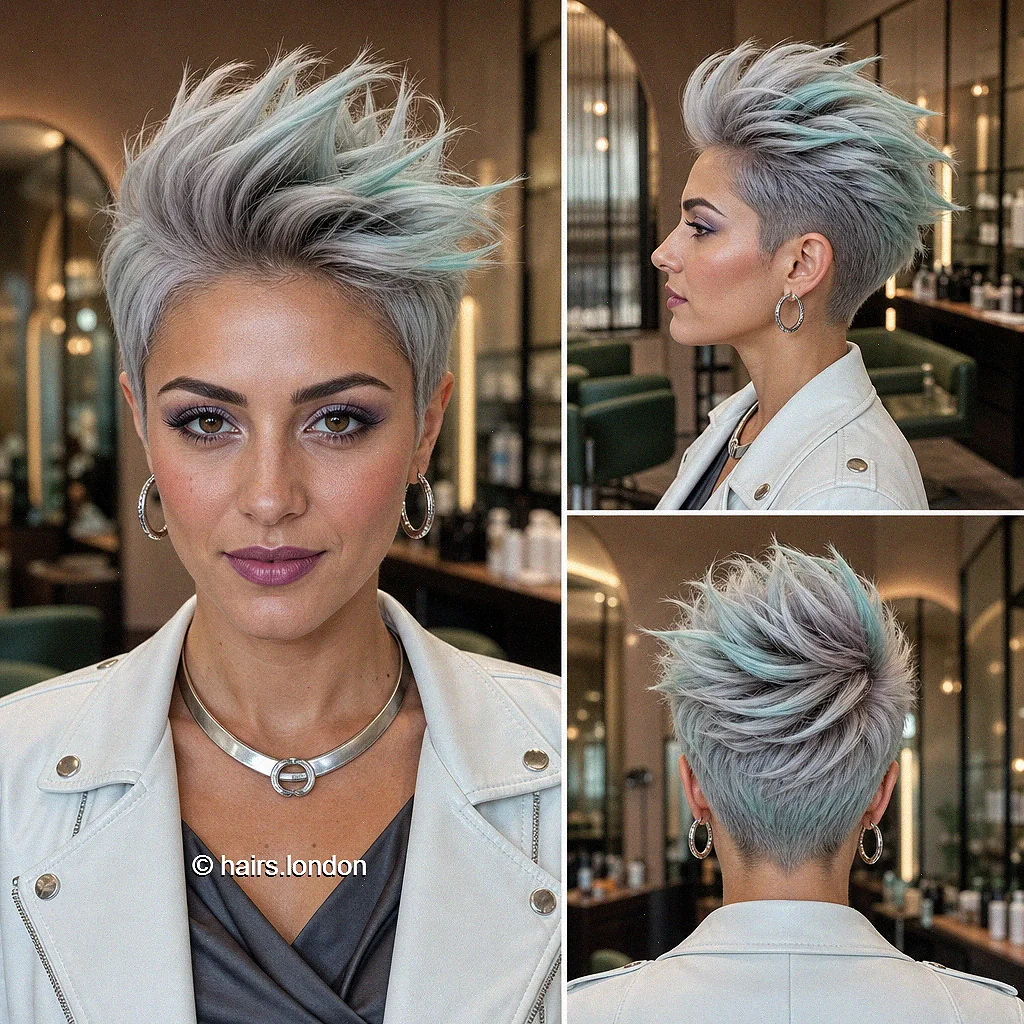
Cool silver hair is styled into a dramatic lifted quiff in this short pixie. The front and crown carry the greatest length, sweeping upward and backward in broad separated sections with pointed ends. Sides are much shorter and smoothly tapered, creating a clean base beneath the sculpted top. The back also narrows closely at the nape, emphasizing height through the center. Strong directional blow drying is important for this finish before adding a light paste or flexible hold product. Pale silver shades can show tonal changes and dryness, so conditioning, heat protection and professional toning advice are useful parts of.
20. Raspberry Spiky Pixie with High Fade
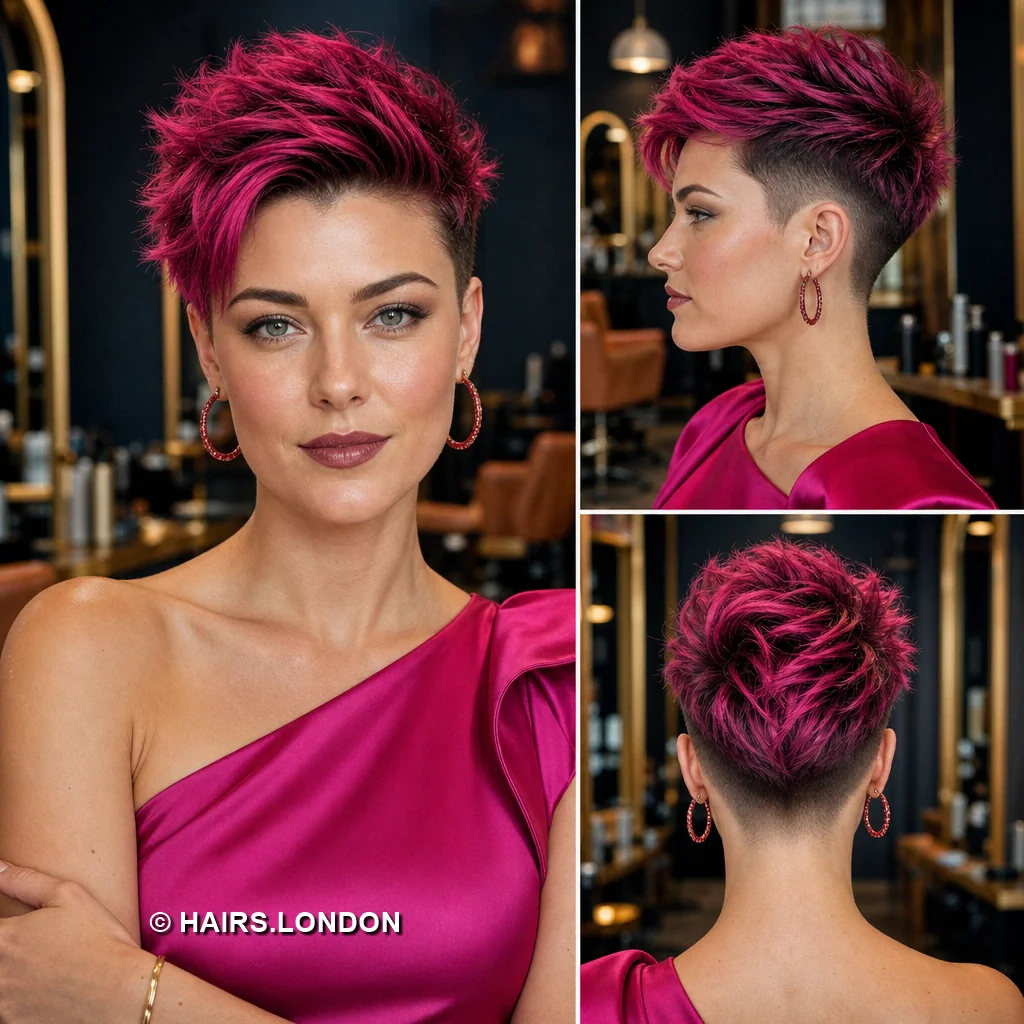
Raspberry fuchsia color crowns this high contrast pixie, paired with dark sides that fade very close around the ear and nape. The top is left long enough for a swept spiky finish, with the front directed diagonally and the crown pushed upward into separated sections. From the back, the vivid color forms a textured cap above the clean taper. This cut needs deliberate maintenance if you want both the fade and color to remain sharp. Use a strong but flexible paste and avoid saturating the roots. At consultation, discuss top length, fade height and how much scalp exposure feels comfortable.
How to Choose Among Edgy Pixie Haircuts
Start with the amount of contrast you want. A cropped, connected pixie keeps the sides and top visually related and usually grows out more gradually. A layered or swept pixie preserves more movement through the fringe and crown. Spiky versions depend on enough top length for separation, while undercut styles create the strongest difference between the top and perimeter. If your priority is easy styling, consider how your hair naturally falls before choosing a photograph with dramatic directional lift.
Fringe, Crown and Side Coverage
Fringe length changes both styling time and comfort. A short shattered fringe can stay clear of the eyes but may need more frequent reshaping. A long sweep offers softness and versatility but often requires blow-drying. Crown length determines whether you can create height, a rounded profile or loose spikes. Side coverage is equally important: close tapers expose more of the ear and head shape, while softer side pieces create a less severe transition. Ask your stylist to show where each length will sit before cutting.
Fine Hair and Thick Hair Considerations
Fine hair often benefits from preserving strategic density at the crown instead of over-texturizing every section. Lightweight mousse, root spray or dry texture products can create lift without collapsing the cut. Thick hair may need internal weight removal so longer top layers move independently, but excessive thinning can make short pieces spring outward as they grow. The goal is controlled separation rather than simply removing as much hair as possible. Density should guide the cutting technique even when two people choose the same reference image.
Styling Spikes, Sweeps and Natural Texture
For separated spikes, dry the roots in the direction you want before applying product. Use a small amount of clay, paste or texture cream, warming it between the hands and pinching only selected ends. For a swept fringe, direct airflow from the roots and use fingers or a small brush to guide the front without flattening the crown. Naturally wavy hair can create softer separation, while curlier textures may produce a different silhouette. A cut does not create a curl pattern that is not already present.
Color Care for Blonde, Silver and Vivid Shades
Platinum, silver and pale blonde pixies can show dryness and tonal shifts quickly because the hair is short and frequently restyled. Gentle cleansing, conditioning and heat protection help preserve the surface. Vivid reds, magentas, purples and blues can lose intensity with repeated washing, so discuss realistic refresh intervals with a color professional. Color maintenance and haircut maintenance do not always occur on the same schedule. Root depth can also be intentional, so decide whether you want a blended grow-out or a consistently bright result.
Growing Out a Pixie and Planning Maintenance
A close fade may lose its crispness sooner than a softly tapered pixie, while longer layered versions can often transition into a bixie-like shape with fewer abrupt stages. During grow-out, the areas above the ears and at the nape usually need strategic cleanup while crown length is preserved. Instead of trimming everything equally, tell your stylist what longer shape you are working toward. Maintenance frequency should reflect your preferred neatness, hair growth rate, color choice and tolerance for changing proportions.
Salon Consultation Checklist
Bring front, side and back references whenever possible. Point out the exact fringe length, crown height, side coverage and nape shape you like rather than asking for the photograph as a whole. Discuss cowlicks, natural partings, glasses, humidity and how much daily styling you are willing to do. If the reference uses a high fade or vivid color, ask what the grow-out will look like. Photographs are useful guides, but the final cut should be adjusted to the hair in front of the stylist.
Frequently Asked Questions
Can a highly textured pixie work on fine hair?
Yes, but the cutting and product choices matter. Preserving enough density through the crown can be more useful than aggressive thinning. Lightweight root lift and dry texture products can create separation without weighing fine hair down.
What should thick hair owners ask for in a spiky pixie?
Ask about controlled internal weight removal through the top and crown. The goal is to let sections separate and move while keeping enough structure to prevent short layers from becoming excessively bulky or difficult during grow-out.
Can naturally wavy hair wear these pixie shapes?
Often, yes. Natural wave can add useful movement to layered and tousled versions, although the finished direction may look softer than a straight, sharply spiked reference. A stylist can adjust lengths around the wave pattern.
Will a pixie cut create curls if my hair is straight?
No. Cutting can reveal existing movement and remove weight, but it does not create a natural curl pattern. Straight hair can be styled into bends or texture temporarily with heat and styling products.
How can I keep crown volume from falling flat?
Direct the roots upward or against their natural fall while blow-drying, then allow them to cool before finishing. Use lightweight product at the roots and apply heavier paste mainly to the ends so the crown stays mobile.
How do I keep a long pixie fringe out of my eyes?
Choose a fringe length and direction that works with your natural parting, then dry it into place from the roots. A light cream or flexible spray can help hold the sweep without making it rigid.
How often does a close tapered pixie need reshaping?
There is no single schedule for everyone. A high fade shows growth sooner than a soft taper, so book according to how crisp you want the perimeter to remain and how quickly your own hair grows.
Which products are useful for the spiky styles shown here?
Dry clay, matte paste, flexible texture cream and lightweight root-lifting products are common options. Start with a small amount, because overapplication can make separated short layers stick together and lose their airy definition.
How do vivid red, purple and fuchsia pixies fade?
Vivid shades can gradually lose intensity or shift in tone with washing, heat and environmental exposure. The exact behavior depends on the starting hair and color service, so discuss refresh expectations with your colorist.
Does natural gray hair need to be colored for a silver pixie?
Not necessarily. Natural gray can be incorporated into a silver or pale pixie without covering it completely. A stylist or colorist can assess whether blending, toning or leaving the natural pattern untouched best matches your goal.
What is the easiest way to grow out an undercut pixie?
Preserve length through the top while selectively tidying the nape and areas around the ears. As the shorter sections catch up, the shape can be redirected toward a longer pixie or bixie instead of being cut uniformly.
What reference photos should I bring to the salon?
Bring views that clearly show the front, side and back. It is especially helpful to show the fade height, nape shape, crown texture and fringe length you prefer, because those details are not always visible in one photograph.
Conclusion
These edgy pixie haircuts show that short hair can be structured in very different ways, from soft pearl-blonde layers and rounded merlot crowns to high-contrast fuchsia fades and sharply separated crimson spikes. When choosing among them, focus first on the haircut architecture: your preferred fringe length, crown volume, side coverage, nape finish and the amount of daily styling you are comfortable doing. Then consider how your natural texture and density may change the result.
Color can make texture more visible, but it also adds its own maintenance. A realistic choice balances the shape you enjoy with the salon schedule and home styling you are willing to maintain. Use the images as references for specific details rather than guarantees of an identical result, and ask for adjustments that respect your growth patterns, parting and hair behavior.